
“That’s the one thing that I’ve taken from this programme is that my story is special because it’s been seen. Not because it is special, just because it’s been seen. How many people can say that, their story from 7 to 70, has been on television?” – Symon
In the end, there’s nothing better or more complicated to try to explain than an ordinary life, I think.
The recent release of 70 Up brings to a close the greatest documentary series of all time, capturing the lives of more than a dozen people from the age of 7 to 70, stretching from 1964 to 2026. It’s a masterpiece, and it breaks my heart a little bit, but also leaves me feeling a lot better about our troubled human species, too.
Over the years, the ITV British TV series has followed 14 British children turning into teenagers, adults and now old men and women. You watch the entire 10 films and gradually Neil, Tony, Jackie, Nick, Sue, Paul, Bruce, Symon and all the rest start to feel a little bit like friends. They’re not influencers or celebrities – they’re profoundly ordinary despite the differences in careers and income.
70 is probably a good place to stop, creating a nice synchronicity with the first film 7 Up, and leaving our cast before they all get too old and infirm. Two of them have already died – children’s librarian Lynn in 2013, and physicist Nick in 2023. Director Michael Apted shepherded the series from 14 until his own death in 2019, and director Asif Kapadia has done a marvellous job bringing the series full circle and keeping Apted’s distinctive tone with 70 Up, which feels like a natural ending and an elegy for the whole ambitious project.
The Up series started out trying to make its cast fit set roles – the stuffy Tory, the loud Eastender, the young Black boy living in a care home, the chilly rich girl. Yet over time, you realise none of these people were entirely the stereotypes the director may have thought they were.
It started off as a study of the British class system, but became something much more than that.
“I think it’s now, it’s a film about living a human life.” – Peter
Up explodes the idea that people are just one thing – barrister John with his tailored suits and sniffy youthful pronouncements was arguably set up as the “villain” in the earliest instalments, yet we learn as the years pass he’s actually a warm, caring fellow who’s spent much of his life advocating for Bulgarian orphans, and is hardly the selfish toff he first appeared to be.

Each member of the cast has a story to tell, some perhaps more interesting than others. Wealthy, comfortable lawyer Andrew and his relatively uneventful life takes the prize for most boring member, while Neil, a bright-eyed chipper chap at age 7, went through a roller coaster of undiagnosed mental health crises, homelessness and wandering before coming out of it all to become a capable local body politician. Neil’s story shows us that life doesn’t always fit imagined paths.
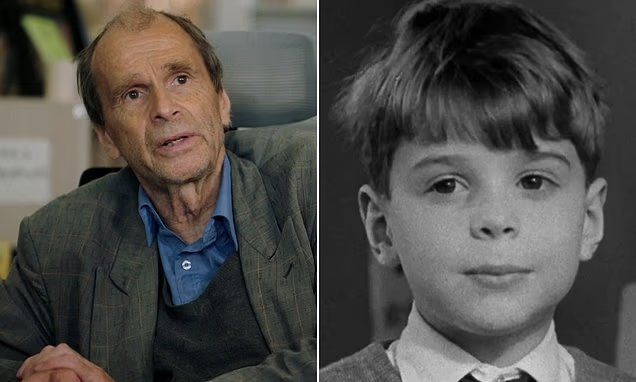
It is hard, of course, to watch them all grow old, bald and grey, but we all do in the end, and while there’s certainly a bit of bittersweet sadness in 70 Up, there’s also a lot of joy and acceptance, something we could all do our best to hang on to as the years pile up.
Many of the series’ participants proved very ambivalent about taking part – some vanished for an instalment or two, a couple for decades. (One of 70 Up’s genius movies is even bringing back long-lost Charles, who utterly disappeared after a falling out with Apted around 21 Up, for a brief cameo.)
Apted was on the record saying he wished he’d chosen a more diverse cast – the series had only one non-white child, and just four women. But it’s still an invaluable snapshot of lives lived during the last 70 years, and how society has changed.
As the series went on, too, it interrogated Apted’s motives and questioned a lot of the haughty assumptions the film was making about poor people and rich people. The interviewees pushed back, none more than spunky Jackie, and the ongoing dialogue between intention and reality was fascinating. A documentary can never really capture all of a person’s facets. The Up series acknowledging that just makes it all stronger.
“A part of my little life story, and I’m a nobody, I’m just a normal person, and my little life story’s on film forever.” – Sue
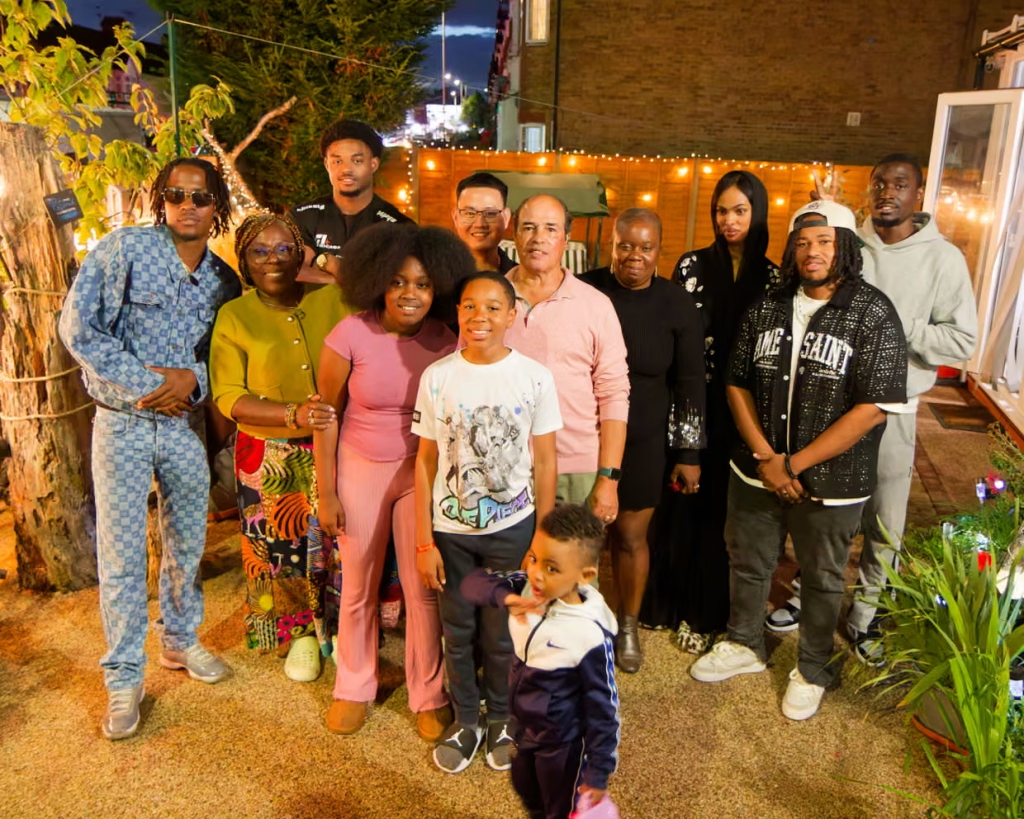
There are so many little moments of grace in 70 Up that make you feel grateful to be human – take Symon, the Black participant who never knew his father, struggled through a failed marriage and menial jobs, but in the end with his second wife has formed a beautiful family and most astonishingly, they’ve been foster parents for over one HUNDRED children from Africa, the Caribbean and all over the world. The lonely kid we saw in the care home at age 7 has become a father figure to dozens. Now that’s a good life well lived.
The Up series is not flashy, like a lot of reality shows with their incessant jump-cuts and bombastic music and manufactured conflicts. And binge-watching the entire series in one go isn’t really recommended, as there’s a lot of repetitive clips shared over and over again (drink every time you hear teenage Tony’s discourse on how to treat women, or see Neil walking along lonely landscapes in Scotland).
While we did rewatch a lot of the series this week before the grand finale 70 Up, the best way to watch the Up saga ideally was to catch it every seven years, and savour the feel of the calendar pages flipping over in real time.

But most of all, the Up series gets you thinking an awful lot about your own life as it unspools. What would a 14 Up, a 28 Up, a 49 Up have said about me? I look in the mirror and would like to think I’m the same person I was at 21, but what would the camera truly show, in seven-year increments – and the choices we make and the things that happen to us?

The late Nick Hitchon might have been my favourite of the cast – the clever, philosophical farm boy from the Dales who became a highly regarded international physicist and teacher, defying Apted’s ideas that class background is everything. He battled throat cancer for years, and it’s unbearably sad to see him so shrunken and in pain in his final interview, recorded just three days before he died in 2023. And yet it’s profound, too, because Nick was always good at seeing the bigger picture of what Up was trying to accomplish, with his scientific eye. He is scared, but he is grateful.
“You know how you see this time-lapse photography of a flower, and, you know, it blossoms and then fades away and so on? And it’s amazing to see a flower grow and then decay in a couple of minutes.
“Well, seeing that with a person is also amazing because we don’t see that. We’re so busy seeing the day-to-day life of a person that we don’t see the big picture of how they change over time.” – Nick Hitchon
The Up series has given us a dozen or more human flowers to follow most of their lives, and for that, I’m glad. I can’t imagine we’ll ever see anything else quite like it again.

Discover more from NIK DIRGA
Subscribe to get the latest posts sent to your email.

Wow. I think I watched the first 5 (through 35 Up) but I have none since then then. I probably should rectify that.