
I’m once again in one of my Rocky phases, sparked by reading Sylvester Stallone’s excellent new memoir of his grim childhood and early career struggles, The Steps.
As I’ve written before, I’m always going to be a Stallone Stan, and the Rocky movies are comforting old friends to me that I pop on every few years.
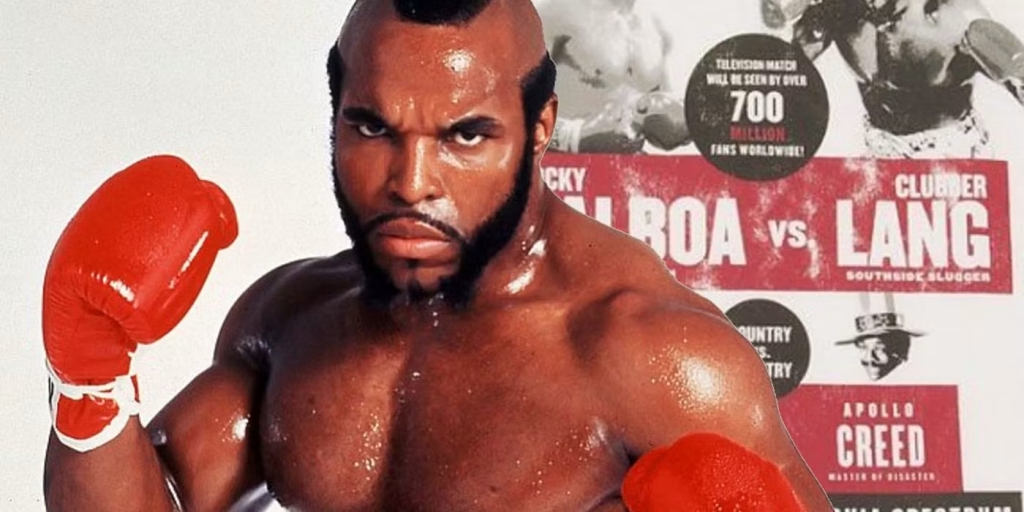
I’ll go to the mat in particular for 1982’s Rocky III, where the downbeat realism of Rocky I and II and the gung-ho excess of Rocky IV combine for a vastly entertaining punch-up that hits the heart and the solar plexus equally. I like all the Rocky and Creed movies – yeah, even Rocky V, kind of – but in my heart of hearts Rocky III will always be my favourite. And a good bit of that is due to Mr. T’s menacing villain, Clubber Lang.

Clubber Lang is a mystery – the contender who emerges, glowering and angry, in several crowd shots before loudly challenging Rocky to a title fight in public. He’s pure rage, even outside the ring (he indirectly causes the death of poor old Rocky’s coach and father figure Mickey), and no motive is given for his temper other than a burning desire to win, to be the champion. He obeys none of the polite rules of boxing or indeed, civilisation.
Lang bursts on the scene with a snarl and never lets up for the movie’s entire runtime. He beats Rocky in one of the series’ grimmest battles, giving the egotistical champ a much-needed reality check, and then is beaten himself after Rocky trains up with former foe Apollo Creed to the impossibly catchy refrains of Survivor’s “Eye of the Tiger.” It’s a simple rise-and-fall-and-rise story that almost all the Rocky movies follow, but it’s perfected to a glossy shine here.
Every word out of Clubber’s mouth is an attack or a brag – “I’m gonna torture him. I’m gonna crucify him.” Mr T’s most famous quote – “I pity the fool” – is heard here first, not in his later turn as a slightly gentler hero in TV’s The A-Team. Rocky III is by far Mr T’s most iconic performance, before his image got softened up in cartoons and anti-drug ads.
Clubber Lang appears to have no family, no friends, no outside life at all – we get quick shots of him training ferociously alone in grubby rooms, and the ringside crew we briefly see act like hired guns who probably can’t stand the man. He has no calm dialogue with any of his peers, no references to anything but his own grinding ambition. He’s the boxing equivalent of Clint Eastwood’s Man With No Name, riding into town to stir shit up.
(Of course, because fandom is a thing, the later book Rocky: The Ultimate Guide sketches out a childhood of orphanhood and jail, and apparently an early script for Rocky Balboa, aka Rocky 6, would’ve had Lang make a cameo as a ringside announcer who’s become a born-again Christian. None of that is necessary, to be honest. Leave Clubber’s canon alone!)
When you watch a movie heaps of times over the years, you start to dissect it more. I wondered if Clubber Lang is too much of a racial boogeyman, all the vile stereotypes of the “black menace” brought to life (particularly a scene where he makes a crude pass at Rocky’s wife).

Yet generally, the Rocky series has always been fairly racially even-handed, with Carl Weathers’ outstandingly cool, confident Apollo Creed (I’d endlessly argue he deserved a Best Supporting Actor nomination for his work), Michael B. Jordan in the Creed movies, Tony Burton’s trainer Duke and a variety of other well-drawn Black cast members giving some balance.
Clubber Lang is a wounded beast, lashing out – I’m sure he was the victim of racist treatment many a time – and he simply has become who he is, all predator, never prey.
Few other Rocky villains achieve the primal power of Clubber Lang – Apollo Creed is just too darned charismatic, while Ivan Drago is awesomely swole but a little cartoony, and honestly few of the other Rocky or Creed boxing villains are all that memorable.
The Rocky movies would try to give Rocky’s opponents a little more depth, notably Apollo Creed whose legacy became the hook for a whole new trilogy. Even Russian super-boxer Drago got a little redemption in the surprisingly great Creed II, thanks to a terrific weathered performance by Dolph Lundgren returning to the role as a man beaten down and haunted by his loss to Rocky.
Other Rocky antagonists, like the sleazy, misguided Tommy Gunn in the misfire Rocky V or the young champ Mason Dixon in Rocky Balboa, tend to be a little more human.
Not Clubber Lang, who has no apologies, no quarter given. When he loses, he might as well dissolve into the mist, as Rocky III doesn’t even give him a momentary twinge of acceptance, no shaking hands with the new champ. He’s last seen groaning on the canvas, face still twisted with rage. Fans have fantasised about more Clubber Lang for years – Rocky rematches and such, but honestly, his story was one and done.
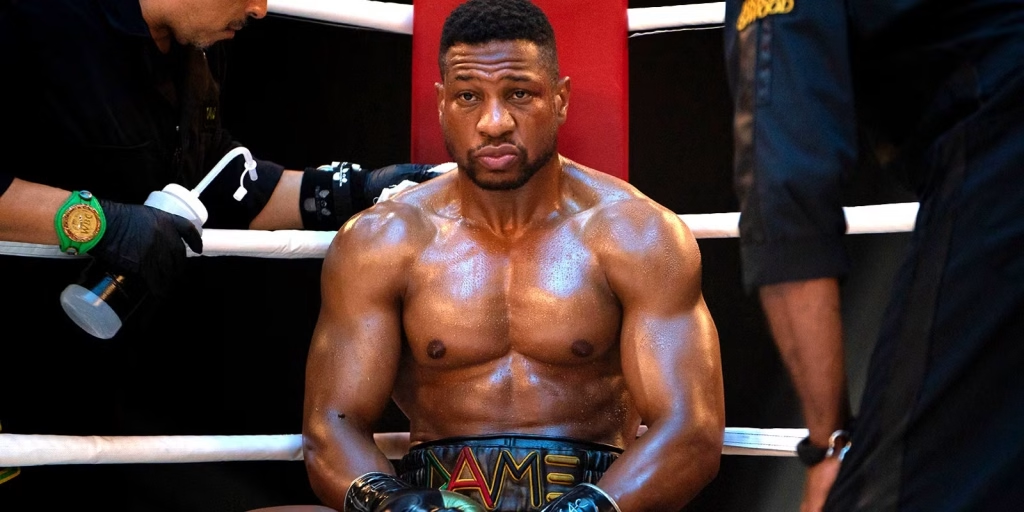
There was an echo of Clubber Lang in 2023’s Creed III, the last (for now) Rocky universe film. Jonathan Majors’ Damian Anderson is an intense ex-con frenemy who beats Michael B. Jordan’s Adonis Creed to a pulp (and this being the Rocky-verse, is himself of course beat down in the end). There’s hints of Clubber here, the angry outsider who takes on the king. But Majors – whose personal and career troubles are well-documented – gets the backstory Clubber Lang was denied (troubled youth, jail, desire for revenge, etc), and the slightly undercooked Creed III doesn’t quite sell his rise and fall and redemption arc. Unlike Clubber Lang, we’re asked to care a bit about Anderson, and it’s hard to do that with Majors and his baggage in the role.
Clubber Lang has no backstory. He doesn’t need one.
He simply appears, sneering, from the shadows, and in the end goes back to them exactly as he always was, unredeemed, unrepentant, ultimately, in a strange kind of way, undefeated.
Discover more from NIK DIRGA
Subscribe to get the latest posts sent to your email.

Clubber Lang has no backstory. He doesn’t need one. – agreed