Graceland: I’ve reason to believe we all will be received

Graceland is the nexus of the Elvis Presley multiverse. 

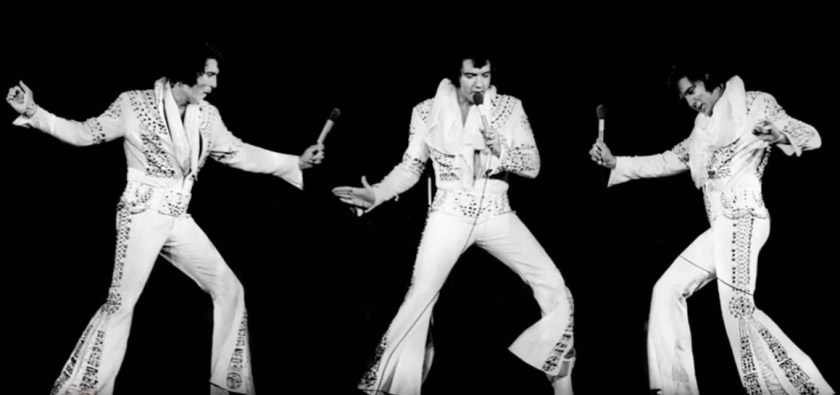
Elvis feels more alive than ever in 2026, closing in on 50 years since his death. He was a bit of a joke, a punch line for much of my teenage years, but it kind of feels like we’ve all moved past that a bit to appreciate the massive cultural space he filled in America’s 20th century. Sure, there’s Vegas Elvis in all his jumpsuited splendour but there’s also raw Sun Elvis, hungry and strange, and swaggering ’68 Elvis, showing the kids how it’s done. 

I hadn’t been to Graceland since the mid-1990s sometime, where it felt kind of quaintly humble, but it’s since blown up into a full Disneyland-style complex. It’s not cheap – is anything these days? – but for anyone even slightly interested in Elvis and the pop history of America, it’s a must. It’s plonked down in a rather apocalyptic, run-down section of Memphis which isn’t exactly inspiring, but once upon a time it was the suburban mansion on a distant hill that a boy rock star decided to buy as his first – and only – home. 

I suppose once the “Elvis is really still alive” jokes all started to fade (I mean, the dude would be 91 by now even if he was secretly lurking in Mongolia somewhere), I started to respect a little more the dreamy kid from Tupelo and his ascension to the top of the world, the thunderbolt effect he had on pop culture (a moment which Baz Luhrmann’s recent Elvis movie, flawed and rushed as it is, really captures ferociously well). 

The mansion itself remains the same as always, a kitschy time capsule of what a superstar considered fancy circa 1976. Elvis’ Graceland has survived the spins and twists of what’s fashionable to kind of be weirdly cool again with its low carpeted ceilings and brash colours and sweetly low-key touches. It remains the sort of home a poor Mississippi kid made good would have had rather than the kind of sterile megamansion an Elon Musk probably owns 10 times over. 

Here is where Elvis watched his three TVs at once (imagine how he would’ve fared in the multi-screening device age), here he played pool in a densely curtained room decked out like an ancient sultan’s lair, here in the oddly peaceful ‘Jungle Room’ he laid down some of his final songs surrounded by shag carpeting and tiki-tacky exotic furniture. 

Once upon a time, I visited Graceland with friends in the mid-1990s, paying tribute at his graveside (which sadly today now includes his daughter and his 27-year-old grandson as well). I came this time at the start of “Elvis Week,” marking the 49th anniversary the King left this mortal coil, and the memorial area was decked out with wreaths from Elvis fans around the world, Belgium to Japan. Elvis is everywhere, as Mojo Nixon famously sang

What’s changed the most since then is the sprawling “Elvis Presley’s Memphis” complex across the road, 200,000 feet of Presley-ania covering his entire career from the scholarly to the silly. Excess was Elvis’ brand, and the music and pop culture nerd in me adored the trips through Sun Studios, his Hollywood era, the comeback years and the final days.

Everywhere you turn there’s little bits of musical history – an acetate from Sun, the Presley family’s battered personal copy of his first record. High and low art mingle freely – an entire room devoted to Colonel Tom Parker, even a section devoted entirely to Elvis’ hats, in case that floats your boat. 

Only in Graceland would the remote control to Elvis’ television get a quirky little display case of its very own, or the handwritten letters Presley infamously wrote President Richard Nixon before their well-documented White House meeting

I admit, when I walked into a room where the famous leather jumpsuit from the Elvis ’68 Comeback Special sits in a glass case, I felt a bit like the time I saw Abraham Lincoln’s hat in the Smithsonian. History in black leather. 

At another point, I walked into one towering room where more than 50 bedazzled Elvis jumpsuits are stacked up 30 feet high, and I surprised even myself as I gasped out loud. As the kids say these days, Elvis was a lot. The cheesy tacky “fat Elvis” years don’t seem quite as awful as they once did to me, but the kind of last gasps of a dying lion, and the over-the-top showmanship those Vegas years displayed have echoed in music ever since – I mean, have you seen a Chappell Roan concert

Is Graceland “worth it”? I spent four hours there without a pause and probably could’ve done another two (I mean, you’ve got to check out every Elvis hat, am I right?). In its reinvented modern form, its big glorious slab of rock star overkill and the lingering tastes of Southern humility and hospitality, Graceland almost feels like a museum for America itself, of rises and falls and all the echoing ripples we get from our stars, no matter how quickly they fly by. 

Maybe Paul Simon put it best – in some strange way, Graceland feels a little to me like coming home. 

Maybe I’ve a reason to believe

We all will be received

In Graceland

– Paul Simon, Graceland, 1986

Baz Luhrmann’s frantic Elvis shows why the King got his crown

“When the legend becomes fact, print the legend.” – The Man Who Shot Liberty Valance

Baz Luhrmann’s Elvis is a delirious, caffeinated roller-coaster of a music biopic, taking the essence of the King of Rock ’n’ Roll and shaking it up like a jug of Mountain Dew. It isn’t entirely true, nor does it try to be, but for much of its epic 159-minute running time, it’s vastly entertaining. 

Like the director’s Moulin Rouge and Great Gatsby, Elvis is all about style and razzle-dazzle. It’s bold, loud and occasionally bad but it captures the kinetic shock of Elvis’ impact on pop culture better than any other biopic of the man has done. It’s about Elvis as legend, really, a fable imagining the life of the boy from Tupelo. 

Luhrmann does cast an eye over the scope of Elvis’ brief 42 years on Earth, but in a fragmented, kaleidoscopic fashion. Like his Gatsby, Baz mixes in modern hip-hop and rock sounds to attempt to show a through-line from Arthur Crudup’s “That’s All Right Mama” to Doja Cat and Diplo. We flash back to Elvis’ impoverished boyhood, his love for Black music and his devil’s bargain with Colonel Tom Parker, the man who would guide – and some say crush the creativity out of – his career. We’ve seen Elvis slowly get reclaimed from the land of fat jokes the past decade or two, and Baz takes him seriously.

Elvis, a god-fearing mama’s boy, was also a precursor of punk rock – shaking up the system and terrifying the powers that be with his hip-shaking, lip-curling presence. Austin Butler at first seems a bit too pretty and polished to be Elvis, but he really grows on you, especially when he hits the stage for some utterly dynamic numbers. From his first appearances on the Louisiana Hayride to his comeback special to his final sad, dazed shows in Vegas, Luhrmann delivers astonishingly visceral recreations. There are moments when Butler’s on stage miming the King that I honestly couldn’t tell him and Presley apart. 

Tom Hanks’s scenery-chewing Colonel is a love-it or hate-it creation, speaking in a strange whispery, sing-songy carny barker’s tone and draped in a distracting fat suit. And yet, I liked Hanks, because he understands that to play this character you’ve got to go campy and broad, to embrace the Mephistophelean hold that Parker had on Elvis. Whispering promises and lies like an Iago to Elvis’ Othello, in real life Parker was actually a Dutch native who fled to America under a cloud of scandal and reinvented himself as a huckster. (The excellent biography The Colonel by Alanna Nash goes far more into depth about who Parker really was, which the movie only really alludes to.) 

If Elvis peaks during the astounding recreations of his musical numbers, it falters a bit during sappy family drama, and despite its length it tends to zip through the life story, dispatching his time in the Army and movie career in about five minutes. Nobody other than Elvis and the Colonel is given much depth in the movie (Priscilla Presley suffers particularly) and for all the gloss the rise-and-fall-and-rise drama of Elvis apes a million other cinematic biographies. 

And this is a fable, make no mistake – Elvis painted as a victim and the less savoury parts of his character brushed aside. The movie leans into his appreciation and inspirations from Black music (which he did have, although the movie exaggerates that a little too much) and ignores questioning the questions that raises about authenticity. It acts as if he wasn’t also a huge fan of white country and gospel artists. I don’t think Elvis was a fierce racist as some do, but he was also very much a product of his time, dirt-poor Mississippi. 

There’s a lot of fun-house distortion of history here, but I don’t think this film is trying to ape, say, the thoroughness of the definitive Elvis biography by Peter Guralnick. It’s all about the spectacle in the end, and that’s where Elvis truly delivers. I wouldn’t point this movie at anyone who wants a high-fidelity biography of the man, but if you want to imagine the impact he had, the seismic force of those wiggles and moans on stage almost 70 years ago now and why it still matters today, it’s not a bad place to start. 

The Elvis Presley behind the jokes

elvisSometime in the next few months, Elvis Presley will have been dead longer than he’s been alive. 

It’s 42 years today since Elvis died at age 42 in 1977, and it took a long time for me to take him seriously. For most of us Gen-Xers, the King of Rock ’n’ Roll who died fat and a parody of himself was a joke. It took me years to see that there’s a thousand different Elvises. 

I was a California kid, but I lived in Elvis’ backyard for much of the 1990s, just outside Memphis and just an hour down the road from his birthplace of Tupelo. I wanted to work at Graceland for a summer job, but I couldn’t beat the competition. I fell in love with a girl from Tupelo. I slowly found the King behind the jokes. 

There’s at least four eras of Elvis proper – the young fiery prodigy, captured best in the haunting Sun Records recordings that still amaze today; the post-Army burnout whose talents were wasted for years in movies and cheesy soundtracks; the black leather-clad colossus who stormed his way to a ’68 comeback, and who then melted into the sad sweaty mess of his final years. 

When a legendary person dies, they slowly transform into myth. There’s a Shakespearean heft to the Presley story, a boy from nowhere who conquered the world. Elvis becomes a trailblazing comet or a paunchy punchline, a star of endless daffy movies, a boy who mourned his mother, a kung-fu kicking drug case who once pestered his way in to see Richard Nixon. 

I like the “Comeback Elvis” years the best, from that stunning 1968 TV Special on to the early ‘70s. At his best, he’s like a lone gunslinger bashing through the saloon doors, reminding all the young guns why he mattered. It’s the height before the fall. He’s got the years to give him authority, but he’s still young enough to prowl like a tiger in that insane leather jumpsuit. There’s a horrible trail of wasted possibilities in the Elvis story, which you can lay at the feet of his drug problem, his emotional immaturity, or the terrible mismanagement by the Colonel, who never really understood the power of Elvis. The story is Elvis is a story of lost dreams. 

Imagine if a 60-something Elvis had gone on to have a Johnny Cash-style latter years revival, if he’d just taken a stage with a guitar and a song and captured something of the haunting echoes of the Sun Studios years. 

One of my favourite Elvis songs is “Hurt,” (not the Nine Inch Nails/Johnny Cash version, of course) which he covered just a year before he died. I used to listen to it with a jaded, ironic eye, because Elvis sings the HELL out of this song, murdering it with an unrestrained abandon that teeters right on the edge of parody. But listen to it, man. Listen to the voice breaking as the song launches into the stratosphere, listen to the way his voice dips deep into the canyons as he sings how he’s hurt “way deep inside of me.” He’s singing about a lot more kinds of hurt than just being dumped. This is Elvis in his autumn, looking back at his highs and lows. 

It’s easy to see a punchline in the thousands and thousands of different Elvises the world has seen in the last 42 years. But deep inside the best of his songs, whether it’s the slow burn of “Mystery Train” or the unrestrained operatic bombast of “Hurt,” the real king still awaits.