
It’s probably been literal decades since I played Dungeons and Dragons, but I’ll never forget the monsters.
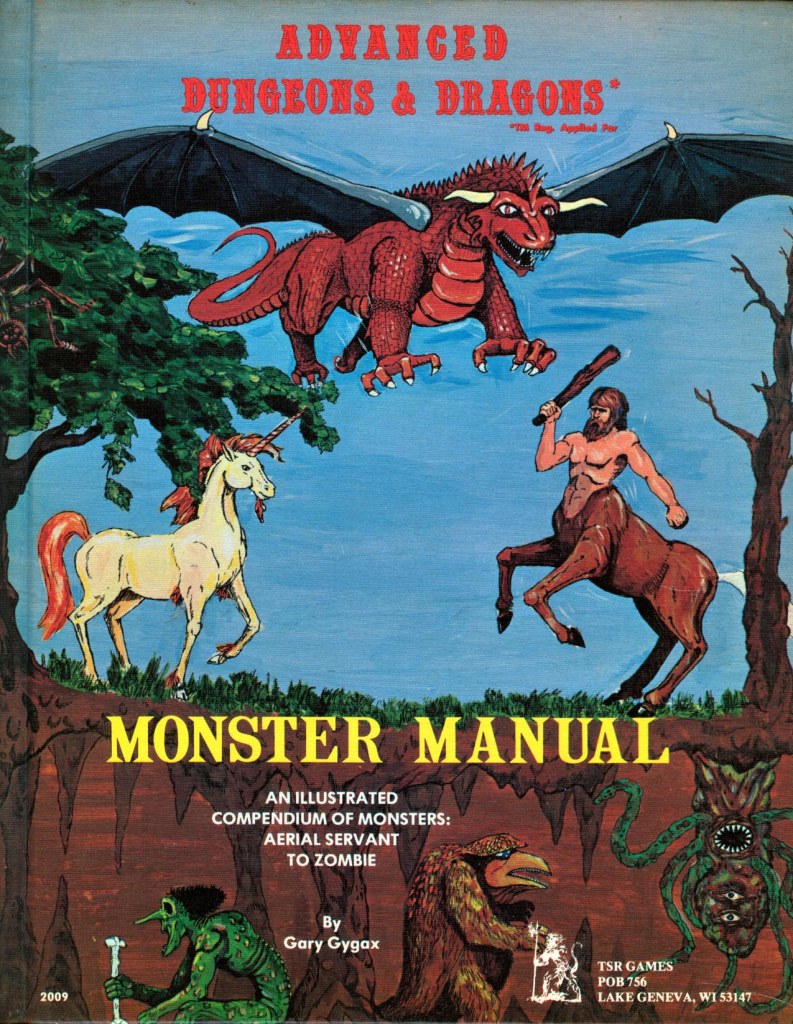
I grew up during the mid-1980s pre-internet heyday of the Advanced Dungeons and Dragons first edition, before multiple revisions, digital versions and blockbuster movies and the like, when the primary sources were only a Player’s Handbook, a Dungeonmaster’s Manual and, best of all, the Monster Manual.
I’d play D&D with a handful of fellow pre-teen travellers back then, and for an awkward, gangly kid trying to figure out his place in the world, those silly, strange adventures were a great escape from the real world.
I was never a dungeonmaster, always a player, throwing around all those great multi-faceted dice (the 20-sided die remains a favourite, although I also love the pyramidal solidity of the 4-sided die). With our rustic pencils and graph paper to map our way, plucky dice and a heaping helping of imagination, my friends and I would storm castles, kill trolls and hunt for treasure, as all good D&D players should.
Eventually I wandered away to other diversions, and while I’ve always had a certain fondness for D&D in the years since, I’ve never really played again.
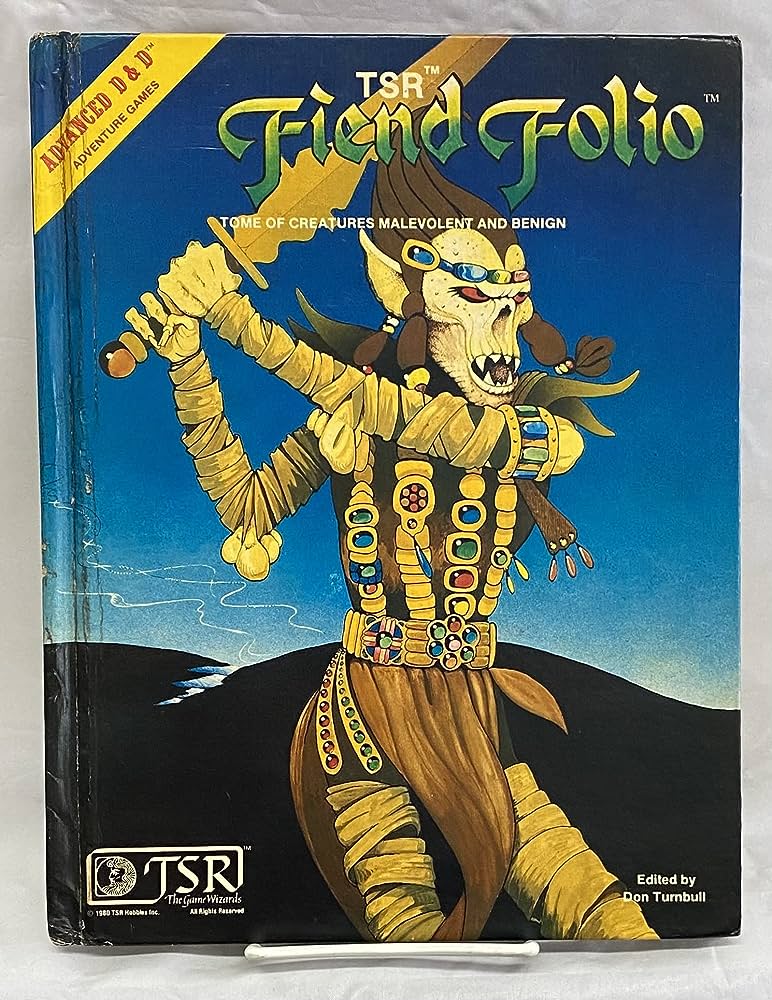
But one thing has stuck with me, over the years – all those lovely monsters. The original Monster Manual from 1977 was a charmingly low-fi bestiary of all kinds of imaginary and mythical creatures one might encounter in a campaign, from the Aerial Servant to the Zombie. I love a good guidebook, and many years on I still own a copy of the Monster Manual, and its grittier British-generated sequel, 1981’s Fiend Folio.
Both books remain enjoyably retro yet overflowing with ideas – each monster is gridded up with nerdy game statistics (what armor class is the Owlbear? What’s the difference between a Werewolf and Weretiger?) and kind of amateurish but passionate artwork.
In later year, D&D art materials would all get that polished, airbrushed and vaguely soulless quality of some heavy metal album cover, but for the ’77 Monster Manual, you got the feeling some of these critters were dashed off on scrap paper, and all the better for it. These weren’t monsters slapped out as part of some corporate committee, but raw material from D&D’s early, fan-driven days.
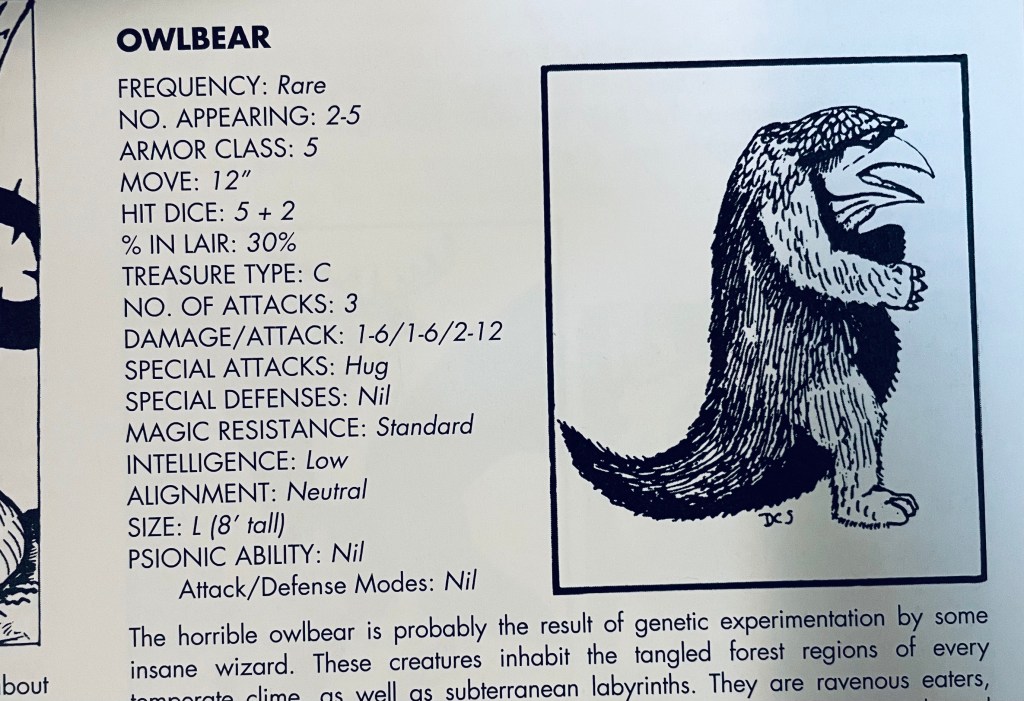
The huge variety of creatures sourced mythology and legend and ranged from the incredibly mundane (yes, there’s an entry for Mules, and one for the humble Badger) to the gloriously weird and creative like the many-eyed Beholder, the slippery Gelatinous Cube or the bizarre Owlbear. There were hints of nudity amongst some of the female monsters, which I’m sure attracted many a young fan.
In Fiend Folio, the art took on a raw, gorier quality and some of the creatures in there are truly terrifying to me still, like the Penanggallan, basically a flying decapitated female vampire head with a sack of guts hanging off it – ew!

What attracted me – and so many others, I’m sure – to D&D was the epic world-building involved, huge thick manuals covering every permutation of your fantasy world and characters. The Monster Manual felt like it might’ve been a real guide, somehow, with its genial authority. I loved that you had not one but several kinds of dragons and giants explained (Red Dragon or Green or perhaps, the regal Bronze? Why is a Stone Giant so much scarier looking than a Hill Giant?).

I know there’s been dozens of other manuals and guides and handbooks for D&D in the years since my playing days, and hey, that’s cool, I’m glad the game still endures.
But for me, the original handful of books are where it’s at.
Everything tends to get too complicated in fandom after a while, but in those early days for the great game, it was pretty simple. Here’s a book of monsters. Which one will you fight?
I guess that’s why I’ve kept copies of these monster manuals about, long after I rolled my last 20-sided dice – they’re guidebooks to a world that never was but one I mightily enjoyed visiting. I’ll never see an Owlbear or the Beholder in real life, I’m sure, but as long as they’re in a guidebook, they’re real somewhere, right?


 Nik Dirga