
I vividly remember watching Wes Anderson’s first movie Bottle Rocket on a rented videotape (!) sometime around 1997. This quirky heist comedy starred James Caan and a bunch of unknowns (who was this Owen Wilson oddball?) but something about it really grabbed me. Maybe it was the goofy way it subverted expectations, with its cast of dreamy losers and the way it swerved from the story of an inept heist into a weirdly sweet romance as Luke Wilson’s amiable thief fell for a hotel maid.
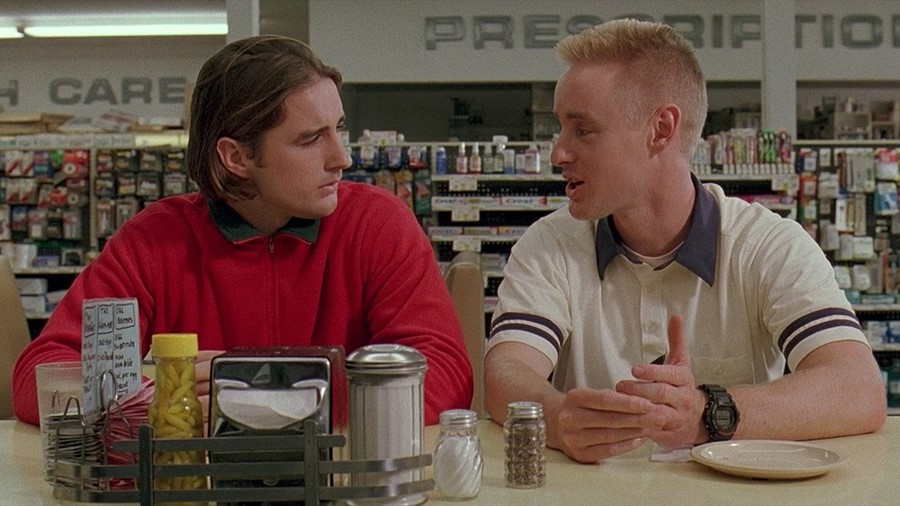
Whatever it was, for me, Wes Anderson was on my map. And I’ve been a fan ever since then, from the cult indie days of Rushmore through the big-budget all-star epics of Grand Budapest Hotel and his latest, Asteroid City. Anderson’s offbeat, precise style and humour combined with sadness has always felt tailor-made for my sensibilities.
Some people really HATE Wes Anderson. I don’t get it, but I can see why – they find him smug or pretentious, overly mannered and obsessed with set design over story. But I don’t agree at all. Wes Anderson makes his own worlds in his films, true, from the elaborate family home of The Royal Tenenbaums to the day-glo Western desert village of Asteroid City.
But what director doesn’t craft their own world, whether it’s Stanley Kubrick or Zach Snyder? At their core these are all still stories about real humans with real feelings, as deliberately told as they may be.

Somewhere in the last few years, though, Wes Anderson went from a film fan’s fetish to a cultural meme, as the internet latched onto his meticulous sense of order and design and “Wes Anderson style” became a thing. The long shots, the staring at the camera close-ups, the yellow serif fonts, the colour coordination and deadpan acting approach launched a thousand viral hot takes and merchandise, from the clever to the obvious and stupid.
Wes Anderson is a style, yeah, but it’s the movies and the marvellous characters like Max Rushmore, Royal Tenenbaum, M. Gustave or Midge Campbell that stick in my mind. The layered design is a setting for the characters, but to me it never overwhelms them.

Sure, some people don’t like it. The reviews for Asteroid City out there are starkly polarised to a weird degree but it ranks right up there with Oppenheimer as the best movie I’ve seen in cinemas this year, carrying his obsessions with form and function to a stylised peak.
Asteroid City continues the recent Anderson trend of story deconstruction and pushing design to its frantic limits, where at times it almost seems a live action cartoon. Once again, it’s an all-star cast, and stars like Scarlett Johansson and Tom Hanks mostly slot well within the group of Anderson returning players like Edward Norton and a terrific Jason Schwartzman, leading one of his movies for the first time since The Darjeeling Limited.
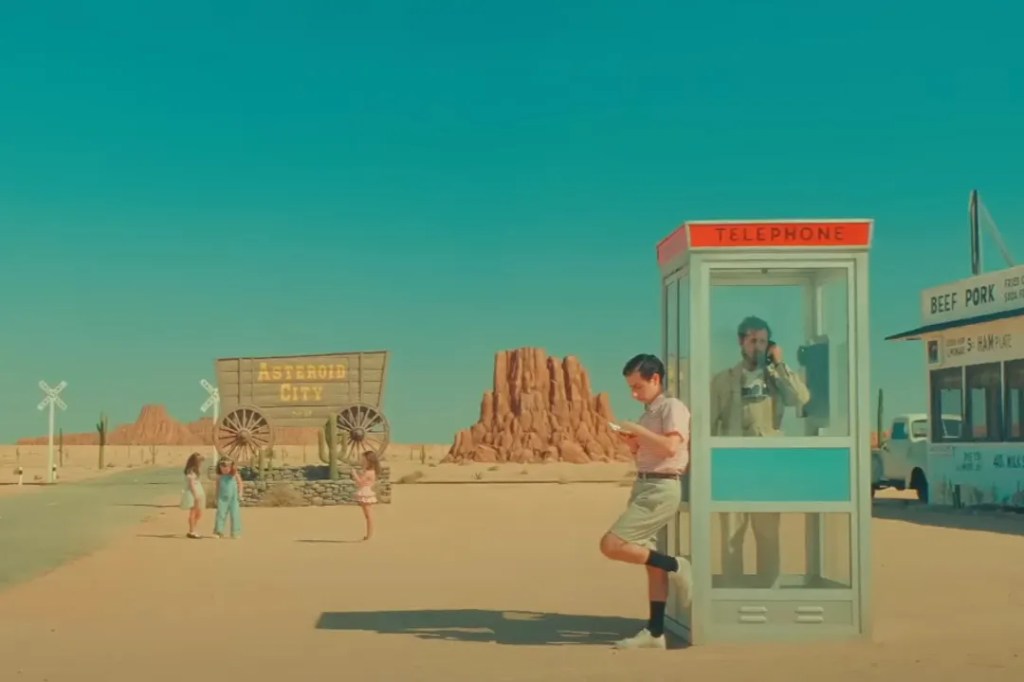
The story, like several of his recent works, is layers within layers – it’s a movie of a TV show of a play – and yet, it never quite spins out of control. Anderson has pushed hard at the very idea of straightforward storytelling since the flashback-within-flashback structure of Grand Budapest Hotel, a decision which either heightens the artificiality of stories themselves or adds a layer of chewy meta-context to mull over, depending on how you want to swallow it. Movies are constructs, he seems to be reminding us with a curio like Asteroid City, but that doesn’t mean they can’t mean something.
I don’t bow down at the altar of everything Anderson creates – The French Dispatch proved a little too cold and stoic for me and the anthology format muddled, and I didn’t think Isle Of Dogs was quite as delightfully screwy as his stop-motion adaptation of The Fantastic Mr. Fox. But even his less heralded films offer me something, like The Darjeeling Limited’s heartfelt take on grief starring fumbling Americans in a chaotic foreign country.

A lot of critics claim Anderson’s style is too cool and laconic, that the characters never show real emotion. But man, look at scenes like Steve Zissou’s haunting deep-sea encounter with the jaguar shark in The Life Aquatic, the aged bellhop Zero remembering his martyred mentor in Grand Budapest Hotel, Luke Wilson’s suicidal young man in Royal Tenenbaums, the pitch-perfect young love affair of Moonrise Kingdom or Jason Schwartzman’s shattered dad breaking the news of his wife’s death to his children in Asteroid City. Tell me they don’t have heart. Yes, it’s a repressed, wounded heart – Anderson doesn’t tend to do big shouty epiphanies for his characters – but you know, that’s how some folks process things.
The characters in Anderson’s films are full of submerged trauma, stacked with tales of dead parents, lost children and thwarted dreams, but there’s also always a self-aware wit and dry gallows humour to them. Funny tangled up in sad is my favourite kind of vibe – but it’s not for everyone, I know.
I get it if you don’t like Wes Anderson, of course. But for me, pretty much every film he carefully crafts and puts out there is a glorious little eccentric gift I enjoy opening again and again. Weird and wonderful, Asteroid City is another gem in a career that’s fussy and mannered … and still, years on from my renting that videotape of Bottle Rocket, it’s a style that feels like it was made just for me.

 Nik Dirga
One thought on “I was into Wes Anderson before Wes Anderson was cool, man”