
Over four novels and one collection of short stories, for nearly 40 years Richard Ford has spun out the life story of Frank Bascombe, New Jersey deep thinker father and husband.
Starting in 1986 with The Sportswriter and carrying on over the decades with Independence Day (which won him the 1996 Pulitzer Prize), The Lay Of The Land and the collection Let Me Be Frank With You, he now wraps up the series with this year’s splendid Be Mine.
It’s kind of the last gasp of a genre that feels rooted to the 20th century – multi-novel sagas about fairly well-off white men and their disenchantment in the American century, as pioneered by John Updike, Philip Roth and others. It’s kind of soap-opera literary fiction, really – the ups and downs of a life chronicled over several books, waiting to see what became of this supporting character or that one, to see how your everyman character views life’s latest changes and outrages.
Frank Bascombe begins the series as a man in his late thirties, recently divorced and mourning his firstborn son, dead of a rare disease at age 9. We follow him through career changes, battling cancer, his feuds and fancies, and like Updike’s soaring Rabbit Angstrom series, by the end of hundreds and hundreds of pages of one man’s life you feel like a little part of it includes you.
We mark the years in pages – early on the series finds Frank, a lifelong Democrat, pushing for quixotic Mike Dukakis and ends with him observing with disdain Trump’s “swollen, eyes-bulging face”, “looking in all directions at once, seeking approval but not finding enough.”
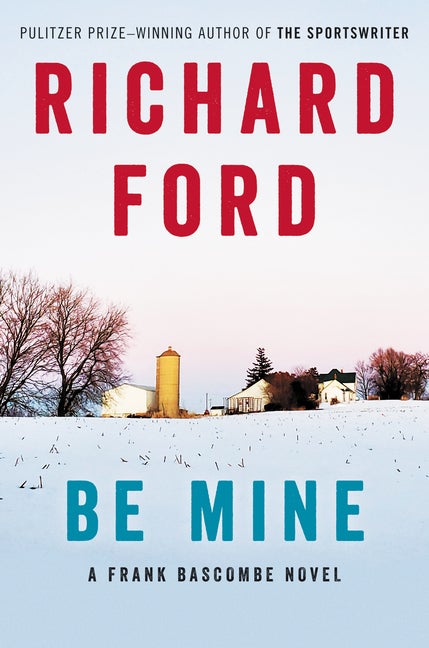
I recently re-read all four Bascombe books before the heartbreakingly good new Be Mine, and the experience leaves you “dreamy,” to use one of Ford’s favourite self-descriptions of Frank, lost in the confusing world of being human.
They’re worth revisiting – a tour of the last 35 years of American ennui, as Bascombe meanders from a sleepy sportswriting career to a real estate agent, fumbles through a second marriage and his uncertain ties with his ex-wife, surviving son and daughter and various friends, neighbours and enemies. Not a lot “happens” in the Bascombe books, with their series of errands, job tasks and family check-ins, always linked to some holiday such as Thanksgiving, Christmas or the Fourth of July – but Ford’s patient, precise writing slowly settles us into Frank’s world view, as he navigates from a nearly 40-year-old to a senior citizen.
Bascombe is an overthinker, a ponderer, and while this often makes for some lovely thought-provoking prose, Ford is smart enough to also recognise this is a weakness in Frank. Again and again, we find Frank thrown into situations where he loses his temper or acts impulsively and foolishly, like all of us do at times, and this has the effect of reminding us that much of Frank’s musing is just that – words to cover up the fact that often most of us never quite know what we’re doing. That makes him far more relatable as a character.
Yes, the books are all very much told from the eye of the “privileged” – Frank’s encounters with those of different races or poorer backgrounds are often awkward, occasionally a bit condescending, even if he ultimately means well. Yet Frank’s voice counts too, in the ultimate arithmetic of things. Much of the series is taken up with his fumbling attempts to define and find happiness in his life, like it is for us all.
The books can be imperfect – sometimes suffer from a sense of bloat, with too many long rambling passages describing New Jersey landscapes, yet Ford often manages a kind of hypnotic effect. Some of it ages badly, like Ford having Frank use the phrase “Negro” a lot to describe Black characters in earlier books – already painfully outdated language in 1986. While most of the books end with a bit of “action” and forward motion, a jarringly inexplicable scene of violence that closes The Lay Of The Land sticks out like a sore thumb in this otherwise meticulously crafted series.
For me, the relationship between Frank and his awkward, cranky surviving son Paul is the highlight of the books, and their unpredictable energy gives the series a welcome jolt of tension – as ruminative as Frank is about life, he’s always being thrown off his game by his irreverent, cynical and odd son. It’s perhaps telling that the two best books, to me, Independence Day and Be Mine, foreground Frank and Paul’s dynamic.
And that’s what makes Be Mine hit me so hard, as it’s the story of a quixotic final road trip to Mount Rushmore Frank Bascombe takes with Paul, 47, who has been diagnosed with ALS and is fading fast. Far closer to the end of his life and at the end of his son’s, Frank is still the same overthinking, dreamy fellow he’s always been, but there is a taut new sadness to his circumstances, and a gorgeous melancholy that makes Be Mine sting a little. We started the series with Frank mourning one son, and finish it with another about to go.
“Just exactly what that good life was – the one I expected – I cannot tell you now exactly, though I wouldn’t say it has not come to pass, only that much has come in between,” Frank says in the very first page of The Sportswriter, and almost 40 years later at the conclusion of Be Mine, the same man notes, “I have discovered that my narrative, to my surprise, is not a sad man’s narrative, not resigned, in spite of events.”
This, perhaps, is the best we can hope for, Ford tells us, in his brilliant series of novels.

 Nik Dirga