Year In Review: Hunting for those five stars on Letterboxd

So, a couple years back I started using the movie-geek logging app and database Letterboxd to exhaustively keep track of my film-watching habits. Created right here in little old New Zealand, it was bought for a whole lot of money this year.

In an age where most social media has turned into a bilestorm of nastiness, I find it’s generally a fun space to spend a bit of time, with lots of thoughtful film reviews – and lots of incredibly goofy, snotty one-liner reviews as well. It’s a mix of snark and sense. 

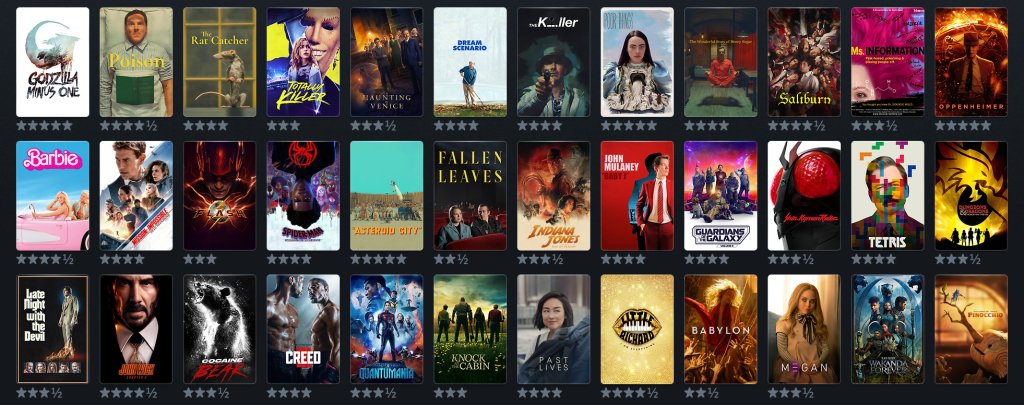
I’ve been using Letterboxd for a while but this year for the first time I thought I’d challenge myself by also doing ratings for the movies I logged – you have the option of ranking movies from five stars to no stars. I hadn’t done it before because there’s an easy tendency to let thinking about the ratings overwhelm the film experience itself – you spend too much time obsessing over what you might rate something. There’s an awful lot of Letterboxd cultists out there who seem to spend an awful lot of time obsessing over their “rating curve” for movies or asking everyone on Reddit to rank their rankings, and it can all get a bit performative. 

Eh. I don’t care that my movie curve “leans” toward higher ratings. I mean, life is short and you should generally watch stuff you like or reckon you might like, right? Still, I have tried to be restrained when it comes to awarding five stars. It’s been an interesting experiment this year because it makes you truly think, how has this movie landed with me? What’s the difference between the film as a film and my experience of it? Why do we rate things the way we do, anyway? 

For instance, objectively, it’s insane to rate Tommy Wiseau’s legendarily awful sex thriller/comedy/drama The Room as five stars, isn’t it? But, I saw it at a packed 20th anniversary showing with the whole family featuring co-star Greg Sestero (who wrote The Disaster Artist book about the making of The Room), there were skits, making-of-stories, plastic spoons flying, and honestly, it was one of the most fun times I had at the theatre this year. The right experience can make a bad movie seem good, I reckon. 

In the end, a star is just a designation that might well change based on my mood or the atmosphere or the configuration of the stars in the sky itself. There’s a LOT of movies that I gave 4 1/2 stars to that might on a different day or second viewing rise up, so in the end you have to take any movie ratings with a grain of salt.  

The majority of my “five star” ratings for 2023 were movies that I had, of course, seen before, because honestly, I think you tend to truly love a film more upon repeat exposure. But not always – there was some excellent new to me stuff this year that dazzled from the first few frames. 

I logged a rather solid total of 228 movies seen in 2023 (trust me, I’m apparently a total amateur compared to some Boxd-heads). In the end, I gave 24 films five stars.
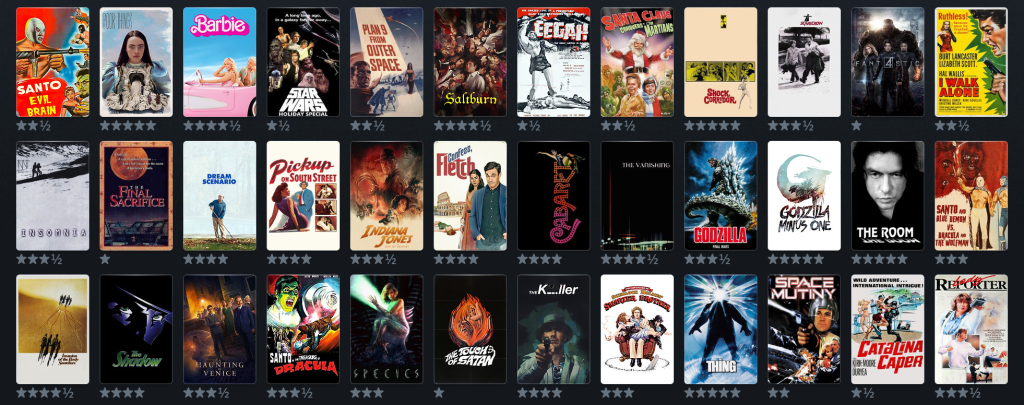
The ones I saw for the first time:

The Misfits (1961) – As noted here, this final film from Marilyn Monroe and Clark Gable blew me away.

Shock Corridor (1963) – So this is where David Lynch and Martin Scorsese were born. Pulp melodrama at a mental hospital that is absurd from a plot standpoint but hypnotic in style and execution. 

Thief (1981) – James Caan, Michael Mann, neon-lit neo-noir, thieves and cons – inject it right into my veins!

The Hit (1984) – The Limey is one of my all-time favourite crime flicks and this underrated gem starring Terence Stamp and a wonderful John Hurt is like the prequel I never knew I needed. Look, I like movies about hitmen starring great actors, OK?

Aftersun (2022) – So damn sad, so damn good. 

Pearl (2022) – The first great COVID pandemic movie, maybe?

Godzilla Minus One (2023) – After 70 years we might just have the best Godzilla movie yet.

Asteroid City (2023) – Wes Anderson goes full Wes Anderson and either you get it or you don’t. 

Poor Things (2023) – Filthy, funny, fantastic femme fatale Frankenstein.

Oppenheimer (2023) – I mean, duh. 

Repeat viewing offenders – Beloved film friends I watched again this year that were confirmed in my mind as film classics, from Claude Rains spooking everyone with his invisible powers to Ben Kingsley spooking everyone with his cockney gangster accent:

The Invisible Man (1933); Singin’ In The Rain (1952); All That Heaven Allows (1955); 12 Angry Men (1957); Blow-Up (1966); The French Connection (1971); Fist of Fury (1972); Stardust Memories (1980); The Thing (1982); Videodrome (1983); Sexy Beast (2001); The Room (2003); Rise of the Planet of the Apes (2011); John Wick (2014); The Sparks Brothers (2021)

The Warmth Of The Sun: Songs To Survive 2023

Look, I’m sorry to harsh the pre-Christmas buzz, but 2023 was pretty lame, right?

My wife went through breast cancer surgery and treatment (she’s doing a lot better, thankfully). Other family members have been battling ill health and the upheaval of change. We lost our family beach house in a cyclone as the climate crisis hit NZ hard. Hell, even our beloved old cat friend Bowie died, and the world seemed to continue its headlong lurch into fascism, internet-fuelled conspiracy-land, ignorance, pointless culture wars and hate. Get in the bin, 2023, I’m done with you.

So, what do you do? For the last several pandemic-tainted years I’ve done up a playlist of songs to survive, because art helps. Music helps, good books help, great movies help. Drawing two issues of my comic book Amoeba Adventures  helped. I don’t think I could survive in a world without some kind of art. 

Back in the days of ornate mixtapes, you could sweat over the proper order of songs for ages, crafting the perfect vibe. This year, I just kind of threw it all in a blender, from Kiwi pop to thrash to old favourites to new artists I literally discovered a week ago. It’s all music. It’s all good, you know? 

Here’s nearly 3 hours, 40+ songs that helped me survive 2023. Shuffle away and listen to it in any order, or let it flow as it is. 

Wherever you are, have an excellent Christmas, and whoever or whatever you believe in, let’s all hope for a little more peace on earth and goodwill to all in the days to come.

Here’s my playlist Songs To Survive 2023:

Movies I Have Never Seen #26: Fantastic Four (2015)

What is it? …So, what makes a bad movie? Is it ineptitude, or arrogance, or both? Marvel’s Fantastic Four comics have now been adapted disappointingly into movies four times – a very, very low-budget never-officially-released 1994 Roger Corman schlock-fest, two mildly successful family-friendly 2000s movies by Tim Story, and an outright bomb in the dark, dreary 2015 Josh Trank film. It shouldn’t be this hard to adapt one of the great superhero comics to cinema, but somehow, it keeps missing the mark. 

The Fantastic Four are a family – Reed Richards and his (eventually) wife Sue Storm, fiery Johnny Storm and tragic Ben Grimm, the Thing. They’re adventurers and explorers and Stan Lee, Jack Kirby, John Byrne, Jonathan Hickman, Mark Waid and others have written countless great comics starring them. 

Yet Fantastic Four 2015 is a joyless slog, in love with its own seriousness in a story that should be about wonder and adventure, more Indiana Jones than X-Men. The movie spends far too much of its runtime setting up young genius Reed Richards (an uncertain Miles Teller) and childhood pal Ben Grimm (woefully miscast Jamie Bell) getting involved in a secret cosmic teleportation experiment with scientist Sue Storm (Kate Mara, serious and dull), her daredevil brother Johnny Storm (Michael B. Jordan, showing little of the charisma he brought to Creed and Black Panther) and Victor Von Doom as a spoiled, egotistical scientist (forgettably generic Toby Kebbell). The experiment changes them all, giving them strange powers in a movie that seems determined to play that as Cronebergian body horror, they end up fighting Victor Von Doom who’s gone evil for… reasons, and then it’s the end.

Like far too many superhero movies it’s all about setting up for imaginary sequels, and Trank plays it all stonefaced straight. Tim Story’s 2005 and 2007 Fantastic Four movies were kinda clumsy and cheap, but one thing they got right was the essential light touch a FF story needs, the banter and the camaraderie.  Not a single character in Fantastic Four 2015 is really that likeable.

A fifth Fantastic Four movie, finally meant to be part of the Marvel Cinematic Universe proper, is set to arrive in 2025. Will it break the curse?

Why I never saw it. Look, as a wee young boy superhero movies were few and far between, and I gamely saw flops like Howard The Duck and Superman IV: The Quest for Peace in theatres. But in the last 20 years we’ve been deluged with comic content and when a movie bombs as hard as FF15 did, you know, you tend to skip it until you get bored enough one night. Bad movies have their own twisted charm, and I figured it was time to see if this was as bad as everyone said it was. (Should I do Morbius next, or can my heart take it?)

Does it measure up to its rep? An anemic 9% positive reviews on Rotten Tomatoes. A 1.3 star rating out of 5 on Letterboxd. A (rather too generous) 4.3/10 on IMDB. Yep, I’d say it measures up to those. It is indeed as bad as everyone said it was. 

What depresses most about Fantastic Four 2015, besides the utter miscasting of pretty much everybody involved and its relentless dour tone, is how so many wrong choices by Trank show he fails to get what has made the Fantastic Four work for 60 years. The first misstep was relying on the 2000s “reboot” comic Ultimate Fantastic Four as your source material. It’s one of those peak “edgy” decompressed reimagining of beloved characters with then-hip lingo that ages like cheese left out in the sun, and far inferior to the energetic original Lee & Kirby Marvel Comics. 

What makes a bad movie is the sense the filmmakers don’t care about their story or their characters. Trank has the team as brooding teenagers, manipulated by the sinister government and missing the spirit of plucky individualism that drove Lee and Kirby’s original comics. Make Ben Grimm’s mutated Thing, famous for his gritty wit and gruff everyman charm  in the comics, into a sullen government assassin? Also make the Thing disturbingly naked instead of wearing his trademark blue trunks? Check. Have Sue Storm be an adopted orphan from Kosovo for no particular reason? Check! And once again mangle the character of Doctor Doom, one of comics’ most revered villains, turning him into a whiny loser mutated by cosmic energy and quite possibly the most visually ugly interpretation of a comics villain on film outside of Zach Snyder’s Justice League? Double check! (Doom has now fallen short in FOUR movies, which has to be some kind of record in a world where people playing the Joker have won two Oscars.) 

Worth seeing? We live in an age where third-tier comic book characters like Groot, Blue Beetle, She-Hulk and Agatha Harkness are all well-known. Yet, somehow, film still hasn’t quite cracked the secret of how to adapt one of the greatest comics of all time to film. It’s no wonder it took me eight years to get around to this one. By far the worst of four cinematic attempts at the quartet, Josh Trank’s Fantastic Four is exactly as misguided and depressing as the reviews back in 2015 made it sound. If you’re a fan of the comic, like I am, Fantastic Four 2015 feels like an intentional insult. At least we’ll always have the comics, eh? Flame on! 

Detective Kenneth Branagh is here to solve all of life’s mysteries

Every actor has a face that fits certain roles better than others. 

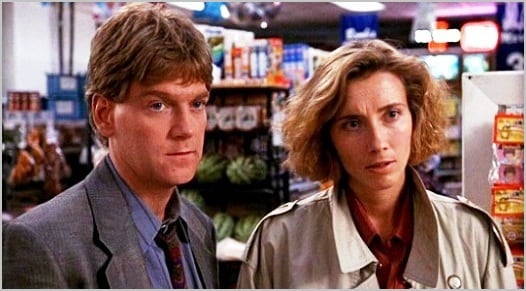
Kenneth Branagh is lots of things – an acclaimed Shakespearean whose film Henry V helped seal my lifelong love for the bard, a director of Marvel movies and action franchises, an Oscar-winning writer, an actor who slots nicely into big-budget productions from Oppenheimer to Harry Potter films to give them a touch of class. 

But my favourite Branagh as an actor (or Sir Kenneth, if you like) is when he’s solving a mystery or two. He’s an actor who feels born to mull over and solve crimes, to be the bloke at the end of the picture who tells the cast of characters who done it and why. 

He’s played two pretty iconic detectives – Agatha Christie’s Hercule Poirot in three movies, and the late Henning Mankell’s Scandi-noir police investigator Kurt Wallander in a series of excellent English-language TV adaptations. 

Heck, at the very start of his career 30+ years ago a baby-faced Branagh also served up a fine Hitchcockian noir homage with the twisty Dead Again, where he plays a detective who’s not quite what he seems. 

I enjoy watching him in all of them, for even when the material itself is a bit tatty, Branagh remains a cool, elegant centre, whether he’s the magnificently mustached Belgian Poirot or the tense, stressed Swede Wallander. Sir Kenneth excels at showing the mind at work solving whatever cases life throws at him. 

Branagh’s Agatha Christie adaptations of Murder On The Orient Express, Death on the Nile and A Haunting In Venice became a bit of an unlikely low-key franchise the past few years. The star-studded let’s-solve-a-murder thrillers throw back to similar movies of the 1970s. They are more popcorn diversions than timeless classics, really, but I have fun watching every one of them. (Death On The Nile, hampered by very obvious pandemic shooting restrictions and a miscast Gal Gadot proving she really can only play Wonder Woman, is the weakest, while moody quasi-horror movie Haunting In Venice, which quietly slipped into release earlier this year, is quite solid.) Poirot is a classic character that Branagh brings a nice bit of haunted depth to, traumatised by his World War I experiences but animated by a firm sense of justice. 

The Wallander series introduced me to Mankell’s compulsively readable, dour novels, and the Swedish TV productions of them too. Set in an endlessly windswept, grim small-town Sweden, they’re dark but addictive like the best crime fiction. Branagh’s performance as the jittery Wallander, who never quite seems to get enough sleep, always holds my attention as he works his way to a haggard justice for crime’s victims. There’s a mood of exhaustion that hangs over Wallander which could be depressing, but somehow, it works for me, anchored by Branagh. 

However, for a man who’s tackled many British icons from Shakespeare on down, there’s one role I’d still love to see Sir Kenneth step into – give us a Sherlock Holmes, with, say, Alfred Molina as an excellent choice for his Watson. It doesn’t need to be some meta reinvention like Benedict Cumberbatch’s fine series.

Plonk us in Victorian England, give us a mystery or two to solve, and watch Sir Kenneth’s face go to work. As a filmmaking triple-threat, surely Sir Kenneth could write, direct and star in a Sherlock Holmes movie to add to his detective’s kit. 

Life is full of mysteries, after all, and we still need great detectives to solve it. 

Godzilla Minus One: At 70, Godzilla can be whatever he wants to be

There’s been a LOT of Godzilla movies, so how is it that that the 37th chapter in this venerable franchise has ended up one of the best reviewed movies of the year?

It turns out Toho’s new Godzilla Minus One is an astonishingly good movie, let alone a Godzilla movie, the latest in a series of endless reinventions of the king of monsters since his debut in 1954. Set just after World War II, it tackles the weighty subjects of Japan’s post-war trauma and rebuilding and mashes it together with some of the most stunningly visceral kaiju rampages ever filmed. 

It’s the rare Godzilla movie where the human characters are fully realised. It’s the story of a disgraced kamikaze pilot attempting to recover from his war experience, with Godzilla cleverly interlaced as both potent metaphor and big-ass destructive force constantly upending one man’s little life. Godzilla is terrifying in this movie, in a way he’s only occasionally been in the last 70 years. It’s instantly rocketed into my top 3 Godzilla movies of all time.

But it’s also a very serious Godzilla movie – which is totally cool. The thing is, Godzilla has turned out to be very flexible for such a big fellow, so the very same day my son and I were floored by G-1 in the theatre, we also saw the trailer for next year’s American “Monsterverse” instalment Godzilla X Kong: The New Empire, which swerves 180 degrees back towards the silly side of Godzilla again. Godzilla and King Kong are set for a good ol’ fashioned monster team-up adventure, and I can’t wait.

Yes, the trailer is kind of wacky, but I loved 2021’s Godzilla Vs Kong for its same combination of bombastic old-school kaiju action with modern special effects, too. Look, any movie with a giant gorilla and reptile having a punching match on the deck of an aircraft carrier can’t be all bad.

That’s what’s great about Godzilla. He can be a horrifying embodiment of nuclear fears as in his very first movie, he can be a quasi-superhero, he can be a big galoot who wrestles other giant critters, he can be a hero or a villain or an implacable alien force of nature. In recent years, the American series of Godzilla films have gone for the popcorn craziness, while the Japanese ones have tried for a little more depth such as 2016’s fascinating Shin Godzilla which was a dense satire of the country’s bureaucracy mixed with a shapeshifting take on the titular creature. 

I watched Godzilla Minus One in the afternoon and then in the evening for a whiplash-inducing change of pace I watched 2004’s Godzilla: Final Wars again, which was made to mark the 50th anniversary of the big guy and a temporary “last” movie in a franchise that never truly ends.

It is an insane overstuffed piece of cinema that juggles alien invasions, mutants, martial arts, rap-metal, terrible early 2000s CGI and cameos from pretty much every kaiju from the vintage Showa era on up. It’s like someone decided to mix a 1970s Godzilla movie with a Matrix ripoff and it’s technically sometimes awful but also amazingly entertaining in its go-for-broke fashion. 

Final Wars is in tone and execution about as far away from the layered, emotional Minus One as you can get, but somehow Godzilla works in both of them. That’s the beauty of Godzilla. After 70 years, he’s still got plenty of new tricks up his scaly sleeve.

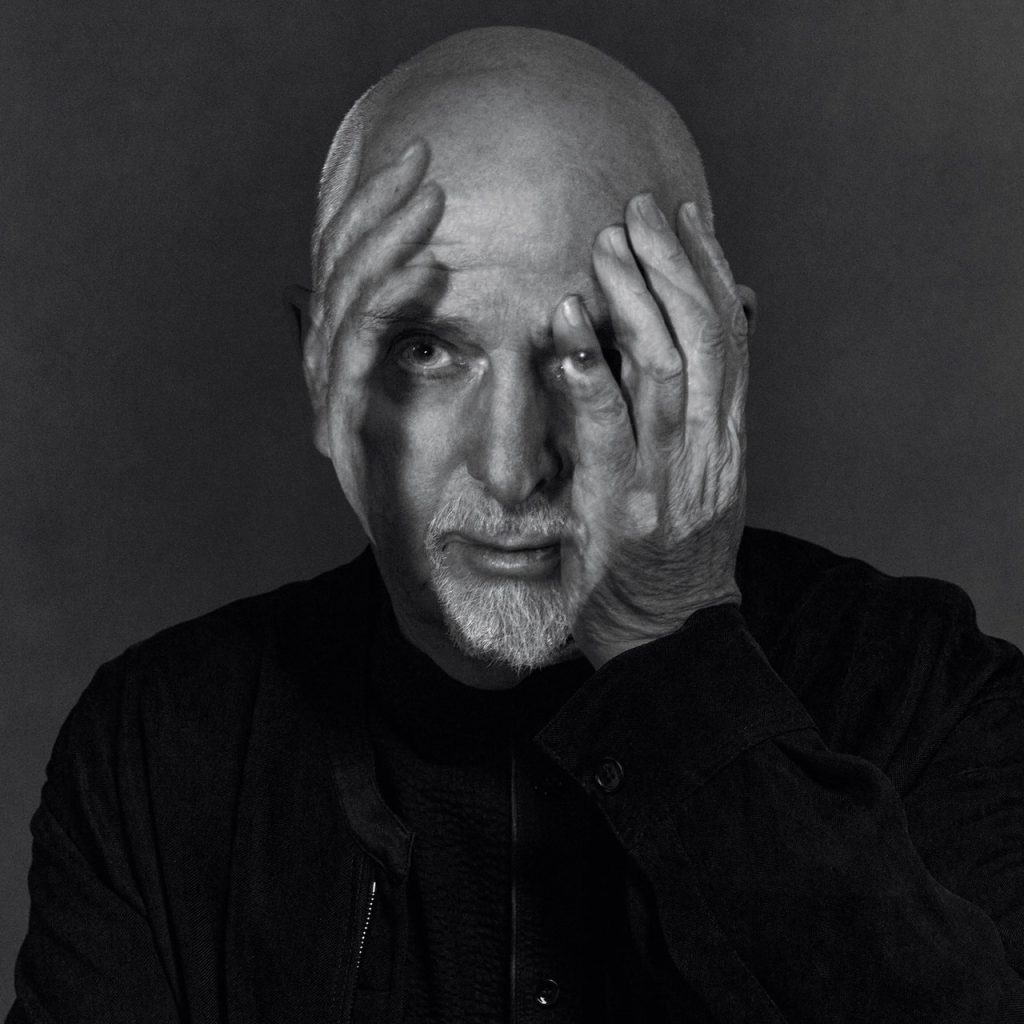
Peter Gabriel, the man who disappeared … and then came back

I’m a big Peter Gabriel fan – in fact, I’m not sure there’s an artist I’ve ever been quite so obsessed with. From the dusky grandeur of his voice to his rhythmic explorations of world music, I dig him. 

So why was it that I felt so neutral over the promise of his releasing his new album i/o this year – his first proper solo album in a staggering 21 years? I imagined i/o would never live up to that wait. 

Gabriel has been releasing tracks from i/o all year long on social media and, weirdly, I had barely listened to them. It was very un-fanboy-ish. I wanted an album, not a drip-feed of social media content, and I figured I’d just wait for the far-off day that it actually came out and experience it as one big gulp. 

And yeah, I guess I felt a little miffed over him taking two decades to put out a new album of original material – fanboys are proprietary, after all.

In my younger days, I fell in love with his breakthrough smash So, and then dove into the wonders of his solo discography. I listened to So, Security and his several self-titled albums so many times I knew every drum crack, every soaring keyboard line. 

I dug Gabriel so much that I once proposed writing an entire 33 1/3 book about him (yeah, that didn’t happen) and I got interviewed on Radio New Zealand about my nerdy fandom a couple years back. But I also wrote a couple years back in Peter Gabriel, the man who disappeared about his mysterious, sometimes irritating silence on the pop music scene.

He certainly wasn’t a reclusive hermit and did produce a variety of other projects, but still, the last “real” solo album he did was Up, released in September 2002 … 21+ years ago. 

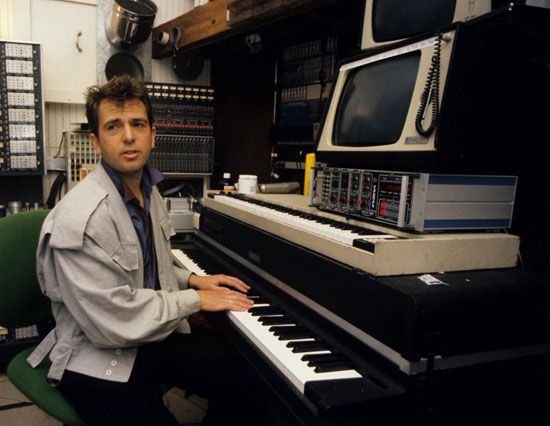
I mark my life by my Gabriel fandom. I picked up So in high school. I bought Us in 1992 as a college student. I got Up just a year or so before my son, who’s now in university, was born. I bought a copy of i/o on its release day (determinedly old-school with a CD, to slot in amongst my other Gabriel albums) and somehow, I’m in my early 50s listening to new music by the same man I’ve dug well over half my life. 

When Gabriel did the cliche of re-recording his old songs and cover tunes with a full orchestra a few years back, I quavered in my devotion. I found the cover albums lifeless and bland and worried i/o would end up equally exhausted-sounding. 

So after all that, I put i/o on, popped on my Bose headphones and settled in for the first new Peter Gabriel album since I was in my early 30s. 

Is it actually any good

Fortunately, I have to say, now that it’s finally here, i/o is a dense, rewarding listen, slotting comfortably in the sparse discography of post-So Gabriel. It’s less melancholy than those dreary orchestral albums were, although it’s still the contemplative music of a man who’s now 73 – there’s no ‘Sledgehammer Part 2’ here. 

Yet his voice is in remarkably good form, rich and full, still able to easily hit those high notes he could early in his career almost 50 (!) years ago. It threads the line between light and dark, yet a thread of optimism pulses throughout. That perfectionist Gabriel has even released it in multiple mixes so I’ll spend a while getting to to know it all. 

I will give i/o plenty of my time in the coming weeks – already I love the grand sweep of “Playing For Time,” the slightly spooky thundery “Pantopticom,” the gloriously upbeat title track, the bouncy good cheer of “Olive Tree.” 

And in the end i/o is shaping up as an album about time, its startlingly quick pace as you get older. Since Gabriel’s last album a lot of my other obsessions and music loves have left. Bowie, Leonard Cohen, Prince, Sinead, The Fall’s Mark E. Smith, The Pogues’ Shane MacGowan just this week. I have to wonder if Gabriel didn’t mean for i/o to take nearly two decades to come out. But time gets away from you, doesn’t it? 

I give Gabriel time. A lot of time. But I’m already basking in that old long dormant fandom, digging the rise and fall of the sounds that make up i/o. I’m listening. It’s good to hear that voice again.