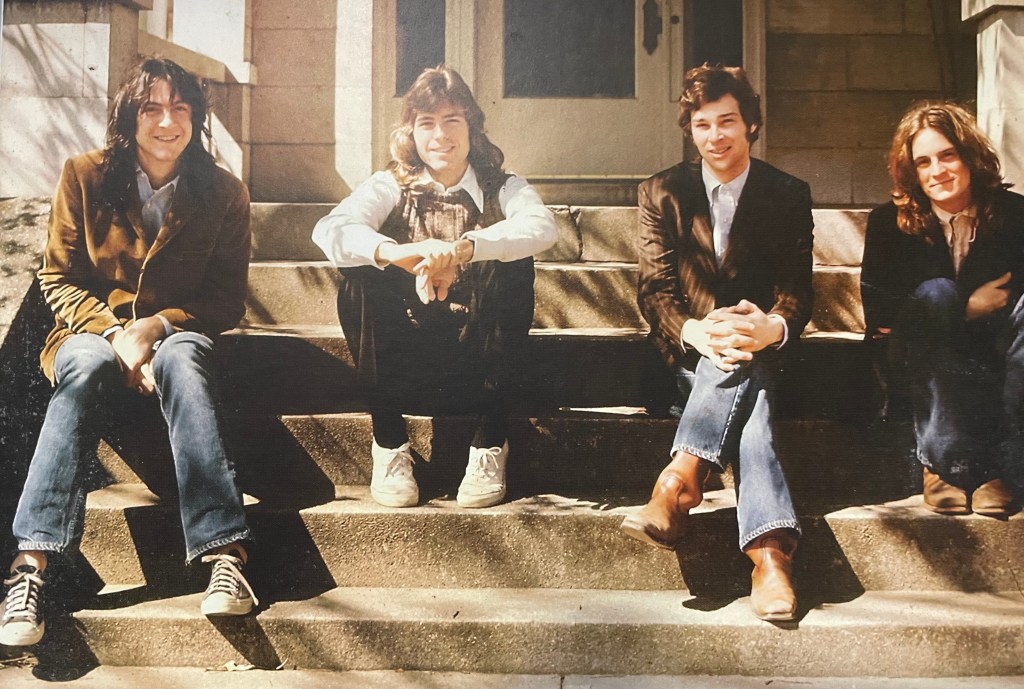
I’ve loved the sounds of Big Star and Alex Chilton for years, and the simple glittering heartbreak of their best songs still gets me with every single listen.
How often can a song do that after dozens, maybe hundreds of spins?
Those Big Star songs shimmer, 50 years on now after the fall 1974 recording of what ended up their final album, Third/Sister Lovers.
I can’t listen to the ringing chords of “September Gurls”, without summoning up visions every teenage love affair there ever was, of the burning intensity that, maybe, your life can never quite reach again after 18 years old. The words are deceptively simple – “September girls / Do so much / And for so long / ‘Till we touched.” But the vibe, man, the vibe – that’s eternal.
The genius of Big Star was the utter lack of rock star swagger in their boy-loves-girl pop, a kind of bemused casual sincerity that never really seems to age. Their feelings tapped into the universal, girls, cars and nights of confusion.
Take “Thirteen”, written by Chilton and poor doomed Chris Bell, who left the band after their first album and died in a car wreck at just 27. A fragile and trembling little song, in its first little conversational couplet it sums up a whole world of teenage hopes and dreams – “Won’t you let me walk you home from school? / Won’t you let me meet you at the pool?”
A buried gem for me has always been “Life Is White,” which contains the entire frustrating agony of a breakup in its simple words – “Don’t like to see your face / Don’t like to hear you talk at all.”
Written down, their words don’t exactly leap off the page, but between Chilton and Bell they feel real, in a deeper way than the stadium rock and pompous prog lyrics of the era.
The true art of Chilton’s lyrics was their plain-spoken language. “Hanging out / down the street” is hardly Shakespeare, but it’s a word picture that worked so well that That ‘70s Show used it to be the theme song for the entire decade. (Still annoyed they drafted Cheap Trick to cover it, though.)
Of course, part of Big Star’s charm is their found mystery – barely registering while they were briefly a band, three albums and done, and only slowly growing in cult power years later. (I first discovered them myself in the early 1990s, when a series of Rykodisc CD reissues hyped up this old forgotten cult band from Memphis, an hour’s drive up the road from where I was going to college. And for once, a band lived up to the hype.) Everybody loves to think they’ve discovered a hidden gem, and Big Star was one of the shiniest for a power pop lover back in the day.
I’ve written about my love for Alex Chilton’s epic disheveled and messy solo career that unspooled post-Big Star before his sadly early passing in 2010, but while Big Star were sometimes low-fi and unadorned, they were never sloppy. They meant every word, while Chilton in later years would kind of lean into a debauched troubadour vibe, singing songs with a wry smirk.
I sometimes think that Chilton maybe felt he’d perfected pop music with Big Star so much that he became bored by it, that he never wanted to take a song quite so seriously again.
There’s a reason people still listen to Big Star more than 50 years after the boys from Memphis started doodling out songs. They strike a chord, and every time I hear that clarion call of “September Gurls” glittering out of the speakers, I hear it ringing still.

 Nik Dirga