G’day, mate, I’ve been a New Zealander for 18 years

Auckland, October 2006.

Kia ora! We moved to New Zealand exactly 18 years ago this weekend, and suddenly my migration is practically an adult in human years. Time doesn’t just fly – sometimes, it leaps. 

When we came here in October 2006, with a 2 1/2 year old, we didn’t really know for sure how long we’d stay here. We came to be closer to my wife’s family, to have our son grow up knowing about the Kiwi side of his heritage. 

And then 18 years flew by. Our kid is in his final weeks of undergraduate university studies. We both have a lot more grey hair. Three of our four parents have left us, now, and we start talking about our own old age less hypothetically than we once did. Life is not perfect here – is it anywhere? – but this is home, now.

Remarkably, I’ve now lived in Auckland longer than I’ve lived anywhere else in my life. The place where you grew up will always stick its hooks in you the hardest, and there’s always a piece of me in the rolling hills of Northern California, but at 18 years I’ve now lived here longer than the 14-15 years I spent in the town I grew up in. I lived in Mississippi seven years, Oregon nearly five years, but I guess I am an Aucklander now, even if I’ll always feel a little foreign here. That American accent isn’t going anywhere, still.

I’ve been in Auckland long enough to watch it changing. It’s a city of 1.6 million people that sometimes feels like a small town and at other times I’m learning about whole new parts of it. A melting pot of Māori, Pasifika and Asian cultures squashed up with lingering remnants of the old British Empire, it’s not quite like anywhere else I’d lived.

October 2006.

I’ve been here long enough to have favourite places that are gone, like the old gigantic Real Groovy Records on Queen Street, the jam-packed and sweaty Kings Arms pub where I saw heaps of great bands play, the labyrinthine original home for Hard to Find Books in Onehunga. 

I regularly say “mate” and “bloody” in conversations but I still don’t understand cricket. I love fish and chips and no bloody health insurance and Parliamentary politics and Flying Nun Records and tui and kererū birds and the kiwi-pop art of Dick Frizzell and Pineapple Lumps and yes, I own a pair of gumboots. 

New Zealand is small, but not tiny, and I kind of like it that way. When we first moved here way back in 2006 I liked to tell Americans that coming to NZ was like going back in time about five years – not a radical shift but enough to notice, a place that felt slightly slower and cozier than wide-open America. 

The internet has changed a lot of that, now – when we moved here my prize tech possession was an iPod that held THOUSANDS of songs, and now I carry the entire internet in my pocket. We don’t take quite so long to follow trends or get the latest pop culture. (Back in 2006, you’d still see popular movies and TV shows premiere here months after they did in America, for instance.)

Social media has kind of destroyed polite society in a lot of ways, I think, but it’s also made the world feel smaller and communication easier. Once upon a time we posted letters to our New Zealand family and sent them across the seas. Now, I can video-call my family in the US instantly. It’s made the distance better, especially in the last couple troubled years as the thing that every expatriate dreads happened – your faraway family gets older, sicker, and they leave you. 

Some other American couples we knew who came about the same time we did ended up going back to the USA within a couple of years. But while there were ups and downs, somehow, we stuck to it. I actually found my so-called journalism career generally went better here than it did back in the US – higher pay, more variety to the work, even if I couldn’t entirely escape the periodic redundancies that plague the industry everywhere and I still sometimes conflate my British and American English (color? colour?). As my day job I help run one of the biggest news websites in the country and that’s not something I could easily do back home. 

But more than that, I found a world so much wider than America alone. These days I often look back at what’s going on in my homeland with confusion and a fair bit of disdain, I admit. I love the place I came from but I don’t really understand a lot of it now, as yet another election season is here and events just don’t make sense to me. We have the same rolling disinformation and post-Covid conspiracies here, too, but again, we’re smaller. Everything is usually a little less dramatic here, I think. 

October 2006.

This will most likely be the place I end up, in the 20, 30 or however many more years I get left. There are worse places to be, and my world is so much bigger than it once was.

An immigrant to another country – whatever their status, whatever their background – probably always feels a little uncertain of where home really is. 

The thing I’ve learned these past 18 years is, you can have more than one. 

This is a public service announcement: Help Max Ink!

My old pal and former Amoeba Adventures creative partner Max Ink has hit some financial tough times is in need of some help to keep their house.

Without Max’s awesome artwork for about a dozen issues of Amoeba Adventures back in the 1990s, my silly little hobby would never have really gone to the next level. And even now, decades later and back to drawing my own comics again, I often look back to Max’s work as guidance for the best ways to draw my own characters – now that’s talent!

Max is a great guy and many of you out there know him, I hope some of you can lend a hand to a very worthy cause: Here’s their GoFund Me right here!

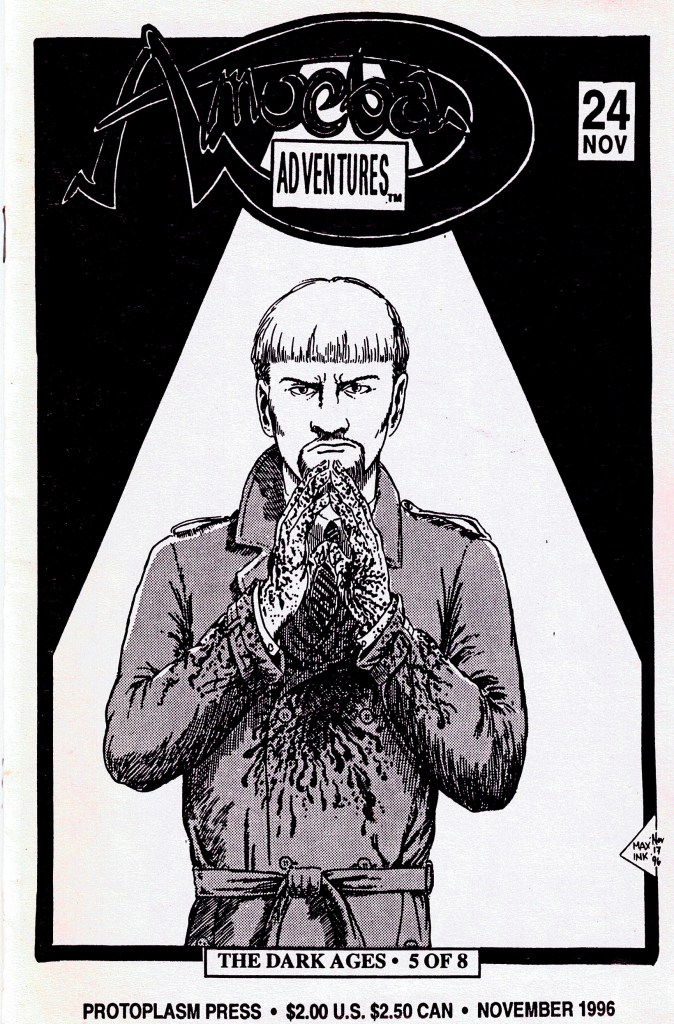
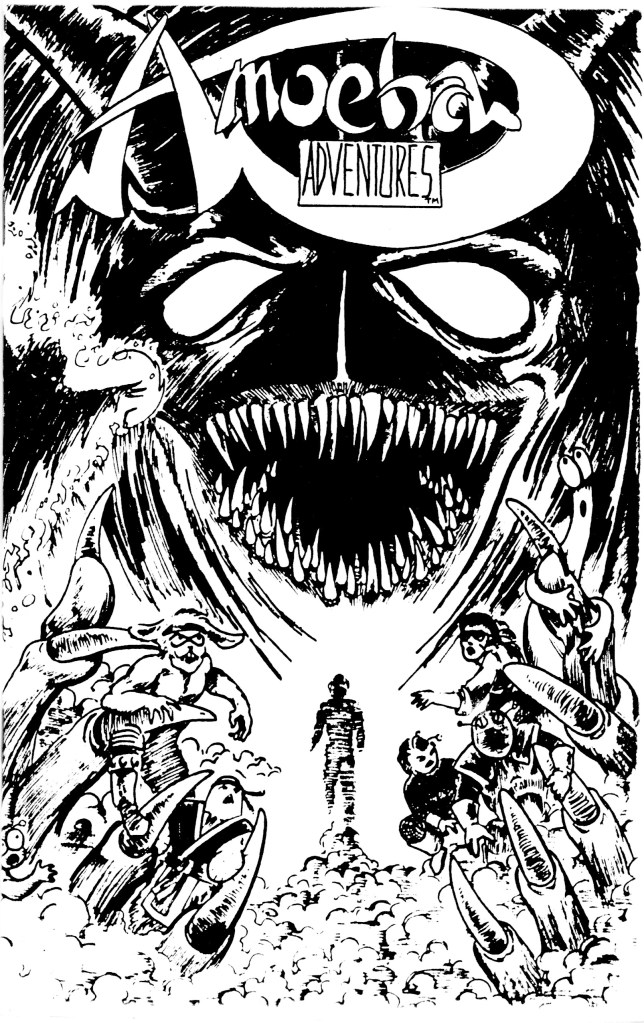
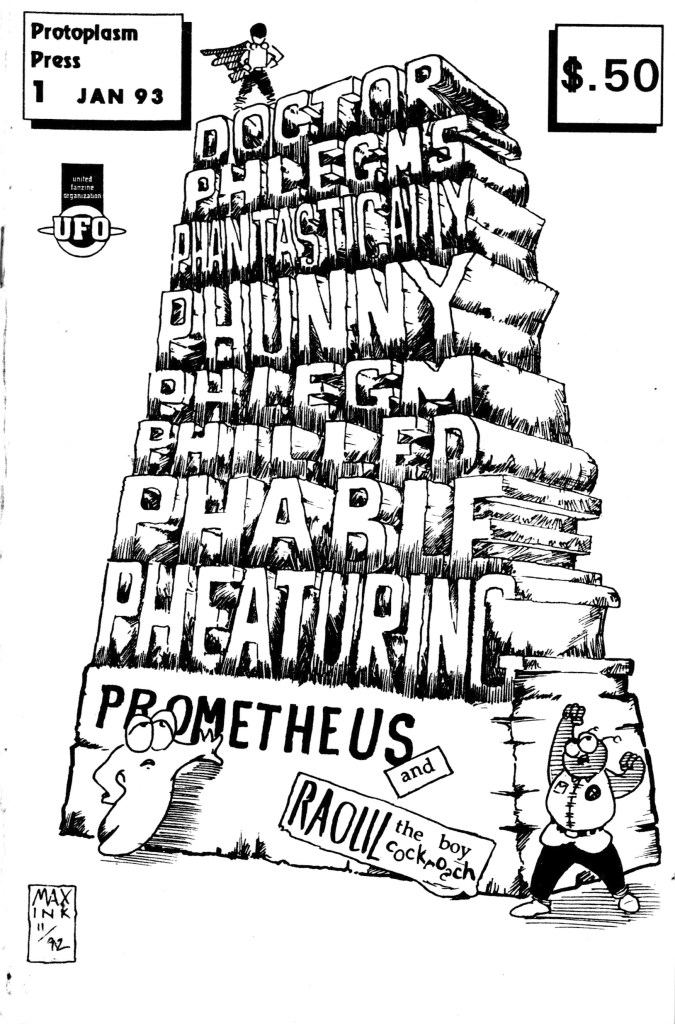
I’ll always take an excuse to show off some of Max’s great covers back in the day:

The Justice Society of America: And justice for all

Comic book fans love their legacies, and there’s no group with more legacy out there than the Justice Society of America. Comics’ first superhero team debuted back in 1940 and 84 years on, they’re still out there, with many of the original members who fought during World War II carrying on fighting crime despite theoretically pushing 100 years old now. 

But hey, kids, it’s comics, and even if the original Flash and Green Lantern might be a little long in the tooth, they’re still out there. The JSA was generally home to the second tier of the early DC heroes – Hawkman, Doctor Fate, Starman and the like. It was literally the first time superhero characters from different stories got together and decided to hang out. They inspired the more famous Justice League that started in the 1960s and have kept coming back, for decades now. The latest JSA revival is about to hit the stands.

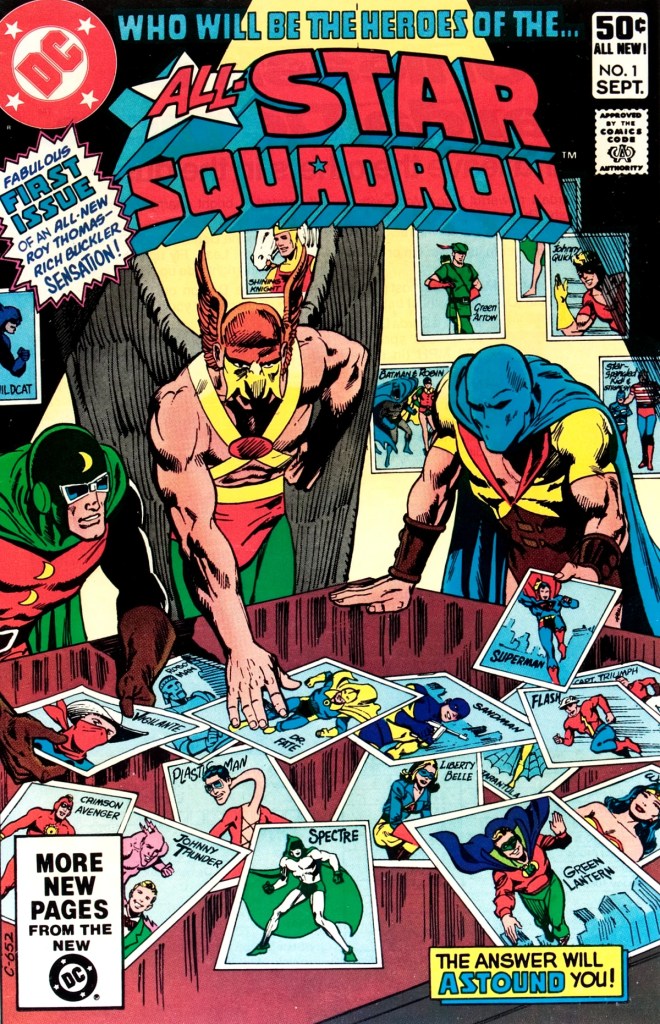
I stumbled across a big ol’ pile of All-Star Squadron comics at a yard sale back in the day, which was writer Roy Thomas’ faithful reimagining of the Justice Society’s adventures in World War II, along with pretty much every other vintage comics character of the period thrown in the mix.

I fell in love with Thomas’ amiable, corny comics – nobody is more of a comics history buff than he is, and even if his dialogue can sometimes be embarrassingly uncool, his love for the characters always shines through. The All-Star Squadron’s whole vibe was retro without being childish, and for 70 issues or so in the ‘80s it brought the JSA back to life again. (Heck, I even named my own team of goofy superheroes “The All-Spongy Squadron” in a tip of the hat to ol’ Roy Thomas.) 

What I love about these comics was that there were so MANY heroes, from stalwarts like Superman and Hawkman to second-tier characters like Johnny Quick and Robotman to who-the-hell-are-these-people obscurities like The Jester and The Human Bomb. When we saw the entire All-Star Squadron in one heaving double-page spread, I wanted to know who all these guys were and what their deals were. That’s how comics hook you. 

The thing I’ve always enjoyed about the JSA/All-Star Squadron in all its many incarnations is its sense of family and legacy. Newer heroes came along like Power Girl, a grown-up Robin and Batman’s daughter The Huntress in the excellent 1970s All-Star Comics revival, while Roy Thomas’ spin-offs Infinity Inc and Young All-Stars added even more characters into the mix.

The Justice Society’s 84-year-tenure is a history of the superhero comic itself, with all its ups and downs – the JSA went away in the 1950s as superhero comics dropped in popularity, swung back in the 1960s to inspire the Silver Age of Comics, and got a bit grim and gritty in the modern age just like everything else.  

The biggest and so far best JSA revival was the 1996-2006 one spearheaded by writer Geoff Johns, which took all that hefty legacy and sense of history and stapled it to some ripping good modern action-filled superhero yarns. The Justice League are the big guys, yeah, but the JSA were the ones who started it all, and it was great to see a comic that embraced their legacy in a dynamic fashion. 

You’d think superheroes whose whole existence is tied to being around since World War II would eventually fade, but the JSA just keep ticking along, and so far, nobody has really retconned their deep ties to the 1940s away yet. (Some of the old original JSA have died, but others have had their improbable longevity waved away by magic, science, being lost in limbo, speed forces, et cetera.) 

Big super-teams out there like the Justice League and Avengers are constantly breaking up, reforming, et cetera. But while the JSA has gone dormant at times, their legacy has never quite been rebooted or erased and their core has remained refreshingly the same, with Hawkman, the original Flash or Green Lantern almost always in the mix. 

Unfortunately the most recent 2022-2024 12-issue Justice Society revival by Johns was a disappointment, with an endless procession of new characters being introduced and very little being done with them and none of the pivotal characterisation Johns’ earlier work had.

The JSA and All-Star Squadron have always been crowded with heroes, but this latest Justice Society revival felt more like a list of soup ingredients than a pantheon of icons. It was an endless series of teasers in search of a story, something a little too common in the MCU-ified comics world these days. 

Fortunately, we’ve already got the next JSA reinvention ready to go, with new writer Jeff Lemire taking on the team that won’t die. I’ll be checking it out, of course and always hoping for the best. Superhero teams are everywhere these days, but the one that started the whole thing off is still my club of choice. 

Movies I Have Never Seen #30: Stop Making Sense (1984)

What is it? “The greatest concert movie of all time,” capturing the Talking Heads at their very best during a series of shows in Hollywood in 1983, featuring frontman David Byrne’s jittery pop-funk songs and directed by future Academy Award winner Jonathan Demme early in his career. 

Why I never saw it: Blame laziness, blame cultural overload, blame the fact there’s only so many hours in the day, but finally seeing this one fills in a major gap in my hipster brain. I’m actually a big fan of the Talking Heads and Stop Making Sense has been on my list to see forever, but the talk about the recent 40th anniversary re-release made me realise though I’ve seen excerpts over the years I still had never seen it in full – despite David Byrne’s more recent theatrical show American Utopia being one of my favourite concert movies of recent years, despite playing my favourite Heads classic Remain In Light on repeat for years now, despite having a well-worn copy of Byrne’s great book How Music Works, I somehow missed out on the movie that captures the Heads at their brilliant peak. 

Also, a confession: Concert movies tend to be a little hit or miss for me. There’s no substitute for seeing music live, the thrum of the instruments shaking the little hairs on your arm, the chaotic buzz of the crowd. And while there have been many terrific concert movies – Gimme Shelter, Amazing Grace, The Last Waltz, Summer of Soul, Sign O’ The Times, etc — to me the best way to see them is still in a crowded cinema so you can get close to the communal experience. All that said, Stop Making Sense is the rare exception that breaks that barrier between screen and artist so thoroughly, even if you’re watching it alone in your bedroom you nearly feel as invigorated as you would if you had actually been there to see the Heads live, four decades ago. (Although probably less sweaty, hopefully.) 

Does it measure up to its rep? The marvel of watching Stop Making Sense so many years after it’s been crowned the “best” concert movie is seeing exactly how it earned that trophy. The staging is tremendous – starting out with Byrne, alone on stage, gyrating through the twitchy “Psycho Killer,” but slowly joined in the next numbers by the rest of the band. It builds the spirit of the music from personal into something broad and communal, a circle of friends that make life better than it is. By the time they’re wheeling out elaborate drum sets and keyboards on risers on stage, you’re filled with glorious anticipation over what escalation you’re about to see next. It’s a building of momentum that means Stop Making Sense keeps rising and rising in energy until the cathartic release of “Take Me By The River” explodes forth.

It’s also fascinating to see how the late, great Demme changes the visualisation and energy of each song, the insanely cheerful energy of “Life During Wartime” where Byrne ends up running entire laps around the stage, the brilliant contrasting shadowy close-ups of “What A Day That Was,” the iconic “big suit” dance of “Girlfriend Is Better.” David Byrne is like an animated cartoon come to life in many of these songs, making moves with his body that seem to defy physics but somehow perfectly fit the moment.

And while Byrne’s wired, brilliant energy is the guiding light of Stop Making Sense, it’s also a fantastic showcase for the entire band – Demme doesn’t ignore the rest of the band, the great backup singers and guest performers, with pretty much everyone getting a showcase. Stop Making Sense is filled with great tiny gestures, from bassist Tina Weymouth’s shy smile to the brilliant grins of guitarist Alex Weir. More than any other concert movie, it shows how music builds, how a great band is a team, a series of parts working together in perfect synchronicity. Music is a remarkable thing that we tend to let wash over us without appreciating the talent and precision that goes into it, and without becoming some kind of academic lesson, Stop Making Sense takes us into the sweet, building mystery of sound. 

Worth seeing? Without a doubt, unless you’ve got stone in your heart, Stop Making Sense is one of the great life-affirming slices of musical cinema humanity has to offer.  Some of the movies in this long-running series I’ve watched kind of dutifully to fill in a film history gap. But this one is the kind of movie that just leaves you feeling good about our silly little species on this silly little planet, and of the things we can make when we’re not busy screwing everything up. I can see watching Stop Making Sense once a year for the rest of my life just to get a dopamine buzz and forget all my troubles for 90 glittering minutes. And somehow, that truly makes sense.

Now available – Amoeba Adventures: The Warmth Of The Sun on Amazon

Howdy, folks! Introducing the second collection of my Amoeba Adventures comics this year!

Amoeba Adventures: The Warmth Of The Sun is a brand-new paperback that collects the first six issues of the all-new Amoeba stories written and drawn by me from 2020 to 2023!

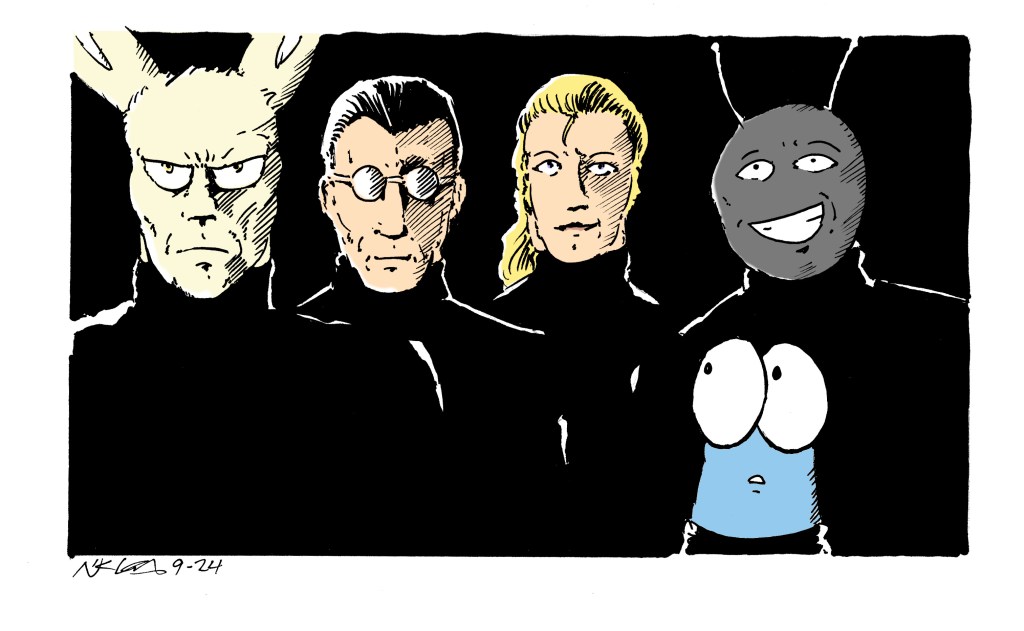
Prometheus is a possibly immortal amoeba. Rambunny is a violent, large rabbit. Spif is a genius scientist. Dawn sets things on fire. Ninja Ant is a bug with attitude. Now, we pick up the stars of 1990s small press comics hit Amoeba Adventures in their first new tales in years to find them dealing with detective mysteries, deadly former foes, impending parenthood and occasional nights at the disco. Oh, and coffee. There’s always coffee. Collecting Amoeba Adventures #28-33 as well as behind-the-scenes commentary, extra art and more!

On the fence? Here’s a few quotes from actual humans who I totally didn’t pay to say nice things:

“It’s imaginative, funny, heartfelt and smart. And it evolves, just like Prometheus, the protoplasmic protagonist himself” – Jason DeGroot, Small Press Heroes.com

“I’ve been following Nik for many years and he just keeps putting out great stuff. He’s better than ever!” – Steve Keeter, Talking Small Press on YouTube.

This nifty 150-page paperback is now available for a mere US$12.99 over on Amazon! (For those down under, here’s the Amazon AU link

And if you missed out earlier this year, why not make it a double and pick up THE BEST OF AMOEBA ADVENTURES as well, collecting my favourite of my 1990s small press comics in a huuuuuge 350-page paperback or fancy deluxe hardcover, along with piles of rare art, guest pin-ups by Dave Sim, Sergio Aragones, Matt Feazell and Stan Sakai and a huge 10-page section of notes, gossip and rambling on how these comics came to be! You can get the Best Of Amoeba Adventures over on Amazon as well! 

And hey, if you want to be a totally awesome person, please feel free to leave reviews of both or either of the Amoeba Adventures books on Amazon so I can extend my plans for world domination in a very niche market of comics about amoebas!

IN CASE YOU MISSED IT

The most recent issue, June’s AMOEBA ADVENTURES #34, is still available as a totally free download or ask about the limited print edition!  This time, it’s three separate short stories set in the Amoeba Universe, featuring Prometheus’ most bizarre adventure yet, Rambunny battling it out with the vigilante The Period, and Ninja Ant and Dawn Star’s mellow movie date gone horribly wrong! With guest art by Tony Lorenz and Thomas Ahearn

FOR ALL YOUR AMOEBA UPDATES

Give a like to the Amoeba Adventures by Nik Dirga page on Facebook for updates on future comics, links to my non-comics journalism work and more!

Rik Mayall, the patron saint of confident self-loathing

Nobody made being a total bastard quite as funny as Rik Mayall. 

When I first stumbled on The Young Ones in the late ‘80s during its inexplicable MTV late-night airing in America, I felt like I’d seen into a different universe. The anarchic gang of college misfits were all hilarious, but to me, Mayall’s Rick was on another level of twitchy, ego-free energy, willing to make himself look as sweaty and horrible as possible for the gag. He bounced perfectly off Ade Edmondson’s ultraviolent punk parody Vyvyan. 

Rik Mayall’s been gone 10 years now, a fact I still find kind of baffling. His comedy was so insanely energetic it seems impossible it should ever be stilled. 

Mayall was the patron saint of comedy that combined ego and humiliation in equal measures. 

Rick on The Young Ones was everyone’s worst nightmare of a pretentious, oblivious student, adopting pet causes left and right, constantly sure of his own righteousness and yet constantly trembling with his own self-hatred. You felt sorry for him but you also probably wanted to kick him right in his stupid face, too.

Nothing ever worked out for Rick, who hated everyone but hated himself the most. Mayall managed the extremely tricky wrangle of making this hilariously funny, a character who’s all twitchy id whether he’s trying to pick up “birds” at a party or insulting his roommates. Nobody ever spat out “Bastard!” quite as caustically as Mayall. 

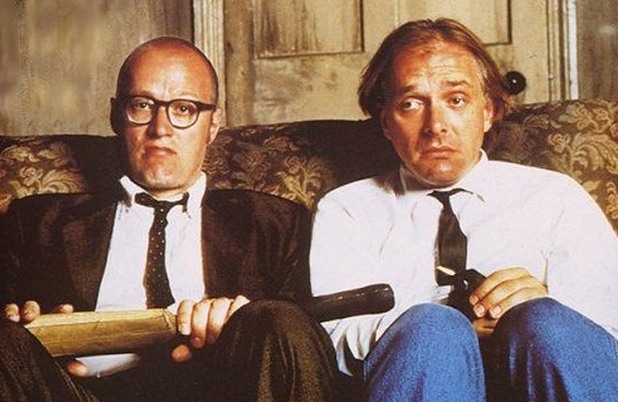
Later on, in their follow-up show Bottom, Mayall and Edmondson refined the Young Ones formula by narrowing in on losers Rick and Eddie, two gormless young men hurtling towards pathetic middle age. Bottom, as good mate Bob recently recalled in his own blog, is a masterpiece of over-the-top comedy, where every gag is pushed as far as it will go and then some.

Mayall and Edmondson smack each other around like a Looney Tunes cartoon, are consumed with unrequited lust for the opposite sex and their own sleazy poverty. I like to pretend that Bottom’s “Richard Richard” and Eddie are of course The Young Ones’ Rick and Vyvyan about 10 years on, youthful idealism and identities ground away and living lives of quiet desperation. 

Later on, Mayall played the world’s most corrupt politician Alan B’stard in the witty satire New Statesman, and was great as blustery fool Lord Flashheart in Black Adder. He tried to break through in the US with the loud, antic cult comedy Drop Dead Fred, but it didn’t quite work – Mayall’s frantic man-child routine got grating quickly when stretched out to an entire movie. 

At his best, Mayall played insecure, hateful guys who can never quite figure out that they’re their own worst enemy. It’s a marker of his talent that the creeps and bastards he played still felt ever so slightly loveable. When Bottom’s Richard Richard gets a well-deserved ass-kicking and then sits there ugly-weeping, who doesn’t feel a twinge? Maybe it’s just me. Losers are inevitable more entertaining than winners. 

Rik was carried off by a heart attack in June 2014 at just 56. It’s probably the blackest of comedy to say so, but sometimes I wonder if that’s the way the Young Ones’ Rick, Bottom’s Richie and New Statesman’s B’stard all wouldn’t have gone as well, pushing their self-loathing energy until it burst. 

I can still watch those episodes of The Young Ones and Bottom over and over no matter how many times I’ve seen them, and Mayall’s comic skill, working himself up into a sweaty red-faced mess to get a laugh, gets me every time. I only wish we’d gotten a little bit more of him. 

Jimmy Carter at 100 – The President who keeps going and going

Jimmy Carter is the longest-lived American president, and as he turns 100 years old, it turns out he was also pretty much the last of his kind.

Growing up in California, I was just a kid when the former peanut farmer from Georgia became an unlikely president in 1976, aiming to wipe away some of the disillusioned taint of the Nixon years. He’s the first president I have memory of, smiling away from the tiny TV in our kitchen.

He turns 100 years old today, and despite his single term, he will never quite be the footnote of other presidential one-termers like Benjamin Harrison and Chester Arthur.

Carter is the last living American president from the 1970s and 1980s, the last World War II veteran to take that mantle, and nobody under age 50 now will have any real memories of his term in office. Yet, he was unique among recent American leaders and marked a sea change from the stern likes of Lyndon Johnson and Richard Nixon. Jimmy Carter wore blue jeans and denim shirts and cracked a disarmingly wide grin that quickly became iconic in politics.

He was the last true “dark horse” presidential candidate to win, almost unknown outside of Georgia a mere 18 months before the election. His opponents asked, “Jimmy who?”

In contrast, Barack Obama had already made the keynote speech at the national Democratic convention four years before his own election, and TV host and self-promoter Donald Trump was long a household name.

Other than Trump, there have been few other presidents who have been quite so visible a force in American history after their term ended. Carter won the Nobel Peace Prize for his efforts to forge peace agreements and awareness of human rights in 2002, long after he left office humbled by a landslide defeat to Ronald Reagan.

Compare that to, say, George W. Bush, who practically vanished from public life after 2009. Carter kept on being a voice for what he believed in, even when it ticked off the current presidents.

His post-presidency has lasted an astonishing 43+ years, the longest ever by more than a decade. That in large part accounts for his historical redemption. You outlive your enemies.

Carter’s humility is part of his brand – he continues to live in the house in Plains, Georgia he moved into in 1961, and until his health deteriorated, taught at the local Sunday School for years.

He didn’t always take on sexy causes, but work like the Carter Center’s efforts to eliminate awful parasitic Guinea worm infections in Africa improved millions and millions of lives.

Even back in the 1990s, Carter’s reputation was gradually recovering, as his work for Habitat for Humanity and diplomatic efforts became more widely known, and Reagan-mania receded into the past.

I was living then in Oxford, Mississippi, and was friends with one of the best local bands, Blue Mountain, led by Cary Hudson and Laurie Stirratt, who were delivering great alt-country rock at the local bars on a regular basis. 

One of Blue Mountain’s best barnstormers was the anthem ‘Jimmy Carter,’ a twangy country-rock romp that instantly makes you want to stomp up and down with glee. It’s hard to imagine a cheery, apolitical ode to any US President as a hit pop single in this seething era of angry hot takes, but ‘Jimmy Carter’ has a gleeful optimism that recasts the dark horse’s presidential victory in 1976 as the ultimate American small town boy makes good story. 

In the bicentennial summer of our faded glory land a bright new face appeared upon the scene. Of an honest peanut farmer by the name of Jimmy Carter. His eyes were set on every schoolboy’s dream.”

I must have heard Blue Mountain play ‘Jimmy Carter’ a hundred times in the 1990s. It always brought the house down, in the Deep South where a crowd full of Republicans and Democrats alike bounced around singing that catchy chorus saluting a Democrat – “Shake the hand of the man with a hand full of love” – and its hopeful promise of a politician who actually cared – Well he said I’d never lie to you, and what’s more he never did.” 

Bombastic myth-making? True. A great song? Also true. 

An excellent biography a few years back, His Very Best: Jimmy Carter – A Life by Jonathan Alter, makes a compelling case that Carter’s presidency mattered more than we thought. He brought the language of environmentalism into the mainstream and spoke up for human rights. He worked to end nuclear proliferation – a policy followed up by Reagan – and pushed for more diversity and equality in government positions.

Yet he was far more of a micro-manager than a leader, a quality which ultimately sealed his defeat in 1980. The fumbled attempts to solve the Iran hostage crisis ensured his fate. Carter couldn’t match Reagan’s inspiring if often insubstantial rhetoric and seemed small compared to the ex-Hollywood star’s breezy confidence.

Optimistic Reagan was memorably described by historian Rick Perlstein as an “athlete of the imagination,” while Carter is recalled by Alter as “a visionary who was not a natural leader.” While Carter, more than 10 years younger than Nixon or Gerald Ford, was arguably the first “modern” President, in the end he was replaced by the first “Hollywood” President.

Carter was hardly a perfect president – he could be abrupt and too pious and faltered dealing with some of the crises in his administration. That famous grin could drop quickly and reveal a cold, frosty side.

Yet his own ego always seemed a little less in the service of raw greed and power-mongering like certain recent presidents we could mention, and more a driving fundamental core of his character fuelled by a deep religious faith. Carter wanted a perfect world.

Did he succeed? Well, no, but Carter speaks more to the good side of much-mythologised American can-do spirit – and his unwavering dedication to seeing that better world through the next 40-plus years of his life tells us it wasn’t just an act.

Jimmy Carter was neither the best nor worst of American presidents, but he had a quality that feels rare in an America torn apart by division, outrage merchants and an entire generation of politicians that now seems to be competing to see who can be the biggest jerk.

The presidency has been full of con men, before and after Carter. There have been elements of Carter in his successors – Clinton’s boundless energetic attempts to sow his own charitable legacy; Obama’s cool intellectual approach to governing; George W. Bush’s down-home mannerism, Biden’s soft-spoken optimism.

Yet in the past century, there has never been another president quite like the unique combination of humble Southern charm and faith-filled confidence that animates all the long years of Carter’s life.

“Today almost every politician wants to be seen as an outsider,” Alter writes. “Carter was the real thing.”