
I’ve been on a Sergio Leone kick lately, watching Clint Eastwood and Henry Fonda stalk impassively through vast open landscapes and ramshackle settlements. Sure, the action is great, the iconic soundtracks slap and even in this highly dubious time in American history, the mythic weight of the western is still strong.
…But half the time I watch westerns, I keep looking at the houses and what it’d be like to live in those sun-bleached outposts, 150 or so years ago now. I study the clattery wooden sidewalks, the creaky balconies dotting the streets (the better for a guy to be shot and fall out of, of course), the home-spun yet vaguely desperate vibe of those infinite saloons poised for violence.

It’s an odd fixation to have, but as I’ve written before, I grew up in a once-upon-a-time western Gold Rush town, after all, and I think perhaps some part of me is tinged with vague nostalgia for the imagined west I never really saw.
I watch Clint Eastwood and Lee Van Cleef face off in a battle of flinty egos but I also think, gosh, I like the way the grain of the wood sticks out on that old blacksmith in the background, I wonder who’s living behind the faint lights in the windows, I admire the lonely architecture of all those balconies and horse railings, the forlorn ‘Hotel’ sign swinging in the western skies.
Heck, I know half these movies weren’t even made in America or were filmed on studio lots, but it’s the idea that counts.
Of course there’s all the cultural and colonial baggage of America’s settlement to reckon with, and I’d say at least 75 percent of movie westerns are just vaguely one-dimensional frothy cowboys ’n’ indians soap operas. But the ones that aren’t – the Leone, The Searchers or The Wild Bunch or Tombstone or Unforgiven or McCabe and Mrs Miller – they get at the contradictory and violent bloody heart of a nation. The best westerns tell us what America really is, not what it pretends to be. And those long lonesome dirt road main drags lined with hotels and bars and barbers and perhaps a jail or two always evoke a weird yearning in me.
During my years in America I have been to many famed western towns and they of course are never quite like you’d imagine – there’s no high noon showdowns except for tourists and the quaint shops are all filled with garbage keychains and fart-joke keepsakes now – but if you squint, you can still see a hint of the old dusty ways in places like Tombstone, Arizona, Deadwood, South Dakota or Virginia City, Nevada, I think. You can strain to feel the wind roaring over the plains and deserts and sometimes it feels like a memory.
You visit an actual abandoned western ghost town like the crepuscular remains of Bodie, California, high up in the mountain plains, and it’s not quite like anything else.
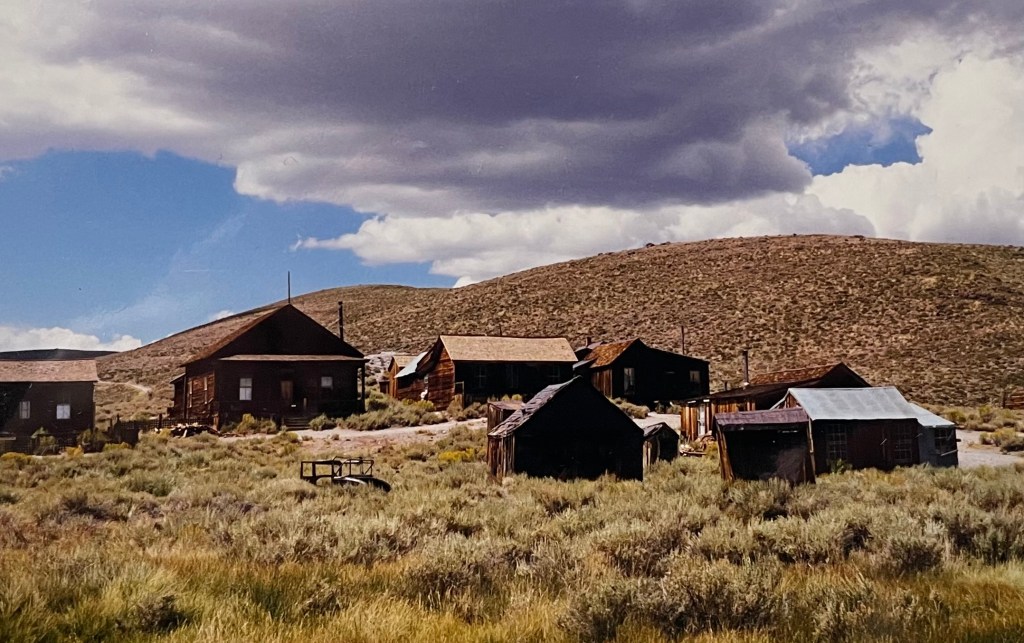
It’s probably just me, but when I watch those westerns, there’s the story unfolding in front of us, and the second story of the silently evocative imagined past spread out all around the background on every scene.
Would I want to actually live there, 150 years before wi-fi and refrigerators and comfortable tennis shoes? Probably not, but I still fall a little in love with every knot and whorl in those claptrap movie towns, where it’s always high noon somewhere.

 Nik Dirga