RIP Peter David, who made being funny look easy

Peter David perhaps wasn’t quite a household name, but any comics fan from the late 1980s onward knew who he was. The acclaimed comics and novel writer died overnight at age 68.

David’s remarkable 12-year-run on the Incredible Hulk changed the character forever from the “Hulk smash” days, while his work on everything from Spectacular Spider-Man to Aquaman to X-Factor to Star Trek was always entertaining, full of humour and sharp dialogue. He wrote many novels and was also an excellent, underrated essayist with his long-running “But I Digress” columns in the late, great Comics Buyers’ Guide. 

Simply put, he was a writer who knew the assignment, and delivered almost every time. 

Unfortunately, his sadly early death wasn’t a shock, as he’d been in terrible health for ages. David suffered a stroke in 2012 and spent most of the last few years in hospital or rehab care due to kidney disease, diabetes, heart attacks and more strokes. As a fan, it was hard to hear news of his slow decline. Remarkably, he kept writing through most of it all. 

Being funny is harder than it looks, but David often made it look easy. His relaxed, friendly style and deft hand with a one-liner stood out from the crowd when he began writing professionally after a long stint in sales for Marvel Comics. 

Reading David’s early Hulk and Spider-Man comics back when I was in high school, his voice was an important influence for me in developing my own goofy comics writing style with Amoeba Adventures. 

I’ve always been drawn to the sour and sweet combination of mixing dramatic moments with silly one-liners and slapstick, and David was a master at that balance. He knew when to go for the gag and to go for the gut. Not every joke landed or has dated well, but there was a lightness of spirit to Peter David’s best work that holds up well. 

He was never an Alan Moore/Grant Morrison type writer who deconstructed the comics medium, but instead a steady journeyman like Kurt Busiek or Roger Stern who could be counted on for providing usually excellent comics soaked in that hilarious wit.

His death may not have been preventable, but the one thing that makes me truly angry today is how Peter David and his family spent so much of the last few years fighting to fund his health care.  It was great to see so much support for crowdfunding his care when the call came – I donated a couple times myself – but with his death today, I wonder why it came down to GoFundMe to support a dying man and his family. 
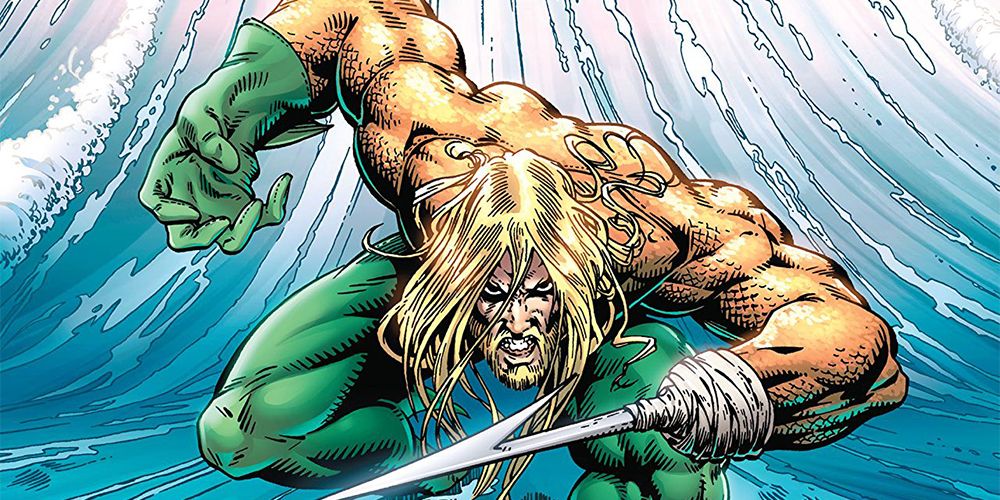
Disney, DC Comics and Sony made millions and millions from Peter David creations like Spider-Man 2099 in the Spider-Verse movies, the “smart” Professor Hulk as seen by Mark Ruffalo in Avengers: Endgame, the revamp of the dull fishy Aquaman into the sexy long-haired, bearded warrior that Jason Momoa turned into a worldwide movie hit, the Young Justice team of tween sidekick heroes who headlined a hit animated series – just for starters. 

And yet twice, his family had to turn to GoFundMe for help as David’s condition worsened, as Medicaid cut off funding and his widow Kathleen spent an unfathomable amount of time wrestling with the unfair labyrinth of American health “care”. I’m not saying corporations owe it to creators to fund every moment of their lives, but David suffered for a long, long time in hospitals and rehab, and a million dollars jointly donated by Marvel, DC and Sony could have gone a long way and been a drop in the bucket for companies like Disney and Sony that earn billions every year.

Comics will break your heart, the Jack Kirby saying popularised by NZ cartoonist Dylan Horrocks goes, but Peter David’s last years could have been a bit easier with a little bit of corporate kindness. His life’s work amused and entertained millions. It would be nice to think his death might make a difference somehow, too. 

All hail Tom Cruise, the impossible entertainer

Of course, Mission: Impossible – The Final Reckoning is ridiculous. It’s preposterous and excessive and just so very, very much – and that’s kind of why I love it and Tom Cruise’s dogged, determined drive to entertain the hell out of us all for nearly 30 years, whether we want it or not.

It’s insane that Cruise has been playing gritty intelligent agent Ethan Hunt for 29 years. As a point of comparison, if Sean Connery had played James Bond as long as Cruise had played Hunt, he would’ve been in Bond movies from 1962 to 1991, well into his bearded balding Hunt for Red October/Untouchables elder statesman era.

The MI movies kicked off with Brian DePalma’s twisty, relatively restrained 1996 original, and derailed a bit with John Woo’s lavishly dated 1999 style overdose in Mission: Impossible 2.

But for me, the series staged a remarkable comeback beginning with 2006’s Mission: Impossible III, with the late great Philip Seymour Hoffman’s sneering villain and Cruise’s Hunt given just a little more of a personality. Simon Pegg’s twitchy Benji and Ving Rhames’ sturdy Luther coalesced into the heart of a solid little team for Ethan, who is, as more than one character has noted, always going rogue or about to go rogue from his vaguely omnipresent Impossible Mission Force.

Cruise and his creative partner for most of the last few movies, director Christopher McQuarrie, settled into a solid routine of dastardly global threats, sneering villains and incredible stunt scenes that the rest of the plot basically is there to support.

The sixth instalment, 2018’s Mission Impossible: Fallout, reached an improbable high point for the series. This, Cruise whispered in audience ears as he bounced off mountain ranges and airplanes and ran, always ran, to the next plot point – this, is an action movie. 

To bring James Bond back again, Cruise quietly surpassed that franchise for reliable action thrills some time ago. While Daniel Craig starred in some of the best Bonds, studio meddling and creative fumbling also stuck him in some of the worst. Cruise and McQuarrie had a clear vision for their series. Even at the series’ nadir – John Woo, hello – a Mission: Impossible movie has never been less than a good time, check your brain at the door.

I like to think of what I call “the piano move” from 2023’s Dead Reckoning as a symbol of the series as a whole and its amiable desire to please. After surviving a pitched knife battle on the roof of a moving train, after that train then crashes off a cliff, after Ethan Hunt and partner clamber dangerously through the train cars before they fall into a canyon, after all that, in the final car, we see a piano, hanging on by a single strap, about to hurtle down through a train car and into Hunt and partner. Will that piano fall? You bet it will. In Ethan Hunt’s world, there’s always another piano about to fall on you. 

The best moments of the MI movies are nothing but piano moves, where Cruise fascinates you with his ingenuity and escape skills. I’d be dead about 5 seconds into trying to have a knife fight with a madman on the top of a moving train, for instance. For Cruise, that’s just a Wednesday. 

Final Reckoning, at nearly three hours, does suffer a bit of end-times fatigue – the two-part story Dead Reckoning and this comprise, about a rogue artificial intelligence, is timely, but it’s all tarted up with an absurd amount of MacGuffins and missions that are, well, impossible. Watching parts 7 and 8 over two nights, as I did, exposes you to nearly six hours of Tom Cruise running like mad – it’s like mainlining energy drinks while eating popcorn. Gradually, Cruise has become a messiah figure in the movies, as the challenges get ever more impossible. 

You’d expect part 8 of a series to run low on steam, and the opening act of Final Reckoning is a little sluggish, but when it gets going – especially with two stunning set-pieces involving a submarine and a biplane – all your doubts fly away, and you find yourself asking, “how is he doing that?” I don’t care that in real life Tom Cruise would’ve died like 50 times over by now. I just go for the ride. 

Yeah, yeah I know, while Cruise does a lot of his own stunts there is a certain amount of movie magic and digitally erased safety gear behind it all, but that doesn’t distract from the tactile reality of seeing a man scale the Burj Khalifa towers as he did in 2011’s Ghost Protocol or clutching feverishly onto a spinning biplane in this romp. He was there and not just in some green screen studio laboratory. And the fact that the man is now 62 is astonishing. 

In his dogged quest to be the impossible entertainer and singlehandedly save us all as The Last Movie Star, Cruise has largely abandoned some of the more interesting acting choices he made before he went all-in on the impossible. His turns in movies like Magnolia, Edge of Tomorrow, Interview With A Vampire and Collateral showed a brooding range. I kind of hope he might take some more chances if this, as it probably should be, is the last impossible mission.

These movies aren’t deep, but they’re fine machines of movie magic – mostly devoid of the CGI-slathered blurs that are starting to make superhero and action movies all feel like the same unreal videogame slurry. Mission: Impossible movies are ridiculous, absurd, over the top. And I reckon that both me and Tom Cruise wouldn’t have it any other way. 

How The Pitt became the best TV I’ve seen so far this year

None of us like to go to the hospital, right? I mean, I spent a few nights in one several years back over some health issues and to be honest, florescent lights and hospital gowns still give me the willies.

So it’s weird, then, that my favourite TV programme of 2025 so far is a white-knuckle ride through 15 hours or so in a heaving hospital emergency room. 

The Pitt caught me off guard, because I’m not really a hospital-TV show guy. Sure, I watched ER a fair bit back in the day, along with everyone else, but gave up somewhere before season 28 or however long it ran. I’ve seen a handful of episodes of House but never watched a single Grey’s Anatomy or Shortland Street or The Good Doctor.

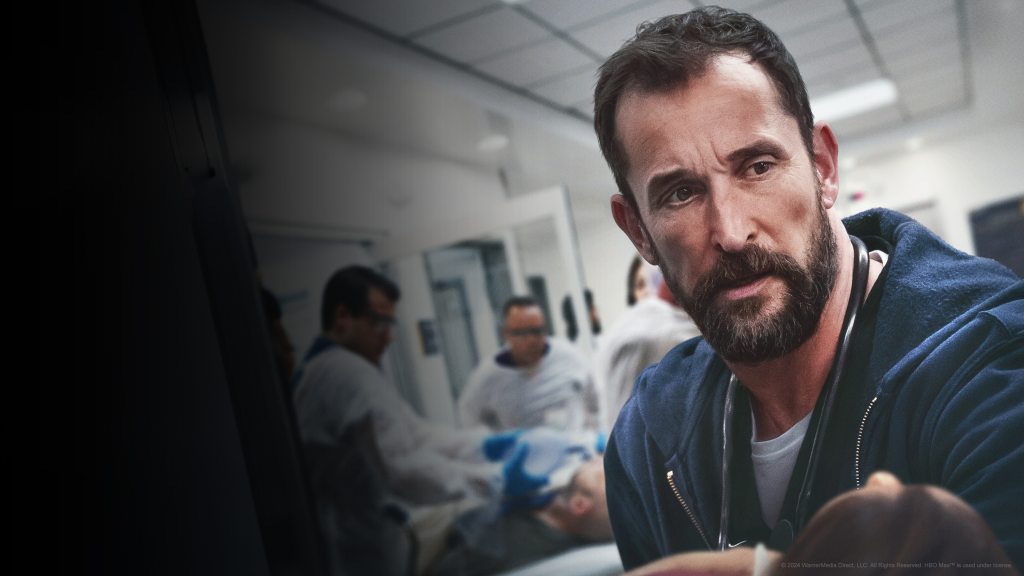
Yet The Pitt is addictive, anchored by a charismatic performance by ER veteran Noah Wyle as a scruffy and exhausted attending physician at a bustling Pittsburgh trauma hospital. 

The central conceit is that The Pitt is set in one incredibly busy day at the hospital, told over a series of episodes set from 7am to 10pm. It instantly gives The Pitt a propulsive energy that means you immediately want to know what’s going to happen next and helps damp down the soap-opera sappiness that muddles many medical shows. Brought to you by many of the people behind 1990s ER, it’s dense with an impressive medical detail that never distracts from the fundamental work – saving lives. 

Hospitals are busy, overworked and understaffed places, in New Zealand and everywhere else, and in a single day The Pitt deals with accidents, traumas, overdoses, pregnancies, shootings and worse. Everyone here is having a bad day, and yet despite how dark it gets The Pitt summons up a lightness of spirit echoed by its workers – the only possible way to get through a day at the hospital. 

The Pitt feels like a microcosm of America in 2025 – broken, hurting, but still hunting for that essential decency despite unfortunate events constantly crashing our way. Without being overly preachy about it, it hits on hot-button issues like abortion, opiate abuse, gun violence, pandemic trauma and anti-vaxxers. 

Wyle, who once upon a time was the fresh-faced newbie in ER, brings years of experience being a ‘pretend doctor’ to his role, and anchors the series with his battered idealism. But there’s a lot of great acting here, including Isa Briones as a cocky intern, Katherine LaNasa as the charge nurse and Fiona Dourif as a harried resident with a troubled past. 

I’m constantly awed by people who give their lives to the medical profession, enduring hard hours and traumatic experiences. By taking a single day and showing how chaotic and important work in the ER is, The Pitt is vastly entertaining and harrowing at the same time. It’s extraordinary.