
Lately, I’ve been dreaming of the stars.
I’ve been feverishly catching up with the four seasons to date of Apple TV’s For All Mankind, after putting it off for ages. One of the things that appeals to me about it is the insistence in this space exploration epic of dreaming big, daring big, in a way that our somehow smaller world doesn’t feel like it does any more.
I’m a sucker for alternate histories, and For All Mankind paints a compellingly fascinating picture where the Soviets landing on the Moon before America does has a ripple effect on global history.
It’s a world where there’s no Watergate, 9/11 attack or assassination of John Lennon. Instead, Margaret Thatcher and Pope John Paul were both killed!
It’s a world where Presidents Ted Kennedy, Gary Hart and Al Gore all end up in the mix of history with Reagan and Nixon. Oh, and there’s no public internet or social media, which actually might not be a bad thing when you think about it.
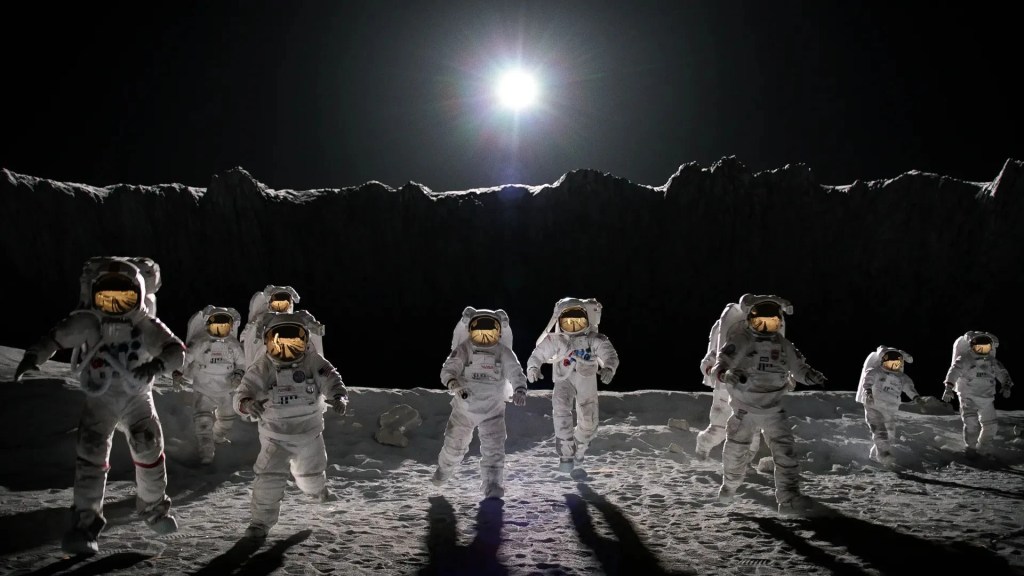
This alternate reality also proves itself to be somewhat more progressive than the real one, although not without its speed bumps. After Russia lands a woman on the Moon, a spooked NASA assembles a crew of women astronauts to one-up their rivals, decades before women actually went into space. For All Mankind also dips into race and sexual equality – in this world, the Equal Rights Amendment passes, one of the top astronauts is a Black woman (an excellent Krys Marshall), and gay equality unspools in startlingly different ways than it has here.

The real-world President Kennedy’s famous quote – “We choose to go to the Moon in this decade and do the other things, not because they are easy, but because they are hard” – sums up the vibe of For All Mankind, of the hopeful engineers still beavering away in real-life space programs, and in a hundred other wide-eyed speculative fictions about man in space. It shows a world where striving to do the hard thing fundamentally changes the course of history.
Like many of us, I’m drawn to the idea of man out amongst the stars, even if in reality it seems as far away as ever. I read Kim Stanley Robinson’s terrific Mars trilogy a few years back, and recently just devoured the excellent non-fiction Space Race: The Epic Battle Between America and the Soviet Union for Dominion of Space by Deborah Cadbury, which sheds a lot of light on the early years of the space programme and particularly the terrible price Soviet citizens paid to try and stay in the game.
There’s a lot of dark, bleak science fiction out there, of course, and there’s certainly a place for it, but at the moment, give me some optimism things might get better. Good science fiction, at its best, gives us something to dream about – as in the endearingly dorky future of Star Trek, or the colourful chaos of Guardians of the Galaxy. I like watching aliens eat people’s faces as much as anyone but also, I like the idea of boldly going where no one has gone before.
Idealism seems pretty passé in 2025, where even lofty talk of utopian futures is usually tempered with a healthy dose of talk of vengeance on your enemies and crushing dissent. In a world that feels like it’s getting a little more unhinged by the week, I like to imagine missions to Mars and cruising amongst the asteroids.
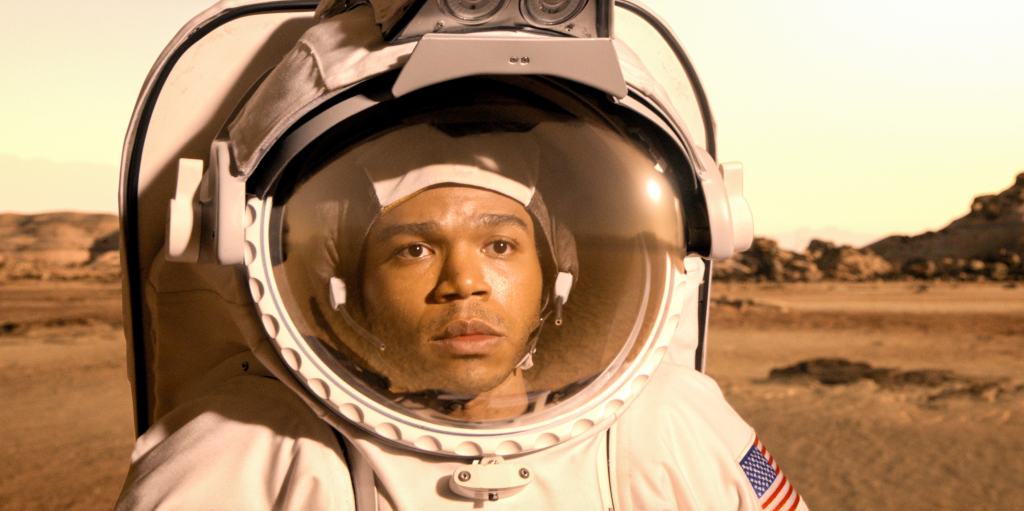
We haven’t been to the moon since 1972, before many people today were even born, and only four men who walked on the moon are still alive. In amongst all the stunning incompetence of American politics at the moment, it looks like another mission may finally come soon, more than 50 years later — which would be something to see, wouldn’t it?
For All Mankind isn’t a rose-coloured look at the future – its alternate history is drenched in plenty of blood and horror, terrorism and distrust, where man (spoilers ahead!) does make it to the Moon and even Mars but constantly comes up against the same conflicts that keep screwing us all up on Earth. But through it all, even at the worst moments, there is the desire to dream big, and do big, hard things.
For All Mankind does get a bit goofy and far-fetched the further ahead into its alt-history it goes, with some of the more daring episodes approaching Star Trek levels. Some of the characters become annoyingly soap opera-ish over time. Lead actors Marshall, Joel Kinneman and Wrenn Schmidt are generally terrific, even as their characters get slathered in awkward makeup as decades pass on the show, but some of the other actors play with a broad bluntness that verges on the cartoonish.
None of that really matters, though, when the space race kicks in and For All Mankind’s vision of a different, more adventurous world kicks in — when the doing hard things is just what’s expected. Go hard, go big, just go there.








 Nik Dirga