
God, where to start with Diane Keaton.
She was perhaps my first big Hollywood crush, because I was a budding teenage intellectual who caught Annie Hall on the TV sometime in the mid-1980s and recorded it on a VHS tape, watching it over and over until the image began to break down into jittery lines.
It was a movie that spoke to me of a wider, more glamorous world than small-town California, with wide Manhattan streets and everybody dropping witty banter and watching foreign movies that would surely change your life.
Her death yesterday at age 79 shocked me, when I shouldn’t really be too shocked anymore about us slowly losing all those great ‘70s and ‘80s stars of my youth. But Diane Keaton always felt so fervently alive, that for her to suddenly cease felt immensely wrong.

I’ve watched Annie Hall dozens of times and it sparked a lifelong love for the films of Woody Allen and Diane’s impressively light touch as an actress. (I know, I know, there’s a lot of pitfalls about being a Woody Allen fan these days, but despite many problematic concerns and allegations and my rather mixed feelings about the man himself, I can’t ignore that his movies shaped a hell of a lot of my teenage worldview, and that’s all I’m gonna say about that.)
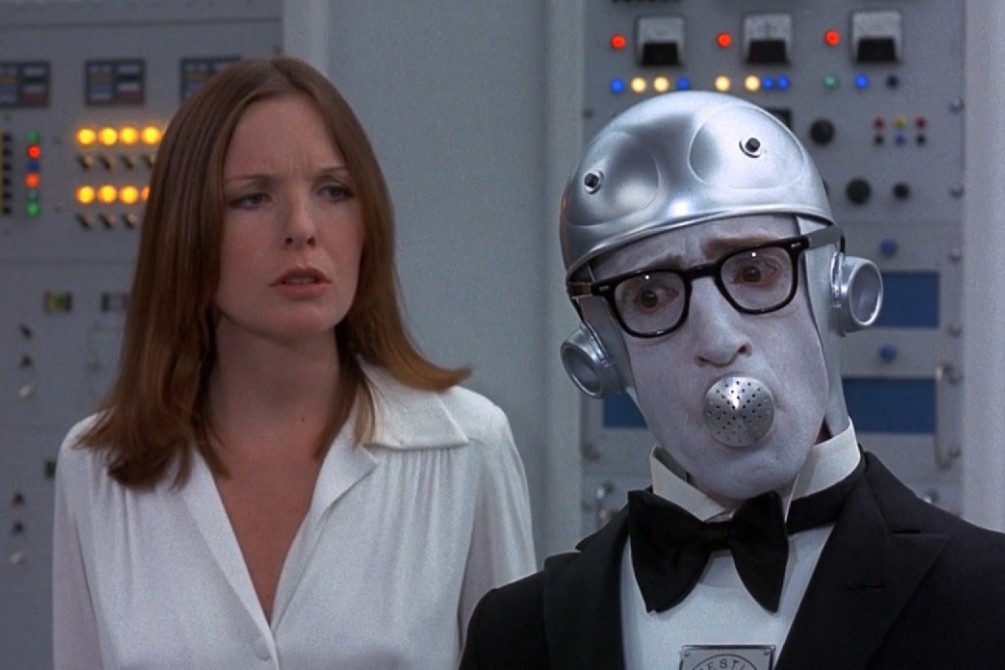
Diane’s “Annie Hall” character was the grand template for so many of Keaton’s comic characters in her wonderful Woody collaborations and more – a manic pixie-dream girl prototype who actually was often far wiser than those around her. Take her ditzy pleasure addict in Sleeper, who ends up a devoted revolutionary warrior, or her hilarious turn in the Russian mock comedy Love and Death, where her deadpan wit often blows everyone else off the screen.
She never quite played the same character in any of these films despite her style becoming a bit of a stereotype – look at her nuanced turn in Woody’s tricky dramedy Manhattan as a spurned ex or her delightful mid-career return to Woody as a paranoid, dissatisfied wife in the detective comic romp Manhattan Murder Mystery.
A natural successor to Katherine Hepburn, like her, Keaton always had a keen intelligence shining away behind that “la-de-da” exterior. You’d see it in films like The Godfather or Reds, where she turned that comic energy inwards to create vivid dramatic roles.
The same year as Annie Hall, she also starred in the incredibly dark Looking For Mr Goodbar as the anti-Annie. It’s a depressing, bleak film that aims to show the seamy underside of ‘70s swinger culture, but Keaton, as always, is very good – playing a character who isn’t as confident or cunning as she thinks, who ends up lost in a nightmare.
But it’s Keaton the comic I fell in love with watching Annie Hall over and over as the VHS tape juddered, and her great willingness to marry her stunning beauty with undignified pratfalls. Even in a middling ‘80s workplace comedy like Baby Boom, she sells her character’s turn from stoic yuppie to loving mother with an unforced ease.

As Keaton got older she played lots of moms and winter romances, not all of them great movies, but she was never better than in her final Oscar-nominated turn in 2003’s Something’s Gotta Give. All of the classic elements of those silly rich white folks rom-coms are here – houses in the Hamptons, characters swanning through privilege without a care in the world – but again, Keaton takes the material and makes it so much better with her wit and sincerity. Was there ever a sexier comic love triangle than both Jack Nicholson and hot young doctor Keanu Reeves falling for Diane Keaton? And why wouldn’t they?
Keaton grew old gracefully, even if she left a little too soon, and there’s as much to love in the middle-aged longing of Something’s Gotta Give as there is in the bright-eyed unwitting fashion icon of Annie Hall. I kind of loved them all – after all, you never forget your first love.

 Nik Dirga