
I’ve been on a bit of a Spike Lee binge lately, re-watching some of my favourites like Do The Right Thing and The 25th Hour and BlacKkKlansman and dipping into some of the more obscure byways of his filmography. I’ve been a fan since first having the sweaty chaos of Do The Right Thing blow my mind more than 30 years ago and even when Spike swings and misses, it’s usually worth a watch.
And there’s one thing that always gets me, whenever it pops up in his films – the jolt of the double dolly shot. For non-film nerds, dollies are basically cameras mounted on carts to capture fluid movement. In Spike’s films, he’s popularised using the “double dolly,” where two cameras on dollies work together to create an eerie sense of actors “floating” through the background, like they’re on an unseen riverboat wafting downstream.
I love the double-dolly moments in Spike’s movies, which frequently illustrate emotional chaos like in Inside Man or foreshadowing fate as in Malcolm X. They’re kind of a cold splash of water that burst the fourth wall of film, like the kick of a 3-D movie effect without having to wear those dorky glasses.
When Malcolm X, shortly before he meets his brutal death, suddenly begins to glide through the New York streets, he no longer seems quite human – and yet, you can’t take your eyes off the effect.
Lee has always liked to shake the audience to remind them they’re watching a film, with those confrontational to-the-camera monologues in movies like Do The Right Thing. Sometimes it doesn’t work – as much as I like his coming-of-age comedy/drama Crooklyn, a bizarre choice to distort the aspect ratio to an elongated box for 20 minutes or so of the movie almost derails the whole thing.
But when it works, for me, Lee’s double dolly shots deliver a shock to the system of passive film watching. In that same Crooklyn, there’s a few shots when the young girl Troy has vivid nightmarish dreams driven by double-dolly shots, which seem to emphasise how little control she has over her swirling life. At the movie’s end, the double dolly shot bursts into the real world in a cathartic moment when Troy and her brother attack the neighbourhood drug addicts.

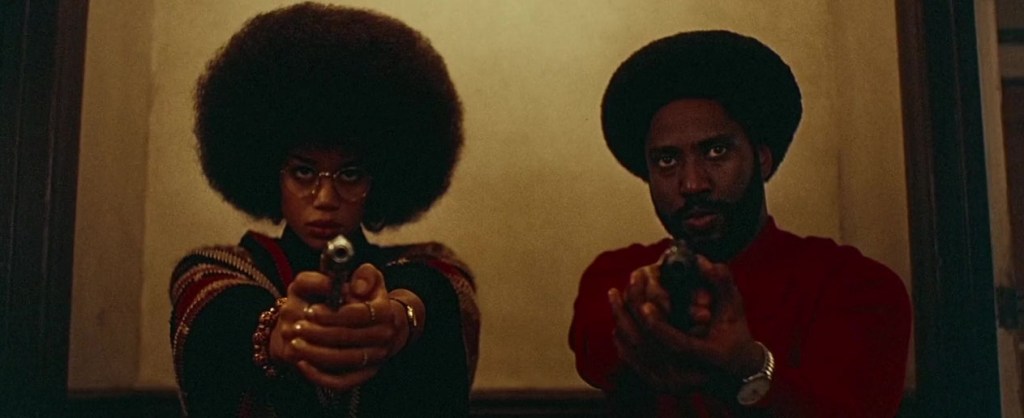
Is it a bit flashy and show-offy as a film technique? Certainly, and it’s a good thing generally Spike uses it sparingly, and not in every film. But if you save it for those critical moments – Philip Seymour Hoffman’s existential despair in The 25th Hour, or the startling burst of violent anticipation that ends BlacKkKlansman – it lands with a sharp impact.

The cinema screen often bends but it doesn’t quite break, but for me, in the quick brief moments of those trippy double dolly shots, Spike Lee comes very close to exploding the whole idea of what a movie can be.


 Nik Dirga