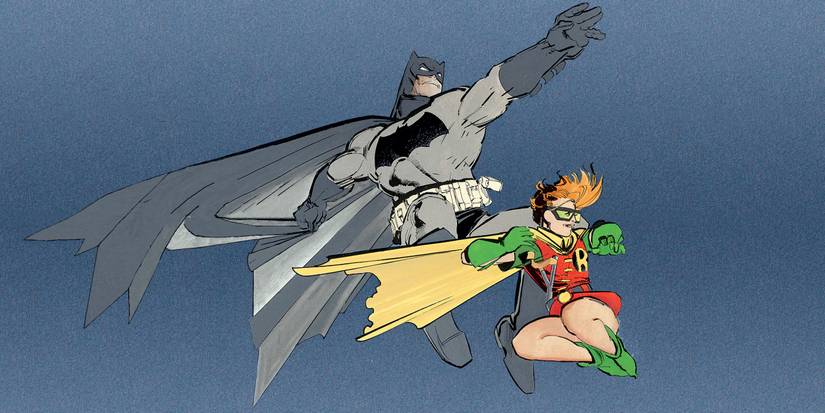
Was 1986 the greatest year for superhero comics? Or the greatest year for comics, period?
It sure feels like that now – Alan Moore’s triumphant Watchmen and Swamp Thing, Frank Miller’s Dark Knight, the rise of independent comics and the end of several eras.
I was a puberty-plagued 14 at the time, and didn’t really get that I was in the middle of a comics revolution. I just thought there were some pretty darned great comics coming out.
Forty years on, it’s clear 1986 was a tipping point – heralding more adult themes and endlessly innovative creators, paving the way for everything from the Marvel Cinematic Universe to a less kid-friendly, more adult-orientated industry. I’m hardly alone on this hot take – the comics internet is full of lengthy essays, podcasts and websites paying tribute to Comics ’86.
It was the end of a lot of things – long-running books like House of Mystery, Sgt. Rock and World’s Finest had been cancelled, Jim Shooter’s New Universe briefly flared into being and the perpetual events era began after the success of Secret Wars and Crisis On Infinite Earths. Comics got darker and a lot less carefree and the over-the-top excesses of the 1990s were heavily foreshadowed, but in 1986, for a little while it really felt like comics were doing something amazing. After 1986, they were never quite the same.
Trying to compose a list of my favourite 12 comics I read in 1986 was daunting. It easily blew past 10, and could’ve hit 25, such were the riches. There’s still an awful lot more I could include – John Byrne’s Man Of Steel, Batman: Year One, Denny O’Neil’s The Question, Rick Veitch’s The One, Dark Horse Presents #1, Wonder Woman by George Perez, DC Comics’ cult classic ‘Mazing Man, the final issue of Marvel Comics’ Star Wars, the conclusion of Mark Gruenwald’s Squadron Supreme, et cetera, et cetera.
This list includes the expected class of ’86 canon – Alan Moore is on here a whopping THREE times and I decided to cut him off there – but also slightly less acclaimed comics that still made a big impact on this comics-obsessed brain of mine. It wasn’t all gold – there were very bad comics that I paid a lot of attention to at the time – Secret Wars II, Adolescent Radioactive Black Belt Hamsters, Mark Hazzard: Merc, etc. But when 1986 soared, it soared hard.
My 12 favourite comics of 1986
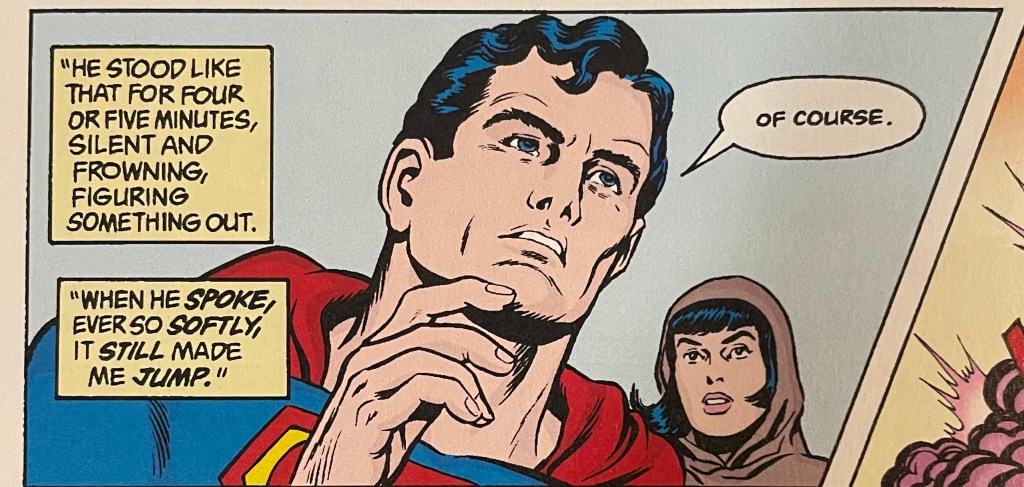
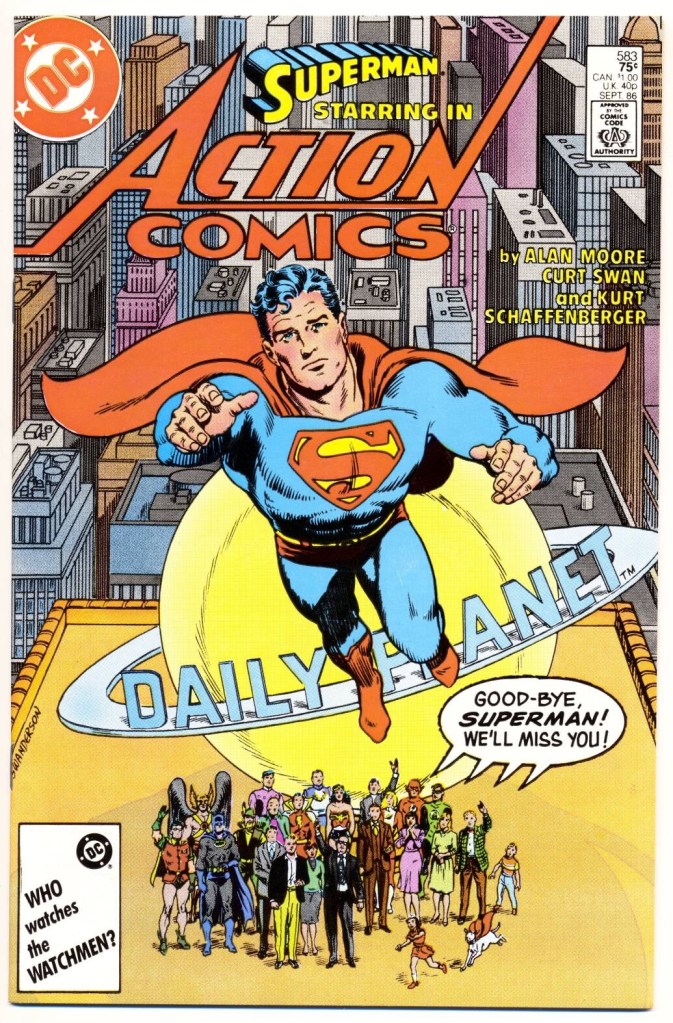
Action Comics #583 – The last Superman story – for a time. The conclusion of a two-part tale bidding farewell to the “silly” Superman to pave the way for John Byrne’s energetic slick reboot, and Alan Moore made it a beautiful, tragic and bittersweet elegy for Krypto, Supergirl, gold Kryptonite, shrunken cities and Elastic Lad. And yet – 40 years on, that “silly” Superman is alive and well, perhaps most recently captured in the great fun of James Gunn’s Superman, while Byrne’s reimagining – as much as I liked it at the time and still am fond of it – now seems as dated as yuppie jokes. A love letter to comics, with elegant Curt Swan art just like all the greatest Superman stories had.
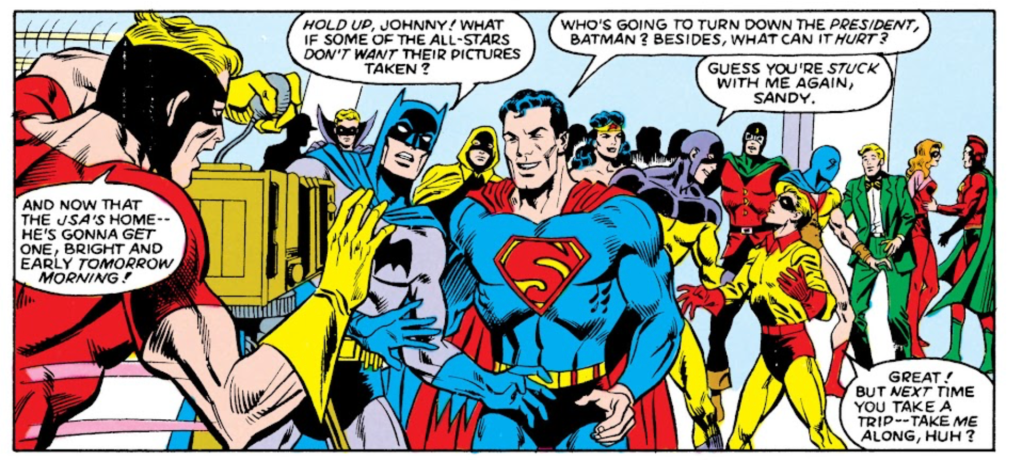
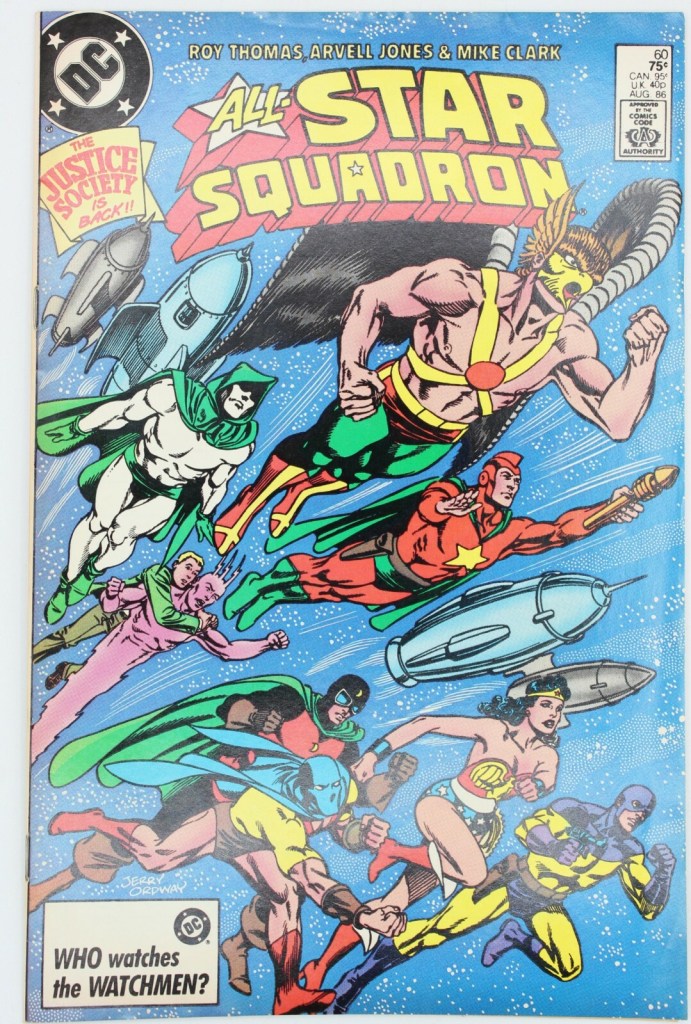
All Star Squadron #60 – Roy Thomas’ endearingly corny World War II superhero series was scuttled by the cosmic reset of Crisis on Infinite Earths, and this issue directly deals with the effects of a shifting continuity by relegating the ‘golden age’ Superman, Batman and others to non-history. A.S.S. (yes, love that acronym) was reliably meat ’n’ potatoes comics, and never flashy, but when I picked up this issue it was my first look at the series, featuring literally dozens of heroes from Liberty Belle to the Whip gathered for a kind of “class photo” image – a scene which piqued my interest at the history of superhero comics and all the colourful characters it held. One of the most appealing things about comics to me is its vast cultural history, and this was my gateway drug into it. All-Star Squadron, which sputtered out at #67, was the end of an era for superhero comics but didn’t mean it was the end of nostalgia for the past, which still drives big chunks of the medium to this day.
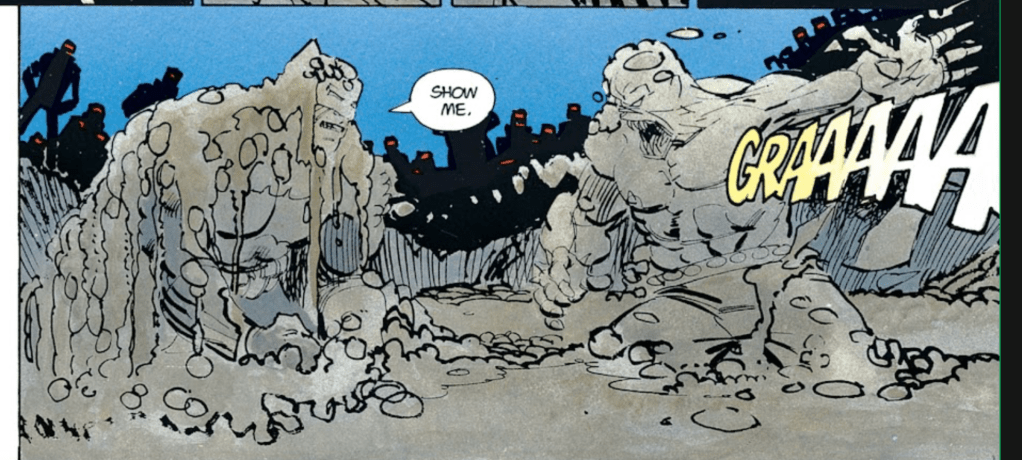
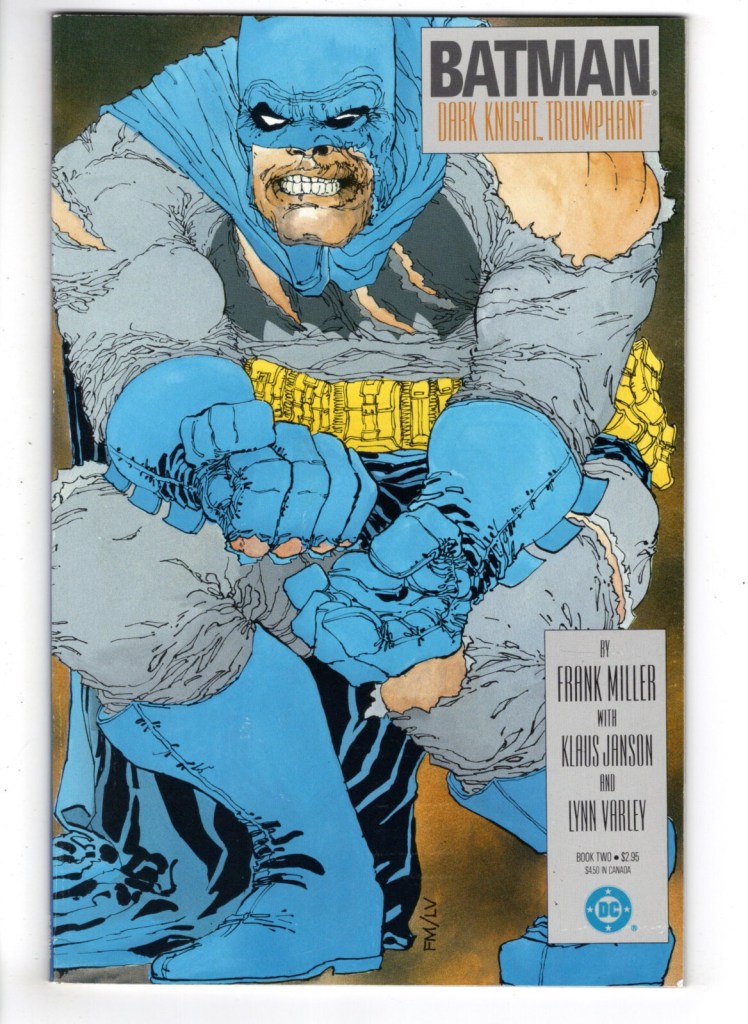
Batman: The Dark Knight Returns #2 – Yes, issue 2! Pre-internet and relying mostly on tattered copies of the Comics Buyer’s Guide newspaper for info about the world, I missed the boat on the first issue of Frank Miller’s iconic Bat-reimagining, so I grabbed the second issue instead. From that snarling, cramped and feral Batman cover image to the savage Mad Max mutants who were scarier than the Penguin and Riddler ever were, Miller stamped a giant footprint on Batman stories that raised him to the level of mythological icon. Paired with his Batman: Year One tale (stunningly, out the same year), 1986 became the year Batman took over superhero comics – which to be honest, he still pretty much rules over today.
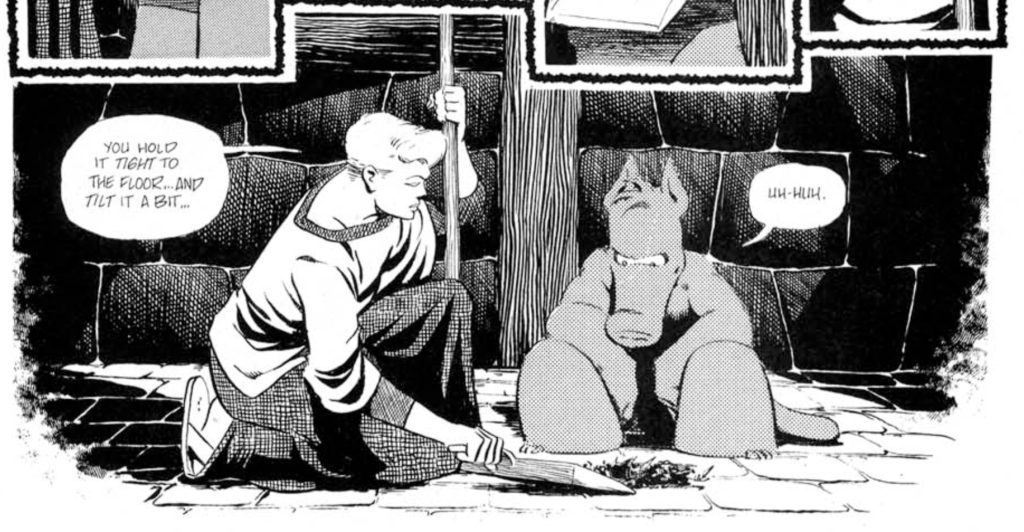
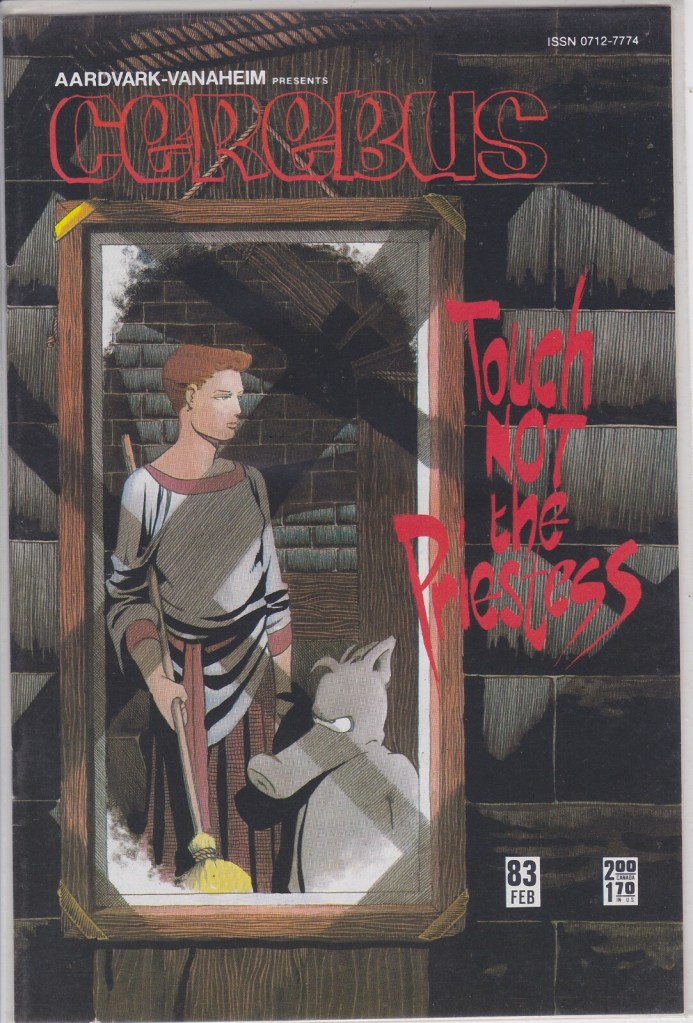
Cerebus #83 – I can’t overstate how important Dave Sim’s quirky Cerebus has been in my life, even if it came completely off the rails in the second half of its 300-issue run and the controversial Sim, to be charitable, went down some strange and unpleasant rabbit holes. This was the first issue I ever sampled and felt almost calibrated to baffle the uninitiated – Cerebus basically spends the entire issue listening to some dowdy housewife talk. It was, to be honest, kind of boring. And yet… I was intrigued, by the gorgeous craft of Sim’s cartooning and Gerhard’s background art, which felt so handmade and sincere compared to superhero comics, and I was fascinated by the much bigger world this comic hinted at. I was soon hooked into the wild ride of the ongoing “Church and State” storyline and the epic saga that unfolded. Even when it got bad – and it got very bad – I hung on until the final 300th issue in 2004. Whatever happened since, Dave Sim’s Cerebus opened up a world of smaller scale, personal comics to me and directly inspired my own attempts at creating my own comic Amoeba Adventures.
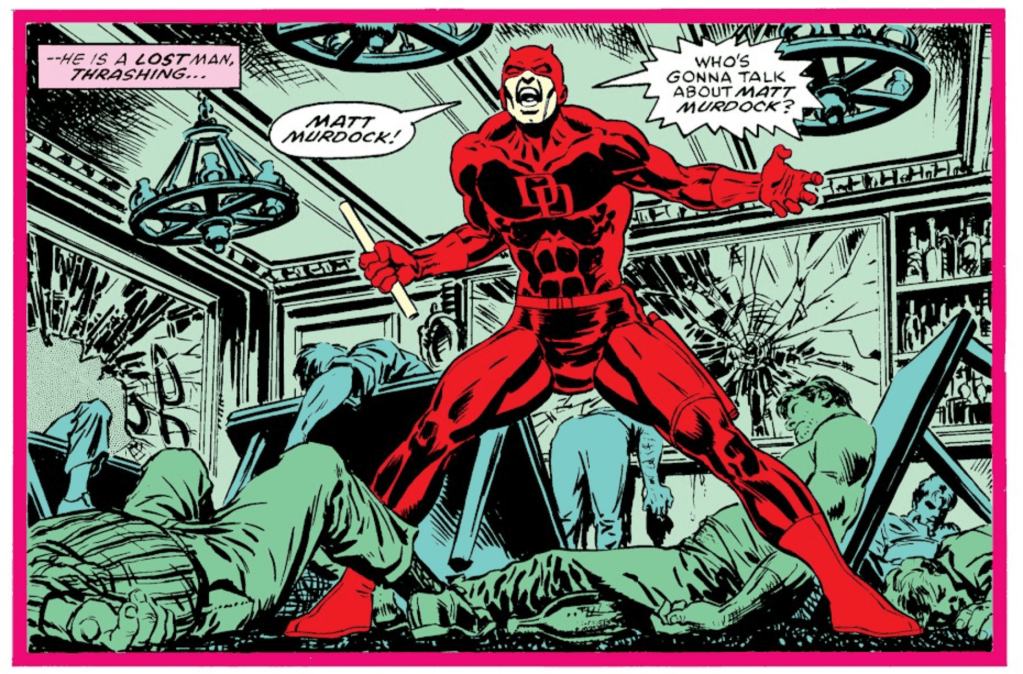
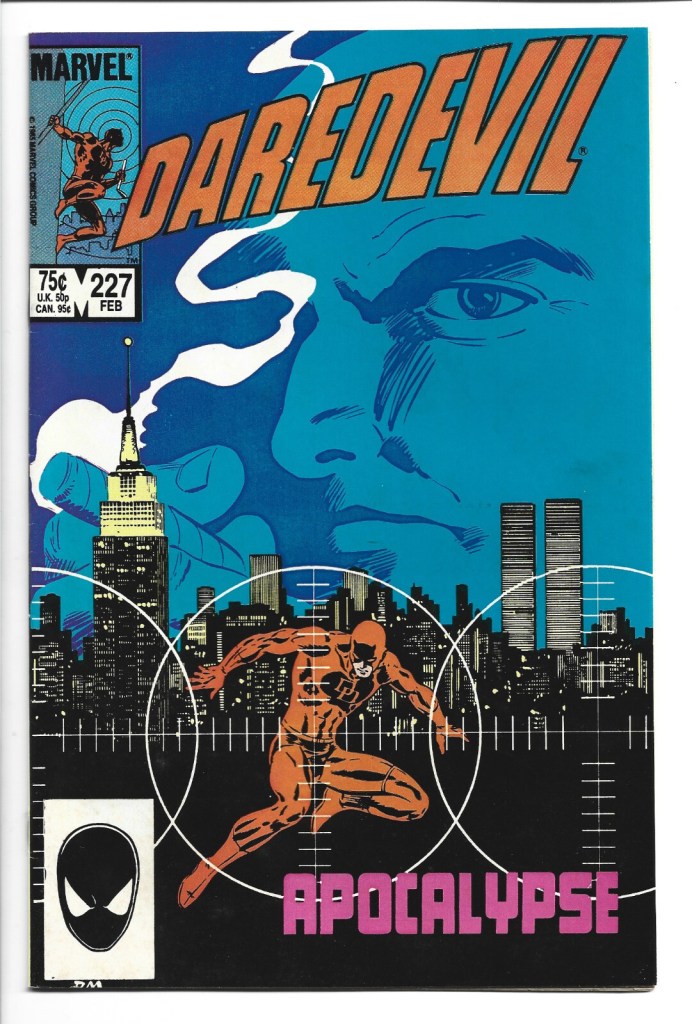
Daredevil #227 – Honestly, how did Frank Miller manage 1986, with the Dark Knight, Batman: Year One and Daredevil all hitting? With this issue’s start of the “Born Again” saga, he kicked open the doors. His return to Daredevil with artist David Mazzucchelli is still a high-water mark for comics noir, a classic tale of collapse and redemption for poor beleaguered Matt Murdock. Miller’s flinty script is hard-boiled before his work started to become self-parody, and Mazzucchelli – whose dazzling brief stint in mainstream comics was like a comet in the night – delivered perfectly-paced cinematic violence and angst that still make this the greatest Daredevil story ever told.
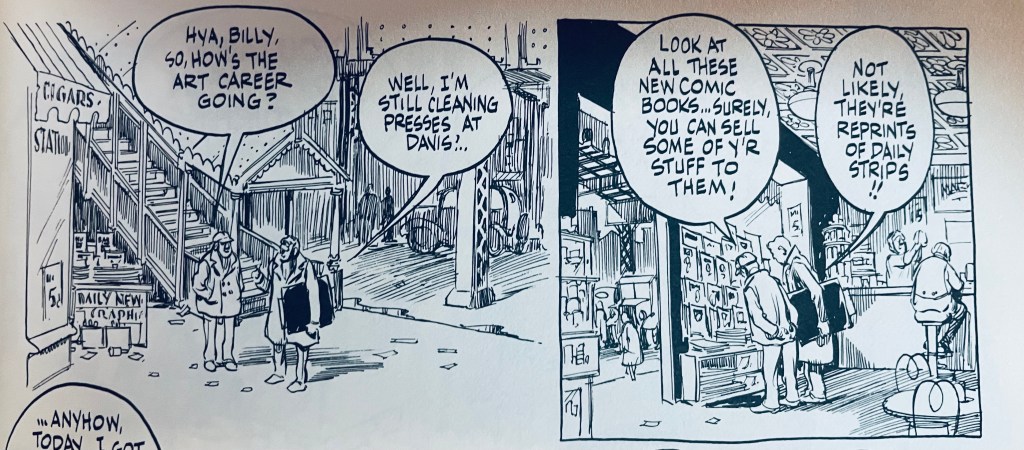
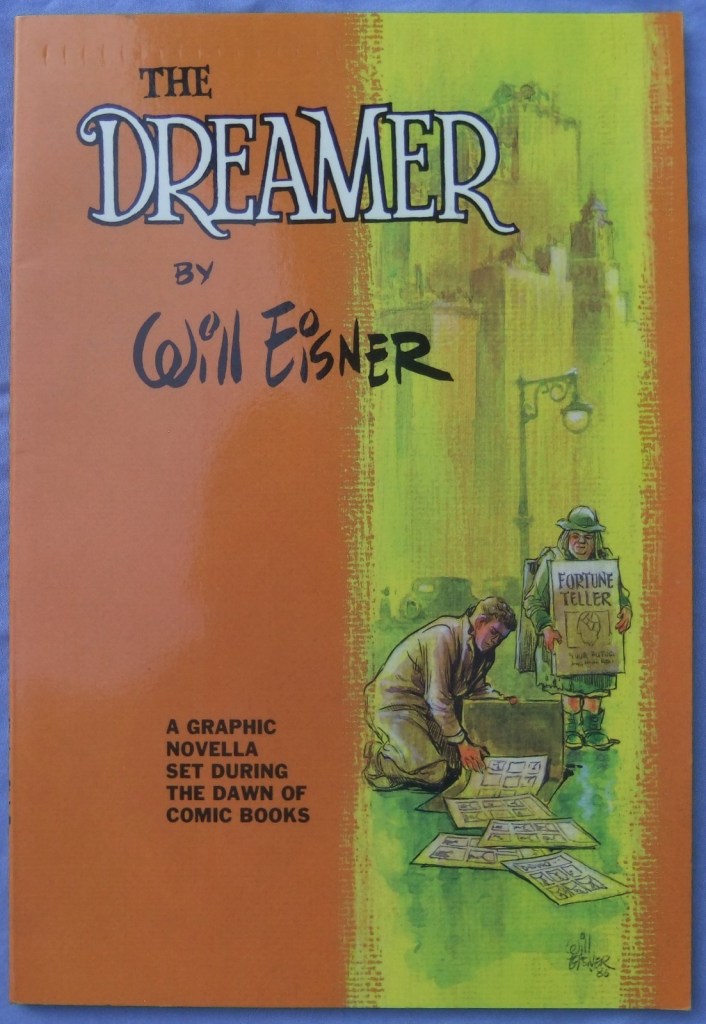
The Dreamer by Will Eisner – I first learned about Will Eisner through Kitchen Sink Press’s Spirit comic reprints, and in 1986 his “graphic novella” The Dreamer came out, an autobiographical tale of the early days of comics filled with hucksters and hypesters and a young kid (an Eisner stand-in) trying to keep some principles in a corrupt world. Graphic novels were still a bit of a novelty then, and Eisner’s fluid, dynamic realism captivated me – he was drawing real people, doing real things! – and I soon got sucked into A Contract With God, and so much more. A letter from Will Eisner offering encouragement for my silly fanzine Amoeba Adventures comics remains one of my prized comics possessions. The man was a dreamer, and we need more of those.
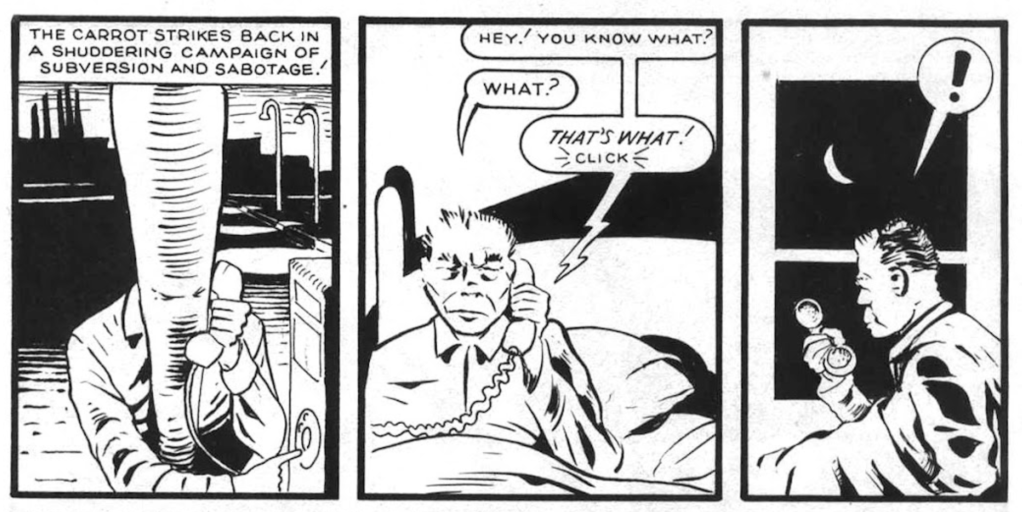
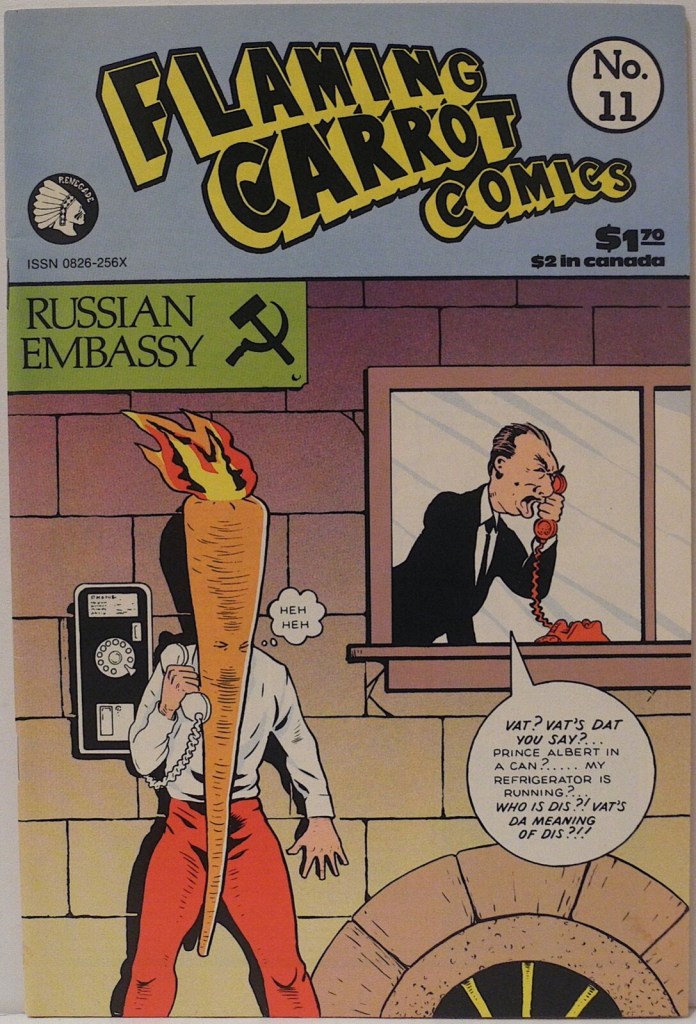
Flaming Carrot Comics #11 – Bob Burden’s surreal sort-of-hero the Flaming Carrot is a true homespun labour of love, with Burden just following his own weird muse wherever it takes him. It was a hard comic to find back in the day – I found #5 somewhere around 1985, and didn’t stumble on a new issue until 1986’s #11, the last part of a goofy saga about dictators, revolution and wacky jokes. What appealed to me was Burden’s comic sensibility and his unpolished but charming art – some of the panels look almost like woodcuts. Like Cerebus, this plucky black and white indie made me feel like anyone could do comics.
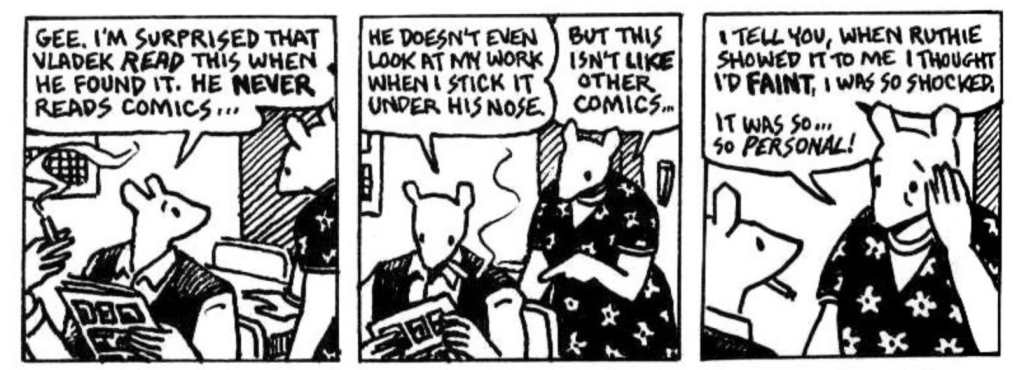
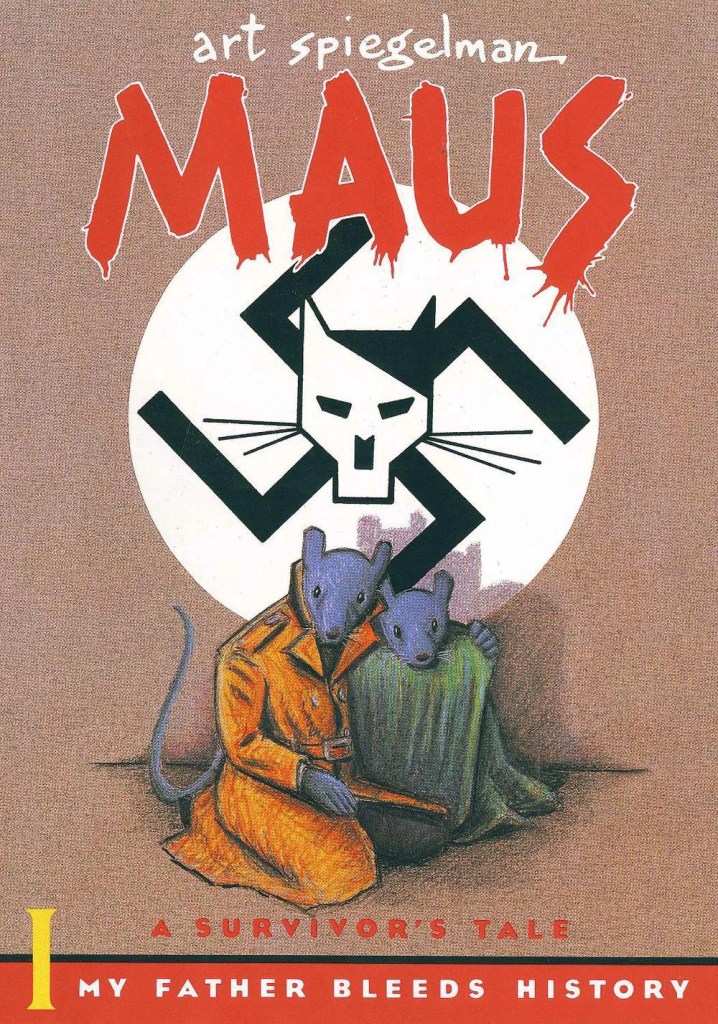
Maus, Part I – I believe I was given this sturdy Pantheon paperback as a gift, because after all, Art Spiegleman’s anthropomorphic Holocaust epic famously won the Pulitzer Prize and all and it was thus “respectable” comics. And I won’t pretend that I was instantly grabbed by it like I would’ve been by an issue of Marvel Team-Up, but this haunting and sad story sticks with you, and it took me a while to mature enough to meet it where it deserves to be. Turning one of history’s darkest eras into a tale of cartoon cats and mice may have made the horror more approachable, but it also made it linger. Yet the pages in Maus Part I that struck me the hardest were Spiegleman’s inclusion of his 4-page 1972 “Prisoner On The Hell Planet” right in the middle of the story – a harrowing scream right from the abyss as he confronted his mother’s suicide head-on, with no mice or cats in sight. I wasn’t quite ready for Maus in 1986, I reckon, but it was ready for me.
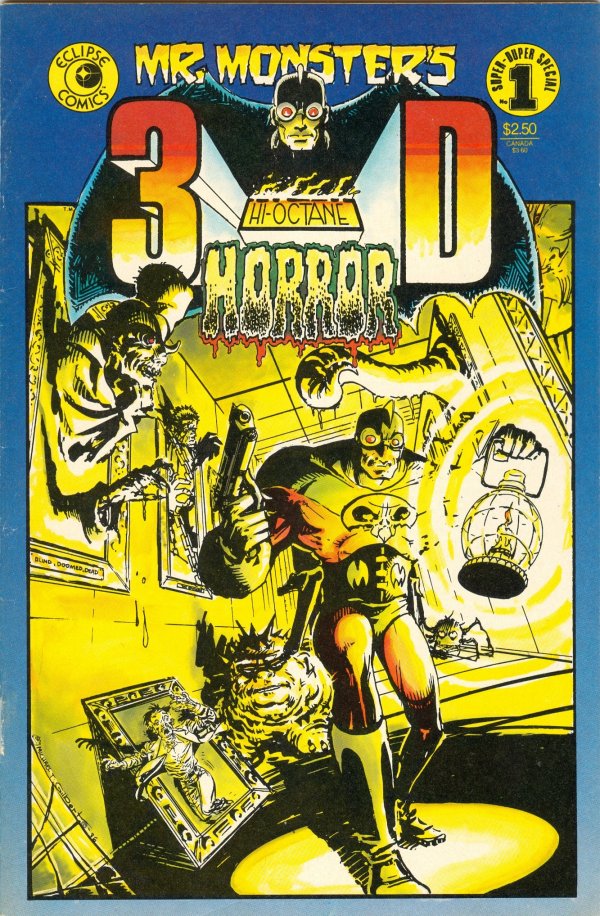
Mr. Monster’s 3-D Hi-Octane Horror #1 – Michael Gilbert’s terrific Mr. Monster is a somewhat forgotten ‘80s series, but I loved it, and this special – a selection of ‘50s horror reprints bookended by Mr. Monster hosting and presented in ripping 3-D – was an eye-opener to me, and a pathway to my love of ‘50s horror comics. I had no clue about the huge impact horror comics had on the industry and this issue – my first 3-D comic (it’s a gimmick, yeah, but the first time you see it it’s pretty amazing), like Roy’s All-Star Squadron, kindled a never-dying interest in the world of comics history.
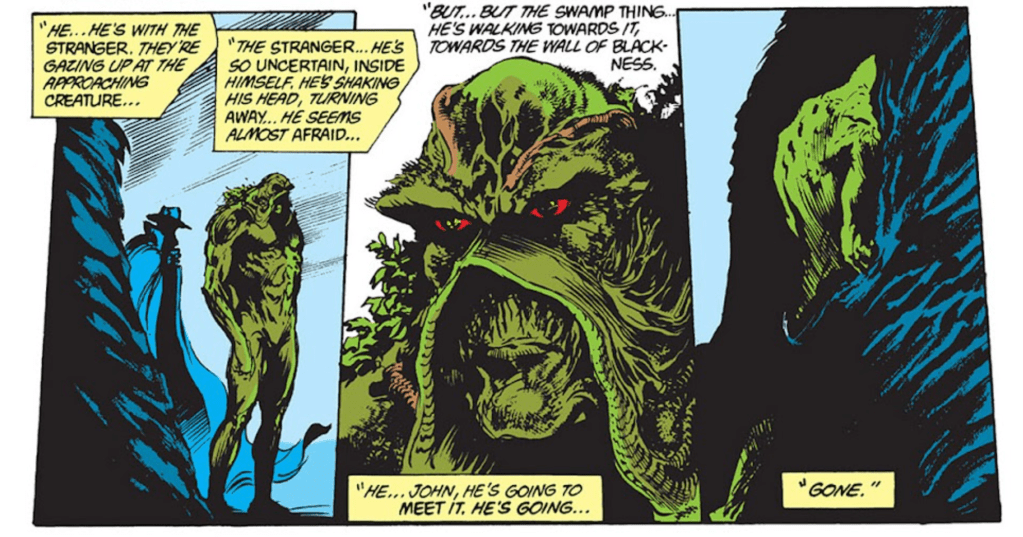
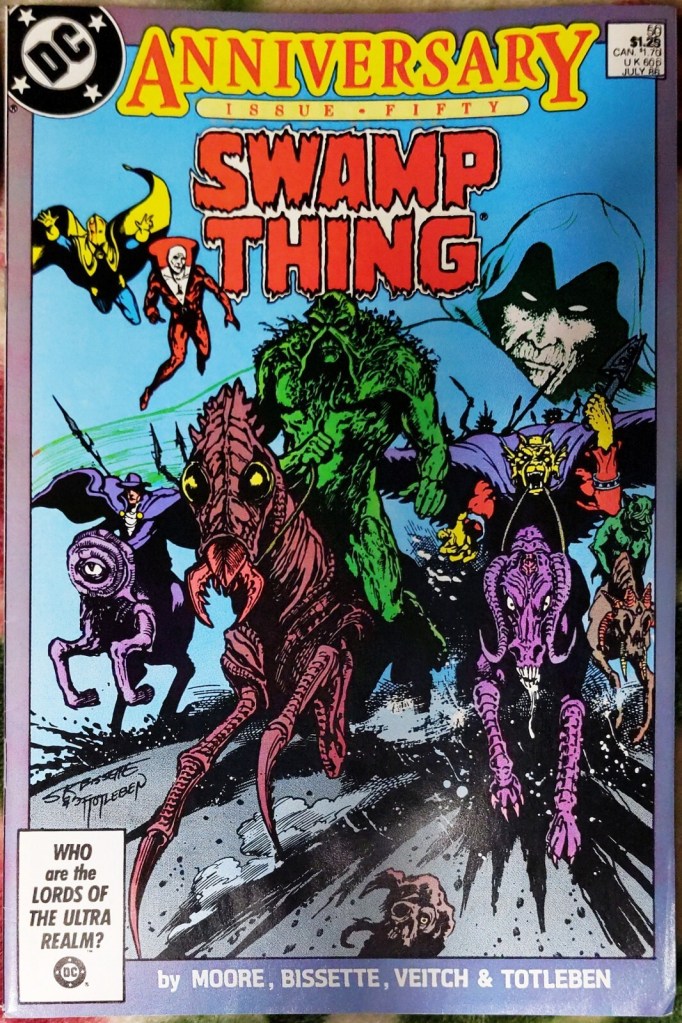
Swamp Thing #50 – Nobody else in mainstream comics was doing the kind of cosmic existential bombast that Swamp Thing #50 hit me with. Picking up this issue cold was a good way to immerse yourself in Alan Moore’s world – the conclusion of the “American Gothic” arc, it featured Swamp Thing and a whole cast of DC’s monster heroes like Phantom Stranger, The Demon and more all gathering on a battlefield in Hell to apparently, view the ultimate clash between good and evil. I had no idea what was going on when I read this comic but it slammed me like my first exposure to a Black Sabbath tune. Between the huge cast, Moore’s ornate prose with its little humane pauses and the symphonic art of Steve Bissette, Rick Veitch and John Totleben which seemed classic yet a tad filthy at the same time, Swamp Thing #50 was a full-course meal of a read. I didn’t know comics could be like this. Yeah, I love Watchmen and From Hell and Promethea and Miracleman and all the rest but in the end, this one issue of Swamp Thing is probably the Alan Moore comic I’d put in the time capsule with me.
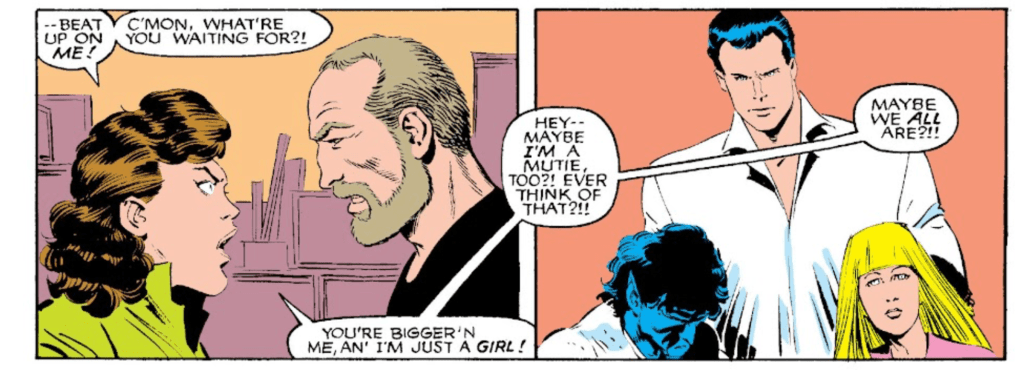
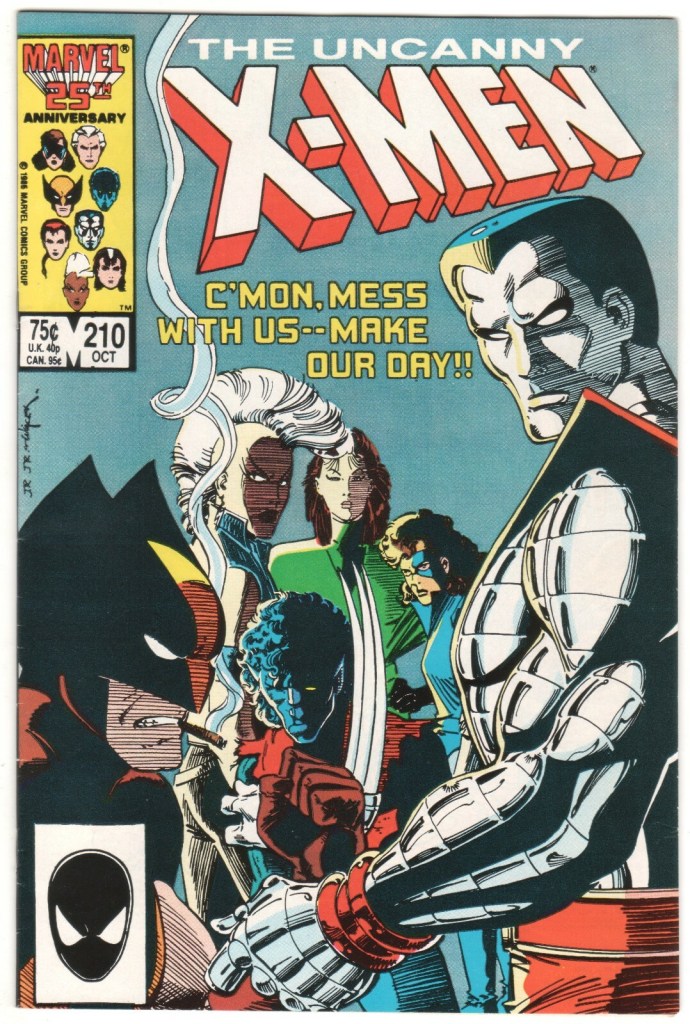
Uncanny X-Men #210 – I was hooked on Chris Claremont’s sprawling X-Men world during the surprisingly intense, gritty Brood saga, and regularly bought it from about #166 on. I loved the family he created from these misfits – in this period shortly before the X-Men became a global brand, a massive comics empire of spinoffs and tangled continuity. It was still a rich, textured soap opera, and I fell for these characters – plucky Nightcrawler, good-hearted Colossus, every boy’s teenage crush Kitty Pryde and yes, even Wolverine before he became utterly overexposed. The Claremont/John Romita run of the mid 1980s will always be my favourite X-Men era. And yet, sadly, as much as I was excited by it at the time, this issue kicked off the beginning of the end of my X-fandom. The “Mutant Massacre” that began here was a big, daring story that brutally nearly killed several of my favourite X-folk and took them off the board – goodbye Kitty, Colossus, Nightcrawler – and began a more urgent, unsettled X-era that, frankly, didn’t speak to me as much as the Claremont/Romita and Paul Smith years. I kept on reading X-Men for a few more years, into that whole Australia thing and B-raters like Dazzler and Longshot joining, Claremont’s stories grew ever more sprawling and the plot threads could fill a room – but I was gone as a regular reader by #250 or so, and while I’ve dipped into following the X-Men over the years several times, I’ve never been quite as hooked by them ever since.
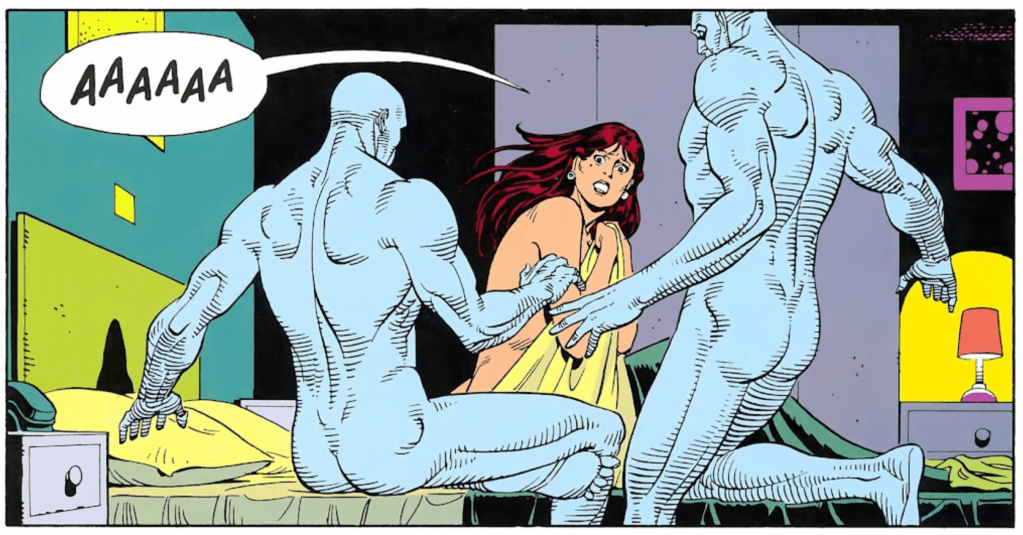
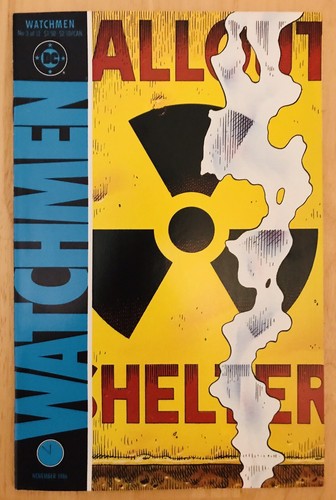
Watchmen #3 – And of course we end our list with the comic that defined 1986 more than any other, Alan Moore and Dave Gibbons’ Watchmen. The years since and miscellaneous attempts at prequels and sequels (I’m going to my grave insisting that the Superman/Watchmen misfire Doomsday Clock never happened) haven’t dulled the original comics for me a jot. Once again, just like Dark Knight, I missed the boat on the original series and first saw it with #3. So to be honest, I had no idea what was going on – what was with this pirate stuff? Is that blue guy naked? Wait, is Richard Nixon in this? But obviously, I got suckered into its charms. It was surprisingly hard to find with the sometimes limited access to comics I had then and I ended up getting some issues and not others, so even years later when I read the complete book parts of it still feel weirdly “new” to me. Like many things that have a massive cultural splash, a lot of the wrong lessons were learned from Watchmen – grim ’n’ gritty, literary pretensions, apocalyptic displays and heroes with blood on their hands still haunt comics. Yet, scrape away all the accumulated barnacles, and the original series still gets me. The characters were frail and fragile and human despite their funky costumes, and their flaws and imperfections are what makes Watchmen great.
It’s a good summation of 1986 as a whole – a year that questioned what comics could be, and realised that really, they could be anything.

 Nik Dirga
I didn’t get into reading comic books as a major hobby until 1989, so I missed all of these when they first came out. I finally read Watchmen a decade later in 1999, and really enjoyed it, although I wish DC would have left well enough alone and not done any of the prequels or sequels. I’ve still never read The Dark Knight Returns after all this time, but I absolutely love Batman Year One. As for All-Star Squadron, for the last few years I’ve been working on putting together a complete run of the series. It’s one of my favorite Roy Thomas series. Still need to read Alan Moore’s Swamp Thing.
LikeLike