Explorers have long searched the world for a fountain of youth, but maybe it was hiding in a rock and roll song all along.
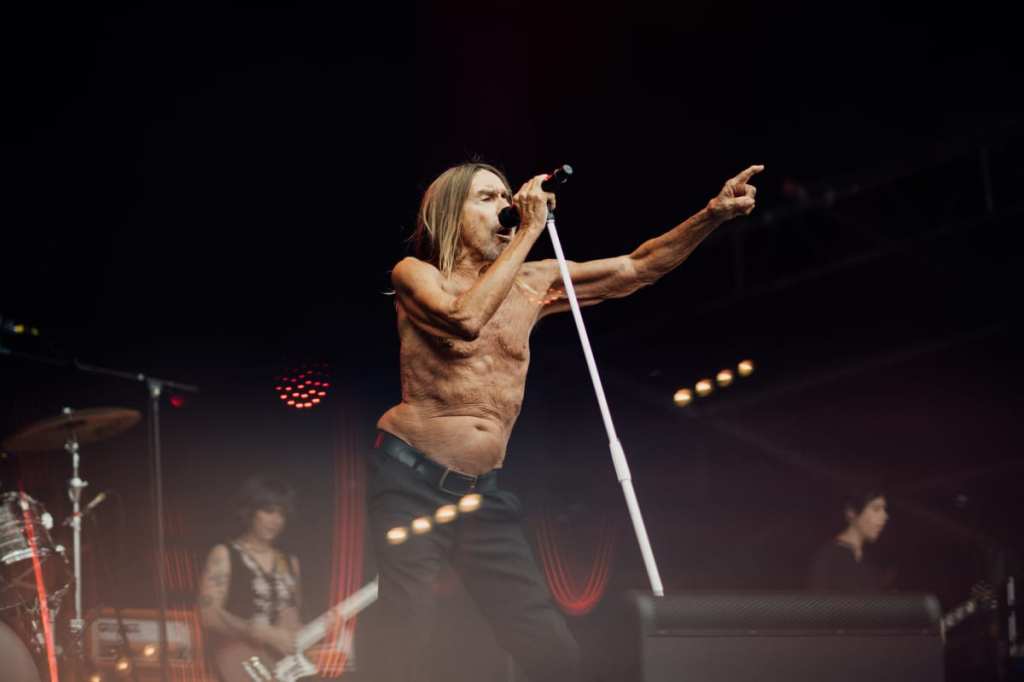
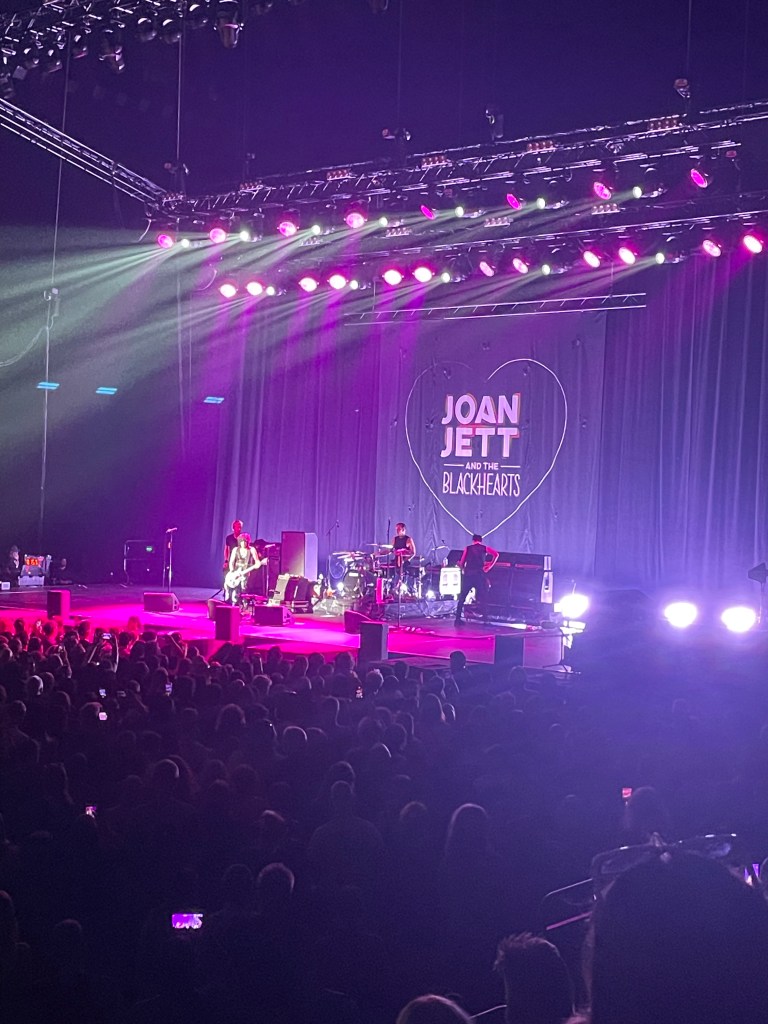
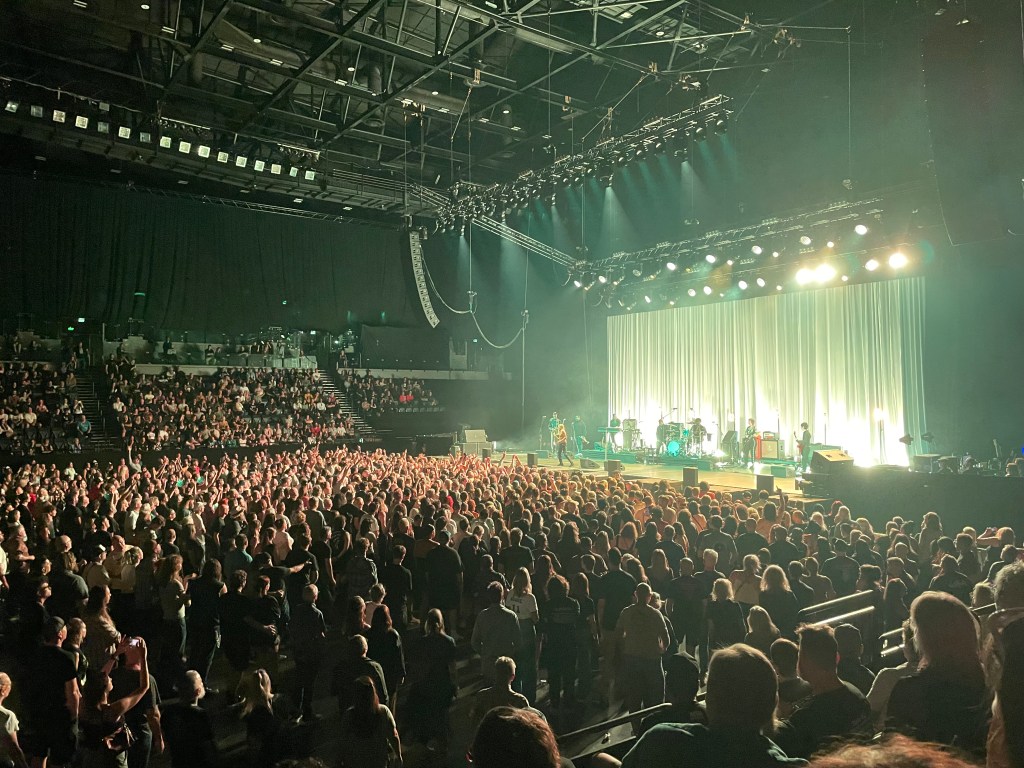
Two legends of the trade – punk godfather Iggy Pop and queen of rock Joan Jett – testified to the immortal power of a hard-out tune at Spark Arena Thursday night.
When Joan Jett and the Blackhearts took the stage, it was with the confident and open-hearted attitude befitting rock royalty. Jett kicked off her career at just 16 years old with the all-girl punk band The Runaways and has been a trailblazer for women in rock for decades.
Clad all in black and as dynamic as ever, Jett and the Blackhearts bashed their way through an hour of classic pop-punk nuggets.
The expected gems like ‘I Hate Myself For Loving You’ and the Runaways’ ‘Cherry Bomb’ got terrific airings, but there were also some fine surprises in her fast-paced hour-long set. A cover of the empowering tolerance anthem ‘Androgynous’ by the Replacements was a delight, while a real treat was a guitar-powered take on the late Sly Stone’s ‘Everyday People.’
Jett, a proud New Yorker, couldn’t let the current instability on the American scene go unmentioned, and made a brief but compelling statement on what she called the many in the US who are horrified at what has been happening in Minneapolis and elsewhere. “Change is gonna come… Oh yes, it is,” she said, before a blistering run through her 2006 slice of optimism ‘Change The World.’
Newer songs like ‘(Make The Music Go) Boom’ and ‘If You’re Blue’ had the same fine energy of the classics, but of course it was the anthems like ‘I Love Rock And Roll’ that truly got the arena crowd up and fist-pumping. Jett hasn’t lost a step despite more than 50 years in the business, and the Blackhearts backed her up terrifically, with lead guitarist Dougie Needles particularly sharp.
Now, I only want to say this once, but it’s worth highlighting – proto-punk legend Iggy Pop is 78 years old … 79 in April.
I say this because this leathery icon and headliner stalked onto the stage with just as much passion and raw power as he’s had ever since his legendary band The Stooges put out their first album way back in 1969.
Iggy ripped off his shirt nanoseconds after he took to the stage and immediately tore into a set heavy on Stooges classics and raggedy and raw in all the right ways. His commitment should inspire bands half his age.
Backed by a terrifically tight band and an excellent horn section that pounded their way through an hour’s worth of mostly hard-rocking bangers, Iggy put on a master class in sheer star magnetism that showed you can bash them out as hard at 78 as you can at 25. With age, Iggy has morphed into a kind of punk Yoda, as uninhibited as ever, gyrating across the stage with charm and wit.
The set was primarily Stooges tunes – and why not? Their molten, uncompromising hard rock is the primal ore from which dozens of bands from the 1970s to the present have emerged, and songs like ‘Gimme Danger, ‘Search And Destroy’ and ‘Raw Power’ still quiver with life more than 50 years on.
Iggy strutted his way through nearly a dozen Stooges classics, a real treat for fans of this iconic and still somewhat under-appreciated band, of which he’s the last surviving original member. At one point he talked about how radio stations and record labels sneered at the Stooges back in the day, but “the stoners liked it.” It’s a sign of the uncanny power of those untamed songs that an arena full of folk from gray-haired to mosh-pitting Gen Z youth could all proudly dig them now.
There was a playful, charming edge to his showmanship, with plenty of profane crowd banter and encouraging audience singalongs. The songs may still feel dangerous but Iggy… well, he seems kinda nice, really. He even put in a plug for a Kiwi wine brand, stopping to have a sip of Sauvignon Blanc between tunes, as you do.
There were a few times when the band’s powerful wall of sound felt a bit muddy at Spark Arena, with Iggy’s vocals getting a little lost, and the Stooges-heavy set meant that a lot of Iggy’s still excellent later work got the short end of the stick. Most of the songs were from the 1970s, and there was nothing from his terrific 2016 Post Pop Depression, and only one song from his quite strong latest album, 2023’s Every Loser.
But that’s the problem when you have as rich as catalogue as Iggy Pop, who originally made his name as a hellraiser but who’s also dabbled in lush ‘80s pop and a delightful album of crooning pop and French standards.
When he came off the stage briefly during a roaring take on ‘I Wanna Be Your Dog,’ it wasn’t quite clear if it was on purpose or not, but this septuagenarian singer kept on playing – and when he was helped back onto the stage, the crowd couldn’t help but cheer him on.
“I suppose I’m going to have to die pretty soon … but not tonight,” Iggy joked at one point.
And yet mere minutes before he was belting out the chorus to the Stooges’ ‘Search And Destroy,’ screaming ‘I am a world’s forgotten boy,” and making everyone believe it.
You know, maybe the real fountain of youth was Iggy Pop all along.
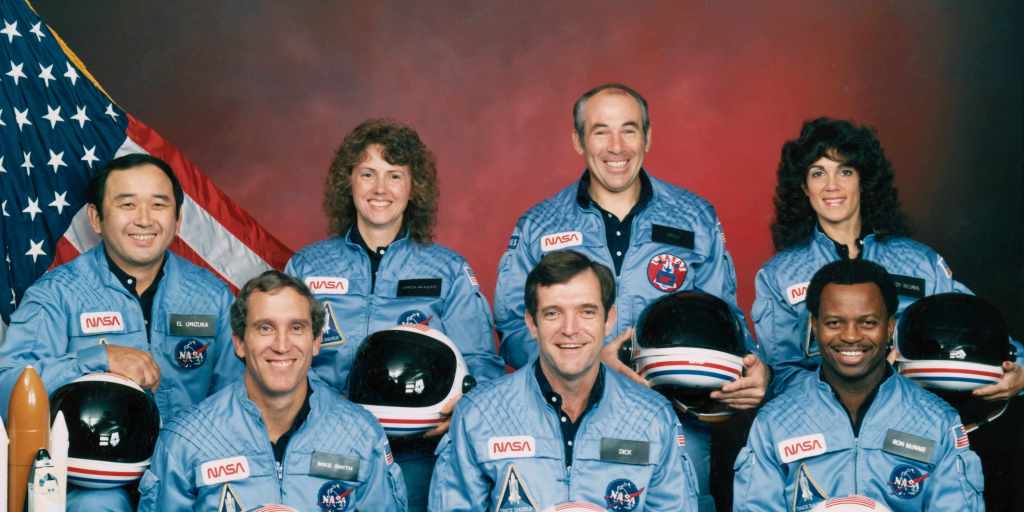
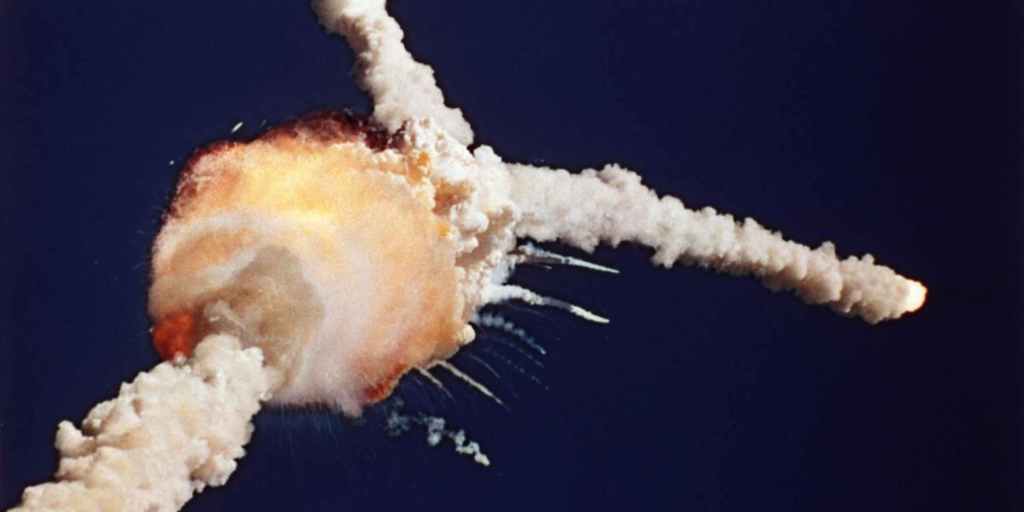
I remember the Challenger, coming apart in the infinite blue, 40 years ago today.
I was in eighth grade, on January 28, 1986, and our classroom came to a chattering halt that day when we heard that the space shuttle Challenger – with a civilian teacher on board, Christa McAuliffe – was gone.
“Gone” didn’t seem to make sense – while there had been NASA disasters long before I was born, this was something new and scary.
I fixated some on the fact that these astronauts were, and then suddenly weren’t, that they were vanished into the sky and the sea in that unforgettable image of the shuttle’s explosion and contrails melting into the sky. I don’t think our classroom was watching it on live TV, but I feel like someone in school was, because the news spread in a quick way that seems so foreign now when everyone carries the instant news in their pocket. The fact there was a teacher on board, a woman who could’ve been one of our teachers, and that her bold adventure ended so abruptly felt like a cruel joke.
For a good long while, all the students and teachers milled around, reacting. The normal school day stopped. I remember being pissed off that one of my friends took in the news with a laconic “well, they’re all dead” type remark. Didn’t he feel the existential horror of it all, or was I just a sensitive lad?
I’m not a huge fan of Ronald Reagan’s politics or the way a lot of his presidency laid the groundwork for 2026’s shitstorm, but I will give him this – his speech to the nation about the tragedy was one of the finest moments of presidential rhetoric I’ve ever seen, delivered impeccably. I still think of those lines: “We will never forget them, nor the last time we saw them, this morning, as they prepared for their journey and waved goodbye and slipped the surly bonds of earth to touch the face of God.” Even for an avowed agnostic like me, there’s poetic comfort in those words.
Of course, consolation is foreign to the current occupier of that office, isn’t it?
It was probably the first big, truly big news event that I paid a lot of attention to. I kept the newspaper front pages for years, and perhaps I have them somewhere still, buried in a box. Previous to that I was vaguely aware of things in the wider world – I have vague memories of the death of Elvis being reported on our tiny kitchen TV, or of Jimmy Carter’s loss to Ronald Reagan, but honestly, I was a kid and I didn’t pay a lot of attention to current events that didn’t involve comic books or Star Wars action figures.
Forty years on, I remember that fierce sense of wanting to know more, and I reckon that’s kind of stuck with me ever since in my quixotic journey along the margins of journalism.
There’s been a bucketful of tragedies in the 40 years since of course, both personal and global, and one of the knottiest questions of being alive is how we process all the inevitable loss. I never knew the crew of the Challenger of course, and yet it hit a sensitive 14-year-old deep in the chest that clear January day, the brave explorers launching themselves up into the sky and never, ever coming back.
Was 1986 the greatest year for superhero comics? Or the greatest year for comics, period?
It sure feels like that now – Alan Moore’s triumphant Watchmen and Swamp Thing, Frank Miller’s Dark Knight, the rise of independent comics and the end of several eras.
I was a puberty-plagued 14 at the time, and didn’t really get that I was in the middle of a comics revolution. I just thought there were some pretty darned great comics coming out.
Forty years on, it’s clear 1986 was a tipping point – heralding more adult themes and endlessly innovative creators, paving the way for everything from the Marvel Cinematic Universe to a less kid-friendly, more adult-orientated industry. I’m hardly alone on this hot take – the comics internet is full of lengthy essays, podcasts and websites paying tribute to Comics ’86.
It was the end of a lot of things – long-running books like House of Mystery, Sgt. Rock and World’s Finest had been cancelled, Jim Shooter’s New Universe briefly flared into being and the perpetual events era began after the success of Secret Wars and Crisis On Infinite Earths. Comics got darker and a lot less carefree and the over-the-top excesses of the 1990s were heavily foreshadowed, but in 1986, for a little while it really felt like comics were doing something amazing. After 1986, they were never quite the same.
Trying to compose a list of my favourite 12 comics I read in 1986 was daunting. It easily blew past 10, and could’ve hit 25, such were the riches. There’s still an awful lot more I could include – John Byrne’s Man Of Steel, Batman: Year One, Denny O’Neil’s The Question, Rick Veitch’s The One, Dark Horse Presents #1, Wonder Woman by George Perez, DC Comics’ cult classic ‘Mazing Man, the final issue of Marvel Comics’ Star Wars, the conclusion of Mark Gruenwald’s Squadron Supreme, et cetera, et cetera.
This list includes the expected class of ’86 canon – Alan Moore is on here a whopping THREE times and I decided to cut him off there – but also slightly less acclaimed comics that still made a big impact on this comics-obsessed brain of mine. It wasn’t all gold – there were very bad comics that I paid a lot of attention to at the time – Secret Wars II, Adolescent Radioactive Black Belt Hamsters, Mark Hazzard: Merc, etc. But when 1986 soared, it soared hard.
My 12 favourite comics of 1986
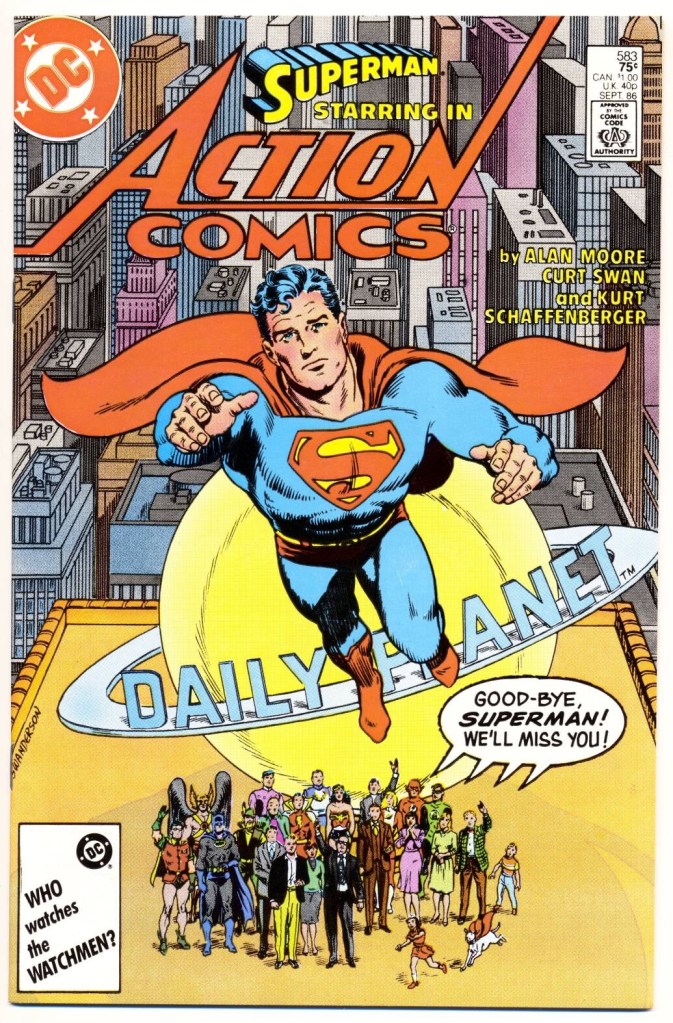
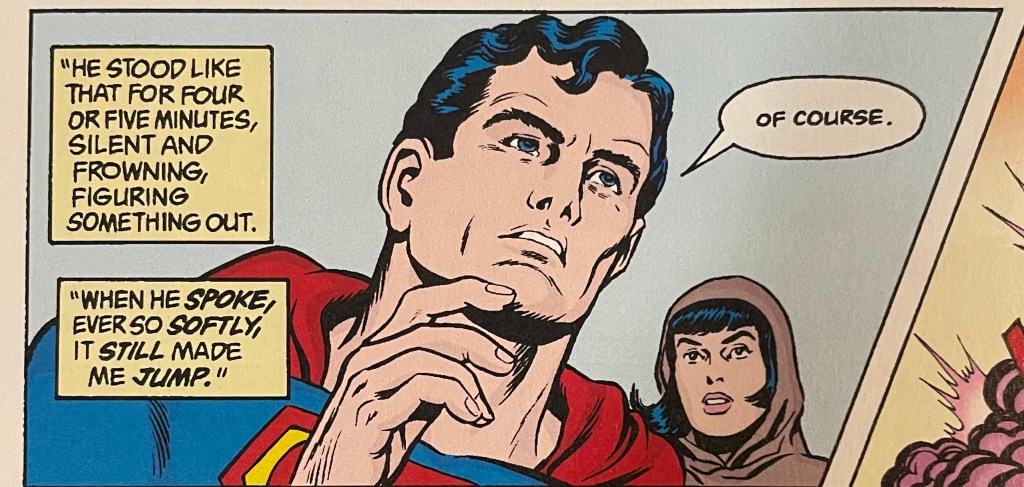
Action Comics #583 – The last Superman story – for a time. The conclusion of a two-part tale bidding farewell to the “silly” Superman to pave the way for John Byrne’s energetic slick reboot, and Alan Moore made it a beautiful, tragic and bittersweet elegy for Krypto, Supergirl, gold Kryptonite, shrunken cities and Elastic Lad. And yet – 40 years on, that “silly” Superman is alive and well, perhaps most recently captured in the great fun of James Gunn’s Superman, while Byrne’s reimagining – as much as I liked it at the time and still am fond of it – now seems as dated as yuppie jokes. A love letter to comics, with elegant Curt Swan art just like all the greatest Superman stories had.
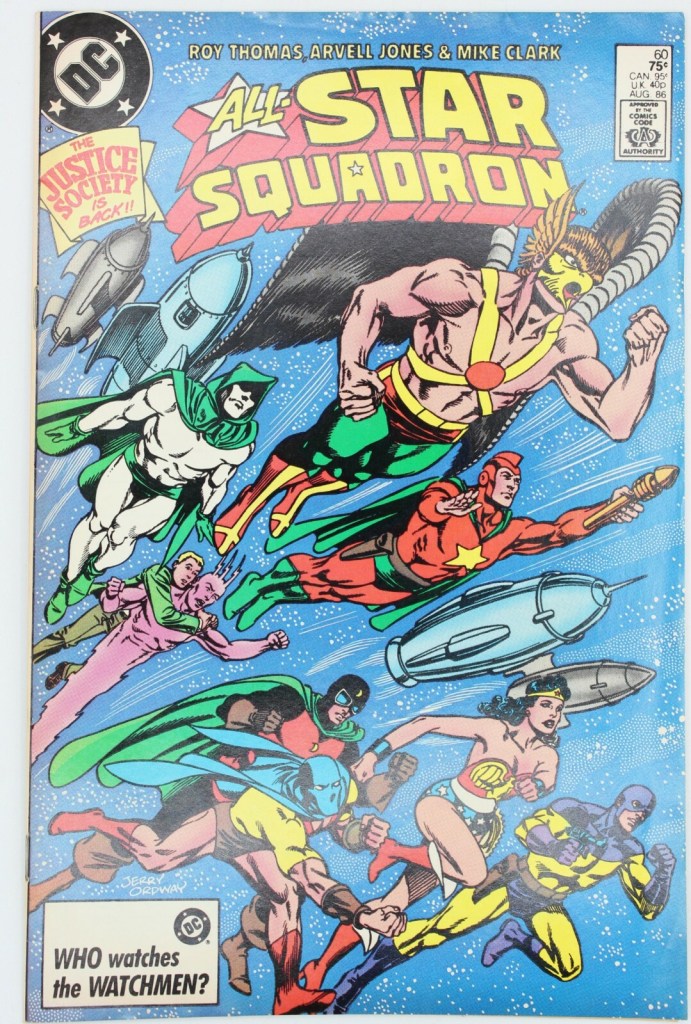
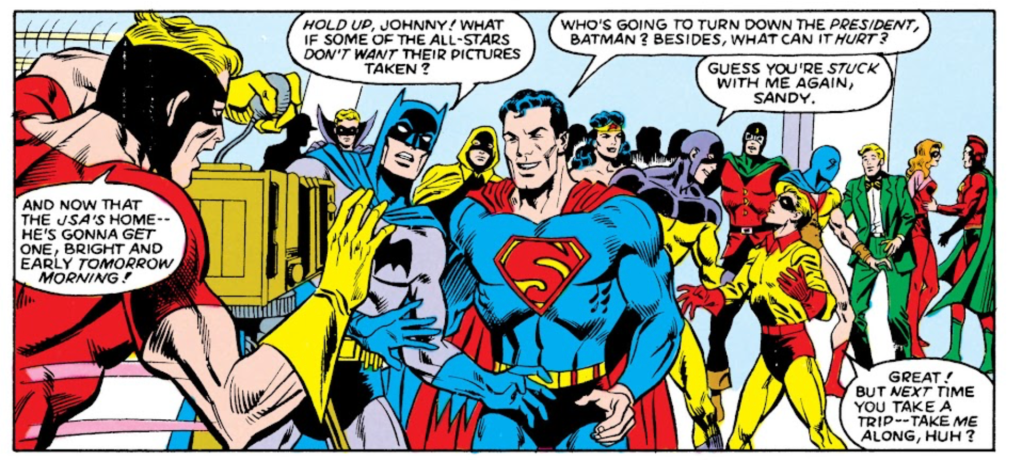
All Star Squadron #60 – Roy Thomas’ endearingly corny World War II superhero series was scuttled by the cosmic reset of Crisis on Infinite Earths, and this issue directly deals with the effects of a shifting continuity by relegating the ‘golden age’ Superman, Batman and others to non-history. A.S.S. (yes, love that acronym) was reliably meat ’n’ potatoes comics, and never flashy, but when I picked up this issue it was my first look at the series, featuring literally dozens of heroes from Liberty Belle to the Whip gathered for a kind of “class photo” image – a scene which piqued my interest at the history of superhero comics and all the colourful characters it held. One of the most appealing things about comics to me is its vast cultural history, and this was my gateway drug into it. All-Star Squadron, which sputtered out at #67, was the end of an era for superhero comics but didn’t mean it was the end of nostalgia for the past, which still drives big chunks of the medium to this day.
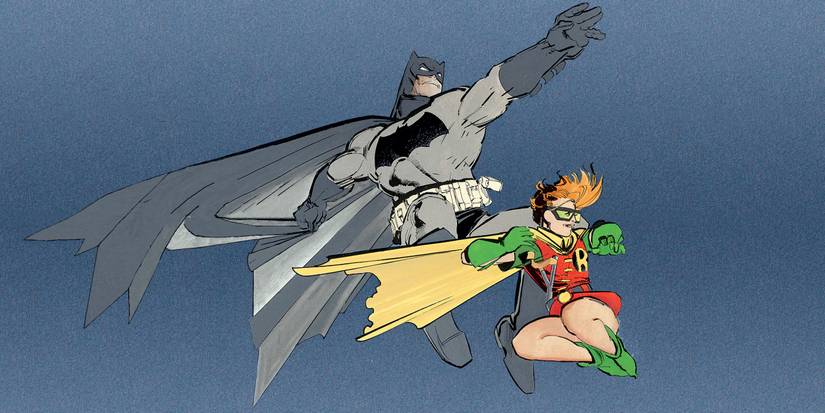
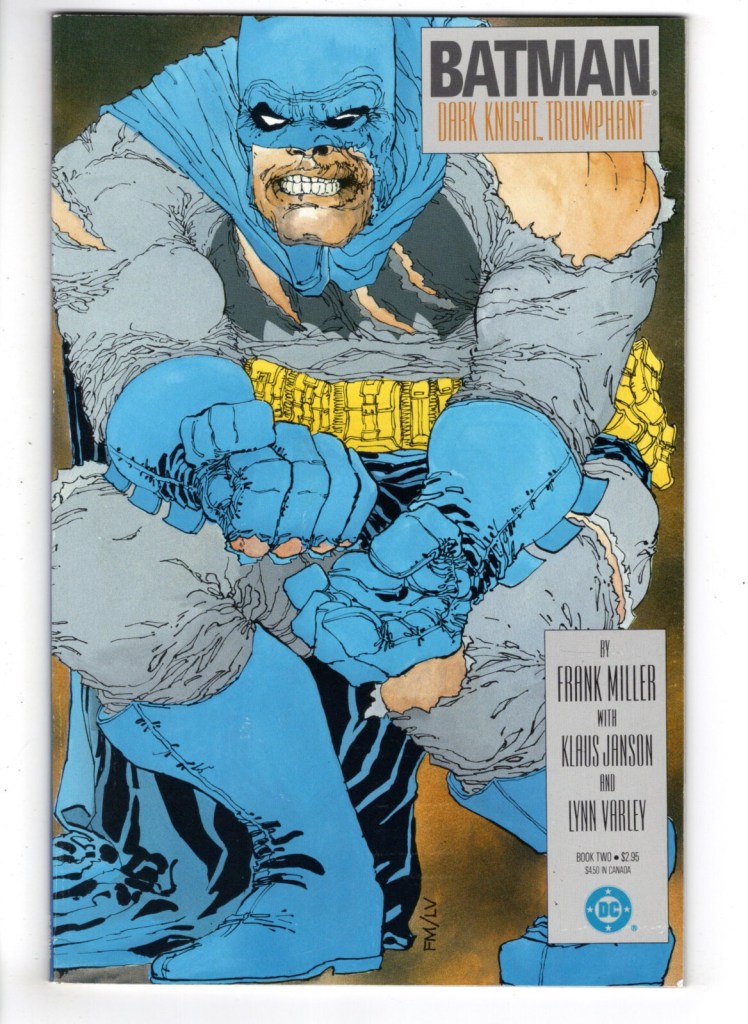
Batman: The Dark Knight Returns #2 – Yes, issue 2! Pre-internet and relying mostly on tattered copies of the Comics Buyer’s Guide newspaper for info about the world, I missed the boat on the first issue of Frank Miller’s iconic Bat-reimagining, so I grabbed the second issue instead. From that snarling, cramped and feral Batman cover image to the savage Mad Max mutants who were scarier than the Penguin and Riddler ever were, Miller stamped a giant footprint on Batman stories that raised him to the level of mythological icon. Paired with his Batman: Year One tale (stunningly, out the same year), 1986 became the year Batman took over superhero comics – which to be honest, he still pretty much rules over today.
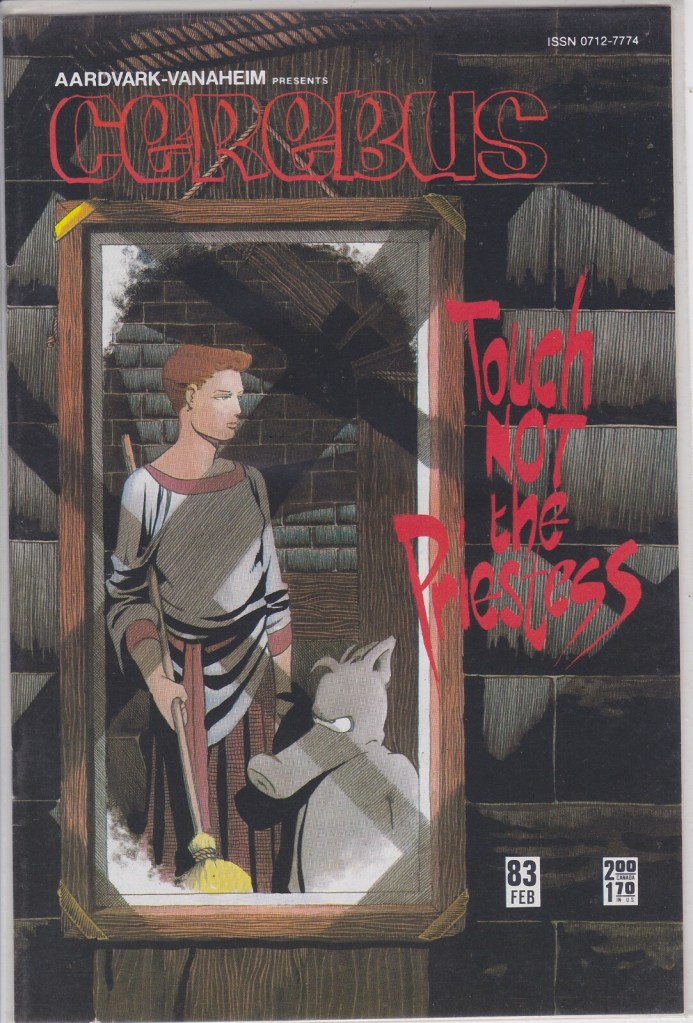
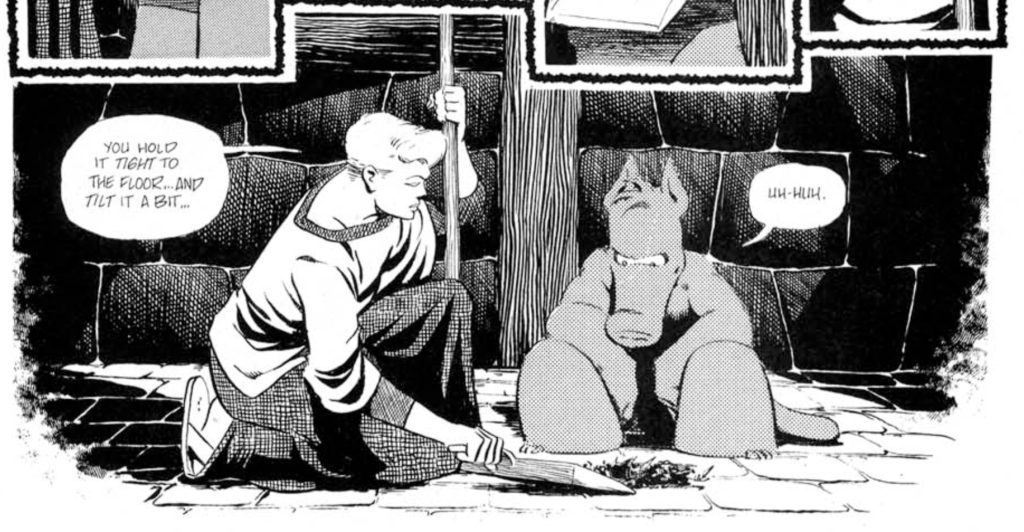
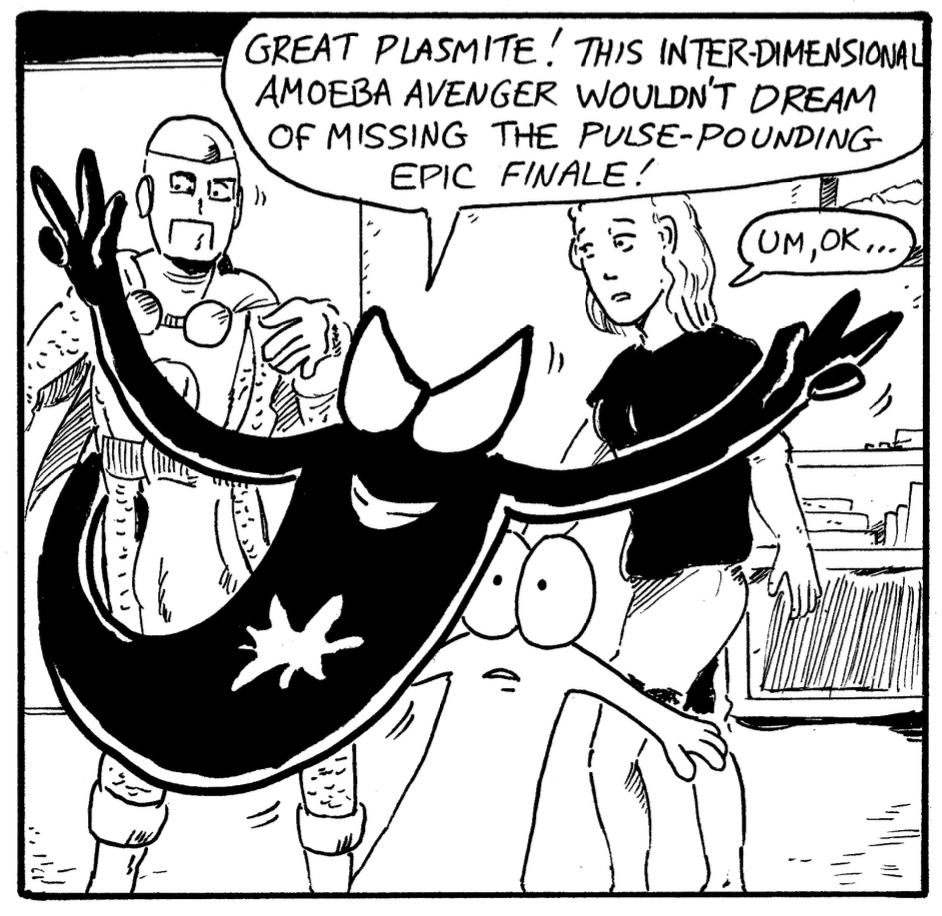
Cerebus #83 – I can’t overstate how important Dave Sim’s quirky Cerebushas been in my life, even if it came completely off the rails in the second half of its 300-issue run and the controversial Sim, to be charitable, went down some strange and unpleasant rabbit holes. This was the first issue I ever sampled and felt almost calibrated to baffle the uninitiated – Cerebus basically spends the entire issue listening to some dowdy housewife talk. It was, to be honest, kind of boring. And yet… I was intrigued, by the gorgeous craft of Sim’s cartooning and Gerhard’s background art, which felt so handmade and sincere compared to superhero comics, and I was fascinated by the much bigger world this comic hinted at. I was soon hooked into the wild ride of the ongoing “Church and State” storyline and the epic saga that unfolded. Even when it got bad – and it got very bad – I hung on until the final 300th issue in 2004. Whatever happened since, Dave Sim’s Cerebus opened up a world of smaller scale, personal comics to me and directly inspired my own attempts at creating my own comic Amoeba Adventures.
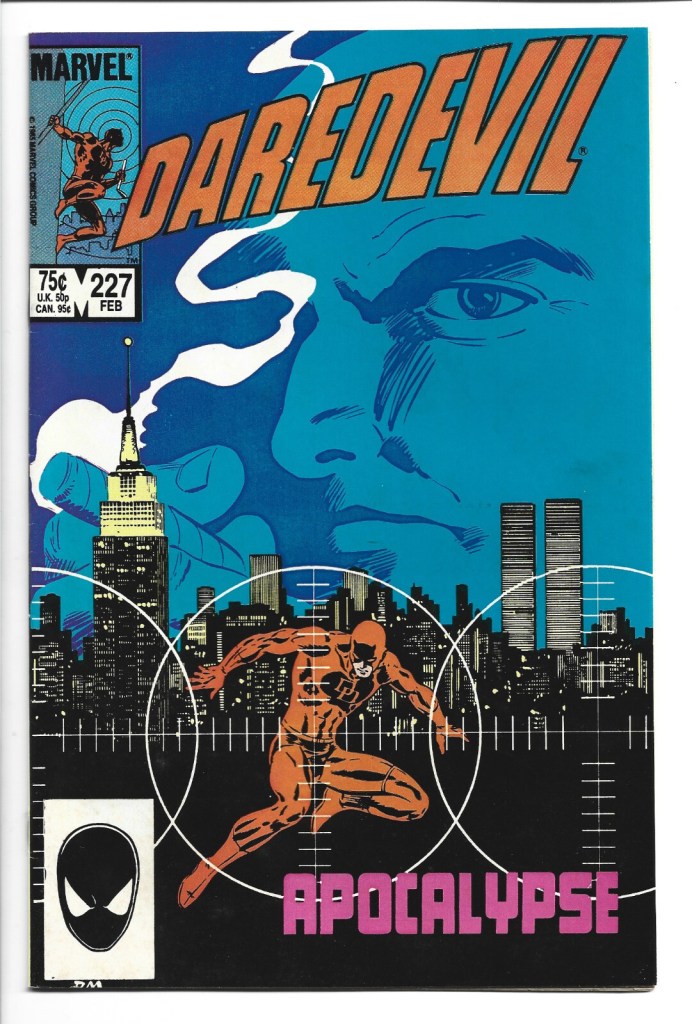
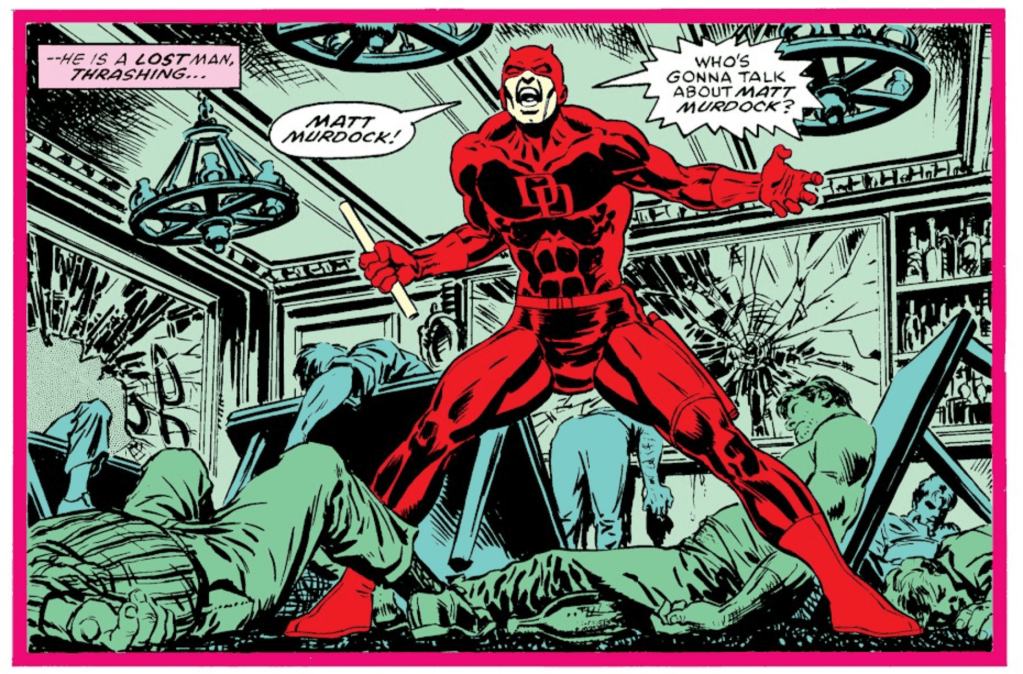
Daredevil #227 – Honestly, how did Frank Miller manage 1986, with the Dark Knight, Batman: Year One and Daredevil all hitting? With this issue’s start of the “Born Again” saga, he kicked open the doors. His return to Daredevil with artist David Mazzucchelli is still a high-water mark for comics noir, a classic tale of collapse and redemption for poor beleaguered Matt Murdock. Miller’s flinty script is hard-boiled before his work started to become self-parody, and Mazzucchelli – whose dazzling brief stint in mainstream comics was like a comet in the night – delivered perfectly-paced cinematic violence and angst that still make this the greatest Daredevil story ever told.
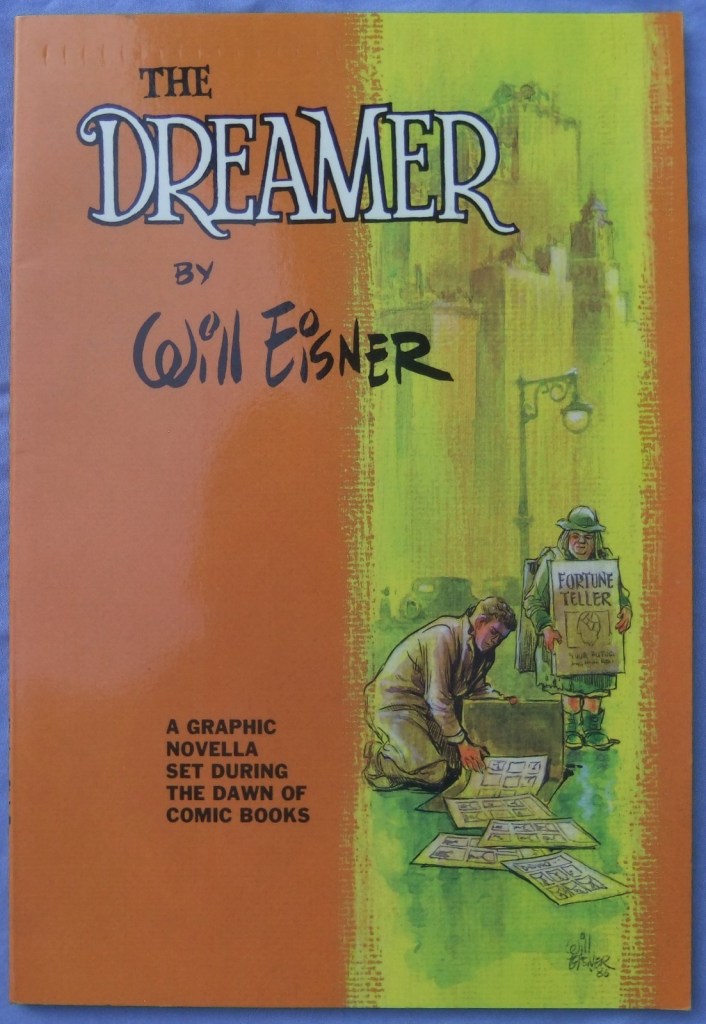
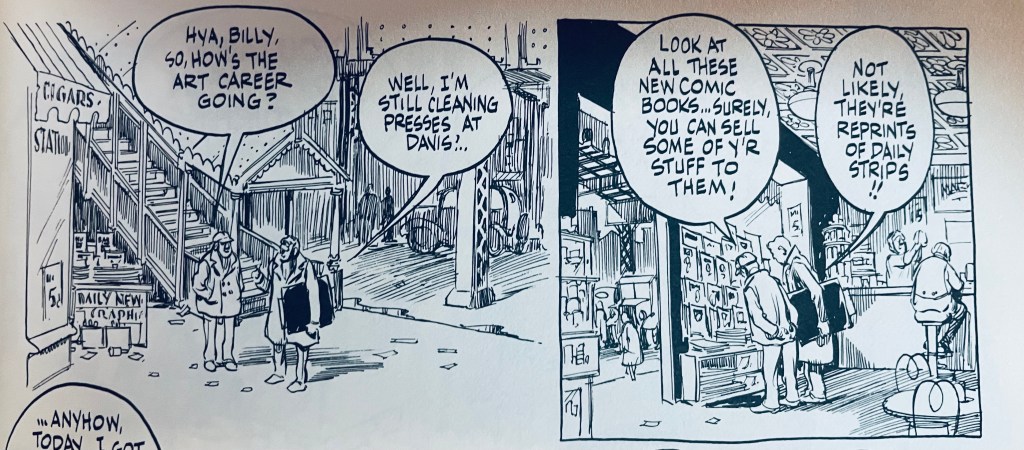
The Dreamer by Will Eisner – I first learned about Will Eisner through Kitchen Sink Press’s Spirit comic reprints, and in 1986 his “graphic novella” The Dreamer came out, an autobiographical tale of the early days of comics filled with hucksters and hypesters and a young kid (an Eisner stand-in) trying to keep some principles in a corrupt world. Graphic novels were still a bit of a novelty then, and Eisner’s fluid, dynamic realism captivated me – he was drawing real people, doing real things! – and I soon got sucked into A Contract With God, and so much more. A letter from Will Eisner offering encouragement for my silly fanzine Amoeba Adventures comics remains one of my prized comics possessions. The man was a dreamer, and we need more of those.
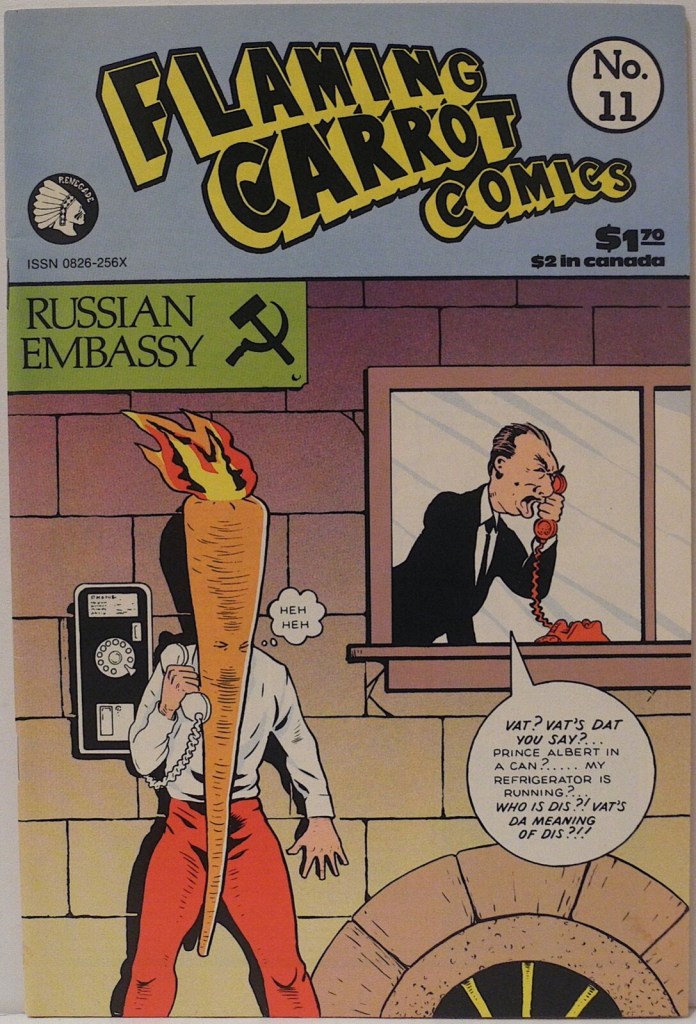
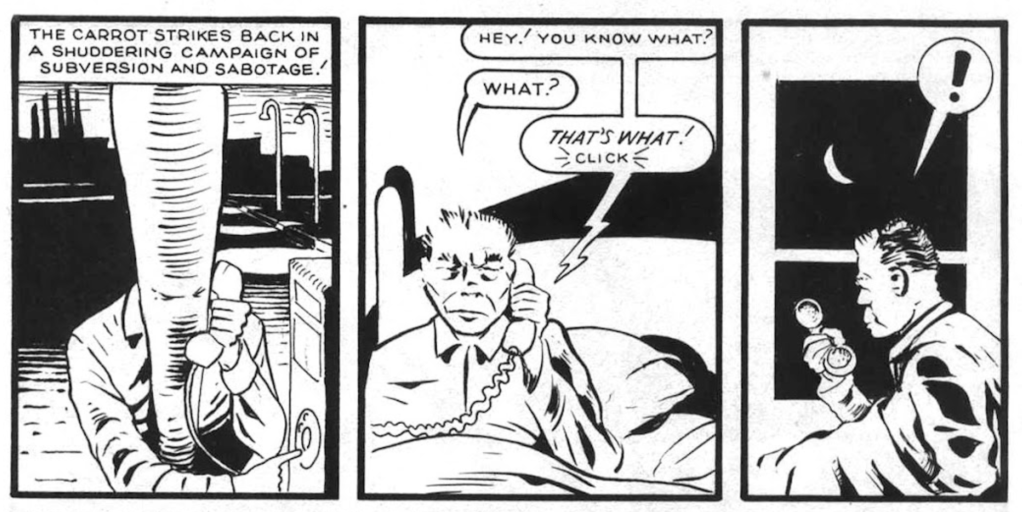
Flaming Carrot Comics #11 – Bob Burden’s surreal sort-of-hero the Flaming Carrot is a true homespun labour of love, with Burden just following his own weird muse wherever it takes him. It was a hard comic to find back in the day – I found #5 somewhere around 1985, and didn’t stumble on a new issue until 1986’s #11, the last part of a goofy saga about dictators, revolution and wacky jokes. What appealed to me was Burden’s comic sensibility and his unpolished but charming art – some of the panels look almost like woodcuts. Like Cerebus, this plucky black and white indie made me feel like anyone could do comics.
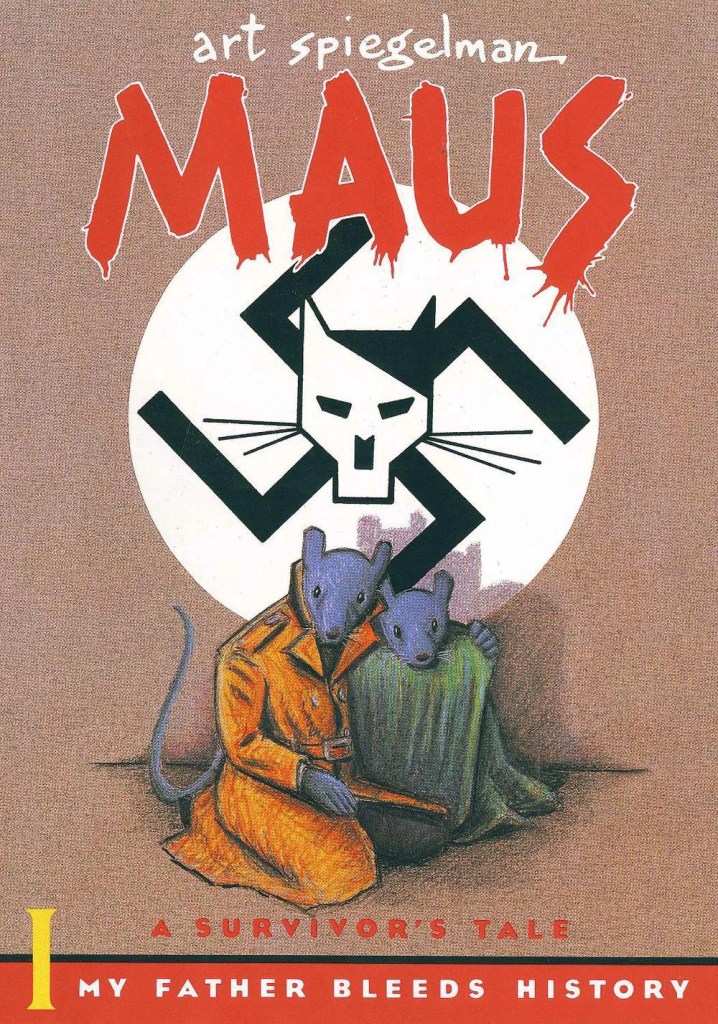
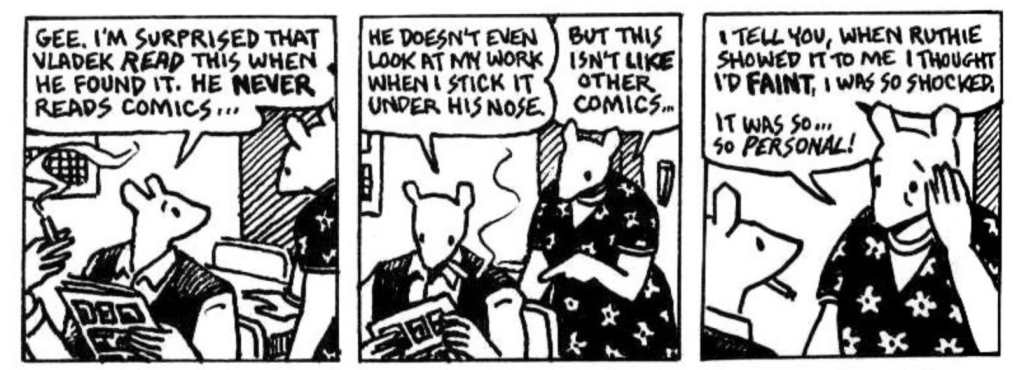
Maus, Part I – I believe I was given this sturdy Pantheon paperback as a gift, because after all, Art Spiegleman’s anthropomorphic Holocaust epic famously won the Pulitzer Prize and all and it was thus “respectable” comics. And I won’t pretend that I was instantly grabbed by it like I would’ve been by an issue of Marvel Team-Up, but this haunting and sad story sticks with you, and it took me a while to mature enough to meet it where it deserves to be. Turning one of history’s darkest eras into a tale of cartoon cats and mice may have made the horror more approachable, but it also made it linger. Yet the pages in Maus Part I that struck me the hardest were Spiegleman’s inclusion of his 4-page 1972 “Prisoner On The Hell Planet” right in the middle of the story – a harrowing scream right from the abyss as he confronted his mother’s suicide head-on, with no mice or cats in sight. I wasn’t quite ready for Maus in 1986, I reckon, but it was ready for me.
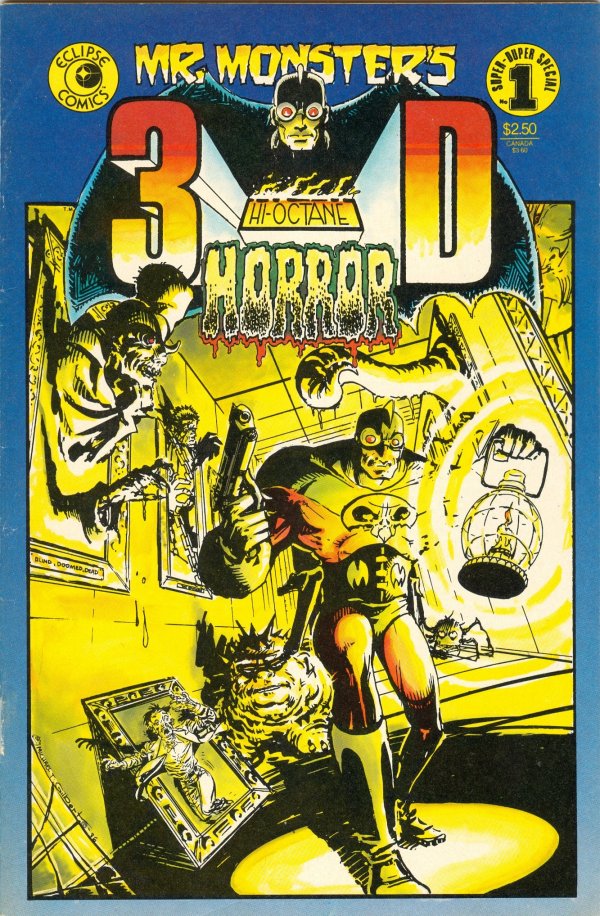
Mr. Monster’s 3-D Hi-Octane Horror #1 – Michael Gilbert’s terrific Mr. Monster is a somewhat forgotten ‘80s series, but I loved it, and this special – a selection of ‘50s horror reprints bookended by Mr. Monster hosting and presented in ripping 3-D – was an eye-opener to me, and a pathway to my love of ‘50s horror comics. I had no clue about the huge impact horror comics had on the industry and this issue – my first 3-D comic (it’s a gimmick, yeah, but the first time you see it it’s pretty amazing), like Roy’s All-Star Squadron, kindled a never-dying interest in the world of comics history.
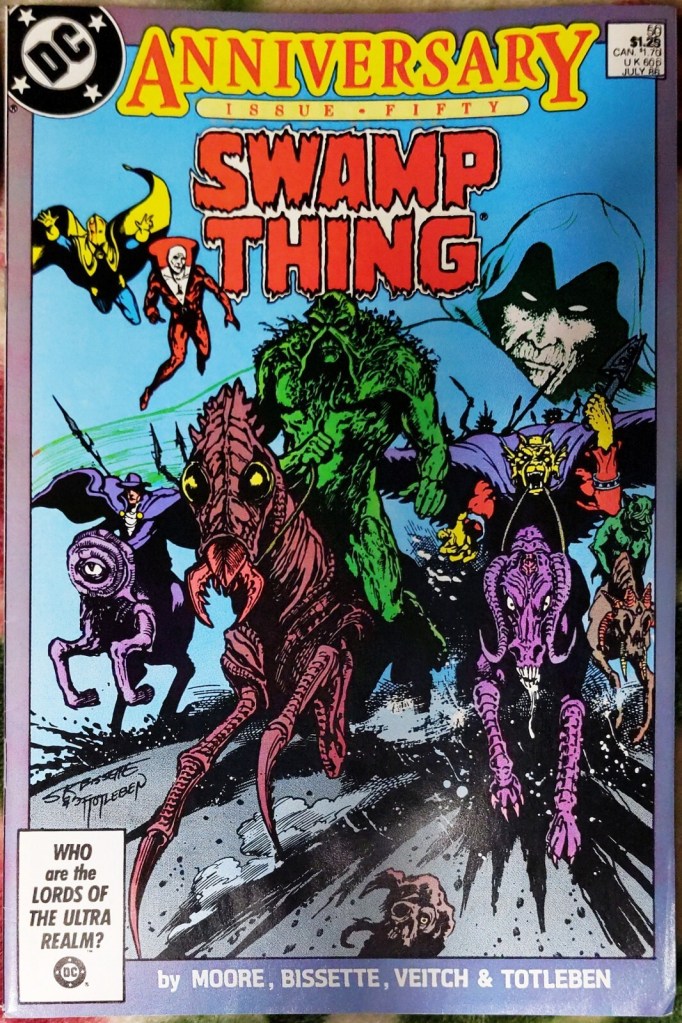
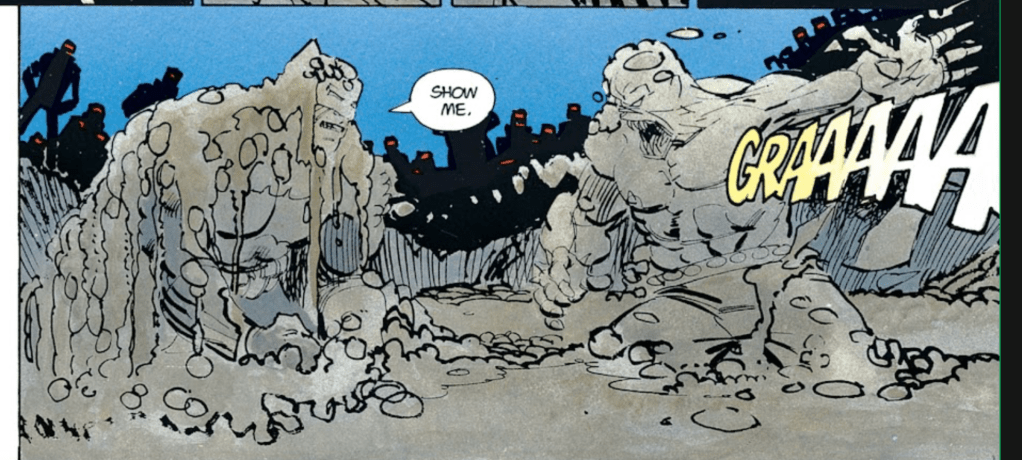
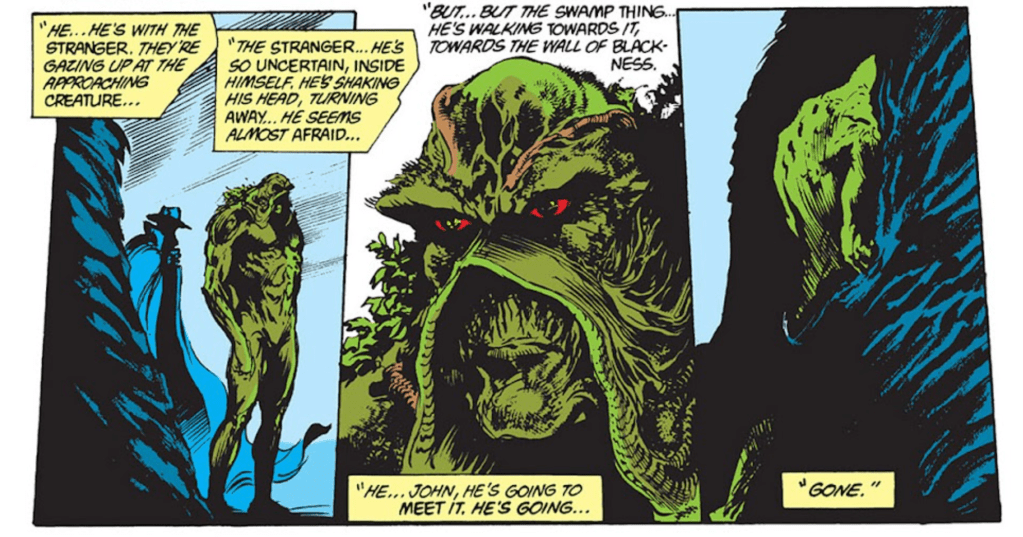
Swamp Thing #50 – Nobody else in mainstream comics was doing the kind of cosmic existential bombast that Swamp Thing #50 hit me with. Picking up this issue cold was a good way to immerse yourself in Alan Moore’s world – the conclusion of the “American Gothic” arc, it featured Swamp Thing and a whole cast of DC’s monster heroes like Phantom Stranger, The Demon and more all gathering on a battlefield in Hell to apparently, view the ultimate clash between good and evil. I had no idea what was going on when I read this comic but it slammed me like my first exposure to a Black Sabbath tune. Between the huge cast, Moore’s ornate prose with its little humane pauses and the symphonic art of Steve Bissette, Rick Veitch and John Totleben which seemed classic yet a tad filthy at the same time, Swamp Thing #50 was a full-course meal of a read. I didn’t know comics could be like this. Yeah, I love Watchmen and From Hell and Promethea and Miracleman and all the rest but in the end, this one issue of Swamp Thing is probably the Alan Moore comic I’d put in the time capsule with me.
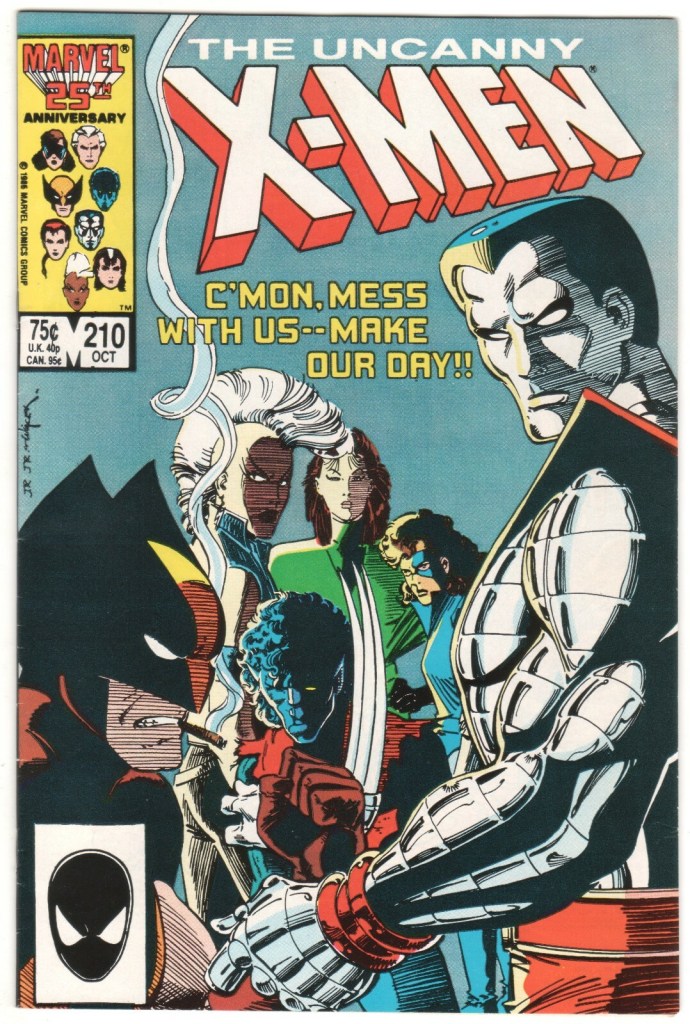
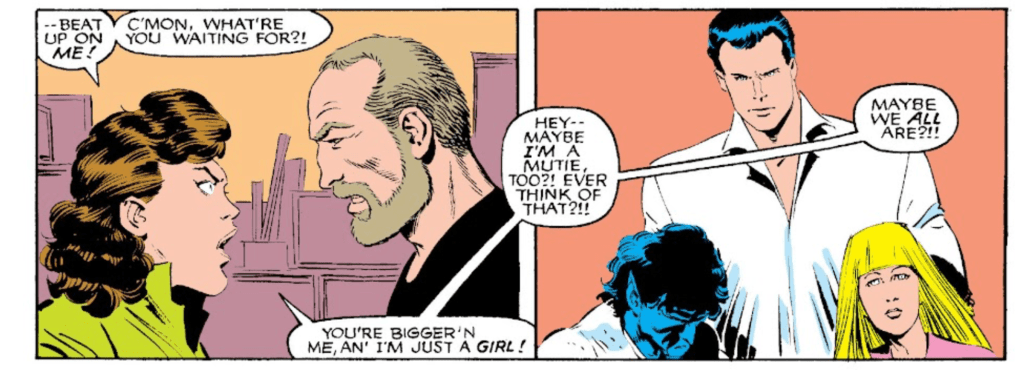
Uncanny X-Men #210 – I was hooked on Chris Claremont’s sprawling X-Men world during the surprisingly intense, gritty Brood saga, and regularly bought it from about #166 on. I loved the family he created from these misfits – in this period shortly before the X-Men became a global brand, a massive comics empire of spinoffs and tangled continuity. It was still a rich, textured soap opera, and I fell for these characters – plucky Nightcrawler, good-hearted Colossus, every boy’s teenage crush Kitty Pryde and yes, even Wolverine before he became utterly overexposed. The Claremont/John Romita run of the mid 1980s will always be my favourite X-Men era. And yet, sadly, as much as I was excited by it at the time, this issue kicked off the beginning of the end of my X-fandom. The “Mutant Massacre” that began here was a big, daring story that brutally nearly killed several of my favourite X-folk and took them off the board – goodbye Kitty, Colossus, Nightcrawler – and began a more urgent, unsettled X-era that, frankly, didn’t speak to me as much as the Claremont/Romita and Paul Smith years. I kept on reading X-Men for a few more years, into that whole Australia thing and B-raters like Dazzler and Longshot joining, Claremont’s stories grew ever more sprawling and the plot threads could fill a room – but I was gone as a regular reader by #250 or so, and while I’ve dipped into following the X-Men over the years several times, I’ve never been quite as hooked by them ever since.
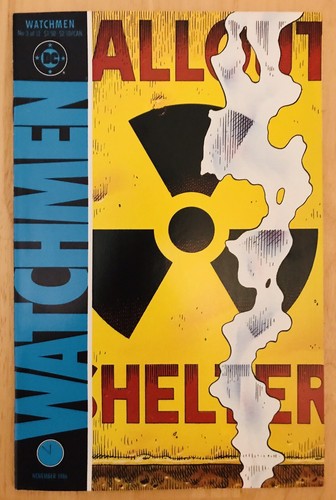
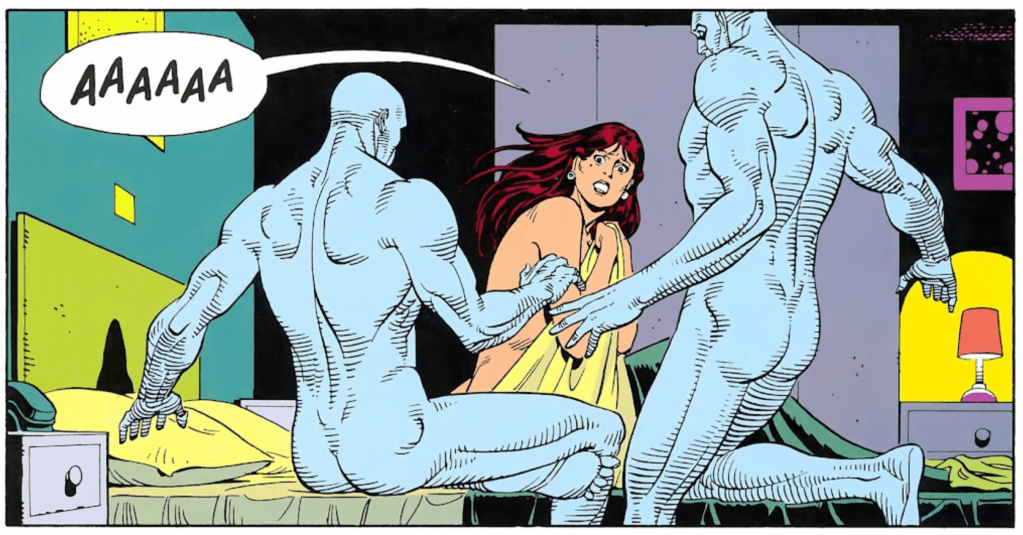
Watchmen #3 – And of course we end our list with the comic that defined 1986 more than any other, Alan Moore and Dave Gibbons’ Watchmen. The years since and miscellaneous attempts at prequels and sequels (I’m going to my grave insisting that the Superman/Watchmen misfire Doomsday Clock never happened) haven’t dulled the original comics for me a jot. Once again, just like Dark Knight, I missed the boat on the original series and first saw it with #3. So to be honest, I had no idea what was going on – what was with this pirate stuff? Is that blue guy naked? Wait, is Richard Nixon in this? But obviously, I got suckered into its charms. It was surprisingly hard to find with the sometimes limited access to comics I had then and I ended up getting some issues and not others, so even years later when I read the complete book parts of it still feel weirdly “new” to me. Like many things that have a massive cultural splash, a lot of the wrong lessons were learned from Watchmen – grim ’n’ gritty, literary pretensions, apocalyptic displays and heroes with blood on their hands still haunt comics. Yet, scrape away all the accumulated barnacles, and the original series still gets me. The characters were frail and fragile and human despite their funky costumes, and their flaws and imperfections are what makes Watchmen great.
It’s a good summation of 1986 as a whole – a year that questioned what comics could be, and realised that really, they could be anything.
It’s only the third week of January, but David Byrne’s dazzling performance at Auckland’s Spark Arena Wednesday night will go down as one of the concert highlights of the year.
The legendary frontman for the Talking Heads made a triumphant return to Tāmaki Makaurau with his Who Is The Sky? tour, filling the arena with a constantly moving dynamic 12-piece backing band, a life-affirming blast of treasured pop songs and giving us all a much-needed blast of optimism.
If between wars, attacks and political chaos 2026 has perhaps already seemed like a bit of a bummer, David Byrne was here to make us feel the love again.
Byrne was once the patron saint of anxiety in the ‘70s and ‘80s, with Talking Heads’ twitchy earworms like “Psycho Killer” and “Burning Down The House” capturing the vibe of a generation. These days, the vibe’s all about hope and doing the best you can with what life gives you.
An energetic two-hour romp, the show was packed with Talking Heads favourites as well as plenty from Byrne’s loose and cheerful new album Who Is The Sky?, and even a few rarities and a cover of Paramore’s “Hard Times” that surprisingly drew one of the biggest cheers of the night.
From a beautifully moving take on the Heads’ “Heaven” that opened up the show to underrated gems like his 2001 track “Like Humans Do,” it was a survey of an eclectic yet consistent musical career that’s now lasted more than 50 years.
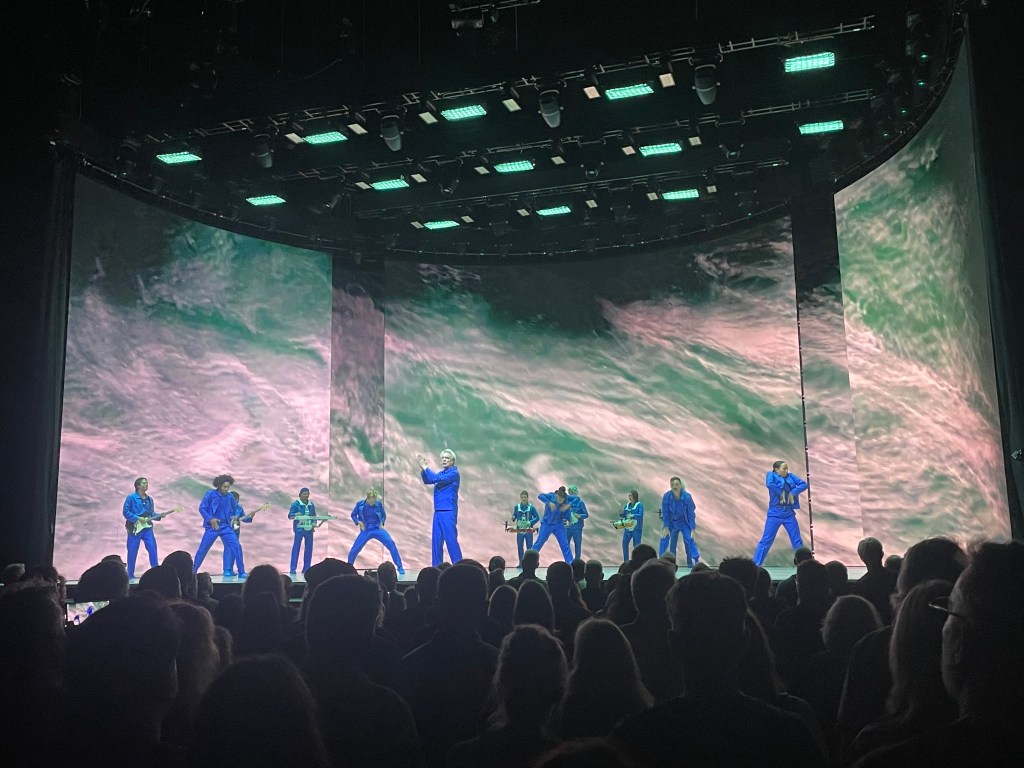
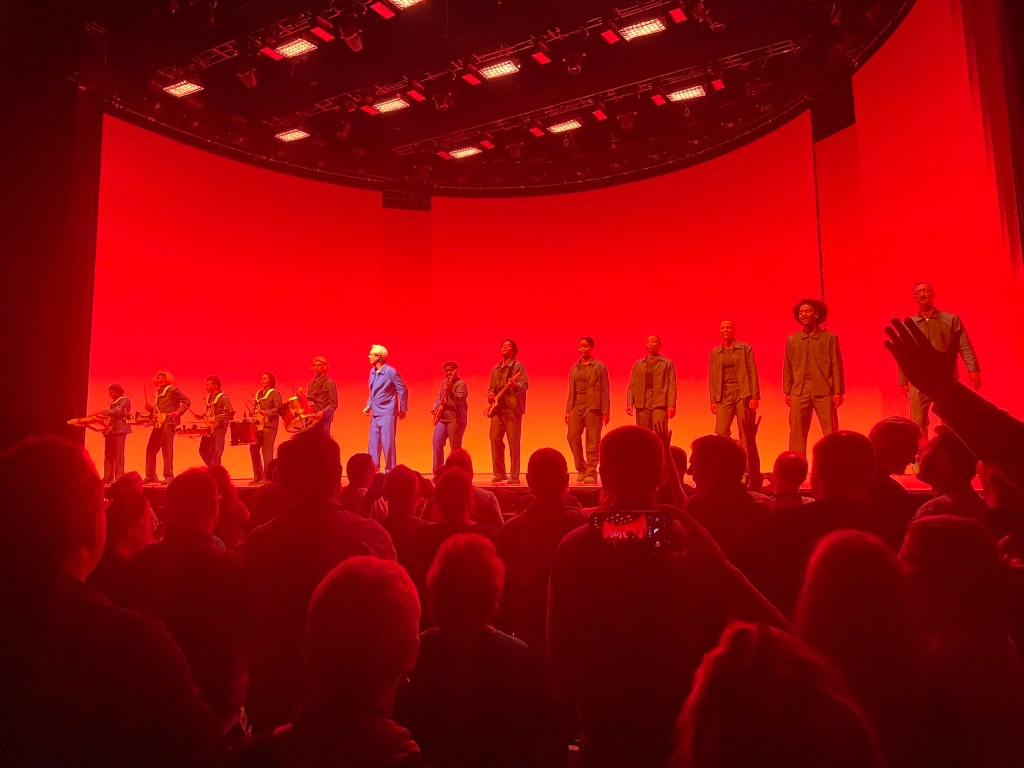
His American Utopia tour which visited NZ in 2018 was a stunner – if you haven’t seen the concert film by Spike Lee, rush out and do so immediately – reinventing the stage as a swirling kaleidoscope of dance, performance art and endlessly spinning sound. The Who Is The Sky? tour carries on that energy, with the band constantly swirling around the stage dancing, forming drum lines, even occasionally lifting each other up or Byrne himself as they all continued singing and playing.
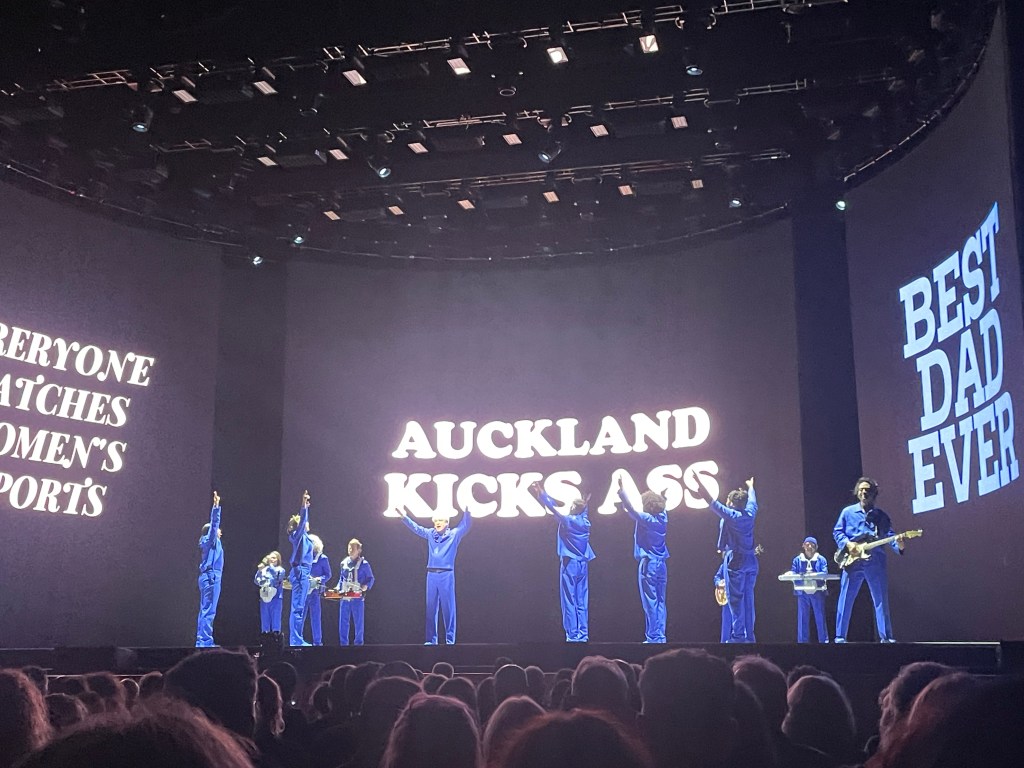
A vivid screen lit up the stage with abstract designs and sharp photographic backgrounds ranging from the Moon to Byrne’s own New York apartment. For “T Shirt,” the screens played a variety of fun slogans, including “Auckland kicks ass!” Perhaps the most cathartic moment of the night was when the screen filled up with fiery confrontational images of ICE protests and violence unfolding in America right now during the Talking Heads’ “Life During Wartime,” the screens splintering into smaller and smaller images.
Video screens during concerts are expected now, but the clever deployment of them made them feel like more than just a gimmick, like when Byrne’s apartment began spinning around the dancers, or a witty moment when Byrne’s huge shadow behind him seemed to take on a life of its own.
The newer songs like the endearingly silly “I Met The Buddha At A Downtown Party” or “My Apartment Is My Friend” may not have gotten the crowd up and dancing as much as the familiar hits, but Byrne and company performed them all with an upbeat charm.
The Talking Heads highlights kept coming – a colourful romp through “And She Was,” which Byrne introduced as a take on an old friend’s blissful acid trip, or a throbbing “Slippery People” with the four drummers pounding their way across the stage.
White-haired Byrne is now 73 years old – unbelievably, as he looks 20 years younger – but he’s still full of that contagious energy of nearly 50 years ago, tempered by a wonderfully zen perspective on life and an elder statesman’s authority. He’s still playful and witty, but he’s also been around the block a few times by now. He talked about how Covid lockdowns inspired some of his newer works, and how it reminded him of the importance of human connection, a huge theme in this tour.
The Talking Heads were always hard to pin down – they were part of the CBGB’s sound but they weren’t precisely punk, they had a lot of funk, and Byrne’s long been interested in world music. Maybe that’s what Byrne’s sound really is when it comes down to it – music for the world.
At one point, Byrne referred to the growing and cheerfully contrarian notion that love and kindness might be the real punk rock in this age of outrage – and why not? His songs have always married that nervous paranoia with a keen eye for the little moments that bring us joy.
The near-capacity crowd at Spark Arena was a mix of grey-haired fans and sparkling youth, a testament to the sturdy timelessness of Byrne’s songs. Talking Heads have never stopped being cool. They’ve also famously never reunited, so Wednesday’s show was as close as we’ll ever get.
The encore turned the night into a literal house party, with a gospel-inspired revamp of the excellent American Utopia track “Everybody’s Coming To My House,” followed by – what else? – a barn-burning closing take on “Burning Down The House.”
“Hold tight, we’re in for nasty weather,” Byrne famously sings in that song, but you know what? On a damp and steamy January night in Auckland, with David Byrne and his 12 mates along for the ride, it somehow felt like everything might just work out after all, as for a few hours, music made the world go round once more.
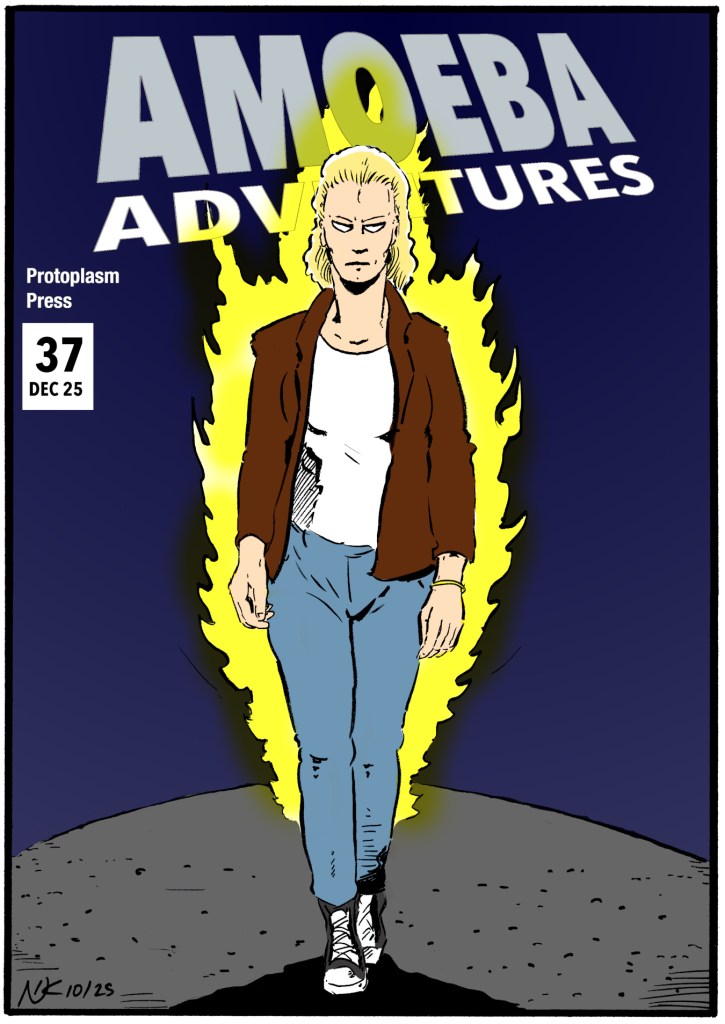
Happy New Year, world, and happy New Issue of Amoeba Adventures! The grand finale of the “The Crane Flies High” trilogy in AMOEBA ADVENTURES #37 is here for you as a FREE PDF download! It’s the latest issue in the wacky comic book I’ve somehow been putting out on and off since 1990!
Everything ends in a big way with this issue. Dr Nigel Baker’s plan is revealed and Dawn Star is out for revenge – but unexpected obstacles are going to get in her way. The All-New All-Spongy Squadron takes on its greatest challenge, and the world is changed forever – and don’t miss that last page!
You can download it right this second totally free to the technological device of your choice via the link below:
Want the limited print edition? They’re a mere US$7.50 to ship anywhere in the world from New Zealand by sending cash to me via PayPal at dirgas@gmail.com. Print copies of Amoeba Adventures #27 and 31-33 are available for $5 each and if you missed an issue, #34-36 are $5 each if you order the new issue as well!
And if you missed the first two parts of this story, they’re all available for FREE download still on the website!
Believe it or not, 2026 marks FORTY YEARS since I drew my very first Prometheus the Protoplasm strip in 1986, just a wee child in a boring science class. Who knew that all these years later I’d still be wasting my time doodling to an extremely niche audience? Look for some fun celebrations later this year as the slimeball celebrates his middle age!
Meanwhile, enjoy this latest issue, and as always thanks for your support – go read it now, and heck, drop me a line sometime and let me know what you think!
We’ve got five years, my brain hurts a lot – David Bowie
Hey, remember January 6, 2021?
We saw all kinds of crazy shit go down in Washington, DC that day, before the use of the word “unprecedented” became, well, precedented. When a mob of MAGA-supporters smashed their way into the US Capitol threatening to hang Mike Pence, it felt for sure like everything was about to change.
It did, of course, and not at all in the way we imagined.
At the time, I wrote that the chaos at the Capitol was “the natural endgame” for Donald T***p’s political ambitions.
Boy, did I get that wrong. We all did. By “we” I mean myself, legions of media pundits and an awful lot of ordinary Americans who assumed a red line had been crossed that meant the end forever of Donald T***p’s career in public life.
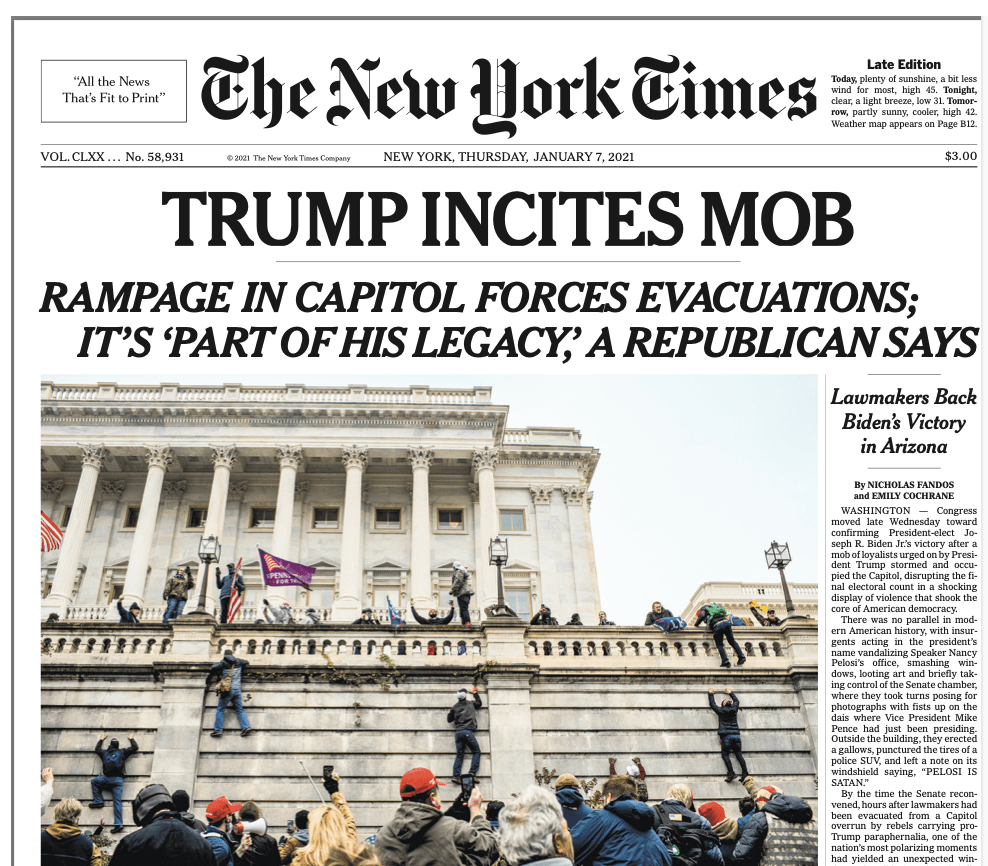
For a brief moment America seemed united in its disgust over that day – the New York Times front page shouted “TRUMP INCITES MOB” in all caps, The Washington Post called it “pathetic and horrifying,” and even the conservative Wall Street Journal called for the President to resign. “It is best for everyone, himself included, if he goes away quietly,” the Journal said.
Spoiler alert: That didn’t happen.
Instead, it was a catapult that launched T***p’s forever campaign, an endless array of grievances and shadowy claims that directly led to his re-election as president in 2024. Without the fuel of January 6, T***p Version 2.0 probably could never have happened.
He simply never stopped. He dug in, and an army of acolytes – some true believers, some out to cash in – carried on the “stop the steal” chant even in the face of evidence the 2020 election was decisive and fair.
Joe Biden’s four years in office now feel like a brief strange pause amid the grip of T***pism, an era that will likely extend for more than a decade of American life.
Like almost everyone, I am so very, very sick of writing about, of thinking about this man that I don’t even want to type out his name in full anymore. Post-November 2024 I just kind of gave up on politics in my home country, and in the time I’ve got left I’m determined to spend as little of it as I can doomscrolling. Which is tricky if you’re a journalist, but there’s always something else to cover.
We thought – I thought – that January 6 would be the end of him, that the natural order of shame, exile and moving on would all fall into place, but instead, it was the dark overture to everything that just kept coming next. Truth has eroded. Falsehoods and AI-churned misinformation grows by the day, and the fictions stack up so completely that it seems impossible to find a path out.
In the end, America kind of broke my heart that January day, five years ago now. And the worst part of it all is what happened after that day, about how what we all saw with our own eyes was excused, pardoned, retconned and obliterated instead of the forever stain it really should be.
We have learned in these past five years that repetition beats reason, that a narrative can be hammered so relentlessly that it reshapes our impression of history itself.
At this point, complaining about what a terrible year life has thrown at us is a bit of a cliche, eh? So yeah, bad things happened in 2025, oh boy did they … but if you try to doomscroll less and open your eyes a little more to everyday goodness, sometimes things can feel like they even out.
As always, the soothing balm of pop culture – a good book, a great album, a rad comic or a mind-blowing movie – helps make the world go down a little smoother sometimes. So, at the end of year in review week for me, let’s hopescroll, with the 10 best pop culture moments I had this year!
Amyl and Sniffers live at the Powerstation, February 16: This was not a very big year for live music for me, but I promised 2025 would be my year of punk rock because right now being a punk seems the best way to fight all this enshittification. Australia’s awesome punk rising stars Amyl and the Sniffers delivered a hell of a show, full of joyful rage and a reminder that not everyone has turned evil in 2025. They’ve already played to far bigger crowds this year than the cozy Powerstation, but I’m glad I saw ‘em when I did.
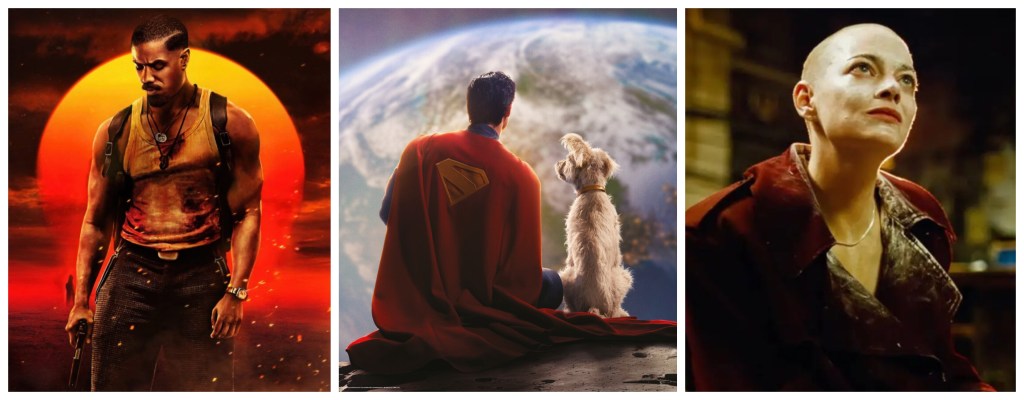
Superman saves squirrel: If you didn’t like this moment in Superman, what can I say? It’s the essence of Superman – he won’t even let a squirrel die if he can help it! and a welcome return to optimism after far too many grimdark Superman tales.
Pluribus: Breaking Bad creator Vince Gilligan’s apocalyptic new epic starring a fantastic Rhea Seehorn might be the year’s best television – full of fascinating worldbuilding and a methodical yet hypnotic pace – a welcome novelty in this era of endless distractions. While some armchair critics called it ‘boring’ because it didn’t feature Walter White blowing up stuff every episode, I don’t think they get Pluribus. It’s a unique vibe that leaves you thinking about what it really means to be human and part of humanity. I only hope it continues to pay off whenever Season 2 comes around.
The Pitt: Old-school and yet up-to-the-minute, this electrifying hospital drama was also a sharp reminder that despite all the endless glut of “content” flooding streamers with meandering plots, sometimes you can just pare everything back to good characters and plot momentum and score one of the best shows of the year.
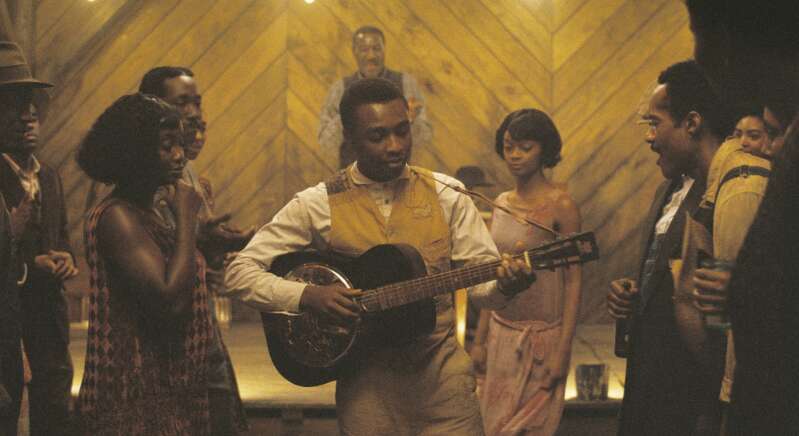
That juke joint scene in Sinners, which floored me with its sheer beautiful audacity and confidence that the audience would keep up: “So true, it can pierce the veil between life and death.”
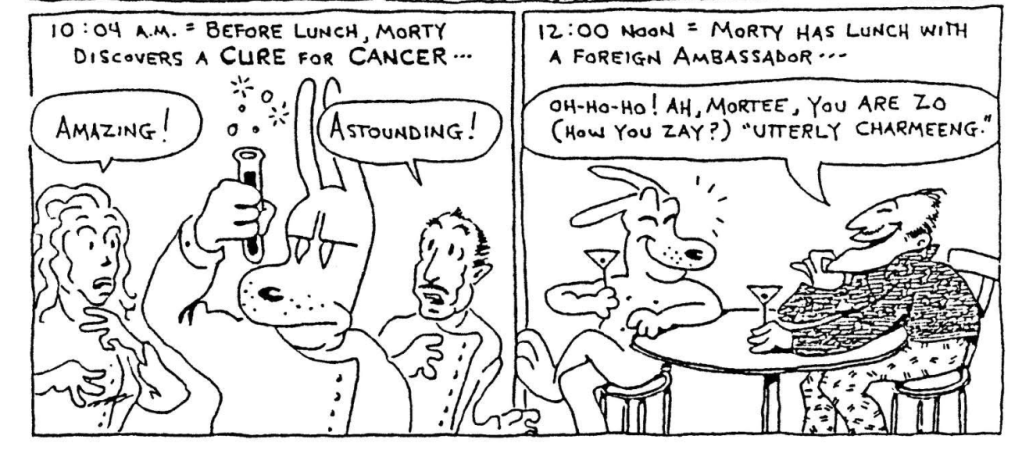
The Collected Cranium Frenzy by Steve Willis: One of the coolest little projects this year was a comprehensive reprinting of Cranium Frenzy, the surreal and hilarious small press comics of the legendary Steve Willis. Never heard of him? You should! As I’ve written in the past, Willis is absolutely one of the greats of the minicomics scene ever since the 1980s, but like most minicomics, it was literally impossible to find his work in print. Phoenix Productions have picked up the ball with five gorgeous little books collecting decades worth of work by Willis all on Amazon, well worth seeking out for the adventures of Morty the Dog and many more!
Wet Leg, moisturizer:I’m an old geezer whom Spotify now tells me is roughly 110 years ancient, but my favourite album by a “new” band this year was Wet Leg’s sprightly, sexy and hook-filled second album, a catchy fusion of alternative rock (does that still exist), post-punk, dance and whatever else you’d like. I’ve been humming along to “liquidize” for months. Be my marshmallow worm!
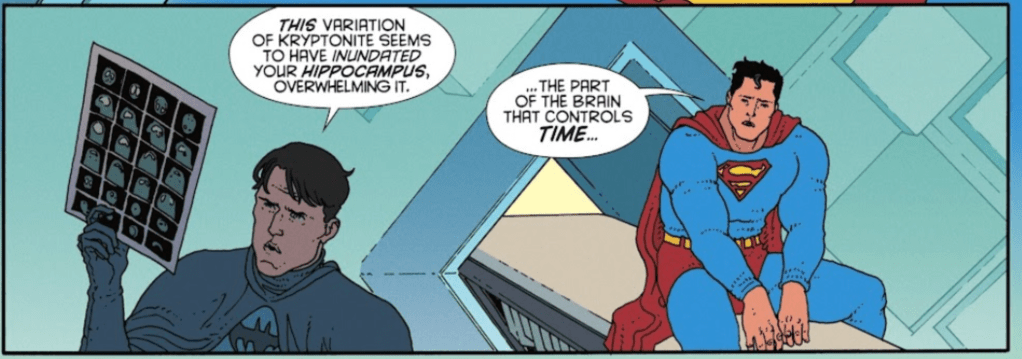
Superman: The Kryptonite Spectrum: A wonderfully quirky miniseries by Ice Cream Man creators W. Maxwell Prince and Martin Morazzo that embraces all the wacky insanity of vintage Superman comics and gives it a surreal spin, kind of like if David Lynch tried to write a Spider-Man comic. I’ve sampled Ice Cream Man and it wasn’t my thing, but this Superman miniseries is such a colourful “elseworlds” delight that I’ll be keeping an eye on these creators from now on.
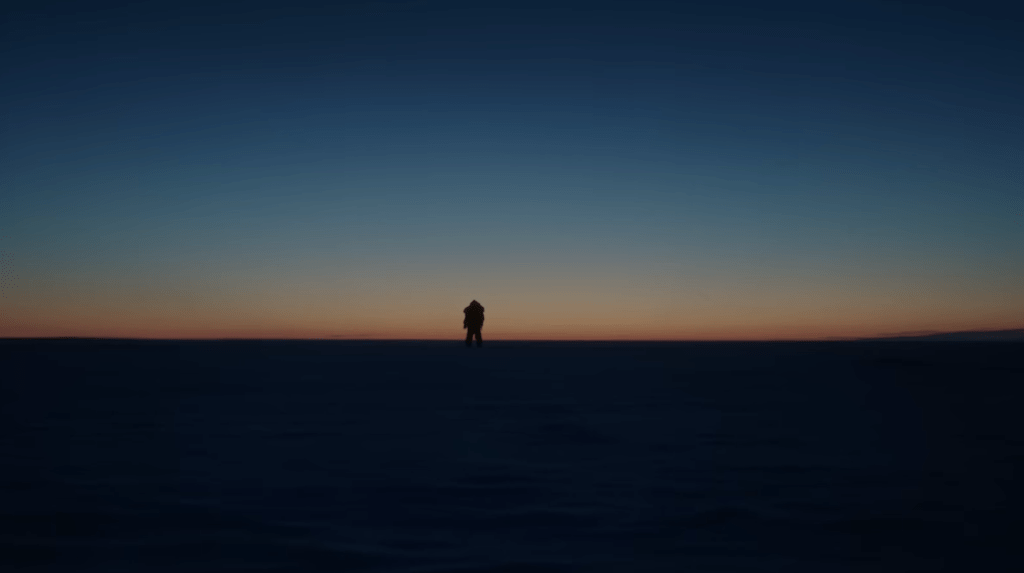
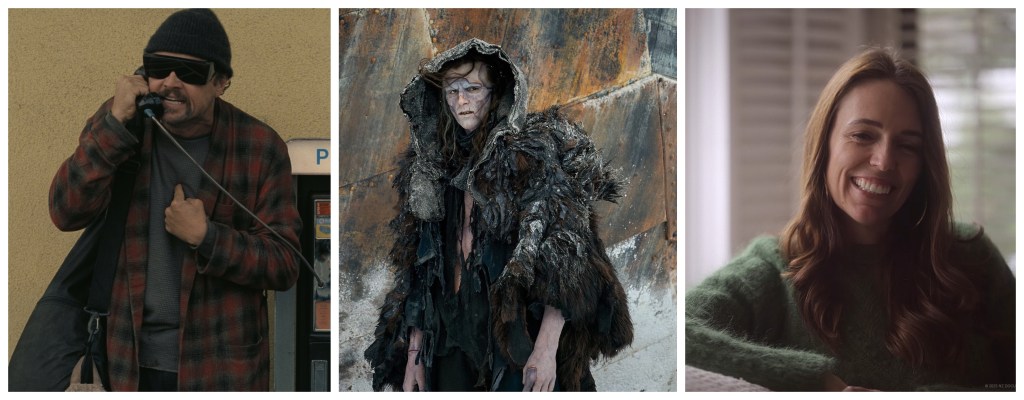
This one amazing shot in Guillermo Del Toro’s terrific Frankenstein:
Writing a book: I hit 30 years in journalism at the end of 2024 and decided it was time to put together a “greatest hits” of sorts of my columns, essays, articles and more. It’s a total vanity project but I’m really pleased with how Clippings: Collected Journalism 1994-2024came out and the kind words by family, friends and even a few complete strangers who’ve bought it. It’s more than 350 pages of scribbles that somehow sums up my so-called career. Get it now over on Amazon (and you can pick up a few collections of my long running comic series Amoeba Adventures there too)!
In this AI-generated world we’re morphing into, you’ll have to pry my actual human-written books out of my cold, dead hands. Or at the very least send the Terminators to do the job. Anyway, reading remains a key joy in my life despite all our collective struggles, and I clocked up 109 books on my Good Reads accounts for the year (prose only – graphic novels and the like I don’t usually log there.)
This year I really made an effort to read a lot of New Zealand books, as I try to embrace my second homeland a little more. And we’ve got quite a collection of excellent writers here, too!
Here in alphabetical order are my favourite 10 new books of 2025:
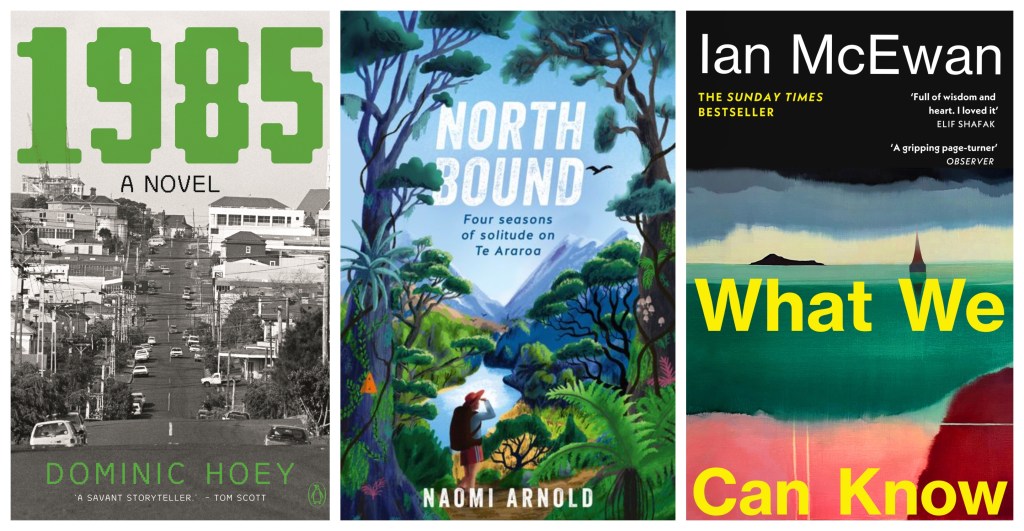
1985: A Novel by Dominic Hoey – Hoey’s snappy, scrappy fiction about the struggling underdogs of New Zealand society gets better with each book, and his tale of video-game obsessed Obi and his poverty-stricken family, with a delusional dad and ailing mum, is his best yet. A key portrait of an Aotearoa a world away from the shiny tourist destinations.
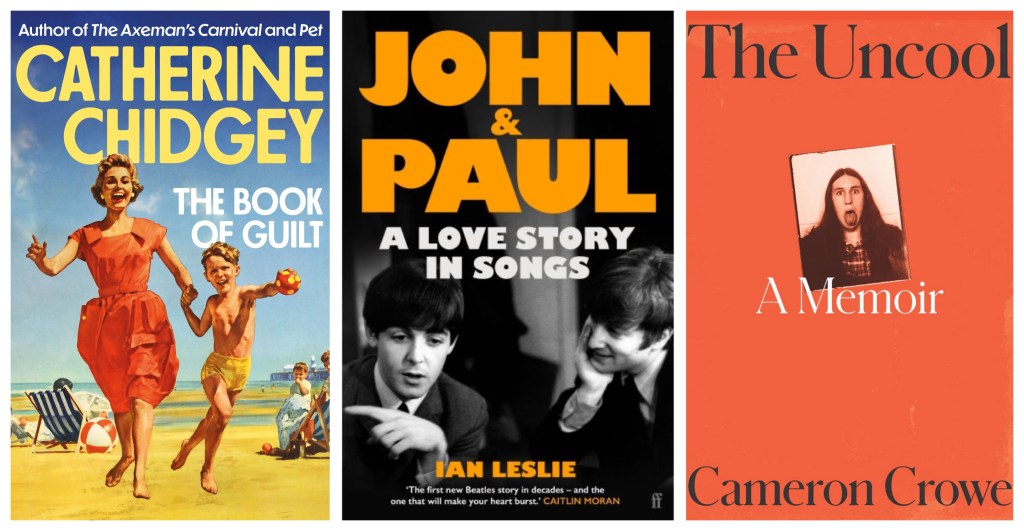
The Book of Guilt by Catherine Chidgey – NZ writing superstar Chidgey delivers another cracking literary entertainer, this time a quasi-sci-fi tale about three strange young boys in a futuristic Britain trying to unravel the mystery of who they are. Chidgey makes smart fiction seem so easy.
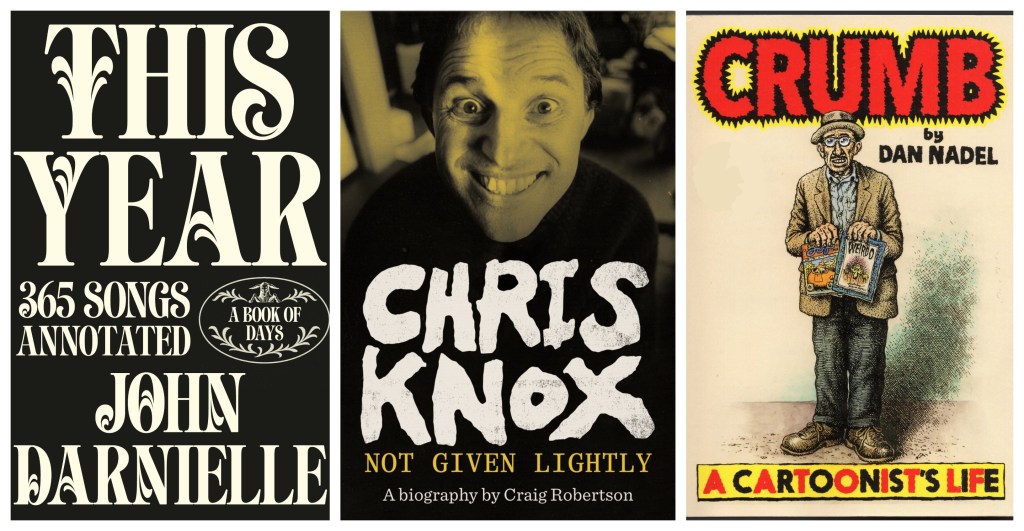
Chris Knox: Not Given Lightly by Craig Robertson – Beautifully assembled, this passion project about a pivotal New Zealand musician doesn’t excuse young punk Knox’s quirks and cruelty, while also delivering a vivid portrait of life in countercultural 1960s-1980s New Zealand and his fierce creative drive. It’s more than a book about a single artist, but also a time capsule of a whole era.
Crumb: A Life by Dan Nadel – Crumb is what the kids call “problematic” now, and Nadel’s welcome warts-and-all biography doesn’t try to whitewash the sexism and offensiveness of some of his cartooning, while also showing us how he got that way. A great biography.
John & Paul: A Love Story in Songs by Ian Leslie – Wot’s this then, another book about the Beatles? But Leslie’s excellent tome excels by focusing forensically on the creative and human relationship between John and Paul, and in the process he finds yet another new way to explain the mystery of how we got the Beatles.
A Marriage At Sea (also titled Maurice and Maralyn) by Sophie Elmhirst – A huge story of the day that’s mostly forgotten now (I sure didn’t know about it!), in 1973 British couple Maurice and Maralyn Bailey were rescued after a stunning 118 days at sea in the Pacific Ocean in a raft after their boat sank as they attempted to sail to New Zealand. Elmhirst’s eloquent book lays out the harrowing survival tale in intense detail, but also digs deeper to find the human heart behind the headlines.
North Bound by Naomi Arnold – Journalist Naomi decided to walk the entire Te Araroa trail spanning the entire length of New Zealand, and in the process delivers a frequently hilarious, often moving picture of determination and stubbornness and the notion that no matter how far we travel in life we can never quite escape ourselves. A new classic of Kiwi nonfiction.
This Year: 365 Songs Annotated by John Darnielle – I’m cheating, because I haven’t finished this yet, but it’s sublime – Mountain Goats frontman takes us on a tour of his songwriting career his exceptional lyrics, bundled together with personal essays reflecting on how he wrote them. Darnielle is a piercingly insightful, very funny and endlessly humane writer, and this is a cornucopia of his talents. Even if you’ve never heard a single Mountain Goats song, you’ll learn a lot about the art of writing here.
The Uncool by Cameron Crowe – I’ve been waiting for years for Cameron Crowe to tell his story, and while the man behind Jerry Maguire, Singles and Say Anything has fallen a bit fallow on the film front in recent years, his memoir of becoming a teenage rock journalist is everything I’d hoped for – an expansion and clarification of the film Almost Famous, and witty and wise look back at a kid who somehow ended up befriending legends like Bowie, the Allman Brothers and Led Zeppelin and following them around the world.
What We Can Know by Ian McEwan – Literary lions can still roar. Legend McEwan at 77 writes another one of his clench-jawed, shocking morality plays that begins in the distant future of 2119 and pivots back to dissecting a tortured relationship between a famed poet and his wife in 2014. Its visions of an apocalyptic future are a rich metaphor for the very perilous state of our world today, but it’s also very much about the devils we all carry around within our secret selves as well. One of his best.
The calendar is on its last page yet again and it’s Year In Review week here. Let’s kick it off with my 10 favourite movies of 2025* – a surprisingly excellent year for mainstream Hollywood where a lot of clever and edgy horror and drama managed to sneak into cinemas.
*Despite the modern age we live in, New Zealand still sometimes gets movies a bit later, so a few releases that were officially in 2024 didn’t make it to our screens until this year. Still, I’m including them, because I’m in charge here! (This also means there’s more than a few acclaimed 2025 films that haven’t gotten here just yet like Hamnet and Marty Supreme.)
My top 10 of 2025:
1. One Battle After Another – Was there any other choice, really? Paul Thomas Anderson has been one of the world’s finest directors for the past 25 years, and this year feels like the year that everyone finally noticed. I wish it had been a bigger box office hit but in the American shitshow of 2025 the mere fact this exists is awesome.
2. Sinners – After Black Panther and Creed, we should’ve already known Ryan Coogler was the real deal, but he takes it to another level in this unexpected smash hit that tackles America’s blood-spattered history and marries it with the power of music, the horror of the unexpected and a series of achingly romantic tragedies.
3. Frankenstein – Trust Guillermo Del Toro to give fresh new blood to a frequently filmed tale. With darkly gorgeous and tactile lush design and a heartbreaking turn by Jacob Elordi as an oddly sexy version of the monster, Del Toro’s passion project is lush, gory and epic, like a fusion of the Universal and Hammer-era Frankenstein tales. Kind of like his Shape of Water, I very much felt like Guillermo made this movie just for me as a cool little secret to share between mates.
4. Superman – Thank god, for the first time in decades we’ve got a Superman movie that’s light in spirit and doesn’t hammer us with dreary Jesus symbolism. Embracing the silliness of the Silver Age comics – Metamorpho! – and anchored by David Corenswet’s endearingly cheerful performance, Superman was the freshest comic book movie of the year.
5. Prime Minister – The rise and fall and rise again of a New Zealand politician, the story of Jacinda Ardern is far more candid than I’d imagined it could be. It’s a wonderful documentary but it’s also kind of heart-breaking, because in the world we’re currently in I can’t see politicians who act like actual human beings instead of sneering hypocritical grifters ever getting anywhere again.
6. A Complete Unknown – This one didn’t open in NZ until early 2025, and left a big grin on my face the whole time. The music biopic is a cliche by now but this succeeds by giving us a single slice of Bob Dylan’s career, and fantastic performances by Timothee Chalamet, Ed Norton and Monica Barbaro. Rose-coloured and sanitised like all biopics, but delightful all the same.
7. Pavements – A film festival favourite that finally showed up in New Zealand this year, this uncategorisable mockumentary is probably the best possible movie that could be made about Pavement, reimagining their slacker anthem songs as fodder for rock musicals, a museum and pretentious Hollywood biopic, and sloshing fake and real together in the perfect tribute to this beautifully eccentric band.
8. Bugonia – We don’t talk enough about how awesome Emma Stone has become, and how wild this former romantic comedy star’s career choices have been – a conniving commoner in The Favourite, a sexual Frankenstein in Poor Things, and then a career woman who might just be an alien in the wild Bugonia, the latest button-pushing insanity from Stone’s welcome muse Yorgos Lanthimos.
9. 28 Years Later – A zombie movie three-quel that goes in incredibly unexpected directions, deep into a post-extinction Britain and anchored by a riveting family drama and an all-time third act performance by Ralph Fiennes. Not at all what anyone expected 23 years after 28 Days Later – like everyone else, I’m still unpacking the Jimmys – but I loved its crazy swerves, and am dying to see where it goes in the upcoming 28 Years Later: The Bone Temple.
10. Eddington – Ari Aster’s blunt weapon of a satire about America during Covid is never subtle, but it’s confrontingly hilarious in its story of a small town sheriff (Joaquin Phoenix, excellent) caught up in pandemic unrest. It escalates somewhere beyond cringe comedy to the point of being truly uncomfortable, just like watching America has been this year. I haven’t seen another film yet that so starkly confronts that American society has, well, kind of lost its bloody mind in the last few years.
And just all lurking around #11, the runners up:The Phoenician Scheme, Conclave, Thunderbolts*, Sentimental Value, Wake Up Dead Man, Weapons, The Brutalist, Companion, Pee Wee As Himself, Fantastic Four: First Steps
I’m not expecting anything to dislodge One Battle After Another as my favourite film of 2025 with mere days to go before the rough beast of 2026 slouches in, snorting fire and brimstone.
Paul Thomas Anderson’s ripper of a comedy/action/drama met the rare threshold of being a movie I went to see twice in the cinemas, which at modern ticket prices in New Zealand is a commitment. It feels very much a film about the current seething moment in America, where everyone’s angry and disappointed all at the same time.
But I also thrilled to it because I got to see a brief part of it being filmed back in Sacramento way back in February 2024 during a visit to see family. One Battle is set throughout California’s epic open skies and coastal towns, including places like Humboldt County and the endless desert hills of far southeastern California, but a big chunk of the opening act was filmed all around Sacramento, not far from where I grew up.
It was a lifelong buddy of mine, also a journalist with the Sacramento Bee, who invited me along as he was attempting to get some photos of One Battle’s filming that February morning. It was a sequence being filmed among the squat brutalist architecture of downtown Sac, a grid of anywhere Americana. Streets were blocked off, bouncer-looking type blokes kept us spectators from getting too close, and like any movie making, there was a lot of standing around.
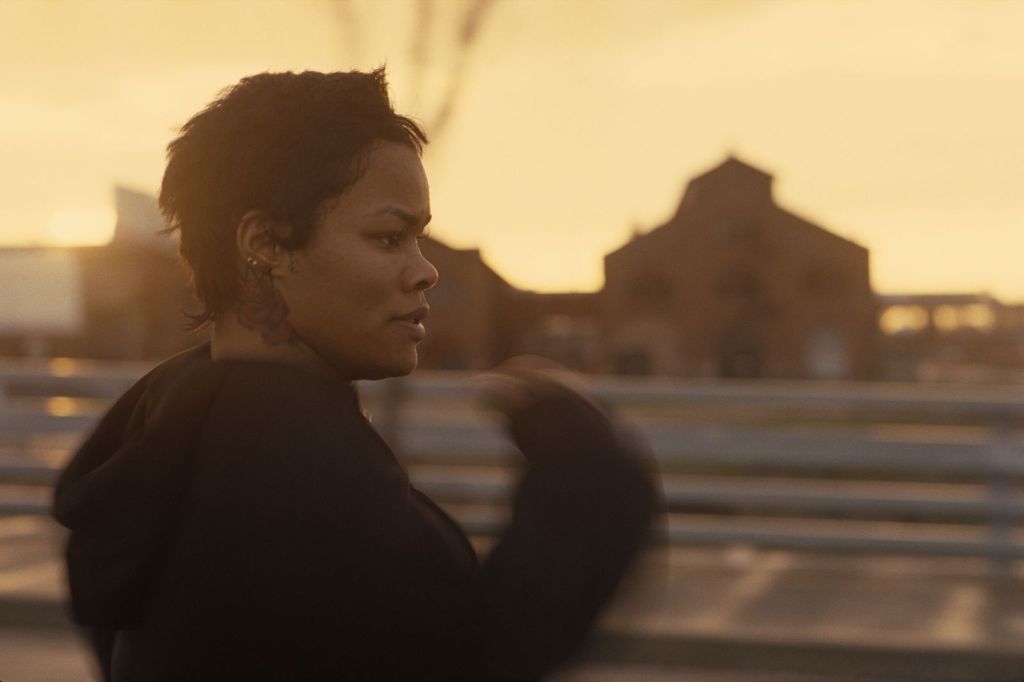
The scene we saw filmed comes after an explosive bank robbery sequence in the finished movie, and for a few hours we watched director Anderson and crew capture a brief part of a chase scene through Sacramento’s streets, including seeing actresses Teyana Taylor and Shayna “Junglepussy” McHayle running along.
For a film geek and a huge Paul Thomas Anderson fan, it was a glimpse behind the magical curtain of movies. There’s something about seeing the sausage get made, if only briefly.
New Zealand gets a lot of film production now and I know people who’ve worked on them, but my experiences with being quiet on a set are pretty limited – I saw some cool explosions for Die Hard With A Vengeance being filmed on Manhattan streets a million years ago during my New York summer, and once upon a time a big 1990s Hollywood romantic comedy called The Gun In Betty Lou’s Handbag was filmed in my small Mississippi college town, exciting everybody until they saw the pretty lame final product, which flopped.
For One Battle the moments we saw being filmed did recognisably pop up on screen at a pretty intense section of the movie. Sure, for all we know it’s quite possible none of the exact takes I saw filmed that day are the ones featured, but hey – let a fan dream. And it was nice to catch a few moments of a movie being made that is actually really damned good, and hopefully cleans up at the Oscars in a couple months as it sorely deserves to.
Anyone who’s ever watched a movie being made knows it’s all about tiny jigsaw pieces that are all later painstakingly put together and you rarely get to watch Robert DeNiro give Oscar-nominated monologues. Most often you’ll watch elements of a scene be gone through over and over again in bite-size chunks.
That day we watched cars on the downtown Sacramento street be moved in and out of position, each time needing to line up exactly with where they were on other takes, and we watched director Anderson and team rolling along on this adorably cool camera rig vehicle each time shooting the actresses running down the sidewalk.
It’s just a few intense moments of the finished near-masterpiece film… but man, I was there that day, lurking in the gray concrete shadows of Sacramento streets, and those couple of minutes of the film will always sparkle with that trivia for me. Action!









 Nik Dirga