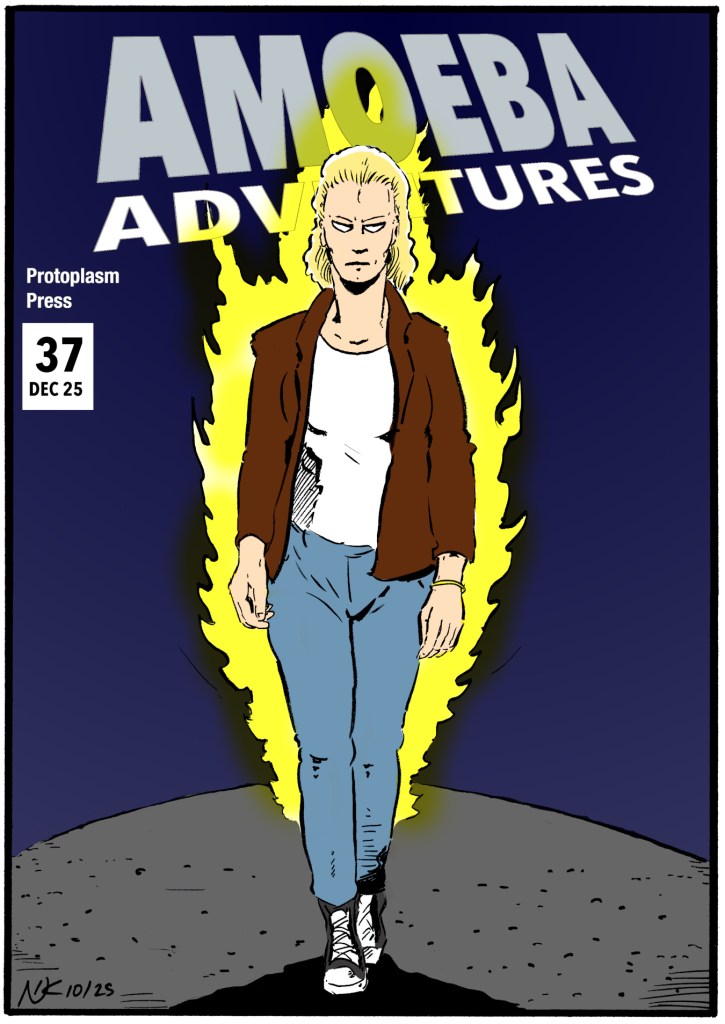
Happy New Year, world, and happy New Issue of Amoeba Adventures! The grand finale of the “The Crane Flies High” trilogy in AMOEBA ADVENTURES #37 is here for you as a FREE PDF download! It’s the latest issue in the wacky comic book I’ve somehow been putting out on and off since 1990!
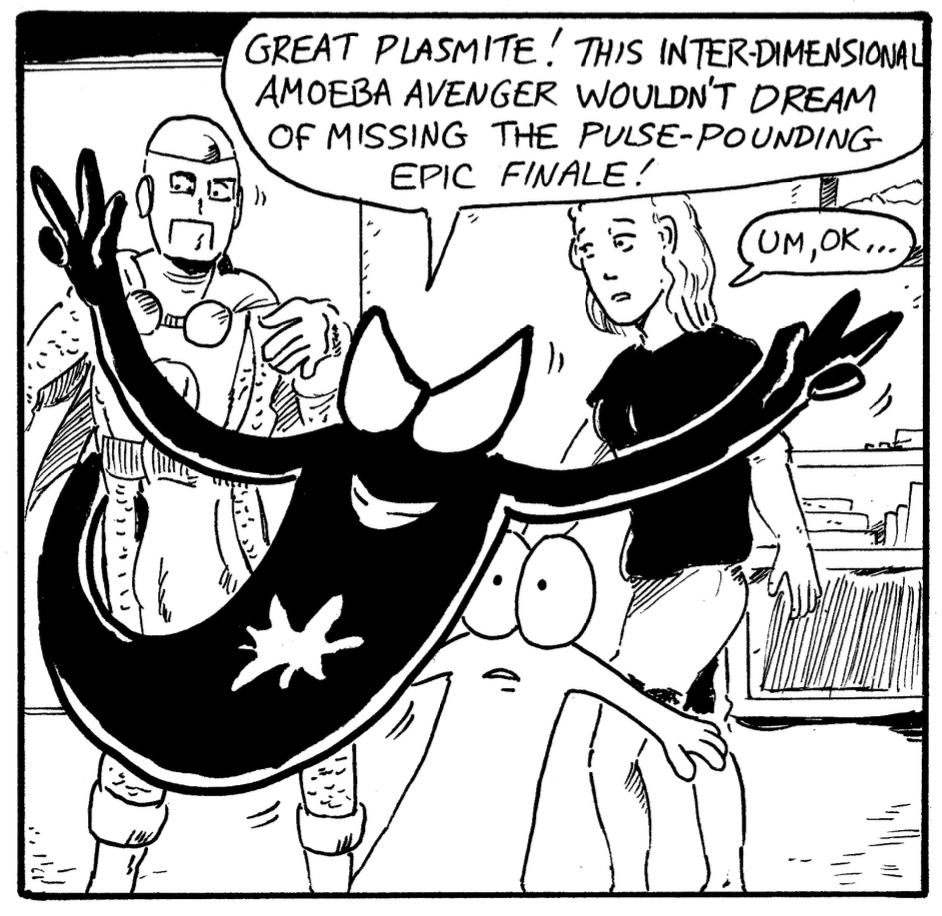
Everything ends in a big way with this issue. Dr Nigel Baker’s plan is revealed and Dawn Star is out for revenge – but unexpected obstacles are going to get in her way. The All-New All-Spongy Squadron takes on its greatest challenge, and the world is changed forever – and don’t miss that last page!
You can download it right this second totally free to the technological device of your choice via the link below:
Want the limited print edition? They’re a mere US$7.50 to ship anywhere in the world from New Zealand by sending cash to me via PayPal at dirgas@gmail.com. Print copies of Amoeba Adventures #27 and 31-33 are available for $5 each and if you missed an issue, #34-36 are $5 each if you order the new issue as well!
And if you missed the first two parts of this story, they’re all available for FREE download still on the website!
Believe it or not, 2026 marks FORTY YEARS since I drew my very first Prometheus the Protoplasm strip in 1986, just a wee child in a boring science class. Who knew that all these years later I’d still be wasting my time doodling to an extremely niche audience? Look for some fun celebrations later this year as the slimeball celebrates his middle age!
Meanwhile, enjoy this latest issue, and as always thanks for your support – go read it now, and heck, drop me a line sometime and let me know what you think!
We’ve got five years, my brain hurts a lot – David Bowie
Hey, remember January 6, 2021?
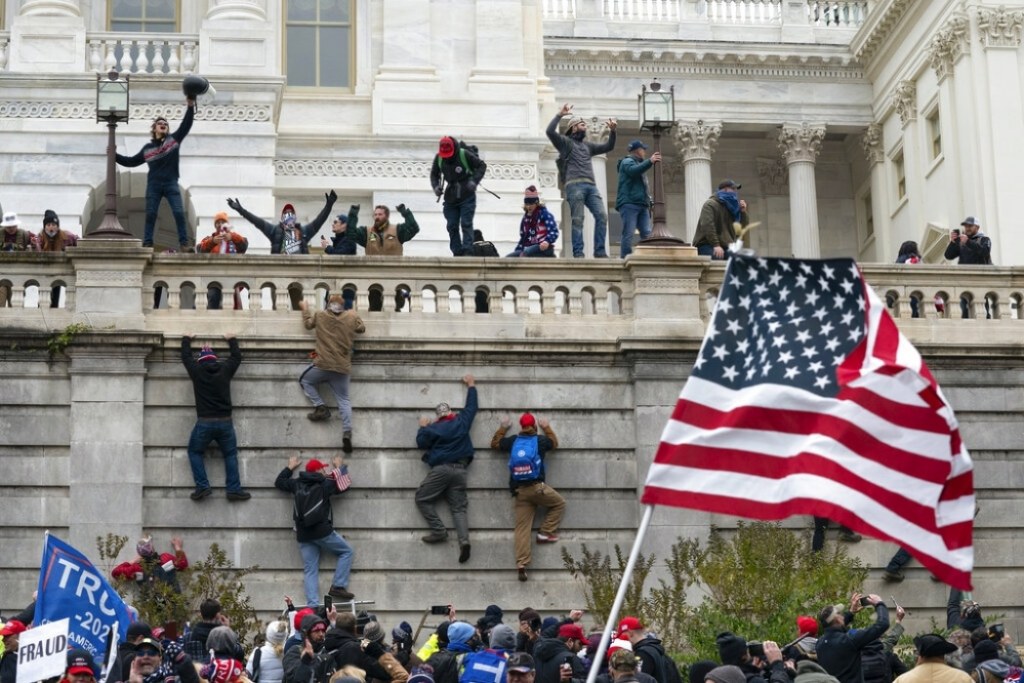
We saw all kinds of crazy shit go down in Washington, DC that day, before the use of the word “unprecedented” became, well, precedented. When a mob of MAGA-supporters smashed their way into the US Capitol threatening to hang Mike Pence, it felt for sure like everything was about to change.
It did, of course, and not at all in the way we imagined.
At the time, I wrote that the chaos at the Capitol was “the natural endgame” for Donald T***p’s political ambitions.
Boy, did I get that wrong. We all did. By “we” I mean myself, legions of media pundits and an awful lot of ordinary Americans who assumed a red line had been crossed that meant the end forever of Donald T***p’s career in public life.
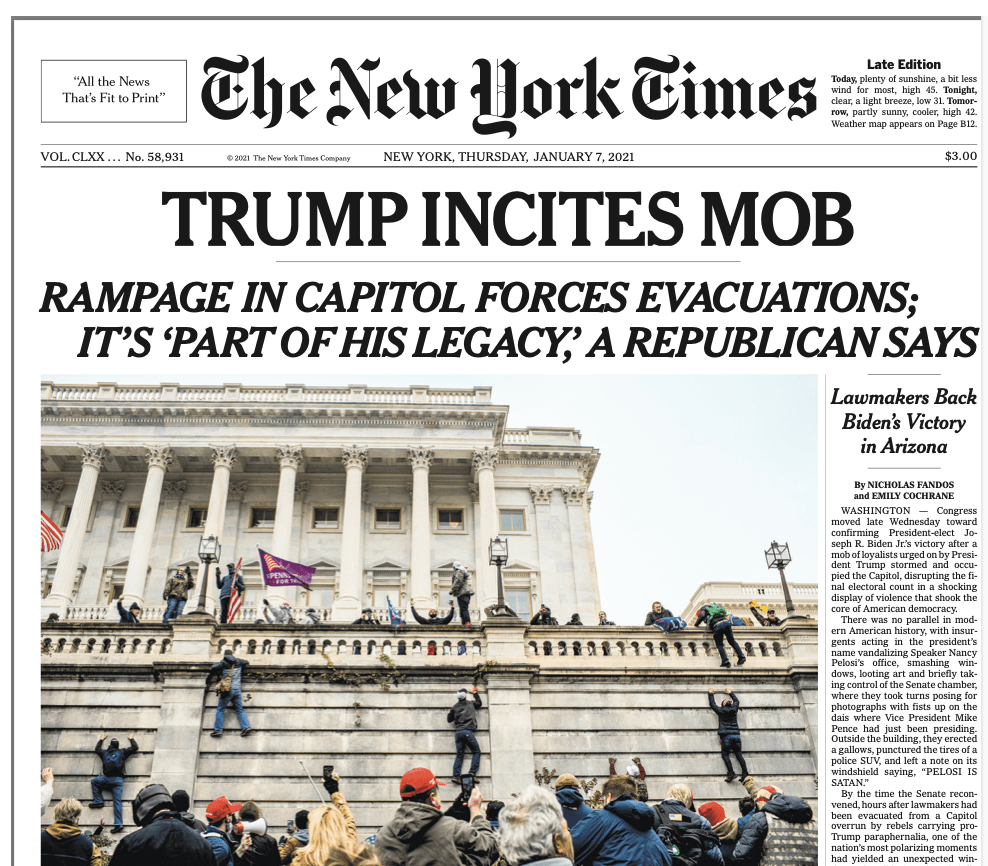
For a brief moment America seemed united in its disgust over that day – the New York Times front page shouted “TRUMP INCITES MOB” in all caps, The Washington Post called it “pathetic and horrifying,” and even the conservative Wall Street Journal called for the President to resign. “It is best for everyone, himself included, if he goes away quietly,” the Journal said.
Spoiler alert: That didn’t happen.
Instead, it was a catapult that launched T***p’s forever campaign, an endless array of grievances and shadowy claims that directly led to his re-election as president in 2024. Without the fuel of January 6, T***p Version 2.0 probably could never have happened.
He simply never stopped. He dug in, and an army of acolytes – some true believers, some out to cash in – carried on the “stop the steal” chant even in the face of evidence the 2020 election was decisive and fair.
Joe Biden’s four years in office now feel like a brief strange pause amid the grip of T***pism, an era that will likely extend for more than a decade of American life.
Like almost everyone, I am so very, very sick of writing about, of thinking about this man that I don’t even want to type out his name in full anymore. Post-November 2024 I just kind of gave up on politics in my home country, and in the time I’ve got left I’m determined to spend as little of it as I can doomscrolling. Which is tricky if you’re a journalist, but there’s always something else to cover.
We thought – I thought – that January 6 would be the end of him, that the natural order of shame, exile and moving on would all fall into place, but instead, it was the dark overture to everything that just kept coming next. Truth has eroded. Falsehoods and AI-churned misinformation grows by the day, and the fictions stack up so completely that it seems impossible to find a path out.
In the end, America kind of broke my heart that January day, five years ago now. And the worst part of it all is what happened after that day, about how what we all saw with our own eyes was excused, pardoned, retconned and obliterated instead of the forever stain it really should be.
We have learned in these past five years that repetition beats reason, that a narrative can be hammered so relentlessly that it reshapes our impression of history itself.
At this point, complaining about what a terrible year life has thrown at us is a bit of a cliche, eh? So yeah, bad things happened in 2025, oh boy did they … but if you try to doomscroll less and open your eyes a little more to everyday goodness, sometimes things can feel like they even out.
As always, the soothing balm of pop culture – a good book, a great album, a rad comic or a mind-blowing movie – helps make the world go down a little smoother sometimes. So, at the end of year in review week for me, let’s hopescroll, with the 10 best pop culture moments I had this year!
Amyl and Sniffers live at the Powerstation, February 16: This was not a very big year for live music for me, but I promised 2025 would be my year of punk rock because right now being a punk seems the best way to fight all this enshittification. Australia’s awesome punk rising stars Amyl and the Sniffers delivered a hell of a show, full of joyful rage and a reminder that not everyone has turned evil in 2025. They’ve already played to far bigger crowds this year than the cozy Powerstation, but I’m glad I saw ‘em when I did.
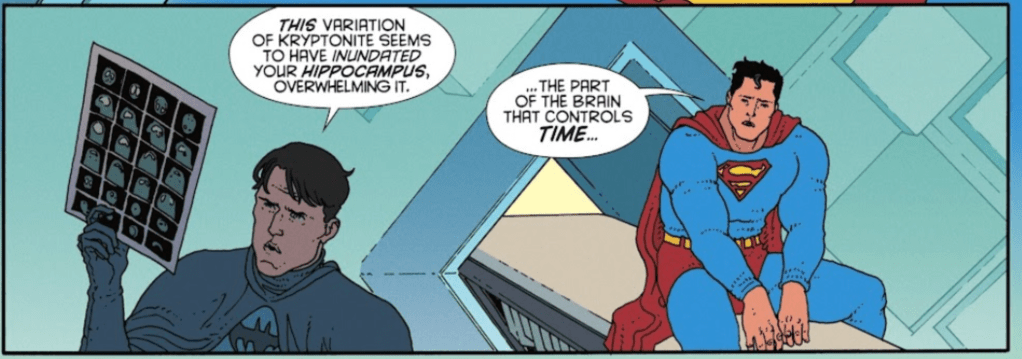
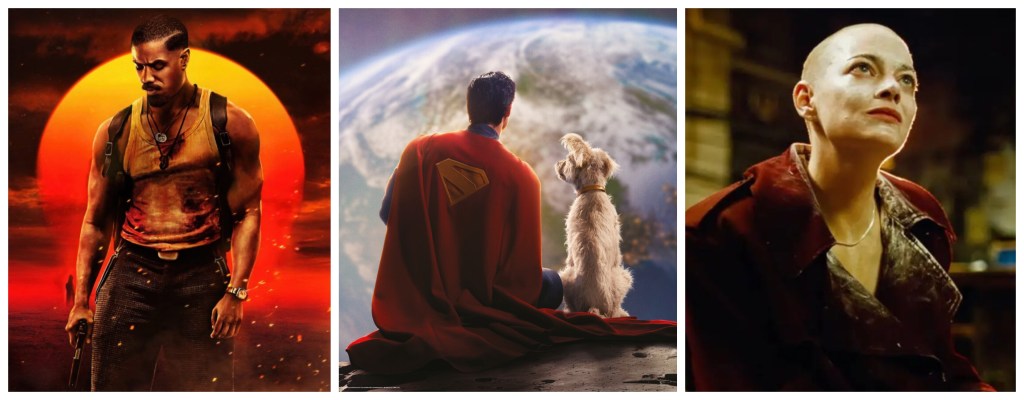
Superman saves squirrel: If you didn’t like this moment in Superman, what can I say? It’s the essence of Superman – he won’t even let a squirrel die if he can help it! and a welcome return to optimism after far too many grimdark Superman tales.
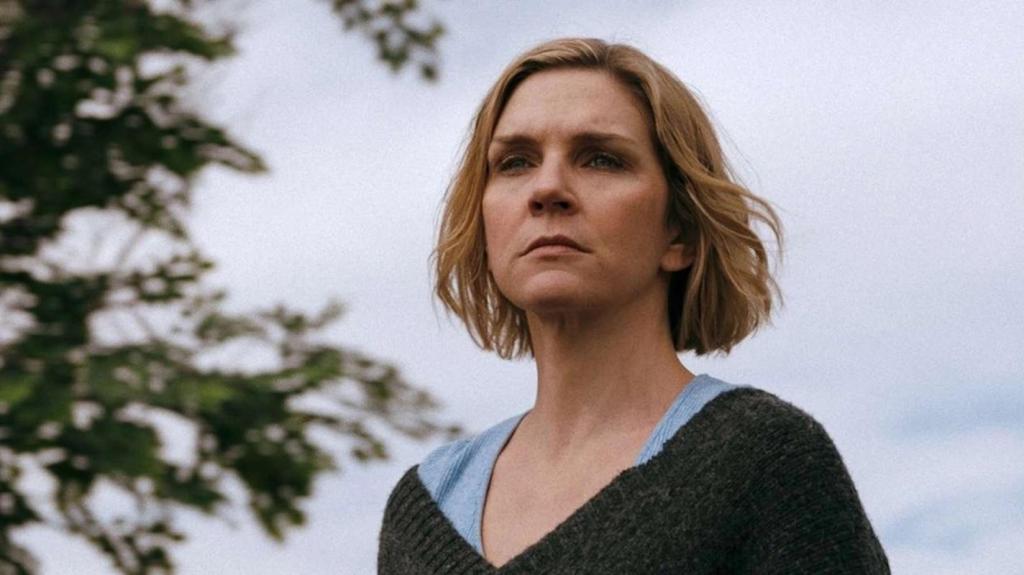
Pluribus: Breaking Bad creator Vince Gilligan’s apocalyptic new epic starring a fantastic Rhea Seehorn might be the year’s best television – full of fascinating worldbuilding and a methodical yet hypnotic pace – a welcome novelty in this era of endless distractions. While some armchair critics called it ‘boring’ because it didn’t feature Walter White blowing up stuff every episode, I don’t think they get Pluribus. It’s a unique vibe that leaves you thinking about what it really means to be human and part of humanity. I only hope it continues to pay off whenever Season 2 comes around.
The Pitt: Old-school and yet up-to-the-minute, this electrifying hospital drama was also a sharp reminder that despite all the endless glut of “content” flooding streamers with meandering plots, sometimes you can just pare everything back to good characters and plot momentum and score one of the best shows of the year.
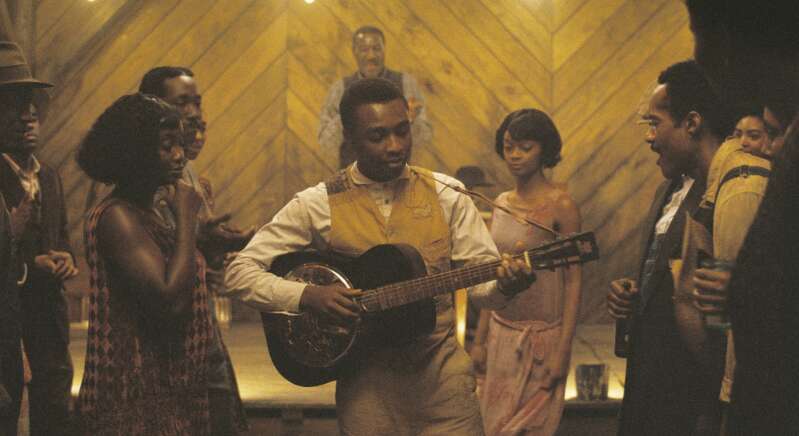
That juke joint scene in Sinners, which floored me with its sheer beautiful audacity and confidence that the audience would keep up: “So true, it can pierce the veil between life and death.”
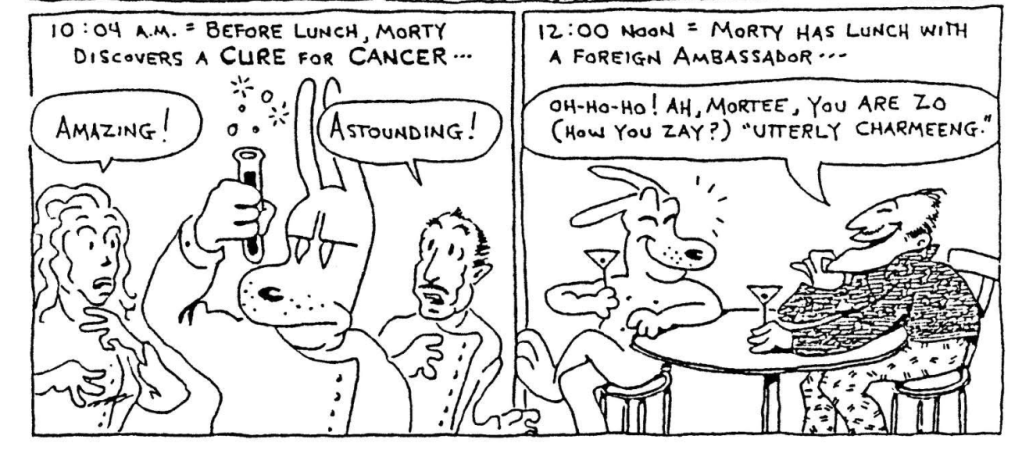
The Collected Cranium Frenzy by Steve Willis: One of the coolest little projects this year was a comprehensive reprinting of Cranium Frenzy, the surreal and hilarious small press comics of the legendary Steve Willis. Never heard of him? You should! As I’ve written in the past, Willis is absolutely one of the greats of the minicomics scene ever since the 1980s, but like most minicomics, it was literally impossible to find his work in print. Phoenix Productions have picked up the ball with five gorgeous little books collecting decades worth of work by Willis all on Amazon, well worth seeking out for the adventures of Morty the Dog and many more!
Wet Leg, moisturizer:I’m an old geezer whom Spotify now tells me is roughly 110 years ancient, but my favourite album by a “new” band this year was Wet Leg’s sprightly, sexy and hook-filled second album, a catchy fusion of alternative rock (does that still exist), post-punk, dance and whatever else you’d like. I’ve been humming along to “liquidize” for months. Be my marshmallow worm!
Superman: The Kryptonite Spectrum: A wonderfully quirky miniseries by Ice Cream Man creators W. Maxwell Prince and Martin Morazzo that embraces all the wacky insanity of vintage Superman comics and gives it a surreal spin, kind of like if David Lynch tried to write a Spider-Man comic. I’ve sampled Ice Cream Man and it wasn’t my thing, but this Superman miniseries is such a colourful “elseworlds” delight that I’ll be keeping an eye on these creators from now on.
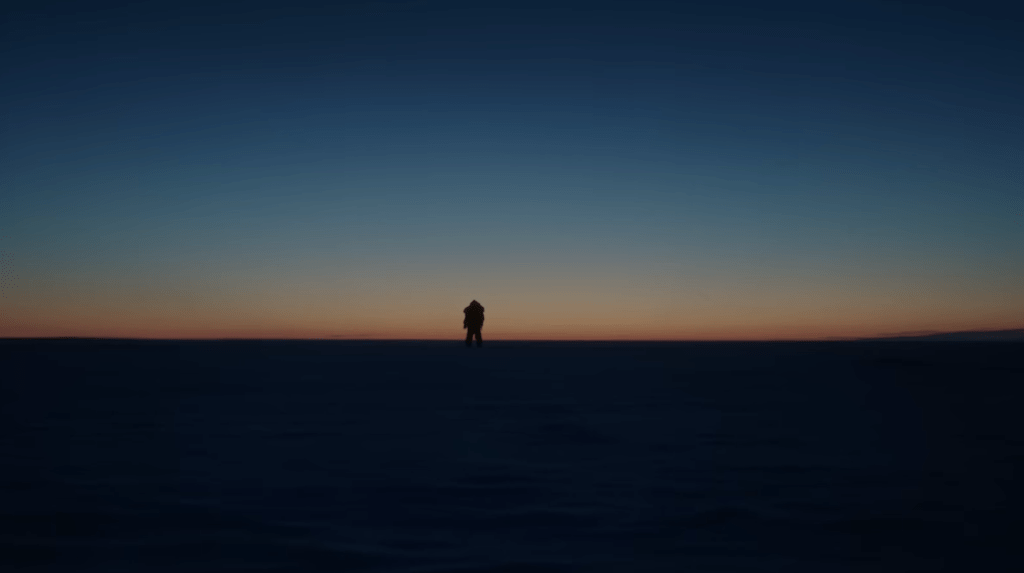
This one amazing shot in Guillermo Del Toro’s terrific Frankenstein:
Writing a book: I hit 30 years in journalism at the end of 2024 and decided it was time to put together a “greatest hits” of sorts of my columns, essays, articles and more. It’s a total vanity project but I’m really pleased with how Clippings: Collected Journalism 1994-2024came out and the kind words by family, friends and even a few complete strangers who’ve bought it. It’s more than 350 pages of scribbles that somehow sums up my so-called career. Get it now over on Amazon (and you can pick up a few collections of my long running comic series Amoeba Adventures there too)!
In this AI-generated world we’re morphing into, you’ll have to pry my actual human-written books out of my cold, dead hands. Or at the very least send the Terminators to do the job. Anyway, reading remains a key joy in my life despite all our collective struggles, and I clocked up 109 books on my Good Reads accounts for the year (prose only – graphic novels and the like I don’t usually log there.)
This year I really made an effort to read a lot of New Zealand books, as I try to embrace my second homeland a little more. And we’ve got quite a collection of excellent writers here, too!
Here in alphabetical order are my favourite 10 new books of 2025:
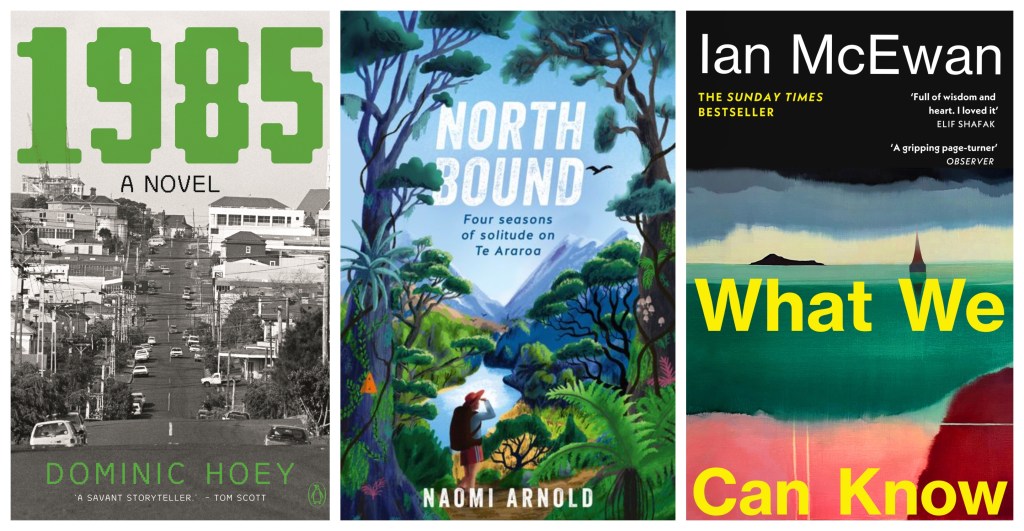
1985: A Novel by Dominic Hoey – Hoey’s snappy, scrappy fiction about the struggling underdogs of New Zealand society gets better with each book, and his tale of video-game obsessed Obi and his poverty-stricken family, with a delusional dad and ailing mum, is his best yet. A key portrait of an Aotearoa a world away from the shiny tourist destinations.
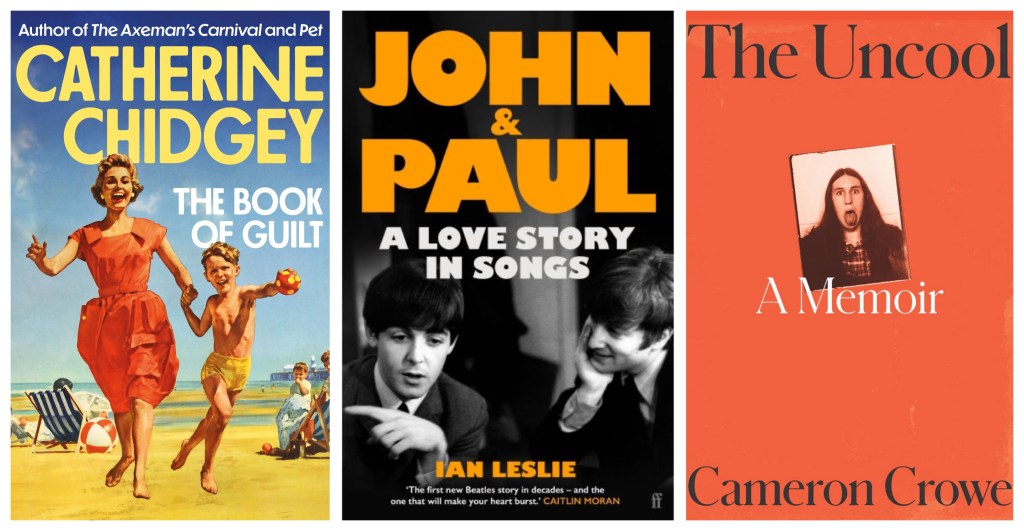
The Book of Guilt by Catherine Chidgey – NZ writing superstar Chidgey delivers another cracking literary entertainer, this time a quasi-sci-fi tale about three strange young boys in a futuristic Britain trying to unravel the mystery of who they are. Chidgey makes smart fiction seem so easy.
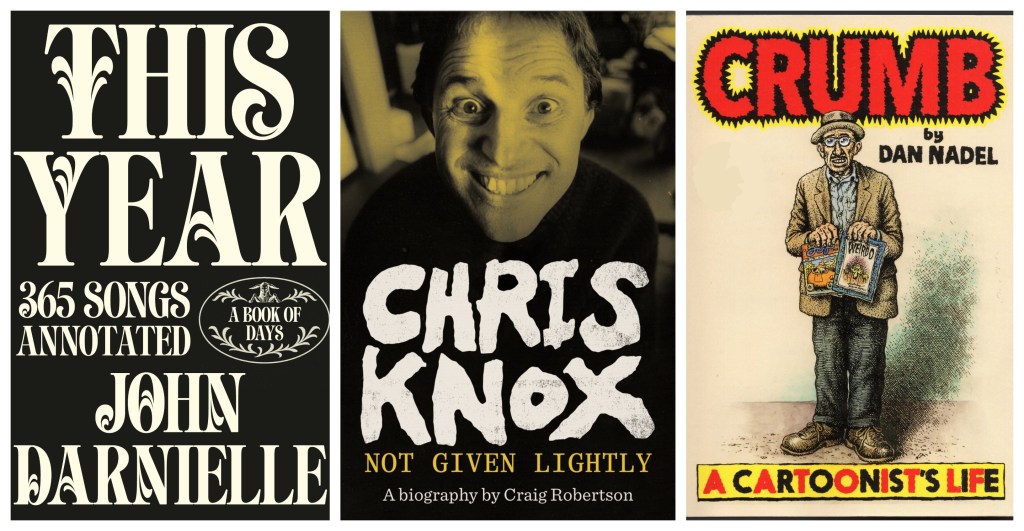
Chris Knox: Not Given Lightly by Craig Robertson – Beautifully assembled, this passion project about a pivotal New Zealand musician doesn’t excuse young punk Knox’s quirks and cruelty, while also delivering a vivid portrait of life in countercultural 1960s-1980s New Zealand and his fierce creative drive. It’s more than a book about a single artist, but also a time capsule of a whole era.
Crumb: A Life by Dan Nadel – Crumb is what the kids call “problematic” now, and Nadel’s welcome warts-and-all biography doesn’t try to whitewash the sexism and offensiveness of some of his cartooning, while also showing us how he got that way. A great biography.
John & Paul: A Love Story in Songs by Ian Leslie – Wot’s this then, another book about the Beatles? But Leslie’s excellent tome excels by focusing forensically on the creative and human relationship between John and Paul, and in the process he finds yet another new way to explain the mystery of how we got the Beatles.
A Marriage At Sea (also titled Maurice and Maralyn) by Sophie Elmhirst – A huge story of the day that’s mostly forgotten now (I sure didn’t know about it!), in 1973 British couple Maurice and Maralyn Bailey were rescued after a stunning 118 days at sea in the Pacific Ocean in a raft after their boat sank as they attempted to sail to New Zealand. Elmhirst’s eloquent book lays out the harrowing survival tale in intense detail, but also digs deeper to find the human heart behind the headlines.
North Bound by Naomi Arnold – Journalist Naomi decided to walk the entire Te Araroa trail spanning the entire length of New Zealand, and in the process delivers a frequently hilarious, often moving picture of determination and stubbornness and the notion that no matter how far we travel in life we can never quite escape ourselves. A new classic of Kiwi nonfiction.
This Year: 365 Songs Annotated by John Darnielle – I’m cheating, because I haven’t finished this yet, but it’s sublime – Mountain Goats frontman takes us on a tour of his songwriting career his exceptional lyrics, bundled together with personal essays reflecting on how he wrote them. Darnielle is a piercingly insightful, very funny and endlessly humane writer, and this is a cornucopia of his talents. Even if you’ve never heard a single Mountain Goats song, you’ll learn a lot about the art of writing here.
The Uncool by Cameron Crowe – I’ve been waiting for years for Cameron Crowe to tell his story, and while the man behind Jerry Maguire, Singles and Say Anything has fallen a bit fallow on the film front in recent years, his memoir of becoming a teenage rock journalist is everything I’d hoped for – an expansion and clarification of the film Almost Famous, and witty and wise look back at a kid who somehow ended up befriending legends like Bowie, the Allman Brothers and Led Zeppelin and following them around the world.
What We Can Know by Ian McEwan – Literary lions can still roar. Legend McEwan at 77 writes another one of his clench-jawed, shocking morality plays that begins in the distant future of 2119 and pivots back to dissecting a tortured relationship between a famed poet and his wife in 2014. Its visions of an apocalyptic future are a rich metaphor for the very perilous state of our world today, but it’s also very much about the devils we all carry around within our secret selves as well. One of his best.
The calendar is on its last page yet again and it’s Year In Review week here. Let’s kick it off with my 10 favourite movies of 2025* – a surprisingly excellent year for mainstream Hollywood where a lot of clever and edgy horror and drama managed to sneak into cinemas.
*Despite the modern age we live in, New Zealand still sometimes gets movies a bit later, so a few releases that were officially in 2024 didn’t make it to our screens until this year. Still, I’m including them, because I’m in charge here! (This also means there’s more than a few acclaimed 2025 films that haven’t gotten here just yet like Hamnet and Marty Supreme.)
My top 10 of 2025:
1. One Battle After Another – Was there any other choice, really? Paul Thomas Anderson has been one of the world’s finest directors for the past 25 years, and this year feels like the year that everyone finally noticed. I wish it had been a bigger box office hit but in the American shitshow of 2025 the mere fact this exists is awesome.
2. Sinners – After Black Panther and Creed, we should’ve already known Ryan Coogler was the real deal, but he takes it to another level in this unexpected smash hit that tackles America’s blood-spattered history and marries it with the power of music, the horror of the unexpected and a series of achingly romantic tragedies.
3. Frankenstein – Trust Guillermo Del Toro to give fresh new blood to a frequently filmed tale. With darkly gorgeous and tactile lush design and a heartbreaking turn by Jacob Elordi as an oddly sexy version of the monster, Del Toro’s passion project is lush, gory and epic, like a fusion of the Universal and Hammer-era Frankenstein tales. Kind of like his Shape of Water, I very much felt like Guillermo made this movie just for me as a cool little secret to share between mates.
4. Superman – Thank god, for the first time in decades we’ve got a Superman movie that’s light in spirit and doesn’t hammer us with dreary Jesus symbolism. Embracing the silliness of the Silver Age comics – Metamorpho! – and anchored by David Corenswet’s endearingly cheerful performance, Superman was the freshest comic book movie of the year.
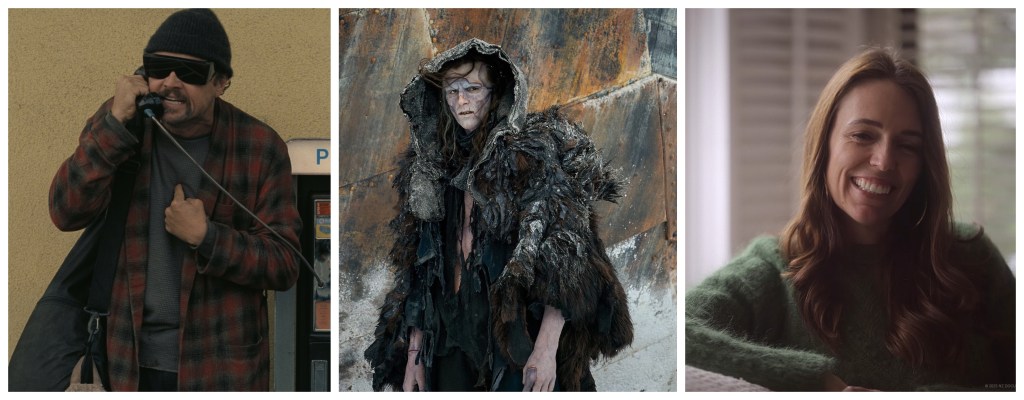
5. Prime Minister – The rise and fall and rise again of a New Zealand politician, the story of Jacinda Ardern is far more candid than I’d imagined it could be. It’s a wonderful documentary but it’s also kind of heart-breaking, because in the world we’re currently in I can’t see politicians who act like actual human beings instead of sneering hypocritical grifters ever getting anywhere again.
6. A Complete Unknown – This one didn’t open in NZ until early 2025, and left a big grin on my face the whole time. The music biopic is a cliche by now but this succeeds by giving us a single slice of Bob Dylan’s career, and fantastic performances by Timothee Chalamet, Ed Norton and Monica Barbaro. Rose-coloured and sanitised like all biopics, but delightful all the same.
7. Pavements – A film festival favourite that finally showed up in New Zealand this year, this uncategorisable mockumentary is probably the best possible movie that could be made about Pavement, reimagining their slacker anthem songs as fodder for rock musicals, a museum and pretentious Hollywood biopic, and sloshing fake and real together in the perfect tribute to this beautifully eccentric band.
8. Bugonia – We don’t talk enough about how awesome Emma Stone has become, and how wild this former romantic comedy star’s career choices have been – a conniving commoner in The Favourite, a sexual Frankenstein in Poor Things, and then a career woman who might just be an alien in the wild Bugonia, the latest button-pushing insanity from Stone’s welcome muse Yorgos Lanthimos.
9. 28 Years Later – A zombie movie three-quel that goes in incredibly unexpected directions, deep into a post-extinction Britain and anchored by a riveting family drama and an all-time third act performance by Ralph Fiennes. Not at all what anyone expected 23 years after 28 Days Later – like everyone else, I’m still unpacking the Jimmys – but I loved its crazy swerves, and am dying to see where it goes in the upcoming 28 Years Later: The Bone Temple.
10. Eddington – Ari Aster’s blunt weapon of a satire about America during Covid is never subtle, but it’s confrontingly hilarious in its story of a small town sheriff (Joaquin Phoenix, excellent) caught up in pandemic unrest. It escalates somewhere beyond cringe comedy to the point of being truly uncomfortable, just like watching America has been this year. I haven’t seen another film yet that so starkly confronts that American society has, well, kind of lost its bloody mind in the last few years.
And just all lurking around #11, the runners up:The Phoenician Scheme, Conclave, Thunderbolts*, Sentimental Value, Wake Up Dead Man, Weapons, The Brutalist, Companion, Pee Wee As Himself, Fantastic Four: First Steps
I’m not expecting anything to dislodge One Battle After Another as my favourite film of 2025 with mere days to go before the rough beast of 2026 slouches in, snorting fire and brimstone.
Paul Thomas Anderson’s ripper of a comedy/action/drama met the rare threshold of being a movie I went to see twice in the cinemas, which at modern ticket prices in New Zealand is a commitment. It feels very much a film about the current seething moment in America, where everyone’s angry and disappointed all at the same time.
But I also thrilled to it because I got to see a brief part of it being filmed back in Sacramento way back in February 2024 during a visit to see family. One Battle is set throughout California’s epic open skies and coastal towns, including places like Humboldt County and the endless desert hills of far southeastern California, but a big chunk of the opening act was filmed all around Sacramento, not far from where I grew up.
It was a lifelong buddy of mine, also a journalist with the Sacramento Bee, who invited me along as he was attempting to get some photos of One Battle’s filming that February morning. It was a sequence being filmed among the squat brutalist architecture of downtown Sac, a grid of anywhere Americana. Streets were blocked off, bouncer-looking type blokes kept us spectators from getting too close, and like any movie making, there was a lot of standing around.
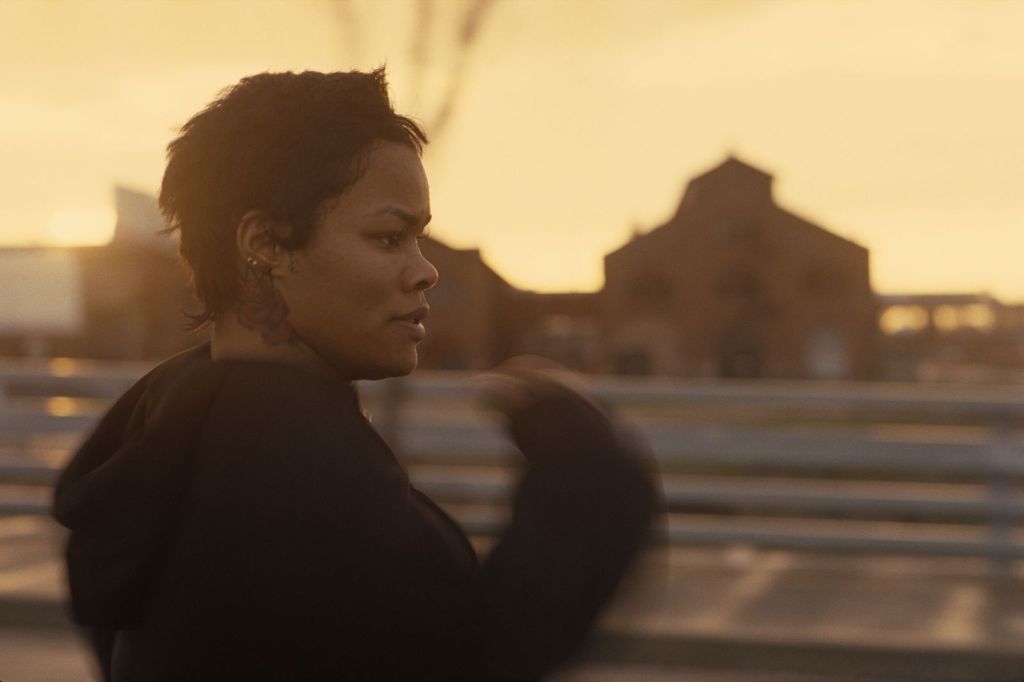
The scene we saw filmed comes after an explosive bank robbery sequence in the finished movie, and for a few hours we watched director Anderson and crew capture a brief part of a chase scene through Sacramento’s streets, including seeing actresses Teyana Taylor and Shayna “Junglepussy” McHayle running along.
For a film geek and a huge Paul Thomas Anderson fan, it was a glimpse behind the magical curtain of movies. There’s something about seeing the sausage get made, if only briefly.
New Zealand gets a lot of film production now and I know people who’ve worked on them, but my experiences with being quiet on a set are pretty limited – I saw some cool explosions for Die Hard With A Vengeance being filmed on Manhattan streets a million years ago during my New York summer, and once upon a time a big 1990s Hollywood romantic comedy called The Gun In Betty Lou’s Handbag was filmed in my small Mississippi college town, exciting everybody until they saw the pretty lame final product, which flopped.
For One Battle the moments we saw being filmed did recognisably pop up on screen at a pretty intense section of the movie. Sure, for all we know it’s quite possible none of the exact takes I saw filmed that day are the ones featured, but hey – let a fan dream. And it was nice to catch a few moments of a movie being made that is actually really damned good, and hopefully cleans up at the Oscars in a couple months as it sorely deserves to.
Anyone who’s ever watched a movie being made knows it’s all about tiny jigsaw pieces that are all later painstakingly put together and you rarely get to watch Robert DeNiro give Oscar-nominated monologues. Most often you’ll watch elements of a scene be gone through over and over again in bite-size chunks.
That day we watched cars on the downtown Sacramento street be moved in and out of position, each time needing to line up exactly with where they were on other takes, and we watched director Anderson and team rolling along on this adorably cool camera rig vehicle each time shooting the actresses running down the sidewalk.
It’s just a few intense moments of the finished near-masterpiece film… but man, I was there that day, lurking in the gray concrete shadows of Sacramento streets, and those couple of minutes of the film will always sparkle with that trivia for me. Action!
The mass market paperback is dying. Publishers Weekly makes it official, as distributors have pretty much ended those once-ubiquitous 4-by-7 inch-sized books sold around America and the world.
People who are buying books still are getting the larger ‘trade paperbacks’ or hardcovers but the budget-friendly wee paperback that used to sell by the millions is now, it seems, obsolete.
They’ve been fading for a while, I guess – I honestly can’t recall the last new mass market paperback book I saw for sale here in New Zealand other than those cute little perennial Penguin classics, and the last few times I’ve been to the US those comforting little supermarket shelves of Stephen Kings and Lee Childs seem to have been shrinking to nothingness.
Books themselves aren’t going anywhere, or so I keep telling myself and fervently hoping despite all the evidence humanity’s collective brains are dissolving into a stew of slop and influence. But I’ll miss those paperback stands at the supermarket or the drug store, just like I miss those spinning comic book racks I once lived for.
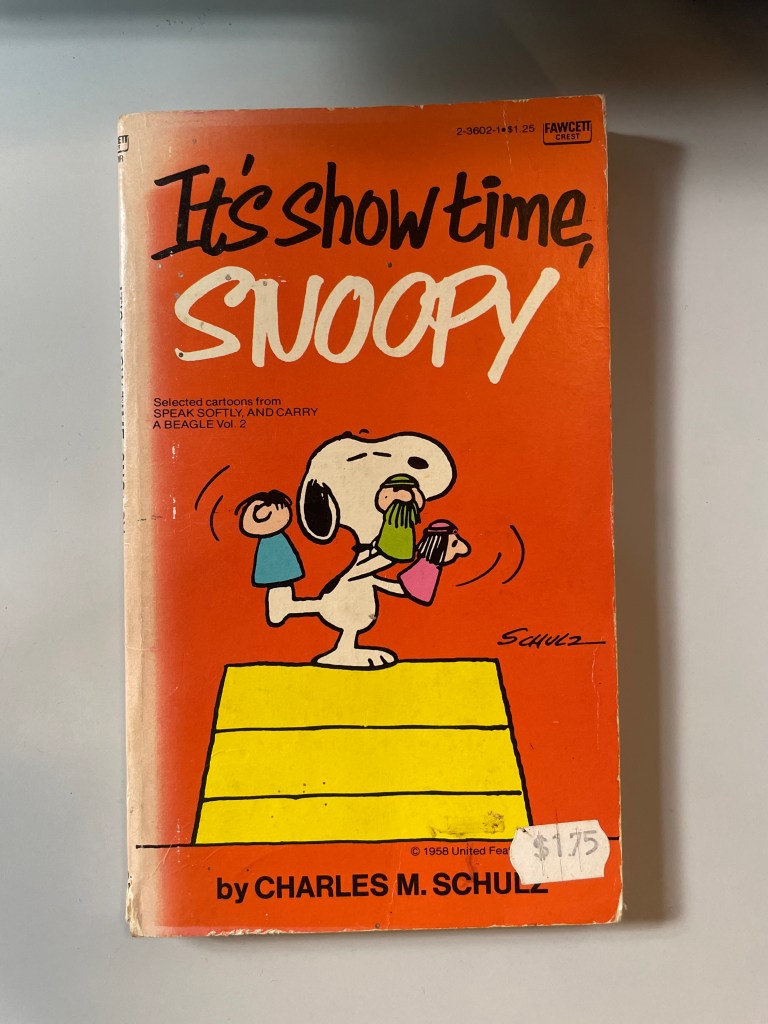
Growing up, the plucky little mass market paperback was my gateway to the wider world of words, starting with the battered second-hand Peanuts and B.C. comic strip collections I’d pick up at the thrift shops. As a book-obsessed young geek with limited money, buying myself a book for a buck or 50 cents was heaven.
I still recall my first time or two visiting a paperback exchange with my allowance burning a hole in my pocket – inhaling that rich odour of pleasant decay you get from sniffing a vintage paperback and its gradual breakdown of cellulose and lignin.
I’ve got nothing against trade paperbacks and hardbacks and the like. All books are great! But those mass market paperbacks felt more egalitarian, covering everything from literary bestsellers to glorious trash. Those small covers weren’t a very big canvas, but in its heyday the mass market paperback was America’s everyday art form, before we all started getting distracted by screens 24-7. Nothing beats a great paperback book cover.
Books that feel like they were made just for me like Paperbacks in Helland the absolutely amazing pulp fiction histories like Girl Gangs, Biker Boys and Cool Catsor Dangerous Visions And New Worlds celebrate all the weird little horror and sci-fi and crime paperbacks that filled up every spinner rack between Spokane and Miami for decades. Every chunky pocket-sized paperback was a passport to somewhere else.
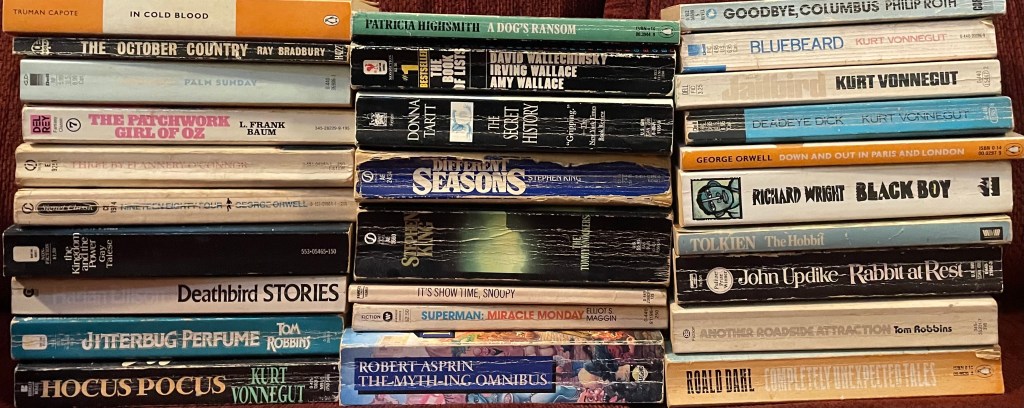
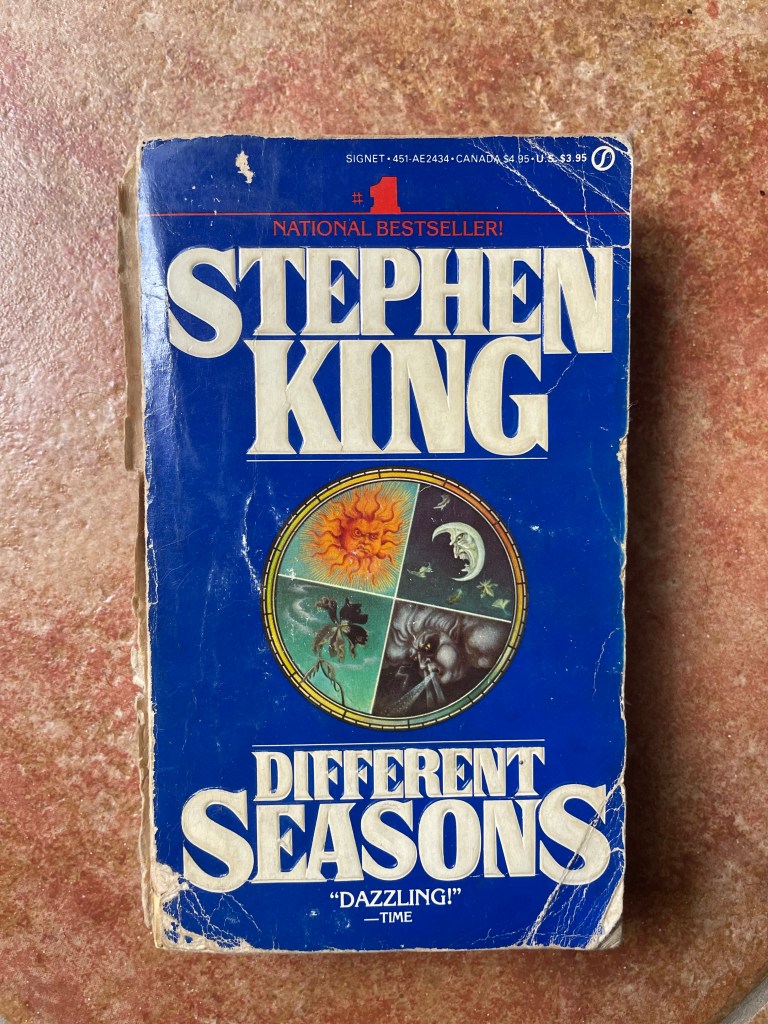
My first Stephen King reads were battered paperbacks handed down from my mom. I’ve still got Different Seasons, its cover barely hanging on, and can picture the thrilling little shocks and heartbreak his classic novellas “Apt Pupil,” “Rita Hayworth and the Shawshank Redemption” and “The Body” broke open in me. Somehow, reading those King books as a teenager, I knew I’d have to make a living with words, even if I’d never be a Stephen King.
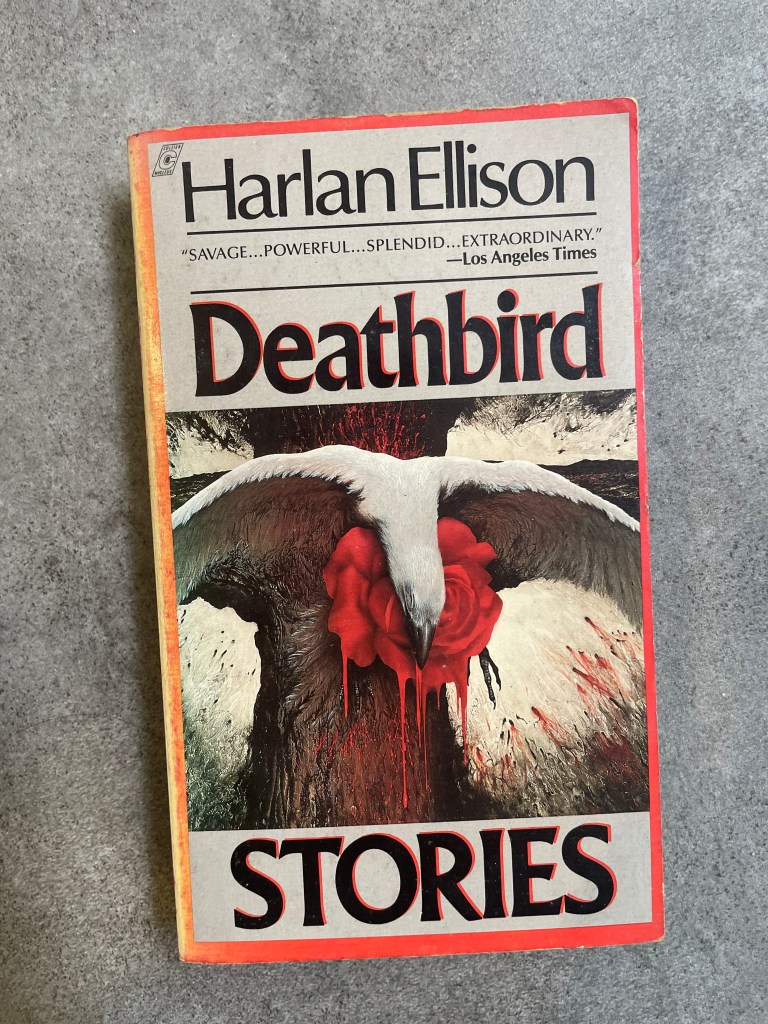
I was first introduced to the irascible, unforgettable Harlan Ellison through books like Deathbird Stories, and even though that stark gorgeous red spine on the paperback has faded a lot over the years, I’ll never get rid of it, or part with the memories of the beautifully apocalyptic title story, which felt like a cosmic symphony cracking open to Young Nik’s brain.
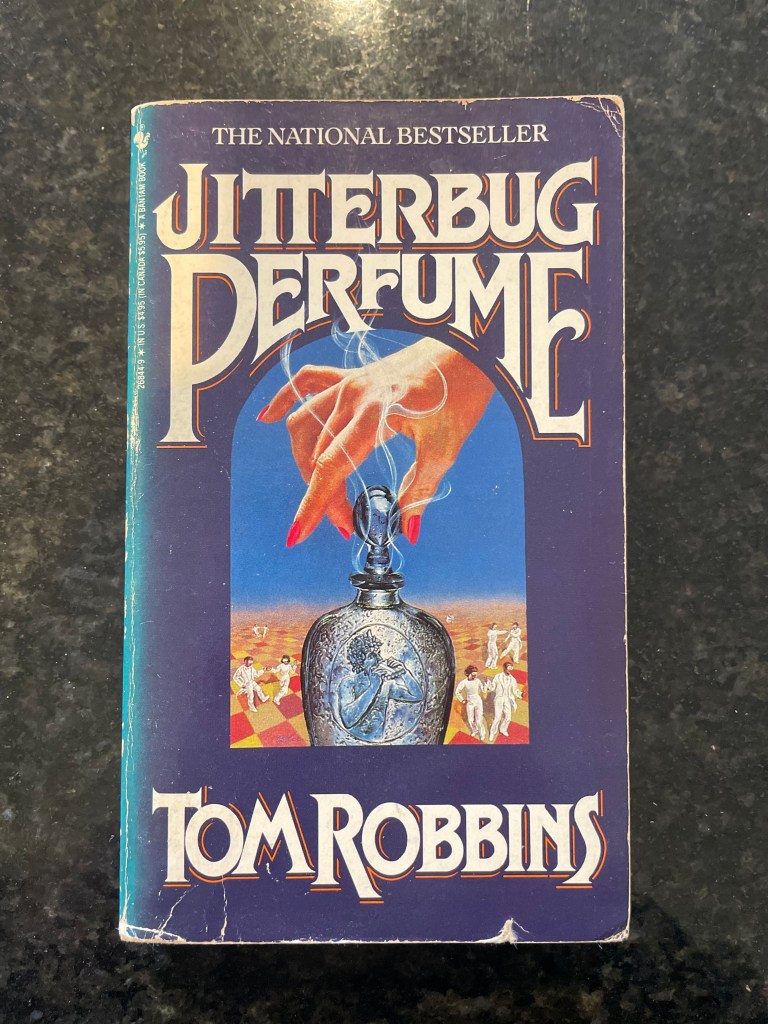
Or Tom Robbins’ delightful Jitterbug Perfume, which was passed around my high school pals like contraband – we were years too late for Robbins’ peak sexy surreal hippie lit-god era, but Perfume and his other books still felt like the counter-culture to me, with his loopy prose wrapping in everything under the sun in gloriously excessive comic romps.
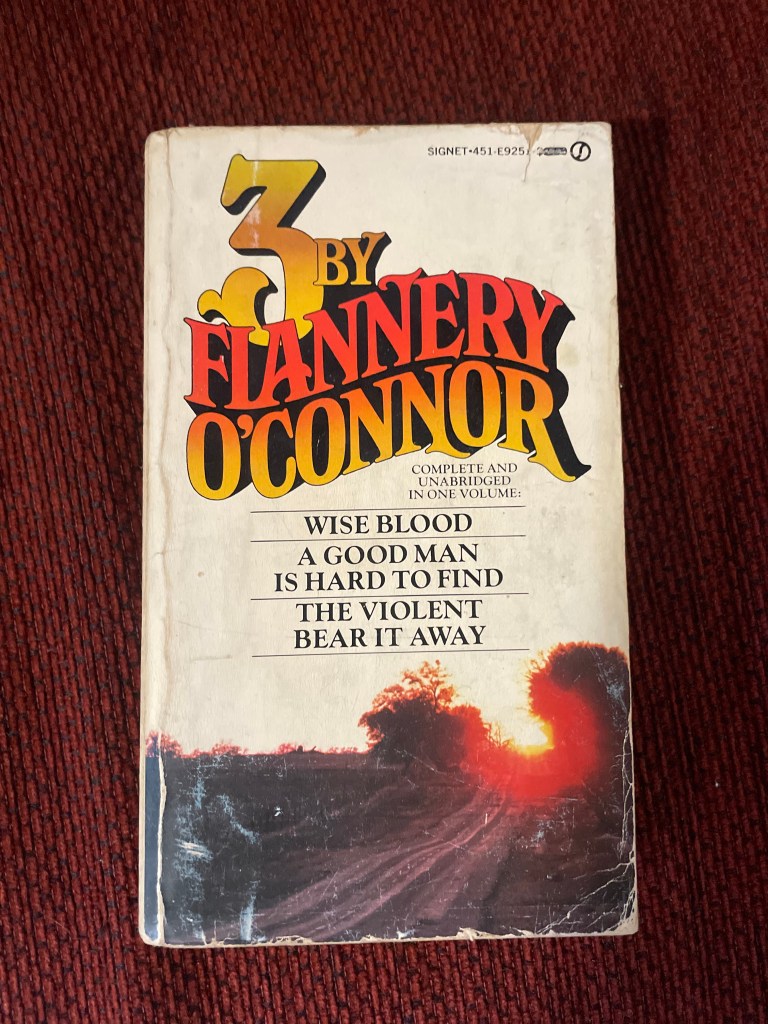
I still remember exactly where I got many of the paperbacks – the collection of Flannery O’Connor novels I picked up during a summer in New York City at one of those outdoor book stands, the hefty Stephen King The Tommyknockers I picked up to read during a long road trip around Oregon and California with my dad toward the end of high school.
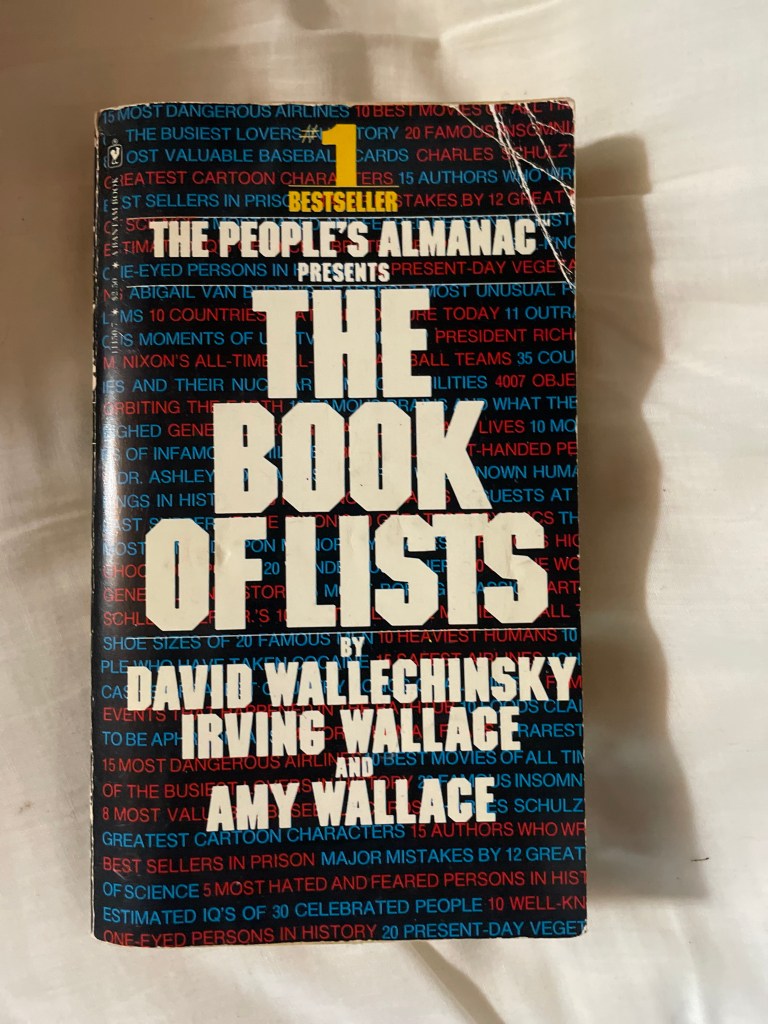
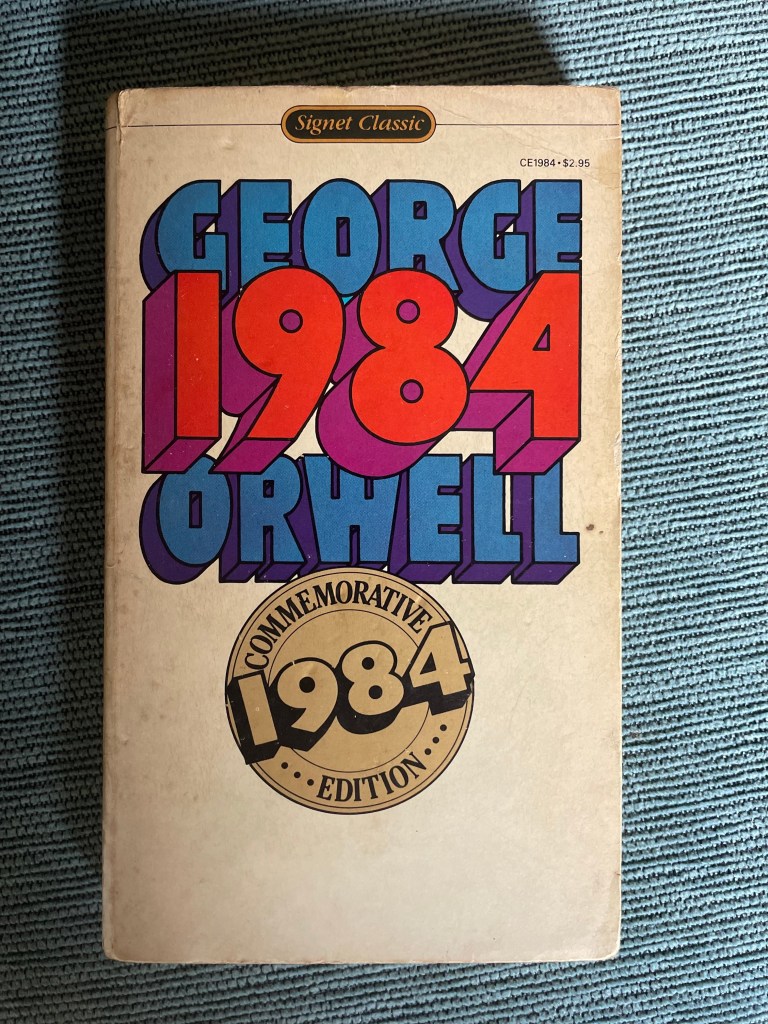
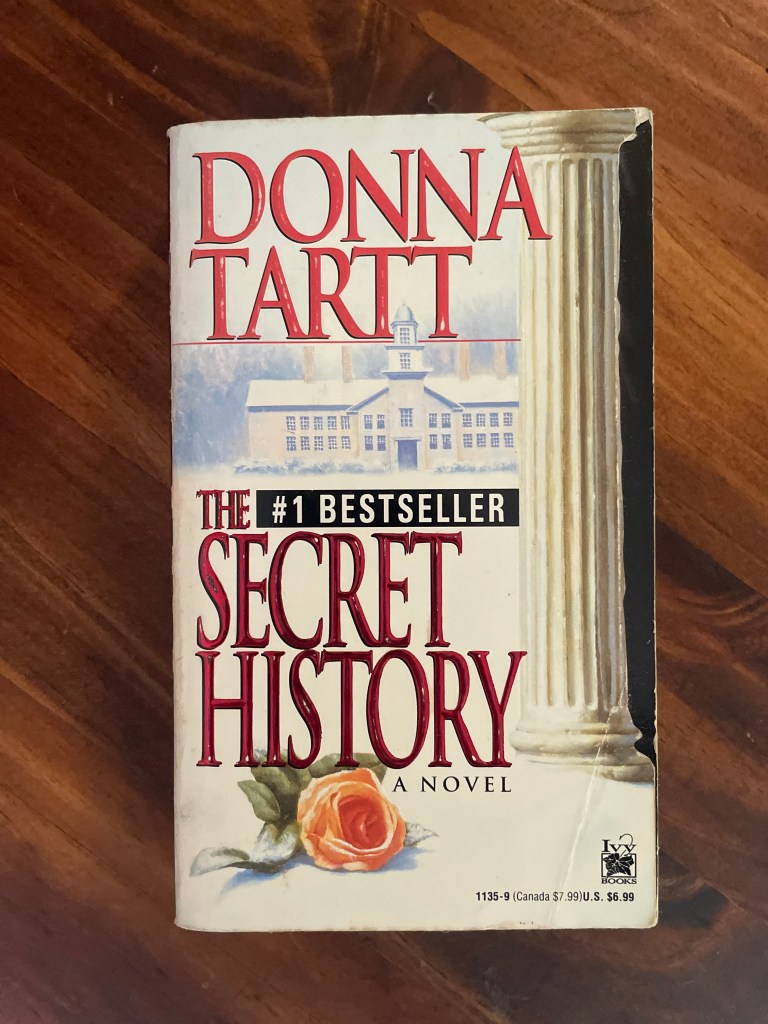
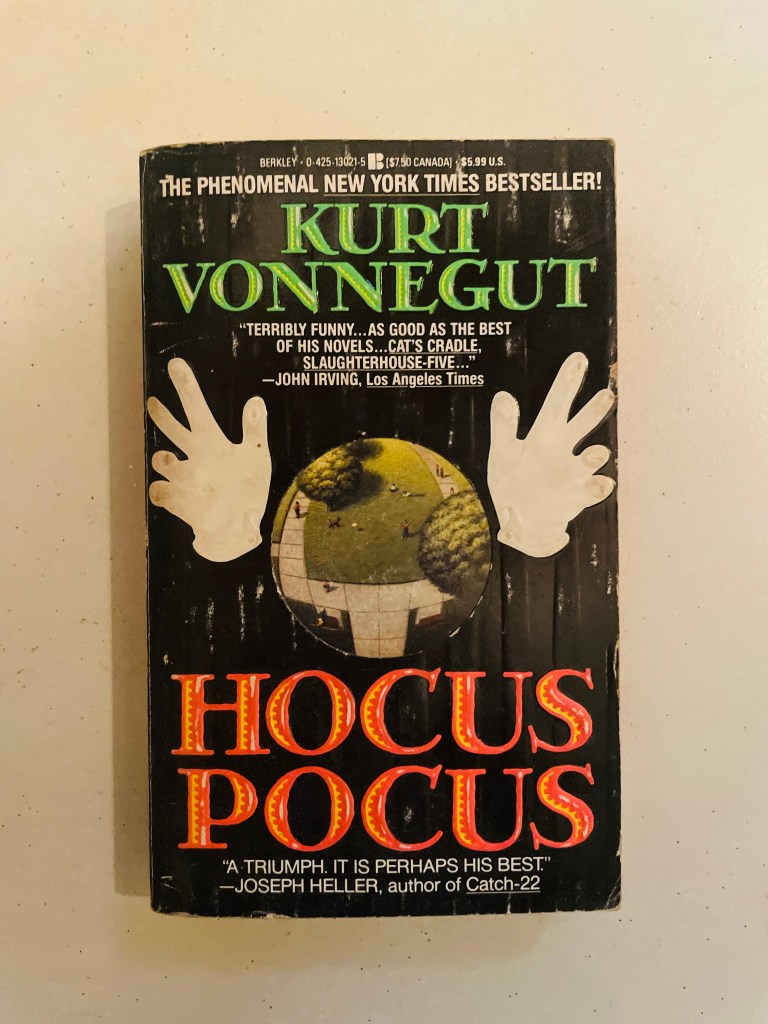
So many others – the extremely battered “1984 anniversary edition” of George Orwell’s 1984 I read when I was 13 which turned me into a lifelong fan; the very first Kurt Vonnegut book I read, Hocus Pocus; the massive pre-internet compendium Book Of Lists which filled me with a Wikipedia’s worth of trivia and knowledge; Robert Asprin’s charmingly hokey “Myth Adventures” series, Donna Tartt’s achingly gorgeous The Secret History which felt like the literary novelisation of my wild intellectual college hopes and dreams. The most recent one on the shelves, Quentin Tarantino’s doggedly nostalgic novelisation of his movie Once Upon A Time In Hollywood, was released in mass market paperback form just like all those hacked-out movie novels of the ‘70s and ‘80s. Before you could log on to stream or even pop in a VHS tape, the Star Wars novelisations gave us a way to get back into the story. I miss that truly interactive experience.
As the wife reminds me, I’ve got too many books, spread about the house in a variety of shelves that I’m constantly refining so I can fit the new books in without too many piles of loose books everywhere. But I’ve still got many of those mass market paperbacks that were building blocks to the book-brain, carried around the world the last 40 years or so. They won’t go anywhere while I’m around.
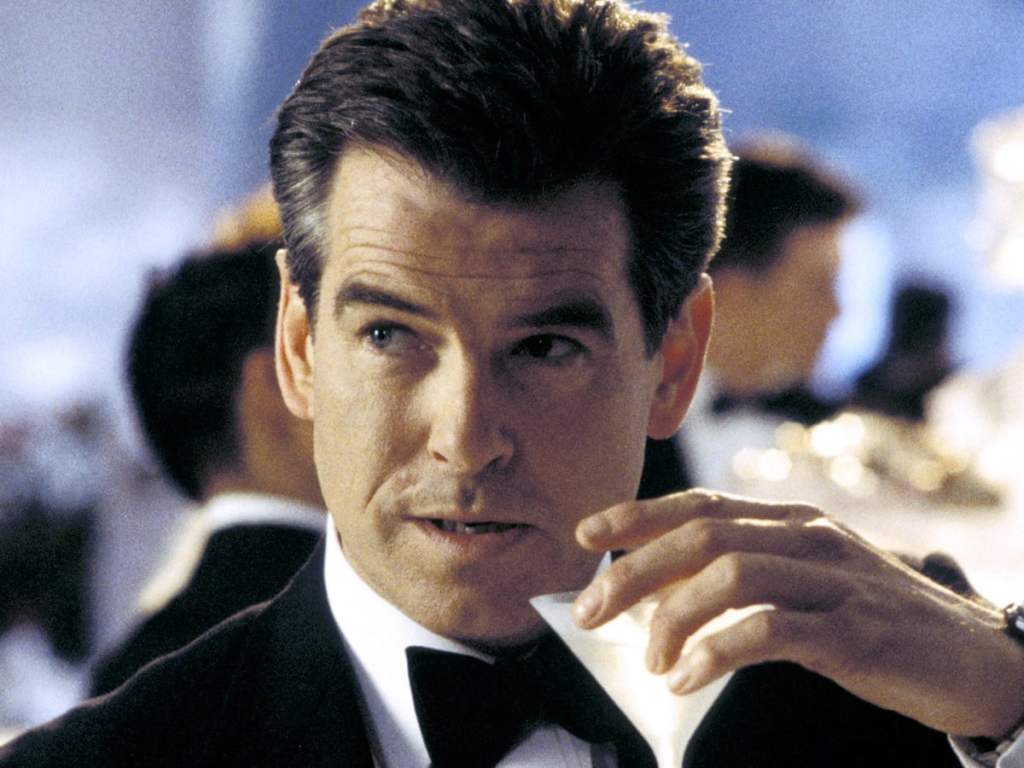
In theory, he should’ve been the perfect James Bond. He looked great. He was groomed for the role and talked about it far longer than other actors, and yet, 30 years on after his 1995 debut in Goldeneye, Pierce Brosnan feels like the 007 who never quite hit his target.
Rewatching all four Brosnan James Bond adventures recently, the main fact I was struck by was how inessential they all seem – even the best regarded of them, Goldeneye. They feel like corporate IP placeholders between Timothy Dalton’s harder-edged Bond in his last hurrah in 1989’s Licence To Kill and Daniel Craig shoulder-charging onto the screen as Dalton’s spiritual successor in 2006’s Casino Royale.
There was talk of Brosnan playing Bond for years going back to his Bond-adjacent turn on TV series Remington Steele. But when NBC wouldn’t release him from his contact, Dalton became the new Bond after Roger Moore retired, and Brosnan wouldn’t get his chance until 1995’s Goldeneye. He was anointed. It all felt so promising. Yet in the end, he was also disappointing.
Sean Connery was the sexy and brutal Alpha Bond all others came from, while Roger Moore was the more genial killer, Dalton the cunning professional and Craig excelled at giving us a haunted, bruised Bond. But too often Brosnan was asked to imitate elements of his predecessors. He started to develop a kind of professional, cooly slick James Bond archetype which never quite came into full focus.
The horny sexism and one-liners of Sean Connery and Roger Moore are products of their time, but when Brosnan tried them on in the 1990s, he always looked vaguely pained to be making awful jokes like “I thought Christmas only comes once a year.” His quips generally come off as lame or needlessly cruel. There’s a lot of performative posturing about Bond being an antiquated dinosaur (mostly coming from Judi Dench’s M, who’s the true MVP of the Brosnan era) but little true interrogation into what that would actually mean.
Goldeneye, like most of the Brosnan Bonds, starts with a banger sequence including a still-classic motorcycle leap onto a moving plane, Sean Bean makes a solid villain and Famke Janssen’s feral thrill-seeker is one of my favourite sexy villains. It’s a very good Bond movie that doesn’t quite make it to great, and in his debut, Brosnan too often just seems like a pretty guy in a nice suit to me.
An overpowering ‘90s excess hangs over most of the Brosnan era, with huge action set pieces but a general lack of any strong character moments to let the story breathe. In Tomorrow Never Dies, it all starts to feel strained. Jonathan Pryce’s scenery-chewing media mogul is a little too over the top, even seen today in the world of Elon Musk. And Brosnan, if anything, is more wooden than he was in Goldeneye, while Teri Hatcher is a dismal Bond girl. Michelle Yeoh, however, is a delight as a Chinese secret agent. It’s all decent enough mid-tier Bond antics, really.
The third Brosnan picture, The World Is Not Enough gets a lot of slagging off for Denise Richards’ godawful performance as Lara Croft-cosplaying “nuclear scientist” Christmas Jones, but that aside, it’s actually a pretty good Bond romp – Sophie Marceau is terrific as one of Bond’s few female main adversaries and Brosnan finally begins to loosen up and give a little emotional depth to his Bond in his scenes with her. Embrace the camp value of Christmas Jones for what it is, and this underrated one is nearly as good as Goldeneye, I think.
Die Another Day, however, is a sloppy mess. Helmed by the late NZ director Lee Tamahori, it’s wildly all over the show in tone, a bloated and unsatisfying clunker that ranks with the worst in the series. It starts so promisingly – Bond is captured on a mission in North Korea and held prisoner for more than a year, and when freed his 007 status is revoked and he’s out in the cold. But the promising germ of that idea, and haunted Bond with his bushy hostage beard, gets lost – within minutes Bond’s shaved and back to his usual wisecracking self. I’m not a fan of Halle Berry’s co-starring role as shallow quip machine Jinx, and think Yeoh did the “allied secret agent” thing much better. Toss in a terrible cameo by Madonna (!), an invisible car, a rogue’s gallery of absurd race-swapped villains, combine it with some truly awful CGI sequences to all make the campy Moonraker feel like a Nobel Prize winner by comparison.
The Brosnan years also became when the Bond series caretakers started worrying too much about legacy, and legal battles and infighting that keep derailing the series started to come into play. Nobody ran a focus group on whether Roger Moore really should dress as a clown for the climax of Octopussy, but starting with the unceremonious dumping of Timothy Dalton the corporate hand began to weigh awfully heavy on Bond. It’s a big reason why Daniel Craig’s reign feels so choppy and obsessed with canon and continuing subplots.
Brosnan’s James Bond comes off as a cool, unruffled professional, with the potential to seem as unstoppable as Connery did, and he truly does try with the scripts he’s given – I’m thinking of the brief brutal climax where he confronts Sophie Marceau’s Elektra at the end of World, or the few moments Die Another Day gives him to portray a broken Bond after months of torture.
In the terrific oral history of the Bond franchise, Nobody Does It Better, Brosnan frequently mentions trying to find Bond in what were often still-in-progress scripts. “As I was playing the role, I always said to them, ‘Just what is the character about? Where’s the character? What’s the interaction between them?’” Brosnan is a good actor, but the movies rarely let him lean into his own distinctive qualities. Brosnan’s handsome face isn’t as expressive as Moore’s or Connery’s, to be honest, and perhaps leaning into his sometimes stoic presentation more could’ve given us a scarier, more mysterious Bond.
In the end, I’d rank Goldeneye and The World Is Not Enough as flawed fairly good Bonds, Tomorrow Never Dies as mediocre, and Die Another Day as a true misfire. Other than one-and-done Bond actor George Lazenby, no other James Bond actor’s run feels quite like such a missed opportunity.
Maybe it is about more than just looking the part, in the end.
Like all of us, I go through phases. One week I’ll be super-into the films of Billy Wilder, or I’ll be reading all of Percival Everett’s novels I can find or all of the Daniel Warren Johnson comics I can hoover up, and the next week I’ll be all about exploring the discography of Hüsker Dü.
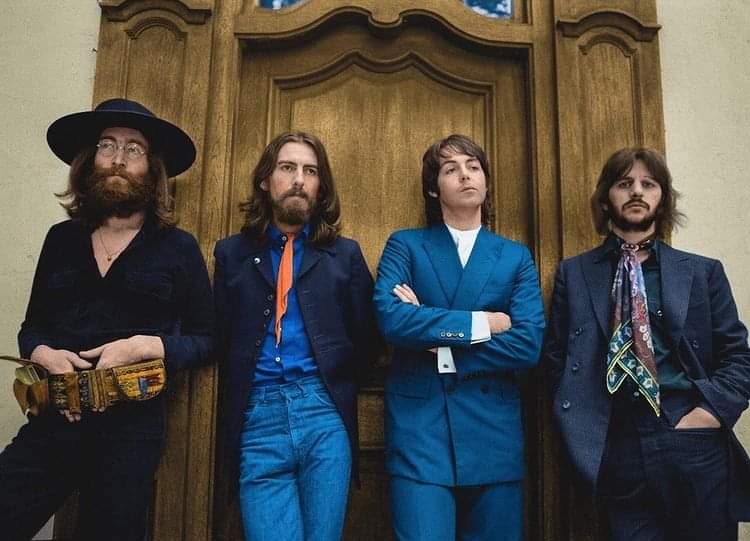
But one phase that never really ends for me? That Beatles phase. Sure, it waxes and wanes, I might go a few weeks without listening to or thinking about the Beatles, but in the end, as the man said, I get back, get back to where I once belonged and dive back into figuring out the Beatles.
There’s been a flood of Beatles content lately, so I’ve been heavy in a Beatles phase the last week or two again – rewatching the terrific 1995 Anthology documentary for the first time in ages now that it’s made its way to streaming, and listening to the latest grab bag of odds ’n’ ends, Anthology 4, all while reading a very enjoyable new deep dive into the great Lennon-McCartney partnership, John & Paul: A Love Story In Songs by Ian Leslie.
The thing about the Beatles is, like anything that starts to pass into the realms of mythology, you never really get to the bottom of it all. I consider myself a 7 out of 10 on the scale of Beatlemania – I’m not one of those guys who can tell you who Stuart Sutcliffe’s grandparents were or what John Lennon had for breakfast the day they recorded “Penny Lane.”
There’s 213 or so “official Beatles songs” plus all the infinite demos, jams and alternate takes that have been pouring out the last few years in super fancy special editions. Recently I came back to the mildly obscure track “Hey Bulldog,” and really listened to it – the thumping piano intro, McCartney’s sturdy bass line, the giddy sneer Lennon gives the lines “What makes you think you’re something special when you smile?” It felt like a whole new song suddenly bloomed to me even thought I’m sure I heard it dozens of times before. How did this happen?
My parents weren’t big music listeners – about all I can recall in the way of “rock” music in the small vinyl collection was some Peter, Paul and Mary – so I didn’t really start hearing the Beatles in childhood, but I was the perfect age to discover them when their albums first started coming out on CD during high school and Generation X got Beatlemania. The Past Masters collections in particular cracked my head open navigating the band’s stunning evolution from poppy singalongs to psychedelic freak-outs. I still can’t quite fathom how they went from singing “Love Me Do” in the Cavern to recording “Tomorrow Never Knows” in less than four years.
There’s a spark of joy that ignites in me whenever I truly listen to the Beatles, and I think the central mystery at the heart of it all is how these people, these scruffy rough kids from Liverpool, exploded to change pop culture in their decade or so of existence. We want to get inside these songs, to find how creativity itself works. The magic of creation remains the greatest magical mystery tour of all, and in an age where we’re increasingly served up algorithmic bait, fluff and trivia, the rough-hewn analog invention of Paul, John, George and Ringo still feels bottomlessly appealing to me.
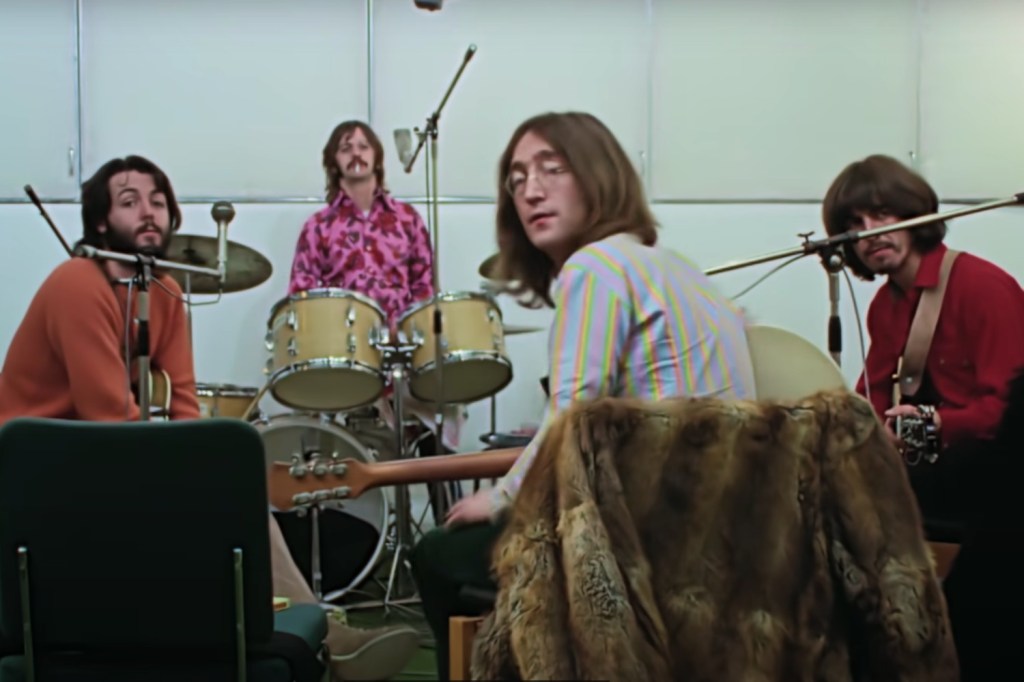
This is why I never really end my Beatles education, because even a bit of a cash grab like the fourth Anthology collection, with its surplus of pretty rote instrumental tracks, can grab me by digging up the gloriously unhinged take 17 on “Helter Skelter.” I sucked up the unabashed nostalgia of “Now And Then” and I dug the rhythmic hypnotic excess of Peter Jackson’s sprawling Get Back miniseries.
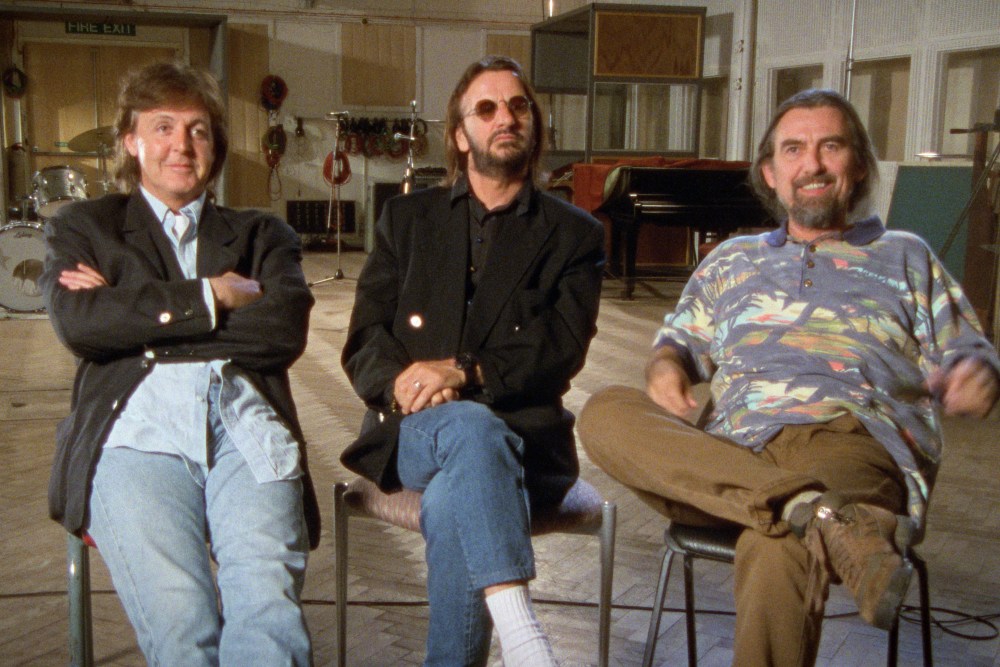
I’ve listened to Abbey Road or Revolver a hundred times a hundred times over the years and yet I can still find tiny new scraps of newness in those well-worn grooves. Yep, like everything else, the Beatles have become a content-churning factory in 2025, and, that new “final” ninth episode of Beatles Anthology probably wasn’t truly necessary, yet the little fragments we get of 50-something Paul, George and Ringo (30 years ago!) jamming and messing about with John’s sketchy demos on “Free As A Bird” still feel true despite the glossy sheen of Disney’s content farming.
And so it’s gone, over the years – I keep coming back to the Beatles, and discovering how much I still haven’t really paid attention to before.
The very last words Ringo sweetly says as the nine-hour journey of Anthology winds down are, “I like hanging out with you guys.” Me too, mates.
Cameron Crowe’s Say Anything is a great movie and one of the best teen romance movies ever made – quirky yet sincere, witty yet honest. John Cusack’s Lloyd Dobler and Ione Skye’s Diane Court feel real in a way so many ‘80s teen movies never manage to. I saw it at least three times in the theatre back in 1989 when I was deeply underwater in my own series of doomed high school love affairs and I love to revisit it in the years since.
And yet – I think just about my favourite little moment in the movie, even more than that whole iconic boombox scene, isn’t anything to do with teen romance at all.
Instead, it’s Diane’s father Jim, played by the late great John Mahoney, singing alone in his car off-key along to Steely Dan’s “Rikki Don’t Lose That Number” just before his life is about to fall apart.
Poor old Diane’s dad has been defrauding the rest home he manages and will soon be arrested, and it’s a tragic little twist in the movie that the father she idolises turns out to be an inept con man. At this point, Jim probably knows there’s bad things coming, and they do, but just for a moment, he’s in a car and Steely Dan comes on the radio and that’s everything.
Diane’s dad sings happily along with Steely Dan with all his heart, not caring that he sounds awful, but the music has snagged something deep inside of him and it won’t let go. Sometimes a song gets you like that, usually when you’re alone, and you feel it pulling you inside whether you want it to or not. I have a frickin’ awful singing voice, but sometimes you move on sheer primal instinct.
Music hits on a different level than most things, and it can break you open in new ways when you least expect it.
A song by the great Neutral Milk Hotel came on Spotify while I was out exercising a year or so back, and Jeff Magnum’s strained and aching voice hit me hard, bringing to mind all the love and loss we go through and the things we just can’t fix. Almost unconsciously I started singing along with “In The Aeroplane Over The Sea” and damn it, the lines “How strange is it to be anything at all” got me suddenly choking up in the middle of a suburban walk, sucked in. It felt wonderful and painful all at the same time, in an inchoate way I can’t even fully explain.
Or the other day that ‘80s chestnut “Head Over Heels” by Tears For Fears came on and for some reason this time the chorus got me, and I began singing along alone in the car, ecstatic and sad and nostalgic and hopeful in all the ways a good song can unearth in you. And don’t even get me started about Peter Gabriel’s “In Your Eyes” also featured so prominently in Say Anything… that song contains entire multiverses for me.
There’s a part of everyone that sometimes is just like Lloyd Dobler’s girlfriend’s dad, singing along by yourself about Rikki, hoping she doesn’t lose that number, knowing she probably will, but maybe she’ll send it off in a letter to herself.
There’s a beautiful loneliness to Jim Court’s car singalong, but there’s also the music, keeping him company and for just a few seconds, making everything all right again.












 Nik Dirga