Rik Mayall, the patron saint of confident self-loathing

Nobody made being a total bastard quite as funny as Rik Mayall. 

When I first stumbled on The Young Ones in the late ‘80s during its inexplicable MTV late-night airing in America, I felt like I’d seen into a different universe. The anarchic gang of college misfits were all hilarious, but to me, Mayall’s Rick was on another level of twitchy, ego-free energy, willing to make himself look as sweaty and horrible as possible for the gag. He bounced perfectly off Ade Edmondson’s ultraviolent punk parody Vyvyan. 

Rik Mayall’s been gone 10 years now, a fact I still find kind of baffling. His comedy was so insanely energetic it seems impossible it should ever be stilled. 

Mayall was the patron saint of comedy that combined ego and humiliation in equal measures. 

Rick on The Young Ones was everyone’s worst nightmare of a pretentious, oblivious student, adopting pet causes left and right, constantly sure of his own righteousness and yet constantly trembling with his own self-hatred. You felt sorry for him but you also probably wanted to kick him right in his stupid face, too.

Nothing ever worked out for Rick, who hated everyone but hated himself the most. Mayall managed the extremely tricky wrangle of making this hilariously funny, a character who’s all twitchy id whether he’s trying to pick up “birds” at a party or insulting his roommates. Nobody ever spat out “Bastard!” quite as caustically as Mayall. 

Later on, in their follow-up show Bottom, Mayall and Edmondson refined the Young Ones formula by narrowing in on losers Rick and Eddie, two gormless young men hurtling towards pathetic middle age. Bottom, as good mate Bob recently recalled in his own blog, is a masterpiece of over-the-top comedy, where every gag is pushed as far as it will go and then some.

Mayall and Edmondson smack each other around like a Looney Tunes cartoon, are consumed with unrequited lust for the opposite sex and their own sleazy poverty. I like to pretend that Bottom’s “Richard Richard” and Eddie are of course The Young Ones’ Rick and Vyvyan about 10 years on, youthful idealism and identities ground away and living lives of quiet desperation. 

Later on, Mayall played the world’s most corrupt politician Alan B’stard in the witty satire New Statesman, and was great as blustery fool Lord Flashheart in Black Adder. He tried to break through in the US with the loud, antic cult comedy Drop Dead Fred, but it didn’t quite work – Mayall’s frantic man-child routine got grating quickly when stretched out to an entire movie. 

At his best, Mayall played insecure, hateful guys who can never quite figure out that they’re their own worst enemy. It’s a marker of his talent that the creeps and bastards he played still felt ever so slightly loveable. When Bottom’s Richard Richard gets a well-deserved ass-kicking and then sits there ugly-weeping, who doesn’t feel a twinge? Maybe it’s just me. Losers are inevitable more entertaining than winners. 

Rik was carried off by a heart attack in June 2014 at just 56. It’s probably the blackest of comedy to say so, but sometimes I wonder if that’s the way the Young Ones’ Rick, Bottom’s Richie and New Statesman’s B’stard all wouldn’t have gone as well, pushing their self-loathing energy until it burst. 

I can still watch those episodes of The Young Ones and Bottom over and over no matter how many times I’ve seen them, and Mayall’s comic skill, working himself up into a sweaty red-faced mess to get a laugh, gets me every time. I only wish we’d gotten a little bit more of him. 

Jimmy Carter at 100 – The President who keeps going and going

Jimmy Carter is the longest-lived American president, and as he turns 100 years old, it turns out he was also pretty much the last of his kind.

Growing up in California, I was just a kid when the former peanut farmer from Georgia became an unlikely president in 1976, aiming to wipe away some of the disillusioned taint of the Nixon years. He’s the first president I have memory of, smiling away from the tiny TV in our kitchen.

He turns 100 years old today, and despite his single term, he will never quite be the footnote of other presidential one-termers like Benjamin Harrison and Chester Arthur.

Carter is the last living American president from the 1970s and 1980s, the last World War II veteran to take that mantle, and nobody under age 50 now will have any real memories of his term in office. Yet, he was unique among recent American leaders and marked a sea change from the stern likes of Lyndon Johnson and Richard Nixon. Jimmy Carter wore blue jeans and denim shirts and cracked a disarmingly wide grin that quickly became iconic in politics.

He was the last true “dark horse” presidential candidate to win, almost unknown outside of Georgia a mere 18 months before the election. His opponents asked, “Jimmy who?”

In contrast, Barack Obama had already made the keynote speech at the national Democratic convention four years before his own election, and TV host and self-promoter Donald Trump was long a household name.

Other than Trump, there have been few other presidents who have been quite so visible a force in American history after their term ended. Carter won the Nobel Peace Prize for his efforts to forge peace agreements and awareness of human rights in 2002, long after he left office humbled by a landslide defeat to Ronald Reagan.

Compare that to, say, George W. Bush, who practically vanished from public life after 2009. Carter kept on being a voice for what he believed in, even when it ticked off the current presidents.

His post-presidency has lasted an astonishing 43+ years, the longest ever by more than a decade. That in large part accounts for his historical redemption. You outlive your enemies.

Carter’s humility is part of his brand – he continues to live in the house in Plains, Georgia he moved into in 1961, and until his health deteriorated, taught at the local Sunday School for years.

He didn’t always take on sexy causes, but work like the Carter Center’s efforts to eliminate awful parasitic Guinea worm infections in Africa improved millions and millions of lives.

Even back in the 1990s, Carter’s reputation was gradually recovering, as his work for Habitat for Humanity and diplomatic efforts became more widely known, and Reagan-mania receded into the past.

I was living then in Oxford, Mississippi, and was friends with one of the best local bands, Blue Mountain, led by Cary Hudson and Laurie Stirratt, who were delivering great alt-country rock at the local bars on a regular basis. 

One of Blue Mountain’s best barnstormers was the anthem ‘Jimmy Carter,’ a twangy country-rock romp that instantly makes you want to stomp up and down with glee. It’s hard to imagine a cheery, apolitical ode to any US President as a hit pop single in this seething era of angry hot takes, but ‘Jimmy Carter’ has a gleeful optimism that recasts the dark horse’s presidential victory in 1976 as the ultimate American small town boy makes good story. 

In the bicentennial summer of our faded glory land a bright new face appeared upon the scene. Of an honest peanut farmer by the name of Jimmy Carter. His eyes were set on every schoolboy’s dream.”

I must have heard Blue Mountain play ‘Jimmy Carter’ a hundred times in the 1990s. It always brought the house down, in the Deep South where a crowd full of Republicans and Democrats alike bounced around singing that catchy chorus saluting a Democrat – “Shake the hand of the man with a hand full of love” – and its hopeful promise of a politician who actually cared – Well he said I’d never lie to you, and what’s more he never did.” 

Bombastic myth-making? True. A great song? Also true. 

An excellent biography a few years back, His Very Best: Jimmy Carter – A Life by Jonathan Alter, makes a compelling case that Carter’s presidency mattered more than we thought. He brought the language of environmentalism into the mainstream and spoke up for human rights. He worked to end nuclear proliferation – a policy followed up by Reagan – and pushed for more diversity and equality in government positions.

Yet he was far more of a micro-manager than a leader, a quality which ultimately sealed his defeat in 1980. The fumbled attempts to solve the Iran hostage crisis ensured his fate. Carter couldn’t match Reagan’s inspiring if often insubstantial rhetoric and seemed small compared to the ex-Hollywood star’s breezy confidence.

Optimistic Reagan was memorably described by historian Rick Perlstein as an “athlete of the imagination,” while Carter is recalled by Alter as “a visionary who was not a natural leader.” While Carter, more than 10 years younger than Nixon or Gerald Ford, was arguably the first “modern” President, in the end he was replaced by the first “Hollywood” President.

Carter was hardly a perfect president – he could be abrupt and too pious and faltered dealing with some of the crises in his administration. That famous grin could drop quickly and reveal a cold, frosty side.

Yet his own ego always seemed a little less in the service of raw greed and power-mongering like certain recent presidents we could mention, and more a driving fundamental core of his character fuelled by a deep religious faith. Carter wanted a perfect world.

Did he succeed? Well, no, but Carter speaks more to the good side of much-mythologised American can-do spirit – and his unwavering dedication to seeing that better world through the next 40-plus years of his life tells us it wasn’t just an act.

Jimmy Carter was neither the best nor worst of American presidents, but he had a quality that feels rare in an America torn apart by division, outrage merchants and an entire generation of politicians that now seems to be competing to see who can be the biggest jerk.

The presidency has been full of con men, before and after Carter. There have been elements of Carter in his successors – Clinton’s boundless energetic attempts to sow his own charitable legacy; Obama’s cool intellectual approach to governing; George W. Bush’s down-home mannerism, Biden’s soft-spoken optimism.

Yet in the past century, there has never been another president quite like the unique combination of humble Southern charm and faith-filled confidence that animates all the long years of Carter’s life.

“Today almost every politician wants to be seen as an outsider,” Alter writes. “Carter was the real thing.”

Posters on the wall, the ultimate status update

Actual photo from actual college apartment circa 1991. Note awesome Elvis Costello poster and Blue Velvet poster, as well as rarely-used bicycles, mandatory beanbag, pile of Rolling Stone magazines.

Once you hit (cough cough) a certain age, you start to wonder about the things you’ve carried around with you for years.

This old mailing tube of posters has somehow made it from Mississippi to California to Oregon to New Zealand in the past 25+ years or so, carrying with it a rolled-up album of things I used to stick on my walls.

Once upon a time, I wallpapered my rooms with posters, a bright-eyed college student out on his own and determined to announce his personal style to the world, or at least anyone who visited his apartment or dorm. Status update: Look at my cool tastes, man!

But you do reach a point in life where you probably aren’t hanging posters quite so much, where thumbtacked personal statements on the wall seem a little gauche. 

Yet I still have my tube of posters, tucked away in a corner of a closet. I can’t bring myself to get rid of it, even as the cardboard tube turns slowly grey with age. 

Posters were a cheap way to advertise yourself. I still remember many of the ones I no longer own – a gigantic poster of The Beatles in their super-groovy late hippie splendour circa 1969 that hung in my high school bedroom; an extremely creepy poster advertising The Cure’s “Love Cats” single; an amazing, huge poster advertising Elvis Costello’s album Trust that I wish I still owned. 

The tube still holds some posters dating back more than 30 years now. A shiny poster advertising Peter Gabriel’s “So” as I dove deep into my Gabriel fandom for the first time.  I’ve got a Salvador Dali print that I bought my freshman year in college, consumed with how cool and ecclectic I was going to be. It hung around for years in a cheap plastic frame and somehow still endures, a bit tatty, in a corner of my office. 

Movie posters of Blue Velvet and Fear In Loathing In Las Vegas that probably date back to my late 1990s time working in a video store (remember those?). Museum exhibition posters from Melbourne and Oregon. A concert poster from Guided By Voices’ not-so “final” tour in 2004 in Portland. Battered prints from an artist friend in Mississippi, perpetually curved from years in that cardboard tube. Most of these haven’t hung on a wall for years, but I still keep them around. 

There’s a poster of Monty Python’s John Cleese as the Minister of Silly Walks that hung around my first apartment  in Oxford, Mississippi, and one day ended up on my university-age son’s own bedroom walls in New Zealand. After 30+ years it’s bent, torn and tattered and probably near retiring to a recycling bin, but somehow I just can’t let old Minister Cleese go yet. 

Long before Instagram profiles and TikToks, a cheap poster was a way to broadcast who you are, or who you wanted to be, as you assembled the pieces of your future self. These are the movies I like, these are the musicians I listen to. Appreciate me! 

I’m not a college student any more but I figure I can still give one or two of these posters a chance to air out in an inconspicuous spot in the house now and again. I’m sure I can find a corner of my office for that Blue Velvet poster, I reckon. 

The Penguin review – Batman’s goofiest villain is no longer a joke

For a bloke who turns 85 years old this year, Batman is holding up pretty well.

The caped crusader has been reinvented countless times since his 1939 debut, and that’s the secret of his longevity.

You want a friendly Batman? Adam West’s day-glo 1960s TV series fits the bill. Bold and epic? There’s plenty of animated series to choose from. Dark and gritty? Pick up Frank Miller’s classic Dark Knight Returns graphic novel. Somewhere in the middle, with lots of Gothic architecture? Tim Burton’s unique 1989 Batman still holds up very well.

Those Bat-villains just keep on going, too. Batman probably has the best rogues’ gallery in comic books – a twisted collection of eccentric obsessives strongly defined enough to take the spotlight in many of their own solo comics and movies. Stars who have played the Joker have now won two Academy Awards for Best Actor. For many, battling the Bat as the Riddler, Catwoman or Clayface is still a feather in the cap.

The world of Batman has proved itself ripe for interpretation, whether it’s Robert Pattinson’s brooding emo turn in 2022’s The Batman or villainous Harley Quinn starring in her own filthily funny and irreverent animated series.

But a new HBO spin-off of that 2022 Batman movie serves up one of the darkest takes yet on Batman’s Gotham City, starring Colin Farrell reprising his role as the scheming gangster Penguin.

The Penguin has always kind of been the also-ran of Bat-villains, despite hanging about for decades. A pudgy, monocle-wearing bird-obsessed weirdo with trick umbrellas, he was memorably brought to life by a cacklingly campy Burgess Meredith in the 1960s TV series, while Danny DeVito in Tim Burton’s Batman Returns was a waterlogged, creepy outcast.

Wipe all that out of the memory with Farrell’s sinister “Oz” – who loathes the nickname Penguin – a scarred and crippled mobster who nearly stole the show in The Batman. There are no trick umbrellas here.

An unrecognisable Farrell, looking like an overweight Robert DeNiro run through a smudgy photocopier, played Penguin in The Batman film as a seedy Goodfellas-style criminal.

It was a magnetic performance with its visceral sleaze, and over the new eight-part miniseries Farrell’s snarling take on this most ridiculous of Bat-villains makes a good case for why you should never overlook a penguin.

In The Penguin, which picks right up after the near-destruction of Gotham City in The Batman’s climax, Farrell gets a showcase a world away from big budget MCU-style comic adventures.

Farrell feels consistently underrated as an actor, despite some excellent performances in films like After Yang or In Bruges and an Oscar nomination for The Banshees of Inisherin. He gives the oily Penguin a sense of wounded soul despite working under piles of makeup and padding to create the character’s waddling presence.

This isn’t your childhood Batman and definitely isn’t for kids – while the Bat himself is only referred to in passing, The Penguin is a deliciously nasty slice of noir, filled with F-bombs and shockingly violent deaths, far more The Sopranos than Batman Forever.

The Penguin is scrambling to take advantage of the chaos in Gotham’s criminal underworld after the events of The Batman. He’s nowhere near a “supervillain” yet, but he’s got big dreams, and ropes into his labyrinthine plans a conflicted teenager (Rhenzy Feliz) and the disturbed daughter of deceased crimelord Carmine Falcone, Sofia (Cristin Milioti).

The Penguin works best when it focuses on Farrell, but Milioti (Palm Springs, Black Mirror) is also striking channeling that good old Gotham City criminal intensity into an unpredictable performance. A rogue’s gallery of prominent actors like Mark Strong, Shohreh Aghdashloo and House of Cards’ Michael Kelly fill out the cast.

Over The Penguin’s eight episodes (the first five were viewed for review), a tangled web of double-crosses and violent heists unfolds, with Oz the Penguin scrambling over dead bodies as he hopes to make his mark on the world. While it may help set the stage for the 2026 sequel to The Batman, it also very much stands on its own even if you’re not a Bat-fan.

There’s no Batman, no Robin in sight, but you honestly don’t miss the Dark Knight too much with bad guys this watchable.

This review also published over at RNZ!

Meanwhile, elsewhere on the internet in Election 2024….

…Yeah, yeah, I’ve been writing about US politics again. Here’s a few links of recent work by me elsewhere on the internet:

For Radio New Zealand:

For The New Zealand Listener, an election-adjacent book review:

More non-election content soon!

Walter Matthau, the forgotten great 1970s action hero

There’s just something about Walter Matthau that gives a movie a little kick to me. 

Matthau had a face like an unmade bed, and his jowly face was called “hangdog” more times than you can count. But he was also a surprisingly malleable actor, a top-notch character actor who slowly worked his way into leading man roles. 

Matthau’s reputation settled in as the cranky curmudgeon often paired with his pal Jack Lemmon in movies like The Odd Couple and Grumpy Old Men (still one of my favourite ‘comfort viewing’ flicks), but for a while there in the ‘60s and ‘70s he tried being a rumpled action hero of sorts, playing both cops and crooks in a series of gritty classics. 

The 1970s saw the grand blossoming of leading men who didn’t all look like Robert Redford and Warren Beatty – Dustin Hoffman’s twitchy angst, Al Pacino’s angry passion, Gene Hackman’s everyman intensity. Matthau, who remained seen as a primarily comic actor, never quite comfortably rose into those ranks, but he could have. 

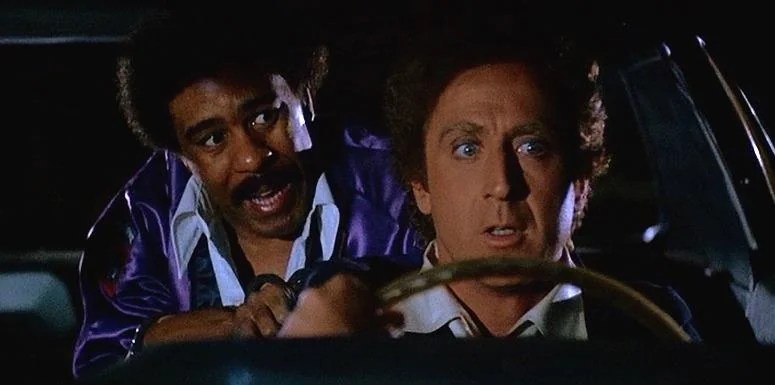
Before he pivoted more to comedy in his final years before his death in 2000, Matthau gave a witty spark of realism to movies like The Taking Of Pelham 123, Charley Varrick, The Laughing Policeman and Hopscotch, all fun spins on traditional crime tales. 

Matthau could be very menacing and played the villain a fair bit, in earlier gems like the Hitchockian Cary Grant starring Charade or the apocalyptic Fail-Safe. Hell, he even got into a fistfight with Elvis Presley in King Creole! 

His brief turn as a kind of action hero, though, often makes me wonder what if he’d stuck to that genre. The 1974 Taking Of Pelham 1-2-3 remains a great, tense ride, as gunmen take a New York subway train hostage and Matthau, an unimposing traffic cop, ends up caught in the middle. Like an early run at Die Hard, it’s one of the great “unexpected hero” hostage dramas. 

The Laughing Policeman from 1973 is one of those wonderfully sleazy downbeat San Francisco crime movies of the era, opening with a still-shocking massacre on a bus. Like its thematic cousin Dirty Harry, it’s filled with grim period detail, although IMHO it loses its way a bit with a sluggish and kind of problematic final act wrap for its central mystery.

In 1973’s Charley Varrick and 1980’s Hopscotch, Matthau leans on his comic scoundrel side to winning effect. His Varrick is a smartly confident bank robber in a zesty neo-noir, while in the underrated satire Hopscotch he’s a former CIA agent who goes rogue and basically devotes himself to trolling his former bosses in a globe-trotting hoot. 

But unlike Clint Eastwood’s Dirty Harry, Matthau is never a swaggering alpha male, although he can be grumblingly sexist and arrogant like many a ‘70s male movie lead.

In his brief run at action hero stardom, the 50-something Matthau of the 1970s still feels oddly fresh and novel. It was an era where many of the staid conventions of American films were being shaken up, and having a guy who looked kind of like a worn-out off-duty office manager playing thieves, cops and con men just worked. 

There’s still something soothing for me about watching Matthau’s unpolished nonchalance amble about in a movie, and I like to think in a parallel universe, Matthau-starring versions of gritty flicks like The French Connection and Chinatown would’ve blown my mind. 

Kamala-mania and looking for a sense of optimism in America again 

Hey, remember when we all thought the 2024 presidential race would be a dire, dull rematch?

The last two months or so of US politics has been a head-spinning whirl, and watching Kamala Harris take to the stage and deliver a confident, concise acceptance of the Democratic presidential nomination this week has capped off the frenzy nicely. 

I’ve been an American political convention tragic for far too many years, dating back to the Reagan era. They’re bombastic commercials and insanely wasteful propaganda, but they also do sometimes provide unforgettable moments. They’re a snapshot of where the country stands every four years, and how it’s looking ahead. 

The Republican convention with its Hulk Hogans and the Democratic convention with its Oprah Winfreys set the stage for November’s battle between Harris and Donald Trump. They also had very different vibes. For my day job I ended up exhaustively live blogging both convention speeches, and while some years people say the candidates are all the same, you couldn’t get much different than Harris and Trump in both approach and message. 

Even the speech lengths were a contrast – about 40 minutes for Harris vs more than 92 minutes for Trump (the longest convention acceptance speech of all time, apparently).

I admit my biases: I found the Democrat convention more hopeful, and more representative of the multicoloured, freedom loving America I want to believe in. There was simply a sense of joy, a word everyone from Tim Walz to Bill Clinton has attached to the Democratic campaign this year. I’ve watched lots of those endless state roll call of delegate votes at conventions, where dull guys stand up and say things like “From the great state of Idaho, home of the nation’s finest potatoes and the world’s biggest ball of twine, we proudly cast our 27 votes for….”

But I have never, ever seen something at a convention as effortlessly silly and cool as Lil Jon introducing Georgia’s roll call at Chicago this week:

I have to admit I’ve watched this clip a good dozen times because there’s something so overblown and yet quintessentially American about it all. A bit irreverent? A bit egocentric? Sure. But also, it was fun as hell. “Fun” is a vibe that seems sorely lacking in American politics the last eight years. 

In my political lifetime, the candidate who was more optimistic and, for lack of a better word, cheerful, has typically won. It’s not even a party thing – Reagan’s sunny demeanour overwhelmed Jimmy Carter, as George W. Bush’s down home aw-shucks vibe took down Al Gore and John Kerry’s patrician sternness. Bill Clinton’s good cheer beat the first President Bush while Joe Biden’s warmth edged past Trump in 2020. Joe Biden, for all his merits, was a shaky deliverer for the joy vibe these days, while his vice president seems to have easily stepped up to the task. 

I mean, I’m in a bubble. We’re all in bubbles, really, so the world I’m seeing maybe isn’t what a Trump supporter in Mississippi is. But, it’s hard to envision the Republican nominee smiling so easily, playing baseball, petting a dog, embracing his children, all those everyday things that make up most American lives away from the echo chambers. 

I have lost a lot of faith in my home country these last few years, to be honest. Perhaps it’s being an American who’s lived abroad nearly 20 years now, but I often felt like I didn’t recognise it anymore. The whitewashing spin of what happened January 6, 2021 and the ensuing forgiveness and rehabilitation of Trump by too many people who should know better was the final straw for me. I felt baffled. 

I don’t make firm predictions about US politics anymore, because it’s too easy to get your heart broken. I know what I would like to see happen in November, but I’m very aware that it could go either way still. I don’t think America would simply die if Trump was re-elected, after everything we’ve seen, but what a big bloody wound that would be.

I saw a lot of optimism this week that I’d like to believe in myself. A sense of hope might go a long way in this election, particularly when the other side seems mired in conflicting messages and a consistent willingness to bemoan everything, blame everything on other factors and make apocalyptic prophecies. 

I sure would like to see something to chip away at the endless tension and anger infecting so much of America these days, although you might only get there by deleting the internet and the algorithm-fuelled outrage machine of social media, to be honest. 

In the end, what sways things might be this – do you want a smile or do you want a glower? I just want my country of birth to be a place again that looks forward, rather than backward, one where a sense of fair-minded kindness drowns out the endless hate. Will we get there? Stay tuned. 

Big Star and how to make a song you never get sick of

I’ve loved the sounds of Big Star and Alex Chilton for years, and the simple glittering heartbreak of their best songs still gets me with every single listen.

How often can a song do that after dozens, maybe hundreds of spins?

Those Big Star songs shimmer, 50 years on now after the fall 1974 recording of what ended up their final album, Third/Sister Lovers

I can’t listen to the ringing chords of “September Gurls”, without summoning up visions every teenage love affair there ever was, of the burning intensity that, maybe, your life can never quite reach again after 18 years old. The words are deceptively simple – “September girls / Do so much / And for so long / ‘Till we touched.” But the vibe, man, the vibe – that’s eternal.

The genius of Big Star was the utter lack of rock star swagger in their boy-loves-girl pop, a kind of bemused casual sincerity that never really seems to age. Their feelings tapped into the universal, girls, cars and nights of confusion.

Take “Thirteen”, written by Chilton and poor doomed Chris Bell, who left the band after their first album and died in a car wreck at just 27. A fragile and trembling little song, in its first little conversational couplet it sums up a whole world of teenage hopes and dreams – “Won’t you let me walk you home from school? / Won’t you let me meet you at the pool?”

A buried gem for me has always been “Life Is White,” which contains the entire frustrating agony of a breakup in its simple words – “Don’t like to see your face / Don’t like to hear you talk at all.”

Written down, their words don’t exactly leap off the page, but between Chilton and Bell they feel real, in a deeper way than the stadium rock and pompous prog lyrics of the era. 

The true art of Chilton’s lyrics was their plain-spoken language. “Hanging out / down the street” is hardly Shakespeare, but it’s a word picture that worked so well that That ‘70s Show used it to be the theme song for the entire decade. (Still annoyed they drafted Cheap Trick to cover it, though.)

Of course, part of Big Star’s charm is their found mystery – barely registering while they were briefly a band, three albums and done, and only slowly growing in cult power years later. (I first discovered them myself in the early 1990s, when a series of Rykodisc CD reissues hyped up this old forgotten cult band from Memphis, an hour’s drive up the road from where I was going to college. And for once, a band lived up to the hype.) Everybody loves to think they’ve discovered a hidden gem, and Big Star was one of the shiniest for a power pop lover back in the day. 

I’ve written about my love for Alex Chilton’s epic disheveled and messy solo career that unspooled post-Big Star before his sadly early passing in 2010, but while Big Star were sometimes low-fi and unadorned, they were never sloppy. They meant every word, while Chilton in later years would kind of lean into a debauched troubadour vibe, singing songs with a wry smirk. 

I sometimes think that Chilton maybe felt he’d perfected pop music with Big Star so much that he became bored by it, that he never wanted to take a song quite so seriously again. 

There’s a reason people still listen to Big Star more than 50 years after the boys from Memphis started doodling out songs. They strike a chord, and every time I hear that clarion call of “September Gurls” glittering out of the speakers, I hear it ringing still. 

I’m still bummed we don’t get any more Adrian Mole

For a little while there, I was sure I was Adrian Mole. I got a copy of The Secret Diary of Adrian Mole, Aged 13 3/4 from my parents after they took a trip to the UK, and it was one of the best gifts I ever got. 

I started reading Sue Townsend’s Adrian Mole books when I was about 13, the same age as the fictional Adrian, and while I wasn’t quite as awkward and pretentious I was probably a close second. Adrian’s chatty diaries spoke to me, of his dreams of literary greatness, quickly rising and falling passions and his unspeakable social awkwardness. While I was a kid in sunny middle class California and he was a battler in Thatcher’s grey Britain, I felt a kinship with Adrian.

Adrian didn’t become a literary superstar, but over the course of several books he’d become a chef, a TV personality, an activist, a bookstore worker and more, surrounded by a cast including his dysfunctional parents, his strange romantic pairings and eventually his children, and always, the love of his life Pandora, his teenage crush grown up into a headline-grabbing Labour MP. 

Townsend followed Adrian well into the next century in titles like Adrian Mole: The Cappuccino Years and Adrian Mole And The Weapons of Mass Destruction. The satire got broader on topics like the Gulf War and the books generally got a bit less realistic compared to the early teenage angst years, but they were still fun, with Adrian’s distinct combination of snobbery and naivete always amusing. 

Townsend, long in failing health, died in 2014. The series came to a halt with Adrian Mole: The Prostrate Years in 2009, as Adrian’s marriage breaks up and he discovers he has cancer. 

It ends on an optimistic enough note, with Pandora once again popping into his life and a reminder in its final pages that no matter what, life keeps moving along: “Diary, my first thought that I couldn’t possibly be a grandfather, I was only forty years old. My second thought was that I wanted to live long enough to see this child grow up. I had a lot to teach it.” 

There were rumours Townsend was working on another book but 10 years after her death nothing has ever been published. I miss Adrian Mole a lot. 

There’s something about following a character over the span of a lifetime that makes a book really come alive. I would have liked to see Adrian continue to grow old and cranky and what he would have had to say about Brexit, Trump, Covid and social media. (I’m quite certain he would have fallen for every conspiracy theory there is, actually.) The Secret Diary of Adrian Mole, aged 57 3/4? I’d love to see it. 

A book series that ends too soon feels a bit like an entire world has been lost. 

The late Octavia Butler was one of our most fascinating sci-fi writers and futurists before her untimely death at just 58. Her “Earthseed” series – Parable of the Sower and Parable of the Talents – follows a young Black empathic woman in an America that is rapidly falling to pieces. Written in the 1990s, it’s gained a new audience in recent years because so much of it seems uncannily prescient  – beginning in 2024, it features climate change disruptions, violent inequality, and a presidential candidate whose slogan is “Make America Great Again” (!!!). The two books are excellent reading, and a third book, “Parable of the Trickster,” would have taken the series into the stars, but got mired in writer’s block before Butler died. The whole Earthseed series was building toward leaving Earth, so it’s a real loss we never got to see what Butler had in mind. 

I worry about projects where the driving force is aging as they strive to complete it, like Robert A Caro’s magnificent epic biography of President Lyndon B. Johnson, which is four volumes and 3000 pages in and one of the finest biographies I’ve ever read. Caro has been working on the fifth and final volume covering the final decade of LBJ’s life ever since the last one came out in 2012, but, he’s also now 88 years old. It seems selfish to root for someone to stay with us so you can read a book, but that’s how good Caro’s series is. I’m sure even if Mr Caro does pass away, as we all must in the end, the final LBJ book will come out in some form or another, but us Caro-fans are still a bit nervous. 

And unlike friend Bob, I have to admit I’ve kind of long given up on George RR Martin ever finishing the Song Of Ice and Fire series, going on 13 years now since the last book, long enough that the entire TV series adapting it came and went. The dragons were cool, but I have to admit Adrian Mole always spoke to me a lot more than Tyrion Lannister. 

There’s many a movie or music project that have ended up in “development hell” and never eventuated but it’s not quite the same as a book series. Unfinished book series seem almost like a personal loss, perhaps because you invest more of yourself in thousands of words following beloved characters, and leaving the characters or subjects hanging just reeks so strongly of the endless void.

An empty page is both promising and terrifying, and it’s a loss when you know there was surely more to come, if only things had been a bit different.

Flashback 1994: Life in New York City, part two – the daily struggle 

Moody black and white shot of Manhattan, 1994, by someone who had clearly seen Woody Allen’s Manhattan a few too many times.

Part one of this thrilling blog post here!

I had always wanted to live in New York City. I’d seen Woody Allen movies, I’d been addicted to Seinfeld, I’d watched Ghostbusters and King Kong and Do The Right Thing. 

But actually living in New York City was a wake-up call to a young Mississippi journalist. 

The internship at Billboard magazine was great fun, but living in New York City as a perpetually broke 22-year-old? It was a bit scary. I was put up at New York University dormitories in the East Village, as part of my internship. I was stuck in a utilitarian multi-bedroom apartment with a few other starry-eyed interns, although my actual roommate ended up being a friendly Black 40-something military veteran. I didn’t spend a lot of time in my room, really – there was too much to see and do. 

My late dad was very smart with how he taught his spendthrift son to spend money, although it took me years to realise this. He’d never let me starve to death, but neither would he give me an infinite line of credit to spend on books ’n’ CDs and delicious knishes.

So with the paltry paycheck from Billboard and a limited allowance from Dad, I got by. I ate an awful lot of Top Ramen and peanut butter some weeks, as my bank account regularly dropped to two figures. Truth be told, I couldn’t imagine how one could actually afford to live in the city without being a millionaire. 

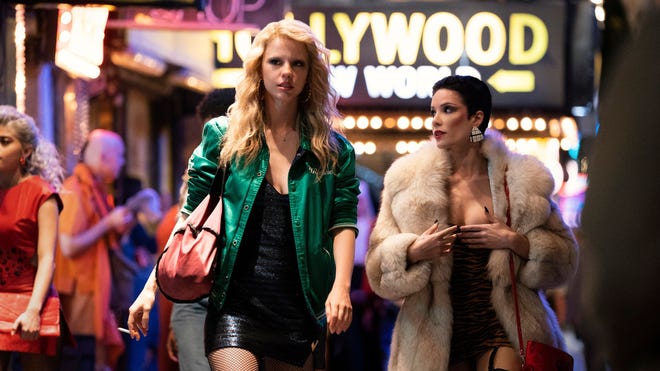
Times Square, where I went to work each day, hadn’t been quite so gentrified then, and was a buzzing, sleazy place with wide-eyed tourists mingling with businessmen, hookers and panhandlers. Cheap trinket shops mixed with fancy Broadway theatres and bizarre shadowy tombs showing all kinds of porn. 

In those pre-digital, pre-streaming glory days, New York was a wonderful arcade of eccentric gritty book stores, record stores and junk shops. I discovered the amazing sprawling Strand Bookstore not a few blocks from my dorm room and fell in love in the intense way that only a really good used bookstore can make you feel. 

I spent a lot of time in the East Village, where a dirt-poor intern on his days off could just spend the days people-watching in Washington Square. I sat listening to a cassette of Elvis Costello’s Get Happy on my Walkman and reading a paperback of cheap Chekhov plays and imagining how cool I must be. Sitting on the edge of the fountain I’d see people of all races and colours and lifestyles washing by, a far cry from college in rural Mississippi. 

The city could be scary at times, but I was six foot two, able to fake an intimidating stare for strangers and knew enough not to take dumb chances. 

The author, far right, wearing what history would judge, poorly, as quite possibly the most incredibly 1990s bohemian outfit of all time – tie-dyed shirt, black vest and most likely cut-off jean shorts as well.

But I also had friends there – pals I’d made in the small press community I got to hang out with for the first time – jumpin’ Joe Meyer, trippy Tim Kelly, amicable Amy Frushour and several more who helped guide me around the crazy, confusing labyrinth of New York. We ate cheap Sbarro’s pizza and wandered the endlessly fascinating streets doing cheap things and visiting museums. I marvelled at the World Trade Center, not knowing it’d be gone in seven years. 

It was a summer that felt filled with weird coincidences. My oldest childhood friend happened to be touring the country post-college and we met up and climbed the Empire State Building together. On a busy random Manhattan street corner, I literally ran into an acquaintance from Mississippi. On a train heading upstate, the woman sitting next to me was a young writer I knew at Billboard.

I kick myself today over missing some things – never made it to the Statue of Liberty, never got to Harlem or Brooklyn, didn’t have the money to bounce to all the hip clubs and shows that were going on all around me. I was 22, and I didn’t know all the things I could have been doing. I’m sure I missed a lot. 

In hindsight, I wish that maybe I’d seen more and done more in my time in New York – not knowing that 30 years later, having moved to the other side of the world, I’d still never have returned there. Maybe I shouldn’t have bought so many dog-eared paperbacks at the Strand and bought so many CDs at St Mark’s Sounds. But heck, that was part of the experience, wasn’t it?

I was young and naive and the city was a playground of novelties. But it was also exhausting in a certain way, and after three months I longed for a little Mississippi calm and the sound of crickets on a humid Southern night. I didn’t become a seasoned, sarcastic Manhattanite like I’d imagined I might, but I had a taste of the city that never sleeps. That was enough, and 30 years on, unforgettable.