I never really got over my Beatles phase

My Beatles phase has never really ended.

Like all of us, I go through phases. One week I’ll be super-into the films of Billy Wilder, or I’ll be reading all of Percival Everett’s novels I can find or all of the Daniel Warren Johnson comics I can hoover up, and the next week I’ll be all about exploring the discography of Hüsker Dü. 

But one phase that never really ends for me? That Beatles phase. Sure, it waxes and wanes, I might go a few weeks without listening to or thinking about the Beatles, but in the end, as the man said, I get back, get back to where I once belonged and dive back into figuring out the Beatles. 

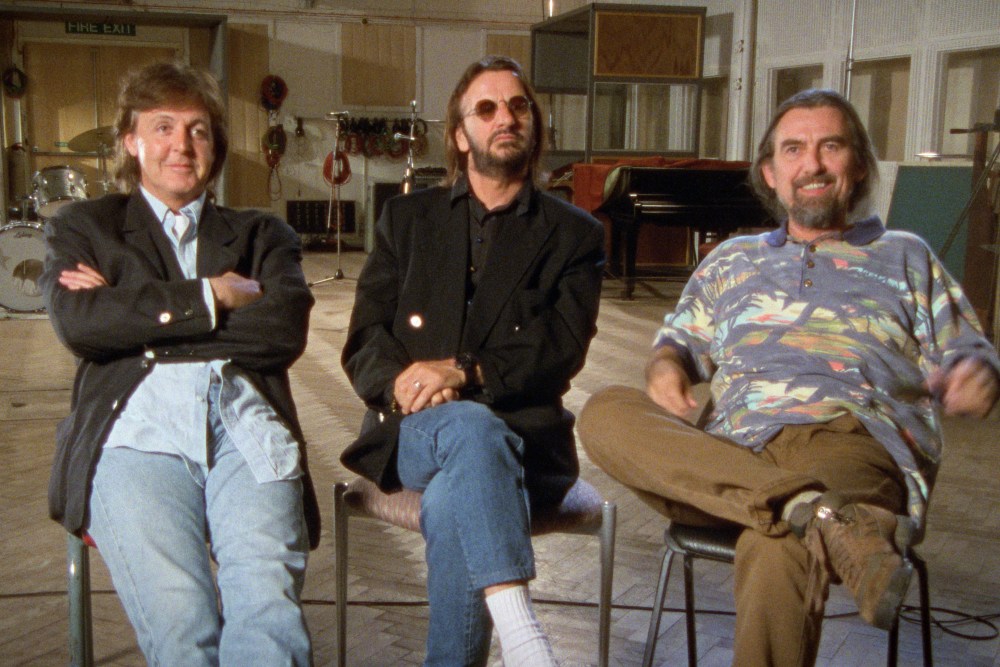
There’s been a flood of Beatles content lately, so I’ve been heavy in a Beatles phase the last week or two again – rewatching the terrific 1995 Anthology documentary for the first time in ages now that it’s made its way to streaming, and listening to the latest grab bag of odds ’n’ ends, Anthology 4, all while reading a very enjoyable new deep dive into the great Lennon-McCartney partnership, John & Paul: A Love Story In Songs by Ian Leslie. 
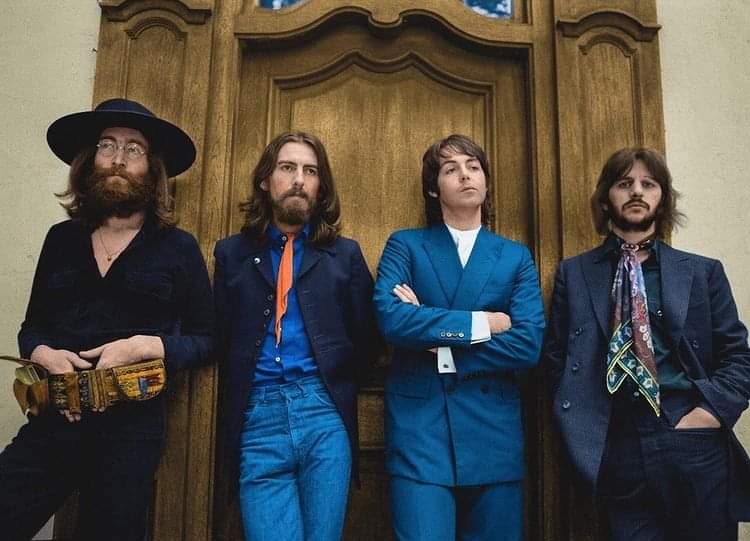
The thing about the Beatles is, like anything that starts to pass into the realms of mythology, you never really get to the bottom of it all. I consider myself a 7 out of 10 on the scale of Beatlemania – I’m not one of those guys who can tell you who Stuart Sutcliffe’s grandparents were or what John Lennon had for breakfast the day they recorded “Penny Lane.” 

There’s 213 or so “official Beatles songs” plus all the infinite demos, jams and alternate takes that have been pouring out the last few years in super fancy special editions. Recently I came back to the mildly obscure track “Hey Bulldog,” and really listened to it – the thumping piano intro, McCartney’s sturdy bass line, the giddy sneer Lennon gives the lines “What makes you think you’re something special when you smile?” It felt like a whole new song suddenly bloomed to me even thought I’m sure I heard it dozens of times before. How did this happen? 

My parents weren’t big music listeners – about all I can recall in the way of “rock” music in the small vinyl collection was some Peter, Paul and Mary – so I didn’t really start hearing the Beatles in childhood, but I was the perfect age to discover them when their albums first started coming out on CD during high school and Generation X got Beatlemania. The Past Masters collections in particular cracked my head open navigating the band’s stunning evolution from poppy singalongs to psychedelic freak-outs. I still can’t quite fathom how they went from singing “Love Me Do” in the Cavern to recording “Tomorrow Never Knows” in less than four years. 

There’s a spark of joy that ignites in me whenever I truly listen to the Beatles, and I think the central mystery at the heart of it all is how these people, these scruffy rough kids from Liverpool, exploded to change pop culture in their decade or so of existence. We want to get inside these songs, to find how creativity itself works. The magic of creation remains the greatest magical mystery tour of all, and in an age where we’re increasingly served up algorithmic bait, fluff and trivia, the rough-hewn analog invention of Paul, John, George and Ringo still feels bottomlessly appealing to me. 
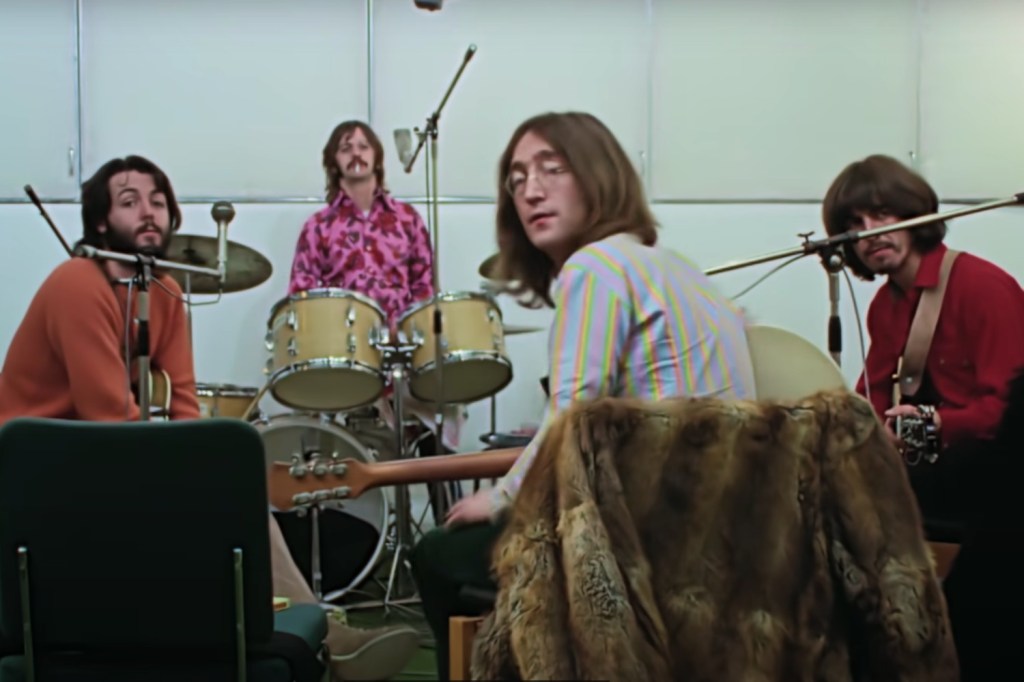
This is why I never really end my Beatles education, because even a bit of a cash grab like the fourth Anthology collection, with its surplus of pretty rote instrumental tracks, can grab me by digging up the gloriously unhinged take 17 on “Helter Skelter.” I sucked up the unabashed nostalgia of “Now And Then” and I dug the rhythmic hypnotic excess of Peter Jackson’s sprawling Get Back miniseries.

I’ve listened to Abbey Road or Revolver a hundred times a hundred times over the years and yet I can still find tiny new scraps of newness in those well-worn grooves. Yep, like everything else, the Beatles have become a content-churning factory in 2025, and, that new “final” ninth episode of Beatles Anthology probably wasn’t truly necessary, yet the little fragments we get of 50-something Paul, George and Ringo (30 years ago!) jamming and messing about with John’s sketchy demos on “Free As A Bird” still feel true despite the glossy sheen of Disney’s content farming. 

And so it’s gone, over the years – I keep coming back to the Beatles, and discovering how much I still haven’t really paid attention to before. 

The very last words Ringo sweetly says as the nine-hour journey of Anthology winds down are, “I like hanging out with you guys.” Me too, mates. 
The Beatles: ‘Now And Then’ and in the end, the love you make

The other day I woke up, fell out of bed, and listened to a new Beatles song. 

“Now And Then” is being billed as the “last Beatles song,” and with Paul McCartney and Ringo Starr now well into their 80s, it probably is the final time we can say that. Resurrected from John Lennon’s demos circa 1977 and mixed with some George Harrison 1990s guitar thanks to some very fancy technology, here we have all four Beatles, two long gone, together again in a Frankenstein miracle of technology and persistence.

But is it any good? We live in a world of boundless hype and unnecessary reboots, constantly perched on the edge of expected disappointment, and yet, “Now And Then” is a beautiful, fragile thing that I can’t quite get out of my head. 

Of course, it’s the Beatles, so the song has been swamped with an avalanche of merchandise, fiery hot takes and analyses just like this one. All the to-do threatens to overwhelm what is at its heart a delicate, sweet little song. 

Like two other Lennon demos “Free As A Bird” and “Real Love” that were revived for the 1995 Beatles Anthology series, it’s Lennon during his domestic hiatus, writing simple, basic lyrics about home and happiness with none of the surrealist whimsy or angry edge that marked his top Beatles works. So it’s flimsy, sure.

And yet, and yet, I can’t listen to it without feeling a swell of emotion. The Beatles ultimately have always made me happy whether it’s the spunky energy of “Love Me Do” or the psychedelic swirl of “I Am The Walrus.” A Beatles song makes me glad to be here in this world, whether it’s a pop song, a sad song or an awfully sappy song (sorry, “Let It Be.”) 

The lonesome piano chords that kick off “Now And Then” give the song an elegiac feel, and Lennon’s ghostly voice is mournfully hushed. It could be a dirge, and I’m sure some folks see it that way, but I look at it as a fond farewell. 

To hear Paul’s 81-year-old voice kicking in to harmonise with Lennon, dead now for more years than he was alive, is to feel the endless pull of time itself. 

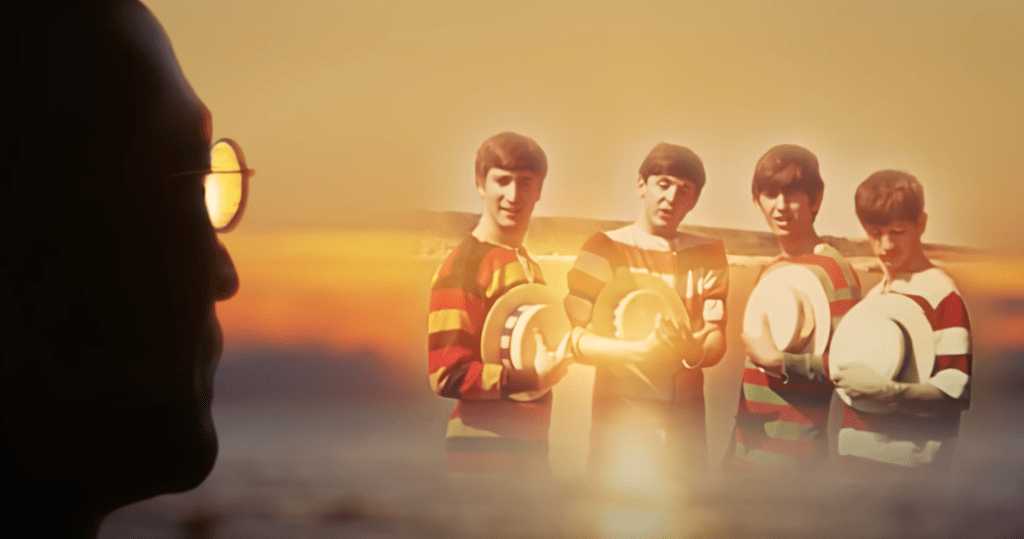
Sir Peter Jackson’s video for the song is faintly ridiculous at first, with macabre mixing of young John and George into footage of aged Paul and Ringo, old and young Beatles capering about, but it’s also a little charming and silly, as Beatlemania always was.

 “And if I make it through,” John sings, and you know, in the end, we all hope for that, don’t we? We keep the people that leave us with us, as long as we’re here. Paul has made a love letter to the past, out of the fragments of his dead friends’ leavings, and sure, it’s big business and all, but it’s also the Beatles. I cannot surrender my love of the Beatles to the binary “like/dislike” button and algorithm. I’m simply grateful for whatever we get. 

At the end of Jackson’s video we see those young, gorgeous Beatles on stage taking a bow, then slowly fading from the scene. You’ve got to have a hard heart not to feel something then. One day far too soon for any of us, there will be no more Beatles.

“Now And Then” is raw sentiment and lacking the mad fire of invention that made the Beatles change the world, true, but I kind of love it all the same. Yeah, yeah, yeah. 

The Beatles Get Back, and why it’s worth slowing down sometimes

Who knew that watching nearly 8 hours of the Beatles noodling around in a studio could be so addictive?

Yes, Peter Jackson’s Get Back documentary is long. It’s rambling and has very little “plot” to speak of. But as a window into the creative process of one of the greatest bands of all time, it’s absolutely amazing to watch hours and hours of footage unearthed during the making of the Let It Be album

Watching the crystal-clear footage of the Fab Four and their friends unspool, I felt like I was watching a time machine portal open up in front of me. It’s immersive and both poignant and celebratory for Beatle-maniacs – which, to be clear, is an awful lot of us. 

Let It Be isn’t even my favourite Beatles album by a long shot – I find it too polished with Phil Spector’s later orchestral additions, Paul McCartney’s sappy side a little too prevalent and John Lennon’s surreal wit and bite mostly missing in action. Eight hours on the making of Sgt. Pepper, good god, yes, but Let It Be? The album that took so long to put together that it came out after the band’s actual final album, Abbey Road?

I’ve still never seen the original Let It Be movie, a mere 80 minutes long, but I’ve seen enough segments from it to get the idea it’s viewed as a dour portrait of a band’s dissolution, the end of a dream. Jackson dove into the 60 hours or so of video taken at the time and crafted an entirely new take on the sessions. Contrary to some of the hype, Get Back doesn’t rewrite history – but it expands our view of it. 

It’s being hyped hard by the Disney Corporate EmpireTM as entertainment for all, but Jackson has rather sneakily made what almost is a Beatles art film. Like one of Andy Warhol’s endless panoramas of the Empire State Building or people sleeping, Jackson’s slow, relaxed pace with Get Back forces us into its own rhythm, the world of jobbing musicians trying to find the right chord or lyric. For a society used to quick fixes and instantly accessible content, that might seem too plodding. Others of us welcome the chance to unplug a bit. 

The problem with the making of the album Let It Be is clear from the start – the Beatles are wiped out, exhausted and grumpy, except for Paul, whose incessant cheerleading in the first episode never stops. The Beatles had already conquered the world a few times over. Lennon’s zoned out with Yoko, my favourite Beatle George is clearly filled with his own quiet anger, and Ringo is… well, he’s Ringo. Get Back starts with a dark time for the Beatles, but as it unfolds and the group starts to come together, you appreciate their rich history – these kids, still not even 30, had been through so much together already. 

Get Back encourages us to slow down, to zone out like Yoko Ono reading magazines, to get lost in the minutiae of Paul and John working out lyrics, or Ringo smoking cigarettes. To take in fully the glorious fashions of Glyn Johns, the slow creep of George’s facial hair over the weeks it chronicles, the endless cups of tea and toast. Nobody is staring at their phone during the lulls in Get Back, obviously, which now more than ever makes it seem like a portal into a very different world. A musician’s life isn’t all drugs and parties and live gigs, and the leisurely stroll through a few weeks in the life of the Beatles demystifies them a bit. It rescues them from that gold-plated celebrity icon status a bit to see them reading the morning papers, having morning chit-chat about what they watched on the telly the night before.

And many times over Get Back‘s languorous eight hours, you have sudden moments of sheer magic, like watching a song you’ve known for practically your whole life come into the world for the very first time: 

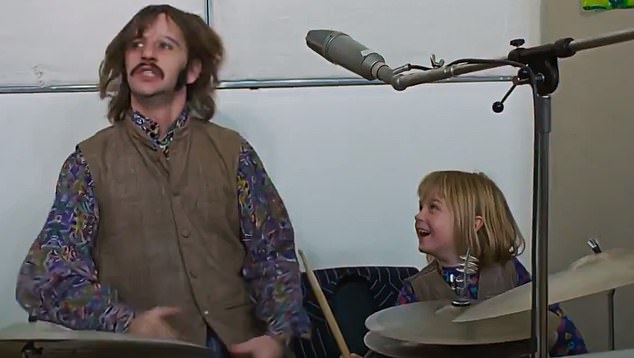
For Beatlemaniacs – and yea, we are legion – it’s akin to watching the holy grail be forged to see songs like “Get Back” or Lennon’s “Jealous Guy” slowly take shape out of a few strummed chords. Perhaps for me the most beautiful moment was watching Ringo shyly debut his goofy little “Octopus’ Garden” to George, and the two of them amicably noodling away, shaping it. They were mates, having a go at making some art. Or a scene where Paul’s adopted daughter Heather joins in with the band jamming, playing like any little kid would, but with THE BEATLES. Or any scene when Billy Preston bops into the room, bringing a welcome energy and fanboy’s good cheer. Or any one of the dozens of song fragments, covers and unfinished works that Get Back reveals. 

Time haunts Get Back, right from the earworm title song’s chorus – “Get back to where you once belonged.”  There is a wistfulness to it all, watching these vividly alive people and knowing how many of them died too young – Lennon and Mal Evans by gunfire, Harrison and Linda McCartney to cancer.  The documentary is so immersive that when you lift your head out of it, you feel like you’ve lost something and some time that’s irreplaceable. 

Get Back is long, maybe too long for many, but I could also have watched it forever from the vantage point of weird old 2021, hoping that somehow, from 50 years in the past, the Beatles might help everyone in the whole world get back to where they once belonged. 

Why I’m sorry I ever laughed at Yoko Ono

My first memory of Yoko Ono is of making fun of her. 

It’s unfortunate, but I remember listening to John Lennon and Yoko’s album Double Fantasy many years ago with friends, long after John was shot and killed. We all loved “Watching The Wheels,” “(Just Like) Starting Over” and the other Lennon tracks, but the Yoko ones that alternated with his were… jarring. 

Yoko’s “Kiss Kiss Kiss” slammed open the barn doors after the laid-back charms of album opener “Starting Over.” What was this weird, defiant prancing melody? Yoko suddenly starts screaming “Why death? Why life? Warm hearts / cold darts” and holy moses, what a mood-changer. When the song dissolves into a cackling chorus of Yokos moaning and groaning and ululating their way into a mock orgasm, we couldn’t help it – everyone listening burst into laughter. (To be fair, it is a kind of funny, chirpy song.) 

And yet. 

I keep coming back to Yoko’s oft-maligned solo work in recent years, much of which has that same fierce, uncompromising power in that same way “Kiss Kiss Kiss” bursts into the room. Yoko, more than 50 years after the Beatles ended, still gets people going. She didn’t break up the Beatles, of course, who were going to split no matter what happened. But for far too long, she’s been painted as the villain in their story. 

Yoko turned a lot of people off with the defiantly experimental Unfinished Music No. 1 and No. 2 she did with John before the Beatles even broke up. The fact the couple posed stark nekkid on the cover of Two Virgins didn’t help, and to be honest, these two albums are very odd, hard to listen to, noodling noise compared to what both did later. Appearing with John live in the late 1960s, her howling anarchy put a lot of people off. While it’s definitely intense and abrasive, 50 years on the catharsis of “Don’t Worry Kyoko” feels passionate and raw – Yoko went for it. She didn’t care what they said about her sex, her race or her boldness – she just yelled. 

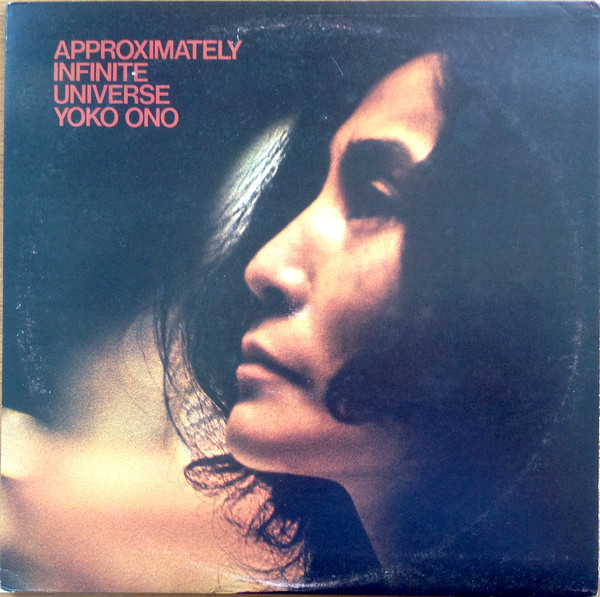
The controversy around her shaped much of the reaction to Yoko’s own solo albums of the 1970s like Fly, Approximately Infinite Universe and Feeling The Space. They’re less experimental than her most-out there stuff (like recording her own miscarriage), and as a result they hold up pretty well, marrying compulsively offbeat grooves with her infinitely flexible voice, a yowl one second and a croon the next.  I don’t argue that all Ono’s work was great – lyrics generally aren’t her strong point, and few singers could make lines like “We’re all blind and crippled mates / Frustrated would-be presidents of united states” work. 

These albums still dazzle with as much energy and invention as the great krautrock records of Can and Kraftwerk, her howling as passionate today as Kim Gordon and Courtney Love’s would be decades later. Listened to today, a propulsive stomp like Fly’s epic trance “Mindtrain” sounds a lot more modern than some of the stuff John, Paul and George were doing in 1971.  

Yoko pushed Lennon in uncompromising directions too, although for the most part his ‘70s work was actually far less inventive and more nostalgic than Ono’s. She and Lennon released Plastic Ono Band albums with almost identical covers and titles in 1970, but while his is part of the canon now with super-deluxe reissues, her own angrier, rawer Plastic Ono Band is somewhat forgotten.

From the very first song, a chattering, shrieking psych-freakout called “Why”, it’s an in-your-face statement that even manages to make Lennon’s stark and powerful “Mother” opening his own album feel a bit restrained. In an era filled with Carpenters and ABBA, Yoko was singing song titles like “I Felt Like Smashing My Face In A Clear Glass Window,” “Angry Young Woman” and “What A Bastard The World Is.” 

Yoko’s 88 years old now and John’s been gone for 40 years, but she’s still sharing her art and her music – her latest, Warzone, was released when she was 85! Listen to 2014’s Between My Head And The Sky, which starts off with Yoko’s patented screeches and moans packing way more power than a senior citizen rocker should. 

In everything, Yoko goes for it. Sometimes that “it” can be a bit much, but nobody would ever accuse her of holding back onstage. 

Yoko is a pioneer shunned in her own time – imagine in 1970 a Japanese woman with a very big voice daring to demand her place at the side of one of the most famous men on the planet, on doing her own creative work wherever it led and seemingly never, ever embarrassed of being who she was?

Yoko had to fight racism, sexism and Beatle fanboyism all of her life, and it still lingers to this day. The criticism back in the day was that Yoko didn’t know her place. Yoko always knew her place. Yoko’s even been pretty big in the clubs in recent years), and her spirit of independence, defiance and confidence can still be found everywhere in 2021 among brave young artists. 

Sorry we laughed at you, Yoko. 

They were young, they were savage, they were Beatles

There’s so much I’d do if I had a time machine, but whatever happened, I know I’d have to pencil in one trip to see the Savage Young Beatles, tearing up clubs in Hamburg and Liverpool 60 years ago.

Like most people who were exposed to the Beatles long after their breakup, I first grew to love the hippie Beatles – “Yellow Submarine,” “Sgt. Pepper’s,” “Lucy In the Sky With Diamonds.” As I dug into their discography, for an awful long time I dismissed the early years as pleasant but slight pop songs (OK, “She Loves You” bangs, though). I felt that it was when the Beatles got weird that they really got cool.

But as I got older, I started to appreciate the amazing tight craft those young Beatles brought to everything they did. The covers they did of old Motown hits weren’t just disposable stuff they did as they learned to write songs themselves, they were the foundation for everything that came after. And boy, the more you read about those Savage Young Beatles, you realise how hardcore they were, a leather-jacketed, hard-living group of Liverpool toughs who earned their stripes gigging in impossibly difficult conditions in Hamburg, Germany and back home in Britain long before they appeared on Ed Sullivan’s show and kicked off a global revolution of sorts. It’s almost impossible to actually hear now what those shows – before the albums, before stardom – were really like, but you can imagine. 

I recently finished reading Mark Lewisohn’s fab “All These Years: Tune In,” the first of three planned mammoth Beatles biographies and one that only goes up to the end of 1962, with John, Paul, George and new member Ringo poised on the edge of a wave that would catapult them into history. It’s an immense, 1000-page or so deep dive into everything that went into creating the Beatles, and it brings their hungry young days and childhoods into vivid life. You can almost smell the sweat dripping off the walls of the legendary Cavern Club, or the energy of the booze-soaked, violence-filled German clubs they pounded away in. The Beatles would play away in the Hamburg bars and clubs for hours on end, sleeping in gritty dives and relying on uppers and the boundless energy of youth to get through it all. These are the Beatles just before they adopted the Beatles haircuts, before Stu Sutcliffe died and Pete Best was fired, when they ran out of songs to play and vogued, vamped and jammed to get through the nights. It was the apprenticeship that gave them the skills to do everything after. 

And boy, wouldn’t it have been something to ride that time machine and see one of these seamy Hamburg gigs with the benefit of hindsight, to get right up close enough to see teenage George’s fingers hit those chords and the cigarette-soaked aroma of John and Paul’s voices? Few people would ever see the Beatles up this close and raw again after 1962. It’s an era that’s been explored in movies like the great, underrated Backbeat and reimagined in books, but it’s also one that is mostly left up to the imaginations. There’s only a few recordings of The Beatles late into their Germany gigs, the main one being The Beatles Live! at the Star-Club in Hamburg album from December 1962. The sound quality from old vinyl records of this gig are absolutely terrible, but thanks to modern technology there’s now a cleaned-up, remastered “Executive Version” of the show you can hunt for online that makes it probably as clear as we’ll ever get. It’s probably not quite what the Beatles at their pills-addled, sleep-deprived rawest would’ve been like, but it’s at least a taste. There’s an insanely amped-up, crazed version of “Roll Over Beethoven” that sounds something like The Damned mixed with Hüsker Dü. 

Still, though, wouldn’t it be something to be a fly on the wall in a dim, dark Hamburg club 60 years ago, to see a Beatles that I like to imagine sounded more like the Stooges than “Yesterday”? They were savage and young, and they’d never ever be like that again. 

Why George Harrison is my favourite Beatle these days

Asking someone about their favourite Beatle is always a kind of litmus test. Are you more of a John, or a Paul? A George or even a Ringo? 

But sometimes, the Beatle you love changes. When I was a younger, angrier man, like an awful lot of people, John Lennon was my favourite Beatle. I listened to the stark anguish of Plastic Ono Band a lot and thought that “God” was like, deep, man. I still love that album and I still love John Lennon, but due to his untimely death, the story of John Lennon’s solo career will always feel a little unfinished to me. 

The first Beatle whose solo album I actually bought was George Harrison’s 1987 chart-topping comeback Cloud Nine, with its kitschy-yet-cool bop MTV-friendly “Got My Mind Set On You” all over the place in those days. The rest of the cassette tape I scrounged my pennies together to buy was pretty good, too – it was an optimistic yet contemplative groove, smooth with an ‘80s sheen thanks to producer Jeff Lynne. “When We Was Fab” was a colourful ode to the Beatles whose own work I was just beginning to discover thanks to the CD reissues of their albums, while songs like “That’s What It Takes” and “Fish On The Sand” summed up George’s vibe – searching, yet determined. 

It’s twenty years now this year since George left us at the too-young age of 58. These days, I find myself turning to George’s solo work far more than any other of the Fab Four.  

Harrison always seemed to be looking for something in this life, and he found it mostly in the embrace of Indian music and an intense spirituality that in some folks’ view helped bring world music to a bigger audience, but other people felt it turned him into a humourless scold. 

1970’s All Things Must Pass is widely regarded as the best Beatles solo album, and it’s still a masterpiece of symphonic, elegant and yet deeply personal pop bathed in Phil Spector’s “Wall of Sound”, with Harrison showing once and for all he wasn’t “just” the third Beatle, but an incredible songwriter in his own right. It’s incredibly lush, carrying on all the sweeping soundscapes the Beatles pioneered on albums from Revolver on to Abbey Road and it’s something that few of the other Beatles’ solo albums ever were – epic in its ambition. 

Yet when you peak with your first solo album and were once in the biggest band of all time, it’s hard not to have everything else afterward seen as a letdown. And no, Harrison never quite equaled All Things again, but he still put out some stellar solo work, including its immediate followup, Living In The Material World, which continued to explore George’s obsessions – inner peace, giving up your anger, and moving on (and occasional cranky rants, like “Sue Me Sue You Blues”). 

The rest of his albums never quite get as noticed now, but even the weakest has a few good tracks to recommend. 1974’s exhausted-sounding and rushed Dark Horse might be his nadir, but an obscurity like the underrated 1982 Gone Troppo has a relaxed, chilling on the beach vibe, harking back to the doo-wop and early rock and roll that the Beatles grew up adoring. The later albums George Harrison and Somewhere In England also marry George’s wry humility with hummable tunes. As he became mired in lawsuits and battles with his record labels, George’s solo career was mainly a product of the 1970s. After 1982, he only released one proper album, Cloud Nine, and the groovy collaborations with the all-star Travelling Wilburys. His long, long in the works next album, the valedictory and blissful Brainwashed, came out in 2002 after his death. 

Harrison sometimes has a reputation as the grim, silent Beatle, but many of his albums like Cloud Nine feel bathed in happiness. It felt like George was at peace. 

There’s a unified theme amongst his albums, which is something none of the other Beatles really managed in their solo work. McCartney has carried on his quest to write dozens more perfect pop songs but his work is often lacking in a vivid personal voice for me. While he’s been by far the most prolific solo Beatle, the sheer flood of albums dilutes the quality a little too often. Lennon wrestled with the demons of his past in a few great albums, was equally as questing as George but far more self-destructive, too. He then went silent for years, and his promising comeback was cruelly curtailed. Ringo was… well, he was Ringo, good-natured and always keeping the beat. 

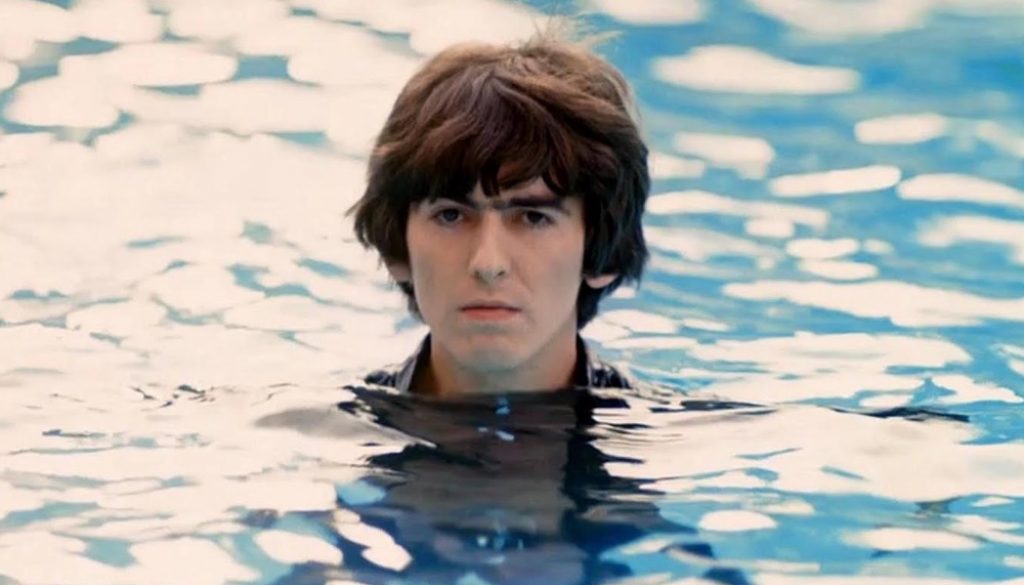
Lennon inherited the fierce restless intellect and urge for experimentation of the Beatles, while McCartney got the gift for melody and craftsmanship. Harrison represented something else more intangible, something I might even call the Beatles’ heart. In the best of his solo work I find that all-encompassing warm feeling that I get when I hear the heavenly harmonies of “Within You Without You,” the solos that make “Something” soar far higher than most sappy ballads ever could, the distinctive single guitar chord played by George that opens up “A Hard Day’s Night.” In other words, listening to George Harrison makes me feel better about life, the universe and everything. 

George Harrison could certainly be preachy, I’ll admit. Harrison was looking for transcendence, and the older I get, the hope in something more to this life seems to resonate. I’m not talking about organised religion, really, but just the idea that you can find a calming peace by letting go of some of your baggage and flowing like water. The world is full of mystery. George Harrison never stopped trying to understand it.

George’s biggest song was “Something,” a tune that sums up his eternal questing and curiosity in its few minutes.  Is there something out there? I sure as hell don’t know. But the idea of being at peace with yourself and finding that inner calm that George spent much of his too-short life seeking isn’t the worst goal to have in this life. 

Listening to George Harrison makes me feel better about everything, and that’s why in these often-troubled days he’s my favourite Beatle.