One of the secrets of Bob Dylan’s success is his enduring mystery. Dylan has forged a 60-year career out of being opaque, inscrutable…. a “complete unknown,” if you will.
I’ll admit, I’m kind of a sucker for rock star musical biopics, even when they’re terrible. I watched Elvis and Walk The Line and Bohemian Rhapsody and I embrace the cheesy “rags to riches to overdose” narrative of such films, even when my head admits they’re not always great movies.
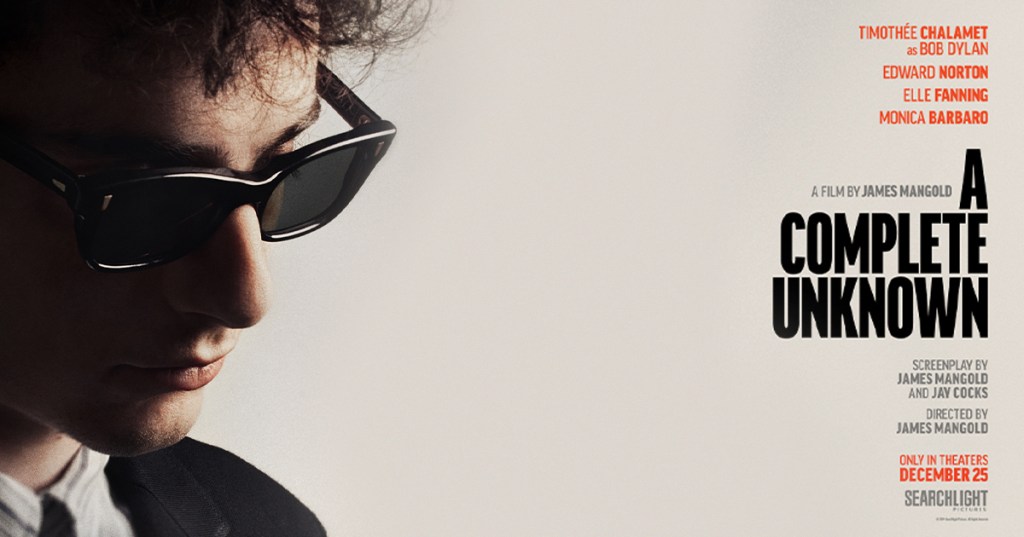
A Complete Unknown is a deep dive into Bob Dylan’s early years that does its share of romanticising and mythologising… but then again, hasn’t Dylan himself been doing that since he was a kid? For me, it hit the spot by embracing the many mysteries of Bob, revelling in music biopic cliches while being just prickly enough to feel real.
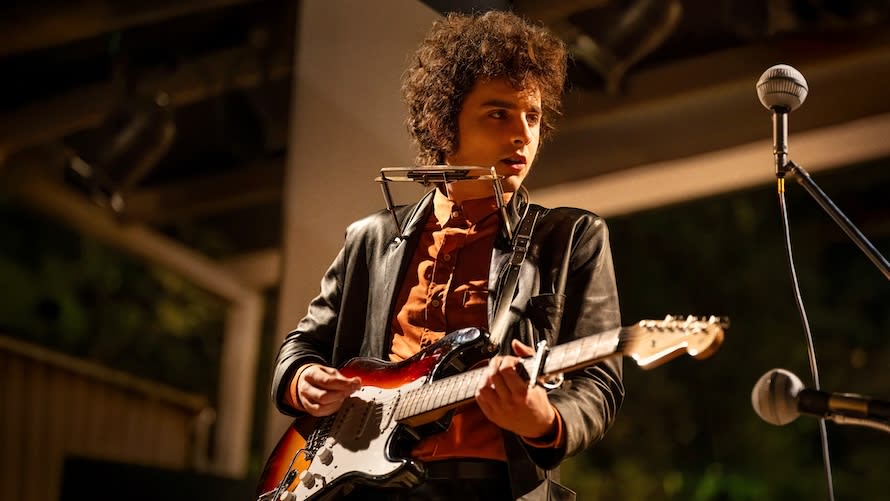
Timothée Chalamet is really far too pretty to be young Bob, who had a reedy, squinty babyface, but he nicely summons up the keen intelligence, peculiar charisma and somewhat mercenary ethics of young Bobby. Dylan rode into New York from rural Minnesota pretending to be everything from a hobo to a carnival worker. He threw aside his birth name of Zimmerman and became a kind of perpetual musical sponge, absorbing everything and synthesising it into something kind of new.
A Complete Unknown is about the birth of an artist who’s also a magpie, a wry cynic and also kind of a genius who’s not really a very nice guy. Dylan is called an “asshole” a couple of times in the film, which thankfully doesn’t try to show him as some kind of saintly hero. We avoid some big teary monologue where Bob Dylan reveals all the dark secrets that motivate him.
This exchange is as close as A Complete Unknown gets to peeking behind the mask: “Everyone asks where these songs come from, Sylvie. But then you watch their faces, and they’re not asking where the songs come from. They’re asking why the songs didn’t come to them.“
Chalamet’s natural teen idol charm is cleverly subverted just enough to make his Dylan feel like an echo of the thin wild mercury sound of the man himself. (And while he doesn’t sound exactly like Dylan singing, he sounds close enough to make it work, and lipsynching Dylan would’ve been even weirder.)
A Complete Unknown takes the great Bob Dylan creation myth and hits all the beats – his turn from folk music to electric, his wry confidence, his thorny romance with Joan Baez, his worship of Woody Guthrie. The movie follows Dylan from his arrival in New York as an eager kid up through his explosion into stardom in the mid ‘60s, and its big emotional turn is in Dylan’s moving from stark and preachy folk into raw and raucous rock, culminating in his famously defiant “electric” performance at the 1965 Newport Folk Festival.
A Complete Unknown wrings Dylan’s transformation for a lot of drama that might seem a bit hokey from 2025 eyes – so he’s playing an electric guitar now, so what? – but it’s worth remembering that Dylan’s “betrayal” of folk was a big deal back in the day. (Ed Norton‘s marvellous supporting turn as folkie Pete Seeger really captures the man’s uniquely kind heart and endearing dorkiness.)
As anyone who’s dipped their toes into the vast waters of Dylanology knows, there’s an infinite number of Bobs in the Dylanverse. (At least 80, as I painstakingly rambled on about a few years ago!) There’s no way A Complete Unknown, which follows a fairly basic biopic blueprint, could satisfy everyone, and we’ve certainly got cinema bizarro like Todd Haynes’ I’m Not There or Bob-starring oddities like Masked And Anonymous to fill any taste.
Watching Martin Scorcese’s superb documentary No Direction Home again recently, which follows Dylan’s 1966 tour of Britain in some dazzlingly vibrant footage, I was struck by how angry many of the British fans interviewed at the time were with Dylan’s new style. “I think he’s prostituting himself,” one barks. Yet to my eyes now, the hyper electric Dylan of 1966 is quite possibly his finest era. God only knows what would’ve happened if social media existed at the time.
Unknown works for me because it never quite pretends to be definitive, and knows there’s many more alternate Bob stories to be told. But hey, it’s turning new audiences on to Dylan music, got a bunch of Oscar nods, and is a reminder that after nearly 84 years walking this Earth, there’s still nobody quite like him.
Is it 100% true? It’s pretty and darned entertaining, but perhaps its biggest success is in carefully keeping Bob Dylan’s true motivations a complete unknown.
Bob Dylan is 80 years old today. Bob Dylan is endless. You can go as deep as you want. You can have casual knowledge of “Blowin’ In The Wind,” or you can devote your life to him. I’m somewhere in midstream when it comes to Dylan fandom, which goes deeper and further than most people would ever imagine, but I can’t deny that the man’s words and music have changed the way I look at the world.
Dylan is unknowable in many ways, like trying to grab a handful of mist. That’s also kind of appealing in today’s share-everything celeb culture. There’s at least 80 different Bob Dylans I can think of, and probably 800 more.
In celebration of Bob’s 80th, here’s 80 Things I Love About Bob Dylan:
1. “I ain’t going to work on Maggie’s Farm no more,” and how those words are all of us at some point in our lives.
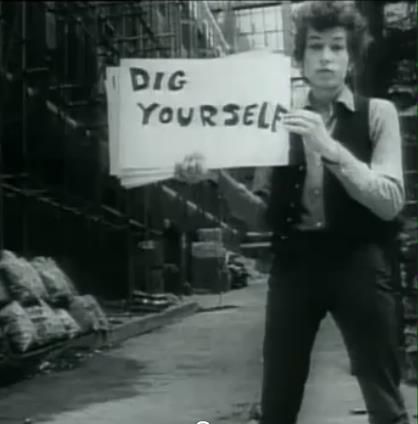
2. The “Subterranean Homesick Blues” video:
3. My dentist, who’s a big Dylan fan, and his famous recurring dream: “I’m having the dream again. I’m the on-call emergency dentist. Bob Dylan’s people call, and there’s a problem. I have to do an emergency root canal, and we become friends. He writes a song about me.”
4. “You’re No Good,” the first song on the very first Dylan album, where 20-year-old Bob sounds like a 20-year-old imitating a 70-year-old. And yet, it works.
5. That there’s never been a better takedown of a murdering racist than the way he spits out the name “William Zanzinger” in “The Lonesome Death of Hattie Carroll.”
6. The way the light looks on the cover of The Freewheelin’ Bob Dylan:
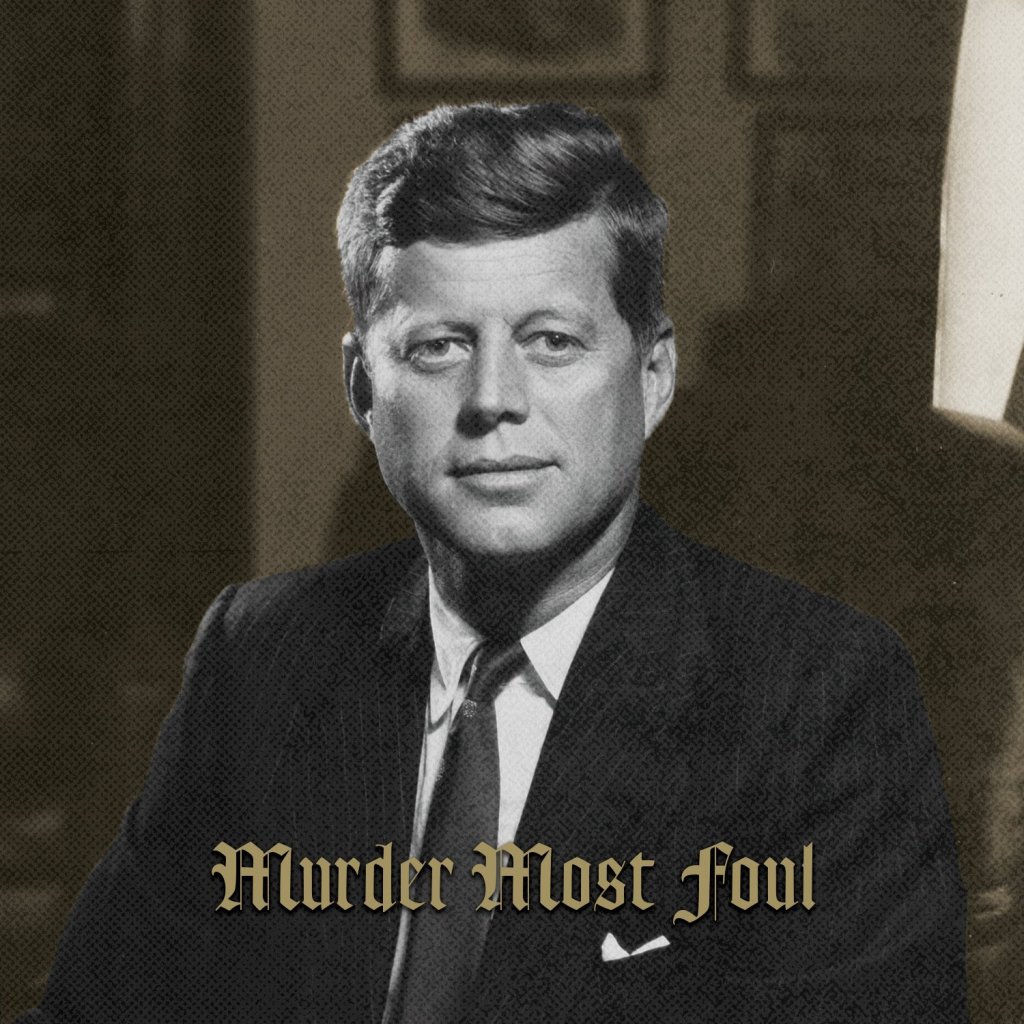
7. The fact Dylan slipped a Nightmare on Elm Street reference into his 17-minute epic “Murder Most Foul.”
8. Also, all of “Murder Most Foul,” proof that it’s never too late in one’s career to craft a masterpiece.
9. Every single second of the roaring surreal carnival that is “Tombstone Blues,” but particularly the way he draws out the lines “The geometry of innocent flesh on the bone” and how I can never stop wondering what that means.
10. “Wiggle Wiggle” might just be the worst song Dylan ever recorded, proof that we all have bad days.
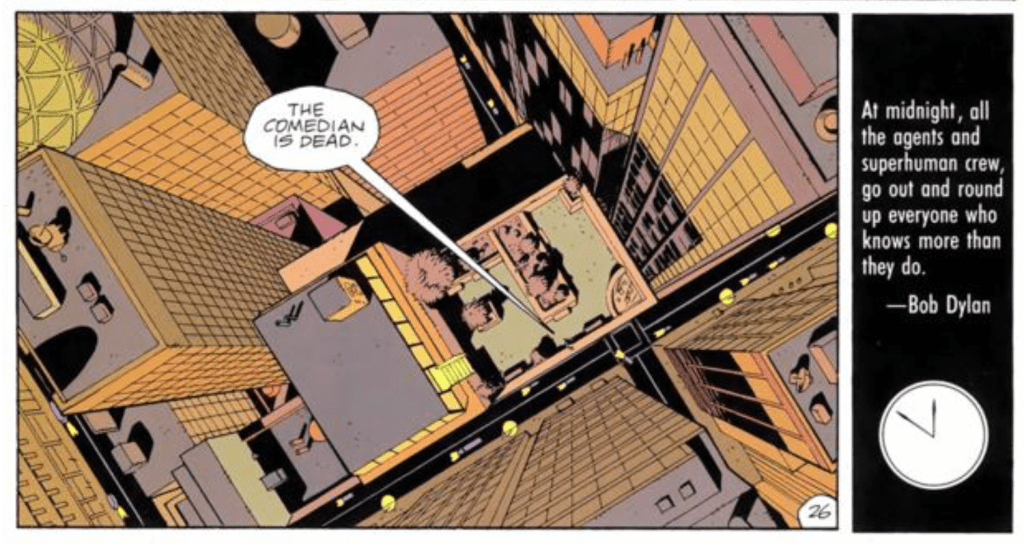
11. The final panel of the first issue of Alan Moore and Dave Gibbons’ Watchmen, and one of the best uses of a Dylan quote ever:
12. “Tweeter And The Monkey Man” from Traveling Wilburys Vol. 1, a song title that sounds like a forgotten ‘80s cop show set in Miami.
13. When I saw him play in Oxford, Mississippi decades ago, he played the anti-racism track “Oxford Town” (about the college’s brutal racist anti-integration protests in 1962) for the first and so far only time live, which was ballsy and kind of like Neil Young playing “Ohio” at Kent State.
21. This moment in the amazing documentary Dont Look Back:
22. The way that nearly-lost gem “Blind Willie McTell” sounds as if it’s being sung at the bottom of a well, from a place beyond time.
23. How he barks out the song title of “Forgetful Heart” with a startling intensity that immediately makes you sit up and pay attention.
24. The way he breaks down on the intro into stoned giggling on “Bob Dylan’s 115th Dream, Take 1” on The Bootleg Series Vol 12, reminding you he’s human after all.
25. …“He said his name was Columbus, and I just said good luck.”
26. I’m not a big fan of Dylan’s “born again” Christian rock period, but there are gems to be found there, particularly “Gotta Serve Somebody” in its rollicking gospel rock live versions.
27. He says it was because he stopped smoking, but I still love Dylan’s baritone croon in the Nashville Skyline era, smoother and somehow sexier than he ever sounded again.
28. That he has a whiskey brand called, of course, “Heaven’s Door.”
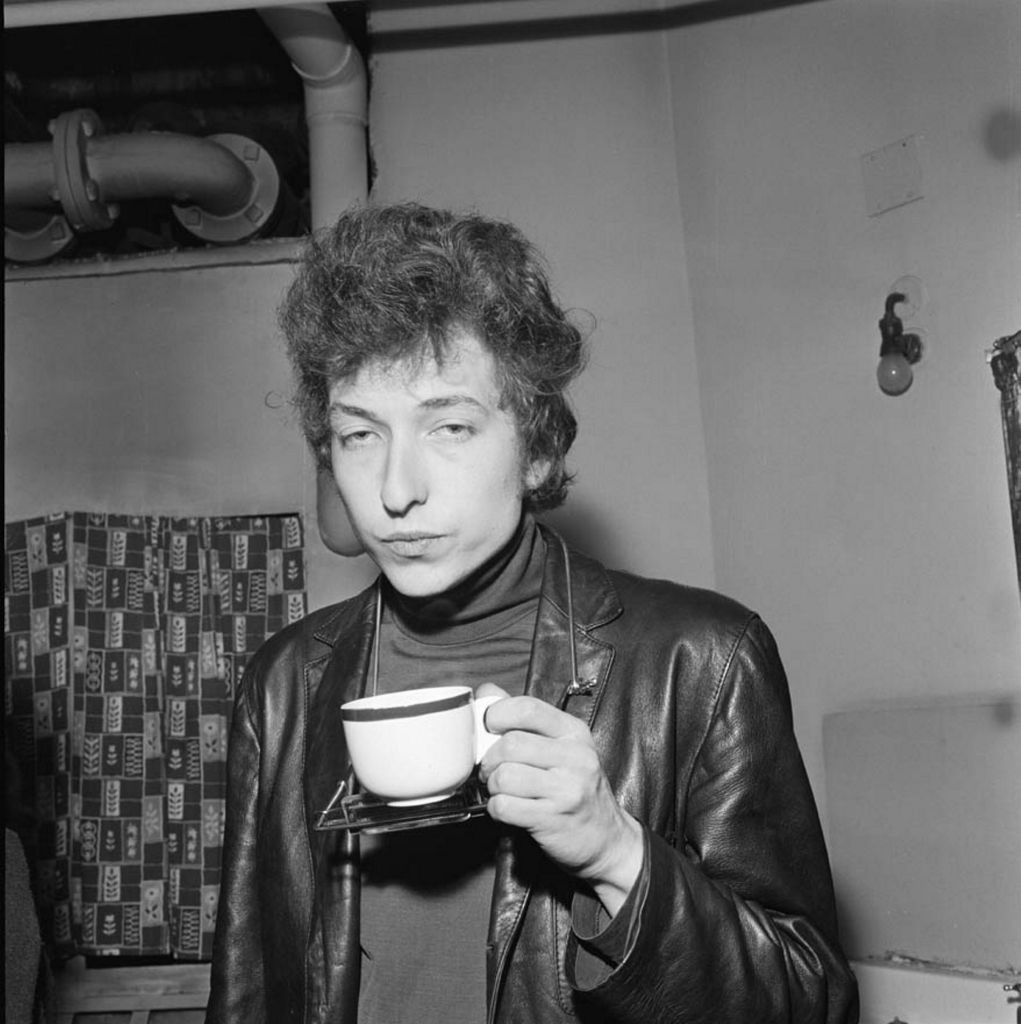
29. This photo, and Dylan’s eyebrows in it:
30. Seeing the Academy Award Bob won resting near his piano, casually, at his gigs.
31. Bob Dylan’s Greatest Hits, the first album of his I ever owned. It took me a while to grow into it.
32. However, it was 1989’s Oh Mercy that became the first Dylan album I really discovered and soaked in, and the road map into a lifetime.
33. The late Sally Grossman’s zen bohemian pose on the cover of Bringing It All Back Home.
35. The rumbling guitar chords and drum beats that amble in the beginning of “Thunder On The Mountain,” and Modern Times, featuring one of Dylan’s tightest bands ever.
36. Also, the way he spits out, “I got the pork chops / She got the pie.”
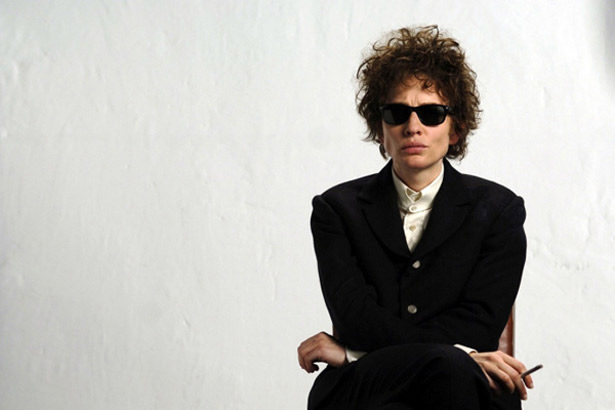
37. Cate Blanchett as Bob Dylan in the rather muddled experimental film I’m Not There:
38. “People don’t live or die, people just float” – “Man In The Long Black Coat”
39. “I Threw It All Away” live on The Johnny Cash TV Show:
40. One of the loveliest songs he ever sang, the brittle and pained 1970 take on old folk song “Pretty Saro.”
41. The ultimate comeback to the “Judas” insult at one of his 1966 “electric” concerts: “I don’t believe you. You’re a liar.”
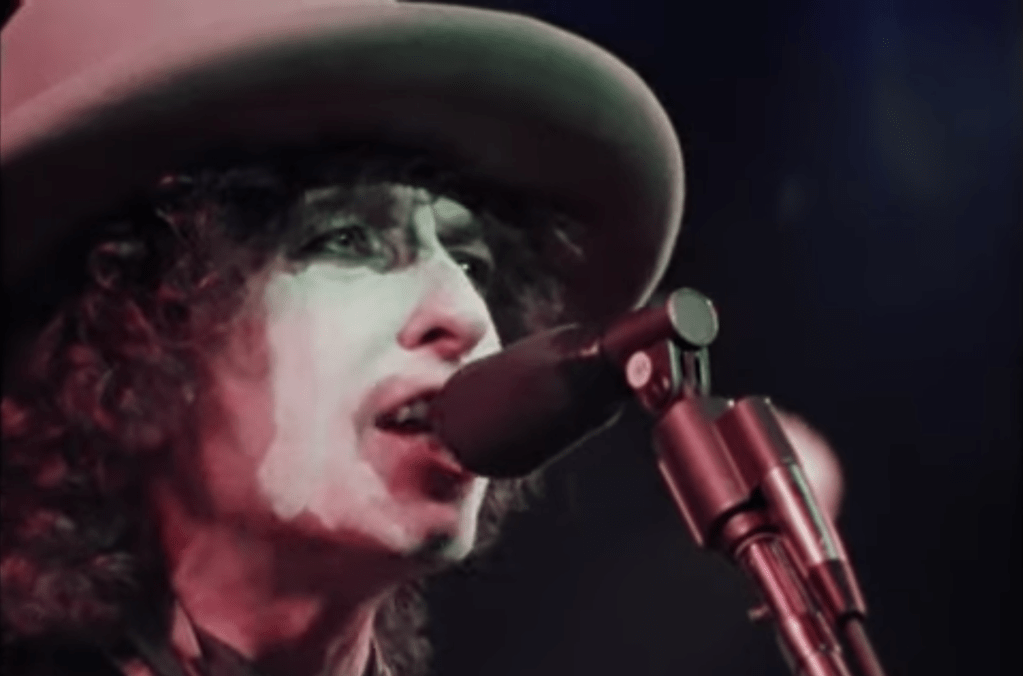
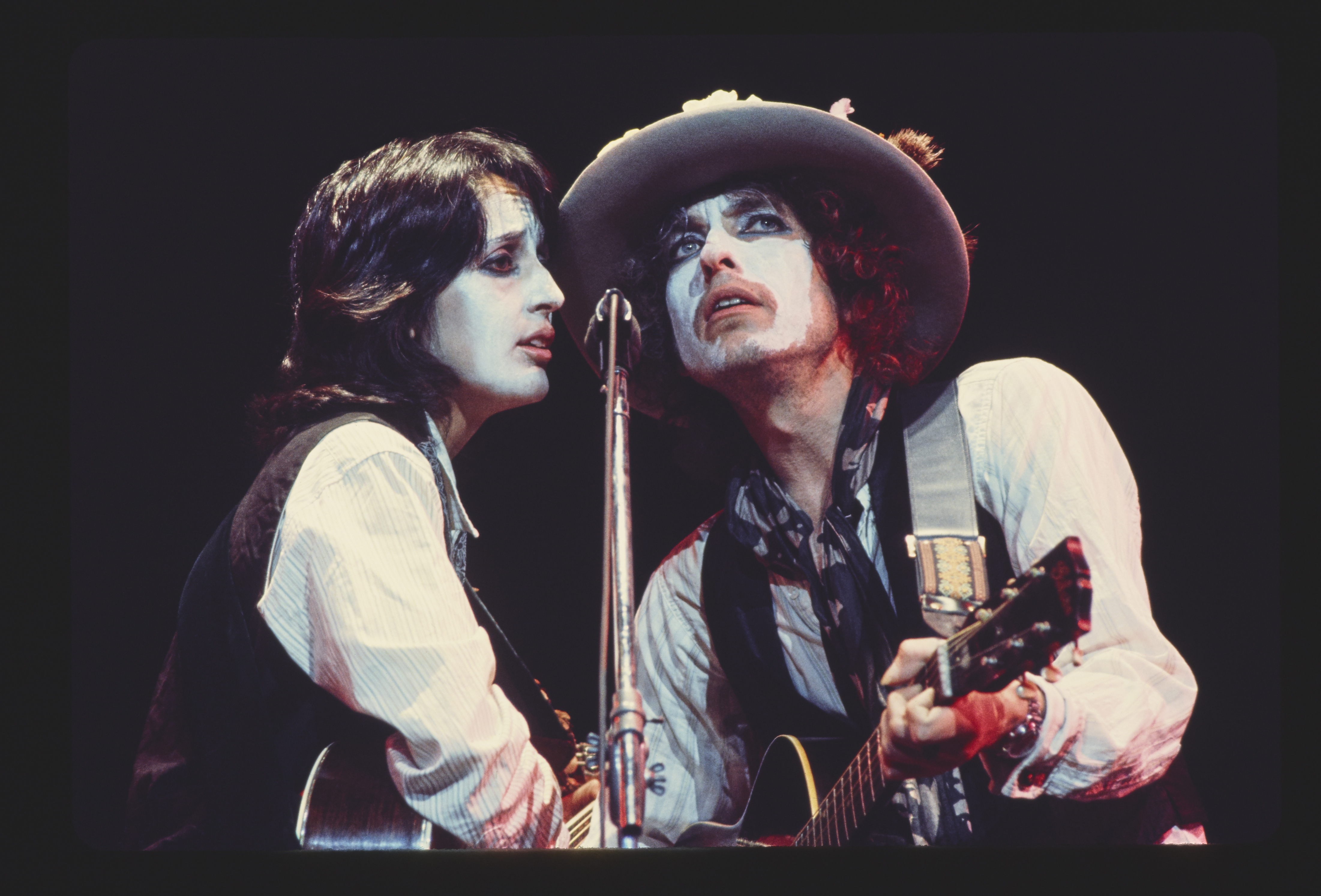
42. Dylan’s white kabuki-style makeup look on the Rolling Thunder tour:
43. Watching a moron try to rush the stage during the 17-minute long epic “Desolation Row” at a 2007 concert, not exactly a song that inspires mosh pits.
44, “And puts her hands in her back pockets Bette Davis style” is one of the great metaphors.
45. I’m a fan, but many fans know way more than me. Dylanology is kind of bottomless, and “The Dylanologists” by David Kinney is a great look at some of the most obsessed.
47. That Dylan once had the cops called on him for wandering around a neighbourhood, and the police officer didn’t know who he was.
48. That little carnival-barker moustache he started affecting several years back.
49. Not really a fan of the series of popular songs cover albums he put out a few years back, but his gravelly take on “That Lucky Old Sun” is a charmer.
50. Back in 1996 or so I lived in Mississippi, and one of our favourite local restaurants The Harvest Cafe was closing down. On its final night an all-star cast of local musicians (including a member of Wilco) jammed for hours on songs, and the one that always sticks on my head years and years later is a joyful, valedictory “You Ain’t Goin’ Nowhere,” and every time I hear it I think of old friends and gone times. Whoo-ee, ride me high.
51. Hunting old record stores pre-internet for a decent copy of the legendary “Basement Tapes,” and being mesmerised by their ramshackle and mysterious glory.
52. “I’m goin’ down to Tennessee; get me a truck or somethin’.” – “Lo And Behold.”
52. Scarlet Rivera’s stunning violin refrains in Dylan’s epic “Hurricane,” the beating pulse that gives the song its blood.
53. For that matter, the way Dylan draws out that last word in, “He could’ve been / the champion of the worrrrrrrrrrrrlddddddd”
54. Standing in a queue for tickets on campus for my first Dylan concert in 1990, and hearing someone say, “Dylan? Who’s she?”
55. Memories of listening to Bob Dylan’s mid-70s pearler Street Legal while crossing the Rocky Mountains, and the bombastic “Changing of the Guards” seemed just right.
56. “It’s not dark yet / But itttttttttt’s getting there.” – “Not Dark Yet”
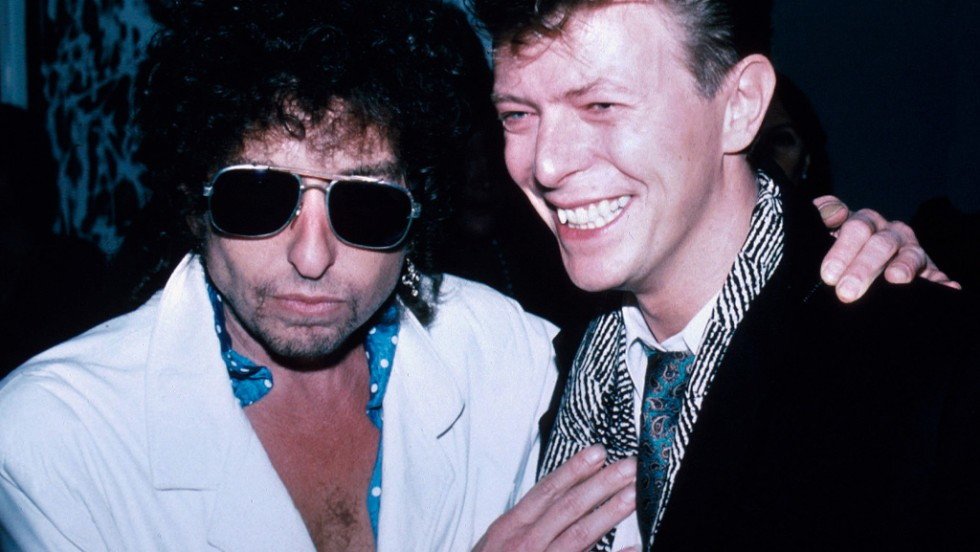
57. This photo:
58. The honky-tonk piano tinkling that opens up 2012’ “Duquesne Whistle”, one of Dylan’s best attempts to approximate that old 78 records sound.
59. The all-star “I Shall Be Released” jam at the end of The Last Waltz, one of the greatest concentrations of musical talent in history.
60. “If you’re travellin’ to the North Country Fair…” few songs instantly summon up such heartbreak.
61. Dylan’s Academy-Award winning “Things Have Changed,” with that brutal little lyrical twist of the knife – “I used to care / But things have changed.”
62. The 1976 live album Hard Rain is Dylan frazzled, exhausted and angry and yet somehow I love it for its raw and even sloppy energy, spitting through “Maggie’s Farm” like it’s a punk anthem.
63. “Idiot Wind” is one of the harshest breakup songs ever, and every time the venom of a line like “You’re an idiot babe / It’s a wonder that you still know how to breathe” stuns me with its cold splendour.
64: The chugging, menacing throb of 2020’s “False Prophet,” Dylan the forever outlaw: “I’m just here to bring vengeance on somebody’s head.”
65: The swirling beauty of Daniel Lanois-produced “Series of Dreams,” which combines the best bits of Peter Gabriel and U2 with Dylan.
66: With a title like “Talking World War III Blues” you wouldn’t think it’d be one of the funniest songs he’d written, with the capper being the wry way he mutters at the end, “I said that.” Cue laugh track.
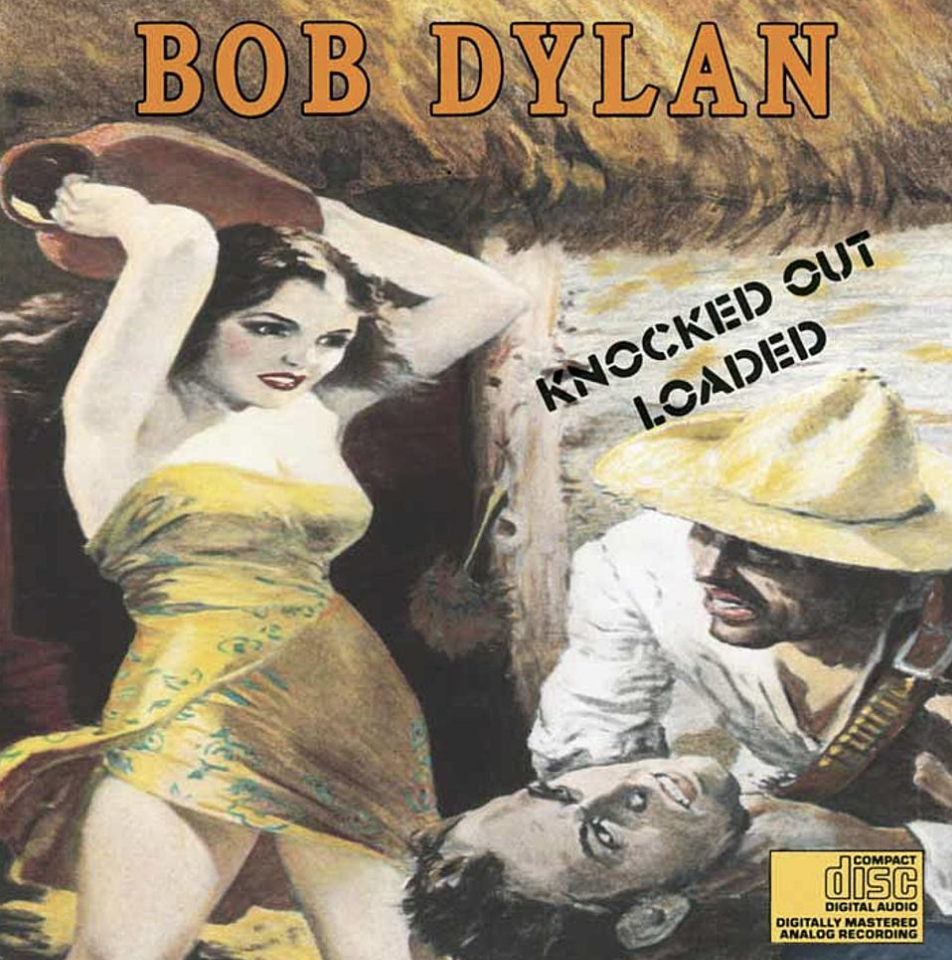
67: This album cover will always make me smile right back:
68. “With your mercury mouth in the missionary times / And your eyes like smoke and your prayers like rhymes.” – “Sad-Eyed Lady Of The Lowlands.”
69. That it took me some time to realise that the cover of Blonde On Blonde was a bit blurry on purpose. I thought I just had a bad printing.
70. That famously infamous Newport Musical Festival “electric” take on “Maggie’s Farm” where the band sounds like a train launching into space, and the old story (likely apocryphal) that Pete Seeger was so outraged he tried to cut the cables with an axe.
72. Forget “Wiggle Wiggle,” Dylan’s croaky rendition of “Here Comes Santa Claus” on the rather horrific album Christmas In The Heart might just be his nadir, except I think the song actually crosses through bad, into kitsch, and then kind of right somewhere in the misty realm of great again. It’s the cheesy backup singers what do it.
73. Dylan’s made a lot of iconic album covers. He’s also responsible for this:
74. That he covered “Froggie Went A Courtin’.”
75. Love And Theft’s “Mississippi” always struck a chord for me, especially as I moved away in 1997 heartsick and uncertain about my future, and a few years later I heard Dylan sing about me: “Only one thing I did wrong / Stayed in Mississippi a day too long.” Was the man bugging my house?
76. That you can hear a dog barking in the background on a demo version of 1980’s sublime “Every Grain Of Sand.” Who is that dog?
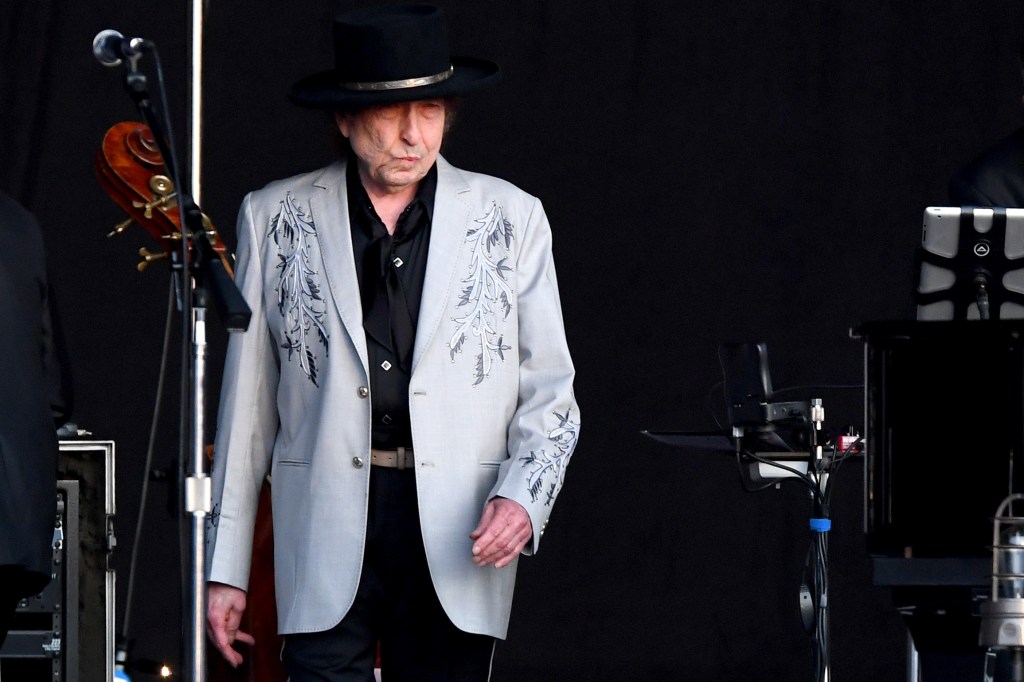
77. My fourth and possibly final Dylan concert in 2018 might’ve been the best I’ve seen of him. The band was tight, the voice was good, and nothing felt perfunctory. Phones were banned (a good thing) but I did sneak one quick photo where I’m certain I actually saw him smile at the end of the encore. If that’s the last time I ever see Dylan in person, I’m OK with it:
78. Dylan in concert isn’t exactly chatty or action-packed, but at that same 2018 show he did come out centre stage for a vivid take on “Love Sick,” where he struck several faux-Elvis poses that were a delight to witness.
79. If I had to pick a single Dylan lyric that speaks the most to me, that keeps pricking me with self-knowledge, we’ve got to circle back to “Maggie’s Farm” and this one: I try my best / To be just like I am / But everybody wants you / To be just like them / They sing while you slave / And I just get bored.
80. This:
Added: And here’s a playlist of most of the tunes mentioned in the above list! Dig into the Dylan!
…OK, that title is a bit of a joke, I’ll admit it.
But in listening to Bob Dylan’s masterful, dense new album, Rough And Rowdy Ways, and its epic closing track, “Murder Most Foul,” I find myself spinning back to make a most peculiar connection: This feels like Dylan’s homage to Billy Joel’s “We Didn’t Start The Fire.”
I was a card-carrying Billy Joel fan in 1989. Joel’s easily digested, open-hearted everyman pop songs were everywhere in the 1980s, and what turned out to be one of his last big hits, 1989’s Storm Front album, got to me. In particular, his endearingly clumsy anthem “We Didn’t Start The Fire.”
I have a soft spot for it, coming as it did in the fall of 1989, when the Soviet Union abruptly crumbled and the Cold War we’d all been conditioned since birth to be afraid of just went away almost overnight. I was just turned 18, at that peculiar junction in life, between high school and whatever lies next, at the cusp of adult cares and fears. “We Didn’t Start The Fire” seemed a totem of that urgency, of being suspended between moments in history.
“We Didn’t Start The Fire” hasn’t aged particularly well, I’ll admit. Billy Joel’s songs were best when he went for the personal. When he tried to go big and broad on social issues, he wasn’t subtle – “Allentown,” “Goodnight Saigon” – but they were powerful, angry songs still, and anchored in human experience. The problem with “We Didn’t Start The Fire” is that it’s all huff and no puff, a list without much of a message.
Joel’s song is angry. He basically recites a list of cultural touchstones from the end of World War II to the end of the Cold War, catchily rapping off names from Stalin to Elvis to Bernie Goetz, interrupting the lists with his chest-thumping chorus, “We didn’t start the fire / It was always burning / Since the world’s been turning.”
Now, that rhyme makes me cringe a bit. Yet I still kinda love that song. It’s awkward and befuddled and the only real message despite its urgency seems to be, “Hey, shit happens.” In the video, Joel pumps his fists and rages as the background bursts into flames behind him. Again, it ain’t subtle.
Now, take Dylan’s “Murder Most Foul,” at 17 minutes the longest song the bard’s recorded in his 50-year-career. If anything, Dylan’s song is even more of a laundry list than Joel’s. He peppers in Tom Jones lyrics, Freddy Krueger, Buster Keaton, BB King.
Unlike “Fire,” it’s structured around a narrative, a hallucinatory seance of imagery revolving around the assassination of President Kennedy, fragments of Americana scattered by the death of a dream: “They killed him once and they killed him twice / Killed him like a human sacrifice.”
Joel hits on JFK too, of course, with a particularly wince-worthy rhyme again: “JFK, blown away, what else do I have to say?”
Dylan is 79 now. He doesn’t rage, he contemplates. There’s a mesmerizing power to “Murder Most Foul,” even as the tempo barely changes, as the song just kind of chugs along without any of the fire of Billy Joel. It’s got the power of a mystic chanting around a campfire, a thousand years ago.
At one point Dylan asks, “What is the truth, and where did it go?” In 2020, nobody knows.
The difference is that “Fire” is a list, a yell. “Foul” is a sermon, a prayer, and in wrapping his summoning of all America’s highs and lows around the fateful events in Dallas in 1963, Dylan conjures up something sadder, more haunting than Joel’s outraged yelp. I’ve listened to “Murder Most Foul” many times so far, and each time it unfolds new facets.
Dylan’s become more of a magpie than ever in his autumn, picking up bits and pieces of pop culture strewn throughout history and saying something new with it. Who’s to say he didn’t perhaps find a kernel of meaning to redirect in Joel’s “We Didn’t Start The Fire” as he assembled what might be his magnum opus, a song that stretches wide and high to try to define the indefinable?
One song seemed perfect for the perhaps misguided optimism of 1989. One seems just right for the muddy, uncertain waters of 2020. One was the sounds of being 18, and one hits home with me as I near a half-century on this strange, perplexing world.
Both songs grapple with that old chestnut, the American dream, a hope and a mystery nobody ever really seems able to solve.
I’ve seen Bob Dylan four or five times, but it’s mostly been when he’s been in his 60s and 70s.
Dylan can be inconsistent as a live performer – at one show every lyric sounded like “muzza muzza BUZZA muzza” and on another, he was an elegant elder statesman who even SMILED at one point.
But there was a point where Dylan was a blazing fireball on stage, during his mid-1970s Rolling Thunder Revue tour. It’s the subject of a new documentary by Martin Scorsese, and it’s must watching for anyone who thinks Dylan couldn’t sizzle live on stage. The man was fierce.
In 1975, Dylan hadn’t really toured since his late ‘60s motorcycle accident. He put together a kind of travelling show featuring guests like Joan Baez, Mick Ronson, Roger McGuinn, Allen Ginsberg and more to play smaller, intimate venues. The Rolling Thunder Revue had a theatrical bent – Dylan painted his face white, like a kabuki performer, and added touches like a dazzling electric violinist to his songs. There was a freewheeling electricity to the atmosphere.
He’s performed thousands of shows over more than 50 years, but I’d argue that for the 50 or so shows of Rolling Thunder, Dylan was never better. Scorsese’s documentary shows him commanding the stage, stalking, staring and singing like his life depends on it. There’s no mumbling here.He spits every syllable of “The Lonesome Death of Hattie Carroll” with a power that makes this account of a racist murder a harrowing listen. Chestnuts like “Knockin’ On Heaven’s Door” or “Blowin’ In The Wind” seem revitalised. Then-current songs like “Isis” and “Hurricane” rage when he performs them.
Clear-eyed and potent, there’s a fierceness to Dylan’s presence that’s remarkable to watch. Sparks fly off him when he enters a room, not in a showy David Bowie or Mick Jagger way, but in a concentrated, smouldering focus. He combines the intensity of young folkie Dylan with the more grizzled maturity of someone in their mid-thirties, and it lends his songs new power.
“Rolling Thunder Revue: A Bob Dylan Story” is a great movie, and fitting with Dylan’s mystique there’s a bit of flirting with fiction and masks (let’s just say some of the people interviewed are not what they seem). But in the end it’s a celebration of one of Dylan’s most fertile periods and a reminder that one of the greatest songwriters of all time could throw down with the best of them when he wanted.








 Nik Dirga