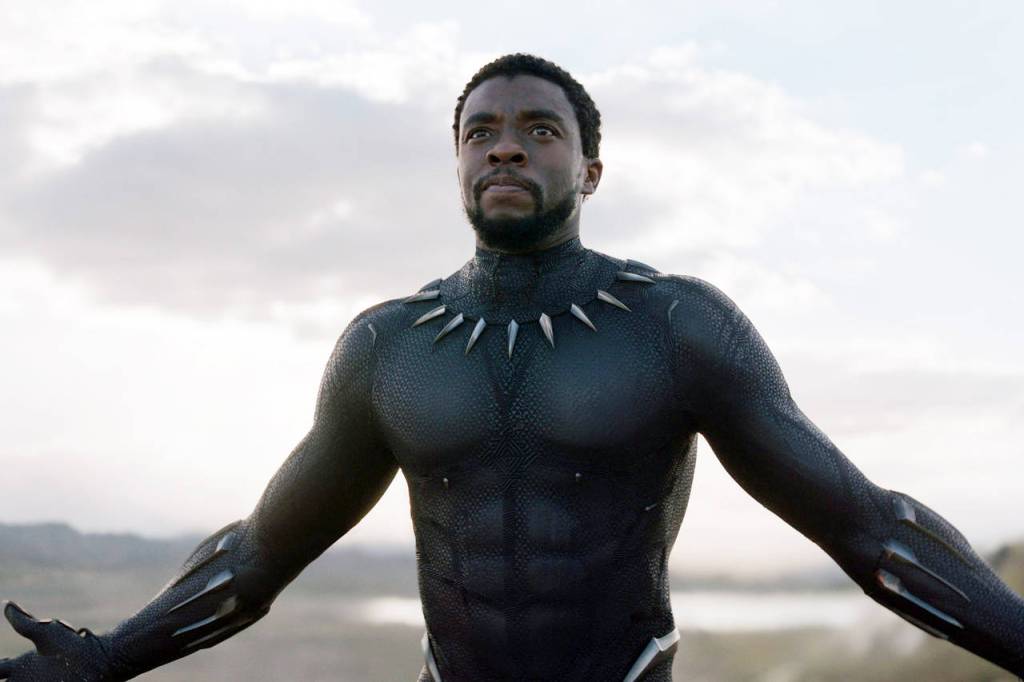
The death of Chadwick Boseman at just 43 from cancer hurts, coming as it does in a year when there’s been so much hurt already.
Just over two years ago, he was the star of the biggest superhero movie ever at the time, the first nominated for Best Picture. But he was eye-catching and charismatic in everything he appeared in during his too-short starring film career, which spanned just seven years. To most of the world’s shock and dismay, we learned that he was fighting colon cancer for much of the time he was starring in some of the biggest movies on the planet. Unimaginable.
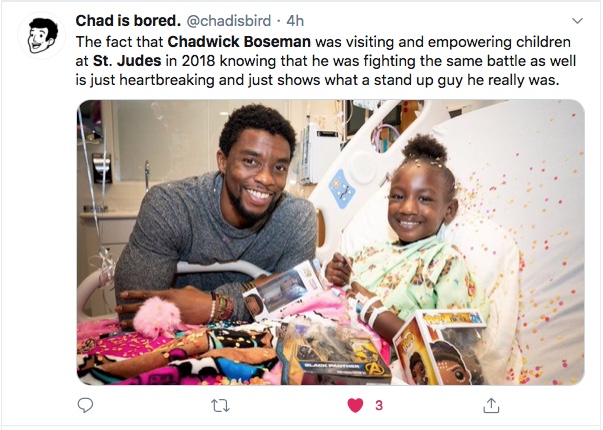
He’s going to always be remembered for Black Panther, but he starred in several wonderful films, carving out a bit of a niche career as a chameleon portraying famous inspirational Black figures. Legendary baseball star Jackie Robinson. Soul star James Brown. The first Black U.S. Supreme Court Justice. He was very different, dazzling in each role and was much more than just T’Challa, the Black Panther. He leaves us these stories.
I always loved the Black Panther as a kid. He was mysterious and cool, and back in the 1980s, he didn’t actually appear all that often in comics. And Chadwick Boseman brought him to life wonderfully on screen, capturing the Shakespearean tumult of a Prince-turned-King wrestling with his own power. I would’ve loved to see what he did in future films.
Boseman’s pivotal place in Black film history is not my story to tell. But his starring as the Black Panther – telling millions of Black kids and adults that yes, a superhero could look like anybody – changed the parameters. He made the world bigger, and broader.

Some of us mourn actors and musicians because we see the storytellers they are, and when one of them dies suddenly or too young all you can see are the stories yet untold. Chadwick Boseman should’ve had a career stretching for decades, and it’s unfair. The last sudden film star death that hit me like this was Philip Seymour Hoffman, and I felt much the same thing – I wanted to see more. I felt cheated.
Two scenes from Boseman’s turn as the Black Panther keep ringing in my head, neither one of them your typical superhero punch-ups. One is the quiet moment at the very end of Black Panther between T’Challa and his vanquished foe Killmonger, which achieves a kind of graceful sadness. The other came at the very end of Captain America: Civil War, where T’Challa confronts Baron Zemo, the villain who assassinated his father.
Both scenes are notable for the calm centeredness of Boseman. At the end of Civil War, T’Challa decides not to kill the man he’s been hunting the entire film, and stops him from killing himself.
He tells Zemo, “The living are not done with you yet.” Yes, it’s a line by a superhero to a murderous villain, yet somehow it echoes to me so much as I think about Chadwick Boseman today.
He is free from pain now, but the living were not done with you yet.
There were so many stories left to tell.




 What, me sorry? The rumours are flying fast and furious that
 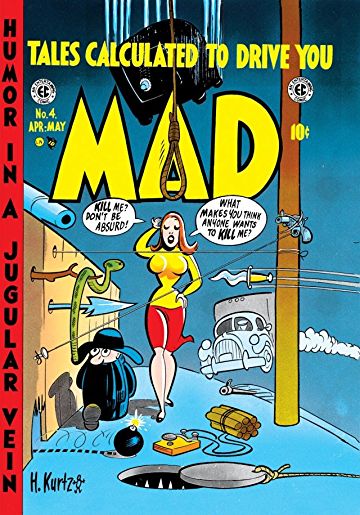 Soon I also discovered “classic” MAD, the Harvey Kurtzman-edited comic book that the magazine originally began as in 1952. It remained the last gasp of EC Comics itself after the great comics-will-warp-you scare of the ‘50s shut the rest of the line down. I got a massive volume collecting #1-6 of the series, packed with Kurtzman wit, Will Elder’s insanely detailed art, Wally Wood’s gorgeous spacemen and girls, and much more. I still have that somewhat battered gorgeous big volume of MAD’s first 6 issues, along with several other volumes collecting the original series, plus scattered around the house a battered stack of issues dating back to the ‘70s, all well-read and mangled as they should properly be.
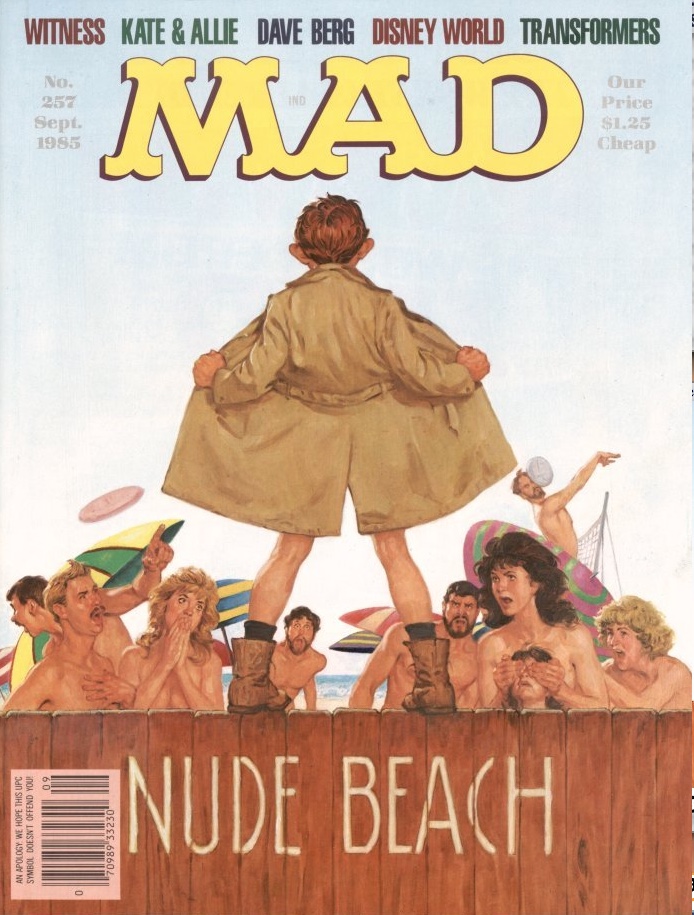
 MAD ended its 550-issue run and “relaunched” like pretty much every other long-running comic book publication about a year ago, and the writing was on the wall then. But to be honest, in the age of Trump, isn’t everything feeling a little satirical? When Trump himself made fun of presidential candidate Pete Buttigieg by saying he ‘looked like Alfred E. Neuman,” nobody under 40 really seemed to get the the joke, including the candidate himself.
 The artists I admire the most are the chameleons, the mutators and innovators, the ones who never stand still. That’s why the Beatles will always trump the Rolling Stones, David Bowie will always beat Elton John to me.
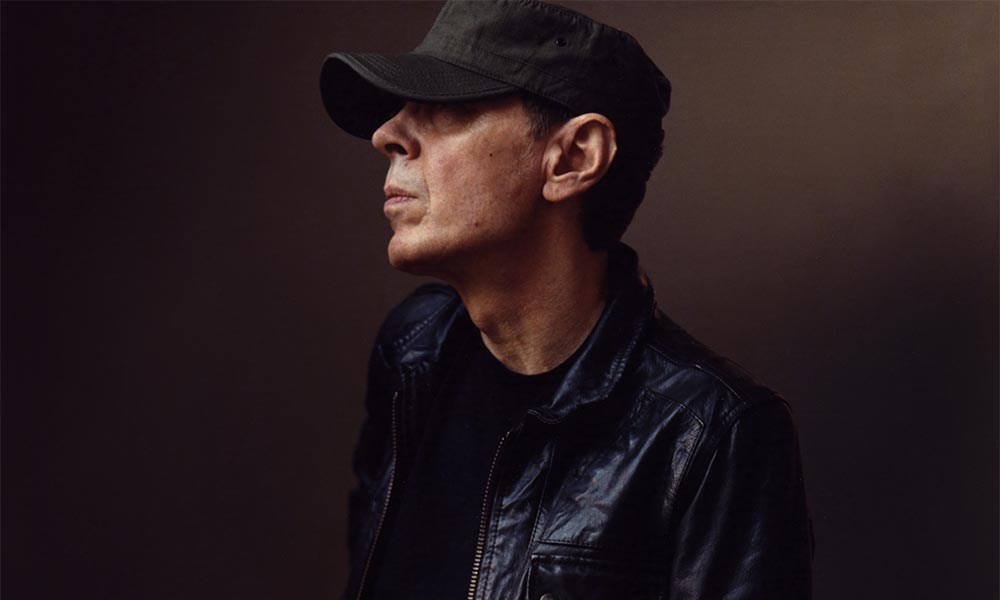 By 2006’s The Drift, Walker had exploded into full-on experimental surrealism, with terrifying drones and waves of sound and a voice that now sounded like the heavens shaking themselves awake. There were no pop anthems here. Legendarily, he hunted for just the right percussion sound on “The Drift”
  Julie Adams wasn’t a household name, but she was legendary in her own way as one of the last surviving “scream queens” of the classic Universal Monster movies of the 1930s-1950s.


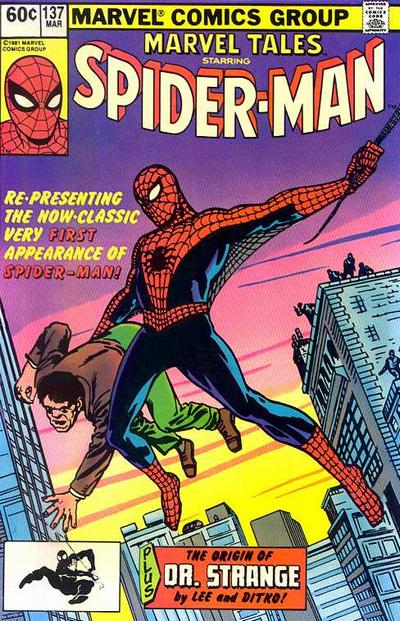 My first real deep dive into Stan Lee’s own writing came when Marvel Tales, a reprint mag, began running the original Lee/Steve Ditko issues of Amazing Spider-Man from the beginning in 1982. I’d never read them before, and while my pre-teen eyes took a while to get used to Ditko’s more primitive-feeling artwork, I was sucked in to the stories as Spider-Man fought Dr. Doom! Met the Lizard! Battled Doctor Octopus and the Living Brain! Reading these marvellous tales, I realised what all the fuss about “Stan Lee Presents” was really about.
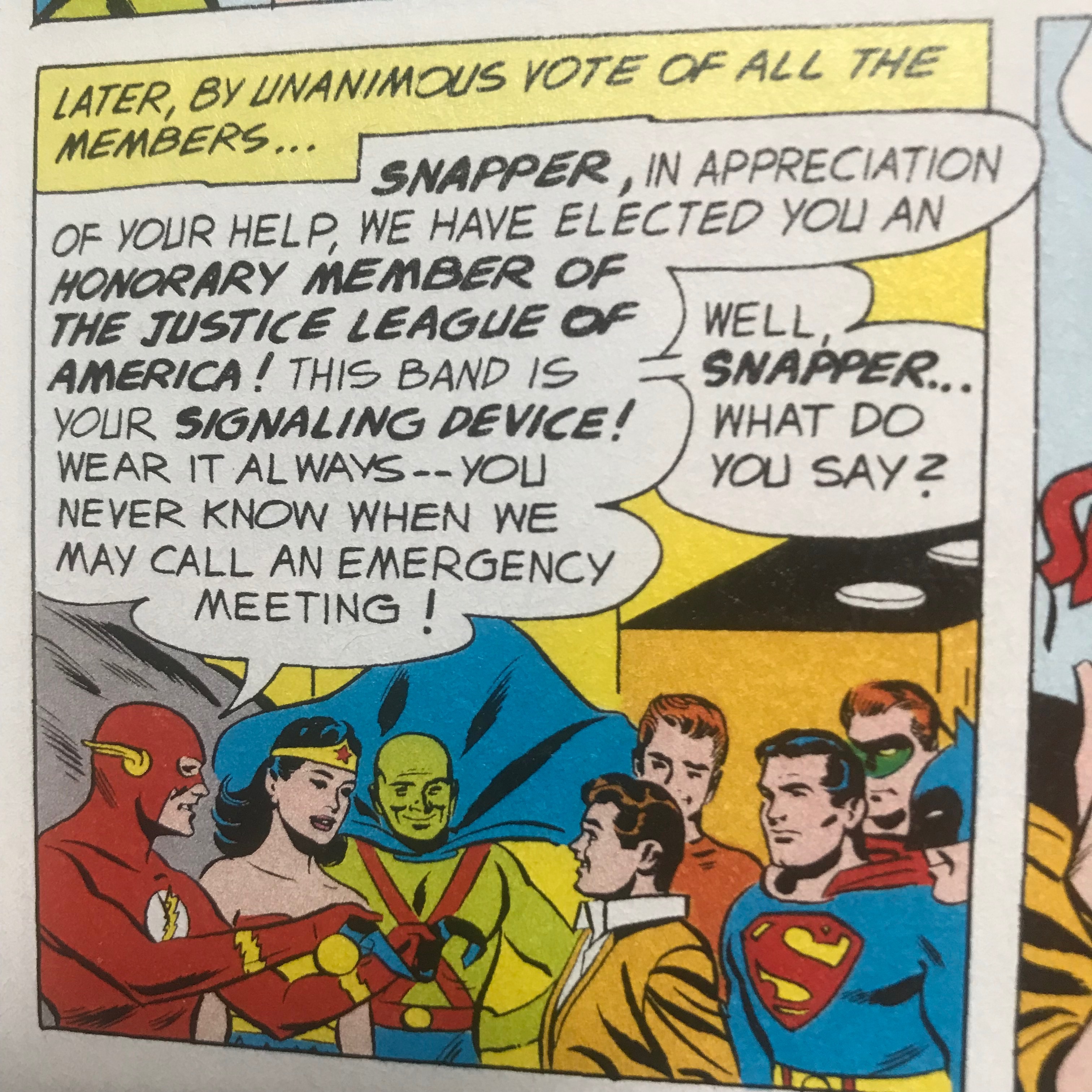 If you want to really examine the seismic effect Stan Lee had on comic book storytelling, read one of DC Comics’ musty early Justice League of America issues from around the same time the Fantastic Four launched. While they’re charming enough, the stiff, military-precise characters are interchangeable and conflict is nonexistent. They fight crime with a smile and brisk efficiency.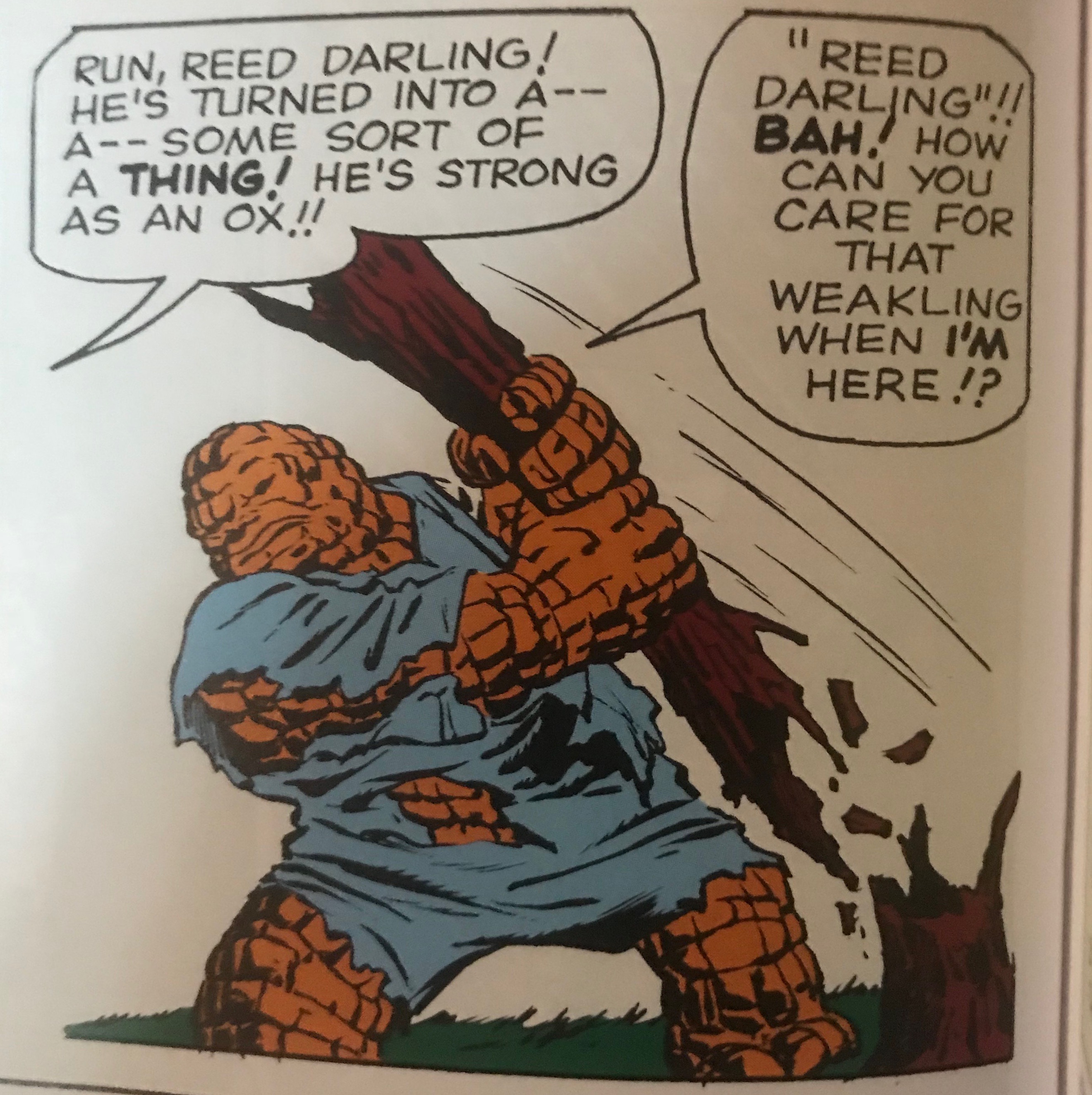

 Nik Dirga