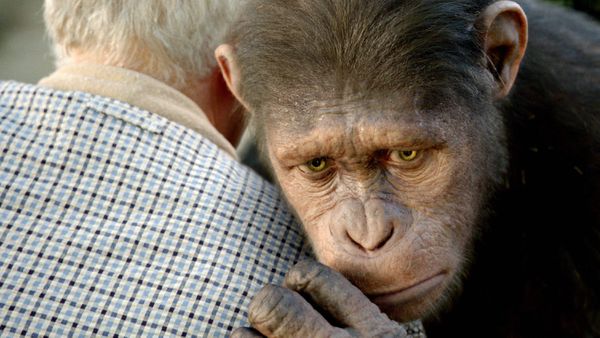
Beneath the Escape from the Battle of the Ranking of the Planet of the Apes series!

…Look, I’m an ape man. I dig King Kong, I dig comic books with apes on the cover, and I really dig the Planet of the Apes saga. 

As I’ve written about before, I’ve always loved the Apes series, with its distinctly bleak and apocalyptic vision. It’s versatile enough as a concept that we’re seeing the tenth Apes movie opening this week, the very nifty looking Kingdom Of The Planet Of The Apes. 

Unlike several other long running sci-fi series, the Apes saga generally has had a higher success rate for its sequels, which generally haven’t felt like laboured intellectual property cash-ins (I’m looking at you, Terminator and Alien franchises). There’s only one, maybe two truly bad movies in the whole series, in my humble opinion.

That said, in honour of the 10th Apes extravaganza, here’s my entirely personal Beneath the Escape from the Ranking of the Apes movies (pre-Kingdom!):
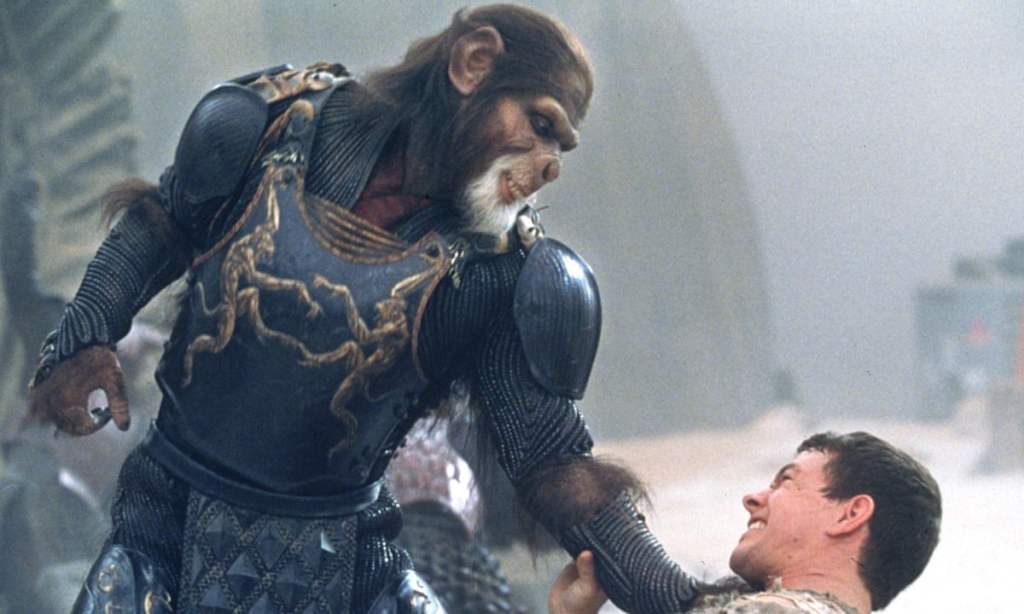
9. Planet of the Apes (2001) – Tim Burton’s oh-so-millennial reboot showed that you should never try and just remake the original POTA (which, I hope, the current series isn’t working its way towards doing, either). A wooden Mark Wahlberg stars in a strange sideways version of the original’s astronaut journey. Like many Burton movies it often looks great but the story is a bit of a mess with a legendarily dumb ending. The single best thing about this movie is the excellent makeup for most of the apes, especially sneering Tim Roth. (A freakish design for Helena Bonham Carter, on the other hand, manages to look worse than the female apes did in the 1960s.) 

8. Battle For The Planet Of The Apes (1973) – The least of the original series is also by far the cheapest. Made for what looks like about $25, it’s got an OK plot that revolves around the final days of man and ape attempting to live together kind of peacefully, touches on the mutants from Beneath The Planet Of The Apes, and as always Roddy McDowall is worth watching in his fourth turn in an Apes film. But the sluggish movie lacks any scale – the “battle” of the title is about a dozen humans puttering around in off-road vehicles, and everything just feels a bit exhausted by this point. 

• Everything from here on up is still a very good Apes movie, in my humble ape-inion – just varying degrees of personal preference and heck, my rankings might change on a daily basis. 
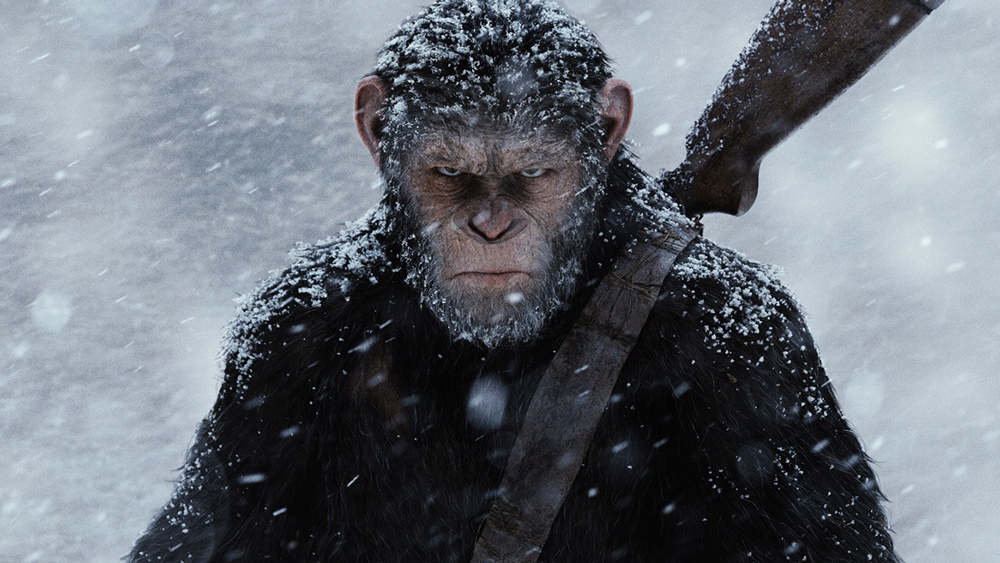
7. War of the Planet of the Apes (2017) – Up until now the latest in the series, this concludes the Caesar reboot ‘trilogy’ in a typically bleak, cynical Apes fashion. Humanity is truly falling apart now, and even starting to lose their voices in a callback to the first movie. Woody Harrelson’s fanatical, scenery-chewing Colonel is one of the series’ best human villains, and Caesar truly becomes a Christ-like figure with all his suffering in this one. At nearly 2 1/2 hours it’s a bit overlong and does bog down a bit in the prison camp scenes, and there’s a little too much torture and cruelty, even for an Apes movie, but it rallies for the biggest battle seen yet in the climax. 

6. Conquest Of The Planet Of the Apes (1972) – So how did the Apes take over the world? This bleak (surprise!) third sequel to the original attempts to fill in the blanks by showing a subservient class of apes basically used as slaves one of those fascist-looking stark 1970s movie urban futurescapes. The parallels with the civil rights movement aren’t subtle, but mostly effective. Led by Roddy McDowall’s Caesar, the apes rise up to overthrow their masters. Hamstrung by a lower budget – the ape masks look particularly grotty in group scenes, and most of the action appears to take place in a few office blocks – Conquest is still a solid, hardboiled franchise entry, with probably McDowall’s best performance. The “theatrical” cut went for a neutered ending; if they’d used the darker original ending it’d probably go up a place or two here. 

5. Escape From The Planet of the Apes (1971) – The most “light-hearted” of Apes movies, until of course everything goes horribly wrong. Blow up the Earth in the last one? No problem! Sending ape survivors Cornelius and Zira back in time makes for some great broadly comic 1970s culture clash moments, but as always in the Apes timeline, darkness beckons. An inventive way of continuing the series and creating a time loop, but the comedy and tragedy make for a somewhat uneasy mix. Still, I always get a kick out of watching a charming ape couple swaggering around ‘70s California. 

4. Dawn of the Planet of the Apes (2014) – After series reboot Rise Of The Planet Of The Apes, the world as we know it is crumbling due to war and pandemic, as Caesar and his apes form their own world in the redwood forest and come to clash with human survivors in San Francisco. Like most Apes movies, it’s about people and apes trying co-exist and failing. The modern-day special effects are remarkable – no masks here! – as we start to see ape society splinter between hard-liners and moderates, while the human characters are sympathetic and well-rounded. It’s epic, but full of sharp character moments too.

3. Beneath The Planet of the Apes (1970) – Sure, this one is a strange, strange first sequel, muddled up by Charlton Heston more or less refusing to return except in a cameo, a whole goopy mutant human society being introduced seemingly out of nowhere, and one of the darkest, most cynical endings a mainstream G-rated movie has ever had. Yet I still love it precisely because it goes so hard – that final fade to black scarred me as a young ape-lover and still blows me away to this day. Whatever its complicated origins, Beneath the Planet of the Apes is a sequel that feels like it isn’t just about making more money and plotting easter eggs for sequels. There’s an eerie, doomed tone to the entire movie – that fiery vision of crucified apes and bleeding statues! – that carries me over some of the clumsier plot holes. Despite the end of the world thing and all, of course, it was only the beginning for this unkillable series.   
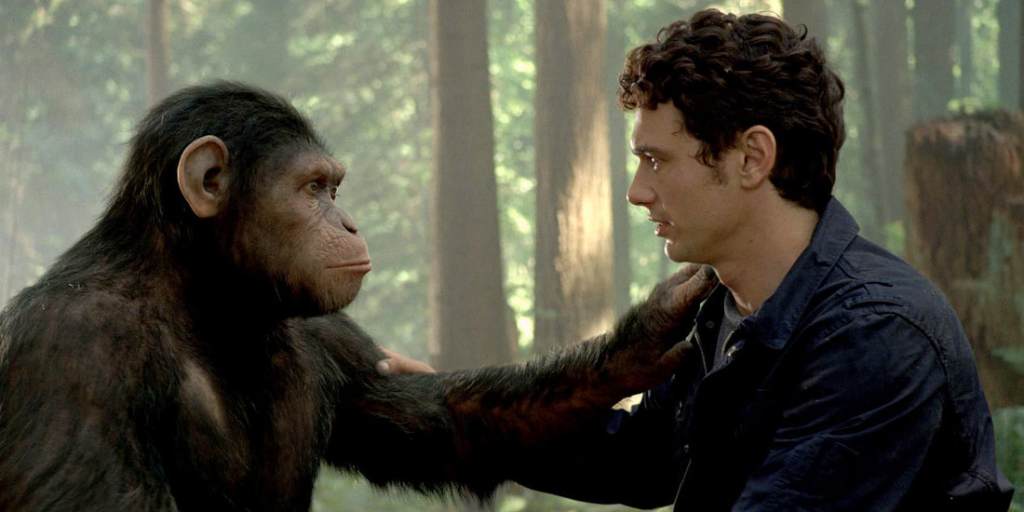
2. Rise of the Planet of the Apes (2011) – Rewatching this series reboot recently, I was amazed at how gripping the emotional journey of young Caesar (Andy Serkis in the first of three astoundingly good motion-capture performances) is. Set pre-apocalypse, this one aims to tell us how we ended up with a “Planet of the Apes” through a combination of chance and human-created plague. Unique in this entire series, it’s recognisably set in “our” world, and it’s really the only movie where we see a human and an ape truly have an affectionate familial bond (James DeFranco’s turn here is superb). Perhaps it has less “action” than some of the movies, but the Golden Gate bridge climax remains thrilling and for me it’s one of the best of the saga. It’s no wonder that unlike Burton’s flop, this energetic reimagining enabled the series to carry on for four movies and counting. 

1. Planet of the Apes (1968) – The original and still the standard for this series. Charlton Heston’s aggressive, cynical spaceman, that dissonant and unforgettable soundtrack, the still amazing makeup work, Roddy McDowall and Kim Hunter’s endearing apes, those vast desert vistas, Maurice Evans’ conniving Dr Zaius and what is probably the greatest twist ending in movie history. No wonder we’re all still returning to apeland 50-plus years on. 

‘Planet of the Apes’ and learning to love the unhappy ending

*Spoilers* galore for a 50-year-old movie series ahead!

I first stumbled across Planet of the Apes in an after-school TV marathon of the original movies in the early ‘80s sometime. It’s no exaggeration to say they kind of blew my little human mind. And the thing that struck me the most, as I gulped down Planet, Beneath The Planet of the Apes, Escape From The Planet of the Apes and Conquest of the Planet of the Apes in a single week, was that there were no happy endings in this ape-filled apocalypse. 

Everyone knows how Planet ends, with Charlton Heston wailing alone in the sand of a shattered world. Pre-internet, pre-memes, I was just raw enough to be stunned by the gorgeous tableau of a broken Statue of Liberty, and how Heston’s cynical, alpha-male astronaut finally runs up against an obstacle he can’t bully or bluster past. 

Yet it was the impossibly bleak sequel, Beneath The Planet of the Apes, which made me an Apes-man for life. An immensely weird and surreal movie, it introduced peeled-face human mutants, horrifying visions of crucified apes and bleeding statues, and oh yeah – the destruction of planet Earth, blown to bits by a leftover atomic bomb in a struggle between apes and mutants. The final 20 minutes or so of Beneath is as dark as it gets, with Heston (who barely appears in the sequel) shot, mortally wounded and in his final moments, slumping to his death to trigger the apocalypse with what still seems to me like a sigh of relief. The screen fades to black, and we’re told: “In one of the countless billions of galaxies in the universe lies a medium-sized star. And one of its satellites, a green and insignificant planet, is now dead.” And the kicker – this movie was rated G

As Beneath faded to black, the first time I watched it as a kid, I was filled with a bone-deep chill of horror that left me feeling very, very small in a vast universe. And the thing is, I liked it. It made the open-ended Empire Strikes Back’s bleak ending, so daring-feeling at the time, seem like a Care Bears cartoon. 

Improbably, they managed to make three more Apes sequels after they blew up the whole world, by throwing in a little time-travel. 1971’s Escape From The Planet Of The Apes lures us in by being the most overtly comic of the series, with charming Cornelius and Zira catapulted back to a groovy ‘70s America, but soon, the darkness inherent in the series seeps back in with an ending that almost tops the nuclear doomsday of the last movie. In its final moments, the two ape refugees and apparently their infant child are shot to death under brilliant sunny California skies, their attempts to escape the end of the world fruitless. There is no way out of doomsday, Escape tells us.

But of course, there would still be another Apes sequel, this time picking up with Cornelius and Zira’s son Caesar – still alive, with another poor little chimp baby shot down in his place! – in what I’ve come to think of as the second best of the series, 1972’s Conquest of the Planet of the Apes. Set in some dystopian fascist 70s-style future where apes have replaced house pets and Caesar rises to lead a revolution, Conquest isn’t subtle in its Nazi imagery and racially charged metaphors, but I forgive it all for the cathartic carnage of its final scenes, where Caesar leads a mob that begins the dark process of overthrowing mankind that ultimately leads it to where it ends up, mute, naked and afraid in the original Planet of the Apes

This movie’s ending was deemed so dark that it was edited into something more optimistic for its original release, and Caesar’s final speech ends in a note of possible peace. Forget that and go for the unrated original version seen below, where Caesar’s blood-and-vengeance preaching has the punch it was meant to, and we end for the fourth movie in a row with a dark, dark ending – a city in flames, a brutalised race rising up and the future looking, once more, very, very grim for humanity.

It’s hard to think of a non-horror movie series that ends on such downers for four successive films. (The fifth and by far least of the original series, Battle For The Planet of the Apes, suffered from huge budget cuts and a rather disposable plot set sometime between Conquest and the original on the timeline. It ends without mass bloodshed, but still with a vision of a statue of Caesar weeping, knowing that things will soon get much, much worse.)

Even in more modern Apes movies, you won’t get hug-filled happy endings. Tim Burton’s misbegotten 2001 remake was mostly awful except for the makeup effects, but did end on a darkly dumb note echoing the original movie. The terrific latter-day Apes trilogy all tend to end on less utterly nihilistic points than the original series. Yet each one of them has a more quiet note of rising dread in their climax, a sense that things are only, ever, going to get worse before they ever get better – if they ever do. This Apes fan is pretty excited for next year’s Kingdom Of The Planet of the Apes, the 10th (!) Apes film, but they better not cop out and give us too happy of an ending.

By forcing us again and again to look at the possible end of all things, the Apes movies have had the curious effect of making me look back at the real world with a different eye – appreciating the fragility of it all, the impermanence and the tiny little beautiful moments, whether it’s Cornelius and Zira exchanging a look of love, little Caesar’s love for his adoptive human family in the 2011 Rise of the Planet of the Apes, or even Charlton Heston and his mute mate Nova, alone on a horse through a blasted landscape, a bleached and battered world that still has a hint of dark beauty amongst all the ruins. 

On all the planets of the apes, there is very little optimism, but yet, we keep coming back, again and again, hoping to find it. I guess that’s what makes us human.

Charlton Heston and the humbling of the alpha male

Charlton Heston, screaming on the beach. Charlton Heston, bleeding out in a fountain. Charlton Heston, being dragged off to the insane asylum.

“I feel lonely.” – Charlton Heston, Planet of the Apes

There’s a special place in my heart for Heston’s dark apocalypse trilogy of the late ‘60s/early ‘70s, the three brutal dystopian futures of Planet of the Apes, Soylent Green and The Omega Man. I’ve watched each of these movies multiple times over the years, and Heston’s clench-jawed, manly man everyman struts through each one of them like a soon-to-be-deposed king. You can’t take your eyes off of him.

Heston had a gung-ho heroic image polished in such films as Ben Hur and The Ten Commandments. But in the 1970s, he cleverly subverted his image with this run of bleak sci-fi classics, each of which positions Heston as a so-called “superior man” who’s repeatedly humbled.

In every one of these films, he loses, hardly the “heroic narrative” but perfectly in place for the pre-Star Wars bleak vision of much 1970s science fiction. In Apes, he’s discovered he’s been a fool all along, and that his most cynical ideas about humanity have come true. (In the underrated and utterly nihilist Beneath The Planet of the Apes, Heston only pops up briefly to bleed to death and bring on a nuclear apocalypse, making the first movie’s ending seem positively idyllic.)

In The Omega Man, Heston dies Christ-like, shot down and bloody while trying to save the world, while in Soylent Green, he’s hauled off by the police to an asylum or worse, spouting crazy conspiracy theories about humans being turned into food.

Matthias: “You are discarded. You are the refuse of the past.”
Neville: “You are full of crap.” – The Omega Man

It’s easy to see Heston as a dinosaur from another age 50 years on, especially with his image off the screen. Heston in later life was a pretty gung-ho Reagan conservative and infamously a cheerleader for the National Rifle Association. (However, for those who want to paint him entirely as some Trumpian troll in real life, it’s worth noting that he was also an outspoken supporter of civil rights and marched with Martin Luther King Jr.)

But on the screen on the 1970s, Heston’s image was crucial to making the doom trilogy of films work. Our first sight of him in Planet of the Apes is him alone, on a spaceship, smoking a cigar (!!!) and ruminating about man and his place in the universe. In The Omega Man, he spends much of the movie alone in his doomsday bunker of a house, the “last man on earth.” In the crowded future of Soylent Green, he’s rarely alone, but his gradual uncovering of the title conspiracy leaves him utterly alone in a crowd by the end.

Yet what I like about Heston’s clench-jawed manly man image in the apocalypse trilogy is that it’s always on the verge of cracking. John Wayne or Clint Eastwood’s earlier films also served up manly men archetypes, yet Heston’s arrives imperfect from the get-go in these films. He’s the portrait of the American white male circa 1970, screaming “it’s a madhouse” as the world around him changes in ways he can’t fathom. The seeds for the popularity of the flawed, “un-Hollywood” leading men of the 1970s played by DeNiro, Pacino or Hoffman are found here.

Heston is so watchable for me in these films partly because he is humbled, again and again, in this apocalypse trilogy. In Apes, he’s reduced to a mute, naked beast, running through the bush in terror.

Life is a series of humiliations for us all, really, of attempts to climb to the top of the heap and constantly finding the flaws within.

Heston’s vivid presence keeps these films alive today, even with his sometimes retrograde sexism and unquestioned white privilege. The subtle ways the narratives in these films question his status stand out now. The opening half hour of so of Planet of the Apes, before those apes come along, is a showcase for his diamond-sharp, Darwinian worldview. One of the central images of Planet of the Apes is him realising he’s no longer the alpha male, again and again.

George Taylor: The way you humiliated me? All of you? YOU led me around on a LEASH!
Cornelius: That was different. We thought you were inferior.
George Taylor: Now you know better.

Mere minutes after this exchange, Heston’s Taylor is left weeping on an empty beach, pounding sand and beholding the ruin of his world.