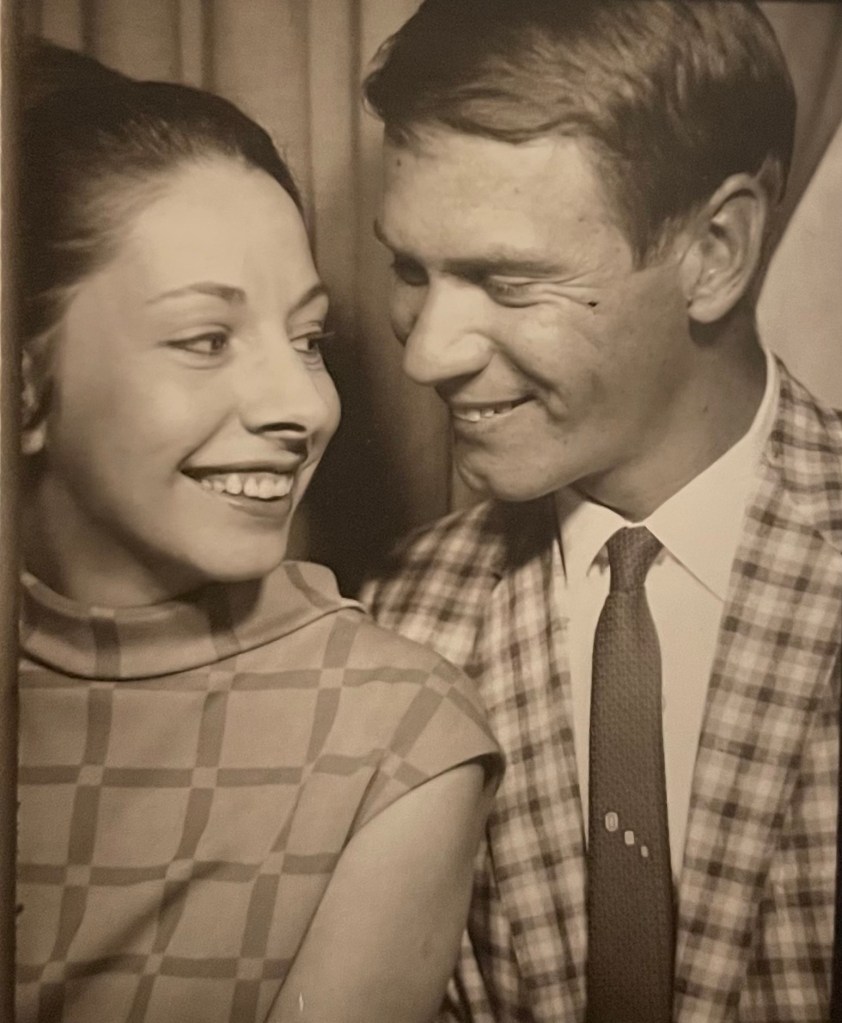
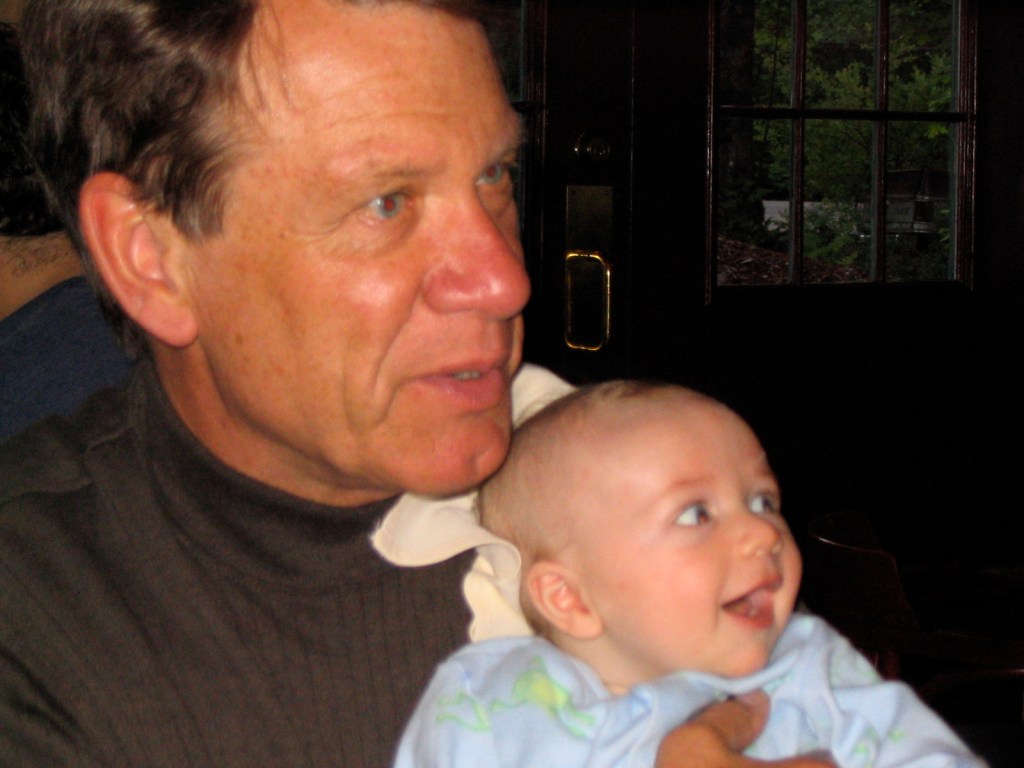
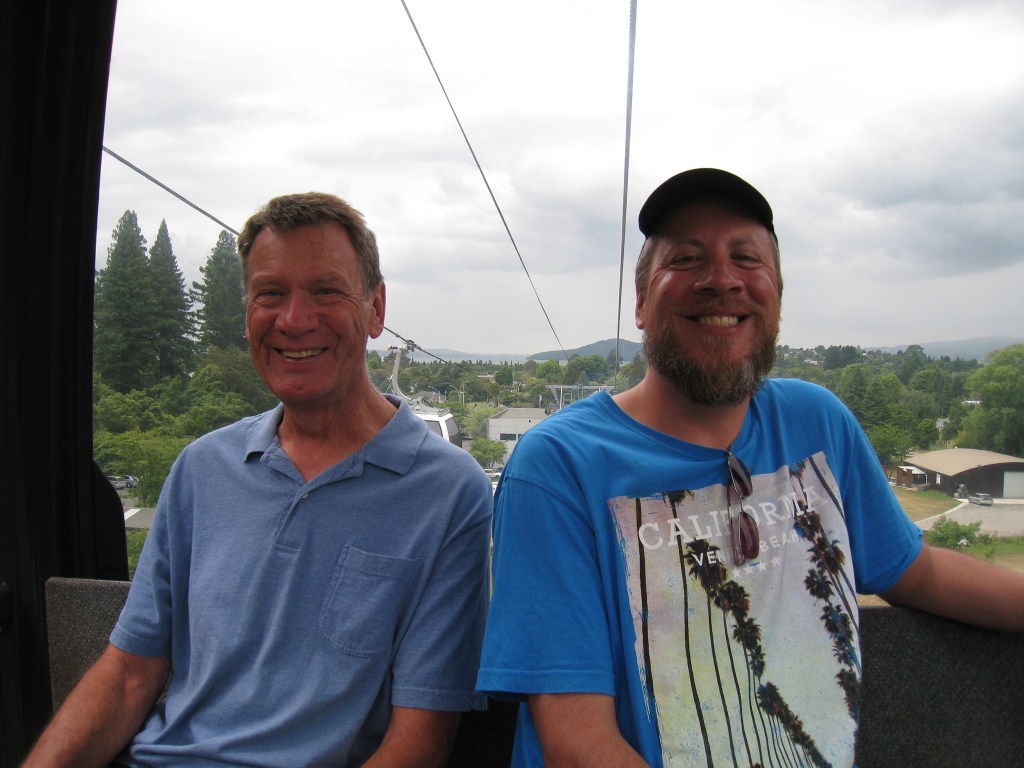
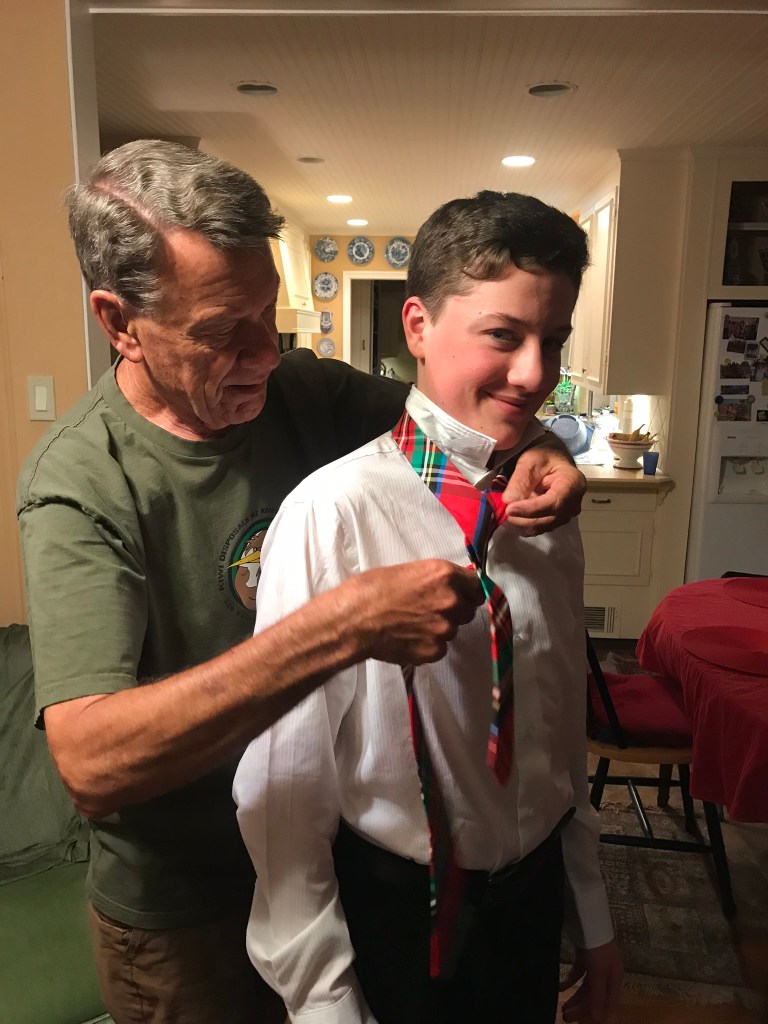
Tall and strong, he was the oak at the center of our family tree. He had a precise mind, an easy smile and a gentle, firm heart.
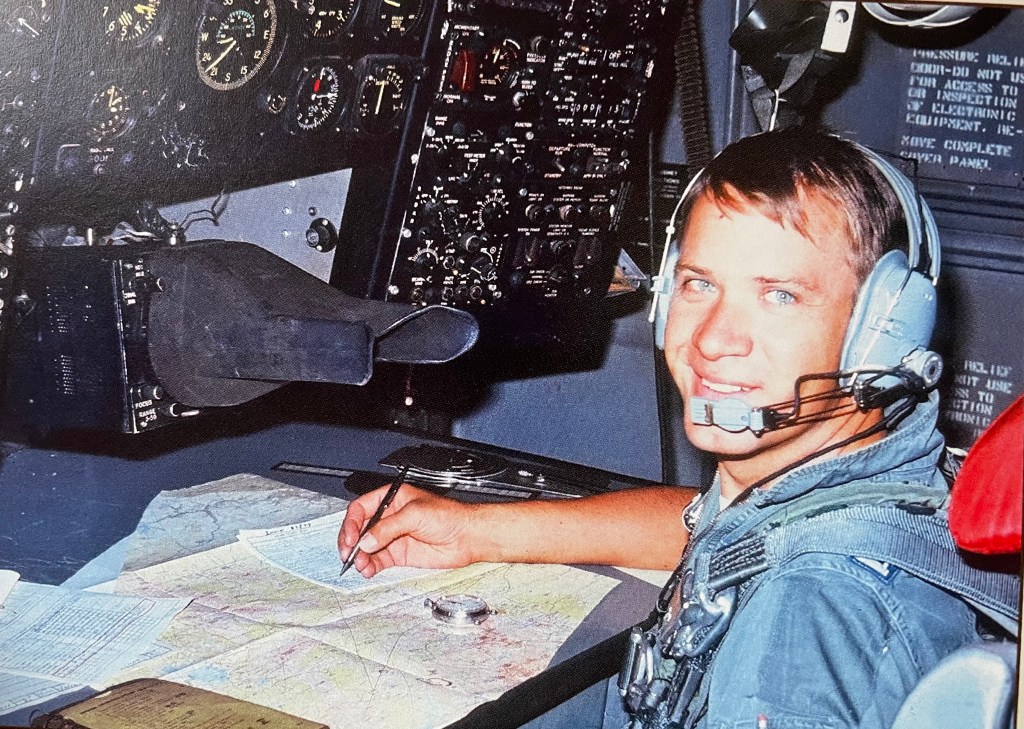
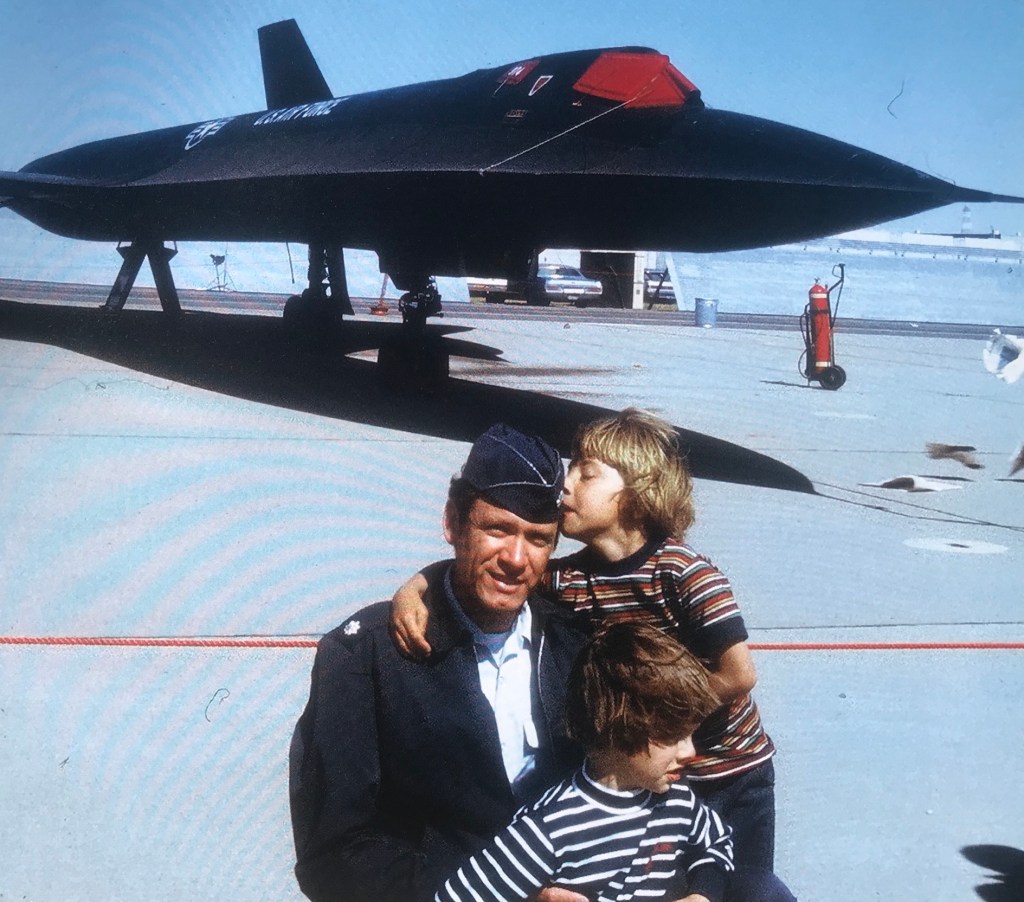
For years he flew on Cold War missions for the U.S. strategic air command, doing things like taking off from Alaska and flying over the North Pole on Soviet reconnaissance. After retiring from the Air Force as Lieutenant Colonel, he earned degrees in English literature and electronics.
He never stopped wanting to know more. Our house was full of books. He believed we should know about the whole wide world. He was always there for my brother and I with advice, encouragement and love.
One of his best friends of the past 50 years told him at the end, “You’re the pilot.” He really was. He told us a lot the last few months how grateful he was for all that he got to have, and he fought so very hard to stay.
There’s so much more I could say, but all I can tell you now is how much we will miss him. He was the pilot.
As I’ve written about before, I’ve always loved the Apes series, with its distinctly bleak and apocalyptic vision. It’s versatile enough as a concept that we’re seeing the tenth Apes movie opening this week, the very nifty looking Kingdom Of The Planet Of The Apes.
Unlike several other long running sci-fi series, the Apes saga generally has had a higher success rate for its sequels, which generally haven’t felt like laboured intellectual property cash-ins (I’m looking at you, Terminator and Alien franchises). There’s only one, maybe two truly bad movies in the whole series, in my humble opinion.
That said, in honour of the 10th Apes extravaganza, here’s my entirely personal Beneath the Escape from the Ranking of the Apes movies (pre-Kingdom!):
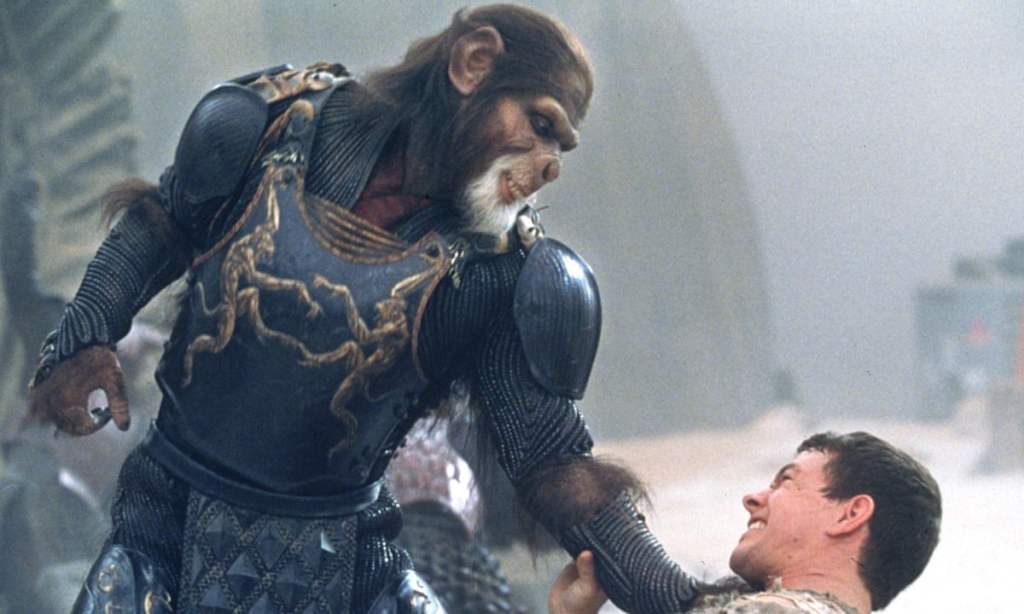
9. Planet of the Apes (2001) – Tim Burton’s oh-so-millennial reboot showed that you should never try and just remake the original POTA (which, I hope, the current series isn’t working its way towards doing, either). A wooden Mark Wahlberg stars in a strange sideways version of the original’s astronaut journey. Like many Burton movies it often looks great but the story is a bit of a mess with a legendarily dumb ending. The single best thing about this movie is the excellent makeup for most of the apes, especially sneering Tim Roth. (A freakish design for Helena Bonham Carter, on the other hand, manages to look worse than the female apes did in the 1960s.)
8. Battle For The Planet Of The Apes (1973) – The least of the original series is also by far the cheapest. Made for what looks like about $25, it’s got an OK plot that revolves around the final days of man and ape attempting to live together kind of peacefully, touches on the mutants from BeneathThe Planet Of The Apes, and as always Roddy McDowall is worth watching in his fourth turn in an Apes film. But the sluggish movie lacks any scale – the “battle” of the title is about a dozen humans puttering around in off-road vehicles, and everything just feels a bit exhausted by this point.
• Everything from here on up is still a very good Apes movie, in my humble ape-inion – just varying degrees of personal preference and heck, my rankings might change on a daily basis.
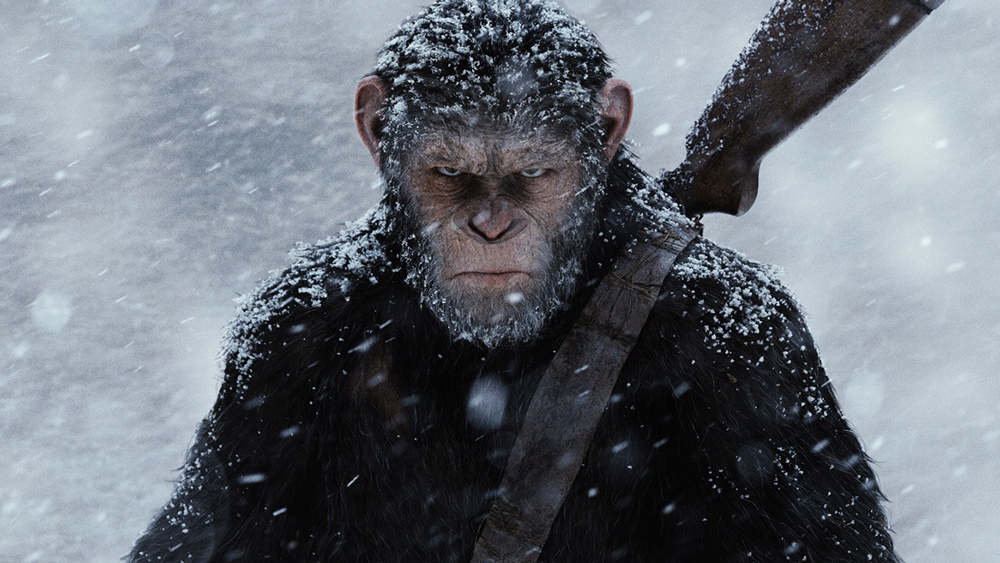
7. War of the Planet of the Apes (2017) – Up until now the latest in the series, this concludes the Caesar reboot ‘trilogy’ in a typically bleak, cynical Apes fashion. Humanity is truly falling apart now, and even starting to lose their voices in a callback to the first movie. Woody Harrelson’s fanatical, scenery-chewing Colonel is one of the series’ best human villains, and Caesar truly becomes a Christ-like figure with all his suffering in this one. At nearly 2 1/2 hours it’s a bit overlong and does bog down a bit in the prison camp scenes, and there’s a little too much torture and cruelty, even for an Apes movie, but it rallies for the biggest battle seen yet in the climax.
6. Conquest Of The Planet Of the Apes (1972) – So how did the Apes take over the world? This bleak (surprise!) third sequel to the original attempts to fill in the blanks by showing a subservient class of apes basically used as slaves one of those fascist-looking stark 1970s movie urban futurescapes. The parallels with the civil rights movement aren’t subtle, but mostly effective. Led by Roddy McDowall’s Caesar, the apes rise up to overthrow their masters. Hamstrung by a lower budget – the ape masks look particularly grotty in group scenes, and most of the action appears to take place in a few office blocks – Conquest is still a solid, hardboiled franchise entry, with probably McDowall’s best performance. The “theatrical” cut went for a neutered ending; if they’d used the darker original ending it’d probably go up a place or two here.
5. Escape From The Planet of the Apes (1971) – The most “light-hearted” of Apes movies, until of course everything goes horribly wrong. Blow up the Earth in the last one? No problem! Sending ape survivors Cornelius and Zira back in time makes for some great broadly comic 1970s culture clash moments, but as always in the Apes timeline, darkness beckons. An inventive way of continuing the series and creating a time loop, but the comedy and tragedy make for a somewhat uneasy mix. Still, I always get a kick out of watching a charming ape couple swaggering around ‘70s California.
4. Dawn of the Planet of the Apes (2014) – After series reboot RiseOf The Planet Of The Apes, the world as we know it is crumbling due to war and pandemic, as Caesar and his apes form their own world in the redwood forest and come to clash with human survivors in San Francisco. Like most Apes movies, it’s about people and apes trying co-exist and failing. The modern-day special effects are remarkable – no masks here! – as we start to see ape society splinter between hard-liners and moderates, while the human characters are sympathetic and well-rounded. It’s epic, but full of sharp character moments too.
3. Beneath The Planet of the Apes (1970) – Sure, this one is a strange, strange first sequel, muddled up by Charlton Heston more or less refusing to return except in a cameo, a whole goopy mutant human society being introduced seemingly out of nowhere, and one of the darkest, most cynical endings a mainstream G-rated movie has ever had. Yet I still love it precisely because it goes so hard – that final fade to black scarred me as a young ape-lover and still blows me away to this day. Whatever its complicated origins, Beneath the Planet of the Apes is a sequel that feels like it isn’t just about making more money and plotting easter eggs for sequels. There’s an eerie, doomed tone to the entire movie – that fiery vision of crucified apes and bleeding statues! – that carries me over some of the clumsier plot holes. Despite the end of the world thing and all, of course, it was only the beginning for this unkillable series.
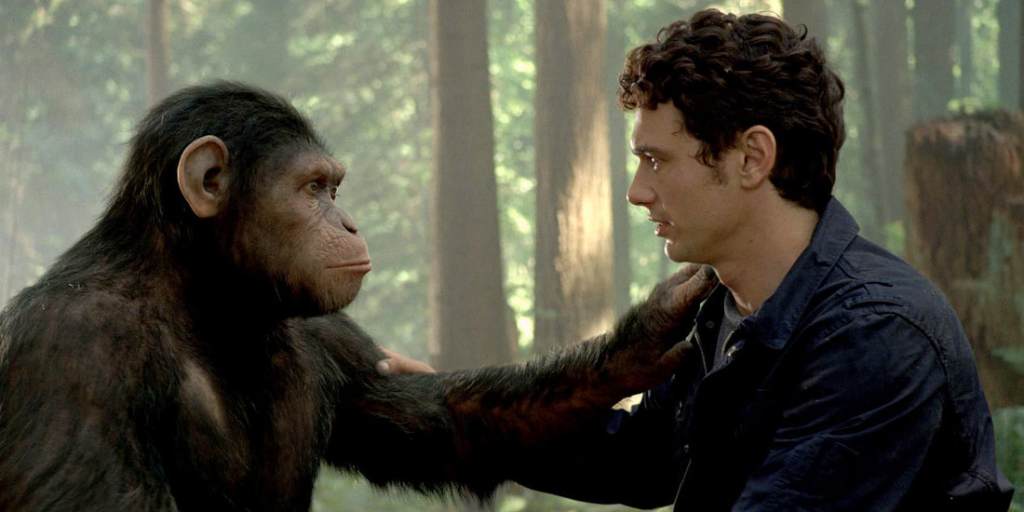
2. Rise of the Planet of the Apes (2011) – Rewatching this series reboot recently, I was amazed at how gripping the emotional journey of young Caesar (Andy Serkis in the first of three astoundingly good motion-capture performances) is. Set pre-apocalypse, this one aims to tell us how we ended up with a “Planet of the Apes” through a combination of chance and human-created plague. Unique in this entire series, it’s recognisably set in “our” world, and it’s really the only movie where we see a human and an ape truly have an affectionate familial bond (James DeFranco’s turn here is superb). Perhaps it has less “action” than some of the movies, but the Golden Gate bridge climax remains thrilling and for me it’s one of the best of the saga. It’s no wonder that unlike Burton’s flop, this energetic reimagining enabled the series to carry on for four movies and counting.
1. Planet of the Apes (1968) – The original and still the standard for this series. Charlton Heston’s aggressive, cynical spaceman, that dissonant and unforgettable soundtrack, the still amazing makeup work, Roddy McDowall and Kim Hunter’s endearing apes, those vast desert vistas, Maurice Evans’ conniving Dr Zaius and what is probably the greatest twist ending in movie history. No wonder we’re all still returning to apeland 50-plus years on.
Somehow, I’ve ended up working in journalism an awfully long time. And in that time, I have had many good editors, a great editor or two, and couple of terrible editors. I’ve also been an editor myself many times (I’ll leave it to others to judge where I fell on the scale myself).
An editor isn’t as glamorous as the headline-chasing feisty street-level reporter, perhaps. But in this age where journalism seems to be constantly under siege from all sides, editors do matter. They guide, they teach, they question, they correct, they set the tone and they can make or break a media outlet. My industry has changed a hell of a lot in the years since I started, but no matter how many apps, algorithms and pivots you throw at it, you need an editor in the mix to make quality journalism.
So here’s a tribute to the bleary-eyed, coffee-fuelled, rage-filled and yet quietly inspirational editors, with a look at eight editors portrayed in fiction who have always inspired me in my own wayward journalism journey, for good or bad.
Lou Grant, The Mary Tyler Moore Show (1970-1977) played by Ed Asner. When I think of a newsroom editor, the rumpled face of Ed Asner leaps to mind. No-nonsense, idealistic and gruff but with a heart of gold, Asner’s Lou Grant was the comic anchor of the still-classic Mary Tyler Moore Show. “Spunk? I hate spunk!” he growls at Mary in the very first episode. Asner played a sitcom character who was still a believable editor, and after the delightfully wacky Mary Tyler Moore Show ended its run he went on to play the exact same character in a very different drama that lasted for five seasons. Now that’s adapting your skill set to changing times.
Perry White, Superman comics: The greatest editor in comic books, even when his newspaper staff appeared to only consist of Clark Kent, Jimmy Olsen and Lois Lane in the glorious Silver Age days. White is old-school journalism to the max, firmly pushing for truth, justice and the American way, just like the Daily Planet’s office mascot Superman. White is constantly shoving his reporters out the door on wacky circulation-boosting assignments, hunting for that story that will make him shout “Great Caesar’s ghost!” In a world filled with kryptonite, Bizarros, giant alien gorillas, fifth-dimensional imps and more, Perry White is a glorious constant. I would work for Perry White any day of the week.
Jane Craig, Broadcast News (1987) played by Holly Hunter: I can’t pretend I know what it’s like to be a woman in a newsroom, but in this classic ‘80s romantic comedy, we watch Hunter’s intense and driven Jane Craig rise through the ranks and juggle relationships with two good but flawed journalists (the amazing Albert Brooks and William Hurt) while never giving up on her own goals. Hurt’s vapid pretty face and Brooks’ charisma-challenged newsman represent the two sides of journalism that never quite come together, while Hunter – trying to keep her principles in a constantly changing industry – is the one who really succeeds in the business.
Charles Foster Kane, Citizen Kane (1941) played by Orson Welles: Is he a good editor-publisher? After all, Welles’ masterpiece is about the rise and fall of Charles Foster Kane. Yet while he’s an egotistical, perpetually unsatisfied tyrant, what we see of Kane’s managerial skills in Citizen Kane also shows us that he’s a darned good newspaperman, hustling for scoops, scandals and attention. Yeah, he bends ethical lines a fair bit, but I’m willing to cut him a little slack as he dates back to the peak era of yellow journalism led by Hearst, Pulitzer and the like. I don’t imagine I’d like to work for Kane, but I’d sure as hell read any newspaper he put out.
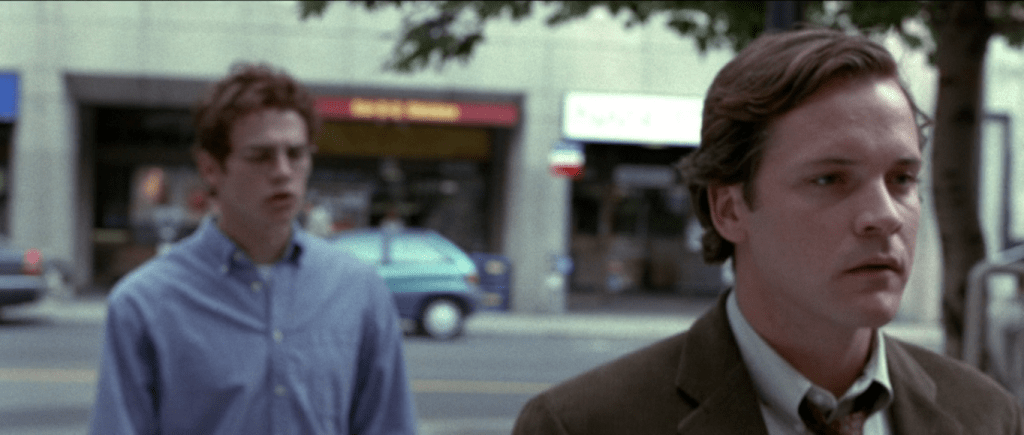
Charles Lane, Shattered Glass (2003) played by Peter Sarsgaard:Shattered Glass remains one of my favourite, still rather underrated journalism movies, about the plagiarist liar journalist Stephen Glass and his unravelling. Sarsgaard is fantastic as the unassuming editor who begins to smell a rat in Glass’ fabulist copy, and doggedly purses the loose ends to discover what the real truth is. Calm but determined and intensely offended by Glass’s stream of lies, Sarsgaard’s Lane makes the dull business of factchecking seem like a spy thriller.
Ben Bradlee, All The President’s Men (1976) played by Jason Robards. Robards is the only one on this list who won an Academy Award for playing an editor, and rightfully so – his inscrutable, steel-eyed Bradlee is the axis around which Dustin Hoffman and Robert Redford’s Watergate investigation revolves in All The President’s Men. Without Bradlee’s guiding hand and consent, the story wouldn’t be told. Like the best editors, he’s kind of terrifying, too.
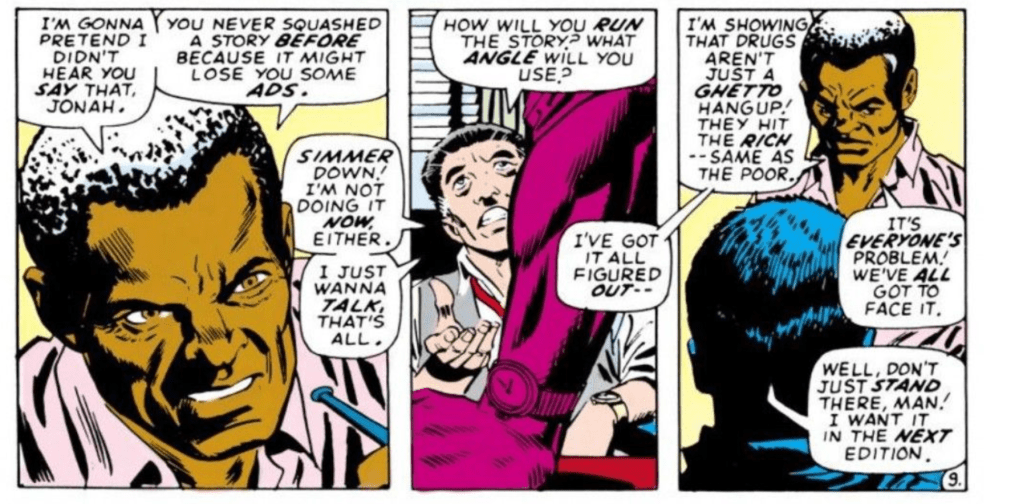
Robbie Robertson, Spider-Man comics: Look, Spider-Man’s nemesis J. Jonah Jameson is undeniably entertaining, but firmly belongs on the worst editor list. How worst? He fires Peter Parker about twice a week, lied repeatedly about Spider-Man in print, hired supervillains to kill him, and on several occasions personally piloted giant robots to beat up Spider-Man. That’s a bad editor. But shift your gaze slightly to the side to consider Jameson’s managing editor at The Daily Bugle, Robbie Robertson, who for decades has been a calm, firm but steady presence in the newsroom, frequently dealing with his impulsive boss’s rants and focused far more on truth than agendas. Jameson makes all the noise; Robertson gets the damn paper out.
Dave Nelson, NewsRadio (1995-1999) played by Dave Foley: As the news director of WNYX, perky Dave Nelson is a sweet-faced rube thrown into a lion’s den of ego, eccentrics and mania. Surrounded by blowhards like Phil Hartman’s anchor Bill McNeal and a variety of other kooks including Stephen Root, Andy Dick and Maura Tierney, Foley as an editor spends almost the entire run of this classic sitcom putting out fires. And you know, that’s often what an editor’s job is – dealing with your staff and juggling all the balls at once. While he occasionally snaps, Dave Nelson simply being able to survive in a radio newsroom bubbling over with complicated personalities is an accomplishment all by itself.
















 Nik Dirga