Greetings! I wrote a book. Well, I’ve actually been writing it for about 30 years, believe it or not. Introducing Clippings: Collected Journalism 1994-2024, a hefty compendium of my columns, essays, feature profiles and much more over the course of my so-called career!
I’ve written an awful lot of words over the years, but I wanted to put together something that was a little more permanent than a bunch of yellowing newspapers and broken website links. Clippings is, much like many journalism careers, an eclectic mix, from long features to blog posts to deeply personal essays to in-depth pop culture criticism, spanning from Mississippi to California to New York City to New Zealand.
From interviewing governors and rock stars to climbing active volcanos and adjusting to life on the other side of the world, this book is me saying, “Hey, I was here, and this is some of what I did along the way.” Doesn’t everyone want to say that at some point about their life’s work, whatever it is? Throw it all together, and it’s probably as close to a sort of autobiography as I’ll ever get.
It’s got many of my works from long-ago newspapers and magazines, websites and even some fine pieces from this very website in a handsome curated form sure to be adored by your family for generations.
I hope you’ll consider grabbing a copy, now available on Amazon as a paperback for a mere US$14.99, or as an e-book download for just US$2.99!
So on Saturday evening I somehow did an Old Man Thing (TM) and put my back out, or nearly out, to the point where I was kind of afraid to move lest my spine shatter into a million delicate pieces.
And top of my mind was “Oh crap, I hope I can still go to the Amyl and the Sniffers concert Sunday night!”
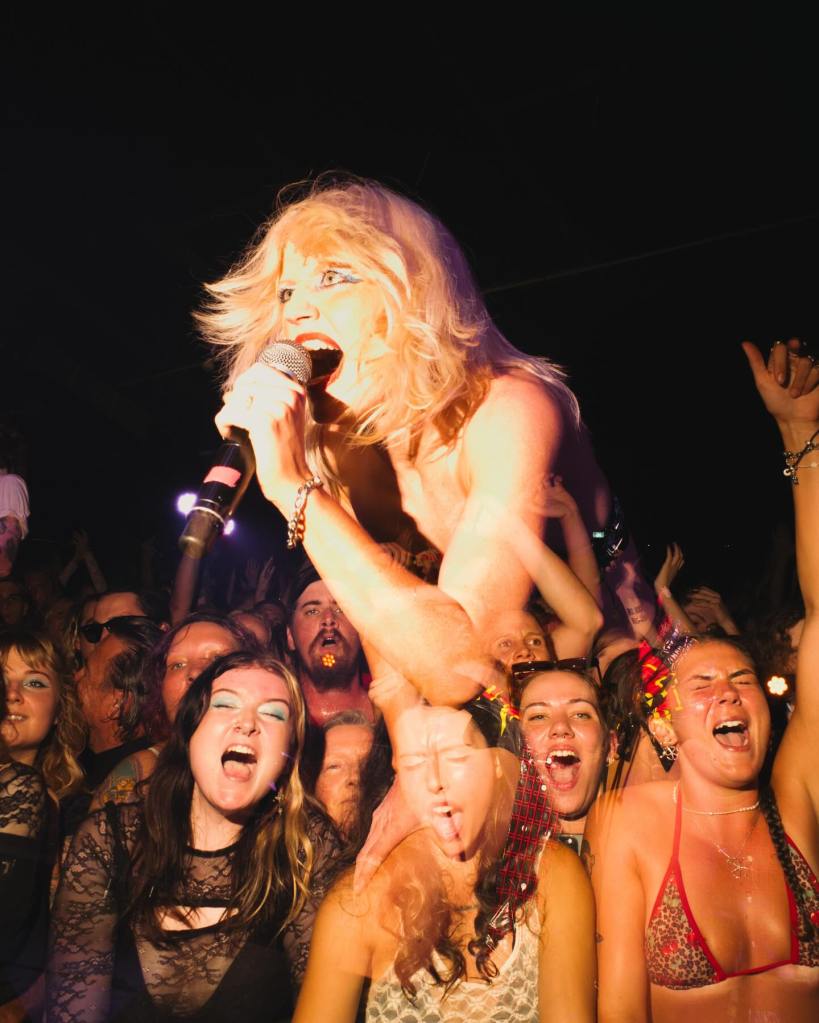
Fortunately for your hero, a bucket of painkillers and super-hot bath helped and I hobbled into the sold-out Powerstation for the Aussie punk act’s final sold-out New Zealand show. And after 90 minutes or so of amped-up feminist punk anthems and cautiously staying well away from the heaving mosh pit, lo and behold, I felt healed. (OK, I was still a little sore. But you get the picture.)
The Melbourne band has been kicking around for 7-8 years now but really broken through with their excellent 2024 album Cartoon Darkness, and the very NSFW single “Jerkin” which slams toxic masculinity in a grandly profane fashion.
Watching frontwoman Amy Carter and the band stomp, bounce and shimmy through their propulsive catalog, I kept thinking, “This band should be a household name.” Maybe they will be soon – they’ve got the talent, and the fuck-the-system ethos that 2025 is desperately calling out for. Amy is a whirlwind of motion on stage, bouncing, sticking her tongue out and gobbing a bit in the time-honoured punk fashion, tossing her blond hair around and climbing up the speakers. She has true star power and it’s easy to imagine she’s just at the start of where she’ll go. “How you f—in’ doing?” she asked several times, and we were doing fine.
For “Me and the Girls,” Amy welcomed on stage a random chorus of audience members of all shapes and sizes and it felt bloody celebratory. Amyl and the Sniffers’ tense anthem about violence about women, “Knifey,” struck a chord with never-ending misogyny still everywhere you look, while poppy nuggets like “Chewing Gum” and “U Should Not Be Doing That” marry plentiful hooks with a bit of throbbing anarchy.
I wrote more about punk (and Amyl) not too long ago and if anything, the vibe has gotten even more spirit of 1977 in my headspace lately. What a joy, then, to see Amy take the stage with swagger and anger, but also, kindness. Her first words to the audience were if you see someone fall in the mosh pit, pick them up, and don’t touch anyone who doesn’t want to be touched. Don’t be a jerk. It shouldn’t be that hard.
It was a show full of joyful rage against the cartoon darkness we’re all living through. I thought a bit about one of my favourite writers, Tom Robbins, who died just last week at age 92, and his mantra: “My personal motto has always been: Joy in spite of everything.”
There was joy at Amy and the Sniffers Sunday night, in spite of everything. Even my back.
A couple other great reviews by people who are not me:
When I was a kid I always thought Captain America was a bit dorky. Batman and Spider-Man and Wolverine were hip, man.
It took me a long while to discover the uncomplicated charms of Cap. He’s a good man in a world full of troubles, which for some peculiar reason I can’t quite put my finger on, seems really appropriate as a role model in this battered year of 2025.
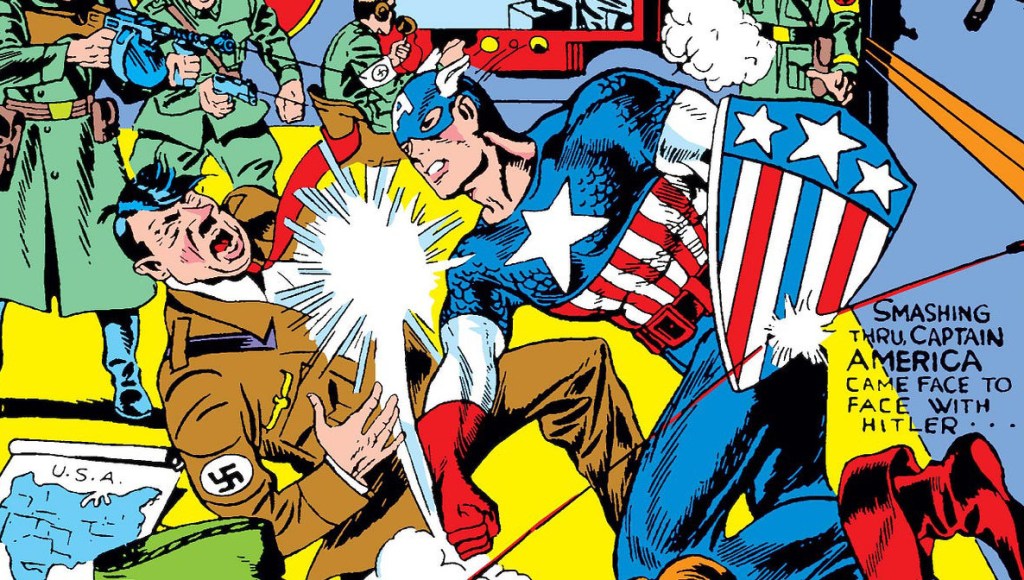
Captain America has been slinging his shield since 1939 in comics, and was probably punching Nazis before your grandparents were even born. Brought back in the 1960s as a keystone for the Avengers, he’s been the moral centre of the Marvel comics universe for decades.
Yet I really didn’t read an awful lot of Captain America solo comics until the last few years – I never disliked the character, who soared in a lot of great Avengers comics, but he just seemed rather, well, white bread.
But as usual, I was wrong, and slowly working my way through lots of great Cap stories from the 1960s to 2020s has shown me that you can still make a patriotic American superhero interesting. Like any character, there’s ups and downs to be had, but creators like Lee and Kirby, Steve Englehart, Ed Brubaker, the late Mark Gruenwald and Roger Stern have all done terrific stories over the years.
The challenge for writers has been in making Cap a believer in a higher cause without being a mindless follower to it. An element of doubt is key to making Captain America great.
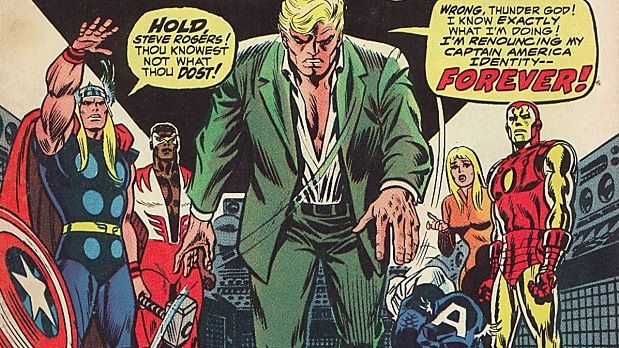
Evil Captain America has been done far too many times and isn’t that interesting, but Doubtful Captain America is a constant of the character, a man who believes in his country but is fairly often willing to question it, up to engaging in a civil war over his beliefs or even quitting the job several times.
As an example of bad Captain America, Mark Millar’s post-9/11 edgelord Captain America in The Ultimates hasn’t aged well at all, channeling Bush-era belligerence and arrogance into a character who’s the opposite of what Cap should be. And being good isn’t being weak.
There’s a fine line between making Cap frequently question his patriotism and making him a whining bore, of course. Yet I admire the writers who’ve made us realise that uncertainty and kindness isn’t a bad thing, all while telling us stories of a man dressed up in red, white and blue.
There’s nothing worse than a fanatic who thinks he can do no wrong. For some reason I’ve been thinking about that a lot lately.
The marvellous performance by Chris Evans as Steve Rogers in the MCU helped seal my Cap fondness, making square-jawed decency seem kinda hot. And of course, there can be more than one Captain America – Anthony Mackie is stepping up as the main man’s successor in a new movie being released this week. Whether or not the movie itself is great, Mackie has done a fine job in his MCU appearances tapping into that fundamental charm and battered optimism Cap needs.
I imagine if Cap was real these days he’d be aghast at a lot of what’s going on under the colours of his flag, but then again he’d probably find it pretty familiar. He punched Hitler, after all.
Again, maybe it’s the tenor of the times. There ain’t a lot of heroes in the real world at the moment. I’ll just keep reading my Captain America comics and hoping for better days ahead.
One of the secrets of Bob Dylan’s success is his enduring mystery. Dylan has forged a 60-year career out of being opaque, inscrutable…. a “complete unknown,” if you will.
I’ll admit, I’m kind of a sucker for rock star musical biopics, even when they’re terrible. I watched Elvis and Walk The Line and Bohemian Rhapsody and I embrace the cheesy “rags to riches to overdose” narrative of such films, even when my head admits they’re not always great movies.
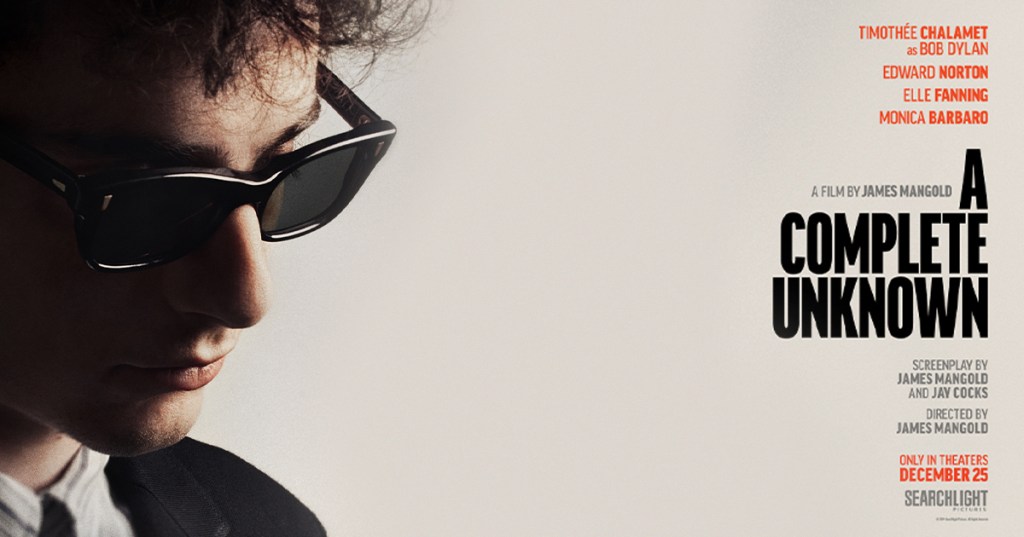
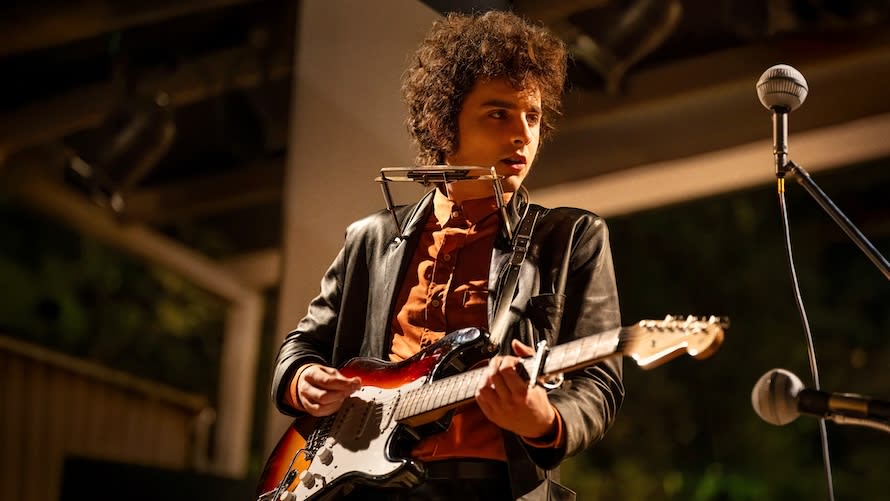
A Complete Unknown is a deep dive into Bob Dylan’s early years that does its share of romanticising and mythologising… but then again, hasn’t Dylan himself been doing that since he was a kid? For me, it hit the spot by embracing the many mysteries of Bob, revelling in music biopic cliches while being just prickly enough to feel real.
Timothée Chalamet is really far too pretty to be young Bob, who had a reedy, squinty babyface, but he nicely summons up the keen intelligence, peculiar charisma and somewhat mercenary ethics of young Bobby. Dylan rode into New York from rural Minnesota pretending to be everything from a hobo to a carnival worker. He threw aside his birth name of Zimmerman and became a kind of perpetual musical sponge, absorbing everything and synthesising it into something kind of new.
A Complete Unknown is about the birth of an artist who’s also a magpie, a wry cynic and also kind of a genius who’s not really a very nice guy. Dylan is called an “asshole” a couple of times in the film, which thankfully doesn’t try to show him as some kind of saintly hero. We avoid some big teary monologue where Bob Dylan reveals all the dark secrets that motivate him.
This exchange is as close as A Complete Unknown gets to peeking behind the mask: “Everyone asks where these songs come from, Sylvie. But then you watch their faces, and they’re not asking where the songs come from. They’re asking why the songs didn’t come to them.“
Chalamet’s natural teen idol charm is cleverly subverted just enough to make his Dylan feel like an echo of the thin wild mercury sound of the man himself. (And while he doesn’t sound exactly like Dylan singing, he sounds close enough to make it work, and lipsynching Dylan would’ve been even weirder.)
A Complete Unknown takes the great Bob Dylan creation myth and hits all the beats – his turn from folk music to electric, his wry confidence, his thorny romance with Joan Baez, his worship of Woody Guthrie. The movie follows Dylan from his arrival in New York as an eager kid up through his explosion into stardom in the mid ‘60s, and its big emotional turn is in Dylan’s moving from stark and preachy folk into raw and raucous rock, culminating in his famously defiant “electric” performance at the 1965 Newport Folk Festival.
A Complete Unknown wrings Dylan’s transformation for a lot of drama that might seem a bit hokey from 2025 eyes – so he’s playing an electric guitar now, so what? – but it’s worth remembering that Dylan’s “betrayal” of folk was a big deal back in the day. (Ed Norton‘s marvellous supporting turn as folkie Pete Seeger really captures the man’s uniquely kind heart and endearing dorkiness.)
As anyone who’s dipped their toes into the vast waters of Dylanology knows, there’s an infinite number of Bobs in the Dylanverse. (At least 80, as I painstakingly rambled on about a few years ago!) There’s no way A Complete Unknown, which follows a fairly basic biopic blueprint, could satisfy everyone, and we’ve certainly got cinema bizarro like Todd Haynes’ I’m Not There or Bob-starring oddities like Masked And Anonymous to fill any taste.
Watching Martin Scorcese’s superb documentary No Direction Home again recently, which follows Dylan’s 1966 tour of Britain in some dazzlingly vibrant footage, I was struck by how angry many of the British fans interviewed at the time were with Dylan’s new style. “I think he’s prostituting himself,” one barks. Yet to my eyes now, the hyper electric Dylan of 1966 is quite possibly his finest era. God only knows what would’ve happened if social media existed at the time.
Unknown works for me because it never quite pretends to be definitive, and knows there’s many more alternate Bob stories to be told. But hey, it’s turning new audiences on to Dylan music, got a bunch of Oscar nods, and is a reminder that after nearly 84 years walking this Earth, there’s still nobody quite like him.
Is it 100% true? It’s pretty and darned entertaining, but perhaps its biggest success is in carefully keeping Bob Dylan’s true motivations a complete unknown.





 Nik Dirga