I still miss Halloween

Of all the holidays of my wayward youth, I think I miss Halloween the most. 

I have great memories of trick or treating on Race Street back in California as a kid, with my brother and neighbourhood pals, from when we were small enough to need a parental escort to when we were pushing teenager-hood and almost too old to pull it off.

I remember the daft costumes – dressing up as a blackfaced “assassin,” a pirate, Spider-Man, one memorable year attempting to pull off a mummy costume by donning yellow pajamas and draping them in toilet paper … which unravelled after the first few blocks. One of my very first appearances in the mass media was a grainy black and white newspaper photo of me dressed up as Underdog. Another year my parents hosted a great haunted house for our church (!) turning our basement into a cobwebby labyrinth of silly scares.
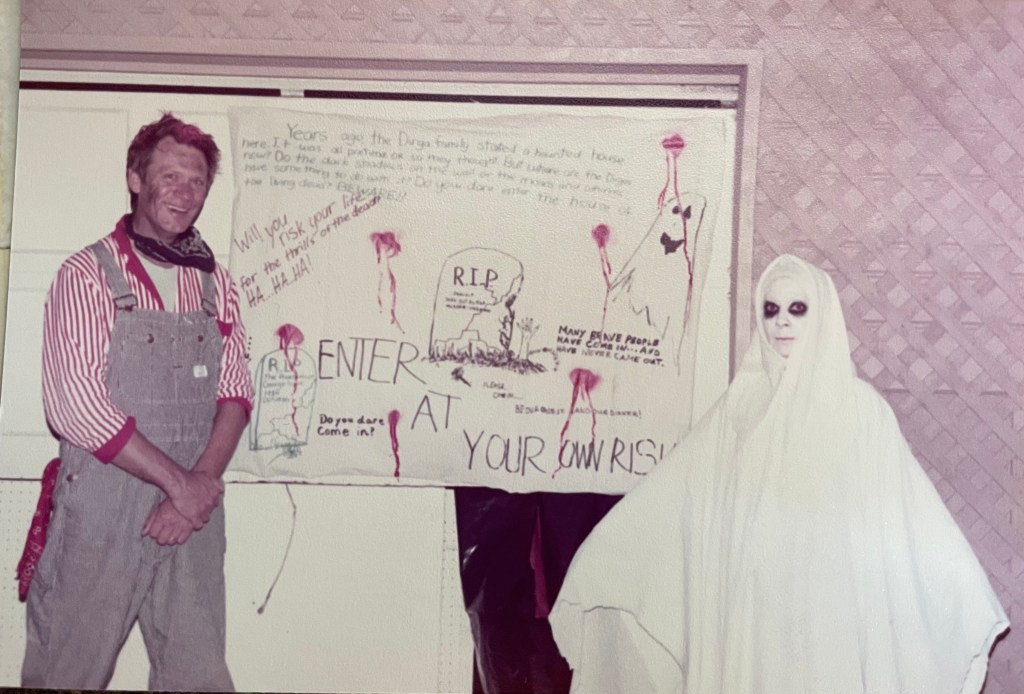
I think it was the delightful otherness of Halloween that appealed to me the most, the chance to dress up as someone else entirely for one day out of the year. The people who go on about it being some kind of “Satanic” holiday never had the kind of childhood fun I did. There’s far bigger monsters out there in America these days than kids having a bit of dress-up.

You’d wander up and down the shadowy streets and most homes would have a light on and a bowl of candy from the good stuff (M&Ms! Bounty! Pop Rocks!) to the not so good (candy corn, go straight to hell!). It was the one day of the year you’d get to actually see the inside of all the houses in your neighbourhood, even if it was just a fleeting glimpse. I think I came of age at peak Halloween time, before scary threats like poisoned candy or psychos with razor blades kind of spoiled the vibe.

Halloween was innocent fun but as you aged, it could get wilder and weirder. On a drunken expedition during freshman year in college we decided to steal a lot of neighbourhood pumpkins, which worked out great until I got pelted by a dozen eggs at one house. 

Halloween is kind of a thing in New Zealand, but not entirely. It’s definitely way more visible than it was when we moved here in 2006, but there is a certain amount of resistance to it. The stores all shove it down everyone’s throats starting in August or so because money, but I also still remember my late mother-in-law dismissing it as “begging for lollies.” It’s not embraced here.

Halloween kind of requires a cultural consent to pull off and it’s only partly there in New Zealand. Certain neighbourhoods are earmarked for trick or treating but most aren’t. And an awful lot of people here see it as another arrogant bloody Americanism being pushed on New Zealand, which, considering my homeland’s reputation these days, fair point. 

It’s also not helped by it being Spring down here when Halloween falls, and the days last until 8pm or so. Halloween trick or treating should properly be done in the dark, with a faint autumnal chill in the air, rather than spring blooms and chirping birds. 

When P was younger, I got a bit sad that they weren’t experiencing the kind of Halloweens I had. We had one Halloween in the US before we moved here when P was still a toddler. Still, I got a few of them in with our child while they were young enough to get into it – there was at least one good year of neighbourhood trick-or-treating with a cousin and a fun visit to a couple of carnivals. 
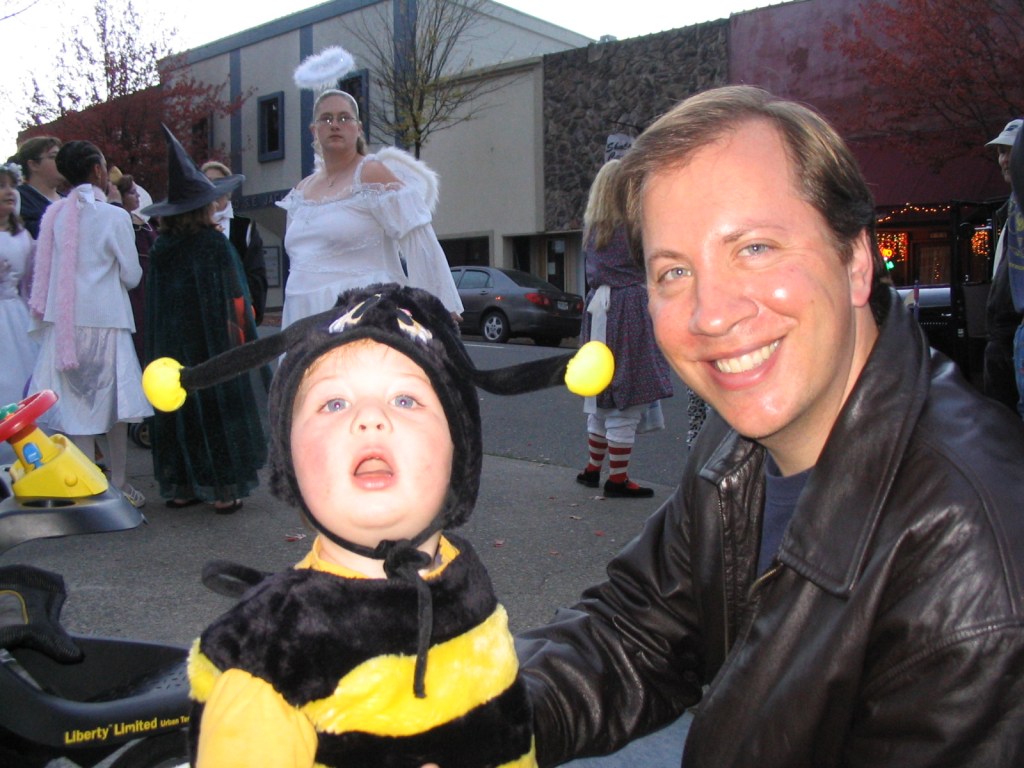
Another thing about Halloween is that it’s a holiday you largely age out of. There’s an ugly awkwardness to being a teenager too old to trick or treat shoving your way in among the little ones for a handful of Snickers. You can do Halloween as a bawdy older holiday of course, and I remember some fine drunken college Halloween parties that I think I enjoyed, but honestly, it’s mainly at its best a holiday for the kids and kids at heart, I think. 

So I still get that bittersweet nostalgia every October 31 remembering the Halloweens of the past and how one day you take off all those masks and have to become a boring old grown-up. I compensate, of course – typically with a lot of Halloween themed horror movies and hey, we might also have some candy in a bowl. For us, of course, not those lolly-begging trick or treaters.

You may get wrinkled and bent and unable to pull off a sexy Superman costumer but you never, ever age out of candy, by gum. 

That cinematic jolt: Spike Lee and those double dolly shots

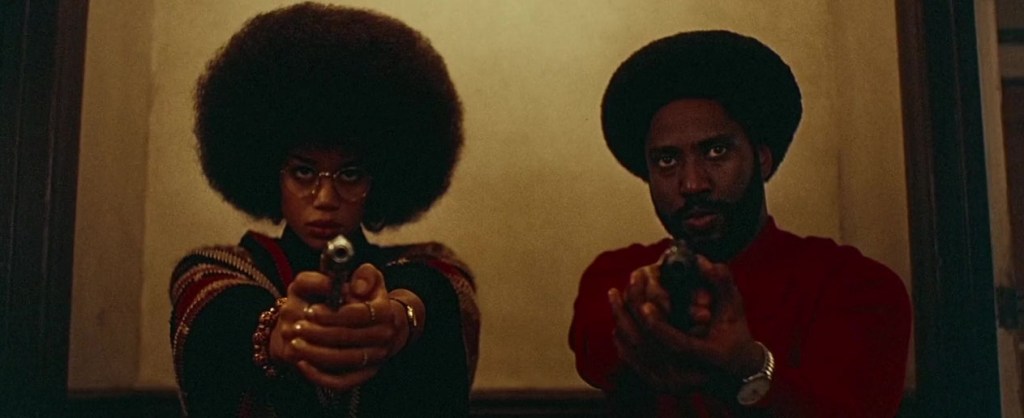
I’ve been on a bit of a Spike Lee binge lately, re-watching some of my favourites like Do The Right Thing and The 25th Hour and BlacKkKlansman and dipping into some of the more obscure byways of his filmography. I’ve been a fan since first having the sweaty chaos of Do The Right Thing blow my mind more than 30 years ago and even when Spike swings and misses, it’s usually worth a watch.

And there’s one thing that always gets me, whenever it pops up in his films – the jolt of the double dolly shot. For non-film nerds, dollies are basically cameras mounted on carts to capture fluid movement. In Spike’s films, he’s popularised using the “double dolly,” where two cameras on dollies work together to create an eerie sense of actors “floating” through the background, like they’re on an unseen riverboat wafting downstream. 

I love the double-dolly moments in Spike’s movies, which frequently illustrate emotional chaos like in Inside Man or foreshadowing fate as in Malcolm X. They’re kind of a cold splash of water that burst the fourth wall of film, like the kick of a 3-D movie effect without having to wear those dorky glasses.

When Malcolm X, shortly before he meets his brutal death, suddenly begins to glide through the New York streets, he no longer seems quite human – and yet, you can’t take your eyes off the effect.

Lee has always liked to shake the audience to remind them they’re watching a film, with those confrontational to-the-camera monologues in movies like Do The Right Thing. Sometimes it doesn’t work – as much as I like his coming-of-age comedy/drama Crooklyn, a bizarre choice to distort the aspect ratio to an elongated box for 20 minutes or so of the movie almost derails the whole thing. 

But when it works, for me, Lee’s double dolly shots deliver a shock to the system of passive film watching. In that same Crooklyn, there’s a few shots when the young girl Troy has vivid nightmarish dreams driven by double-dolly shots, which seem to emphasise how little control she has over her swirling life. At the movie’s end, the double dolly shot bursts into the real world in a cathartic moment when Troy and her brother attack the neighbourhood drug addicts. 

Is it a bit flashy and show-offy as a film technique? Certainly, and it’s a good thing generally Spike uses it sparingly, and not in every film. But if you save it for those critical moments – Philip Seymour Hoffman’s existential despair in The 25th Hour, or the startling burst of violent anticipation that ends BlacKkKlansman – it lands with a sharp impact.

The cinema screen often bends but it doesn’t quite break, but for me, in the quick brief moments of those trippy double dolly shots, Spike Lee comes very close to exploding the whole idea of what a movie can be. 

Swamp Thing: The forgotten comic book movie franchise

As part of my annual Halloween month monster movie marathon, I went back to the swamp. Swamp Thing, that is, who starred in two almost forgotten comic book movies that oozed their way through the ‘80s. Nobody would ever call them timeless classics, but I’m weirdly fond of them. 

Swamp Thing and Return Of The Swamp Thing came in that kind of interregnum in superhero movies through much of the ‘80s, in the period between the last good Christopher Reeve Superman movie Superman II in 1981 and the Tim Burton Batman-palooza of 1989. In that grim limbo we comics geeks made do, dimly, with unsatisfying stuff like Howard The Duck, Supergirl and Sheena: Queen Of The Jungle. 

Neither Swamp Thing movie is really great, but there’s something about them I’ve always found cheesily enjoyable, from their campy humour to their amiably low-fi practical effects. Now, Swamp Thing has starred in some of the greatest and most out-there comics of all time, and the basic muck-monster idea has exploded into existential horror, cosmic wonder, time travel, LSD-tinted romance and much more. But on screen, there’s still something loveable about just having a guy in a rubber suit wandering around the swamps. 

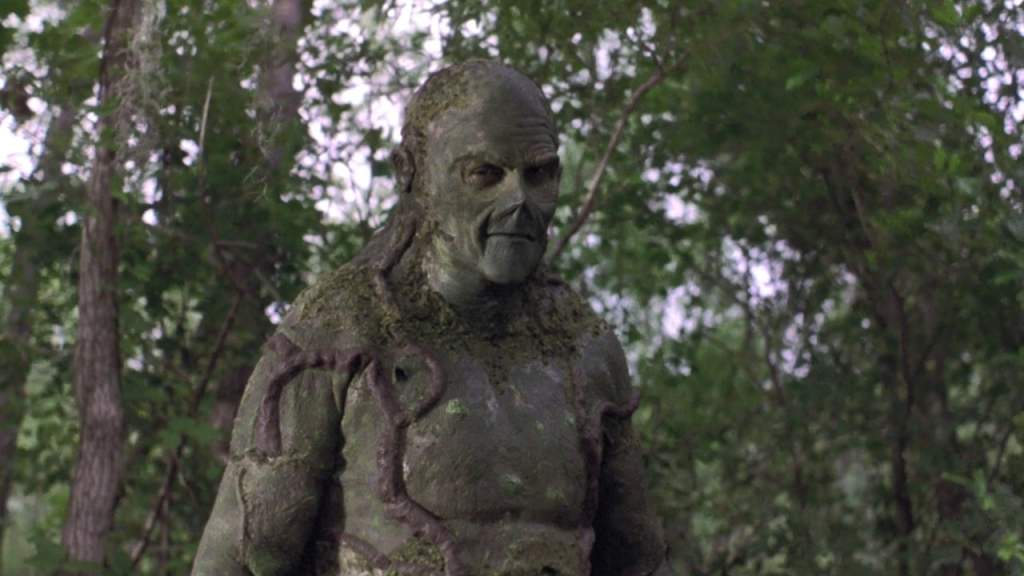
There was an attempt to make 1982’s Swamp Thing the next Superman, with adverts on the back of every comic and awesome poster art. The movie closely follows the comic plotline about a scientist, Alec Holland, (the great Ray Wise, who I kinda wish had been allowed to suit up as Swamp Thing himself) whose groundbreaking research is targeted by thieves. In one of those only-in-comics accidents Holland is set on fire, doused in his mysterious chemical formulas and thrown into a swamp, where he re-emerges as a half-man, half-man muck monster. With the aid of another researcher (Adrienne Barbeau), the Swamp Thing (played by Dick Durock) seeks revenge on Anton Arcane, the evil mad scientist behind all his troubles (Louis Jourdan). 

Swamp Thing is a breezy monster mash of a movie, with a costume where the seams are clearly visible and the steamy swamp setting is one of the film’s biggest assets. Swamp Thing is a monster, but a good guy, and in the end he gets into a classic monster-movie throwdown wrestling match with Arcane, who inexplicably ends up turned into this wild bug-eyed shrew/rat man hybrid when he overdoses on Holland’s formula. It’s a so-bad-it’s-good moment.

Maybe it’s because it was one of the first real “horror” type movies I saw, but I still love Swamp Thing, flaws and rubber costumes and all. Barbeau is a great steely kick-ass heroine, Jourdan is smoothly menacing and Dick Durock gives Swampy a melancholy charm. It’s a movie that just gets to the point, pure popcorn cinema with a dash of sadness over poor Alec Holland’s fate.

The sequel Return Of The Swamp Thing pretty much gives up at being serious at all. It starts off, weirdly, with a credits montage that features lots of glorious art from Alan Moore’s legendary 1980s Saga of The Swamp Thing comics. As these images by Steve Bissette and John Totleben pass across the screen you think whoa, is this movie going to boldly reinvent the whole idea of a swamp monster hero like Moore’s comics did?

But nope, it’s a tease. Return Of The Swamp Thing is a far campier and sillier sequel that feels like it came straight from a USA Up All Night! marathon. It opened up, very briefly, in theatres a month or so before Batman in summer 1989, and it’s a plucky last gasp of the slapdash amateurism most superhero movies had until Tim Burton came along. 

This time, Swamp Thing has a much cooler leafy costume that apes the looks of the Alan Moore comics, but that and an eerie scene where Swampy slithers out of a bathtub drain and puts himself back together are about all that this one has in common with the Moore stuff. 

In one of the weirdest castings of all time, Heather Locklear plays a hilariously broad valley-girl version of the comics’ goth girl love interest Abby Arcane, while poor old Louis Jourdan looks half-dead in his sleepy return as Anton Arcane, rather inexplicably no longer a shrew-man. The henchmen are ridiculous action movie parodies and the movie features two of the most obnoxious child actors you’ll ever see and a far more talkative Swamp Thing who feels like some chill surfer dude rather than the rumbly monster of the first movie. (Seeing Swamp Thing laugh like a businessman at a cocktail party is one of the most off-model moments of the film.) It’s a ramshackle, small-scale story that basically seems to consist of Arcane doing more goofy evil science stuff, and Swamp Thing defeating the rather physically unimpressive bad guy by… throwing a chair at him. We don’t even get a return of the bizarre shrew-man costume. 

…And yet, I don’t know. Perhaps it’s just my love for Swamp Thing as a character and the low-stakes vibe of these movies, but it’s far more entertaining than the plodding, overly serious and dull attempt to bring Swamp Thing back in a very short-lived TV series a couple years back. Word is James Gunn wants to do a new Swamp Thing movie as part of his DC universe empire. I know these days everything is done with CGI and motion-capture but I still kind of hope that if they do a new flick, we still get a guy in a somewhat sloppy rubbery costume stomping about in the muck.

When it comes to Swamp Thing on film, the dirtier, the better. 

Diane Keaton was always my first love

God, where to start with Diane Keaton.

She was perhaps my first big Hollywood crush, because I was a budding teenage intellectual who caught Annie Hall on the TV sometime in the mid-1980s and recorded it on a VHS tape, watching it over and over until the image began to break down into jittery lines. 

It was a movie that spoke to me of a wider, more glamorous world than small-town California, with wide Manhattan streets and everybody dropping witty banter and watching foreign movies that would surely change your life.

Her death yesterday at age 79 shocked me, when I shouldn’t really be too shocked anymore about us slowly losing all those great ‘70s and ‘80s stars of my youth. But Diane Keaton always felt so fervently alive, that for her to suddenly cease felt immensely wrong. 

I’ve watched Annie Hall dozens of times and it sparked a lifelong love for the films of Woody Allen and Diane’s impressively light touch as an actress. (I know, I know, there’s a lot of pitfalls about being a Woody Allen fan these days, but despite many problematic concerns and allegations and my rather mixed feelings about the man himself, I can’t ignore that his movies shaped a hell of a lot of my teenage worldview, and that’s all I’m gonna say about that.) 

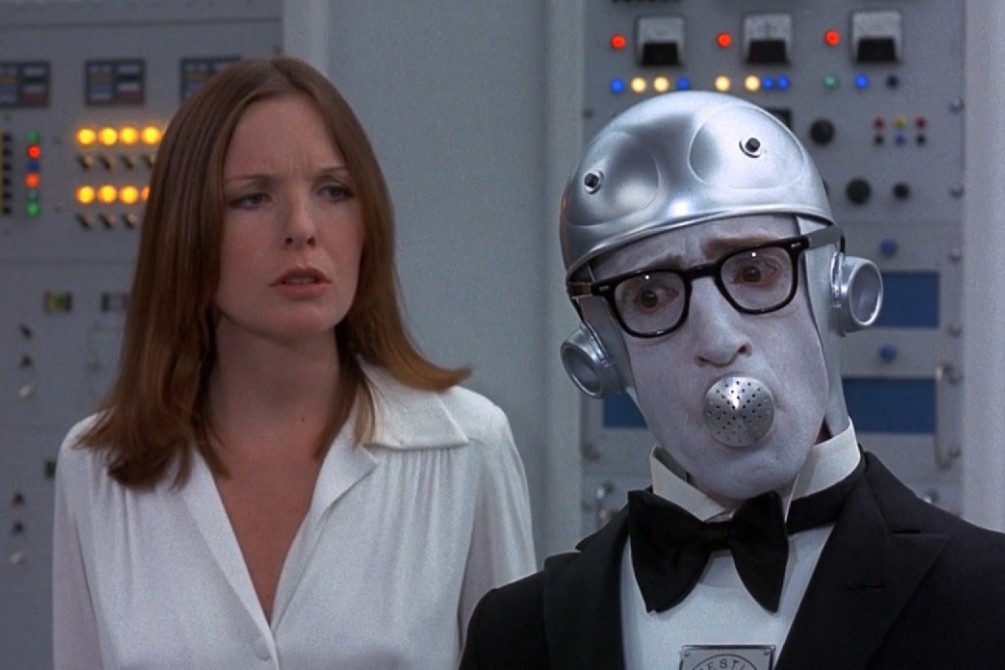
Diane’s “Annie Hall” character was the grand template for so many of Keaton’s comic characters in her wonderful Woody collaborations and more – a manic pixie-dream girl prototype who actually was often far wiser than those around her. Take her ditzy pleasure addict in Sleeper, who ends up a devoted revolutionary warrior, or her hilarious turn in the Russian mock comedy Love and Death, where her deadpan wit often blows everyone else off the screen. 

She never quite played the same character in any of these films despite her style becoming a bit of a stereotype – look at her nuanced turn in Woody’s tricky dramedy Manhattan as a spurned ex or her delightful mid-career return to Woody as a paranoid, dissatisfied wife in the detective comic romp Manhattan Murder Mystery.

A natural successor to Katherine Hepburn, like her, Keaton always had a keen intelligence shining away behind that “la-de-da” exterior. You’d see it in films like The Godfather or Reds, where she turned that comic energy inwards to create vivid dramatic roles. 

The same year as Annie Hall, she also starred in the incredibly dark Looking For Mr Goodbar as the anti-Annie. It’s a depressing, bleak film that aims to show the seamy underside of ‘70s swinger culture, but Keaton, as always, is very good – playing a character who isn’t as confident or cunning as she thinks, who ends up lost in a nightmare.  

But it’s Keaton the comic I fell in love with watching Annie Hall over and over as the VHS tape juddered, and her great willingness to marry her stunning beauty with undignified pratfalls. Even in a middling ‘80s workplace comedy like Baby Boom, she sells her character’s turn from stoic yuppie to loving mother with an unforced ease. 

As Keaton got older she played lots of moms and winter romances, not all of them great movies, but she was never better than in her final Oscar-nominated turn in 2003’s Something’s Gotta Give. All of the classic elements of those silly rich white folks rom-coms are here – houses in the Hamptons, characters swanning through privilege without a care in the world – but again, Keaton takes the material and makes it so much better with her wit and sincerity. Was there ever a sexier comic love triangle than both Jack Nicholson and hot young doctor Keanu Reeves falling for Diane Keaton? And why wouldn’t they?

Keaton grew old gracefully, even if she left a little too soon, and there’s as much to love in the middle-aged longing of Something’s Gotta Give as there is in the bright-eyed unwitting fashion icon of Annie Hall. I kind of loved them all – after all, you never forget your first love. 

Five years, that’s all we got: Jacinda Ardern and being Prime Minister

There’s something spooky about watching a documentary covering events you lived through and still haven’t quite processed yourself. 

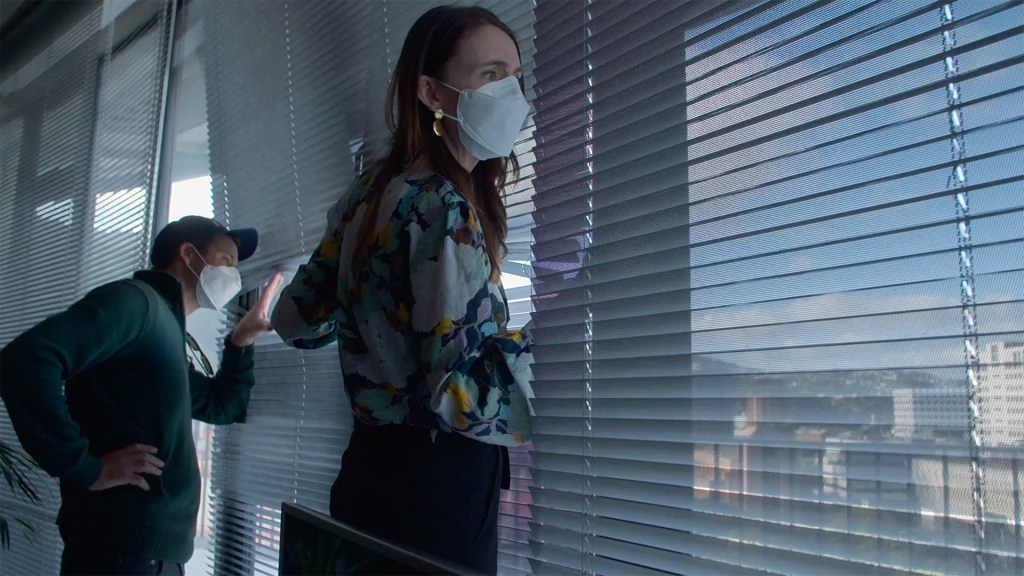
Jacinda Ardern was New Zealand’s leader up until about 2 1/2 years ago, but somehow that already feels like a few centuries ago in the current grim timeline. Watching the excellent, if starry-eyed, new documentary Prime Minister takes us back through the whirlwind of 2017-2023, when New Zealand was often buffeted by a series of tragedies that all felt sadly outside our control.

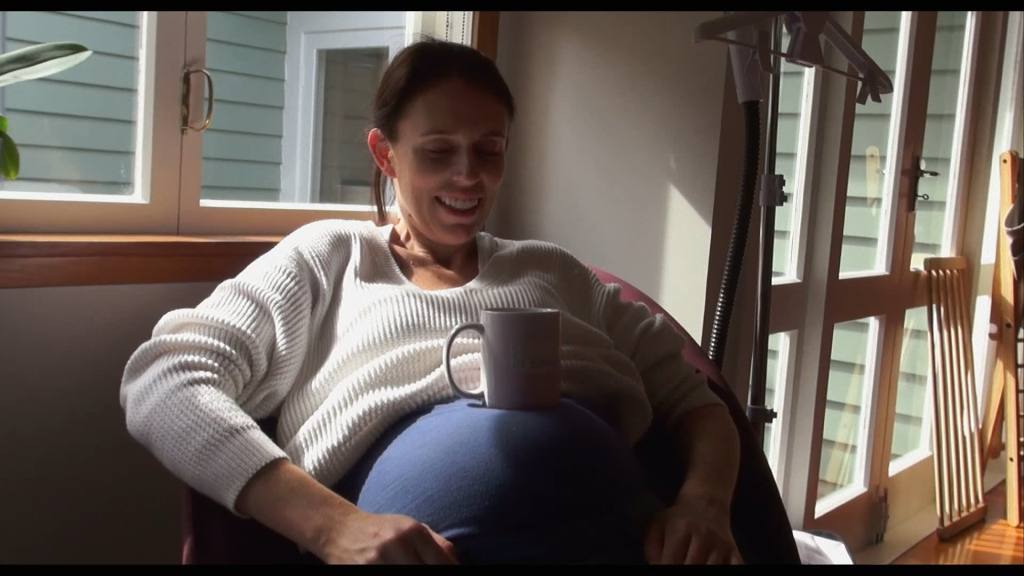
Prime Minister is a startlingly intimate portrait of the Jacinda years, and what it’s like to be a young pregnant woman suddenly lifted up to the corridors of power. Whether or not you agreed with Ardern’s administration – and it was ultimately as flawed as most governments, in the end, but not as bad as some – Prime Minister is a movie that is somehow bittersweet and optimistic all at the same time. 

So it’s weird watching Prime Minister and seeing the history of your country retold when it feels like it’s all not even quite ended yet, to see everything unfold again as it did in those crazy five years.

I was in the thick of the Ardern years as a journalist, typing away news alerts and quick takes from the day she surprisingly came out on top of government coalition negotiations in 2017. I watched with horror the shocking mosque shootings of Christchurch in 2019, helped cover her massive re-election win in 2020 and watched as Covid crept in and everything in the world seemed to grind to a blurry halt. We journalists waited for the “1pm update” on what the pandemic had to say today, and saw the creeping dissatisfaction grow in some corners.

I watched Parliament’s grounds become occupied by a collection of protesters for weeks in 2022 and I had the curious fortune to be running a live-blog the morning that the police came and that occupation came to a violent, fiery end. For a journalist, the moments when you think, “I’m watching history right now” come with an electric charge.

We’re very much all still living in the societal and cultural upheaval the pandemic left behind and the swamp of populist rants, conspiracy theories and anger-fueled online bile feels like it will never end. Did New Zealand get everything right? Probably not, but the overriding fact is that all the rewriting of history going on at the moment ignores that at the time nobody knew what might happen, and in the end, a whole lot of people could have died in a small island country like ours. Ultimately less than 6000 died of Covid-19 here – while in America, 1.2 million did.

Prime Minister boasts a candid access that it’s hard to imagine a lot of political leaders allowing. Ardern’s partner Clarke shot lots of footage of her over the years, as she sits in bed worn out after long days or works through the exhaustion of pregnancy. Even though I spent so much time covering Ardern and writing about the events of the day, it’s all a very different perspective that sheds new light on the burdens of power and Jacinda’s – perhaps impossible – attempts to remain kind at heart in a world that frowns on that. 

Again, I won’t argue New Zealand was some magical utopia when Jacinda Ardern was in power. But to be honest, a lot of politicians running the world at the moment seem barely human, let alone humane to me. We dehumanise politicians, and Prime Minister aims to correct that. Ardern has been turned into some unrecognisable demon avatar in some corners of NZ to this day. It’s hard to reconcile that with the images of a young mum playing with her daughter we see in Prime Minister. It’s also easy to see why Jacinda quit when she did, having no more petrol in the tank

Prime Minister isn’t a deep investigative dive into NZ politics. It’s glossy and aims to make Ardern the hero without really diving into the intricacies of politics here. And yet, in its own way, it feels a bit like an elegy for a lost world. Why would anyone want to be a politician these days? 

Power costs, and in the end, you have to wonder if, in a timeline crowded with blustering authoritarians, grim bottom-liners, hucksters and grifters and outrage merchants, that the eminently human scale of Jacinda’s politics is something we may never see again. 

At long last, I’ve got my ROM action figure

It took me 46 years, but I finally got my ROM toy. 

As young fanboys turn into old geeks, we often fantasise about the childhood toys we once had, or the ones we never had at all. 

I’ve written before about how addicting action figures could be and how, despite being a bit more flush of cash than I was when I was 11, I try to be a little more restrained these days. I’ll still buy one here or there, but they have to be special. 

Like ROM. 

Growing up in the late 1970s I was a vagabond child, and spent much of my eighth year travelling in a campervan in Europe with my family. I’d see comic book ads for things like Micronauts or Shogun Warriors or those new-fangled Star Wars action figures but I sure as heck wasn’t going to find them in Luxembourg or wherever the heck we were that week.

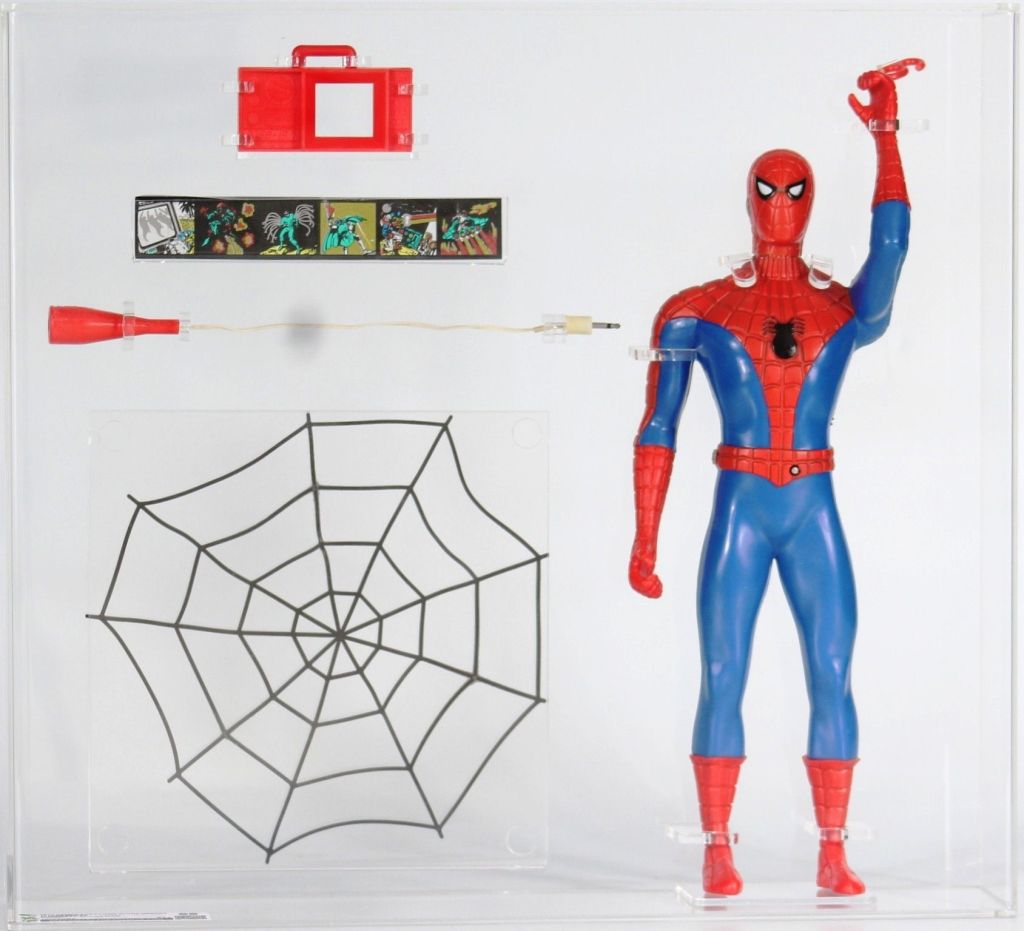
We couldn’t get a lot. One toy my parents got me somewhere in Europe which sounded cool was the Amazing Energized Spider-Man (TM) with web-climbing action, who rather lamely turned out to be an utterly immobile statue of Spidey with a perpetually raised left arm, who would get hoisted up by his little energized web winch thing. It wasn’t terrible, but there wasn’t a lot you could do with a Spider-Man toy who always looked like he was hailing the cross-town bus. 

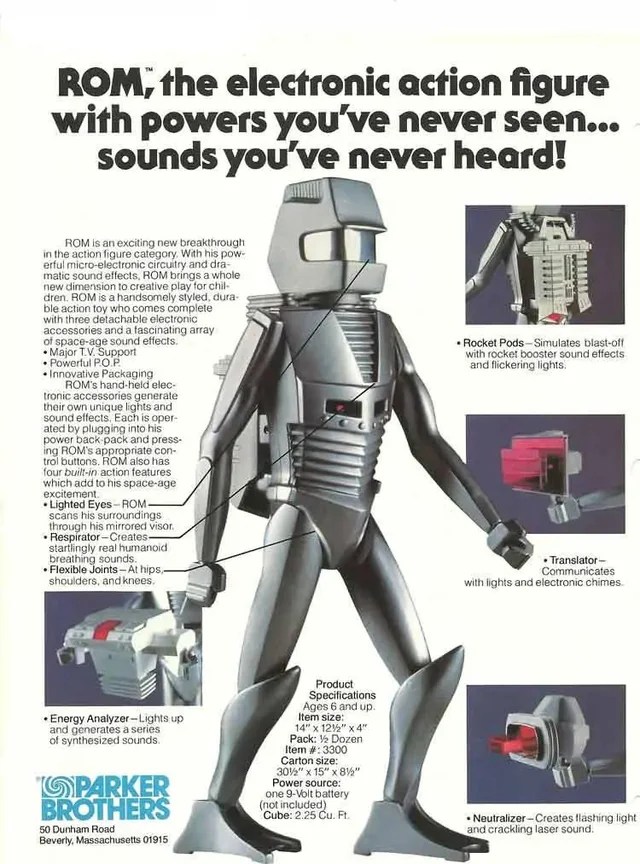
But one enticing toy I kept seeing in the American comic books I foraged from military base PXs in that distant world of 1979 was ROM. The ads blared, “ROM HAS COME … EVIL IS ON THE RUN!”

The ad boasted of “the greatest of all spaceknights”, who was premiering in a cunning case of cross-synergy with an electronic action toy by Parker Brothers and a new Marvel comic book series. Who was ROM? Heck if I knew, but I wanted to know. 

Of course, I eventually picked up those ROM comic books, which are still a favourite of mine. Over a 75-issue run well into the ‘80s, ROM’s surprisingly good comic lasted a lot longer than the toy ever did, thanks to the energetic corny delights of Bill Mantlo’s writing and Sal Buscema’s reliably expressive artwork.

Over several years Mantlo spun a story of ROM, who sacrificed his humanity to battle the evil Dire Wraiths. It was never revolutionary comics but it was always good fun, and unlike so many comic book series it actually had an ending, which I really appreciated. 

I loved those ROM comics, but I was never able to find myself a vintage ROM Parker Brothers toy. They kind of flopped and you never saw them at yard sales or swap meets and there wasn’t an internet to search then. These days, you could drop a few hundred bucks for one on eBay, but I’m not that dedicated to reliving my childhood fantasies of having all the cool toys. 

But then the other day, I saw a new Marvel Legends ROM action figure for a decent price online – sure, it wasn’t the 13-inch tall “electronic action toy” of yore but it was pretty darned shiny with all ROM’s fancy accessories and that glam silver iconic spaceknight sure did look appealing. (And to be totally honest, it’s a much better looking action figure than the somewhat awkward 1979 toy.)

So I bought my ROM.

And gosh darn it, he is still pretty cool, I think. 

Maybe next I can find a cheaper modern version of those super cool 24-inch tall Shogun Warriors toys that the kid down the road had. After all, a spaceknight’s work is never done.