Our Flag Means Death, and how gay pirate love made for one of TV’s best shows

One of the best kinds of voyage is one where you never quite know where you’re going to end up.

So it is with Our Flag Means Death, which kicked off last year as what seemed to be a goofy send-up of pirate adventures starring NZ comedian Rhys Darby as a foppish “gentleman pirate” and a cast of oddball crew members.

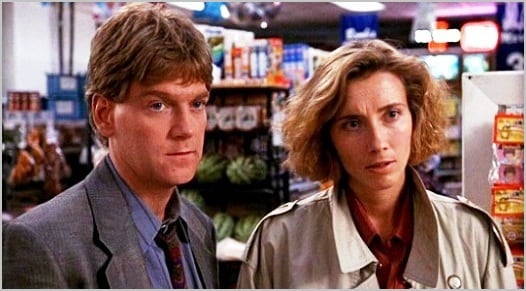
Yet Flag quickly changed course, developing into, of all things, a sweetly understated and respectful gay romance between Darby’s Stede Bonnet and show producer Taika Waititi as a sultry take on the legendary pirate Blackbeard.

In its second season now, it’s become one of the most LGBTQ-friendly mainstream shows out there and while often hilariously funny, it’s also turned out to have a heart as deep as the Sargasso Sea. 

Flag moved to New Zealand to film season two, and it’s great to see the local creative influence, from familiar faces and crew to showcasing gorgeous locations I’ve been to many a time. 

In its dense, witty second season, Flag has come into its own once it wrapped up the will-they-or-won’t-they arc of Stede and Blackbeard and let them settle into their own distinct kind of couplehood. Stede’s a wildly optimistic, extroverted and yet insecure pirate while Blackbeard is a tangled mess of rage, regret and self-destructive tendencies. Somehow, Darby and Waititi make it all work.

In its second season, a lot of the focus on Our Flag Means Death is coping with trauma – not the lightest of topics for a pirate comedy, but nobody ever said pirating was a gentle life. Everyone, from Stede to Blackbeard to the crew members, seem to be, bluntly, working out their shit this season, dealing with mutinies, injuries and painful memories. Despite all this, Flag has kept a mostly light touch. I mean, it’s got Rhys Darby as a mermaid in one memorable dream sequence. 

Darby’s been great fun ever since he made it into the public eye with Flight of the Concords, but Stede is by far his best performance, still keeping his eager-to-please hangdog charm while adding welcome soul to his character’s coming out. And while yes, we all felt like things got a bit too peak Taika for a while there and some of his recent projects have been a bit mixed, he’s terrific as Blackbeard. It’s his best performance since his cad of a deadbeat Dad in his own movie Boy, and perhaps that’s because both roles come from a slightly wounded place, instead of the more flippant kiwi joker he often plays. The sweet-and-sour, dark-and-light pairing of Blackbeard and Stede makes for a terrific comic team you can’t help but root for. 

But the rest of the cast, who include several New Zealand actors like the awesome Dave Fane, Rachel House and Madeline Sami, have all also stretched out to fill in their own sketchy parody characters as Flag has gone on. What was a kind of stock crew of madcap weirdos has turned into a group of distinct individuals, many of whom have their own queer romance stories brewing in the background.

Yet the show never goes for lame stereotyped punchlines, or treats its queer characters as jokes, no matter how silly everything around them.

It’s a voyage all about love, and when you get down to it, that’s the only treasure in the world really worth sailing the seven seas for, isn’t it? Our Flag Means Death certainly isn’t the show it seemed to be when it started to set sail, but somehow, it’s all the better for that. It’s worth dropping an anchor for.

Good lord, it’s been 5 years of blogging (or almost 20, depending on how you count it)

So somehow, it’s been five years this week since I started blogging here!

And in raw numbers, it’s actually almost TWENTY frickin’ years since I started blogging for the first time at my original incarnation of scribbling from 2004-2012. That’s a lot of my words on the internet, at least until Elon erases it all.

More importantly, my return to blogging in 2018 kicked off a real renewed interest on my part in the writing end of journalism. I’ve been a working journalist for a long time now, but for many years I found myself focusing more on editing, design and (ugh) management.

Finally I remembered how much I love the act of writing, of reporting and digging for odd facts and talking to interesting strangers. Diving back into blogging in 2018 after a hiatus of several years jumpstarted that part of my brain. 

I began to write more and make a concerted effort to build a kind of freelance career down here in New Zealand, in addition to other journalism work. 

I’m happy to say I’ve submitted more than 170 invoices for paid writing since 2019, written articles for websites, newspapers and magazines all around the country and at least a hundred or so other non-bylined pieces for Radio New Zealand, where I’ve been working since 2021 and a place I deeply respect for providing quality, diverse and important journalism down in this part of the world.

This website also helped me bring back my long, long-dormant comic book Amoeba Adventures, when we were all stuck in those dreary, uncertain early days of the pandemic a few years back. The Covid hiatus seemed like a really good time for me to pull out all my ancient comic strips and scan and throw them on the internet as I’d been meaning to do for ages. I put nearly 50 of my 1990s small press comics up to download (for FREE! hurray!) and looking at all my old goofy Prometheus comics finally inspired me to pick up a pencil again for the first time since 1998 and write and draw six brand new issues of Amoeba Adventures to date.

In other words, blogging here reminded me why words matter, why art matters when everything else is annoying as hell in this increasingly fractured, fractious world. 

More than ever, the past year or so has convinced me that blogging feels more like a natural home for my writing than the endless bickering and hot-takes and rage-scrolling of social media. I left Twitter (I refuse to call it “X”) about a year ago, before it all really went to shit, and haven’t regretted it once, watching it spiral down into a miasma of hate, conspiracy and misinformation. I’ll link to my stuff on Facebook and Instagram, but this site is where I want to commit most of my “spare” writing time rather than arguing with strangers on the internet or whatever.

These days the blog is kind of my writing workshop where I babble about things that maybe don’t quite meet the standard of paying work, or are a little too esoteric, plus linking back to my other projects.

Somehow I’ve bashed out 319 posts on here the last five years – I try to get one up a week, and these days focus mostly on quirky pop culture writing rather than sharing every detail of my life, because that all got pretty old pretty quickly on the internet, didn’t it?

I’ve enjoyed seeing what “takes off” here as you never know whether two people or 2000 will read a post on the weird internet of 2023. A little tribute to Yoko Ono I wrote in 2021 has proven perhaps the most read post I’ve ever done, while other ones that constantly pop up on my “most read” site statistics are an appreciation of The Thin Man films, a look at presidential biographies, and an obituary for the late great grunge icon Mark Lanegan. (And then there’s my ode to Jimmy Olsen comics, which I still maintain are the best comic books of all time and which decorate this celebratory blog post.)

Writing here, generally, makes me feel good about myself, even I’m just tossing words about in a random mix to see what sticks. I write for myself, first and foremost, but I am hugely appreciative of those who’ve followed my website, or my comics, the past few years as Writer Nik attempted to come out of his musty old shell.

All you folk who leave a comment or click a link or download a comic are tops in my book! Cheers and here’s to more words to come!

Crime and punishment: The glorious gore of Chester Gould’s ‘Dick Tracy’

Ah, the good old days, when a man and his family could pick up the morning newspaper and see a criminal’s head jammed in a torture device, or a thug buried alive in ice, or perhaps impaled on an American flag. 

Newspaper comics are rapidly becoming a thing of the past, but in its heyday in the last century, nobody went harder than Chester Gould’s “Dick Tracy,” who’s been fighting crime since 1931.

There’s a tendency sometimes to imagine the past was somehow cleaner and more innocent than the modern day, but the stuff Gould was pumping out to be read over the breakfast table each day was dark and often very, very twisted riffs on crime and punishment. Hard to imagine it being published in the anodyne world of what’s left of today’s newspaper comic strips.

A recent re-read of strips from the post-war era in the handsome Library of American Comics volumes confirmed how unrelenting Tracy’s world was – the need to grab readers every day means there’s very little internal life for Tracy, who catapults from one criminal to the next, a rogue’s gallery of grotesqueries who rarely survive the first encounter with him. Fighting crime is all he is.

It’s a black and white world, but sometimes that stark certainty is a lot of fun in fiction because real life sure ain’t like that. I sometimes like Steve Ditko’s Mr A, too, even if it’s dogmatic and reactionary and I don’t agree one bit with his philosophies.

You certainly don’t want to binge-read years of Dick Tracy’s adventures in one go, as it can be a bit much, but in smaller doses – imitating the frequency they originally came out in – it’s riveting stuff. You can see why with its cliffhanger endings and rapid-fire action it became one of the biggest comics of all time.

Now, as a fellow with somewhat liberal leanings, I’ll admit that Gould’s Tracy is often the epitome of right-wing fascism. Crooks are bad and he is right and in real life I imagine Dick Tracy would’ve had more than a few internal affairs investigations going on over his conduct.

Many people only know Dick Tracy from Warren Beatty’s intriguing but slightly undercooked colourful movie take which didn’t quite capture the fierceness of the comic strip. Gould’s own ‘Tracy’ comics famously became weirder and more eccentric the longer it went (such as when Dick Tracy went to the moon) and his conservative opinions became stronger as the strip went on, but at its zenith in those 1940s-1950s strips, nobody wrote a better gritty crime comic strip. 

Crime does not pay, they say, and for a while there Gould unrelentingly showed why day after day in some of the most gruesome images to ever be seen next to your morning ‘Blondie’ and ‘Gasoline Alley’ visits. 

Movies I Have Never Seen #25: The Misfits (1961)

Honey, nothing can live unless something dies. – Clark Gable, The Misfits

What is it? The Misfits is a star-packed elegiac meditation on love, loss and the American dream, directed by John Huston and starring Marilyn Monroe and Clark Gable in their final film. A dusty urbanised western, it follows a young woman visiting Reno to get a quickie divorce (Monroe) and the older cantankerous Nevada cowboy she begins a tentative affair with (Gable). Packed with Hollywood talent, it’s a surprisingly thoughtful, eloquent film wrapped around its May-December romance. 

Yet it’s perhaps remembered most for the melancholy real-life fate of its three stars – Gable, 59, suffered a heart attack and died just 12 days after shooting wrapped. Marilyn, of course, died tragically at just 36 in 1962, and The Misfits was her final screen appearance. Co-star Montgomery Clift, whose life had already been speckled with so much tragedy, died himself suddenly at age 45 in 1966. Barely five years after The Misfits’ release, all of its lead actors were gone. 

Why I never saw it: Can we ever separate a movie entirely from what we know about its stars in real life? You watch The Dark Knight and mourn a bit the loss of Heath Ledger; My Own Private Idaho, we think of River Phoenix and all that might have been. Hell, even Good Morning Vietnam seems a bit sadder now with Robin Williams’ suicide. So it is with The Misfits, where at every turn you are confronted by Marilyn Monroe’s shooting-star beauty and fragility, and wiry Gable at the end of his career, old before his time yet still with a twinkle in his eye. You might write The Misfits off as one of those forgettable endless Hollywood epic dramas of yore, with more scenery than soul to it. But you’d be missing out.  

Does it measure up to its rep? Despite the legendarily chaotic production – with a drunken Huston gambling away in Reno, Monroe suffering several mental and physical health issues – The Misfits is something of a masterpiece. Those grand Nevada deserts shimmer in the black and white cinematography and playwright Arthur Miller’s script, filled with quotable lines, has a barbed, bittersweet wit to it that lifts the film higher. 

I have to admit when I think of Marilyn Monroe it’s of the frothy bubblehead she plays so well in Some Like It Hot or The Seven-Year Itch, a good-hearted soul but without a lot of deep emotional weight. So it’s a revelation to see how good she is here as the traumatised, sensitive Roslyn. You feel her exhaustion as she begins the picture as a new divorcee and the gentle rise in her spirits under the endless Nevada skies as she and Gable’s cowboy cobble together a kind of life out in the desert. Monroe portrays a woman who’s troubled, but hopeful. While she’s still stunningly beautiful and the camera loves her, she seems more human here than ever before, a woman with her own dreams rather than just an object. It makes you sad, to think of what might have been in her future instead. 

As for Gable, he harnesses all of his star power from classics like Gone With The Wind and It Happened One Night into a leathery old cowboy romantic who’s reduced to hunting down stray horses for dog food. With marvellous side characters – Thelma Ritter’s salty older divorcee, Eli Wallach’s prickly mechanic and Clift’s reckless doomed rodeo dude – The Misfits feels like nothing less than an exhausted pit stop on the road away from the American dream. It isn’t a cheerful movie, exactly, but it’s a staggeringly beautiful one, with every one of its hurt characters trying to find their way to a better tomorrow in the empty wasteland of Nevada’s scrub and dirt. 

Worth seeing? Definitely. It feels like a postcard from the final days of Hollywood’s golden age, but also strikingly modern in its mood of ennui and heartbreak. From Miller’s stark screenplay to the very final scene between Gable and Monroe, it’s a world long vanished, but the stars in it still shine with a bright light indeed. God, they were beautiful people, weren’t they? 

If I’m going to be alone, I want to be by myself. – Marilyn Monroe, The Misfits

Joe Matt and the very last issue of Peepshow

Joe Matt died this week, and he was one of the most fearless and hilarious autobiographical cartoonists of my lifetime. 

He was the first of what I think of as the great indie comics creator class of the 1990s to leave us, a group that included the rubbery Gen-X angst of Peter Bagge, the precise skill of Daniel Clowes, the intense surrealism of Chester Brown, the unblinking female gaze of Roberta Gregory and Julie Doucet, the spiralling weirdness and immense talent of Dave Sim and many more. 

Matt died – reportedly at his drawing board – of what seems to have been a heart attack at just a week or two past his 60th birthday. He was the creator of the comic book Peepshow, but he hadn’t put out a new comic book since 2006. Yet the work he left behind was hugely influential.

Joe Matt was unafraid to make himself look like an utter asshole, to show all his selfishness and cruelty and self-loathing in his immaculately drawn comics. He wrote himself – or “cartoon Joe” – as a porn addict, hopeless miser and misanthrope, yet his clean, crisp cartooning and willingness to mock himself made it all go down smoothly. 

I’ve dabbled in a handful of autobiographical comics and quite a few essays over the years and it’s bloody hard work, to be truly honest, to put that much of yourself on a page.

There were a hundred inferior imitators putting out autobiographical comics in the 1990s and beyond, but Matt, with his bold cartoon lines and comic timing, always stood out. 

But then, Joe stopped. 

He debuted in the late 1980s with a prolific collection of candid diary comics that showed his rapid improvement in style, but there were just 14 issues of his solo comic Peepshow from 1991 to 2006. Since then, other than sketches and brief strips printed elsewhere, nothing. He wasn’t a recluse by any means, but he just kind of receded from the scene. 

That last issue, Peepshow #14, seems hermetic, squalid and a little anguished now. If you zip through all Matt’s unfortunately thin oeuvre, though, it’s a stark change from the friendly but eccentric Joe in his early diary comics to the cranky yet social animal of the early issues to the isolated, obsessed and lonely Joe the final few issues of Peepshow give us, frantically re-editing old pornography tapes into his idea of perfection, obsessing about the girlfriend he broke up with years before, withdrawing more and more into a self-contained shell. 

In the weirdly moving final issues, later collected in the graphic novel Spent, Joe Matt seems to show us how much within oneself a man can shrink. Long before Covid, here’s a man undergoing self-isolation. The final few panels of #14 show Joe Matt caked in cat shit (long story), locking himself into a bathroom. And that was it for Peepshow. 

Of course, no autobiography can ever be truly faithful, as they’re bent and twisted in the very shaping. Us fans like to think “Cartoon Joe” was “Real Joe” – but we can never really know. Matt pokes fun at this himself with a scene in Peepshow #6 where an angry boyfriend and girlfriend confront Joe about being put into his comics. Is “real Joe” “cartoon Joe” at all? We will never quite know, now. 

In that final issue, Matt flicks back over the previous 13 issues of Peepshow, admitting that a rather fanciful threesome sex scene in one issue was entirely made up, or that the childhood memories in other issues don’t tell the whole story. We invent our autographies.

Yet, Joe Matt did carry on, like many of us, on social media, where he seemed actually, kind of happy whenever I checked in on him, with his beloved cats and spot cartoon panels. I don’t know if he was really the same freaky weirdo he portrayed himself as in Spent, or if he’d regrouped. He apparently had perfected his life to a narrow point of his interests, like we all tend to at a certain age, and while I’d have liked to see Peepshow #15, and #25, and #50, I can’t begrudge him whatever made him happy in the end. Maybe “Cartoon Joe” was just a cartoon after all. 

In a fascinating interview from 2013,  Matt says of comics, “Consider this: You have 300 pages to work with, and on those pages you can literally depict ANYTHING. You can depict standing in line for a coffee for those entire 300 pages, or you can cover the fictional lives of generations of a small town.” That interview also goes a long way toward explaining why he hadn’t put out anything new in years with his increasing perfectionism. 

Supposedly, for years he’d been working on a graphic novel that told the story of his moving from Canada to California, where he spent his final years. I really hope it’s in a shape where someday, we can see it. For a guy who stripped himself literally naked in his work, I think he would’ve wanted it that way.

For all his comic-strip lust, nastiness and obsessions, I still want to know more of Joe Matt’s story, and 60 was just too damn soon to leave us. 

‘Planet of the Apes’ and learning to love the unhappy ending

*Spoilers* galore for a 50-year-old movie series ahead!

I first stumbled across Planet of the Apes in an after-school TV marathon of the original movies in the early ‘80s sometime. It’s no exaggeration to say they kind of blew my little human mind. And the thing that struck me the most, as I gulped down Planet, Beneath The Planet of the Apes, Escape From The Planet of the Apes and Conquest of the Planet of the Apes in a single week, was that there were no happy endings in this ape-filled apocalypse. 

Everyone knows how Planet ends, with Charlton Heston wailing alone in the sand of a shattered world. Pre-internet, pre-memes, I was just raw enough to be stunned by the gorgeous tableau of a broken Statue of Liberty, and how Heston’s cynical, alpha-male astronaut finally runs up against an obstacle he can’t bully or bluster past. 

Yet it was the impossibly bleak sequel, Beneath The Planet of the Apes, which made me an Apes-man for life. An immensely weird and surreal movie, it introduced peeled-face human mutants, horrifying visions of crucified apes and bleeding statues, and oh yeah – the destruction of planet Earth, blown to bits by a leftover atomic bomb in a struggle between apes and mutants. The final 20 minutes or so of Beneath is as dark as it gets, with Heston (who barely appears in the sequel) shot, mortally wounded and in his final moments, slumping to his death to trigger the apocalypse with what still seems to me like a sigh of relief. The screen fades to black, and we’re told: “In one of the countless billions of galaxies in the universe lies a medium-sized star. And one of its satellites, a green and insignificant planet, is now dead.” And the kicker – this movie was rated G

As Beneath faded to black, the first time I watched it as a kid, I was filled with a bone-deep chill of horror that left me feeling very, very small in a vast universe. And the thing is, I liked it. It made the open-ended Empire Strikes Back’s bleak ending, so daring-feeling at the time, seem like a Care Bears cartoon. 

Improbably, they managed to make three more Apes sequels after they blew up the whole world, by throwing in a little time-travel. 1971’s Escape From The Planet Of The Apes lures us in by being the most overtly comic of the series, with charming Cornelius and Zira catapulted back to a groovy ‘70s America, but soon, the darkness inherent in the series seeps back in with an ending that almost tops the nuclear doomsday of the last movie. In its final moments, the two ape refugees and apparently their infant child are shot to death under brilliant sunny California skies, their attempts to escape the end of the world fruitless. There is no way out of doomsday, Escape tells us.

But of course, there would still be another Apes sequel, this time picking up with Cornelius and Zira’s son Caesar – still alive, with another poor little chimp baby shot down in his place! – in what I’ve come to think of as the second best of the series, 1972’s Conquest of the Planet of the Apes. Set in some dystopian fascist 70s-style future where apes have replaced house pets and Caesar rises to lead a revolution, Conquest isn’t subtle in its Nazi imagery and racially charged metaphors, but I forgive it all for the cathartic carnage of its final scenes, where Caesar leads a mob that begins the dark process of overthrowing mankind that ultimately leads it to where it ends up, mute, naked and afraid in the original Planet of the Apes

This movie’s ending was deemed so dark that it was edited into something more optimistic for its original release, and Caesar’s final speech ends in a note of possible peace. Forget that and go for the unrated original version seen below, where Caesar’s blood-and-vengeance preaching has the punch it was meant to, and we end for the fourth movie in a row with a dark, dark ending – a city in flames, a brutalised race rising up and the future looking, once more, very, very grim for humanity.

It’s hard to think of a non-horror movie series that ends on such downers for four successive films. (The fifth and by far least of the original series, Battle For The Planet of the Apes, suffered from huge budget cuts and a rather disposable plot set sometime between Conquest and the original on the timeline. It ends without mass bloodshed, but still with a vision of a statue of Caesar weeping, knowing that things will soon get much, much worse.)

Even in more modern Apes movies, you won’t get hug-filled happy endings. Tim Burton’s misbegotten 2001 remake was mostly awful except for the makeup effects, but did end on a darkly dumb note echoing the original movie. The terrific latter-day Apes trilogy all tend to end on less utterly nihilistic points than the original series. Yet each one of them has a more quiet note of rising dread in their climax, a sense that things are only, ever, going to get worse before they ever get better – if they ever do. This Apes fan is pretty excited for next year’s Kingdom Of The Planet of the Apes, the 10th (!) Apes film, but they better not cop out and give us too happy of an ending.

By forcing us again and again to look at the possible end of all things, the Apes movies have had the curious effect of making me look back at the real world with a different eye – appreciating the fragility of it all, the impermanence and the tiny little beautiful moments, whether it’s Cornelius and Zira exchanging a look of love, little Caesar’s love for his adoptive human family in the 2011 Rise of the Planet of the Apes, or even Charlton Heston and his mute mate Nova, alone on a horse through a blasted landscape, a bleached and battered world that still has a hint of dark beauty amongst all the ruins. 

On all the planets of the apes, there is very little optimism, but yet, we keep coming back, again and again, hoping to find it. I guess that’s what makes us human.

And now, it’s Amoeba Adventures #33: The Amoeba Who Fell To Earth!

It’s time for my newest comic book, Amoeba Adventures #33!

Get ready for the most offbeat Amoeba Adventures story of all time! It’s “The Amoeba Who Fell To Earth.” One day, years ago, Prometheus arrived on Earth-Spongy from the stars. But what happened next? It’s not what you expect. 

You can download the PDF of the comic right here completely FREE as always – enjoy and let me know what you think!

Download Amoeba Adventures #33 (PDF, 70mb)

• GET IT IN PRINT! Plus, as always there’ll be a special limited print edition of this issue coming out soon – it’s a mere US$7.50 shipped anywhere in the world from little old New Zealand. Strictly limited quantities, so if you want one don’t delay, and send cash via Paypal to dirgas@gmail.com.

• BUY OLD COMICS CHEAP! Also, it’s time for a special back issue sale! I have a few surplus copies of recent limited print editions of Amoeba taking up space in the butler’s quarters, so here’s a deal: If you order the print edition of Amoeba Adventures #33, I’ll throw in another Amoeba comic for a mere $3.50 US! Still available are the print edition of Amoeba Adventures #30, #31 and 32, and the special 25th anniversary reprint of Amoeba Adventures #27, now with eight pages of bonus art and interviews! When these are gone, these are gone, so if you want a copy grab one – Amoeba Adventures #28 and 29 are all now SOLD OUT and others are not far off!

• JUST READ IT ALL FOR FREE! Lastly, don’t forget you can download and read every single issue of Amoeba Adventures and other comics going back (urgh) more than 35 years now all right here on this website – go browse and see!

Thanks as always for your support, pals!

A seven nation army couldn’t hold me back: My top 10 albums of 2003

Was 2003 the end of rock and roll? The genre has been killed and resurrected so many times it makes Dracula look like an amateur, but still, for me, somehow 2003 feels like the last year that I was personally invested in new rock and roll. 

Part of that is simple age – entering my mid-30s, with a kid on the way, I was about to enter the demographic of Bob The Builder and Wallace and Gromit. I was following then-new music blogs and enjoying the dodgy thrills of downloading MP3s galore and burning them on oh-so-fancy mix CDs that are still in a closet somewhere, but soon I’d stop doing all that.

Rock began receding as a pop culture monolith as grunge died out, but it was in the early 2000s that it felt like it rallied for one last blast with a flurry of terrific albums from bands like The Strokes, White Stripes, TV On The Radio and more. Since then, to be honest, rock music feels like it’s less a part of the pop culture conversation. 

Rock is still out there, but for me, 2003 is about when I started to sort of check out from obsessively following all the latest music. I do try to keep my hand in and listen to new stuff much as possible, but, I recognise that the best pop music now is mostly for the youth, not me, and if I happen to dig some of it, well, that’s just a bonus. 

It’s hard to believe 20 years have passed since these albums came out, but I also tend to think of Taylor Swift as “new” music so I’m really well past it, I guess. 

Nevertheless, two decades on, in no particular order here’s my 10 favourite albums of 2003, the year that rock died (OK, maybe just the year that rock got a nasty head cold that it’s still shaking off): 

Blur, Think Tank – The Britpop stars delivered a woozy, tense album that feels like a loose response to the tension of the Iraq War (boy, we only thought we knew what global tension was in those halcyon pre-Trump, climate apocalypse and pandemic days, didn’t we?). The more optimistic groove of albums like Parklife is far behind but what emerges is a kind of gorgeous weary reverie hanging for dear life onto Damon Albarn’s achy croon in tunes like “Out Of Time” and “Battery In Your Leg.” 

The Shins, Chutes Too Narrow – For about five minutes there, The Shins felt like the future of indie rock. Their second album is fragile and filled with grand harmonies, enigmatic lyrics and made for long lonesome road trips. It’s all very gentle and mannered and on the verge of being too twee for its own good, but there’s plenty here to remind you why Natalie Portman said “The Shins will change your life” the very next year in 2004’s hipster poster child of a movie Garden State

Yeah Yeah Yeahs, Fever To Tell – A great blast of grrrl power as Karen O and company blew the roof off with this snappy debut album. Weirdly, the album’s most sedate tune, the ballad “Maps,” became its biggest hit, but the heart of this album is a boiling punk-rock hurricane led by howlingly good romps like “Black Tongue.” After this album the band’s output was middling, more “Maps” than punk, and they never quite recaptured the ferociousness Karen O blasts forth here. 

Fountains of Wayne, Welcome Interstate Managers – Radio hit “Stacy’s Mom” alone is a gorgeous sexy/silly hunk of power pop, but the rest of the album by this late, lamented band is full of wry, jangly gems like “Hackensack” and “Hey Julie.” A good power pop album never gets old.

White Stripes, Elephant – And here we hit peak Jack White. I know he’s put out a lot of good stuff since then, but the raw, raggedy side of the Stripes sound collided with stadium rock here and face-melting anthems like “Seven Nation Army” to make it the best thing he (and the sorely missed Meg White) ever did. This one might just mark the end of rock ’n’ roll’s evolution, perhaps? 

David Bowie, Reality Reality is a fascinating time capsule – Bowie’s final release at age 56 before an unthinkably long 10-year hiatus, and his untimely death – and while it isn’t quite as original and path-breaking as his best work, it’s still a comfortable rock god doing what he did best in an album that feels playful and masterful. Highlights includes a bombastic cover of Jonathan Richman’s “Pablo Picasso” and the darkly gorgeous epic “Bring Me The Disco King”. Shame about that horrific cover art, though. 

Outkast, Speakerboxx/The Love Below – Sweet and sour, sultry and silly, this double-album delight of André 3000 and Big Boi’s duelling soul, funk and rap is a treasure box that keeps giving. Yes, it was inescapable, but “Hey Ya” is one of those massive pop hit earworms that still delivers years on, and if you don’t like it I can’t help you, while the smooth groove of tunes like “The Way You Move” and askew hip-hop of “Roses” also are terrific. 

Nick Cave and the Bad Seeds, Nocturama – Not usually considered one of Cave’s top albums, but there’s something lovelorn and haunting to me about this set, which continued Cave’s move from rowdy rock demon to spooky apocalyptic preacher of songs. The brooding beauty of “Wonderful Life” or the wounded grace of “Bring It On” are near-top Cave, and I can’t get enough of the clattering 14-minute rambling album-closing jam of “Babe, I’m On Fire.” 

Calexico, Feast of Wire – Calexico are the fuzzy warm blanket of Americana to me, fusing together elements of Tex-Mex, jazz, blues and country into music that all sounds like the soundtrack to some great lost spaghetti western. Feast of Wire is their finest, most expansive album, drifting along in a gorgeously restless haze. It’s an album I constantly return to for the journeys it takes your brain on. 

Ryan Adams, Rock n Roll – Yeah, OK, I went through a big Ryan Adams phase in the mid-2000s, before his contrarian personality and troubling allegations kind of derailed his career and he put out a few too many meandering mediocre albums. Still, I’ll die on a hill for a couple of his albums of the early 2000s like Heartbreaker and Gold. Even though it got a middling reception, I still quite dig 2003’s Rock n Roll, where moody Ryan puts away the pedal steel and unleashes a pile of hooky, guitar-filled rock anthems with a heavy Replacements/U2 vibe. It’s just rock ’n’ roll, as it says on the tin, but I like it. 

Other best albums lists:

Happy 30th anniversary to my comic strip ‘Jip’!

To quote that band half my pals listened to nonstop back in the day, “What a long, strange trip it’s been…”

So it was 30 years ago this week that I started drawing a daily comic strip for The Daily Mississippian in my final year of university. Jip premiered on August 20, 1993 and ran for just about a year, 140 or so daily episodes of college hijinks heavily inspired by Doonesbury, Bloom County and Martin Wagner’s Hepcats.

I’ve written about my Jip days before and republished the strips as free PDF downloads a couple years back. (Advertorial: You can get Book 1 here and Book 2 here!) But, unlike my other comic Amoeba Adventures, I’ve never really returned to Jip in the years since I graduated – you can’t go back to college, after all.

Still, when I realised this week marked a whopping three decades since it kicked off, I couldn’t help but wonder what my wide-eyed dog-faced college freshman Jip would be up to in the strange world of 2023 – so here’s a special anniversary strip! If only we knew then what the future held…