Moving on from the Twitter-sphere

To be fair, I’ve been ‘quietly quitting’ Twitter for about a year now. I realised a while back that I would go on Twitter and immediately find myself sad, irritated or angry about something I saw, and thought that maybe a place where you go to feel bad is not a place you want to spend too much of your time. 

The last thing the world needs is another “dramatic flounce off” note on Twitter, I know, but really, I’m just interested in trying to understand and work out how my own feelings about these spaces has changed the past few years. 

It’s my own personal experience, and many people have fine times on Twitter or whatever social media platform they’re on. But for me, Twitter has become a loudmouthed and toxic bore of a place. I’m not alone.

I unfollowed hundreds of people over the past year – nothing personal, mates – but basically tired of the endless echo chambers and social media bubbles, of outrage merchants and people pointing out other people’s stupidity or arguing with strangers. I stopped interacting so much or blathering my thoughts, mostly just posting links to my own work elsewhere – which honestly, get less interaction on Twitter than they do in other places online anyway. Pretty much my main reason for sticking on Twitter is habit and its utility in following breaking news, but there are plenty of alternate places one can do that now. 

When social media was fresh and new there was the novelty factor in posting memes, dad jokes, hot takes and quick-fire reactions (I look at my Facebook posts circa 2010 and cringe at how open and carefree I was with my life, not knowing how dangerous that could be). For the first time, anyone anywhere could broadcast their thoughts to a global audience instantly.

Things changed. I saw it unfolding clearly in the past few years: social media became weaponised. What were once cutesy status updates and thoughts became fodder for warfare. A casual post erupts into a hate-fest. Lingo like “main character of the day” as a term for online pile-ons – some deserved, many not – became normal. I’m a straight white male on the internet so it’s been relatively mild for me, but know so many women and LGBTQ+ people who are subjected to terrible, dehumanising treatment every single day online. Misinformation has exploded to the point where a good part of my paid work is debunking it. 

The change in management on Twitter to yet another loud-mouthed arrogant rich wanna-be messiah figure drunk on his own power and its increasing vibe of a dark, angry place for me makes it easier to finally leave entirely, which I’m doing at the end of the month.

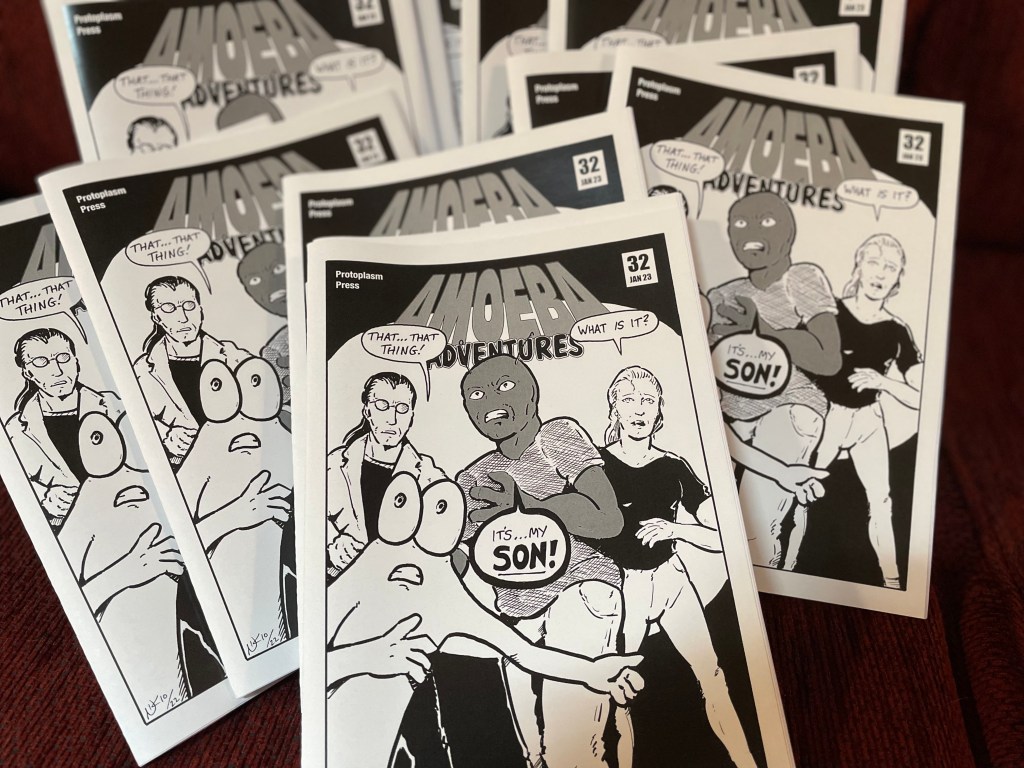
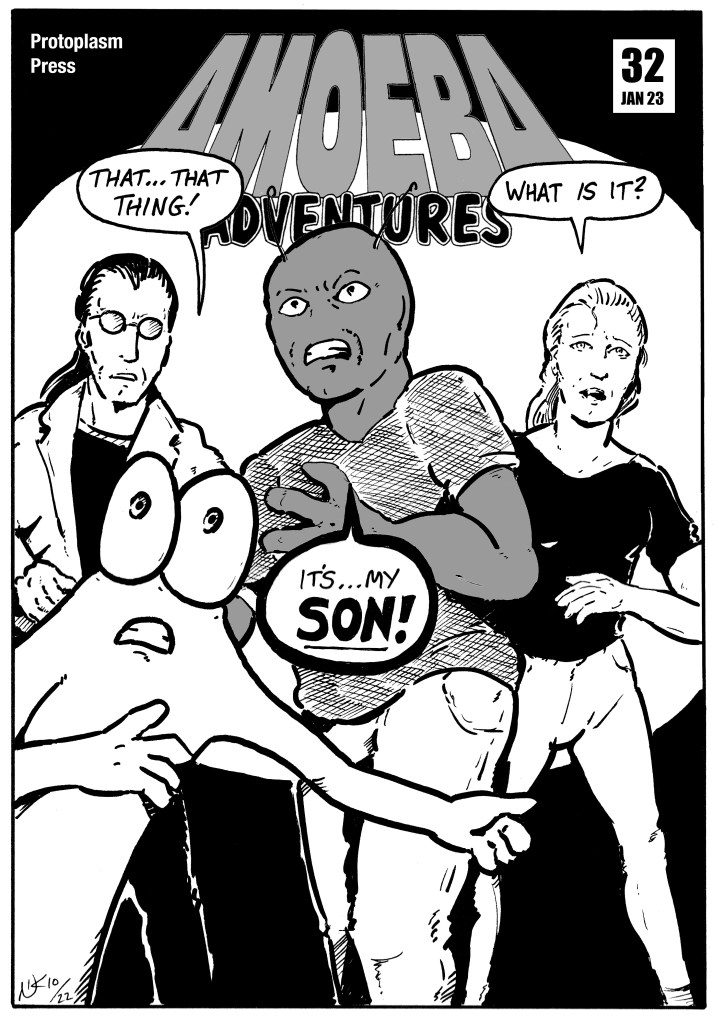
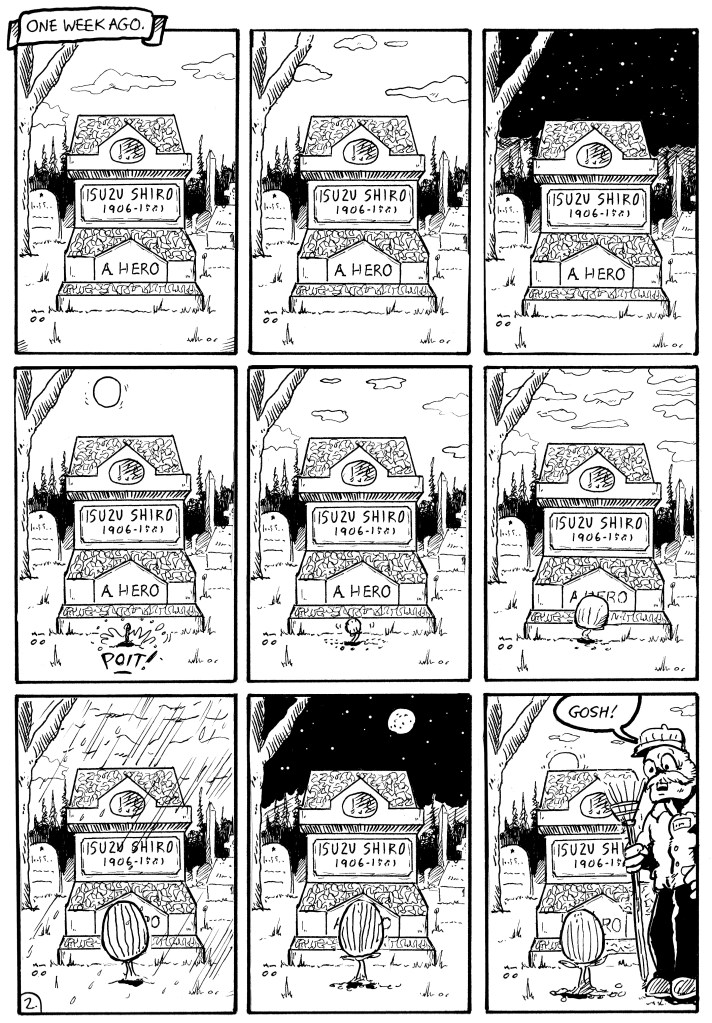
I’m not giving up all social media. This blog will stick around as long as I write, and while I don’t post much personal stuff on Facebook any more, I’m happy to have my own “page” dedicated to my writing and Amoeba Adventures comics work that you’re all more than welcome to follow. 

Social media hasn’t been all bad for me and I’ve “met” many lovely people, like the terrific writer and actress Michelle Langstone, who I guess I’d call a “digital acquaintance” and who left social media sometime this year herself. In a recent interview she nicely summed up the house of mirrors effect these spaces have on us very well: “At some point, I realised I’d come to rely on other people’s responses to the material I was posting and that was shaping who I was, and how I felt about myself.”

Social media feels increasingly performative, and I’d rather focus my energies more on being truly creative with things like this goofy website, my freelance and paid writing, and my comic book scribbles.

That’s just my solution, and for everyone else, hey, whatever works. 

I’m not leaving “the internet” – I mean, geez, as a writer and creator in 2022, I really can’t, unless I want to be the tortured artist in the attic muttering away to myself alone. But I can certainly choose where I want to spend my time online, and on places that make me feel good.

Movies I Have Never Seen #20: El Topo (1970)

What is it: The first “midnight movie,” the surrealist “acid western”, “the weirdest western ever made.” Director Alejandro Jodorowsky’s  extreme cult hit El Topo was a groundbreaking, aggressive statement that helped to change cinema, taking western movie tropes and turning them into a bizarre, questing meditation on morality and enlightenment. Populated with grotesque images and moments of startling beauty, it’s soaked in blood, disorienting with its casting of real-life disabled or maimed performers, and the kind of movie all the film cognoscenti say that you really must see at least once. So, finally, I saw it once. 

Why I never saw it: For a movie that’s legendarily strange, El Topo has had a difficult path to actually being easy to see. It got tangled up in legal wrangling and was only released on DVD in 2007. The first of Jodorowsky’s films I’ve dipped into, El Topo is often called Jodorowsky’s ‘most accessible’ movie. I’m a fan of weird, but weird is very much in the eye of the beholder, ain’t it? (I still recall a date who I took to the Michael Bay movie The Rock talking about how strange and weird it was afterwards. Reader, we did not date again.) I love my Lynch and Cronenberg but am fully aware I’m a mere babe in the wild, vast woods of weird cinema, and have to admit I wasn’t quite sure what to expect with El Topo.

Does it measure up to its rep? The big question for every viewer of El Topo is whether or not it’s just a procession of cruelty with no deeper meaning. When the subject is nothing but “people are terrible,” it gets old, fast. El Topo starts off feeling a bit like a particularly dark spin on the whole “lone gunman wreaks vengeance” plot, following the man in black and his inexplicably naked young son (Jodorowsky himself plays the gunman) as they discovered a gutted village filled with dead people, track down the corrupt bandits responsible and execute them. The gunman then abandons his son for a rescued hostage and ends up on a surreal quest through the desert to kill four gunmen legends and become “the best there is,” a quest that gets increasingly stranger. In the end, the gunman disappears and is reborn years later in a cave, bleached white and now a mystical holy man who can’t quite escape his violent past.

While it’s hefty with the DNA of John Wayne, Clint Eastwood, Django and other western icons, to me it also shares an awful lot with books like the dark, biblically violent Cormac McCarthy novel Blood Meridian, which also sees the west as a seething quagmire of man’s worst instincts, or of Robert Bolaño’s epic 2666, which turns an unflinching catalogue of murders into something stranger and deeper. If anything, I have to admit that El Topo wasn’t quite as weird as I imagined it might be, especially in its more grounded first half. Where it sticks, however, is the insinuating ugly beauty of its vision, where Jodorowsky stages violence with an icy calm eye as men, women and even children are gunned down, and in the end, we’re not certain if he’s saying life is worth nothing – or worth everything. There’s precious little hope in its final moments, suggesting an endless circle of violence and thwarted redemption.

Worth seeing? On one level, El Topo probably doesn’t seem quite as groundbreaking as it might have 52 years ago. We’ve had plenty of deconstructionist westerns: Clint himself in Unforgiven, Jim Jarmusch’s Dead Man and much more, and plenty of weird, brutal cinema. Yet despite its more grotesque flourishes, El Topo is still a singular, fierce vision. His use of real-life amputees and dwarves is confronting, as is the brief animal deaths and sexual violence. Jodorowsky claimed back in the ‘70s that he really raped his actress co-star in one vivid, violent sequence, although he’s since walked that back as a big-mouthed publicity stunt. Either way, El Topo is still a triggering film, but it has value as some kind of warped mirror on society. Seen 50 years on, yes, El Topo does seem madly self-indulgent, frequently sadistic and exploitative. Yet it’s also hard to stop thinking about some of its imagery. I’m a sucker for the vision of a man in black, riding across the desert, on his way to who knows where, but knowing there’ll always be blood in the end.

It’s another Amoebargain sale and special Amoeba Adventures reprint!

It’s time for the second annual AMOEBARGAIN SALE of rare out-of-print back issues of my comic Amoeba Adventures – plus, a special reprint of one of my favourite issues of the original series, back in print for the first time in years! If you are wanting to pick up handsome physical copies of my comics, including the last few copies I have of some real rarities, now is your chance.

Just released: Amoeba Adventures #27: The 25th Anniversary Edition

It’s the final issue of the original 1990-1998 run of Amoeba Adventures, and one of my favourite comics ever. Somehow or another, 2023 marks 25 years since this bad boy came out. Way back in 1998, I was dead broke and living in a hick town in the middle of nowhere so the original print run of AA #27 was very small and quickly gone. After the carnage of “The Dark Ages,” the All-Spongy Squadron regroups for one last hurrah. Setting up the status quo for the 2020 Amoeba Adventures revival, it features Rambunny, Spif, Ninja Ant, Prometheus and Dawn one last time – and of course, a drunken bar brawl!  This special reprint also includes EIGHT pages of rare art, interviews and behind-the-scenes commentary. A mere US$5.00 – only a small amount have been printed and when they’re gone, they’re gone. 

Plus! Vintage Amoebas! Get ‘em before they go!

There’s still a small handful of vintage 1990s Amoeba Adventures issues I’ve got in storage that it’s time to set free – these are out of print original printings and once they’re gone, they’re gone forever and are going dirt-cheap!

Available are:

Amoeba Adventures #19, 20, 21, 22, 24 – $1.00 each!

Amoeba Adventures #11, 13, 14, 15, 18, 23 Sorry, all sold out!

Recent issues: Plus, if you’ve missed out on the super cool limited print edition of the most recent issues, there are just a few left. Everything must go!

Amoeba Adventures #28 – SOLD OUT!

Amoeba Adventures #29 – ALMOST gone!

Amoeba Adventures #30 – FIVE copies left!

Amoeba Adventures #31 – The most recent issue!

For a limited time, all now available for a mere $5.00 each! 

Finally, work is well underway on Amoeba Adventures #32, the FIFTH new issue – it won’t quite be ready until closer to Christmas, but if you want to pre-order the limited print edition of that now, it’s a mere $US7.50 shipped anywhere in the entire world to you when it’s available. 

Sale ends November 30, so don’t delay! How to order: Postage is $1 for 1-2 books, $5 for 3-6 books, $6 for 7 or more. Send funds via paypal to dirgas@gmail.com

Of course, if you’re a child of the modern age and don’t mind digital, a reminder that EVERY one of my comics is available as a free PDF download right here – all 32 issues of Amoeba Adventures, spin-offs, weird side projects, jams and much more. As always, thanks for reading!

Waiting for a Miracle, Man

Is there a comic book cliffhanger that anyone has been waiting for longer than that of Neil Gaiman’s Miracleman?

It’s been nearly 30 years since the final issue of Eclipse Comics’ Miracleman came out, part two of “The Silver Age” storyline by Gaiman and Mark Buckingham. The comics company itself went out of business, Miracleman got stuck in a byzantine legal limbo for ages, and Marvel Comics eventually ended up with the publishing rights to the character but it still took years more to get around to completing the story. 

Finally, today, I picked up the first issue of Miracleman: The Silver Age, which will be republishing the first two 1990s issues of Gaiman’s story with new art and finally, finally, carrying on the story with #3. It’s been a while. 

Miracleman, back in the late 1980s, was one of those comics that blew my teenage mind, as written by Alan Moore and a series of often-astounding artists. To make a long, very complicated story short, Miracleman (originally known as Marvelman) was a sloppy Captain Marvel/Shazam rip-off in British comics in the 1950s whom Moore revived in the early ‘80s for one of his typically post-modern takes on superheroics in the pages of the British comics mag Warrior. It was later picked up for wider US distribution by Eclipse Comics, which went on to continue the story – albeit in stops and starts, a trend that has plagued Miracleman to this day. 

To this day, it’s still one of my favourite superhero comics. It takes the idea of a man who can turn himself into a superhero by saying a magic word (Kimota!) and turns it sideways and delves into all the disturbing possibilities of such a transformation. Moore presented Miracleman’s world with a gritty realism, contrasted with the kiddie-comics of the old Marvelman/Captain Marvel era, and ultimately, it took a dark turn into dual identities, sadism and power that still seems groundbreaking. It also asked the horrifying question, what would happen if a 10-year-old boy had superpowers and was corrupted by them? (The answer being Johnny Bates, Kid Miracleman, one of comics’ most indelible villains.) It was a comic that could be breathtakingly brutal as well as dazzlingly beautiful in the same issue.

I first came to Miracleman a bit later in the run, when the astounding painterly art of John Totleben joined with Moore’s scripts and the story moved into its zenith, setting up a clash between Miracleman and Kid Miracleman that literally changed the world. Instead of a superhero battle leaving a mess to tidy up, this fight ended up with Miracleman asserting control over the globe, eliminating poverty, hunger and war, but also forever changing humanity. 

I’m used to waiting for Miracleman. I still remember picking up Miracleman #14 at some comics shop in Oregon while on a road trip with my dad, decades ago, and its cliffhanger ending with Johnny Bates free and about to unleash his power on the world. The next issue didn’t come out for months and months, leaving me hanging. The issue after that, #16, Moore’s final issue as writer, didn’t come out for more than a year. 

After Gaiman took over as writer, he and Buckingham delivered an excellent “Golden Age” arc looking deeper at Miracleman’s ‘perfect’ world, and then two parts of “The Silver Age,” meant to dig deeper into its conflicts as his sidekick, naive Young Miracleman, is resurrected 40 years after his death to a changed world. (A final part, “The Dark Age,” was teased to follow.) Miracleman #24, released in 1993 was the second part of the “Silver Age.” And then…. nothing. For decades. 

In the many years since Miracleman first appeared, we’ve seen a zillion other reimaginings/dark reboots/postmodernistic takes on superheroes, most of them kinda dire. Even Moore himself went to that well a little too often in his career, but still, for me, years on Miracleman casts a daunting spell. Its peculiar combination of darkness and idealism still speaks to me.

Its legacy has been debased a bit – I utterly hate that Alan Moore is credited as “The Original Writer” on reprints due to creative/legal squabbles, even though it’s what he wants. I loathe the truly terrible idea of Miracleman being absorbed into the Marvel Universe proper which seems inevitable and has been teased for ages now. This story doesn’t need to be shared with that of Spider-Man and Wolverine, but then again, DC already crammed Superman into Watchmen, so nothing is unthinkable in corporate comix™. 

Still, I want to know what happens next for Miracleman, at long last. 

For 29 years now, I wondered what would happen next when Young Miracleman was revived into a utopian world he doesn’t understand, what would happen to Miracleman’s idyllic kingdom, and of course, of course, what might happen if the devil Johnny Bates returns. Barring getting hit by a truck or something on the way to the comics shop, it looks like it’s finally gonna happen soon. It may disappoint, it may amaze, it’s hard to know. But boy, I’m glad I get to see the end of the story. 

I still believe in Miracles. 

(*Speaking of miracles, I barely noticed that October marks exactly four years since I revived my regular blogging on this site, picking up a blogging ‘career’ that started way the hell back in 2004. Blogging again, uncool as it may be in the age of TikToks or whatever, has really sparked my creativity and I’m writing more for profit and for fun than I have in ages. So, thanks to you out there in the internet void who read this junk, it is appreciated!)

Yes, they suck: My top 13 movie vampires

It’s the spooky season, and Halloween is nearly upon us! What better way to celebrate than lining up a handful of horror movies – since I outgrew trick-or-treat, my favourite way to mark the holiday.

Vampires are a Halloween mainstay, and for my Halloween post, here’s my Top 13 Movie Vampires (many more could have made the list, but I decided to stop with the spooky 13).

Where it all began 

Nosferatu (Max Schreck) Nosferatu, 1922: One hundred years old this year, the first major screen vampire in this not-quite adaptation of Dracula is still horrifying. Apparently some people even thought Schreck was a real vampire! The movie is brisk and terrifying even after a century, and features several shots that are among the greatest in horror history. Sure, you could argue this Nosferatu doesn’t really have a character, but who cares when he’s this scary?

Dracula (Bela Lugosi), Dracula, 1931: The ultimate interpretation of Dracula, so iconic that Lugosi spent the rest of his life both chasing and running away from it. It’s hard to look at a role like this that’s passed into legend with fresh eyes, but watch it again sometime and see how Lugosi sinks his teeth (sorry) into his sexy, strange vampire. Everyone from Anne Rice to Twilight owes him a debt.

Dracula (Christopher Lee) Lots of Dracula movies, 1958-1973: The thing about Christopher Lee is he looked great as Dracula in a whole series of Hammer Films vampire flicks even when the movies themselves were rather sloppy and stilted and had titles like Taste The Blood of Dracula. They even made the mistake of having Lee – one of the best horror voices of all time – nearly mute in several of the movies and his character and competence seemed to change from film to film. None of that really matters, because besides Lugosi, Lee is the finest dark prince ever to play the role. 

Regal vampires

Countess Marya Zaleska (Gloria Holden) Dracula’s Daughter, 1936: It seems weird in these days of never-ending franchises, but Lugosi did not return for a proper Dracula sequel. Instead, this ‘sidequel’ introduces his supposed daughter, the gloriously goth Holden. It’s one of the many bashed-out Universal Horror cheapies that barely run over an hour, but Holden’s sultry Zaleska is a striking, strong and modern creation – witness the barely concealed lesbian subtext in one famous scene.

Lestat (Tom Cruise) Interview With A Vampire, 1994: Man, there was an outrage back in the day about Tom Cruise playing Anne Rice’s bratty vampire, but every time I watch this, he seems a little bit better – preening and smug, he blows a sleepy Brad Pitt off the screen. I still haven’t seen the new TV reboot yet, but for my money this flick captures the lush absurdity of Rice’s prose very well. 

Blacula (William Marshall) Blacula, Scream, Blacula Scream!, 1972-73: William Marshall was better than the material in the Blacula movies, which are a silly blaxploitation hoot with few moments of real terror. But boy, did Marshall act the heck out of Blacula, giving a wounded dignity and majesty to his cursed African prince that lifts the movies themselves. His grand booming voice alone ensures a place on this list. 

Totally ‘80s Vampires

David (Kiefer Sutherland), The Lost Boys, 1987: Come on, who didn’t want to be a Lost Boy after watching the hooligan vampire gang led by Sutherland’s David storming around Santa Cruz, where weightlifting saxophonists wail away the night? Flashier, sexier vampires became a big thing in the ‘80s, and the hair-sprayed, sultry crew led by David were among the vanguard. 

Jerry Dandridge (Christopher Sarandon), Fright Night, 1985: As this list shows, the ‘80s were a terrific time for vampire reinventions. Here’s the yuppie vampire, smooth scarf-wearing Jerry Dandridge, played with memorable charm and snark by Sarandon. The meddling teenager next door is sure Dandridge is a vampire – needless to say, the kids are always right. 

Severen (Bill Paxton) Near Dark, 1987: The white trash dark reflection of that same year’s Lost Boys, Kathryn Bigelow’s vampire western is a magnificently tense and gorgeously filmed story of a band of roaming vampires and the young cowboy who falls in with them, but the whole dang movie is nearly stolen by the late great Bill Paxton’s swaggering, sleazy Severen, a member of the vamp gang who honestly does not give a damn and storms through every situation like a pure creature of the id. He’s terrifying, and hilarious.

Darned weird vampires

‘Space girl’ (Mathilda May) Lifeforce, 1985: She’s a kind of space vampire, and she spends about 95% of her screen time utterly naked in Tobe Hooper’s bizarrely grandiose sci-fi/horror epic. It’s a trashy movie but it’s also so determined to be weird, from an overacting Patrick Stewart to its swirling, cosmic climax. It’s not a very coherent film, but May’s stoic, creepy otherness makes her nude dark creature fascinating.

Jiangshi, Mr. Vampire, 1985: Chinese vampires are weird. This insane Sammo Hung comedy horror introduced mass audiences to the Chinese folklore “jiangshi,” hopping corpses who are somewhere between zombies, vampires and leapfrogs. The vampires in this movie are creepy because they’re so far from what Bela Lugosi made us think of, more animal-like than anything, and its success led to an explosion of wild, weird films.

Not quite vampires

Blade (Wesley Snipes) Blade, Blade II and Blade III, 1998-2004: Wesley Snipes’ attitude-filled vampire killer who’s also a reluctant vampire himself was the first Marvel comics character to actually star in a hit film, and the blood-splattered, over-the-top Blade series is still a heck of a lot of fun, combining action movie energy with gory horror. 

Peter Loew (Nicolas Cage) Vampire’s Kiss, 1989: Cage is well known for going over the top. In Vampire’s Kiss he not only goes over the top, he launches himself into outer space. In this unhinged, extremely black comedy, he’s a yuppie sleazebag who apparently is bitten by a vampire. Cage goes “full Cage” as his character gradually loses his mind, eating cockroaches and screaming through the streets of Manhattan. It’s hilarious, but it’s also one heck of a piece of method acting. You’ll never forget it. 

Honourable Mention: The vampires from What We Do In The Shadows; The Hunger; Let The Right One In; Nosferatu (Herzog remake); Only Lovers Left Alive; Count Yorga; Buffy The Vampire Slayer.

Well, at least Liz Truss will go down in history

Watching British Prime Minister Liz Truss’s brief tenure go down in flames has been an exciting spectator sport. After a mere 45 days in office, she’s resigned, and while the debates over her car-crash of a tenure will be going on for some time, eventually, she’ll be a footnote – the shortest serving UK Prime Minister ever. At least she’ll have company, in that weird world of history’s short-timers.

In fact, Truss is not anywhere near the record set in other countries for the shortest leadership – the briefest US President lasted a mere 31 days, while in New Zealand, our shortest-serving Prime Minister was only 13 days. In Australia, it was just eight!

US President William Henry Harrison is a footnote in Trivial Pursuit games. He died a mere month after his inauguration, the then-oldest US president at the age of 68, after giving a nearly two-hour inauguration speech in the freezing cold. His health declined over his short term, not helped by a habit of going for long walks without a coat or hat in wintry March weather. Because it was 1841, his treatment during his illness consisted of fun things like enemas, “cupping,” castor oil, opium, and a lovely cocktail of camphor, wine and brandy. It didn’t help. He lingered until April 4, 1841, only his 31st day in office. He gets points for what is perhaps the most “I love my job” deathbed speech of all time – “Sir, I wish you to understand the true principles of government; I wish them carried out, I ask nothing more.” 

Harrison’s death has long been attributed to pneumonia, but more recent research has found it might have been some kind of enteric fever, spawned by Washington’s then literal swamps. He didn’t leave a whole lot of accomplishments other than running what might be considered the first “modern” campaign, yet his death, the first of a US President in office, did help establish the precedent of the Vice-President becoming President. Many thought John Tyler should only become an “acting President” but he simply assumed the full office, which is how it’s worked ever since. 

Henry Sewell, considering career options.

Here in New Zealand our shortest serving leaders have mostly been during the earlier days of British colonial government. Henry Sewell was New Zealand’s first premier, Prime Minister or “colonial secretary” from May 7 to 20, 1856, during the very earliest days of our colonial government – “he was too reserved and elitist for the rough and tumble of colonial politics, as the brevity of his premiership showed.” Other earlier PMs had pretty short terms as well. In modern times, the late Mike Moore served for only 59 days in 1990 before his Labour Party was voted out of office. Despite his short term, he went on to have a pretty solid career in world politics and was given that crowning kiwi accolade when he died at age 71 – “an everyday bloke.”

Across the ditch, there’s certainly been a lot of turnover in Australia’s Prime Ministers, including what I believe is the only Prime Minister ever lost at sea, but they’ve got work to do to catch up with poor Frank Forde, who only lasted 8 days in 1945. He became Prime Minister when John Curtin died suddenly, but a week later his Labor Party picked someone else to lead, and well, it was farewell, Forde. 

Few will mourn Liz Truss’s brief term as Prime Minister, but its mere brevity indicates she’ll go down in history for one thing, at least – just maybe not the way she wanted. 

In defence of… The Incredible Hulk (2008)

Weirdly low-profile for a giant green monster, 2008’s The Incredible Hulk is the forgotten overshadowed superhero stepchild of the same movie summer that brought us Robert Downey Jr.’s Iron Man. 

It’s flawed, for sure, and lacks the machine-tooled precision that the MCU movie-making machine has settled into. But when it works, The Incredible Hulk still feels to me like the best Hulk movie we’ve had to date. I think of all the Hulks we’ve seen on screen, it remains the closest to the “classic” Hulk – doomed scientist on the run from his curse, haunted and heroic. Ang Lee’s muddled 2003 film mixed intriguing ideas with a bizarre plot and felt like a Hulk in name only, and in a series of Avengers and Thor movies, Hulk has been more of a superheroic comic sidekick. 

Incredible Hulk opened mere weeks after Iron Man but these days is often lumped at the bottom of lists ranking the 30 or so Marvel movies. Still, nearly 15 years on, The Incredible Hulk is having a weird revival in the MCU – its villainous Abomination portrayed by Tim Roth has returned in the She-Hulk TV series, and the super-smart Hulk villain The Leader, whose heel turn by Tim Blake Nelson was only hinted at way back in 2008, is reportedly set to appear in the next Captain America movie.  Often dismissed in MCU fandom, there’s still a lot I like about Incredible Hulk.

Edward Norton’s tense, nervy turn as Bruce Banner owes a lot to Bill Bixby’s classic stressed-out Banner in the 70s Hulk TV show. The movie wisely skips over the Hulk’s origin in a quick few cuts and jumps to the status quo of Banner on the run from the government, hiding out in a colourful Brazil favela. The South American setting for the movie’s first act is already something a bit different, grittier than the typical superhero movie, and while there’s barely a Hulk to be seen for the first part of the movie, Norton’s haunted portrayal and the sense of impending doom carries the film well. 

We follow Banner from South America back to America, where he catches up with long-lost love Betty Ross (a great Liv Tyler) and the late William Hurt’s cruel and stern Thunderbolt Ross, as well as a tightly-wound soldier named Emil Blonsky (a coiled and ruthless Roth) who wants to take down the Hulk. When the Hulk does finally appear in broad daylight in a university campus battle, it’s suitably impressive. No, the Hulk doesn’t get a lot of screen time here, but when he does, he leaves his mark. The 2008 CGI is perhaps less smooth than modern motion-capture, but I like the somewhat ravaged, demonic look this Hulk has. 

Incredible Hulk captures the cat-and-mouse game that Banner played with his pursuers so often in the comics, reminding us that the Hulk at his core is a misunderstood monster, not a superhero (and really, not an Avenger despite the movies – in the original Avengers comics, he lasted to the second issue before quitting the group). 

Where Incredible Hulk goes off the rails is in a rushed and silly final act, where Roth’s Abomination becomes a CGI gumby and New York City ground zero in a battle that doesn’t feel like it has any of the stakes or tension of the preceding hour or so of the movie.

Director Louis Leterrier isn’t really A-list – movies like The Transporter or the terrible Clash of the Titans remake – yet the many deleted scenes on blu-ray show he and Norton were trying to make a different sort of movie than it turned into when it was shoehorned into a Marvel Cinematic Universe building block. Norton clashed a lot with Marvel and wasn’t invited back to play the Hulk again.

There are brief moments in Incredible Hulk that feel raw and adult compared to a lot of superhero flicks – Betty calming the enraged Hulk down when he’s frightened by a rainstorm; Bruce and Betty’s fleeting hotel room tryst, ruined when Banner realises, “I can’t get too excited,” or the keen glittering madness in Roth’s Blonsky, which has been erased for comic effect in She-Hulk.  

The Hulk has proven a remarkably protean character in the last few decades in the comics – after settling into the childlike “Hulk smash!” brute for most of the ‘60s and ‘70s, in the mid-1980s writers started experimenting with variations on the Hulk’s dual identity, pioneered by the great, tragically curtailed writer Bill Mantlo when he introduced a lengthy take on the “smart” Hulk – one with Bruce Banner’s intelligence – and perfected by Peter David in his iconic 12-year run on the character where he brought us the calculating Grey Hulk, a “merged” Professor Hulk and much more. Since then we’ve had Red Hulks and Immortal Hulks and Robot Hulks and Son Hulks and much more. There’s so many Hulks. 

Yet, I’m still a bit partial to the simple, crisp duality of the “Incredible” Hulk, a lumbering Frankenstein-ish monster who isn’t inherently evil but is treated that way, and a Bruce Banner whose life is ruined by trying to live with this unpredictable curse. 

To be fair, I like Mark Ruffalo and his charmingly dorky Banner, but too often his Hulk has never quite felt like more than a CGI strongman. His Banner seems annoyed by being the Hulk, not haunted like Norton. The “merged” Hulk introduced in Avengers: Endgame is more awkward and bumbling than the confident version introduced in Peter David’s comics. Endgame skipped past all the settling of the Hulk’s inner conflicts introduced in Infinity War, waving all that off in a time-jump. I simply feel there’s a little too much Ruffalo in the Hulk in his current MCU incarnation and not enough, well, Hulk. 

It’s a big “what if” whether Norton could’ve been good as a Hulk in an ever-expanding, ever-calculating Marvel Cinematic Universe. His portrayal is a bit too idiosyncratic, a bit too “real” to play well with others. But it’s still the screen Hulk I like the most. 

My friend Freedy Johnston and me

OK, we’re not actually friends. I’ve never met the man. Never even seen him play. But in the way you sometimes bond with a singer/songwriter, it feels like I’ve been friends with Freedy Johnston, a tremendously underrated musician who’s helped provide the soundtrack to my life for nearly 30 years now. 

Johnston’s latest album, Back On The Road To You, just came out, and it’s already added several distinctive earworms to my brain. Freedy’s songs are like that to me – they sneak into your bloodstream, with a poignant chord or a cutting lyric that you find you can’t stop listening to. 

Born in Kansas, he’s hardly a household name, and had his biggest brush with mainstream fame with his 1994 album This Perfect World, which is where I first discovered him, too. I was working at Billboard magazine as an intern for the summer, and his disc was one of a pile of albums the editors were passing along once they were reviewed. (It seems weird to think, now, but piles of free CDs were like liquid gold then, and I ended up having boxes of them to ship back after my Billboard stint.) Freedy stood out from the Pearl Jam and Hootie and the Blowfish soundalikes. Always, he’s seemed slightly a man apart from his time. 

The single “Bad Reputation” was a brief gorgeous outlier in the summer of peak grunge in ’94, and This Perfect World is a melancholy gem of heartbreak and insight, like most of Freedy’s work. He’s not a flashy guy, more in the mold of singer/songwriters like Joni Mitchell, John Prine or Ray Davies – observational. He’s got a sweet voice with a slightly rough edge, always tinged with just a bit of yearning. 

My attachment to Freedy is personal, because so many of his songs felt like they were tailored for my life at the time – or maybe that’s just the universal seeping through his work. In the late 1990s, when I was doing lots of the moving around and unsettled romantic chaos that comes with your late 20s, his albums Can You Fly, Never Home and Perfect World were in constant rotation. 

Each song meant something to me.  I moved back to California, and listened again and again to the ringing chords of “California Thing” hoping for an optimistic fate – “High off the roof we rise / Flying to a hand up in the sky.”  “The Mortician’s Daughter” was about every girl I stuffed up a relationship with and the stolen moments you never forgot – “I used to love the mortician’s daughter / We rolled in the warm grass by the bone yard fence.” 

At times, Freedy’s work has gotten a little too dour and melancholy, but for the most part he’s had a remarkably consistent sound over the years. I tend to like the slightly rockier numbers the most, where at times he sounds like he’s about to erupt. 

He paints a picture with spare words – “I just told her that’s she’s my number one / And she went ‘maybe’” tells you everything to know about the relationship in “There Goes A Brooklyn Girl.” 

At his best, in a song like “He Wasn’t Murdered,” a few short sentences tell a short story – “It was a roadside stop with a broken name / And he sat there all alone / In the used-up mirror he saw his ghost come slowly walking over.”

Freedy Johnston is still plugging away in the trenches of the music business and I’m happy to be a fan. His latest album shows he’s still got it, and it’s got a gentler, optimistic edge that we kind of all need right now – I’m particularly fond of the killer harmonies of “That’s Life,” “The Power Of Love” and “Tryin’ To Move On,” which suits this uncertain time we’re all somehow, getting through. 

Anyway, listening to him all of these years, it’s felt like a secret friendship of sorts, which is perhaps the highest goal any creator can have – that their work was meant for your ears alone. His songs have kept me company through the good and the bad.

Like all of us, Freedy’s getting older, and the world is getting weirder, but there’s a comfort to know he’s around, singing songs for his friends. Cheers, mate. 

Please enjoy a playlist of bespoke Freedy Johnston tunes curated by yours truly:

In search of ‘The Slap Maxwell Story’

Back before the internet, nerds like me used to have quests. We’d try to seek out a particular rare Harlan Ellison book or an obscure early R.E.M. cassette single, paging through fanzines and sending off paper money orders. One of my great quests, for years and years, was trying to track down the short-lived 1987-88 Dabney Coleman sitcom, The Slap Maxwell Story.

I was a teenager thinking about becoming a journalist when it aired, and this show – starring Coleman as a middle-aged sports columnist at a failing newspaper, stuck in his old-fashioned ways and struggling to make sense of his life – stuck with me. 

The last thing anyone wants to see these days is another story of a cantankerous middle-aged white dude who’s bitter about the changing world, I know. But, for some reason, The Slap Maxwell Story resonated with a 16-year-old me in a way it probably shouldn’t have.

I’ve always liked Dabney Coleman, who had a great run in the 1980s playing a particular kind of blustery alpha male – everything from sexist bad guys (9 To 5) to unlikely heroes (Cloak and Dagger), but whose finest hours were two TV series by Jay Tarses – 1983-84’s Buffalo Bill, about an egotistical talk show host, and Slap, about a slightly less egotistical journalist. 

Of those two series, Buffalo Bill is a little better remembered – it lasted longer, won a few awards and got a DVD release years ago. The Slap Maxwell Story, however, fell into the memory hole of short-lived “content” that is only remembered by a few.  It never received a DVD or VHS release that I can tell, has never been on streaming platforms.

Still, I remembered Slap Maxwell, and always wanted to see him again. It was a quest, perhaps one of the last ones when Wikipedia and Google are here to show and tell us almost everything.  When you can’t find something, it looms large in the memory.

I remember Slap’s fumbling romance with a woman half his age (a luminous Megan Gallagher, subject of my massive teenage crush), his boozy male bonding with his inept editor and a friendly bartender. I remember him getting fired repeatedly from his job, his rather implausibly winning a major journalism award, him pitching a fit because his editor got rid of his ancient typewriter. Really, his sportswriting and newspaper gig take a back seat to Slap’s crumbling personal life and mid-life crisis of confidence. 

I occasionally trawled the internet over the years looking for any kind of physical release of the old Slap episodes – even looking at a dodgy Pakistani site claiming to sell bootlegs that I highly doubt ever existed. It’d just be something I’d do, sometimes, over the years, bored Google searches for traces of a forgotten TV show. There was proof it existed, but never any actual samples.

Finally, finally, I found Slap again, when some kind soul uploaded big chunks of The Slap Maxwell Story to YouTube a year or so back – sure, a bit choppy and scattered, apparently sourced from VHS tapes of old reruns on the A&E network years ago, but proof of life nonetheless. I tip my hat to this uploader, the magician at the end of the quest. 

Ever since I’ve been diving into reliving these old episodes of a forgotten TV show to see if they lived up to my teenage memory now that I’m almost as old (egad) as Slap himself was in the series. For the most part, it does – I wouldn’t argue it’s the Great Forgotten American Sitcom or anything, but it deserves a bit more than being lost in limbo. It’s wry and witty, bittersweet and charming in a low-key way, far less broad than many sitcoms of the era. Coleman’s Slap is somewhat more nuanced than his nastier turns in Buffalo Bill or 9 To 5 and one of the few accolades the show got him was a deserved Golden Globe for best actor.

There’s no obnoxious laugh track here (thank god). The series is a sitcom based in melancholy – something that’s common now, but was rare then. As it went on Slap’s flailing attempts to be a better man take centre stage. I can see why it didn’t last in the age of The Cosby Show, Alf and Growing Pains, because it’s kind of about a failure. 

Slap Maxwell is grumpy but gentle, and his story is one of constantly screwing up, ruining his relationships and sometimes failing upwards. He gets it wrong a lot. It’s the story of a lot of life, to be honest. I’m still hoping one day we might get a fancy physical release of these shows – increasingly less likely, I know – but even in a grainy YouTube video, Slap Maxwell’s story is one I’m happy to revisit. 

Getting lost in Jim Henson’s ‘Labyrinth’, 36 years on

I’m old enough to remember that Labyrinth was actually kind of a flop when it opened in theatres in 1986, but I recall that I still somehow managed to watch it three times there before it faded away. 

I don’t want to be that guy, but I was into Labyrinth before it was cool, man. 

Jim Henson’s film is a swirling strange dream of a movie, with a grandly absurd David Bowie as the Goblin King and young Jennifer Connelly as Sarah, a girl who accidentally loses her baby brother to the goblins’ realm and has to get him back. I loved it as a kid, and still adore it as an adult, but with a very different perspective on it all now. 

Watching Labyrinth over the weekend on the big screen at the glorious Hollywood Avondale for the first time in decades, it still seems to me a beautifully askew little fairy tale. All fairy tales are written by adults, and all fairy tales on some level are about the end of childhood. 

Several years ago, I watched Labyrinth for the first time in ages and it didn’t land as well – it felt a bit clumsy and halting on a small screen. I realise now that the big screen is a far better venue for Henson’s imagination, where you can appreciate the dazzling CGI-free puppet work and intricate set designs, where Bowie’s haughty sneer and Connelly’s unforced sincerity seem stronger, realer. The puppet characters are a quirky joy, especially the hulking Ludo and my favourite, the frantic Sir Didymus. 

It’s also all proudly weird, which I think is what appealed to me as a teenager – from distorted goblin designs to the cavern full of sentient hands to the creepy Fireys dancing with their separated body parts, it doesn’t feel very Disney-fied like so many young adult fantasies. Bowie takes a character that could be ridiculous (that wig!) and makes him charismatic – it’s hard to imagine possible alternative casting like Sting or Mick Jagger being quite so effective.

Bowie’s mournful songs and Trevor Jones’ score are all more adult and yearning than most kid-movie soundtracks, with Bowie’s “Within You” one of his most underrated, intense love songs. The sexual subtext of Sarah’s coming of age is right up in your face as an adult, because honestly, you don’t cast David Bowie and put him in rather tight leotards without expecting some kind of reaction, do you? 

At the time, Labyrinth was not a success. It barely opened in the box office top 10 in June 1986, beaten by the likes of Top Gun and Karate Kid (franchises that were of course, never heard from again). In Bowie’s career, it was considered part of the long post-Let’s Dance slump that included pre-grunge band Tin Machine and Never Let Me Down. (I disagree, of course, and Bowie’s firm willingness to reinvent himself makes this era stronger in hindsight.)

Yet somehow, Labyrinth endured. Part adult reverie, part teenage girl fantasy, part childhood toy-filled romp, Labyrinth still sits uncertainly next to the likes of Beauty and the Beast and The Little Mermaid. Sarah’s final rejection of the Goblin King still has power – “Just fear me, love me, do as I say and I will be your slave,” he tells her. She knows better, and chooses her own path. The King’s somewhat twisted affections are rejected.

There’s been talk over the years of sequels, prequels or sidequels to Labyrinth. Frankly, I really do hope it never happens. We’ve a tendency to wring out that ‘80s intellectual property until it’s exhausted, and the intimate pre-digital charm of Labyrinth can only be diluted by shoving it through the unquenchable content machine.

There is more sadness in watching Labyrinth now than there was when I was a teenager, at the other end of the telescope – sadness that the campy, imperious Bowie is gone, that Jim Henson’s dream of puppets ended too young, that we all, in the end, grow up. But there’s also joy, in knowing you were there, once, and nothing can erase the memories of the labyrinth of getting from there to here.