 I’ve been on an unabashed ‘80s music nostalgia kick lately, seeing Bauhaus and Billy Bragg in recent weeks, so it was time to move on to the 1990s and the glorious return of that kick-ass combo of rock’n’roll twin sisters, The Breeders, featuring Kim and Kelley Deal.
The Breeders, featuring the line-up that put out their hit album Last Splash in 1993, rolled into Auckland’s sold-out Powerstation last night on the final show of their world tour. It was a loose, giddy affair, with the Deal twins clearly having a lot of fun on stage at the end of a big year.
Kim Deal made her name as part of the legendary Pixies, and was an integral part of their sound, but for my money, her best work has always been the more personal, evocative pop-rock she created when she set out on her own in The Breeders with her twin sister Kelley. The Breeders have been equal parts surreal, goofy and spooky in their career, always anchored by Kim Deal’s crystalline croon of a voice.
The band barrelled through most of Last Splash and a lot of this year’s All Nerve, easily the Breeders’s best of their sporadic albums since Splash came out 25 (!!) years ago (and far better than the newer Pixies reunion albums minus Kim Deal have been).

The sibling banter of the Deal twins was often a highlight, but the powerhouse drumming of Jim MacPherson and bassist Josephine Wiggs anchored the songs with tremendous force.
The band romped through excellent new tunes like “Wait In The Car” and the sultry “Walking With A Killer.” Kelley Deal took centre stage for a show-stopping solo vocal turn in “Drivin’ On 9” while the sole Pixies tune of the night, Kim Deal’s “Gigantic,” had the audience pogo-dancing in glee. And of course, they played inescapable groove of “Cannonball,” one of the coolest songs of the 1990s, which sums up the Breeders sound nicely – rambling, groovy and always taking unexpected turns, combining classic pop riffs with grunge-era clatter and feedback.
(Edit: And here’s another excellent review by the Phoenix Foundation’s Samuel Flynn-Scott)
 I visited what’s probably just about the last surviving video store in Auckland the other day. It won’t be there for long, as it’s shutting its doors December 31 and was having a massive clearing-house sale.
 The groovy Videon in Mount Eden, Auckland was never my regular video store – I lived too far away from it – but it was a part of my family’s lives, and it was the kind of classic, curated and smart video store that film nuts loved – carefully organised by directors, countries and detailed sub-sections, with an extensive selection that blows away anything on streaming when it comes to film history.
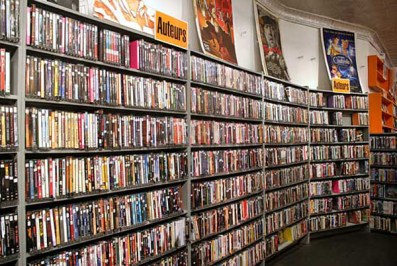 Video stores, while they lasted, provided a sense of community that staring at your laptop while scrolling through likes on your phone really doesn’t. Going out to ‘rent a video’ meant interacting a bit more than pushing a button. Sure, they could often be understocked or over-corporate or full of trash and porn, but still, the very best of the video stores, when they flickered through their brief life span, were a wonder.
 I’ve been on a Robert Altman kick these last few months, working through the late director’s diverse body of work. I watched what many consider his masterpiece, 1975’s Nashville, for the first time in years, and it’s surprising how relevant a 43-year-old movie about life in America still feels today.


 These days, it feels like there’s nothing more revolutionary than being sincere, than just being a man, alone, on stage with a guitar and a message.


 My first real deep dive into Stan Lee’s own writing came when Marvel Tales, a reprint mag, began running the original Lee/Steve Ditko issues of Amazing Spider-Man from the beginning in 1982. I’d never read them before, and while my pre-teen eyes took a while to get used to Ditko’s more primitive-feeling artwork, I was sucked in to the stories as Spider-Man fought Dr. Doom! Met the Lizard! Battled Doctor Octopus and the Living Brain! Reading these marvellous tales, I realised what all the fuss about “Stan Lee Presents” was really about.
 If you want to really examine the seismic effect Stan Lee had on comic book storytelling, read one of DC Comics’ musty early Justice League of America issues from around the same time the Fantastic Four launched. While they’re charming enough, the stiff, military-precise characters are interchangeable and conflict is nonexistent. They fight crime with a smile and brisk efficiency.




 A dead man, delivering a horrifying message as his body crumbles away into the shadows. Zombie-like homeless (featuring a never-more-creepy Alice Cooper) converging upon the church menacingly. Static-filled transmissions from a bleak future beamed directly into dreams. Glimpses into a murky mirror world behind ours that culminate in one of the most disturbing images of any film.


