Why I kind of want to live in a western movie town

I’ve been on a Sergio Leone kick lately, watching Clint Eastwood and Henry Fonda stalk impassively through vast open landscapes and ramshackle settlements. Sure, the action is great, the iconic soundtracks slap and even in this highly dubious time in American history, the mythic weight of the western is still strong.

…But half the time I watch westerns, I keep looking at the houses and what it’d be like to live in those sun-bleached outposts, 150 or so years ago now. I study the clattery wooden sidewalks, the creaky balconies dotting the streets (the better for a guy to be shot and fall out of, of course), the home-spun yet vaguely desperate vibe of those infinite saloons poised for violence. 

It’s an odd fixation to have, but as I’ve written before, I grew up in a once-upon-a-time western Gold Rush town, after all, and I think perhaps some part of me is tinged with vague nostalgia for the imagined west I never really saw.

I watch Clint Eastwood and Lee Van Cleef face off in a battle of flinty egos but I also think, gosh, I like the way the grain of the wood sticks out on that old blacksmith in the background, I wonder who’s living behind the faint lights in the windows, I admire the lonely architecture of all those balconies and horse railings, the forlorn ‘Hotel’ sign swinging in the western skies.

Heck, I know half these movies weren’t even made in America or were filmed on studio lots, but it’s the idea that counts.

Of course there’s all the cultural and colonial baggage of America’s settlement to reckon with, and I’d say at least 75 percent of movie westerns are just vaguely one-dimensional frothy cowboys ’n’ indians soap operas. But the ones that aren’t – the Leone, The Searchers or The Wild Bunch or Tombstone or Unforgiven or McCabe and Mrs Miller – they get at the contradictory and violent bloody heart of a nation. The best westerns tell us what America really is, not what it pretends to be. And those long lonesome dirt road main drags lined with hotels and bars and barbers and perhaps a jail or two always evoke a weird yearning in me. 

During my years in America I have been to many famed western towns and they of course are never quite like you’d imagine – there’s no high noon showdowns except for tourists and the quaint shops are all filled with garbage keychains and fart-joke keepsakes now – but if you squint, you can still see a hint of the old dusty ways in places like Tombstone, Arizona, Deadwood, South Dakota or Virginia City, Nevada, I think. You can strain to feel the wind roaring over the plains and deserts and sometimes it feels like a memory. 

You visit an actual abandoned western ghost town like the crepuscular remains of Bodie, California, high up in the mountain plains, and it’s not quite like anything else. 
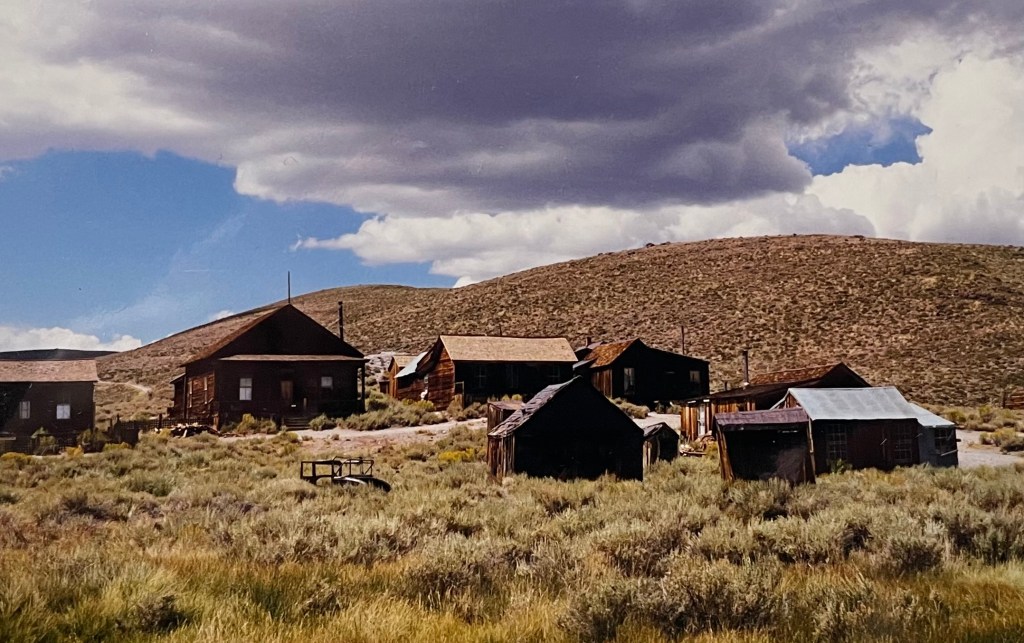
Bodie, California, sometime in the early 2000s

It’s probably just me, but when I watch those westerns, there’s the story unfolding in front of us, and the second story of the silently evocative imagined past spread out all around the background on every scene.

Would I want to actually live there, 150 years before wi-fi and refrigerators and comfortable tennis shoes? Probably not, but I still fall a little in love with every knot and whorl in those claptrap movie towns, where it’s always high noon somewhere. 
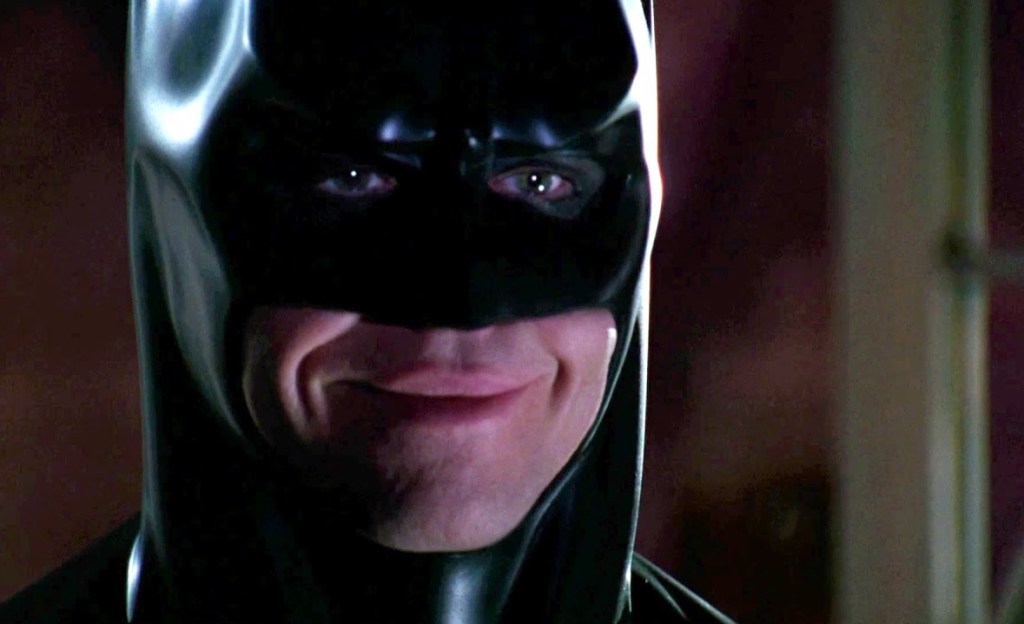
Val Kilmer’s very human Batman

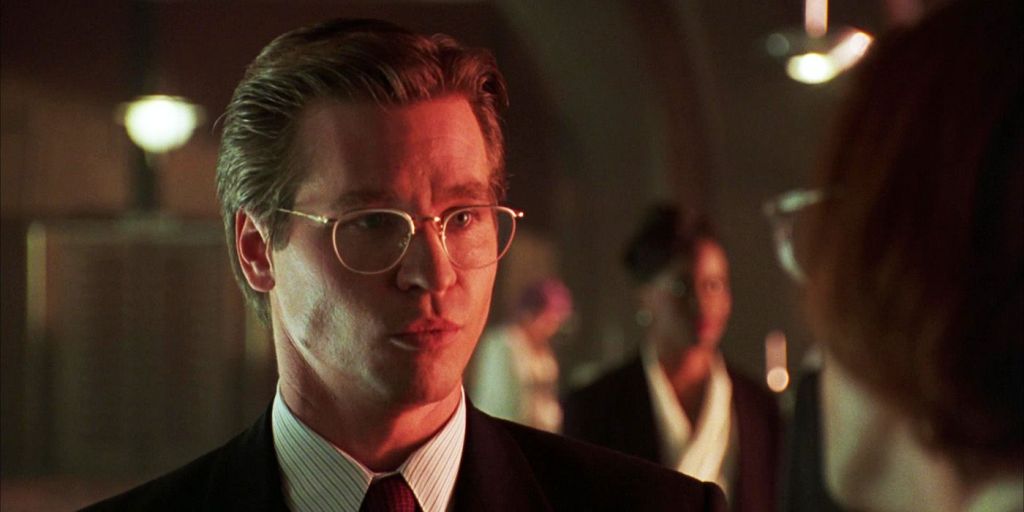
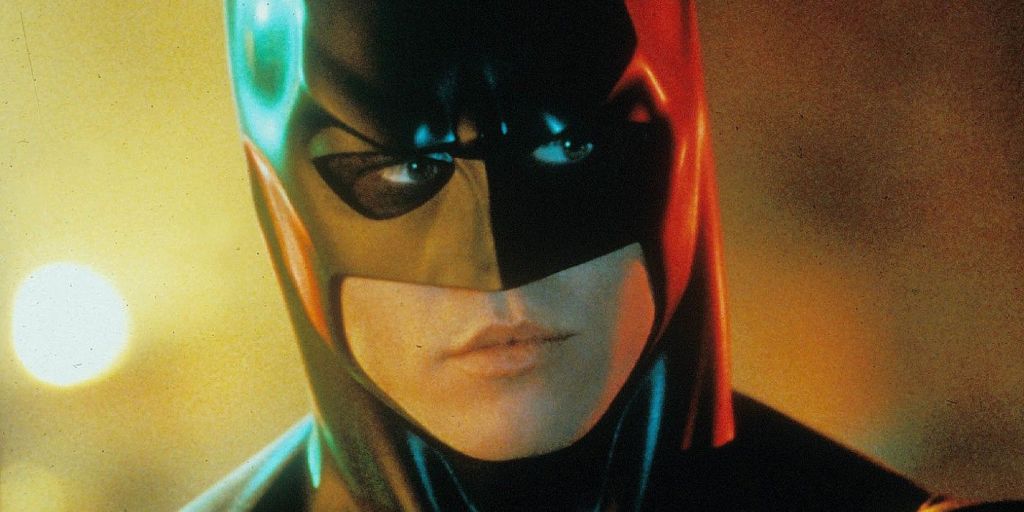
Val Kilmer was a complicated guy, but he left behind a lot of indelible movie performances. Nobody would ever call Batman Forever a good movie, really, but despite all the missteps and terribly 1990s trappings of it all, there are moments when I do think Kilmer’s Batman is one of my favourite takes on the caped crusader.

Kilmer, I think, was the funniest Batman other than ’60s icon Adam West. That’s not exactly something that fans of none-more-dark Dark Knight takes might appreciate.

As a Bat-fan, I’ve always liked the Batman who was a little more human, the one we’d see running around in Brave and Bold comics in the 1970s tossing quips about with Green Arrow and Kamandi. A Batman who is so utterly bleak gets a bit old. 

Director Joel Schumacher took all the gothic weirdness and carnival humour of Tim Burton’s first two Bat-movies and exploded it into full-on camp and neon garishness. Batman Forever, turning 30 in 2025, was a huge hit, lest we forget, the #1 movie of the year. But it all came crashing down with 1997’s flop Batman and Robin, this time starring a far too-glib George Clooney as Bats and ramping up the colourful kitsch about 500% more. Few people look back at Schumacher’s Batman as a peak for the character now. 

And Batman Forever is a mess, don’t get me wrong. It might just boast the two most annoying comic book movie villains of all time in Jim Carrey’s insufferably twitchy Riddler and Tommy Lee Jones’ frantic and undignified Two-Face, who spends most of the movie cackling, grunting and wahoo-ing. The movie shoehorns in an origin for Chris O’Donnell‘s totally ’90s Robin, an incredibly sexed-up Nicole Kidman as a love interest and a kind of incoherent plot about brain-stealing technology.  Whenever I watch it I have to fight the urge to slap Carrey so I can focus on the bits that do work. 

It starts off clearly stating it isn’t going to be Keaton/Burton’s Batman, with fetishistic shots of Kilmer donning the Bat-gear and the first lines of dialogue being a lame joke about Batman getting drive-through for dinner. (Cue that McDonald’s ad, of course.) 

And yet, I like Kilmer as a blonde Bruce Wayne/Batman. There is a sly wit to Kilmer’s performance, which gives us a Batman with a sense of humour without being quite as lightweight as Clooney ended up. Little tics linger like his Bruce Wayne constantly fooling about with glasses (does Batman wear contacts?). His Batman smiles broadly in one memorable scene, which could be cheesy but Kilmer makes it a little, well, charming and sincere. Why can’t Batman smile, occasionally? It ain’t always dark.

His Bruce Wayne is courageous and not just a playboy – brawling with villains without a costume in several scenes, focused with a whiff of arrogance, and smart but also a little scared. 

Michael Keaton was a tense and wiry surprise as Batman (it’s easy now to forget his casting was hated by pre-internet fandom once upon a time) and Bale, Pattinson and Affleck have all given us variations on a very serious, stern Bruce Wayne/Batman. But I still think Kilmer’s Batman is the only one who seems kind of like a Batman you’d want to hang out with, really. 

Kilmer navigates Batman’s dual nature fairly well in Batman Forever – haunted by his past, but wanting to have a life of his own outside Batman. The rickety script doesn’t really serve him well – at one point Batman quits, only to unquit about 30 seconds later – but Kilmer sells story beats like his mentorship of the angry young Robin and his attraction to Kidman’s ridiculously horny psychologist character.

He cracks a few jokes, but he never makes Batman the joke. Kilmer’s movies like Tombstone and Top Secret and Kiss Kiss Bang Bang were great, but his underrated Batman manages the trick of making a mediocre movie almost worth liking. 

Review: The Sex Pistols, Auckland Town Hall, 2 April

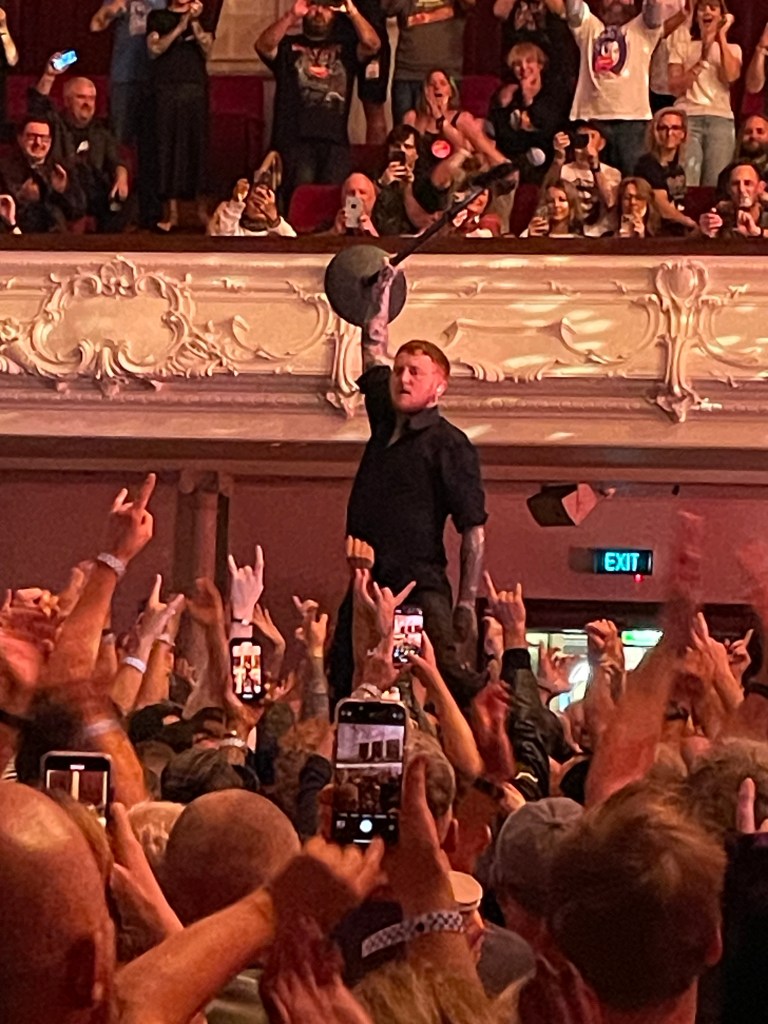
The Sex Pistols perform at Auckland Town Hall, March, 2025.
@yeatesey

I did say a while back that 2025 is my year of punk rock and so it’s proved. So I couldn’t pass up seeing one of the first and best punk acts of all time, or at least 75% of the founding members.

It may be 50 years after they first formed, but I finally got a chance to catch The Sex Pistols live with frontman Frank Carter. Turns out it was a punk rock delight!

Here’s my review over at Radio New Zealand:

The Sex Pistols at Auckland Town Hall prove punk is not dead

Anarchy!!

Clippings: Collected Journalism 1994-2024: Free sample 5, the grand conclusion!

Here’s the final Clippings Mondays, as I promote my new book of collected journalism and scribblings all through March! I’d sure be obliged if you consider grabbing this hefty compendium of 30 years’ worth of journalism and heck, if you’ve got one, drop a review to help me go viral and become an influence. It’s now available on Amazon as a paperback for a mere US$14.99, or as an e-book download for just US$2.99

This one comes from a period of time when I wasn’t writing as much journalism and got lost in the labyrinthine mazes of management work. From the “Places” section of ‘Clippings,” I attempted to put down some words to capture one of the most remarkable holiday experiences I’ve ever had, and hopefully I got some of the feeling of what it was like to stand on top of a mountain with lava bouncing around your face!

Standing on the edge of a volcano

October 2014

As you climb up to the rim of a very active volcano, it’s hard not to feel a little bit like a human sacrifice in the making.

Vanuatu’s Mount Yasur is one of the scariest places I’ve ever been.

It’s one of the most accessible volcanos in the world, but it’s still not all that easy to get to Yasur. It’s located on one of Vanuatu’s southernmost islands, Tanna, meaning a jaunt on a small plane from the capital Port Vila and then another two to three hours of bumpy four-wheeling across jungle and ashy volcanic plains.

At 361m, Yasur towers over the low-lying Tanna plains. You see it long before you get there.

Many ni-Vanuatu live here in the shadow of the volcano – groups of teenagers idly walking in its vast shadow like they’re on a trip to the mall.

Climbing up some of New Zealand’s dormant or extinct volcanic cones, it’s easy to forget about the staggering power that they can have. Yasur won’t let you forget that for a moment, burbling and billowing like a bull chained.

The final walk up to the rim is humbling and eerie – you are able to basically get as close to the volcano as you want to, although nobody sane would venture past the rim edge around it. There are pretty much no safety precautions or ropes besides a sign saying “THINK SAFETY.”

It is impossible to capture in photos or even words really the experience of being up there.

The first thing that hits you is the sound, an endless chest-shaking booming and roaring.

My small group stood on the rim and watched the smoke rolling forth, punctuated by sudden and scary rolling booms and lava actually erupting out in “small” bursts. As darkness began to fall, the colour and mood of the volcano changed. Clouds of sulphuric smoke washed over us, the colour changed from a white to orangey glow out of the crater and we were favoured by a massive bang that filled the whole crater in front of us as we neared total darkness. We stood as night fell, on the edge of the infinite.

Tourists have been killed here by volcanic “bombs” of rock hurled into the air. These days close seismic monitoring keeps an eye on volcanic activities, with a scale of 0 (low activity) to 4 (run for your lives). Yasur was at Level 1 when I was there, and access to the crater is closed when it hits Level 2.

Watching the pretty scarlet rubies of molten rock tossed into the air like a Guy Fawkes’ fireworks show, it’s hard to imagine that a single piece of that red-hot debris would kill or cripple a person.

There was a bit of dark comedy in realising when darkness fell us that the half-dozen or so of us up there had no idea where the trail back to the ride in the parking lot was – despite flashlights, the trail wasn’t marked clearly enough to be that visible and it was very dark, with no light other than the volcano crater and a stray beam or two of light in the distance. We kind of gently ambled downwards (firmly away from the glowing crater, as that was the one direction we all knew not to go in), finally managing to find our main trail and the carpark again.

Think safety.

It was very easy to see how you could end up making a horrible mistake and getting lost for days up there. People have died at Yasur by making very bad choices.

There are few places where one can feel so small and so big at the same time than the lip of an active volcano on an island somewhere at the bottom of the world.

Read this piece of adventurous foolhardy behaviour and much more in my new book Clippings: Collected Journalism 1994-2024

My favourite Roger Corman – X: The Man With X-Ray Eyes

Soon, I’ll be able to see what no man has ever seen.” – Dr James Xavier 

When the great movie producer and director Roger Corman died last year at 98, he left one hell of a legacy for film lovers, schlock fans, drive-in movie buffs and anyone who enjoyed the dirt-cheap, hugely entertaining corn he specialised in.

Everyone has their favourite Corman – my first was the Star Wars/Seven Samurai ripoff Battle Beyond The Stars, which was repeated endlessly on cable TV when I was a kid. There’s the colourfully gory adaptations of Poe tales starring Vincent Price. His producing the first films by Martin Scorsese and Francis Ford Coppola. The sexy trashy Big Bad Mama starring Angie Dickinson. The Ramones trashing the joint in Rock ’n’ Roll High School. Peter Bogdanovich’s startlingly still relevant Targets with Boris Karloff. The utterly insane Judge Dredd meets Mad Max dystopia of Death Race 2000. So much more, much of it sexploitation and exploitation and just general titillation.

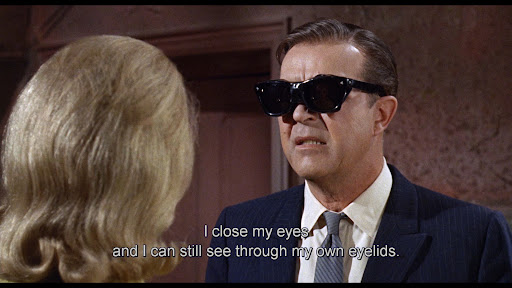
But my favourite film Corman directed has always been the more restrained and oddly haunting X: The Man With X-Ray Eyes from 1963, starring one-time Oscar winner Ray Milland as a scientist determined to break through the barriers of dull ordinary human vision and see… well, everything. 

It’s got a big fan in none other than Stephen King, who wrote about it in his book Danse Macabre as “one of the most interesting and offbeat little horror movies ever made.”

X is typical Corman with a low budget and ultra-basic stripped-down production values, but there’s something about it that grabs me. It’s got your typical scientist who is determined to explore the unknown whatever the cost, with Milland as Dr James Xavier, whose research into unknown spectrums of vision (“I’m blind to all but a tenth of the universe!”) has him experimenting on himself with dangerous eye drops.

At first, Xavier gets X-ray vision just like in the comics (yep, there’s a goofily fun nude scene, one of the movie’s few lighter moments), but then things get … darker. It involves accidental murder, a sequence as a carny attraction (featuring a rare early serious supporting role by Don Rickles, of all people) and Xavier’s vision gradually changing, with sunglasses and freaky contact lenses giving us a hint of what must be going on behind those eyelids. 

The “special effects” that allow us to see the world through Xavier’s eyes are mostly dime-store gimmicks and blurry psychedelic colours, and yet, their vagueness allows us to imagine what Xavier is actually seeing out there. 

Milland, always a sturdy authoritative presence in movies, gives X a helping of emotional depth as the movie explores questions of morality, religion and hope in its brisk 79 minutes. While Corman’s movies are often a lot of fun, this is the one that always leaves me thinking a bit. What would it be like to see truly everything out there? How much of the world do we miss on a daily basis? And is there some things man is not meant to see? 

Spoiler alert: X ends on a famously bleak note with Xavier, unable to control his increasingly chaotic visions, tearing out his own eyeballs in a shock-cut freeze frame. The story jerks to a halt, the screen frozen in a moment of utter infinite horror. 

King in Danse Macabre went on to claim there was a great lost coda to that scene: “I have heard rumours – they may or may not be true – that the final line of dialogue from the film was cut as too horrifying. …. According to the rumour, Milland screams: I can still see!” 

Now that’s terrifying. Although, nobody has ever really confirmed it existed. Corman himself on the DVD commentary thinks he might have shot that ending, but then again he might not. It’s a cool idea, but even without that lost final twist of the knife, X: The Man With X-Ray Eyes is worth seeing. There’s been talk over the 60 years or so since it came out of a remake, but the creepy and sparse tone of the original is hard to imagine beating. Even the cheapness of the special effects adds something to it all. 

It’s that whiff of cosmic, unknowable horror that makes X: The Man With X-Ray Eyes linger in my mind, I guess. There is no true villain here and there is no hero. Only a strangely pitiable mad scientist, determined to broaden his horizons until he realises much too late there is no end to these horizons. 

“I’ve come to tell you what I see. There are great darknesses. Farther than time itself. And beyond the darkness… a light that glows, changes… and in the center of the universe… the eye that sees us all.” – Dr James Xavier 

Meanwhile, elsewhere on the internet…

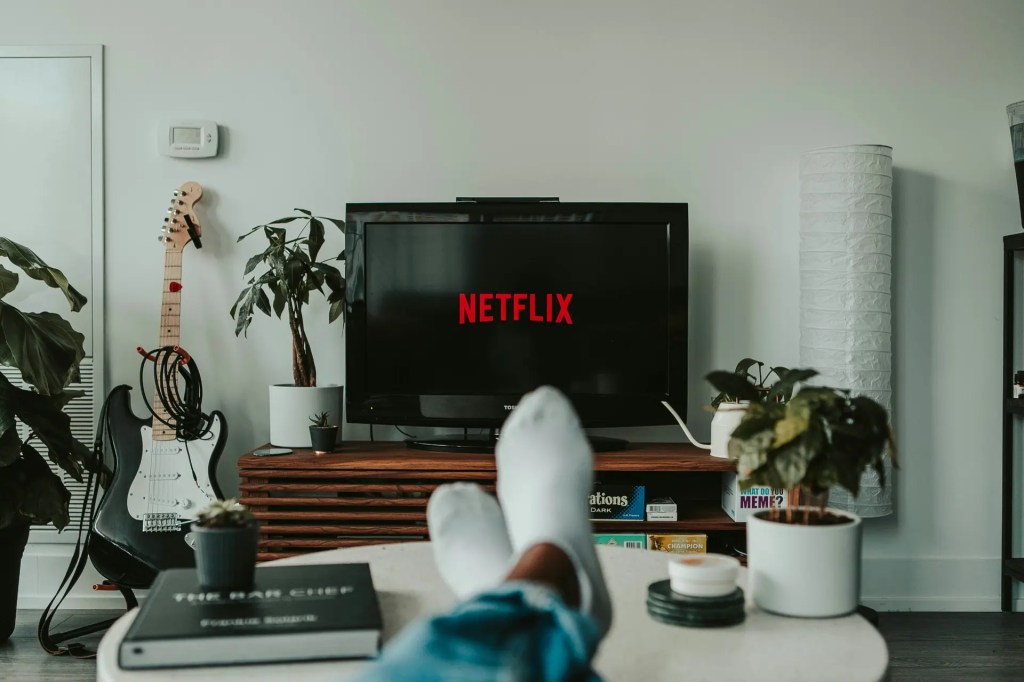
So it’s been ten years this month since Netflix streaming came to New Zealand, the tipping point that changed how we watch so-called “TV” forever down here at the bottom of the world. New by me over at Radio New Zealand, a look at how life’s changed in the streaming wave – go read here!

How a decade of Netflix has changed how we watch TV in New Zealand forever

Clippings: Collected Journalism 1994-2024: Free sample 4!

It’s Monday here in New Zealand and that means it’s time for Clippings Mondays, as I promote my new book of collected journalism and scribblings all through March! If you haven’t yet, now’s your chance to nab a copy, now available on Amazon as a paperback for a mere US$14.99, or as an e-book download for just US$2.99

This here essay is one of the oldest collected, from way back in 1994 and my days writing a column for The Daily Mississippian in my final year at university. I was still learning how to write columns that weren’t just rants or jokes, but were observations about the world around. Writing a good column is sometimes about just paying attention to what’s happening around you, in all its weird details. A chance meeting with one of my favourite writers, even if he wasn’t at his best, prompted this one:

Fear and Loathing in New Orleans

The Daily Mississippian, May 2, 1994

Well, I finally made it down to the Big Easy weekend before last. And what a wonderful town it was. Went down there with Melanie for the dreaded “meet-the-parents” ritual (which came off very well, thanks for asking).

We went to Jazzfest ‘94, an annual musical extravaganza at the New Orleans fairgrounds — tons of music, people, beer and booths hawking everything from dashikis to handmade jewelry to exotic knives. There was aural candy for any taste, from Boz Scaggs to Dr. John to Jimmy Buffett.

While wandering around the booths, Melanie and I found a little book tent. Exploring the place, I found a notice announcing some of the authors who’d be doing book signings at the tent that day. Among the names was the familiar one of Dr. Hunter S. Thompson.

The Doctor! Father of the esoteric, reviled and idolized field of Gonzo Journalism! One of my personal literary idols and a true crazy man to boot. I. convinced Melanie that it’d be a nifty thing to let me go and meet him, to get the Doc to sign a just-repurchased copy of Fear And Loathing In Las Vegas. I’ve always been a fan of Thompson’s bizarre anything-including-the- kitchen-sink style of reporting, the coverage of events ranging from the history of the Hell’s Angels to the 1972 presidential campaign — his style so out there that half the time you lose sight of the line between fact and fiction.

So we went to the booth about 2:45 or so for the 3 o’clock signing. There was already a sizeable line for this unpublicized event. Melanie took my camera and got a good spot in the shade while I met a burly gent named Gil who proclaimed that Thompson was “the king of all things Gonzo!”

Melanie enjoyed the shade and met some Canadians while I listened to Gil hold an impromptu belching contest and slowly watched the sun burn me a nice shade of obsidian. Thompson finally showed around 4:30, large bandage wrapped around his left hand and a beer in his right. Enormous beetle-like sunglasses obscured his eyes completely. I crumbled into a pile of charcoal under the sun’s onslaught and the line inched forwards.

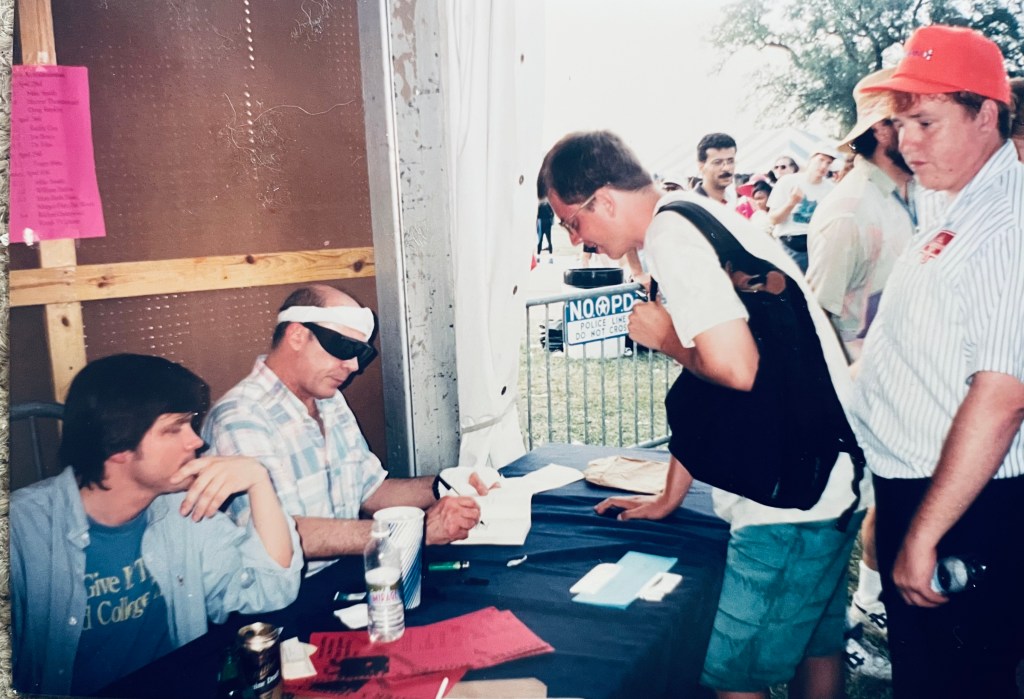
The author, centre, with a clearly unimpressed Dr Hunter S Thompson, 1994.

At this point, the Jimmy Buffett show was about to kick off. Thompson signed books at an agonizingly slow pace — rumor had it he was deeply distraught over Richard Nixon’s death that Friday. It seemed odd, that a man who once compared Nixon to Adolf Hitler should be so broken up over his death. His “periodic medical breaks” over his hand — treated by the administration of several strange vials of liquids — slowed things down even more.

There was the wit in line who called out, “Dr. Thompson! How do you feel about Nixon?”

Thompson answered in his trademark indecipherable mumble, “I loved the man.” And that was all he had to say on the subject.

I finally made it to the front of the line, several shades darker than I’d been at the start, and handed over my book for him to sign. In my best fanboy mode, I stammered out to him how much I enjoyed his work.

Thompson shook his head a bit spastically, and muttered something about “bats” and “gummo wedder t’day nahw eh?” He scribbled “to Nick [sic] – HST” with a ballpoint pen, and then immediately afterwards took another extended medical break. The smell of that joint was nearly overpowering.

There’s nothing quite like meeting your idols – if only to discover that they’re just as screwed up as the rest of us. I’m not saying I regretted meeting HST — in fact, I got a rather masochistic joy out of it, sunburn and all.

And Melanie, bless her, wasn’t terribly irate about spending two hours indulging her companion’s whims.

This sunburned piece and much more can be found in my new book Clippings: Collected Journalism 1994-2024

X marks the book: Bookmarks I have known 

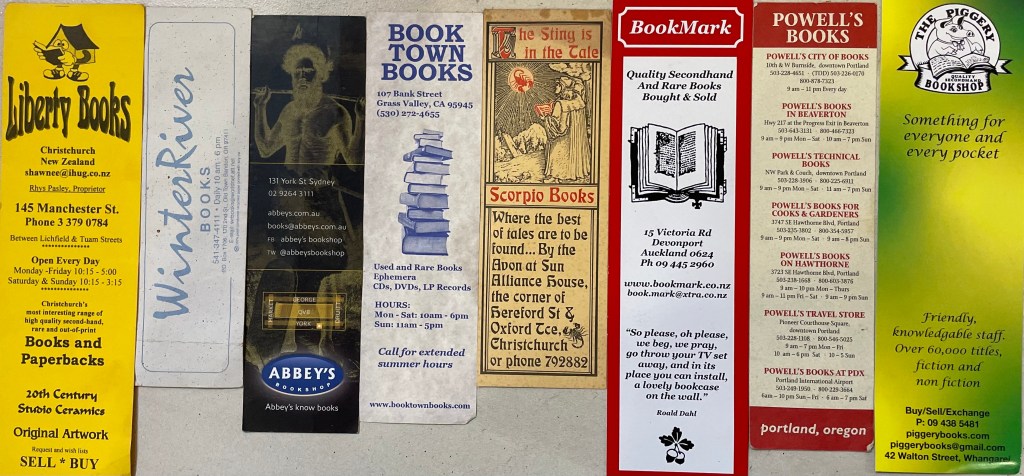
I never really intended to start collecting bookmarks, but somehow I’ve accumulated quite a little stack of them over the years. After a while, you keep some things long enough, I guess they become sentimental by default.

So it is with bookmarks – for a long time, I’ve made a habit of grabbing a free bookmark if a book store offers them on the counter – and really, all the best bookstores do that, because what bibliophile can resist a nifty little souvenir to jam into their freshly opened tomes? 

From Alaska to New York to Oregon to Auckland to Australia, I’ve ended up with quite the burgeoning pile of bookmarks now, even though I know I may never use some of them for their intended purpose. 

But they keep me company – and remind me of book memories, which are some of the best kinds of memories to have.

I keep almost all the bookstores of my life in my mind and have written about them before. Whether it’s familiar neighbourhood haunts or world-famous icons, they stick in my mind: The nameless bookstore somewhere in Montana I stopped at during a cross-country trip where I could barely afford petrol, but of course I bought a few books. The cheap paperback exchange in Oakdale, California that kept me alive that 8 months or so I worked in the most boring town I’ve ever lived in. The cavernous, overstuffed and cobwebby Book Barn south of Christchurch or the hip oasis of City Lights in San Francisco.

Book stores I was just passing through like ones in Bandon, Oregon; Alice Springs, Australia; Christchurch, New Zealand; Fairbanks, Alaska. If you visit a town and don’t try to check out the best local bookstore, are you even a tourist?

Sometimes I can still remember what I bought at them – I know I picked up a William Randolph Hearst biography at the Alaska one, 25 or so years ago, although I often cannot remember what I had for breakfast today. 

The bookmarks I have remind me of spots like immortal Powells Books in Portland Oregon, still probably the best book store on the planet. I have dreams about it to this day.

Quirky ones like a souvenir of a great Salvador Dali art show in Melbourne, or a gift from an appearance by the Dalai Lama in Auckland I somehow ended up at. 

Tokens of long gone stores I used to visit like Black and White Books in Reno or the fine art book speciality shop Parsons in Auckland or Jason Books in Auckland, the last one just shuttered in the last few months. 

They’re just flimsy scraps of paper, mostly, some getting battered enough that I should retire them into a drawer so they don’t crumble to bits entirely. 

But they’re part of my life in books, and that’s not a bad thing to keep hold of. 

Clippings: Collected Journalism 1994-2024 – Free sample 3!

Hey, it’s your weekly reminder I’ve got a new book out! For the release of my new collection of the so-called ‘best’ of 30 years of journalismClippings, every Monday in March I’m spotlighting one of the more than 100 pieces by me gathered up in this hefty tome. I hope you’ll consider grabbing a copy, now available on Amazon as a paperback for a mere US$14.99, or as an e-book download for just US$2.99

This one actually comes from right here on this here website back in the long-ago days of 2021. It’s a sample of the ‘Criticism’ section of the book which gathers up piles of pop culture ruminations I’ve done over the years. Inexplicably, this post about Yoko Ono remains one of the most popular I’ve ever done. I’d flatter myself it’s about the quality of my prose, but more likely because I put Yoko Ono and ‘sorry’ in the headline and it’s hitting some Google sweet spot. Sorry, Yoko haters, but this isn’t a piece about Yoko Ono being sorry she broke up the Beatles!

Why I’m sorry I ever laughed at Yoko Ono

Read it right here!

You’ll find this piece and far, far more collecting 30 years of journalism in my new book Clippings: Collected Journalism 1994-2024. Order it today, baby needs a new pair of shoes!

Clippings: Collected Journalism 1994-2024 – Free sample 2!

In celebration of my new collection of the so-called ‘best’ of 30 years of journalismClippings, each Monday in March I’m spotlighting one of the more than 100 pieces by me gathered up in this hefty tome. I hope you’ll consider grabbing a copy, now available on Amazon as a paperback for a mere US$14.99, or as an e-book download for just US$2.99

I randomly divided this collection up by themes – Profiles, Places, Criticism and the like, and then there was a random selection of more goofy pieces I figured I’d just file under “humour.” This recollection of my very first job in journalism written while I was working at Lake Tahoe is, as best as I can recall, almost entirely true.

Scenes from the route

North Shore Truckee ACTION, September 2, 1998

I have edited newspapers and I have written for newspapers, but my first “real” job in this world was to deliver them.

I was a squirrelly, zit-faced and longhaired 13 going on 14, and I did it for about a year, delivering the Grass Valley Union from door to door in a square mile area several blocks from my home.

The Union is an afternoon paper, and so each day after school I would return home to find a bundle of Unions in our driveway, tightly bound. After an afternoon snack I would kneel busily on our dark garage’s concrete floor, taking my fifty or so papers and wrapping them with rubber bands. If it rained, you had to put them in orange plastic bags first.

The rubber bands sometimes snap if you rush things, and they twang off about the room spastically. Once one smacked me right in the cheek, raising a really embarrassing welt.

Your fingertips become black with ink as the headlines leave a bit of themselves on your skin. The day’s happenings are compressed into a small, dense cylinder of pulp that you lift and hurl repeatedly, trying to achieve a passable imitation of grace with each throw.

It was then, likely, that I began to stumble down the career path I follow tenaciously to this day. I was immersed in the smell of the hot paper, sometimes still steaming with the heat of the press, fascinated with the way the ink can cling to you.

I would ride down my route on my battered yellow bike, the newspaper bag carefully balanced on the handlebars, getting lighter with each block.

It was my first real job, and no one forgets the way that is – the strange freedom I felt riding my bike in the late afternoon on days that always seem cloudy in hindsight, the wind rustling the newspapers in my bag. I delivered news of President Reagan and “Peanuts” cartoons and what was on sale at Lucky’s, and I felt a part of some great system that pulsed beneath my 13- year-old world, a system I was just then beginning to perceive dimly.

I delivered newspapers and took inventory of my customers, the yards with plastic toys and broken bicycles in them, the houses with immaculate hedges and shrubbery whose porches I always aimed for with care.

The most difficult part of being a Union paperboy was collection time. At the end of each month I would go door to door on my route, getting $5.50 per customer per month to ensure they kept receiving their daily dose of news.

Portrait of a young hustler, mid-1980s

It was here you begin to encounter the world beyond lifting and hurling newspapers, and these days I’d dread somewhat. Demanding money from strangers was intimidating – looking briefly inside the anonymous homes I threw papers at, the couches where they read their Union each day.

I rapidly began to learn the language of excuses and rationale used so well in the grownup world.

“I paid you last month, boy, what are you tryin’ to pull?” one beefy guy who always wore too-small t-shirts would say to me every time I came by. And every time I would explain to him that he had to pay every month, he would mutter about what a rip-off it was, and he would finally pull five greasy dollars and fifty cents out of his pocket.

I learned how people wheel and deal, and I learned how people live without luck.

There was a cat woman. Every town has the cat woman, the twisted old lady who lives in a shack with a hundred stray cats. This woman’s house was crumbling and rotten, about to slide down an embankment onto the freeway overpass below. She had no teeth and no hair, and always wore a filthy Oakland A’s baseball cap. She would never have her $5.50 at the end of the month, and would gummily offer me excuses as ten of her bedraggled cats meowed and hissed around her legs. The cat lady had only one eye.

The cat woman would occasionally leave a folded dollar bill for me in her mailbox, toward paying off her slowly rising newspaper debt. I did not know what she did with her Union each day, if she read it or merely used it to line her floors inside what was surely one giant litter box.

And then there was “the towel lady,” as she would be enshrined forever in my pubescent memory. Each and every month when I would come by to get my $5.50, this highly attractive young lady, in her mid-twenties or so I’d imagine, would answer the door wearing a pink towel.

Just a pink towel.

You can imagine the fireworks this would set off in your typical 13- year-old paperboy.

Each month this woman would come to the door wearing just her towel, and she would give me my five-fifty and smile and I would melt into a giddy puddle of goo right on her doorstep.

I never could figure it out. If the towel lady wore just a towel once, I’d understand – she just got out of the shower or something, right? But each month, November or May or August, the towel lady would answer the door in her towel, and I would mature just a little bit faster.

The towel lady probably kept me doing the paper route a few months longer than I would have done – I was entering high school soon, and paper routes seemed too grade-school for my elitist brain then.

But I labored on with the route a few months into my freshman year of high school, always looking hopefully forward to my monthly visit to the towel lady.

The odds of gravity and physics were with me, I knew. That towel had to fall off eventually.

It never did, of course, except in my dreams.

This ink-stained confession and much more can be found in my new book Clippings: Collected Journalism 1994-2024