Bela Lugosi has been cast as a kind of cinematic cautionary tale over the years, with Martin Landau’s indelible Oscar-winning portrait of him in his decline in Ed Wood forever painting the Dracula star as a drug-addicted has-been stuck in terrible no-budget movies. Hell, even Bauhaus sang mournfully for him in “Bela Lugosi’s Dead.”
While Lugosi certainly had his problems, his career at its peak was fiery, and his presence on screen had a brooding Gothic grandeur that’s been imitated by every Lestat and Twilight sparkle-vampire wanna-be ever since.
The sad thing is that Bela Lugosi very rarely got to play the hero. His iconic performance in Dracula defined him, for better or worse, and the ensuing typecasting meant that he rarely played non-villainous roles. He was also hobbled by the thick Hungarian accent he never quite shed.
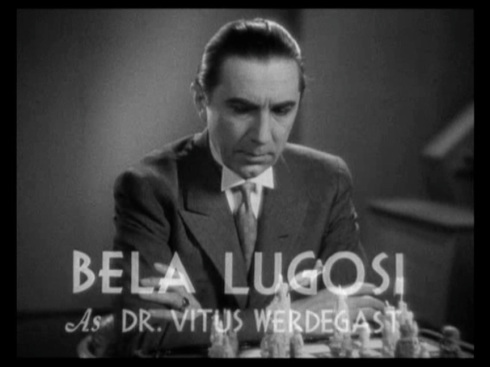
But in one of his best roles, 1934’s The Black Cat, he got to play a daring kind of anti-hero, teamed with Boris Karloff for the first time in one twisted piece of pre-Code horror. Lugosi is Dr Vitus Werdegast, a former prisoner of war who returns to exact vengeance upon his traitorous commander, Hjalmar Poelzig (Karloff). Dr Vitus’ mission gets tangled up with two fresh-faced newlyweds who become pawns in a showdown between him and Poelzig.
At a brisk 69 minutes, The Black Cat is Universal Horror near its peak – all razor-sharp shadows and crackling thunder, but with a creepy, real-life edge that foresees the horrors of the Nazi party. The monsters here are all very human. Poelzig, who’s not just a war criminal but a bona fide Satanic cult leader, is one of the more unnerving villains Karloff ever played, all sallow, black-eyed stare and unrepentant malice.
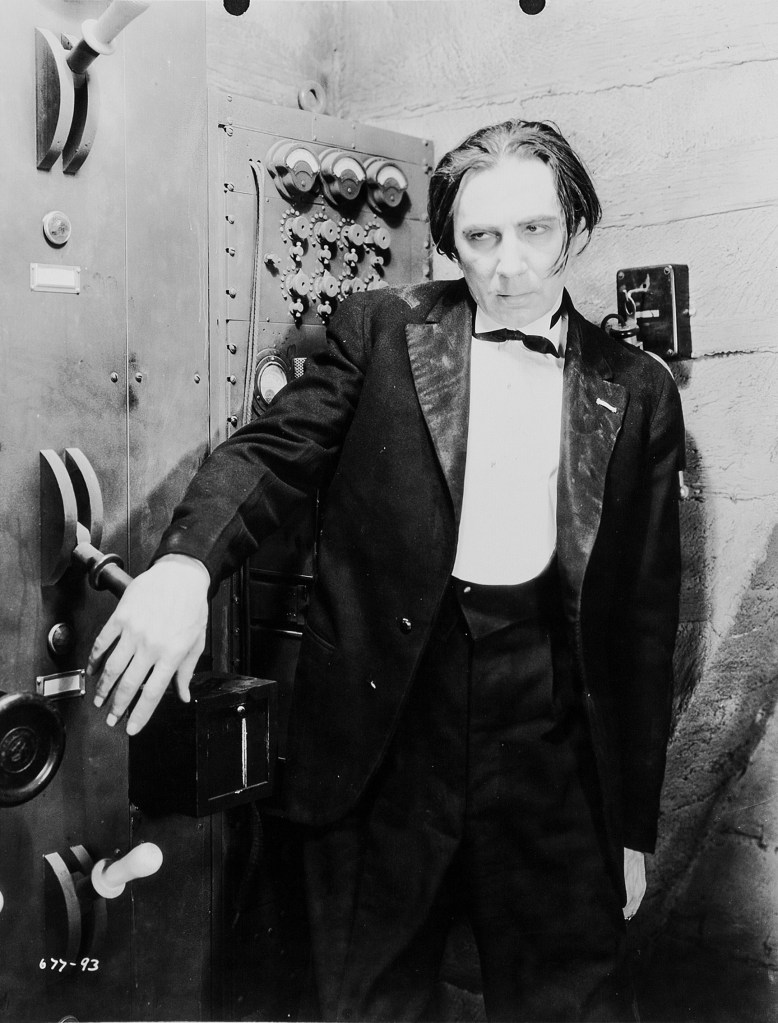
But it’s Lugosi who steals The Black Cat, looking impossibly handsome and dapper as Dr Vitus, vigorous and strong. (It’s interesting to realise that Lugosi was actually a bit taller than Karloff, who played the towering Frankenstein’s Monster.) He’s a haunted man, but one who wants to do the right thing. The tragedy of The Black Cat is that in doing so, he is seen as a villain too.
There is a scene where Dr Vitus discovers the preserved corpse of his wife, kept in a glass case by the madman Polezig (I told you this was a twisted bit of pre-Code horror!). The agony and shock that plays over Lugosi’s face in this moment is a masterpiece of horror acting.
Of course, The Black Cat is hokey – the newlyweds are a plot device, Lugosi’s character’s inexplicable hatred of cats is kind of hilarious today (at one point, he straight up murders a cat!). But there’s a primal fear to it too that movies from Texas Chainsaw Massacre to Saw have mined ever since, about good people ending up in a web of unspeakable random cruelty.
I love the brief image we get of Lugosi as the doomed hero, a good man shattered by wartime cruelties and the sadistic tortures of Poelzig. In the end Dr Vitus gives himself entirely to revenge and cruelty, mutilating Poelzig, and flicking the switch to blow up everything and almost peacefully, intoning, “It has been a good game.”
In another world, maybe Lugosi would’ve played the hero more often. But when he did, he was unforgettable.
I stood on a beach today for the first time in close to six weeks, and looked at the sea.
There’s at least 100 beaches within an hour’s drive of our house (we do live on a narrow isthmus on a small island at the bottom of the world, after all), but I couldn’t go to them. New Zealand’s strict national lockdown ended at midnight last night, and for the first time in what feels like an age, we could do a little bit more today than we did yesterday.
We’re not fully out. Level 3, as they call it here, is still pretty stern. Fast food and takeaway restaurants are open, many people are finally getting to work again and we can drive a little further, but most of society is still hunkered down for a few more weeks, likely. New Zealand and our Prime Minister’s firm, authoritative response to the Covid-19 pandemic seems to have worked well.
What did I do during the great lockdown of 2020? I worked, a fair bit more than normal, picking up extra shifts because what else was there to do. I painted walls. I fussed about the house organising boxes of old letters and heaving book shelves and music magazines I’d inexplicably kept since 2013. Every day for the duration of Level 4 I posted a comic book cover of a character in prison (or lockdown) on my Instagram account. It turns out that’s a pretty fertile genre. My son played video games with his friends online, built cool models and ventured into online schooling. My wife catalogued trees and trapped rats. We all went for a lot of walks around our hilly neighbourhood.
And I worried, of course, in vague and uncertain ways. I recognise how immensely lucky that I am in many ways in this crisis, but still like everyone else I wonder what’s next. I seethe at the inept politics back home and the sprawling misinformation, ignorance and hate that’s taken over the internet. I saw friends back in the US, dealing first hand with the death of a neighbour or a relative or a patient and silently cursed all those who’d downplay this as some passing conspiracy fad.
There’s been a surplus of thinkpieces and essays out there imagining a better world to come, full of idealistic notions that I wish I could fully see coming true.
In the end I have to ignore everyone else’s freaking out and rage and tension and come back to what matters the most, the people I live with inside these overly familiar walls, and controlling the antic voices in my own head.
I stood on a beach today and looked at the sea. It’s still pretty good, eh?
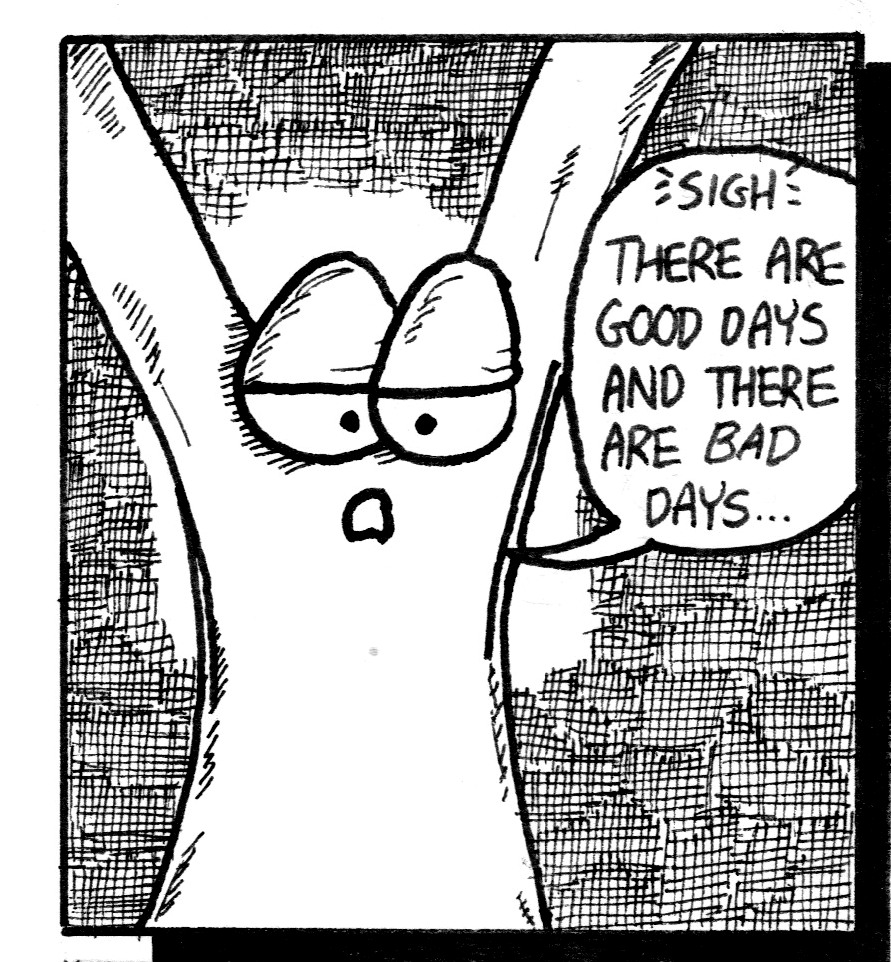
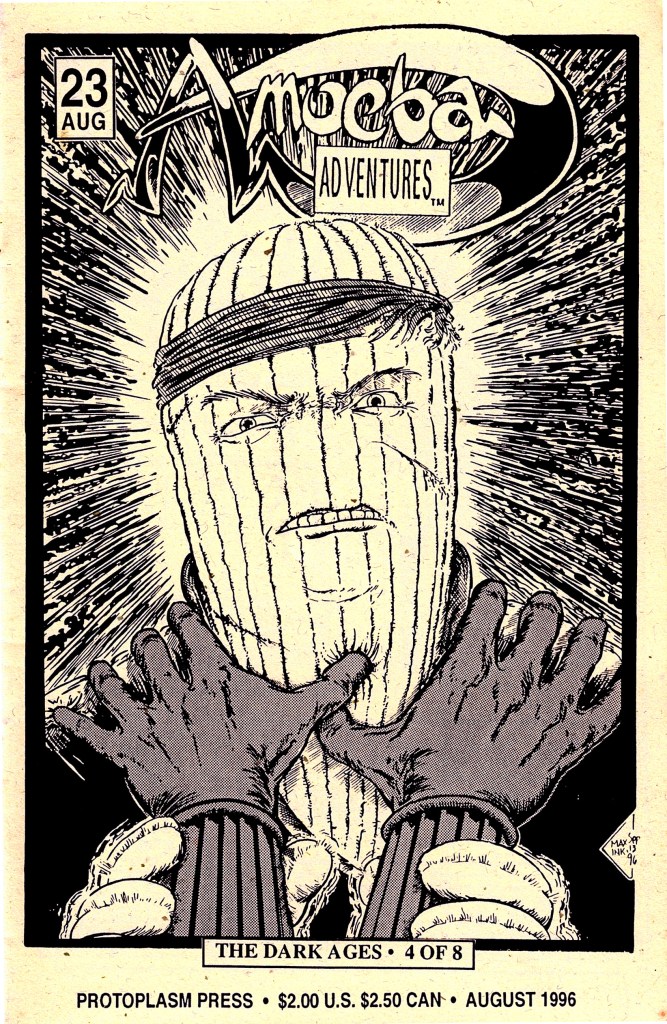
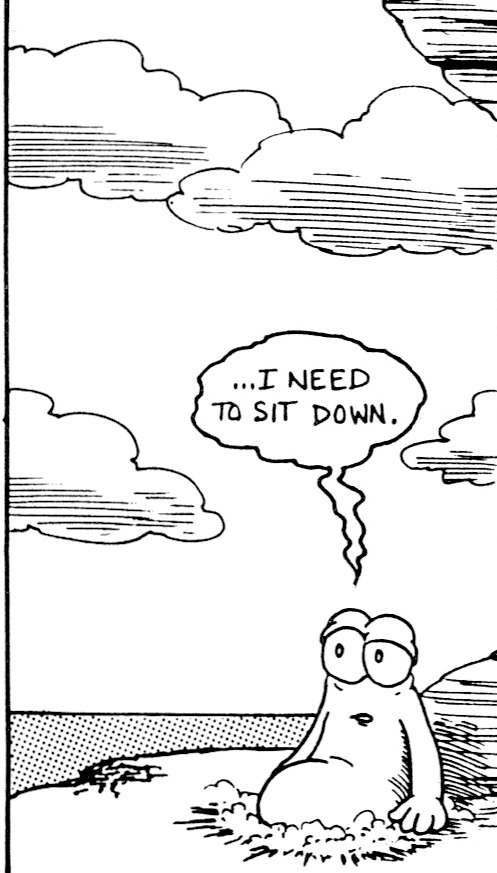
Hi all, hope everyone is staying safe and not too freaked out. Now available on the Protoplasm Press page are another five free PDF downloads of my old Amoeba Adventures comics to liven up your self-isolation with if you feel the urge, reliving the greatest hits of Prometheus, Rambunny, Ninja Ant and the rest from my 1990-1998 small press comic series!
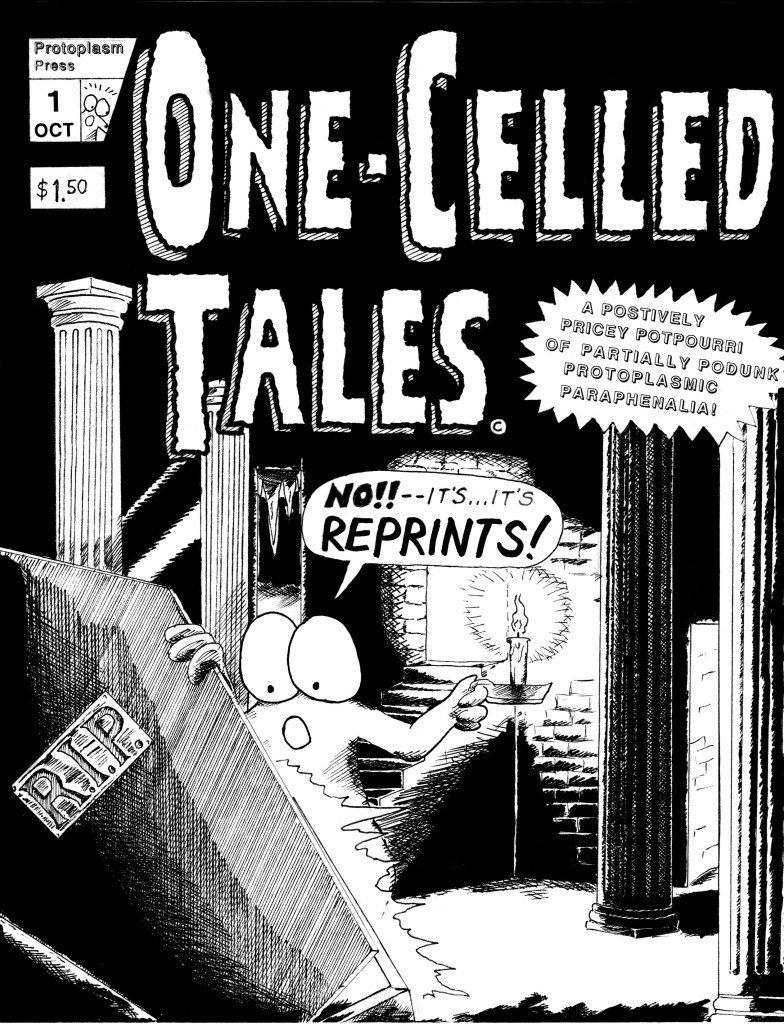
This lot includes Amoeba Adventures #8 and 9 (parts three and four of “Details of Design”), #19 guest-starring The Period, #23, the fourth part of “The Dark Ages” storyline featuring the shocking revelation of the Dark One’s identity, and a real rarity, my grab-bag zine of ancient amoeba rarities One-Celled Tales #1 from 1991.
As always most issues feature rare sketches, notes and guest artwork from the hallowed Amoeba Archives, also known as my shed out the back.
Enjoy them all – as I wind up the celebration of 30 years since the first issue, there’s only six issues left to scan ‘n’ upload and then the entire 27-issue run of Amoeba Adventures will be rescued from dusty old boxes and on the glorious internet for all the world (well, 7 people) to read!
Nick and Nora Charles never worry about money, politics, or viruses. They sleep in, drink all day and solve crimes at night. Who wouldn’t want to be Nick and Nora?
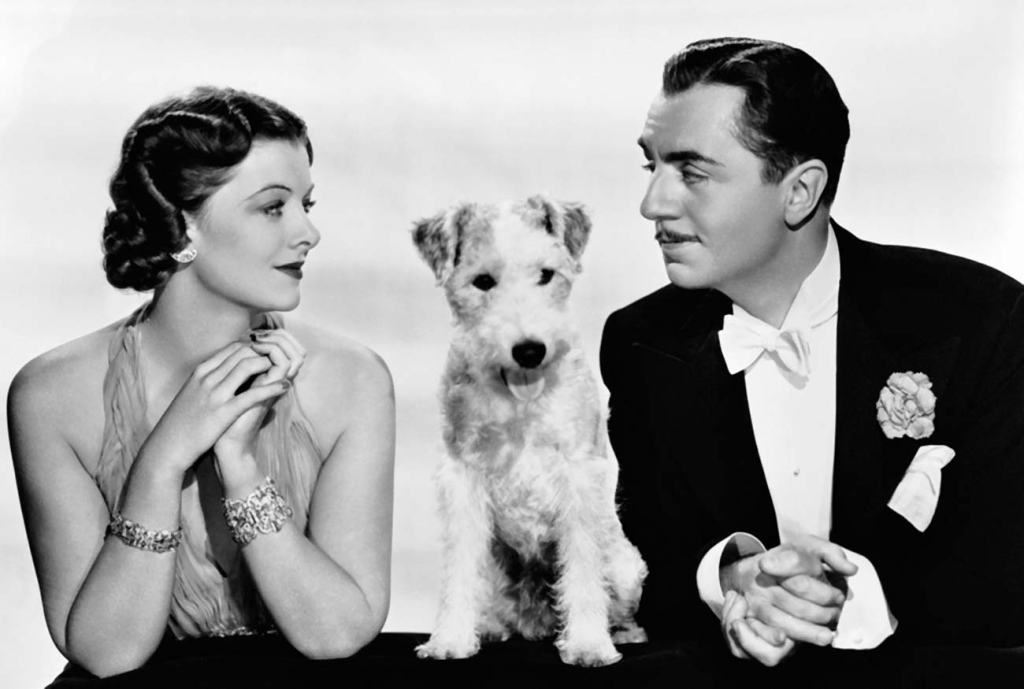
During the current troubles, I’ve found solace by rewatching all of the great 1930s-40s Thin Man series of films, featuring husband-and-wife detectives Nick and Nora (and of course their dog, Asta). I first saw these movies as a teenager, and the snappy banter and elegant charms of a vanished black-and-white world won me over instantly.
The unforced charisma of William Powell and Myrna Loy are what elevate the Thin Man series of six films over dozens of other forgotten screwball pics of the ‘40s. Wisecracking and booze-soaked (in the first few movies particularly), but deeply in love, Nick and Nora are one of the few couples of old-time Hollywood you can actually imagine having a sex life. Powell and Loy’s chemistry is so strong many people assumed they were actually married in real life.
The first Thin Man sets the stage for the entire series – someone dies in mysterious circumstances, hard-drinking, wealthy, sort-of-but-not-really retired detective Nick Charles and his plucky heiress wife Nora get involved, there’s lots of banter, and in the end the crime is solved. In all the movies, the mystery really is secondary to the boozy, flirty interplay of Nick and Nora. They’re formulaic to a fault – every movie ends with a “Clue” locked-room type showdown where Nick Charles assembles various suspects for this episode’s mystery and there’s a dramatic reveal. But you don’t watch these for the mystery – you watch for the banter and the style they ooze. The first movie features some of the catchiest lines and Nick and Nora are particularly young, sexy and smart.
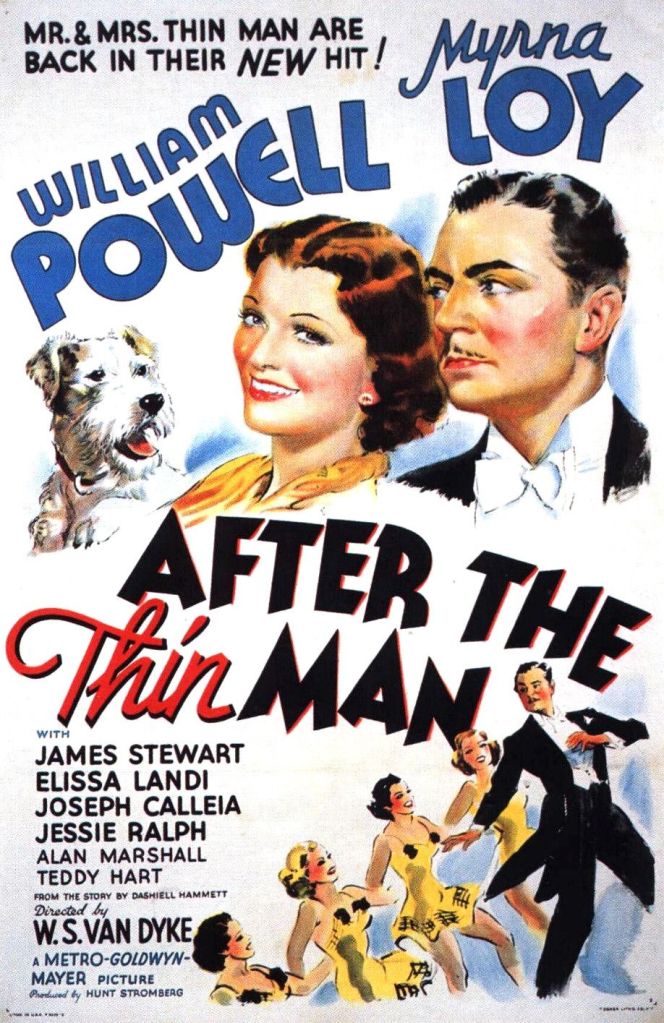
1936’s first sequel After The Thin Man might just be my favourite of the series – unlike the first film, it doesn’t take ages to get to Nick & Nora, and the mystery is genuinely engaging, led by a very young Jimmy Stewart in a supporting role. For Nick and Nora, crime fighting is more of a lark in between boozy parties, and After The Thin Man does the best job of the series of capturing their pleasant debauchery while also wrapping in a good yarn.
1939’s Another Thin Man adds the wrinkle of a baby son to Nick and Nora’s lives. It works here because the baby clearly cramps Nick and Nora’s style, but not so much that the fundamental appeal of the series goes missing. There’s also a bit of pathos behind the scenes as Powell was diagnosed with cancer between films and was in pretty rough shape, physically, but he rises admirably to the challenge. (Dig that lengthy monologue at the end of the movie and imagine how well you could deliver that in his state!)
The series does go on a gentle downward trajectory after the superior first three movies, but every Thin Man flick is worth watching. Shadow of the Thin Man ages up Nick and Nora’s son to around 4 years old and features a rambling murder plot about a racetrack. They always say having a kid is the downfall of romantic couples on screen. Nick Jr is kind of annoying here, to be honest, although I do like seeing Nick adapt his drunken ways to parenthood. Nora, on the other hand, definitely loses some of her spark as a character with her new motherhood. There’s also a rather cringe, broadly portrayed African-American maid character who hasn’t aged well at all, making Shadow one of the lesser flicks. But there’s highly amusing scenes set at a wrestling match and a great restaurant brawl.
The Thin Man Goes Home is considered the low point of the series by some, but I actually enjoyed it because it focuses a bit more on Nick and Nora’s characters, by bringing in Nick’s aging parents and a change of scene to the sleepy town he grew up in. It’s amusing seeing Nick attempt to go “dry” (by drinking nothing but cider), and Nora remains spunky as all hell, although unusually for the series, this instalment treats her a bit too sexist. (A comic scene where Nick mockingly “spanks” her did not age well.) Their child is nowhere to be seen in this one, thank god, although the murder mystery is even more complicated and incomprehensible than usual. Goes Home gives us an unexpected side of confident, cocky Nick Charles, showing he’s still a son trying to please an unimpressed father.
Lastly came 1947’s Song of the Thin Man. After 13 years, Nick and Nora have aged a bit and they’re a long way from the boozy, sexy young couple of the first films – Powell was in his mid-50s by now. The son is back, but this time much less annoying, played by a young Dean Stockwell (!), and the mystery this time revolves around a murder in a jazz band. The most amusing parts of this one come from Nick and Nora being dropped into the bebop post-war jazz scene, and being utterly lost amongst the hep cats, daddy-o. Back in the first Thin Man, Nick and Nora were cutting-edge cool, but now, suddenly they’re the aging hipsters adrift in popular culture. It’s a clever move that acknowledges time passing in the series. Firmly positioned in the middle of the series, Song is still a nice little farewell.
Nick’s last line? Once the murder is solved, Nick says, “Now Nick Charles is going to retire.” Nora asks, “You’re through with crime?” “No,” says Nick. “I’m going to bed.” I like to think of Nick Charles trapped in amber at that point, perpetually toddling off to bed with a stiff shot of bourbon in his hand, waiting for the inevitable midnight phone call of yet another murder in the city, a case that only he can solve.
Fiona Apple is like a rare orchid. She blooms only occasionally, you’re dazzled and amazed by the colours she shows you, and then she fades away for a long time. Fetch The Bolt Cutters is her first album in 8 years, and it turns out it’s the isolation soundtrack of our strange days.
It sure sounds like a record about this moment, even if it’s one that’s been in the works for years. A fascinating New Yorker profile goes into Cutters’ long genesis and Apple’s idiosyncratic path from brief MTV pop star with the hit “Criminal” in 1996 to today, in her early 40s, carefully spending years crafting music. Whenever she returns, Apple is always worth listening to.
Cutters, only Apple’s fifth album in 24 years, is not a gentle listen – her stern, anguished voice and clattering, raw percussion are placed right at the foreground, giving it an almost rap/spoken word cadence, with the elegant piano of her earlier work only coming in as occasional flourishes. Recorded at her home, you even hear her dogs barking occasionally. These are songs stripped to the bone and always on the edge of collapse.
It’s stark and sometimes abrasive, reminding me a lot of Sinead O’Connor, Lou Reed or primal scream-era John Lennon, but it’s also full of wistful beauty floating in at unexpected moments and a welcome relief from pop songs so processed you can’t find the real core. It feels real. “I resent you for presenting your life like a fucking propaganda brochure,” she spits out in “Relay.”
Broadly, Bolt Cutters is about heartbreak and betrayal – there’s a lot of anger and cutting lines. Apple’s lyrics are just opaque enough to be grabbed and molded into your own little mantras. “Kick me under the table all you want, I won’t shut up,” she sings. It’s an album that evokes singing to yourself in an empty room, of facing off against your inner demons and past.
We’re all coping with isolation in different ways, but there’s definitely a lot of stock-taking going on. Who are we, and in this peculiar pause in day-to-day rituals, who can we be? I suspect Bring Out The Bolt Cutters is going to playing in my head for a long time as we all try to make sense of 2020.
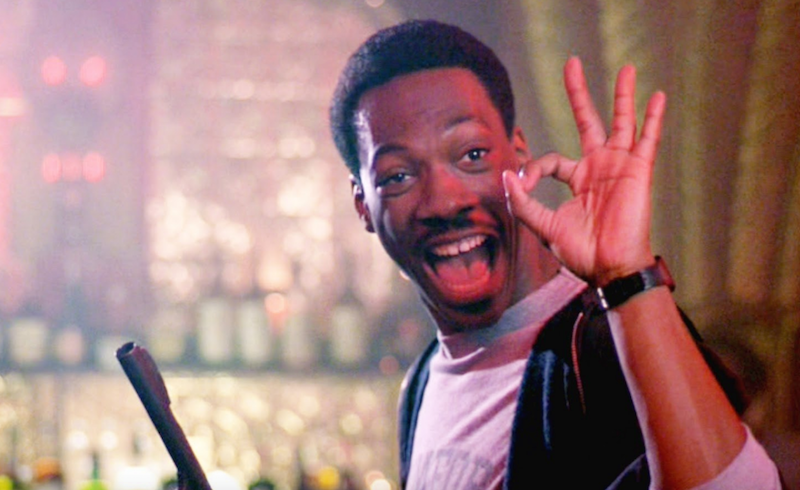
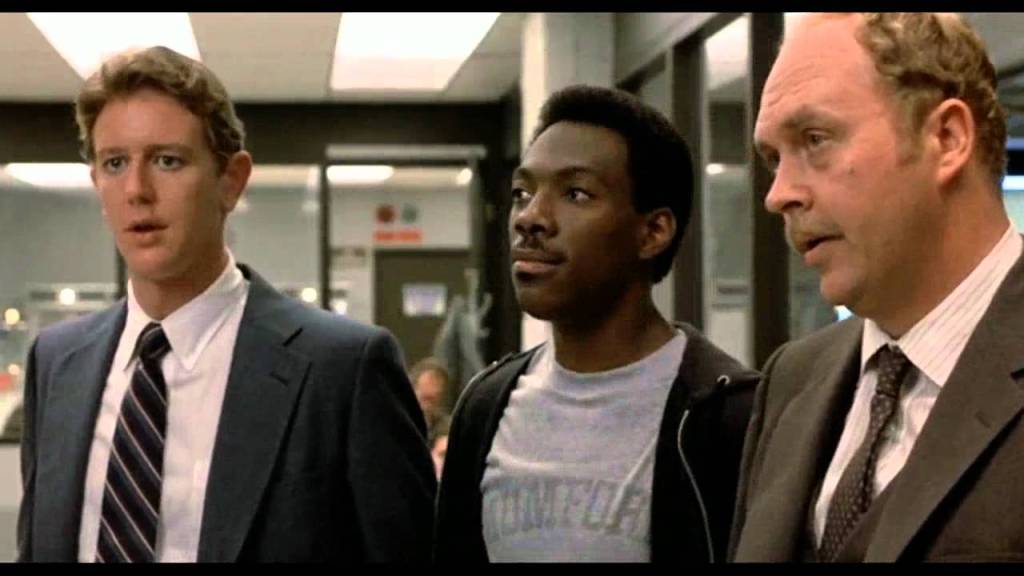
What is it: The biggest box-office hit of 1984, it turned Eddie Murphy into a superstar. Axel Foley is a street-smart Detroit cop who goes to Beverly Hills to uncover the truth about a friend’s murder. Hijinks ensue.
Why I never saw it: If you’d asked me, I would have thought I’d seen Beverly Hills Cop. After all, it was EVERYWHERE in 1984 when I was a wee tween. Yet when Mr. 16 and I decided to watch it the other day, I realised unless I’ve completely and utterly blanked it from my mind, I’d never actually seen one of the biggest hits of my childhood years. (I’m fairly sure I have seen Beverly Hills Cop II, which I think I confused with the first one.) I felt like I had seen it because it was simply in the air. It’s hard to state just how big Eddie was in 1984, the summer of Ghostbusters and Walter Mondale-mania. (Was that a thing?) My brother owned the soundtrack on cassette tape, but because BHC was R-rated, I, a mere sprat of 12, never saw it in theatres and missed out on videocassette, a medium by which I date myself horribly. Yet like every kid in 1984, I knew the plinky keyboards of Harold Faltermeyer’sAxel F earworm, which pops up in the movie approximately every 30 seconds.
Does it measure up to its rep? Eddie Murphy’s material is hit-or-miss for me. He’s full of charm, but a lot of his stand-up comedy has dated a lot worse than his idol Richard Pryor (the movies Raw and Delirious are unwatchable to me today, all preening ego and lots of rank homophobia and sexism). Yet in movies like 48 Hours and Coming To America he’s one of the great comic actors. He singlehandedly makes BHC worth watching with his ultra-confident, cocky cop who’s got an answer for everybody.
It’s also worth noting that it was by far the biggest blockbuster of 1984, and the first time a black actor headlined such a smash hit. BHC doesn’t make racism a dominating plot point, but there’s certainly an awful lot of subtext here (Axel Foley keeps getting arrested by cops, for instance). He’s the smartest guy in the room, outsmarting all the by-the-book white cops and crooks. Eddie’s Foley takes the proud black heroic figures from blaxploitation movies of the 1970s like Dolemite and Shaft and plugs them into a more mainstream action blockbuster. It was a winning combination. But seen 35 years on, BHC doesn’t seem quite so revolutionary – and it’s genuinely a bit baffling that the boilerplate script actually got an Academy Award nomination. The murder mystery at the centre of the plot lacks any tension, and most of the other actors are blown off the screen by Murphy. Strip Eddie out of the movie and replace him with Sylvester Stallone (who was originally set to star) and you’ve got Cobra.
Worth seeing? It’s worth a watch, but I don’t consider it anywhere near as much of a classic as ’84’s other big hit comedy Ghostbusters is in my heart. (Then again, maybe if I’d seen it at the same age as I first saw Ghostbusters, I’d feel differently.) Beverly Hills Cop is an entertaining ride for a cop action-comedy, and it’s full of ‘80s fashion and excess, but to be honest, other than Murphy’s still-dazzling charisma, there’s nothing here that hasn’t really been done better elsewhere.
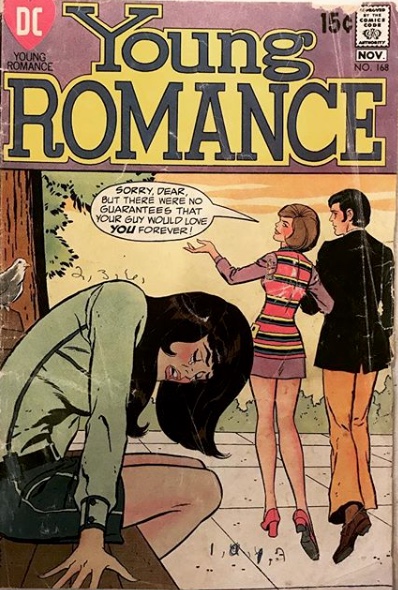
I’ve been collecting comics for something approaching 40 years now (argh), yet there’s always new stuff to surprise me. Lately, I find myself besotted with, possibly a little in love with, one of the most maligned genres of comics – the romance comic book.
Romance comics haven’t been cool for decades. Yet for a comics fan looking for something novel to distract themselves during these plague days, there’s something inescapably alluring about the kitsch-soaked, tear-stained pathos of the romance comic.
And romance comics were bloody HUGE back in the day. According to Love On The Racks, a very entertaining overview of the genre by Michelle Nolan, more than 6000 titles were published between 1947 to 1977. Then they basically vanished, gone like the westerns and war comics that also thrived back then.
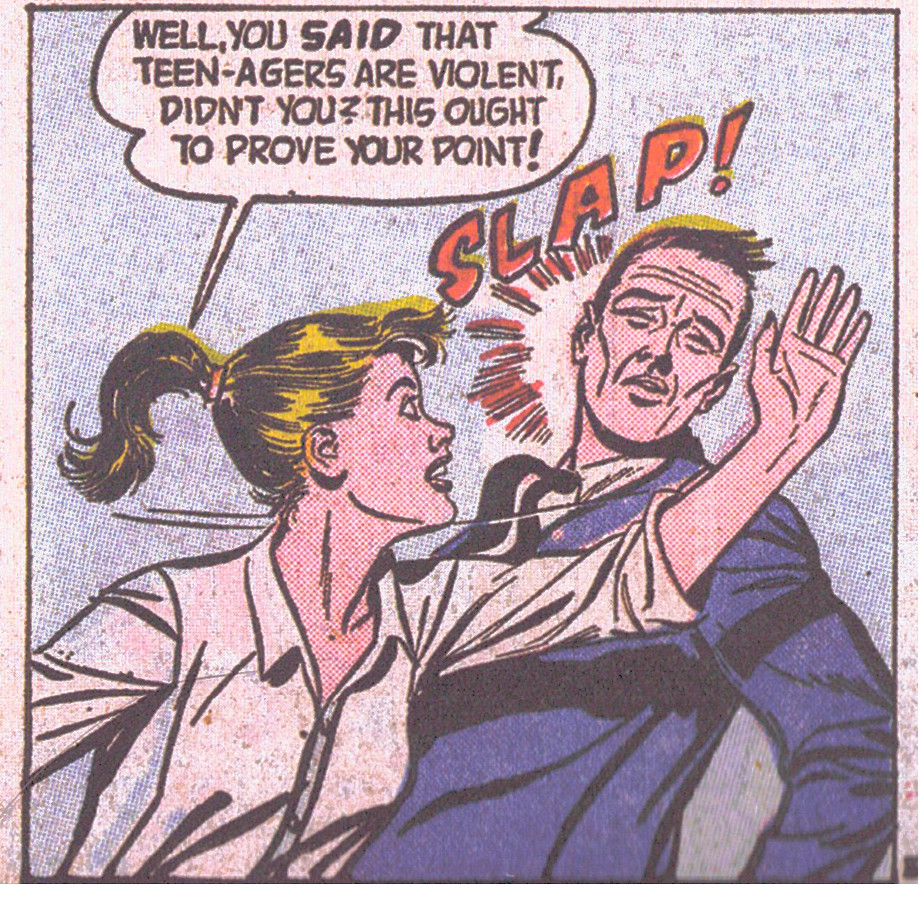
To be fair – these comics offer up a fair bit of cringeworthy sexism, the people mostly were white and protestant, and the only sexuality is heterosexuality. Yet in between the cliches and cuddles, there’s a lot of subtle statements on life in America in the last century. They’re theatrical pageants for a world that never actually existed. They’re history writ broad in four-colours and cartoon tears.
A lot of the romance comics were just dire, cookie-cutter dramas. But for me, many of the most enjoyable romance comics are the ones where women take their own agency and slap back at the stereotypes. I admit to being particularly partial for the romance comics of the swingin’ 70s, where feminists, hippies and biker dudes sit a bit uneasily with the traditional tropes of the genre.
I’ve added several romance comic collections to the ol’ library in recent years, each of which is well worth seeking out to take a dip in the waters of this almost-forgotten genre:
Young Romance was the very first major romance comic, by the legendary Jack Kirby and Joe Simon. The best of its 1940s-1950s run was collected in two nice thick tomes by Fantagraphics a while back. While Kirby’s art is rawer, looser than it later became, “Young Romance” holds up very well, mainly because the stories are surprisingly edgy and less sappy than many romance comics became.
“Marvel Romance” and the long out of print 1970s DC Comics collection “Heart Throbs” collect the best of each of those publishers’ romance comics from titles like My Love, Secret Heart, Young Romance and more. They’re less eccentric than some of the smaller publishers, but these comics often featured absolutely stunning art by the likes of John Romita, Sr.
“Return To Romance: The Strange Love Stories of Ogden Whitney” is an utter hoot. One of the great off-the-wall comics in history is Odgen Whitney and Richard Hughes’s Herbie, the surreal adventures of an obese young boy with a magic lollipop. The rare romance comics by the same creative team were recently released in a book and they are far out, romance comics as if they were done by John Waters and David Lynch working together. They zig when you expect them to zag and they’re always highlighted by Whitney’s dazzling, crisp and expressive cartooning.
Two other excellent post-2000 compendiums of random romance comics are“Romance Without Tears” by Fantagraphics and“Agonizing Love”by Harper Collins, both of which present a great assortment of stories and commentary on the era.
Weird Love was an utterly fantastic reprint series by Yoe Books that ran for 24 issues up until last year, collecting the strangest love stories from the medium’s history – it was one of the kookiest, best comics in years, featuring at least TWO separate stories about women falling in agonising love with circus clowns.
I won’t say that romance comics are the creative peak of the medium. Yet perhaps more than any other subgenre of comics, superheroes included, they’re a time capsule of the era they were created in, and if you don’t mind how dated they might be from a 2020 perspective, they’re still often a swingin’ good time.
In the absence of being able to leave the house much or have a life, why not relive the good ol’ days, with five more free PDF downloads of my old 1990s Amoeba Adventures comics?
It’s hard to know exactly what to do in these surreal times, but stay home, stay safe and be kind pretty much covers it. We’re in day seven of a nation-wide lockdown down here in my part of the world, so suddenly I’ve got a fair bit of free time. I’ve added four more issues of Amoeba Adventures to the Protoplasm Press section of this site – #4, 7, 18 and 22, plus the way-goofy, possibly triggering Dr. Phlegm minicomic.
As always, most issues include several extra pages of “bonus features” including rare art, sketches, reviews and more, so even if you read them back in the day, it’s like they’re kinda practically new again.
I’ve passed the halfway point of scannin’ and uploadin’ – There’s now TWENTY entire free comics for you to download to the laptop/computer/tablet/brain of your choice up on the site, which hopefully might provide a moment or two’s distraction in these weird days. Enjoy!
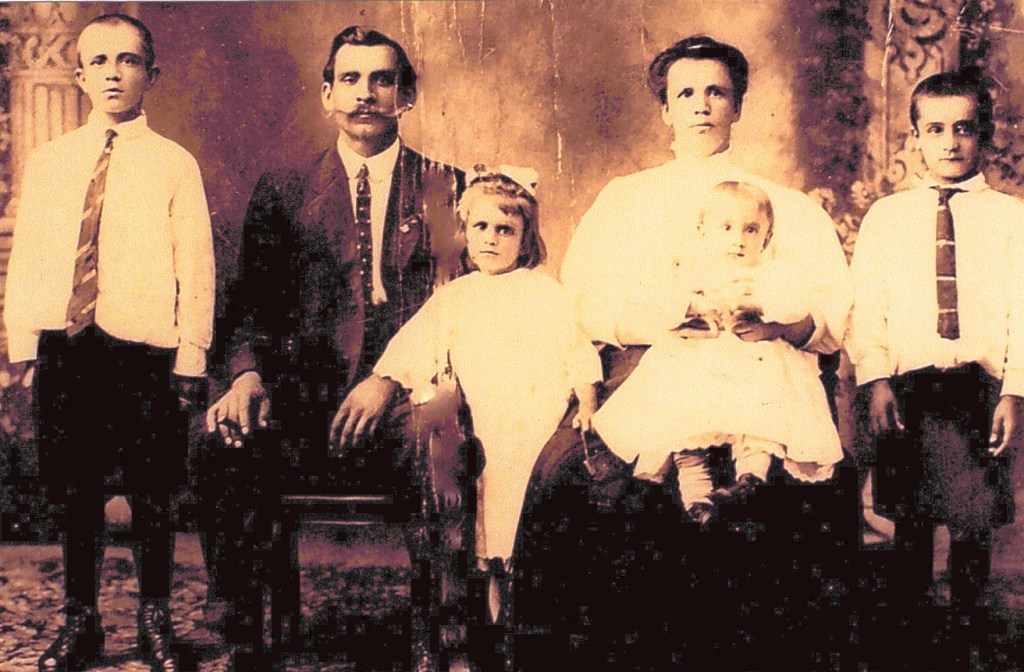
This was my great-grandfather, who I share a name with, and he died 101 years ago at the age of 38. He was one of an estimated 50 million people who died then in the great “Spanish flu” pandemic.
I think about my great-grandfather, gone more than 50 years before I was born, a lot these strange days. He and his family had emigrated from what used to be Austria-Hungary (now somewhere in Slovakia). I’ve got just two pictures of him, one from his wedding day in 1901, another taken in 1911 of him with his young family. My grandfather, yet another Nicholas Dirga, just a baby, is in that image.
You stare at a photo long enough you can project a lot of things. My great-grandfather looks a fair bit like a sterner version of my own father, with the distinctive “Dirga chin” (a cavernous dimple much reduced by my generation) and an impressively cool moustache. I don’t know a lot about him, but we shared a name and a pile of genes. And he died way too young of a disease that swept the world.
So, my whole country entered a month-long lockdown last night, where for four weeks, almost everyone in the country of more than 4 million people has to shelter in place. I’m counting my blessings. I already work from home, my family is safe, and I’m surrounded by books to read.
I have to admit I’ve been thinking a lot about the relative with my name who died in a similar pandemic a century ago. With my recent health troubles, I’m somewhat at a higher risk category than some, so it’s even more important that I do what our Prime Minister has said – “Stay home, be kind.”
A lot of families are going to have stories that end cruelly, sooner than they should, like the Nicholas Dirga who died 101 years ago did. His wife lived to be 96 – she died the year after I was born!
There’s a lot of flailing and some truly appalling behaviour by some governments going on, but there’s also moments of grace and at the moment, I’m very, very happy to be in New Zealand, even if much of my family is still on the other side of this troubled world.
It’s a world Nicholas Dirga wouldn’t recognise, although he might recognise the story of a disease spreading, inexorably, around the world. And I figure by staying shut in for the next four weeks or so, I’m at least giving myself a fighting chance of outlasting this one.
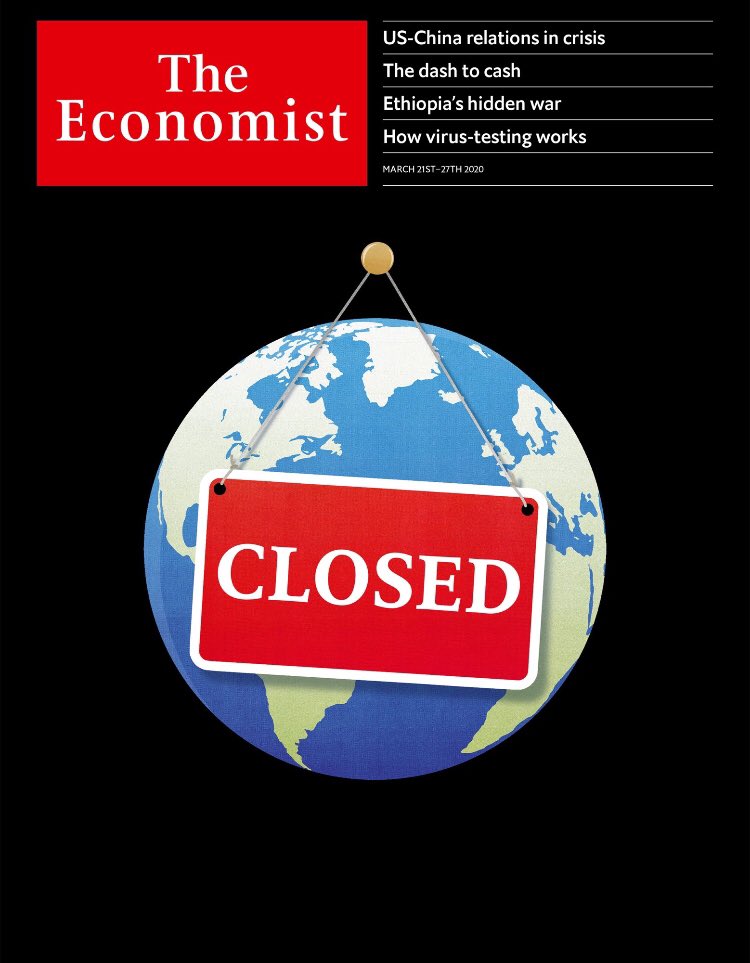
It’s weird times. My country has closed its borders to the world, which sounds like the opening sentence to a hundred dystopian fiction novels and movies. It doesn’t quite feel real.
New Zealand has been luckier, so far, than many other nations during this global pandemic. But we’re all still connected, and all still freaked out a bit. We’ve seen the end of the world coming many times in stories, and maybe that’s why this particular crisis seems so terrifying and uncertain. We’ve imagined how it could go for years.
In the spirit of howling defiantly into the abyss, here’s my top 10 apocalypses of all time – an apocalypse defined as one where most of the population bites the dust. We’re not there in real life, yet, cross fingers, and hopefully we never will be.
10. Atomic Knights, DC Comics
I always dug this old 1960s sci-fi serial comic from the pages of Strange Adventures, which images a post-World War III world (the war of 1986!) where a group of plucky survivors don old medieval suits of armour that turn out to be ray-gun proof and fight evil warlords and also there are giant mutant Dalmatians and … OK, it’s pretty silly, but good fun, and this may be the most cheery, clean-cut apocalypse of all time, in the G-rated way of Silver Age comics. Plausibility factor – Could this actually happen? Medium. While we may get all wiped out in a nuclear war, it probably wouldn’t be quite as tidy as this comic imagines. Trigger warning – Would I want to revisit this if self-isolating during the current unpleasantness? I’m always up for goofy sci-fi comics.
9. The Mandibles: A Family 2029-2047 by Lionel Shriver
Of everything on this list, this is probably the most “realistic” work, a fine epic novel from 2016 starting with the economic collapse of America in 2029 and following what happens to one family as everything goes to shit. Plausibility factor – High. This is one of those books that may seem eerily prescient. Trigger warning – High. The Mandibles is great, but all too plausible.
8. Dawn Of The Dead (1979 and 2004 versions)
Zombies run amok and the only sanctuary is a shopping mall. While George Romero’s original is a stone-cold classic of the zombie genre, Zack Snyder’s millennial remake is surprisingly good too, amping up the action and yet still keeping the essential unease of the premise. Plausibility factor – Low. We’re still not at zombie stage of this outbreak. Trigger warning – Medium. Both Dawns offer up a lot of scary scenarios for society breaking down.
7. Battlestar Galactica
I grew up not knowing this was regarded as a Star Wars ripoff, but at its core, both the underrated cheese of the original and the stoic doomsday of the reboot are about humanity carrying on after it’s been reduced to mere shreds of itself. Plus, Cylons! Plausibility factor – Low. Remember when we all worried about the robots killing us? Trigger warning – Medium. The reboot gets pretty damn dark sometimes, but the original is swashbucklingly easygoing for the most part.
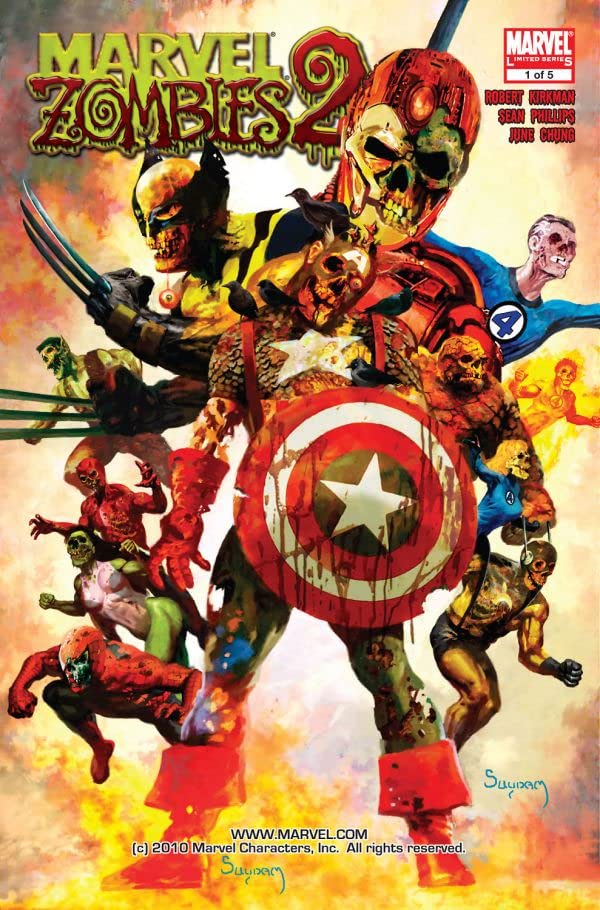
6. Marvel Zombies
A series of Marvel comics starting in 2005 imagined what might happen if superheroes turned into brainless zombies and ate the world. Often hilarious, very gory and, until the premise started getting wrung out by endless sequels, one of the more creative “what ifs” of the overused superhero dystopia genre. Plausibility factor – Low. First, we’d have to have superheroes, then zombies. Trigger warning – Low. A good bloody tonic for the staying-at-home blues.
5. 1984 by George Orwell
One of my all-time favourite novels, barely fitting into the “apocalypse” scenario, but a lot of the action in Orwell’s imagined “Big Brother” world is predicated upon endless wars with unrevealed death tolls and a world laid low by chaos. Its message of media control and manipulation only seems more urgent every day. Plausibility factor – High! Trigger warning – Medium to high. While pessimistic at its core, to me 1984 is still a story about the power of hope.
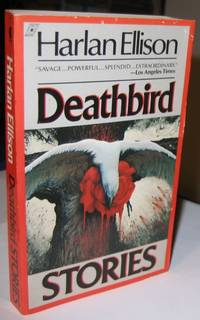
4. “The Deathbird” by Harlan Ellison
This 1974 short story from Harlan Ellison’s Deathbird Stories collection has always kind of got me right in the feels. It’s kind of a rewritten take on the Bible, where Satan is actually the good guy, and it’s about finding the strength to end everything. It’s also very emotionally vulnerable, not always a quality associated with the bigger-than-life Ellison, and beautiful in its shattered way. It’s a quiet storm about the very end of all things. Plausibility factor – Low. Of all the things I have to worry about, the Deathbird is low on the list. Trigger warning – Medium to high, depending on how you feel about sad stories about dying pets.
3. The Stand by Stephen King
The plague novel to end all plague novels, and one of King’s finest epics. A disease sweeps across the world, leaving only a handful of people to face a second kind of Armageddon against a very real devil. As the critics say, “impossible to put down,” even if it’s approximately 3000 pages long. Plausibility factor – Medium. We’re not likely to see Randall Flagg wandering Las Vegas, but as always with King, he’s got a lot of tiny details that ground his fanciful fiction. Trigger warning – Medium. The famous scenes of characters trying to make their way out of a body-filled Manhattan might be a bit harrowing now.
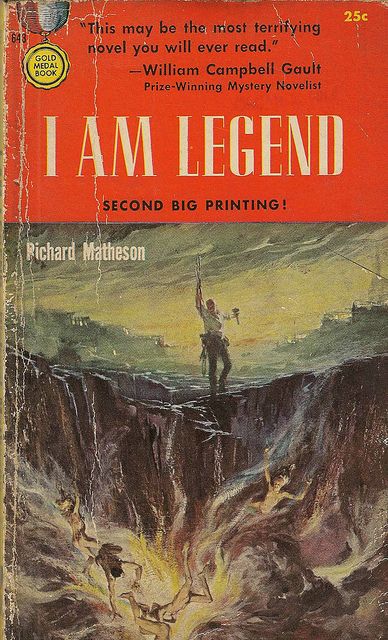
2. I Am Legend by Richard Matheson
They’ve tried to make this into a movie several times, but nothing touches Matheson’s original novel, about the last human on earth in a world of vampires. Claustrophobic, creepy and stark, it’s a gem in apocalypse literature. Plausibility factor – Medium. Matheson ably captures the siege mentality of self-isolation, but so far vampires aren’t really a threat. Trigger warning – Medium. Matheson eerily captures the feeling of being the last man on earth.
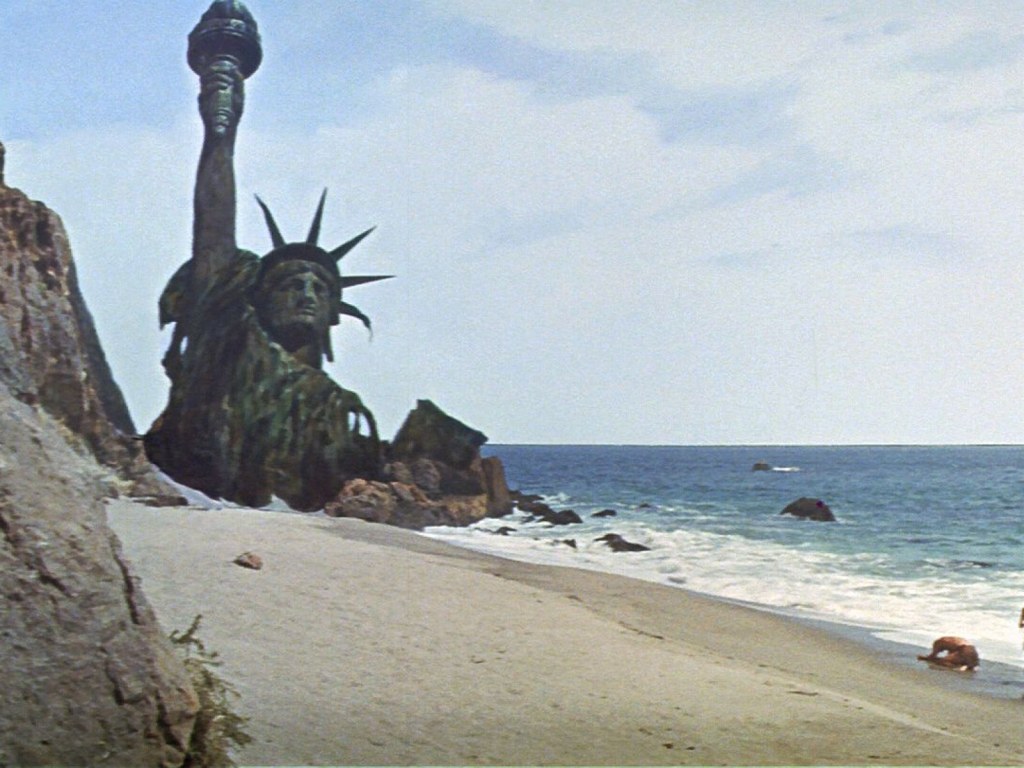
1. Planet of the Apes/Beneath The Planet of the Apes
Damn dirty apes, Charlton Heston in a loincloth, Roddy McDowell and quite possibly the bleakest single ending to a big-budget franchise in history (the nuclear annihilation of Beneath) – what’s not to love? Sure, most people are dead, enslaved or hideous mutants living underground, but still, for all my end-of-the-world needs, I’ll always go ape first. Plausibility factor – Low. Even when the great more recent Apes reboot tried to make it more plausible, we’re still a while from Caesar swinging in the trees. Trigger warning – Low, unless you’ve recently visited the Statue of Liberty.















 Nik Dirga