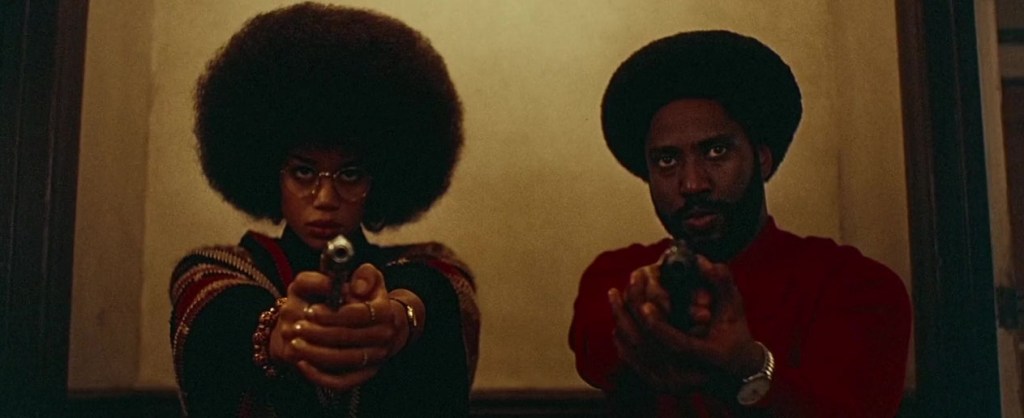
I’ve been on a bit of a Spike Lee binge lately, re-watching some of my favourites like Do The Right Thing and The 25th Hour and BlacKkKlansman and dipping into some of the more obscure byways of his filmography. I’ve been a fan since first having the sweaty chaos of Do The Right Thing blow my mind more than 30 years ago and even when Spike swings and misses, it’s usually worth a watch.
And there’s one thing that always gets me, whenever it pops up in his films – the jolt of the double dolly shot. For non-film nerds, dollies are basically cameras mounted on carts to capture fluid movement. In Spike’s films, he’s popularised using the “double dolly,” where two cameras on dollies work together to create an eerie sense of actors “floating” through the background, like they’re on an unseen riverboat wafting downstream.
I love the double-dolly moments in Spike’s movies, which frequently illustrate emotional chaos like in Inside Man or foreshadowing fate as in Malcolm X. They’re kind of a cold splash of water that burst the fourth wall of film, like the kick of a 3-D movie effect without having to wear those dorky glasses.
When Malcolm X, shortly before he meets his brutal death, suddenly begins to glide through the New York streets, he no longer seems quite human – and yet, you can’t take your eyes off the effect.
Lee has always liked to shake the audience to remind them they’re watching a film, with those confrontational to-the-camera monologues in movies like Do The Right Thing. Sometimes it doesn’t work – as much as I like his coming-of-age comedy/drama Crooklyn, a bizarre choice to distort the aspect ratio to an elongated box for 20 minutes or so of the movie almost derails the whole thing.
But when it works, for me, Lee’s double dolly shots deliver a shock to the system of passive film watching. In that same Crooklyn, there’s a few shots when the young girl Troy has vivid nightmarish dreams driven by double-dolly shots, which seem to emphasise how little control she has over her swirling life. At the movie’s end, the double dolly shot bursts into the real world in a cathartic moment when Troy and her brother attack the neighbourhood drug addicts.
Is it a bit flashy and show-offy as a film technique? Certainly, and it’s a good thing generally Spike uses it sparingly, and not in every film. But if you save it for those critical moments – Philip Seymour Hoffman’s existential despair in The 25th Hour, or the startling burst of violent anticipation that ends BlacKkKlansman – it lands with a sharp impact.
The cinema screen often bends but it doesn’t quite break, but for me, in the quick brief moments of those trippy double dolly shots, Spike Lee comes very close to exploding the whole idea of what a movie can be.
As part of my annual Halloween month monster movie marathon, I went back to the swamp. Swamp Thing, that is, who starred in two almost forgotten comic book movies that oozed their way through the ‘80s. Nobody would ever call them timeless classics, but I’m weirdly fond of them.
Swamp Thing and Return Of The Swamp Thing came in that kind of interregnum in superhero movies through much of the ‘80s, in the period between the last good Christopher Reeve Superman movie Superman II in 1981 and the Tim Burton Batman-palooza of 1989. In that grim limbo we comics geeks made do, dimly, with unsatisfying stuff like Howard The Duck, Supergirl and Sheena: Queen Of The Jungle.
Neither Swamp Thing movie is really great, but there’s something about them I’ve always found cheesily enjoyable, from their campy humour to their amiably low-fi practical effects. Now, Swamp Thing has starred in some of the greatest and most out-there comics of all time, and the basic muck-monster idea has exploded into existential horror, cosmic wonder, time travel, LSD-tinted romance and much more. But on screen, there’s still something loveable about just having a guy in a rubber suit wandering around the swamps.
There was an attempt to make 1982’s Swamp Thing the next Superman, with adverts on the back of every comic and awesome poster art. The movie closely follows the comic plotline about a scientist, Alec Holland, (the great Ray Wise, who I kinda wish had been allowed to suit up as Swamp Thing himself) whose groundbreaking research is targeted by thieves. In one of those only-in-comics accidents Holland is set on fire, doused in his mysterious chemical formulas and thrown into a swamp, where he re-emerges as a half-man, half-man muck monster. With the aid of another researcher (Adrienne Barbeau), the Swamp Thing (played by Dick Durock) seeks revenge on Anton Arcane, the evil mad scientist behind all his troubles (Louis Jourdan).
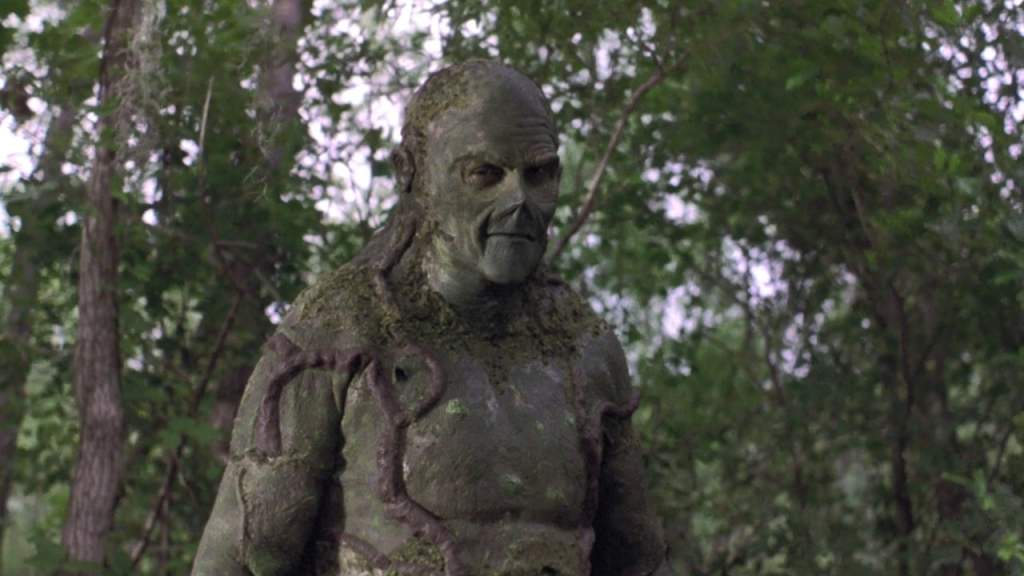
Swamp Thing is a breezy monster mash of a movie, with a costume where the seams are clearly visible and the steamy swamp setting is one of the film’s biggest assets. Swamp Thing is a monster, but a good guy, and in the end he gets into a classic monster-movie throwdown wrestling match with Arcane, who inexplicably ends up turned into this wild bug-eyed shrew/rat man hybrid when he overdoses on Holland’s formula. It’s a so-bad-it’s-good moment.
Maybe it’s because it was one of the first real “horror” type movies I saw, but I still love Swamp Thing, flaws and rubber costumes and all. Barbeau is a great steely kick-ass heroine, Jourdan is smoothly menacing and Dick Durock gives Swampy a melancholy charm. It’s a movie that just gets to the point, pure popcorn cinema with a dash of sadness over poor Alec Holland’s fate.
The sequel Return Of The Swamp Thing pretty much gives up at being serious at all. It starts off, weirdly, with a credits montage that features lots of glorious art from Alan Moore’s legendary 1980s Saga of The Swamp Thing comics. As these images by Steve Bissette and John Totleben pass across the screen you think whoa, is this movie going to boldly reinvent the whole idea of a swamp monster hero like Moore’s comics did?
But nope, it’s a tease. Return Of The Swamp Thing is a far campier and sillier sequel that feels like it came straight from a USA Up All Night! marathon. It opened up, very briefly, in theatres a month or so before Batman in summer 1989, and it’s a plucky last gasp of the slapdash amateurism most superhero movies had until Tim Burton came along.
This time, Swamp Thing has a much cooler leafy costume that apes the looks of the Alan Moore comics, but that and an eerie scene where Swampy slithers out of a bathtub drain and puts himself back together are about all that this one has in common with the Moore stuff.
In one of the weirdest castings of all time, Heather Locklear plays a hilariously broad valley-girl version of the comics’ goth girl love interest Abby Arcane, while poor old Louis Jourdan looks half-dead in his sleepy return as Anton Arcane, rather inexplicably no longer a shrew-man. The henchmen are ridiculous action movie parodies and the movie features two of the most obnoxious child actors you’ll ever see and a far more talkative Swamp Thing who feels like some chill surfer dude rather than the rumbly monster of the first movie. (Seeing Swamp Thing laugh like a businessman at a cocktail party is one of the most off-model moments of the film.) It’s a ramshackle, small-scale story that basically seems to consist of Arcane doing more goofy evil science stuff, and Swamp Thing defeating the rather physically unimpressive bad guy by… throwing a chair at him. We don’t even get a return of the bizarre shrew-man costume.
…And yet, I don’t know. Perhaps it’s just my love for Swamp Thing as a character and the low-stakes vibe of these movies, but it’s far more entertaining than the plodding, overly serious and dull attempt to bring Swamp Thing back in a very short-lived TV series a couple years back. Word is James Gunn wants to do a new Swamp Thing movie as part of his DC universe empire. I know these days everything is done with CGI and motion-capture but I still kind of hope that if they do a new flick, we still get a guy in a somewhat sloppy rubbery costume stomping about in the muck.
When it comes to Swamp Thing on film, the dirtier, the better.
She was perhaps my first big Hollywood crush, because I was a budding teenage intellectual who caught Annie Hall on the TV sometime in the mid-1980s and recorded it on a VHS tape, watching it over and over until the image began to break down into jittery lines.
It was a movie that spoke to me of a wider, more glamorous world than small-town California, with wide Manhattan streets and everybody dropping witty banter and watching foreign movies that would surely change your life.
Her death yesterday at age 79 shocked me, when I shouldn’t really be too shocked anymore about us slowly losing all those great ‘70s and ‘80s stars of my youth. But Diane Keaton always felt so fervently alive, that for her to suddenly cease felt immensely wrong.
I’ve watched Annie Hall dozens of times and it sparked a lifelong love for the films of Woody Allen and Diane’s impressively light touch as an actress. (I know, I know, there’s a lot of pitfalls about being a Woody Allen fan these days, but despite many problematic concerns and allegations and my rather mixed feelings about the man himself, I can’t ignore that his movies shaped a hell of a lot of my teenage worldview, and that’s all I’m gonna say about that.)
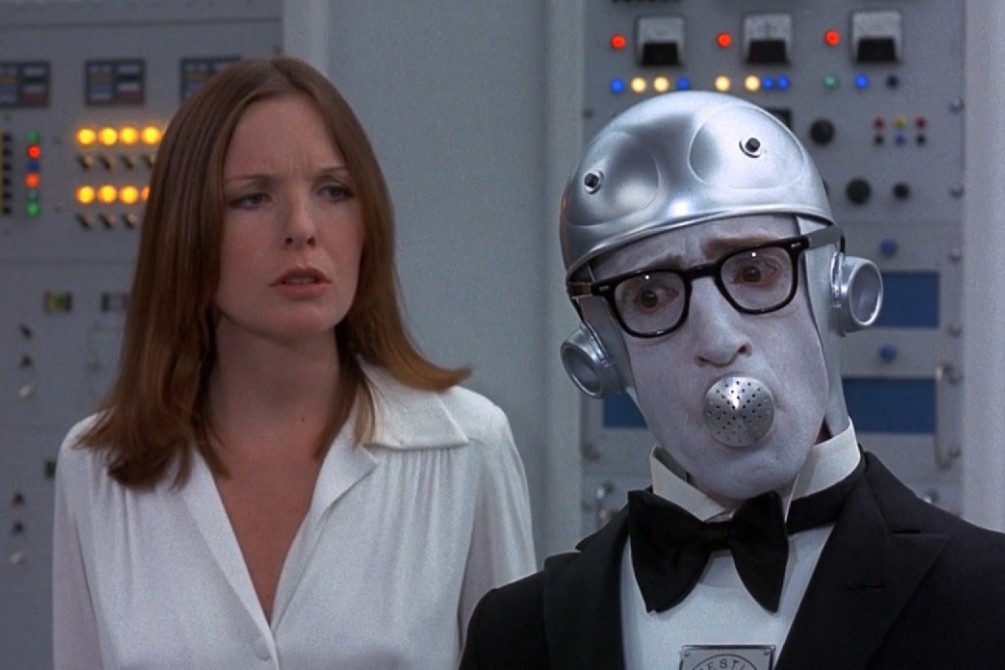
Diane’s “Annie Hall” character was the grand template for so many of Keaton’s comic characters in her wonderful Woody collaborations and more – a manic pixie-dream girl prototype who actually was often far wiser than those around her. Take her ditzy pleasure addict in Sleeper, who ends up a devoted revolutionary warrior, or her hilarious turn in the Russian mock comedy Love and Death, where her deadpan wit often blows everyone else off the screen.
She never quite played the same character in any of these films despite her style becoming a bit of a stereotype – look at her nuanced turn in Woody’s tricky dramedy Manhattan as a spurned ex or her delightful mid-career return to Woody as a paranoid, dissatisfied wife in the detective comic romp Manhattan Murder Mystery.
A natural successor to Katherine Hepburn, like her, Keaton always had a keen intelligence shining away behind that “la-de-da” exterior. You’d see it in films like The Godfather or Reds, where she turned that comic energy inwards to create vivid dramatic roles.
The same year as Annie Hall, she also starred in the incredibly dark Looking For Mr Goodbar as the anti-Annie. It’s a depressing, bleak film that aims to show the seamy underside of ‘70s swinger culture, but Keaton, as always, is very good – playing a character who isn’t as confident or cunning as she thinks, who ends up lost in a nightmare.
But it’s Keaton the comic I fell in love with watching Annie Hall over and over as the VHS tape juddered, and her great willingness to marry her stunning beauty with undignified pratfalls. Even in a middling ‘80s workplace comedy like Baby Boom, she sells her character’s turn from stoic yuppie to loving mother with an unforced ease.
As Keaton got older she played lots of moms and winter romances, not all of them great movies, but she was never better than in her final Oscar-nominated turn in 2003’s Something’s Gotta Give. All of the classic elements of those silly rich white folks rom-coms are here – houses in the Hamptons, characters swanning through privilege without a care in the world – but again, Keaton takes the material and makes it so much better with her wit and sincerity. Was there ever a sexier comic love triangle than both Jack Nicholson and hot young doctor Keanu Reeves falling for Diane Keaton? And why wouldn’t they?
Keaton grew old gracefully, even if she left a little too soon, and there’s as much to love in the middle-aged longing of Something’s Gotta Give as there is in the bright-eyed unwitting fashion icon of Annie Hall. I kind of loved them all – after all, you never forget your first love.
There’s something spooky about watching a documentary covering events you lived through and still haven’t quite processed yourself.
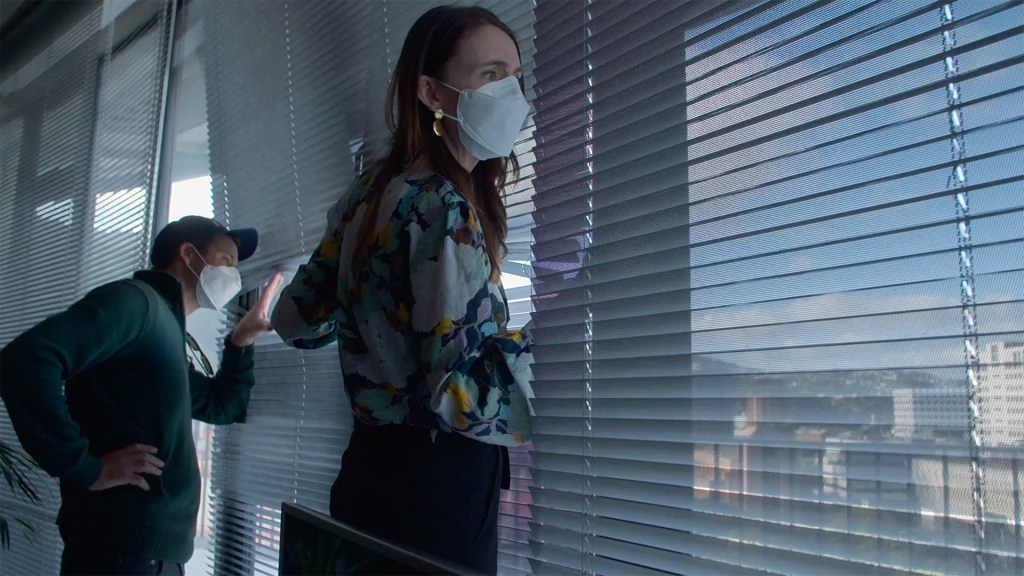
Jacinda Ardern was New Zealand’s leader up until about 2 1/2 years ago, but somehow that already feels like a few centuries ago in the current grim timeline. Watching the excellent, if starry-eyed, new documentaryPrime Minister takes us back through the whirlwind of 2017-2023, when New Zealand was often buffeted by a series of tragedies that all felt sadly outside our control.
Prime Minister is a startlingly intimate portrait of the Jacinda years, and what it’s like to be a young pregnant woman suddenly lifted up to the corridors of power. Whether or not you agreed with Ardern’s administration – and it was ultimately as flawed as most governments, in the end, but not as bad as some – Prime Minister is a movie that is somehow bittersweet and optimistic all at the same time.
So it’s weird watching Prime Minister and seeing the history of your country retold when it feels like it’s all not even quite ended yet, to see everything unfold again as it did in those crazy five years.
I was in the thick of the Ardern years as a journalist, typing away news alerts and quick takes from the day she surprisingly came out on top of government coalition negotiations in 2017. I watched with horror the shocking mosque shootings of Christchurch in 2019, helped cover her massive re-election win in 2020 and watched as Covid crept in and everything in the world seemed to grind to a blurry halt. We journalists waited for the “1pm update” on what the pandemic had to say today, and saw the creeping dissatisfaction grow in some corners.
I watched Parliament’s grounds become occupied by a collection of protesters for weeks in 2022 and I had the curious fortune to be running a live-blog the morning that the police came and that occupation came to a violent, fiery end. For a journalist, the moments when you think, “I’m watching history right now” come with an electric charge.
We’re very much all still living in the societal and cultural upheaval the pandemic left behind and the swamp of populist rants, conspiracy theories and anger-fueled online bile feels like it will never end. Did New Zealand get everything right? Probably not, but the overriding fact is that all the rewriting of history going on at the moment ignores that at the time nobody knew what might happen, and in the end, a whole lot of people could have died in a small island country like ours. Ultimately less than 6000 died of Covid-19 here – while in America, 1.2 million did.
Prime Minister boasts a candid access that it’s hard to imagine a lot of political leaders allowing. Ardern’s partner Clarke shot lots of footage of her over the years, as she sits in bed worn out after long days or works through the exhaustion of pregnancy. Even though I spent so much time covering Ardern and writing about the events of the day, it’s all a very different perspective that sheds new light on the burdens of power and Jacinda’s – perhaps impossible – attempts to remain kind at heart in a world that frowns on that.
Again, I won’t argue New Zealand was some magical utopia when Jacinda Ardern was in power. But to be honest, a lot of politicians running the world at the moment seem barely human, let alone humane to me. We dehumanise politicians, and Prime Minister aims to correct that. Ardern has been turned into some unrecognisable demon avatar in some corners of NZ to this day. It’s hard to reconcile that with the images of a young mum playing with her daughter we see in Prime Minister. It’s also easy to see why Jacinda quit when she did, having no more petrol in the tank.
Prime Minister isn’t a deep investigative dive into NZ politics. It’s glossy and aims to make Ardern the hero without really diving into the intricacies of politics here. And yet, in its own way, it feels a bit like an elegy for a lost world. Why would anyone want to be a politician these days?
Power costs, and in the end, you have to wonder if, in a timeline crowded with blustering authoritarians, grim bottom-liners, hucksters and grifters and outrage merchants, that the eminently human scale of Jacinda’s politics is something we may never see again.
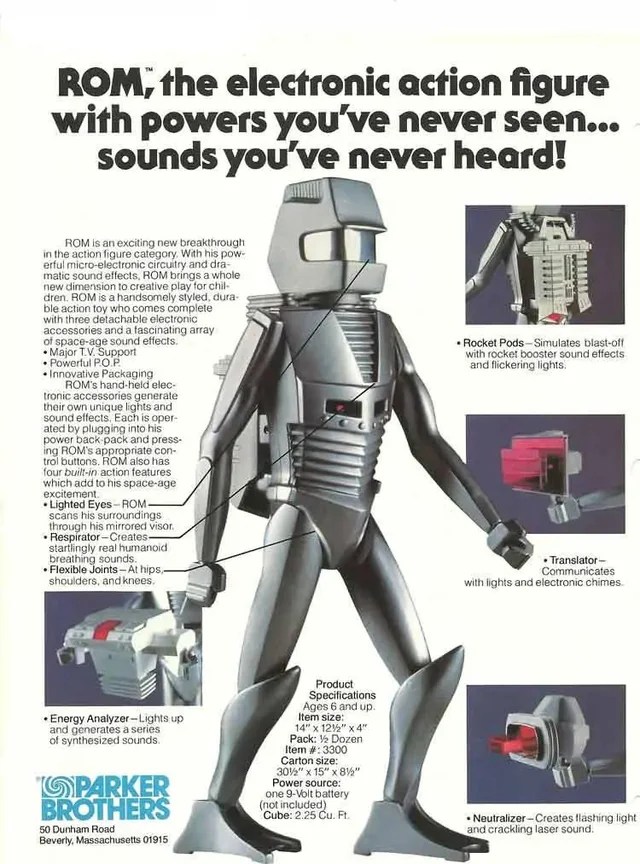
It took me 46 years, but I finally got my ROM toy.
As young fanboys turn into old geeks, we often fantasise about the childhood toys we once had, or the ones we never had at all.
I’ve written before about how addicting action figures could be and how, despite being a bit more flush of cash than I was when I was 11, I try to be a little more restrained these days. I’ll still buy one here or there, but they have to be special.
Like ROM.
Growing up in the late 1970s I was a vagabond child, and spent much of my eighth year travelling in a campervan in Europe with my family. I’d see comic book ads for things like Micronauts or Shogun Warriors or those new-fangled Star Wars action figures but I sure as heck wasn’t going to find them in Luxembourg or wherever the heck we were that week.
We couldn’t get a lot. One toy my parents got me somewhere in Europe which sounded cool was the Amazing Energized Spider-Man (TM) with web-climbing action, who rather lamely turned out to be an utterly immobile statue of Spidey with a perpetually raised left arm, who would get hoisted up by his little energized web winch thing. It wasn’t terrible, but there wasn’t a lot you could do with a Spider-Man toy who always looked like he was hailing the cross-town bus.
But one enticing toy I kept seeing in the American comic books I foraged from military base PXs in that distant world of 1979 was ROM. The ads blared, “ROM HAS COME … EVIL IS ON THE RUN!”
The ad boasted of “the greatest of all spaceknights”, who was premiering in a cunning case of cross-synergy with an electronic action toy by Parker Brothers and a new Marvel comic book series. Who was ROM? Heck if I knew, but I wanted to know.
Of course, I eventually picked up those ROM comic books, which are still a favourite of mine. Over a 75-issue run well into the ‘80s, ROM’s surprisingly good comic lasted a lot longer than the toy ever did, thanks to the energetic corny delights of Bill Mantlo’s writing and Sal Buscema’s reliably expressive artwork.
Over several years Mantlo spun a story of ROM, who sacrificed his humanity to battle the evil Dire Wraiths. It was never revolutionary comics but it was always good fun, and unlike so many comic book series it actually had an ending, which I really appreciated.
I loved those ROM comics, but I was never able to find myself a vintage ROM Parker Brothers toy. They kind of flopped and you never saw them at yard sales or swap meets and there wasn’t an internet to search then. These days, you could drop a few hundred bucks for one on eBay, but I’m not that dedicated to reliving my childhood fantasies of having all the cool toys.
But then the other day, I saw a new Marvel Legends ROM action figure for a decent price online – sure, it wasn’t the 13-inch tall “electronic action toy” of yore but it was pretty darned shiny with all ROM’s fancy accessories and that glam silver iconic spaceknight sure did look appealing. (And to be totally honest, it’s a much better looking action figure than the somewhat awkward 1979 toy.)
So I bought my ROM.
And gosh darn it, he is still pretty cool, I think.
Maybe next I can find a cheaper modern version of those super cool 24-inch tall Shogun Warriors toys that the kid down the road had. After all, a spaceknight’s work is never done.
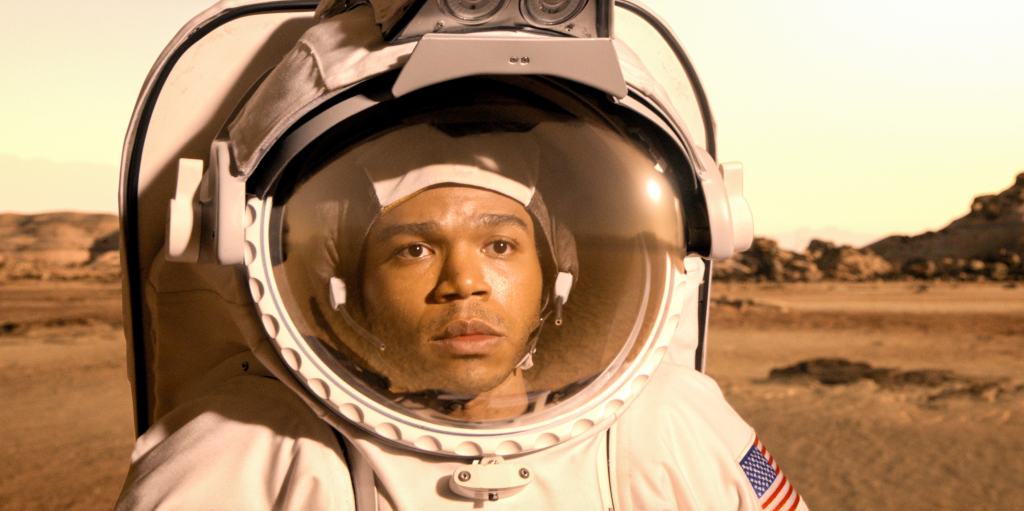
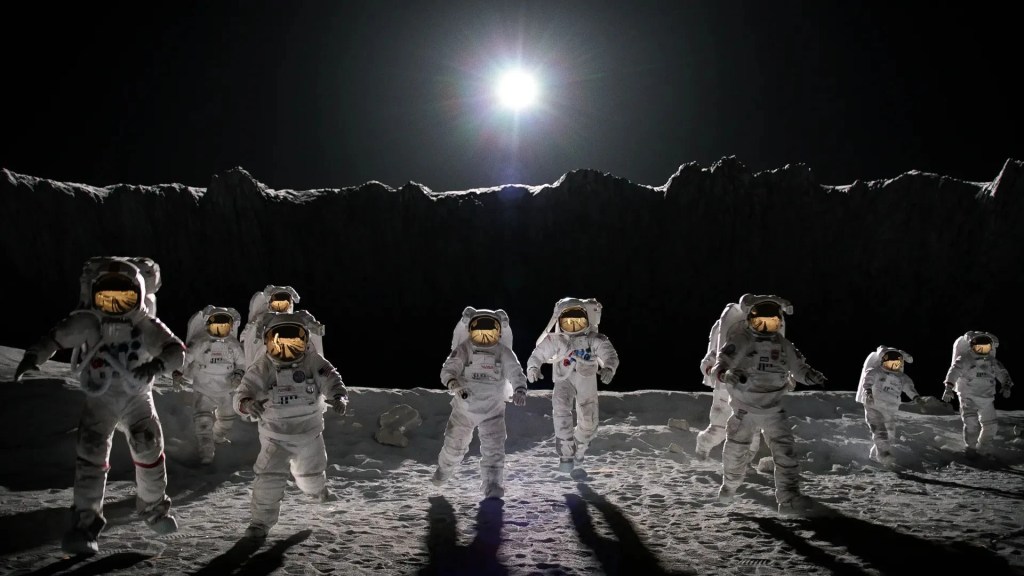
I’ve been feverishly catching up with the four seasons to date of Apple TV’s For All Mankind, after putting it off for ages. One of the things that appeals to me about it is the insistence in this space exploration epic of dreaming big, daring big, in a way that our somehow smaller world doesn’t feel like it does any more.
I’m a sucker for alternate histories, and For All Mankind paints a compellingly fascinating picture where the Soviets landing on the Moon before America does has a ripple effect on global history.
It’s a world where there’s no Watergate, 9/11 attack or assassination of John Lennon. Instead, Margaret Thatcher and Pope John Paul were both killed!
It’s a world where Presidents Ted Kennedy, Gary Hart and Al Gore all end up in the mix of history with Reagan and Nixon. Oh, and there’s no public internet or social media, which actually might not be a bad thing when you think about it.
This alternate reality also proves itself to be somewhat more progressive than the real one, although not without its speed bumps. After Russia lands a woman on the Moon, a spooked NASA assembles a crew of women astronauts to one-up their rivals, decades before women actually went into space. For All Mankind also dips into race and sexual equality – in this world, the Equal Rights Amendment passes, one of the top astronauts is a Black woman (an excellent Krys Marshall), and gay equality unspools in startlingly different ways than it has here.
The real-world President Kennedy’s famous quote – “We choose to go to the Moon in this decade and do the other things, not because they are easy, but because they are hard” – sums up the vibe of For All Mankind, of the hopeful engineers still beavering away in real-life space programs, and in a hundred other wide-eyed speculative fictions about man in space. It shows a world where striving to do the hard thing fundamentally changes the course of history.
Like many of us, I’m drawn to the idea of man out amongst the stars, even if in reality it seems as far away as ever. I read Kim Stanley Robinson’s terrific Mars trilogy a few years back, and recently just devoured the excellent non-fiction Space Race: The Epic Battle Between America and the Soviet Union for Dominion of Space by Deborah Cadbury, which sheds a lot of light on the early years of the space programme and particularly the terrible price Soviet citizens paid to try and stay in the game.
There’s a lot of dark, bleak science fiction out there, of course, and there’s certainly a place for it, but at the moment, give me some optimism things might get better. Good science fiction, at its best, gives us something to dream about – as in the endearingly dorky future of Star Trek, or the colourful chaos of Guardians of the Galaxy. I like watching aliens eat people’s faces as much as anyone but also, I like the idea of boldly going where no one has gone before.
Idealism seems pretty passé in 2025, where even lofty talk of utopian futures is usually tempered with a healthy dose of talk of vengeance on your enemies and crushing dissent. In a world that feels like it’s getting a little more unhinged by the week, I like to imagine missions to Mars and cruising amongst the asteroids.
We haven’t been to the moon since 1972, before many people today were even born, and only four men who walked on the moon are still alive. In amongst all the stunning incompetence of American politics at the moment, it looks like another mission may finally come soon, more than 50 years later — which would be something to see, wouldn’t it?
For All Mankind isn’t a rose-coloured look at the future – its alternate history is drenched in plenty of blood and horror, terrorism and distrust, where man (spoilers ahead!) does make it to the Moon and even Mars but constantly comes up against the same conflicts that keep screwing us all up on Earth. But through it all, even at the worst moments, there is the desire to dream big, and do big, hard things.
For All Mankind does get a bit goofy and far-fetched the further ahead into its alt-history it goes, with some of the more daring episodes approaching Star Trek levels. Some of the characters become annoyingly soap opera-ish over time. Lead actors Marshall, Joel Kinneman and Wrenn Schmidt are generally terrific, even as their characters get slathered in awkward makeup as decades pass on the show, but some of the other actors play with a broad bluntness that verges on the cartoonish.
None of that really matters, though, when the space race kicks in and For All Mankind’s vision of a different, more adventurous world kicks in — when the doing hard things is just what’s expected. Go hard, go big, just go there.
…I really don’t write much about America these days, and the way the place I called home for 35 or so years no longer makes sense to me.
I don’t have the spleen to be filled with outrage 24 hours a day any more, only a deep kind of sadness and the quote from the R.E.M. song (via the Linklater classic Slacker, of course) perpetually pinballing around my brain: “to withdraw in disgust is not the same as apathy.” I find my peace in a bit of grim distance from following every dismal development, and appreciating all the other ways life is still pretty darned good away from the bad news machine.
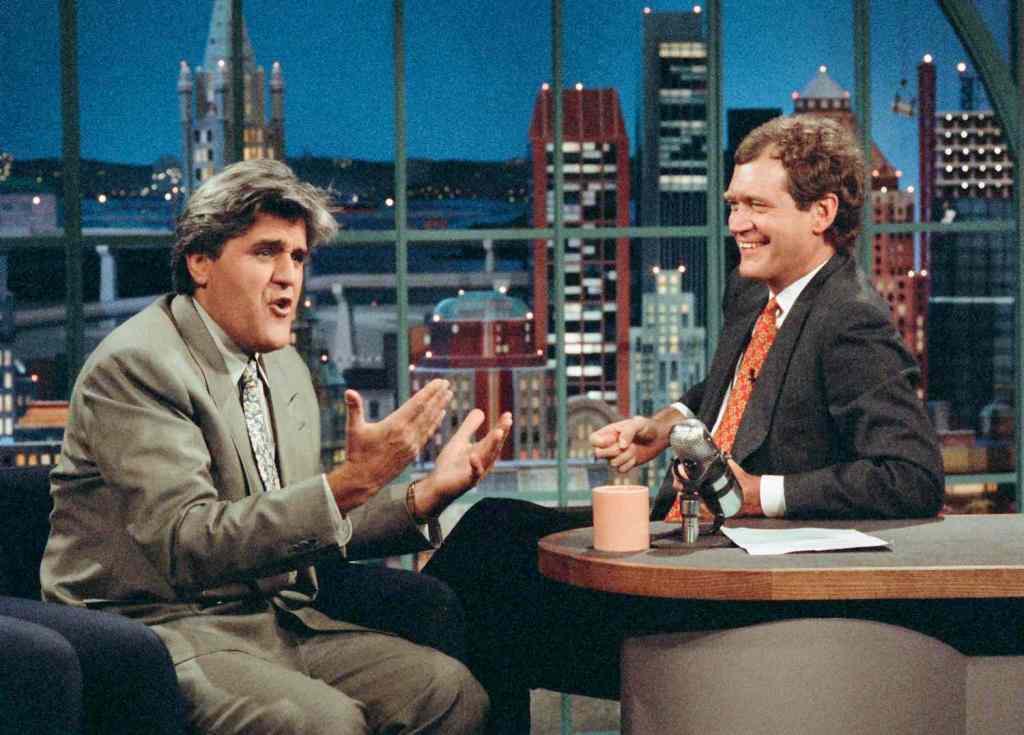
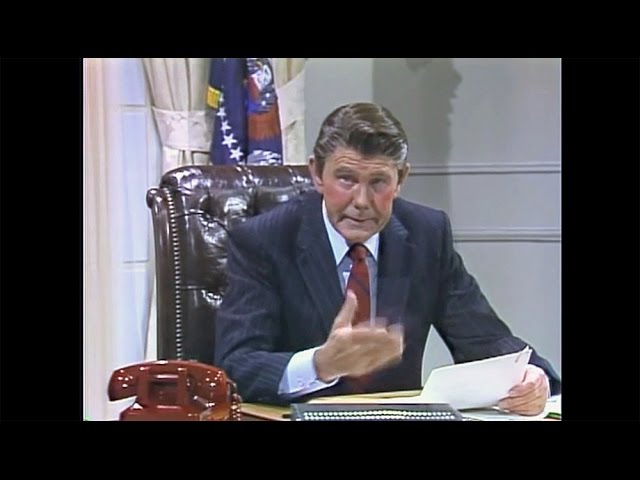
For decades, the late-night TV show hosts, the Carsons and Lettermans and Lenos and kindred spirit Saturday Night Live, they were the court jesters on the American political scene. They would mock mercilessly Ford, Reagan, Bushes and Clintons and the like, for their real failings and their merely human missteps. They were a central part of the culture, with entire books written about their doings and in-fighting, or one of my favourite TV shows being set entirely in the world of late night.
I caught the very tail end of Johnny Carson’s everyman years, and was a faithful watcher of David Letterman in his heyday, of SNL many years ago. I’ve watched a fair bit of Colbert and The Daily Show although I honestly don’t think I’ve watched more than a few minutes of Jimmy Kimmel, Seth Meyers or Jimmy Fallon, the current crop of hosts.
Dave could make fun of George H.W. Bush vomiting at a state dinner or Johnny could dress up as a fumbling Ronald Reagan. It was taken as a kind of point of pride that in America where the right to free speech is the very first amendment to the Constitution that you could mock the dear leader of the day, without fear of being forced off the airwaves by a carefully orchestrated tsunami of outrage.
Let’s be clear – they weren’t always actually that funny, to be honest. Political humour of the day has a perhaps 25 percent hit rate that fades quickly over time, and Jay Leno’s Lewinsky ‘jokes’ had a shelf life of about .005 nanoseconds.
Letterman and Conan and the like were always a lot funnier when they followed their own weird muses rather than the headlines, but that wasn’t the point – the point was that they could make lame jokes about the man in the White House and the American political scene without fears the President himself would start screeching for their cancellation or calling the very idea of criticism against him “illegal.”
The center did not hold, and the culture now revolves around a million very different siloed off entertainments and satirists than it once did when Johnny, Dave and Jay strode around on network television, the very height of celebrity in a world where nobody knew what an influencer was. Their time is fading, not entirely due to the current US administration, but they’re sure helping shove the stragglers out the door.
Instead of court jesters, we’re getting satire only tailored to existing beliefs or dizzyingly insular memes as the world drowns in a sea of doomscrolling and performative outage. In all the old sci-fi films, we imagined the end coming in a million ways, but few of them imagined a culture subsiding into the sea as we were all off inhaling TikToks and YouTube videos whilst sucking on cherry vapes with an Ozempic chaser.
I’ve got absolutely no good ideas, no hot takes about where all this goes from here.
But when you clear out the court jesters, it usually turns all you can hear is the king chortling to himself, self-satisfied, in a court where the only other sound is his laughter being echoed right back to him by a room full of sycophants.
I love the original Evil Dead trilogy and its splattery slapstick charms, so you’d better bet I was down for a marathon of the whole shebang at the legendary Hollywood Avondale this weekend, featuring an introduction by producer and honorary New Zealander Rob Tapert.
Tapert was right there, along with his mates director Sam Raimi and star Bruce Campbell in the Tennessee woods when the extremely low-fi 1981 original was shot, and has since gone on to be a producer of many great flicks in the years since – and also created a little character called Xena The Warrior Princess and married a Kiwi named Lucy Lawless, so he’s got some serious Kiwi bona fides.
Watching five hours of Evil Dead flicks on a rainy, windy Saturday night is my idea of a good time. Evil Dead (1981), Evil Dead II (1986) and Army Of Darkness (1992) form a trilogy which starts off as a group of young folks facing evil in a cabin in the woods and ends up with an army of skeletons battling knights in armor while a blustery guy with a robot hand eggs them on.
I recommend a strong stomach and plenty of caffeine if you’re going to mainline all three movies at once, but it’s also fascinating to watch how different they are – the original is more straight existential horror, while the second almost remakes it but with a much more comic eye, while the third almost abandons horror and gore entirely for a straight out slapstick parody of all those old Ray Harryhausen flicks with sword-fighting skeletons. In these days of carefully plotted cinematic universes and decade-long “phases,” the Evil Dead trilogy is a monument to just making up shit as you go along.
The only constant through it all is Ash, swaggeringly portrayed by Bruce Campbell. Images of Ash with a shotgun in one hand and his chainsaw taking the place of his other hand are iconic in comic horror, and his adventures have continued long after the original trilogy in plenty of comic books and videogames – and the surprisingly great 2015-2018 Ash Vs Evil Dead series that gave us everything and more the long-promised Evil Dead IV could have.
Continuity is not a strong suit in the Dead trilogy – the success of the dimestore-cheap production of Evil Dead led Raimi and company to make a sequel, but it’s kind of bolted together with what Tapert called a “condensed” recap of the original in the first 10 minutes or so that reimagines the movie and streamlines it, then picks it all up again with Ash still battling those demons in the woods.
And yet, watching the whole trilogy is also like watching Campbell and Ash find their way into a character. The catchphrase-shouting arrogant Ash we all “think” of when we think of Evil Dead only really comes into focus halfway through Evil Dead II, and becomes his most ideal self in Army Of Darkness.
When we first meet Campbell in Evil Dead, he’s a bland non-entity sitting in the back seat of the car heading to that infamous cabin in the woods, a sidekick to his more extroverted pal Scotty. You think Scotty’s going to be the big hero but then it’s quiet background Ash who ends up the “final girl.” It’s always a shock rewatching Evil Dead to see an almost shy Ash at first, who barely cracks a joke and who becomes the series’ focus only by his lucky knack for surviving the demonic chaos that consumes his friends.
How did Ash go from shy boy in backseat to the alpha male in Army Of Darkness spitting out lines like “Gimme some sugar, baby” and “Yo, she-bitch! Let’s go!” The endearingly choppy nature of storytelling in the Evil Dead trilogy ignores rather than tries to fill in the contradictions of how Ash became, well, Ash, but in my own mental backstory I like to paper in the cracks of it all to be a tale of how Ash survives the incredible trauma of having his girlfriends, best pals and total strangers literally torn to pieces in front of him, of having to chop off his own demon-possessed hand and horrors that would drive anyone bonkers.
In my head canon, Ash was the shy college boy when all the Deadite doings started – he’s actually repeatedly rather a coward in the climax of the original Evil Dead – but when the evil never stopped, he forces himself to become what he thinks of as a hero. Trauma remakes Ash, body and soul.
By the time Army of Darkness rolls around Ash is stranded in the year 1300 surrounded by “primitives,” and has completely reinvented his own personality to be the hero he probably saw in lots of late-night zombie movies. You can’t imagine Evil Dead 1981 Ash lecturing crowds of peasants about his superiority like Army of Darkness Ash does. He spouts bull-headed cliches and romances the pretty girl and stomps around with his “boomstick” but it’s all a bit of an act, really. He’s putting on the Ash, savior of humanity act to survive.
That’s my theory, anyway. It could also be that the Evil Dead trilogy, as wildly entertaining and inspirational to creative folks as it is, is also just a slapdash bag of gags, gore and grit stapled together from film to film with no real deep concerns about how the cliffhanger end of Evil Dead II and Army of Darkness literally don’t mesh together at all, or whatever happened to Ash’s friends in the car in the first movie who’ve been erased from history by the second. I thought as I watched all three movies back to back that if they’d come out in this social media age of endless fanboy dissection, every clickbait website in the cosmos would be bashing out hate essays about the canon “mess ups” and “Evil Dead contradictions EXPLAINED!!!” videos.
But whether or not it all makes a lick of sense or not, I do love how Bruce Campbell turned the gawky background guy in the back seat into a towering icon of horror movie heroism. As he’d put it – it’s pretty groovy.
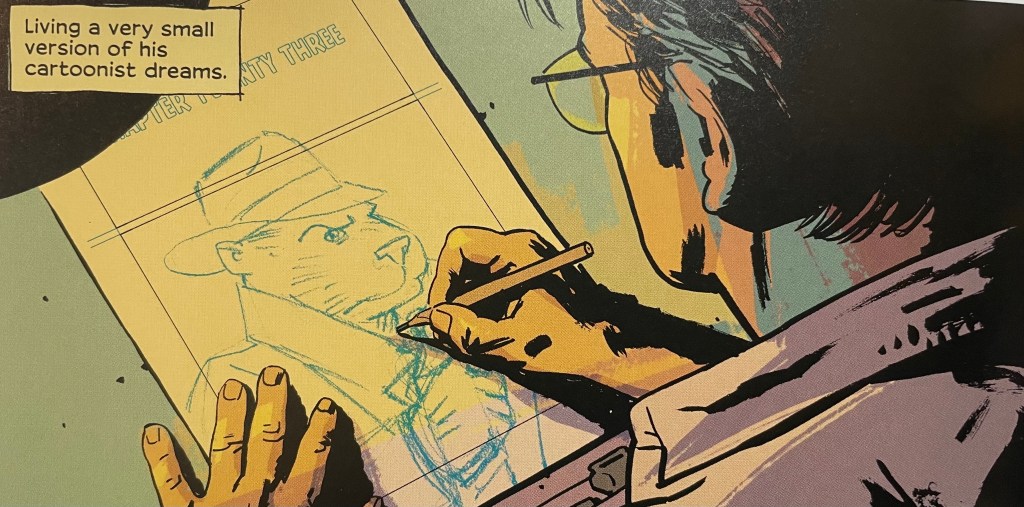
One thing I’ve grown to appreciate more and more these last, lo, 40+ years of my comic book obsessions, is the elegance of a good line of artwork.
I’ve watched comics go through phases from the powerful dynamism of John Byrne or Neal Adams to the over-etched details of the Image Comics house style to today’s computer-augmented slick comics art style. Some I like, some I don’t. (I can rarely pick up a Marvel Comic from the mid-1990s without an involuntary shudder at the sub-Liefeldian scratchiness of it all.)
Harvey Kurtzman
But a good line – well, that’s timeless.
In my own feeble comic book scribblings it’s taken me a long time to learn that less can mean more – like many, back in the 1990s I quickly became enamoured of the Image comics “lots and lots of lines” school of art for a while there, and while I love the artists who can do amazing intricate detail – I’m thinking of Barry Windsor-Smith here, or the remarkable Gerhard’s impossibly grandiose cross-hatched background work on Dave Sim’s Cerebus – I also can now see the beauty in a single few flowing and infinite lines.
It took me a while to realise you don’t need to fill every millimetre of a panel with artwork.
Will Eisner
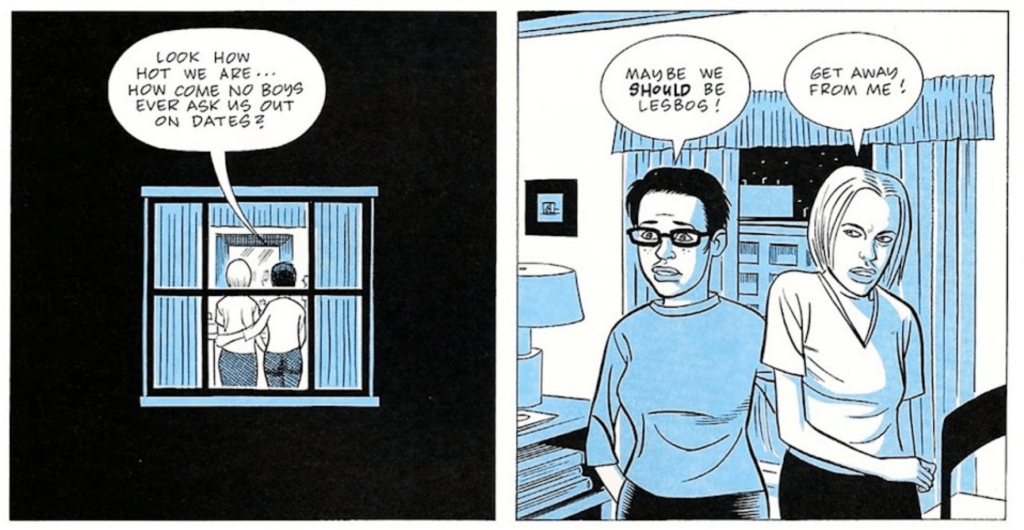
I favour a little minimalism now, whether it’s old or new – the retro cool of Darwyn Cooke, the masterful hand of Will Eisner, Jeff Smith’s dynamic humour in Bone, the cool and elegant indie hipness of Daniel Clowes or Adrian Tomine, the chunky power of Harvey Kurtzman war comics, Frank Miller’s noir slashing brutalism in Sin City (before his artwork got too abstract for its own good), the gorgeous lines swished together with a lot of chiaroscuro shadows in Sean Phillips’ latest excellent crime thriller joint with Ed Brubaker, The Knives.
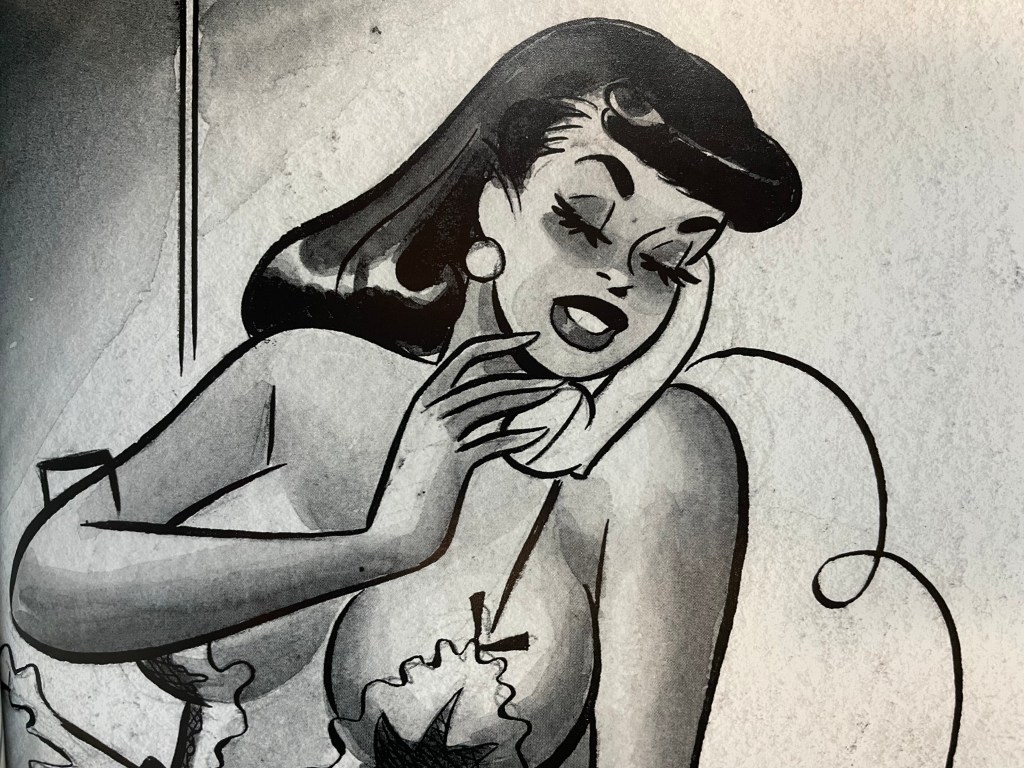
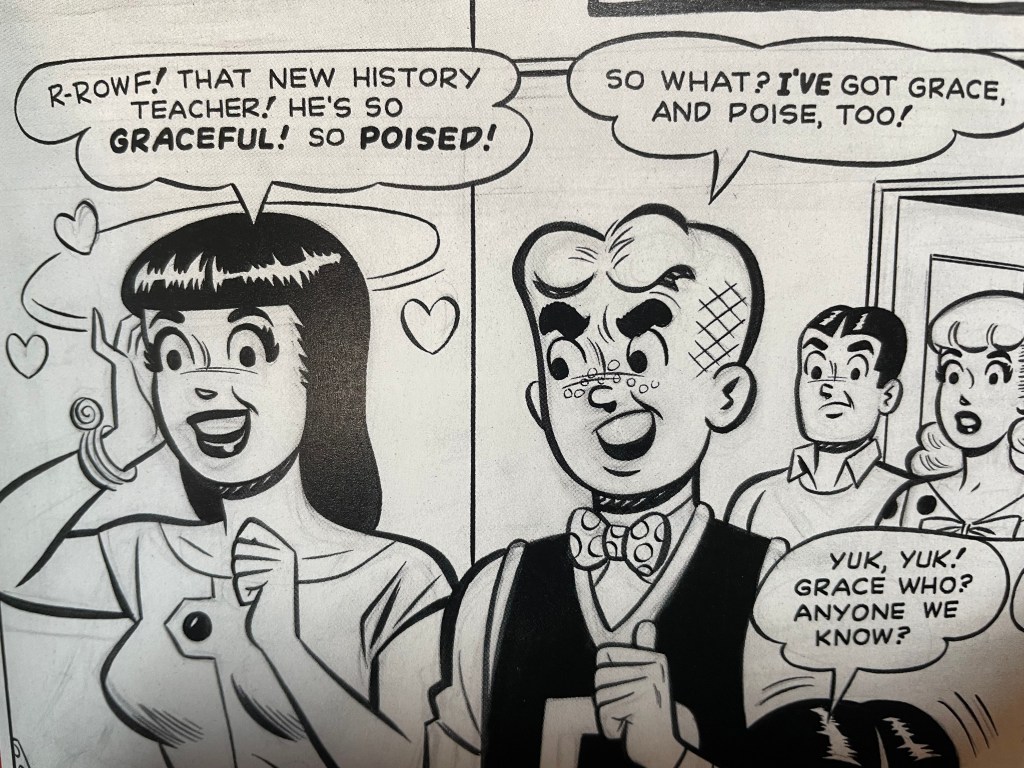
There’s something to be said in just considering the lines in artwork, the way a skilled artist can fluidly widen or shrink his line with a dash of the brush, or sketch out a world of emotion in a few quick strokes. I like to sometimes just marvel at the arc and curve of a good line, and the talent involved in making it bend just so.
Sean PhillipsJeff SmithAdrian TomineDaniel Clowes
And oddly, perhaps in my kind of second (or third) childhood, I’ve become a big fan of “kiddie comics” the last few years and seeing with a new eye the astounding talent that you find in Carl Barks, John Stanley’s Little Lulu, Al Wiseman‘s Dennis the Menace, even Hot Stuff and Richie Rich.
And heck, Archie comics, which have always been looked down a bit by comics snobs, have some of the crispest linework and designs in the business, especially when they were drafted by dazzling Dan DeCarlo. I grabbed a handsome art book of his Archie and other work recently and can pore over it endlessly, admiring all those beautiful, beautiful lines. There’s so much a brush can do, eh?
Dan DeCarloDan DeCarloDan DeCarloErnie Colon – I think
Comic art can take a million different forms and that’s cool – I can still handle a Jim Lee Batman drawing with all those fiddly little lines delineated for every muscle in Bruce Wayne’s face, but sometimes, you just want to soak up a good, bold line.
For a series that literally stinks of radioactive ooze, the Toxic Avenger sure has had a long half-life.
The Toxic Avenger movies are often objectively terrible films, working hard to be as nasty and dumb as they can be, and yet the franchise has somehow lasted more than 40 years and now is reborn in a moderately big-budget Hollywood movie.
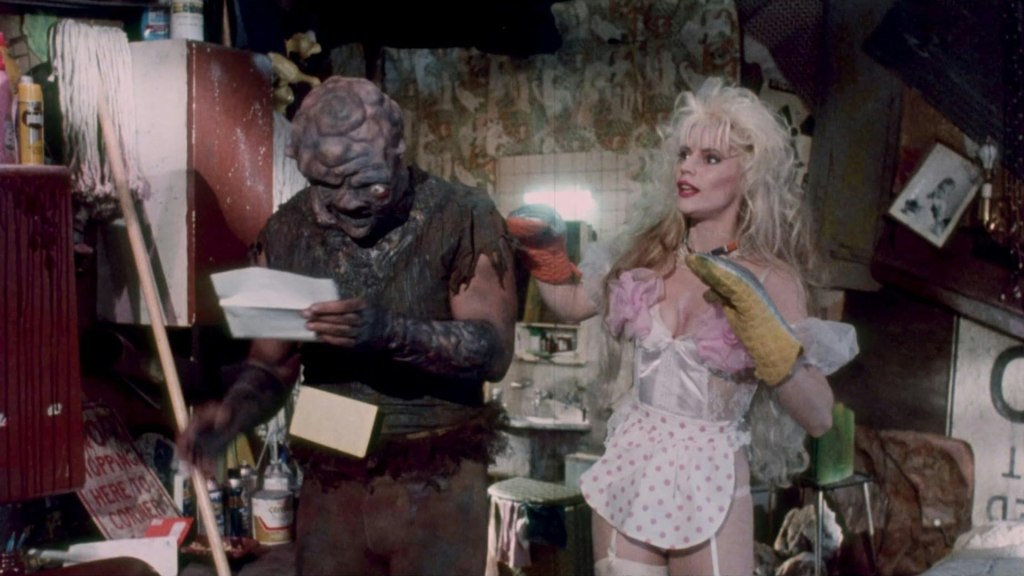
I first came across 1984’s The Toxic Avenger at a high-school late-night party devoted to cheesy movies like Attack Of The Killer Tomatoes and Night of the Lepus. It’s an airhorn blast of crude comedy and gore, the story of a screeching nerd who’s bullied relentlessly and falls into a vat of toxic waste, transforming him into the Toxic Avenger, “New Jersey’s first superhero.” Armed with a janitor’s mop, he dispatches crowds of bad guys in nastily inventive ways, with splattery violence and slapstick lowbrow humour all crashing together into a swampy mess.
Within the first 10 minutes of The Toxic Avenger a bunch of thugs run down an innocent teenager on a bike in sick, lingering detail, played for comedy, and you know what kind of trash-flick you’re in for. It feels like the only proper way to watch these movies is on a battered VHS tape in your Mom’s basement, hopped up on Nerds candy and Jolt cola.
Troma, the studio behind Toxie, made its calling card its splattery punk-rock ethos B-movie horror comedies, calculated to outrage and offend.
And yet, there’s a bit of ugly charm to some of the Toxic Avenger series if you’re in the right twisted frame of mind. It’s got this “let’s put on a show” amateur enthusiasm that evokes the days I’d spend as a pre-teenager hacking together terrible comedy cassette tapes with pals, or scribbling my early comic books. It’s the appeal of doing something, anything, even if it isn’t very good.
Toxic Avenger Part II takes our hero to Japan for some amusingly silly equal opportunity offensiveness, while in the proudly inept Toxic Avenger Part III: The Last Temptation of Toxie, our hero battles Satan himself. Both of these movies – shot at the same time and even oddly duplicating a few scenes – are choppily directed, terribly acted and gleefully stupid, although the sleazy sheer malice of the first movie fades away for a bumbling sloppiness. I gather Troma was trying to “mainstream” Toxie a bit – heck, there was even a short-lived Saturday morning cartoon and a Marvel comic book of this most un-mainstream saga.
Ultimately, the twistedness all comes roaring back with 2000’s Citizen Toxie: The Toxic Avenger IV which is easily the grossest, most offensive movie of the franchise, ramping everything up to 11. A mad story that claims to be the only “real sequel,” it’s about Toxie and his evil alternate universe doppelgänger, and overflows with bodily fluids, gratuitous nudity, rape, rancid racial stereotypes and gore, to the point where the satire gets pretty lost in the sheer ugliness. Maybe I’m a snowflake, but lingeringly gross scenes showing a school shooting in a classroom of mentally disabled students or riffing on racist hate crimes just go too damned far. I get what they’re going for, but not sure I want to go there. Citizen Toxie is definitely an experience, but also an endurance test for most people.
After the nihilistic stench of Citizen Toxie it’s strange indeed to see the character “redeemed” in a way with the new moderately gentler, family-focused reboot.
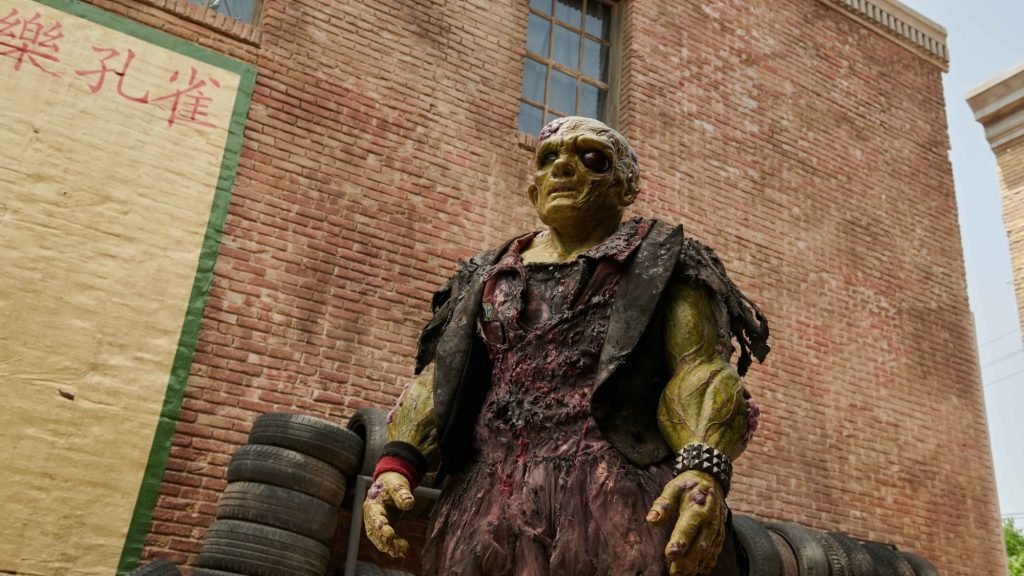
It’s strange to contrast director Mason Blair’s The Toxic Avenger 2025 with its predecessors. It’s far more of an actual movie, for one thing, with decent special effects and recognisable stars like Peter Dinklage, Kevin Bacon and Elijah Wood. It’s got gore and a few raunchy bits but held up against the sleazy originals, it feels positively tame. While it follows a similar arc – bullied Winston Gooze (Dinklage) is transformed into a working-class deformed hero taking on corrupt businessmen – it’s all slicker and less eccentric.
There’s a core sense of sadism to much of the Troma Avenger years that simply doesn’t fly for many viewers in 2025. It’s funny to me that apparently the new Toxic Avenger, which was first released in 2023 but only now hitting cinemas, couldn’t find a distributor because it was “unreleasable” due to violence. Honestly, it’s about 1/10th as offensive and gross as Citizen Toxie. Times change.
Toxic 2025 is still a pretty good time, although ultimately it’s far more conventional and lacks the outsider-art reek of the original movies. In the first four Toxic Avenger movies, everyone is pretty loathsome, even our hero (the incredibly unappealing performance by Mitch Cohen as the nerdy pre-Toxie in the first movie honestly makes you want to root for the bullies). It’s a world that feels tangibly rotten, with cackling moronic extras, gibbering villains and bumbling anti-heroes.
Dinklage’s excellent performance here fills you with actual sympathy for his Toxie, and his relationship with his bullied son (a great Jacob Tremblay) gives the movie some serious heart, while Bacon and Wood have a lot of fun playing the sneering bad guys. There’s righteous vengeance and over-the-top villains (my favourite was the endlessly parkouring thug), but also a bit of a moral about acceptance.
I can’t say I would ever feel the urge to rewatch anything but the first and most recent Toxic Avenger movies, to be honest, but I am oddly captivated by the strange longevity of Toxie’s warped world, where everything is shit, even the superheroes. The original Toxic Avenger series doesn’t have a serious bone in its body, mocking everything from the blind and disabled to the very concept of heroism. The new movie ends with a father bonding with his defiantly different son, on a kind of elegant note of optimism despite all the chaos that came before.
As nice as all that feels – and it doesn’t leave you feeling like you want to wash your hands afterwards like the Troma movies do – it’s also not very Toxic, I guess. Then again, the world is a toxic enough place these days as it is, isn’t it? Perhaps a gentler Toxic Avenger is the hero we need.




















 Nik Dirga