The death of the mass market paperback, the people’s books

The mass market paperback is dying. Publishers Weekly makes it official, as distributors have pretty much ended those once-ubiquitous 4-by-7 inch-sized books sold around America and the world.

People who are buying books still are getting the larger ‘trade paperbacks’ or hardcovers but the budget-friendly wee paperback that used to sell by the millions is now, it seems, obsolete. 

They’ve been fading for a while, I guess – I honestly can’t recall the last new mass market paperback book I saw for sale here in New Zealand other than those cute little perennial Penguin classics, and the last few times I’ve been to the US those comforting little supermarket shelves of Stephen Kings and Lee Childs seem to have been shrinking to nothingness. 

Books themselves aren’t going anywhere, or so I keep telling myself and fervently hoping despite all the evidence humanity’s collective brains are dissolving into a stew of slop and influence. But I’ll miss those paperback stands at the supermarket or the drug store, just like I miss those spinning comic book racks I once lived for. 

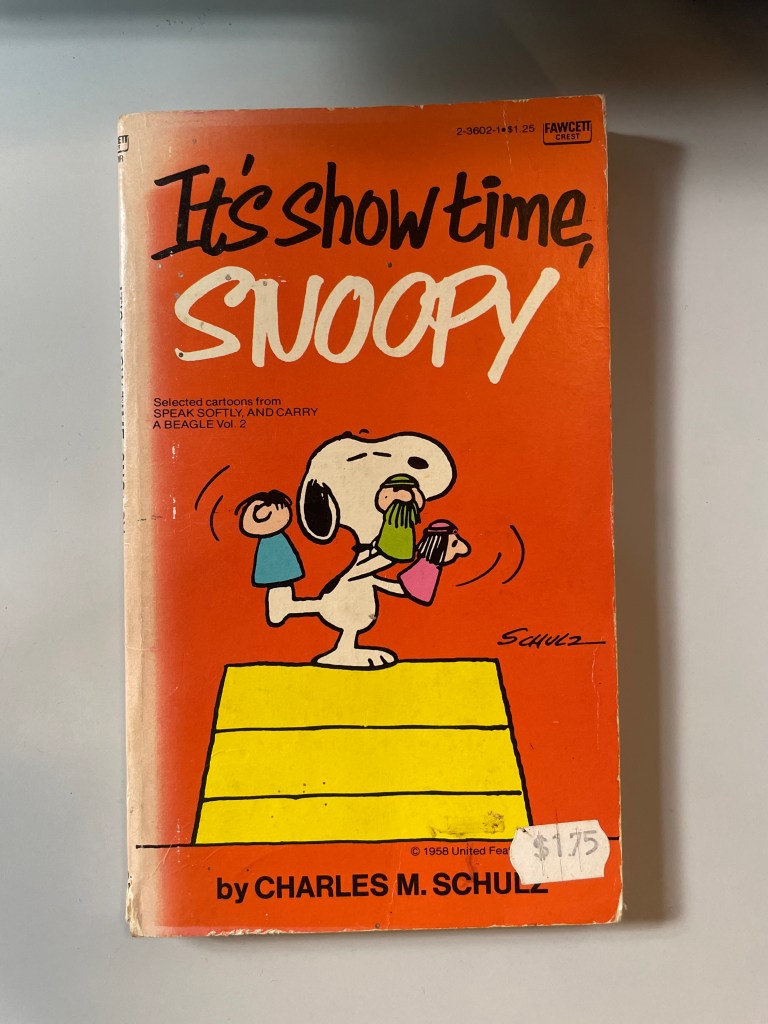
Growing up, the plucky little mass market paperback was my gateway to the wider world of words, starting with the battered second-hand Peanuts and B.C. comic strip collections I’d pick up at the thrift shops. As a book-obsessed young geek with limited money, buying myself a book for a buck or 50 cents was heaven. 

I still recall my first time or two visiting a paperback exchange with my allowance burning a hole in my pocket – inhaling that rich odour of pleasant decay you get from sniffing a vintage paperback and its gradual breakdown of cellulose and lignin.

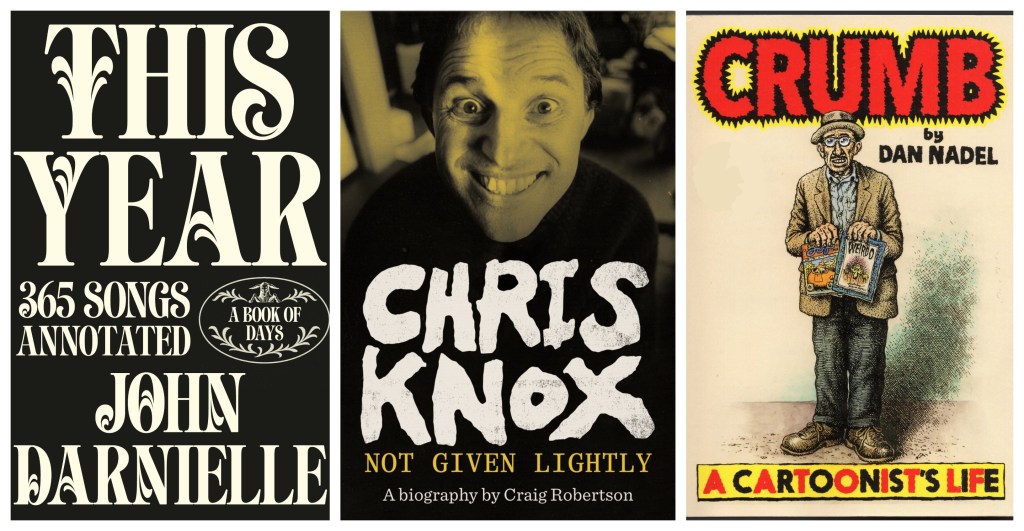
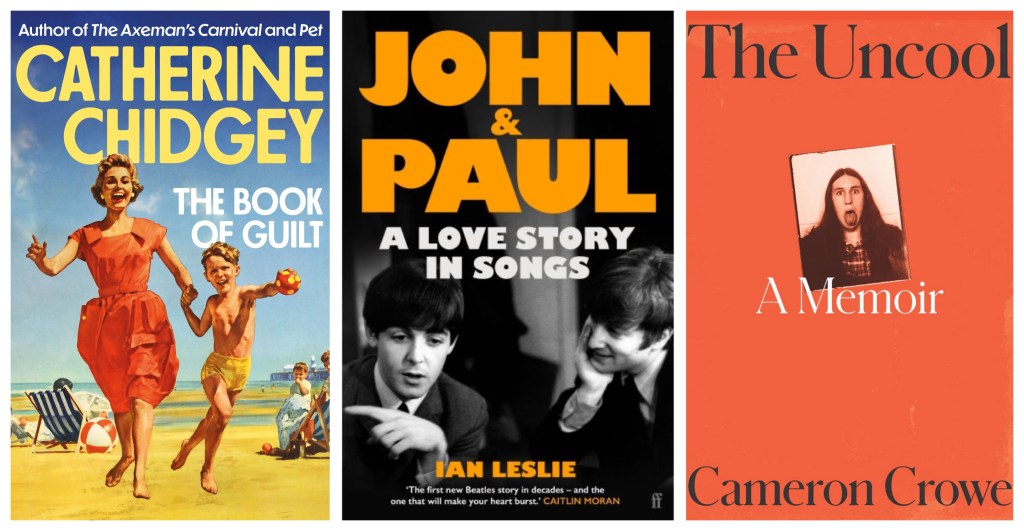
I’ve got nothing against trade paperbacks and hardbacks and the like. All books are great! But those mass market paperbacks felt more egalitarian, covering everything from literary bestsellers to glorious trash. Those small covers weren’t a very big canvas, but in its heyday the mass market paperback was America’s everyday art form, before we all started getting distracted by screens 24-7. Nothing beats a great paperback book cover.

Books that feel like they were made just for me like Paperbacks in Hell and the absolutely amazing pulp fiction histories like Girl Gangs, Biker Boys and Cool Cats or Dangerous Visions And New Worlds celebrate all the weird little horror and sci-fi and crime paperbacks that filled up every spinner rack between Spokane and Miami for decades. Every chunky pocket-sized paperback was a passport to somewhere else. 

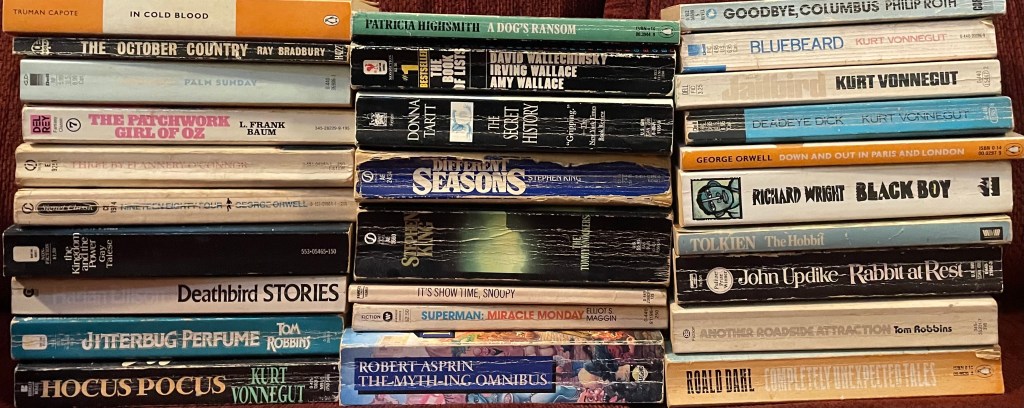
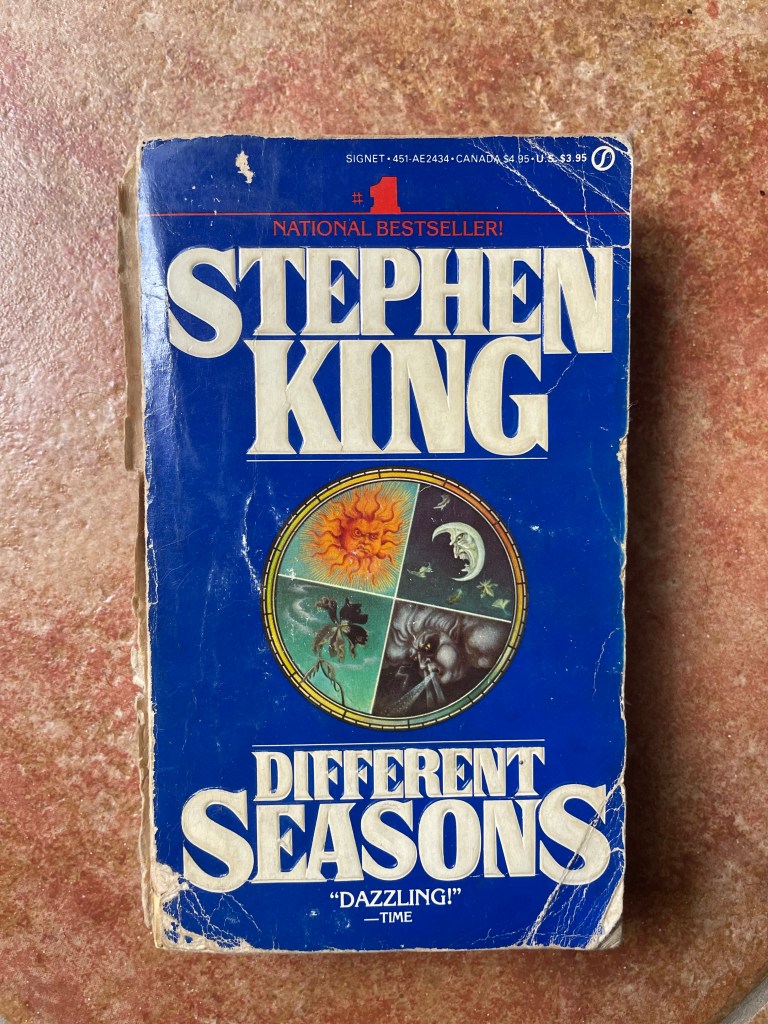
My first Stephen King reads were battered paperbacks handed down from my mom. I’ve still got Different Seasons, its cover barely hanging on, and can picture the thrilling little shocks and heartbreak his classic novellas “Apt Pupil,” “Rita Hayworth and the Shawshank Redemption” and “The Body” broke open in me. Somehow, reading those King books as a teenager, I knew I’d have to make a living with words, even if I’d never be a Stephen King. 

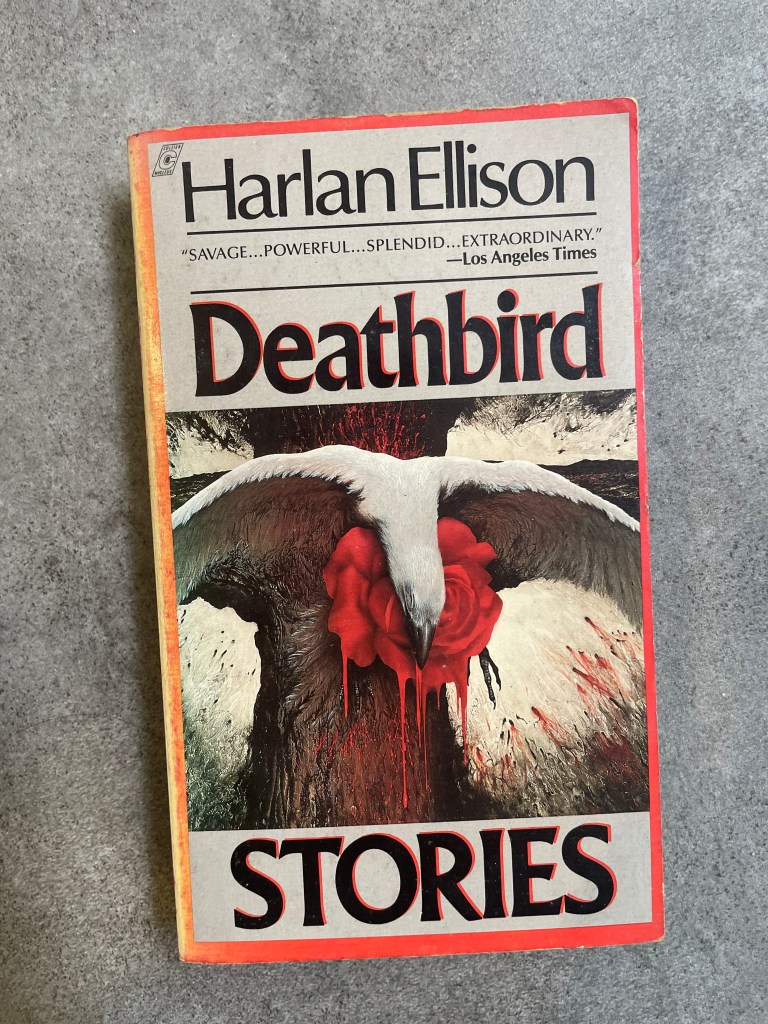
I was first introduced to the irascible, unforgettable Harlan Ellison through books like Deathbird Stories, and even though that stark gorgeous red spine on the paperback has faded a lot over the years, I’ll never get rid of it, or part with the memories of the beautifully apocalyptic title story, which felt like a cosmic symphony cracking open to Young Nik’s brain.

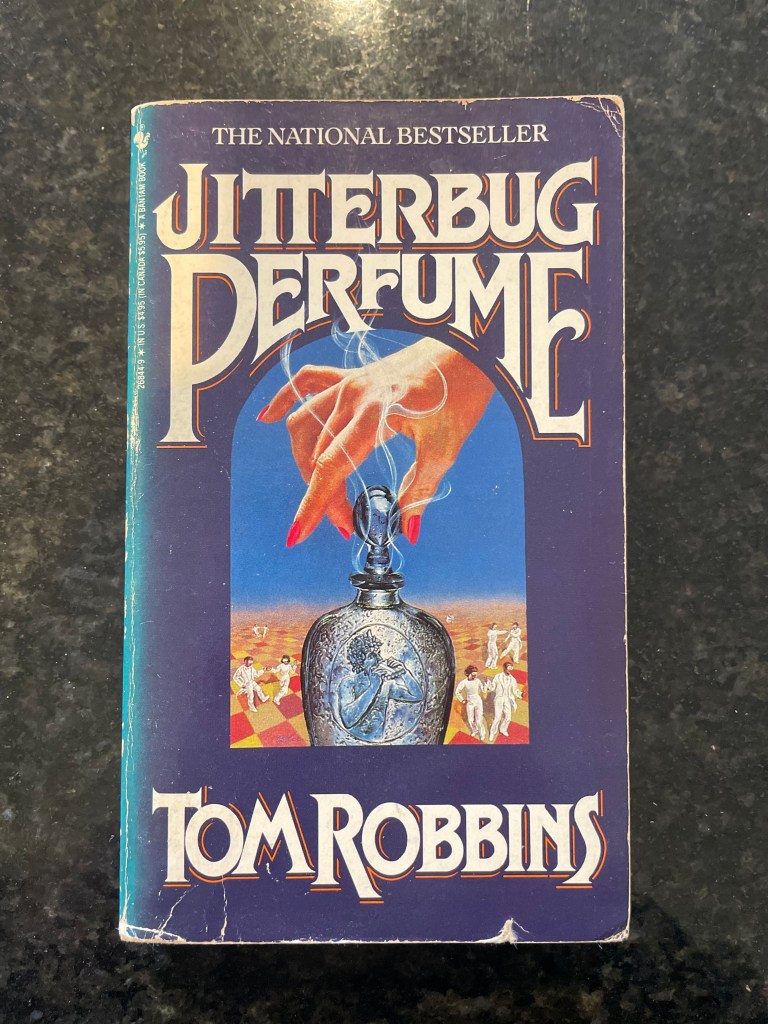
Or Tom Robbins’ delightful Jitterbug Perfume, which was passed around my high school pals like contraband – we were years too late for Robbins’ peak sexy surreal hippie lit-god era, but Perfume and his other books still felt like the counter-culture to me, with his loopy prose wrapping in everything under the sun in gloriously excessive comic romps. 

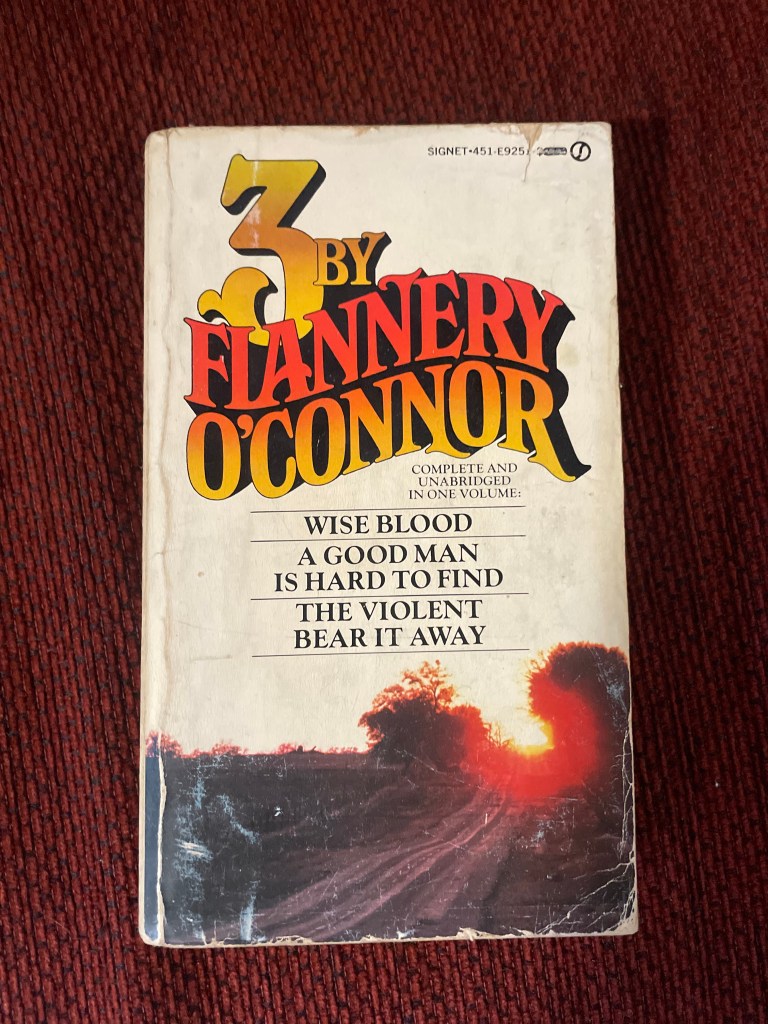
I still remember exactly where I got many of the paperbacks – the collection of Flannery O’Connor novels I picked up during a summer in New York City at one of those outdoor book stands, the hefty Stephen King The Tommyknockers I picked up to read during a long road trip around Oregon and California with my dad toward the end of high school. 

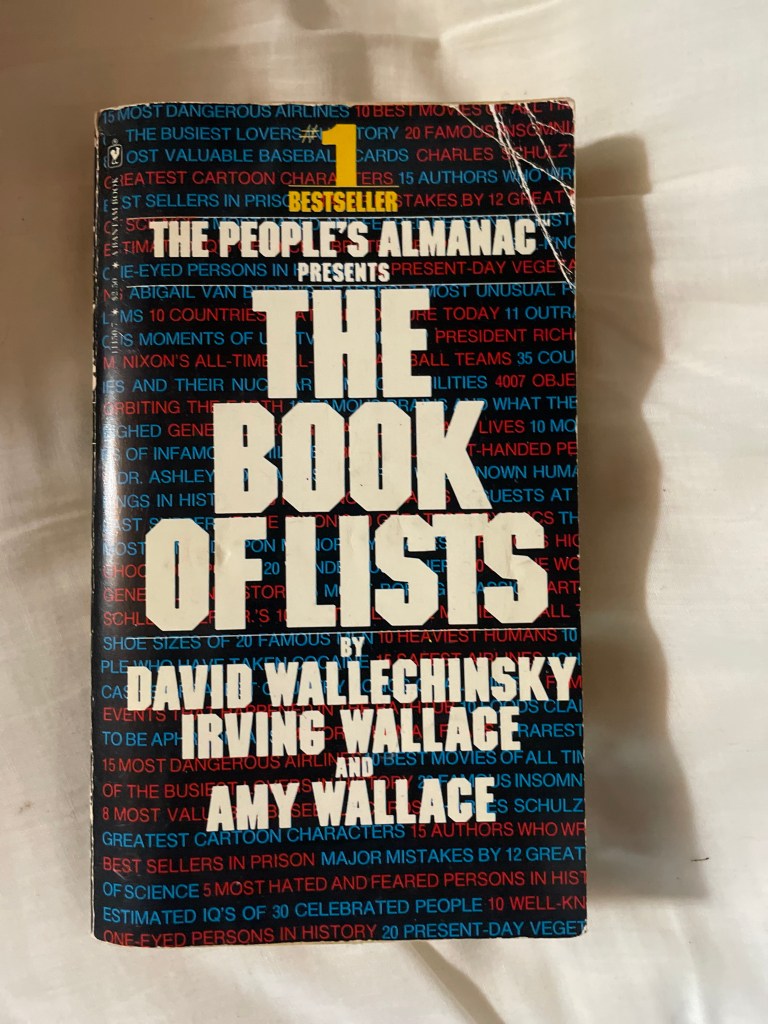
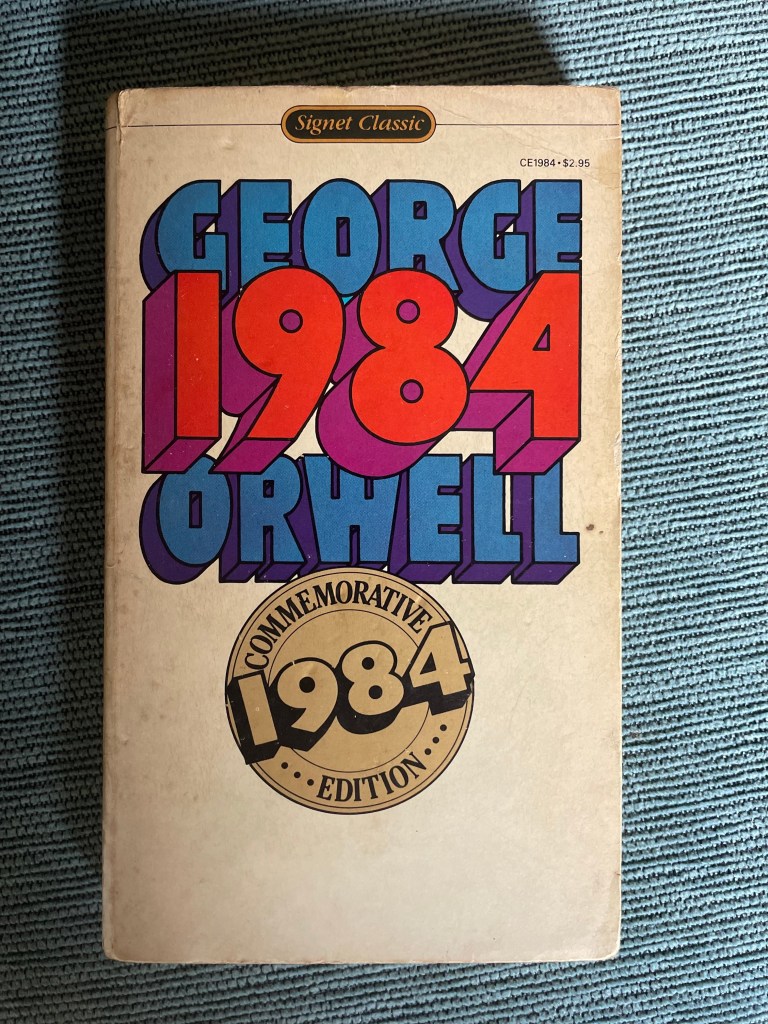
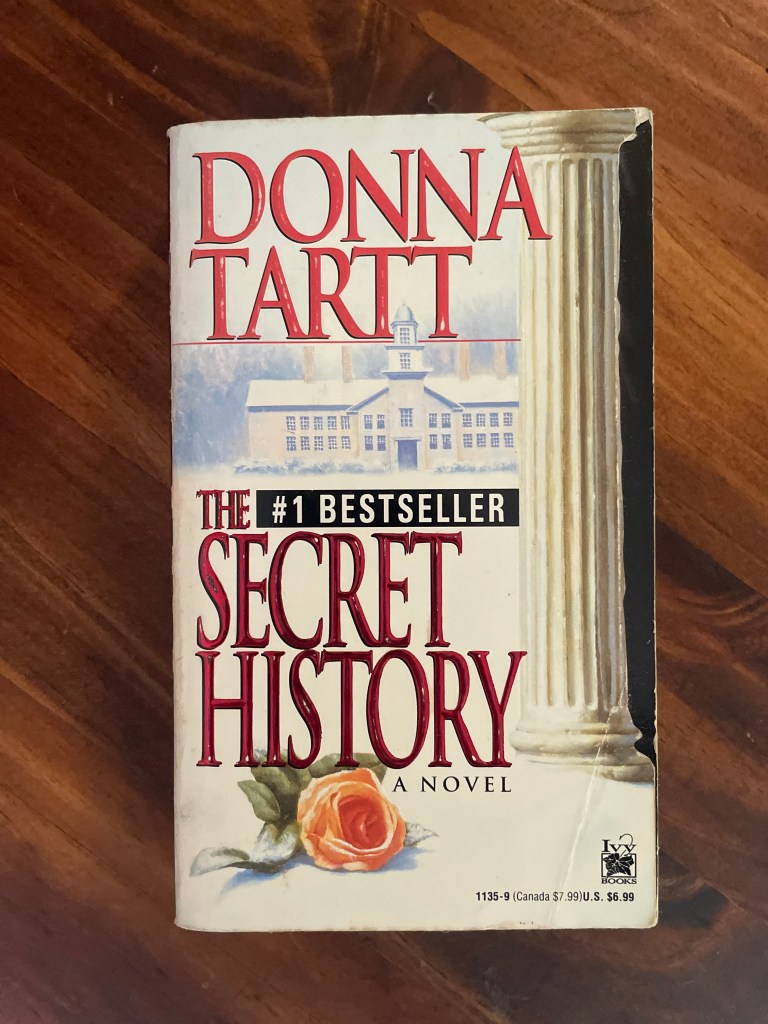
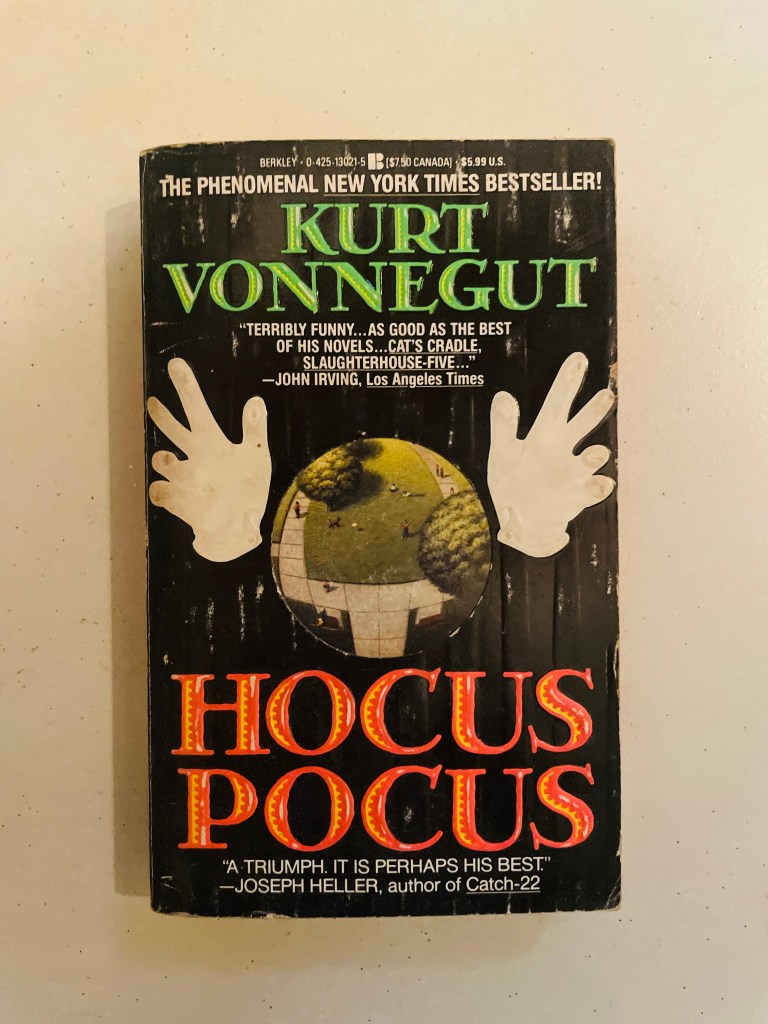
So many others – the extremely battered “1984 anniversary edition” of George Orwell’s 1984 I read when I was 13 which turned me into a lifelong fan; the very first Kurt Vonnegut book I read, Hocus Pocus; the massive pre-internet compendium Book Of Lists which filled me with a Wikipedia’s worth of trivia and knowledge; Robert Asprin’s charmingly hokey “Myth Adventures” series, Donna Tartt’s achingly gorgeous The Secret History which felt like the literary novelisation of my wild intellectual college hopes and dreams. The most recent one on the shelves, Quentin Tarantino’s doggedly nostalgic novelisation of his movie Once Upon A Time In Hollywood, was released in mass market paperback form just like all those hacked-out movie novels of the ‘70s and ‘80s. Before you could log on to stream or even pop in a VHS tape, the Star Wars novelisations gave us a way to get back into the story. I miss that truly interactive experience.

As the wife reminds me, I’ve got too many books, spread about the house in a variety of shelves that I’m constantly refining so I can fit the new books in without too many piles of loose books everywhere. But I’ve still got many of those mass market paperbacks that were building blocks to the book-brain, carried around the world the last 40 years or so. They won’t go anywhere while I’m around. 

Clippings: Collected Journalism 1994-2024: Free sample 5, the grand conclusion!

Here’s the final Clippings Mondays, as I promote my new book of collected journalism and scribblings all through March! I’d sure be obliged if you consider grabbing this hefty compendium of 30 years’ worth of journalism and heck, if you’ve got one, drop a review to help me go viral and become an influence. It’s now available on Amazon as a paperback for a mere US$14.99, or as an e-book download for just US$2.99

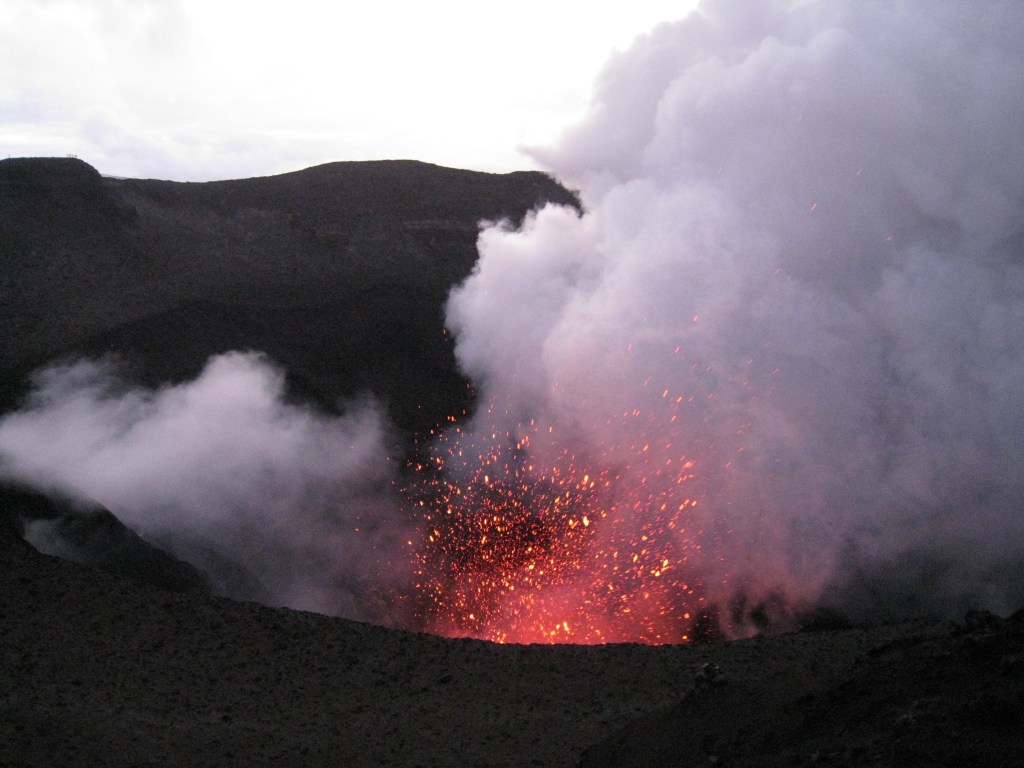
This one comes from a period of time when I wasn’t writing as much journalism and got lost in the labyrinthine mazes of management work. From the “Places” section of ‘Clippings,” I attempted to put down some words to capture one of the most remarkable holiday experiences I’ve ever had, and hopefully I got some of the feeling of what it was like to stand on top of a mountain with lava bouncing around your face!

Standing on the edge of a volcano

October 2014

As you climb up to the rim of a very active volcano, it’s hard not to feel a little bit like a human sacrifice in the making.

Vanuatu’s Mount Yasur is one of the scariest places I’ve ever been.

It’s one of the most accessible volcanos in the world, but it’s still not all that easy to get to Yasur. It’s located on one of Vanuatu’s southernmost islands, Tanna, meaning a jaunt on a small plane from the capital Port Vila and then another two to three hours of bumpy four-wheeling across jungle and ashy volcanic plains.

At 361m, Yasur towers over the low-lying Tanna plains. You see it long before you get there.

Many ni-Vanuatu live here in the shadow of the volcano – groups of teenagers idly walking in its vast shadow like they’re on a trip to the mall.

Climbing up some of New Zealand’s dormant or extinct volcanic cones, it’s easy to forget about the staggering power that they can have. Yasur won’t let you forget that for a moment, burbling and billowing like a bull chained.

The final walk up to the rim is humbling and eerie – you are able to basically get as close to the volcano as you want to, although nobody sane would venture past the rim edge around it. There are pretty much no safety precautions or ropes besides a sign saying “THINK SAFETY.”

It is impossible to capture in photos or even words really the experience of being up there.

The first thing that hits you is the sound, an endless chest-shaking booming and roaring.

My small group stood on the rim and watched the smoke rolling forth, punctuated by sudden and scary rolling booms and lava actually erupting out in “small” bursts. As darkness began to fall, the colour and mood of the volcano changed. Clouds of sulphuric smoke washed over us, the colour changed from a white to orangey glow out of the crater and we were favoured by a massive bang that filled the whole crater in front of us as we neared total darkness. We stood as night fell, on the edge of the infinite.

Tourists have been killed here by volcanic “bombs” of rock hurled into the air. These days close seismic monitoring keeps an eye on volcanic activities, with a scale of 0 (low activity) to 4 (run for your lives). Yasur was at Level 1 when I was there, and access to the crater is closed when it hits Level 2.

Watching the pretty scarlet rubies of molten rock tossed into the air like a Guy Fawkes’ fireworks show, it’s hard to imagine that a single piece of that red-hot debris would kill or cripple a person.

There was a bit of dark comedy in realising when darkness fell us that the half-dozen or so of us up there had no idea where the trail back to the ride in the parking lot was – despite flashlights, the trail wasn’t marked clearly enough to be that visible and it was very dark, with no light other than the volcano crater and a stray beam or two of light in the distance. We kind of gently ambled downwards (firmly away from the glowing crater, as that was the one direction we all knew not to go in), finally managing to find our main trail and the carpark again.

Think safety.

It was very easy to see how you could end up making a horrible mistake and getting lost for days up there. People have died at Yasur by making very bad choices.

There are few places where one can feel so small and so big at the same time than the lip of an active volcano on an island somewhere at the bottom of the world.

Read this piece of adventurous foolhardy behaviour and much more in my new book Clippings: Collected Journalism 1994-2024

X marks the book: Bookmarks I have known 

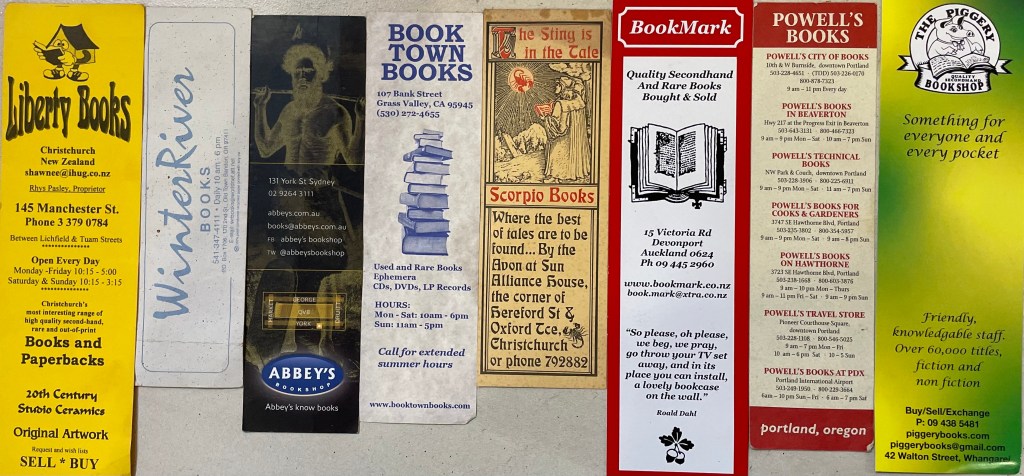
I never really intended to start collecting bookmarks, but somehow I’ve accumulated quite a little stack of them over the years. After a while, you keep some things long enough, I guess they become sentimental by default.

So it is with bookmarks – for a long time, I’ve made a habit of grabbing a free bookmark if a book store offers them on the counter – and really, all the best bookstores do that, because what bibliophile can resist a nifty little souvenir to jam into their freshly opened tomes? 

From Alaska to New York to Oregon to Auckland to Australia, I’ve ended up with quite the burgeoning pile of bookmarks now, even though I know I may never use some of them for their intended purpose. 

But they keep me company – and remind me of book memories, which are some of the best kinds of memories to have.

I keep almost all the bookstores of my life in my mind and have written about them before. Whether it’s familiar neighbourhood haunts or world-famous icons, they stick in my mind: The nameless bookstore somewhere in Montana I stopped at during a cross-country trip where I could barely afford petrol, but of course I bought a few books. The cheap paperback exchange in Oakdale, California that kept me alive that 8 months or so I worked in the most boring town I’ve ever lived in. The cavernous, overstuffed and cobwebby Book Barn south of Christchurch or the hip oasis of City Lights in San Francisco.

Book stores I was just passing through like ones in Bandon, Oregon; Alice Springs, Australia; Christchurch, New Zealand; Fairbanks, Alaska. If you visit a town and don’t try to check out the best local bookstore, are you even a tourist?

Sometimes I can still remember what I bought at them – I know I picked up a William Randolph Hearst biography at the Alaska one, 25 or so years ago, although I often cannot remember what I had for breakfast today. 

The bookmarks I have remind me of spots like immortal Powells Books in Portland Oregon, still probably the best book store on the planet. I have dreams about it to this day.

Quirky ones like a souvenir of a great Salvador Dali art show in Melbourne, or a gift from an appearance by the Dalai Lama in Auckland I somehow ended up at. 

Tokens of long gone stores I used to visit like Black and White Books in Reno or the fine art book speciality shop Parsons in Auckland or Jason Books in Auckland, the last one just shuttered in the last few months. 

They’re just flimsy scraps of paper, mostly, some getting battered enough that I should retire them into a drawer so they don’t crumble to bits entirely. 

But they’re part of my life in books, and that’s not a bad thing to keep hold of. 

Clippings: Collected Journalism 1994-2024 – Free sample 3!

Hey, it’s your weekly reminder I’ve got a new book out! For the release of my new collection of the so-called ‘best’ of 30 years of journalismClippings, every Monday in March I’m spotlighting one of the more than 100 pieces by me gathered up in this hefty tome. I hope you’ll consider grabbing a copy, now available on Amazon as a paperback for a mere US$14.99, or as an e-book download for just US$2.99

This one actually comes from right here on this here website back in the long-ago days of 2021. It’s a sample of the ‘Criticism’ section of the book which gathers up piles of pop culture ruminations I’ve done over the years. Inexplicably, this post about Yoko Ono remains one of the most popular I’ve ever done. I’d flatter myself it’s about the quality of my prose, but more likely because I put Yoko Ono and ‘sorry’ in the headline and it’s hitting some Google sweet spot. Sorry, Yoko haters, but this isn’t a piece about Yoko Ono being sorry she broke up the Beatles!

Why I’m sorry I ever laughed at Yoko Ono

Read it right here!

You’ll find this piece and far, far more collecting 30 years of journalism in my new book Clippings: Collected Journalism 1994-2024. Order it today, baby needs a new pair of shoes!

Clippings: Collected Journalism 1994-2024 – Free sample 2!

In celebration of my new collection of the so-called ‘best’ of 30 years of journalismClippings, each Monday in March I’m spotlighting one of the more than 100 pieces by me gathered up in this hefty tome. I hope you’ll consider grabbing a copy, now available on Amazon as a paperback for a mere US$14.99, or as an e-book download for just US$2.99

I randomly divided this collection up by themes – Profiles, Places, Criticism and the like, and then there was a random selection of more goofy pieces I figured I’d just file under “humour.” This recollection of my very first job in journalism written while I was working at Lake Tahoe is, as best as I can recall, almost entirely true.

Scenes from the route

North Shore Truckee ACTION, September 2, 1998

I have edited newspapers and I have written for newspapers, but my first “real” job in this world was to deliver them.

I was a squirrelly, zit-faced and longhaired 13 going on 14, and I did it for about a year, delivering the Grass Valley Union from door to door in a square mile area several blocks from my home.

The Union is an afternoon paper, and so each day after school I would return home to find a bundle of Unions in our driveway, tightly bound. After an afternoon snack I would kneel busily on our dark garage’s concrete floor, taking my fifty or so papers and wrapping them with rubber bands. If it rained, you had to put them in orange plastic bags first.

The rubber bands sometimes snap if you rush things, and they twang off about the room spastically. Once one smacked me right in the cheek, raising a really embarrassing welt.

Your fingertips become black with ink as the headlines leave a bit of themselves on your skin. The day’s happenings are compressed into a small, dense cylinder of pulp that you lift and hurl repeatedly, trying to achieve a passable imitation of grace with each throw.

It was then, likely, that I began to stumble down the career path I follow tenaciously to this day. I was immersed in the smell of the hot paper, sometimes still steaming with the heat of the press, fascinated with the way the ink can cling to you.

I would ride down my route on my battered yellow bike, the newspaper bag carefully balanced on the handlebars, getting lighter with each block.

It was my first real job, and no one forgets the way that is – the strange freedom I felt riding my bike in the late afternoon on days that always seem cloudy in hindsight, the wind rustling the newspapers in my bag. I delivered news of President Reagan and “Peanuts” cartoons and what was on sale at Lucky’s, and I felt a part of some great system that pulsed beneath my 13- year-old world, a system I was just then beginning to perceive dimly.

I delivered newspapers and took inventory of my customers, the yards with plastic toys and broken bicycles in them, the houses with immaculate hedges and shrubbery whose porches I always aimed for with care.

The most difficult part of being a Union paperboy was collection time. At the end of each month I would go door to door on my route, getting $5.50 per customer per month to ensure they kept receiving their daily dose of news.

Portrait of a young hustler, mid-1980s

It was here you begin to encounter the world beyond lifting and hurling newspapers, and these days I’d dread somewhat. Demanding money from strangers was intimidating – looking briefly inside the anonymous homes I threw papers at, the couches where they read their Union each day.

I rapidly began to learn the language of excuses and rationale used so well in the grownup world.

“I paid you last month, boy, what are you tryin’ to pull?” one beefy guy who always wore too-small t-shirts would say to me every time I came by. And every time I would explain to him that he had to pay every month, he would mutter about what a rip-off it was, and he would finally pull five greasy dollars and fifty cents out of his pocket.

I learned how people wheel and deal, and I learned how people live without luck.

There was a cat woman. Every town has the cat woman, the twisted old lady who lives in a shack with a hundred stray cats. This woman’s house was crumbling and rotten, about to slide down an embankment onto the freeway overpass below. She had no teeth and no hair, and always wore a filthy Oakland A’s baseball cap. She would never have her $5.50 at the end of the month, and would gummily offer me excuses as ten of her bedraggled cats meowed and hissed around her legs. The cat lady had only one eye.

The cat woman would occasionally leave a folded dollar bill for me in her mailbox, toward paying off her slowly rising newspaper debt. I did not know what she did with her Union each day, if she read it or merely used it to line her floors inside what was surely one giant litter box.

And then there was “the towel lady,” as she would be enshrined forever in my pubescent memory. Each and every month when I would come by to get my $5.50, this highly attractive young lady, in her mid-twenties or so I’d imagine, would answer the door wearing a pink towel.

Just a pink towel.

You can imagine the fireworks this would set off in your typical 13- year-old paperboy.

Each month this woman would come to the door wearing just her towel, and she would give me my five-fifty and smile and I would melt into a giddy puddle of goo right on her doorstep.

I never could figure it out. If the towel lady wore just a towel once, I’d understand – she just got out of the shower or something, right? But each month, November or May or August, the towel lady would answer the door in her towel, and I would mature just a little bit faster.

The towel lady probably kept me doing the paper route a few months longer than I would have done – I was entering high school soon, and paper routes seemed too grade-school for my elitist brain then.

But I labored on with the route a few months into my freshman year of high school, always looking hopefully forward to my monthly visit to the towel lady.

The odds of gravity and physics were with me, I knew. That towel had to fall off eventually.

It never did, of course, except in my dreams.

This ink-stained confession and much more can be found in my new book Clippings: Collected Journalism 1994-2024

Clippings: Collected Journalism 1994-2024 – Free sample 1!

Hey, did I tell you I made a book? But did I tell you ten times yet?

In celebration of my new collection of the so-called ‘best’ of 30 years of journalism, Clippings, each Monday throughout March I’ll spotlight one of the more than 100 essays in this hefty tome. I hope you’ll consider grabbing a copy, now available on Amazon as a paperback for a mere US$14.99, or as an e-book download for just US$2.99

It was interesting combing through piles of yellowing clippings and old computer files and trying to figure out what to include in a survey of my so-called career. But this profile from when I worked in Oregon circa 2002-2006 was a definite. As a kid, I always wanted to be a zookeeper, until one day I realised that would involve a lot of blood and animal feces. But getting to shadow an actual wildlife park vet around for a day was pretty darned cool, and one of my favourite job assignments. 

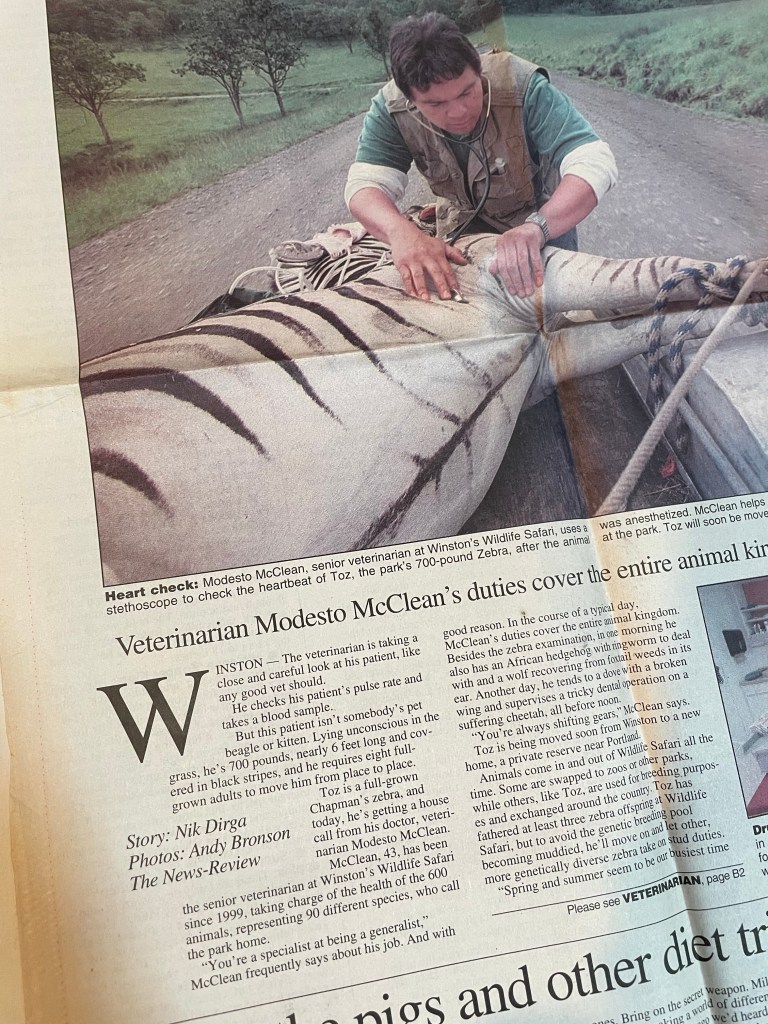
The zebra veterinarian 

The Roseburg, Oregon News-Review, May 2002 

WINSTON, Oregon — The veterinarian is taking a close and careful look at his patient, like any good vet should. 

He checks his patient’s pulse rate and takes a blood sample. 

But this patient isn’t somebody’s pet beagle or kitten. Lying unconscious in the grass, he’s 700 pounds, nearly 6 feet long and covered in black stripes, and he requires eight full-grown adults to move him from place to place. 

Toz is a full-grown Chapman’s zebra, and today, he’s getting a house call from his doctor, veterinarian Modesto McClean. 

McClean, 43, has been the senior veterinarian at Winston’s Wildlife Safari since 1999, taking charge of the health of 600 animals — representing 90 different species — who call the park home. 

“You’re a specialist at being a generalist,” McClean frequently says about his job. 

And with good reason. 

In the course of a typical day, McClean’s duties cover the entire animal kingdom. Besides the zebra examination, on this morning he also has an African hedgehog with ringworm to deal with and a wolf recovering from foxtail weeds in its ear. Another day, he tends to a dove with a broken wing and supervises a tricky dental operation on a suffering cheetah, all before noon. 

“You’re always shifting gears,” McClean says. 

Toz is being moved soon from Winston to a new home, a private reserve near Portland. 

Animals come in and out of Wildlife Safari all the time. Some are swapped to zoos or other parks, while others, like Toz, are used for breeding purposes and exchanged around the country. Toz has fathered at least three zebra offspring at Wildlife Safari, but to avoid the genetic breeding pool becoming muddied, he’ll move on and let other, more genetically diverse zebra take on stud duties. 

“Spring and summer seem to be our busiest time (for moves),” said Deb Ryan, Wildlife Safari’s assistant curator. “Within the next month we’ll probably move 10 animals out, and probably move five to eight in.” 

Toz has to be examined for his health and for a lingering lame leg prior to the move. Bringing the zebra in for an examination isn’t as simple as putting him into a pet carrier. Most wild animals must be sedated before they can be safely examined or treated. 

“The toughest part of zoo medicine is the anesthesia,” McClean said. 

“Zebras are very aggressive,” Ryan added. A variety of drugs are used as tranquilizers, some of which are highly dangerous if not handled carefully. 

“A few drops more and I’m going to kill the animal,” McClean notes as he carefully mixes the solutions together into a dart. It takes a steady hand when dealing with the drugs. They can be administered with a dart pistol, a blowgun or an air gun, depending on the size of the animal and the thickness of their hide. 

A zebra has tough skin — “I say zebras are like horses on steroids,” said McClean — so a rifle is used to administer the knockout punch today. 

Every animal must be handled differently, McClean says. Originally from Southern California, his career has taken him to treat animals he might never have imagined he would. He’s worked with dolphins and chimpanzees, and even anesthetized a towering giraffe — “probably the hardest anesthesia in all of medicine,” he says. 

McClean first came to Wildlife Safari in 1995, where he trained under the previous park veterinarian. He was educated at California Polytechnic State University in San Luis Obispo and Oklahoma State in veterinary medicine, and also served an internship in primate medicine and surgery at Yale University. 

He has also consulted in private veterinary practice for several years. McClean came back to Wildlife Safari in 1999 when he became the park’s senior veterinarian. 

Because the animals mostly roam free at Wildlife Safari, McClean and park keepers have become experts at what they call “binocular diagnosis,” where they carefully observe the animals to detect any sign of a possible medical problem. 

“I don’t have time to go every day to check every animal, so I rely on the keepers too,” McClean says. 

Toz the zebra has been moved out of the park’s general population into a small, half-acre enclosure to prepare him for his move. It also makes it easier for him to be drugged, because Wildlife Safari staff won’t have to chase him down. 

“Some people think hoof stock aren’t all that smart, but they know what a gun is,” McClean says as he watches Toz nervously gallop away from him. 

The doctor raises the rifle, takes careful aim at the retreating zebra, and fires the dart, which brings him to the ground in under five minutes. 

Once McClean is sure he’s fully unconscious, the staff gets to work, popping in an intravenous tube dispensing solution, as well as injections of atropine to keep his heart rate up. A monitor is hooked up to his tongue to check his vital functions, and an oxygen tube is placed in his nostrils. McClean checks out the zebra’s leg, which has been treated previously for weak tendons, and finds that his hoof is suffering some obstructions which he removes. 

While Toz is out, a pint of blood is also taken from him. The blood will be checked and then frozen, kept in store for possible transfusions. 

“This blood someday will save another small zebra,” McClean said. 

Any small checkups that can be done on the zebra are also taken care of. One park employee uses a tool belt set of pliers to scrape a buildup of tartar off the zebra’s large teeth, each the size of a man’s thumb. 

It takes eight park employees to transport the drugged Toz onto an open trailer for his move across the park. He is lifted onto a rubber mat, as one employee holds his IV and McClean monitors his vital signs. Toz is taken to a holding stall where he will live and be watched closely for a few weeks before his trip to Portland. 

The entire procedure, from the dart being fired to Toz waking up in his new quarters, has taken just under an hour. 

“I’m going to rate it as for a zebra, an excellent anesthesia,” McClean says. 

The rest of this delightful yarn and much more can be found in my new book Clippings: Collected Journalism 1994-2024

Hello, I wrote a book, and it’s only taken me 30 years

Greetings! I wrote a book. Well, I’ve actually been writing it for about 30 years, believe it or not. Introducing Clippings: Collected Journalism 1994-2024, a hefty compendium of my columns, essays, feature profiles and much more over the course of my so-called career!

I’ve written an awful lot of words over the years, but I wanted to put together something that was a little more permanent than a bunch of yellowing newspapers and broken website links. Clippings is, much like many journalism careers, an eclectic mix, from long features to blog posts to deeply personal essays to in-depth pop culture criticism, spanning from Mississippi to California to New York City to New Zealand. 

From interviewing governors and rock stars to climbing active volcanos and adjusting to life on the other side of the world, this book is me saying, “Hey, I was here, and this is some of what I did along the way.” Doesn’t everyone want to say that at some point about their life’s work, whatever it is? Throw it all together, and it’s probably as close to a sort of autobiography as I’ll ever get.

It’s got many of my works from long-ago newspapers and magazines, websites and even some fine pieces from this very website in a handsome curated form sure to be adored by your family for generations.

I hope you’ll consider grabbing a copy, now available on Amazon as a paperback for a mere US$14.99, or as an e-book download for just US$2.99! 

Get it here: Clippings: Collected Journalism 1994-2024 by Nik Dirga 

Behold, my top 10 pop culture moments of 2024!

So I’ll join the chorus – 2024 really did kind of suck, eh? For me, by far, the biggest blow was the death of my father in May, and I guess nothing has truly felt the same since. There’s been a lot of lousy things happening in the wider world as well, of course, and the general sense that everything is just careening out of control in the cosmos.

Pop culture – be it book, comics, movies or music – is one of the few saving graces we’re left with when nothing else makes sense. Thus, in a burst of optimism, here’s my 10 favourite culture moments of the year:

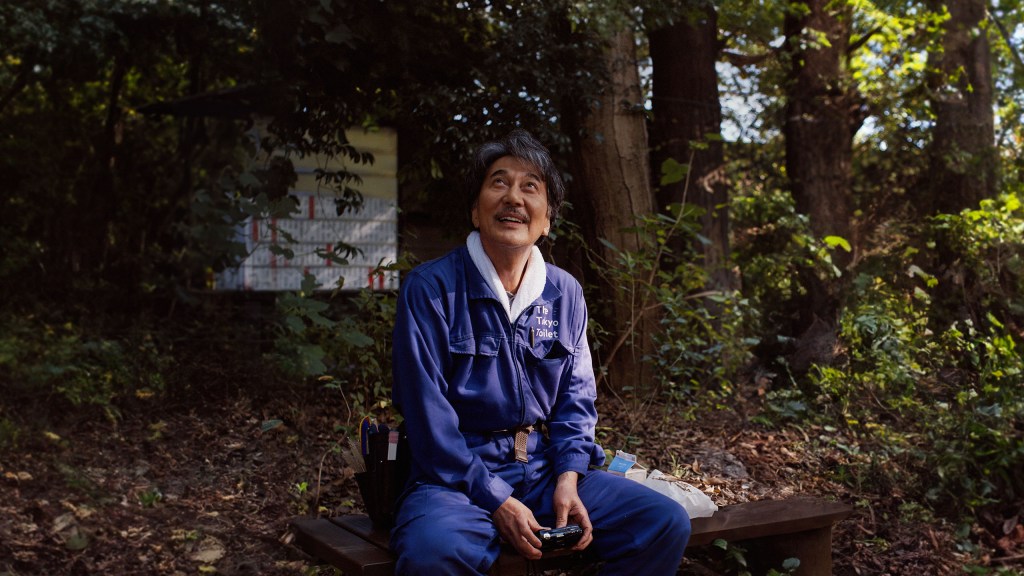
Now is now – Perfect Days by Wim Wenders: An awful lot of the ‘best movies of 2024’ haven’t screened in New Zealand yet, and a lot of the 2024 movies I have seen have been hit or miss. But of the new-ish films I saw this year, the beautiful tone poem Perfect Days by Wim Wenders about a humble Japanese toilet cleaner lingers the most. It’s a movie about taking the pauses, about accepting what happens and enjoying every sandwich. And it felt like the most human thing I saw on a screen this year. (Runner-up nods for movies seen in 2024: the supremely creepy Longlegs which was right in my wheelhouse, heartfelt and hilarious The Holdovers [technically a 2023 holdover itself], the utterly unclassifiable no-budget slapstick Hundreds of Beavers, and Furiosa, which confirms George Miller’s Mad Max is the only extended cinematic universe which really matters.) 

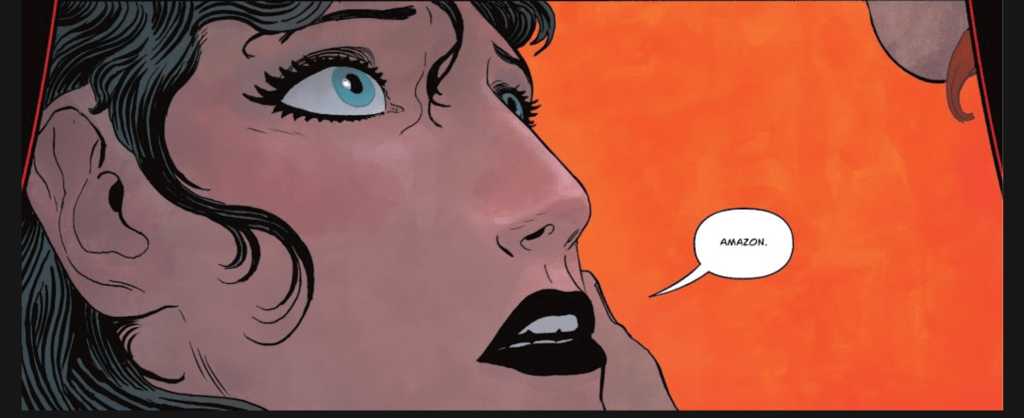
Absolute ultimate totally comics, dude: I’m on the record that I’m not generally a fan of the endless reinventions and multiversal takes on superheroes that are a sign of comics eating themselves. Ohhh, a dark alternate Superman? How daring! Yet… I’ve been generally rather enjoying DC’s latest “Absolute” line of comics starring the hyperbolic Absolute Batman, Absolute Superman and Absolute Wonder Woman. Yes, yes, it’s yet another reimagining but the actual comics have been pretty … good? Absolute Wonder Woman is the gem so far with stunning art and myth-inspired epic storytelling, and Absolute Batman not far behind with its mysterious ultra-jacked Bruce Wayne stripped of money and privilege. I don’t know how long I’ll stick with them – these “new universe” stories far too often end up tangled in the continuity of existing comics and giant crossovers and the like, but so far, it’s a pretty electric and novel take on some very well known heroes. 

You’re never too old to make rock music: I’m old and getting older, but a lot of the guys I grew up listening to are somehow even older. Massive applause, then, for near-geezers like Nick Cave and Robert Smith staying true to themselves – The Cure’s comeback Songs From The Lost World is just as moody and epic as any classic Cure album, touched even more by the unsparing grip of mortality. At 65 (!!) Smith still sounds exactly like he always has, and that’s a wonderful thing. Meanwhile, Nick Cave’s slow turn into a kind of confessional high priest continued with the excellent Bad Seeds album Wild God. At 67, Cave has suffered unbearable loss in his life and will always seem heroic for unsparingly turning it into such cathartic art. In contrast, The White Stripes’ Jack White is a mere child at age 49, but he blew me away just a few weeks ago in Auckland and his No Name feels like the rock album of the year to me. Not bad for a bunch of old guys who are all getting older. 

Just asking questions – the books of Percival Everett: Percival Everett is one of those cult authors one keeps hearing about and meaning to read, but his astonishing Huckleberry Finn reinvention James truly broke him through into the mainstream this year. Every Everett book I’ve read this year is quite different and excellent in its own way – the existential spy satire Doctor No, the haunting Mississippi lynching black comedy of The Trees, the wry literary racial spoof Erasure (which was also turned into an excellent movie, American Fiction). Everett doesn’t fit any easy box but I’ve been so impressed by his eclectic invention that I’ll be happily catching up on his prolific bibliography well into 2025. 

Sticking the landing on the small screen: I can’t keep up with all the streaming things these days, but bidding farewell to a few longtime favourites reminded me of how tricky it is to end things on the perfect note, and how good it feels when it does. These favourites of mine all said goodbye in a pretty perfect fashion – Superman and Lois with perhaps the most bittersweet and beautiful ending to a superhero screen adventure yet, the kooky What We Do In The Shadows managing to make its insane vampire spin-off parody far funnier and longer lasting than seemed possible saying goodbye after 6 seasons, Larry David at long last ending Curb Your Enthusiasm after 20+ years with a perfectly wonderful lack of remorse. (Bonus point to the much-missed Our Flag Means Death New Zealand-filmed gay pirate comedy, which ended its second season in ’23 but we didn’t know for sure it was gone for good until this year.) 

Charles Burns still haunts us all: Charles Burns is the patron saint comics artist of Gen-X, and his stark tales of teenage alienation have been blowing me away since his Curse of the Molemen days in the 1980s. As he ages, Burns has constantly kept to the same tight themes he always has – teenage alienation, romantic yearning and spooky surreal horror – but gosh, does he do them well. This year’s Final Cut is one of his finest works, ostensibly about a group of teenagers shooting a no-budget movie, but it’s also about love, choice and regret and told with his unforgettable intense style. 

The films of Samuel Fuller: Like I said, I’m behind on the newer films of 2024. But film history stretches back over a century now, and there’s always time to fill in the gaps. A big hole in my cinema knowledge was the pulpy movies of Samuel Fuller. I can’t believe I hadn’t seen fierce noir gems like Pickup On South Street, Naked Kiss, Shock Corridor and Park Row until the past year, and I keep discovering new Fuller to catch up on. His bold movies bucked convention and still feel starkly modern decades on. Bonus point: His memoir, A Third Face, is an absolutely great chronicle of Fuller’s days as a spunky young New York journalist, harrowing World War II heroics and his dive into Hollywood. 

Cindy Lee’s Diamond Jubilee: There’s precious little mystery in pop culture these days, so every little bit of it counts. Cindy Lee is a cross-dressing Canadian musician named Patrick Flegel whose drifting, sultry songs have really gotten into my brain. Not on Spotify, not on Tidal, the sprawling double album Diamond Jubilee is only available as a single file on YouTube and soon, a physical release. Anointed by the hipsters, it’s got the gorgeous low-fi wistfulness of early Guided By Voices meets Roy Orbison, like the soundtrack to the most lonesome-hearted David Lynch movie that never was. It’s two hours of mysterious bliss and while its stealth release style might be a bit of a marketing technique there’s enough talent in Diamond Jubilee to make it feel like far more than a stunt. Diamond Lee feels like 2024 in musical form to me.

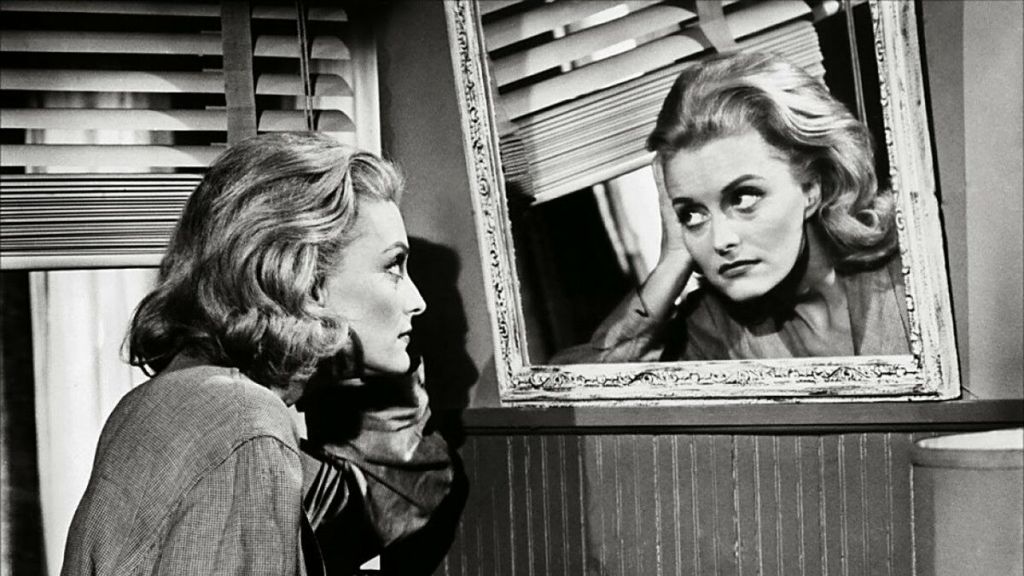
The Mary Tyler Moore Show, because love is really all around: Yes, I’m the guy who’s picking a 50-year-old sitcom as one of his favourite pop culture moments of 2024. But I picked up a cheap DVD of the complete series on a trip to Reno earlier this year, and it reminded me exactly why I love this classic sitcom so much. It’s got Moore at her loveable screwball peak, Ed Asner is one of the best editors of all time, Ted Knight’s pompous doofus act which never gets old, in a seven-season run of absurdity, crack timing, sitcom pratfalls and journalistic dilemmas that still stands up with the best of ‘peak TV’. Sometimes all you want out of life is a 20-minute playlet of banter and Lou Grant and Ted Baxter, and in this weird, wicked year, bingeing The Mary Tyler Moore Show made me feel like we might just make it after all. 

Selfishly, the Year of the Amoeba: Yeah, I’m putting myself on the list – not because I think I’m the best small press comics geek out there by any means but because I ended up putting out a heck of a lot of Amoeba Adventures stuff this year and it gave me a peculiar kind of inner satisfaction that nothing else really matches. I published two ‘regular’ issues of Amoeba Adventures this year, getting up to #35 of the series I somehow started way the hell back in 1990 (!!!), and I finally decided to embrace Amazon’s print on demand as a cost-effective way to bring my comics back to a wider world (yeah, I know, evil empire, etc, but this KDP stuff has been very good for my needs). A big old 350-page collection of The Best Of Amoeba Adventures that I started over the last holidays came out in February and presents my favourites of my 1990s work, while the smaller Amoeba Adventures: The Warmth Of The Sun book presents the first six of the “new” Amoeba Adventures stories I started telling in 2020. I’m not going to get rich doing this stuff, I accepted long ago, but I’m really grateful to get this stuff out in the world and out of the dusty small press past, and hey, if you like it, I’m just grateful I got the chance to tell you a story. 

Next: My top pop culture disappointments of the year!

I’m still bummed we don’t get any more Adrian Mole

For a little while there, I was sure I was Adrian Mole. I got a copy of The Secret Diary of Adrian Mole, Aged 13 3/4 from my parents after they took a trip to the UK, and it was one of the best gifts I ever got. 

I started reading Sue Townsend’s Adrian Mole books when I was about 13, the same age as the fictional Adrian, and while I wasn’t quite as awkward and pretentious I was probably a close second. Adrian’s chatty diaries spoke to me, of his dreams of literary greatness, quickly rising and falling passions and his unspeakable social awkwardness. While I was a kid in sunny middle class California and he was a battler in Thatcher’s grey Britain, I felt a kinship with Adrian.

Adrian didn’t become a literary superstar, but over the course of several books he’d become a chef, a TV personality, an activist, a bookstore worker and more, surrounded by a cast including his dysfunctional parents, his strange romantic pairings and eventually his children, and always, the love of his life Pandora, his teenage crush grown up into a headline-grabbing Labour MP. 

Townsend followed Adrian well into the next century in titles like Adrian Mole: The Cappuccino Years and Adrian Mole And The Weapons of Mass Destruction. The satire got broader on topics like the Gulf War and the books generally got a bit less realistic compared to the early teenage angst years, but they were still fun, with Adrian’s distinct combination of snobbery and naivete always amusing. 

Townsend, long in failing health, died in 2014. The series came to a halt with Adrian Mole: The Prostrate Years in 2009, as Adrian’s marriage breaks up and he discovers he has cancer. 

It ends on an optimistic enough note, with Pandora once again popping into his life and a reminder in its final pages that no matter what, life keeps moving along: “Diary, my first thought that I couldn’t possibly be a grandfather, I was only forty years old. My second thought was that I wanted to live long enough to see this child grow up. I had a lot to teach it.” 

There were rumours Townsend was working on another book but 10 years after her death nothing has ever been published. I miss Adrian Mole a lot. 

There’s something about following a character over the span of a lifetime that makes a book really come alive. I would have liked to see Adrian continue to grow old and cranky and what he would have had to say about Brexit, Trump, Covid and social media. (I’m quite certain he would have fallen for every conspiracy theory there is, actually.) The Secret Diary of Adrian Mole, aged 57 3/4? I’d love to see it. 

A book series that ends too soon feels a bit like an entire world has been lost. 

The late Octavia Butler was one of our most fascinating sci-fi writers and futurists before her untimely death at just 58. Her “Earthseed” series – Parable of the Sower and Parable of the Talents – follows a young Black empathic woman in an America that is rapidly falling to pieces. Written in the 1990s, it’s gained a new audience in recent years because so much of it seems uncannily prescient  – beginning in 2024, it features climate change disruptions, violent inequality, and a presidential candidate whose slogan is “Make America Great Again” (!!!). The two books are excellent reading, and a third book, “Parable of the Trickster,” would have taken the series into the stars, but got mired in writer’s block before Butler died. The whole Earthseed series was building toward leaving Earth, so it’s a real loss we never got to see what Butler had in mind. 

I worry about projects where the driving force is aging as they strive to complete it, like Robert A Caro’s magnificent epic biography of President Lyndon B. Johnson, which is four volumes and 3000 pages in and one of the finest biographies I’ve ever read. Caro has been working on the fifth and final volume covering the final decade of LBJ’s life ever since the last one came out in 2012, but, he’s also now 88 years old. It seems selfish to root for someone to stay with us so you can read a book, but that’s how good Caro’s series is. I’m sure even if Mr Caro does pass away, as we all must in the end, the final LBJ book will come out in some form or another, but us Caro-fans are still a bit nervous. 

And unlike friend Bob, I have to admit I’ve kind of long given up on George RR Martin ever finishing the Song Of Ice and Fire series, going on 13 years now since the last book, long enough that the entire TV series adapting it came and went. The dragons were cool, but I have to admit Adrian Mole always spoke to me a lot more than Tyrion Lannister. 

There’s many a movie or music project that have ended up in “development hell” and never eventuated but it’s not quite the same as a book series. Unfinished book series seem almost like a personal loss, perhaps because you invest more of yourself in thousands of words following beloved characters, and leaving the characters or subjects hanging just reeks so strongly of the endless void.

An empty page is both promising and terrifying, and it’s a loss when you know there was surely more to come, if only things had been a bit different.

Meanwhile, elsewhere on the internet…

Monty Python voice: I’m not dead!

Regular posting will resume soon after the difficulties of the past six weeks or so. In the meantime, here’s a few things to catch up with by or about me that have been circulating out there elsewhere on the internet:

As part of RNZ‘s occasional “What To Watch” series highlighting the quirky and obscure corners of the streaming cinematic universe, I wrote up a little review of the extremely weird offbeat Korean comedy Chicken Nugget: What To Watch – Chicken Nugget

Over at the New Zealand Listener magazine, I did a review of Everest, Inc., a fascinating new book by Will Cockrell that looks at how the world of daring mountain summiteers has changed since Sir Edmund Hillary and Sherpa Tenzing Norgay first conquered Everest. You can read it over here (paywall).

And elsewhere, friend Bob had a very kind post the other day about my long-running obscure small press comic Amoeba Adventures, in which he compared my timid scribbling to Scott McCloud’s awesome Zot! which is high praise indeed. (And by the way, if you’re one of those folks who haven’t gotten around to ordering my hefty compendium of classic Amoeba comics over on Amazon, go grab yourself The Best Of Amoeba Adventures right now!)

Back with more pop culture rambles soon!