Five years, that’s all we got: Jacinda Ardern and being Prime Minister

There’s something spooky about watching a documentary covering events you lived through and still haven’t quite processed yourself. 

Jacinda Ardern was New Zealand’s leader up until about 2 1/2 years ago, but somehow that already feels like a few centuries ago in the current grim timeline. Watching the excellent, if starry-eyed, new documentary Prime Minister takes us back through the whirlwind of 2017-2023, when New Zealand was often buffeted by a series of tragedies that all felt sadly outside our control.

Prime Minister is a startlingly intimate portrait of the Jacinda years, and what it’s like to be a young pregnant woman suddenly lifted up to the corridors of power. Whether or not you agreed with Ardern’s administration – and it was ultimately as flawed as most governments, in the end, but not as bad as some – Prime Minister is a movie that is somehow bittersweet and optimistic all at the same time. 

So it’s weird watching Prime Minister and seeing the history of your country retold when it feels like it’s all not even quite ended yet, to see everything unfold again as it did in those crazy five years.

I was in the thick of the Ardern years as a journalist, typing away news alerts and quick takes from the day she surprisingly came out on top of government coalition negotiations in 2017. I watched with horror the shocking mosque shootings of Christchurch in 2019, helped cover her massive re-election win in 2020 and watched as Covid crept in and everything in the world seemed to grind to a blurry halt. We journalists waited for the “1pm update” on what the pandemic had to say today, and saw the creeping dissatisfaction grow in some corners.

I watched Parliament’s grounds become occupied by a collection of protesters for weeks in 2022 and I had the curious fortune to be running a live-blog the morning that the police came and that occupation came to a violent, fiery end. For a journalist, the moments when you think, “I’m watching history right now” come with an electric charge.
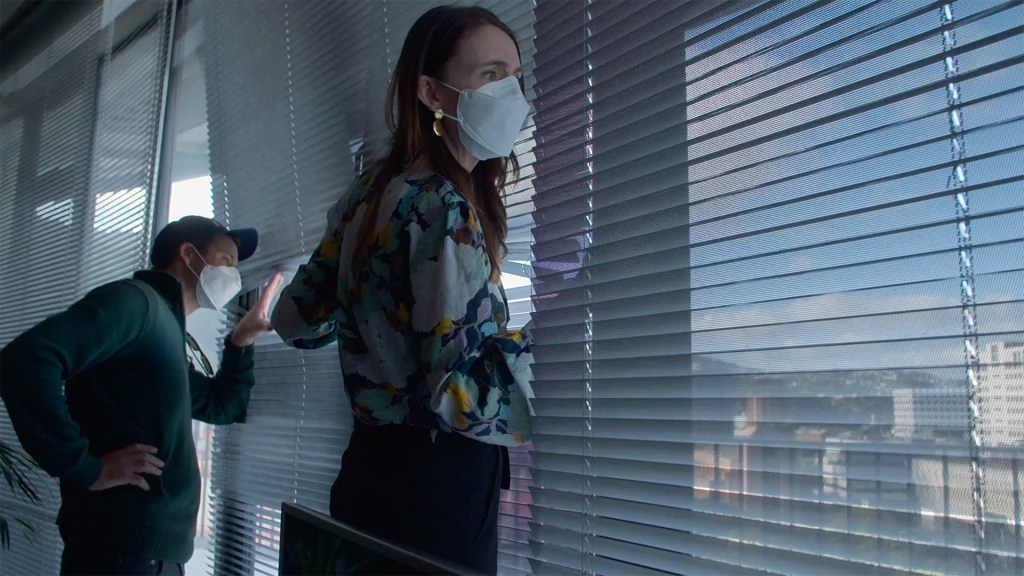
We’re very much all still living in the societal and cultural upheaval the pandemic left behind and the swamp of populist rants, conspiracy theories and anger-fueled online bile feels like it will never end. Did New Zealand get everything right? Probably not, but the overriding fact is that all the rewriting of history going on at the moment ignores that at the time nobody knew what might happen, and in the end, a whole lot of people could have died in a small island country like ours. Ultimately less than 6000 died of Covid-19 here – while in America, 1.2 million did.

Prime Minister boasts a candid access that it’s hard to imagine a lot of political leaders allowing. Ardern’s partner Clarke shot lots of footage of her over the years, as she sits in bed worn out after long days or works through the exhaustion of pregnancy. Even though I spent so much time covering Ardern and writing about the events of the day, it’s all a very different perspective that sheds new light on the burdens of power and Jacinda’s – perhaps impossible – attempts to remain kind at heart in a world that frowns on that. 
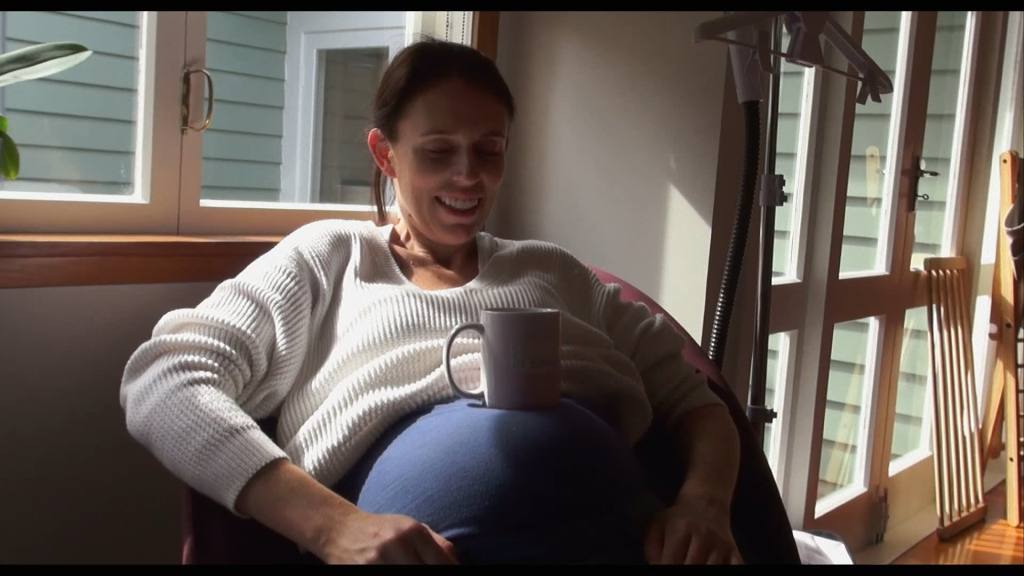
Again, I won’t argue New Zealand was some magical utopia when Jacinda Ardern was in power. But to be honest, a lot of politicians running the world at the moment seem barely human, let alone humane to me. We dehumanise politicians, and Prime Minister aims to correct that. Ardern has been turned into some unrecognisable demon avatar in some corners of NZ to this day. It’s hard to reconcile that with the images of a young mum playing with her daughter we see in Prime Minister. It’s also easy to see why Jacinda quit when she did, having no more petrol in the tank

Prime Minister isn’t a deep investigative dive into NZ politics. It’s glossy and aims to make Ardern the hero without really diving into the intricacies of politics here. And yet, in its own way, it feels a bit like an elegy for a lost world. Why would anyone want to be a politician these days? 

Power costs, and in the end, you have to wonder if, in a timeline crowded with blustering authoritarians, grim bottom-liners, hucksters and grifters and outrage merchants, that the eminently human scale of Jacinda’s politics is something we may never see again. 
Why Eddington is the movie America deserves in 2025

Look, the world kind of lost its mind in 2020, didn’t it? And we’re all still dealing with that. 

We’re all very much living in the aftermath of the pandemic, which seemed to break apart the bonds we imagined held the world together. Everyone’s got a relative or friend whose opinions seemed to go down weird rabbit-holes, or topics you just don’t discuss anymore. Covid, culture wars, digital disinformation – a dozen tangled threads all seemed to bloom and spread beginning in 2020. 

But so far, there haven’t been a lot of major motion pictures looking at this age of weirdness. We need satire and storytelling to process the societal earthquakes that hit us. After Watergate in the 1970s we saw a surge in paranoid cinema, while it took America until the 1980s to really unpack its Vietnam traumas with films like Platoon, Full Metal Jacket, Born On The Fourth of July and the like.  There were even a slew of (mostly kind of dire) 9/11 reenactment movies after those 2001 attacks or smarter ones like The Hurt Locker processing how terrorism spreads.

But on Covid, lockdowns and the fractured, polarised world that’s come out of it all, Hollywood’s been pretty silent. Ari Aster’s new film Eddington – a black comedy Western pandemic dystopian frenzy of a film – boasts two Oscar winners and a hot director and seems to be the first major Hollywood take on the year everything went, for lack of a better word, batshit. 

Even now, I don’t like thinking back to the strangled tenseness of the pandemic years, to masks fogging up my glasses, to queues at the supermarket, social distancing and the lurking rise of protest movements galore and the latching on to conspiracies. No matter what your views are on how it’s all turned out, it ain’t a time anyone fondly remembers now. 

The pandemic still feels raw, the culture war battles are still raging strong under Trump 2.0, so is it really time for satire? Yet Eddington feels like the movie America deserves in 2025. It’s shocking and slapstick in equal measures. “More distance will make it easier to laugh,” the LA Times’ Amy Nicholson wrote in her positive review of Eddington, and I can’t disagree.

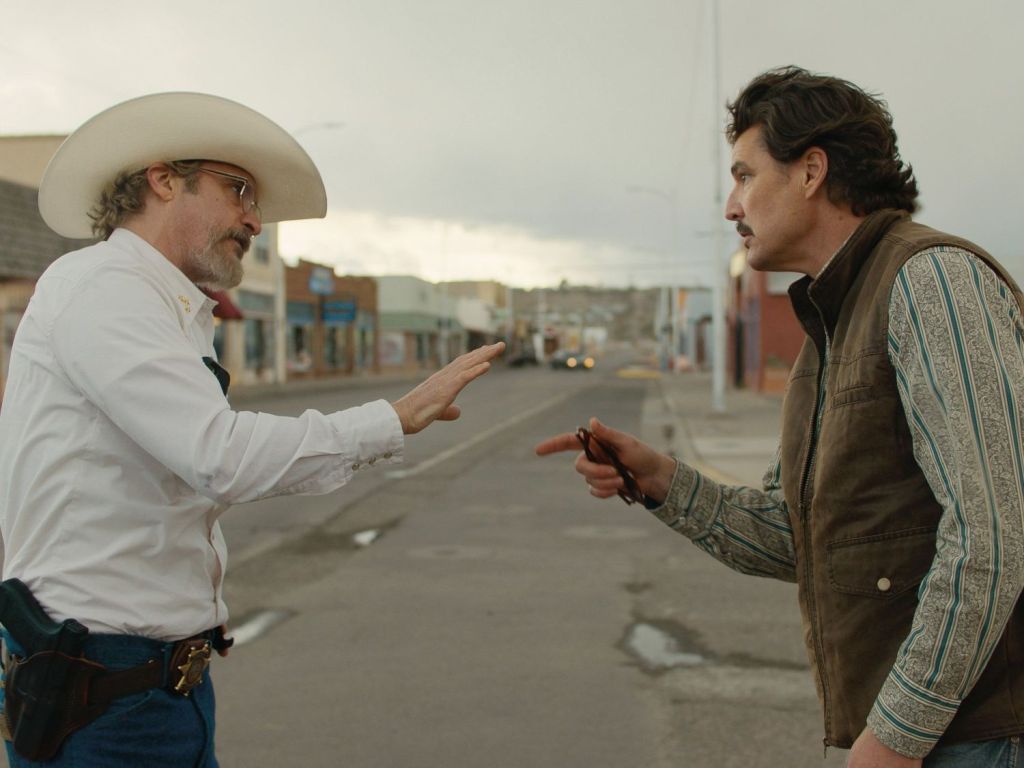
Joaquin Phoenix stars as New Mexico sheriff Joe Cross, a tense conservative who doesn’t care for masks and social distancing and who despises the town’s charming mayor (Pedro Pascal) and decides to run against him. His wife (Emma Stone) is going down online rabbit holes and Joe feels like everything in his world is changing. Black Lives Matter protests come to town, Covid is here, and big tech is making a play for a giant start-up facility in town. Because this is an Ari Aster movie, and Aster is the patron saint of dread in film right now, everything escalates very quickly into a violent, unpredictable mess. 

Joe posts Facebook campaign videos saying “we need to free each others hearts” but soon starts ranting about sexual predators and driving around in a truck plastered with slogans like “Your (sic) being manipulated.” Pascal’s perky mayor slaps up pandering inclusive videos featuring smiling Black extras in a town with almost no Black population. A lovestruck white teenager who dives into BLM activism to win over a girl ends up bemoaning his white privilege to a crowd, yelling “My job is to sit down and listen! As soon as I finish this speech! Which I have no right to make!” 

Eddington is an equal-opportunity satire that sees the absurd in all viewpoints. It hits all the bases – mask mandates, pedophiles, artificial intelligence, police racism, Bitcoin and Antifa – offending left and right with equal measures. 

But ultimately, Eddington is really about how social media has rotted our brains, turning us all into circus animals hooked on dopamine and conflict. It’s bad here in New Zealand but exponentially feels far worse in the far bigger America, where politicians and celebs now spew conspiracies and hate speech that felt unthinkable 10 years back. 

America doesn’t make much sense to me at the moment, and Eddington is an exhausted grim chuckle at how fractured it’s all gotten. 

“I am a much better human being than you,” Joe sneers at one point to his opponent, and that arrogant phrase seems to capture so much of the vibe of America 2020 and Social Media 2025. 

I wouldn’t argue that Eddington is a masterpiece – it’s too long, a bit scattered and overstuffed, the ending ramps up the violence to a kind of incoherent mess, and Aster’s “everyone’s an idiot” worldview will probably rub some the wrong way … but in its bleakly comic way, it captures the moment in a way that cinema kind of needs to help us process whatever the hell has happened to the world the last few years. And Phoenix, who never feels better on screen than when he’s falling apart, is terrific.

Eddington shows how community and dialogue vanishes as we all get sucked into our little tech bubble windows, how performative our lives have become and how lonely we’re all getting as a result. “All of these people are kind of living on the Internet and they are sort of all seeing the world through these strange, individualized windows,” Aster said in an interview.

Sometimes you just need to see it all splayed out before you under a hot desert sun, and marvel at the endless foibles of humans and how easy it is for the things that hold us together to prove as flimsy as a tumbleweed in the breeze. 

Eddington is not here to make conclusions, other than that perhaps we’re all kind of ridiculous creatures. At the moment, still trying to process the world we all live in now, laughing a little about that feels like enough for me. 

The year that Thanksgiving became Covidsgiving

Well, we tried. 

Our family managed to avoid the Covid-19 pandemic for almost three years, but our number finally came up during our overseas holiday visiting family in the US. We caught it in transit, somehow, despite wearing masks as much as possible. Like dominoes cascading downwards, once the first person tested positive the entire family shortly followed.  Thanksgiving became Covidsgiving.

Fortunately, we all caught a pretty mild case of the virus – good news as several folks in the family aren’t in the best of health and it was very worrying to see them test positive. It still sucked, particularly as it kind of mucked up our holiday, but after close watching of all the grim headlines the past few years I know it could’ve been so much worse. 

All journalists have cliches they loathe to see in print, and “post-pandemic” is one I’ve been kicking out of news copy every chance I get. We’re definitely post-lockdown – whatever your views on that, it’s clear the cultural buy-in for such policies has passed – but “post-pandemic” implies the disease has somehow gone away. If anything, far more people I know have been touched by Covid-19 in 2022 than at any time in the years prior. 

The virus felt particularly inescapable these past few months, when it seemed like every friend I knew in New Zealand caught it, especially many who had also managed to avoid it earlier on. It became pretty clear that no matter how hard we tried to do the right thing, we were probably going to get it eventually. 

A friendly acquaintance from my 1990s small press comics days, Andrew Ford, died of it in New York recently. An energetic booster of self-publishing comics and bringing rare art back into print, he was just 48 years old when he died. It’d been many years since we’d been in regular touch but it was still a shock to remember this go-getter kid I once knew and exchanged letters and drawings with and to realise he was one of the Covid casualties. I think of Andrew Ford often lately, and the millions of others whose stories have been cut short by Covid.

I traveled an awful lot at the beginning of this year as I first stepped outside the pandemic bubble of New Zealand. Despite having to deal with incredibly lengthy travel, quarantine back home in New Zealand and an Omicron surge, I somehow didn’t catch Covid. Yet this time when my family boarded the plane from NZ to the US, it wasn’t even 72 hours before the first of us tested positive. Both times, I and the rest of my family wore high quality masks. 

Last Christmas when I traveled the vast majority of people in transit in Los Angeles and elsewhere I went wore masks in crowded airports. But in November 2022, maybe 20% of the other people in the airport and planes were wearing masks. We tried our best, but when the majority of other people aren’t masking up… well, you get Covid, I guess. We’ll never know who we caught it from – was it the guy coughing a few rows up? Someone at the airport we passed by? It was such a mild case that the contact must have been fleeting. But I do wonder if that person had bothered to mask up in crowded public areas, our holiday might have turned out differently. Everyone’s sick and tired of all this, I get it, and a rugged, brutal individualism has replaced whatever fleeting community spirit first animated our Covid responses. You do you, and well, other people will do whatever.

One of the biggest knock-on effects of the Covid years for me has been a gradual lowering of my respect for other human beings. I hate that I’ve become more judgy, more annoyed at idiots going down conspiracy rabbit holes, pissed off at people flouting mask rules and everyone being outraged all the time – including myself. Many of the people I know who’ve caught Covid at last these recent months have expressed the same frustration – we tried, we did the right thing, we still caught it, so what’s the point?

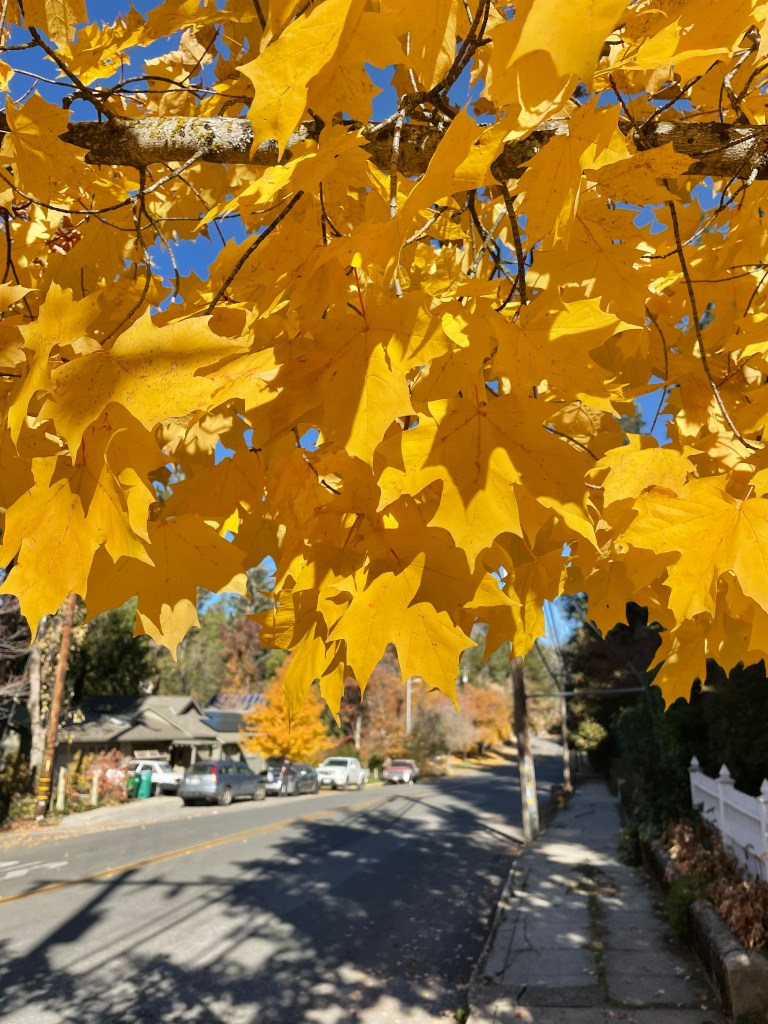
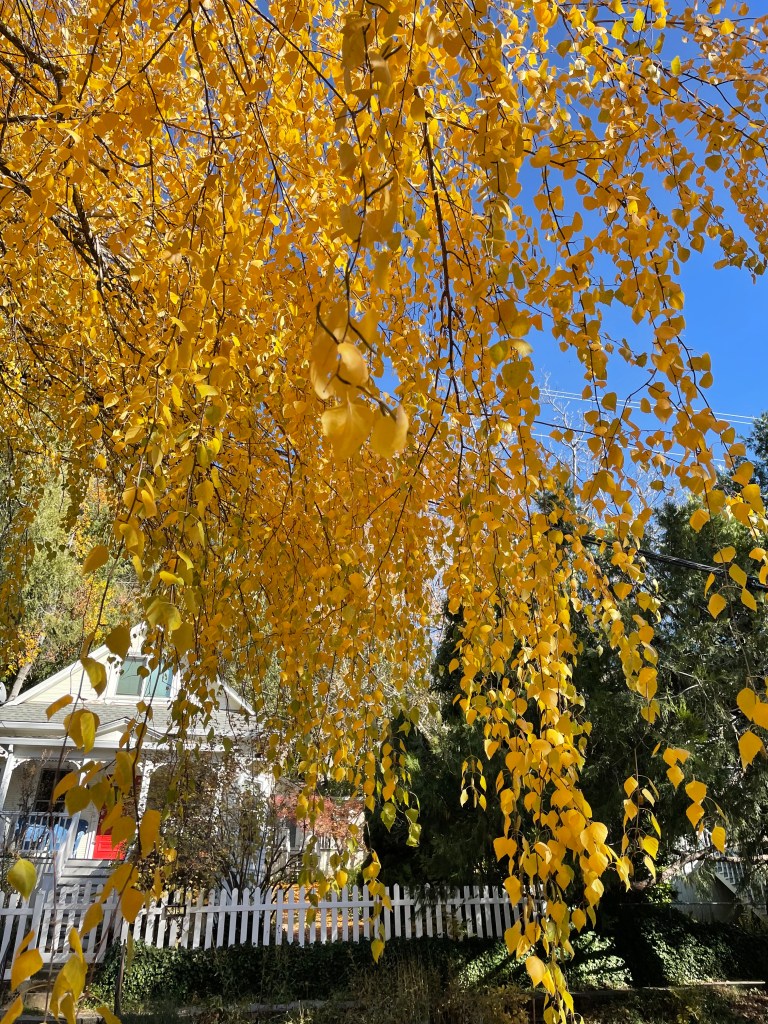
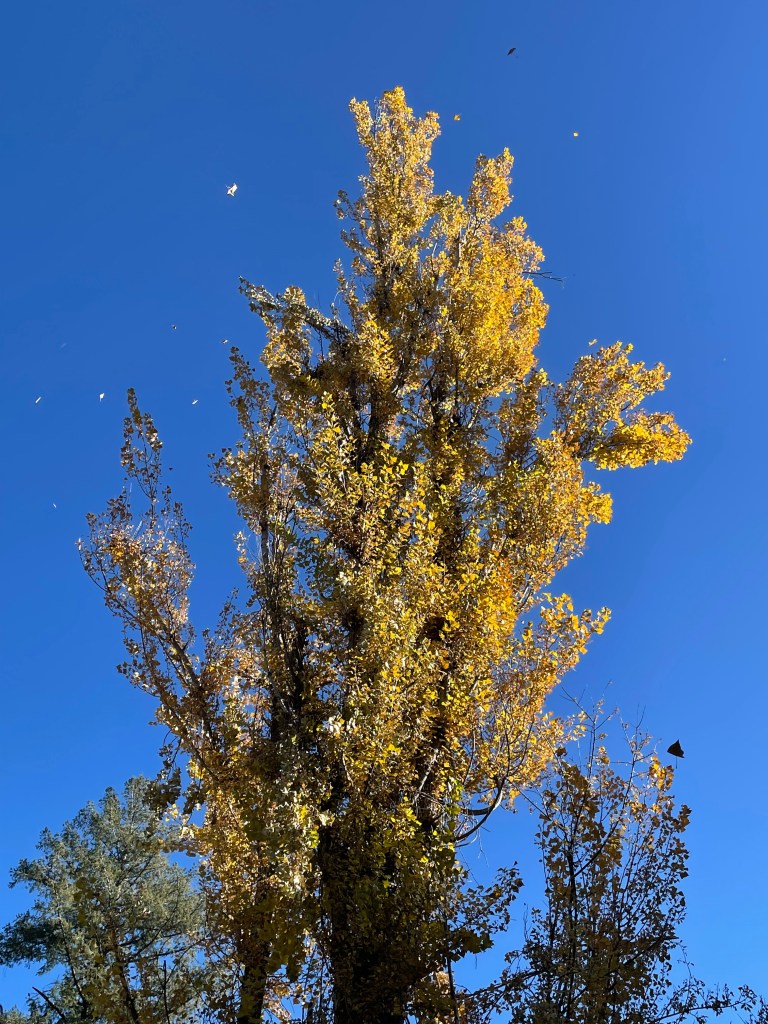
Despite it all, it was still a good holiday – bonding with my parents and a new baby in the family and seeing the gorgeous colours of fall in California. The trees blazed up into autumn colours and the kinds of brilliant yellows, oranges and reds we just don’t see in our part of New Zealand.

At times the leaves fell in thick fluttering sheets, dotting the bright blue California skies with colour and reminding me that even in this age of outrage and plans never quite working out how you hoped, there are moments where you can still try to be a little more like one of those flimsy leaves, floating on the breeze and letting the sun shine on you while it can. There are no outraged leaves in nature.

Photographic pandemic memories of concerts past

Like a lot of people, I miss concerts. Heaving groups of strangers locked in communion with a singer and a song, losing themselves. I’m hoping that we might finally get to a point soon where thanks to vaccination I might be able to go to a show again; I’ve got tickets to see one of my favourite bands in May I’m really hoping doesn’t fall through.

In the meantime I’ve found myself looking back at concerts past. In the hazy pre-iPhone era, you couldn’t really easily take photos at a show, and until recently, my phones were crap enough that I couldn’t take a good photo even then. So many of the great gigs I’ve seen over the years only exist in my memories – Elvis Costello triumphing for more than three hours one night in Oregon; The Pixies shredding on their first reunion tour; blues legend RL Burnside stunning a packed Missisippi bar; LCD Soundsystem commanding a sweaty packed tent; Gang Of Four showing post-punk’s power never died, and many more.

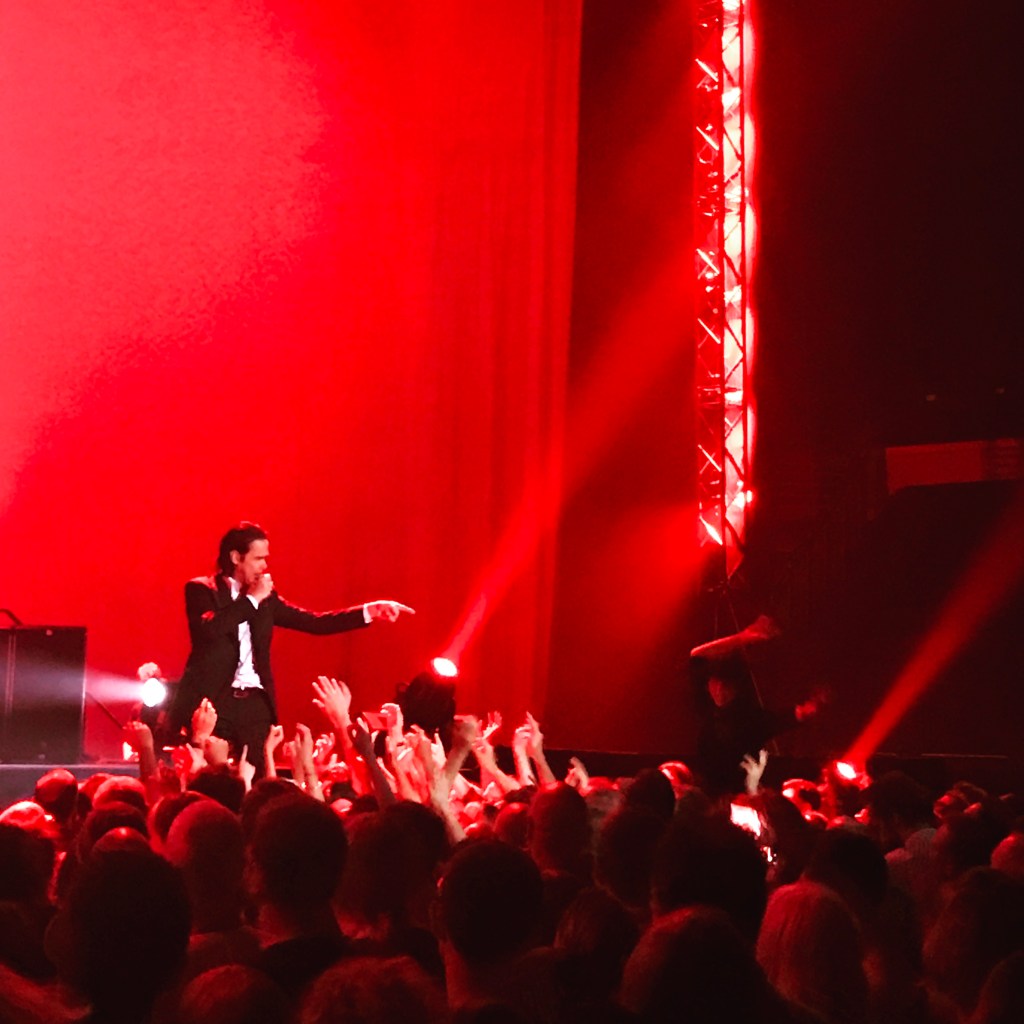
I’ve taken a lot of terrible, blurry pictures at concerts, and a few good ones. I look at them a lot now, remembering the murmur and buzz of the crowd and the glare of the lights and the distinctive sound of one perfect song, and an audience united in singing along…

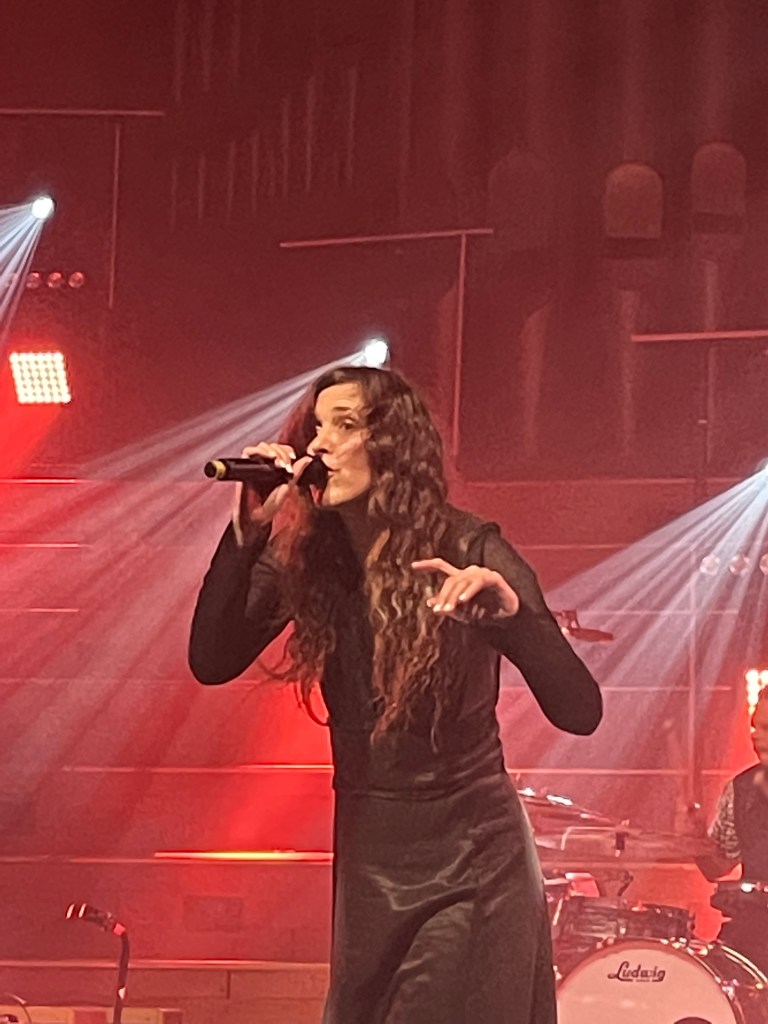
Lorde, 2017
Nick Cave, 2017
Peter Murphy of Bauhaus, 2018
The D4, Auckland City Limits, 2018
Elvis Costello, 2013
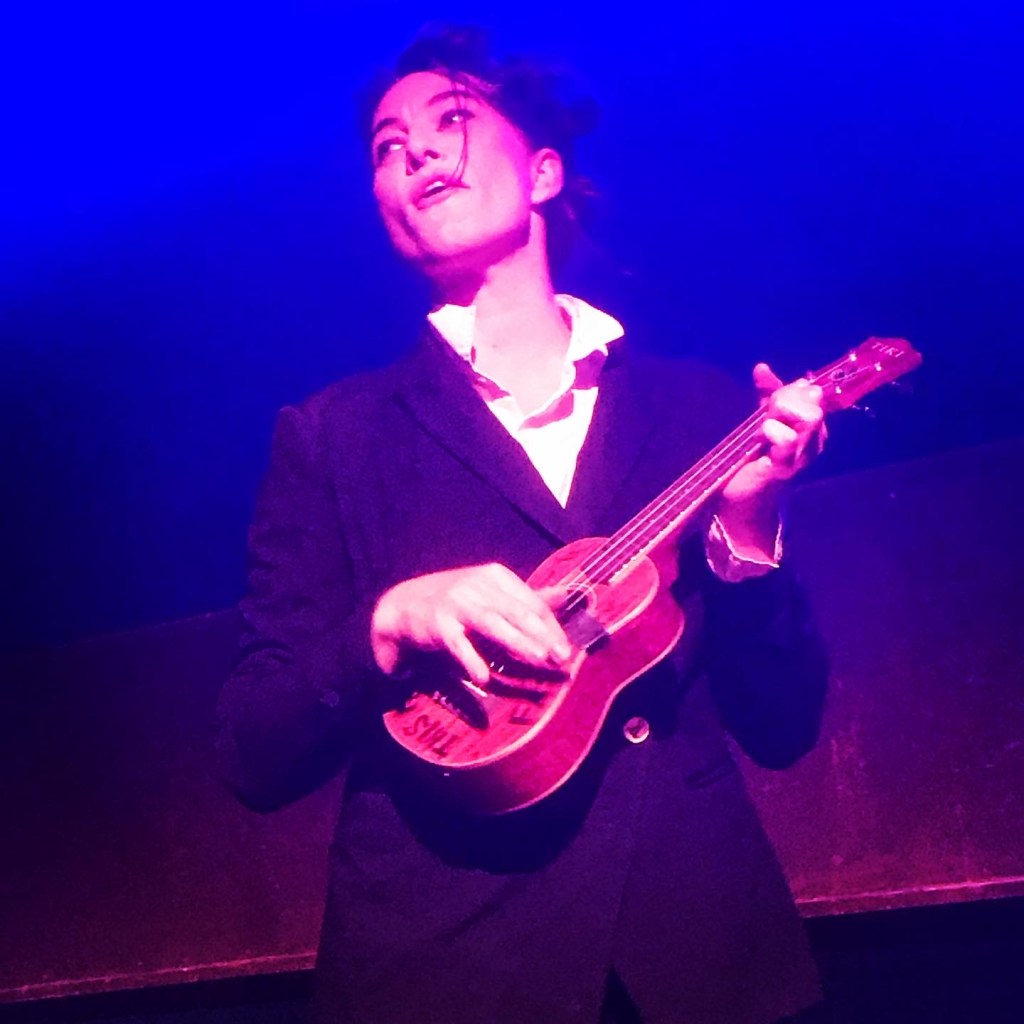
Amanda Palmer, 2020
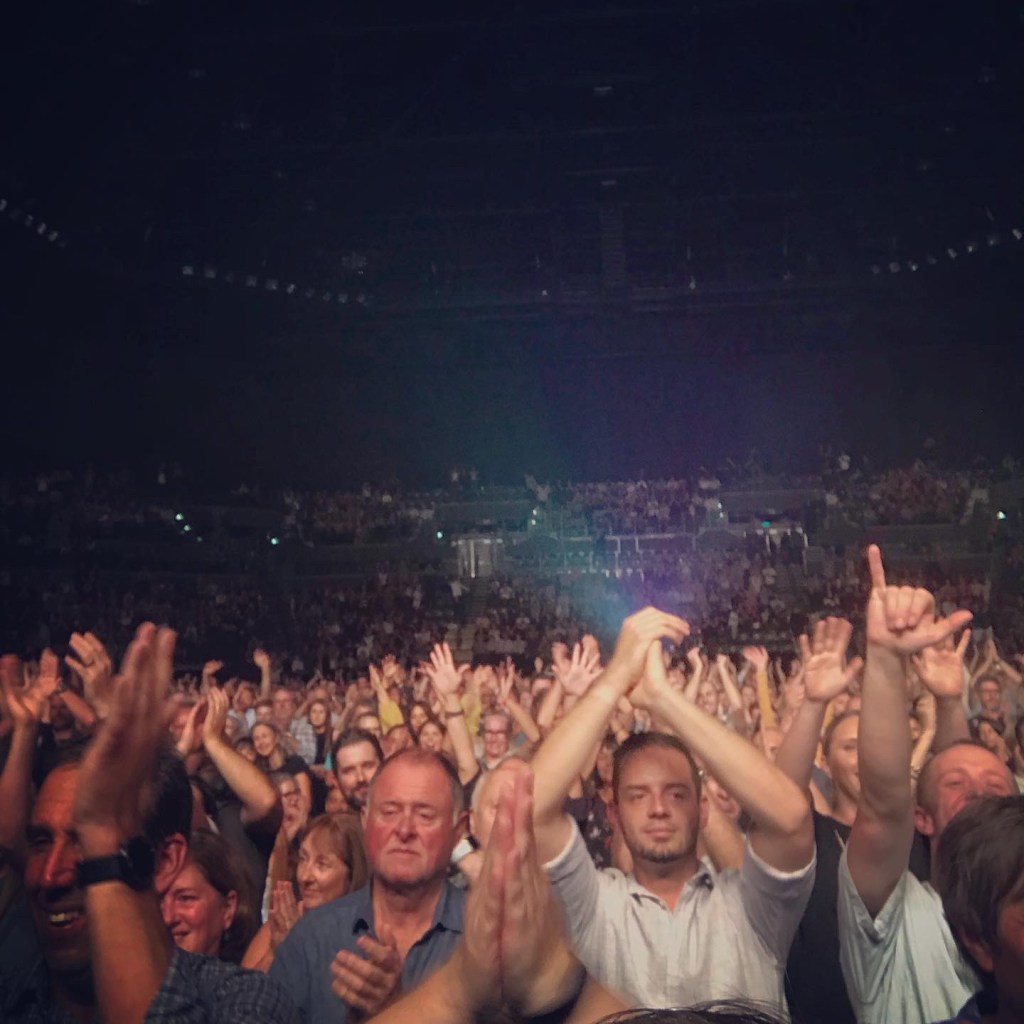
A crowded house at Crowded House, 2021
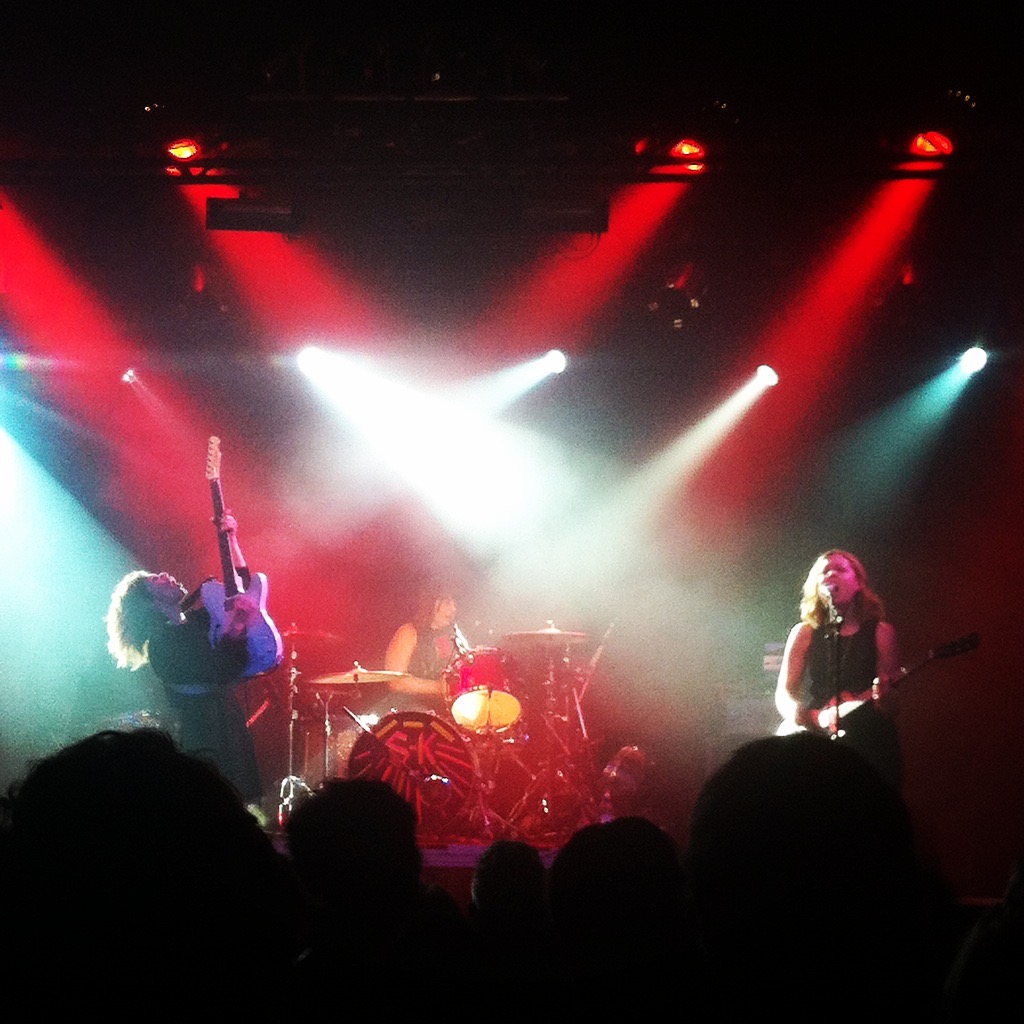
Sleater-Kinney, 2016
The Rolling Stones, from a distance, 2014
Midnight Oil, 2017
Reb Fountain, 2021
Kamasi Washington, 2019
Neil Young and Crazy Horse, 2013

Songs To Help Me Survive 2021

It’s a tough time out there. Auckland’s been in lockdown for just over two months now and New Zealand’s finally coming to grips with the coronavirus in the community. We’ve had great success compared to an awful lot of places, but right now we’re in a battle to vaccinate and stamp things out so it doesn’t get as bad as so many other places.

Still, like most of the last two years in this troubled world, it’s weird and stressful and I think we’re all kind of over it at this point.

In the end, when life starts to feel like a Groundhog Day of working and sleeping and walks around the neighbourhood and masks and health alerts and the increasing insanity of what feels like a good portion of the online world … well, music is one of the few things that makes sense, right?

I made a playlist nearly a year ago of Songs That Helped Me Survive 2020. For a while there, this year looked like it would be more cheerful, but it turns out this thing has a while to go yet.

But we’ve got songs, we’ve always got songs. Happy songs that remind us what it’s like to be human, angry songs that remind us it’s OK to feel freaked out and frustrated, lovely songs that remind us the grace in between the bad times. Here are some of those songs that are helping me survive 2021. I hope you might dig it too if you need a way to get away from it all.

Halfway through the longest year ever

…I keep meaning to write something here but life gets in the way. The calendar is nearly halfway through 2020, or approximately 5,000 years since the world felt normal.

I wrote a thing for Radio New Zealand just two weeks back about what a strange feeling it is being an American living in New Zealand right now.

If anything, I’d go back right now and add about 100 exclamation points and a couple of choice swears to it.

It’s terrifying to watch the country I love and where my family and so many of my friends live go through this, and to know it didn’t have to be this bad.

New Zealand is coming through this better than many places, but we’re having our own problems as kiwis abroad return home and how we deal with it in a kind and intelligent manner. We aren’t able to just disconnect ourselves from the rest of the world, and as it suffers, we suffer too.

People simply aren’t used to collective efforts and the notion that a crisis can last a bit longer than it takes to binge-watch a Netflix series. We aren’t even through a first wave yet, let alone what might happen next.

I wish I could fast-forward through to around December and tell everyone that things work out OK, or that it won’t be as bad as my anxiety and fears keep whispering in my ear right now.

But I can’t.

Standing on a beach, staring at the sea in Level 3

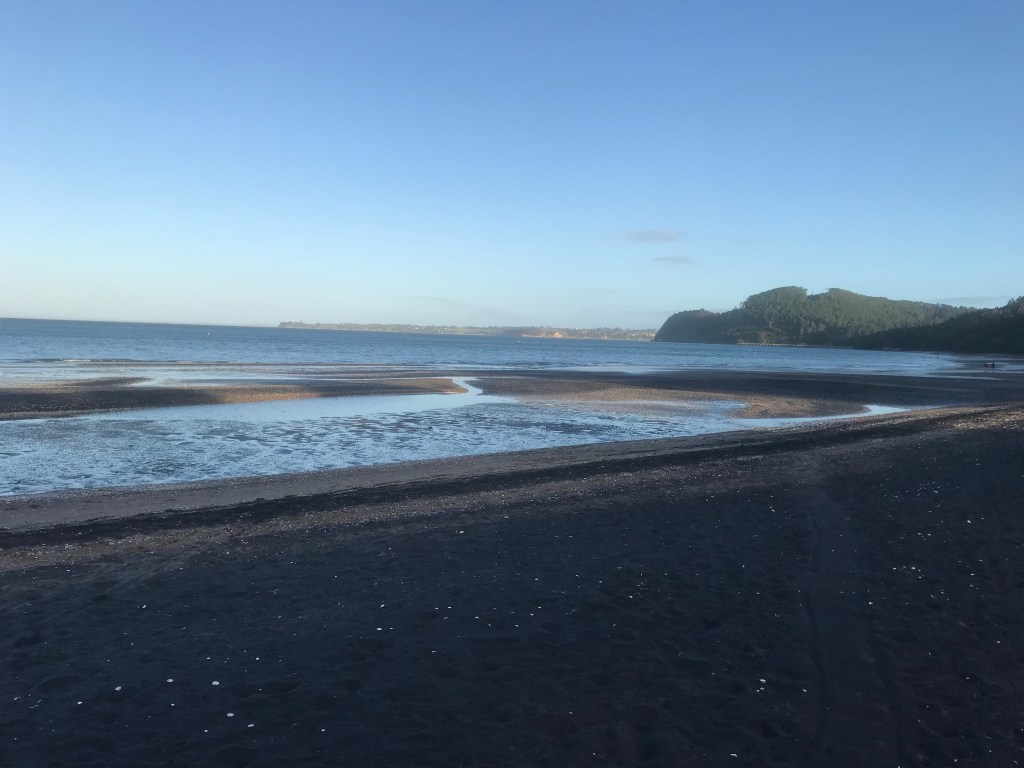
I stood on a beach today for the first time in close to six weeks, and looked at the sea. 

There’s at least 100 beaches within an hour’s drive of our house (we do live on a narrow isthmus on a small island at the bottom of the world, after all), but I couldn’t go to them. New Zealand’s strict national lockdown ended at midnight last night, and for the first time in what feels like an age, we could do a little bit more today than we did yesterday.

We’re not fully out. Level 3, as they call it here, is still pretty stern. Fast food and takeaway restaurants are open, many people are finally getting to work again and we can drive a little further, but most of society is still hunkered down for a few more weeks, likely. New Zealand and our Prime Minister’s firm, authoritative response to the Covid-19 pandemic seems to have worked well.

What did I do during the great lockdown of 2020? I worked, a fair bit more than normal, picking up extra shifts because what else was there to do. I painted walls. I fussed about the house organising boxes of old letters and heaving book shelves and music magazines I’d inexplicably kept since 2013. Every day for the duration of Level 4 I posted a comic book cover of a character in prison (or lockdown) on my Instagram account. It turns out that’s a pretty fertile genre. My son played video games with his friends online, built cool models and ventured into online schooling. My wife catalogued trees and trapped rats. We all went for a lot of walks around our hilly neighbourhood.

And I worried, of course, in vague and uncertain ways. I recognise how immensely lucky that I am in many ways in this crisis, but still like everyone else I wonder what’s next. I seethe at the inept politics back home and the sprawling misinformation, ignorance and hate that’s taken over the internet. I saw friends back in the US, dealing first hand with the death of a neighbour or a relative or a patient and silently cursed all those who’d downplay this as some passing conspiracy fad. 

There’s been a surplus of thinkpieces and essays out there imagining a better world to come, full of idealistic notions that I wish I could fully see coming true.

In the end I have to ignore everyone else’s freaking out and rage and tension and come back to what matters the most, the people I live with inside these overly familiar walls, and controlling the antic voices in my own head. 

I stood on a beach today and looked at the sea. It’s still pretty good, eh?