Swamp Thing: The forgotten comic book movie franchise

As part of my annual Halloween month monster movie marathon, I went back to the swamp. Swamp Thing, that is, who starred in two almost forgotten comic book movies that oozed their way through the ‘80s. Nobody would ever call them timeless classics, but I’m weirdly fond of them. 

Swamp Thing and Return Of The Swamp Thing came in that kind of interregnum in superhero movies through much of the ‘80s, in the period between the last good Christopher Reeve Superman movie Superman II in 1981 and the Tim Burton Batman-palooza of 1989. In that grim limbo we comics geeks made do, dimly, with unsatisfying stuff like Howard The Duck, Supergirl and Sheena: Queen Of The Jungle. 

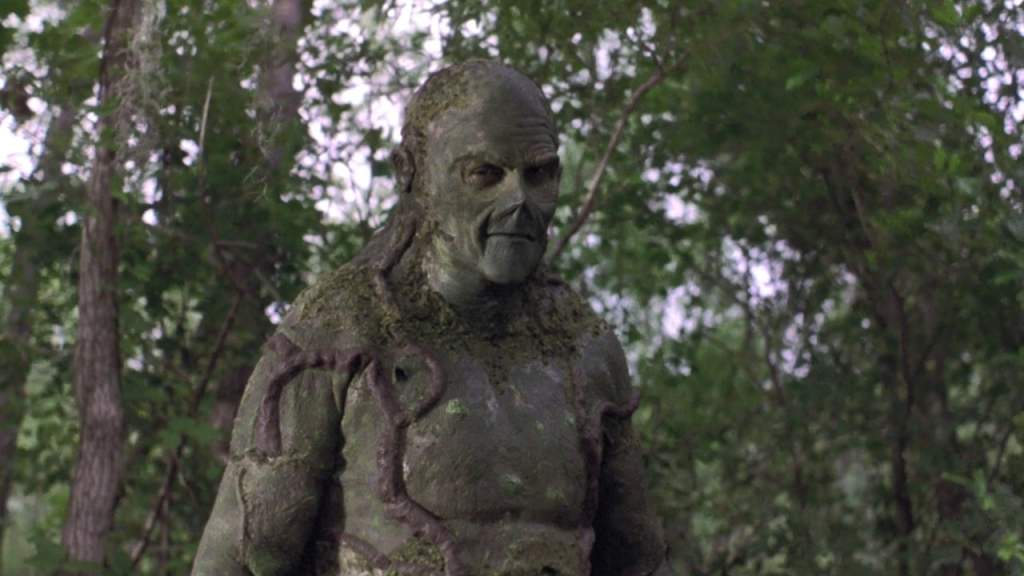
Neither Swamp Thing movie is really great, but there’s something about them I’ve always found cheesily enjoyable, from their campy humour to their amiably low-fi practical effects. Now, Swamp Thing has starred in some of the greatest and most out-there comics of all time, and the basic muck-monster idea has exploded into existential horror, cosmic wonder, time travel, LSD-tinted romance and much more. But on screen, there’s still something loveable about just having a guy in a rubber suit wandering around the swamps. 

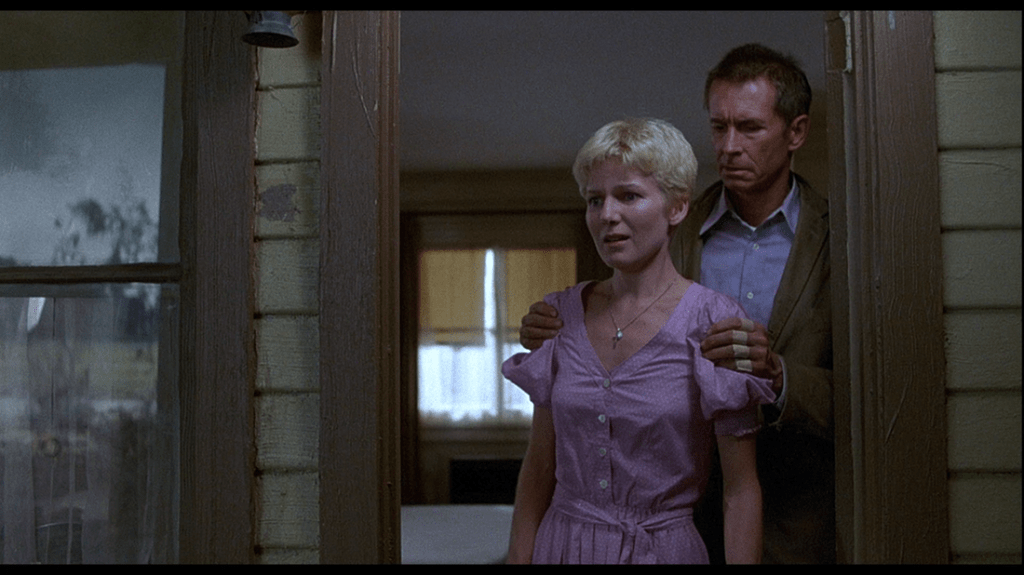
There was an attempt to make 1982’s Swamp Thing the next Superman, with adverts on the back of every comic and awesome poster art. The movie closely follows the comic plotline about a scientist, Alec Holland, (the great Ray Wise, who I kinda wish had been allowed to suit up as Swamp Thing himself) whose groundbreaking research is targeted by thieves. In one of those only-in-comics accidents Holland is set on fire, doused in his mysterious chemical formulas and thrown into a swamp, where he re-emerges as a half-man, half-man muck monster. With the aid of another researcher (Adrienne Barbeau), the Swamp Thing (played by Dick Durock) seeks revenge on Anton Arcane, the evil mad scientist behind all his troubles (Louis Jourdan). 

Swamp Thing is a breezy monster mash of a movie, with a costume where the seams are clearly visible and the steamy swamp setting is one of the film’s biggest assets. Swamp Thing is a monster, but a good guy, and in the end he gets into a classic monster-movie throwdown wrestling match with Arcane, who inexplicably ends up turned into this wild bug-eyed shrew/rat man hybrid when he overdoses on Holland’s formula. It’s a so-bad-it’s-good moment.

Maybe it’s because it was one of the first real “horror” type movies I saw, but I still love Swamp Thing, flaws and rubber costumes and all. Barbeau is a great steely kick-ass heroine, Jourdan is smoothly menacing and Dick Durock gives Swampy a melancholy charm. It’s a movie that just gets to the point, pure popcorn cinema with a dash of sadness over poor Alec Holland’s fate.

The sequel Return Of The Swamp Thing pretty much gives up at being serious at all. It starts off, weirdly, with a credits montage that features lots of glorious art from Alan Moore’s legendary 1980s Saga of The Swamp Thing comics. As these images by Steve Bissette and John Totleben pass across the screen you think whoa, is this movie going to boldly reinvent the whole idea of a swamp monster hero like Moore’s comics did?

But nope, it’s a tease. Return Of The Swamp Thing is a far campier and sillier sequel that feels like it came straight from a USA Up All Night! marathon. It opened up, very briefly, in theatres a month or so before Batman in summer 1989, and it’s a plucky last gasp of the slapdash amateurism most superhero movies had until Tim Burton came along. 

This time, Swamp Thing has a much cooler leafy costume that apes the looks of the Alan Moore comics, but that and an eerie scene where Swampy slithers out of a bathtub drain and puts himself back together are about all that this one has in common with the Moore stuff. 

In one of the weirdest castings of all time, Heather Locklear plays a hilariously broad valley-girl version of the comics’ goth girl love interest Abby Arcane, while poor old Louis Jourdan looks half-dead in his sleepy return as Anton Arcane, rather inexplicably no longer a shrew-man. The henchmen are ridiculous action movie parodies and the movie features two of the most obnoxious child actors you’ll ever see and a far more talkative Swamp Thing who feels like some chill surfer dude rather than the rumbly monster of the first movie. (Seeing Swamp Thing laugh like a businessman at a cocktail party is one of the most off-model moments of the film.) It’s a ramshackle, small-scale story that basically seems to consist of Arcane doing more goofy evil science stuff, and Swamp Thing defeating the rather physically unimpressive bad guy by… throwing a chair at him. We don’t even get a return of the bizarre shrew-man costume. 

…And yet, I don’t know. Perhaps it’s just my love for Swamp Thing as a character and the low-stakes vibe of these movies, but it’s far more entertaining than the plodding, overly serious and dull attempt to bring Swamp Thing back in a very short-lived TV series a couple years back. Word is James Gunn wants to do a new Swamp Thing movie as part of his DC universe empire. I know these days everything is done with CGI and motion-capture but I still kind of hope that if they do a new flick, we still get a guy in a somewhat sloppy rubbery costume stomping about in the muck.

When it comes to Swamp Thing on film, the dirtier, the better. 

The Evil Dead and the evolution of Ash, from shy boy to demon slayer

I love the original Evil Dead trilogy and its splattery slapstick charms, so you’d better bet I was down for a marathon of the whole shebang at the legendary Hollywood Avondale this weekend, featuring an introduction by producer and honorary New Zealander Rob Tapert.

Tapert was right there, along with his mates director Sam Raimi and star Bruce Campbell in the Tennessee woods when the extremely low-fi 1981 original was shot, and has since gone on to be a producer of many great flicks in the years since – and also created a little character called Xena The Warrior Princess and married a Kiwi named Lucy Lawless, so he’s got some serious Kiwi bona fides.

Watching five hours of Evil Dead flicks on a rainy, windy Saturday night is my idea of a good time. Evil Dead (1981), Evil Dead II (1986) and Army Of Darkness (1992) form a trilogy which starts off as a group of young folks facing evil in a cabin in the woods and ends up with an army of skeletons battling knights in armor while a blustery guy with a robot hand eggs them on. 

I recommend a strong stomach and plenty of caffeine if you’re going to mainline all three movies at once, but it’s also fascinating to watch how different they are – the original is more straight existential horror, while the second almost remakes it but with a much more comic eye, while the third almost abandons horror and gore entirely for a straight out slapstick parody of all those old Ray Harryhausen flicks with sword-fighting skeletons. In these days of carefully plotted cinematic universes and decade-long “phases,” the Evil Dead trilogy is a monument to just making up shit as you go along. 

The only constant through it all is Ash, swaggeringly portrayed by Bruce Campbell. Images of Ash with a shotgun in one hand and his chainsaw taking the place of his other hand are iconic in comic horror, and his adventures have continued long after the original trilogy in plenty of comic books and videogames – and the surprisingly great 2015-2018 Ash Vs Evil Dead series that gave us everything and more the long-promised Evil Dead IV could have. 

Continuity is not a strong suit in the Dead trilogy – the success of the dimestore-cheap production of Evil Dead led Raimi and company to make a sequel, but it’s kind of bolted together with what Tapert called a “condensed” recap of the original in the first 10 minutes or so that reimagines the movie and streamlines it, then picks it all up again with Ash still battling those demons in the woods. 

And yet, watching the whole trilogy is also like watching Campbell and Ash find their way into a character. The catchphrase-shouting arrogant Ash we all “think” of when we think of Evil Dead only really comes into focus halfway through Evil Dead II, and becomes his most ideal self in Army Of Darkness.

When we first meet Campbell in Evil Dead, he’s a bland non-entity sitting in the back seat of the car heading to that infamous cabin in the woods, a sidekick to his more extroverted pal Scotty. You think Scotty’s going to be the big hero but then it’s quiet background Ash who ends up the “final girl.” It’s always a shock rewatching Evil Dead to see an almost shy Ash at first, who barely cracks a joke and who becomes the series’ focus only by his lucky knack for surviving the demonic chaos that consumes his friends. 

How did Ash go from shy boy in backseat to the alpha male in Army Of Darkness spitting out lines like “Gimme some sugar, baby” and “Yo, she-bitch! Let’s go!” The endearingly choppy nature of storytelling in the Evil Dead trilogy ignores rather than tries to fill in the contradictions of how Ash became, well, Ash, but in my own mental backstory I like to paper in the cracks of it all to be a tale of how Ash survives the incredible trauma of having his girlfriends, best pals and total strangers literally torn to pieces in front of him, of having to chop off his own demon-possessed hand and horrors that would drive anyone bonkers. 

In my head canon, Ash was the shy college boy when all the Deadite doings started – he’s actually repeatedly rather a coward in the climax of the original Evil Dead – but when the evil never stopped, he forces himself to become what he thinks of as a hero. Trauma remakes Ash, body and soul.

By the time Army of Darkness rolls around Ash is stranded in the year 1300 surrounded by “primitives,” and has completely reinvented his own personality to be the hero he probably saw in lots of late-night zombie movies. You can’t imagine Evil Dead 1981 Ash lecturing crowds of peasants about his superiority like Army of Darkness Ash does. He spouts bull-headed cliches and romances the pretty girl and stomps around with his “boomstick” but it’s all a bit of an act, really. He’s putting on the Ash, savior of humanity act to survive. 

That’s my theory, anyway. It could also be that the Evil Dead trilogy, as wildly entertaining and inspirational to creative folks as it is, is also just a slapdash bag of gags, gore and grit stapled together from film to film with no real deep concerns about how the cliffhanger end of Evil Dead II and Army of Darkness literally don’t mesh together at all, or whatever happened to Ash’s friends in the car in the first movie who’ve been erased from history by the second. I thought as I watched all three movies back to back that if they’d come out in this social media age of endless fanboy dissection, every clickbait website in the cosmos would be bashing out hate essays about the canon “mess ups” and “Evil Dead contradictions EXPLAINED!!!” videos. 

But whether or not it all makes a lick of sense or not, I do love how Bruce Campbell turned the gawky background guy in the back seat into a towering icon of horror movie heroism. As he’d put it – it’s pretty groovy. 

Universal Monster endings: The Creature Walks Among Us

I’ve written many a time before about my love of the classic 1930s-1950s Universal Horror monster movies, which almost a century on still cast a spooky spell. And my sentimental favourite has always been Creature From The Black Lagoon, whose 1954 debut came at the end of Universal’s classic run.

Creature is in my mind an almost perfect old-school horror movie – it’s got exploration of the unknown, man meddling where he shouldn’t, a sexy lady in a swimsuit and a monster who is ultimately a tragic figure. In a tidy 79 minutes it tells a classic beauty and the beast story with a kind of haunting elegance (especially those gorgeous underwater scenes) and gives us one of cinema’s most memorable monster designs. I’ve watched it countless times and get a kick out of it every time.

It’s a shame the two sequels never felt very essential, although in one choking last gasp, the franchise finale The Creature Walks Among Us is almost a good movie. 

Universal Horror movies were the best, but they weren’t usually very good at sequels. Other than the original Frankenstein, which boasted great follow-ups in Bride Of and Son Of Frankenstein, most of them fumbled at sequels. They foolishly didn’t bring back the iconic Bela Lugosi for a sequel to 1931’s Dracula until 1948’s Abbott and Costello Meet Frankenstein, which while fun, isn’t exactly top-tier. Lon Chaney Jr’s melancholy Wolf Man ended up as a supporting player against other monsters after the first Wolf Man, Claude Rains’ Invisible Man died and sequels to that were bland bores, while Boris Karloff’s Mummy was reborn again and again without Karloff in a series of increasingly silly riffs. By monster mash House of Frankenstein – where the monster barely does a thing until the final 5 minutes – everything was increasingly played out.

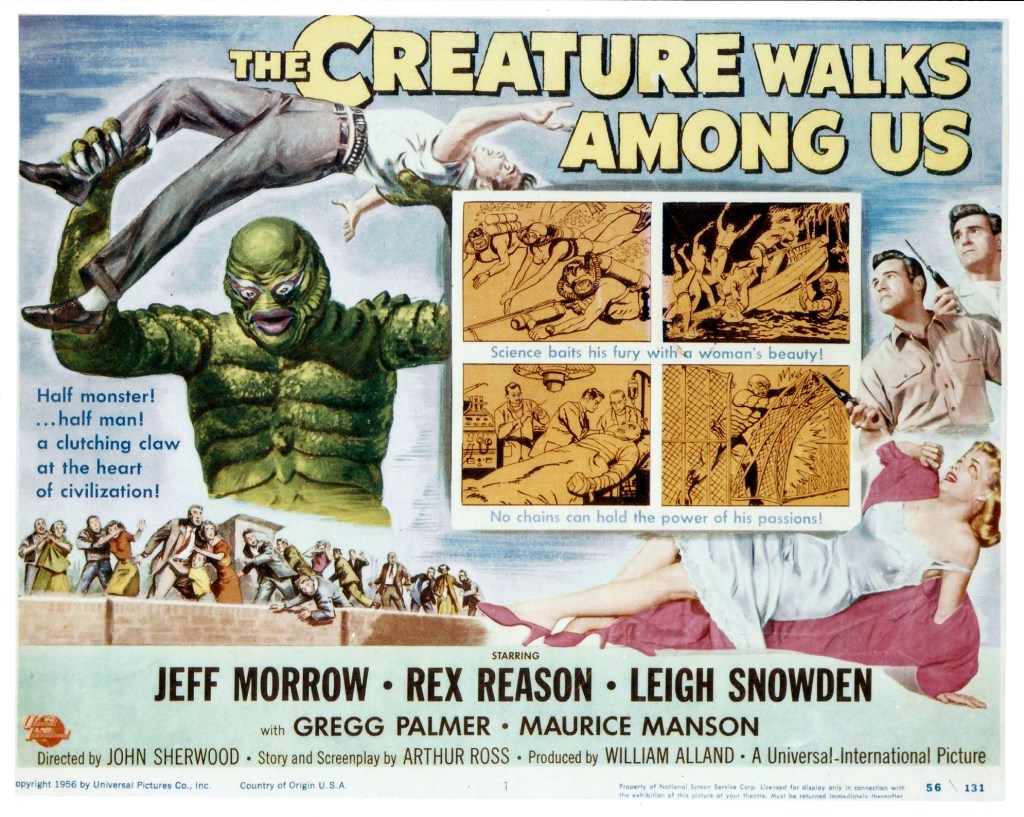
A clutching claw at the heart of civilization! They don’t make tag lines like they used to.

The same problem befell the Creature of the Black Lagoon, who was enough of a hit to come back for two more sequels. The uninspired 1955 quickie Revenge Of The Creature is basically a remake with a Florida aquatic park setting and a brief cameo by Clint Eastwood in his movie debut. 

The last sequel – and the last of Universal’s classic monster era in general – was 1956’s The Creature Walks Among Us, which took an intriguing idea and dropped the ball, but left us just enough hints to imagine a much better movie. 

In this one, the Creature is once again captured by pesky humans – but this time by a fanatical scientist, Dr Barton (Jeff Morrow), who wants to experiment on him, turning him into from an aquatic creature into a more human organism. (The pseudo-science explanation given is this would somehow prepare humans for interstellar travel.) The Creature is captured but badly burned, which gives Barton the excuse to alter his genetics. Of course, being a monster movie, things go badly for everyone in the end.

It’s an interesting idea but the execution is limp – far too much time is spent on irritating scientist Barton’s marriage troubles, and the Creature feels like an afterthought in his own movie. Also, the end game appears to simply be to set the Creature up in a kind of petting zoo enclosure, so not sure what all that science was really for. 

In the encyclopaedic book The Creature Chronicles by Tom Weaver – an insanely comprehensive green-scaled bible that’s a must for any fan of the movies – it’s revealed that earlier drafts had a fair bit more Creature action and debate over what it means to play god with such a being. Little of that shows in the finished movie, which is workmanlike and slow and padded out with dull humans. Only the Creature himself – despite the alterations, still an unforgettable look – is worth paying attention to. The Creature’s sad journey – given short shrift in the film – is the movie that should’ve been made.

There is something haunting about the repeated images of the mutilated monster, who now has very human eyes, reduced from a sleek underwater god to a hulking, out of place figure in a world he doesn’t fit in. Creature Walks is a monster movie with very little monster action – the final minutes kick in with the Creature framed for a murder by nasty Dr Barton – who he then, of course, kills himself. The Creature evades punishment, unusually for a monster movie – he is last seen lonesomely on a beach, advancing towards the ocean, where in his altered form he will surely die. Is this the end of the Creature? It’s a pleasantly open-ended and evocative ending. 

And even though the movie is a pale imitation of the original Creature and much better Universal Monster movies, those final moments feel like they could sum up the appeal of classic monsters in general – a misunderstood creature alone, on a beach, staring at the sea, trying to find a place to belong. 

Movies I Have Never Seen #28-29: Psycho II and Psycho III (1983, 1986)

What are they? How do you follow up one of the best horror movies in history -make that one of the best movies, period – by the master of suspense Alfred Hitchcock? Let’s do a two-fer in this occasional blog series by looking at the first two long-gestated sequels to Hitchcock’s classic 1960 Psycho. The original remains a near-perfect thriller, forever changing how we think about showers, with Anthony Perkins’ mother-fixated psychopath Norman Bates firmly fixed in the screen slasher movie pantheon. But, you might ask, what happened to Norman after he was hauled off to the asylum at the end of Psycho? Although Hitch died in 1980, Psycho II eventually came out in 1983 and Psycho III followed in 1986 to answer those questions. 

Why I never saw them: Sequels made years, nay, decades after the original generally stink. There’s the occasional Top Gun: Maverick or Mad Max: Fury Road, sure, but there’s also an awful lot of Terminator: Genisys and Independence Day: Resurgences out there. And Psycho was so smoothly crafted, from its bait-and-switch premise to the haunting final grin on Norman Bates’ face – why mess with it? Yet over the years Psycho II has been rehabilitated online as a kind of lost rough gem, and I decided it was time to head back to the Bates Motel.  

Do they measure up to their rep? The smartest thing these sequels do is NOT turning Norman Bates into some Michael Myers pantomime unkillable villain rampaging again and again. As in the original, we see Perkins wrestling with Norman’s demons, and the audience weirdly finds itself rooting for him. Both sequels are better than you might expect, and Psycho II in particular is a clever, absorbing pick up of Norman Bates’ story, 23 years on. Recently “cured” and released from the mental institution, an older, fragile Bates attempts to pick up the pieces at his life at the old Bates Motel. But Norman faces scorn and suspicion from the community, and relatives of his victims aren’t willing to give him a chance to start over. Psycho II is about whether or not redemption is truly possible or if we’re all trapped by our pasts, and it tells its story in a cunning, thoughtful way. There’s blood and murder, sure, but it’s fairly restrained. 

Psycho III, directed by its star Perkins himself, takes a swerve away from the understated tension of the first sequel to craft a gorier, sexier tale, one that feels very much of a vibe with other ‘80s slasher horror flicks. But it also gives Norman a surprisingly touching love story with a troubled ex-nun who strongly resembles his 1960 victim Marion Crane. Colourful and with a fair helping of black humour, it’s an interesting louder and bolder counterpoint to Psycho II, even if, by the end, it kind of feels like we’ve reached the logical end of the line for Norman’s story. (One final sequel/prequel featuring Perkins, Psycho IV: The Beginning, would follow in 1990 not long before Perkins’ sadly young death at age 60 from AIDS-related causes, but I haven’t seen that one yet.) 

The sequels are tremendously helped by the dark charisma of Perkins, who added whole new layers to Norman’s complicated character. His portrayal in Psycho II is heartbreaking as the damaged Norman tries, valiantly, to have a normal life, while the nastier Psycho III gives him a more menacing, debauched air. (The disease that soon would kill him was perhaps already having effects on Perkins, who looks dramatically older despite a mere three years passing between Psycho II and III.

Worth seeing? Psycho II is absolutely worth checking out for any fan of the original, of Perkins’ nervy acting, or sequels that don’t go in expected paths. Psycho III is a little more conventional but it still has enough neon-soaked gaudy charm to make it an interesting diversion. While the original remains impossible to surpass, seeing Anthony Perkins’ Norman Bates at that creaky old hotel after so many years turns out to be a lot more entertaining than anyone could reasonably expect. 

From Vampira to Svengoolie – The undying world of the horror host

A vintage horror movie, a vaguely spooky host and lots of lame jokes – what’s not to love?

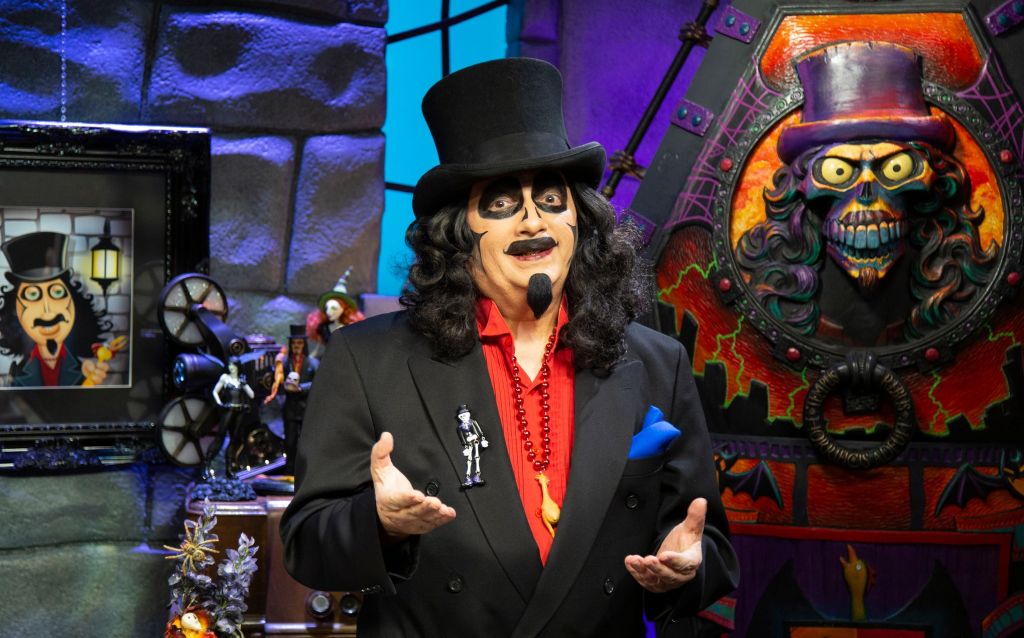
On my recent travels to the US, I got to experience a lot more of the cluttered joys of infinite American cable TV than I usually do, and one thing I particularly enjoyed was catching up with long-running horror movie host Svengoolie’s Saturday night movie of the week on MeTV.

Svengoolie’s schtick is a grand throwback to the pre-internet world, where you couldn’t just find movies like Scream, Blacula, Scream! or House of Frankenstein through a few clicks. On stations throughout America, horror hosts would showcase dusty old vintage movies with plenty of jokes, skits and commentary.

Svengoolie (aka Dave Koz) has been doing this since 1979, believe it or not, and syndicated throughout America for the last decade or so. His campy, corny host act leans into the cheese and groan-worthy puns. But it’s also great fun because it feels like a secret club of fandom run the way it should ideally be. There’s no toxicity here, just silly in-jokes, rubber chickens, and an unending adoration for things like wolf men, Roger Corman flicks and giant ant invasions. 

There’s something kind of charmingly low-fi and comforting to me about a grown adult dressed up in Halloween gear introducing schlocky old movies. The horror host first emerged at the dawn of television in the ‘50s, and has shambled along semi-underground in some form or another to this day, with a new generation even taking the format to streaming.

I generally missed out on the peak horror hosts era from the 1960s to the 1980s, although I have hazy memories of old Universal Monster movies being shown on Saturday morning TV in the early ’80s with some goofy small-time local hosts kicking off the show.

I also honed my bad-movie love back in high school watching the USA Network’s “Up All Night” panorama of abominable flicks like Night Of The Lepus and Attack Of The Killer Tomatoes, sneeringly hosted by the late Gilbert Gottfried, and the classic riffing hosts of Mystery Science Theater 3000. These snark-fests all share a little DNA with the horror hosts idea. 

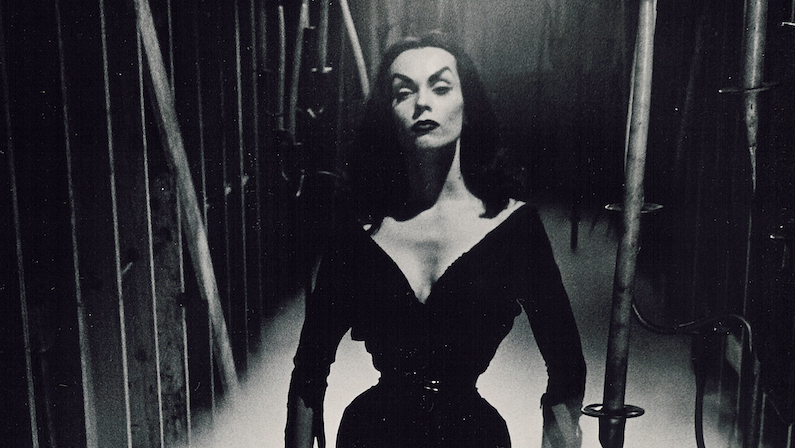
The horror host was pioneered by the iconic wasp-waisted charms of the still-eerie Vampira, whose 1954 show didn’t even last a year but who paved the way for many others.

Vampira, alias Maila Nurmi, lived a complex life trying to recapture her brief stardom with things like an appearance in Ed Wood’s legendarily bad Plan Nine From Outer Space. Very little footage of her show survives now, but even brief clips show how this primordial queen of goths scared stiff the buttoned-up world of ’50s TV, and forged generations of successors: 

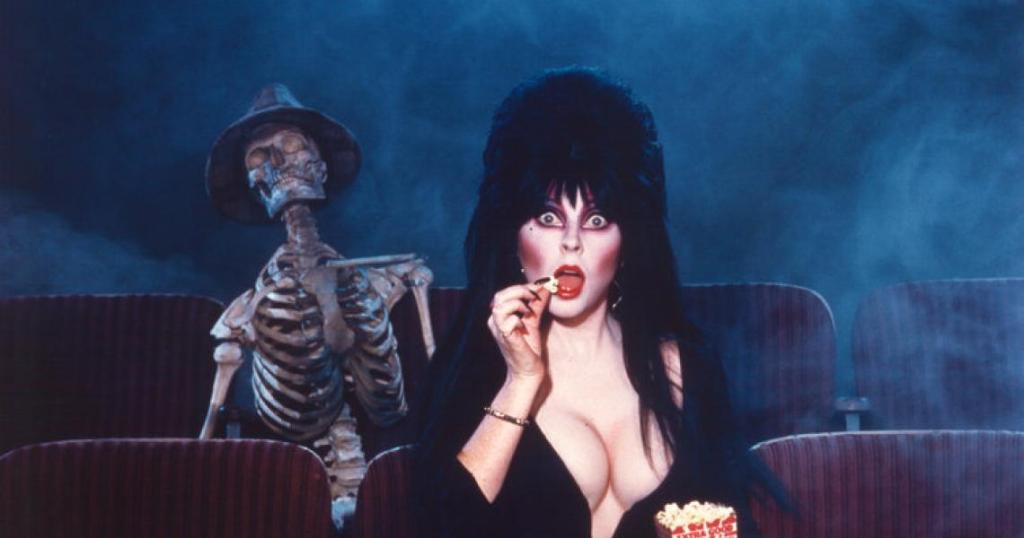
There were many more – Zacherle, who chilled spirits on the East Coast for decades, or the famed Elvira, who successfully homaged/ripped off Vampira’s sexy bad girl act in a later, far more relaxed cultural era to become one of the most recognisable horror hosts of all time. 

Svengoolie, who has been doing his own thing for 45 years and is easing in a cast of possible replacement ghouls, is pretty much the biggest name left on the scene, but the success of his show on MeTV gives hope that the horror host idea isn’t dead just yet. 

In a world of TikToks and YouTubers, everyone is a host now if they want to be. Still, I’m pretty turned off by the influencer aesthetic of random strangers shouting and hustling at me from their phones while sitting in cars.

But give me a guy dressed up like a corpse or a shapely vampire woman in a bargain basement crypt setting, a few Boris Karloff and Christopher Lee flicks and a bucket of popcorn, crank up the groan-worthy jokes, and I’m happy to be scared silly in their company. 

Keeping It Short Week, Day 5: Creepshow and why short horror still creeps me out

Bwa-ha-ha, it’s still Keeping It Short Week, every post 250 words or less or else:

I took years to actually see horror movie anthology Creepshow when it came out in 1982. I first saw the graphic novel adaptation by the late great Bernie Wrightson in a shop, but as a wee pre-teen I was too scared to buy it, so I’d end up flipping through the pages every time I went to that store, scared stiff. 

Creepshow is a great little mix of gore and cheese, filtered through the sensibility of ‘50s horror comics like EC’s Tales From The Crypt. Throw together a few segments, toss in a cackling host to link them together, and off you go. The beauty of an anthology format is, if you don’t like the current bit, wait a few minutes for the next. 

Horror seems to lend itself to an anthology format more than any genre, really. Much of my favourite horror is short and (not so) sweet – those EC comics, TV series like Black Mirror and The Twilight Zone, Stephen King’s deliciously nasty short stories. 

My favourite Universal Horror movies from the 1930s-1940s rarely hit more than an hour’s length, a lesson to those who think you always need three hours-plus to tell a story. Bride of Frankenstein is a mere 75 minutes long! 

Horror can be longer format, of course, such as many of King’s hefty doorstop books like It. But for me, the best horror hits you hard and quick, leaving you gasping for breath before you even quite clock that it’s over. 

Happy Halloween! 

‘The Invisible Man’ at 90 – still a sight to behold

Sure, a monster bursting into your bedroom in the middle of night is scary, but a simple mysterious creak from a shadowy corner? A sense that someone is there, watching you, unseen? Ghouls and vampires are bad news, but an invisible man? Well, that’s terrifying.

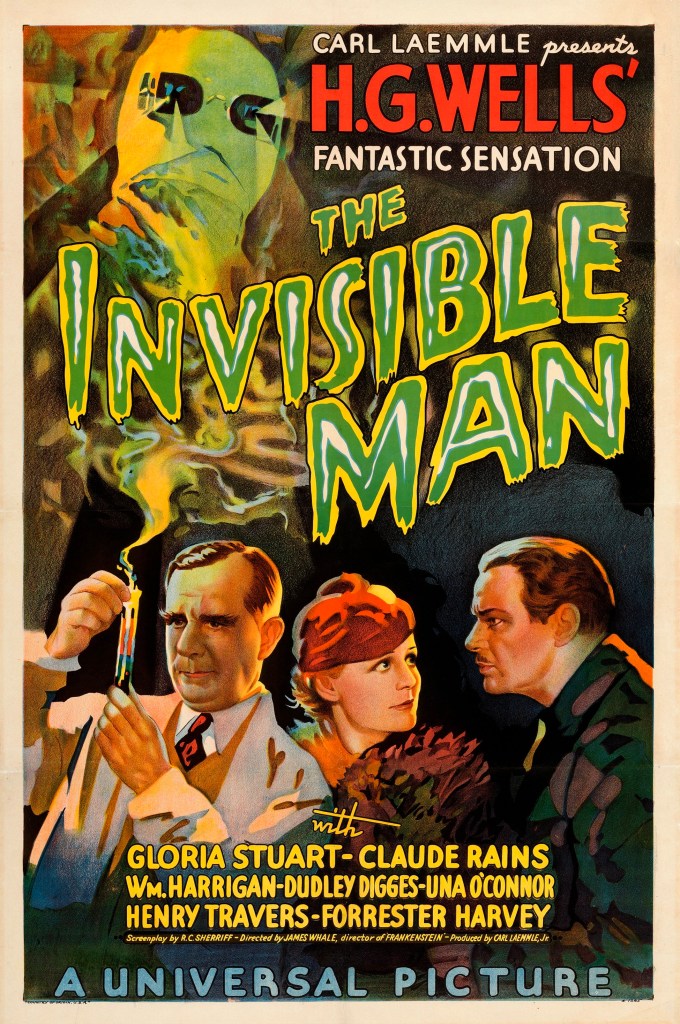
James Whale’s 1933 film The Invisible Man turns 90 years old later this year, and remains a quick-witted, vivid early science-fiction thriller. 

I sat down with the 19-year-old to watch it again recently, and at the end, he turned to me and said with a note of surprise, “That was really good!” Not all of those sometimes antiquated black-and-white horrors would get that kind of reaction, but The Invisible Man remains a model of slick, efficient filmmaking, in and out in just over an hour’s run time.

The story is simple – a man turns himself invisible, and is trying to find a cure. But the experimental formula he tampered with is also slowly driving him insane. 

The Invisible Man is one I watch every few years and clustered right up there in the top 3 Universal Horror movies for me (jostling with, of course, my beloved Creature from the Black Lagoon and depending on my mood that day, either James Whale’s Frankenstein or Bride of Frankenstein). 

Whale was the best of the classic horror directors, lending a keen visual eye and a wry sense of camp to his scare-fests. Pairing him with the stage actor Claude Rains here was a masterstroke, because for huge sections of the picture the Invisible Man has to carry the film with his voice alone, and Rains’ purring, manic mad scientist is a gleeful delight, pinballing between vicious cruelty and tragic victim. (Originally Frankenstein’s Boris Karloff was tipped for the role, and while I love Karloff, it’s hard to imagine his sinister invisible growl having quite the same impact.)  

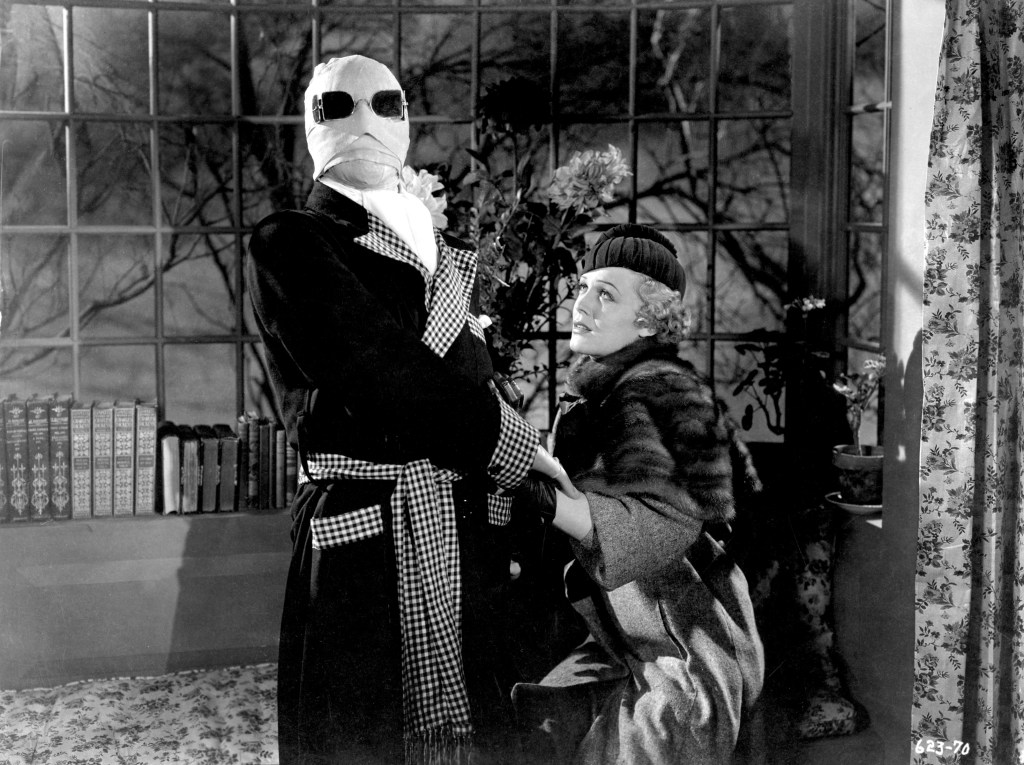
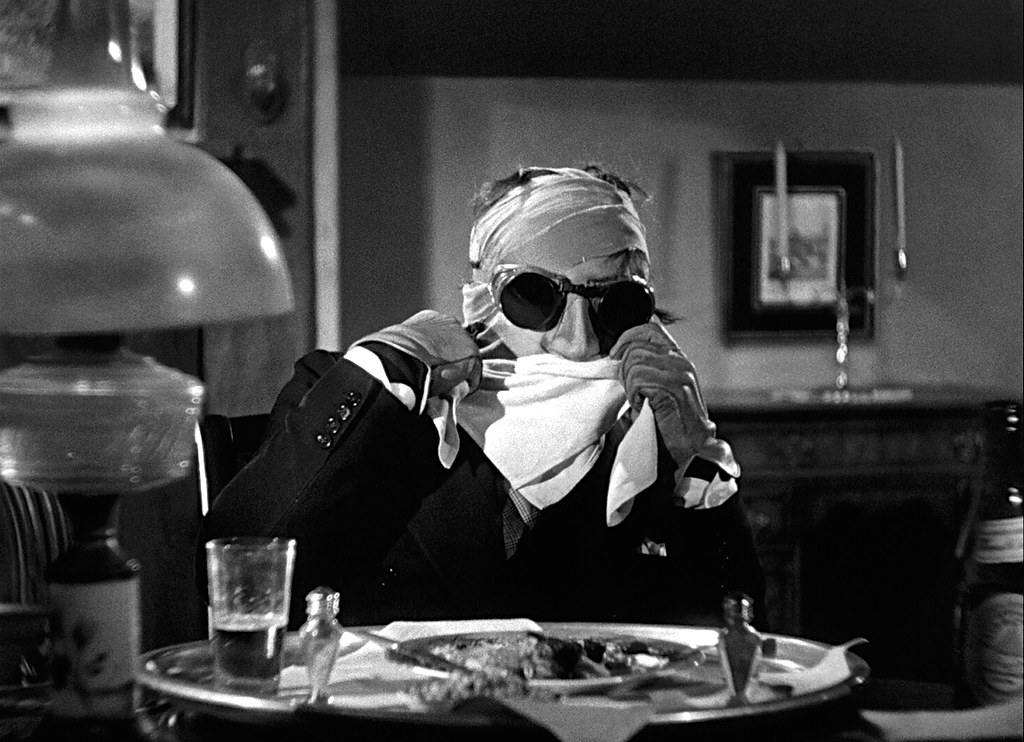
Based on H.G. Wells’ thrilling novella, Jack Griffith, the Invisible Man, is instantly a striking figure from his first moment on screen, wrapped in bandages and dark glasses, a simple but brilliantly effective way of rendering the character visible when he needs to be. The special effects are remarkably good for 1933, a few wires and puppetry seamlessly creating the illusion of a man who isn’t there. 

The Invisible Man also unique in the classic Universal Horror menagerie because Griffith is very much an ordinary man who did this to himself, not some mythical creature like Dracula or the Mummy or a victim of others’ meddling or evil like Frankenstein’s monster or the Wolf Man. He is human, which makes his crimes that much more brutal. 

Griffith: “An invisible man can rule the world. Nobody will see him come, nobody will see him go. He can hear every secret. He can rob, rape and kill!”

And hang on to your hats – with more than 100 people murdered during his reign of terror, the Invisible Man actually had the highest body count on screen of any Universal monster – more than Frankenstein’s creation, more than Dracula. Sure, most of that is the terrifying train derailment he causes near the movie’s climax, but Griffith still strangles, assaults and terrorises with gleeful abandon. 

Coming as The Invisible Man did in that delicate global tension between the devastation of World War I and the genocide of World War II, it’s hard not to see many a would-be dictator’s fantasies in Griffith’s speeches. 

Invisibility is a curious dual curse and blessing in the world of horror – you could go anywhere, in theory, do anything, but if you can’t turn it on and off, you’re also forever separate from the human race, a witness without an audience. 

The concept has been revisited many times, in a series of gradually less effective sequels in the ‘40s, none of which starred Rains, and a goofy Invisible Woman movie in 1940 that made the concept into a laboured comedy with a lot of teasing innuendo, but generally invisibility seen on screen is a man’s world.

More modern movies like Kevin Bacon’s 2000 slasher flick The Hollow Man and the excellent 2020 Invisible Man starring Elisabeth Moss leaned into the Invisible Man’s toxic masculinity with mixed results but there’s something to that – an Invisible Man also implies sex (generally in these films, you’ve got to be naked to be truly invisible, after all) and stalking and predation, factors most of the Invisible Man movies dip into. To be honest, to be invisible is generally to be up to no good, isn’t it? 

And looming over all those spectres is the inimitable Claude Rains, who 90 years on has yet to be truly bettered in the niche world of invisible horror movie villains. From that unforgettable bandage-clad visage to the cackling madness echoing through his voice, Rains still shows us that there’s nothing quite as scary as what you can’t see at all. 

The New Zealand wrestler who played Frankenstein’s monster

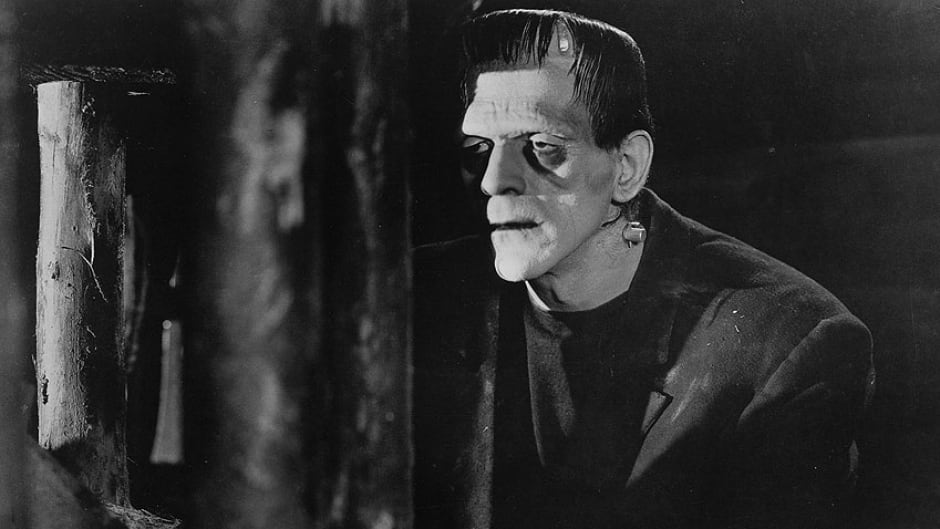
Everyone knows that Boris Karloff played Frankenstein’s monster. Most horror fans remember the late, great Christopher Lee, as well. Benedict Cumberbatch has played the creature. Heck, even Oscar winner Robert DeNiro has played the monster.

But did you know about the New Zealand wrestler who once played Baron Frankenstein’s horrific creation?

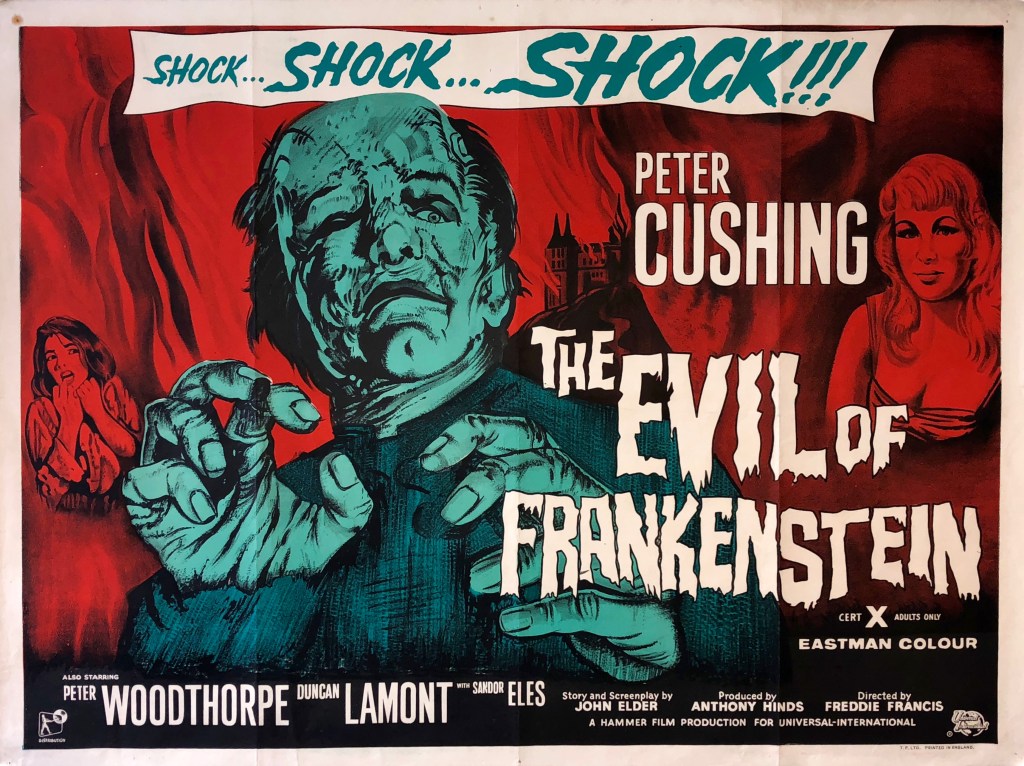
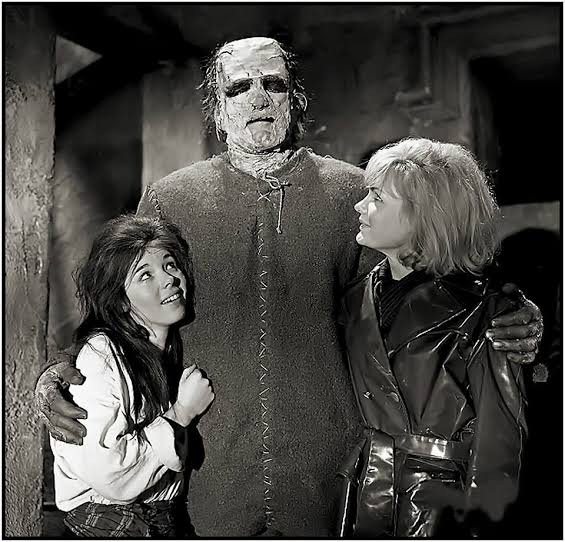
Ernie “Kiwi” Kingston’s turn as the monster in 1964’s The Evil Of Frankenstein by Hammer Films earned him a small but notable place in horror history, but the wrestler’s acting turn is shrouded in obscurity, nearly 60 years on. It was pretty much the only film he performed in. 

The Hammer Frankenstein cycle of movies from 1957-1974 still hold up well as a colourful Gothic series of chilling tales about man’s desire to play God, led by the inimitable Peter Cushing as Baron Frankenstein. Unlike the earlier Universal Frankenstein films, the focus on these was squarely on the evil doctor himself and his mad obsessions as he creates monster after monster in his quest to unlock the secrets of life and death. 

Evil of Frankenstein was the third of six films Cushing starred in, and a kind of weird outlier – the story didn’t seem connected to the two previous movies, and it’s the only one of the series not directed by Hammer maestro Terence Fisher.

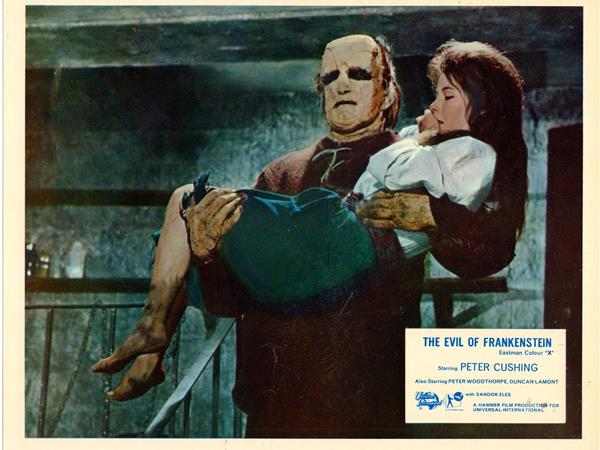
A professional wrestler, 6 foot, 5 inch “Kiwi” Kingston, as he was credited, played a hulking, grotesque version of the monster, freed from frozen ice and abused by a rogue hypnotist (as you do). 

“As a person to work with, quite timid, gentle, quite reserved,” costar Katy Wild, who played a mute girl that befriended the monster, in a documentary on the Evil of Frankenstein blu-ray.  

Unfortunately for Kingston, his turn as the monster is hampered by what is probably the worst makeup in any major Frankenstein movie I’ve seen. Inspired by Karloff’s iconic look, it’s a sloppy, blocky mask that looks a bit like a grocery bag soaked in papier-mâché. The too-huge brow and lack of mobility prevents much in the way of facial expression. You can just barely see Kingston’s eyes poking out from under all the goop. 

It’s a shame because it’s possible less oppressive makeup might have given Kingston more to work with other than lurching around a lot … although he wasn’t exactly a trained actor. 

“Kiwi Kingston was actually cast for his hulking frame and not his acting ability,” the documentary on the movie notes. 

While he was indeed a Kiwi, he seems to have spent most of his life overseas.

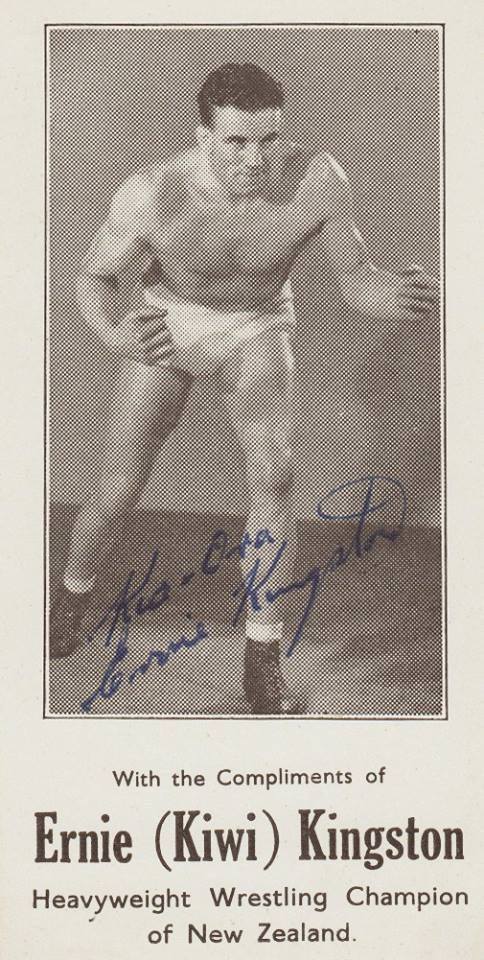
A Christchurch history page says he was “born in 1914, to Ernest John Kingston and Edith Emily (nee) Hammond. As an amateur boxer in New Zealand Ernie had been runner-up in the heavyweight division at the N.Z. champs in 1938. He was also a top rugby player and general all round sportsman.”

He made a name for himself in NZ sport, as seen in a very fit photo from 1940 in the national archives. Like a lot of kiwis, Kingston went on a big OE (overseas experience) but in his case, it sounds like he never really returned. A wrestling blog from 2005 tells a little of his background:

“… Towards the end of the 30’s, a big strong rugby player, boxer, and wrestler, did some service in the air force and ended up in Britain. He was a (wrestler) Anton Koolman pupil in Wellington in the late 30’s, and it is sad that he was almost unknown in his own country. I refer to big Ernie Kingston, who ended up a huge name in Britain and all over Europe. He became known as ‘Kiwi’ Kingston, a big rough diamond from Banks Peninsula.”

He loved horses – “he had a pony field where he collected ponies that had been discarded and looked after them until they died,” his Evil co-star Caron Gardner remembered. 

Evil of Frankenstein was just about it in terms of movie stardom for Kingston, who only appeared in a tiny role in another Hammer film, Hysteria. He did apparently later wrestle under the stage name “The Great Karloff” which is a kind of awesome tip of the hat to his Franken-forefather, though.

Ernie Kingston died in 1992, and there’s not much out there on the internet about his life in later years I could find. 

But there’s only a handful of people out there who can say they played Frankenstein’s monster in a major Hollywood movie over a century or so of films. Kiwi Kingston’s turn as the monster long before Peter Jackson helped put New Zealand horror movies on the global map is a small but fascinating little piece of film history. Not bad for a lad from the bottom of the world.

Horror movies Aotearoa style: New Zealand can be a pretty scary place

I used to see this guy occasionally when I returned to visit America from New Zealand, and every single time he saw me, he’d unleash a stream of lame dad jokes about hobbits and orcs.

…Because that’s all some Americans know when they think of New Zealand, you see, is Peter Jackson’s admittedly excellent Lord of the Rings movies (and the rather less excellent Hobbit follow-ups). 

New Zealand movies are so much more than that, of course, from Oscar-winning director Jane Campion or the askew comedy of Taika Waititi to the awesome talents of Bruno Lawrence, Karl Urban and Sam Neill to some brilliant Māori filmmaking. The now-New Zealand-based James Cameron films his gazillion-dollar Avatar movies here and Wēta Digital’s special effects are all over screens from Marvel superheroes to Cocaine Bear. 

But also, New Zealanders are really good at scaring the crap out of you. 

A pre-hobbit Peter Jackson made some of the first NZ horror movies to gain notice worldwide with the splatter-horror/comedy low-fi genius of Bad Taste, Brain Dead and Meet The Feebles. Many other great NZ horror movies have followed ever since, including Black Sheep, Deathgasm and Housebound.

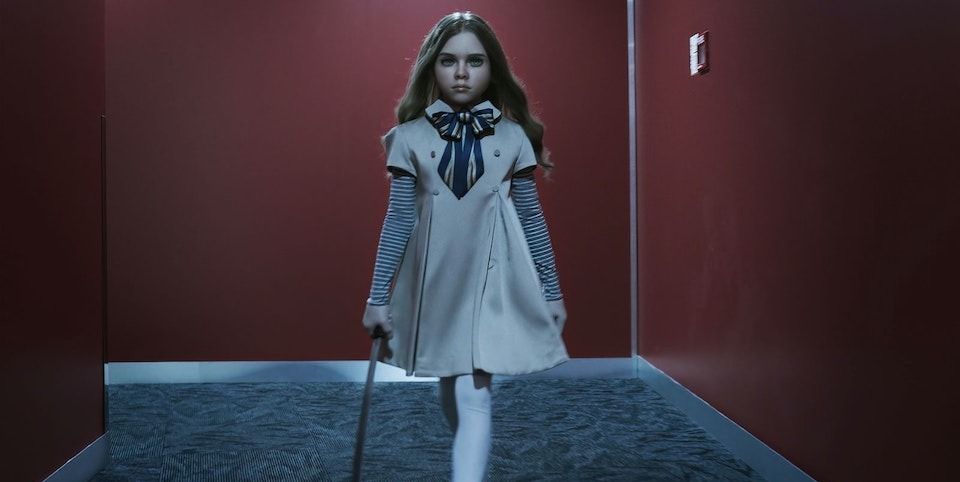
But in the last year or so, even more New Zealand-made horror has kind of taken over the world, with four well regarded scare-fests topping the box office or winning critical acclaim – M3GAN, Evil Dead Rise and Ti West’s X and Pearl.

These films aren’t generally entirely made by New Zealand directors, actors and writers or explicitly even about New Zealand, but by simply being filmed down here and using a hefty amount of local cast, crew, and behind-the-scenes personnel, they’ve got a heavy kiwi sensibility packed into their DNA – a little alienation, a little finding horror in everyday objects, a little wry black humour.

Scary robot doll movie M3GAN is deeply silly but fun spin on the whole “evil technology fears” trope, and while its generic America suburbia and offices setting doesn’t scream New Zealand, big chunks of it were filmed here and NZ director Gerard Johnstone gives the material a nice, creepy edge and added in the viral dance scene that helped make the movie a surprise hit. 

I haven’t seen the intensely gory brand new Evil Dead Rise as it looks a little too much for me, to be honest, but I love that a blood-soaked elevator scene prominent in the trailers was filmed near the mall I used to go to all the time. The whole Evil Dead franchise has many ties to New Zealand – producer Rob Tapert has been with Sam Raimi’s goopy undead franchise since the very beginning, co-created ‘90s kiwi TV sensation Xena: Warrior Princess and is married to its star Lucy Lawless, and the excellent Ash Vs. Evil Dead TV series was all filmed down here. 

But the best of the lot of recent NZ-shot terror for me are the psychosexual horrors of Ti West’s X and its prequel Pearl, which after many delays is finally being shown in NZ cinemas. Both films were filmed at a spooky Whanganui farm, and feature many familiar NZ acting faces. 

X is a proudly sleazy movie about a 1970s porn movie being filmed at a sinister farm that plunges into unexpected depths of emotion amidst its gore and sweat, while the prequel Pearl shifts back in time to tell the story of the elderly woman at the centre of X as a young, hopeful girl with dreams of escaping her stifling family farm. Both movies star Mia Goth, one of the most unique presences on screen in quite a while (without spoilers, she plays multiple roles across the two films). 

I think Pearl is the first great movie I’ve seen to take on the COVID pandemic and all the uneasy, awkward feelings of fear and anxiety churned up by it. Set during the 1918 flu pandemic, it’s a world of recovering trauma where young Pearl (Goth) fears she’ll never fulfil her dreams. Much of Pearl was written while West and Goth were in quarantine here in New Zealand, and the script richly evokes how uncertain the world felt in those early pandemic days. 

An awful lot of movies are shot in New Zealand these days – we’re a hip, cool place, we’re cheap, got a lot of great screen talent built up here, but really, enough with the hobbit jokes, already.

It’s OK if you want to start thinking of New Zealand as the place you go to get scared, too. 

Mummy dearest: Ranking Universal’s classic mummy movies

I love a mummy. Who doesn’t love their mummy? 

Mummy monster movies have always fascinated me, even if there’s never been a truly great mummy movie like there have been for Frankenstein’s monster or Dracula. The very visual idea of a corpse wrapped in bandages touches on some kind of universal terror. They’re not zombies – they’re something kind of worse, caught forever in a sort of half-life. I dressed up as a mummy one year for Halloween wearing yellow pajamas that were draped in toilet paper. The paper unraveled after a few blocks, but I didn’t care. Mummies are cool, man. 

Universal Pictures brought the first mummy movies to the cinema, not too many years after the discovery of King Tut’s tomb created a kind of Egypt-mania. But while Universal churned out five Mummy movies in the ’30s and ‘40s, they’ve never quite been regarded as classics like Bride of Frankenstein or The Invisible Man. Still, the first time I saw these movies years ago, there was something about them I liked.

As a “character,” the Mummy in the Universal movies is generally lacking, especially after the first Boris Karloff film. He’s mute, he shambles and lurches and somehow still manages to kill a lot of people despite only having one working arm and leg. But darn it, he just LOOKS great, with the iconic makeup by Frankenstein’s monster magician Jack Pierce, and there’s something I like about the idea of an ancient horror coming to life in modern America. While the Mummy is a somewhat blank canvas compared to flashier movie monsters, you can see a lot of his relentless stalking and silent menace in later killers like Halloween’s Michael Myers and Friday The 13th’s Jason Voorhees. 

Most of the 1940s Mummy series is formulaic to a fault, and increasingly cheap, each one barely over an hour long. Yet I still enjoy them for what they are – pulpy monster stories that don’t demand too much of you, but you’ll be guaranteed to see some murderin’ mummy action and just enough moments to remind you of why the very idea of a mummy still creeps us out. 

The Mummy (1932)

The one that started it all, but if you’ve never seen it, it’s very different than you might think. On a high from Frankenstein, Boris Karloff stars as Egyptian high priest Imhotep, the “mummy” of the title, but he only actually appears wrapped up in linen for one brief scene. For the rest of the movie, the revived Imhotep is an eccentric yet apparently ordinary man, working as an Egyptian historian. Imhotep’s secret is that he’s searching for the reincarnation of his lost love, and hatching a millennia-old plot of revenge and lust. The Mummy is far more of a kind of Gothic horror than a monster movie, a gorgeously filmed slow burn with Karloff delivering one of his best performances as the creepy stalker Imhotep. It’s more of a ghost story, really. There’s only that brief proper mummy scene but throughout the film makeup mastermind Pierce gives Karloff a withered, haunting look. The Mummy is not quite scary, but genuinely disturbing and bitterly sad, the story of an eternal lost love. Karloff’s haunting eyes tell a story better than even the best makeup could, really. 

Rating: Four and a half pyramids (out of five)

The Mummy’s Hand (1940)

The idea of movie “reboots” didn’t exist in 1940, really, but for all intents and purposes, Mummy’s Hand starts an entire new series of Mummy movies, introducing the ancient Kharis (Tom Tyler). The shuffling “mummy stereotype” that most of us first think of when we think of mummies begins here, in a gaudy B-movie that, while inferior to the arty drama of The Mummy, was actually lot more influential on the mummy image over the years. Thousands of years ago, Kharis attempted to bring his dead lover Princess Ananka back to life, but was caught by the temple priests and mummified alive for his crimes. Centuries later, a group of adventurers discover his tomb in Egypt and accidentally free him, and thus the murdery hijinks ensue. Much of the plot that animates the entire series starts here – an ancient order of cultish priests have guarded the mummy’s secrets for centuries and Kharis is kept alive by “tanna leaves” that rejuvenate him from his hibernation. Unfortunately the cool ideas at the heart of Mummy’s Hand are buried in sloppy execution, a slow plot, dated racial condescension towards the Egyptian people and far too much lame Abbott-and-Costello style comic relief with the highly annoying sidekick “Babe” (Wallace Ford). I rarely wanted a supporting character to be strangled by a mummy as much as I did “Babe.” While this one sets the template for the franchise, with an ever-returning Kharis wreaking vengeance in various ways, it’s a pretty dull monster movie, with sub-par Indiana Jones-style antics and no mummy action until well over halfway through. While Tyler’s reptilian Mummy is very creepy – with vivid blacked-out eyes, he’s a lot scarier than his successor Lon Chaney Jr would be – he gets very little screen time. 

Rating: Three pyramids 

The Mummy’s Tomb (1942)

Arguably, the best of the movies after the Karloff original, once you get past the pointlessly long 10-minute recap of the last movie at the beginning. For one thing, annoying Babe returns and is quickly killed off by the Mummy, who goes on a major revenge murder spree here. The story picks up 30 years after Mummy’s Hand, with the returned Mummy and his Egyptian sidekick (an excellent, feline Turhan Bey) now in America. They’re hanging out in a New England college town hunting down members of the expedition from Mummy’s Hand and wiping them out without mercy. I actually quite like them bringing the Mummy to America, where his old-world menace seems somehow more terrifying and disorienting. Having the Mummy stalk suburban streets is highly creepy. Nobody escapes the Mummy’s curse, these movies constantly remind us, and they actually live up to that claim by wiping out any survivors from previous movies quickly. It’s Lon Chaney Jr’s debut as the Mummy he would go on to play for three movies, but it’s hard to imagine a less thankless role for an actor. He’s mostly played as an unthinking weapon. Even Frankenstein’s monster could emote more, and Chaney reportedly hated the job (fun fact – the alcoholic Chaney reportedly gimmicked the mummy costume up so he could sip vodka all the day long). Despite its flaws, this feels like the platonic ideal of a Universal Mummy movie, and it’s got far more Mummy action than the first two in the series, and a spectacular fiery climax which is probably the best “boss battle” we get in these Mummy movies.

Rating: Four pyramids 

The Mummy’s Ghost (1944)

By Mummy No. 4, Universal’s mummy-mania started to unravel a bit. The by-now mandatory “ancient Egyptian priest passes on his duties” features the priest who died at the beginning of The Mummy’s Tomb! The best and most interesting bit is the idea of Kharis’ doomed lover Princess Ananka being reincarnated into the modern day, an idea first introduced in the Karloff Mummy and later used in the Hammer and Brendan Fraser Mummy franchises. Ever since The Mummy’s Ghost resurrected (sorry) the idea, if you’re doing a mummy story, you’ll probably fit reincarnation in there somewhere. Unfortunately, that plot is introduced in a movie that feels almost like a step-by-step remake of Mummy’s Tomb, with Kharis once again murdering his way around New England. The cast are uniformly forgettable except for John Carradine (in a bit of unfortunate brown-face) as the latest sinister Egyptian cult handler for Kharis, but Lon Chaney gets to emote a little bit more in the stifling Mummy makeup than usual. Also, there’s a cute dog. What lifts Ghost from total mediocrity is the bleakest ending of the entire series, where for once, the monster basically wins. The Mummy movies are all pulpy silliness, but the final scene where the monster and his doomed reincarnated love sink into quicksand always haunted me a little. Unfortunately, dead never means dead when you’re a mummy and there was one more to go… 

Rating: Three and a half pyramids

The Mummy’s Curse (1944)

Churned out less than six months after Ghost, which has to be some kind of record. The Mummy’s Curse immediately gets off on the wrong foot by picking up 25 years after the last movie with the Mummy still lost in a swamp, except for some inexplicable reason instead of New England the setting is now a hackneyed cajun Louisiana filled with cringeworthy Black stereotypes. (A character actually says, twice, “The devil’s on the loose and he’s dancing with the mummy!”) A kind of hacky laziness dominates Curse, which with the slippery flexible timelines of the series should logically be set sometime around the year 1995. In addition to Kharis coming back, the reincarnated Princess Ananka also gets to rise from the dead in this one as an amnesiac – the best scene in the movie is when she rises, eerily, from the swamps. It’s one way the otherwise rote Curse breaks a bit from the formula. The leading man here is so colourless he’s almost transparent, and the entire movie feels like a rerun – once again, we get a lengthy exposition scene and flashback by those pesky inept Egyptian priests and once again we hear about the magic of tanna leaves, and for the third movie in a row a priest betrays the Mummy because he gets the hots for a girl. Poor Lon Chaney doesn’t even get to appear unmasked as Kharis in the flashback scene, because as part of the general cheapness old Tom Tyler footage from Mummy’s Hand is used again. Universal’s Mummy series was never Shakespeare, but by instalment number five all the life had been squeezed out of the premise, which actually ended pretty definitively in Mummy’s Ghost. It’s amazing how this one-armed, one-legged slow Mummy managed to strangle quite so many people during his run, though. 

Rating: Two pyramids

Was this the final blessed peace of the grave for the mummy? Well, Kharis was done, but mummies would return again and again, next in the rather daft Abbott and Costello Meet The Mummy in 1955, and then with Hammer’s quite good Christopher Lee-starring The Mummy in 1959 and many other mummies in the years since. You can’t keep a good dead man down.