I had always wanted to live in New York City. I’d seen Woody Allen movies, I’d been addicted to Seinfeld, I’d watched Ghostbusters and King Kong and Do The Right Thing.
The internship at Billboard magazine was great fun, but living in New York City as a perpetually broke 22-year-old? It was a bit scary. I was put up at New York University dormitories in the East Village, as part of my internship. I was stuck in a utilitarian multi-bedroom apartment with a few other starry-eyed interns, although my actual roommate ended up being a friendly Black 40-something military veteran. I didn’t spend a lot of time in my room, really – there was too much to see and do.
My late dad was very smart with how he taught his spendthrift son to spend money, although it took me years to realise this. He’d never let me starve to death, but neither would he give me an infinite line of credit to spend on books ’n’ CDs and delicious knishes.
So with the paltry paycheck from Billboard and a limited allowance from Dad, I got by. I ate an awful lot of Top Ramen and peanut butter some weeks, as my bank account regularly dropped to two figures. Truth be told, I couldn’t imagine how one could actually afford to live in the city without being a millionaire.
Times Square, where I went to work each day, hadn’t been quite so gentrified then, and was a buzzing, sleazy place with wide-eyed tourists mingling with businessmen, hookers and panhandlers. Cheap trinket shops mixed with fancy Broadway theatres and bizarre shadowy tombs showing all kinds of porn.
In those pre-digital, pre-streaming glory days, New York was a wonderful arcade of eccentric gritty book stores, record stores and junk shops. I discovered the amazing sprawling Strand Bookstore not a few blocks from my dorm room and fell in love in the intense way that only a really good used bookstore can make you feel.
I spent a lot of time in the East Village, where a dirt-poor intern on his days off could just spend the days people-watching in Washington Square. I sat listening to a cassette of Elvis Costello’s Get Happy on my Walkman and reading a paperback of cheap Chekhov plays and imagining how cool I must be. Sitting on the edge of the fountain I’d see people of all races and colours and lifestyles washing by, a far cry from college in rural Mississippi.
The city could be scary at times, but I was six foot two, able to fake an intimidating stare for strangers and knew enough not to take dumb chances.
The author, far right, wearing what history would judge, poorly, as quite possibly the most incredibly 1990s bohemian outfit of all time – tie-dyed shirt, black vest and most likely cut-off jean shorts as well.
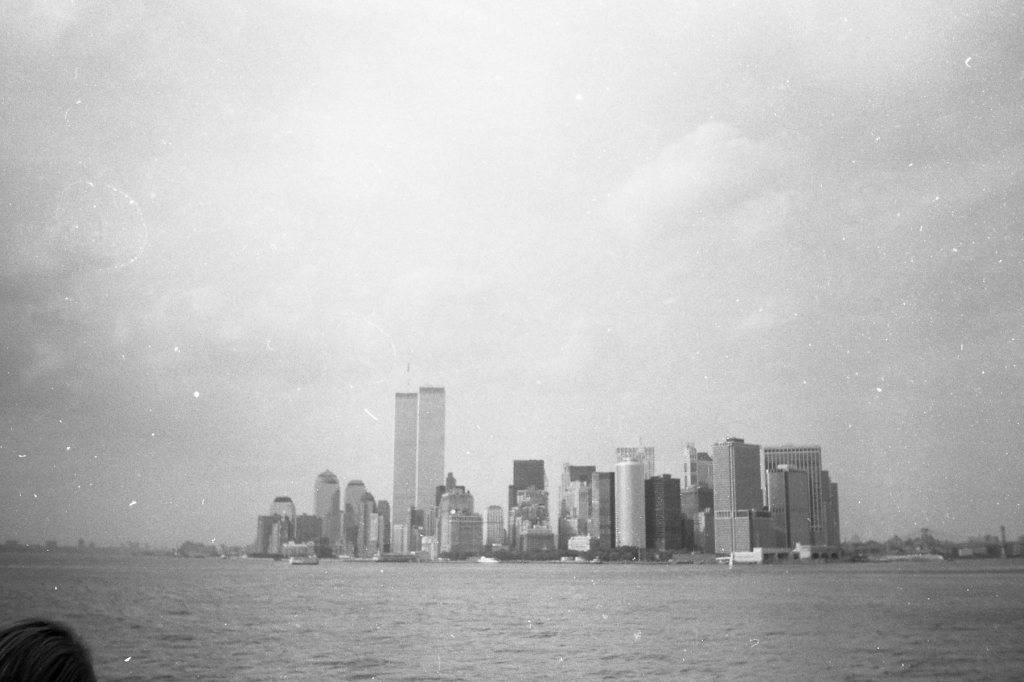
But I also had friends there – pals I’d made in the small press community I got to hang out with for the first time – jumpin’ Joe Meyer, trippy Tim Kelly, amicable Amy Frushour and several more who helped guide me around the crazy, confusing labyrinth of New York. We ate cheap Sbarro’s pizza and wandered the endlessly fascinating streets doing cheap things and visiting museums. I marvelled at the World Trade Center, not knowing it’d be gone in seven years.
It was a summer that felt filled with weird coincidences. My oldest childhood friend happened to be touring the country post-college and we met up and climbed the Empire State Building together. On a busy random Manhattan street corner, I literally ran into an acquaintance from Mississippi. On a train heading upstate, the woman sitting next to me was a young writer I knew at Billboard.
I kick myself today over missing some things – never made it to the Statue of Liberty, never got to Harlem or Brooklyn, didn’t have the money to bounce to all the hip clubs and shows that were going on all around me. I was 22, and I didn’t know all the things I could have been doing. I’m sure I missed a lot.
In hindsight, I wish that maybe I’d seen more and done more in my time in New York – not knowing that 30 years later, having moved to the other side of the world, I’d still never have returned there. Maybe I shouldn’t have bought so many dog-eared paperbacks at the Strand and bought so many CDs at St Mark’s Sounds. But heck, that was part of the experience, wasn’t it?
I was young and naive and the city was a playground of novelties. But it was also exhausting in a certain way, and after three months I longed for a little Mississippi calm and the sound of crickets on a humid Southern night. I didn’t become a seasoned, sarcastic Manhattanite like I’d imagined I might, but I had a taste of the city that never sleeps. That was enough, and 30 years on, unforgettable.
Somehow, 30 years ago this summer, I had my New York City adventure, a near-college graduate from Mississippi who ended up working at a major international magazine.
In my last few months of university, I stumbled into an internship with Billboard magazine, the music industry bible. I’d been signed up for a “trade magazines” internship program and apparently the few awkward music reviews and pieces I’d slapped together as clippings was enough for me to get a three-month tour aboard one of the industry’s biggest magazines. (Later, I met other people who were part of the same trade internship who ended up at magazines with titles like Tractor Parts Weekly, and who were a bit jealous of my fumbling luck getting a “cool” internship.)
For a college boy from Mississippi, it felt like I’d dropped into another world. I had never been to New York City or even America’s East Coast, and suddenly I was tossed into a real Manhattan magazine office which was both more and less than I expected. It had the warren of cubicles like you’d see on TV and movies, the bustle of constant weekly deadlines, but while it was magical, it was also sometimes mundane and in the end, a place where people just worked.
Each day I would put on presentable clothes (the tie and slacks, I discovered in the very first week, were a bit much) and take the subway from my dorm room at NYU up to Times Square, where I’d grab a New York Daily News and coffee and head up to the Billboard office.
In 1994, the music industry was a very different place than it was in 2024. Sure, you still had hustlers and hopefuls all angling to make it big, but there was no Spotify, there was no social media. There was cold black ink on glossy magazine print worth its weight in gold to any musician. Billboard told the world what the number one song was, what the biggest selling album was. It mattered, in an age before media splintered into a million subsets.
The CD was king, and it’s hard to explain now how these shiny disposable discs were valuable hard currency to music lovers for a while there. We’d get dozens of CDs a day from bands hoping for a line or two of print, and each day, dozens of them that the editors were either done with or never listened to at all would be “dumped” on a small “free” shelf right across from my cubicle. Like a dinner bell ringing, the “dump” would be accompanied by other office workers scurrying to the shelf from all over the building, scooping up the glorious free music, no matter what it was, hoping to find treasures.
I ended up with several boxes full of CDs stamped with “promotional copy” on the front to ship back to Mississippi. That summer I discovered bands I would love for years to come – the surreal rock of Guided By Voices, the lonesome beauty of Freedy Johnston, the Britpop charms of Blur – along with dozens of other bands whose names I’d soon forget, whose CDs I’d eventually trade in for credit somewhere.
I worked, briefly, with some music legends there who are now all gone, like the warm-hearted late Irv Lichtman, a true New Yorker to his bones, or Eric Boehlert, a genial young editor only a handful of years older than me who went on to become a fiery critic of online misinformation before his terribly early death in an accident in 2022. The Billboard editor-in-chief, Timothy White, was a bow-tied wearing blur who zipped past my desk several times a week. We exchanged maybe a dozen sentences but that was enough for a striving wanna-be journalist to soak up. He was hugely respected in the industry, but died suddenly of a heart attack at only 50 years old a few years later.
Billboard was full of kind and crusty journalists in equal measure – one of the editors never addressed me with anything more than a grunt, while another often took me out to lunch and once regaled me of tales of the interview he’d just had with Erasure’s Andy Bell that morning. One rain-soaked weekend half the staff went upstate to Woodstock ’94 and I vicariously took in all their madcap stories of this rather muddy fiasco the next week. I was an observer on the edge of it all, but it confirmed for me this weird, pressure-filled life of journalism was where I wanted to be.
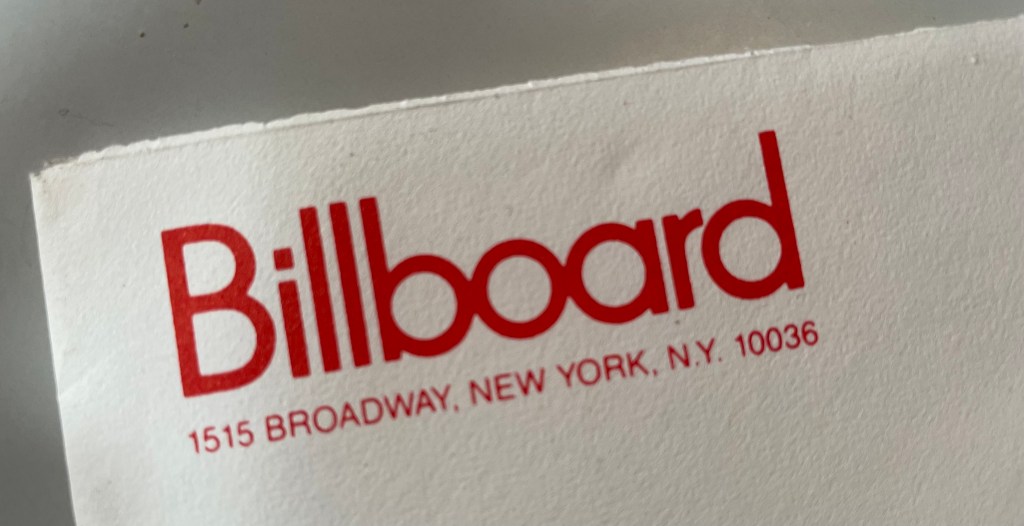
Please note my magnificently disheveled makeshift cubicle at 1515 Broadway, Times Square complete with prominent trash can and empty bag of bagels.
I lived the true intern’s life of being the office errand boy, in that pre-digital era – helping sort the massive sacks of mail of review CDs and books that were dumped out daily, answering phones, working in a tiny storeroom jammed with file cabinets to organise the horrifyingly cheesy band photos sent in by every would-be superstar in the land, and sometimes, getting to write short pieces.
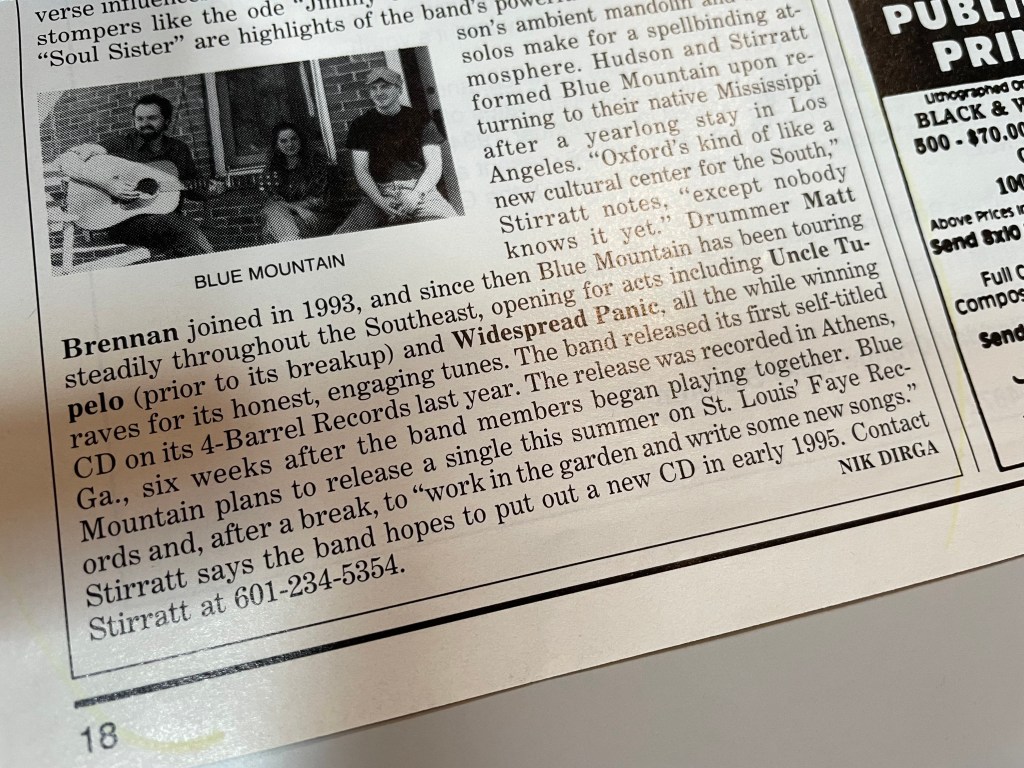
I had maybe 10 bylines in Billboard that summer, each one feeling hard-won.
An article on Oxford, Mississippi band Blue Mountain was a Billboard highlight for me.
I was briefly, part, of a newsroom and a team, and all the years since then I’ve found myself drawn to that weird companionship of the news. It gets in you.
I never got a front-page scoop or anything. I was an accessory, a kid learning the ropes. One tangled industry piece I did ended up being rewritten so comprehensively that I think I recognised a dozen syllables as my work in the final product, but I took it all in – you were there to learn, after all, and the 22-year-old intern couldn’t afford to get angsty about credits.
I did not end up staying and working in Manhattan – I had one semester of college to finish, and ended up getting hired by the local Mississippi paper that fall and working there for a few years before fleeing back to my native California and continuing my quixotic career.
Since the summer of ’94, I have never been back to New York City, and now live almost on the opposite side of the world. I’d like to go back, someday.
But it was enough to be there, for a summer in Manhattan, walking through Times Square every day eating a bagel and feeling like you were part of something greater.
It’s been another rather turbulent week if you’re a bit of a presidential history and politics nerd, in case you’ve been hiding in a dark cave somewhere in the Andes. There’s nothing quite like getting a news alert about a presidential assassination attempt at 10.30am Sunday morning to quicken the blood.
So, haven’t had much time for my usual pop-culture meandering this week (I know, all three of my fans are sorely disappointed), but I have had a few pieces reflecting on the chaos for my day job over at Radio New Zealand:
I’ve monetised that nerdy niche American history knowledge to write lots of pieces over the years, although I’ve really tried to do less of that in recent times. I wrote a piece four years ago which it turns out was far too optimistically called “The last thing I’ll ever write about Donald Trump.” Hah, we were so young and innocent then. (Getting plentiful hate emails, creepy social media stalking and the like from T**mp fans after one piece also kind of cured me of giving hot takes.)
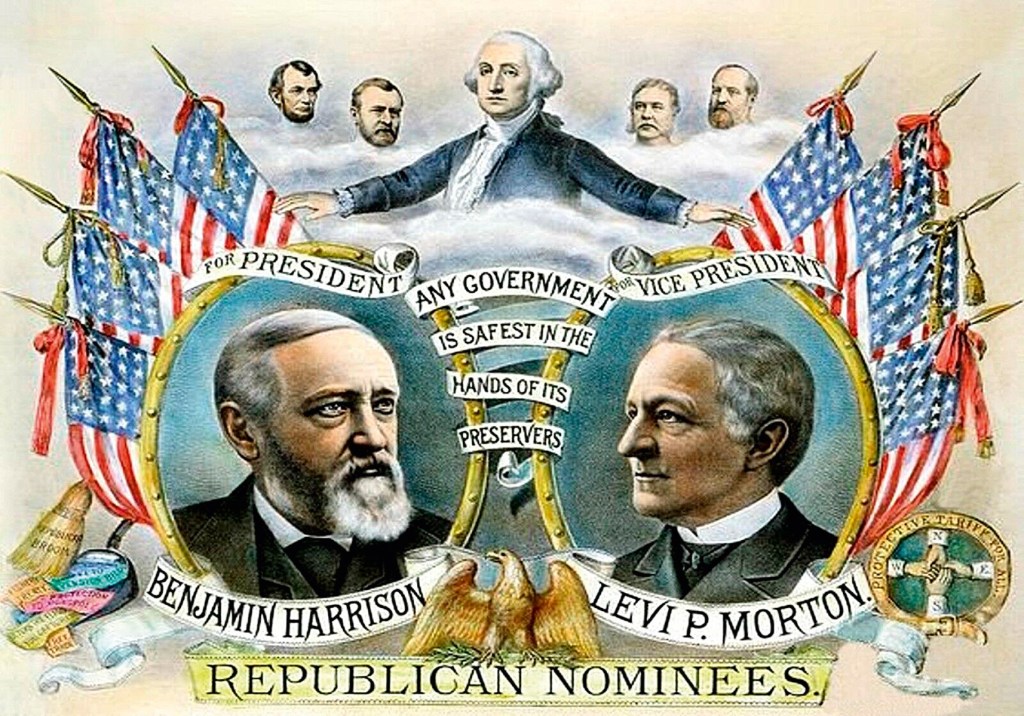
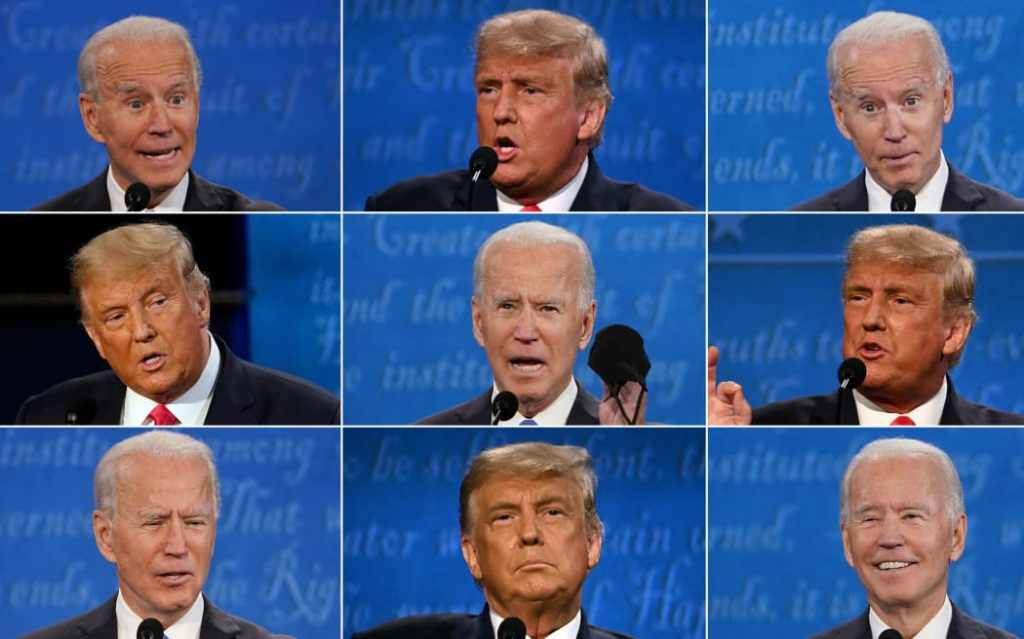
But, we live in unprecedented presidented times, don’t we? The first presidential debate of 2024 a week ago was a shocker – I wrote a preview, live-blogged the actual event and did a bit of a historical deep dive analysis afterwards all for Radio New Zealand. While live blogging it, I had the strange sinking feeling that I was watching history, rather than just another forgettable debate. Here’s what I wrote, with gratuitous arcane Benjamin Harrison and Woodrow Wilson references galore!
I’ve been watching presidential debates for 40 years now, ever since Ronald Reagan and Walter Mondale crossed swords … and I’m afraid President Biden’s performance was the worst I’ve ever seen at one of them.
Will Biden hold the course or step aside? The clock is ticking and just over the last week, while I’ve been on a lovely holiday down south, the narrative keeps changing.
I gave up on making presidential predictions after the 2016 fiasco, and am not entirely sure what the coming days will hold – but I feel 90% sure that if Biden stays in, he actually lost the election on that June evening long before the first vote. It doesn’t matter how well he’s done or not, because, I think, for far too many voters, perception is everything. As far back as last Christmas I did not think Joe Biden should have run again and this whole year has been like a slow-motion car crash, but the thing about car crashes is sometimes, they don’t go quite like you think they would.
So it is with America, shakily, here in 2024. I wonder what precedented times feel like.
Regular posting will resume soon after the difficulties of the past six weeks or so. In the meantime, here’s a few things to catch up with by or about me that have been circulating out there elsewhere on the internet:
As part of RNZ‘s occasional “What To Watch” series highlighting the quirky and obscure corners of the streaming cinematic universe, I wrote up a little review of the extremely weird offbeat Korean comedy Chicken Nugget: What To Watch – Chicken Nugget
Over at the New Zealand Listener magazine, I did a review of Everest, Inc., a fascinating new book by Will Cockrell that looks at how the world of daring mountain summiteers has changed since Sir Edmund Hillary and Sherpa Tenzing Norgay first conquered Everest. You can read it over here (paywall).
And elsewhere, friend Bob had a very kind post the other day about my long-running obscure small press comic Amoeba Adventures, in which he compared my timid scribbling to Scott McCloud’s awesome Zot!which is high praise indeed. (And by the way, if you’re one of those folks who haven’t gotten around to ordering my hefty compendium of classic Amoeba comics over on Amazon, go grab yourself The Best Of Amoeba Adventures right now!)
Somehow, I’ve ended up working in journalism an awfully long time. And in that time, I have had many good editors, a great editor or two, and couple of terrible editors. I’ve also been an editor myself many times (I’ll leave it to others to judge where I fell on the scale myself).
An editor isn’t as glamorous as the headline-chasing feisty street-level reporter, perhaps. But in this age where journalism seems to be constantly under siege from all sides, editors do matter. They guide, they teach, they question, they correct, they set the tone and they can make or break a media outlet. My industry has changed a hell of a lot in the years since I started, but no matter how many apps, algorithms and pivots you throw at it, you need an editor in the mix to make quality journalism.
So here’s a tribute to the bleary-eyed, coffee-fuelled, rage-filled and yet quietly inspirational editors, with a look at eight editors portrayed in fiction who have always inspired me in my own wayward journalism journey, for good or bad.
Lou Grant, The Mary Tyler Moore Show (1970-1977) played by Ed Asner. When I think of a newsroom editor, the rumpled face of Ed Asner leaps to mind. No-nonsense, idealistic and gruff but with a heart of gold, Asner’s Lou Grant was the comic anchor of the still-classic Mary Tyler Moore Show. “Spunk? I hate spunk!” he growls at Mary in the very first episode. Asner played a sitcom character who was still a believable editor, and after the delightfully wacky Mary Tyler Moore Show ended its run he went on to play the exact same character in a very different drama that lasted for five seasons. Now that’s adapting your skill set to changing times.
Perry White, Superman comics: The greatest editor in comic books, even when his newspaper staff appeared to only consist of Clark Kent, Jimmy Olsen and Lois Lane in the glorious Silver Age days. White is old-school journalism to the max, firmly pushing for truth, justice and the American way, just like the Daily Planet’s office mascot Superman. White is constantly shoving his reporters out the door on wacky circulation-boosting assignments, hunting for that story that will make him shout “Great Caesar’s ghost!” In a world filled with kryptonite, Bizarros, giant alien gorillas, fifth-dimensional imps and more, Perry White is a glorious constant. I would work for Perry White any day of the week.
Jane Craig, Broadcast News (1987) played by Holly Hunter: I can’t pretend I know what it’s like to be a woman in a newsroom, but in this classic ‘80s romantic comedy, we watch Hunter’s intense and driven Jane Craig rise through the ranks and juggle relationships with two good but flawed journalists (the amazing Albert Brooks and William Hurt) while never giving up on her own goals. Hurt’s vapid pretty face and Brooks’ charisma-challenged newsman represent the two sides of journalism that never quite come together, while Hunter – trying to keep her principles in a constantly changing industry – is the one who really succeeds in the business.
Charles Foster Kane, Citizen Kane (1941) played by Orson Welles: Is he a good editor-publisher? After all, Welles’ masterpiece is about the rise and fall of Charles Foster Kane. Yet while he’s an egotistical, perpetually unsatisfied tyrant, what we see of Kane’s managerial skills in Citizen Kane also shows us that he’s a darned good newspaperman, hustling for scoops, scandals and attention. Yeah, he bends ethical lines a fair bit, but I’m willing to cut him a little slack as he dates back to the peak era of yellow journalism led by Hearst, Pulitzer and the like. I don’t imagine I’d like to work for Kane, but I’d sure as hell read any newspaper he put out.
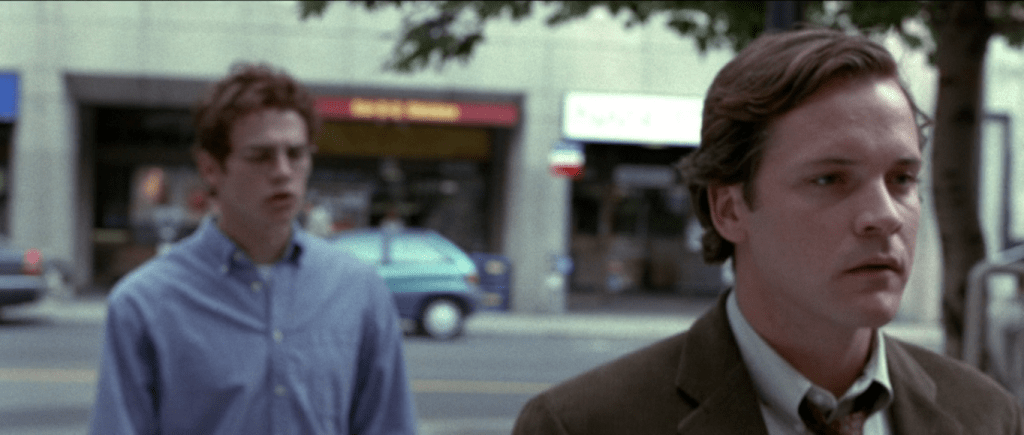
Charles Lane, Shattered Glass (2003) played by Peter Sarsgaard:Shattered Glass remains one of my favourite, still rather underrated journalism movies, about the plagiarist liar journalist Stephen Glass and his unravelling. Sarsgaard is fantastic as the unassuming editor who begins to smell a rat in Glass’ fabulist copy, and doggedly purses the loose ends to discover what the real truth is. Calm but determined and intensely offended by Glass’s stream of lies, Sarsgaard’s Lane makes the dull business of factchecking seem like a spy thriller.
Ben Bradlee, All The President’s Men (1976) played by Jason Robards. Robards is the only one on this list who won an Academy Award for playing an editor, and rightfully so – his inscrutable, steel-eyed Bradlee is the axis around which Dustin Hoffman and Robert Redford’s Watergate investigation revolves in All The President’s Men. Without Bradlee’s guiding hand and consent, the story wouldn’t be told. Like the best editors, he’s kind of terrifying, too.
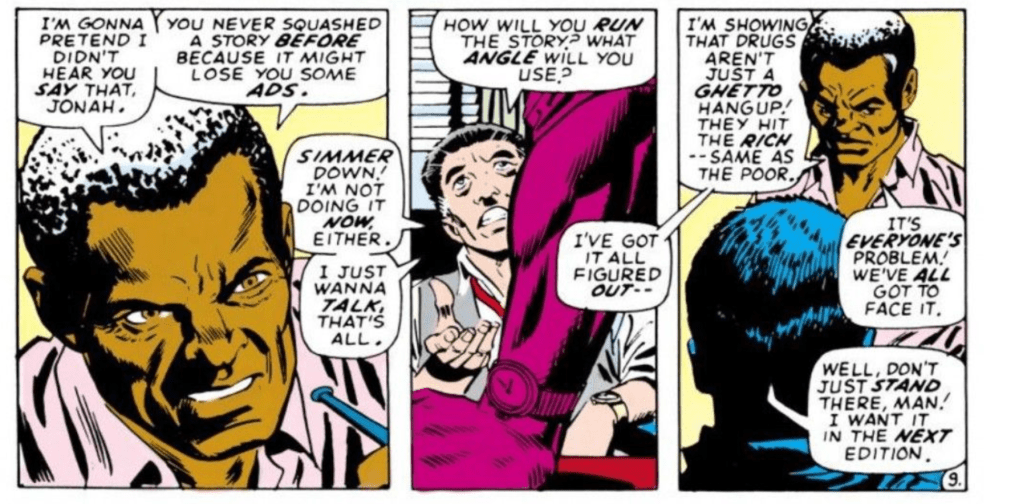
Robbie Robertson, Spider-Man comics: Look, Spider-Man’s nemesis J. Jonah Jameson is undeniably entertaining, but firmly belongs on the worst editor list. How worst? He fires Peter Parker about twice a week, lied repeatedly about Spider-Man in print, hired supervillains to kill him, and on several occasions personally piloted giant robots to beat up Spider-Man. That’s a bad editor. But shift your gaze slightly to the side to consider Jameson’s managing editor at The Daily Bugle, Robbie Robertson, who for decades has been a calm, firm but steady presence in the newsroom, frequently dealing with his impulsive boss’s rants and focused far more on truth than agendas. Jameson makes all the noise; Robertson gets the damn paper out.
Dave Nelson, NewsRadio (1995-1999) played by Dave Foley: As the news director of WNYX, perky Dave Nelson is a sweet-faced rube thrown into a lion’s den of ego, eccentrics and mania. Surrounded by blowhards like Phil Hartman’s anchor Bill McNeal and a variety of other kooks including Stephen Root, Andy Dick and Maura Tierney, Foley as an editor spends almost the entire run of this classic sitcom putting out fires. And you know, that’s often what an editor’s job is – dealing with your staff and juggling all the balls at once. While he occasionally snaps, Dave Nelson simply being able to survive in a radio newsroom bubbling over with complicated personalities is an accomplishment all by itself.
Here’s a brief look at a few other things I’ve been working on recently!
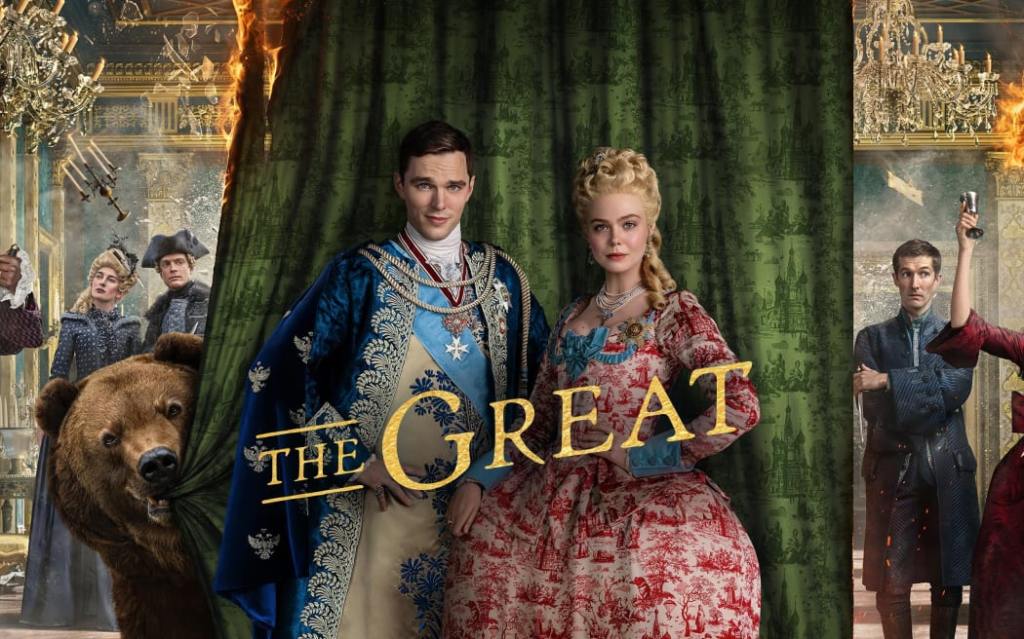
One of my favourite, somewhat underrated TV/streaming shows of the last couple years is the hilarious, bawdy and rude semi-historical comedy The Great. (It’s by the writer behind Poor Things and The Favourite and if you haven’t seen it, it’s highly recommended!) I wrote about my love for this gorgeous and filthy series looking at the corruption of power over for Radio New Zealand‘s occasional series of shows to watch in this age of peak content – read it here:
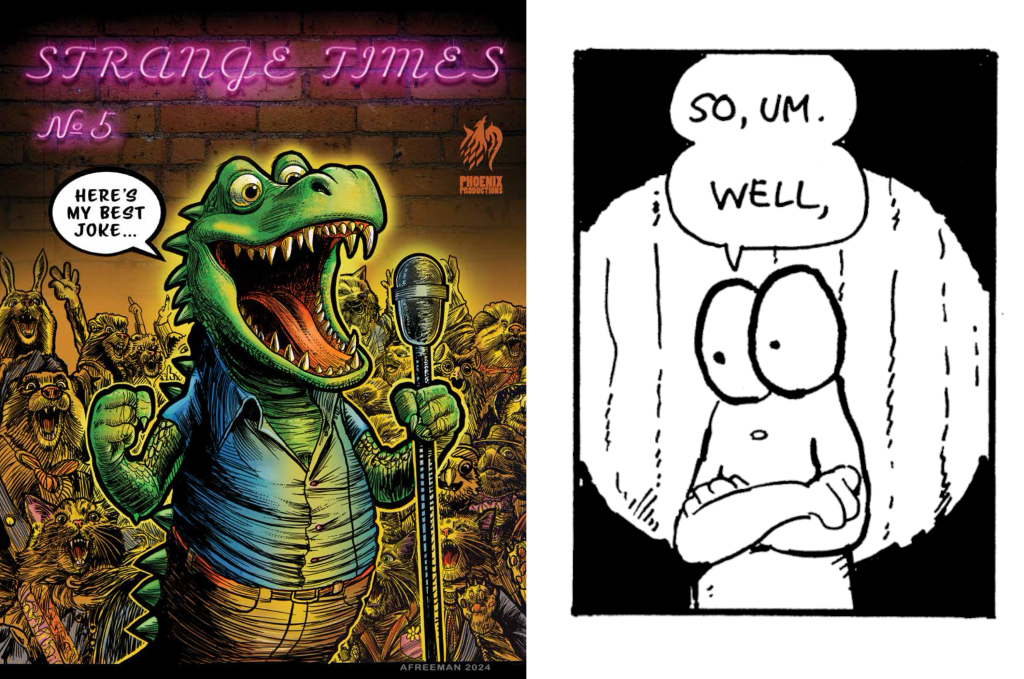
Meanwhile, while I’m slowly working away on the next issue of Amoeba Adventures – more to announce soon! – you can find an all-new one-page Prometheus the Protoplasm strip in the latest issue of Phoenix Productions’ Strange Timesanthology magazine!
This issue’s theme is “My Best Joke” and well, I’ve never been shy about telling a joke, so I’m pleased to take part in a crew of small-press all-stars that includes Teri S. Wood, Matt Feazell, Alan Groening and many more! You can order the print copy right now on Amazon or you can get a PDF version downloaded from Phoenix’s website!
Once upon a time a million years ago, your worth as a journalist was measured by your “clippings file.” It was your best interviews, your sharpest breaking news, your most erudite commentary, all painstakingly clipped from whatever newspaper/magazine you were published in, kept in a file, photocopied and sent off whenever you applied for a new gig.
That’s all jurassic-era stuff now, to be honest, and these days my “clips” are 90% composed of bits and bytes. My “clippings file” of recent work is basically just a link on this webpage, really.
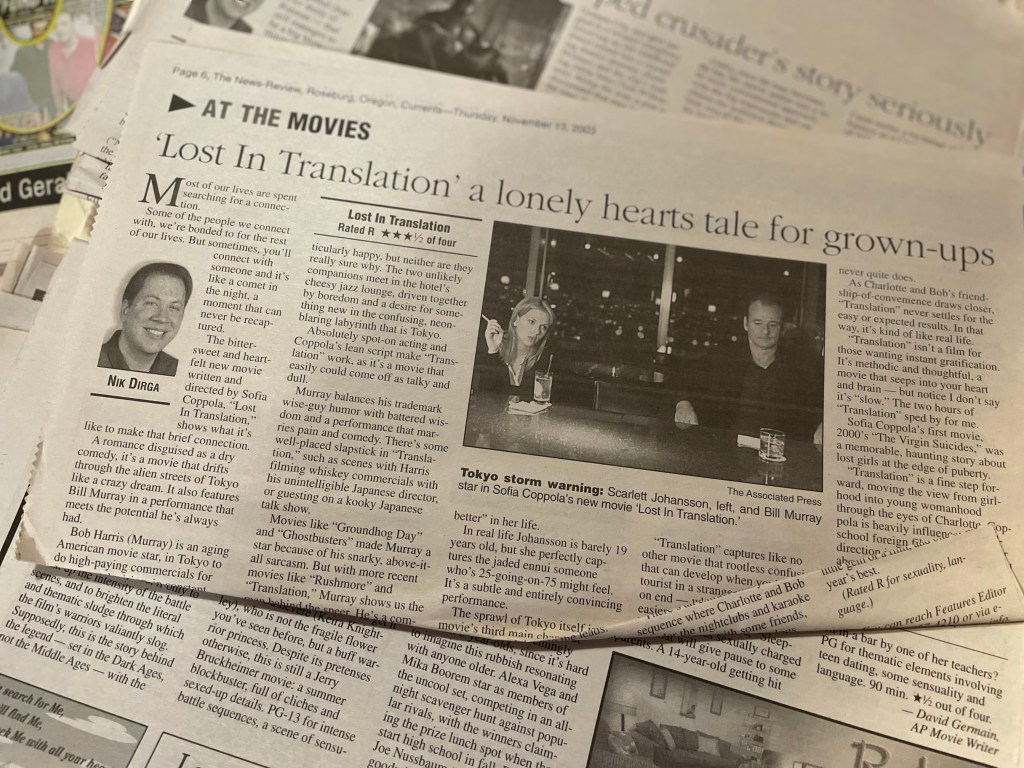
But, because I’m an old hand in the business, I’ve got a hefty box of clippings that still, for some reason, I’ve carried around the world with me and which I periodically pull out once a decade or so to tidy up – some of the clippings now nudging past their 30th birthday.
When I first moved to New Zealand 18 (urk!) years ago many of these clippings seemed a bit more current, to be fair, and we were still moderately in a print-favourable environment for journalists then. You never know, a feature profile I wrote back in America might’ve been just the thing to impress a new boss.
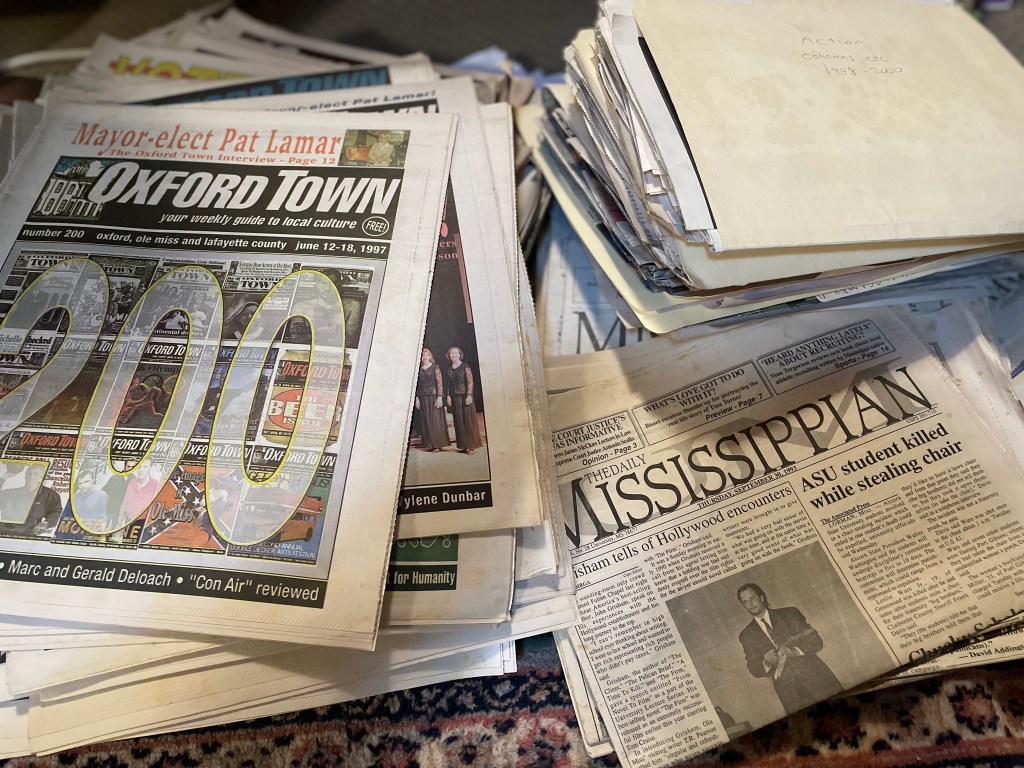
The box contains the very first paid journalism I did for TheDaily Mississippian college paper 30 years ago now, like the time I interviewed California Gov. Jerry Brown (and accidentally stepped on his foot) or that time I had a daily newspaper strip. It contains more than 100 issues of the local “free alternative weekly” newspaper I worked at and then became editor of, Oxford Town. I kept all the issues I edited, because I still, 25 years on, remember every silly story, every goofy design choice, every snarky pun I tried to sneak past the publishers. You never love and hate a job quite like the very first job you feel truly good at, you know.
The box endures, newsprint archaeology of a so-called career through my college days in the 1990s and into the early 2000s, to a tiny newspaper in Oakdale, California where I lasted an anaemic 8 months, to the newspapers in Lake Tahoe I edited for years, to the great little paper in Oregon I worked at just after I got married and had a kid.
There’s feature interviews I wrote about Pulitzer-prize winning authors and Russian painters and zoo veterinarians and chocolate makers. There’s endlessly navel-gazing columns spanning my optimistic 20s and early 30s that I’m both kind of proud of and embarrassed by these days, lots of random music commentary, a long run of video review columns (hey! remember video stores?) and more. If you want to know what I thought of Terminator 3: The Rise of the Machines, the box is the place to go! Hell, there’s even a couple of journalism awards I won!
None of this is remotely useful to me in my alleged career these days, working as a digital journalist and factchecker and freelance writer and whatever the heck else it is I do in an industry that’s changed an awful lot in the 30 years I’ve been doing it. A lot of my writing was very of-the-moment stuff that matters little today. So I could just toss all of this stuff that’s gone from Mississippi to California to New Zealand with me.
But, still. If I throw out a newspaper I edited 25 years ago, that’s it. It’s essentially erased. There’s no website carrying most of its contents, no scanned repository of most small-town newspapers. Heck, even most newspapers unless they’re The New York Times barely have any kind of online archive past the last decade or so. Contrary to what sometimes feels to be the case, all of life isn’t online.
I can pare it down. I have no earthly reason to keep three copies of an issue of a newspaper I edited in 1997 that I was particularly proud of at the time, really.
The box is hefty and awkward and old-school, but even long after the ink has dried on those pages, it feels like it still means something, somehow. Journalists live by their words.
I’ll whittle the box down a little bit more again in this go-round, but will end up keeping most of it still, where it’ll end up in the back of a closet for another several years, a silent testament to the stories I once told and the deadlines I once met. Heck, maybe one day my son will inherit it and either treasure or trash it all.
You can just throw out the stories of your life, but why would you?
Technically, I’m on holiday! But here’s an update on a few miscellaneous projects I’ve been involved with to share so I can keep my Social Influencer TM status:
Thanks to everyone so far who has ordered the amazing, spectacular Best Of Amoeba Adventures Book which is now available on Amazon worldwide as a dirt-cheap shiny paperback or a deluxe fancy-pants hardcover! In case you missed my shilling for it before, it’s 350 pages, more than a dozen stories from my 1990s small press comics and a great introduction to the Prometheus the Protoplasm comics I’ve somehow spent almost 38 years (ugh) dabbling in. If you haven’t ordered it yet, give it a shot and help me support my expensive habits. It’s tax deductible!* (*Might not actually be tax deductible.) If you have ordered it, please leave a review or star rating on Amazon to keep the algorithm overlords happy!
Meanwhile, over at the hip website Bored Panda that all the kids are into, I was interviewed for a little piece this week on the aesthetic of one of my fave filmmakers, Wes Anderson – go read it here!
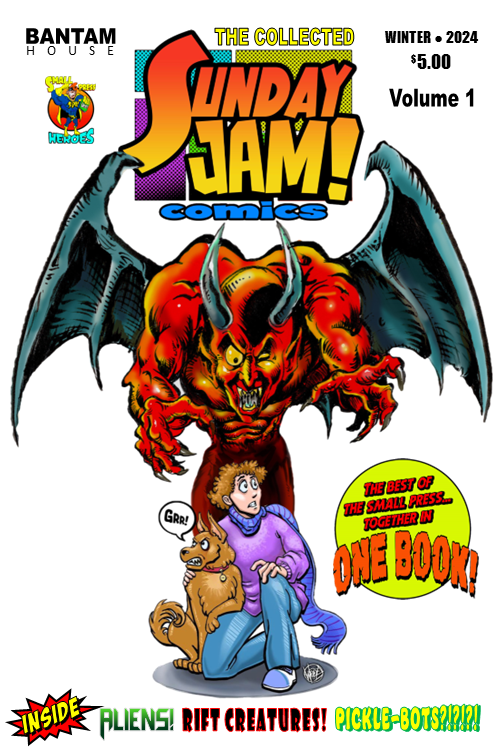
Back to comics, perpetual motion machine Jason DeGroot has been organising a massive jam comic featuring dozens of small press creators, The Sunday Jam! A lot of these projects fizzle out but this one has been barrelling along all year with a new page each week, and I was pleased to take part with a page back around Christmas. Coincidentally mine is the last page in the new Collected Sunday Jam Volume 1 gathering up the first 28 pages of this epic, oddball and sometimes totally insane adventure! You can order the collected Jam for a mere $5 right here, and enjoy a mad sampler of small press talent, or give the project so far a read if you’re jam-curious. Do it!










 Nik Dirga