Sunward I’ve climbed: Goodbye, Dad.

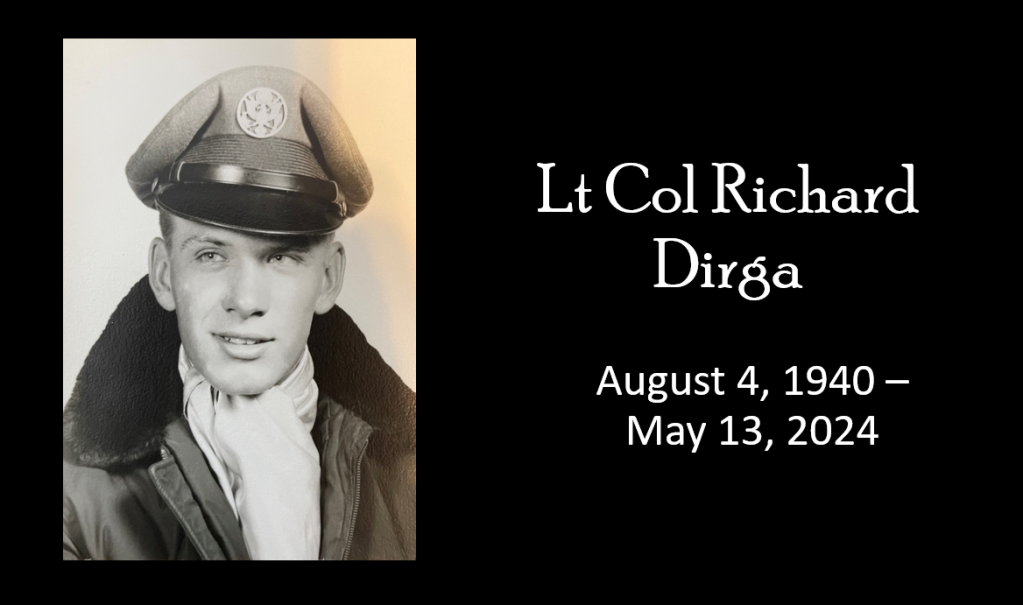
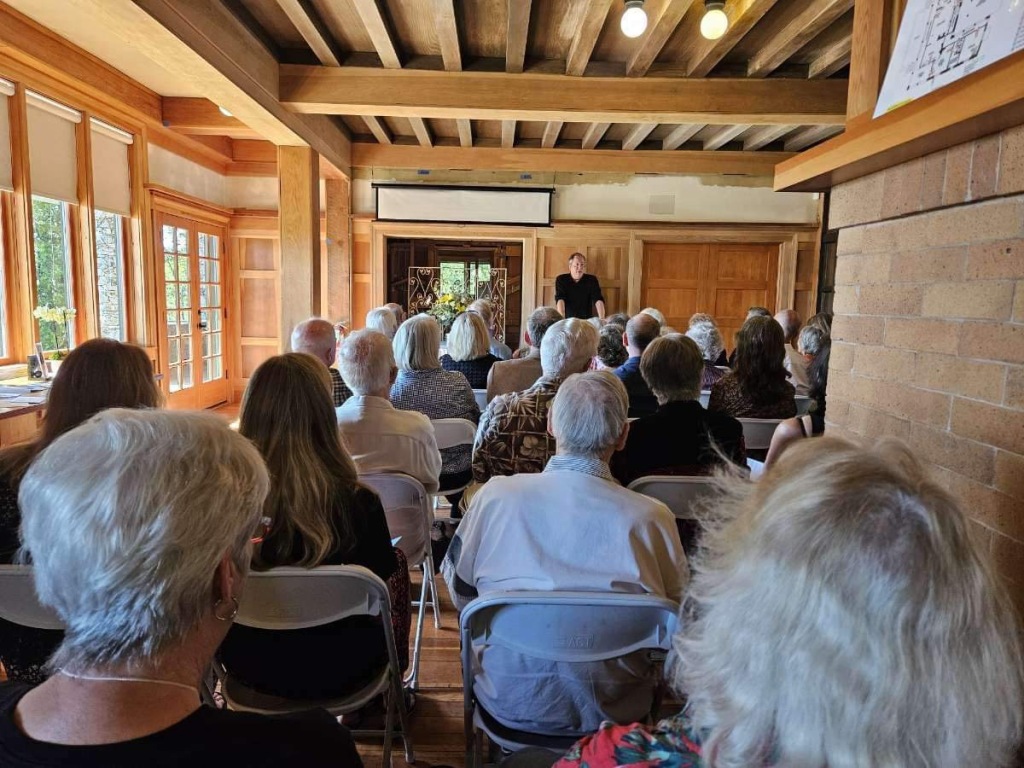
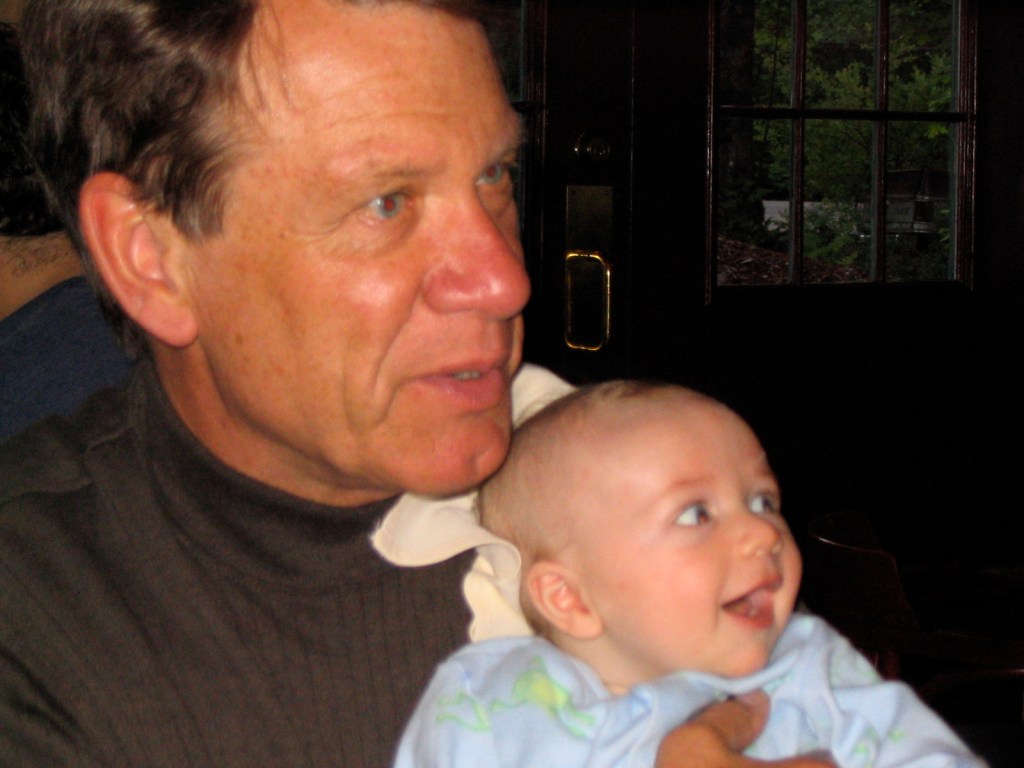
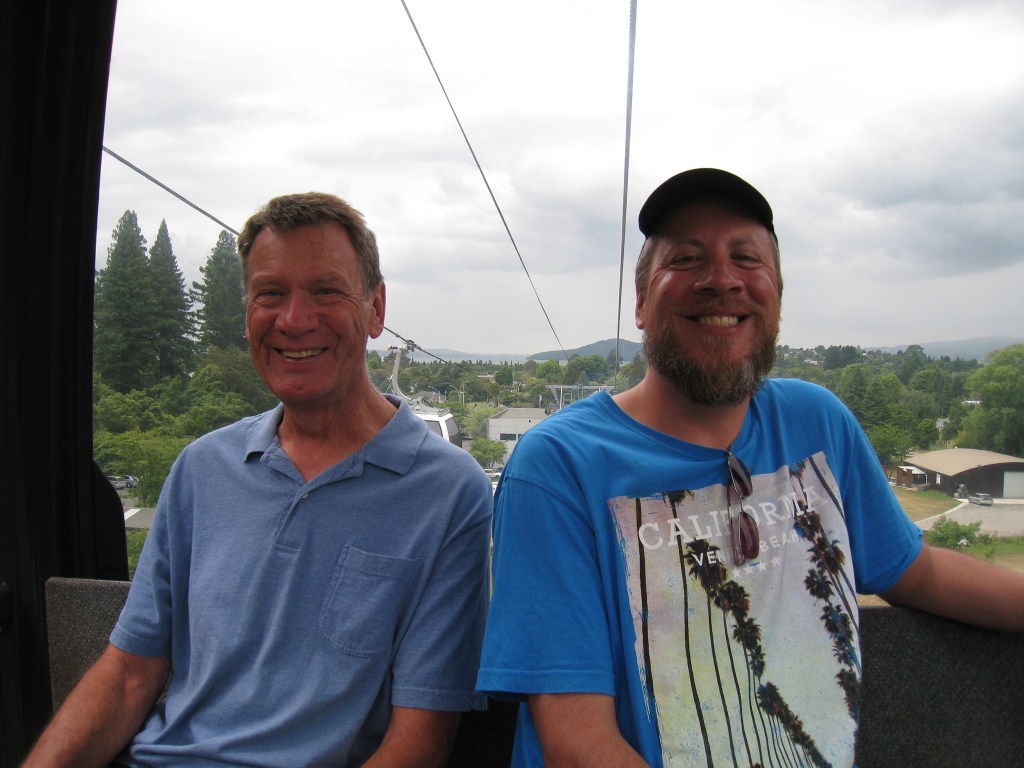
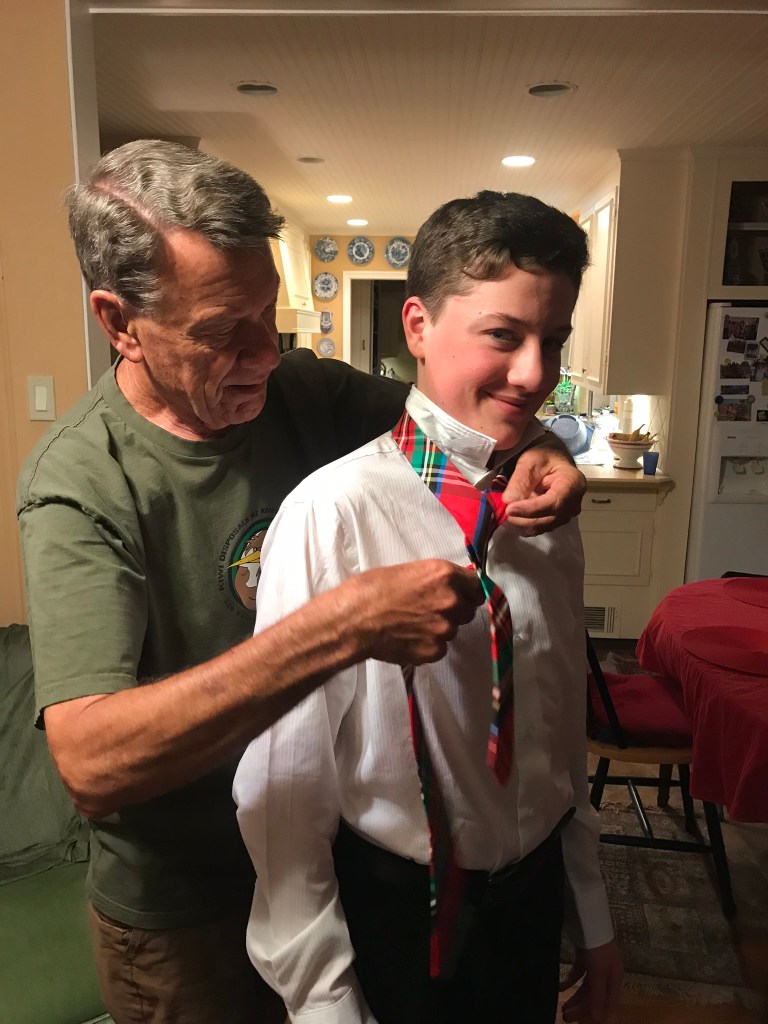
We bid a final goodbye to my father Richard Dirga this week, at a memorial service underneath the tall pines he loved so much in the California foothills. Thank you so much to everyone who came, friends and family and people I hadn’t seen in years. We had to break out the extra chairs in the end, but Dad was worth it. And thanks to all those who have reached out via message, email, letters and more these last few weeks. Every kindness is appreciated.

Myself, my brother and two beloved family friends all spoke to honour Dad’s remarkable life.

Here is what I said:

Dad didn’t want a funeral, or a big fuss made of him, but we decided we couldn’t let him go without doing something.

We received so many messages, emails and calls after Dad died, and the words that kept coming up again and again were about his kindness, his fundamental good heart and eagerness to help whenever asked. He was part of a vanishing breed – the humble but confident man. He never bragged, never boasted, but everyone who knew him knew that he could command attention when it was called for. He was a born leader who chose to be a helper rather than a commander.

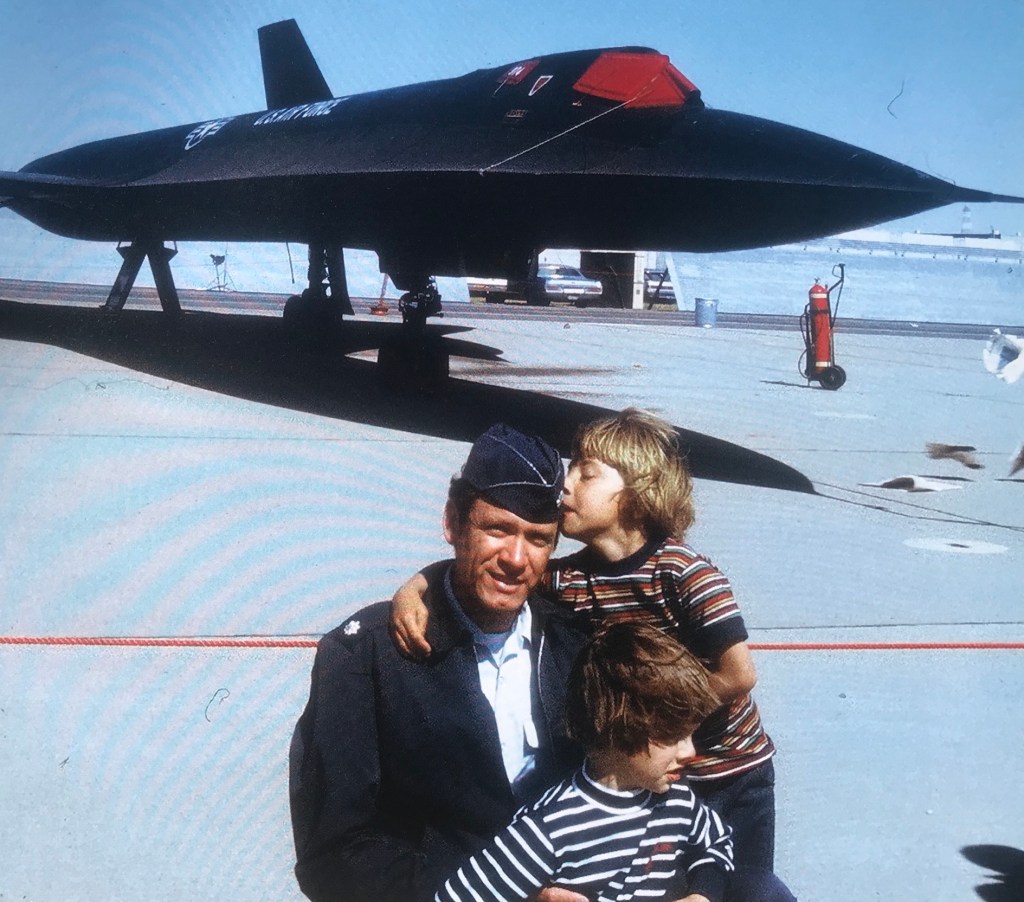
Dad had an extraordinary career with the Air Force that began long before my brother and I were even born. He signed up when he was only 17 years old – when I was 17, I could barely drive a car. He rose to the rank of lieutenant colonel in an almost 20-year career, and he probably could have risen even higher, but he said he never liked the ‘playing politics’ that came with the highest ranks.

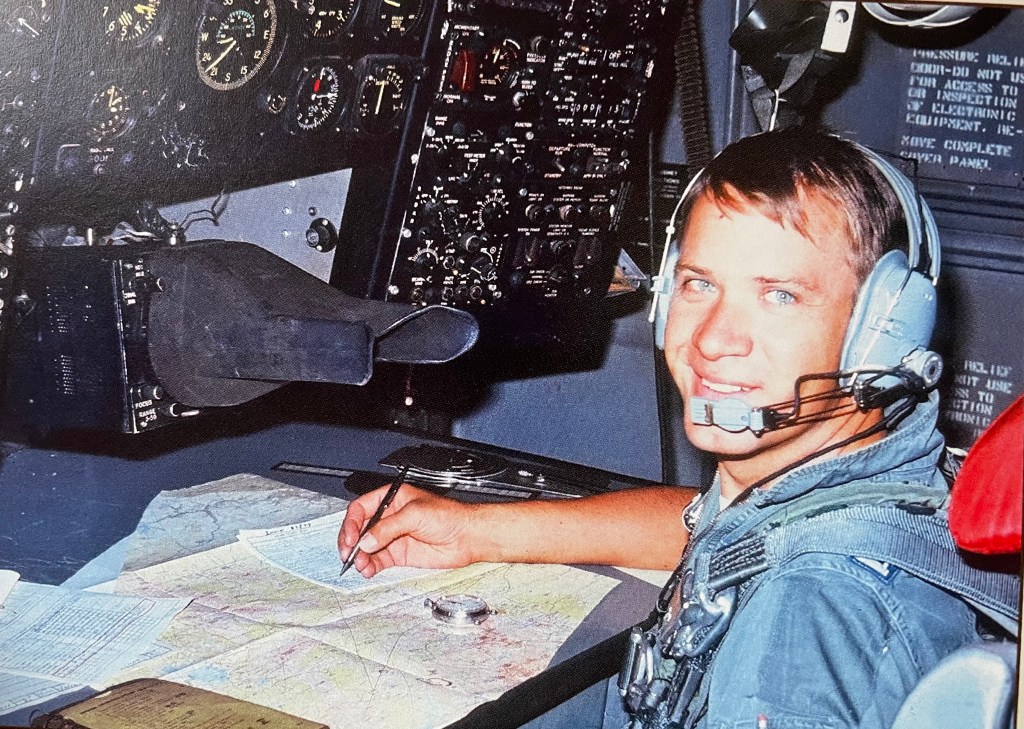
Some of the things he did are still classified and the stories he told us are pretty amazing – up to 24-hour missions flying over the North Pole, over Soviet space and over Cuba during the missile crisis, his 6-foot frame crammed into a tiny space the whole time. He would fly with nuclear weapons on board at the height of the Cold War, ready for any sudden escalation. He worked with the B-58, the SR-71 and others during his career, all these clandestine spy missions. It took me years to realise that when we used to watch James Bond movies on the TV as a kid, he wasn’t just watching a fun adventure – he was critiquing it against his own life! (I always thought he looked just a LITTLE bit like Roger Moore, too)

We weren’t even born when he did some of these things, but he carried that calm authority with him his whole life – how many fathers do you know who had the responsibility of flying with active nuclear bombs? It’s not for the nervous.

Mom and Dad always encouraged us to have adventures, to see the world and not be people who spend their whole lives in one small town. When I was nearly 8 years old, they packed up the house and took us to Europe for an entire year, traveling around in an increasingly rickety and mildewy tiny motorhome. It’s fair to say that year changed my life. When I moved to New Zealand with my family nearly 20 years ago, they could have objected. I mean, we were taking their only grandson to the other side of the world, after all. But Dad, who spent a lifetime saying yes to people, never said a word against it. It was a great adventure, and he loved those.

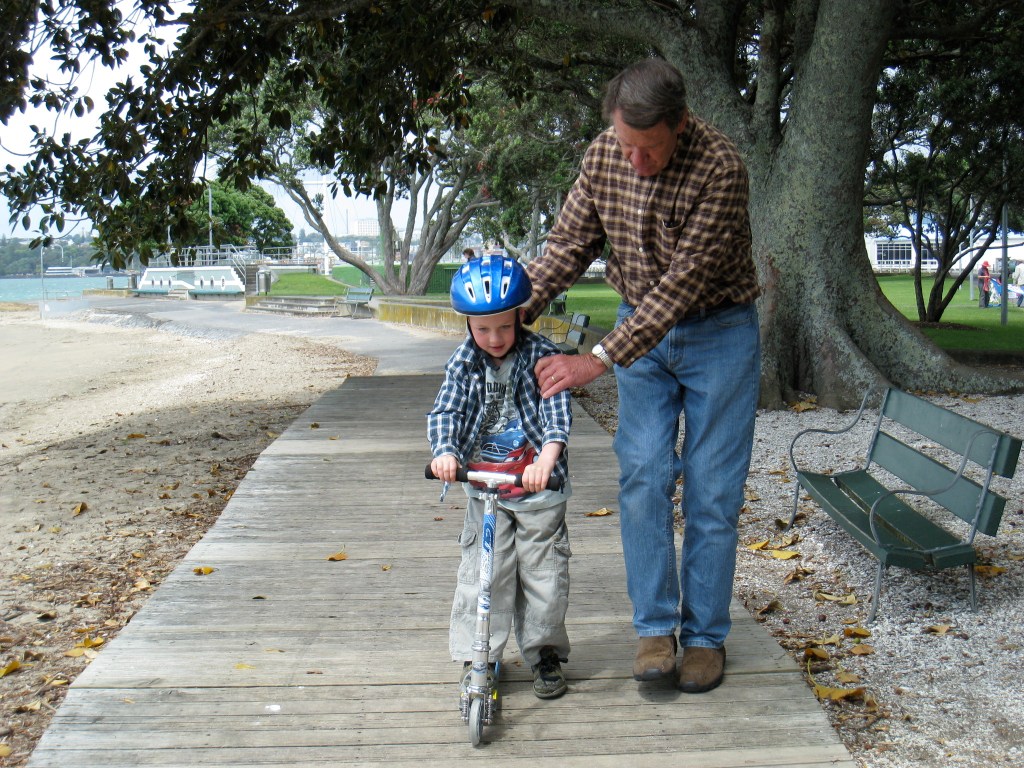
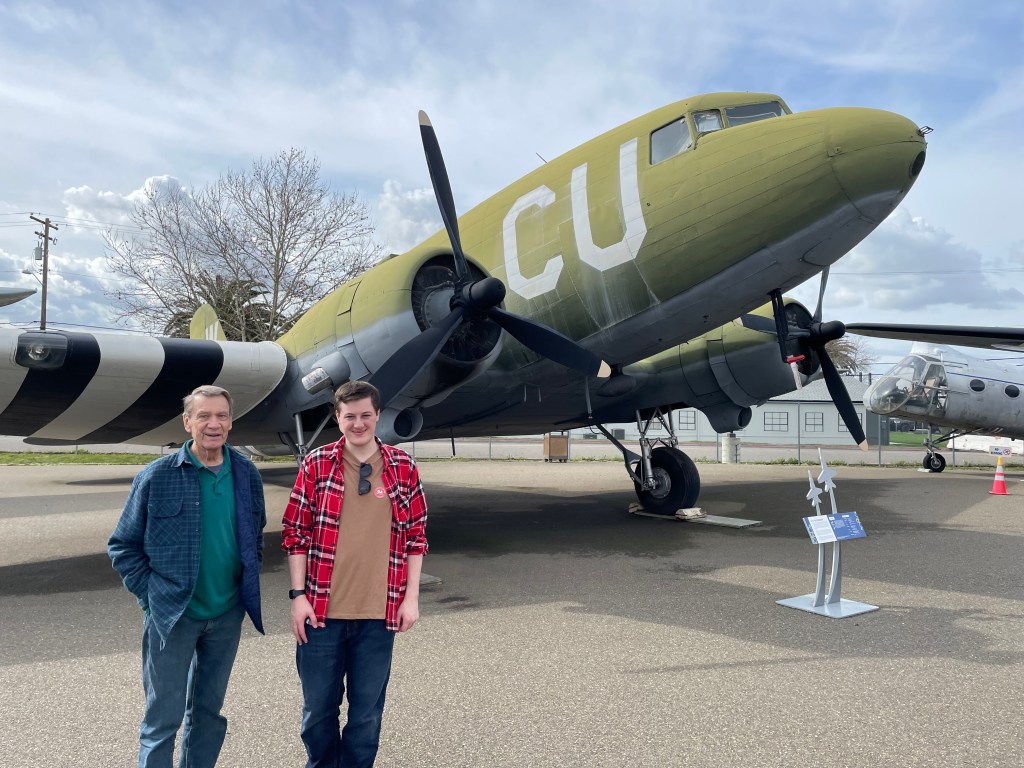
My son Peter is 20 years old now and in his third year studying history and art history at university back in New Zealand. He wouldn’t be there without Dad. When Peter was just four or five years old, Dad took him out to fly remote controlled planes, and that was it – Peter went on to become a military history buff, to build dozens of intricate planes and military models himself, to constantly be excited by the past. Dad’s military career fascinated Peter, and the two of them had a great and wonderful bond. Every time we visited for years, from barely kindergarten age until the beginning of college, Peter and Dad would spend some time flying planes out at Beale. Dad helped set the path of my son’s future.

In the last few years, despite the obstacles life threw at him, despite some of the suffering he had to endure, Dad somehow just kept becoming a better person all the time. It’s as if in his final years, he was distilled down to his purest essence – a kind and curious man whose first thoughts were often about others. At his heart he wasn’t judgmental, and I think he believed that our ultimate goal is just to be decent.

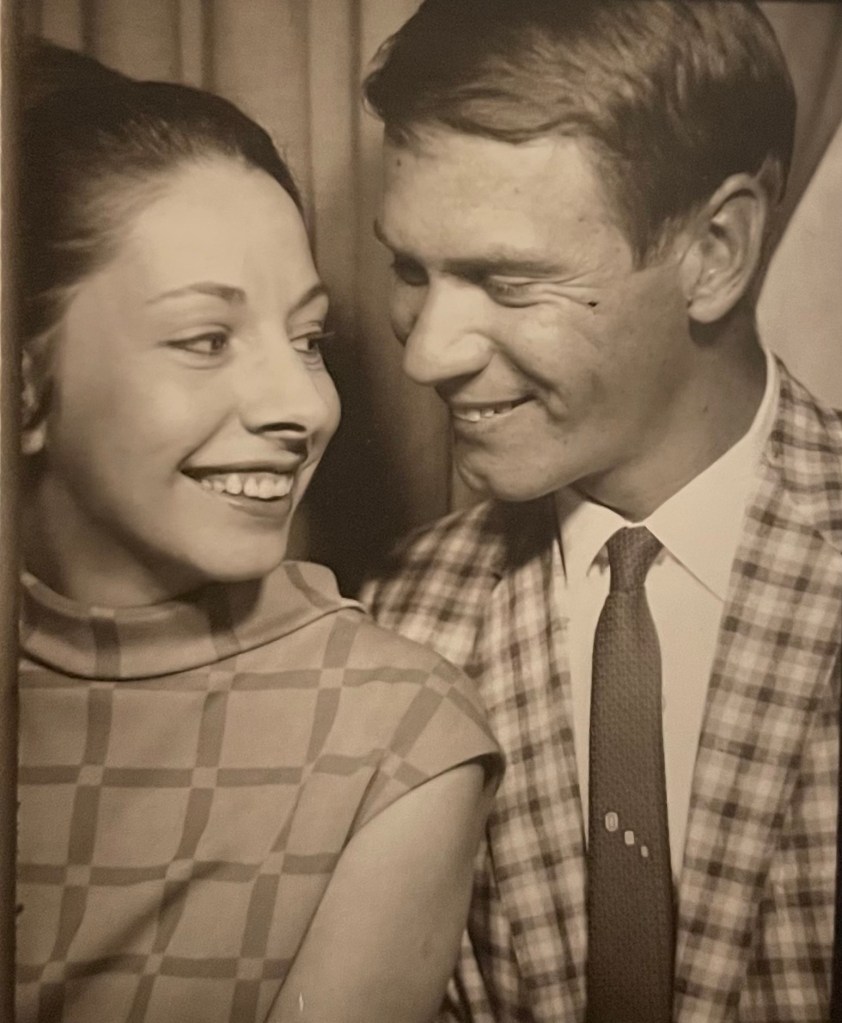
There was a moment when we visited in February that I took a mental photograph of, that I can’t quite forget, and all it was was a simple look Dad gave Mom, as they were sitting together on the couch. It was a look filled with such pure love and admiration, a look that maybe you only get to see when you are married more than 50 years, through thick and thin, the good and the bad. We should all be so lucky to have someone give us a look like that once in our lives.

The last lesson he had to show us was how to go – not with anger and rage at the unfairness of things, but with gratitude. He said again and again these last months how glad he was for an extraordinary life, how lucky he was. The very last conversation I had with him was just a day or two before his final illness, and one of the last things he said was how incredibly proud he was of my brother and I and our families and children.

He fought, hard, and for days after I think whatever made him him left, his body kept on, that mighty heart pumping away. He would never boast, never swagger into a room, but he showed us how strong he really was until the very end. If things had gone differently, I like to think he could’ve made it to 100. He was like a redwood or a towering oak tree in the grand forest of our lives – steady, reliable and protective of us all until his final days. Those who knew Dad know he was a planner, and so it’s probably no surprise that he left a very, VERY detailed to-do list after his passing, to provide for Mom and to make things easier for Chas and I. He’d probably have planned this event too, if he could.


I am sad, still, deep down, and I guess part of me will be that way for a long time. And that’s OK. But right now, right here, I just keep thinking of his smile, the smell of his aftershave, the scratchy stubble I felt on his cheek when he picked us up as kids, the enormous “Dirga dimple’ on his chin that always fascinated me. He always felt like the biggest man in the room to me, even when I grew up to be just a LITTLE taller than him; the way he always felt like he was lifting us up rather than pushing us down. I wouldn’t have been a writer without him; Chas would not have become a nurse. And I am grateful to have had him, for as long as we did, even if it would never quite have felt like enough. How lucky we were.

He loved flying, and the wide open blue skies of California. In an email to a military historian several years back, he wrote that “One benefit I found in flying aircraft was I always felt closer to God. I can’t tell you how many times I felt like I was ‘touching the face of God’ while flying missions over or around Vietnam, Korea or Russia.”

He always liked this poem, High Flight by John Gillespie Magee, Jr, and while Dad didn’t want a funeral, I know that he wouldn’t mind one bit for me to read it here today:

Oh! I have slipped the surly bonds of Earth
And danced the skies on laughter-silvered wings;
Sunward I’ve climbed, and joined the tumbling mirth
of sun-split clouds,—and done a hundred things
You have not dreamed of—wheeled and soared and swung
High in the sunlit silence. Hov’ring there,
I’ve chased the shouting wind along, and flung
My eager craft through footless halls of air ….
Up, up the long, delirious, burning blue
I’ve topped the wind-swept heights with easy grace
Where never lark nor ever eagle flew—
And, while with silent lifting mind I’ve trod
The high untrespassed sanctity of space,
Put out my hand, and touched the face of God.

For family, friends and those who are interested, the entire memorial service can be viewed here on YouTube as well:

Richard Dirga, 1940-2024

My father Richard Dirga died on Monday, May 13.

Tall and strong, he was the oak at the center of our family tree. He had a precise mind, an easy smile and a gentle, firm heart.

For years he flew on Cold War missions for the U.S. strategic air command, doing things like taking off from Alaska and flying over the North Pole on Soviet reconnaissance. After retiring from the Air Force as Lieutenant Colonel, he earned degrees in English literature and electronics.

He never stopped wanting to know more. Our house was full of books. He believed we should know about the whole wide world. He was always there for my brother and I with advice, encouragement and love.

One of his best friends of the past 50 years told him at the end, “You’re the pilot.” He really was. He told us a lot the last few months how grateful he was for all that he got to have, and he fought so very hard to stay.

There’s so much more I could say, but all I can tell you now is how much we will miss him. He was the pilot.

Obituary: My father.

The Warmth Of The Sun: Songs To Survive 2023

Look, I’m sorry to harsh the pre-Christmas buzz, but 2023 was pretty lame, right?

My wife went through breast cancer surgery and treatment (she’s doing a lot better, thankfully). Other family members have been battling ill health and the upheaval of change. We lost our family beach house in a cyclone as the climate crisis hit NZ hard. Hell, even our beloved old cat friend Bowie died, and the world seemed to continue its headlong lurch into fascism, internet-fuelled conspiracy-land, ignorance, pointless culture wars and hate. Get in the bin, 2023, I’m done with you.

So, what do you do? For the last several pandemic-tainted years I’ve done up a playlist of songs to survive, because art helps. Music helps, good books help, great movies help. Drawing two issues of my comic book Amoeba Adventures  helped. I don’t think I could survive in a world without some kind of art. 

Back in the days of ornate mixtapes, you could sweat over the proper order of songs for ages, crafting the perfect vibe. This year, I just kind of threw it all in a blender, from Kiwi pop to thrash to old favourites to new artists I literally discovered a week ago. It’s all music. It’s all good, you know? 

Here’s nearly 3 hours, 40+ songs that helped me survive 2023. Shuffle away and listen to it in any order, or let it flow as it is. 

Wherever you are, have an excellent Christmas, and whoever or whatever you believe in, let’s all hope for a little more peace on earth and goodwill to all in the days to come.

Here’s my playlist Songs To Survive 2023:

Good lord, it’s been 5 years of blogging (or almost 20, depending on how you count it)

So somehow, it’s been five years this week since I started blogging here!

And in raw numbers, it’s actually almost TWENTY frickin’ years since I started blogging for the first time at my original incarnation of scribbling from 2004-2012. That’s a lot of my words on the internet, at least until Elon erases it all.

More importantly, my return to blogging in 2018 kicked off a real renewed interest on my part in the writing end of journalism. I’ve been a working journalist for a long time now, but for many years I found myself focusing more on editing, design and (ugh) management.

Finally I remembered how much I love the act of writing, of reporting and digging for odd facts and talking to interesting strangers. Diving back into blogging in 2018 after a hiatus of several years jumpstarted that part of my brain. 

I began to write more and make a concerted effort to build a kind of freelance career down here in New Zealand, in addition to other journalism work. 

I’m happy to say I’ve submitted more than 170 invoices for paid writing since 2019, written articles for websites, newspapers and magazines all around the country and at least a hundred or so other non-bylined pieces for Radio New Zealand, where I’ve been working since 2021 and a place I deeply respect for providing quality, diverse and important journalism down in this part of the world.

This website also helped me bring back my long, long-dormant comic book Amoeba Adventures, when we were all stuck in those dreary, uncertain early days of the pandemic a few years back. The Covid hiatus seemed like a really good time for me to pull out all my ancient comic strips and scan and throw them on the internet as I’d been meaning to do for ages. I put nearly 50 of my 1990s small press comics up to download (for FREE! hurray!) and looking at all my old goofy Prometheus comics finally inspired me to pick up a pencil again for the first time since 1998 and write and draw six brand new issues of Amoeba Adventures to date.

In other words, blogging here reminded me why words matter, why art matters when everything else is annoying as hell in this increasingly fractured, fractious world. 

More than ever, the past year or so has convinced me that blogging feels more like a natural home for my writing than the endless bickering and hot-takes and rage-scrolling of social media. I left Twitter (I refuse to call it “X”) about a year ago, before it all really went to shit, and haven’t regretted it once, watching it spiral down into a miasma of hate, conspiracy and misinformation. I’ll link to my stuff on Facebook and Instagram, but this site is where I want to commit most of my “spare” writing time rather than arguing with strangers on the internet or whatever.

These days the blog is kind of my writing workshop where I babble about things that maybe don’t quite meet the standard of paying work, or are a little too esoteric, plus linking back to my other projects.

Somehow I’ve bashed out 319 posts on here the last five years – I try to get one up a week, and these days focus mostly on quirky pop culture writing rather than sharing every detail of my life, because that all got pretty old pretty quickly on the internet, didn’t it?

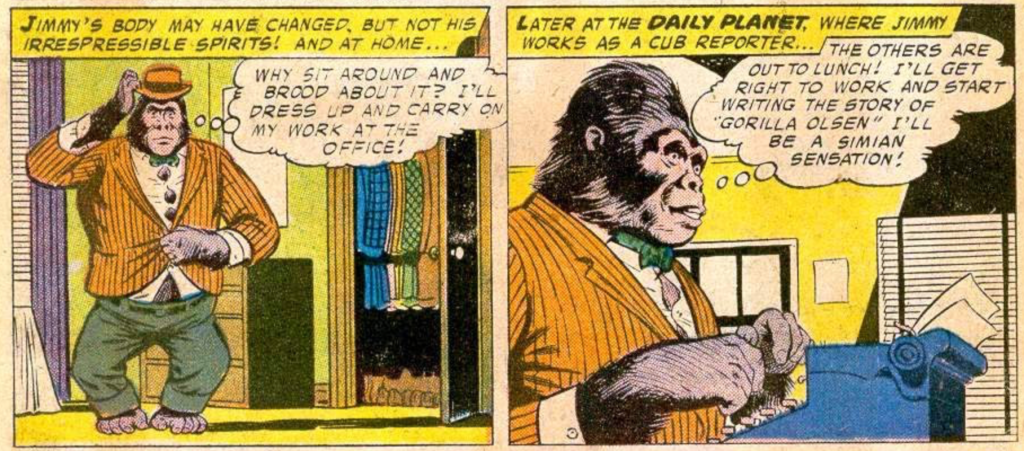
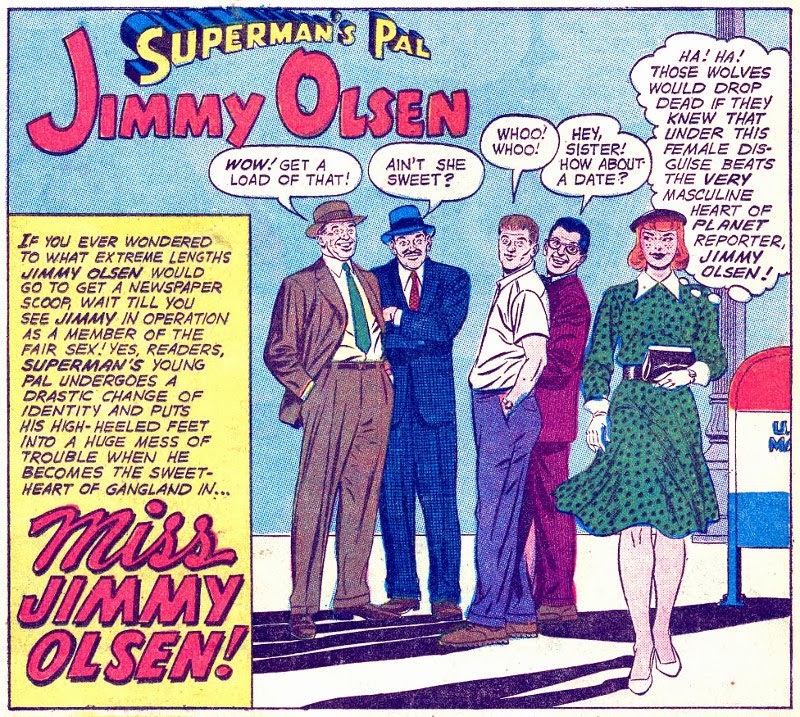
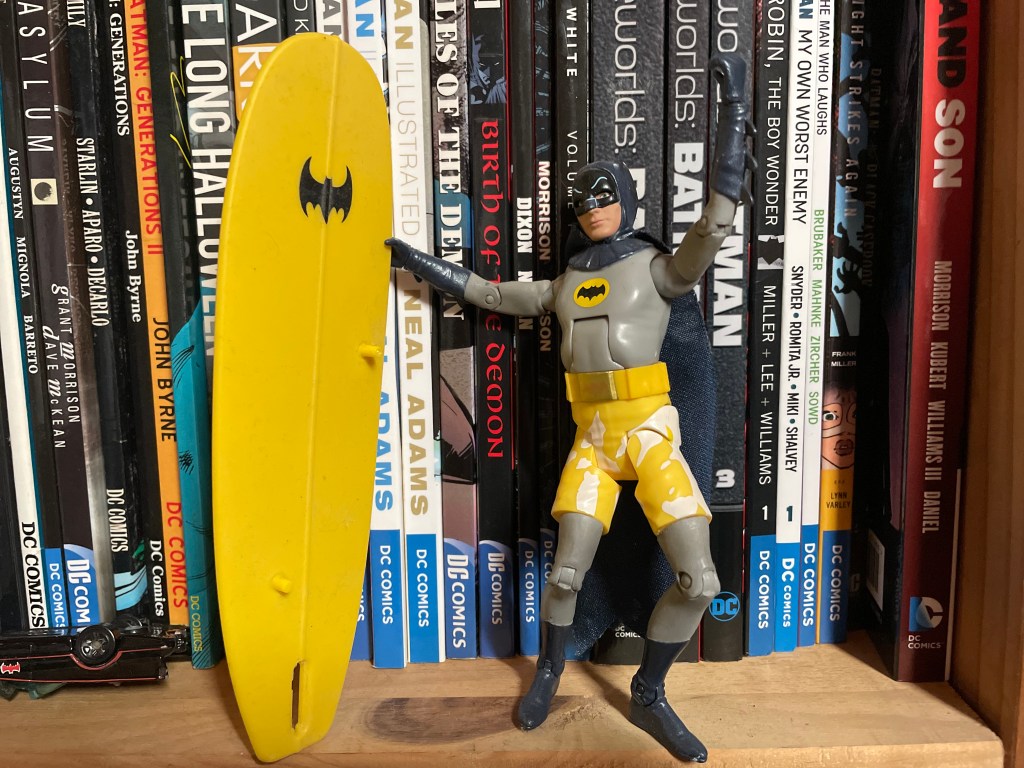
I’ve enjoyed seeing what “takes off” here as you never know whether two people or 2000 will read a post on the weird internet of 2023. A little tribute to Yoko Ono I wrote in 2021 has proven perhaps the most read post I’ve ever done, while other ones that constantly pop up on my “most read” site statistics are an appreciation of The Thin Man films, a look at presidential biographies, and an obituary for the late great grunge icon Mark Lanegan. (And then there’s my ode to Jimmy Olsen comics, which I still maintain are the best comic books of all time and which decorate this celebratory blog post.)

Writing here, generally, makes me feel good about myself, even I’m just tossing words about in a random mix to see what sticks. I write for myself, first and foremost, but I am hugely appreciative of those who’ve followed my website, or my comics, the past few years as Writer Nik attempted to come out of his musty old shell.

All you folk who leave a comment or click a link or download a comic are tops in my book! Cheers and here’s to more words to come!

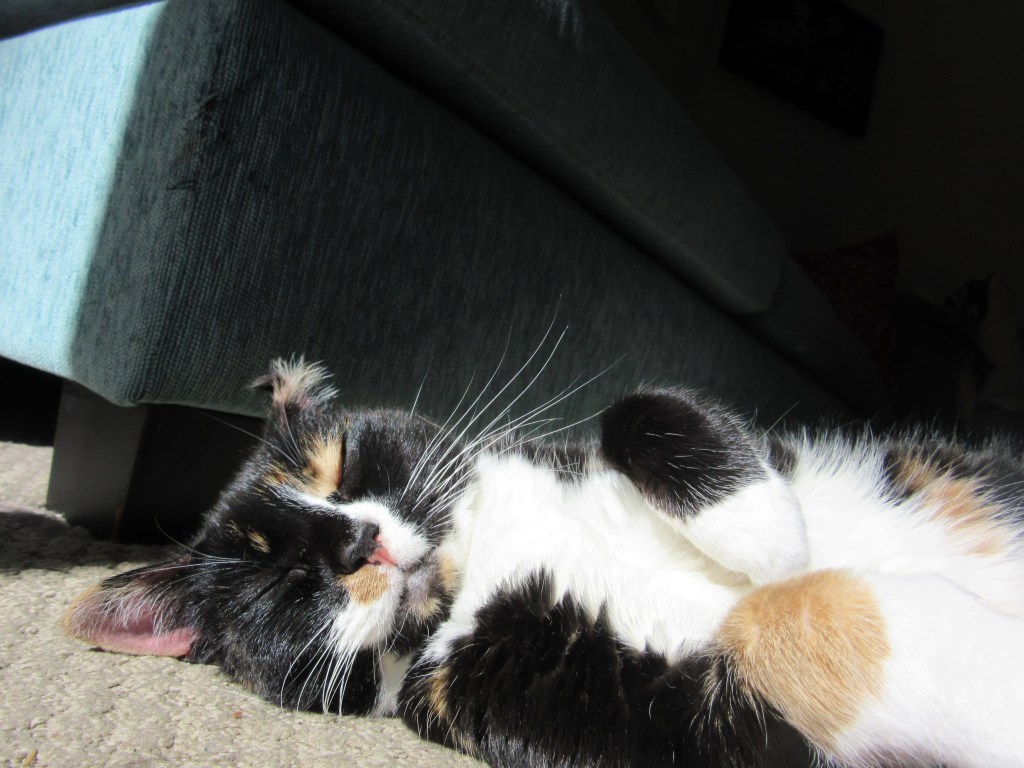
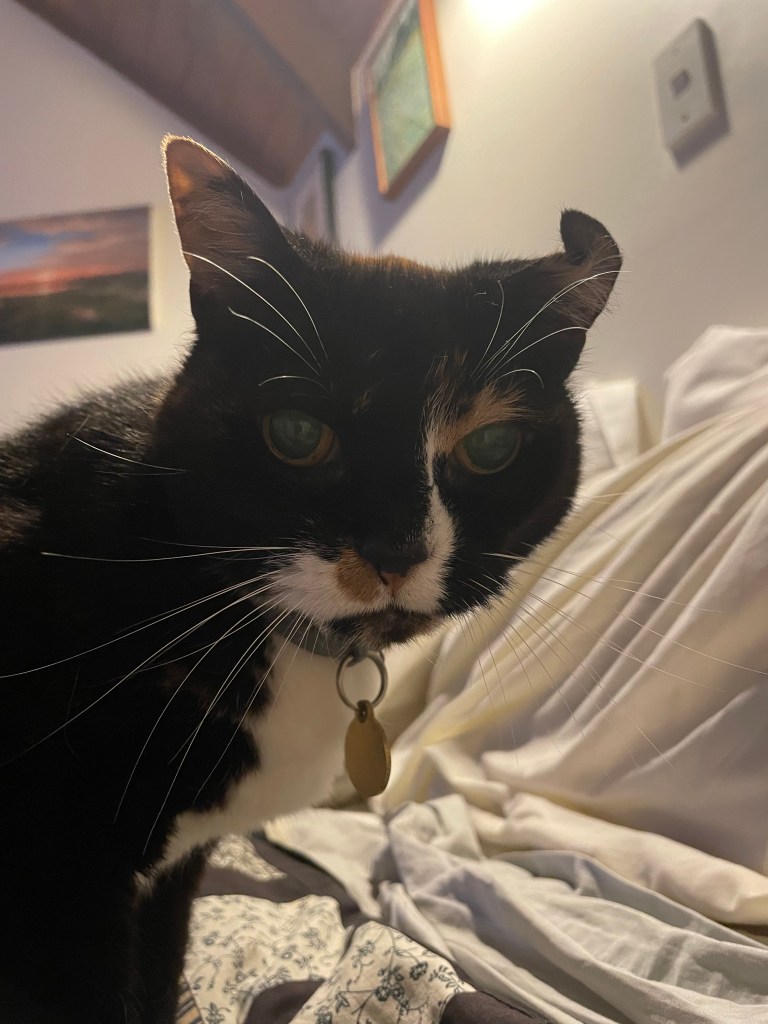
Bowie was a good cat

Bowie left us today, at the age of 15 and a few months.

She was the oldest cat I’ve ever had, and like all cats, a combination of neurosis and neediness and cuteness and ferociousness. She was an unloved, scarred stray when I picked her out and in the end, I like to think she felt loved, however cats feel it.

I got her in November 2008 as a birthday present for myself and she was already 8-9 months old when we got her, a thin tortoiseshell with a distinctive bent ear. The animal shelter called her “Twist” after that, but after a few days we decided to call her “Bowie.” She had had a rough time before we got her – the bent ear had been mangled by something, and there was a nasty v-shaped scar on her back caused by something or someone that was still sensitive when touched for years. I liked the idea of giving her something better. 

We got her the same week Barack Obama was elected President; she died the same week King Charles III will be crowned. 

For a long time, she was a skittish little thing, who didn’t trust humans and was never quite a “lap cat.” We got her when my son was 4 years old and in pre-school; she died with him now 19, a second-year university student, and he loved her very much. He’s known her his entire life. 

Bowie had a pensive, cautious expression on her face most of the time; unlike the open amiability of our younger cat Oscar, she was hard to read. But as the years passed, she mellowed out, slept on our son’s bed up until two days before she died. Her favourite spots were warm ones – perhaps they eased the pain on her back scar, but she’d lie in the sun for hours until her fur nearly boiled, and would doze off so close to our fireplace in winter we seriously worried she’d combust a few times. 

In her final year or two, she started to lose her vision, which was hard. She became skinnier, got confused a lot and fought with Oscar a lot more. Things declined fast on Monday night, and by Wednesday morning we knew she was ready to go. 

We held her at the end, my son and I at the vet. She was barely conscious by then, but I hope and believe she wasn’t in a lot of pain. She was simply done. 

I’ve had many cats over the years but for various reasons Bowie was the first we were there with until the very end. I stroked her familiar black and gold and white fur like I had thousands of times the last 15 years and she went quietly, without a fuss, and that was all.

She was a good girl. 

Me and action figures: Can’t stop, won’t stop

I reckon if you’re living your best life, you never really outgrow the need for the occasional action figure. 

Let’s be clear at the start – I’m talking ACTION figures, which in my mind generally need to be anywhere from 3 to 12 inches tall, with moveable arms and legs, some cool accessories and colourful artwork on the packaging. I basically consider those hideous Funko Pop things an abomination of cutesy rubber-stamped design that’s eating up the toy aisle like some mutant blob, glutting the market to the point they’re an environmental disaster. I’m an action figure man, darn it, not a gaudy statue figure man. 

I was, of course, a part of the Star Wars generation, hoovering up those Kenner action figures from the moment I first got an allowance, buying random Rebel Commanders and Snowtroopers and Ewoks and having epic battles with them in trenches dug in the back yard. As I became a teenager, in a moment of utter insanity I sold most of my 40 or so vintage Star Wars figures at a family yard sale, hypnotised by the idea of getting money for my possessions without ever realising the possessions were kind of emotionally priceless treasures. I still miss my Rebel Commander with his limp little dangling scarf that looked like a piece of bacon.

I dabbled in other lines, even if Star Wars was my jam and I was kind of ageing out of some of the popular figure lines of the 80s. I really dug the DC Super Powers (and still have my Dr. Fate figure!) but didn’t care for the Marvel Secret Wars line with their dumb ‘secret shields’. I enjoyed the militaristic fantasy of G.I. Joe and the earliest Transformers toys (still wish I had that Soundwave, man) but was never into the cheap looking Masters of the Universe and too old for the Teenage Mutant Ninja Turtles.

Like most dudes, I grew older and action figures seemed uncool for a time; like most dudes, I got older still and became keen on recapturing my past by buying vintage action figures or ones that reminded me of them when I had a chance.

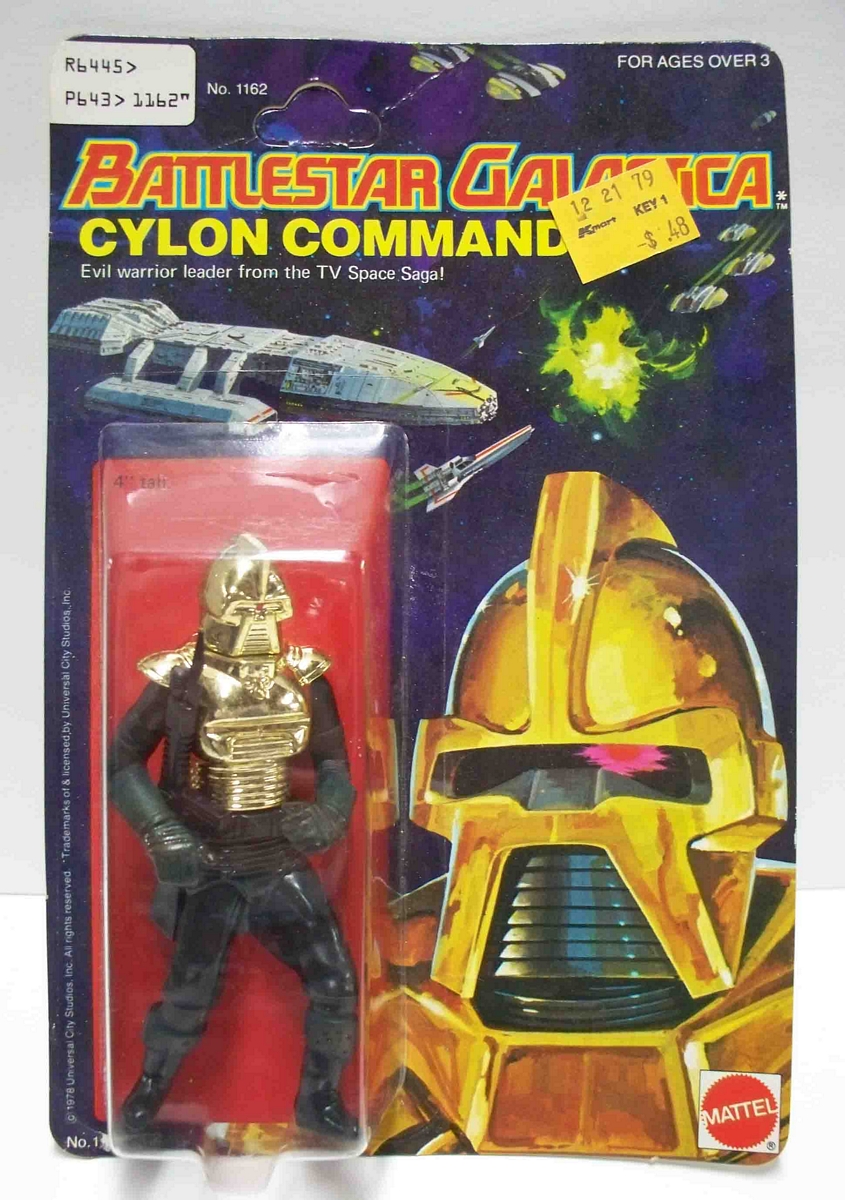
Decades on, there’s a tiny little dusty closet in the back of my brain that still idly dreams about the action figures I never had – the gold Cylon Commander from Battlestar: Galactica, the Clash of the Titans giant Kraken; the Super Powers Hawkman; the Return of the Jedi Sy Snootles and Rebo Band set I really wanted.

When my son was little, it was the perfect excuse for me to buy action figures more regularly – ones from Star Wars movies I never imagined would be released way back in the misty haze of the 1980s, ones from Marvel Universe movies I only dreamed about actually happening. (We still have a massive pile somewhere of Iron Man figures from Iron Man 2, when Hasbro released an insane flood of iron armor from Stealth Iron Man to Uber Driver Iron Man to Pizza Delivery Iron Man.) 

Then my son got older too and into his own things, but I still pick up the occasional action figure that we both enjoy looking at, and I often pop my head into the toy aisle at the store pretending I’m buying a birthday present or something for some kid instead of just eyeballing what’s new. 

You can easily go too far with these obsessions (or, as Elvis Costello put it, “in time you can turn these obsessions into careers”).

I’m not the guy with an entire room full of action figures in neat boxes. I’m an eclectic action figure collector, because I know a 50-something old man shouldn’t really be spending his mortgage money on dozens of action figures, so I’m a connoisseur. While I grew up on the smaller 3 3/4” figures, I do like the advances in action figure technology that have given us superbly elaborate and poseable 6” figures as a matter of course. I buy a few Marvel Legends figures with their excellent detail and obscure characters and a few of the Star Wars “black” series. I was obsessed with recreating the Empire Strikes Back bounty hunter scene and couldn’t find Zuckuss and 4-LOM for the longest of time, which is quite possibly the nerdiest sentence I’ve ever typed. 

You can spend an insane amount of money on action figures but I generally like to just buy on an occasional impulse; the most I’ve ever spent was $60 on a Marvel Legends Ghost Rider with flaming motorcycle figure that was just too damned cool to let some 10-year-old with sticky fingers at the Warehouse have it. I’m slowly collecting the great new Universal Monsters figures which are packed with accessories and detail; among my closet of regrets is that I never bought any of a brief 1980s line of Universal horror movie action figures by Remco so I’m determined to make up for lost time.

A couple of dozen action figures are gathered on shelves around my office, frozen forever in the act of fighting supervillains or waging rebellions. A set of nifty Tintin figurines; a Flaming Carrot action figure I’ve had for decades; a cheap lot of the excellent Playmates Star Trek: The Next Generation line I got the boy for Christmas years ago.

I never dig trenches in the back yard with my action figures these days, but neither do I obsess over keeping them “mint on card.” I curate my little collection of plastic icons, probably as a way of reminding myself of the kid I once was, saving pennies for a Snowtrooper. 

But also, I still just think they look kind of cool. 

What Cyclone Gabrielle took away, and what we’re left with.

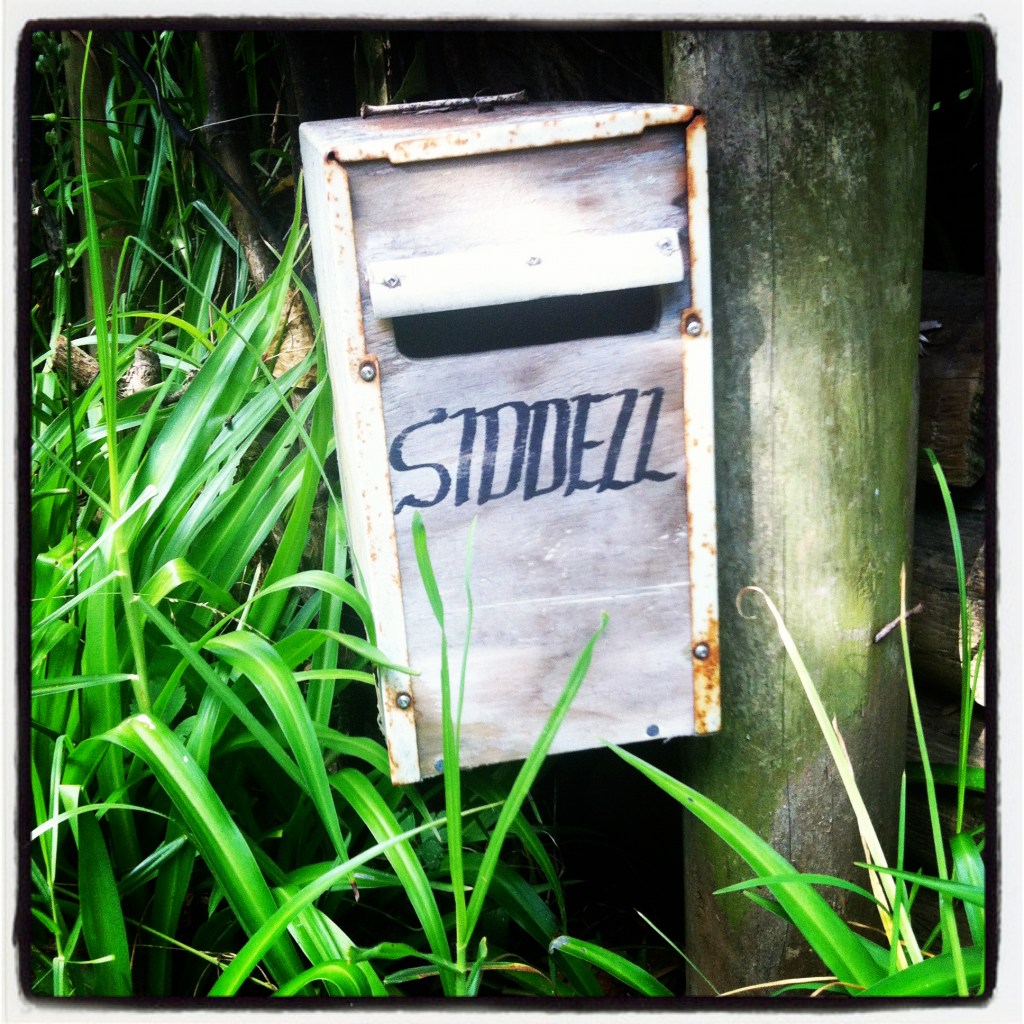
It wasn’t fancy, I guess, but we liked it. My late father-in-law Peter Siddell built this bach, or beach house, more than 50 years ago now, from a garage kit-set. It was tucked away in the bush way out in West Auckland at Karekare a relatively short walk from the beach, and somewhat hidden from the world down a narrow plant-lined path. 

Now it sits red-stickered and smashed, like so many other houses and baches after Cyclone Gabrielle’s wrath last week. At least 11 people are dead and countless lives shattered, in ways big and small.

For decades, this unassuming bach, or beach house – no TV, no phone, a rather rugged outhouse toilet – was the centre of one family’s life. As children my wife and her sister spent weeks at a time out there, only going back to the city occasionally, sunburnt and sandblasted by long days on the black sands. It wasn’t a flashy place – it was a space to doze and read magazines in between beach adventures, to while away the long summer nights under starry skies. 

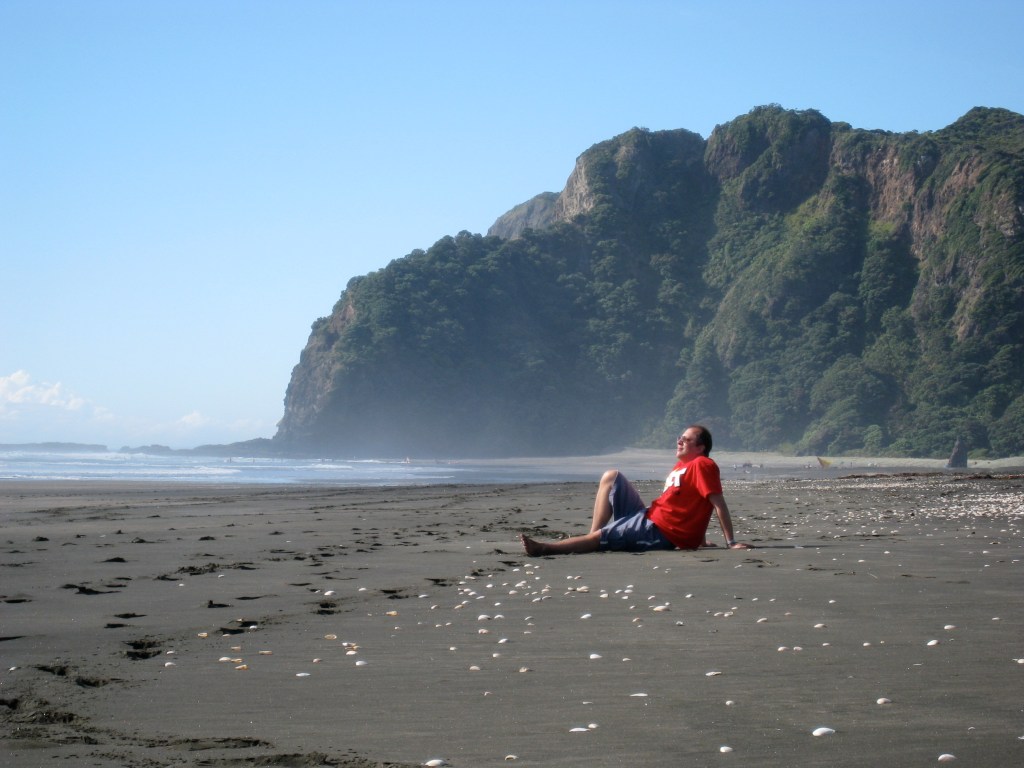
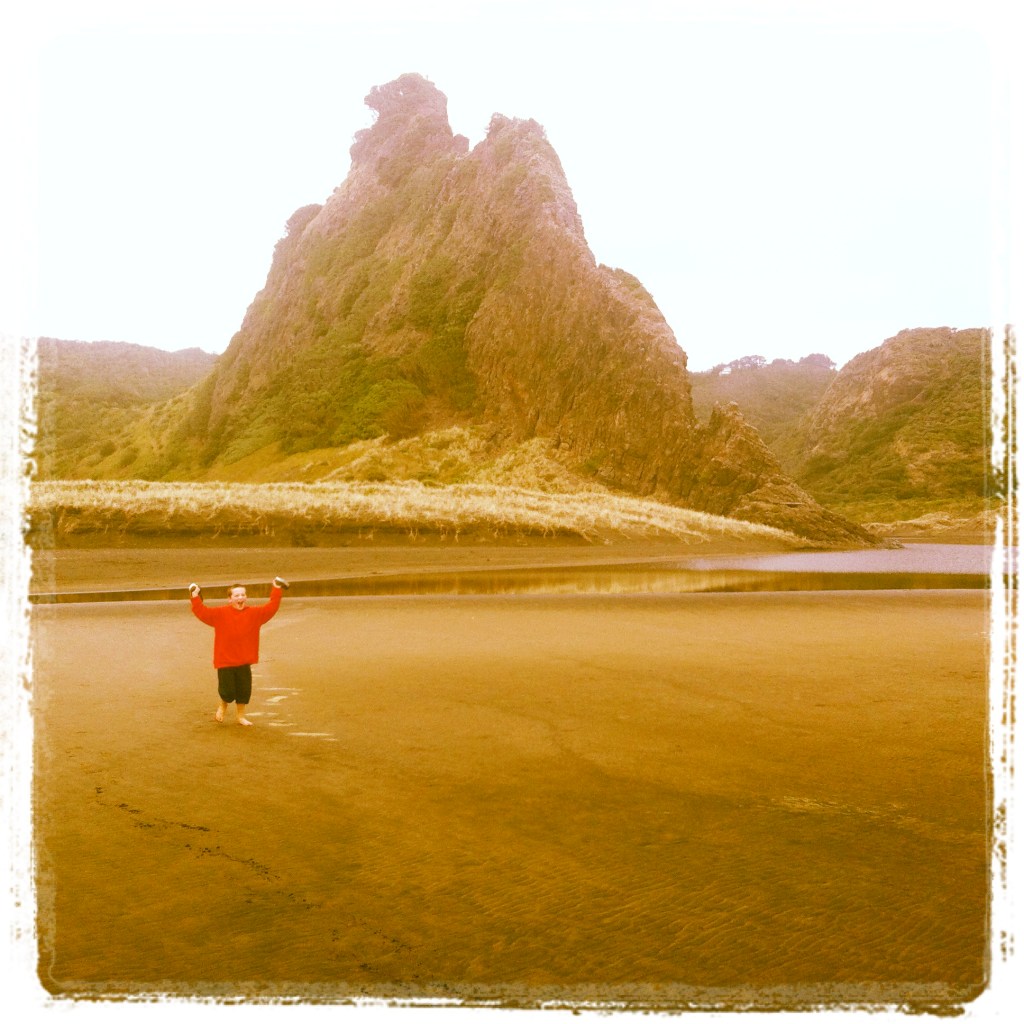
My in-laws Peter and Sylvia held frequent parties, the bush ringing with laughter and the sound of clinking wine glasses. You could see Karekare’s grand ominous rocky outcrop the Watchman from the deck, and before the dunes shifted and trees grew, you could see the sharp lines of the Tasman Sea against the horizon. 

When I first visited New Zealand with my new wife in 2000, the bach she’d talked about so much was one of the first places we visited. 

After my in-laws died in 2011, the bach passed to the next generation. It became a bit quieter without Peter and Sylvia there, but was still regularly used. The grandchildren grew up and became old enough to go out for a night with their mates. It may have been a little less busy than it once was, it may have been starting to take a lot of work to keep it in good nick, but we still loved our little humble bach.

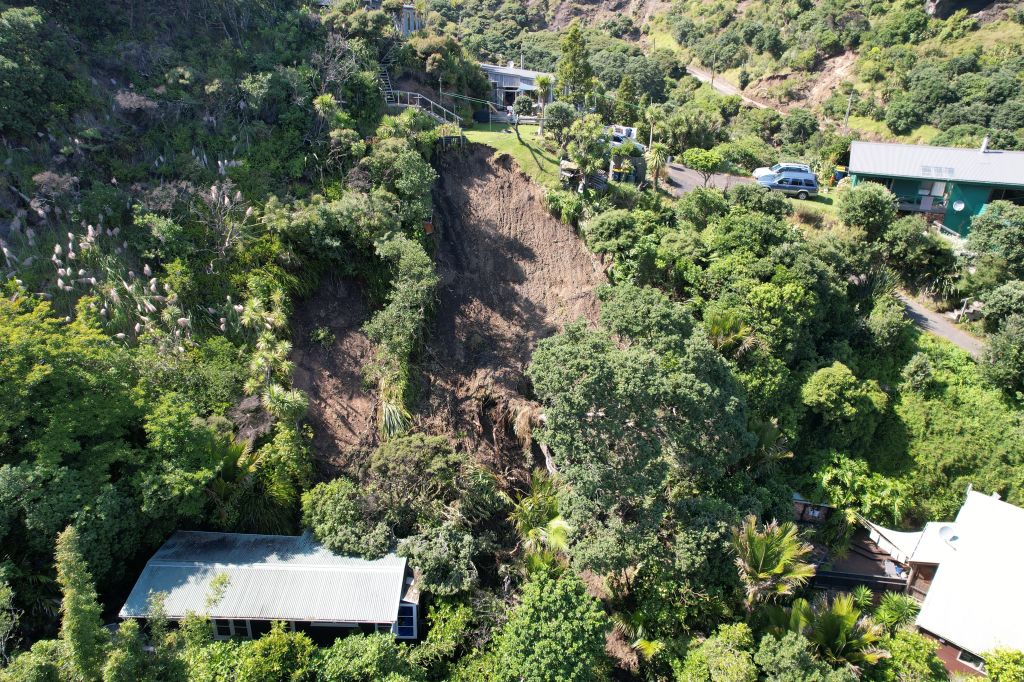
Then sometime on the evening of February 13, Cyclone Gabrielle smashed through Karekare and the rest of the country, and tonnes of mud and trees slid down the steep hills, knocking our old bach aside like it was made of cardboard. 

It is a story repeated hundreds of times around Aotearoa this week – a family place, a special taonga, taken away in a rush of water and wind. 

We are so very lucky compared to so many others, we know, and whānau all over are feeling that strange and empty kind of pain a disaster like this carves out of ordinary life. 

We can’t get out to see our bach yet because of the dangerous closed road conditions, but we’re starting to get an idea of how devastating the cyclone was for the Karekare community.

In photos seen from above, twin slips gave way on either side of the bach, endangering it and other houses around.

We don’t know yet what will become of it in the end, but it doesn’t look good. Photos captured by neighbours show a building knocked askew, the sturdy deck timbers warped like they were rubber by the sliding foundation. The musty long-drop toilet we kept meaning to replace has seemingly been wiped from the face of the earth. The makeshift bath has fallen away from the house. Yet weirdly, some tiny pots on a bench on the slanting deck haven’t moved at all, and the windows appear intact. 

Karekare is a tiny place that’s only a permanent home for 300 or so people, best known for having several scenes from Jane Campion’s The Piano shot there. Like a lot of people, I’m over much of social media these days, but community groups online have proved invaluable for getting information out from the closed-off coast. 

The people stuck out there have gathered for cheery barbecues, as the mud is swept up and the cracked and battered places surveyed by engineers and insurers. They have rustled up ways to get children to school somehow despite shattered roads. 

One woman lost her beloved home, but in the middle of the crisis she reached out to offer some of the donated clothing she received to others. 

“Karekare has always been the best place in the world, and it is the people that make it next level amazing,” she wrote on the local Facebook page. 

It is true these are just places and things, and the horrifying loss of life in Gabrielle is by far the worst thing about the cyclone. Muriwai, just up the coast, is still grieving the death of two volunteer firefighters. Everyone is starkly aware things could have been even worse. 

But each place and thing that has been lost in the cyclone also has meaning for people, whether it’s a grassy back yard children have played in for years, a beloved tree that shaded people as they dozed in the sun, a battered old chair that was a comfortable companion every evening for someone. 

Any kind of natural disaster, whether it’s flood, fire or earthquake, takes away things you felt were certain in life. 

I don’t quite know yet what it replaces them with, but I keep finding myself thinking of that rustic little bach, now abandoned and the days of wine and parties for it probably over. I think of my son’s first visit there when he was barely a year old and of a photo taken circa 2006 of my late father-in-law with his three grandsons on the porch, reading a book together.

My son grew up playing on those beaches, those black sands, summer after summer. My son’s now a university student and it sometimes feels like everything has changed since that photo was taken. 

But those moments – for us, for all the victims of Karekare, for all those wounded by Gabrielle – are still there, floating somewhere, and I like to think that no storm can ever really take them away for any of us. 

The day the water came to Auckland

January is supposed to be a slow news month in New Zealand, with half the country on leisurely summer holidays, schools closed, and the beaches full. 

Not this January, where in the last two weeks of the month we saw our world-famous prime minister suddenly resign and replaced by a guy named ‘Chippy’ and as if that wasn’t enough, my city was hit by the worst floods in living memory. We’ll be cleaning up the damage from this slow January for some time.

My suburb out in West Auckland of Titirangi was ground zero for a lot of the damage, as I wrote over at RNZ. We’re still coming out of the storm, but it’s been pretty awe-inspiring and terrifying to see. The photos and video pouring in to newsrooms were astonishing. I’ve covered a LOT of disasters and chaos in my journalism career but I’ve never had one where I had to stop in the middle of work to keep my basement from floating away on floodwaters. 

We are lucky, of course, compared to many here in Auckland. We lost power and water for a while and things are wet in the basement, but four people have died, and hundreds of homes are ruined.

On Friday when the storm hit, it surprised everyone by being far, far greater in magnitude than your usual Auckland rainstorm. Our basement has flooded before, but not like this, where a literal torrent of water rushed through. I’ve never actually felt scared for my home and myself before, but as I was out there in knee-deep water frantically shovelling dirt and clay to redirect the water rushing under our house, I had a few moments of that stark primal fear that you only get when you realise that you are caught up in something far beyond your control. I also thought getting knocked unconscious against my own house in a rainy narrow ditch and drowning would be a bloody stupid way to go.

Just 500m or so down from our house, a massive slip closed off the road and has left a house above precariously close to coming down too. Across the street half our neighbour’s garden just dropped down the hill. All around our neighbourhood are giant slips and open cracks in the earth that look far more like earthquake damage than anything else. The beach we often go swimming about saw its entire yacht club collapse. 

My old friend and co-worker Cathy ended up in The New York Times talking about how her land just started slowly slipping away.  

Thirty years ago I joined an environmental club at my university and wide-eyed and optimistic we hoped to make things better for the future in our very tiny way. Thirty years have passed and that optimism is gradually draining away, like the flood waters down my street, because of an ossified political culture in many countries, greedy businesses and a world far more interested in pointless culture wars and distractions. People are still denying climate change or screaming conspiracy theories every time something like this happens. Hell, I’m not just pointing fingers – I’m part of the problem, too. My little suburb is hardly alone in extreme weather events the past few years. 

This was not your typical midsummer Auckland rain, and indeed it was Auckland’s wettest day in history. This is climate change, new Prime Minister Chris Hipkins said. This is the future we’ve all spent the last 30 years dithering about, worrying about, pretending wasn’t going to happen and ultimately, we’re all beginning to understand, doing nowhere near enough about. 

The year that Thanksgiving became Covidsgiving

Well, we tried. 

Our family managed to avoid the Covid-19 pandemic for almost three years, but our number finally came up during our overseas holiday visiting family in the US. We caught it in transit, somehow, despite wearing masks as much as possible. Like dominoes cascading downwards, once the first person tested positive the entire family shortly followed.  Thanksgiving became Covidsgiving.
Fortunately, we all caught a pretty mild case of the virus – good news as several folks in the family aren’t in the best of health and it was very worrying to see them test positive. It still sucked, particularly as it kind of mucked up our holiday, but after close watching of all the grim headlines the past few years I know it could’ve been so much worse. 

All journalists have cliches they loathe to see in print, and “post-pandemic” is one I’ve been kicking out of news copy every chance I get. We’re definitely post-lockdown – whatever your views on that, it’s clear the cultural buy-in for such policies has passed – but “post-pandemic” implies the disease has somehow gone away. If anything, far more people I know have been touched by Covid-19 in 2022 than at any time in the years prior. 

The virus felt particularly inescapable these past few months, when it seemed like every friend I knew in New Zealand caught it, especially many who had also managed to avoid it earlier on. It became pretty clear that no matter how hard we tried to do the right thing, we were probably going to get it eventually. 

A friendly acquaintance from my 1990s small press comics days, Andrew Ford, died of it in New York recently. An energetic booster of self-publishing comics and bringing rare art back into print, he was just 48 years old when he died. It’d been many years since we’d been in regular touch but it was still a shock to remember this go-getter kid I once knew and exchanged letters and drawings with and to realise he was one of the Covid casualties. I think of Andrew Ford often lately, and the millions of others whose stories have been cut short by Covid.

I traveled an awful lot at the beginning of this year as I first stepped outside the pandemic bubble of New Zealand. Despite having to deal with incredibly lengthy travel, quarantine back home in New Zealand and an Omicron surge, I somehow didn’t catch Covid. Yet this time when my family boarded the plane from NZ to the US, it wasn’t even 72 hours before the first of us tested positive. Both times, I and the rest of my family wore high quality masks. 

Last Christmas when I traveled the vast majority of people in transit in Los Angeles and elsewhere I went wore masks in crowded airports. But in November 2022, maybe 20% of the other people in the airport and planes were wearing masks. We tried our best, but when the majority of other people aren’t masking up… well, you get Covid, I guess. We’ll never know who we caught it from – was it the guy coughing a few rows up? Someone at the airport we passed by? It was such a mild case that the contact must have been fleeting. But I do wonder if that person had bothered to mask up in crowded public areas, our holiday might have turned out differently. Everyone’s sick and tired of all this, I get it, and a rugged, brutal individualism has replaced whatever fleeting community spirit first animated our Covid responses. You do you, and well, other people will do whatever.

One of the biggest knock-on effects of the Covid years for me has been a gradual lowering of my respect for other human beings. I hate that I’ve become more judgy, more annoyed at idiots going down conspiracy rabbit holes, pissed off at people flouting mask rules and everyone being outraged all the time – including myself. Many of the people I know who’ve caught Covid at last these recent months have expressed the same frustration – we tried, we did the right thing, we still caught it, so what’s the point?

Despite it all, it was still a good holiday – bonding with my parents and a new baby in the family and seeing the gorgeous colours of fall in California. The trees blazed up into autumn colours and the kinds of brilliant yellows, oranges and reds we just don’t see in our part of New Zealand.

At times the leaves fell in thick fluttering sheets, dotting the bright blue California skies with colour and reminding me that even in this age of outrage and plans never quite working out how you hoped, there are moments where you can still try to be a little more like one of those flimsy leaves, floating on the breeze and letting the sun shine on you while it can. There are no outraged leaves in nature.