I’m losing my edge, but I was there: My top albums of 2005

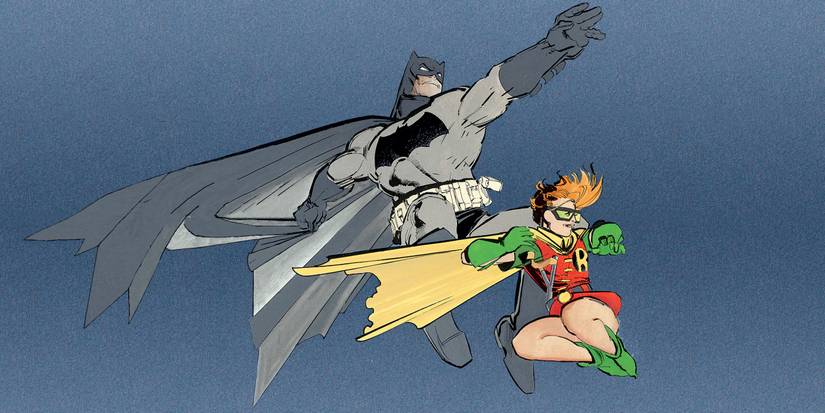
Gaze with me back into the misty reaches of time to a year called 2005, when I was thinking of buying a fancy device called an iPod, where we all thought George W Bush was the worst President ever, the pope had just died and Christian Bale debuted a gritty new take on Batman. We’re at least two Batmans along now on the sliding scale of time, but everything old is new again, ain’t it? 

I mark 2005 as just about the time when I got a little less intensely involved in following all the hip cool new music trends out there – I’d just had a kid, which instantly makes you less cool, and the internet hadn’t quite exploded into a tsunami of content no one person can absorb. While I still try to keep up with what goes on for the youths, I’m well aware I’m a middle-aged white dude and the tastemakers aren’t me. 

Yet, 20 years on, it feels like 2005 was a very good year for the bustling world of indie rock and music – acts like Queens of the Stone Age and Fiona Apple built on their earlier success, quirky pop music was having a moment and singer-songwriters were blazing some new ground with the work of Mountain Goats and Sufjan Stevens. 

So, here’s my 10 fave records to pull up on the ol’ iPod from 2005, and while popular music is always an ever-moving target, many of these songs still feel pretty vital today in our increasingly fractured world. 

ANOHNI (as Antony and the Johnsons), I Am A Bird Now – The soaring voice of the transgender musician now known as Anohni is one of the most evocative in music, and this heartbreaking album by her earlier band is still dazzling chamber pop, rich with love and loss.

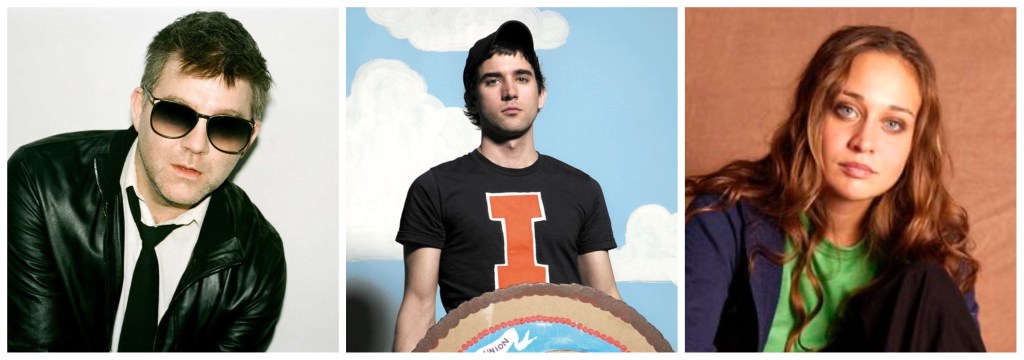
Fiona Apple, Extraordinary Machine Apple has been determined to follow her own muse, and this album saw her truly embracing her own vision after her earlier flirtations with MTV stardom. Filled with confidence, she sets out her own jazz-influenced territory, channeling influences from Joni Mitchell to Billie Holiday and Nina Simone, and dares us to take it all in. 

LCD Soundsystem, self-titled – James Murphy’s dance-rock project zipped through the culture like a comet but their first album remains their best, combining hipster self-parody in “Losing My Edge” with joyful anthems like “Daft Punk Is Playing At My House.” The arch coolness of their work would eventually lose its novelty, but man, I was there, at the start of it. 

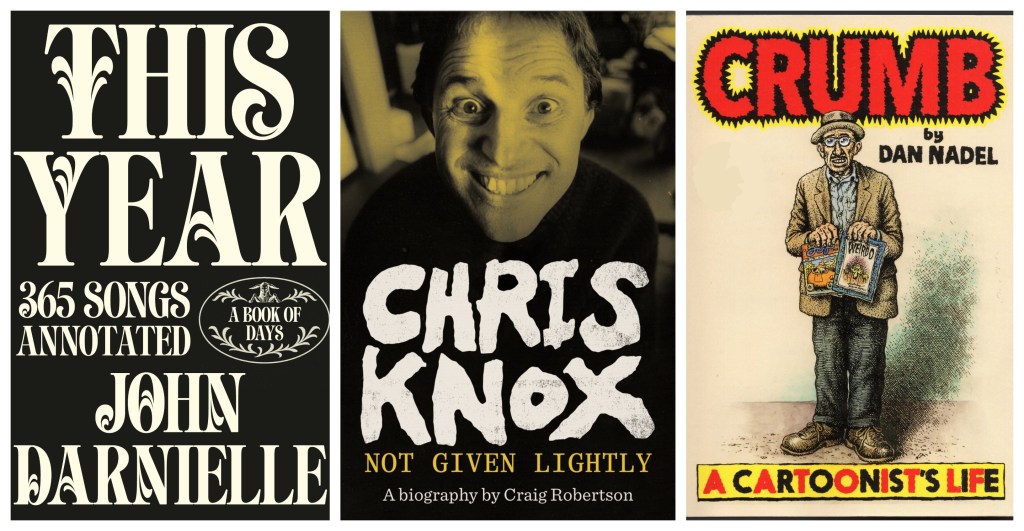
Mountain Goats, Sunset Tree – For “This Year” alone, this album deserves a slot in the 2005 pantheon. John Darnielle’s fragile, gorgeous songs delve into his abusive childhood, but makes it a universal concept album about powerlessness, hope and gathering the strength to move on. 

New Pornographers, Twin Cinema – This all-star group of indie musicians with a kind of terrible name includes Neko Case, AC Newman and Destroyer’s Dan Bejar crafting wonderful power-pop. This is their finest set, which plays like a greatest hits collection for a band you’ve never heard before – an upbeat, melodic group of songs that bounces comfortably between each of the members’ distinctive voices. 

Of Montreal, The Sunlandic Twins – The loosely defined Elephant 6 Collective of psychedelic pop bands had a moment, and of Montreal was always my favourite of them – eccentric, inventive swirling sounds filled with hooks. Like a lot of bands of the time they were insanely prolific and not always great at quality control, but the one-two punch of The Sunlandic Twins and 2007’s Hissing Fauna were their finest hour, with frontman Kevin Barnes’ keen, chameleon voice guiding you down his own very peculiar musical highways. 

The Phoenix Foundation, Pegasus – This New Zealand band’s gorgeous melancholy came together nicely in their second album for a series of atmospheric, wandering songs that feel laidback, yet tense with subtext. It gets more and more rewarding with each listen. 

Queens of the Stone Age, Lullabies to Paralyze – I sometimes feel like QotSA are the last great rock band, left from a time when stoners ruled the earth. Their pounding desert rock coalesces here into a pounding haze of riffs that broods and pummels away. If I had long hair still, I’d be headbanging to this one, which still stands out in Josh Homme’s stellar career. 

Spoon, Gimme Fiction – Spoon never quite became the big name they deserved to be, as alternative rock faded from the zeitgeist, but their attitude-drenched sound had a delicious energy, and this album, packed with swaggering nuggets like “I Turn My Camera On” and “Sister Jack”, holds up well. 

Sufjan Stevens, Illinois – Stevens’ voice, always so delicate, takes us on a concept album through the American midwest, but his ultimate subject is always the fragile human heart. Layering on orchestras, show tunes, baroque pop and gentle ballads, it’s a remarkable album that feels like it covers more than just one state, but the promise and peril of America itself in its songs. It may be 20 years old now, but it’s still pretty timeless stuff.

Ten great underrated Gene Hackman movies 

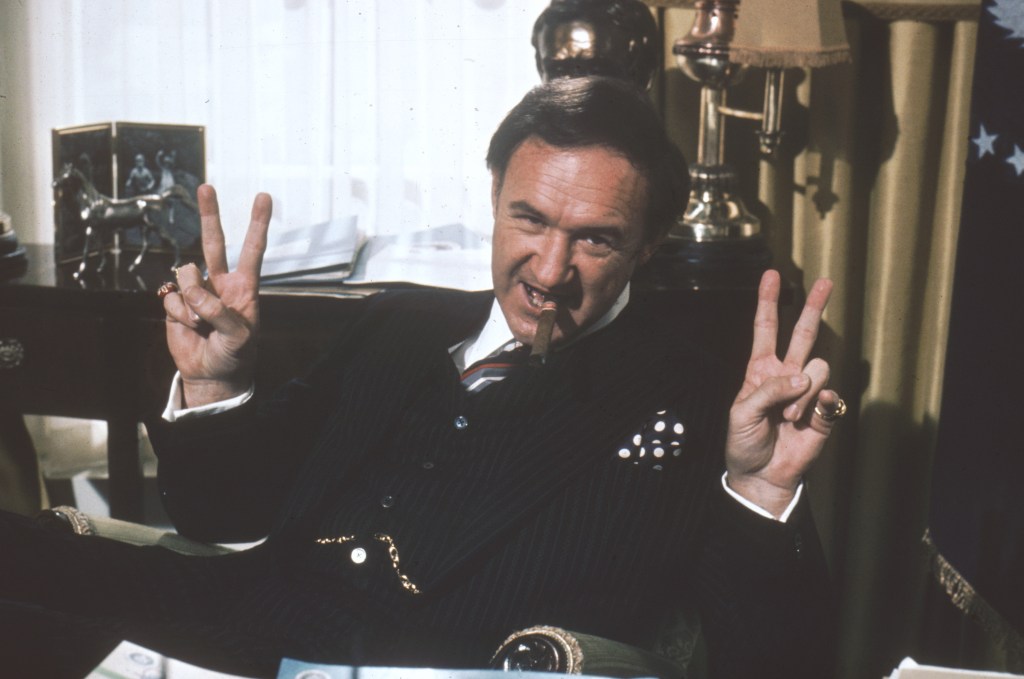
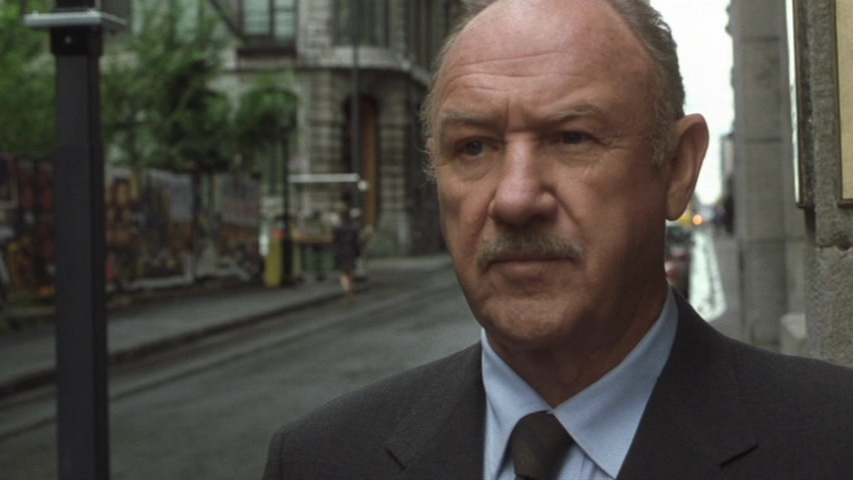
If I had a nickel for every time I saw Gene Hackman called an “everyman” in the past week or so, I’d be rich. But Hackman – easily one of my top half-dozen or so favourite actors – was no everyman, really. He was less instantly dazzling than a golden god like Robert Redford or Warren Beatty perhaps, but he was magnetic nevertheless. He packed a quiet authority into every performance while keeping his characters relatable and real. He could play thieves, cops, cowboys and con men, and the only thing ‘everyman’ to me about his acting was his sheer versatility. 

It’s sad that the dramatic circumstances of his and his wife’s deaths kicked off the kind of tabloid frenzy that you know Hackman would’ve hated. Gene Hackman is gone at 95. It’s the work that remains, and endures. 

Obituaries were quick to mention all the unmistakable masterpieces he was involved with – The French Connection, Bonnie and Clyde, The Conversation, Unforgiven, The Royal Tenenbaums. But Hackman’s long career is full of gems.

He was the kind of actor who kicked even the most mediocre of movies up a notch through his presence. Since the news of his death broke, rather than wallowing in morbid details of his death, I’ve been celebrating Hackman’s life on screen. Here’s 10 of my favourite somewhat underrated Gene Hackman films well worth seeking out: 

I Never Sang For My Father (1970) – Hackman received an Oscar nomination for this melodrama about a troubled son trying to connect to his difficult father, and it’s one of his finest roles, but nearly forgotten today (I blame the kind of terrible title). This one digs into complicated relationships with aging parents with a kind of brutal honesty that’s still pretty stunning today. Playing a repressed and conflicted ordinary joe, Hackman shows how much he can do with just his eyes and furrowed brow. 

Prime Cut (1972) – This bitterly black and mean piece of farm noir stars Lee Marvin as a grim mob fixer and Hackman as a sleazy Kansas cattle rancher who also dabbles in sex slavery and gruesome murders. Despite his kind of limited screen time, Hackman’s grinningly amoral slimeball is a nasty delight – “Cow flesh, girl flesh … all the same to me.” 

The Poseidon Adventure (1972) – Titanic without all the sappy romance nonsense, this rip-roaring disaster epic was a huge hit back in the day, and a big part of that is thanks to Hackman in a firm leading man action hero role – as an iconoclastic free-thinking priest, of all things. It doesn’t get mentioned in the same league as grittier stuff like The French Connection, but it’s anchored by Hickman’s charisma and prickly guts. Big and bold fun, it’s corny and yet riveting 50-plus years later, and it’s impossible not to cheer for Hackman as he single-handedly tries to save the survivors on a quickly sinking cruise ship. 

Scarecrow (1973) – The only movie that paired acting legends Al Pacino and Hackman, as two wandering vagabonds making their way from California to the East Coast. Hackman’s gruff and sullen character pairs well with Pacino’s fidgety, chatty loser, as what starts off as an odd couple buddy comedy turns into a heartbreaking little gem about failure and optimism. 

The French Connection II (1975) – Somewhat overshadowed by its Oscar-winning predecessor, this sequel takes Hackman’s brute cop Popeye Doyle down into the abyss. It picks right up from the first movie with an obsessed Doyle travelling to France to track down the drug dealer who got away. Cannily undermining sequel expectations, it features a long, riveting sequence where Doyle is captured and addicted to heroin. Like the first, it’s a kind of anti-cop story that lingers in the brain. 

Night Moves (1975) – I love me some “sweaty noir,” and this steamy Florida mystery delivers sex, death and malice in equal measures. Hackman is a hapless private detective who gets wrapped up in a missing persons case that slowly submerges his entire life. A movie that’s soaked with a sense of anxiety and despair all the way through, somewhat forgotten but now getting its due

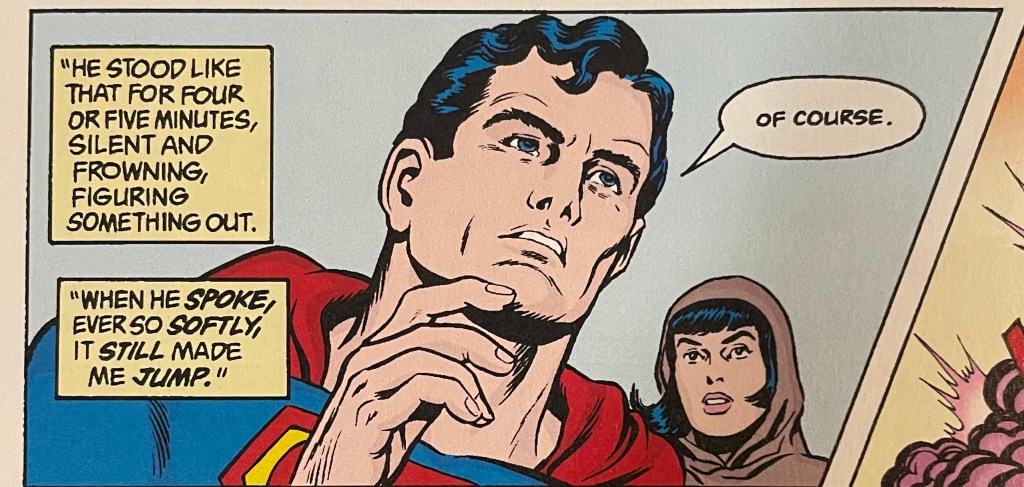
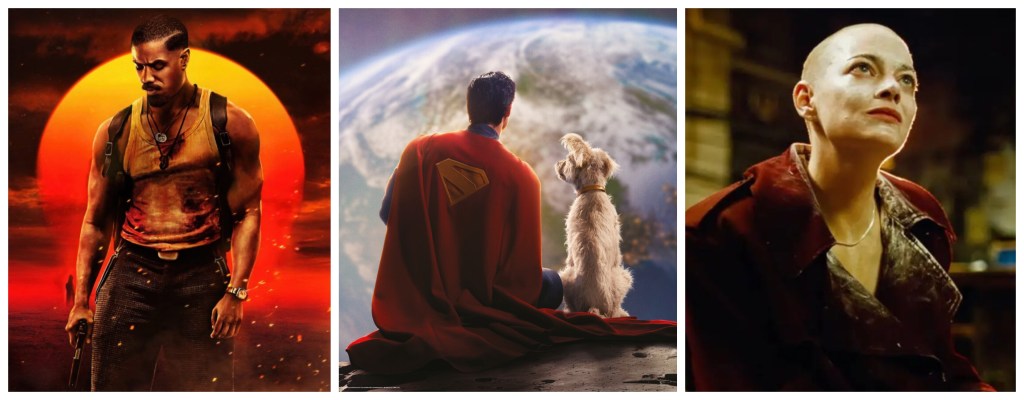
Superman II (1980) – I’m pretty sure the first time I ever saw Gene Hackman on screen was his oily, confident turn as Lex Luthor. He’s great in the first movie, too, but for me, Superman II will always be my favourite, as Luthor sidles on in about halfway through and tries to play both sides in Superman’s battle against Zod. The scene where Luthor swaggers on into the Daily Planet and attempts to charm three insanely powerful alien psychopaths through sheer force of will is peak Hackman to me. “Kill me? Lex Luthor? Extinguish the greatest criminal flame of our age?” It’s easy to dismiss his Luthor as a work-for-hire gig (especially when you look at the woeful Superman IV) but there’s frequently a sparkle in Hackman’s eye that shows how much fun he was having. 

BAT-21 (1988): Hackman, a former Marine himself, played lots of military men. He shines here as a cerebral Air Force navigator shot down in Vietnam and trying to stay alive. This one got kind of lost in the flood of Vietnam movies of the late ’80s like Platoon, but is worth revisiting. His hero is no Rambo – he’s a desk jockey trying to stay alive who’s never actually experienced war up close – and Hackman’s thoughtful, restrained performance gives it more depth than your usual gung-ho war picture. 

The Quick And The Dead (1995): Sam Raimi’s delightfully campy western boasts a murderer’s row of talent – Leonardo DiCaprio, Russell Crowe, Sharon Stone – but Hackman’s smiling psychopath John Herod is a scenery-chewing delight, a brasher and wilder take on his Oscar-winning Unforgiven killer. 

Heist (2001): Hackman was surely made to rattle off David Mamet’s whip-smart dialogue, and in one of his last films before retiring, he’s perfect as an ageing thief looking to make one last score. While its tangled heist plot is an echo of many other movies, it’s just a pleasure to watch Hackman and a motley crew of great actors doing crimes and cracking wise. 

Thanks for the movies, Gene. You were no everyman to me.

Aw, man… It’s my biggest pop culture disappointments of 2024!

Let’s get negative! There is, admittedly, far too much complaining on the internet, but sometimes you gotta vent. Following up my 10 favourite pop culture moments, here’s a handful of things that I found most disappointing about the year almost gone: 

Maybe that Rocky XXXVIII was a bad idea after all: The top 10 movies at the US box office of 2024 were all sequels (or prequels). That doesn’t necessarily mean they all sucked – I enjoyed Beetlejuice Beetlejuice a lot and Dune: Part Two was great, but while last year had a brief blip of creative hope when movies like Oppenheimer broke records, this year it just feels like we’re wringing the intellectual property towels out until they are stone dry. When you have sequels that nobody demanded revisiting flicks like 1996’s Twister or 2000’s Gladiator or yet another Alien movie, or when you put out another ‘meh’ Ghostbusters sequel that’s almost immediately forgotten – it’s a sign you’re running out of properties to revive again and again. Remembering how chaotic and alive Bill Murray seemed 40 years ago in Ghostbusters, seeing him drag it all out again for a few scenes in 2024 for a fifth instalment in a franchise just felt… tired. 

The Bear spins its wheels: I’ll admit it. I haven’t finished The Bear Season 3 yet. The tale of a talented but troubled Chicago restaurant chef and his crew has been gripping, but it’s sliding quickly over into prestige fatigue. I quite liked Season 1 and 2 even when the show pushed the limits of how tense and angry you could make things, but the first half of Season 3 is repetitive and dull. It’s a very bad sign when the first episode of Season 3 is a largely wordless, drifting swamp of self-indulgence that felt like a never-ending 30 minutes opening credits sequence. It sets up a season which barely advances the overall plot so far and which seems high on its own supply, hitting the same beats – yelling, repetitive flashbacks, emotional breakdowns, kitchen disasters – we’ve already seen.  The Bear has been as much drama as comedy but this season the balance tipped. There are good moments, and I’m sure I’ll finish it… eventually … but what a comedown from the first two binge-worthy seasons for me.  

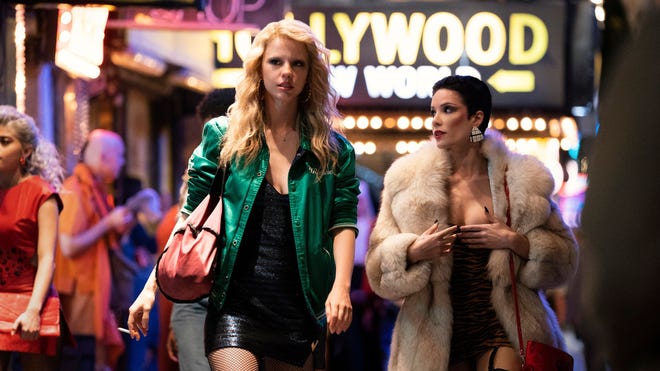
MaXXXine doesn’t mark the spot: Speaking of sequels, I really enjoyed director Ti West’s creepy, generational horror mood pieces with Mia Goth, X and Pearl. But the trilogy “capper” MaXXXine, featuring Goth’s hopeful movie star Maxine trying to make her way in Hollywood after the violent events of X, was a big confused miss. Set in the day-glo ‘80s, a distracting cast of “spot that star” cameos like Kevin Bacon and a bizarre plot twist that made the first two movies seem sane left this sequel feeling like a tired cash-in, the exact sort of movie I think it was trying to make fun of. Even Goth, so good in the first two, seemed bored by it all. 

The “return” of EC Comics. EC Comics dazzled and shocked the industry with top-notch art and edgy storytelling back in the 1950s. Periodically, someone tries to bring the IP back, and so it is with this year’s Oni Press revival. Technically, they’re not horrible comics – just highly mediocre product. They look great – boasting a cool retro design with some of the best covers out there. But where they really fell down is the dull and cliche-ridden writing, which felt like ham-handed cosplay of the original EC. The stories either have facile modern-day attempts at limp satire, dumb gory twists or uninspired morality tales. Yeah, the original EC had a lot of that too, but somehow it’s not the same in 2024, and the talents here are no Wally Wood, Harvey Kurtzman or Will Elder. The art is often good but lacks that cohesive feeling the EC Comics “house style” had. I get what they were trying for here, but maybe you can’t go home again. 

The rise of AI slop: I work in media, and am probably more worried about the future of this industry than I’ve ever been. The endless plague of misinformation is bad, but the AI “slop” – never has a phrase been more apt – starting to seep in on every corner of the internet feels like it’s just getting started, whether it’s shit fake trailers for movies or “pink slime” viral crap or sleazy grifters out to make a viral buck. This year saw it being shoved at us all over the show without any chance to opt out – Google front-loading AI-juiced searches at us, Facebook saying I can “imagine” a new profile photo, the Washington Post giving us “AI generated highlights” or LinkedIn telling me, a writer for 30+ years, that I can use AI to write an amazing post – it’s all crap to me, and I don’t care if that makes me a gosh-danged Luddite. We all feel like much of the internet has turned into garbage the last few years. The slop is speeding up the techpocalypse. Every word of this website was actually written by me, a human. I wish that didn’t have to be said. 

Behold, my top 10 pop culture moments of 2024!

So I’ll join the chorus – 2024 really did kind of suck, eh? For me, by far, the biggest blow was the death of my father in May, and I guess nothing has truly felt the same since. There’s been a lot of lousy things happening in the wider world as well, of course, and the general sense that everything is just careening out of control in the cosmos.

Pop culture – be it book, comics, movies or music – is one of the few saving graces we’re left with when nothing else makes sense. Thus, in a burst of optimism, here’s my 10 favourite culture moments of the year:

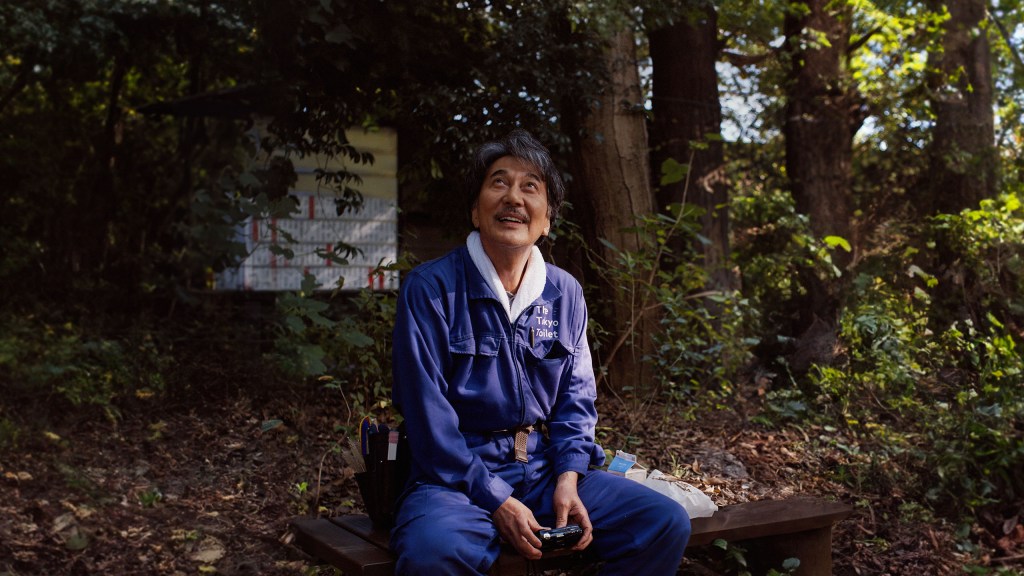
Now is now – Perfect Days by Wim Wenders: An awful lot of the ‘best movies of 2024’ haven’t screened in New Zealand yet, and a lot of the 2024 movies I have seen have been hit or miss. But of the new-ish films I saw this year, the beautiful tone poem Perfect Days by Wim Wenders about a humble Japanese toilet cleaner lingers the most. It’s a movie about taking the pauses, about accepting what happens and enjoying every sandwich. And it felt like the most human thing I saw on a screen this year. (Runner-up nods for movies seen in 2024: the supremely creepy Longlegs which was right in my wheelhouse, heartfelt and hilarious The Holdovers [technically a 2023 holdover itself], the utterly unclassifiable no-budget slapstick Hundreds of Beavers, and Furiosa, which confirms George Miller’s Mad Max is the only extended cinematic universe which really matters.) 

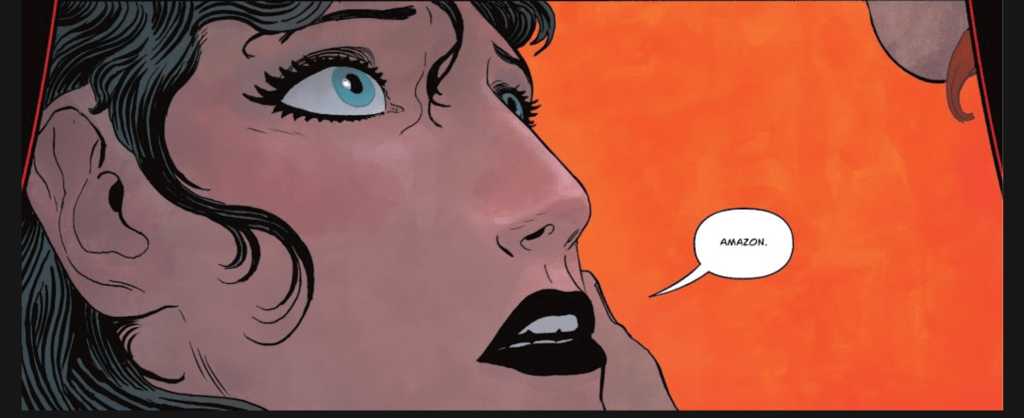
Absolute ultimate totally comics, dude: I’m on the record that I’m not generally a fan of the endless reinventions and multiversal takes on superheroes that are a sign of comics eating themselves. Ohhh, a dark alternate Superman? How daring! Yet… I’ve been generally rather enjoying DC’s latest “Absolute” line of comics starring the hyperbolic Absolute Batman, Absolute Superman and Absolute Wonder Woman. Yes, yes, it’s yet another reimagining but the actual comics have been pretty … good? Absolute Wonder Woman is the gem so far with stunning art and myth-inspired epic storytelling, and Absolute Batman not far behind with its mysterious ultra-jacked Bruce Wayne stripped of money and privilege. I don’t know how long I’ll stick with them – these “new universe” stories far too often end up tangled in the continuity of existing comics and giant crossovers and the like, but so far, it’s a pretty electric and novel take on some very well known heroes. 

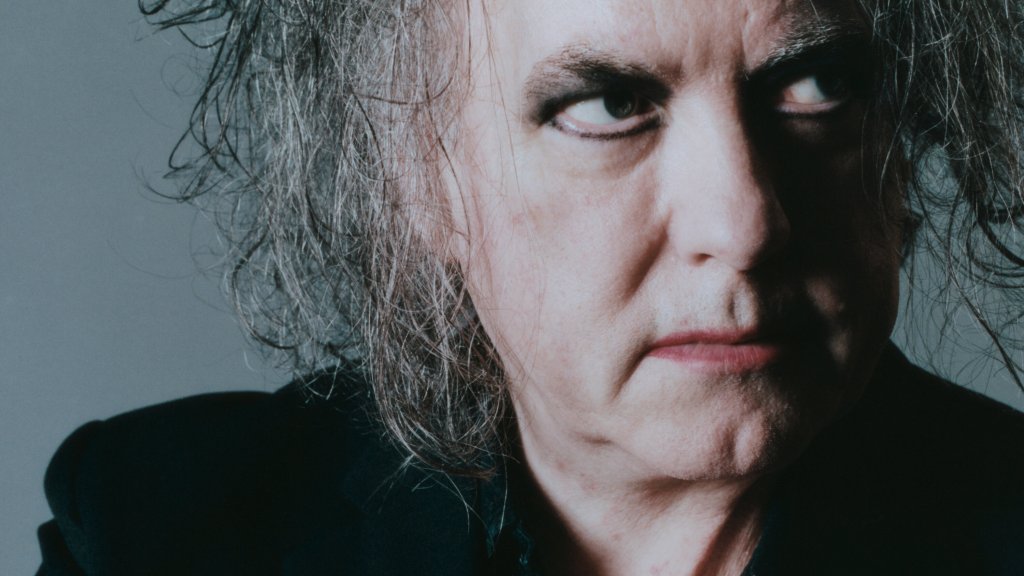
You’re never too old to make rock music: I’m old and getting older, but a lot of the guys I grew up listening to are somehow even older. Massive applause, then, for near-geezers like Nick Cave and Robert Smith staying true to themselves – The Cure’s comeback Songs From The Lost World is just as moody and epic as any classic Cure album, touched even more by the unsparing grip of mortality. At 65 (!!) Smith still sounds exactly like he always has, and that’s a wonderful thing. Meanwhile, Nick Cave’s slow turn into a kind of confessional high priest continued with the excellent Bad Seeds album Wild God. At 67, Cave has suffered unbearable loss in his life and will always seem heroic for unsparingly turning it into such cathartic art. In contrast, The White Stripes’ Jack White is a mere child at age 49, but he blew me away just a few weeks ago in Auckland and his No Name feels like the rock album of the year to me. Not bad for a bunch of old guys who are all getting older. 
Just asking questions – the books of Percival Everett: Percival Everett is one of those cult authors one keeps hearing about and meaning to read, but his astonishing Huckleberry Finn reinvention James truly broke him through into the mainstream this year. Every Everett book I’ve read this year is quite different and excellent in its own way – the existential spy satire Doctor No, the haunting Mississippi lynching black comedy of The Trees, the wry literary racial spoof Erasure (which was also turned into an excellent movie, American Fiction). Everett doesn’t fit any easy box but I’ve been so impressed by his eclectic invention that I’ll be happily catching up on his prolific bibliography well into 2025. 

Sticking the landing on the small screen: I can’t keep up with all the streaming things these days, but bidding farewell to a few longtime favourites reminded me of how tricky it is to end things on the perfect note, and how good it feels when it does. These favourites of mine all said goodbye in a pretty perfect fashion – Superman and Lois with perhaps the most bittersweet and beautiful ending to a superhero screen adventure yet, the kooky What We Do In The Shadows managing to make its insane vampire spin-off parody far funnier and longer lasting than seemed possible saying goodbye after 6 seasons, Larry David at long last ending Curb Your Enthusiasm after 20+ years with a perfectly wonderful lack of remorse. (Bonus point to the much-missed Our Flag Means Death New Zealand-filmed gay pirate comedy, which ended its second season in ’23 but we didn’t know for sure it was gone for good until this year.) 

Charles Burns still haunts us all: Charles Burns is the patron saint comics artist of Gen-X, and his stark tales of teenage alienation have been blowing me away since his Curse of the Molemen days in the 1980s. As he ages, Burns has constantly kept to the same tight themes he always has – teenage alienation, romantic yearning and spooky surreal horror – but gosh, does he do them well. This year’s Final Cut is one of his finest works, ostensibly about a group of teenagers shooting a no-budget movie, but it’s also about love, choice and regret and told with his unforgettable intense style. 

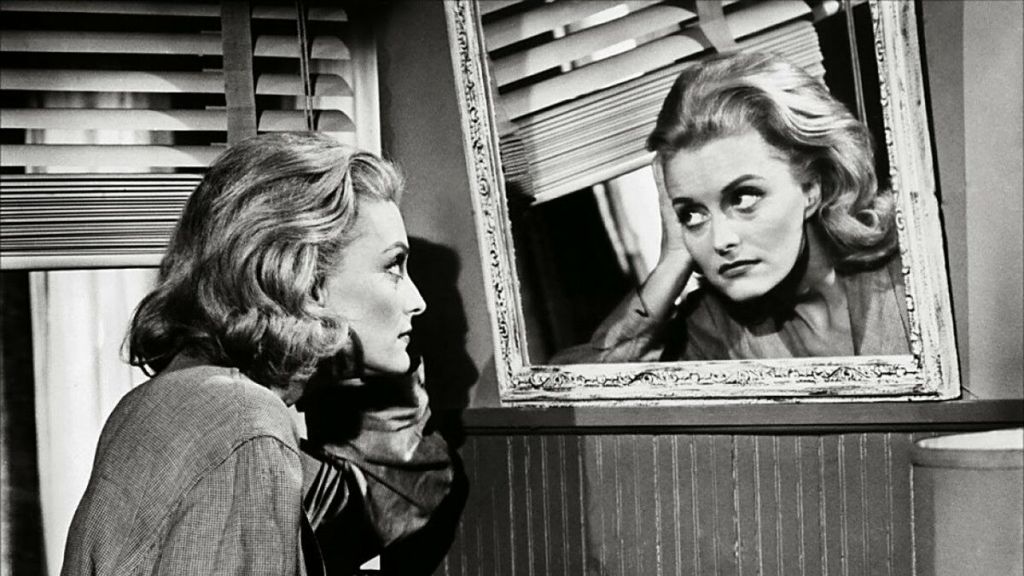
The films of Samuel Fuller: Like I said, I’m behind on the newer films of 2024. But film history stretches back over a century now, and there’s always time to fill in the gaps. A big hole in my cinema knowledge was the pulpy movies of Samuel Fuller. I can’t believe I hadn’t seen fierce noir gems like Pickup On South Street, Naked Kiss, Shock Corridor and Park Row until the past year, and I keep discovering new Fuller to catch up on. His bold movies bucked convention and still feel starkly modern decades on. Bonus point: His memoir, A Third Face, is an absolutely great chronicle of Fuller’s days as a spunky young New York journalist, harrowing World War II heroics and his dive into Hollywood. 

Cindy Lee’s Diamond Jubilee: There’s precious little mystery in pop culture these days, so every little bit of it counts. Cindy Lee is a cross-dressing Canadian musician named Patrick Flegel whose drifting, sultry songs have really gotten into my brain. Not on Spotify, not on Tidal, the sprawling double album Diamond Jubilee is only available as a single file on YouTube and soon, a physical release. Anointed by the hipsters, it’s got the gorgeous low-fi wistfulness of early Guided By Voices meets Roy Orbison, like the soundtrack to the most lonesome-hearted David Lynch movie that never was. It’s two hours of mysterious bliss and while its stealth release style might be a bit of a marketing technique there’s enough talent in Diamond Jubilee to make it feel like far more than a stunt. Diamond Lee feels like 2024 in musical form to me.

The Mary Tyler Moore Show, because love is really all around: Yes, I’m the guy who’s picking a 50-year-old sitcom as one of his favourite pop culture moments of 2024. But I picked up a cheap DVD of the complete series on a trip to Reno earlier this year, and it reminded me exactly why I love this classic sitcom so much. It’s got Moore at her loveable screwball peak, Ed Asner is one of the best editors of all time, Ted Knight’s pompous doofus act which never gets old, in a seven-season run of absurdity, crack timing, sitcom pratfalls and journalistic dilemmas that still stands up with the best of ‘peak TV’. Sometimes all you want out of life is a 20-minute playlet of banter and Lou Grant and Ted Baxter, and in this weird, wicked year, bingeing The Mary Tyler Moore Show made me feel like we might just make it after all. 

Selfishly, the Year of the Amoeba: Yeah, I’m putting myself on the list – not because I think I’m the best small press comics geek out there by any means but because I ended up putting out a heck of a lot of Amoeba Adventures stuff this year and it gave me a peculiar kind of inner satisfaction that nothing else really matches. I published two ‘regular’ issues of Amoeba Adventures this year, getting up to #35 of the series I somehow started way the hell back in 1990 (!!!), and I finally decided to embrace Amazon’s print on demand as a cost-effective way to bring my comics back to a wider world (yeah, I know, evil empire, etc, but this KDP stuff has been very good for my needs). A big old 350-page collection of The Best Of Amoeba Adventures that I started over the last holidays came out in February and presents my favourites of my 1990s work, while the smaller Amoeba Adventures: The Warmth Of The Sun book presents the first six of the “new” Amoeba Adventures stories I started telling in 2020. I’m not going to get rich doing this stuff, I accepted long ago, but I’m really grateful to get this stuff out in the world and out of the dusty small press past, and hey, if you like it, I’m just grateful I got the chance to tell you a story. 

Next: My top pop culture disappointments of the year!

Hail to the chiefs: 15 presidential movies to watch instead of doomscrolling

I get it. You’re stressed out. This is life in 2024.

But instead of doomscrolling political news all week, how about taking a break with a presidential movie?

The presidency has been the subject of countless movies, good and bad, from lofty biopics to action-packed romps. Here are 15 movies about American presidents and politics that are worth firing up to divert your brain for a few hours as Election Day approaches.

If you want to feel a little bit of optimism:

The American President (1995): A genuinely sweet romantic comedy about a widowed president finding a new love, starring a luminous Michael Douglas and Annette Bening, and written by Aaron Sorkin, who later went on to create The West Wing TV series.

Lincoln (2012): Daniel Day-Lewis’ Oscar-winning performance takes Abraham Lincoln out of the realm of cliche and makes him a complex human being again, wrestling with how to end slavery in an America torn by the Civil War and trying to do the right thing.

Mr Smith Goes To Washington (1939): Jimmy Stewart’s naive young US senator comes up against Washington corruption. The thing that makes Frank Capra’s classic still relevant today is its fierce determination to make politics better.

If you just want to wallow in political intrigue:

Frost/Nixon (2008): There have been a lot of movies about Richard Nixon, but this tightly focused film sticks to one post-presidential interview where the disgraced president tries to redeem himself. Tense dialogue and terrific acting makes the spectacle of two men mostly sitting in chairs talking seem riveting.

All The President’s Men (1976): Nixon never appears in this Oscar-winning Watergate drama, but hovers over it like a malignant ghost as journalists Robert Redford and Dustin Hoffman uncover a labyrinthine scandal that led to America’s first and only presidential resignation.

JFK (1991): Oliver Stone’s mammoth three-hour epic is a twisted knot of conspiracy theory, paranoia and grifters, so it’s a perfect vibe for Election 2024. It’s a complicated, indulgent sprawl of a movie that’s still somehow fascinating, with an all-star cast.

If you think politics is ridiculous:

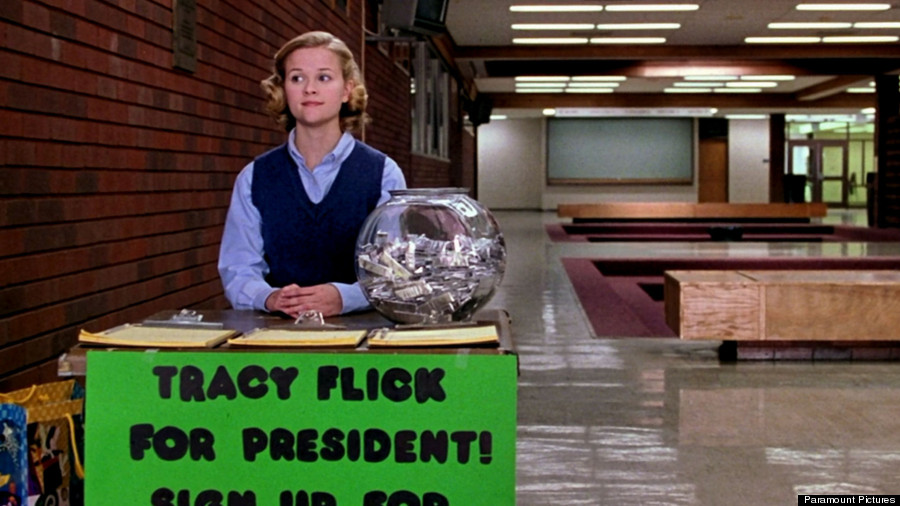
Election (1999): Strictly speaking, not quite about a president, but this classic story of an American high school student election that goes horribly awry sums up how much the desire to win can eat away at a person. With a never-better Reese Witherspoon and Matthew Broderick.

Don’t Look Up (2021): The US hasn’t had a female president – yet – and they’re pretty thin on the ground in movies, too. (Television is a different story, where women presidents have been seen on Veep, Scandal, Homeland and many other shows.) This hit-or-miss satire about panic over a comet destroying Earth has its amusing moments and features Meryl Streep as the president – unfortunately, she’s a shallow, poll-obsessed fool who bungles the end of the world badly.

Mars Attacks! (1996): Love Beetlejuice? Tim Burton’s underrated comic book epic features a rogue’s gallery of oddball Americans battling Martians, and one of the funniest turns is Jack Nicholson as a vaguely sleazy, cocky and utterly unprepared president.

If you’ve given up all hope on America:

Dr. Strangelove, Or How I Learned To Stop Worrying And Love The Bomb (1964): Stanley Kubrick’s Cold War satire still stings today, with the magnificent Peter Sellers in multiple roles, none quite so indelible as the wishy-washy President Merkin Muffley, who very apologetically starts a nuclear war.

Vice (2018): Christian Bale makes an unlikely Dick Cheney in this biopic of George W. Bush’s vice president, which in a broadly comic way shows just how much ambitious power can be wielded behind the scenes.

Civil War (2024): A movie about a traumatised band of journalists travelling through an America torn by an unspecified civil war, it’s not one to watch if you want to feel cheerful about the possibilities of the USA, with Nick Offerman as a crazed, out-of-his-depth president presiding over the country’s collapse.

If you just want a president to kick butt:

Air Force One (1997): Harrison Ford lives the American dream – that is, the dream of being a take-charge military hero who also happens to be president and fights back against terrorists on his own airplane.

White House Down (2013): Mix Die Hard with Air Force One, shake, stir and settle in for explosions and gunfire at the White House as terrorists attack and only the humble everyday policeman Channing Tatum can save the day.

Abraham Lincoln: Vampire Hunter (2012): Sure, you’ve seen a president fight terrorists, but how about vampires? This very silly alternate-history horror movie takes itself far too seriously, but does provide some ridiculous, bloody laughs as Honest Abe stakes blood-suckers. Considering how bizarre the 2024 election campaign has been so far, this might just not be the strangest thing about American presidents you see this week.

This one also appears in slightly different form over at Radio New Zealand!

Beneath the Escape from the Battle of the Ranking of the Planet of the Apes series!

…Look, I’m an ape man. I dig King Kong, I dig comic books with apes on the cover, and I really dig the Planet of the Apes saga. 

As I’ve written about before, I’ve always loved the Apes series, with its distinctly bleak and apocalyptic vision. It’s versatile enough as a concept that we’re seeing the tenth Apes movie opening this week, the very nifty looking Kingdom Of The Planet Of The Apes. 

Unlike several other long running sci-fi series, the Apes saga generally has had a higher success rate for its sequels, which generally haven’t felt like laboured intellectual property cash-ins (I’m looking at you, Terminator and Alien franchises). There’s only one, maybe two truly bad movies in the whole series, in my humble opinion.

That said, in honour of the 10th Apes extravaganza, here’s my entirely personal Beneath the Escape from the Ranking of the Apes movies (pre-Kingdom!):

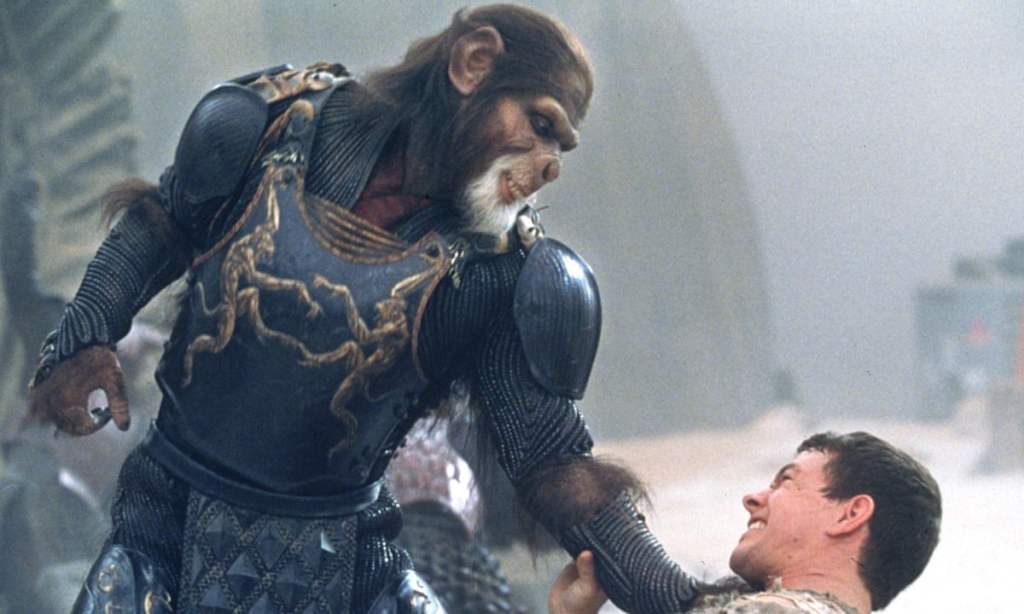
9. Planet of the Apes (2001) – Tim Burton’s oh-so-millennial reboot showed that you should never try and just remake the original POTA (which, I hope, the current series isn’t working its way towards doing, either). A wooden Mark Wahlberg stars in a strange sideways version of the original’s astronaut journey. Like many Burton movies it often looks great but the story is a bit of a mess with a legendarily dumb ending. The single best thing about this movie is the excellent makeup for most of the apes, especially sneering Tim Roth. (A freakish design for Helena Bonham Carter, on the other hand, manages to look worse than the female apes did in the 1960s.) 

8. Battle For The Planet Of The Apes (1973) – The least of the original series is also by far the cheapest. Made for what looks like about $25, it’s got an OK plot that revolves around the final days of man and ape attempting to live together kind of peacefully, touches on the mutants from Beneath The Planet Of The Apes, and as always Roddy McDowall is worth watching in his fourth turn in an Apes film. But the sluggish movie lacks any scale – the “battle” of the title is about a dozen humans puttering around in off-road vehicles, and everything just feels a bit exhausted by this point. 

• Everything from here on up is still a very good Apes movie, in my humble ape-inion – just varying degrees of personal preference and heck, my rankings might change on a daily basis. 

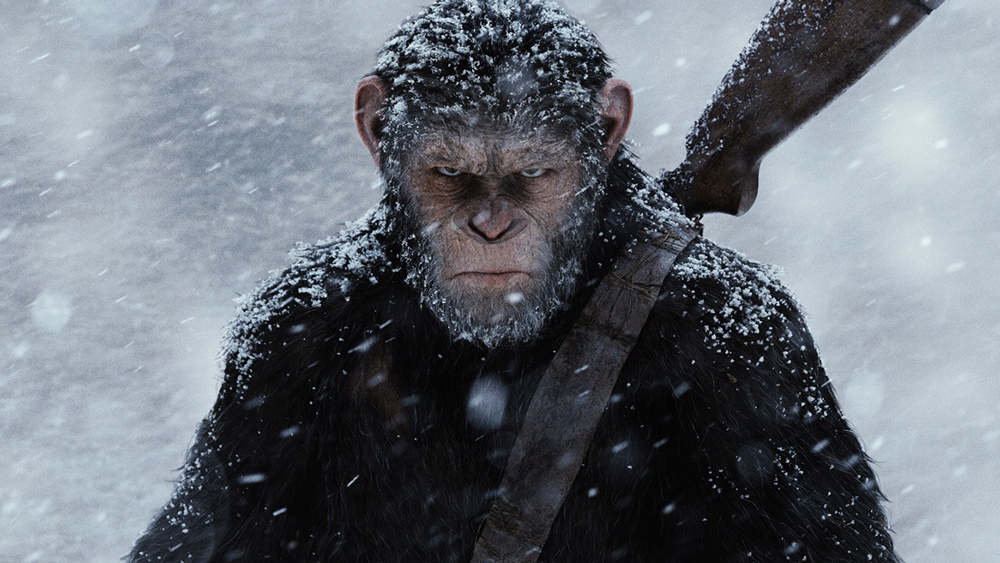
7. War of the Planet of the Apes (2017) – Up until now the latest in the series, this concludes the Caesar reboot ‘trilogy’ in a typically bleak, cynical Apes fashion. Humanity is truly falling apart now, and even starting to lose their voices in a callback to the first movie. Woody Harrelson’s fanatical, scenery-chewing Colonel is one of the series’ best human villains, and Caesar truly becomes a Christ-like figure with all his suffering in this one. At nearly 2 1/2 hours it’s a bit overlong and does bog down a bit in the prison camp scenes, and there’s a little too much torture and cruelty, even for an Apes movie, but it rallies for the biggest battle seen yet in the climax. 

6. Conquest Of The Planet Of the Apes (1972) – So how did the Apes take over the world? This bleak (surprise!) third sequel to the original attempts to fill in the blanks by showing a subservient class of apes basically used as slaves one of those fascist-looking stark 1970s movie urban futurescapes. The parallels with the civil rights movement aren’t subtle, but mostly effective. Led by Roddy McDowall’s Caesar, the apes rise up to overthrow their masters. Hamstrung by a lower budget – the ape masks look particularly grotty in group scenes, and most of the action appears to take place in a few office blocks – Conquest is still a solid, hardboiled franchise entry, with probably McDowall’s best performance. The “theatrical” cut went for a neutered ending; if they’d used the darker original ending it’d probably go up a place or two here. 

5. Escape From The Planet of the Apes (1971) – The most “light-hearted” of Apes movies, until of course everything goes horribly wrong. Blow up the Earth in the last one? No problem! Sending ape survivors Cornelius and Zira back in time makes for some great broadly comic 1970s culture clash moments, but as always in the Apes timeline, darkness beckons. An inventive way of continuing the series and creating a time loop, but the comedy and tragedy make for a somewhat uneasy mix. Still, I always get a kick out of watching a charming ape couple swaggering around ‘70s California. 
4. Dawn of the Planet of the Apes (2014) – After series reboot Rise Of The Planet Of The Apes, the world as we know it is crumbling due to war and pandemic, as Caesar and his apes form their own world in the redwood forest and come to clash with human survivors in San Francisco. Like most Apes movies, it’s about people and apes trying co-exist and failing. The modern-day special effects are remarkable – no masks here! – as we start to see ape society splinter between hard-liners and moderates, while the human characters are sympathetic and well-rounded. It’s epic, but full of sharp character moments too.

3. Beneath The Planet of the Apes (1970) – Sure, this one is a strange, strange first sequel, muddled up by Charlton Heston more or less refusing to return except in a cameo, a whole goopy mutant human society being introduced seemingly out of nowhere, and one of the darkest, most cynical endings a mainstream G-rated movie has ever had. Yet I still love it precisely because it goes so hard – that final fade to black scarred me as a young ape-lover and still blows me away to this day. Whatever its complicated origins, Beneath the Planet of the Apes is a sequel that feels like it isn’t just about making more money and plotting easter eggs for sequels. There’s an eerie, doomed tone to the entire movie – that fiery vision of crucified apes and bleeding statues! – that carries me over some of the clumsier plot holes. Despite the end of the world thing and all, of course, it was only the beginning for this unkillable series.   

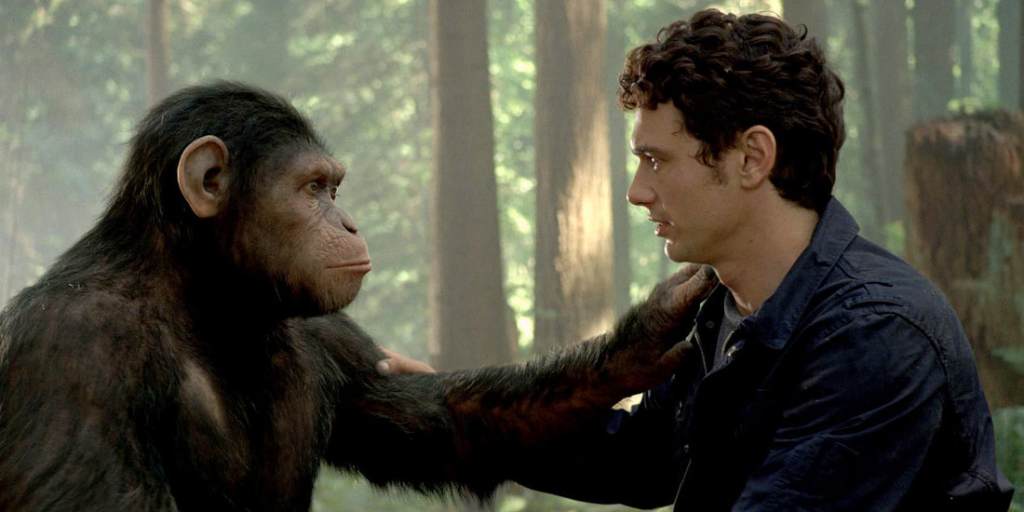
2. Rise of the Planet of the Apes (2011) – Rewatching this series reboot recently, I was amazed at how gripping the emotional journey of young Caesar (Andy Serkis in the first of three astoundingly good motion-capture performances) is. Set pre-apocalypse, this one aims to tell us how we ended up with a “Planet of the Apes” through a combination of chance and human-created plague. Unique in this entire series, it’s recognisably set in “our” world, and it’s really the only movie where we see a human and an ape truly have an affectionate familial bond (James DeFranco’s turn here is superb). Perhaps it has less “action” than some of the movies, but the Golden Gate bridge climax remains thrilling and for me it’s one of the best of the saga. It’s no wonder that unlike Burton’s flop, this energetic reimagining enabled the series to carry on for four movies and counting. 

1. Planet of the Apes (1968) – The original and still the standard for this series. Charlton Heston’s aggressive, cynical spaceman, that dissonant and unforgettable soundtrack, the still amazing makeup work, Roddy McDowall and Kim Hunter’s endearing apes, those vast desert vistas, Maurice Evans’ conniving Dr Zaius and what is probably the greatest twist ending in movie history. No wonder we’re all still returning to apeland 50-plus years on. 

Great Caesar’s ghost! Eight of my favourite journalism editors in fiction

Somehow, I’ve ended up working in journalism an awfully long time. And in that time, I have had many good editors, a great editor or two, and couple of terrible editors. I’ve also been an editor myself many times (I’ll leave it to others to judge where I fell on the scale myself). 

An editor isn’t as glamorous as the headline-chasing feisty street-level reporter, perhaps. But in this age where journalism seems to be constantly under siege from all sides, editors do matter. They guide, they teach, they question, they correct, they set the tone and they can make or break a media outlet. My industry has changed a hell of a lot in the years since I started, but no matter how many apps, algorithms and pivots you throw at it, you need an editor in the mix to make quality journalism. 

So here’s a tribute to the bleary-eyed, coffee-fuelled, rage-filled and yet quietly inspirational editors, with a look at eight editors portrayed in fiction who have always inspired me in my own wayward journalism journey, for good or bad. 

Lou Grant, The Mary Tyler Moore Show (1970-1977) played by Ed Asner. When I think of a newsroom editor, the rumpled face of Ed Asner leaps to mind. No-nonsense, idealistic and gruff but with a heart of gold, Asner’s Lou Grant was the comic anchor of the still-classic Mary Tyler Moore Show. “Spunk? I hate spunk!” he growls at Mary in the very first episode. Asner played a sitcom character who was still a believable editor, and after the delightfully wacky Mary Tyler Moore Show ended its run he went on to play the exact same character in a very different drama that lasted for five seasons. Now that’s adapting your skill set to changing times. 

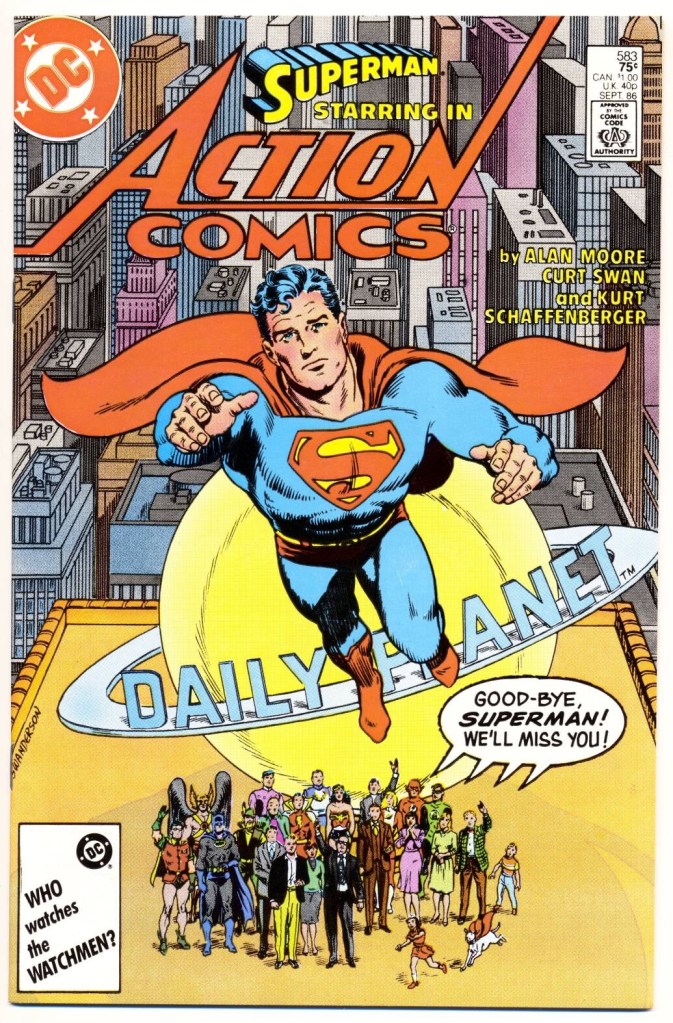
Perry White, Superman comics: The greatest editor in comic books, even when his newspaper staff appeared to only consist of Clark Kent, Jimmy Olsen and Lois Lane in the glorious Silver Age days.  White is old-school journalism to the max, firmly pushing for truth, justice and the American way, just like the Daily Planet’s office mascot Superman. White is constantly shoving his reporters out the door on wacky circulation-boosting assignments, hunting for that story that will make him shout “Great Caesar’s ghost!” In a world filled with kryptonite, Bizarros, giant alien gorillas, fifth-dimensional imps and more, Perry White is a glorious constant. I would work for Perry White any day of the week. 

Jane Craig, Broadcast News (1987) played by Holly Hunter: I can’t pretend I know what it’s like to be a woman in a newsroom, but in this classic ‘80s romantic comedy, we watch Hunter’s intense and driven Jane Craig rise through the ranks and juggle relationships with two good but flawed journalists (the amazing Albert Brooks and William Hurt) while never giving up on her own goals. Hurt’s vapid pretty face and Brooks’ charisma-challenged newsman represent the two sides of journalism that never quite come together, while Hunter – trying to keep her principles in a constantly changing industry – is the one who really succeeds in the business.

Charles Foster Kane, Citizen Kane (1941) played by Orson Welles: Is he a good editor-publisher? After all, Welles’ masterpiece is about the rise and fall of Charles Foster Kane. Yet while he’s an egotistical, perpetually unsatisfied tyrant, what we see of Kane’s managerial skills in Citizen Kane also shows us that he’s a darned good newspaperman, hustling for scoops, scandals and attention. Yeah, he bends ethical lines a fair bit, but I’m willing to cut him a little slack as he dates back to the peak era of yellow journalism led by Hearst, Pulitzer and the like. I don’t imagine I’d like to work for Kane, but I’d sure as hell read any newspaper he put out. 

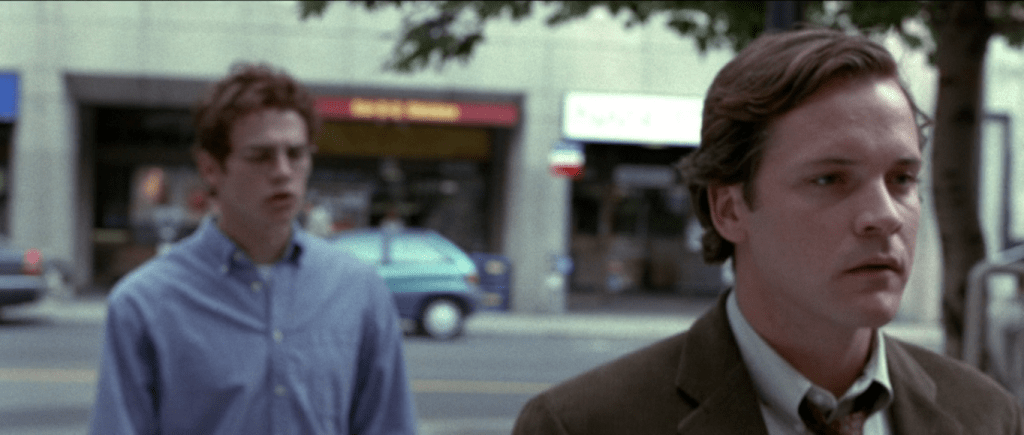
Charles Lane, Shattered Glass (2003) played by Peter Sarsgaard: Shattered Glass remains one of my favourite, still rather underrated journalism movies, about the plagiarist liar journalist Stephen Glass and his unravelling. Sarsgaard is fantastic as the unassuming editor who begins to smell a rat in Glass’ fabulist copy, and doggedly purses the loose ends to discover what the real truth is. Calm but determined and intensely offended by Glass’s stream of lies, Sarsgaard’s Lane makes the dull business of factchecking seem like a spy thriller. 

Ben Bradlee, All The President’s Men (1976) played by Jason Robards. Robards is the only one on this list who won an Academy Award for playing an editor, and rightfully so – his inscrutable, steel-eyed Bradlee is the axis around which Dustin Hoffman and Robert Redford’s Watergate investigation revolves in All The President’s Men. Without Bradlee’s guiding hand and consent, the story wouldn’t be told. Like the best editors, he’s kind of terrifying, too. 

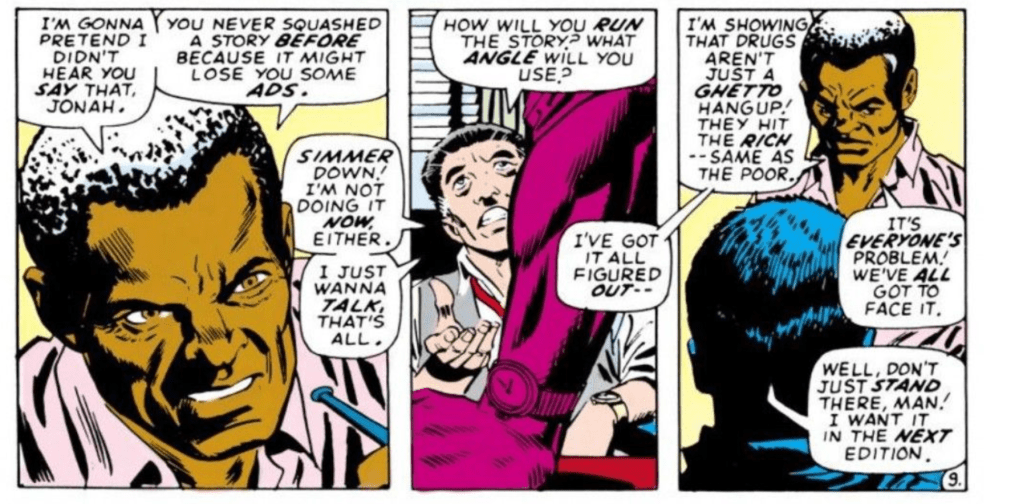
Robbie Robertson, Spider-Man comics: Look, Spider-Man’s nemesis J. Jonah Jameson is undeniably entertaining, but firmly belongs on the worst editor list. How worst? He fires Peter Parker about twice a week, lied repeatedly about Spider-Man in print, hired supervillains to kill him, and on several occasions personally piloted giant robots to beat up Spider-Man. That’s a bad editor. But shift your gaze slightly to the side to consider Jameson’s managing editor at The Daily Bugle, Robbie Robertson, who for decades has been a calm, firm but steady presence in the newsroom, frequently dealing with his impulsive boss’s rants and focused far more on truth than agendas. Jameson makes all the noise; Robertson gets the damn paper out. 

Dave Nelson, NewsRadio (1995-1999) played by Dave Foley: As the news director of WNYX, perky Dave Nelson is a sweet-faced rube thrown into a lion’s den of ego, eccentrics and mania. Surrounded by blowhards like Phil Hartman’s anchor Bill McNeal and a variety of other kooks including Stephen Root, Andy Dick and Maura Tierney, Foley as an editor spends almost the entire run of this classic sitcom putting out fires. And you know, that’s often what an editor’s job is – dealing with your staff and juggling all the balls at once. While he occasionally snaps, Dave Nelson simply being able to survive in a radio newsroom bubbling over with complicated personalities is an accomplishment all by itself. 

60 years of Cage: Happy Nicolas Cage Day to those who celebrate

There are movie stars, and there are character actors, but in my mind the best are those who combine the two, and few actors have carved out as inimitable a career as Nicolas Cage, who turns 60 years old today.

Cage’s star has risen and fallen and risen again over the years, but in my mind, even in the worst movies he’s starred in – and there’s a LOT of movies, over 100 – he’s almost always watchable, and more often than not, he elevates the material. 

He’s been a meme, an indie film superstar, an action hero, an Academy Award winner and nominee, a comic genius and a steady presence in an awful lot of disposable ‘video on demand’ drek with one-word titles like “Arsenal”. 

In my younger, svelte days he’s the only movie star I’ve been vaguely told I resembled (it’s probably just the Nik/Nic names). I watched Vampire’s Kiss and Raising Arizona on VHS tapes and wanted to know who this guy was. I cheered when he brought his oddball sensibility to ‘90s actioners like Face/Off and The Rock. And I still will hit the cinema for most of his major movies, from his recent excellent loosely themed apocalyptic series of films to catching the trippy Dream Scenario just a few weeks back. 

To celebrate ol’ Saint Nic’s 60th, here’s my pick for 25 of my favourite Nic Flicks in chronological order:

1. Valley Girl, 1983 – All eyeballs and nose, an 18-year-old Cage kicks off his career subverting ‘80s teen comedies in this sweet goofy treat. 

2. Raising Arizona, 1987 – I don’t think I’ve ever watched a Cage movie as many times as this Coen brothers masterpiece. “You ate sand?” “We ate sand.”

3. Vampire’s Kiss, 1988 – In which Cage, as a man who thinks he’s a vampire, decides that you can never go too far over the top.

4. Wild At Heart, 1990 – David Lynch meets Elvis meets Wizard of Oz meets Cage. Neon noir carnage.

5. It Could Happen To You, 1994 – Gentle romantic comedy is something Cage is actually pretty good at, and he’s got great charisma with Bridget Fonda. 

6. Kiss of Death, 1995 – In a bulked-out, goateed supporting role, a terrifying villainous Cage steals the show.

7. Leaving Las Vegas, 1995 – Unlike most Cage movies, there’s no humour in this one, but his Oscar-winning performance is a heartbreaker.

8. The Rock, 1996 – The reign of Cage, unorthodox action star, begins, and his three-picture run of Rock, Con and Face defines some of the beautiful excess that a great action movie can be. It isn’t easy to upstage Sean Connery, either.

9. Con Air, 1997 – Insert Nicolas Cage hair blowing in breeze gif.

10. Face/Off, 1997 – It is a ridiculous movie, but it’s also John Woo’s Hollywood peak and so damned much fun. 

11. Snake Eyes, 1998 – Brian De Palma meets Cage, and this one is worth it for the bravura showmanship of the one-take opening scene alone. 

12. Bringing Out The Dead, 1999 – Martin Scorsese meets Cage in their only collaboration to date. Underrated and tense. 

13. Adaptation, 2002 – Oscar-nominated again for playing twins in a topsy-turvy meta delight. 

14. Matchstick Men, 2003 – A black comedy con-man yarn with surprising heart.

15. National Treasure, 2004 – Another try at blockbuster success, amiably corny Indiana Jones/Da Vinci Code style fun. 

16. Lord Of War, 2005 – This tale of a Ukrainian arms dealer has only gotten more relevant with age. 

17. Ghost Rider, 2007 – It isn’t a GOOD movie by any means but watching Cage overact his heart out turning into a superhero with a burning skull head is my idea of cinema. 

18 Bad Lieutenant: Port Of Call New Orleans, 2009 – Cage unleashed as one of the most corrupt cops ever seen on screen. 

19. Drive Angry, 2011 – Nicolas Cage returns from Hell to save his granddaughter in this insanely goofy potboiler. 

20. Joe, 2013 – Evocative Southern Gothic based on a novel by the late great Mississippi writer Larry Brown. 

21. Mandy, 2018 – Heavy-metal ultraviolent psychedelic revenge, and the beginning of a welcome new experimentalism in Cage’s picks. 

22. Color Out Of Space, 2019 – The cosmic horror of Lovecraft’s short story finds a welcome interpreter in Cage. 

23. Pig, 2021 – Just when you think all Cage does is go to 11, he delivers a wonderfully restrained and existential movie about a lonely man who loses his pet pig. 

24. The Unbearable Weight of Massive Talent, 2022 – Cage embraces the memes. Chaos ensues. 

25. Dream Scenario, 2023 – In a movie that really should earn him another Oscar nomination, Cage channels Freddy Krueger, kind of. 

Celebrate the tidings of the season by picking your favourite Nicolas Cage joint and giving it a spin. What’s your top Cage Day pick? Comment if you’re keen below.

Year in Review: My top 10 pop culture moments of 2023

It’s a new year, a fresh start, a hope this year is maybe a bit less suck than the last one! I’ve complained enough about the year that was, so instead let me dive back to look at ten musical, cinematic or literary experiences that rocked my world in ’23: 

Go back to those Gold Soundz: I didn’t check out a lot of live music last year, but what I did was superb, led by the old guard showing they can still blast with the best of them. Indie icons Pavement put on a superb reunion show that left me humming the chorus to “Gold Soundz” for weeks, while I finally saw punk/post-punk legends The Damned for the first time on the back of their excellent Darkadelic album, and they melted my face. And my ears. I don’t quite know if my hearing has ever been the same.

Tonight, a blind woman and a monster came to town: I’ve been getting fewer ongoing monthly comic series these days, but one that’s on my must list is Ryan North’s brainy, witty take on Marvel Comics’ Fantastic Four, which is inventive science-bro action combined with the family heart that is key to the FF. It’s just darned fun, good comics that (so far) don’t have to be part of some sprawling pointless multi-comic company crossover to feel epic. It’s the best the Fantastic Four has been in ages. 

A long long time ago, when I was a little chick: I wrote a whole story recently asking local book lovers for their favourite New Zealand books they read and it reminded me of what an excellent year it was for NZ fiction, led by Eleanor Catton’s wickedly fun satire Birnam Wood and a two-fer by Catherine ChidgeyThe Axeman’s Carnival, an amazing novel about a bird who becomes a social media celebrity, and the nearly as good teenage angst thriller Pet. Go team NZ!

You don’t know the first thing about piracy, do you?: There was a lot of great TV in ’23 – Reservation Dogs, that banger final Succession run, Poker Face, and I’m only just now discovering how fantastic The Bear is – but the one that sticks with me the most is Taika Waititi’s unexpected gay pirate comedy Our Flag Means Death, which in its NZ-filmed second season truly transformed into a delightfully sweet romance mixed with swashbuckling pirate fun. A gem. 

And in an instant, I know I’ve made a terrible mistake: Daniel Clowes has been blowing my mind since long ago when I first stumbled on an issue of Eightball. His comics are less prolific than they once were but they’re worth the wait, with this year’s graphic novel Monica (art at top of post) quite possibly his masterpiece. A sweeping story of one woman’s exploration of her own mysterious past, it’s a technically dazzling (those colours!), assured and layered work that you’ll keep churning over in your head for days afterwards. It’s not a speed-read like many modern comics, but an experience that might just leave you feeling like the world is a slightly different place when you’re done. 

All my life I’m looking for the magic: Yeah, I know, physical media is dying, bla bla blah, but while I’m definitely a bit more choosy about what I buy in the age of internet abundance, I can’t pass up a good mix, and UK record label Cherry Red constantly is putting out fantastic CD box sets of eclectic punk rock from 1977-1982, power pop from the UK and US and ’80 synthpop that spans my mid-1970s to late-80s sweet spot. Sure, you can find a Spotify playlist, but I enjoy the curated, elegant physicality of these great boxes and the buried treasure they contain. Each set is hours and hours of gems waiting to be rediscovered and if I close my eyes I can almost pretend it’s coming from a cassette mix tape as I drive my old Volkswagen Rabbit around town. 

That monster … will never forgive us: This was the year comic-book movies stumbled and became just as cliched as the Will Smith and Tom Cruise action movies they replaced. But look across the seas to Japan and some of the year’s best blockbusters came from there, with kaiju instead of capes in the terrifically oddball Shin Ultraman and the bizarre Shin Kamen Rider and best of all, the monumental reimagining of the biggest beast of all with Godzilla: Minus One. There were decent superhero moments this year, but not one of them compared to the kinetic thrill of watching Ultraman or Godzilla stomp on buildings with fresh energy. 

Dear Allen, thanks for your letters. I was glad to hear from you: William S. Burroughs was not a decent man. A drug addict, the accidental murderer of his first wife, homosexual in a repressed era, his twisted, tormented writings are decidedly not for everyone. And yet, and yet. This year I found myself once again reading Burroughs’ books like The Soft Machine and turning to his nonfiction writings, particularly his collected letters, because the nonfiction shows so well what went into his far-out fiction. The Letters of William S. Burroughs 1945-1959 fascinated me because it revealed the real person behind the sneering, sinister king of debauchery Burroughs became. It’s extraordinary to read how human and lonely Burroughs is in these letters, wrestling with unrequited love, addiction and ‘normal’ society, and his determination to find new shadowlands behind the world we live in. A stoic mask soon settled over his public face, but here we learn how he got there.

To be honest, when I found out the patriarchy wasn’t just about horses, I lost interest: “Barbenheimer” might have been a marketing technique gone viral, but it was a heck of a lot of fun and rewarding to see two very good movies leading the summer box office and showing up the latest dusty, unnecessary franchise-extender Indiana Jones sequels and the like. Barbie was a huge hit, but it was also just subversive enough to charm all but the most cynical, while Oppenheimer was Christopher Nolan’s best movie yet led by a dazzling Cillian Murphy and sequences on the iMAX screen downtown that melted my face nearly as much as a Damned concert. 

The meat goes into the oven: This one’s a bit self-indulgent, but I had a very good year stretching my feature writing muscles this year in my paying gigs, between several book reviews for the NZ Listener magazine and writing for Radio New Zealand about stuff I love like barbecue restaurants, fans of weird movies, used book fairs, film festivals and more. Turn your passions into words, folks, and let’s all have a fine 2024!

A seven nation army couldn’t hold me back: My top 10 albums of 2003

Was 2003 the end of rock and roll? The genre has been killed and resurrected so many times it makes Dracula look like an amateur, but still, for me, somehow 2003 feels like the last year that I was personally invested in new rock and roll. 

Part of that is simple age – entering my mid-30s, with a kid on the way, I was about to enter the demographic of Bob The Builder and Wallace and Gromit. I was following then-new music blogs and enjoying the dodgy thrills of downloading MP3s galore and burning them on oh-so-fancy mix CDs that are still in a closet somewhere, but soon I’d stop doing all that.

Rock began receding as a pop culture monolith as grunge died out, but it was in the early 2000s that it felt like it rallied for one last blast with a flurry of terrific albums from bands like The Strokes, White Stripes, TV On The Radio and more. Since then, to be honest, rock music feels like it’s less a part of the pop culture conversation. 

Rock is still out there, but for me, 2003 is about when I started to sort of check out from obsessively following all the latest music. I do try to keep my hand in and listen to new stuff much as possible, but, I recognise that the best pop music now is mostly for the youth, not me, and if I happen to dig some of it, well, that’s just a bonus. 

It’s hard to believe 20 years have passed since these albums came out, but I also tend to think of Taylor Swift as “new” music so I’m really well past it, I guess. 

Nevertheless, two decades on, in no particular order here’s my 10 favourite albums of 2003, the year that rock died (OK, maybe just the year that rock got a nasty head cold that it’s still shaking off): 

Blur, Think Tank – The Britpop stars delivered a woozy, tense album that feels like a loose response to the tension of the Iraq War (boy, we only thought we knew what global tension was in those halcyon pre-Trump, climate apocalypse and pandemic days, didn’t we?). The more optimistic groove of albums like Parklife is far behind but what emerges is a kind of gorgeous weary reverie hanging for dear life onto Damon Albarn’s achy croon in tunes like “Out Of Time” and “Battery In Your Leg.” 

The Shins, Chutes Too Narrow – For about five minutes there, The Shins felt like the future of indie rock. Their second album is fragile and filled with grand harmonies, enigmatic lyrics and made for long lonesome road trips. It’s all very gentle and mannered and on the verge of being too twee for its own good, but there’s plenty here to remind you why Natalie Portman said “The Shins will change your life” the very next year in 2004’s hipster poster child of a movie Garden State

Yeah Yeah Yeahs, Fever To Tell – A great blast of grrrl power as Karen O and company blew the roof off with this snappy debut album. Weirdly, the album’s most sedate tune, the ballad “Maps,” became its biggest hit, but the heart of this album is a boiling punk-rock hurricane led by howlingly good romps like “Black Tongue.” After this album the band’s output was middling, more “Maps” than punk, and they never quite recaptured the ferociousness Karen O blasts forth here. 

Fountains of Wayne, Welcome Interstate Managers – Radio hit “Stacy’s Mom” alone is a gorgeous sexy/silly hunk of power pop, but the rest of the album by this late, lamented band is full of wry, jangly gems like “Hackensack” and “Hey Julie.” A good power pop album never gets old.

White Stripes, Elephant – And here we hit peak Jack White. I know he’s put out a lot of good stuff since then, but the raw, raggedy side of the Stripes sound collided with stadium rock here and face-melting anthems like “Seven Nation Army” to make it the best thing he (and the sorely missed Meg White) ever did. This one might just mark the end of rock ’n’ roll’s evolution, perhaps? 

David Bowie, Reality Reality is a fascinating time capsule – Bowie’s final release at age 56 before an unthinkably long 10-year hiatus, and his untimely death – and while it isn’t quite as original and path-breaking as his best work, it’s still a comfortable rock god doing what he did best in an album that feels playful and masterful. Highlights includes a bombastic cover of Jonathan Richman’s “Pablo Picasso” and the darkly gorgeous epic “Bring Me The Disco King”. Shame about that horrific cover art, though. 

Outkast, Speakerboxx/The Love Below – Sweet and sour, sultry and silly, this double-album delight of André 3000 and Big Boi’s duelling soul, funk and rap is a treasure box that keeps giving. Yes, it was inescapable, but “Hey Ya” is one of those massive pop hit earworms that still delivers years on, and if you don’t like it I can’t help you, while the smooth groove of tunes like “The Way You Move” and askew hip-hop of “Roses” also are terrific. 

Nick Cave and the Bad Seeds, Nocturama – Not usually considered one of Cave’s top albums, but there’s something lovelorn and haunting to me about this set, which continued Cave’s move from rowdy rock demon to spooky apocalyptic preacher of songs. The brooding beauty of “Wonderful Life” or the wounded grace of “Bring It On” are near-top Cave, and I can’t get enough of the clattering 14-minute rambling album-closing jam of “Babe, I’m On Fire.” 

Calexico, Feast of Wire – Calexico are the fuzzy warm blanket of Americana to me, fusing together elements of Tex-Mex, jazz, blues and country into music that all sounds like the soundtrack to some great lost spaghetti western. Feast of Wire is their finest, most expansive album, drifting along in a gorgeously restless haze. It’s an album I constantly return to for the journeys it takes your brain on. 

Ryan Adams, Rock n Roll – Yeah, OK, I went through a big Ryan Adams phase in the mid-2000s, before his contrarian personality and troubling allegations kind of derailed his career and he put out a few too many meandering mediocre albums. Still, I’ll die on a hill for a couple of his albums of the early 2000s like Heartbreaker and Gold. Even though it got a middling reception, I still quite dig 2003’s Rock n Roll, where moody Ryan puts away the pedal steel and unleashes a pile of hooky, guitar-filled rock anthems with a heavy Replacements/U2 vibe. It’s just rock ’n’ roll, as it says on the tin, but I like it. 

Other best albums lists: