Walter Matthau, the forgotten great 1970s action hero

There’s just something about Walter Matthau that gives a movie a little kick to me. 

Matthau had a face like an unmade bed, and his jowly face was called “hangdog” more times than you can count. But he was also a surprisingly malleable actor, a top-notch character actor who slowly worked his way into leading man roles. 

Matthau’s reputation settled in as the cranky curmudgeon often paired with his pal Jack Lemmon in movies like The Odd Couple and Grumpy Old Men (still one of my favourite ‘comfort viewing’ flicks), but for a while there in the ‘60s and ‘70s he tried being a rumpled action hero of sorts, playing both cops and crooks in a series of gritty classics. 

The 1970s saw the grand blossoming of leading men who didn’t all look like Robert Redford and Warren Beatty – Dustin Hoffman’s twitchy angst, Al Pacino’s angry passion, Gene Hackman’s everyman intensity. Matthau, who remained seen as a primarily comic actor, never quite comfortably rose into those ranks, but he could have. 

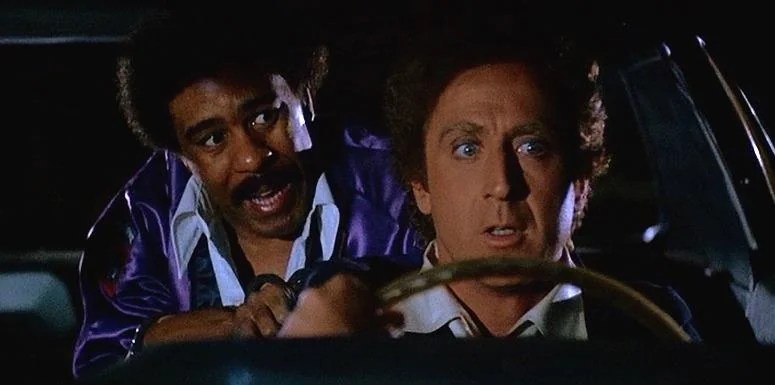
Before he pivoted more to comedy in his final years before his death in 2000, Matthau gave a witty spark of realism to movies like The Taking Of Pelham 123, Charley Varrick, The Laughing Policeman and Hopscotch, all fun spins on traditional crime tales. 

Matthau could be very menacing and played the villain a fair bit, in earlier gems like the Hitchockian Cary Grant starring Charade or the apocalyptic Fail-Safe. Hell, he even got into a fistfight with Elvis Presley in King Creole! 

His brief turn as a kind of action hero, though, often makes me wonder what if he’d stuck to that genre. The 1974 Taking Of Pelham 1-2-3 remains a great, tense ride, as gunmen take a New York subway train hostage and Matthau, an unimposing traffic cop, ends up caught in the middle. Like an early run at Die Hard, it’s one of the great “unexpected hero” hostage dramas. 

The Laughing Policeman from 1973 is one of those wonderfully sleazy downbeat San Francisco crime movies of the era, opening with a still-shocking massacre on a bus. Like its thematic cousin Dirty Harry, it’s filled with grim period detail, although IMHO it loses its way a bit with a sluggish and kind of problematic final act wrap for its central mystery.

In 1973’s Charley Varrick and 1980’s Hopscotch, Matthau leans on his comic scoundrel side to winning effect. His Varrick is a smartly confident bank robber in a zesty neo-noir, while in the underrated satire Hopscotch he’s a former CIA agent who goes rogue and basically devotes himself to trolling his former bosses in a globe-trotting hoot. 

But unlike Clint Eastwood’s Dirty Harry, Matthau is never a swaggering alpha male, although he can be grumblingly sexist and arrogant like many a ‘70s male movie lead.

In his brief run at action hero stardom, the 50-something Matthau of the 1970s still feels oddly fresh and novel. It was an era where many of the staid conventions of American films were being shaken up, and having a guy who looked kind of like a worn-out off-duty office manager playing thieves, cops and con men just worked. 

There’s still something soothing for me about watching Matthau’s unpolished nonchalance amble about in a movie, and I like to think in a parallel universe, Matthau-starring versions of gritty flicks like The French Connection and Chinatown would’ve blown my mind. 

Movies I Have Never Seen #28-29: Psycho II and Psycho III (1983, 1986)

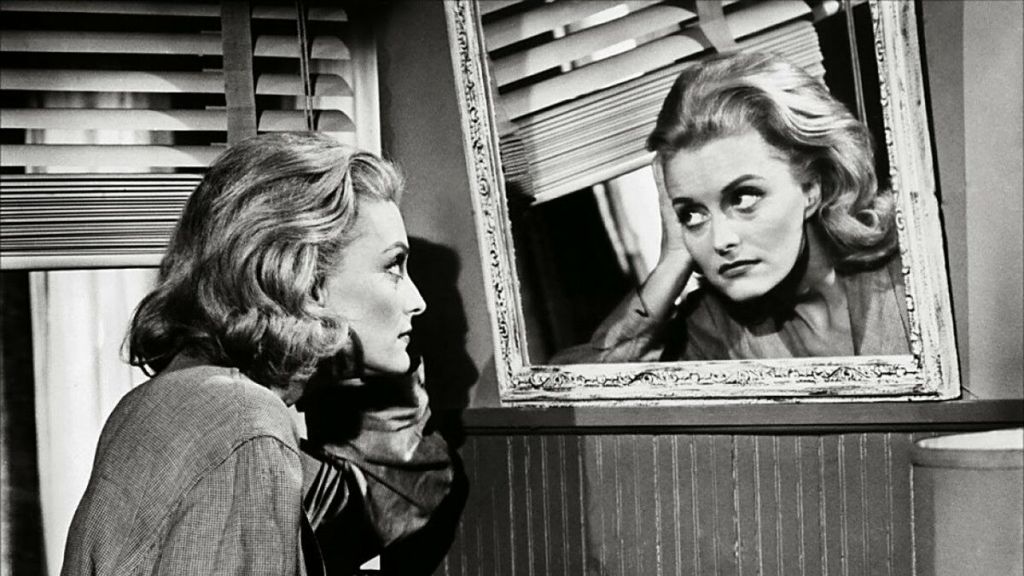
What are they? How do you follow up one of the best horror movies in history -make that one of the best movies, period – by the master of suspense Alfred Hitchcock? Let’s do a two-fer in this occasional blog series by looking at the first two long-gestated sequels to Hitchcock’s classic 1960 Psycho. The original remains a near-perfect thriller, forever changing how we think about showers, with Anthony Perkins’ mother-fixated psychopath Norman Bates firmly fixed in the screen slasher movie pantheon. But, you might ask, what happened to Norman after he was hauled off to the asylum at the end of Psycho? Although Hitch died in 1980, Psycho II eventually came out in 1983 and Psycho III followed in 1986 to answer those questions. 

Why I never saw them: Sequels made years, nay, decades after the original generally stink. There’s the occasional Top Gun: Maverick or Mad Max: Fury Road, sure, but there’s also an awful lot of Terminator: Genisys and Independence Day: Resurgences out there. And Psycho was so smoothly crafted, from its bait-and-switch premise to the haunting final grin on Norman Bates’ face – why mess with it? Yet over the years Psycho II has been rehabilitated online as a kind of lost rough gem, and I decided it was time to head back to the Bates Motel.  

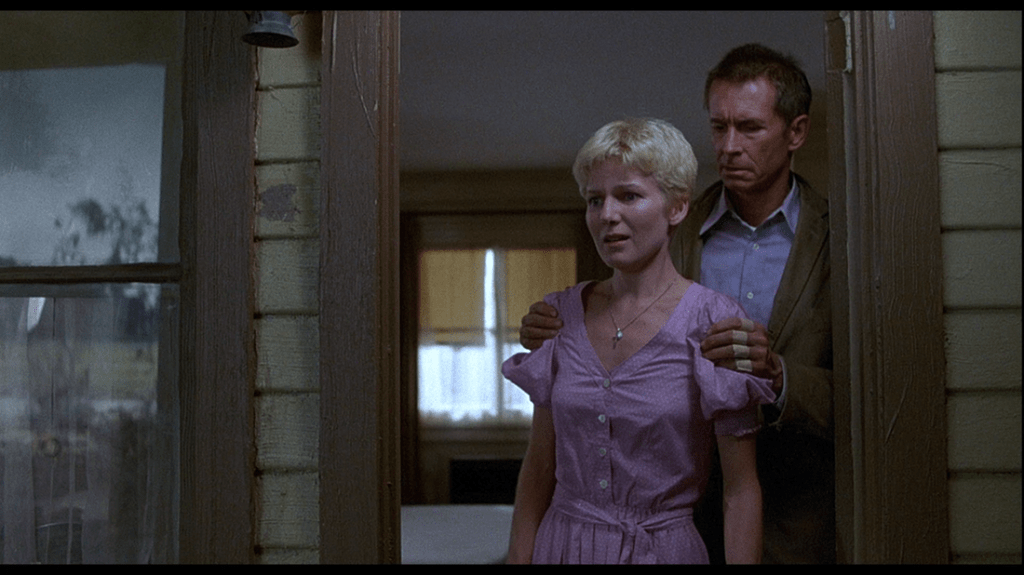
Do they measure up to their rep? The smartest thing these sequels do is NOT turning Norman Bates into some Michael Myers pantomime unkillable villain rampaging again and again. As in the original, we see Perkins wrestling with Norman’s demons, and the audience weirdly finds itself rooting for him. Both sequels are better than you might expect, and Psycho II in particular is a clever, absorbing pick up of Norman Bates’ story, 23 years on. Recently “cured” and released from the mental institution, an older, fragile Bates attempts to pick up the pieces at his life at the old Bates Motel. But Norman faces scorn and suspicion from the community, and relatives of his victims aren’t willing to give him a chance to start over. Psycho II is about whether or not redemption is truly possible or if we’re all trapped by our pasts, and it tells its story in a cunning, thoughtful way. There’s blood and murder, sure, but it’s fairly restrained. 

Psycho III, directed by its star Perkins himself, takes a swerve away from the understated tension of the first sequel to craft a gorier, sexier tale, one that feels very much of a vibe with other ‘80s slasher horror flicks. But it also gives Norman a surprisingly touching love story with a troubled ex-nun who strongly resembles his 1960 victim Marion Crane. Colourful and with a fair helping of black humour, it’s an interesting louder and bolder counterpoint to Psycho II, even if, by the end, it kind of feels like we’ve reached the logical end of the line for Norman’s story. (One final sequel/prequel featuring Perkins, Psycho IV: The Beginning, would follow in 1990 not long before Perkins’ sadly young death at age 60 from AIDS-related causes, but I haven’t seen that one yet.) 

The sequels are tremendously helped by the dark charisma of Perkins, who added whole new layers to Norman’s complicated character. His portrayal in Psycho II is heartbreaking as the damaged Norman tries, valiantly, to have a normal life, while the nastier Psycho III gives him a more menacing, debauched air. (The disease that soon would kill him was perhaps already having effects on Perkins, who looks dramatically older despite a mere three years passing between Psycho II and III.

Worth seeing? Psycho II is absolutely worth checking out for any fan of the original, of Perkins’ nervy acting, or sequels that don’t go in expected paths. Psycho III is a little more conventional but it still has enough neon-soaked gaudy charm to make it an interesting diversion. While the original remains impossible to surpass, seeing Anthony Perkins’ Norman Bates at that creaky old hotel after so many years turns out to be a lot more entertaining than anyone could reasonably expect. 

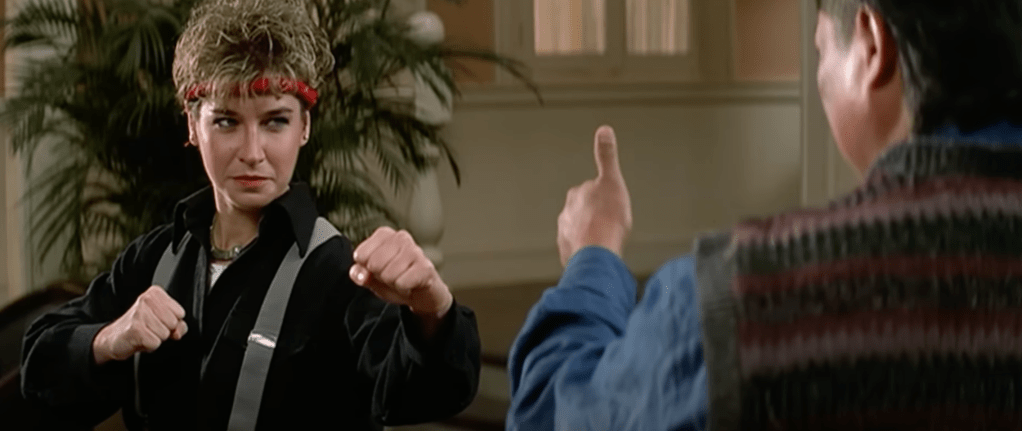
Why Cynthia Rothrock is the answer when you really need to kick some ass

Everyone knows Bruce Lee and Jackie Chan, but if you’re truly down to explore the dense world of martial arts movies, you might want to dive a little deeper. 

And there you might just discover Cynthia Rothrock – a petite, charmingly unpretentious all-American blonde from Delaware who managed to fight her way into the heart of classic ’80s Hong Kong action movies, kicking up the screens with folks like Michelle Yeoh and Yuen Biao

Unlike her future Oscar-winning Yes, Madam co-star Yeoh, Rothrock didn’t go on to mega-stardom, but she’s still a cult heroine amongst those of us who like a good, non-CGI enhanced brawl on film.  

Rothrock is no casual actor with a martial arts hobby – she’s earned seven black belts and was a top martial arts competitor before ending up in films. In her debut, Yes, Madam, she tore up the screen with Yeoh, elevating a middling movie into something near-great, and the two of them fought in an all-timer classic climax brawl where they move like liquid fire: 

Rothrock went on to star in a bunch of Hong Kong films, often dubbed, typically as the brash white Yankee counterpart to her Asian male co-stars in movies like Righting Wrongs or brawling with legendary Sammo Hung in Millionaires Express:

Yet while her Hong Kong flicks were pretty legendary in certain circles, they never quite translated into mainstream fame – she nearly did a movie with Sylvester Stallone, which could’ve been amazing. Often she was relegated to glorified cameos where she’d pop up for a scene or two, do some stunningly elegant action and vanish. She’d often be the best part of the movies she appeared in. 

Eventually, back in America, she began appearing in a steady stream of what were once known as “direct to video” action flicks with titles like Sworn To Justice and Angel of Fury. These movies don’t quite have the manic energy of the Hong Kong movies but Rothrock is almost always a delight when she gets a chance to kick ass. 

She attempted to get a franchise going with the very enjoyable China O’Brien series, and appeared in the absolutely unhinged Undefeatable, which combines schlock with shock to serve up an all-time kung-sploitation revenge cheesefest with a gory final battle that went viral online and only hints at the sheer over-the-top insanity of this movie: 

I’ll admit, Rothrock isn’t always the strongest actress – there’s a few times in her films when she’s called upon to break down in emotional tears and it’s pretty cringe – but she’s got an easygoing, relaxed presence. To be blunt, she seems cool and approachable, someone you’d want to hang out with. It’s hard to imagine just chilling with Bruce Lee or Sonny Chiba.

And I’m enough of a feminist ally to say it still seems refreshing to watch Rothrock dance onto the screen and thump men twice her size with ease. Vintage martial arts movies, despite breakthrough stars like Yeoh, can still often be pretty sexist and dated by today’s standards, but Rothrock always did her part to kick back hard against being put into a box. 

As the ‘90s rolled on Rothrock’s movies generally got worse and cheaper and she slowed down a bit with age, but she’s still very much out there, with a devoted fanbase and an ever-growing appreciation for her place in action movie history

And of course, it’s long since been proved that women can kick ass – Sigourney Weaver in Aliens, Charlize Theron in Mad Max: Fury Road, Scarlett Johansson’s Black Widow, The Matrix’s Carrie Anne Moss, Gal Gadot’s Wonder Woman, Linda Hamilton in Terminator 2 and many more. 

But whether they know it or not, many of these awesome women were following in the footsteps of Rothrock, who might just be the greatest American female action star many people have never heard of. 

From Vampira to Svengoolie – The undying world of the horror host

A vintage horror movie, a vaguely spooky host and lots of lame jokes – what’s not to love?

On my recent travels to the US, I got to experience a lot more of the cluttered joys of infinite American cable TV than I usually do, and one thing I particularly enjoyed was catching up with long-running horror movie host Svengoolie’s Saturday night movie of the week on MeTV.

Svengoolie’s schtick is a grand throwback to the pre-internet world, where you couldn’t just find movies like Scream, Blacula, Scream! or House of Frankenstein through a few clicks. On stations throughout America, horror hosts would showcase dusty old vintage movies with plenty of jokes, skits and commentary.

Svengoolie (aka Dave Koz) has been doing this since 1979, believe it or not, and syndicated throughout America for the last decade or so. His campy, corny host act leans into the cheese and groan-worthy puns. But it’s also great fun because it feels like a secret club of fandom run the way it should ideally be. There’s no toxicity here, just silly in-jokes, rubber chickens, and an unending adoration for things like wolf men, Roger Corman flicks and giant ant invasions. 

There’s something kind of charmingly low-fi and comforting to me about a grown adult dressed up in Halloween gear introducing schlocky old movies. The horror host first emerged at the dawn of television in the ‘50s, and has shambled along semi-underground in some form or another to this day, with a new generation even taking the format to streaming.

I generally missed out on the peak horror hosts era from the 1960s to the 1980s, although I have hazy memories of old Universal Monster movies being shown on Saturday morning TV in the early ’80s with some goofy small-time local hosts kicking off the show.

I also honed my bad-movie love back in high school watching the USA Network’s “Up All Night” panorama of abominable flicks like Night Of The Lepus and Attack Of The Killer Tomatoes, sneeringly hosted by the late Gilbert Gottfried, and the classic riffing hosts of Mystery Science Theater 3000. These snark-fests all share a little DNA with the horror hosts idea. 

The horror host was pioneered by the iconic wasp-waisted charms of the still-eerie Vampira, whose 1954 show didn’t even last a year but who paved the way for many others.

Vampira, alias Maila Nurmi, lived a complex life trying to recapture her brief stardom with things like an appearance in Ed Wood’s legendarily bad Plan Nine From Outer Space. Very little footage of her show survives now, but even brief clips show how this primordial queen of goths scared stiff the buttoned-up world of ’50s TV, and forged generations of successors: 

There were many more – Zacherle, who chilled spirits on the East Coast for decades, or the famed Elvira, who successfully homaged/ripped off Vampira’s sexy bad girl act in a later, far more relaxed cultural era to become one of the most recognisable horror hosts of all time. 

Svengoolie, who has been doing his own thing for 45 years and is easing in a cast of possible replacement ghouls, is pretty much the biggest name left on the scene, but the success of his show on MeTV gives hope that the horror host idea isn’t dead just yet. 

In a world of TikToks and YouTubers, everyone is a host now if they want to be. Still, I’m pretty turned off by the influencer aesthetic of random strangers shouting and hustling at me from their phones while sitting in cars.

But give me a guy dressed up like a corpse or a shapely vampire woman in a bargain basement crypt setting, a few Boris Karloff and Christopher Lee flicks and a bucket of popcorn, crank up the groan-worthy jokes, and I’m happy to be scared silly in their company. 

Beneath the Escape from the Battle of the Ranking of the Planet of the Apes series!

…Look, I’m an ape man. I dig King Kong, I dig comic books with apes on the cover, and I really dig the Planet of the Apes saga. 

As I’ve written about before, I’ve always loved the Apes series, with its distinctly bleak and apocalyptic vision. It’s versatile enough as a concept that we’re seeing the tenth Apes movie opening this week, the very nifty looking Kingdom Of The Planet Of The Apes. 

Unlike several other long running sci-fi series, the Apes saga generally has had a higher success rate for its sequels, which generally haven’t felt like laboured intellectual property cash-ins (I’m looking at you, Terminator and Alien franchises). There’s only one, maybe two truly bad movies in the whole series, in my humble opinion.

That said, in honour of the 10th Apes extravaganza, here’s my entirely personal Beneath the Escape from the Ranking of the Apes movies (pre-Kingdom!):

9. Planet of the Apes (2001) – Tim Burton’s oh-so-millennial reboot showed that you should never try and just remake the original POTA (which, I hope, the current series isn’t working its way towards doing, either). A wooden Mark Wahlberg stars in a strange sideways version of the original’s astronaut journey. Like many Burton movies it often looks great but the story is a bit of a mess with a legendarily dumb ending. The single best thing about this movie is the excellent makeup for most of the apes, especially sneering Tim Roth. (A freakish design for Helena Bonham Carter, on the other hand, manages to look worse than the female apes did in the 1960s.) 

8. Battle For The Planet Of The Apes (1973) – The least of the original series is also by far the cheapest. Made for what looks like about $25, it’s got an OK plot that revolves around the final days of man and ape attempting to live together kind of peacefully, touches on the mutants from Beneath The Planet Of The Apes, and as always Roddy McDowall is worth watching in his fourth turn in an Apes film. But the sluggish movie lacks any scale – the “battle” of the title is about a dozen humans puttering around in off-road vehicles, and everything just feels a bit exhausted by this point. 

• Everything from here on up is still a very good Apes movie, in my humble ape-inion – just varying degrees of personal preference and heck, my rankings might change on a daily basis. 

7. War of the Planet of the Apes (2017) – Up until now the latest in the series, this concludes the Caesar reboot ‘trilogy’ in a typically bleak, cynical Apes fashion. Humanity is truly falling apart now, and even starting to lose their voices in a callback to the first movie. Woody Harrelson’s fanatical, scenery-chewing Colonel is one of the series’ best human villains, and Caesar truly becomes a Christ-like figure with all his suffering in this one. At nearly 2 1/2 hours it’s a bit overlong and does bog down a bit in the prison camp scenes, and there’s a little too much torture and cruelty, even for an Apes movie, but it rallies for the biggest battle seen yet in the climax. 

6. Conquest Of The Planet Of the Apes (1972) – So how did the Apes take over the world? This bleak (surprise!) third sequel to the original attempts to fill in the blanks by showing a subservient class of apes basically used as slaves one of those fascist-looking stark 1970s movie urban futurescapes. The parallels with the civil rights movement aren’t subtle, but mostly effective. Led by Roddy McDowall’s Caesar, the apes rise up to overthrow their masters. Hamstrung by a lower budget – the ape masks look particularly grotty in group scenes, and most of the action appears to take place in a few office blocks – Conquest is still a solid, hardboiled franchise entry, with probably McDowall’s best performance. The “theatrical” cut went for a neutered ending; if they’d used the darker original ending it’d probably go up a place or two here. 

5. Escape From The Planet of the Apes (1971) – The most “light-hearted” of Apes movies, until of course everything goes horribly wrong. Blow up the Earth in the last one? No problem! Sending ape survivors Cornelius and Zira back in time makes for some great broadly comic 1970s culture clash moments, but as always in the Apes timeline, darkness beckons. An inventive way of continuing the series and creating a time loop, but the comedy and tragedy make for a somewhat uneasy mix. Still, I always get a kick out of watching a charming ape couple swaggering around ‘70s California. 

4. Dawn of the Planet of the Apes (2014) – After series reboot Rise Of The Planet Of The Apes, the world as we know it is crumbling due to war and pandemic, as Caesar and his apes form their own world in the redwood forest and come to clash with human survivors in San Francisco. Like most Apes movies, it’s about people and apes trying co-exist and failing. The modern-day special effects are remarkable – no masks here! – as we start to see ape society splinter between hard-liners and moderates, while the human characters are sympathetic and well-rounded. It’s epic, but full of sharp character moments too.

3. Beneath The Planet of the Apes (1970) – Sure, this one is a strange, strange first sequel, muddled up by Charlton Heston more or less refusing to return except in a cameo, a whole goopy mutant human society being introduced seemingly out of nowhere, and one of the darkest, most cynical endings a mainstream G-rated movie has ever had. Yet I still love it precisely because it goes so hard – that final fade to black scarred me as a young ape-lover and still blows me away to this day. Whatever its complicated origins, Beneath the Planet of the Apes is a sequel that feels like it isn’t just about making more money and plotting easter eggs for sequels. There’s an eerie, doomed tone to the entire movie – that fiery vision of crucified apes and bleeding statues! – that carries me over some of the clumsier plot holes. Despite the end of the world thing and all, of course, it was only the beginning for this unkillable series.   

2. Rise of the Planet of the Apes (2011) – Rewatching this series reboot recently, I was amazed at how gripping the emotional journey of young Caesar (Andy Serkis in the first of three astoundingly good motion-capture performances) is. Set pre-apocalypse, this one aims to tell us how we ended up with a “Planet of the Apes” through a combination of chance and human-created plague. Unique in this entire series, it’s recognisably set in “our” world, and it’s really the only movie where we see a human and an ape truly have an affectionate familial bond (James DeFranco’s turn here is superb). Perhaps it has less “action” than some of the movies, but the Golden Gate bridge climax remains thrilling and for me it’s one of the best of the saga. It’s no wonder that unlike Burton’s flop, this energetic reimagining enabled the series to carry on for four movies and counting. 

1. Planet of the Apes (1968) – The original and still the standard for this series. Charlton Heston’s aggressive, cynical spaceman, that dissonant and unforgettable soundtrack, the still amazing makeup work, Roddy McDowall and Kim Hunter’s endearing apes, those vast desert vistas, Maurice Evans’ conniving Dr Zaius and what is probably the greatest twist ending in movie history. No wonder we’re all still returning to apeland 50-plus years on. 

Great Caesar’s ghost! Eight of my favourite journalism editors in fiction

Somehow, I’ve ended up working in journalism an awfully long time. And in that time, I have had many good editors, a great editor or two, and couple of terrible editors. I’ve also been an editor myself many times (I’ll leave it to others to judge where I fell on the scale myself). 

An editor isn’t as glamorous as the headline-chasing feisty street-level reporter, perhaps. But in this age where journalism seems to be constantly under siege from all sides, editors do matter. They guide, they teach, they question, they correct, they set the tone and they can make or break a media outlet. My industry has changed a hell of a lot in the years since I started, but no matter how many apps, algorithms and pivots you throw at it, you need an editor in the mix to make quality journalism. 

So here’s a tribute to the bleary-eyed, coffee-fuelled, rage-filled and yet quietly inspirational editors, with a look at eight editors portrayed in fiction who have always inspired me in my own wayward journalism journey, for good or bad. 

Lou Grant, The Mary Tyler Moore Show (1970-1977) played by Ed Asner. When I think of a newsroom editor, the rumpled face of Ed Asner leaps to mind. No-nonsense, idealistic and gruff but with a heart of gold, Asner’s Lou Grant was the comic anchor of the still-classic Mary Tyler Moore Show. “Spunk? I hate spunk!” he growls at Mary in the very first episode. Asner played a sitcom character who was still a believable editor, and after the delightfully wacky Mary Tyler Moore Show ended its run he went on to play the exact same character in a very different drama that lasted for five seasons. Now that’s adapting your skill set to changing times. 

Perry White, Superman comics: The greatest editor in comic books, even when his newspaper staff appeared to only consist of Clark Kent, Jimmy Olsen and Lois Lane in the glorious Silver Age days.  White is old-school journalism to the max, firmly pushing for truth, justice and the American way, just like the Daily Planet’s office mascot Superman. White is constantly shoving his reporters out the door on wacky circulation-boosting assignments, hunting for that story that will make him shout “Great Caesar’s ghost!” In a world filled with kryptonite, Bizarros, giant alien gorillas, fifth-dimensional imps and more, Perry White is a glorious constant. I would work for Perry White any day of the week. 

Jane Craig, Broadcast News (1987) played by Holly Hunter: I can’t pretend I know what it’s like to be a woman in a newsroom, but in this classic ‘80s romantic comedy, we watch Hunter’s intense and driven Jane Craig rise through the ranks and juggle relationships with two good but flawed journalists (the amazing Albert Brooks and William Hurt) while never giving up on her own goals. Hurt’s vapid pretty face and Brooks’ charisma-challenged newsman represent the two sides of journalism that never quite come together, while Hunter – trying to keep her principles in a constantly changing industry – is the one who really succeeds in the business.

Charles Foster Kane, Citizen Kane (1941) played by Orson Welles: Is he a good editor-publisher? After all, Welles’ masterpiece is about the rise and fall of Charles Foster Kane. Yet while he’s an egotistical, perpetually unsatisfied tyrant, what we see of Kane’s managerial skills in Citizen Kane also shows us that he’s a darned good newspaperman, hustling for scoops, scandals and attention. Yeah, he bends ethical lines a fair bit, but I’m willing to cut him a little slack as he dates back to the peak era of yellow journalism led by Hearst, Pulitzer and the like. I don’t imagine I’d like to work for Kane, but I’d sure as hell read any newspaper he put out. 

Charles Lane, Shattered Glass (2003) played by Peter Sarsgaard: Shattered Glass remains one of my favourite, still rather underrated journalism movies, about the plagiarist liar journalist Stephen Glass and his unravelling. Sarsgaard is fantastic as the unassuming editor who begins to smell a rat in Glass’ fabulist copy, and doggedly purses the loose ends to discover what the real truth is. Calm but determined and intensely offended by Glass’s stream of lies, Sarsgaard’s Lane makes the dull business of factchecking seem like a spy thriller. 

Ben Bradlee, All The President’s Men (1976) played by Jason Robards. Robards is the only one on this list who won an Academy Award for playing an editor, and rightfully so – his inscrutable, steel-eyed Bradlee is the axis around which Dustin Hoffman and Robert Redford’s Watergate investigation revolves in All The President’s Men. Without Bradlee’s guiding hand and consent, the story wouldn’t be told. Like the best editors, he’s kind of terrifying, too. 

Robbie Robertson, Spider-Man comics: Look, Spider-Man’s nemesis J. Jonah Jameson is undeniably entertaining, but firmly belongs on the worst editor list. How worst? He fires Peter Parker about twice a week, lied repeatedly about Spider-Man in print, hired supervillains to kill him, and on several occasions personally piloted giant robots to beat up Spider-Man. That’s a bad editor. But shift your gaze slightly to the side to consider Jameson’s managing editor at The Daily Bugle, Robbie Robertson, who for decades has been a calm, firm but steady presence in the newsroom, frequently dealing with his impulsive boss’s rants and focused far more on truth than agendas. Jameson makes all the noise; Robertson gets the damn paper out. 

Dave Nelson, NewsRadio (1995-1999) played by Dave Foley: As the news director of WNYX, perky Dave Nelson is a sweet-faced rube thrown into a lion’s den of ego, eccentrics and mania. Surrounded by blowhards like Phil Hartman’s anchor Bill McNeal and a variety of other kooks including Stephen Root, Andy Dick and Maura Tierney, Foley as an editor spends almost the entire run of this classic sitcom putting out fires. And you know, that’s often what an editor’s job is – dealing with your staff and juggling all the balls at once. While he occasionally snaps, Dave Nelson simply being able to survive in a radio newsroom bubbling over with complicated personalities is an accomplishment all by itself. 

There’s a Tom Ripley for every generation

Everyone loves a good psychopath, and although she’s been dead for nearly 30 years now, Patricia Highsmith’s elegantly amoral creation Tom Ripley is having a moment.

Thanks to a shiny new Netflix series and continuing interest in Highsmith’s prickly, propulsive novels, Ripley is still everywhere. After all, we’re in an age of con men, grifters and people who consistently refuse to apologise or show remorse… really, it’s like 2024 was a time made for Ripley.

There have been many different Ripleys on screen over the years, with Andrew Scott’s tense performance in the Netflix miniseries just the tip of the murderous iceberg.

Still, for my money, you can’t go past Highsmith’s taut original five novels, which still hold up terrifically well as the story of a man without a conscience.

The first, The Talented Mr Ripley, is the one that has been adapted multiple times. Tom Ripley is a small-time criminal who ends up recruited by a rich businessman to persuade his dilettante son Dickie Greenleaf to return to America from Italy. But once in Italy, Ripley finds himself consumed with envy over Dickie’s easy life and thus begins a series of events that leads to the birth of one of fiction’s most memorable murderers. 

Anthony Minghella’s 1999 movie of The Talented Mr. Ripley is the gold standard of Ripley on screen – with honestly one of the best casts of the past 30 years – Matt Damon as Ripley, bronzed Jude Law as Dickie Greenleaf, Gwyneth Paltrow, Cate Blanchett and Philip Seymour Hoffman all basking under the sun-drenched Italian skies. It’s a gorgeous movie which makes its violence all the more harrowing and Damon’s subtle, yearning performance remains one of his best. 

But while Minghella’s Oscar-nominated hit is Ripley’s biggest cinematic moment, the character actually made his film debut way back in 1960 in René Clément’s French adaptation Purple Noon. It shares much of the same colourful excess and elegance of Minghella’s take. Many people think Alain Delon was the most handsome actor of all time, and how could one argue? More controlled and less human than Damon’s Ripley, he’s a living work of art. While it deviates a fair bit from the book, Purple Noon in my mind stands close to Minghella in depicting Ripley’s first, most awful crime.

The new Netflix series Ripley eschews colour for a glittering black and white look. Like most Talented Mr Ripley adaptations it’s beautiful to look at, and full of sharp little details as it unfolds over a leisurely eight hours, which gives the story room to breathe (although it can be a bit too slow-moving at times). Andrew Scott of Sherlock and Fleabag fame has a nice haunted charisma about him as his Ripley slides into murder, although at 47 he’s a little on the old side to play young Ripley. 

Yet, I have to admit, while I quite like The Talented Mr Ripley in all his film incarnations, I really enjoy the other four novels in the series, where a slightly older Ripley has settled down with a gorgeous, enigmatic cipher of a rich wife at an estate in France, living the life of leisure he so adored in Dickie Greenleaf’s day. The “origin of Ripley” in the earlier books is a great yarn, but there’s something even more alluring to me about a Ripley who’s settled into luxury and yet still has dark urges he has to give in to. Much of the ‘charm’ of the Ripley novels is seeing how this sociopath lures you into rooting for him as he attempts to get away with his various crimes. 

Highsmith’s second book, Ripley Under Ground, a twisty narrative revolving around art forgery, suicide and deception, introduced the adult Ripley, juggling his comfortable life and his homicidal habits, and is a fine introduction to his changed circumstances. It received a pretty obscure adaptation in 2005 starring a rather awkward Saving Private Ryan’s Barry Pepper – and I have seen it, but so long ago that I barely recall it. 

Ripley’s Game, the third novel, has gotten two high-profile adaptations over the years, both departing a bit from Highsmith’s original but nicely capturing the sick morality game Ripley plays with a victim after an unintentional slight. It’s a great example of how Ripley plays the ordinary man, but conceals a beast within.  

As a very offbeat take on Ripley’s Game, Wim Wenders’ 1977 The American Friend is quite a good movie, but casting Dennis Hopper as Ripley – in a cowboy hat! – turns it into something rather different than the source material. Hopper’s Ripley is twitchy and eccentric, and it feels like there’s far more Hopper than Ripley in the mix. 

The 2002 version of Ripley’s Game was not a huge success, but has held up fairly well – its main charm and detriment is the casting of sinister John Malkovich as Ripley. His Ripley is blatantly malign, pushing the story a bit harder in the direction of making Ripley a supervillain rather than a man without a conscience. But Malkovich is, as always, great fun to watch as the sneering Ripley, and unlike Hopper, he doesn’t feel miscast – just a bit on the unsubtle side. 

Meanwhile, the final two books in Highsmith’s series are ripe for the plucking – The Boy Who Followed Ripley features a twisted young ‘fan’ of Ripley, while Ripley Under Water closes out the series by having all of Ripley’s past ghosts come back to haunt him in a solid thriller. They’re all great quick reads that linger in your mind. 

I’ll always lean towards Highsmith’s tightly controlled novels over all the Ripley adaptations, I reckon, but Ripley has still proven remarkably endurable over the decades for film. None of the adaptations have been terrible and some, like the glossy Minghella epic, Alain Delon’s peerless sculpted beauty and Malkovich’s sneering elder statesman, have been great. 

There’s a little Tom Ripley in most of us, I believe, and sometimes, there’s nothing quite like watching a murderer get away with it, and pondering the strange charms one can find in the evil that men do. 

Movies I Have Never Seen #27: Tank Girl (1995)

What is it? A famous bomb that slowly has inched its way back towards being a cult classic in some circles, Tank Girl is one of those comic book movies that came out before comic book movies were everywhere. It’s based on some freewheeling British comics by Alan Martin and Jamie Hewlett (who’d go on to co-create the band Gorillaz). Lori Petty stars as Tank Girl, a spunky punk-rock survivor in a vaguely post-apocalyptic Australian Outback world (in the far, far future of… gulp … 2033) where water is a commodity, ruled over by the corporation of the dictatorial Kesslee (Malcolm McDowell). Tank Girl becomes dragged into an uprising against corporate power, and joins forces with other outcasts and mutant kangaroos to fight evil in a very riot grrll way. While it’s remembered as a flop, it turns out Tank Girl is a gleefully oddball and slightly ahead-of-its-time feminist curio of a world before every comic book movie was envisioned as part of a cinematic universe. 

Why I never saw it: In a sign of increasing senility, I always lumped Tank Girl into the list of movies I had seen at one point and forgot about (I did work for a video store a little back in the 1990s, after all). The back shelves of defunct video stores were littered with movies like The Phantom, Mystery Men, Barb Wire and Spawn that were clunky, low-budget attempts to turn comic books into gold. Most of them were awful, plagued by terrible scripts, dodgy special effects, or both, but at the same time they were often kind of interesting movies. Tank Girl failed at the box office, mystified most critics, and mostly went on to be known as that movie that featured rapper Ice-T under a lot of latex as a mutant kangaroo. 

Does it measure up to its rep? Tank Girl is just original enough to become bizarrely enjoyable as Petty trash-talks her way through a dried-up world. The chaotic production was directed by Rachel Talalay, in an era where a woman directing a big blockbuster attempt was even rarer than it is now. Tank Girl has attitude and style mixed in with gritty practical effects and a little amateurism (those mutant kangaroos won’t win any make-up Oscars, mate). Iggy Pop pops up for about 30 seconds as a pedophile Tank Girl beats down, because why not? There’s also the ever-enjoyable scenery chewing of McDowell and a very young Naomi Watts as Tank Girl’s shy sidekick. The movie combines a smashing ‘90s soundtrack with cool colourful animated sequences styled after the comic strips. The movie isn’t anywhere near as raunchy or anarchic as the more free-wheeling comics, giving Tank Girl a more traditional heroic arc and a family, but it’s got enough of their basic spirit to feel rather fresh even now. 

Worth seeing? Set aside your expectations for machine-tooled perfection and the kind of glossy anonymity too many recent superhero movies have settled for. Still, Tank Girl is a clear forerunner of recent superhero movie starlet Harley Quinn, a kick ass, anarchic female antihero who isn’t afraid to mix it up with any foe. I won’t claim Tank Girl is some lost masterpiece but at its heart, it’s kind of daft fun, with just enough of the punky frenzy of the British comics to make it still feel quietly a little revolutionary. They don’t make ’em like this any more.

Yeah, OK, the Oscars are silly. But I still love to watch.

Yes, the Academy Awards are self-indulgent, pointless arbiters of artistic excellent, a vapid popularity contest, constantly make the wrong calls, et cetera. But still, for nearly every year of the last 40 or so Oscars, I watch them. 

For the third year in a row, I’ll be live-blogging the action over at Radio New Zealand on Monday our time, and I’ll admit I look forward to it – it’s a welcome break from political chaos, climate apocalypse and general creeping internet-induced psychosis and hate. 

I’ve watched the Oscars since I was a fidgety pre-teen, and still remember my first, the 1982 Oscars. It was the year of Best Picture winner Chariots of Fire – a movie I’ve still never seen – and that plinky inspirational piano theme felt like it was played every five minutes. 

It was so long ago the host was Johnny Carson! The ceremony, 40+ years ago, seems weirdly low-tech now – dig the grainy still photos to introduce the Best Picture nominees – and how is it that Raiders of the Lost Ark received the least applause of the five? 

I watched early Oscars celebrating what seemed like, to me, boring adult movies like Gandhi and Terms of Endearment, and liked the novelty of seeing, in a pre-internet age, movie stars outside of their day job. It wasn’t until 1988 or so and Rain Man that movies I had actually seen started winning the top gong. For a kid who was just getting interested in movies, the Oscars felt like a Cliff’s Notes course introducing me to a wider world, and how movies were put together. (You could win an award for sound? For costumes?) 

A lot of folks whose film takes I respect still loathe the Oscars, but I don’t know – it’s the kid in me who was mesmerised watching actors in tuxedos and fancy frocks all those years ago, I suppose, but I just find it a fun moment to pause and celebrate the existence of movies.

Yes, yes, there are far more important things in the news universe, but a bit of levity doesn’t take away the gravity of other events. Stories keep us sane. During the freaky otherness of the pandemic, one of the happiest moments for me was when we finally got to go to the movies again.

Now, I’ll argue about the actual winners, losers and snubs at the Oscars till the cows come home, but I don’t get mad about it. We’re all too mad in general these days, aren’t we?

Forrest Gump’s Oscar doesn’t really take away a thing from Pulp Fiction being the infinitely better, more memorable film, does it? CODA was an amiable optimistic film, but Jane Campion’s The Power Of The Dog was tougher, smarter and visually unforgettable. Martin Scorsese should have a dozen Oscars by now, not just one for The Departed. The great directors who never won a Best Director Oscar is a list of the greats – Hitchcock, Kurosawa, Lynch, Kubrick. Meanwhile, Kevin Costner has a Best Director Oscar? Et cetera, et cetera, you get the point.

The Oscars get it “wrong” more than they get it right, I admit. Yet there’s been plenty of times I’ve cheered to see a film or a performance that grabbed me recognised, from Kathryn Bigelow becoming the first woman to take Best Director for The Hurt Locker to foreign film Parasite’s plucky Best Picture win to the beautiful good cheer of Ke Huay Quan going from that kid in The Goonies to an Oscar winner last year. 

I am trying to gripe and be mean less in an age of meanness, but I’ll admit one thing that always gets my goat is the arbiters of “what matters.” Multiple things can matter in this world. The Oscars are not the final word on anything in the world of film. But I’ve had a blast watching them most years, even at their most tedious, pandering and predictable.

There’s a lot of self-indulgent talk about the “magic” of movies this time of year, which makes it sound like movies cure cancer and balance the national debt all at the same time. 

But you know, you take a blank screen and add some moving pictures, sound and a few sprinkles of humour, horror or heartbreak, and it makes a story, can draw a portrait of a life. When you really think about it, if that ain’t a little magic, I don’t know what is. 

Shh, I’m on holiday. But say, have you bought my book?

Technically, I’m on holiday! But here’s an update on a few miscellaneous projects I’ve been involved with to share so I can keep my Social Influencer TM status:

Thanks to everyone so far who has ordered the amazing, spectacular Best Of Amoeba Adventures Book which is now available on Amazon worldwide as a dirt-cheap shiny paperback or a deluxe fancy-pants hardcover! In case you missed my shilling for it before, it’s 350 pages, more than a dozen stories from my 1990s small press comics and a great introduction to the Prometheus the Protoplasm comics I’ve somehow spent almost 38 years (ugh) dabbling in. If you haven’t ordered it yet, give it a shot and help me support my expensive habits. It’s tax deductible!* (*Might not actually be tax deductible.) If you have ordered it, please leave a review or star rating on Amazon to keep the algorithm overlords happy!

Meanwhile, over at the hip website Bored Panda that all the kids are into, I was interviewed for a little piece this week on the aesthetic of one of my fave filmmakers, Wes Anderson – go read it here!

Back to comics, perpetual motion machine Jason DeGroot has been organising a massive jam comic featuring dozens of small press creators, The Sunday Jam! A lot of these projects fizzle out but this one has been barrelling along all year with a new page each week, and I was pleased to take part with a page back around Christmas. Coincidentally mine is the last page in the new Collected Sunday Jam Volume 1 gathering up the first 28 pages of this epic, oddball and sometimes totally insane adventure! You can order the collected Jam for a mere $5 right here, and enjoy a mad sampler of small press talent, or give the project so far a read if you’re jam-curious. Do it!

More regular blog posting will resume in March!