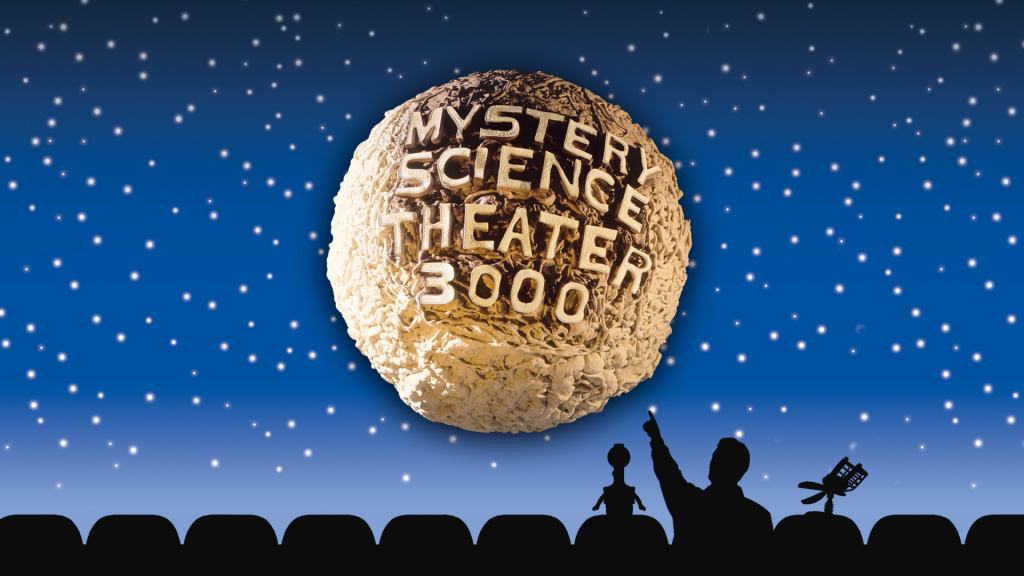
I heard of Mystery Science Theater 3000 long before I saw it, this obscure cable TV show that screened old terrible movies with robots making fun of them.
I finally saw it in, of all places, a hotel room in Florida. I clearly remember one movie was the Soviet fantasy Jack Frost. It was the damn weirdest, funniest thing I’d ever seen.
But boy, was it hard to actually watch more. It aired on cable channels I didn’t have money to watch, or weren’t carried locally. I finally found a few VHS tapes, and then DVDs, but even then, they were hard to find or crazy expensive. They were like buried treasure for quip-happy trash film fans. MST3K made me realise just how many awful, hilarious obscure movies there are in the universe.
It’s all much easier now to watch MTS3K, thanks to the internet. A couple of times a year I get into a real MST3K mood and binge away. For days, I keep imagining myself as Tom Servo or Crow, yelling stupid stuff as life goes by me. Before hateful trolls took over pop culture, MST3K was good-hearted snark.
I do miss the hunt. Kids today have no idea how hard it once was to find things you’d heard about that sounded cool. I can watch any episode of MST3K I want with a few clicks now, and I love them, but part of me misses the mystery part of that theater.
Ever wondered what it’d be like to spend 24 straight hours in a movie theatre?
My latest hard-hitting investigative piece over at Radio New Zealand takes a look at the 24-Hour Movie Marathon at Hollywood Avondale, celebrating its 24th anniversary this year!
Honey, nothing can live unless something dies. – Clark Gable, The Misfits
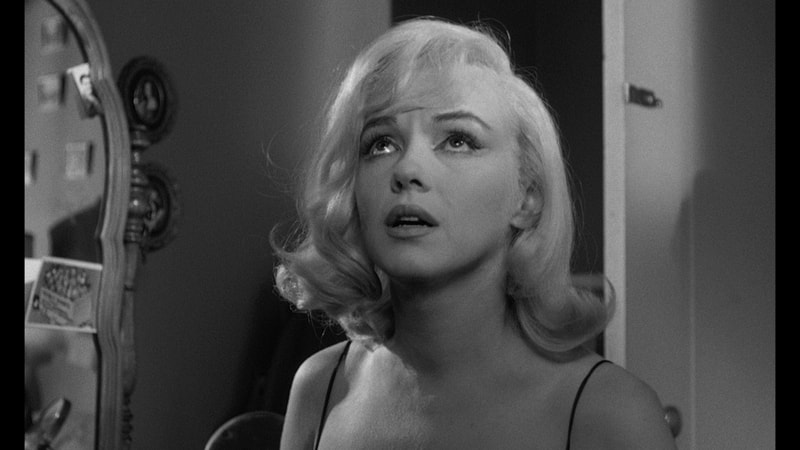
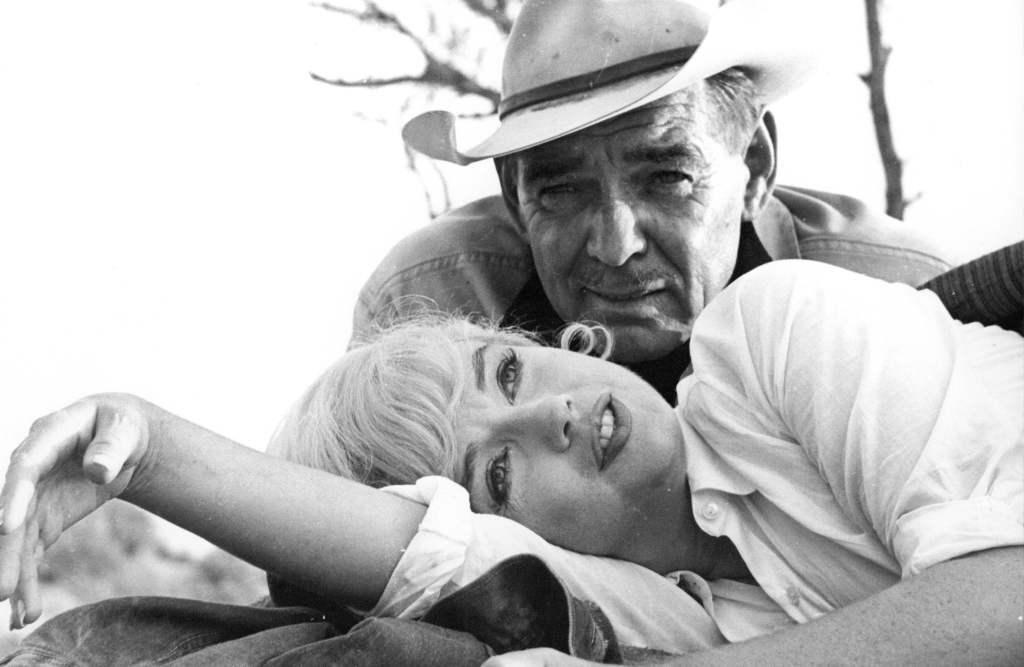
What is it? The Misfits is a star-packed elegiac meditation on love, loss and the American dream, directed by John Huston and starring Marilyn Monroe and Clark Gable in their final film. A dusty urbanised western, it follows a young woman visiting Reno to get a quickie divorce (Monroe) and the older cantankerous Nevada cowboy she begins a tentative affair with (Gable). Packed with Hollywood talent, it’s a surprisingly thoughtful, eloquent film wrapped around its May-December romance.
Yet it’s perhaps remembered most for the melancholy real-life fate of its three stars – Gable, 59, suffered a heart attack and died just 12 days after shooting wrapped. Marilyn, of course, died tragically at just 36 in 1962, and The Misfits was her final screen appearance. Co-star Montgomery Clift, whose life had already been speckled with so much tragedy, died himself suddenly at age 45 in 1966. Barely five years after The Misfits’ release, all of its lead actors were gone.
Why I never saw it: Can we ever separate a movie entirely from what we know about its stars in real life? You watch The Dark Knight and mourn a bit the loss of Heath Ledger; My Own Private Idaho, we think of River Phoenix and all that might have been. Hell, even Good Morning Vietnam seems a bit sadder now with Robin Williams’ suicide. So it is with The Misfits, where at every turn you are confronted by Marilyn Monroe’s shooting-star beauty and fragility, and wiry Gable at the end of his career, old before his time yet still with a twinkle in his eye. You might write The Misfits off as one of those forgettable endless Hollywood epic dramas of yore, with more scenery than soul to it. But you’d be missing out.
Does it measure up to its rep? Despite the legendarily chaotic production – with a drunken Huston gambling away in Reno, Monroe suffering several mental and physical health issues – The Misfits is something of a masterpiece. Those grand Nevada deserts shimmer in the black and white cinematography and playwright Arthur Miller’s script, filled with quotable lines, has a barbed, bittersweet wit to it that lifts the film higher.
I have to admit when I think of Marilyn Monroe it’s of the frothy bubblehead she plays so well in Some Like It Hot or The Seven-Year Itch, a good-hearted soul but without a lot of deep emotional weight. So it’s a revelation to see how good she is here as the traumatised, sensitive Roslyn. You feel her exhaustion as she begins the picture as a new divorcee and the gentle rise in her spirits under the endless Nevada skies as she and Gable’s cowboy cobble together a kind of life out in the desert. Monroe portrays a woman who’s troubled, but hopeful. While she’s still stunningly beautiful and the camera loves her, she seems more human here than ever before, a woman with her own dreams rather than just an object. It makes you sad, to think of what might have been in her future instead.
As for Gable, he harnesses all of his star power from classics like Gone With The Wind and It Happened One Night into a leathery old cowboy romantic who’s reduced to hunting down stray horses for dog food. With marvellous side characters – Thelma Ritter’s salty older divorcee, Eli Wallach’s prickly mechanic and Clift’s reckless doomed rodeo dude – The Misfits feels like nothing less than an exhausted pit stop on the road away from the American dream. It isn’t a cheerful movie, exactly, but it’s a staggeringly beautiful one, with every one of its hurt characters trying to find their way to a better tomorrow in the empty wasteland of Nevada’s scrub and dirt.
Worth seeing? Definitely. It feels like a postcard from the final days of Hollywood’s golden age, but also strikingly modern in its mood of ennui and heartbreak. From Miller’s stark screenplay to the very final scene between Gable and Monroe, it’s a world long vanished, but the stars in it still shine with a bright light indeed. God, they were beautiful people, weren’t they?
If I’m going to be alone, I want to be by myself. – Marilyn Monroe, The Misfits
*Spoilers* galore for a 50-year-old movie series ahead!
I first stumbled across Planet of the Apes in an after-school TV marathon of the original movies in the early ‘80s sometime. It’s no exaggeration to say they kind of blew my little human mind. And the thing that struck me the most, as I gulped down Planet, Beneath The Planet of the Apes, Escape From The Planet of the Apes and Conquest of the Planet of the Apes in a single week, was that there were no happy endings in this ape-filled apocalypse.
Everyone knows how Planet ends, with Charlton Heston wailing alone in the sand of a shattered world. Pre-internet, pre-memes, I was just raw enough to be stunned by the gorgeous tableau of a broken Statue of Liberty, and how Heston’s cynical, alpha-male astronaut finally runs up against an obstacle he can’t bully or bluster past.
Yet it was the impossibly bleak sequel, Beneath The Planet of the Apes, which made me an Apes-man for life. An immensely weird and surreal movie, it introduced peeled-face human mutants, horrifying visions of crucified apes and bleeding statues, and oh yeah – the destruction of planet Earth, blown to bits by a leftover atomic bomb in a struggle between apes and mutants. The final 20 minutes or so of Beneath is as dark as it gets, with Heston (who barely appears in the sequel) shot, mortally wounded and in his final moments, slumping to his death to trigger the apocalypse with what still seems to me like a sigh of relief. The screen fades to black, and we’re told: “In one of the countless billions of galaxies in the universe lies a medium-sized star. And one of its satellites, a green and insignificant planet, is now dead.” And the kicker – this movie was rated G.
As Beneath faded to black, the first time I watched it as a kid, I was filled with a bone-deep chill of horror that left me feeling very, very small in a vast universe. And the thing is, I liked it. It made the open-ended Empire Strikes Back’s bleak ending, so daring-feeling at the time, seem like a Care Bears cartoon.
Improbably, they managed to make three more Apes sequels after they blew up the whole world, by throwing in a little time-travel. 1971’s Escape From The Planet Of The Apes lures us in by being the most overtly comic of the series, with charming Cornelius and Zira catapulted back to a groovy ‘70s America, but soon, the darkness inherent in the series seeps back in with an ending that almost tops the nuclear doomsday of the last movie. In its final moments, the two ape refugees and apparently their infant child are shot to death under brilliant sunny California skies, their attempts to escape the end of the world fruitless. There is no way out of doomsday, Escape tells us.
But of course, there would still be another Apes sequel, this time picking up with Cornelius and Zira’s son Caesar – still alive, with another poor little chimp baby shot down in his place! – in what I’ve come to think of as the second best of the series, 1972’s Conquest of the Planet of the Apes. Set in some dystopian fascist 70s-style future where apes have replaced house pets and Caesar rises to lead a revolution, Conquest isn’t subtle in its Nazi imagery and racially charged metaphors, but I forgive it all for the cathartic carnage of its final scenes, where Caesar leads a mob that begins the dark process of overthrowing mankind that ultimately leads it to where it ends up, mute, naked and afraid in the original Planet of the Apes.
This movie’s ending was deemed so dark that it was edited into something more optimistic for its original release, and Caesar’s final speech ends in a note of possible peace. Forget that and go for the unrated original version seen below, where Caesar’s blood-and-vengeance preaching has the punch it was meant to, and we end for the fourth movie in a row with a dark, dark ending – a city in flames, a brutalised race rising up and the future looking, once more, very, very grim for humanity.
It’s hard to think of a non-horror movie series that ends on such downers for four successive films. (The fifth and by far least of the original series, Battle For The Planet of the Apes, suffered from huge budget cuts and a rather disposable plot set sometime between Conquest and the original on the timeline. It ends without mass bloodshed, but still with a vision of a statue of Caesar weeping, knowing that things will soon get much, much worse.)
Even in more modern Apes movies, you won’t get hug-filled happy endings. Tim Burton’s misbegotten 2001 remake was mostly awful except for the makeup effects, but did end on a darkly dumb note echoing the original movie. The terrific latter-day Apes trilogy all tend to end on less utterly nihilistic points than the original series. Yet each one of them has a more quiet note of rising dread in their climax, a sense that things are only, ever, going to get worse before they ever get better – if they ever do. This Apes fan is pretty excited for next year’s Kingdom Of The Planet of the Apes, the 10th (!) Apes film, but they better not cop out and give us too happy of an ending.
By forcing us again and again to look at the possible end of all things, the Apes movies have had the curious effect of making me look back at the real world with a different eye – appreciating the fragility of it all, the impermanence and the tiny little beautiful moments, whether it’s Cornelius and Zira exchanging a look of love, little Caesar’s love for his adoptive human family in the 2011 Rise of the Planet of the Apes, or even Charlton Heston and his mute mate Nova, alone on a horse through a blasted landscape, a bleached and battered world that still has a hint of dark beauty amongst all the ruins.
On all the planets of the apes, there is very little optimism, but yet, we keep coming back, again and again, hoping to find it. I guess that’s what makes us human.
I vividly remember watching Wes Anderson’s first movie Bottle Rocket on a rented videotape (!) sometime around 1997. This quirky heist comedy starred James Caan and a bunch of unknowns (who was this Owen Wilson oddball?) but something about it really grabbed me. Maybe it was the goofy way it subverted expectations, with its cast of dreamy losers and the way it swerved from the story of an inept heist into a weirdly sweet romance as Luke Wilson’s amiable thief fell for a hotel maid.
Whatever it was, for me, Wes Anderson was on my map. And I’ve been a fan ever since then, from the cult indie days of Rushmore through the big-budget all-star epics of Grand Budapest Hotel and his latest, Asteroid City. Anderson’s offbeat, precise style and humour combined with sadness has always felt tailor-made for my sensibilities.
Some people really HATE Wes Anderson. I don’t get it, but I can see why – they find him smug or pretentious, overly mannered and obsessed with set design over story. But I don’t agree at all. Wes Anderson makes his own worlds in his films, true, from the elaborate family home of The Royal Tenenbaums to the day-glo Western desert village of Asteroid City.
But what director doesn’t craft their own world, whether it’s Stanley Kubrick or Zach Snyder? At their core these are all still stories about real humans with real feelings, as deliberately told as they may be.
Somewhere in the last few years, though, Wes Anderson went from a film fan’s fetish to a cultural meme, as the internet latched onto his meticulous sense of order and design and “Wes Anderson style” became a thing. The long shots, the staring at the camera close-ups, the yellow serif fonts, the colour coordination and deadpan acting approach launched a thousand viral hot takes and merchandise, from the clever to the obvious and stupid.
Wes Anderson is a style, yeah, but it’s the movies and the marvellous characters like Max Rushmore, Royal Tenenbaum, M. Gustave or Midge Campbell that stick in my mind. The layered design is a setting for the characters, but to me it never overwhelms them.
Sure, some people don’t like it. The reviews for Asteroid City out there are starkly polarised to a weird degree but it ranks right up there with Oppenheimer as the best movie I’ve seen in cinemas this year, carrying his obsessions with form and function to a stylised peak.
Asteroid City continues the recent Anderson trend of story deconstruction and pushing design to its frantic limits, where at times it almost seems a live action cartoon. Once again, it’s an all-star cast, and stars like Scarlett Johansson and Tom Hanks mostly slot well within the group of Anderson returning players like Edward Norton and a terrific Jason Schwartzman, leading one of his movies for the first time since The Darjeeling Limited.
The story, like several of his recent works, is layers within layers – it’s a movie of a TV show of a play – and yet, it never quite spins out of control. Anderson has pushed hard at the very idea of straightforward storytelling since the flashback-within-flashback structure of Grand Budapest Hotel, a decision which either heightens the artificiality of stories themselves or adds a layer of chewy meta-context to mull over, depending on how you want to swallow it. Movies are constructs, he seems to be reminding us with a curio like Asteroid City, but that doesn’t mean they can’t mean something.
I don’t bow down at the altar of everything Anderson creates – The French Dispatch proved a little too cold and stoic for me and the anthology format muddled, and I didn’t think Isle Of Dogs was quite as delightfully screwy as his stop-motion adaptation of The Fantastic Mr. Fox. But even his less heralded films offer me something, like The Darjeeling Limited’s heartfelt take on grief starring fumbling Americans in a chaotic foreign country.
A lot of critics claim Anderson’s style is too cool and laconic, that the characters never show real emotion. But man, look at scenes like Steve Zissou’s haunting deep-sea encounter with the jaguar shark in The Life Aquatic, the aged bellhop Zero remembering his martyred mentor in Grand Budapest Hotel, Luke Wilson’s suicidal young man in Royal Tenenbaums, the pitch-perfect young love affair of Moonrise Kingdom or Jason Schwartzman’s shattered dad breaking the news of his wife’s death to his children in Asteroid City. Tell me they don’t have heart. Yes, it’s a repressed, wounded heart – Anderson doesn’t tend to do big shouty epiphanies for his characters – but you know, that’s how some folks process things.
The characters in Anderson’s films are full of submerged trauma, stacked with tales of dead parents, lost children and thwarted dreams, but there’s also always a self-aware wit and dry gallows humour to them. Funny tangled up in sad is my favourite kind of vibe – but it’s not for everyone, I know.
I get it if you don’t like Wes Anderson, of course. But for me, pretty much every film he carefully crafts and puts out there is a glorious little eccentric gift I enjoy opening again and again. Weird and wonderful, Asteroid City is another gem in a career that’s fussy and mannered … and still, years on from my renting that videotape of Bottle Rocket, it’s a style that feels like it was made just for me.
Like many folks, I’ve been a bit over-saturated by superhero movies the last few years.
I’m not declaring the superhero boom “over” like a lot of pundits are, but it’s all started to feel a bit rote. The Marvel Cinematic Universe in particular has fallen into the quicksand of “what-next-itis,” where watching the movies feel like homework as bread crumb credit-scenes stack up endlessly teasing the next adventures. The movies are mostly “fine,” but I’m not getting the same epic kick I once did of watching Captain America, Iron Man and Thor share the screen for the first time or Black Panther leaping onto the screen. To be honest, it’s hard to imagine they’ll ever top the lead-up to Avengers: Endgame no matter how hard the studio execs sweat.
But there’s far more out there than just one cinematic universe. So far, the best superhero-style times I’ve had at the movies this year have been Japanese tokusatsu films in the “Shin” heroes universe led by director Hideaki Anno. I’m very much a tourist in this world, but I like it.
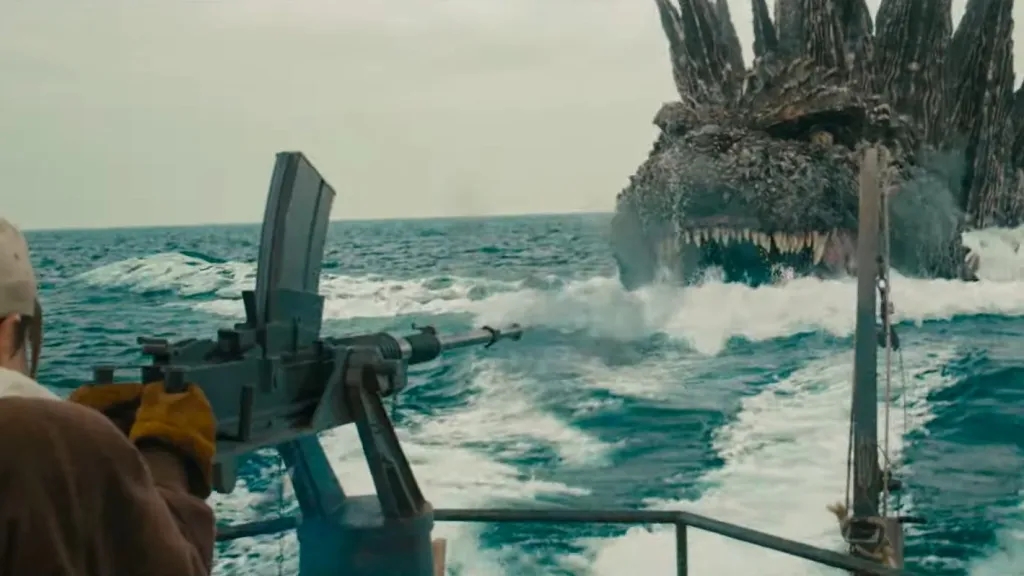
The Shin series has taken old Japanese favourites like Godzilla and Ultraman and reimagined them in bold big-budget films that combine Hollywood bombast with a distinctly tokusatsu* vision. (*Japanese “special effects” movies/TV shows) It’s included Shin Godzilla, Shin Ultraman and Shin Kamen Rider movies.
The Shin universe – “Shin” roughly translates to “New,” “True” or “God” in the title – is a wonderfully strange one where all the somewhat cheesy energy of ‘60s Godzilla flicks and Ultraman TV shows are done up with modern special effects and a true reverence for the material that makes it all feel epic and magical. Sure, a 40-metre tall silver humanoid hero like Ultraman is kinda silly, but his first appearance in Shin Ultraman evokes a real sense of awe.
The Shin universe kicked off with 2016’s remarkable Shin Godzilla. From the start, it undermines your expectations, like having Godzilla first materialise as a kind of google-eyed reptilian slinky who evolves rapidly throughout the film. While at first it may seem off-putting to not get to the Big G right away, it actually makes Shin Godzilla’s dangerous kaiju all that more impressive when he takes centre stage. The movie actually won the Japanese equivalent of the Academy Award for Picture of the Year!
The Big G of Shin Godzilla is one of the venerable franchise’s finest and freakiest ‘Zillas, a truly sinister predator with no kindness in his eyes, no “helping” humanity against other monsters, and it boasts some of the most dazzling destruction sequences of the more than 30 Godzilla movies. It was a solid reminder that after more than 60 years Godzilla still has the capacity to blow us away, and Anno turned his live-action skills to two other famed Japanese franchises, with 2022’s Shin Ultraman and this year’s Shin Kamen Rider.
I had a wide grin on my face the entire time I watched Shin Ultraman a few weeks back in the theatre. Ultraman is the Superman of tokusatsu heroes, an alien visitor fused with a human host who fights giant rubbery monsters and aliens galore. There’s been an insane amount of Ultraman series and movies over the years but, like Shin Godzilla, Shin Ultraman starts everything over from the beginning with a zippy tale of alien invasions, giant monster attacks and secret government agencies. It’s a giddy, unpredictable blast and unlike too many American superhero movies lately, you don’t feel they’re endlessly seeding the story with teases for a flurry of sequels. Instead, the Shin movies draw backwards on the franchises’ long history to create a world that feels deeply imagined yet new.
I’ve been a Godzilla nut for years and a more casual fan of Ultraman, but when it came to watching Shin Kamen Rider, the decades of source material is something I was utterly unfamiliar with. It’s the intricate tale of insect-human hybrid “augs” battling for supremacy in a world full of zippy motorbike chases, cool helmets and bizarre villains.
Unfortunately Kamen Rider (or Masked Rider in English) was probably the least successful of the three Shin films for me, thanks to some dodgy CGI and a sense they’re REALLY trying to jam all 50 years of fan lore into one two-hour movie. While Shin Ultraman also packs a lot of legacy story in, it feels slightly less rushed. But while it’s a bit of a chaotic jumble and overwhelming at times, there’s still more energy and originality in Shin Kamen Rider than I ever felt watching recent US hero snoozefests like The Eternals.
The Shin movies have been full of surprises, instead of following the rather predictable path of recent superhero movies with that mandatory everybody-running-around-things-falling-from-sky-in-a-hail-of-CGI climax. They’re deeply Japanese – Shin Godzilla has a dizzily rapid-fire satirical take on Japanese bureaucracy, for instance – and don’t feel like they’re catering to a Hollywood audience.
I grew up reading Marvel and DC Comics and so all the inside references and teases and foreshadowings make sense to me and I know my Dr. Strange from my Dr. Fate, but it also kind of means that after 30-something MCU movies, it all starts to feel like something you’ve seen before. The fun part of the Shin universe is how it’s a doorway to another pop-culture world entirely, one I freely admit to only having the barest knowledge of.
It’s a big old multiverse out there, and I kind of love feeling like an utter newcomer to some of it.
Superman IV: The Quest For Peace is not, objectively, a good movie. In fact, it’s pretty terrible.
The 1987 finale to Christopher Reeve’s run as the Man of the Steel was plagued by huge budget cuts, a ham-fisted script and a clear lack of energy by everyone involved. It was such a big bomb it pretty much killed the franchise for years to come.
What was a simple, not bad idea – Superman decides to rid the world of nuclear weapons after an annoying school kid writes a letter to him – became an awkward, choppy mess.
I actually saw Superman IV: The Quest For Peace in the theatre with a buddy back in 1987 and I clearly remember we were about the only two people in there. We left there with that deflating sense of disappointment one often got with comic-book movies in the pre-Marvel Cinematic Universe days, where you’d watch stuff like Howard The Duck or the George Clooney Batman and Robin and wonder how, how did this happen?
And yet, despite this movie being such a fiasco, I still end up going back to watch it every once in a while out of a morbid fixation, because you can just see a hint or two of the movie it could have been – a serious meditation on a Superman’s place on Earth, and the responsibility of caring for humanity without taking over the world.
In particular, there’s about two minutes of footage where that movie clearly emerges, when Superman takes to the stage at the United Nations to tell them of his plans:
Unfortunately, even then you see the impact of the budget cuts (judging from the Superman flying scenes immediately after, about $1.99 was spent on special effects).
And that script – hoo-boy. It ratchets up the campier elements of the first three Superman movies to unbearable levels, with little of the wit and sincerity that Superman and Superman II had. You’ve got a lame cliched evil businessman and his hot daughter (an embarrassed Mariel Hemingway) taking over the Daily Planet newspaper, Jon Cryer doing an appallingly unfunny doofus hipster teenager impression, and Margot Kidder looking very, very bored. Only Gene Hackman, whose genial scoundrel take on Lex Luthor was always worth watching, emerges unscathed.
And let’s not forget the all-time worst Superman villain ever seen on screen, the mulleted “Nuclear Man” clone that Luthor creates because he’s angry Superman eliminated the black market for nukes, I guess. Nuclear Man is howlingly cheesy, so bad the actor involved never did another movie.
(As a side note, for an even more in-depth look at what a mess this movie was, on the DVD you’ll find more than a half hour of deleted scenes including an utterly horrifying slapstick fight with a “first” prototype Nuclear Man character who looks like he wandered out of a Benny Hill TV show. Some hopeful optimists out there on the internet still claim adding those scenes back to the barely 90-minute Superman IV could make an improved “director’s cut” but honestly, these scenes are generally even worse than the movie itself.)
The whole idea that kick-started the plot – Superman makes the world safe from nuclear war! – kind of gets bounced around a bit and then abruptly discarded by the end.
And still, I do love that scene when Reeve arrives at the United Nations, the good cheer and optimism that pervaded his portrayal of Superman just about selling the idea that the governments of the world would be happy with him throwing all our nukes into the sun. “As of today, I’m not a visitor any more,” Superman says, and gosh darn it, it just makes you wish such a person really was out there, somewhere.
I don’t know why I watch 86 minutes of a pretty bad movie just to get that little moment, but somewhere out there in the multiverse, I like to imagine there’s a far, far better version of Superman IV directed by Steven Spielberg or someone that ran the table at the Oscars that year and gave that wee moment the kind of superhero movie it deserves.
What is it? The plot is simple: A peaceful alien arrives on Earth to deliver an important message, but is immediately met by fear and hatred. It’s an idea that’s been revisited countless times everywhere from E.T. to Starman to Arrival, but seldom with quite as much cool style as in 1951’s The Day The Earth Stood Still. Michael Rennie plays Klaatu, a seemingly human alien who arrives on Earth with an ominous robot sidekick, Gort, and who attempts to understand humanity. Klaatu grows close to an Earth boy and his mother, but fears that Earth’s warring nuclear powers threaten the rest of the universe’s stability.
Why I never saw it: Some movies seep into the collective unconsciousness so much, you think you have seen them. Any somewhat movie-literate person recognises the image of Gort emerging from Klaatu’s spaceship. Yet when I was a teenager discovering all those old ‘50s sci-fi classics, this one wasn’t on the afternoon TV movie rotations. Somehow, the movie itself had slipped through my watchlist over the years but because it is so familiar, watching it felt a bit like rediscovering an old book you read and loved long ago.
Does it measure up to its rep? From the creepy theremin soundtrack to the bold and simple iconic designs of Klaatu’s flying saucer and Gort’s lurking menace, Day The Earth Stood Still is a template for what we think of when we think of smart science fiction. Don’t overlook Rennie’s quietly charismatic performance as Klaatu, one of the first of many cinematic “strangers in a strange land” to ponder the mysteries of us earthlings. Rennie anchors the movie when it threatens to dissolve into kitsch or sentiment (Keanu Reeves played the role in a widely ignored 2008 remake, which I haven’t seen). Sure, Klaatu’s relationship with naive little Earth child Bobby is a plot device that is a bit saccharine, but Patricia Neal’s thoroughly humane performance as his mother works very well, especially as she comes into her own in the final act.
The 1950s were an absolute golden age for science fiction movies. Sure, they had existed before that and SF’s roots date back at least to the Victorian work of Jules Verne, but in the devastated aftermath of World War II, SF became a way for us to work out our feelings about the brave new world of atomic energy, mass death and the cosmic unknown.
Anyone who calls themselves a science fiction fan has at least a few ‘50s movies they love, from the original Godzilla to the creepy creatures of The Blob, The Thing and Them to the more thoughtful, contemplative vibe of classics like Forbidden Planet, The Incredible Shrinking Man and War Of The Worlds. The Day The Earth Stood Still stands firmly in that company, as science fiction that asks questions and makes us question our own beliefs. It’s ahead of its time and thoroughly of its time all at once.
Worth seeing? Absolutely, because while the cold war paranoia that coursed through the bloodstream of so much 1950s science fiction has eased a bit, the movie’s message hasn’t lost relevance. We humans are still self-destructive, often brutish creatures determined to sabotage our world’s possibilities, as the last few years have so thoroughly reminded us. When Klaatu says at the end, “the decision rests with you,” that’s a message that resounds still 70 years on. Hopefully eventually we’ll listen.
I’m running around getting ready for a holiday and juggling deadlines like they were howler monkeys escaped from the zoo, but here’s a quick look at some other things by me elsewhere on the internets:
It’s just about time for Whānau Mārama New Zealand International Film Festival, the bestest time of the year if you love movies, and I have already bought far too many tickets. You can read my preview of all the film fest action right here at Radio New Zealand, and it also doubles as a bit of a tribute to film festivals in general, which we all know are the best-ivals.
Meanwhile, I’m also keeping up an occasional book reviewing side hustle over at NZ’s best weekly current affairs magazine, The Listener, which after a few pandemic-plagued years without a web presence has recently launched a bigger digital footprint.
You can read my latest book review of David Grann’s excellent historical page-turnerThe Wager: A Tale of Shipwreck, Mutiny and Murder right now in the latest issue at good newsstands everywhere in New Zealand, and the review is also online right here (paywalled):
I love a good character actor, and one of the best in the business is Stephen Root, who’s been kicking around for ages but really took his work to the next level with the recently completed pitch-black comedy Barry.
For a glorious episode or two, the supporting character actually became more interesting than the show’s star.
Root is a key “hey, I know that guy!” actor. In his career he’s racked up nearly 300 acting credits, and in many of them, he’s outright stolen the show from bigger stars.
I first became a Root fanboy with his hilarious work on the classic ‘90s sitcom NewsRadio as arrogant, distracted millionaire station owner Jimmy James. Root was surrounded by terrific talent like Dave Foley and the late, sorely missed Phil Hartman (and another guy who obnoxiously became the most famous member of the show’s cast by hosting reactionary podcasts, but forget about him).
Root’s James was a great comic creation, a kind of easy caricature of rich bluster animated by quirky little moments, and provided many of NewsRadio’s best scenes. I can never quite make it without laughing through the bit where Jimmy James hosts a reading from his memoirs, which were accidentally translated into Japanese and then back into English again, somewhat mangling the text:
Just listen to the perfect cadence Root gives lines like, “But Jimmy has fancy plans – and pants to match!”
In the 1999 cult classic comedy Office Space, Root plays the opposite of Jimmy, the mumbling office drone Milton, obsessed with his red stapler, turning a pathetic geek into something indelible.
Root has the knack for standing out even in the smallest roles, whether he’s popping up as a creepy blind predator in Get Out, on TV on Succession, Justified, The Book of Boba Fett or in one of his many Coen brothers movie roles.
But he’s never quite been the star of the show, like most character actors. That’s why I loved so much what we saw in the final few episodes of Barry, where he played the shady mentor and handler of Bill Hader’s disturbed assassin Barry Berkman.
In the series, Fuches is another one of Root’s great cowardly losers, always looking like he just rolled out of bed and constantly nearly getting killed. He’s a boastful manipulator who never quite rises out of the gutter, until toward the end of the series when he’s jailed and the series jumps forward in time several years.
When Fuches is thrown in prison, he demands other prisoners call him the “Raven,” another one of his bombastic fantasy projections of himself. He’s promptly beaten nearly to death, and that’s the last we see of him until the story picks up years on.
In that time, Fuches has actually transformed himself into The Raven, a tattooed mob boss terror with his own gang of cutthroats. Released into the world, The Raven is suddenly a real threat instead of the bumbling poser Fuches was. The small, dumpy guy everyone has underestimated is now the most dangerous man in the room.
Barry was a fascinating series – sometimes its reach exceeded its grasp, I felt – but the few episodes where Root flies as the Raven are among the series’ peaks. Everything about The Raven is different from Fuches – his body language, his swaggering self-assurance, the murderous glint in his eye.
After years of side roles and small parts, it’s a damned pleasure to see Stephen Root suddenly take the centre stage. It’s kind of like watching a wallflower turn into the life of the party, to see the skill he’s built up as a character actor over the years turned outwards.
The Raven felt like the apotheosis of Stephen Root to date, a high point in a career filled with vivid sketches and gags. Take a moment to appreciate the little guy, the battler who in the end takes control of his own story. You never know when they might spread their wings … or stick a knife in your back.