I love a pop-culture list. I don’t get annoyed at lists, because they’re a great way to discover new things. For a film nerd, the release of the once-a-decade Sight and Sound Greatest Films of All Time poll of critics and film buffs is a bit like an early Christmas.
I like the Sight and Sound poll because its ten-year gaps force us, in a culture that never stops speeding along, to slow down and take stock. Cinema is barely more than a century old after all, and this poll has always felt a bit more sturdy and authoritative than year-end magazine lists and listicles. That’s not to say it’s always “right,” but it’s always worth reading.
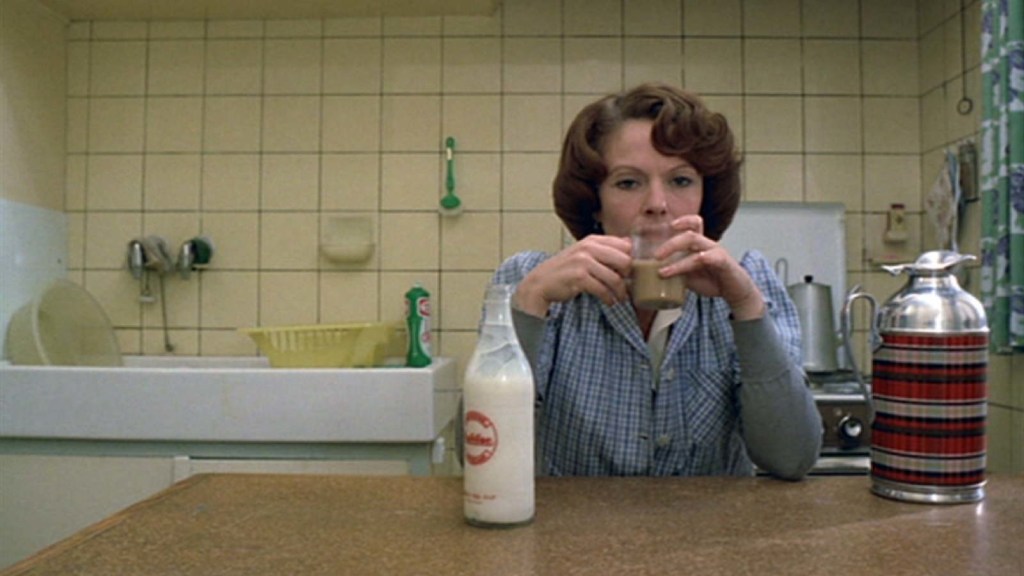
The poll seems to have taken a large leap forward this year rather than the more stagnant aura it once had – Kanetopped it from 1962 to 2002, for instance. I’m sure certain corners of the internet are howling that Hitchcock and Welles were pipped by a woman, but I’m totally cool with it. I adore Hitchcock and Welles and as fun as these lists are, nothing has changed about that for me today. But I do get to (eventually) check out Jeanne Dielman, and hey, I might discover a movie I totally love in the process.
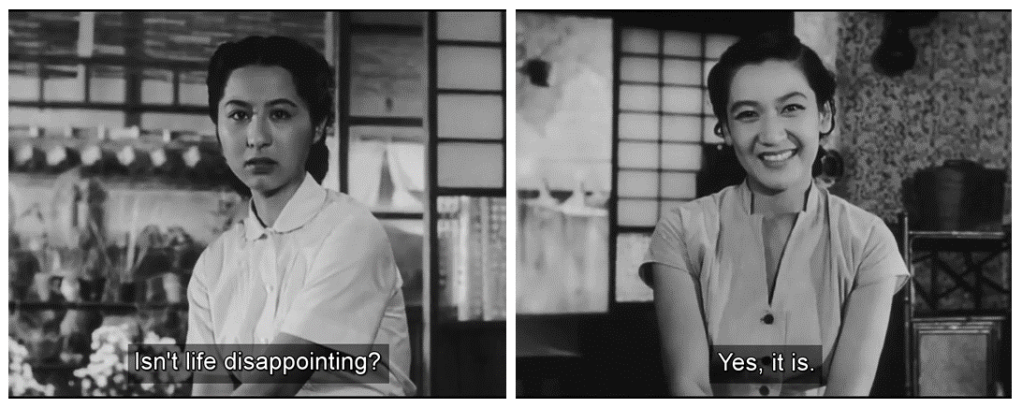
That’s the true beauty of lists like Sight and Sound for me. I grew up on Police Academy movies, but there’s so much more to cinema too. I was introduced to Yasujirō Ozu’s heartbreakingly good 1953 dramaTokyo Story because of its high placement on previous lists. I’ve discovered many more movies because of lists like this or the late great Roger Ebert’s “Great Movies” features.
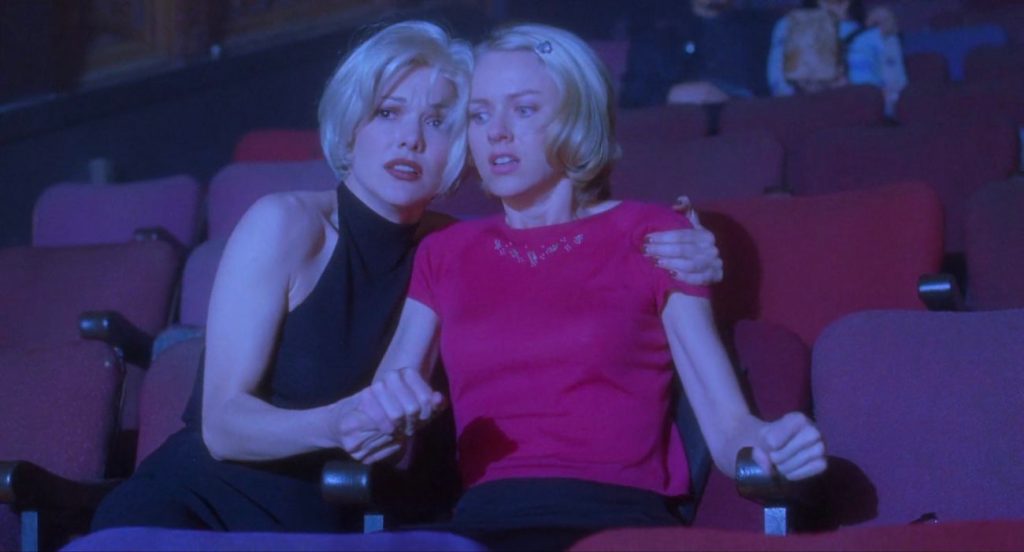
There’s some great progression from 2012 on the 2022 list, which features far more women and Black and minority creators than ever before. Some absolutely stellar more recent films have inched up – David Lynch’s masterpiece, 2001’s Mulholland Dr., is now in the top 10, the newest movie there, while very recent movies like Parasite, Get Out and Portrait of a Lady On Fire are included. Others are gone – Lawrence of Arabia and Chinatown dropped from the top 100, but that doesn’t make them any lesser in my own eyes.
Film ain’t a contest to me, and I don’t care if your list puts Jaws above Kubrick’s 2001 or you think Adventures in Babysitting is the best movie of all time. We love what we love, and in an increasingly vile and argumentative internet, that bears remembering.
Anyway, I’m happy to spend weeks poring over the list, which now includes at least 35 movies I’ve never seen. Film internet will be debating, arguing, praising and condemning the Sight and Sound list probably until the next one rolls around in 2032 (assuming we’re all still here). Me, I’ll be watching some movies.
The older I get, the more weirdly specific my comics-collecting fetish gets, diving into strange corners and alleyways, like weird romance comics and the gut-wrenching final issues of series.
Licensed comics based on existing properties are as old as the medium (believe it or not, kids, Bob Hope and Jerry Lewis could once sustain long-running series) and I’ve always had a weird yen for Marvel Comics’ exuberant movie and TV comics franchises of the 1970s.
Marvel has had a huge run of licensed comics that kicked off with the huge success of Conan the Barbarian although for many in my generation, their excellent Star Wars series was what hooked fans for a lifetime. (I’ve dabbled in the many, many Dark Horse and later Marvel Star Wars comics over the years, but for me, still, the only “real” Star Wars comics are the original 107-issue Marvel run.)
Beginning in the mid- to late 1970s, Marvel licensed comics were EVERYwhere – toy lines like Shogun Warriors and Micronauts and ROM, movies like Planet of the Apes and Battlestar Galactica and Godzilla.
The licensed titles were often advertised in the pages of other comics I already read, and I usually hadn’t seen the source material they were based on, so things like the brief seven-issue run of Logan’s Run or the real-life stuntman The Human Fly always intrigued me. Who were these characters side-by-side with Thor and Iron Man? Why was there a comic about them?
The Marvel licensed comics of the 1970s were all over the map, quality-wise, but they also had a sense of freedom. ROM spun an entire epic cosmic war out of its cheap plastic toy inspiration, and Marvel’s Godzilla brought us the immortal image of Godzilla shrunk down to human-size and skulking around Manhattan in a trenchcoat. The licensed comics never felt like they had to be particularly faithful to their sources, so you got things like Star Wars’ immortal, somewhat controversial Jaxxon the rabbit that you can’t imagine Disney/Lucasfilm would ever permit today.
So anyway, this weird completism is why I ended up buying the entire brief seven-issue run of Man From Atlantis for cheap recently, because it’s one of the few ‘70s Marvel licensed series I’d never read. I don’t even LIKE the TV series, really, and honestly Marvel publishing what was always basically a bargain-bin version of their far cooler character Namor the Sub-Mariner seemed weird. But hey, the comic was written by Marvel’s go-to licensed comics guy, the underrated Bill Mantlo, and art by Frank Robbins, whose loose-limbed antic figures appeal to me more now than they once did. The comic is actually fairly fun underwater antics with a far higher budget than the TV series had – and more inventive than its source.
Licensed comics are still very much about today – Buffy the Vampire Slayer, the indefatigable Star Wars, Transformers, Star Trek, GI Joe, Conan and much more carry on telling stories that go far beyond the source material, yet when I pick them up they always seem a bit constrained, somehow. Maybe the big difference is that when those Star Wars and Godzilla comics were on the stands 40 or so years ago, you couldn’t just hop online and watch a Star Wars movie. You had hazy memories of cinema visits, and the tie-in comics provided a valuable map back into the entertainment you dug. Licensed comics allowed you to return to these worlds, again and again, when it wasn’t quite so easy to do so.
These days, with so much of everything everywhere all the time, a licensed comic seems somewhat less unique than it once did, and more just a part of the flood of content washing over us all. Hey, but that’s cool – I’ve still got quite a few issues of Micronauts to track down.
What is it: The first “midnight movie,” the surrealist “acid western”, “the weirdest western ever made.” Director Alejandro Jodorowsky’s extreme cult hit El Topo was a groundbreaking, aggressive statement that helped to change cinema, taking western movie tropes and turning them into a bizarre, questing meditation on morality and enlightenment. Populated with grotesque images and moments of startling beauty, it’s soaked in blood, disorienting with its casting of real-life disabled or maimed performers, and the kind of movie all the film cognoscenti say that you really must see at least once. So, finally, I saw it once.
Why I never saw it: For a movie that’s legendarily strange, El Topo has had a difficult path to actually being easy to see. It got tangled up in legal wrangling and was only released on DVD in 2007. The first of Jodorowsky’s films I’ve dipped into, El Topo is often called Jodorowsky’s ‘most accessible’ movie. I’m a fan of weird, but weird is very much in the eye of the beholder, ain’t it? (I still recall a date who I took to the Michael Bay movie The Rock talking about how strange and weird it was afterwards. Reader, we did not date again.) I love my Lynch and Cronenberg but am fully aware I’m a mere babe in the wild, vast woods of weird cinema, and have to admit I wasn’t quite sure what to expect with El Topo.
Does it measure up to its rep? The big question for every viewer of El Topo is whether or not it’s just a procession of cruelty with no deeper meaning. When the subject is nothing but “people are terrible,” it gets old, fast. El Topo starts off feeling a bit like a particularly dark spin on the whole “lone gunman wreaks vengeance” plot, following the man in black and his inexplicably naked young son (Jodorowsky himself plays the gunman) as they discovered a gutted village filled with dead people, track down the corrupt bandits responsible and execute them. The gunman then abandons his son for a rescued hostage and ends up on a surreal quest through the desert to kill four gunmen legends and become “the best there is,” a quest that gets increasingly stranger. In the end, the gunman disappears and is reborn years later in a cave, bleached white and now a mystical holy man who can’t quite escape his violent past.
While it’s hefty with the DNA of John Wayne, Clint Eastwood, Django and other western icons, to me it also shares an awful lot with books like the dark, biblically violent Cormac McCarthy novel Blood Meridian, which also sees the west as a seething quagmire of man’s worst instincts, or of Robert Bolaño’s epic 2666, which turns an unflinching catalogue of murders into something stranger and deeper. If anything, I have to admit that El Topo wasn’t quite as weird as I imagined it might be, especially in its more grounded first half. Where it sticks, however, is the insinuating ugly beauty of its vision, where Jodorowsky stages violence with an icy calm eye as men, women and even children are gunned down, and in the end, we’re not certain if he’s saying life is worth nothing – or worth everything. There’s precious little hope in its final moments, suggesting an endless circle of violence and thwarted redemption.
Worth seeing? On one level, El Topo probably doesn’t seem quite as groundbreaking as it might have 52 years ago. We’ve had plenty of deconstructionist westerns: Clint himself in Unforgiven, Jim Jarmusch’s Dead Man and much more, and plenty of weird, brutal cinema. Yet despite its more grotesque flourishes, El Topo is still a singular, fierce vision. His use of real-life amputees and dwarves is confronting, as is the brief animal deaths and sexual violence. Jodorowsky claimed back in the ‘70s that he really raped his actress co-star in one vivid, violent sequence, although he’s since walked that back as a big-mouthed publicity stunt. Either way, El Topo is still a triggering film, but it has value as some kind of warped mirror on society. Seen 50 years on, yes, El Topo does seem madly self-indulgent, frequently sadistic and exploitative. Yet it’s also hard to stop thinking about some of its imagery. I’m a sucker for the vision of a man in black, riding across the desert, on his way to who knows where, but knowing there’ll always be blood in the end.
It’s the spooky season, and Halloween is nearly upon us! What better way to celebrate than lining up a handful of horror movies – since I outgrew trick-or-treat, my favourite way to mark the holiday.
Vampires are a Halloween mainstay, and for my Halloween post, here’s my Top 13 Movie Vampires (many more could have made the list, but I decided to stop with the spooky 13).
Where it all began
Nosferatu (Max Schreck) Nosferatu, 1922:One hundred years old this year, the first major screen vampire in this not-quite adaptation of Dracula is still horrifying. Apparently some people even thought Schreck was a real vampire! The movie is brisk and terrifying even after a century, and features several shots that are among the greatest in horror history. Sure, you could argue this Nosferatu doesn’t really have a character, but who cares when he’s this scary?
Dracula (Bela Lugosi), Dracula, 1931: The ultimate interpretation of Dracula, so iconic that Lugosi spent the rest of his life both chasing and running away from it. It’s hard to look at a role like this that’s passed into legend with fresh eyes, but watch it again sometime and see how Lugosi sinks his teeth (sorry) into his sexy, strange vampire. Everyone from Anne Rice to Twilight owes him a debt.
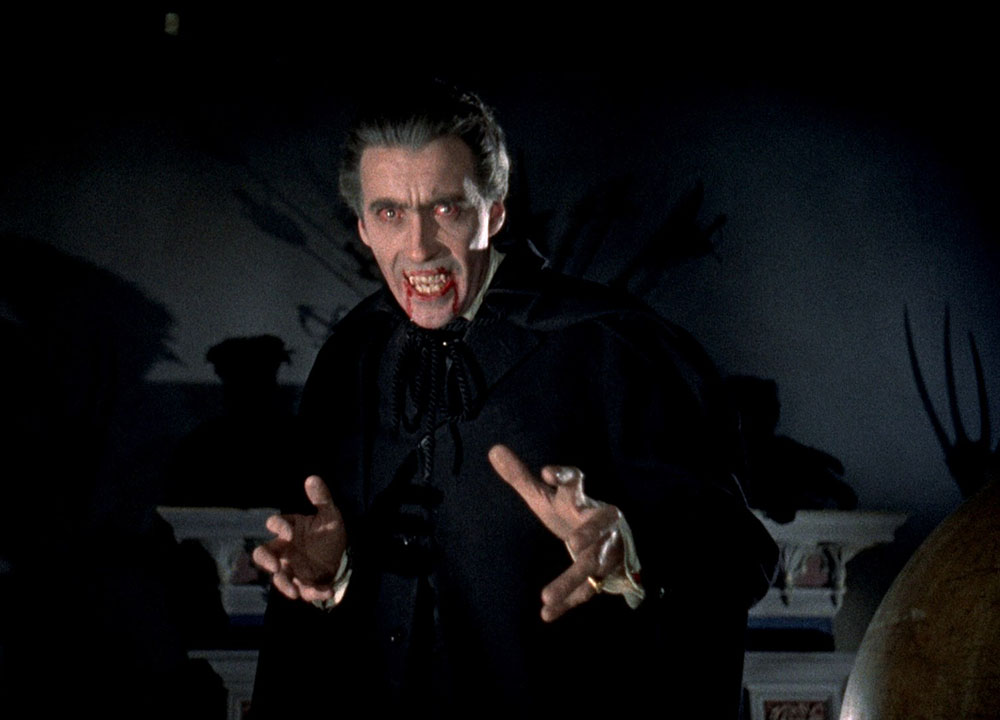
Dracula (Christopher Lee) Lots of Dracula movies, 1958-1973: The thing about Christopher Lee is he looked great as Dracula in a whole series of Hammer Films vampire flicks even when the movies themselves were rather sloppy and stilted and had titles like Taste The Blood of Dracula. They even made the mistake of having Lee – one of the best horror voices of all time – nearly mute in several of the movies and his character and competence seemed to change from film to film. None of that really matters, because besides Lugosi, Lee is the finest dark prince ever to play the role.
Regal vampires
Countess Marya Zaleska (Gloria Holden) Dracula’s Daughter, 1936: It seems weird in these days of never-ending franchises, but Lugosi did not return for a proper Dracula sequel. Instead, this ‘sidequel’ introduces his supposed daughter, the gloriously goth Holden. It’s one of the many bashed-out Universal Horror cheapies that barely run over an hour, but Holden’s sultry Zaleska is a striking, strong and modern creation – witness the barely concealed lesbian subtext in one famous scene.
Lestat (Tom Cruise) Interview With A Vampire, 1994: Man, there was an outrage back in the day about Tom Cruise playing Anne Rice’s bratty vampire, but every time I watch this, he seems a little bit better – preening and smug, he blows a sleepy Brad Pitt off the screen. I still haven’t seen the new TV reboot yet, but for my money this flick captures the lush absurdity of Rice’s prose very well.
Blacula (William Marshall) Blacula, Scream, Blacula Scream!, 1972-73: William Marshall was better than the material in the Blacula movies, which are a silly blaxploitation hoot with few moments of real terror. But boy, did Marshall act the heck out of Blacula, giving a wounded dignity and majesty to his cursed African prince that lifts the movies themselves. His grand booming voice alone ensures a place on this list.
Totally ‘80s Vampires
David (Kiefer Sutherland), The Lost Boys, 1987: Come on, who didn’t want to be a Lost Boy after watching the hooligan vampire gang led by Sutherland’s David storming around Santa Cruz, where weightlifting saxophonists wail away the night? Flashier, sexier vampires became a big thing in the ‘80s, and the hair-sprayed, sultry crew led by David were among the vanguard.
Jerry Dandridge (Christopher Sarandon), Fright Night, 1985: As this list shows, the ‘80s were a terrific time for vampire reinventions. Here’s the yuppie vampire, smooth scarf-wearing Jerry Dandridge, played with memorable charm and snark by Sarandon. The meddling teenager next door is sure Dandridge is a vampire – needless to say, the kids are always right.
Severen (Bill Paxton) Near Dark, 1987: The white trash dark reflection of that same year’s Lost Boys, Kathryn Bigelow’s vampire western is a magnificently tense and gorgeously filmed story of a band of roaming vampires and the young cowboy who falls in with them, but the whole dang movie is nearly stolen by the late great Bill Paxton’s swaggering, sleazy Severen, a member of the vamp gang who honestly does not give a damn and storms through every situation like a pure creature of the id. He’s terrifying, and hilarious.
Darned weird vampires
‘Space girl’ (Mathilda May) Lifeforce, 1985: She’s a kind of space vampire, and she spends about 95% of her screen time utterly naked in Tobe Hooper’s bizarrely grandiose sci-fi/horror epic. It’s a trashy movie but it’s also so determined to be weird, from an overacting Patrick Stewart to its swirling, cosmic climax. It’s not a very coherent film, but May’s stoic, creepy otherness makes her nude dark creature fascinating.
Jiangshi, Mr. Vampire, 1985: Chinese vampires are weird. This insane Sammo Hung comedy horror introduced mass audiences to the Chinese folklore “jiangshi,” hopping corpses who are somewhere between zombies, vampires and leapfrogs. The vampires in this movie are creepy because they’re so far from what Bela Lugosi made us think of, more animal-like than anything, and its success led to an explosion of wild, weird films.
Not quite vampires
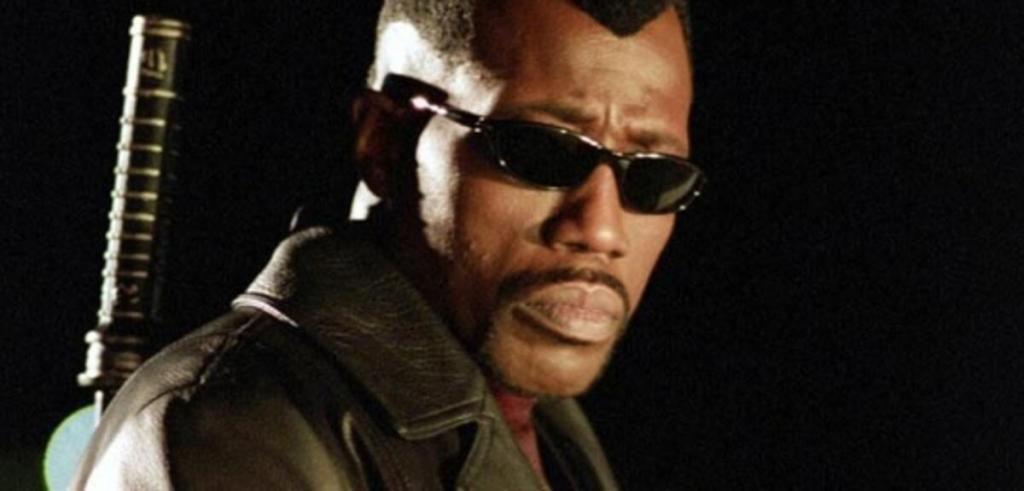
Blade (Wesley Snipes) Blade, Blade II and Blade III, 1998-2004: Wesley Snipes’ attitude-filled vampire killer who’s also a reluctant vampire himself was the first Marvel comics character to actually star in a hit film, and the blood-splattered, over-the-top Blade series is still a heck of a lot of fun, combining action movie energy with gory horror.
Peter Loew (Nicolas Cage) Vampire’s Kiss, 1989: Cage is well known for going over the top. In Vampire’s Kiss he not only goes over the top, he launches himself into outer space. In this unhinged, extremely black comedy, he’s a yuppie sleazebag who apparently is bitten by a vampire. Cage goes “full Cage” as his character gradually loses his mind, eating cockroaches and screaming through the streets of Manhattan. It’s hilarious, but it’s also one heck of a piece of method acting. You’ll never forget it.
Honourable Mention: The vampires from What We Do In The Shadows; The Hunger; Let The Right One In; Nosferatu (Herzog remake); Only Lovers Left Alive; Count Yorga; Buffy The Vampire Slayer.
Weirdly low-profile for a giant green monster, 2008’s The Incredible Hulk is the forgotten overshadowed superhero stepchild of the same movie summer that brought us Robert Downey Jr.’s Iron Man.
It’s flawed, for sure, and lacks the machine-tooled precision that the MCU movie-making machine has settled into. But when it works, The Incredible Hulk still feels to me like the best Hulk movie we’ve had to date. I think of all the Hulks we’ve seen on screen, it remains the closest to the “classic” Hulk – doomed scientist on the run from his curse, haunted and heroic. Ang Lee’s muddled 2003 film mixed intriguing ideas with a bizarre plot and felt like a Hulk in name only, and in a series of Avengers and Thor movies, Hulk has been more of a superheroic comic sidekick.
Incredible Hulk opened mere weeks after Iron Man but these days is often lumped at the bottom of lists ranking the 30 or so Marvel movies. Still, nearly 15 years on, The Incredible Hulk is having a weird revival in the MCU – its villainous Abomination portrayed by Tim Roth has returned in the She-Hulk TV series, and the super-smart Hulk villain TheLeader, whose heel turn by Tim Blake Nelson was only hinted at way back in 2008, is reportedly set to appear in the next Captain America movie. Often dismissed in MCU fandom, there’s still a lot I like about Incredible Hulk.
Edward Norton’s tense, nervy turn as Bruce Banner owes a lot to Bill Bixby’s classic stressed-out Banner in the 70s Hulk TV show. The movie wisely skips over the Hulk’s origin in a quick few cuts and jumps to the status quo of Banner on the run from the government, hiding out in a colourful Brazil favela. The South American setting for the movie’s first act is already something a bit different, grittier than the typical superhero movie, and while there’s barely a Hulk to be seen for the first part of the movie, Norton’s haunted portrayal and the sense of impending doom carries the film well.
We follow Banner from South America back to America, where he catches up with long-lost love Betty Ross (a great Liv Tyler) and the late William Hurt’s cruel and stern Thunderbolt Ross, as well as a tightly-wound soldier named Emil Blonsky (a coiled and ruthless Roth) who wants to take down the Hulk. When the Hulk does finally appear in broad daylight in a university campus battle, it’s suitably impressive. No, the Hulk doesn’t get a lot of screen time here, but when he does, he leaves his mark. The 2008 CGI is perhaps less smooth than modern motion-capture, but I like the somewhat ravaged, demonic look this Hulk has.
Incredible Hulk captures the cat-and-mouse game that Banner played with his pursuers so often in the comics, reminding us that the Hulk at his core is a misunderstood monster, not a superhero (and really, not an Avenger despite the movies – in the original Avengers comics, he lasted to the second issue before quitting the group).
Where Incredible Hulk goes off the rails is in a rushed and silly final act, where Roth’s Abomination becomes a CGI gumby and New York City ground zero in a battle that doesn’t feel like it has any of the stakes or tension of the preceding hour or so of the movie.
Director Louis Leterrier isn’t really A-list – movies like The Transporter or the terrible Clash of the Titans remake – yet the many deleted scenes on blu-ray show he and Norton were trying to make a different sort of movie than it turned into when it was shoehorned into a Marvel Cinematic Universe building block. Norton clashed a lot with Marvel and wasn’t invited back to play the Hulk again.
There are brief moments in Incredible Hulk that feel raw and adult compared to a lot of superhero flicks – Betty calming the enraged Hulk down when he’s frightened by a rainstorm; Bruce and Betty’s fleeting hotel room tryst, ruined when Banner realises, “I can’t get too excited,” or the keen glittering madness in Roth’s Blonsky, which has been erased for comic effect in She-Hulk.
The Hulk has proven a remarkably protean character in the last few decades in the comics – after settling into the childlike “Hulk smash!” brute for most of the ‘60s and ‘70s, in the mid-1980s writers started experimenting with variations on the Hulk’s dual identity, pioneered by the great, tragically curtailed writer Bill Mantlo when he introduced a lengthy take on the “smart” Hulk – one with Bruce Banner’s intelligence – and perfected by Peter David in his iconic 12-year run on the character where he brought us the calculating Grey Hulk, a “merged” Professor Hulk and much more. Since then we’ve had Red Hulks and Immortal Hulks and Robot Hulks and Son Hulks and much more. There’s so many Hulks.
Yet, I’m still a bit partial to the simple, crisp duality of the “Incredible” Hulk, a lumbering Frankenstein-ish monster who isn’t inherently evil but is treated that way, and a Bruce Banner whose life is ruined by trying to live with this unpredictable curse.
To be fair, I like Mark Ruffalo and his charmingly dorky Banner, but too often his Hulk has never quite felt like more than a CGI strongman. His Banner seems annoyed by being the Hulk, not haunted like Norton. The “merged” Hulk introduced in Avengers: Endgame is more awkward and bumbling than the confident version introduced in Peter David’s comics. Endgame skipped past all the settling of the Hulk’s inner conflicts introduced in Infinity War, waving all that off in a time-jump. I simply feel there’s a little too much Ruffalo in the Hulk in his current MCU incarnation and not enough, well, Hulk.
It’s a big “what if” whether Norton could’ve been good as a Hulk in an ever-expanding, ever-calculating Marvel Cinematic Universe. His portrayal is a bit too idiosyncratic, a bit too “real” to play well with others. But it’s still the screen Hulk I like the most.
I’m old enough to remember that Labyrinth was actually kind of a flop when it opened in theatres in 1986, but I recall that I still somehow managed to watch it three times there before it faded away.
I don’t want to be that guy, but I was into Labyrinth before it was cool, man.
Jim Henson’s film is a swirling strange dream of a movie, with a grandly absurd David Bowie as the Goblin King and young Jennifer Connelly as Sarah, a girl who accidentally loses her baby brother to the goblins’ realm and has to get him back. I loved it as a kid, and still adore it as an adult, but with a very different perspective on it all now.
Watching Labyrinth over the weekend on the big screen at the glorious Hollywood Avondale for the first time in decades, it still seems to me a beautifully askew little fairy tale. All fairy tales are written by adults, and all fairy tales on some level are about the end of childhood.
Several years ago, I watched Labyrinth for the first time in ages and it didn’t land as well – it felt a bit clumsy and halting on a small screen. I realise now that the big screen is a far better venue for Henson’s imagination, where you can appreciate the dazzling CGI-free puppet work and intricate set designs, where Bowie’s haughty sneer and Connelly’s unforced sincerity seem stronger, realer. The puppet characters are a quirky joy, especially the hulking Ludo and my favourite, the frantic Sir Didymus.
It’s also all proudly weird, which I think is what appealed to me as a teenager – from distorted goblin designs to the cavern full of sentient hands to the creepy Fireys dancing with their separated body parts, it doesn’t feel very Disney-fied like so many young adult fantasies. Bowie takes a character that could be ridiculous (that wig!) and makes him charismatic – it’s hard to imagine possible alternative casting like Sting or Mick Jagger being quite so effective.
Bowie’s mournful songs and Trevor Jones’ score are all more adult and yearning than most kid-movie soundtracks, with Bowie’s “Within You” one of his most underrated, intense love songs. The sexual subtext of Sarah’s coming of age is right up in your face as an adult, because honestly, you don’t cast David Bowie and put him in rather tight leotards without expecting some kind of reaction, do you?
At the time, Labyrinth was not a success. It barely opened in the box office top 10 in June 1986, beaten by the likes of Top Gun and Karate Kid (franchises that were of course, never heard from again). In Bowie’s career, it was considered part of the long post-Let’s Dance slump that included pre-grunge band Tin Machine and Never Let Me Down. (I disagree, of course, and Bowie’s firm willingness to reinvent himself makes this era stronger in hindsight.)
Yet somehow, Labyrinthendured. Part adult reverie, part teenage girl fantasy, part childhood toy-filled romp, Labyrinth still sits uncertainly next to the likes of Beauty and the Beast and The Little Mermaid. Sarah’s final rejection of the Goblin King still has power – “Just fear me, love me, do as I say and I will be your slave,” he tells her. She knows better, and chooses her own path. The King’s somewhat twisted affections are rejected.
There’s been talk over the years of sequels, prequels or sidequels to Labyrinth. Frankly, I really do hope it never happens. We’ve a tendency to wring out that ‘80s intellectual property until it’s exhausted, and the intimate pre-digital charm of Labyrinth can only be diluted by shoving it through the unquenchable content machine.
There is more sadness in watching Labyrinth now than there was when I was a teenager, at the other end of the telescope – sadness that the campy, imperious Bowie is gone, that Jim Henson’s dream of puppets ended too young, that we all, in the end, grow up. But there’s also joy, in knowing you were there, once, and nothing can erase the memories of the labyrinth of getting from there to here.
The thing about Mary Shelley’s Frankensteinis it’s not the story you think it is.
Mary Shelley was only a teenager when she wrote the book that has led some to call her “the inventor of science fiction.” At the very least, she certainly helped create some foundations for it. However, if you’ve binged on old Boris Karloff movies and are expecting Frankenstein the novel to be the same animal, you’re likely to be a bit befuddled.
The book has a rather average 3.8-star rating on GoodReads, with critics saying it’s “like watching paint dry” and “tedious.” Published in 1818, it does get off to a somewhat slow start, with a series of nesting first-person narratives from an Arctic ship captain, then Victor Frankenstein, and then finally the monster itself. There’s not a lot of what we jaded 2022 folk would call “action” and a lot of flowery romantic language.
But once you abandon expectations of a silent Karloff-ian zombie lurking in the shadows and Colin Clive shrieking “It’s alive!”, Frankenstein is still a pretty remarkable book which I return to every few years. It turned 200 years old just a few years back, so keep in mind its voice is almost closer to the era of Shakespeare than it is 2022. It is a novel of ideas and debate, rather than straight horror, although god knows plenty of horrible things happen to Victor Frankenstein and his creation.
The first time I “read” Frankenstein was in one of those adapted great works of literature children’s books, which stripped the story down to the essentials and ran some evocative illustrations to go with it. These days, my go-to version of Frankenstein is one with utterly gorgeous macabre drawings by the late, great Bernie Wrightson to go with Shelley’s text. More than some classic novels, I’ve always felt like Frankenstein cries out for a little art to complement the wordy text.
Like Bram Stoker’s Dracula, it’s another classic horror book that is quite different in tone than its many adaptations. So much of our image of what “Frankenstein” is comes from James Whale’s 1931 film – which I utterly adore, don’t get me wrong. Even the idea that the monster itself is somehow actually called “Frankenstein” emerged from those old Universal films. (In the books, he refers to himself as Adam at least once.)
The bones of Shelley’s story still stick with me years later. When I first read it, I was obsessed by the image of Frankenstein chasing his monster across the Arctic wastes that frames Shelley’s story, the idea of monster and creator pursuing each other into the frozen wastelands throughout eternity. I love Shelley’s questing monologues for the Creature, who is the polar opposite of Karloff’s silent, mournful monster. The Creature is violently angry at the world that scorned him but also gorgeously descriptive about his cursed place in it: “I was benevolent and good; misery made me a fiend.”
One of the most notable things about reading Frankenstein the novel is how all the scientific explanations for the monster’s creation we are so used to don’t appear at all. There’s no Igor, no labs filled with lightning, only a hint of grave-robbing. Shelley is almost coy about how the monster came to be, dismissing the technical details within a sentence or two. She is more interested in the question of duality – are monsters made, or are they created by the world’s reaction to them? The spark her book lit has fuelled a thousand other interpretations and expansions of her dark tragedy.
Hollywood has taken many, many swings at the Frankenstein story in the past century but never quite captures the book. Kenneth Branagh’s overwrought 1994 film has its moments of fidelity, but still piles on laboratories sparking and its campy excess misses the book’s haunted, spartan tone.
But I’m happy with that. There’s many great Frankenstein movies out there, but the novel that birthed all these monsters is very much its own animal, two centuries old now and still filled with wonder and horror and mystery about the world around us.
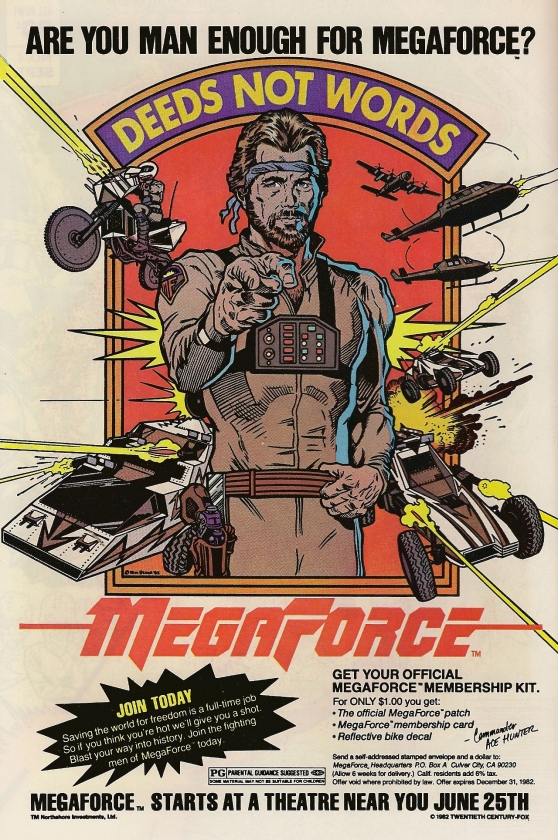
What is it: Forty years ago, children around the world lined up to celebrate the greatest cinematic experience of their time. They played with the toys, they read the storybooks, they dove into the rich fictional world. Unfortunately for the creators of the 1982 flop Megaforce, it wasn’t their world, but that of E.T. The Extra-Terrestrial. The strange, toy-etic action flick Megaforce was part of a weird wave of would-be early ‘80s sci-fi franchises that were blatantly ripping off elements of Star Wars and Mad Max. Somewhere, a world exists where movies like this and its kinfolk Spacehunter: Adventures in the Forbidden Zone, Metalstorm: The Destruction of Jared-Syn and Krull received multiple sequels. It isn’t this one.
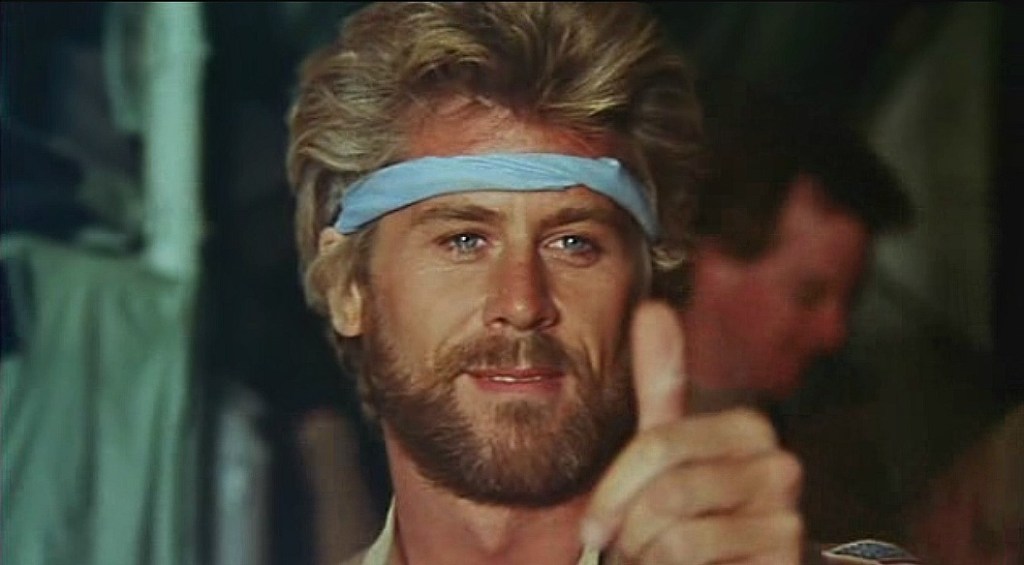
The plot of Megaforce, such as it is, is about a futuristic UN-esque peacekeeping agency who ride around on motorbikes and dune buggies and fight a vaguely stereotypical foreign gang. Our star is none other than a wild-eyed Barry Bostwick of Rocky Horror and Spin City fame, perhaps the last actor on earth you’d cast as your leading man in a post-apocalyptic action flick. With a headband harnessing grand flowing locks of ‘80s hair and beard and a skintight shiny uniform that leaves absolutely nothing to the imagination, Bostwick’s awesomely named Ace Hunter is indeed a sight to behold. And that doesn’t even get into the flying motorbike scene featured at Megaforce’s climax, perhaps the film’s finest moment of sheer kitsch.
Why I never saw it: Wait, was it ever even in theatres? Or home video? Megaforce kind of sank from the world, the only evidence it existed comic-book ads, an Atari videogame and a line of tie-in vehicle toys that were mostly forgotten the moment they were released. It made less than $6 million worldwide and vanished. I might not have even clocked Megaforce’s existence if it weren’t for an onslaught of comic book ads for it in 1982. I’ve already written about how 1982 was my year of comics awakening, and you couldn’t pick up an issue of Star Wars or Marvel Team-Up without seeing Megaforce’s cheery manly ad on the back cover with a pumped-up Bostwick and the slogan “Deeds, Not Words” staring at you. Why, you could even get a Megaforce Membership Kit for a mere $1.00! Years later, I finally set out to find out what the fuss was all about.
Does it measure up to its rep? It had talent, in theory – director Hal Needham was behind Smokey and the Bandit and The Cannonball Run, so he knew how to make movies about loud cars and broad characters. But Megaforce is on the more dismal end of non-starter sci-fi cheapies of the early ‘80s (I’ve got a soft spot for Krull, I admit). Most of the movie is about explaining what Megaforce is, leading up to and training for the underwhelming battles, and enjoying Barry Bostwick’s luxurious hair. Bostwick brings a jovial energy to the movie that the story never rises to meet. Co-star Persis Khambatta (Star Trek: The Motion Picture) makes Bostwick look like Laurence Olivier and the rest of the cast are generic action stereotypes. The motorcycle battles – endless – get boring very quickly and nothing much really happens in Megaforce. There’s no stakes, no emotion, no sense of the wider world, just a few glimmers of the cheesy masterpiece it could’ve been if Ace Hunter had been allowed to really cut loose.
Worth seeing? To be honest… no, unless you’re in a very particular sort of mood and crave a particular sort of guilty pleasure. Maybe it’s just finally catching up 40 years later to seeing what that omnipresent comic book ad was all about. Even for a bomb, Megaforce doesn’t maintain the kitsch heights of The Room or Battlefield Earth. But … despite the slapdash storytelling, the long stretches where nothing much happens, the unforgettable sight of Barry’s Bostwick in too-tight tan spandex … there’s something I find kind of adorable about Megaforce and its willingness to fail big. Deeds, not words, indeed.
Ever since I moved here in 2006, NZIFF has been a highlight of the calendar year, a time when Auckland gets to pretend it’s the centre of the cinematic universe for a week or so and enjoy the buzziest hits from Cannes, amazing revival classics and hidden gems that change your brain. I’ve watched dozens and dozens of NZIFF movies over the last 16 years, and I missed it dearly in these Covid days.
This year’s festival isn’t quite up to full speed compared with the before times – it is shorter and smaller – but I still managed to catch several great films this week mostly at Auckland’s legendarily awesome Civic Theatre, the best place in New Zealand to watch a movie.
I love my Marvel cinematic universe and all that jazz, but a well-curated film fest is a whole different vibe, one that engages new parts of the brain. It celebrates the communal joys of art, too – at a time when doing anything as a community feels a bit fraught, it’s good to be reminded there are benefits to it.
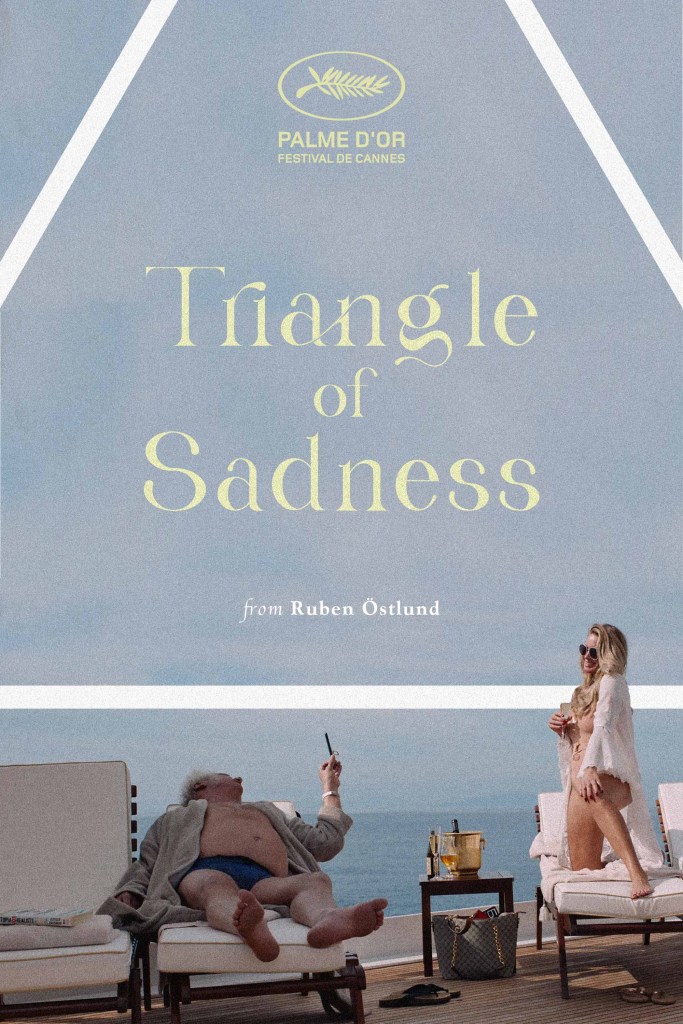
I would’ve liked to fit more in my schedule, but only four movies made the cut for me this year. I watched an intimate and witty documentary on the late great author, Kurt Vonnegut: Unstuck In Time; South Korean icon Park Chan-Wook’s exquisitely crafted twisty romantic detective thriller Decision To Leave; the harrowing and weirdly life-affirming documentary about two married volcanologists Fire Of Love, and this year’s Cannes Palme D’Or winner, the scabrously funny, filthy Swedish satire Triangle of Sadness.
Triangle of Sadness is a divisive movieamong the critics but in a packed gorgeous old cinema, this barbed attack on influencer culture and the privilege of the wealthy felt like a perfect film festival experience. A story of two young and vapid gorgeous people who end up on a cruise ship that turns into a Lord of the Flies-esque fiasco complete with plentiful vomiting and even worse, it’s not subtle. It’s not a deep satire, and it might be a little long. Yet its outraged, shouty and impotent tone somehow seems to mirror the weirdness that is life in 2022. It’s the movie for the moment, as we’re all a little bit stuck in our own personal cruise ship voyages from hell. In the end, you have to laugh about how absurd everything is, don’t you?
Without a film festival to gather up all the visions of the world, from South Korean noir to Swedish ennui, it’d be a bit harder to see these things, these perspectives. To be in a crowded cinema (mostly mask-wearing, thankfully) and laughing and gasping over the world together seems a bit naughty, a bit daring these days.
I missed that vibe, and even if the crises roiling the world are hardly over, it feels good to laugh together, for a moment, at a film festival.
Like any child in the pre-internet era, I spent an awful lot of time watching cartoons. I watched the good, the bad and the ugly.
I’d watch Flintstones and Jetsons, Woody Woodpecker and G.I. Joe, Super Friends and Yogi Bear. A lot of the worst featured sub-par animation where only characters’ mouths moved jerkily, or backgrounds that appeared to be made on a rusty photocopier.
Always in the top tier, of course, were Disney and Warner Brothers. Disney made some ground-breaking, amazing animation, and set the standard. But when it comes to the best – the toons that make you feel glad to be on this planet, the ones you’d watch again and again – I’m a Looney Tunes man through and through.
Even as a kid, I knew that the half-hour or so of vintage Looney Tunes cartoons that played weekday afternoons were something special.
As I limp my way into mid-middle age, I still find comfort in binging a handful of Warner Bros’ seven-minute gems, still as hilarious and free-wheeling as they were decades ago. Time has rubbed some of that rebellious edge off the Looney Tunes – I know there have been cartoons starring them since the original run ended in 1969, but watching Bugs play basketball with NBA stars just ain’t the same to me as having him run rings around Elmer Fudd and Daffy Duck in the “rabbit season” trilogy. The originals remain the peak of the animation form and a showcase for sheer mad creativity.
Bugs is always funny, Daffy is reliably explosive, Porky amiably daft, Wile E. Coyote and the Road Runner Shakespearean in their eternal struggle, and even Foghorn Leghorn’s blowhard act raises a chuckle from me. (Let’s not talk too much about Speedy Gonzales or Pepe Le Pew, though.) There’s a lot of formula and a few bucketloads of caffeinated frenzy over the 900 or so Looney Tunes, of course, and I heartily recommend only watching a half-dozen or so in one sitting lest all the ACME equipment and carrot-chewing permanently liquify your brain.
But watching some of these cartoons for the 10th or 20th time in my life, I’m struck the most these days by the sheer hand-hewn artistry of them all. Pixar and its computer-generated toon spawn have entertained and delighted us all too, but there is something tangible and awe-inspiring about watching the OG toons, where every single line was drawn by a probably chain-smoking, squinting human being.
Animation is a form where innovation led to an explosion of energy, Reid Mitenbuler writes in his highly entertaining recent history of the early years of the form, Wild Minds.
Walt Disney became the biggest household name, but the likes of Tex Avery, Bob Clampett, Chuck Jones, Friz Freleng, Mel Blanc, Frank Tashlin and many more shaped the anarchic spirit of animation and shook up Disney’s tendency for stuffiness. The Looney Tunes may have been repetitive – coyote chases road runner, hunter chases duck, cat chases bird – but it was the ceaseless creative invention around the margins of these blueprints that still amuses today.
To get a real feeling for the artistry of these gents, watch some of a Looney Tunes cartoon some time frame by frame. (You can pull one up on YouTube and pause it, then press the “.” key to do just that.)
It’s astonishing to watch the carefully hand-drawn antic life in these drawings, more than 50 years on. No short-cuts, none of that partial animation that made my childhood “Super Friends” toons seem so static. In motion, these moments sometimes pass so quickly they’re as zippy as the Tasmanian Devil.
That didn’t stop the geniuses from labouring over every single line and contorted facial expression. Frozen in time, you see the craft that went into it all. That’s what makes them art.










 Nik Dirga