Look, I’m sorry to harsh the pre-Christmas buzz, but 2023 was pretty lame, right?
My wife went through breast cancer surgery and treatment (she’s doing a lot better, thankfully). Other family members have been battling ill health and the upheaval of change. We lost our family beach house in a cyclone as the climate crisis hit NZ hard. Hell, even our beloved old cat friend Bowie died, and the world seemed to continue its headlong lurch into fascism, internet-fuelled conspiracy-land, ignorance, pointless culture wars and hate. Get in the bin, 2023, I’m done with you.
So, what do you do? For the last several pandemic-tainted years I’ve done up a playlist of songs to survive, because art helps. Music helps, good books help, great movies help. Drawing two issues of my comic book Amoeba Adventures helped. I don’t think I could survive in a world without some kind of art.
Back in the days of ornate mixtapes, you could sweat over the proper order of songs for ages, crafting the perfect vibe. This year, I just kind of threw it all in a blender, from Kiwi pop to thrash to old favourites to new artists I literally discovered a week ago. It’s all music. It’s all good, you know?
Here’s nearly 3 hours, 40+ songs that helped me survive 2023. Shuffle away and listen to it in any order, or let it flow as it is.
Wherever you are, have an excellent Christmas, and whoever or whatever you believe in, let’s all hope for a little more peace on earth and goodwill to all in the days to come.
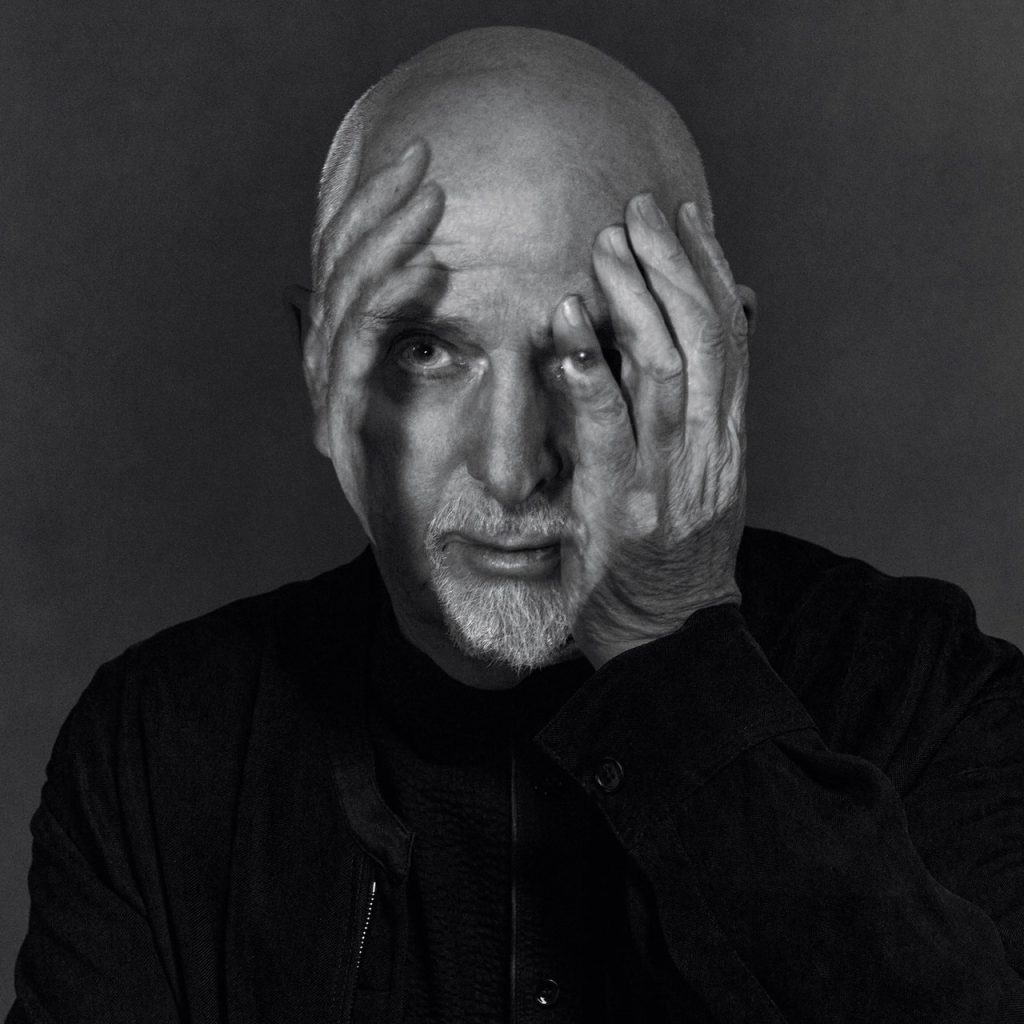
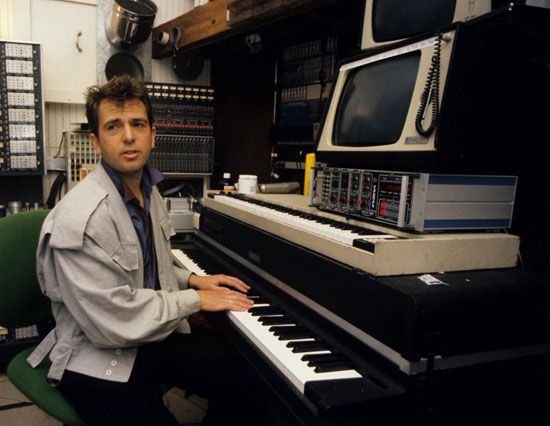
I’m a big Peter Gabriel fan – in fact, I’m not sure there’s an artist I’ve ever been quite so obsessed with. From the dusky grandeur of his voice to his rhythmic explorations of world music, I dig him.
So why was it that I felt so neutral over the promise of his releasing his new album i/o this year – his first proper solo album in a staggering 21 years? I imagined i/o would never live up to that wait.
Gabriel has been releasing tracks from i/o all year long on social media and, weirdly, I had barely listened to them. It was very un-fanboy-ish. I wanted an album, not a drip-feed of social media content, and I figured I’d just wait for the far-off day that it actually came out and experience it as one big gulp.
And yeah, I guess I felt a little miffed over him taking two decades to put out a new album of original material – fanboys are proprietary, after all.
In my younger days, I fell in love with his breakthrough smash So, and then dove into the wonders of his solo discography. I listened to So, Security and his several self-titled albums so many times I knew every drum crack, every soaring keyboard line.
I dug Gabriel so much that I once proposed writing an entire 33 1/3 book about him (yeah, that didn’t happen) and I got interviewed on Radio New Zealand about my nerdy fandom a couple years back. But I also wrote a couple years back in Peter Gabriel, the man who disappeared about his mysterious, sometimes irritating silence on the pop music scene.
He certainly wasn’t a reclusive hermit and did produce a variety of other projects, but still, the last “real” solo album he did was Up, released in September 2002 … 21+ years ago.
I mark my life by my Gabriel fandom. I picked up So in high school. I bought Us in 1992 as a college student. I got Up just a year or so before my son, who’s now in university, was born. I bought a copy of i/o on its release day (determinedly old-school with a CD, to slot in amongst my other Gabriel albums) and somehow, I’m in my early 50s listening to new music by the same man I’ve dug well over half my life.
When Gabriel did the cliche of re-recording his old songs and cover tunes with a full orchestra a few years back, I quavered in my devotion. I found the cover albums lifeless and bland and worried i/o would end up equally exhausted-sounding.
So after all that, I put i/o on, popped on my Bose headphones and settled in for the first new Peter Gabriel album since I was in my early 30s.
Is it actually any good?
Fortunately, I have to say, now that it’s finally here, i/o is a dense, rewarding listen, slotting comfortably in the sparse discography of post-So Gabriel. It’s less melancholy than those dreary orchestral albums were, although it’s still the contemplative music of a man who’s now 73 – there’s no ‘Sledgehammer Part 2’ here.
Yet his voice is in remarkably good form, rich and full, still able to easily hit those high notes he could early in his career almost 50 (!) years ago. It threads the line between light and dark, yet a thread of optimism pulses throughout. That perfectionist Gabriel has even released it in multiple mixes so I’ll spend a while getting to to know it all.
I will give i/o plenty of my time in the coming weeks – already I love the grand sweep of “Playing For Time,” the slightly spooky thundery “Pantopticom,” the gloriously upbeat title track, the bouncy good cheer of “Olive Tree.”
And in the end i/o is shaping up as an album about time, its startlingly quick pace as you get older. Since Gabriel’s last album a lot of my other obsessions and music loves have left. Bowie, Leonard Cohen, Prince, Sinead, The Fall’s Mark E. Smith, The Pogues’ Shane MacGowan just this week. I have to wonder if Gabriel didn’t mean for i/o to take nearly two decades to come out. But time gets away from you, doesn’t it?
I give Gabriel time. A lot of time. But I’m already basking in that old long dormant fandom, digging the rise and fall of the sounds that make up i/o. I’m listening. It’s good to hear that voice again.
…I’m bogged down in a pre-Christmas pile of actual money for my words work, so content here is a little sparse lately, but that doesn’t mean other people I know aren’t writing away!
Way back in the Paleozoic era of blogging, we used to link to each other all the time. These days, with social media becoming a bigger dumpster era fire than ever, it doesn’t seem like a bad idea to cut out the middle man again. Here’s what some friends and colleagues have been doing online lately that floats my boat:
* I’ve beavered away on the edges of music journalism for most of my career, and it’s grim times for it at the moment in New Zealand. My mate Chris Schulz has had a far bigger music writing career than I ever did, and he’s rightfully been on a bit of a crusade lately about how arts journalism is dying in Aotearoa. Case in point, when I moved here 15+ years ago there were still several magazines regularly covering NZ music and reviewing it. That’s all gone now. Can the internet save us, or something else? Schulz spoke to RNZ and others recently trying to draw attention to this problem and has been regularly banging the drum for music journalism on his own Substack – all well worth a read!
* I watched the first Doctor Who 60th Anniversary Special on the weekend and it was a delightfully silly romp, with David Tennant and Catherine Tate back for a run after an unfortunately kind of dire period for Who. Jodie Whittaker being the first female Doctor should’ve been a groundbreaking moment, but her performance was swamped by a lot of truly terrible writing, insanely convoluted plots and overacting, to the point where I only watched about half her episodes. (I also never want to hear the phrase “fam” again.) I thought about writing about why even though I didn’t grow up with the Doctor, I’ve grown to dig him ever since wonderfully eccentric Christopher Eccleston came along as Doctor Number Nine in 2005. But I realised one of my best pals is not only the biggest Doctor Who fan I know, but quite possibly the biggest Doctor fan in all of New Zealand. Let friend Bob tell you 101 reasons why Doctor Who still rules after all these years. I’m hoping that the excellent-looking Ncuti Gatwa coming up as the Fifteenth (!) Doctor leads to a bold new era for the good doctor.
* So New Zealand had an election about six weeks back, and it’s taken that long for coalition negotiations to settle on the new government, which looks to be the most conservative we’ve had in well over 20 years. You’ll find hot takes, angry takes, gloating takes all over the place about that, but I want to single out Susie Ferguson’s fantastic analysis piece at RNZ that zooms in on one Auckland electorate won by a libertarian/centre right third-party candidate, and why it actually proved that America-style bible-thumping theocratic conservatism has yet to really work in New Zealand (which, IMHO, is a very good thing). Go read: The meaning of Tāmaki – the most fascinating election race
Growing up, I would never have called myself a metal fan, but I was surrounded by it, and it turns out years later it seeped into my bloodstream, lurking, coated in hair spray and spandex.
I’m no metalhead, but music of my youth I once dismissed as crude and tacky I frequently find myself head-banging away to, here in the distant future where what’s cool and uncool seems to matter a lot less than it once did.
I liked either the most amiable of ‘80s pop – Men At Work, Billy Joel, Howard Jones – or proto-goth cool like Depeche Mode, The Cure and Peter Murphy. But you could not grow up in a high school in the 1980s and not be constantly exposed to the metal* – whether it was MTV, the radio, or all the “stoner” kids with Metallica logos sewn on the back of their jean jackets.
(*Yeah, there’s a million subsets of “heavy metal” from the opaque drone of sunn O))) to the cheery pop of Van Halen, but when I say “metal” here I’m mostly talking about the mainstream hair metal that dominated the day-glo mid-80s.)
There was no internet, so the world was smaller and a million skittering sub-subcultures didn’t yet exist. Much of the same culture washed over us all. You knew who Bon Jovi was unless you lived in Amish country. So I knew “Pour Some Sugar On Me,” “Welcome To The Jungle,” “Here I Go Again,” because who didn’t? And yeah, the sexist, ridiculous video for Mötley Crüe’s “Girls Girls Girls” in constant rotation on MTV did kind of make me feel funny inside.
Yet I imagined myself a broody intellectual and I’d never lose face by saying I was a fan of Guns ’N’ Roses or anything like that. I would pretend that I didn’t actually think that first chugging guitar line in Bon Jovi’s “You Give Love A Bad Name” was kind of cool.
Metal scared me, slightly, because I was told it was scary. Twisted Sister’s Dee Snider, hulking and slathered in makeup, smashing down the door and yelling “We’re Not Gonna Take It”; Quiet Riot showing a man wrapped in a straitjacket and horrifying mask on the cover of the .45 single for “Cum On Feel The Noize.”
I remember someone smuggling a copy of Ozzy Osbourne’s Bark At The Moon album into a church youth group, of all places, and woo boy it was terrifying looking, Ozzy all kitted out like an Oliver Reed werewolf and demonic light surrounding him.
The kids who really, really liked Def Leppard and Poison and Anthrax were the jocks or the stoners, the outcasts or the bullies, and I was somewhere in-between hiding in the shadows with the theatre kids.
Fast-forward 30+ years or so, though, and I appreciate the glittery excess of all that uncool ‘80s metal more than I ever thought I would. It’s comic-book soundtrack music, with zero self-consciousness. In the recent strange years of pandemics and fascism and the internet imploding, a guy with a bit of makeup and poofy hair yelling about Satan is actually kind of comforting, a familiar old frenemy rather than the apocalypse in leather boots. It’s a chance to exhale and escape, from a real world that’s way madder than any satanic panic.
So I sometimes crank up Ozzy’s “Crazy Train,” GnR’s “Paradise City,” the Scorpions’ “Rock You Like A Hurricane,” Europe’s “The Final Countdown,” and I feel the years slip away and get what all the fuss was about. It’s not deep – it doesn’t get the same woozy feelings in me that the same era’s New Order’s “Age Of Consent” or Erasure’s “Victim Of Love” do, but it slices into some little primal part of my ears and makes me smile, a little. I was afraid of these guys? They’re just having a laugh with their guitars and their poses, eh?
While I’ll always love my Depeche and Coltrane and Bob Dylan and Flying Nun and all the other music I’ve fallen in love with over the years, I get now why you might wear a Metallica logo on your jean jacket.
The other day I woke up, fell out of bed, and listened to a new Beatles song.
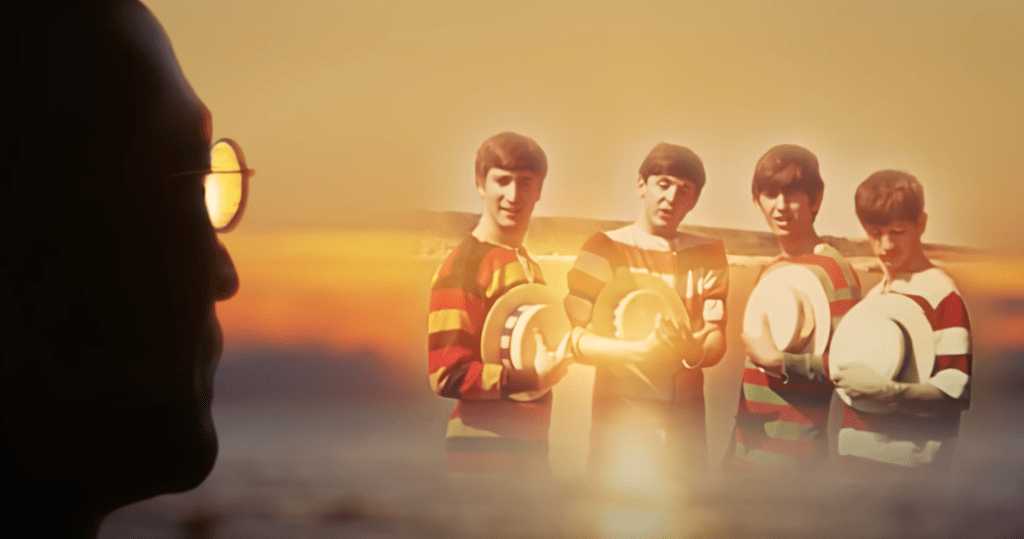
“Now And Then” is being billed as the “last Beatles song,” and with Paul McCartney and Ringo Starr now well into their 80s, it probably is the final time we can say that. Resurrected from John Lennon’s demos circa 1977 and mixed with some George Harrison 1990s guitar thanks to some very fancy technology, here we have all four Beatles, two long gone, together again in a Frankenstein miracle of technology and persistence.
But is it any good? We live in a world of boundless hype and unnecessary reboots, constantly perched on the edge of expected disappointment, and yet, “Now And Then” is a beautiful, fragile thing that I can’t quite get out of my head.
Of course, it’s the Beatles, so the song has been swamped with an avalanche of merchandise, fiery hot takes and analyses just like this one. All the to-do threatens to overwhelm what is at its heart a delicate, sweet little song.
Like two other Lennon demos “Free As A Bird” and “Real Love” that were revived for the 1995 Beatles Anthology series, it’s Lennon during his domestic hiatus, writing simple, basic lyrics about home and happiness with none of the surrealist whimsy or angry edge that marked his top Beatles works. So it’s flimsy, sure.
And yet, and yet, I can’t listen to it without feeling a swell of emotion. The Beatles ultimately have always made me happy whether it’s the spunky energy of “Love Me Do” or the psychedelic swirl of “I Am The Walrus.” A Beatles song makes me glad to be here in this world, whether it’s a pop song, a sad song or an awfully sappy song (sorry, “Let It Be.”)
The lonesome piano chords that kick off “Now And Then” give the song an elegiac feel, and Lennon’s ghostly voice is mournfully hushed. It could be a dirge, and I’m sure some folks see it that way, but I look at it as a fond farewell.
To hear Paul’s 81-year-old voice kicking in to harmonise with Lennon, dead now for more years than he was alive, is to feel the endless pull of time itself.
Sir Peter Jackson’s video for the song is faintly ridiculous at first, with macabre mixing of young John and George into footage of aged Paul and Ringo, old and young Beatles capering about, but it’s also a little charming and silly, as Beatlemania always was.
“And if I make it through,” John sings, and you know, in the end, we all hope for that, don’t we? We keep the people that leave us with us, as long as we’re here. Paul has made a love letter to the past, out of the fragments of his dead friends’ leavings, and sure, it’s big business and all, but it’s also the Beatles. I cannot surrender my love of the Beatles to the binary “like/dislike” button and algorithm. I’m simply grateful for whatever we get.
At the end of Jackson’s video we see those young, gorgeous Beatles on stage taking a bow, then slowly fading from the scene. You’ve got to have a hard heart not to feel something then. One day far too soon for any of us, there will be no more Beatles.
“Now And Then” is raw sentiment and lacking the mad fire of invention that made the Beatles change the world, true, but I kind of love it all the same. Yeah, yeah, yeah.
Hey, groovy cats, we’re still in Keeping it Short Week, each post 250 words or your money back:
Everyone has bands they love, but what about the ones you kind of love and don’t love? The Doors and Jim Morrison hold a very singular place in my tastes.
I’ve owned their albums and CDs multiple times and then gone through a phase of being so over the Doors that they went… well, out the door. I felt sometimes like being a Doors fan over the age of 21 was embarrassing. The anguished “Mother/Father” oedipal stuff in “The End” is a prime example of how the Doors could swing from ominous to awful in the space of a few lines.
Morrison was, by all reports, a fairly reprehensible human being in a lot of ways, and his sexist stoned messiah complex wears thin fast. How we feel about an artist as a person can affect how you view their work, and that’s not cancel culture, it’s just being a human.
And yet, I still find myself humming along to the Doors. They were pompous, overwrought, exciting and ridiculous all at the same time. A broody epic like “Riders on the Storm” still gets me, while trippy psych-rock like “Light My Fire” and “People Are Strange” are both timeless and time capsules of what we think the ‘60s meant.
Maybe I overthink The Doors, and in the end they were just a solid rock band with a tendency towards bad poetry. But for a band I sometimes hate, I sure end up going back to them an awful lot.
Was 2003 the end of rock and roll? The genre has been killed and resurrected so many times it makes Dracula look like an amateur, but still, for me, somehow 2003 feels like the last year that I was personally invested in new rock and roll.
Part of that is simple age – entering my mid-30s, with a kid on the way, I was about to enter the demographic of Bob The Builder and Wallace and Gromit. I was following then-new music blogs and enjoying the dodgy thrills of downloading MP3s galore and burning them on oh-so-fancy mix CDs that are still in a closet somewhere, but soon I’d stop doing all that.
Rock began receding as a pop culture monolith as grunge died out, but it was in the early 2000s that it felt like it rallied for one last blast with a flurry of terrific albums from bands like The Strokes, White Stripes, TV On The Radio and more. Since then, to be honest, rock music feels like it’s less a part of the pop culture conversation.
Rock is still out there, but for me, 2003 is about when I started to sort of check out from obsessively following all the latest music. I do try to keep my hand in and listen to new stuff much as possible, but, I recognise that the best pop music now is mostly for the youth, not me, and if I happen to dig some of it, well, that’s just a bonus.
It’s hard to believe 20 years have passed since these albums came out, but I also tend to think of Taylor Swift as “new” music so I’m really well past it, I guess.
Nevertheless, two decades on, in no particular order here’s my 10 favourite albums of 2003, the year that rock died (OK, maybe just the year that rock got a nasty head cold that it’s still shaking off):
Blur, Think Tank – The Britpop stars delivered a woozy, tense album that feels like a loose response to the tension of the Iraq War (boy, we only thought we knew what global tension was in those halcyon pre-Trump, climate apocalypse and pandemic days, didn’t we?). The more optimistic groove of albums like Parklife is far behind but what emerges is a kind of gorgeous weary reverie hanging for dear life onto Damon Albarn’s achy croon in tunes like “Out Of Time” and “Battery In Your Leg.”
The Shins, Chutes Too Narrow – For about five minutes there, The Shins felt like the future of indie rock. Their second album is fragile and filled with grand harmonies, enigmatic lyrics and made for long lonesome road trips. It’s all very gentle and mannered and on the verge of being too twee for its own good, but there’s plenty here to remind you why Natalie Portman said “The Shins will change your life” the very next year in 2004’s hipster poster child of a movie Garden State.
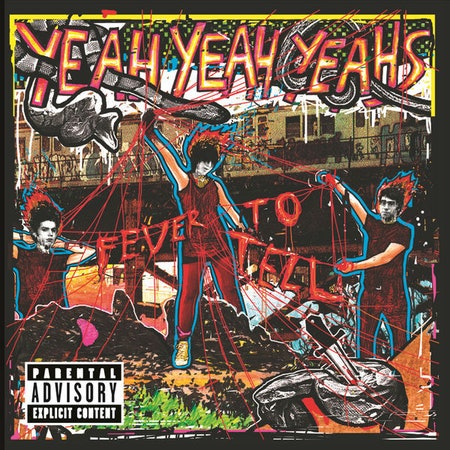
Yeah Yeah Yeahs, Fever To Tell – A great blast of grrrl power as Karen O and company blew the roof off with this snappy debut album. Weirdly, the album’s most sedate tune, the ballad “Maps,” became its biggest hit, but the heart of this album is a boiling punk-rock hurricane led by howlingly good romps like “Black Tongue.” After this album the band’s output was middling, more “Maps” than punk, and they never quite recaptured the ferociousness Karen O blasts forth here.
Fountains of Wayne, Welcome Interstate Managers – Radio hit “Stacy’s Mom” alone is a gorgeous sexy/silly hunk of power pop, but the rest of the album by this late, lamented band is full of wry, jangly gems like “Hackensack” and “Hey Julie.” A good power pop album never gets old.
White Stripes, Elephant – And here we hit peak Jack White. I know he’s put out a lot of good stuff since then, but the raw, raggedy side of the Stripes sound collided with stadium rock here and face-melting anthems like “Seven Nation Army” to make it the best thing he (and the sorely missed Meg White) ever did. This one might just mark the end of rock ’n’ roll’s evolution, perhaps?
David Bowie, Reality– Reality is a fascinating time capsule – Bowie’s final release at age 56 before an unthinkably long 10-year hiatus, and his untimely death – and while it isn’t quite as original and path-breaking as his best work, it’s still a comfortable rock god doing what he did best in an album that feels playful and masterful. Highlights includes a bombastic cover of Jonathan Richman’s “Pablo Picasso” and the darkly gorgeous epic “Bring Me The Disco King”. Shame about that horrific cover art, though.
Outkast, Speakerboxx/The Love Below– Sweet and sour, sultry and silly, this double-album delight of André 3000 and Big Boi’s duelling soul, funk and rap is a treasure box that keeps giving. Yes, it was inescapable, but “Hey Ya” is one of those massive pop hit earworms that still delivers years on, and if you don’t like it I can’t help you, while the smooth groove of tunes like “The Way You Move” and askew hip-hop of “Roses” also are terrific.
Nick Cave and the Bad Seeds, Nocturama– Not usually considered one of Cave’s top albums, but there’s something lovelorn and haunting to me about this set, which continued Cave’s move from rowdy rock demon to spooky apocalyptic preacher of songs. The brooding beauty of “Wonderful Life” or the wounded grace of “Bring It On” are near-top Cave, and I can’t get enough of the clattering 14-minute rambling album-closing jam of “Babe, I’m On Fire.”
Calexico, Feast of Wire– Calexico are the fuzzy warm blanket of Americana to me, fusing together elements of Tex-Mex, jazz, blues and country into music that all sounds like the soundtrack to some great lost spaghetti western. Feast of Wire is their finest, most expansive album, drifting along in a gorgeously restless haze. It’s an album I constantly return to for the journeys it takes your brain on.
Ryan Adams, Rock n Roll– Yeah, OK, I went through a big Ryan Adams phase in the mid-2000s, before his contrarian personality and troubling allegations kind of derailed his career and he put out a few too many meandering mediocre albums. Still, I’ll die on a hill for a couple of his albums of the early 2000s like Heartbreaker and Gold. Even though it got a middling reception, I still quite dig 2003’s Rock n Roll, where moody Ryan puts away the pedal steel and unleashes a pile of hooky, guitar-filled rock anthems with a heavy Replacements/U2 vibe. It’s just rock ’n’ roll, as it says on the tin, but I like it.
I don’t know no shame / I feel no pain / I can’t see the flame – “Mandinka,” Sinéad O’Connor
We spend most of our lives chasing the music we loved when we were 17.
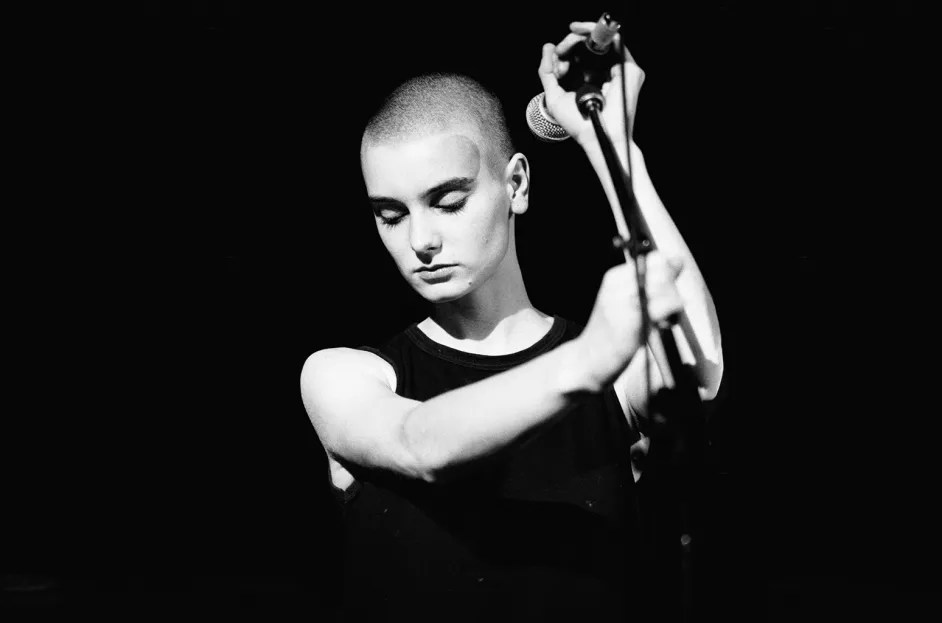
Sinéad O’Connor came into my sheltered little musical world like a thunderbolt, and she blazed hard and bright through her trouble-plagued, too-short life before dying this week at only 56.
It’s an embarrassing kind of revelation to make, but I think she was the first female singer-songwriter I ever truly listened to and adored, as I emerged from my adolescent male-dominated world of Guns ’N Roses and Billy Joel music.
She was a pathway for me to discover her influences like Patti Smith and Joni Mitchell and her peers like PJ Harvey and Fiona Apple. I could not fully understand her life – how could I, a small-town California dude? – but I listened to her.
Her first two albums will always be part of the soundtrack of teenage love to me, of the jittery combination of urgency and anxiety your entire life seems made of at that age.
For a few months in 1990, the girl from Ireland was inescapable with the striking video for “Nothing Compares 2 U.” There were no women like her then at the top of the pop charts that year. She stared at you in that remarkable video with candour and a sincerity that was startling in a year when MC Hammer, Vanilla Ice and Paula Abdul ruled the airwaves. With that extraordinary voice, she could channel a world of emotions, from bliss to defiance. Unlike far too many pop singers, you never felt her showing off. She simply let out what was inside her.
I love I Do Not Want What I Haven’t Got, but it’s her debut The Lion And The Cobra I play the most, her rawest and most punk-rock moment. Barely out of her teens, Sinéad blew like a hurricane through an otherworldly mix of anthems, anguish and adoration. She would never sound so carefree as she did on “Mandinka,” or as ominious as she did on “Jackie,” but if I had to take one song by her with me, it would be the triumphant epic “Troy,” which howls and builds with energy. It’s a song that blows me away every time I listen to it, and while it was “Nothing Compares 2 U” used in all the headlines and tributes, it is “Troy” that sums up Sinéad O’Connor’sessence.
Number-one album I Do Not Want and that unstoppable hit Prince cover song were both her making and unmaking as a hit singer. She followed it up with a criminally underrated album of torch song covers, Am I Not Your Girl, and she bent those songs into her sphere marvellously.
I always considered myself a fan but realised I had only dipped a little bit into most of Sinéad’s music after 1994’s mellow and contemplative Universal Mother. I kept meaning to catch up because I always had a soft spot for her. I had drifted away from paying attention to her music, and I wish I hadn’t.
I wish I could say her death was surprising.
I knew she had a background of terrible abuse and repeated mental health issues, which were surely escalated by the suicide of her teenage son last year. I knew she sometimes said things that were off the wall or offensive and never quite seemed the same after being so rudely scorched by the public eye in the 1990s. She dared to speak out angrily about child abuse by priests and her mainstream career as a musician never really recovered, even though history has proven her defiantly right. She was a woman with opinions, and some people never forgave that. She was not your internet content.
It’s been bittersweet to see so many people talking about how much Sinéad’s music meant to them in the last day or so. This complicated woman, despite all the troubles and obstacles in her life, touched the lives of many.
I’ve seen some in the aftermath of her death saying the many controversies of her life never drowned out her music. I’m sorry, it’s a noble thought, but I think unfortunately, and terribly, for the vast majority of the mainstream world that just wasn’t true, and the tabloid clamour over her life swamped coverage of her musical career.
I wish it hadn’t. I wish she’d found a little more peace in this life. She changed me, just a little bit, by the very act of listening to her, and I wish somehow all of us who felt that way could have helped this beautiful woman make a different way in this hard old world.
I am not like I was before / I thought that nothing would change me / I was not listening anymore / Still you continued to affect me – “Feel So Different”, Sinéad O’Connor
I missed seeing the Ramones live. And the Clash, and the Sex Pistols. So I sure as heck wasn’t going to miss The Damned, one of punk’s pioneering acts and just about the last great band still going strong from their peers.
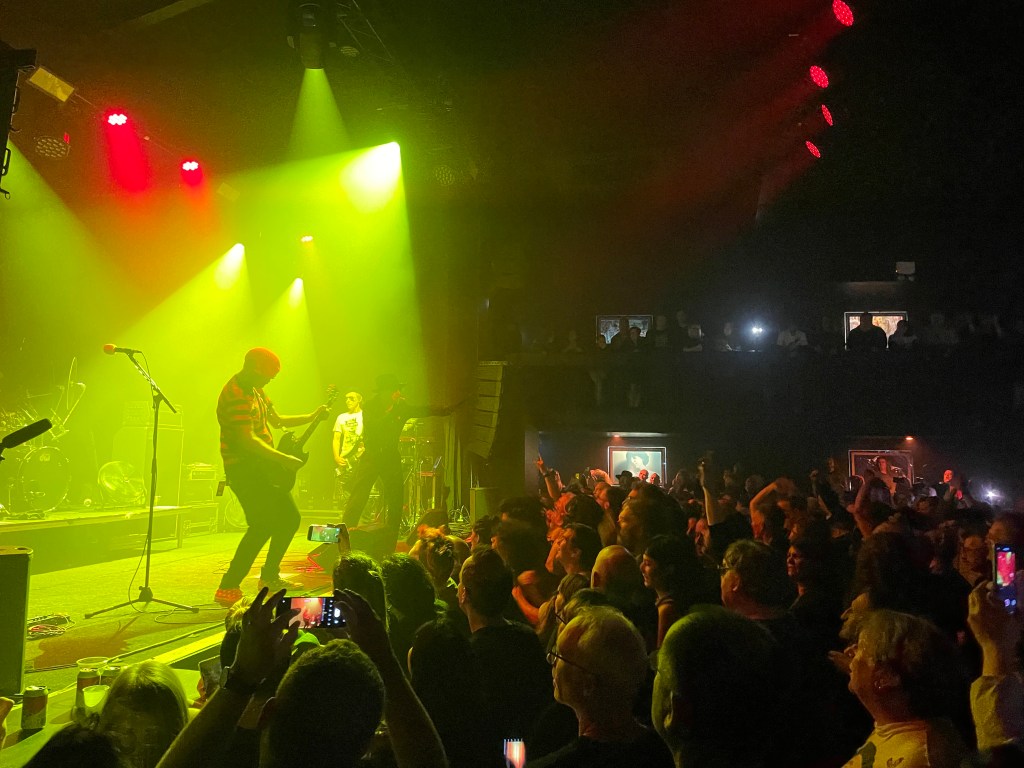
Many of my best friends were punks and goths when I was a young wide-eyed lad, but I always felt sort of punk-adjacent. Paradoxically, the older I’ve gotten the more appreciation I have for the unrestrained energy and fury of a good punk tune, and on a rainy Friday night at Auckland’s Powerstation there was nowhere better to be than hanging out with the Damned. Far from some vapid nostalgia effort, it turned out to be the best gig I’ve been to in quite a few years now.
The Damned sprouted from the UK in the class of 1976. They were the first British punk band to release a single, the unforgettable ‘New Rose,’ to release a studio album and to tour the US. But while their debut Damned Damned Damned was hardcore, over the years they branched out into goth rock and psychedelia, perhaps offending narrow-minded punk purists but impressing those of us who like a band that continues to evolve.
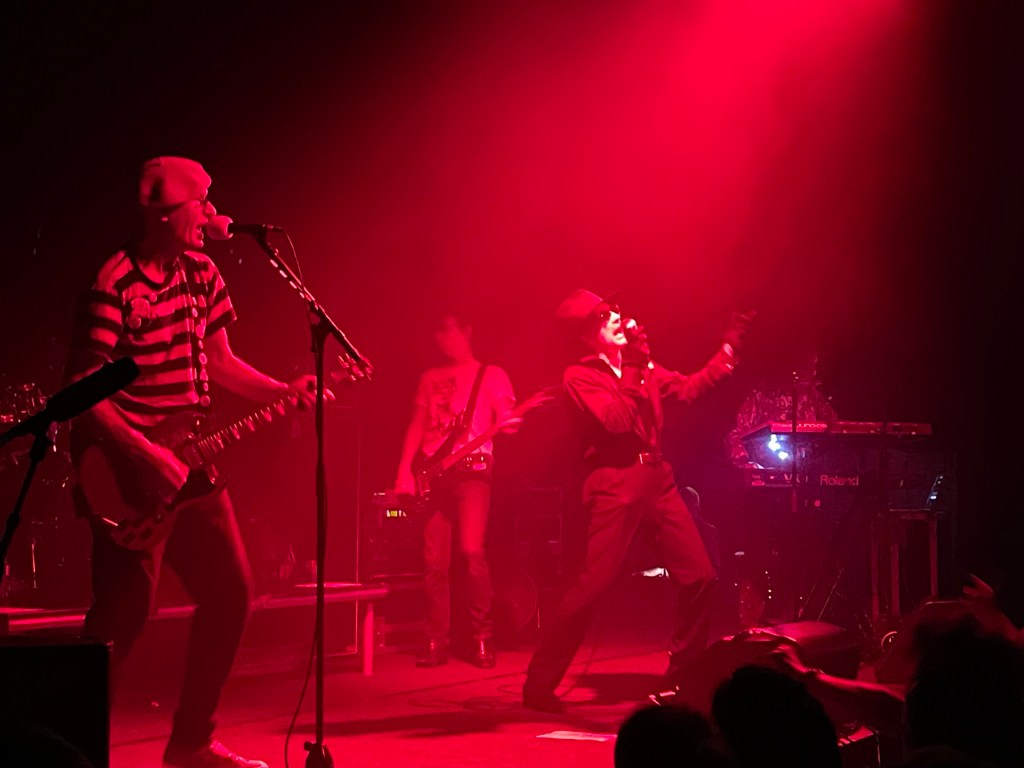
Even as they’re pushing their late sixties now, they still make a dynamic picture on stage. Lead singer Dave Vanian and guitar guru Captain Sensible are the only two of the original line-up left, but they’re more than enough to summon up the band’s spirit with a solid group beside them. Vanian was instantly the most stylish man in the room with a bespoke suit, fedora and sunglasses, strutting and crooning in his distinctive baritone, while the good Captain, mugging and smiling and wearing his trademark striped shirt, feels like a Beano comics character come to life.
Punk could be angry and violent, but there’s none of that bad energy in the Damned 2023. For nearly two hours, they pounded their way through classic punk and impressive new songs and reminded you why they’ve endured long after the Clash and Ramones are gone. Sure, there was a churning mosh pit (with a lot of bruised-looking guys my age who you know are hurting today) and even a stage-dive attempt, but it was a place of good vibes.
A big chunk of the set was devoted to the Damned’s brand new album Darkadelic, a rather bold move when you know that most of the crowd was really there for the older hits. But having listened to Darkadelic a lot the past week or two, it’s actually pretty terrific. It doesn’t try to be some hip rock release from 2023, but more of a summing up of all that the band has built. The Damned gather up their considerable powers honed over the decades into catchy numbers like ‘The Invisible Man,’ the grand harmonies of ‘Bad Weather Girl,’ the comic menace of ‘Beware of the Clown’ or the swoony dark ‘Wake The Dead.’ The new songs all navigate the tricky business of slotting right in among the Damned’s better known work, and they were terrific live.
Of course, though, the classic punk bashers are what the crowd is there for, and the final section of the show was an unrelenting blast from ‘Born To Kill’ to ‘Love Song’ straight through two encores and concluding with an utterly fiery stomp through ‘New Rose,’ the one that started it all. It’s still a lightning bolt of a song, and the crowd bobbed up and down like pogo sticks, old geezers like me and young girls born decades after the ‘New Rose’ single was released, and by gosh it was fun.
Punk is momentum, and catharsis, and lord knows we could always use a little more of that in these stressful times. Pound past the angst and the ugliness and uncertainty and just be there. Even if I can’t hear so good the next day, it’s worth it.
The Damned have followed their own quirky path for nearly five decades now, from rapid-fire punk to brooding goth to stadium rock anthems. They aren’t the young men in the ‘New Rose’ video almost 50 years ago, but somehow they’re still nothing but themselves.
What could be more punk rock than that?
(Here’s ‘New Rose’ performed more than 40 years apart, in Wellington and in the 1970s video. They still got it!)
From left, OMC’s Pauly Fuemana, Marlon Williams, Devilskin.
Once again, it’s nearly the end of another New Zealand Music Month, where all kiwis get up and dance to kiwi music all the month long.
People who were born here and those who came to live here from far away will all tell you that the music of New Zealand – from rough garage punk to delicate singer-songwriters to rich Māori waiata – feels special, somehow. We’re a small country, and yet, we make a mark on the global music scene. We’re the bottom of the world, so maybe we try harder.
Up in the hills of California, I didn’t grow up listening to a lot of the more obscure New Zealand music, and part of the fun of living here is constantly discovering fantastic songs that never made a splash in America, spanning gritty alternative rock to South Auckland soul.
Darcy Clay.
I dug making a playlist of 30 or so of my favourite New Zealand songs last year, and figured I’d give it another go this year picking out work by another bunch of great local musicians – celebrating everyone from Flying Nun legends like the Chills to rich young talents like Vera Ellen and Kane Strang or classic old-school psych-pop nuggets from The Fourmyula and Larry’s Rebels.
I love a song list that can encompass both the elegantly formal craft of Don McGlashan and the chaotic anarchy of the late Darcy Clay, so get ready for a wild ride through NZ sound. It really just scratches the surface of the talent, weirdness and beauty to be found in Aotearoa music. Here’s my playlist More Noisyland Music: NZ Music Month 2023 which you can hear over on Spotify: