King Hell Heroica: Rick Veitch’s insane psychedelic superhero epic

One of the wildest superhero narratives in comics is nearing its final act, after 36 years.

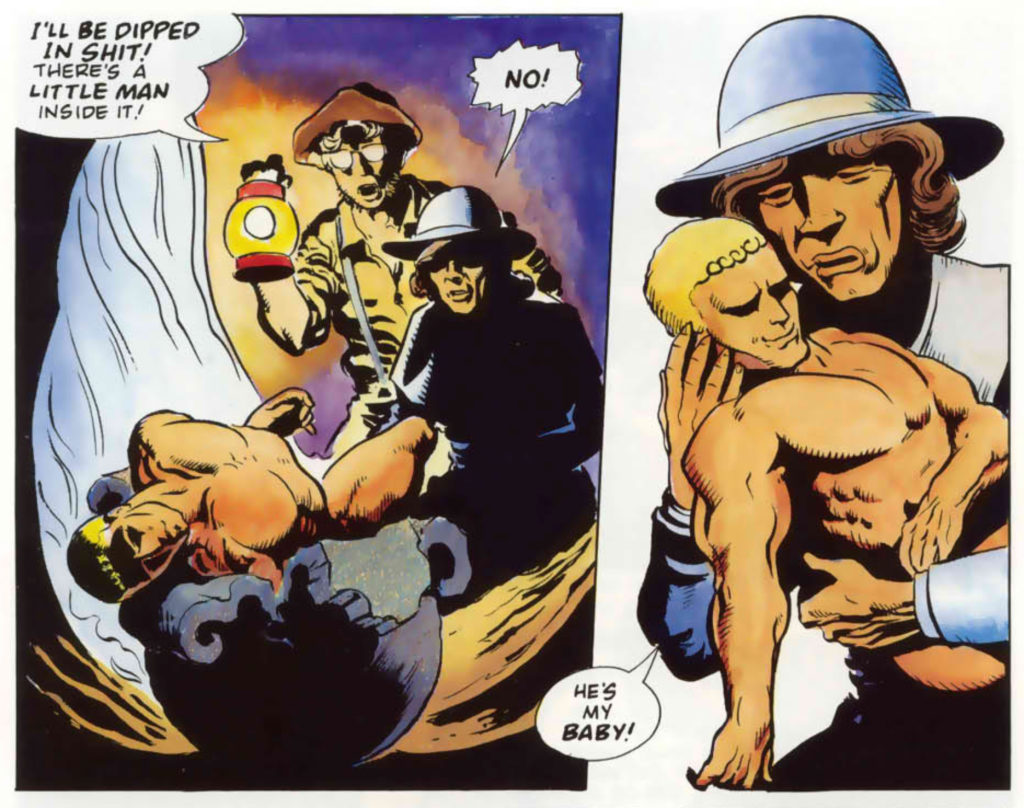
Comics legend Rick Veitch has been slowly unfolding his grand statement “The King Hell Heroica” in staggered instalments since 1990, starting with the dark satire Bratpack. The big overall story came to a halt back in the mid-1990s with only part of it done, but for the last few years Veitch has been picking it up and telling it exactly the way he’s always wanted to. There’s nothing else quite like it out there in superhero-land. 

I’ve been a fan of Veitch’s work since his collaborations with Alan Moore and solo work on Swamp Thing (now also getting a well-earned revival of sorts). Veitch’s background was in underground comics and his demented, expressive cartooning always carried a rough-hewn, tactile presence. 

His filthy and funny Cold War superhero apocalypse The One for Marvel’s Epic Comics line blew my fragile little mind when it hit stands back in 1985. The One was a warm-up of sorts for the King Hell Heroica, which kicked off when Veitch’s still-boundary pushing miniseries Bratpack emerged in 1990. Bratpack didn’t hold back in its dark portrait of abused, wasted superhero sidekicks, and superheroes who were drug addicts, pedophiles and neo-Nazis. It’s a fantastic read that gets far sleazier and stranger than books like The Dark Knight Returns ever did. 
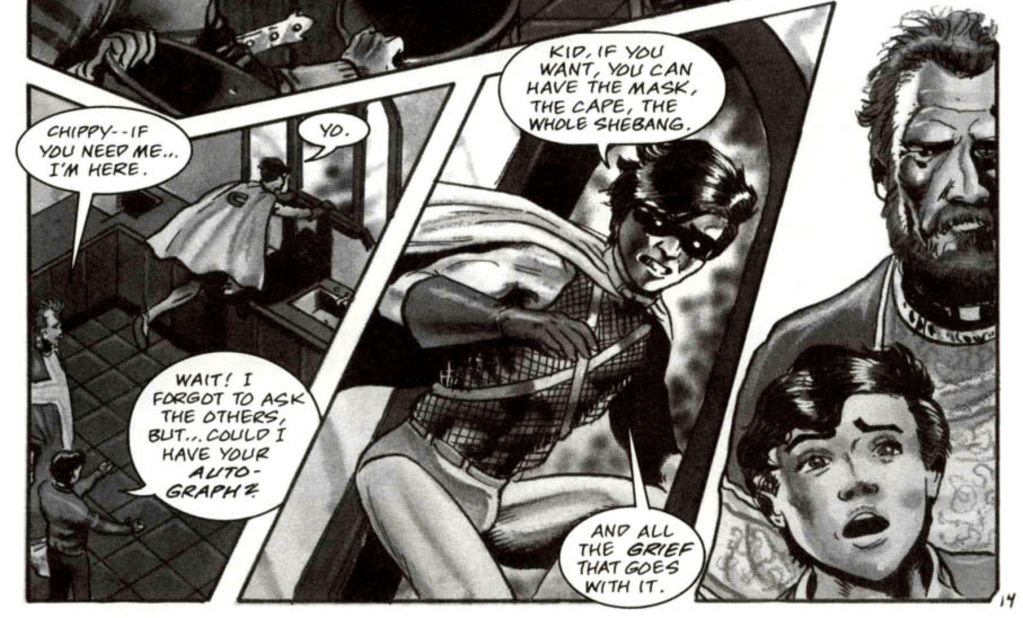
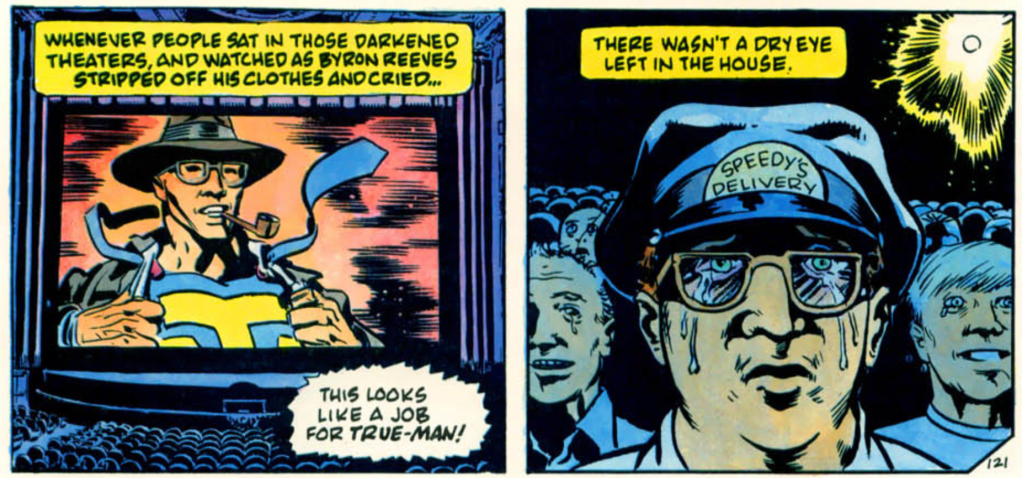
Fittingly, for this eccentric saga, it all started off with Bratpack actually being Volume 4 of 5 (shades of George Lucas!).  Veitch first returned to the King Hell Heroica with 1992’s The Maximortal miniseries (which turned out to be Volume 1!), which dove into the Superman-esque mystery hero True-Man whose presence haunted Bratpack. For the first time we really started to see Veitch was doing something bigger than just naughty dark parodies of superheroes. 

Unfortunately, The Maximortal miniseries then ended the story for years; even though Veitch laid out a complex 5-book plan, it seemed it would never be finished. But he brought it all back starting in 2017 or so, and it’s been remarkable watching this old narrative turn into something that’s still very relevant in our conspiracy-addled weird modern world. 
I can get behind the idea of returning to a comics narrative after a decade-long break myself, and Veitch has been hitting it out the park. He has been releasing chapters from Volumes 2 and 3 in nifty little 100-page annual print-on-demand editions, and is now just one book away from finishing them. Then there’s just the final volume of this long-gestating saga, Volume 5: Death of the Maximortal. In keeping with the timey-wimey weirdness of this tangled project, the first two chapters of Volume 5 were actually released as single comic issues as Bratpack/Maximortal Super Special way back in 1996 – BEFORE books 2 and 3 but after books 1 and 4. Lost yet? 

Yeah, it’s confusing, but the cool thing is, as Veitch fills in the gaps of his magnum opus, it’s all starting to make sense – in a wonderfully shaggy-dog fashion, that is. 

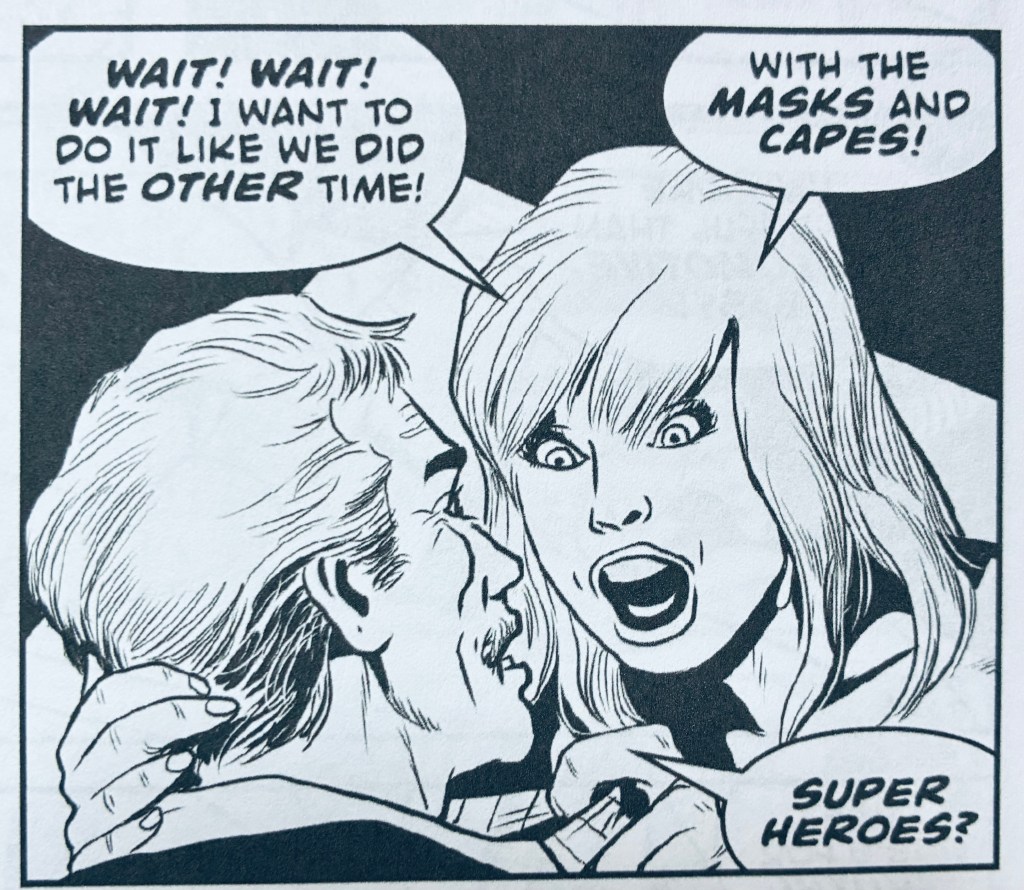
Veitch gladly embraces his underground roots with a bawdy, sometimes X-rated story that outdoes genre touchstones like Watchmen and The Boys in its sheer mad invention – there’s acrobatic sex with supermen, mass-murdering children and a big plotline involving mind-controlling fecal matter (!). 
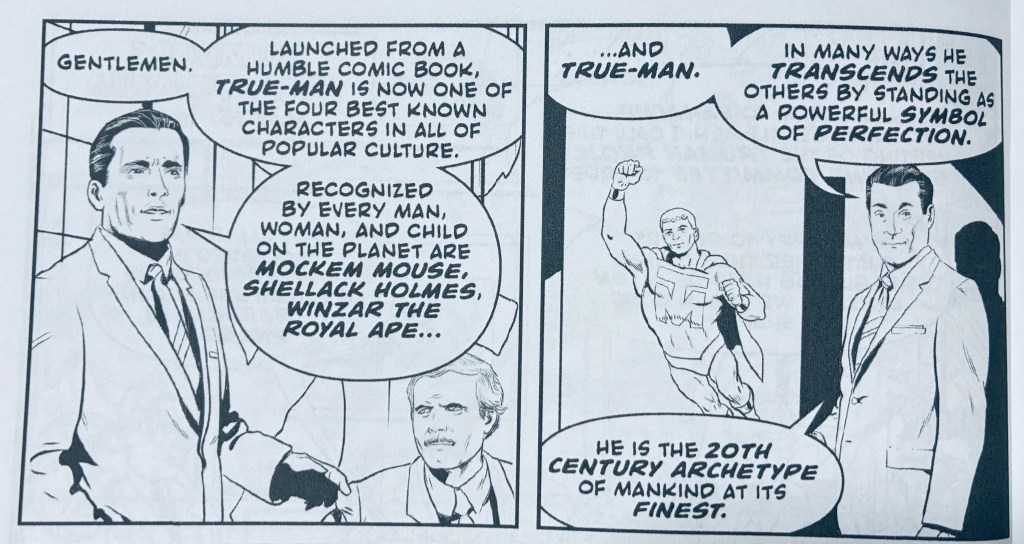
The “new” chapters Veitch has been unfolding have a different feel than Bratpack, with his art – mostly done digitally now – smoother and more polished, and the rawer, more energetic style of his earlier comics is missed a little bit. But the story has also broadened out to include dozens of cameos by actual historical and fictional figures – hello, Mad Men’s Don Draper! – and become a surreal, sustained comic romp. 
It’s become a tangled secret history conspiracy story of America’s hidden superhero cold war, and Veitch wraps in everyone from Jack Kirby to Jack Kennedy to Robert Oppenheimer to Muhammad Ali and underground comics legend S. Clay Wilson in his narrative. I’m a sucker for alternative histories and love how he’s tied all kinds of flashpoints in American history to the influence of True-Man. 

Despite hundreds of pages about him in the nearly completed first four books of the Heroica, True-Man himself remains an alien enigma – a blank slate template manipulated by us messy humans. While the King Hell Heroica narrative is full of ultraviolence and corrupt heroics, Veitch is also striving to say something profound about the spiritual nature of what a superhero might really represent for humanity. 

The King Hell Heroica has been an incomplete puzzle for decades now, and I’m sure it’s changed some from what it was originally going to be way back in 1990 – Bratpack was somewhat rewritten and the ending changed after the original comics came out, for instance. “What’s great about print on demand is that it allows me to pursue my muse without having to think about any market at all,” Veitch said in an interview.
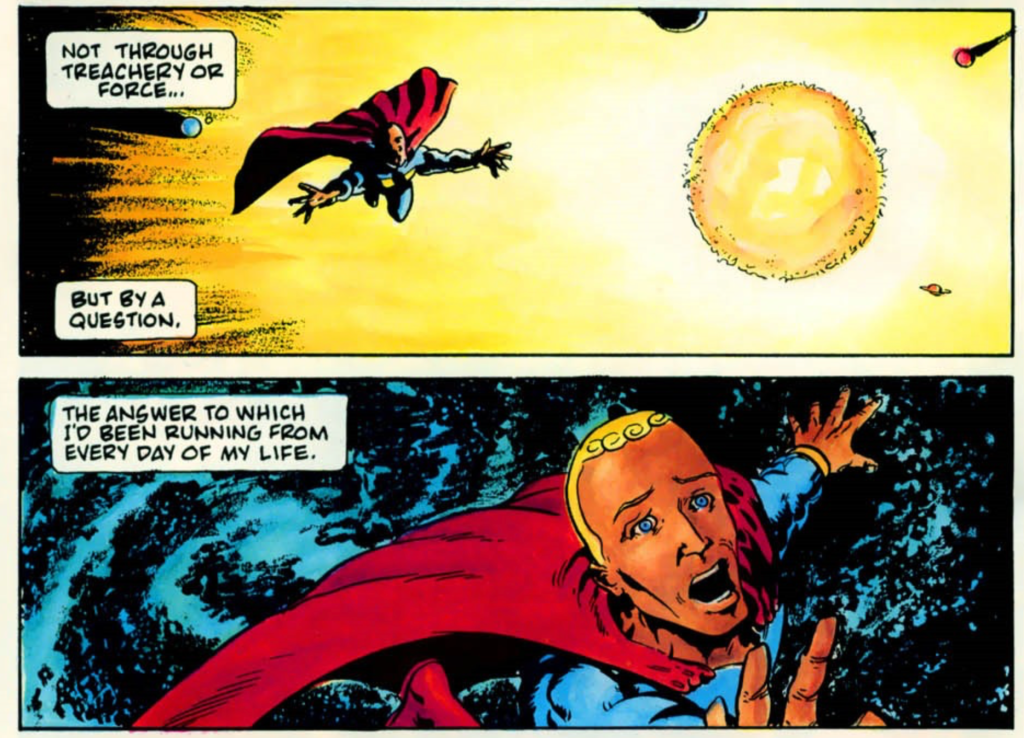
There is a risk it may all come apart in the last few hundred pages, of course – we’re just starting to see the seeds of the Bratpack cast of utterly debauched “superheroes” and their sidekicks enter the story, and the mystery of what exactly the aliens that kicked off the whole shebang are remains pretty opaque. It’s likely to get very meta, and very weird, knowing Veitch. 

But to be honest, cold hard sense isn’t necessarily what I’m here for with King Hell Heroica. It’s a vibe that marries the irreverent curiosity of underground psychedelia with a thought-provoking exploration into the very idea of what superheroes mean.

Veitch is still an underground cartoonist at heart. Without a big publisher backing him or restricting him and banging away on his life’s work well into his 70s, Veitch is creating something not quite like anything else in the crowded world of edgy superhero deconstructionism. 

I hope when it’s all completed and can be read straight through – maybe in the next year or two – comics critics will look back at what Rick Veitch has been trying to say these last 35+ years and give the King Hell Heroica the attention it deserves. It’s a wild, wild ride. 
Shrinking: Harrison Ford is no longer bored

Like every ‘80s and ‘90s kid, I grew up with Harrison Ford as the chief avatar of cool manhood. Han Solo, Indiana Jones, Blade Runner, Witness, Air Force One, et cetera. 

But admittedly, it’s been a little bittersweet watching Harrison grow old, like we’ve all got to in the end. He kept on as an action hero as long as he could, but the somewhat desultory return of a tragedy-wracked Han Solo in Star Wars sequels and a final Indiana Jones movie (which I admit I pretty much forgot about as soon as I saw it) were pretty faint flickers of that whip-cracking adventurer we all remember. By the time Ford was turning red and hulking up in a Marvel movie, I felt like it might be time for him to quietly turn down the action hero roles. He often seemed bored in these later movies. 

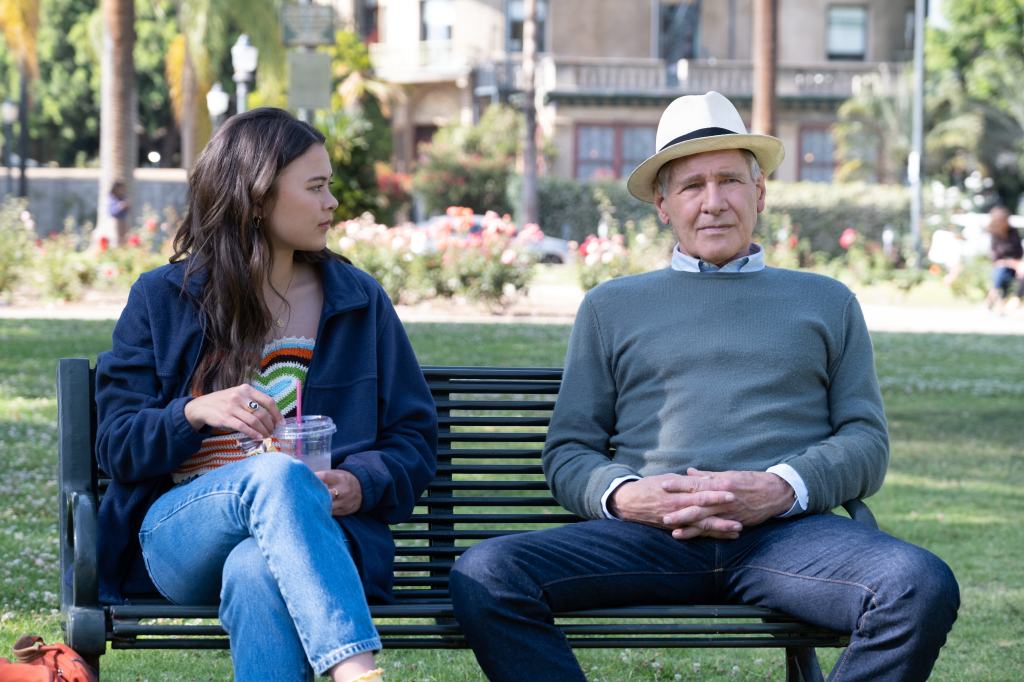
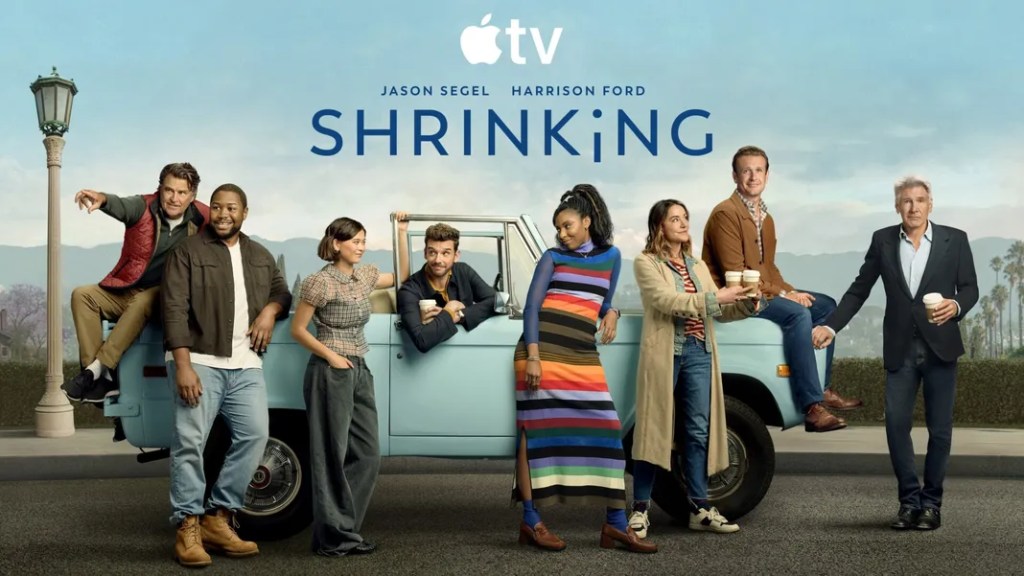
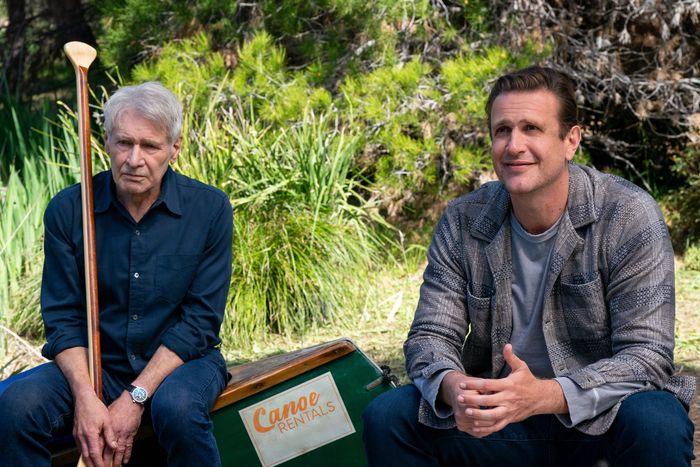
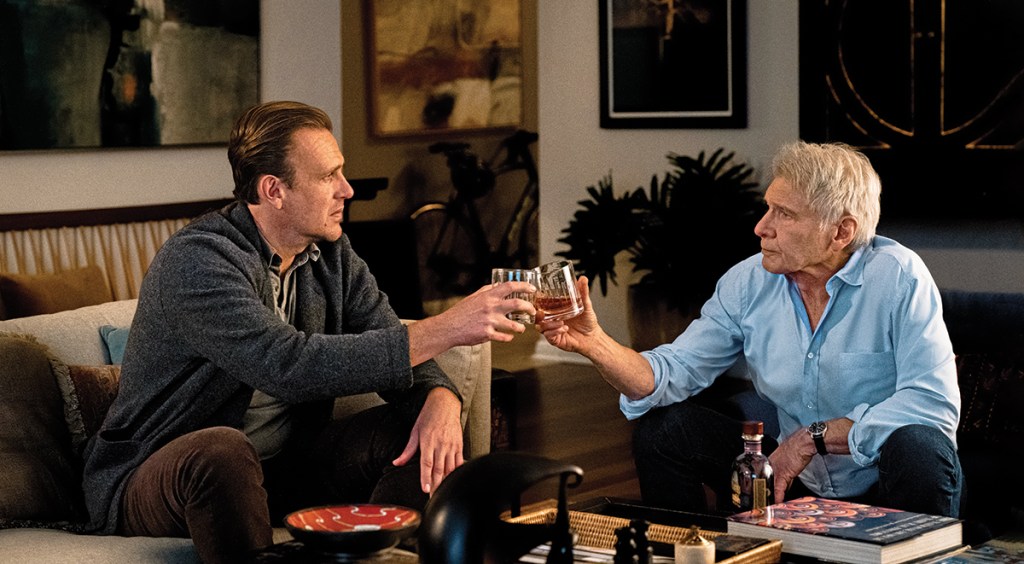
But now at 83 years old, Harrison Ford has surprised me with his fantastic turn as part of a sitcom ensemble of all things, in the warm ’n’ witty Apple TV series Shrinking, which has just kicked off season 3. Ford costars with the show’s co-creator Jason Segel as his therapist mentor Paul, and he’s a cranky delight. A cozy comedy/drama set in a therapists’ office, Shrinking, co-created by Scrubs creator Bill Lawrence, is one of those shows that embraces humour and sadness, often in the same scene. 

Ford’s Paul is the mentor to Segel’s fumbling younger therapist Jimmy, but he’s also battling recently diagnosed Parkinson’s disease, and entering into a late-in-life love affair with his former neurologist. Ford is braver and funnier in Shrinking than he’s been in ages, and got a well-deserved Emmy nomination for his work (he should’ve won). 

A little bit of vulnerability has always been a key part of the Ford charm – the way his Indiana Jones would wince when he got bruised and battered, the haunted charisma he brought to The Fugitive. With Shrinking, Ford is embracing his early 80s and showing us a man painfully facing his own mortality, as his body breaks down on him slowly. Dwarfed by the 6’ 4” Segel in many scenes, a smaller, wiry Ford looks his age, but if anything Shrinking has given his acting more power than it’s had in years. 

Shrinking is a show blessed with a top quality ensemble and snappy, sharp and quippy writing, from the enjoyable gawky Segel to reliable sitcom stars like Scrubs’ Christa Miller as a pushy neighbour and the great Ted McGinley, who’s been in everything from Happy Days to Married With Children and is doing his own best work in years as chill retiree dad Derek. The Daily Show’s Jessica Williams is a snarky delight as well.

Yet it’s Ford, with such a rich and storied screen history behind him, who stands out the most on Shrinking. Harrison Ford gets underrated as an actor – his sole Oscar nod was for Witness, although frankly The Fugitive, Mosquito Coast, and his still somehow underrated performance in Raiders Of The Lost Ark should’ve gotten him nominations as well. 

It’s a show that’s happy to get sappy – the main characters are all processing their own various traumas along the way – but I find its view ultimately kind of optimistic about how we can all get better, and that’s comfort food in this dark timeline the world seems to be in. 

Ford, as always, underplays with tremendous effect, knowing how to use a tiny gesture or raised eyebrow – his Parkinson’s tremors, his frustration with having to curtail his therapy career, his joy at finding a new wife and his fears over how long it will all last. It’s a tricky line to play such a character and not make it a mawkish bid for sympathy – and Shrinking sometimes does get a little too sentimental for its own good. But Ford makes Paul human – short-tempered and irritable, yet still finding acceptance with his makeshift family. And there’s no star ego here – he seamlessly meshes into the Shrinking ensemble and is a generous scene partner – his scenes with Segel’s teenage daughter Alice (Lukita Maxwell) are always strong. 

At 83, you wouldn’t fault Harrison Ford if he just retired to his ranch in Montana or something. Instead, this consummate professional is giving us the gift of an action hero growing old gracefully, facing whatever comes next with honesty and humour — and in the process maybe showing us his most heroic portrayal of all. 

Breaking: The never-ending battle against fake AI news

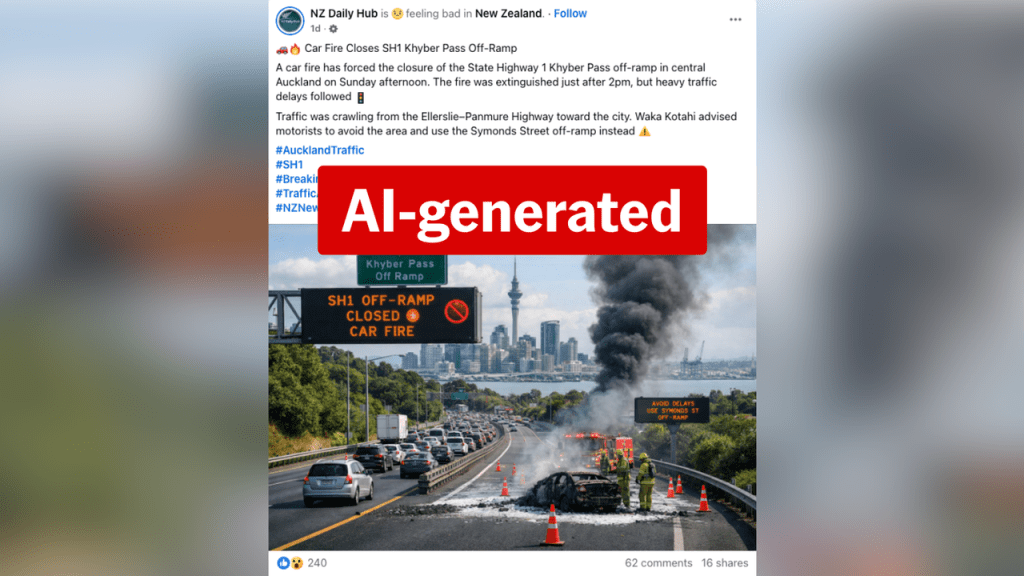
In my day job, a project I’ve been working on for the last couple weeks across both Radio New Zealand and the Australian Associated Press is debunking a slew of “fake” NZ news sites on Facebook. Many of them specialise in taking legitimate work by NZ reporters and running it through AI, stealing other reporters’ work, adding fake AI-generated images or misleading video as they go. One such post included grotesquely using AI to animate a still photo of a dead teenage Mt Maunganui landslide victim.

This slop is everywhere on social media now – literally any time a news event happens, a horde of pages will serve up AI-generated garbage about it instantly, from Australian shark attacks to the arrest of Venezuelan leader Maduro to the assassination of Charlie Kirk. Now, smaller pages are spoofing nearly every car crash and weather event that makes the news in New Zealand with AI content.

I was pleased to see my reporting got a lot of attention this week and made appearances on RNZ’s Afternoons and Mediawatch programmes to talk about it some as well in my very un-Kiwi accent. 

Here’s some of what I’ve been working on:

How fake NZ news pages are swamping Facebook with AI slop (RNZ)

RNZ Afternoons with Jesse Mulligan interview with yours truly (RNZ)

Mediawatch: AI feeds fake news flood (the segment starts about 23min, 30sec in)

Fake NZ news page flooding Facebook with AI images (AAP)

NZ ‘media outlet’ misrepresents news with AI images and video (AAP)

Facebook pages peddle AI images of NZ landslide disaster (AAP)

It is depressing – like a lot of people, I think, I’m recoiling more and more from social media and what once seemed to be “fun” diversions, as FB becomes overwhelmed by slop and algorithmic nonsense and loses all its usefulness, X, which I quit long ago, became a Nazi bar, and most other sites are either annoying or infuriating. I even got to say the word “enshittification” on national radio this past week, a phrase which really does seem to sum up the vibe in the room on the internet these days.

My advice is – don’t trust anything you see on social media without verifying it first, and legitimate journalists are still the best source of information out there, not your mates on Facebook. I don’t know if there’s an end in sight to this flood of misinformation that’s reached tsunami heights in the past six years or so, but the most important tool you have to fight against it is your own brain and credulity.

I finally went to Woodstock, 57 years later

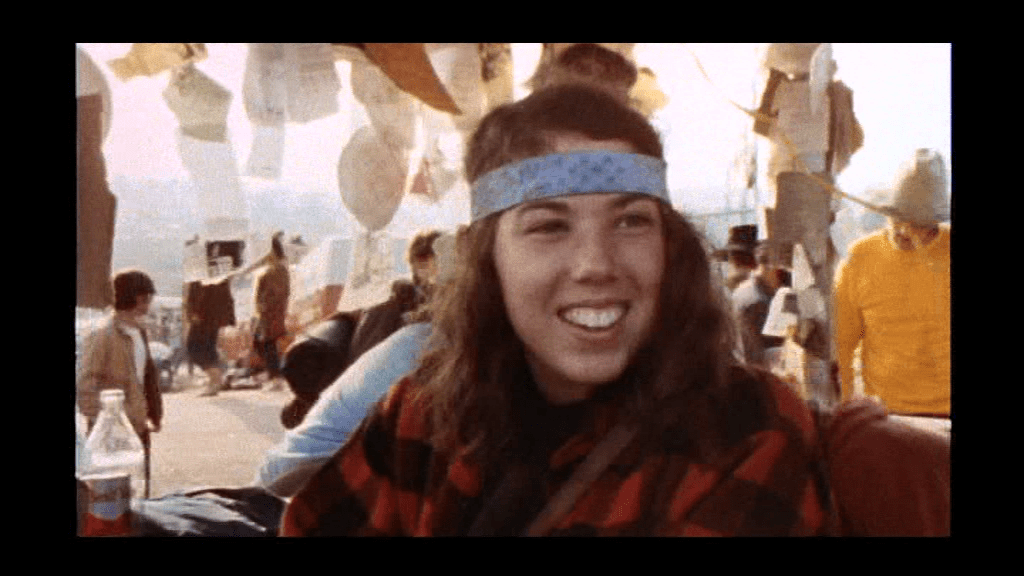
It’s been a rather busy month full of concerts for me, and so I decided to sit for a couple nights and regroup by finally watching the Oscar-winning documentary Woodstock, the nearly four-hour (!) 1970 picture about the grandaddy of all rock festivals. 

The daunting length of Woodstock – 224 minutes in the directors’ cut! – put me off watching it for far too long, but once you sink into its patchouli-scented vibes, director Michael Wadleigh’s uncanny eye for capturing those three days in 1969 (with help from a variety of editors including Martin Scorsese!) sucks you in. 

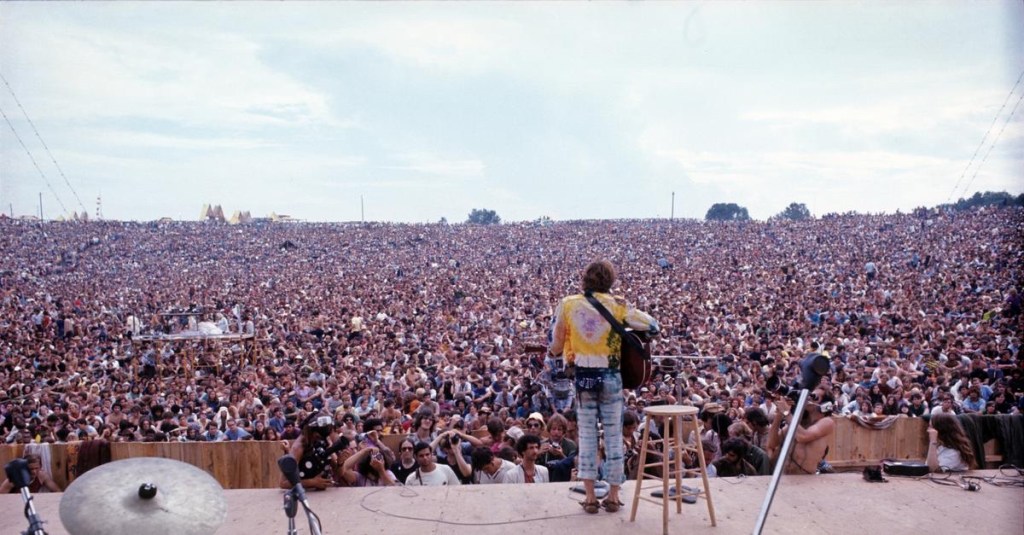
Woodstock pivots between candid moments of the heaving 400,000+ crowd and intimate, close-up concert footage, swinging between the near and the far in a way that really evokes the scope of the event. Even now, viewing this swelling mass of humanity on Max Yasgur’s farm is startling. These bands were playing on a pretty humble stage and sound set – with no giant screens for the crowd – and yet still managed to hold attention. It all seems so low-fi and ramshackle from our hi-tech world of 2026, but also deeply moving. 

At times it’s almost comical, like watching a grasshopper try to entertain a stadium, like when laidback folk singer John Sebastian alone with his guitar tries to gently lecture a wall of humanity, but then someone like Richie Havens takes the stage and holds the crowd in the palm of his hand with a few strums and footstomps, and it’s magic. 

Everyone remembers Jimi Hendrix’s barn-burning closing performance – which teeters right on the edge of self-indulgence – but how about Ten Years After’s searingly loud take on “I’m Going Home”? Or The Who lurking out of the darkness like rock ’n’ roll spectres? Or Sha Na Na‘s frankly bonkers appearance?

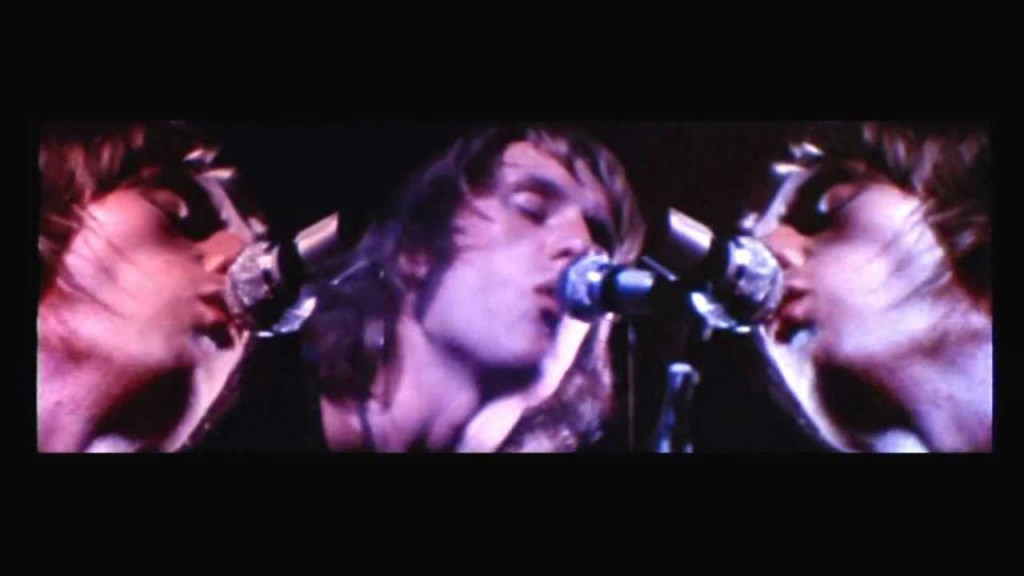
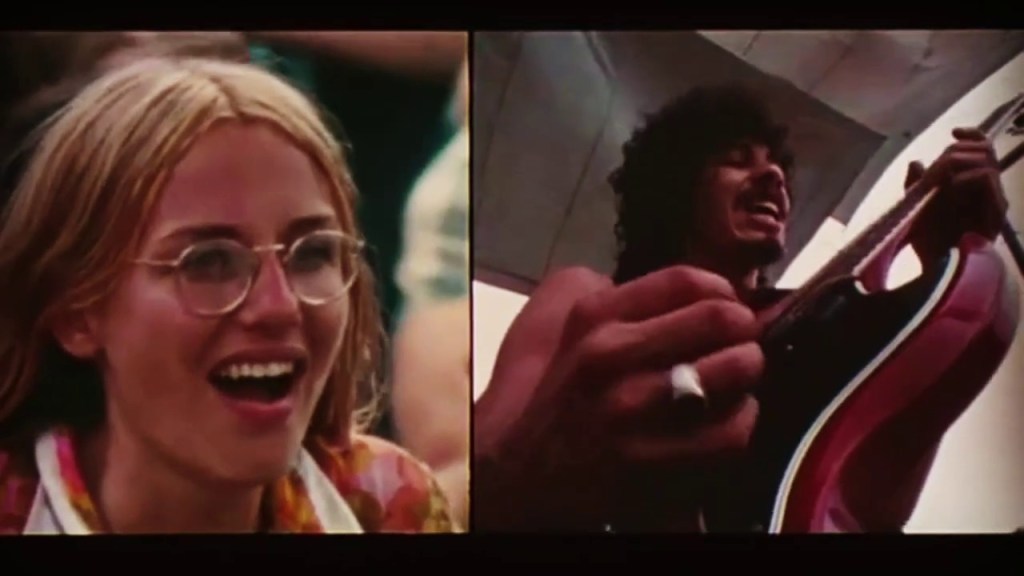
Wadleigh’s eye for both the masses and the music separates Woodstock from many other concert films, and the still-innovative split screen approach gives it an immersive feel not quite like anything else. It’s the small moments that stick with you – the beaming smile on a blonde woman’s face lost in the music during Santana’s “Soul Sacrifice”, or the poignant little interview with the guy cleaning out all the disgusting porta-potties, a hardworking average American joe who says he’s got a kid at the festival – and another fighting away in Vietnam. I wonder how that family came out of all those crazy times (of course, it turns out the toilet guy later sued over being in the movie, so it goes). 

Still, seeing all these hopeful, hairy faces slogging through the mud in Woodstock in 1969, you wonder how and who they are today. The commercialised repackaged idealism of the ‘60s is beyond parody now, but there is a distinct vibe to these times that an awful lot of people have been trying to capture ever since. The occasional sneering angry conservative local and the kindness seen in counterpoint by other locals about Woodstock disrupting their lives seems to evoke so much of the culture wars still splitting America today. It’s not so different, then and now. 

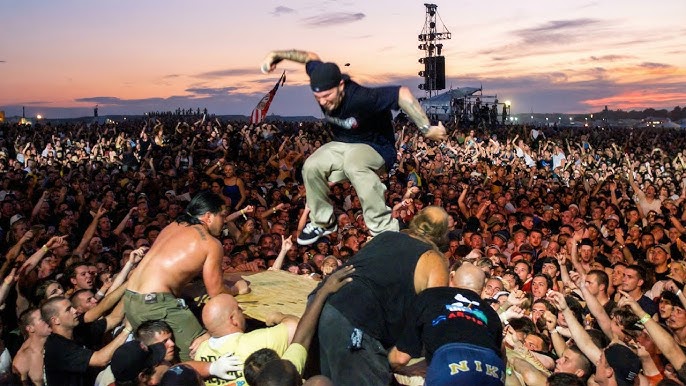
I quickly decompressed from all the hippie peace and love by watching Woodstock 1970’s evil mirror image, the Netflix documentary series Trainwreck: Woodstock ’99, the biggest (and last) attempt to pimp hard for that ‘60s nostalgia vibe with a musical journey that went horribly, depressingly wrong. Then again, when you book headliners like Limp Biskit, Kid Rock and Korn, you’re probably not really capturing the vintage Woodstock feeling. Toxic masculinity seems to be the order of the day, with a nihilistic mob of teens lashing out and calling it a “party.” 

Trainwreck was a cold splash of water after Woodstock’s idealism, with an endless army of shirtless frat boys screaming incoherently. Free food and camping turned into price-gouging capitalism run amok. The purpose of Woodstock ’99 was to “get fucking wild” and “party”, and needless to say it all kind of collapsed into a full-on riot of violence, vandalism and fires by the end, which Trainwreck forensically dissects. The desperate need to “repeat” Woodstock ’69 or live up to the impossible nostalgia were the seeds of the festival’s destruction. A sad attempt to do yet another Woodstock reboot in 2019 for the 50th anniversary never even got off the ground. 

Of course, both festivals were flawed, could never live up to expectations and yet probably had their moments, too – Woodstock 1970 glosses over lightly the issue of overcrowding, feeding the hordes and any violence at the scene, while Trainwreck focuses so heavily on the bad vibes and sense of disaster it kind of skims over that there were dozens of non-bro rock artists also playing and that despite everything, some people even apparently enjoyed it all. 

The original Woodstock becoming a proxy for the fanciful mythical never-land of hippie dreams was kind of a happy accident, which defies attempts to do it all over again. I don’t think I would’ve liked to be there, and I know I wouldn’t have wanted to be at ’99, but more than 50 years on the documentary is a powerful piece of cultural history, with some fantastic performances along the way. We put our dreams into music festivals, but in the end, sometimes you just have to go where the day takes you.


Laneway Festival Auckland 2026 Review: Chappell Roan, Wet Leg and the kids are all right

I finally got around to quitting Spotify at the end of last year, but not before their silly-ass “Wrapped” feature told me that my musical age was about 77 years old. A bit rude, I thought. 

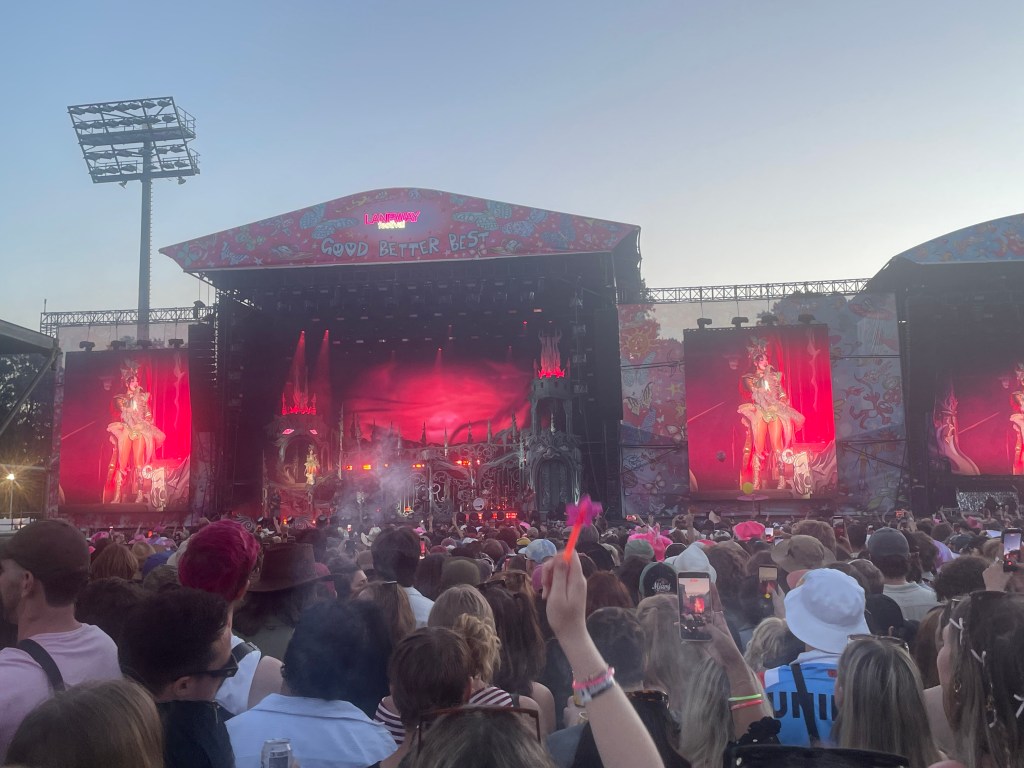
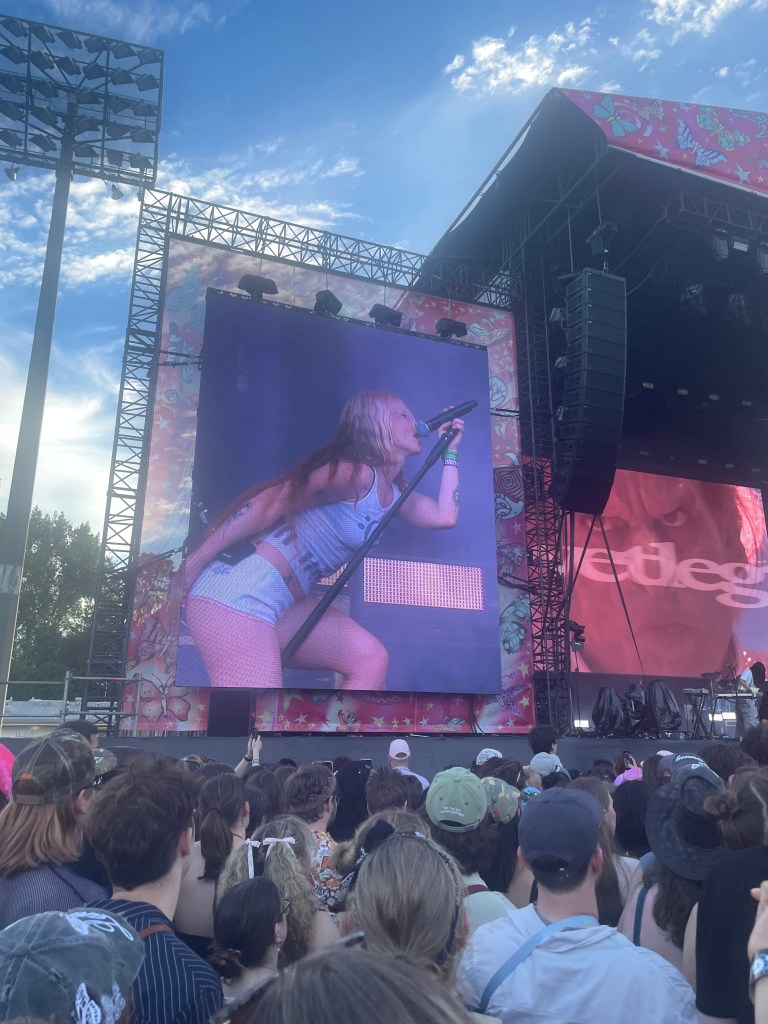
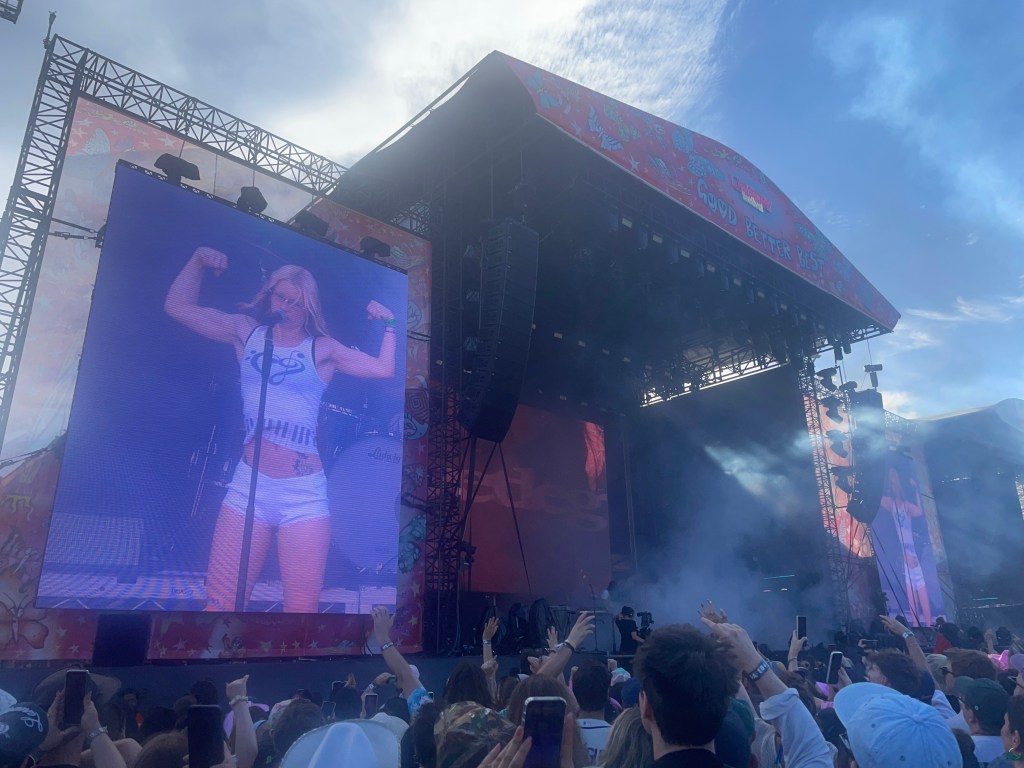
I admit my musical tastes run old-school – I did just review concerts by 78-year-old Iggy Pop and 73-year-old David Byrne after all – but like a lot of middle-aged dudes, I’m trying to be hip and keep up, and this year’s Laneway Festival featured a great line-up of acts with a median age of under 30 – Geese, Wet Leg, Wolf Alice, Pink Pantheress, Benee, and the hottest act of the moment Chappell Roan. Auckland felt like a cultural capital again for a minute –  Geese just played Saturday Night Live and Chappell Roan was very much in the news this week for her wardrobe choices at the Grammys. 

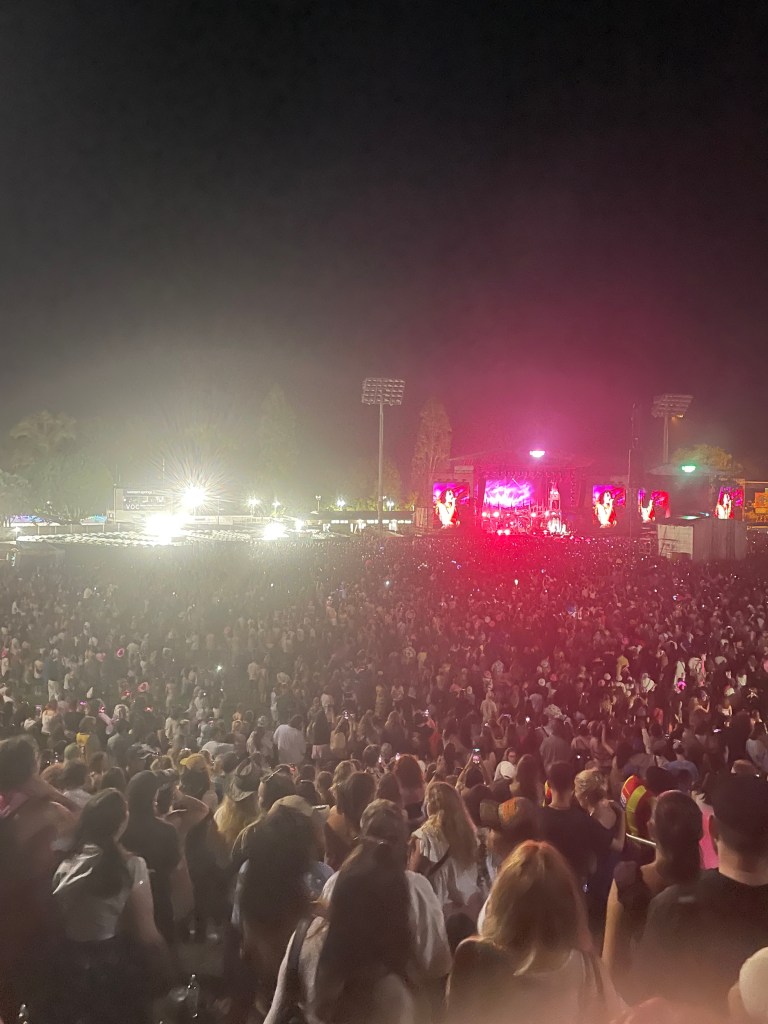
It was a fantastic, life-affirming if exhausting day in the hot February sun at Western Springs, with somewhere around 40,000 people, most in their 20s, having the time of their lives. As an old dude in his mid-50s (I can’t even say EARLY 50s now) and the first proper festival I’ve been to in eight years, I was worried I couldn’t hack it. I’m sore as heck and blast furnace tanned and had a weird cramp in my leg at 4am, but I had an absolute groove.

I caught up with old mate writer Chris Schulz (who has his own great thoughts on the day) and then I kicked off with the poppy indie rock of Alex G, who put on a fine short set – their bouncy “Runner” is one of my favourite singles of the decade – although they might’ve been suited to a more chill indoor venue rather than the 25C afternoon sun. I was disappointed to only catch half of the set by Geese, whose crunchy, woozy rock is the acquired taste of the moment. Their songs always sound like they’re about to fall apart and serve up some serious Pixies/Modest Mouse vibes, and what I heard was very cool – but thanks to festival scheduling I had to zip over to see one of my absolute faves and missed the last half. 

And that fave was Wet Leg, who put out quite possibly my favourite album of 2025, moisturizer, and their fist-pumpingly cool rock is full of earworms I can’t shake. Rhian Teasdale has turned into one of the sexiest, most confident frontwomen in rock, dancing around the stage with sweaty glee, and they put on a hell of a great show. I was also blown away by Wolf Alice, a band I was only partially familiar with (their single “Bloom Baby Bloom” is dynamite), but their frontwoman Ellie Rowsell may well have been the best singer of the day – powerfully versatile and able to wail and croon through a great set – it’s always awesome to really discover a band at a festival and Wolf Alice are high on my list to hear more from. 

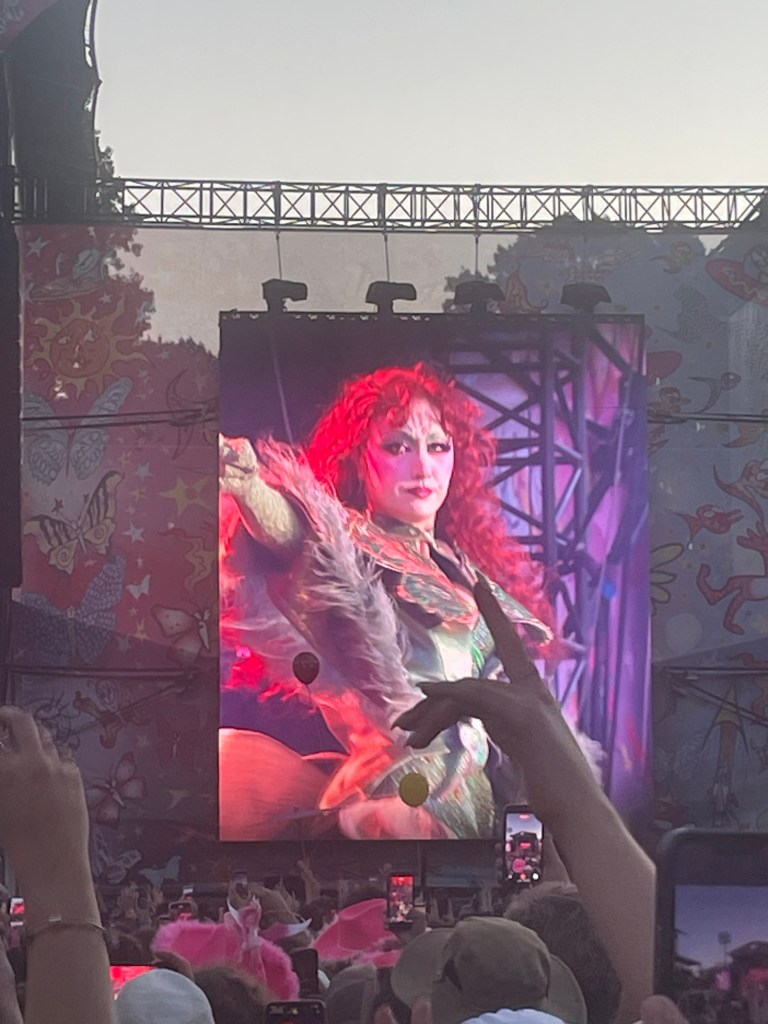
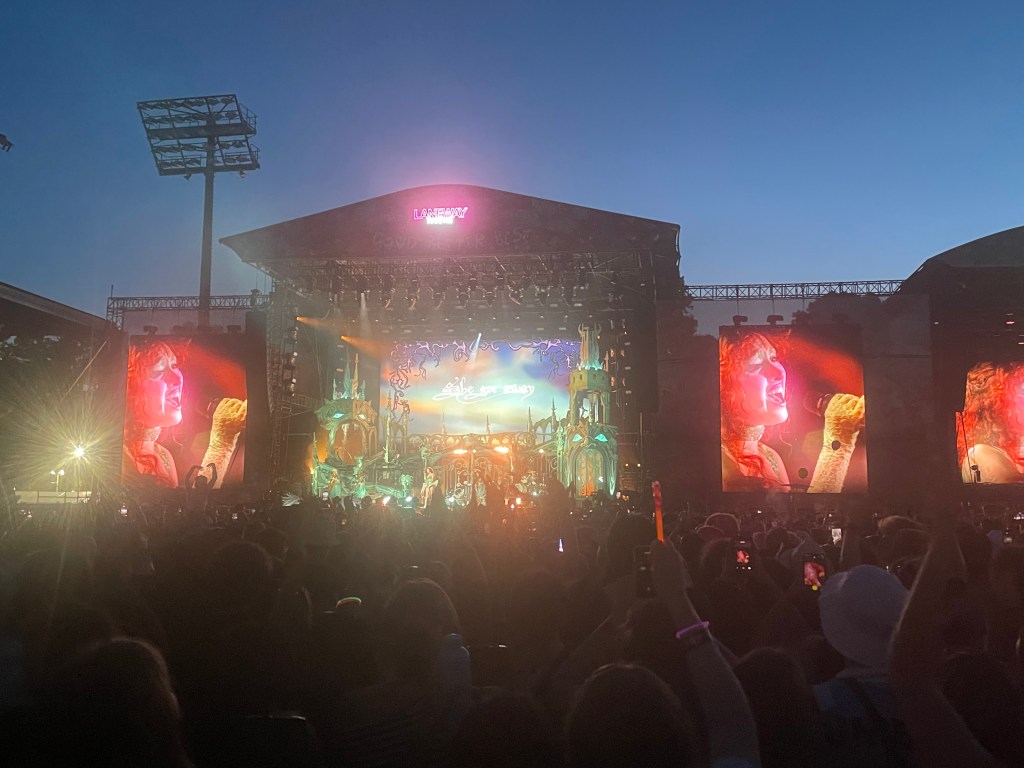
But honestly, I’d say a huge chunk of the 40,000 or so people jamming the field and stands were there to see the bombastic, hugely entertaining set by Chappell Roan, her first ever concert in New Zealand. I really don’t tend to see the truly big pop star concerts and it’s a whole different level to be surrounded by 20-something women loudly singing every word. Roan is an absolute star power, taking the stage on a bloody impressive huge fairy tale castle set and emerging with one of her trademark elaborate costumes looking like a Heavy Metal magazine cover come to life. But Roan’s got the chops to deliver on her showmanship – I’ve been listening to songs like “Good Luck Babe,” “Pink Pony Club” and “HOT TO GO!” and getting hooked on her yearning, empowering songwriting. Proudly queer, like many of the acts at Laneway, Roan cheered on NZ Pride Month and reminded us that even a small town girl from Missouri like her can become an inspiring global superstar no matter how screwed up America is at the moment. 

Sure, my back hurt a bit and I was very aware I was older than most of the Laneway crowd, but it was a festival of optimism and the power of music in a kind of dark time in history for a lot of good people. Maybe I was lucky, but I didn’t see any ugly drunken “bro” behaviour or angry moshing, just a whole heap of young New Zealand folks out to dance the world away and as Chappell Roan sings, “Not overdramatic, I know what I want.”

I thought of a lyric by another band from the old days who t-t-t-talked about their generation once, and I left with a crowd of thousands of people of all genders, dress codes and amazing futures, and even to a mildly ancient dude like me it felt like the kids are all right. 

Take a deep dive with me into My Movie DNA

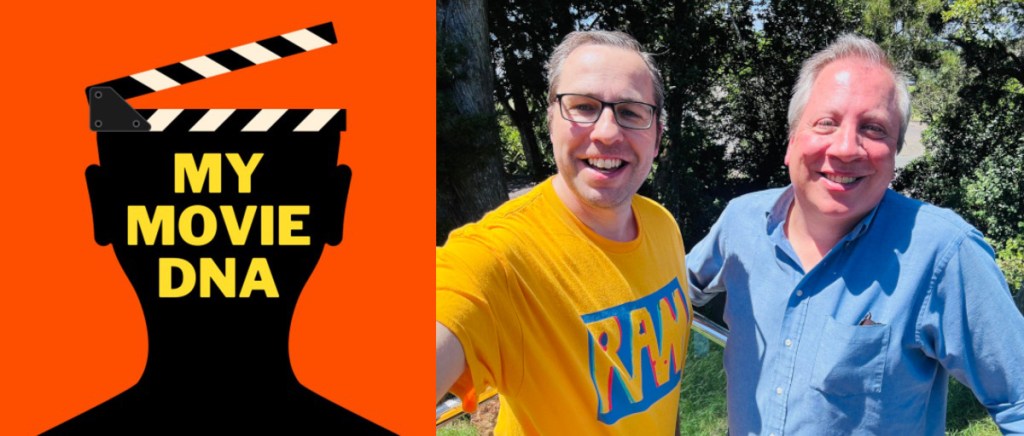
Hey, you dig reading me ramble on about movies on this here website? Well, now you can listen to me do the same thing, as I made a guest appearance on the new episode of Brit-turned-Kiwi Johnny Andrews’ highly entertaining My Movie DNA podcast

24-Hour Movie Marathon veteran Johnny has been doing this for a few years now and had guests including Wellington Paranormal star Karen O’Leary, Lord of the Rings Oscar-winning production designer Grant Major and a whole heap of prominent NZ movie creatives and fans, so it was an honour to be asked to pontificate on my movie hot takes for 90 minutes or so.

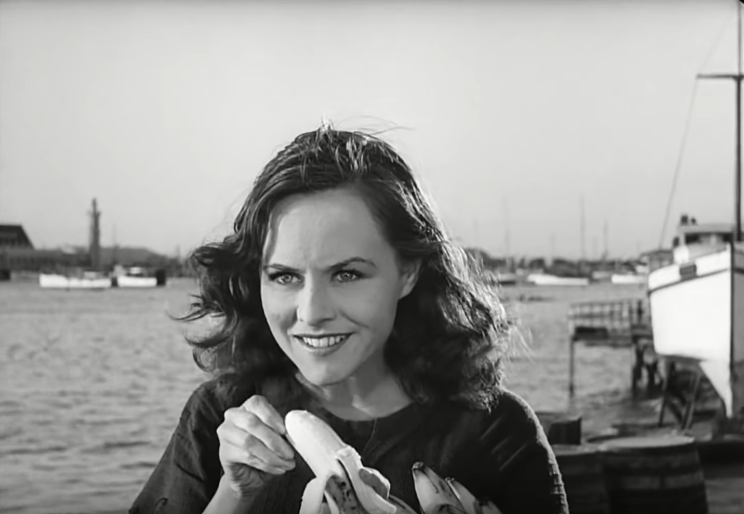
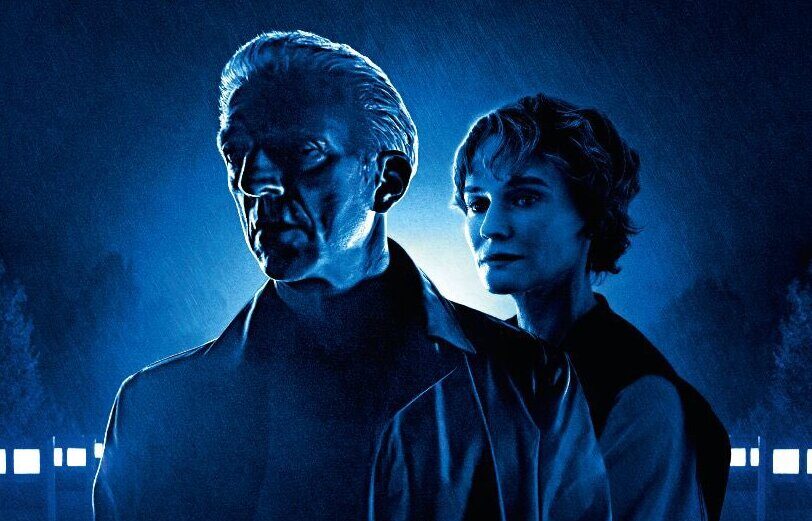
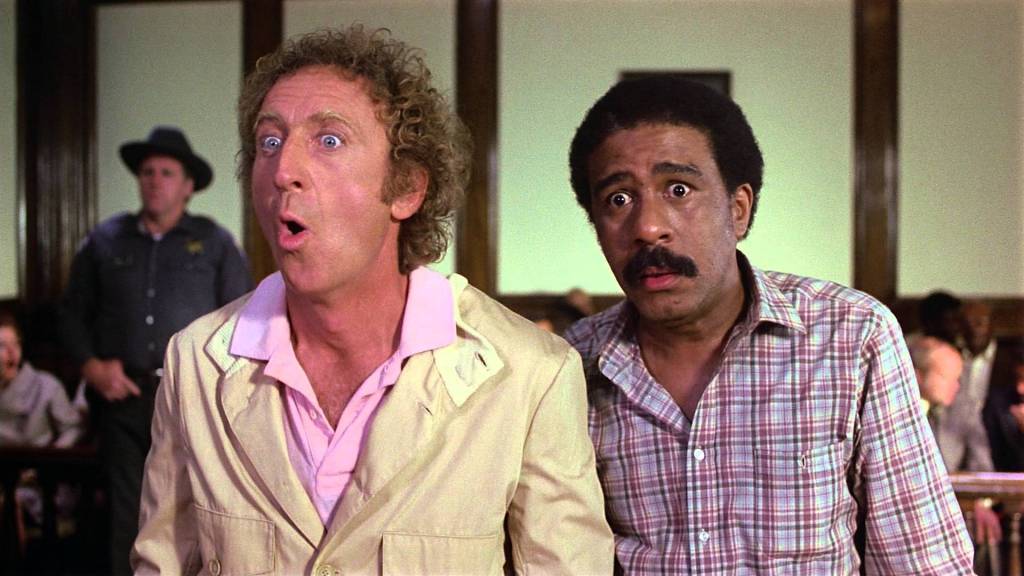
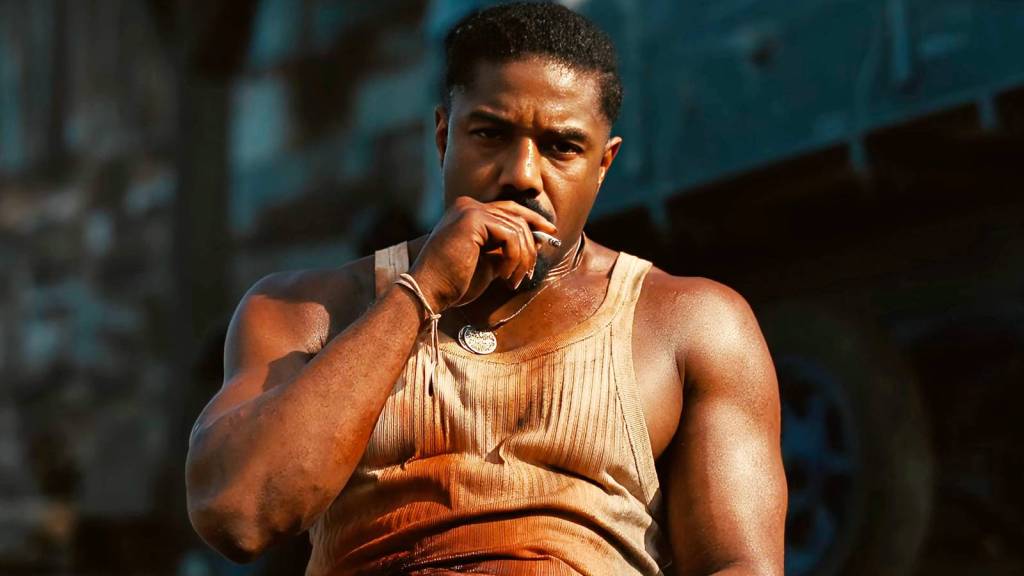
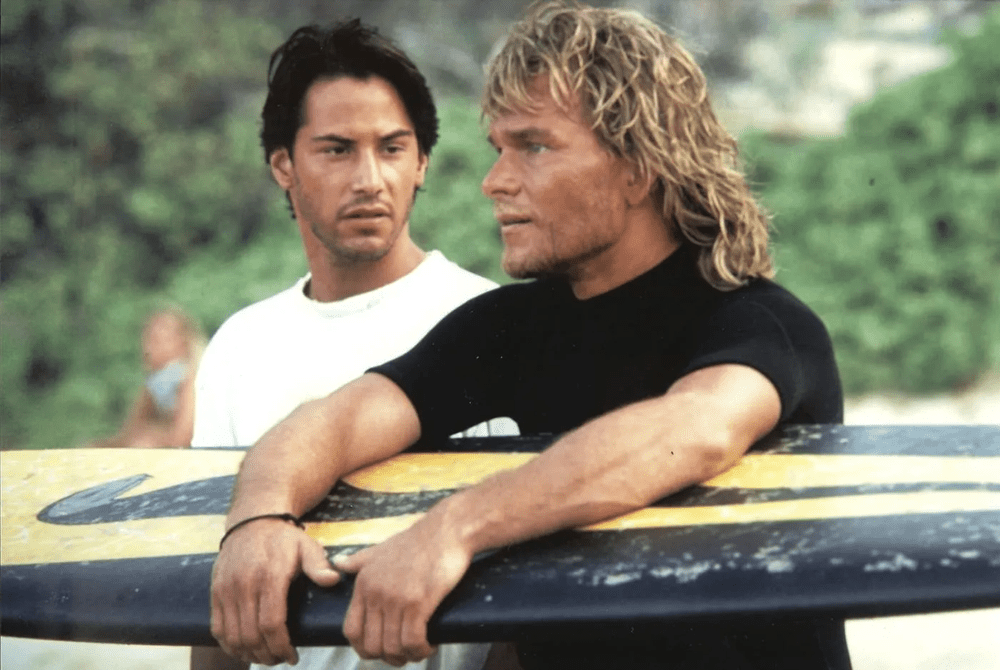
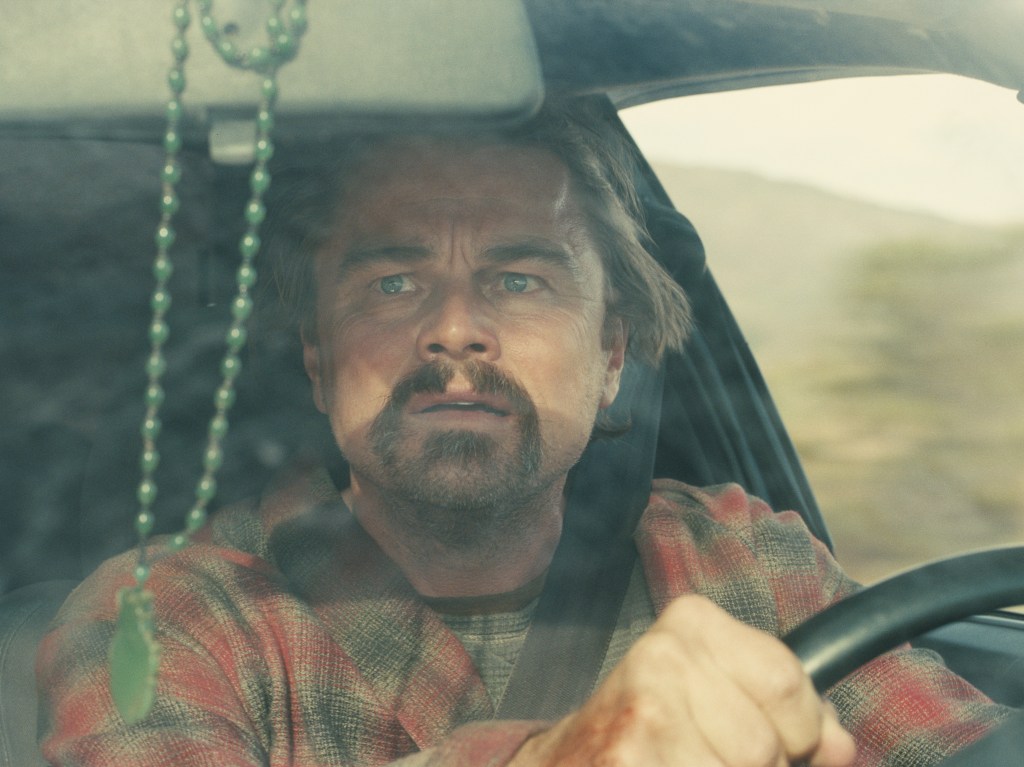
Johnny and I talk about everything from Charlie Chaplin’s masterpieces to Point Break to my glimpse of the filming of One Battle After Another to David Cronenberg to the late great Catherine O’Hara, how Sinners tackles America’s history, the wacky, erratic films of Gene Wilder and Richard Pryor and so much more.

Have a listen at the links below and please enjoy my goofy responses to Johnny’s most excellent questions!

You can check it out on Apple Podcasts, Spotify and much more through the links here!