When it comes to Spider-Man, I’m all about the Romitas

Spider-Man hits his big 60th birthday this year, and he’s still swinging along as strongly as ever. Dozens and dozens of great artists have drawn his adventures since 1962, but when I picture Spidey in my head, it’s always a Romita Spidey.

The father-son duo of John Romita Sr and John Romita Jr are inextricably linked in my head when I think of Peter Parker. For 56 of Spidey’s 60 years, they’ve been involved in drawing him. To me, they are Spider-Man. 

Co-creator Steve Ditko’s wiry, nerdy Spider-Man set the standard for the character, don’t get me wrong. I love Ditko and he set the template all others have followed. Ross Andru, Gil Kane and Mark Bagley were all indebted to the Romita and Ditko template. Todd McFarlane’s antic, spidery look for the character launched an entire comics movement in the 1990s, while Ron Frenz combined the best of Ditko and the Romitas for a punchy ‘80s incarnation of Spidey.

But still, I’m all about the Romitas. Romita Sr was the first artist to take on Spider-Man after Ditko left, starting with Amazing Spider-Man #39 way back in 1966. His style was bolder, more confident than Ditko, his Peter Parker a handsome everyman instead of Ditko’s exhausted loser. His women were gorgeous – he’s the one who first drew Mary Jane Watson. He was also more “mainstream” – there’s a reason that Romita’s images of Marvel characters set the company standard in the 1970s, appearing on merchandising galore. Romita was never quite as flashy as Ditko or McFarlane, but he was always dependably powerful. Long retired, Romita Sr is still with us at 92.

And then there’s the son, who has actually gone on to surpass the father. John Romita Jr has been drawing issues of Amazing Spider-Man on and off now for an astounding FORTY years, which has to be close to some kind of record. His first issue was Amazing Spider-Man #208 from 1980; his latest is Amazing Spider-Man #902 (*also known as Amazing Spider-Man, 2022 series #8, because they can’t stop friggin’ relaunching these series every year or two lately).

I’m racking my brain to think of another artist who drew the same character intermittently over a nearly 700-issue span, but coming up blank – I don’t think even Superman’s legendary artist Curt Swan quite achieved that. 

Romita Jr, 66, is now a senior citizen himself which is kind of stunning, as I still mentally think of him as the pumped young apprentice taking up his father’s drawing board decades ago. The issues where young Romita Jr first caught my eye was a two-part story in Amazing Spider-Man #229 and #230, where Spidey fought the Juggernaut, a Hulk-level behemoth way out of his league. That was in the middle of a fantastic run by writer Roger Stern and Romita widely judged to be one of the best Spidey periods of all time.

In these two issues, Romita Jr captured both the massive, unstoppable Juggernaut and the wily, indefatigable Spider-Man perfectly – each panel clearly lays out the impossible odds and stakes of the battle. Spider-Man is strong and determined and yet refreshingly human in scale. 

Both Romitas excel at giving Spider-Man weight on the printed page, which might seem a strange requirement for a character who’s always hopping and swinging about. They’re also both experts at clear storytelling, a style which went out of vogue in the McFarlane-dominated years but has come back into fashion. I think Spider-Man needs a degree of realism to keep the character grounded, and when artists get too abstract and distorted drawing him, it never quite works for me. 

Much as I love Spider-Man I tend to dip in and out of regular comics-buying depending on how good the current creative team is. The dismal clone saga of the late 1990s broke the habit for me and I don’t need to be a completist forever. But Romita Jr’s latest Amazing Spider-Man run with writer Zeb Wells is refreshingly fun, back to basics comic storytelling – and his art is a big part of the dynamic feel. His villains like Tombstone and the Vulture are hulking, ominous and grotesque, while his Spider-Man is, as always, strong yet a bit fragile. 

Romita Jr hasn’t stayed on Spidey that entire 40 years, of course – he’s come and gone many times – but like Spider-Man himself, he always bounces back. His style has changed a lot – become more blocky and angular, with big, bold panels – and not everyone likes that. It doesn’t always work in quieter scenes, where his humans can look a little baroque, but in the action scenes, Romita Jr still delivers. His storytelling is still among the top of the field. Fight scenes from recent issues are crisply delineated, with bold figures moving powerfully.

Decades after they first wowed me, the Romitas have still got it.  

Movies I Have Never Seen #19: Megaforce (1982)

What is it: Forty years ago, children around the world lined up to celebrate the greatest cinematic experience of their time. They played with the toys, they read the storybooks, they dove into the rich fictional world. Unfortunately for the creators of the 1982 flop Megaforce, it wasn’t their world, but that of E.T. The Extra-Terrestrial. The strange, toy-etic action flick Megaforce was part of a weird wave of would-be early ‘80s sci-fi franchises that were blatantly ripping off elements of Star Wars and Mad Max. Somewhere, a world exists where movies like this and its kinfolk Spacehunter: Adventures in the Forbidden Zone, Metalstorm: The Destruction of Jared-Syn and Krull received multiple sequels. It isn’t this one. 

The plot of Megaforce, such as it is, is about a futuristic UN-esque peacekeeping agency who ride around on motorbikes and dune buggies and fight a vaguely stereotypical foreign gang. Our star is none other than a wild-eyed Barry Bostwick of Rocky Horror and Spin City fame, perhaps the last actor on earth you’d cast as your leading man in a post-apocalyptic action flick. With a headband harnessing grand flowing locks of ‘80s hair and beard and a skintight shiny uniform that leaves absolutely nothing to the imagination, Bostwick’s awesomely named Ace Hunter is indeed a sight to behold. And that doesn’t even get into the flying motorbike scene featured at Megaforce’s climax, perhaps the film’s finest moment of sheer kitsch.

Why I never saw it: Wait, was it ever even in theatres? Or home video? Megaforce kind of sank from the world, the only evidence it existed comic-book ads, an Atari videogame and a line of tie-in vehicle toys that were mostly forgotten the moment they were released. It made less than $6 million worldwide and vanished. I might not have even clocked Megaforce’s existence if it weren’t for an onslaught of comic book ads for it in 1982. I’ve already written about how 1982 was my year of comics awakening, and you couldn’t pick up an issue of Star Wars or Marvel Team-Up without seeing Megaforce’s cheery manly ad on the back cover with a pumped-up Bostwick and the slogan “Deeds, Not Words” staring at you. Why, you could even get a Megaforce Membership Kit for a mere $1.00! Years later, I finally set out to find out what the fuss was all about.

Does it measure up to its rep? It had talent, in theory – director Hal Needham was behind Smokey and the Bandit and The Cannonball Run, so he knew how to make movies about loud cars and broad characters. But Megaforce is on the more dismal end of non-starter sci-fi cheapies of the early ‘80s (I’ve got a soft spot for Krull, I admit). Most of the movie is about explaining what Megaforce is, leading up to and training for the underwhelming battles, and enjoying Barry Bostwick’s luxurious hair. Bostwick brings a jovial energy to the movie that the story never rises to meet. Co-star Persis Khambatta (Star Trek: The Motion Picture) makes Bostwick look like Laurence Olivier and the rest of the cast are generic action stereotypes. The motorcycle battles – endless – get boring very quickly and nothing much really happens in Megaforce. There’s no stakes, no emotion, no sense of the wider world, just a few glimmers of the cheesy masterpiece it could’ve been if Ace Hunter had been allowed to really cut loose.

Worth seeing? To be honest… no, unless you’re in a very particular sort of mood and crave a particular sort of guilty pleasure. Maybe it’s just finally catching up 40 years later to seeing what that omnipresent comic book ad was all about. Even for a bomb, Megaforce doesn’t maintain the kitsch heights of The Room or Battlefield Earth. But … despite the slapdash storytelling, the long stretches where nothing much happens, the unforgettable sight of Barry’s Bostwick in too-tight tan spandex … there’s something I find kind of adorable about Megaforce and its willingness to fail big. Deeds, not words, indeed. 

The art of adaptation: Neil Gaiman’s Sandman

I first read Neil Gaiman’s Sandman comic beginning with #8, more than 30 years ago now. It was pitched as an introductory issue for new readers, a catching of breath after a hectic opening storyline for the series, and simply featured the godlike Dream, the lord of the night, catching up with his sister, Death, as she goes about her duties. It’s also one of the best things Gaiman’s ever written, humane and heartbreaking. 

It’s exactly the sort of story I’d worry about seeing turned into Netflix “content” in this age of comics being adapted for everything.

I shouldn’t have worried. 

Episode 6 of the new Gaiman-endorsed Sandman series, “The Sound of Her Wings,” which adapts that eighth issue and another classic story, is one of the best bits of TV this year and greatest feats of comics adaptation I’ve seen. (I’m not alone in this slightly hyperbolic verdict.)  

“The Sound of Her Wings” walks the tricky line between rote recitation and making the story come to life. Pairing it with a take on Sandman #13, a stand-alone story of a man who’s granted immortality by Death and his once-a-century meetings with Dream, is a masterstroke. “The Sound of Her Wings” episode becomes a sweeping meditation on what gives life and death meaning, even if you’re an immortal being, on the little triumphs and failures that make up the time we get. 

Even though I’ve read these two comics so many times I practically had them memorised, the gorgeous adaptations still left me a choked-up sentimental fool at the end. 

Adaptations are funny things in comics. I still remember the giddy thrill of simply seeing Batman fight the Joker on the big screen in 1989, or of watching Spider-Man swing past actual skyscrapers. Us comics nerds were famished for any recognition in those long-ago pre-extended universe times, for any hint of seeing characters come to life. (This is probably why I actually saw the Howard The Duck movie in cinemas.) These days, dozens and dozens of comics are being adapted to different mediums, and novelty alone isn’t enough. 

But not every adaptation works. The 2009 Watchmen movie felt spot-on in a few ways, yet strangely hollow in others. It felt a bit like a cover version of the graphic novel, never quite capturing what makes Alan Moore and Dave Gibbons’ story soar. 

Often you’ll get a mix-and-match of great comic book stories into film – Avengers: Infinity War takes elements from Jim Starlin’s Infinity Gauntlet miniseries, and weaves a different tale around them. The Winter Soldier took a lot from Ed Brubaker’s excellent Captain America comics, but was a fairly loose actual adaptation of them. 

We’re starting to see more and more comics movies and films going beyond superheroes – which can only be a good thing. Some of them swing and miss – that Preacher series didn’t do a thing for me – but we still get gems like Sandman, Paper Girls, Resident Alien and Sweet Tooth. 

“The Sound of Her Wings” immediately had me running back to re-read the comics for the 500th time or so. In the end, I feel like an adaptation should be a guide, a pointer towards the source, rather than seen as an attempt to improve on it. 

I’d never say Sandman the series supersedes the comics it faithfully adapts, but it certainly complements them in ways I’d never … well, dreamed. 

Vanished world: The immortal journalism of Joseph Mitchell

Life comes at you fast. Somehow, I’ve been a working, paid journalist for 30 years now, and the industry is almost an entirely different animal than it was back in 1992 when I started getting my first bylines in the college newspaper. 

I came in just as the digital world started to change everything. The town newspaper I first worked at professionally in small-town Mississippi still had dusty trays of hot type slugs tucked under the composing table. While chunky early Macs were being used to lay out the pages by then, the final layouts were still painstakingly pasted up from print-outs before being walked over to the press room. These days, much of my journalism work is in mediums I wouldn’t have even quite comprehended in 1992. 

The appeal of journalism for many newcomers is a fundamentally romantic one. The big scoop! The breaking news! It’s never exactly as you imagined it, of course, and there’s plenty of dull moments, like there are in any job. In recent months, I’ve been revisiting the work of one of the patron saints of long-form journalism to spark inspiration and to remember that at its heart, before counting clicks and hot takes and fighting misinformation, it’s all about telling a story.

Few people told a story better than Joseph Mitchell, who walked the streets of New York for a variety of long-gone papers nearly a century ago, before going on to become one of the best-loved New Yorker writers of all time.  

Mitchell was the bard of cheap dives and eccentrics, finding stories to tell far away from the ivory towers. “I believe the most interesting human beings, as far as talk is concerned, are anthropologists, farmers, prostitutes, psychiatrists, and an occasional bartender,” he’d write.

His most famous work, Joe Gould’s Secret, memorably explored a bohemian “blithe and emaciated man” who claimed to be writing the longest book in history – or maybe he wasn’t. 

But Mitchell wasn’t just about the oddballs – his “Mr. Hunter’s Grave” is a gorgeous, sensitive look at an elderly Black man at the end of his days, while “Up In The Old Hotel” is a captivating read about mysteries hidden in Manhattan’s old buildings. “McSorley’s Wonderful Saloon” evokes every beer stain and cigar stub at the oldest Irish bar in New York and its impossibly stern manager, who served only one kind of ale and would close up if the bar got too crowded with “too much confounded trade.” 

Mitchell is all meat, no fat in his writing, and many of us journalists today could learn from his economic, indelible descriptions – a man whose “profanity was so vigorous I expected it to leave cavities in his teeth,” or former President Herbert Hoover, who had “the face of a fat baby troubled by gas pains.” But clarity is the guiding light – he’d note, “A newspaper can have no bigger nuisance than a reporter who is always trying to write literature.”

“The best talk is artless,” Mitchell would write. “The talk of people trying to reassure or comfort themselves, women in the sun, grouped around baby carriages, talking about their weeks in the hospital or the way meat has gone up, or men in saloons, talking to combat the loneliness everyone feels.” 

Decades after his death, it’s worth mentioning there is some controversy over how Mitchell may have blurred the line between fact and fiction in some of his later work. It’s a fuzzy line that probably shouldn’t have been crossed, although times were different then, and the essential core of his storytelling remains based on fact. 

Leaving the desk and hitting the streets to find your story has gotten less and less common as journalism has changed, as stories are put together via scraping social media posts or quick emails to the same talking heads over and over. I’m as guilty as anyone else of this tactic, but have to admit that over my 30 years now in the industry the stories I remember most are the ones where I went out and talked to another human being face to face, listening to their ‘artless talk’ and their stories. Mitchell’s world is long gone, but his writing remains a touchstone for me. 

Joe Mitchell’s best is collected in the essential collections Up In The Old Hotel and My Ears Are Bent. Decades after he scribbled his bylines, it’s all still mandatory reading for anyone who wonders what journalism and telling people’s stories should be about. 

Back on the big screen: New Zealand International Film Festival

Life isn’t entirely normal yet, and may not be for a while, but at least I can go to film festivals again.

During the strictest of New Zealand’s lockdowns, cinemas were all shut down, and one big casualty the last few Covid-addled years has been the New Zealand International Film Festival, which suffered from cancellations, postponements and management problems in 2020 and 2021.

Ever since I moved here in 2006, NZIFF has been a highlight of the calendar year, a time when Auckland gets to pretend it’s the centre of the cinematic universe for a week or so and enjoy the buzziest hits from Cannes, amazing revival classics and hidden gems that change your brain. I’ve watched dozens and dozens of NZIFF movies over the last 16 years, and I missed it dearly in these Covid days. 

This year’s festival isn’t quite up to full speed compared with the before times – it is shorter and smaller – but I still managed to catch several great films this week mostly at Auckland’s legendarily awesome Civic Theatre, the best place in New Zealand to watch a movie. 

I love my Marvel cinematic universe and all that jazz, but a well-curated film fest is a whole different vibe, one that engages new parts of the brain. It celebrates the communal joys of art, too – at a time when doing anything as a community feels a bit fraught, it’s good to be reminded there are benefits to it. 

I would’ve liked to fit more in my schedule, but only four movies made the cut for me this year. I watched an intimate and witty documentary on the late great author, Kurt Vonnegut: Unstuck In Time; South Korean icon Park Chan-Wook’s exquisitely crafted twisty romantic detective thriller Decision To Leave; the harrowing and weirdly life-affirming documentary about two married volcanologists Fire Of Love, and this year’s Cannes Palme D’Or winner, the scabrously funny, filthy Swedish satire Triangle of Sadness. 

Triangle of Sadness is a divisive movie among the critics but in a packed gorgeous old cinema, this barbed attack on influencer culture and the privilege of the wealthy felt like a perfect film festival experience. A story of two young and vapid gorgeous people who end up on a cruise ship that turns into a Lord of the Flies-esque fiasco complete with plentiful vomiting and even worse, it’s not subtle. It’s not a deep satire, and it might be a little long. Yet its outraged, shouty and impotent tone somehow seems to mirror the weirdness that is life in 2022. It’s the movie for the moment, as we’re all a little bit stuck in our own personal cruise ship voyages from hell. In the end, you have to laugh about how absurd everything is, don’t you?

Without a film festival to gather up all the visions of the world, from South Korean noir to Swedish ennui, it’d be a bit harder to see these things, these perspectives. To be in a crowded cinema (mostly mask-wearing, thankfully) and laughing and gasping over the world together seems a bit naughty, a bit daring these days.

I missed that vibe, and even if the crises roiling the world are hardly over, it feels good to laugh together, for a moment, at a film festival. 

What’s up, doc? Why Looney Tunes never get old

Like any child in the pre-internet era, I spent an awful lot of time watching cartoons. I watched the good, the bad and the ugly.

I’d watch Flintstones and Jetsons, Woody Woodpecker and G.I. Joe, Super Friends and Yogi Bear. A lot of the worst featured sub-par animation where only characters’ mouths moved jerkily, or backgrounds that appeared to be made on a rusty photocopier. 

Always in the top tier, of course, were Disney and Warner Brothers. Disney made some ground-breaking, amazing animation, and set the standard. But when it comes to the best – the toons that make you feel glad to be on this planet, the ones you’d watch again and again – I’m a Looney Tunes man through and through.

Even as a kid, I knew that the half-hour or so of vintage Looney Tunes cartoons that played weekday afternoons were something special.

As I limp my way into mid-middle age, I still find comfort in binging a handful of Warner Bros’ seven-minute gems, still as hilarious and free-wheeling as they were decades ago. Time has rubbed some of that rebellious edge off the Looney Tunes – I know there have been cartoons starring them since the original run ended in 1969, but watching Bugs play basketball with NBA stars just ain’t the same to me as having him run rings around Elmer Fudd and Daffy Duck in the “rabbit season” trilogy. The originals remain the peak of the animation form and a showcase for sheer mad creativity.

Bugs is always funny, Daffy is reliably explosive, Porky amiably daft, Wile E. Coyote and the Road Runner Shakespearean in their eternal struggle, and even Foghorn Leghorn’s blowhard act raises a chuckle from me. (Let’s not talk too much about Speedy Gonzales or Pepe Le Pew, though.) There’s a lot of formula and a few bucketloads of caffeinated frenzy over the 900 or so Looney Tunes, of course, and I heartily recommend only watching a half-dozen or so in one sitting lest all the ACME equipment and carrot-chewing permanently liquify your brain. 

But watching some of these cartoons for the 10th or 20th time in my life, I’m struck the most these days by the sheer hand-hewn artistry of them all. Pixar and its computer-generated toon spawn have entertained and delighted us all too, but there is something tangible and awe-inspiring about watching the OG toons, where every single line was drawn by a probably chain-smoking, squinting human being. 

Animation is a form where innovation led to an explosion of energy, Reid Mitenbuler writes in his highly entertaining recent history of the early years of the form, Wild Minds.

Walt Disney became the biggest household name, but the likes of Tex Avery, Bob Clampett, Chuck Jones, Friz Freleng, Mel Blanc, Frank Tashlin and many more shaped the anarchic spirit of animation and shook up Disney’s tendency for stuffiness. The Looney Tunes may have been repetitive – coyote chases road runner, hunter chases duck, cat chases bird – but it was the ceaseless creative invention around the margins of these blueprints that still amuses today.

To get a real feeling for the artistry of these gents, watch some of a Looney Tunes cartoon some time frame by frame. (You can pull one up on YouTube and pause it, then press the “.” key to do just that.) 

It’s astonishing to watch the carefully hand-drawn antic life in these drawings, more than 50 years on. No short-cuts, none of that partial animation that made my childhood “Super Friends” toons seem so static. In motion, these moments sometimes pass so quickly they’re as zippy as the Tasmanian Devil. 

That didn’t stop the geniuses from labouring over every single line and contorted facial expression. Frozen in time, you see the craft that went into it all. That’s what makes them art. 

Four-panel biographies – A short-lived experiment

Life has been hectic of late, so in the absence of new posts, here’s a trip in the wayback machine to 2014. I attempted to get back into drawing comics by experimenting for a few months with a few eccentric sketchbook comics, including these “Four-panel biographies.” It’d take a global pandemic for me to find the passion again a few years later by returning to my comic strip Amoeba Adventures again!

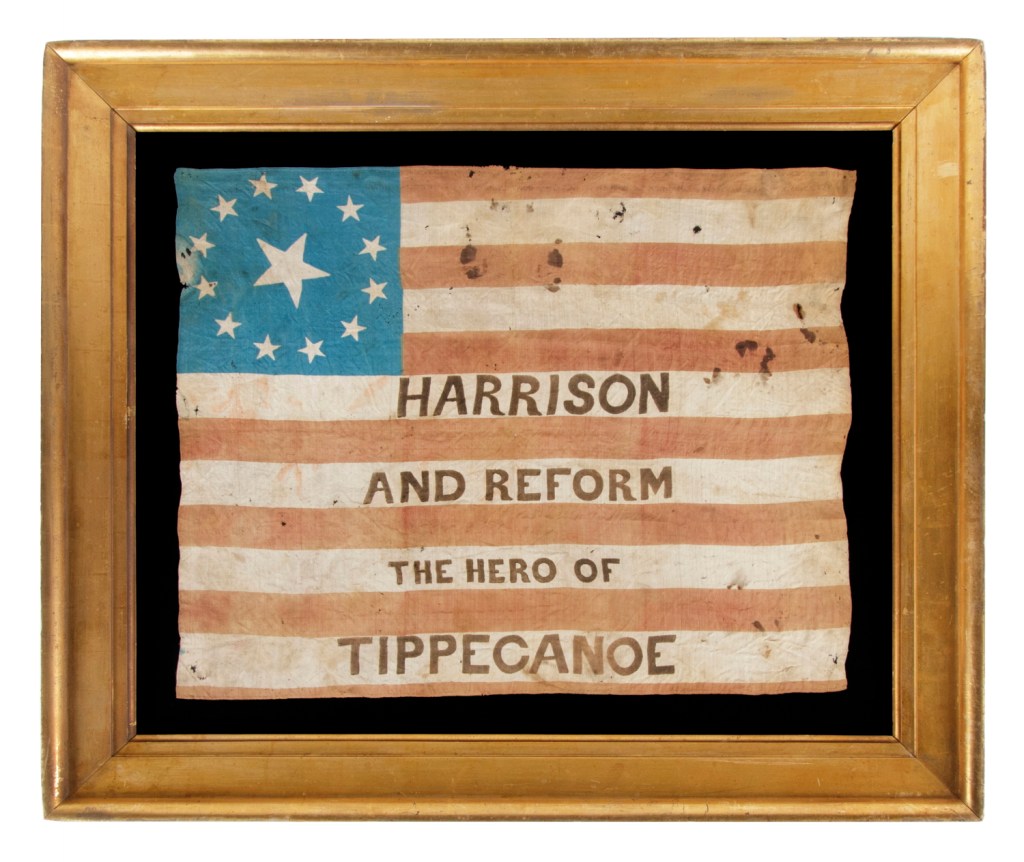
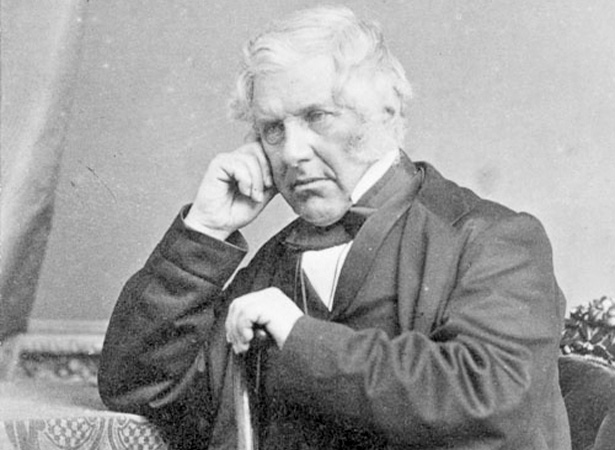
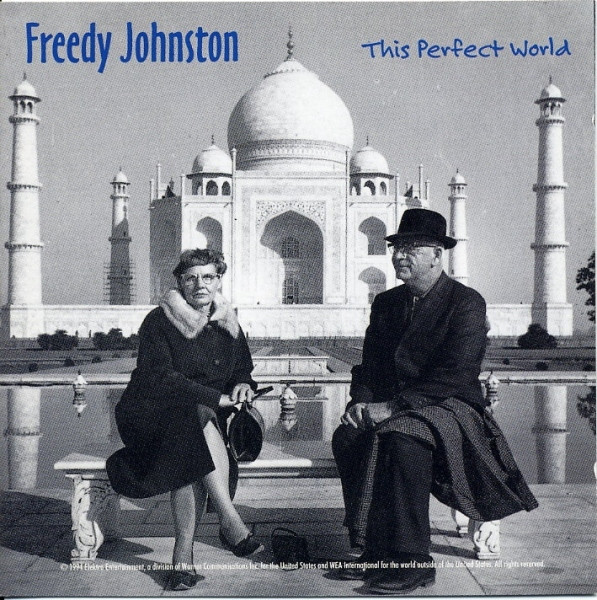
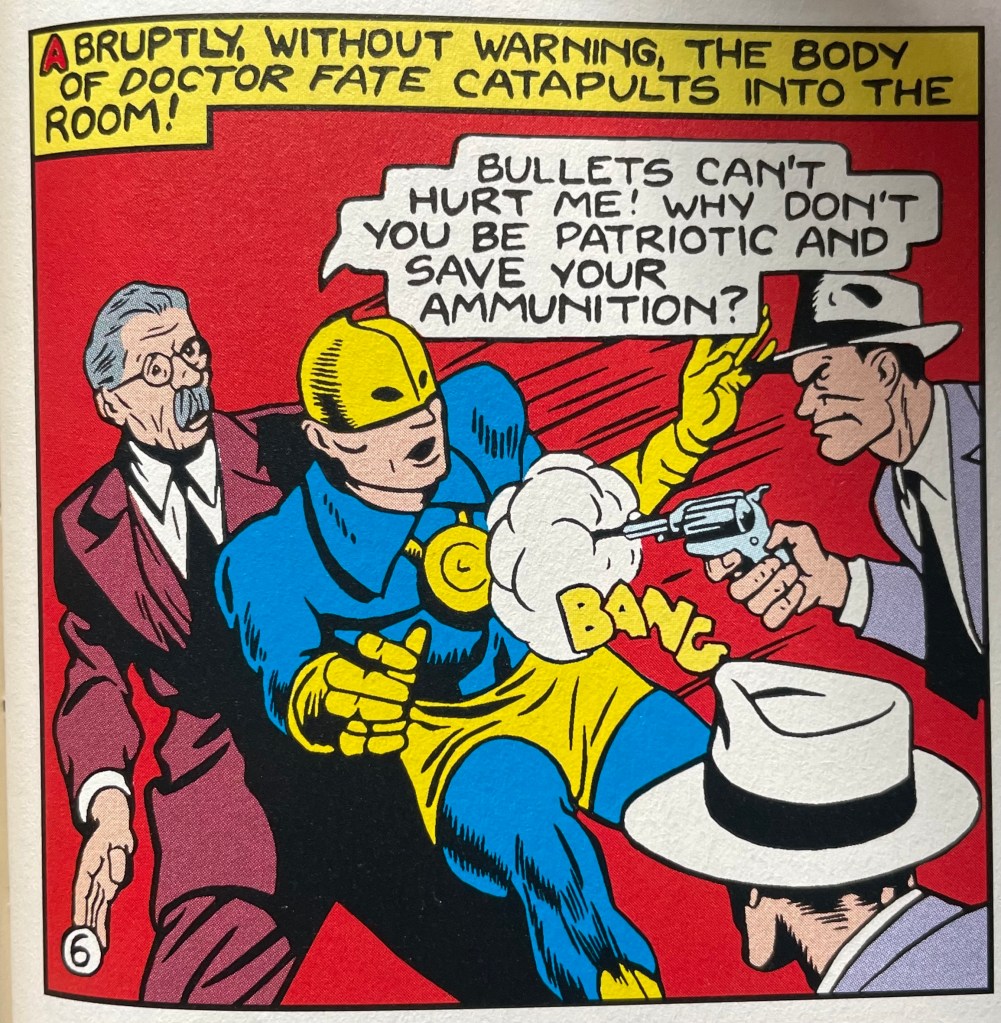
Still, I do like the concept of telling a life in a mere four panels… maybe I’ll get around to doing a few more some day… For now, here’s the Four-Panel Biographies of Franklin Pierce and Roy Orbison!

Farewell tours: The show must go on – until it doesn’t

When your musical tastes lean toward the retro, as mine tend to, you find yourself attending a lot of farewell tours. You don’t always know it will be the last/only time to see a band. But as someone who loves an awful lot of bands that were at their peak in the ‘70s or ‘80s, you never know what fate and time will bring. 

Performers in their 70s or even older aren’t always at their best, but sometimes they’re amazing. You sometimes find well-honed machines who may not be quite as fast on their guitar solos as they once were, but who make up for that with the breezy skill that only comes from playing the same song thousands of times over. 

The announcement that 75-year-old Elton John is coming back to New Zealand for his long, long Covid-postponed farewell tour in early 2023 and that Billy Joel, 73, is coming here for the first time in decades reminded me that many of my favourite older acts who make it all the way down to Aotearoa probably aren’t going to be coming back again. I’m undecided on seeing Elton just yet, but I’m already down for Midnight Oil’s farewell tour in September, pandemic willing. 

I managed to see Brian Wilson deliver a surprisingly affecting tribute to the Beach Boys and Pet Sounds a few years back. He was seated for most of the show and did sometimes seem a bit off in the clouds, but still delivered some of those dazzling harmonies on “Sloop John B” and “Wouldn’t It Be Nice” beautifully. Younger band members handled the high notes, and yeah, it was an audience of gray hairs, but as reunions go, it was more sweet than bittersweet. I’m glad I went. 

The Monkees, 2016

And then there was getting to see The Monkees twice before the deaths of Peter Tork in 2019 and Michael Nesmith last year. Head cheerleader Mickey Dolenz led the charge at both shows, making up for some of the slack energy of the clearly fading Tork or Nesmith, and while it was most definitely a valedictory lap, there was a charge of energy at hearing the old frothy pop songs by the original band one last time. Because now, all but one of those Monkees are gone.

Or take an 80-year-old Mavis Staples, who was fierce, fiery and loud in a delightful show a couple years back that showed one of the great gospel singers could still bring the house down. Or Nick Lowe, who might’ve been white-haired and hardly the young power pop star of the 1970s, but who put on a great show. 

On the other hand, I’m glad I decided not to fork out for one of the octogenarian B.B. King’s final shows here in Auckland back in 2011, which sounded like it was a pretty grim affair with the 85-year-old King basically propped up on stage far beyond the point where he could really live up to his legend. A show where the artist is barely able to perform is kind of grotesque. 

Sometimes you don’t know how lucky you are. Seeing a dazzling Prince a mere two months before he died will always be one of my live music highlights, and The Rolling Stones were everything they could have been in a packed stadium in 2014 before Charlie Watts passed away. I’ve crammed in three Bob Dylan shows in the 15+ years I’ve been in New Zealand and am grateful for every note I got to hear.

Bob Dylan takes a bow, 2018

Because sometimes, you miss out. I’ve still got enormous regrets over missing the late Leonard Cohen on what turned out to be his final show anywhere in the world in Auckland in 2013, and having a trip overseas conflict with what probably is Sir Paul McCartney’s final trip down under back in 2017 still stings. 

I do still listen to some music by people under 40, don’t get me wrong. But when it comes to a chance to see a legend, I’ll probably take a punt on seeing them while I can. Every tour has an ending date, and you never quite know when the final curtain call might come, do you? 

Movies I Have Never Seen #18: Foxy Brown (1974)

What is it: Foxy Brown is one of a series of blaxsploitation films starring Pam Grier in the early 1970s, which directly inspired her being cast as the star in Quentin Tarantino’s excellent noir, 1997’s Jackie Brown. Grier is Foxy, who’s got a cop boyfriend and a drug dealer brother. When the brother snitches out her boyfriend to the gangs, Foxy sets out for revenge in top blaxsploitation style. Foxy goes undercover with a prostitution ring (!) to avenge her losses, but things go south and she’s captured and brutalised. But when Foxy makes her move to escape, things get very bloody very quickly as the bodies pile up. 

Why I never saw it: Blaxsploitation is a tricky genre to watch in 2022. You either roll with it, enjoy some of the camp/kitsch value and accept it as a portrait of the times, or you’re kind of horrified by the casual racism, sexism and violence. I do love a gritty, sleazy ‘70s crime movie, though, and where blaxsploitation stood out from more mainstream fare like The French Connection is in casting Black actors in the leading roles, making stars out of previously marginalised figures like Shaft’s Richard Roundtree, Fred Williamson or Jim Brown. Grier was the star of several of several major movies of the era, and Tarantino himself called her cinema’s first female action star. On the other hand, I’m a middle-aged American-born white guy, so it’s not quite my place to wade too deeply into the ambiguities of what blaxsploitation meant. It provided some strong Black heroic figures on screen, but also saddled them in crime- and drug-drenched movies that wallowed in a lot of stereotypes. 

Does it measure up to its rep? Grier’s Foxy is a typical Death Wish-styled exploitation movie archetype – the gentle person who turns into a murderous killer. Unfortunately, that means in Foxy Brown the lead suffers some horrendous abuse, including being injected with heroin and raped by thugs. The queasy hardcore intensity of those scenes viewed in modern times linger and make it a bit harder to enjoy when Foxy tears loose and has her revenge. And trust me – she gets her revenge, notably in a remarkably gory bit of retribution upon the leading white male villain at the climax. You don’t see this kind of revenge in Tom Cruise movies! 

There’s a groovy aesthetic to Foxy Brown I can’t help but dig, from the James Bond-style opening credits to the way Grier shifts from demure girlfriend to striking leather-clad figure of vengeance, dazzling along the way with some very hip ‘70s fashion. Remember, in 1974, a Black woman fighting back on screen and taking vengeance against white men (at one point, mocking the genital size of a slimy white authority figure she entraps!) was a novelty. Grier dominates, but she’s helped by a cast including Antonio Fargas as her jittery backstabbing brother and a weirdly so-bad-its-good over-the-top turn by Kathryn Loder as the preening, sadistic leader of the drug syndicate. Foxy Brown is the better-remembered of Grier’s movies today, but it’s actually a quasi-sequel to a slightly less exploitive and rapey film, 1973’s Coffy

Worth seeing? Remembering this almost-50-year-old movie is utterly an artefact of its time, sure. It’ll offend some viewers coming to it cold but it’s hard to imagine anyone not finishing this being a little bit impressed by Grier’s kick-ass warrior, even if you’re put off by the sleazier side of the storytelling. Coffy is the better movie, but perhaps Foxy Brown better sums up the messy, yet empowering allure of blaxsploitation even now – with Grier’s powerhouse performance, despite all the violence, rape and sexism, it’s still at its heart a movie about standing up for yourself in a crappy world and sticking it to the man – whoever and whatever that may be. 

Meanwhile, elsewhere on the internet…

Time for an update for some of my paying writing! I have been writing some book reviews recently for the great New Zealand Listener magazine, including in this week’s issue, a look at Anthony Horowitz‘s new James Bond novel With A Mind To Kill, the latest in the never-ending series of authorised 007 adventures and a pretty cracking read.

Plus, I also recently reviewed a nifty new revisionist biography of explorer Ferdinand Magellan, Straits: Beyond The Myth of Magellan by Felipe Fernandez-Armesto in the June 18 issue!

Unfortunately the reviews aren’t online, but hey, if you’re in New Zealand do pick up a nice shiny print copy of the latest issue if you like!

I’m also continuing to help debunk the never-ending flow of misinformation out here on the internets (I mean, seriously. It never, ever ends) through my writing for AAP FactCheck. It’s not all Covid misinfo these days, and some recent factchecks I’ve worked on include:

For the answers to these and other exciting questions, do check out AAP FactCheck‘s home page and help us fight back against the plague of falsehoods!