
I didn’t have high hopes for a Doom Patrol TV series. We’re living in an age where comics as obscure as bloody Cloak And Dagger are getting a show, and I was afraid I’d see one of my favourite comic books of all time churned up and turned into mediocre, forgettable content for the masses.
I’m glad I gave it a shot, because so far Doom Patrol is living up to the surreal, crazed and humane comics it’s inspired by. It’s superheroes for those who are actually getting a little sick of superheroes.
 Doom Patrol have always been weird, a team of misfits and outcasts kind of like the X-Men, but more so. Their original 1960s comic adventures are a bizarro Silver Age blast, but “my” Doom Patrol really burst into being with Grant Morrison’s seminal late 1980s reinvention of the concept. Morrison’s twin masterpieces of Doom Patrol and Animal Man back in the day blew my teenage mind.
Drawing on dadaism, obscure German fairy tales, psychology, philosophy and mythology, Grant Morrison’s Doom Patrol was unlike any other comic book. Hermaphrodite superhero? Check. Sentient transvestite street? Check. Paintings that come to life and eat people? Check. Gorillas and disembodied human brains falling in love? Check!
The Doom Patrol are broken people – “Robotman” Cliff Steele (terrifically voiced by Brendan Fraser) is a human brain in a robot’s body, “Negative Man” Larry Trainor is a crash victim inhabited by a bizarre ‘negative spirit,’ “Elastic Girl” Rita Farr is a Hollywood star left trying to cover up her disfigured plastic flesh, “Crazy” Jane is an abuse victim split into multiple personalities, each with its own superpower. Even more than the X-Men, they’re freaks of nature. The “X-Men” movies long ago lost their primary theme of outcasts and prejudice in a muddle of tangled continuity and Magneto blowing shit up.
The TV show doesn’t shy away from the ugliness and pathos of their conditions, and makes them the perfect foils for a world of escalating weirdness and threats. The TV show also adds the character Cyborg, last seen played with incredible dullness in the muddled “Justice League” movie a year or two back. Cyborg is far better here, a voice of relative normality, albeit still damaged, with Joivan Wade giving an excellent performance.
 One of the newer of the approximately 419 streaming services out there, DC Universe premiered last year with Titans, which was a mixed success for me – I dug seeing the “Teen Titans” come to life and there were some great parts, but the show had very scattered storytelling and a self-consciously adult tone that felt forced (Unless you really thought we needed to have a blood-soaked Robin muttering “F—- Batman” to make the character work better). Doom Patrol is more adult by nature, so the swearing and mature themes work better (I’ll never get tired of hearing Cliff Steele aka Robotman saying, “What the F—-!?!?” in response to Doom Patrol’s never-ending parade of weirdness).
Doom Patrol stands out among a sea of super heroism because it embraces the comics’ fundamental strangeness rather than rejecting it with a veneer of gritty ‘realism’. No other big-budget superhero show this year will feature a donkey that doubles as a dimensional portal, unless Avengers: Endgame is hiding some major secrets.
Doom Patrol reminds us of how gloriously wacky comics can be, and how the most damaged and deformed of us can still find a way to save the world sometimes.
 The artists I admire the most are the chameleons, the mutators and innovators, the ones who never stand still. That’s why the Beatles will always trump the Rolling Stones, David Bowie will always beat Elton John to me.
 By 2006’s The Drift, Walker had exploded into full-on experimental surrealism, with terrifying drones and waves of sound and a voice that now sounded like the heavens shaking themselves awake. There were no pop anthems here. Legendarily, he hunted for just the right percussion sound on “The Drift”


 The comic book medium has had lots of highs in its nearly 100-year history. We’ve had Maus, Watchmen, Love and Rockets, Sandman, and much, much more.


 These comics are a product of their time – Lois is too often portrayed as a scheming meddler with marriage to a man (usually Superman) the only thing on her mind; but by the same token Jimmy Olsen is a gibbering goon who’s constantly getting himself into trouble as well. Yet I’d take a single Jimmy Olsen comic with their endless invention and amiable good cheer over a dozen of comic books’ latest attempts to strip-mine their past and reinvent the wheel.
 What do we do when the worst happens?
 A few thousand of us came together in Aotea Square in downtown Auckland today to mourn in the hot sun, to show these racist white supremacist shitheads out there that we are better than them.
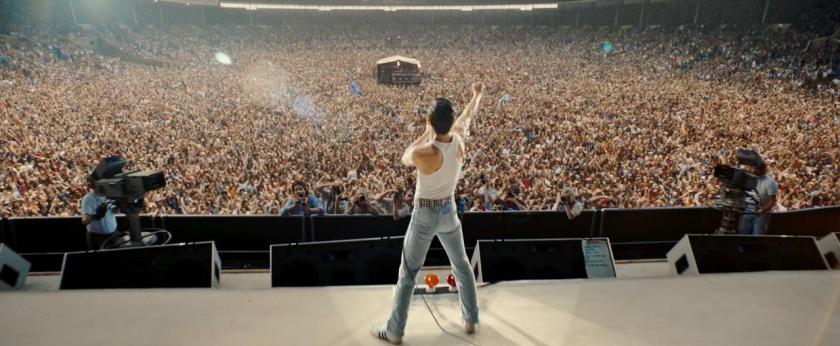 Real talk: I liked Bohemian Rhapsody quite a lot.
 Queen are a band critics loved to hate. “Lyrically, Queen’s songs manage to be pretentious and irrelevant,” The New York Times wrote in 1978. Rolling Stone’s Dave Marsh
  It’s a very simple story of a band that came from nothing and made it big, which has its DNA all over every single reality TV show millions watch every single week. Rhapsody works for many because it speaks to the weirdos and the oddballs, to that dream of getting famous. Everybody wants to be something.
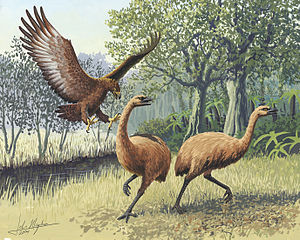 It’s not an insult to say that New Zealand is literally for the birds.
 Other species lasted longer. Another long-gone beauty is the
  Little battlers like the wren – which was apparently flightless – didn’t stand much of a chance when settlers came knocking with their cats and rats and the like.
 One of my favourite comics from the ‘80s into the early ‘90s was Marvel’s
  The biggest geek-appeal of What Ifs were that in retelling classic stories with a twist, characters could die – hell, everybody could die. “What if The Hulk Went Berserk?” was an issue that scarred the heck out of teenage me because I walked in expecting a typical Hulk story and then characters like Iron Man and The Thing started dropping like flies… oh, and it ended with Thor snapping the Hulk’s NECK which is pretty darned grimdark, ain’t it?
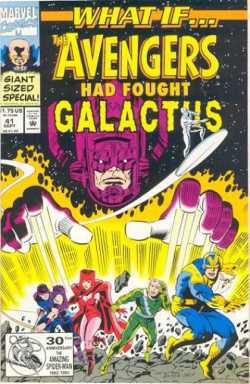 A cursory look at comics from the last few months turns up “Infinity Wars” (Marvel characters like Captain America/Dr. Strange mashed up, again!), “The Batman Who Laughs” (what if Batman was REALLY dark?), “Spider-Gwen,” “Spider-Noir” and a hundred more variations of Spider-Man. Not saying these are all terrible stories (although a lot are), but the main thing is that the novelty is gone. Whoa, you just showed me an alternative world where Superman is DEAD? I’ve seen that six times this week already, son.
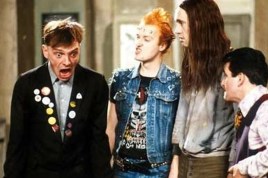 Rik, Vyvyan, Neil and even comparatively dull Mike were my Beatles of comedy. Like the best British shows, it knew when to quit – 12 episodes and that’s it, and with the late, great Rik Mayall leaving us way too soon in 2014, there’ll never be another.
 Several times, episodes build up with plots involving things like axe murderers or vampires or marauding medieval peasants only to abruptly draw curtain on the episode. Nothing really matters, the ‘madcap adventures’ can be waved off and the show will restart as normal the next episode. There’s something very existential about these damned housemates, trapped in their greasy grey pigsty and never changing, being squashed by a giant eclair in one episode and back for more in the next.
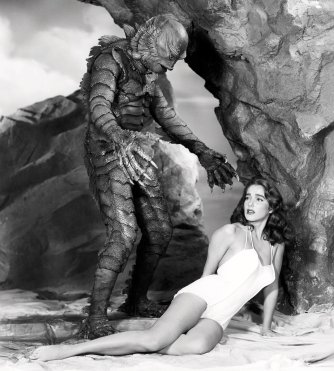 Julie Adams wasn’t a household name, but she was legendary in her own way as one of the last surviving “scream queens” of the classic Universal Monster movies of the 1930s-1950s.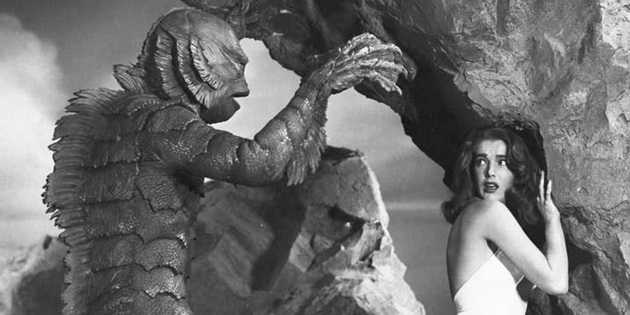
 Nik Dirga