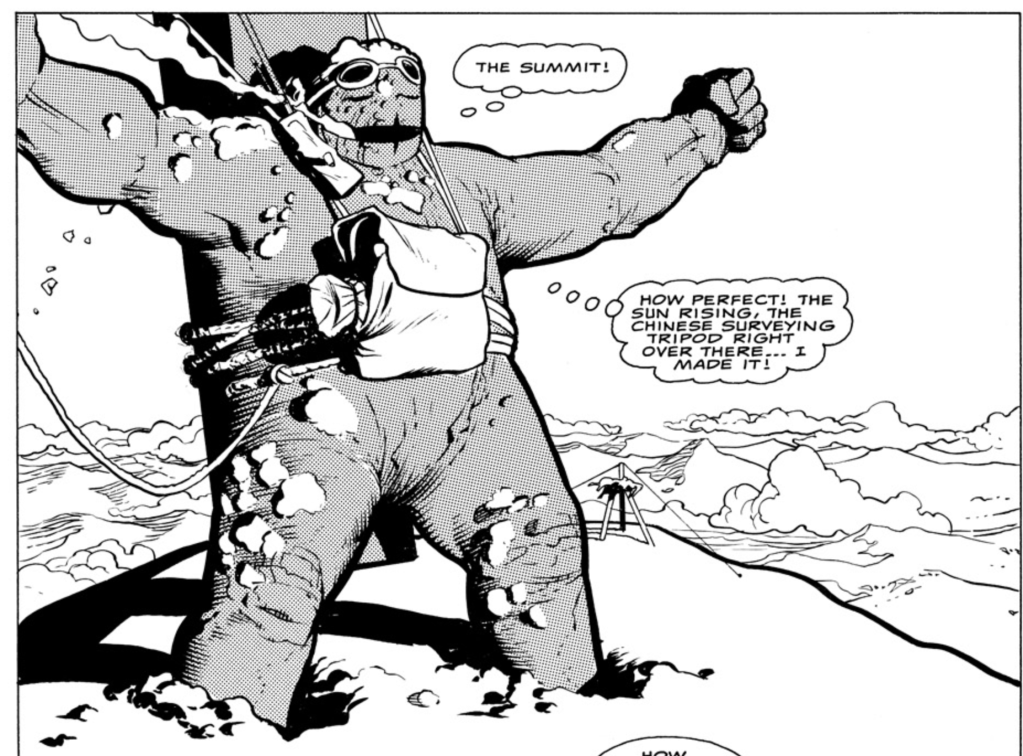
There were a lot of fantastic comics that launched in the 1980s – your Dark Knights and Watchmen, your Maus and Love and Rockets – but one of the closest to my heart is Paul Chadwick’s unforgettable Concrete, a series he’s been writing and drawing on and off now for 40 years.
After far, far too long of a hiatus, the first new Concrete story in 20 years is set to come out this week, Stars Over Sand. It’s pretty much the comic event of the year for me.
Concrete has always been an unusual animal and while it’s widely loved amongst comic fans, it’s not hard to feel it’s still somewhat overlooked and underappreciated.
For a series that is steeped in realism, it has its roots in the fantastic – political speechwriter Ron Lithgow is abducted by aliens and his brain transplanted into a hulking stone body, before the aliens vanish from the story forever. Concrete is about a man divorced from his own humanity but gifted with possible immortality trying to find a way to fill up his new life. And it’s not by fighting crime or other superheroic tropes, but by writing, exploring, and using his strange body to wring the most out of existence.
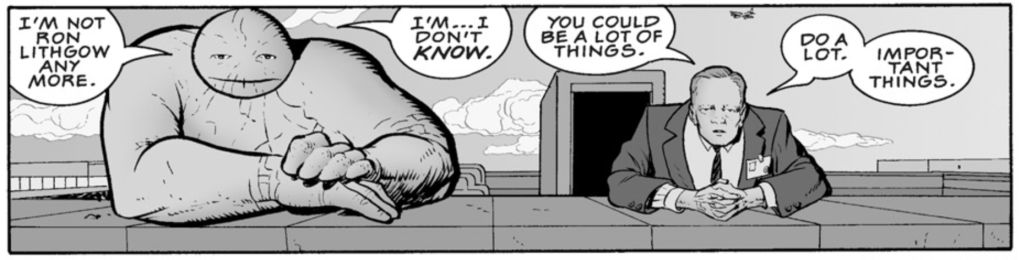
Chadwick started with a superhero-esque premise, but the fantastical origin story aside, has resolutely kept Concrete a story in human scale, even with a towering golem as its lead. Concrete and his human friends/handlers Larry and Maureen remain some of the best written, nuanced characters in comics – smart and funny but also capable of being vain, conceited, cruel or forgetful. It’s quite possible the most humane comic out there.
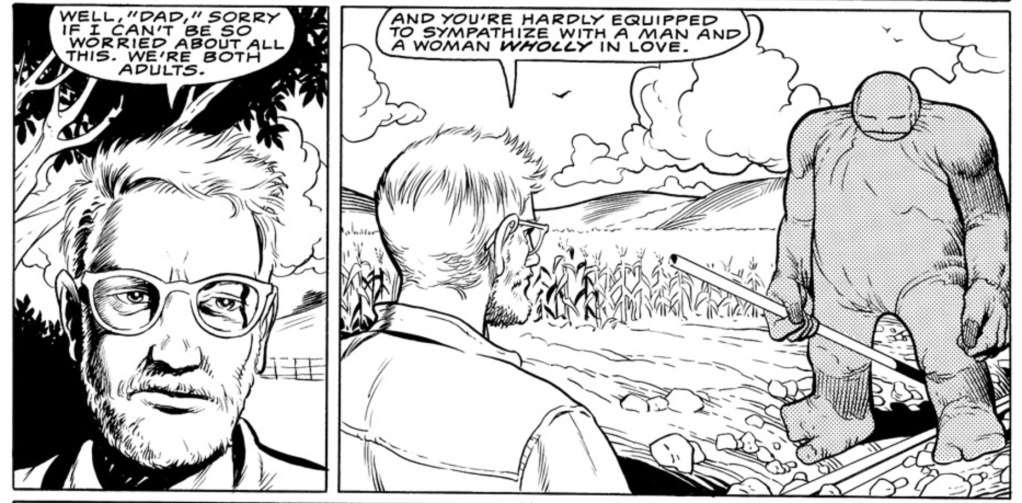
Chadwick’s stories are deeply researched – Concrete’s visit to Nepal has the realism of Chadwick’s own visit there, for example – but he has an eye for the little bits of character or distraction that help make his work so authentic – Concrete’s occasional inexplicable outbursts of temper, or Larry being distracted by the need to urinate during a harrowing hostage scenario.
Concrete is a gloriously ruminative, verbose figure, given to imaginative flights of fancy or philosophical meanderings that make him all the more relatable. He’s a writer, and Chadwick makes him feel like a writer, always testing out ideas and questioning. Chadwick’s art has got a classical elegance that shows in his quirky page designs, which sometimes leap right into surrealism, and his clean, expressive style that carries his wordy, thoughtful stories well.
I re-read the entire Concrete series of stories every few years and I keep finding new layers in them each time.
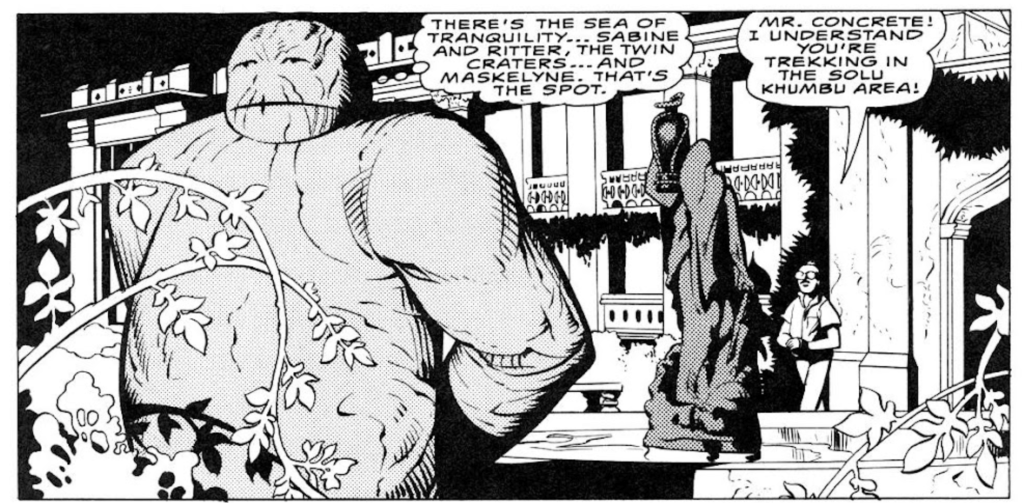
The original 10-issue Concrete series of the 1980s is only dated by its fashion and technology – the underlying stories, whether it’s Concrete’s daring exploration of Mount Everest or a Gothic-flavoured tale of love and pain on a small family farm – hold up beautifully. Chadwick has gotten more ambitious with time, tackling contentious topics like how far environmental activism can or should go and whether or not humanity should aggressively work to lower the world’s population. Yet even with the knottiest of subjects, his love for his characters shines through.
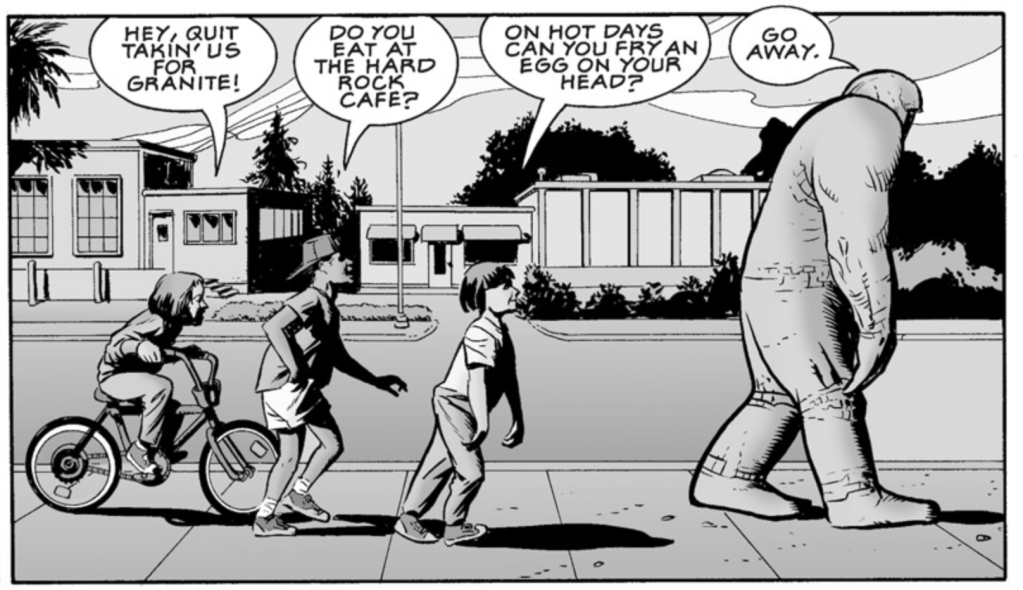
A series of miniseries and piles of wonderful short stories have tackled everything from suspenseful action movie to comic catastrophe to unlikely love story, but for those of us who love the rocky old dude, Concrete stories have been few and far between, and 2006’s The Human Dilemma was the last gasp for now – leaving us with a rather shocking cliffhanger change in status quo for the character I’ve been often thinking about ever since.
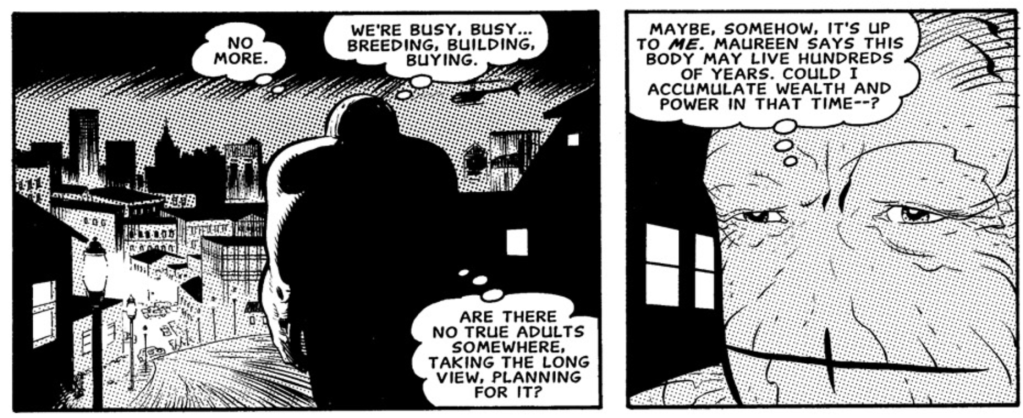
I’ve missed seeing new stories with Concrete, who feels like a fond friend after so many years. I imagine it’s been hard for Paul Chadwick to make a good living doing Concrete alone – he’s dabbled in film, other comics and more, but this is ultimately his magnum opus. In a perfect world we’d be up to like Concrete #300 by now, I guess, but the 40 or so comics and dozens of short stories are still a fine legacy to have.
Concrete has never quite broken through to the mass public – there’s been talk of movies (Chadwick turned his own movie experience working on the 1987 Masters of the Universe movie into the hilarious satire miniseries Concrete: Fragile Creature), but perhaps Concrete is a character who works best on the printed page. Chadwick has said he’ll turn to prose novels as a way of continuing Concrete stories, which isn’t quite the same, but I’d be keen to see how he makes that happen.
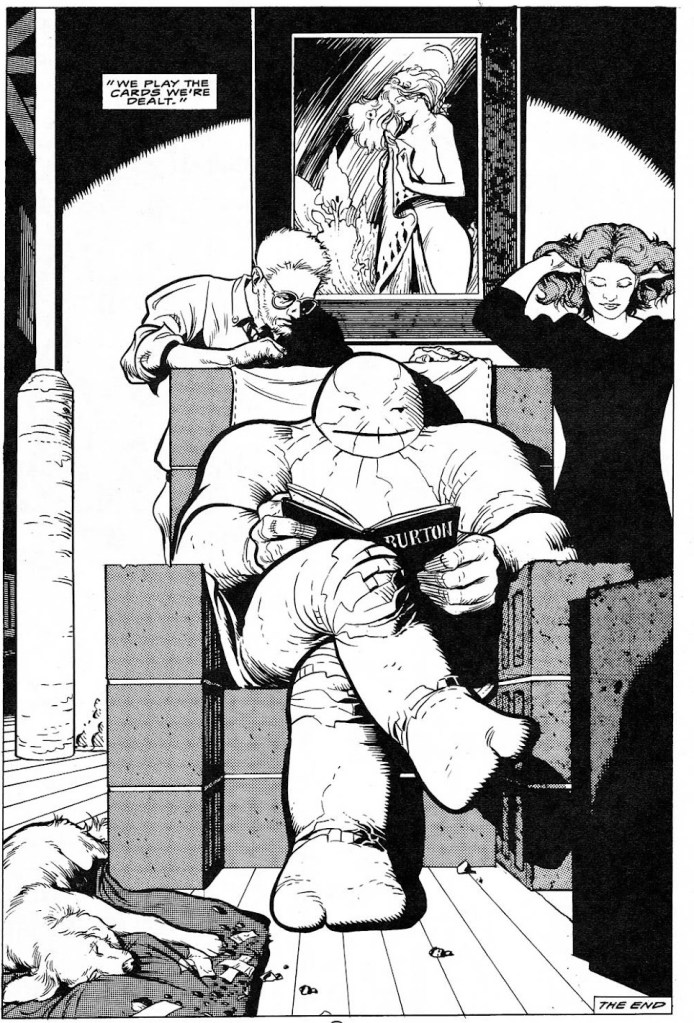
Whatever the future holds, Chadwick’s work on Concrete, forged these last four decades, is still some of the best comics I’ve ever read, and I can’t wait to see, finally, finally, where he’s taking his hero next, and hope there isn’t quite so long a wait until the next time.

 Nik Dirga
I read a few of the Concrete stories in the early 1990s, and I enjoyed them. Paul Chadwick is a very talented and underrated comic book creator.
LikeLike