Australia is far weirder, bigger and louder than compact little ol’ Aotearoa. I love the place, but it always seems like the swaggering older brother.
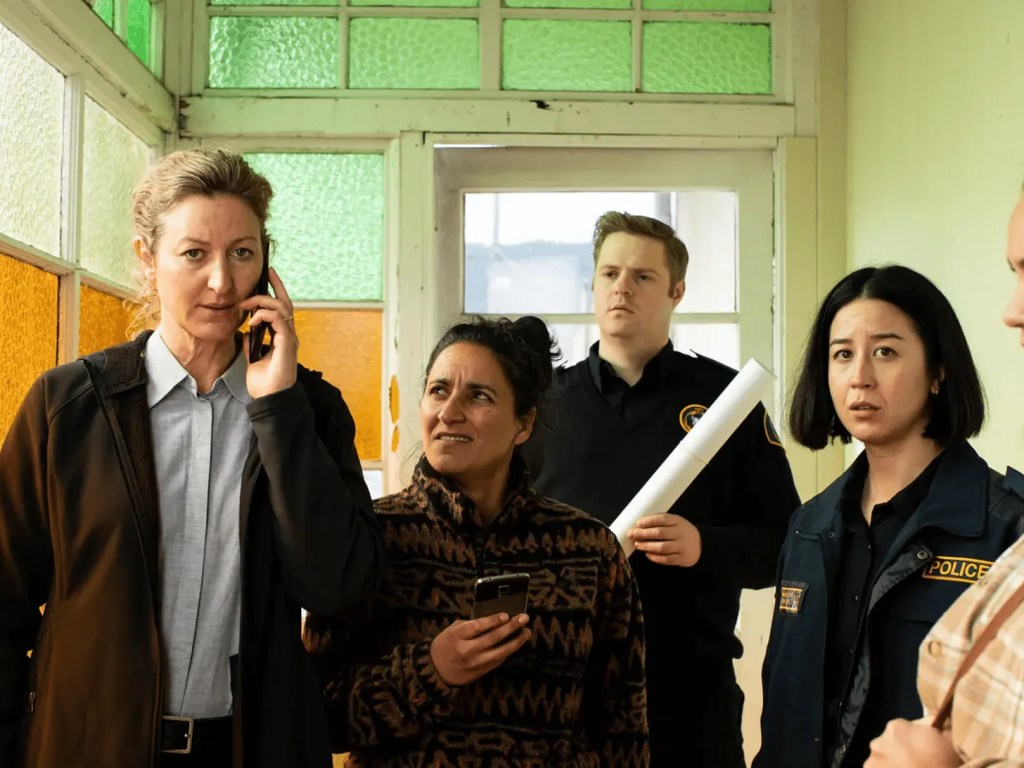
The gloriously profane and funny TV series Deadloch feels like the most Australian thing I’ve seen in ages (even though it actually co-stars a famous Kiwi comedian). It’s a foul-mouthed sendup of the broadest and silliest stereotypes about how we imagine Australia – but also an open-heartedly inclusive show.
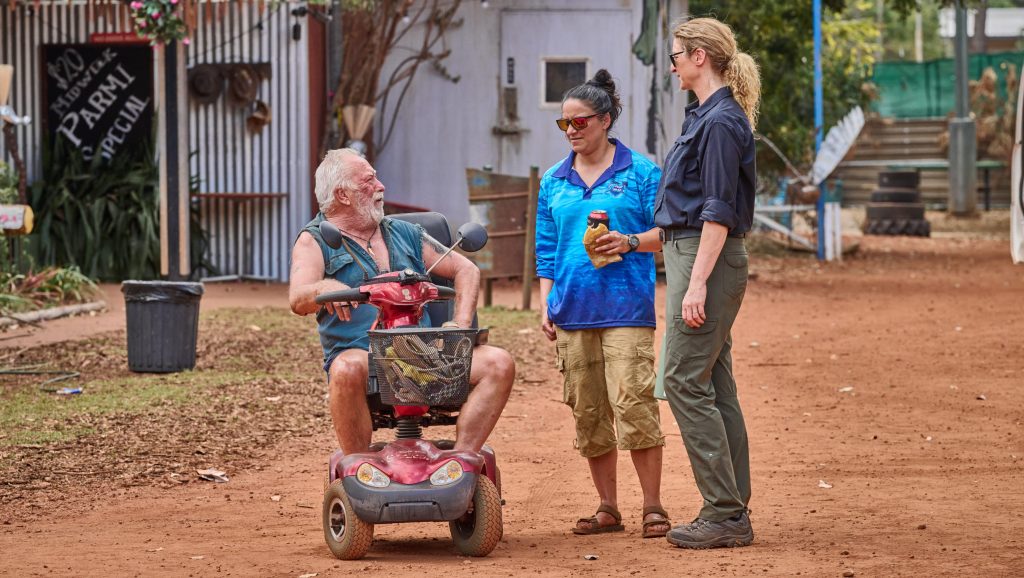
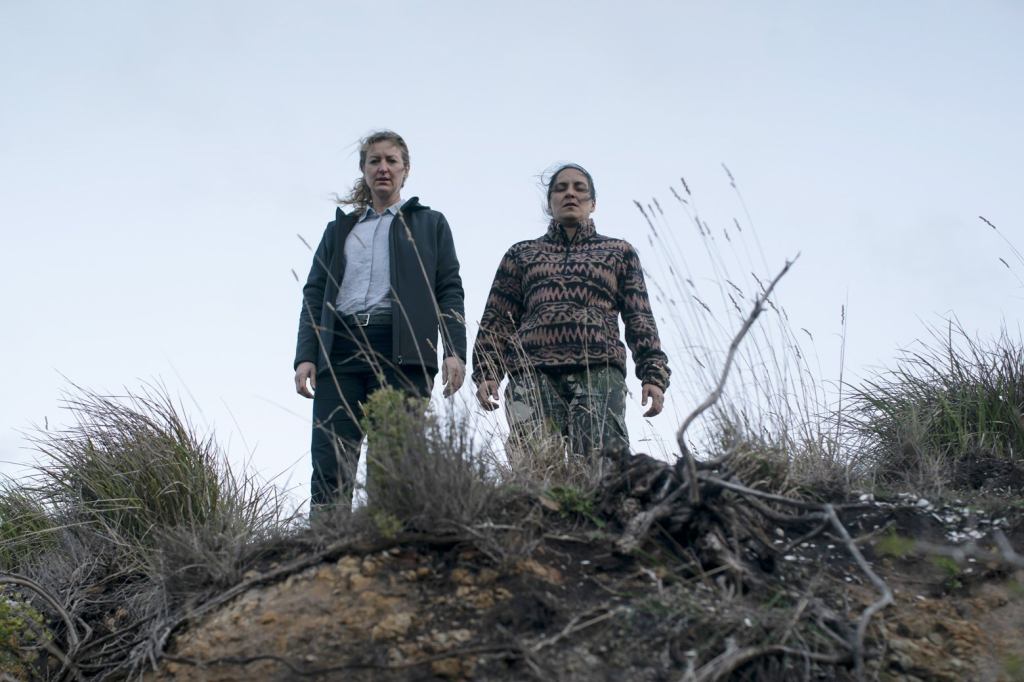
Deadloch, which just released its second series recently, is a spin on the well-worn buddy cop genre, with Kate Box as brainy, restrained gay detective Dulcie Collins and NZ’s Madeline Sami as Eddie Redcliffe, the most bogan, loud-mouthed sweary Aussie you can imagine, a thong-wearing mess from steamy Darwin who is sent to Tasmania to dig into a crime with Dulcie. Deadloch gradually reveals itself to be a confidently feminist take on all those hoary true-crime cliches.
The duo are a true Mutt-and-Jeff combination, with 6-foot Box towering over Sami. Sami’s Eddie is an incredibly over-the-top agent of chaos, whose energy is nicely balanced out by Box’s analytical Kate (and the inevitable loud clashes between the two of them give the show a lot of its zing). Sami is hilarious belting out a thousand variations on calling someone a c**t.
But it’s actually Box’s Dulcie who feels like the real star of Deadloch – she’s repressed and tense, and Box does a wonderful job showing her slowly open up to Eddie despite her initial revulsion. Deadloch in part is the story of Kate learning to be comfortable with herself.
There’s a million cop and mystery shows out there these days and I don’t have time for most of them (the very phrase “cozy crime” makes my teeth itch), but after visiting Tasmania recently, Deadloch grabbed me with its gorgeous scenery and clever look at what being an Australian really means these days.
Deadloch interrogates the ideas of Aussie bloke and sheila in clever ways – many of the characters besides Dulcie are also queer, and the series never gets more venomous than when it hones in on the corrupt, clueless old boys’ network of local police, who are shown to be toxic men that are impossible to take seriously. Meanwhile, Kate and Eddie just get shit done, although there’s plenty of comic stumbles along the way.
Antagonistic buddy cops have been done to death, but Kate and Eddie are both outsiders in the blokey system, despite their vast differences. It’s not a two-woman show – Deadloch excels in its cast of well-drawn bush eccentrics in both seasons, from Kate’s needy wife Kath and the comic cop sidekicks Abby and Sven, to the drunken sweaty misfits of the Top End or the pretentious old rich blood of Tasmania. It incorporates Australia’s complicated colonial history and historic racism in both subtle and broad ways.
In many ways the murders in Deadloch are less important than the vibe, whether it’s the end-of-the-world chill of Tasmania or the sweaty tension of the Northern Territory. (In the Darwin-set Season 2, everybody seems to be perpetually perspiring.) Australia itself is a third lead in Deadloch, whether it’s spooky rows of gum trees on the Tasmania coast or the primal rumbling of crocs in the waters near Darwin.
Of course it’s broad in its satire – not every person in Darwin is a sweaty mess and Tasmania isn’t all Gothic murdertown – but in embracing so many of the cliches about Australia and gently chucking so many of them under the chin, Deadloch also feels like a love song to these unmistakably, uniquely weird places tucked in at the bottom of the world. The real mystery, in the end, is Australia itself.
In their first New Zealand shows, the cult legends showed why they’re so often described as “your favourite band’s favourite band.” You can find their fingerprints in the sounds of everyone from Queen to Björk to the Pet Shop Boys.
They’re not British, although many people mistake them for that. They are actually brothers, raised in sunny southern California. And they get along, unlike the famously battling brothers of Oasis or the Kinks.
Brothers Ron and Russell Mael have been dishing up perfect pop songs since the early 1970s, but unlike a lot of other surviving bands of that era, they’ve also been constantly changing, growing and experimenting with their sound.
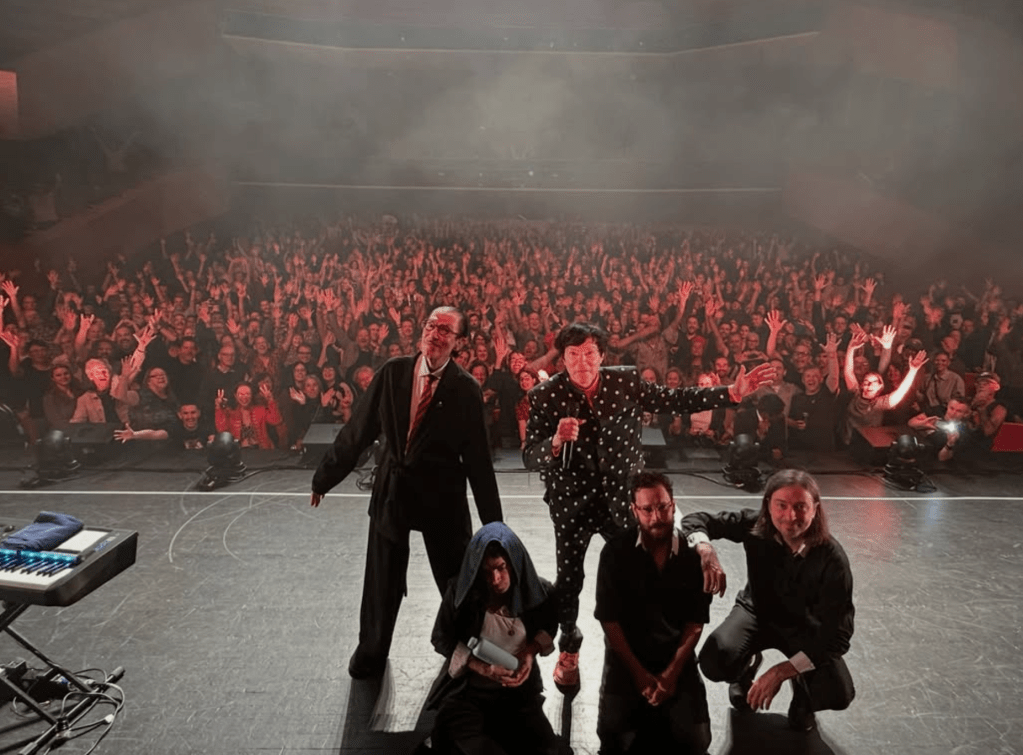
They hit Christchurch and Auckland with their top-notch band for shows this week that drew out their extremely dedicated fanbase.
“Better later than never,” Russell told the audience Saturday night.
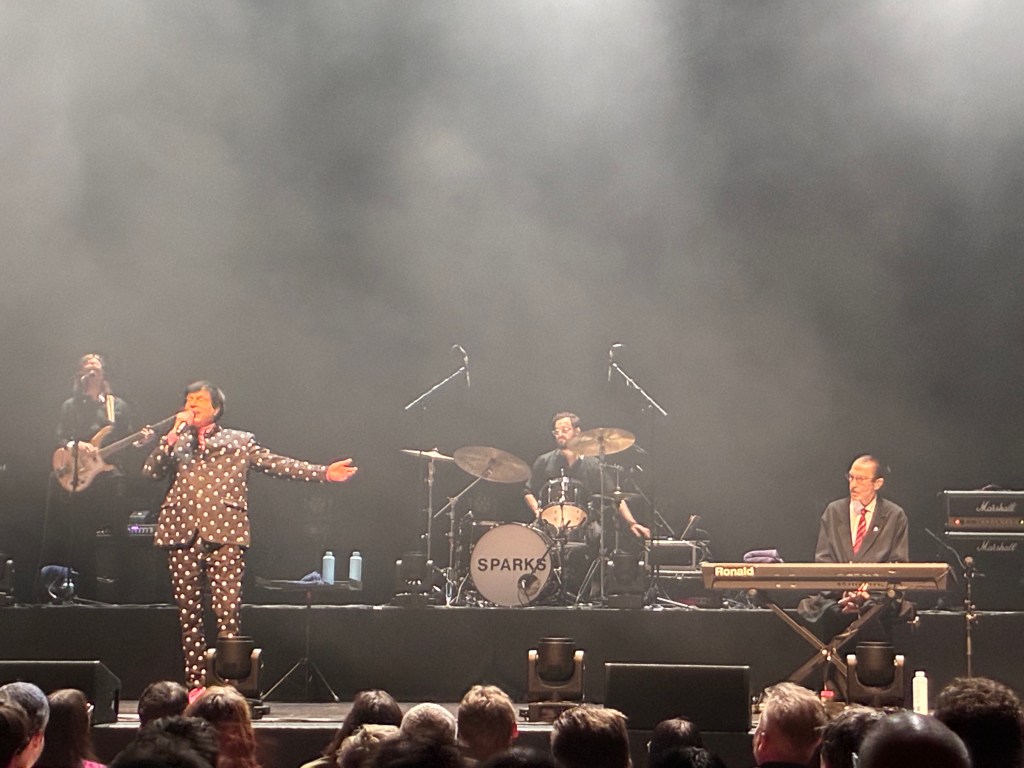
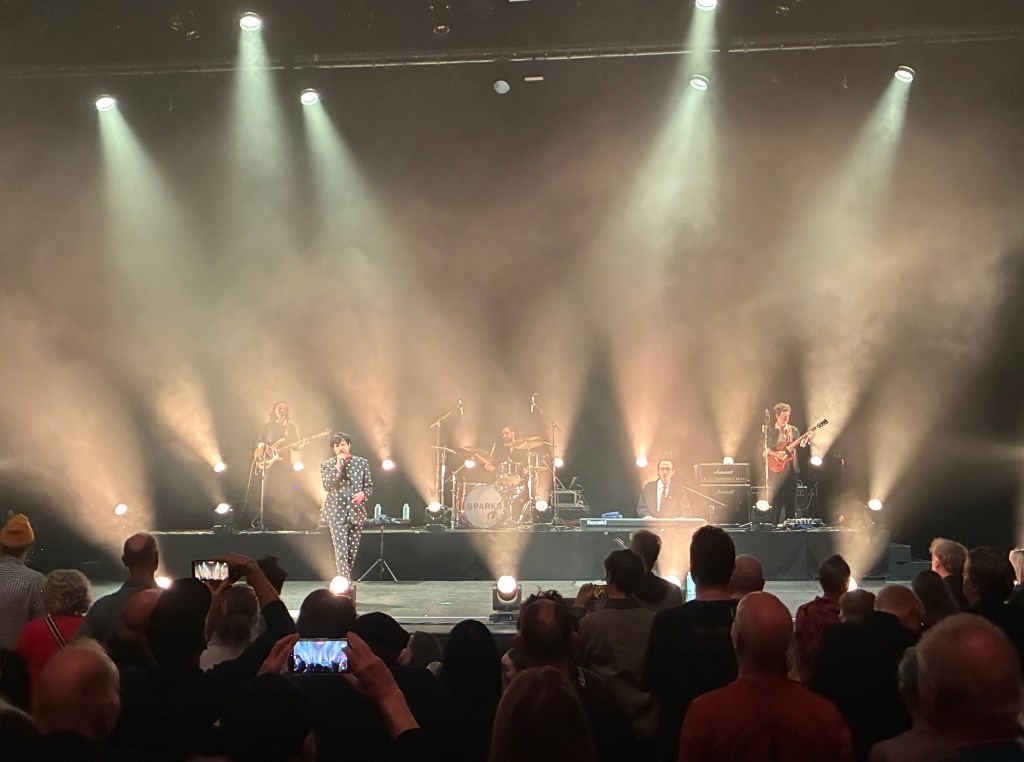
For their Auckland gig at Dame Kiri Te Kanawa Theatre, Sparks ripped through nearly two hours of classics and still vital new songs – and even though Russell is 77 and big brother Ron is now 80, they felt as energetic as ever. Their quirky stage presence has always been a big part of their charm – Russell’s bouncy good cheer and immense vocal range combined with Ron’s deadpan, ramrod-straight presence at the keyboards.
The very second song they played – the newer ‘Do Things My Own Way,’ anchored with a moodily insistent keyboard hook, feels like it sums up Sparks’ whole aesthetic. “Not a phase / All my days / Gonna do things my own way,” Russell chanted over a driving beat. While they’ve got an accessible sound, Sparks’ musical invention and deconstruction of stale songwriting cliches is as punk rock as it gets.
Their vast catalog of nearly 30 albums span from their 1974 proto-punk breakthrough Kimono My House to 2025’s vibrant Mad! Even now, the eruptive chaos of their first hit ‘This Town Ain’t Big Enough For The Both Of Us’ doesn’t quite sound like anything else.
Director Edgar Wright’s terrific must-see 2021 documentary The Sparks Brothersserved to introduce them to a whole new audience, as did Cate Blanchett’s silly-slash-sexy dance routine in the video for 2023’s earworm ‘The Girl Is Crying In Her Latte.’
Russell’s soaring falsetto and Ron’s swooping keyboards add up to a legacy that still feels utterly unique in the rock world. Sparks have dabbled in guitar rock, disco, electronica, operatic excess, pure pop and baroque concept albums, always with a dash of wry observational humour and a heaping helping of killer riffs.
The very first song I ever heard by Sparks, long ago on a mix tape a friend gave me (remember those?), is called ‘Eaten By The Monster of Love.’ It’s a title only Sparks would use. Their songs are frequently hilarious – they can take in everything from the pleasure of using your lawnmower to the benefits of eating pineapple – but they’re not a comedy act. Instead, they’re kind of joyful observers of this weird old world.
When 1982’s swoony love song ‘Sherlock Holmes’ started up, a woman in front of me let out a loud yelp of sheer glee. “They’re playing my favourite song,” she yelled. Sparks tend to get that reaction. The night included their best-known hits and relative obscurities like ‘Let’s Get Funky,’ spoke-sung in a hilarious duet by the brothers as they swayed across the stage. The proto-techno 1980 tune ‘Beat The Clock’ sat comfortably next to the pummeling thump of 2025’s ‘Running Up A Tab At The Hotel For The Fab.’ I bet each of them was someone’s favourite song.
Sparks worked hard to overcome the somewhat stiff initial vibe of the cavernous Aotea Centre theatre, but it wasn’t until the insanely catchy bop of ‘Music That You Can Dance To’ that the seated crowd took entirely to their feet and the energy in the room felt fully equal to the music.
It kicked off a banger four-song run of some their absolute best songs – the yearning, gorgeous ‘When Do I Get To Sing ‘My Way,’’ the utopian disco bliss of ‘The Number One Song In Heaven’ and of course, the still-startling whip crack of ‘This Town Ain’t Big Enough For The Both Of Us.’ By the time an expressionless Ron shuffled to centre stage and broke out in a big grin and a few quick dance moves, the crowd was won over for good.
Ron’s keyboard work – played with his trademark staring-straight ahead intensity – anchors Sparks songs, while Russell – who was, amazingly, still able to hit an awful lot of those high falsetto notes of their classic era – acted the antic cheerleader, clad in a dot-filled suit and repeatedly urging the crowd to clap their hands and get to their feet.
At the end, before a rousing singalong of their anthem ‘All That,’ Russell promised repeatedly that Sparks would try to come back to New Zealand again sometime. It was a little disappointing to see the Dame Kiri Te Kanawa Theatre wasn’t filled to the brim for this still essential band’s first time in Auckland – the upper levels were mostly empty (blame the footy final, perhaps?).
But if they do make it here again, Sparks are a must-see. They may still not quite be the household name that they deserve to be, but you know, I hear they’re your favourite band’s favourite band.
May is New Zealand Music Month, and as always, I’m all for celebrating the towering cultural footprint little ol’ Aotearoa has made in the music scene with everything from Flying Nun Records to Lorde to Marlon Williams.
Something I love about New Zealand music is how much of it is, still, well, new to me, nearly 20 years after moving to this part of the world.
The music you listen to between the ages of roughly 12 and 20 sinks into your brain like quick-set concrete and hardens your musical tastes for life, whether you like it or not. I can’t hear the eerie beats that open “When The Doves Cry” or Madonna’s boppy “Lucky Star” without being a 12-year-old California kid again. Even the songs I don’t like take me back in time and strike a chord now that I’ve hit middle age.
Because I didn’t grow up with all those catchy, kitschy ‘70s and ‘80s New Zealand-forged pop songs sputtering out of the radio, I still frequently stumble on ones that are new to me, like little glittering bits of buried treasure.
They’re coated in the sounds of their era, but because I didn’t have them filling up my head as a sponge-like teenager and come to them as an adult, they often sound like messages from an alternate universe where they might sit comfortably on Sacramento, California’s FM 102 right next to Hall and Oates and Rick Springfield.
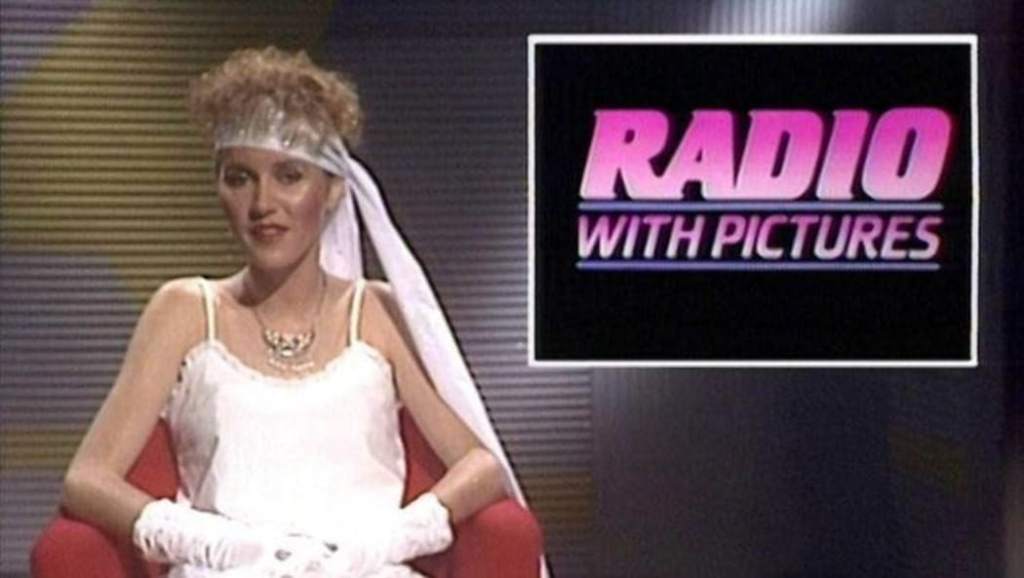
The Kiwi bands that have made it big worldwide like Split Enz and Lorde are on one level, while the hits of The Dance Exponents, Dragon, Th’ Dudes and so many others are more bound to this part of the world. Sometimes I like to imagine what it would’ve been like to grow up in this strangely isolated island nation back when, as my wife often reminds me, there were only two television channels and instead of MTV, you had “Radio With Pictures” blasting out the latest videos.
There are hit songs like the 1983 Pātea Māori Club’s thumping “Poi E,” a one-hit wonder that was performed entirely in Māori and has the carefree swagger of The Sugarhill Gang’s “Rapper’s Delight,” with an entirely Pacific spin. I know some people who hate this song because it was inescapable for a while here, and yet I listen to it with the novelty of discovery every time – a joyful indigenous song in a language I didn’t even know existed when I was 12 years old, but a huge hit on the other side of the globe.
…Or Hello Sailor’s smooth and sexy “Blue Lady,” which sounds a little like the greatest Steely Dan song I never heard, a gem that reeks of secondhand smoke and stale VB beers.
As a big fan of nerdy synth-pop of the age like Soft Cell and the Human League, I was delighted to stumble on Mi-Sex’s catchy stuttering 1979 single “Computer Games.” It felt like stumbling on an old Commodore 64 game setup in a closet I’d forgotten I owned.
Twenty years into my life here, I still find new novelties – recently the ‘80s NZ band The Crocodiles re-released their discography down here and I rather loved their new-to-me sappy ballad “Tears,” (Crocodile Tears, get it?) which could sit comfortably with Air Supply’s “All Out Of Love” and Phil Collins’ “Against All Odds” as anguished lovelorn transmissions from 1983 or so.
I wouldn’t argue that all the new-to-me Kiwi tunes of yesterday I stumble across are necessarily better than the Cyndi Lauper and Prince and Huey Lewis I grew up with. Some of it’s sappy and some of it’s daft and some of it’s lame … and some of it is great.
But they are all distinctly Aotearoa sounds, birthed and sung here at the far end of the world. New Zealand Music Month is as good a time as any to crank up the wireless and enjoy it all, eh mate?
When I was an ’80s kid, I guzzled down all the sci-fi that was coming our way. Star Wars was king, of course, but I was also all about Flash Gordon, Battlestar Galactica, V, that scary adult Terminator and hell, even Manimal.
And then there was Star Trek – the original series reruns I saw struck my oh-so-worldly pre-teen self as a bit hokey and dated, so I didn’t really grow to appreciate them for years, but the Star Trek movies coming out were totally my bag. That golden run from 1982’s Star Trek II: Wrath of Khan to 1991’s Star Trek VI: The Undiscovered Country remains some of my favourite Trek as mass entertainment.
It did strike me at the time that these guys were, well, a little old. Ancient by the standards of a 12-year-old. It’s only now that I’m about the same age as Captain Kirk was through his years of box office stardom that I realise that well, that was kind of the point.
Viewed again in a recent marathon, I was struck by how well most of the ‘80s Trek movie run holds up – and the sudden resonance they have for all us aging fanboys. The movies have their ups and downs but are overall a remarkably consistent series, even with the much-maligned Star Trek V in the mix.
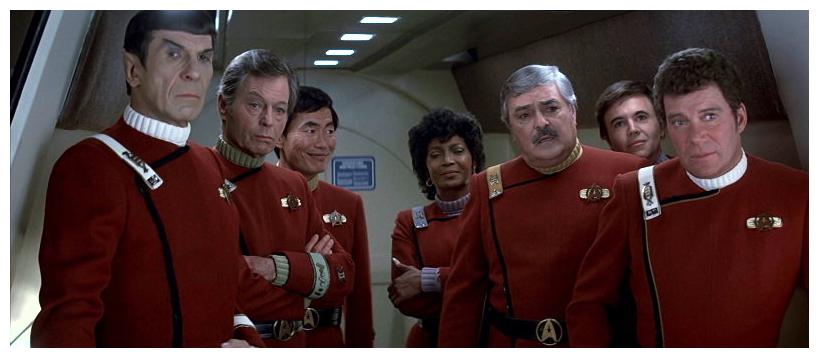
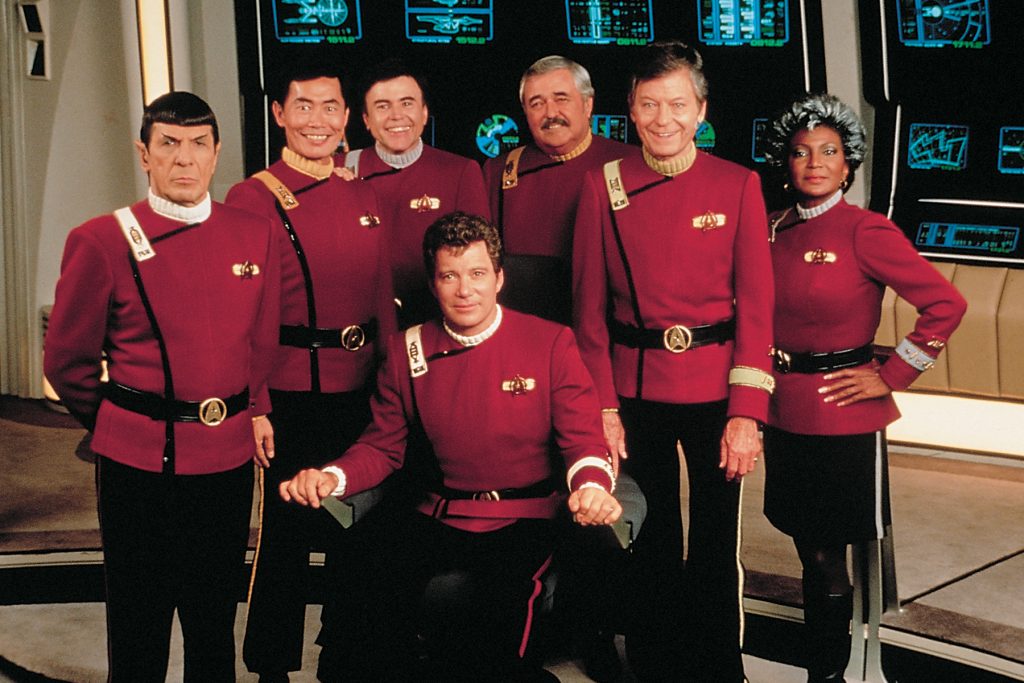
I see now how much Star Trek II through VI are a story of aging and coming to terms with your own mortality, which sets them quite apart from classic young hero’s journey tales like Star Wars, Back To The Future or The Last Starfighter. There are no plucky teenagers here. Kirk, Spock, Bones, Scotty, Chekhov, Sulu and Uhura brought a weight to the films, a sense of a long and shared universe, which was a bit of a novelty in a world without all the decades-on revivals and reboots we live in now.
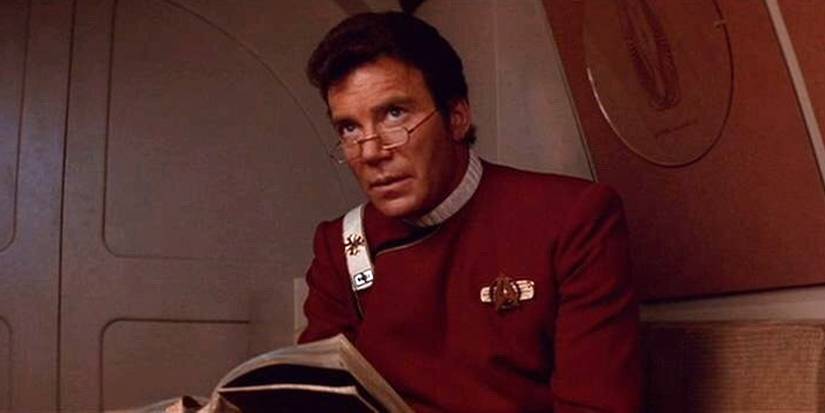
The original Trek cast were all at least in their 50s by then, and DeForest Kelley’s craggy face, Leonard Nimoy’s gravitas and even Jimmy Doohan’s Scotty with his greying, gradually rounding figure were all a counterpoint to the smoother visages of a Tom Cruise or Michael J. Fox. A minor plot thread throughout involves James Kirk needing glasses – not exactly Bill and Ted.
Leaving the odd and rather too reverential slog of 1979’s Star Trek: The Motion Picture behind, the Trek journey of the 1980s was all about the old Enterprise crew, who started sailing in the stars in 1966, gradually saying goodbye. Familiar icons kept being broken down – they killed Spock! (he got better) they blew up the Enterprise! (they built a few new ones), Klingons aren’t the bad guys! (more or less)
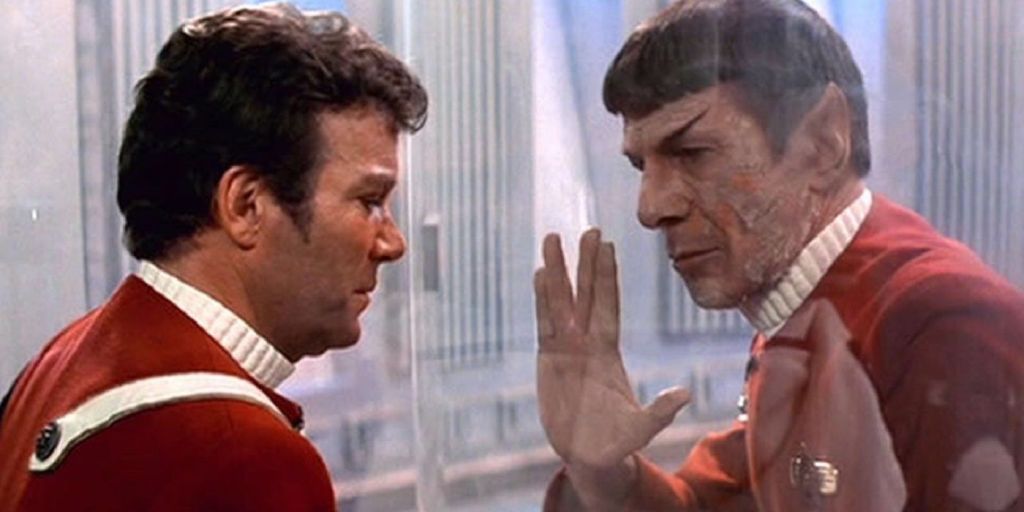
Star Trek II: The Wrath Of Khan is often held up as the peak of Trek movies, and it’s still a dynamic, tense ride, mainly because of all the rules it breaks. Having a movie feature as its villain a one-shot nemesis from almost 20 years earlier shouldn’t work. Having the two leads, Kirk and Khan, never actually meet in person, shouldn’t work. Yet it’s all surprisingly adult and the often-maligned William Shatner gives one of his best performances here. Killing Spock, even if the pre-internet fans of 1982 figured they’d probably find a way to reverse it, felt as hardcore as Luke and Vader’s brutal confrontation at the end of Empire Strikes Back. (You can tell how well-crafted Khan is in how JJ Abrams basically spent an entire movie directing a flaccid attempt to equal its dramatic heft in 2013’s Star Trek Into Darkness.)
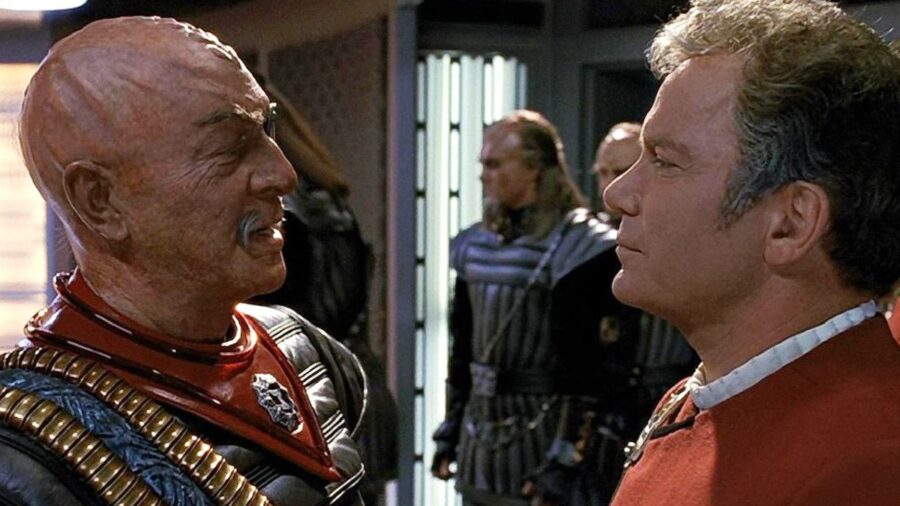
Star Trek III: The Search For Spock is seen as a comedown from Khan – what wouldn’t be? – but it’s still a personal favourite of mine. I vividly remember looking forward to this one in theatres after being hooked by Khan, and even picking up the nifty Burger King glasses (they all broke, very quickly). Search is a rockier ride as it has to get through a lot of plot mechanics, but any movie featuring Christopher Lloyd hamming it up as a Klingon, the startling destruction of the original Enterprise and the sudden blunt cruelty of the death of a son Kirk hardly knew makes up for a lot of the rather dippy Genesis stuff.
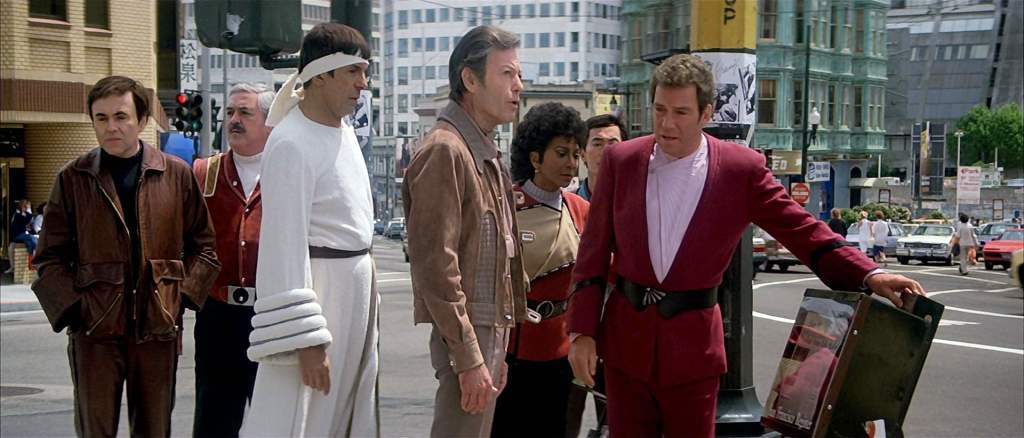
Star Trek IV: The Voyage Home is the breath of fresh air after all the grimdark of Khan and Search, and while it’s precision entertainment, on what probably was my 20th viewing the plot feels wobblier than ever (time travel is treated as casually as a ride to spacedock). Yet none of that matters when Kirk and crew start bopping around ‘80s San Francisco. While getting older is still a theme (it’s amusing how awkward and uncool they all seem in ‘modern’ SF) the bonds of long-lasting friendship also play a bit part in how amiable the movie is. If this were Star Trek I, it wouldn’t have the easy confidence it does, but we know these guys by now, and they’re a fun hang.
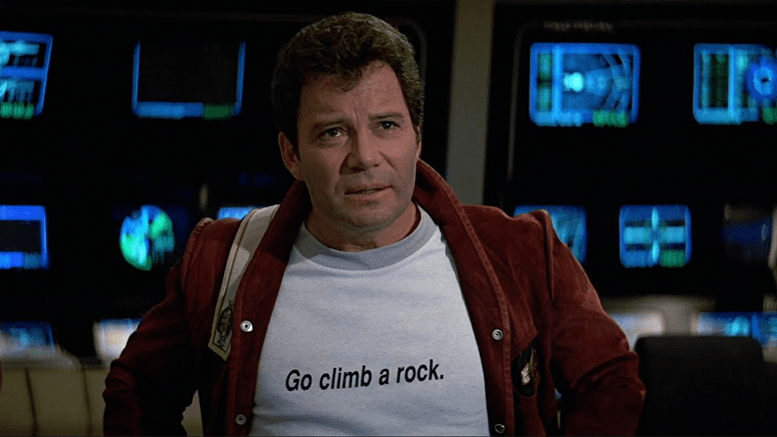
Star Trek V: The Final Frontier, unfortunately, fails to really get past impulse speed. It was a William Shatner vanity project – Shatner wanted to direct, after Nimoy directed the previous two big hits, but the movie feels like a cobbled together original series episode, and not one of the good ones. It’s not without merit – the easy camaraderie of the crew sings and the opening Yosemite shore leave sequence is delightful, even if being asked to believe 50-something Kirk could REALLY scale El Capitan pushes all belief. The story is yet another “what if we met God?” ham-handed religious allegory, and while it has potential, massive budget cuts derailed any chance for spectacle. You can feel the energy draining out of the movie as it goes. Trek movies would be worse – as mentioned, the cold calculating manipulativeness of Into Darkness offends me deeply – but this is still a big stumble.
While I love Khan, Voyage and my underrated Search, these days I feel like Star Trek VI: The Undiscovered Country might actually be the gem of the whole lot. I love the Cold War paranoia of it all, the cosmic politics and the way Kirk’s simmering resentment towards the Klingons isn’t sugar-coated. It’s a romping ride that opens up the story to a wider universe than the rather closed-off feeling of the other movies, where Starfleet is rarely central to Kirk’s own dramas. There’s so many little joys in this one – Christopher Plummer’s hammy Shakespeare-quoting Klingon, Spock turning starship detective, Kirk looking all of his 60 years pushing through the pain of exile on a frozen prison planet and in the end, a charming farewell to this crew as the Enterprise crew finally steps aside for other bold voyagers.
Watching the films all again from an age closer to where the Trek crew was then, that theme of time, regret and acceptance hits a lot harder than any laser beam, really. When even a James T. Kirk, who’s seen and done it all, has regrets and missed hopes about how it’s all turned out, who needs his glasses and misses his kid, it makes him realer to me, a more authentic kind of hero than the operatic scope of something like Anakin Skywalker’s overwrought rise and fall.
Sure, we got glimpses of the original crew after these movies – Nimoy’s powerful return as Spock a few times, Jimmy Doohan getting a terrific episode of Next Generation to send off Scotty, and Kirk hamming his way into a mixed farewell in the cluttered Star Trek: Generations. There’s only three of the original crew left now, Shatner, Koening as Chekhov and Takei as Sulu, and while 95-year-old Shatner probably would be happy to take the captain’s chair one last time, their era is truly over now.
Star Trek belonged on the big screen in the 1980s, really. Star Trek: The Next Generation did kick off in 1987, and while it took a little while for that show to find its way, by the third season in late 1989, it started becoming ultimately the best of the Star Trek TV series, although their movies never quite lived up to that standard. None of that would’ve happened without the veteran middle-aged heroes of Kirk and crew paving the way for Star Trek’s real-life Genesis rebirth moment. Not bad for a bunch of old guys.
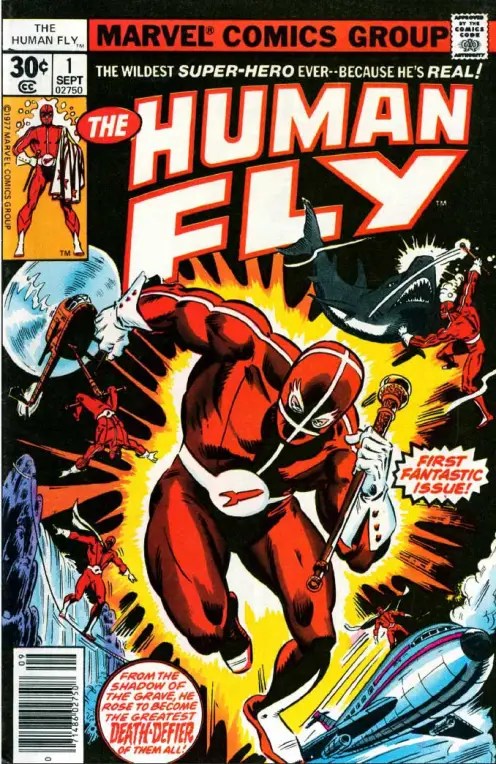
The Human Fly’s brief run in Marvel Comics never really got a lot of buzz back in the 1970s, but I still have a soft spot for this oddball stuntman-turned-comics hero.
The first issue – released 49 years ago now – blared on its cover, “The wildest super-hero ever – because he’s REAL!”
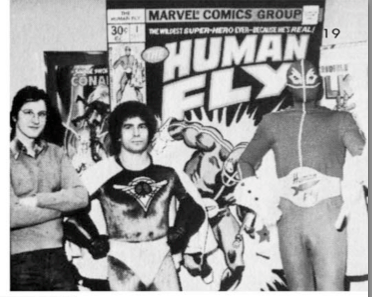
Well, kind of. The comic was loosely based on the real-life Canadian stuntman of the same name, who wore a mask and did daredevil attempts like strapping himself on top of a jet plane and jumping a motorcycle over 27 parked buses. (Unfortunately, both attempts ended up with him suffering pretty major injuries.) The Fly was apparently the brainchild of two Canadian brothers hoping to make it big who formed a company called Human Fly Spectaculars Ltd and hired a guy named Rick Rojatt who claimed to be a former Hollywood stuntman.
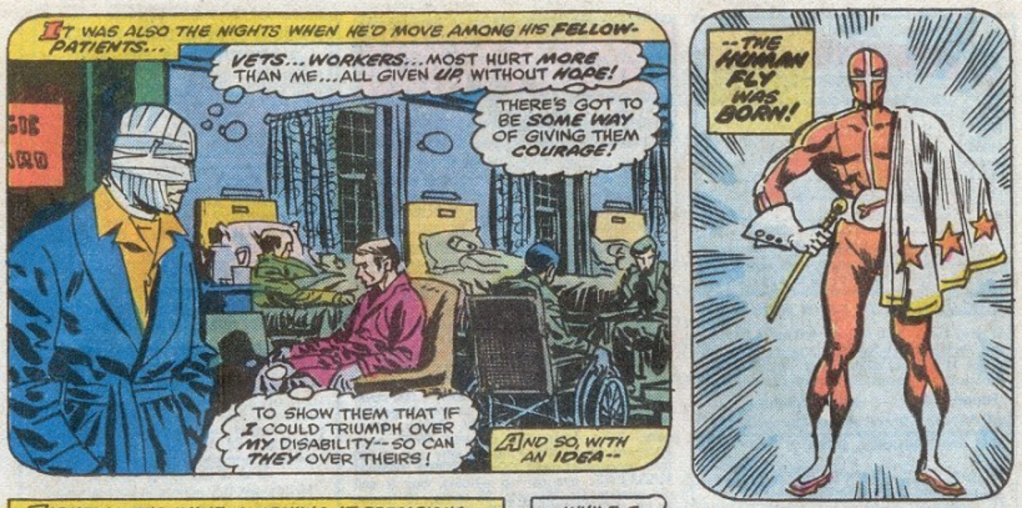
Marvel Comics was looped into the brothers’ publicity machine, and before you know it, a comic book version of the Fly was in the works – with a dramatic backstory of how the Fly lost his wife and daughter in a car crash that left the Fly with steel replacing most of his skeleton, and a mission to be a “philanthropic daredevil” inspiring millions and helping handicapped or ill children all across America. The Fly came during Marvel’s flood of licensed comics in the late ‘70s, which brought us everything from Star Wars to, um, Alice Cooper. Why not a “real” stuntman superhero?
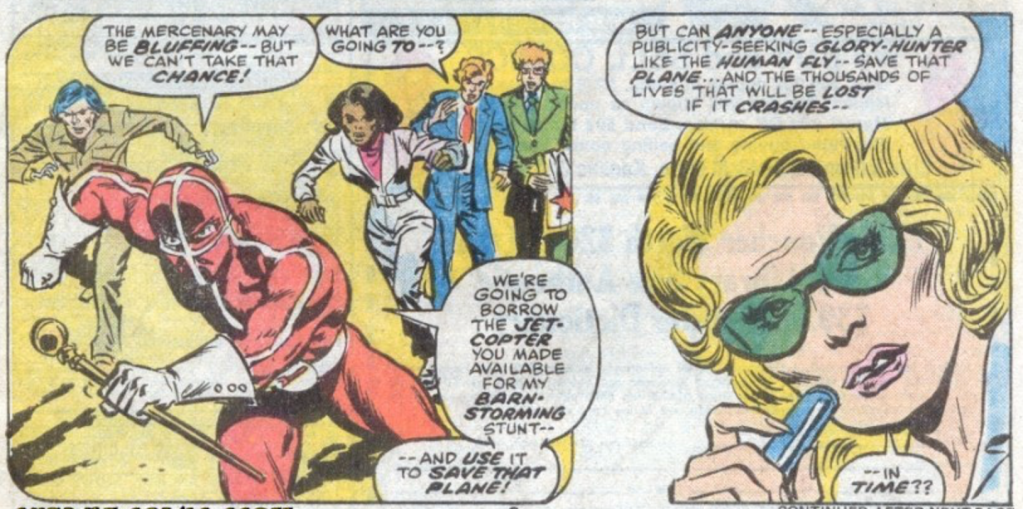
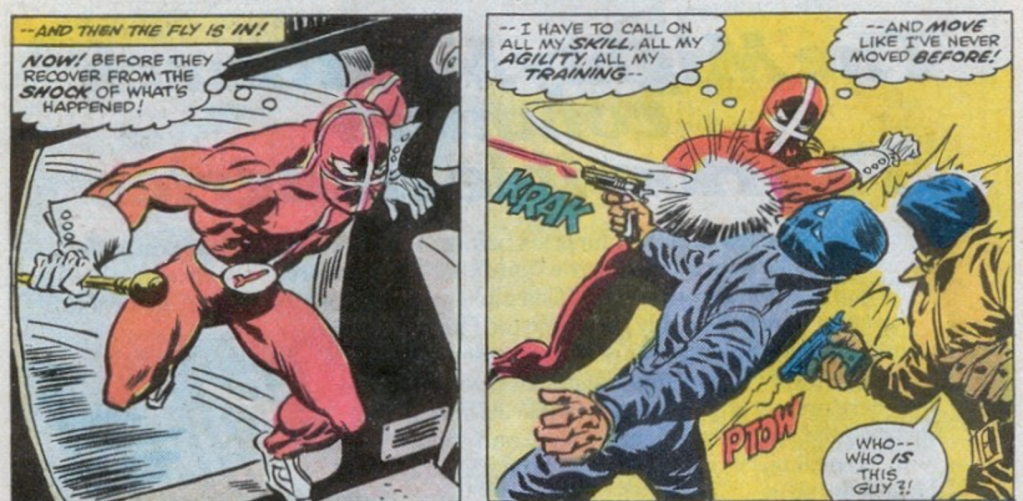
Stunt action was everywhere at the time – remember Evel Knievel, or the stunt-inspired (and far more successful comics hero) Ghost Rider? But an action packed real-life stunt doesn’t really translate well to comic books, where Superman is off juggling planets in every issue and a chained-up guy diving into a shark tank is just pretty pictures. The main problem The Human Fly faced is that it didn’t make for a very good comic book.
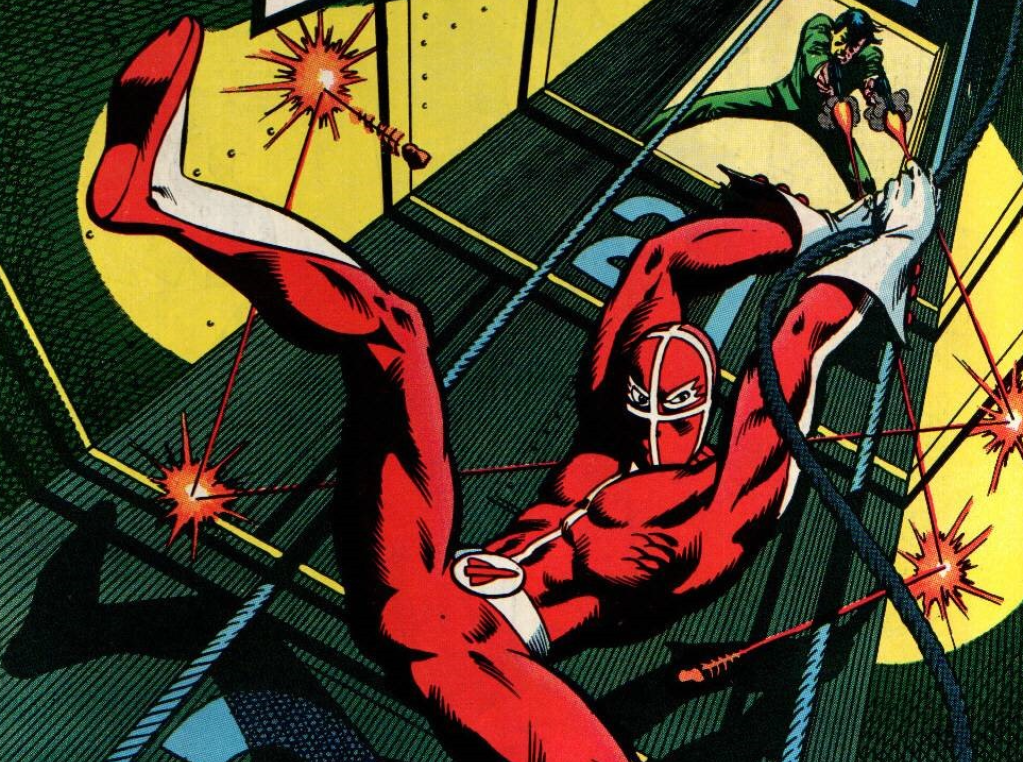
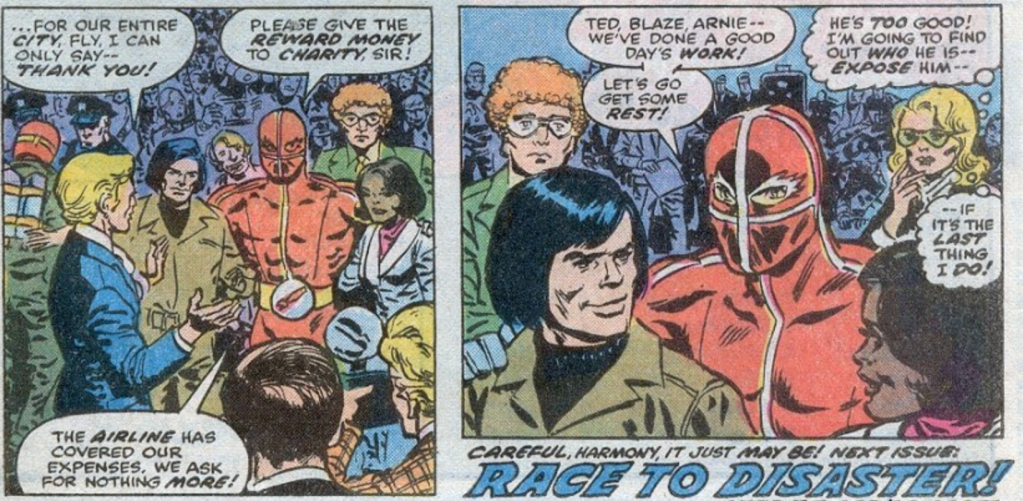
Despite decent art and that cool costume design, not a lot really happens to the Fly – most issues are devoted to stunts that go wrong for some reason (dastardly criminals, greedy interfering journalist, meddling kids, et cetera) and the Fly repeatedly insisting he’s “not a crimefighter” despite often, well, fighting criminals because that’s what comic books do. At the end, everyone smiles and the orphans got much-needed funds.
The stories quickly become repetitive (an awful lot of time is given to a tabloid journalist out to “expose” the Fly who then becomes convinced of his essential greatness), and the Fly himself really has no character arc – he’s just saintly and self-sacrificing. There’s a brief attempt to make a mystery of why he’s never seen without his mask but it doesn’t go anywhere. It all just sort of ambles on until cancellation.
Trying to figure out who the real Fly was in 2026 is quite a rabbit hole to go down. Rojatt was or is real, and made the rounds in Canadian media, but nobody is really entirely sure what happened to him after his brief bout of fame. A documentary about the Human Fly has been in the works for ages but I’m not sure if it was ever actually finished. Was Rojatt’s back story, adapted to the comics, of a horrible car accident and his family’s deaths true?
His surreal appearance on Canadian television back in 1976 is proof of life, but also leaves you with more questions than answers:
The Human Fly’s 19-issue run was written by steady journeyman Bill Mantlo, who was the patron saint of Marvel licensed properties back in the day – ROM, Micronauts, Man From Atlantis, Shogun Warriors, etc etc. Mantlo, who tragically suffered a traumatic brain injury back in 1992 and has been in full-time care ever since, was a reliably fun hand at entertaining, fast moving comics – his long run on ROM is a particular highlight – but even Mantlo couldn’t quite give the Human Fly the juice it needed.
I still carry a little bit of a torch for the Fly’s brief flight, though – maybe it’s that cool costume design, or just his relative obscurity – I’ve always had a thing for Marvel’s goofy short-run ‘70s superheroes like Omega The Unknown, The Man-Wolf and Black Goliath, after all.
In a bombastic over-the-top editorial in the first issue, Mantlo proclaimed that “The Human Fly is me. He’s also you and millions of other people.” The Fly was “the living bionic man, compared to Captain America or Spider-Man in media presentations throughout the world.” “I’ve got 50,000,000 kids out there depending on me,” the Fly is quoted as saying.
The Human Fly comic never quite escaped the taint of self-promotion and having no real reason to exist. Spider-Man, Ghost Rider and Daredevil were dragged out for brief cameos. The Human Fly apparently was going to put out a record album (!) so there was a plug for that in one story. In one issue we get a special “bonus feature” of the Human Fly visiting the Marvel bullpen festooned with awful-quality grainy, barely legible photos of the Fly with Stan Lee, and appearances by his “new sidekick Mercury”, a very short, vaguely annoyed-looking fellow in a spandex costume who never was mentioned again in the comics.
All the self-promotion in the world couldn’t keep the Human Fly from vanishing. There’s been talks of revivals and such over the years but honestly, he feels like a creature of his time, nearly 50 years ago now.
And yet – there’s a core of essential decency to the Fly in his short comics run, a guy who’s all about helping others and eschewing any reward. Was he “real”? Was there much in common between the saintly comics hero and the mysterious real-life battered stuntman? We may never really know.
Given that if someone like the Fly emerged in 2026 he’d probably be some streaming influencer and part-time grifter, what Mantlo calls the Fly’s “glorious altruism” isn’t the worst possible thing to look up to, I guess.
 Nik Dirga