Aging like fine Romulan ale: How Star Trek survived the ’80s

When I was an ’80s kid, I guzzled down all the sci-fi that was coming our way. Star Wars was king, of course, but I was also all about Flash Gordon, Battlestar Galactica, V, that scary adult Terminator and hell, even Manimal

And then there was Star Trek – the original series reruns I saw struck my oh-so-worldly pre-teen self as a bit hokey and dated, so I didn’t really grow to appreciate them for years, but the Star Trek movies coming out were totally my bag. That golden run from 1982’s Star Trek II: Wrath of Khan to 1991’s Star Trek VI: The Undiscovered Country remains some of my favourite Trek as mass entertainment. 

It did strike me at the time that these guys were, well, a little old. Ancient by the standards of a 12-year-old. It’s only now that I’m about the same age as Captain Kirk was through his years of box office stardom that I realise that well, that was kind of the point.

Viewed again in a recent marathon, I was struck by how well most of the ‘80s Trek movie run holds up – and the sudden resonance they have for all us aging fanboys. The movies have their ups and downs but are overall a remarkably consistent series, even with the much-maligned Star Trek V in the mix. 
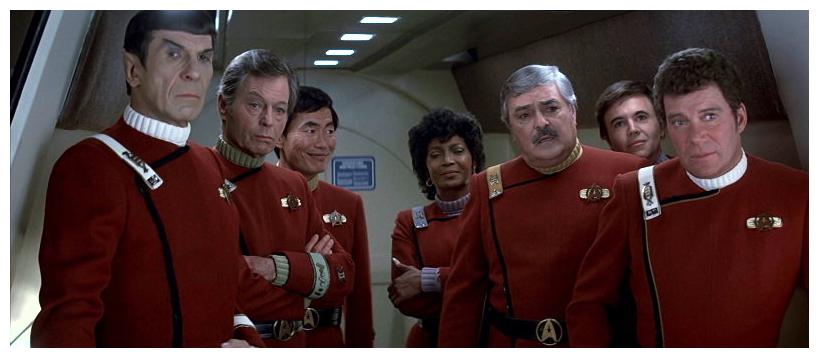
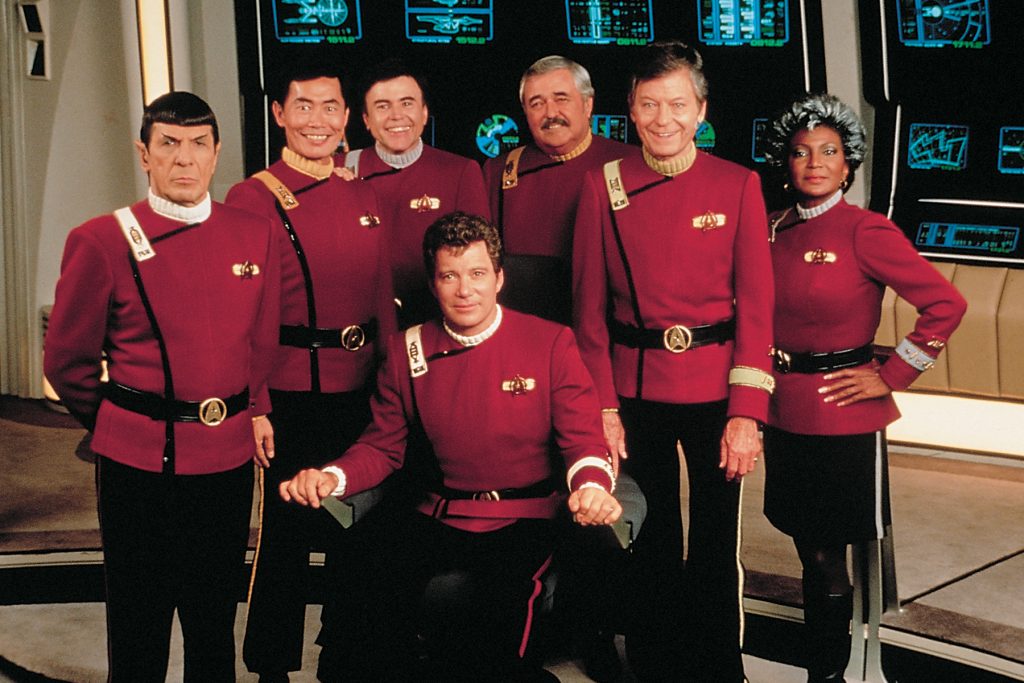
I see now how much Star Trek II through VI are a story of aging and coming to terms with your own mortality, which sets them quite apart from classic young hero’s journey tales like Star Wars, Back To The Future or The Last Starfighter. There are no plucky teenagers here. Kirk, Spock, Bones, Scotty, Chekhov, Sulu and Uhura brought a weight to the films, a sense of a long and shared universe, which was a bit of a novelty in a world without all the decades-on revivals and reboots we live in now. 

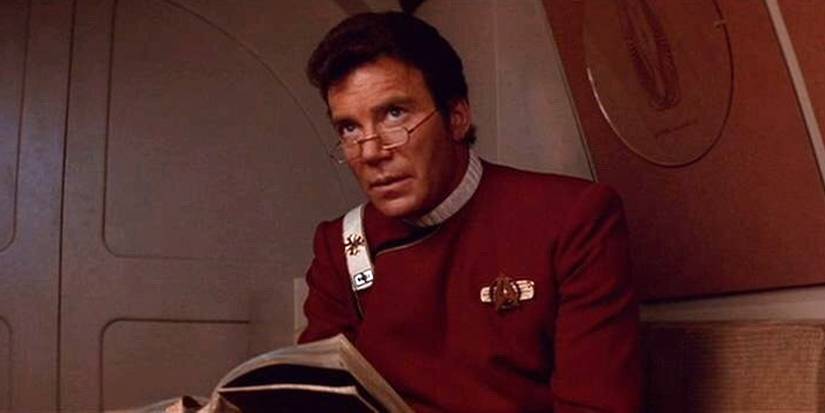
The original Trek cast were all at least in their 50s by then, and DeForest Kelley’s craggy face, Leonard Nimoy’s gravitas and even Jimmy Doohan’s Scotty with his greying, gradually rounding figure were all a counterpoint to the smoother visages of a Tom Cruise or Michael J. Fox. A minor plot thread throughout involves James Kirk needing glasses – not exactly Bill and Ted. 

Leaving the odd and rather too reverential slog of 1979’s Star Trek: The Motion Picture behind, the Trek journey of the 1980s was all about the old Enterprise crew, who started sailing in the stars in 1966, gradually saying goodbye. Familiar icons kept being broken down – they killed Spock! (he got better) they blew up the Enterprise! (they built a few new ones), Klingons aren’t the bad guys! (more or less) 
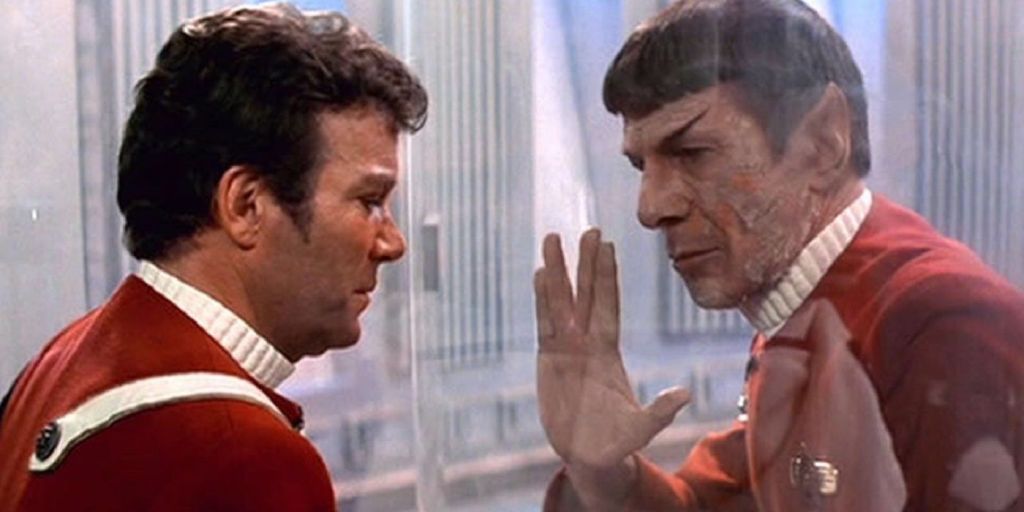
Star Trek II: The Wrath Of Khan is often held up as the peak of Trek movies, and it’s still a dynamic, tense ride, mainly because of all the rules it breaks. Having a movie feature as its villain a one-shot nemesis from almost 20 years earlier shouldn’t work. Having the two leads, Kirk and Khan, never actually meet in person, shouldn’t work. Yet it’s all surprisingly adult and the often-maligned William Shatner gives one of his best performances here. Killing Spock, even if the pre-internet fans of 1982 figured they’d probably find a way to reverse it, felt as hardcore as Luke and Vader’s brutal confrontation at the end of Empire Strikes Back. (You can tell how well-crafted Khan is in how JJ Abrams basically spent an entire movie directing a flaccid attempt to equal its dramatic heft in 2013’s Star Trek Into Darkness.)

Star Trek III: The Search For Spock is seen as a comedown from Khan – what wouldn’t be? – but it’s still a personal favourite of mine. I vividly remember looking forward to this one in theatres after being hooked by Khan, and even picking up the nifty Burger King glasses (they all broke, very quickly). Search is a rockier ride as it has to get through a lot of plot mechanics, but any movie featuring Christopher Lloyd hamming it up as a Klingon, the startling destruction of the original Enterprise and the sudden blunt cruelty of the death of a son Kirk hardly knew makes up for a lot of the rather dippy Genesis stuff. 
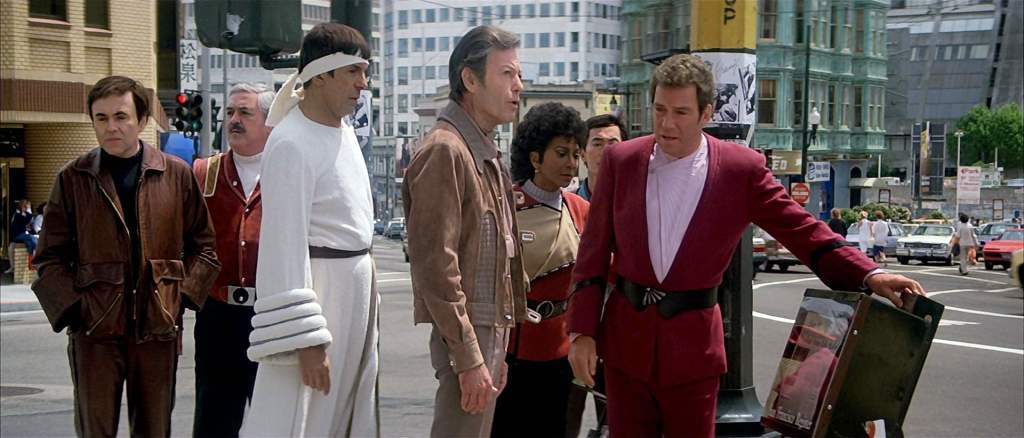
Star Trek IV: The Voyage Home is the breath of fresh air after all the grimdark of Khan and Search, and while it’s precision entertainment, on what probably was my 20th viewing the plot feels wobblier than ever (time travel is treated as casually as a ride to spacedock). Yet none of that matters when Kirk and crew start bopping around ‘80s San Francisco. While getting older is still a theme (it’s amusing how awkward and uncool they all seem in ‘modern’ SF) the bonds of long-lasting friendship also play a bit part in how amiable the movie is. If this were Star Trek I, it wouldn’t have the easy confidence it does, but we know these guys by now, and they’re a fun hang. 

Star Trek V: The Final Frontier, unfortunately, fails to really get past impulse speed. It was a William Shatner vanity project – Shatner wanted to direct, after Nimoy directed the previous two big hits, but the movie feels like a cobbled together original series episode, and not one of the good ones. It’s not without merit – the easy camaraderie of the crew sings and the opening Yosemite shore leave sequence is delightful, even if being asked to believe 50-something Kirk could REALLY scale El Capitan pushes all belief. The story is yet another “what if we met God?” ham-handed religious allegory, and while it has potential, massive budget cuts derailed any chance for spectacle. You can feel the energy draining out of the movie as it goes. Trek movies would be worse – as mentioned, the cold calculating manipulativeness of Into Darkness offends me deeply – but this is still a big stumble. 
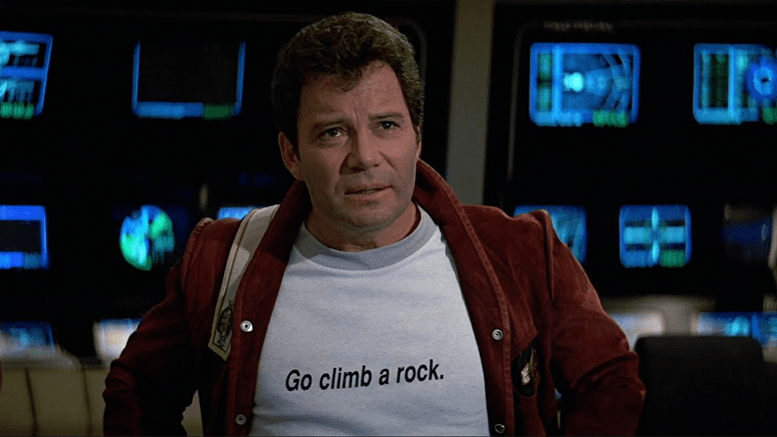
While I love Khan, Voyage and my underrated Search, these days I feel like Star Trek VI: The Undiscovered Country might actually be the gem of the whole lot. I love the Cold War paranoia of it all, the cosmic politics and the way Kirk’s simmering resentment towards the Klingons isn’t sugar-coated. It’s a romping ride that opens up the story to a wider universe than the rather closed-off feeling of the other movies, where Starfleet is rarely central to Kirk’s own dramas. There’s so many little joys in this one – Christopher Plummer’s hammy Shakespeare-quoting Klingon, Spock turning starship detective, Kirk looking all of his 60 years pushing through the pain of exile on a frozen prison planet and in the end, a charming farewell to this crew as the Enterprise crew finally steps aside for other bold voyagers. 
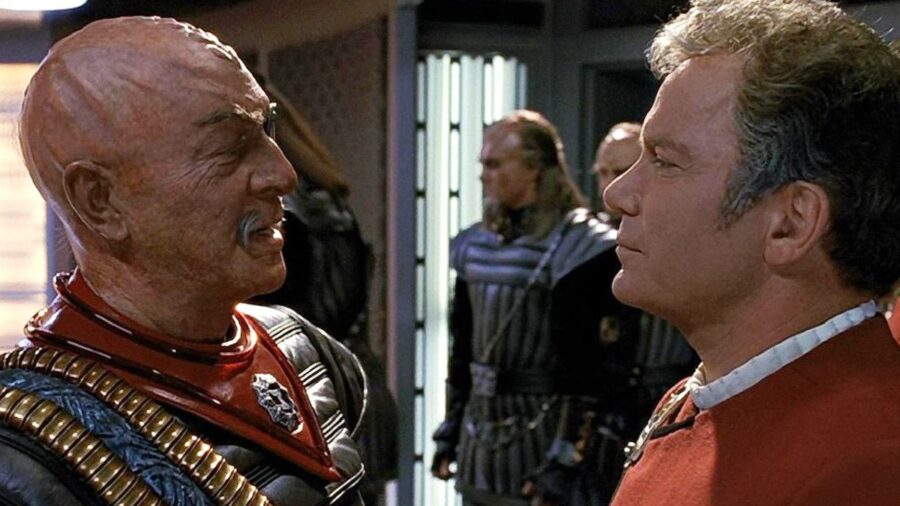
Watching the films all again from an age closer to where the Trek crew was then, that theme of time, regret and acceptance hits a lot harder than any laser beam, really. When even a James T. Kirk, who’s seen and done it all, has regrets and missed hopes about how it’s all turned out, who needs his glasses and misses his kid, it makes him realer to me, a more authentic kind of hero than the operatic scope of something like Anakin Skywalker’s overwrought rise and fall. 

Sure, we got glimpses of the original crew after these movies – Nimoy’s powerful return as Spock a few times, Jimmy Doohan getting a terrific episode of Next Generation to send off Scotty, and Kirk hamming his way into a mixed farewell in the cluttered Star Trek: Generations. There’s only three of the original crew left now, Shatner, Koening as Chekhov and Takei as Sulu, and while 95-year-old Shatner probably would be happy to take the captain’s chair one last time, their era is truly over now. 

Star Trek belonged on the big screen in the 1980s, really. Star Trek: The Next Generation did kick off in 1987, and while it took a little while for that show to find its way, by the third season in late 1989, it started becoming ultimately the best of the Star Trek TV series, although their movies never quite lived up to that standard. None of that would’ve happened without the veteran middle-aged heroes of Kirk and crew paving the way for Star Trek’s real-life Genesis rebirth moment. Not bad for a bunch of old guys. 
Star Trek: The Next Generation, my ultimate comfort watch 

I’m not a big one for massive binge re-watches of television shows. There’s always so much other stuff to watch, for one thing. So when I see people say that they’re watching all of Friends for the 42nd time, I don’t really get the appeal.

And yet… when I just want to zone out in front of a familiar face, I often find myself stepping aboard the good old starship USS Enterprise NCC-1701-D. I like a lot of Star Trek, even the current stuff  (let’s not talk too much about Discovery, though), but for me, Star Trek: The Next Generation is the home I keep returning to again and again, more than 30 years after its final episode. There’s a lot of Star Treks now, but TNG will always be my Trek.

There is something very soothing about boldly going where you’ve already gone before. On a recent holiday night at a hotel, we somehow burned through four classic TNG episodes in a row without even meaning to. That’s the TNG spell for you.

The show ended in 1994 and yet Jean-Luc Picard and crew just keep sailing on those voyages long after the actors entered retirement age. All 178 episodes form a comforting narrative that remain eminently watchable – mostly self-contained, with those occasional dazzlingly energetic two-parters to shake things up. (Yeah, OK, the first two seasons are pretty middling, but by mid-season 3, TNG hit its stride and even the dud episodes – I’m thinking of pretty much any one that focuses too much on Deanna Troi – have their moments.)

Perhaps I’m viewing it all through the retro-futuristic zen of a late 1980s imagining of a better tomorrow that didn’t quite work out the way we imagined. TNG posits a world that still has a lot of conflict but rarely feels weighed down by the dystopian tech-troll world of existential loathing we appear to have gotten for our future instead of Vulcans and holodecks. Watching the best TNG episodes over and over again, you know they’ll sort it all out in the end, that Picard will get un-Borged, that Riker will still define space-sexy masculine goofiness, that Worf will be grumpy and Data will be endlessly curious. 

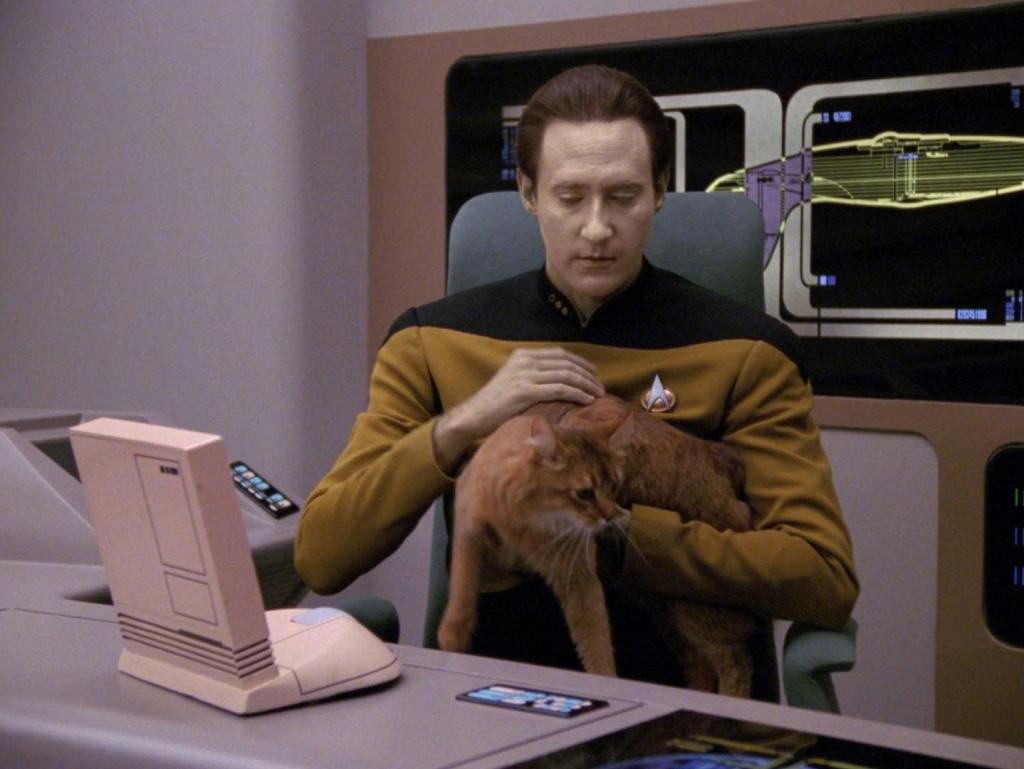
One of TNG’s strengths is its willingness to indulge in quieter moments – Data playing with his cat, Picard drinking tea, Beverly Crusher putting together her awful plays. You get a sense of real life in these glimpses at life aboard the Enterprise, in a way that a lot of other sci-fi shows and even other Star Treks never quite settle down enough to showcase. Who wouldn’t want to hang around playing cards with Riker and the gang at the end of a long day battling Romulans? 

Terrible things happen all the time on Star Trek, of course – you can get turned into a Borg, trapped in a space-time anomaly, accidentally turned into a child in a transporter accident or Sherlock Holmes’ nemesis might come to life on the holodeck and take over the ship. Every problem can be solved by a generous helping of techno-babble and Patrick Stewart’s soothing narration. 

There’s a vaguely cozy vibe to even the very bleakest of TNG scenarios, when you watch them again and again. The NCC-1701-D is ‘90s kitsch of what the future might look like, bold primary colours and a starship full of liminal spaces. It’s never seemed quite as dated to me as the original 1960s series does, and its blandly functional professional aura isn’t as idiosyncratic as Star Trek: Deep Space Nine or Voyager, which tried to shake up the five-year mission assignments a little more and threw in a lot more interpersonal conflict. 

The Next Generation cast moved on to movies after the series ended and I generally like them all too. And while the recent Picard series was a fairly mixed bag, an old TNG fanboy like me still dug seeing the old Enterprise gang coming together one last time in the final season.

Yet none of the continuations ever really hit that blissfully comforting zone that the 178 original episodes of TNG do. Every episode is reset Groundhog Day style, as we hear the latest captain’s or crewman’s log and the crew of the Enterprise get set to go about their business, again and again. 

Watched from our jittery world of 2025, there’s a relaxed pace to TNG that feels like a nice cup of tea at the end of a long day. Even when characters lose their temper and shout a bit, it still all feels, well, calm. You just don’t lose your shit on Jean-Luc Picard’s ship, no matter how wacky things get. And when the real world feels crazier than any science-fiction scenario, a little interstellar comfort food is sometimes all that you need.

Keep on Trekkin’: How Strange New Worlds brings the fun back to Star Trek

Someone finally remembered to put the Trek back into Star Trek, and Star Trek: Strange New Worlds has arrived just in time for weary fans of the franchise. 

Star Trek has had a mixed decade or so – ever since the Star Trek: The Next Generation movies faded out with the underwhelming Nemesis, there’s been a growing sense that Star Trek isn’t quite sure what it wants to be.

Will it reboot and start over entirely, like the three Chris Pine-led movies? Will it boldly go in a new direction like the ballyhooed Star Trek: Discovery, or return to well-loved old friends like Star Trek: Picard? Will it make a hard swerve into animated satire like Lower Decks? With the latest spin-off – the eighth live-action Star Trek series, if you’re counting – Star Trek goes back to the basics, and Strange New Worlds is all the better for it.

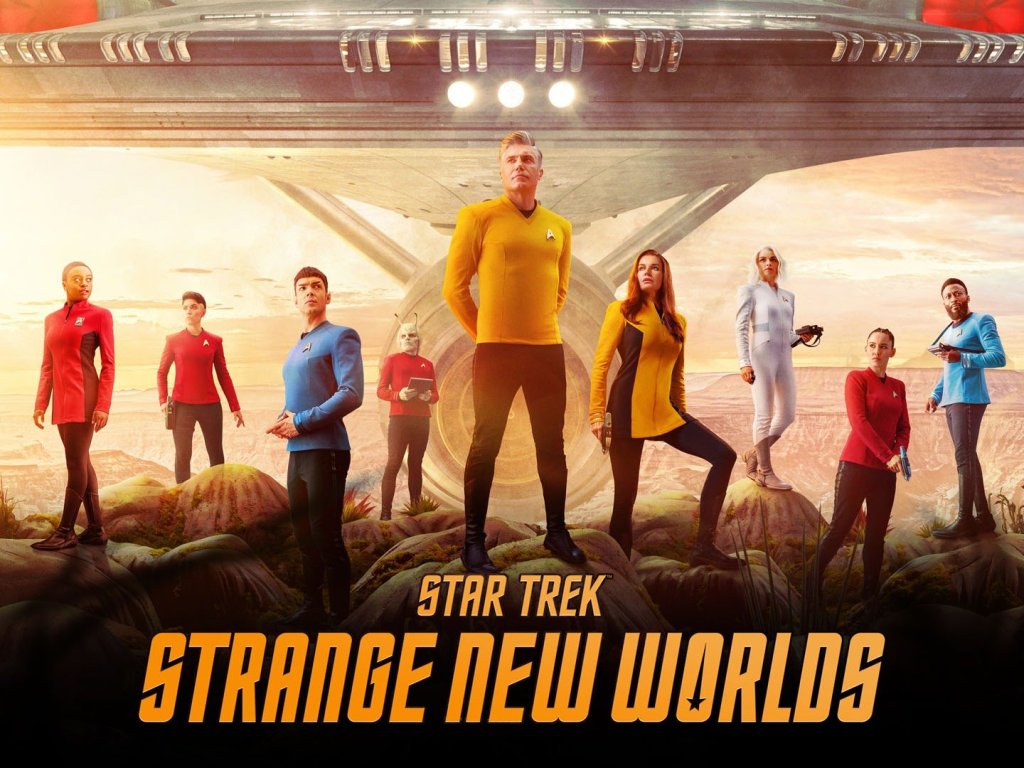
Retro without being camp, Strange New Worlds is set on the USS Enterprise several years before Kirk became its captain. It follows Captain Christopher Pike (first seen in a few episodes of the ‘60s series) and his science officer Spock as the ship boldly goes to explore strange new… well, you get the idea.

Although it’s a prequel and weighed down by existing canon (including Pike’s grim ultimate fate), so far it’s a breezy ride that evokes the spirit of TOS – the original series – far more successfully than anything since The Next Generation. 

I maintain that one of the worst developments for television series was Buffy The Vampire Slayer’s embrace of the serialised “Big Bad,” in which the entire season leads up to a final confrontation with some menace. While Buffy was pretty great, it didn’t mean every single series needed to have a ‘Big Bad.’ The ‘Big Bad’ has become a plague on serialised television. Its bad influence can be seen in shows like the Arrow-verse superhero franchises, which were weakened by Big Bad envy and a constant desire to top themselves and up the menace. ST: Discovery and Picard are both guilty of this too (along with other flaws) and it’s kept these shows from living up to their predecessors.

I gave up on Discovery after the third season, where despite a lot of potential, the show seemed determined to be “the Michael Burnham Show” and never let any other characters have a chance to breathe, never let up from its bludgeoning insistence that it was deep and it mattered. It wasn’t fun. 

Strange New Worlds is fun. We’re only five episodes in, but already it feels like the best Trek in years. The rainbow-coloured uniforms inspired by the original series set the tone from the start.  Anson Mount’s Captain Pike is charismatic and stalwart, while Ethan Peck has the hard job of shadowing Leonard Nimoy’s inimitable Spock, but pulls it off pretty well. The crew is a mix of familiar characters – a very young Uhura, a spunky Nurse Chapel – and new, like Rebecca Romjin’s dynamic Number One and Christina Chong‘s La’an Noonien Singh, who shares an ancestry with a very famous Trek villain. 

Strange New Worlds is confident about what kind of Star Trek it wants to be from the word “engage.” Unlike Discovery, which flailed and reinvents itself each season, SNW is fully formed. In five episodes, we’ve already learned more about the crew’s bridge characters than I did over three seasons of Discovery. Star Trek is about the entire crew, not just a captain, and so far the old-school Enterprise’s team are an enjoyable group of well-worn Starfleet cliches and intriguing newcomers. 

What’s wrong with a good done-in-one story, anyway? So far, SNW has had a blast on the “mission of the week” stories The Next Generation and original series excelled at – miniature action movies with hefty doses of character development, humour and an epic sense of wonder. 

After 50-plus years, it’s hard to find new life in a franchise. While excavating the past and nostalgia are prime reason for Strange New Worlds’ existence, it wouldn’t work if the show itself wasn’t so darned endearing. It may stumble – after all, it’s only halfway through its first season – but at the moment, Star Trek: Strange New Worlds is roaring along at warp speed. 

Waiting for Star Trek: Discovery to truly take off

Look, I’m a Star Trek fan. I’m used to some mild disappointment mixed with pleasure. But I’m still a fan. At its best, the questing curiousity of Star Trek blows away the good vs. evil tropes of Star Wars in my mind. 

And so I watch Star Trek: Discovery, and I keep hoping for it to be better than it actually is. 

Star Trek: Discovery is a show that, three seasons on, has never quite figured out what it wants to be. Season 1 was a vast war and conspiracy epic that also managed to wrap in parallel universes. Season 2 combined crowd-pleasing returns for Spock and Captain Pike with an impenetrably complex time-travel apocalypse/evil robots arc. Season 3 has jettisoned all that and taken us 900 years into the future for another fresh start. 

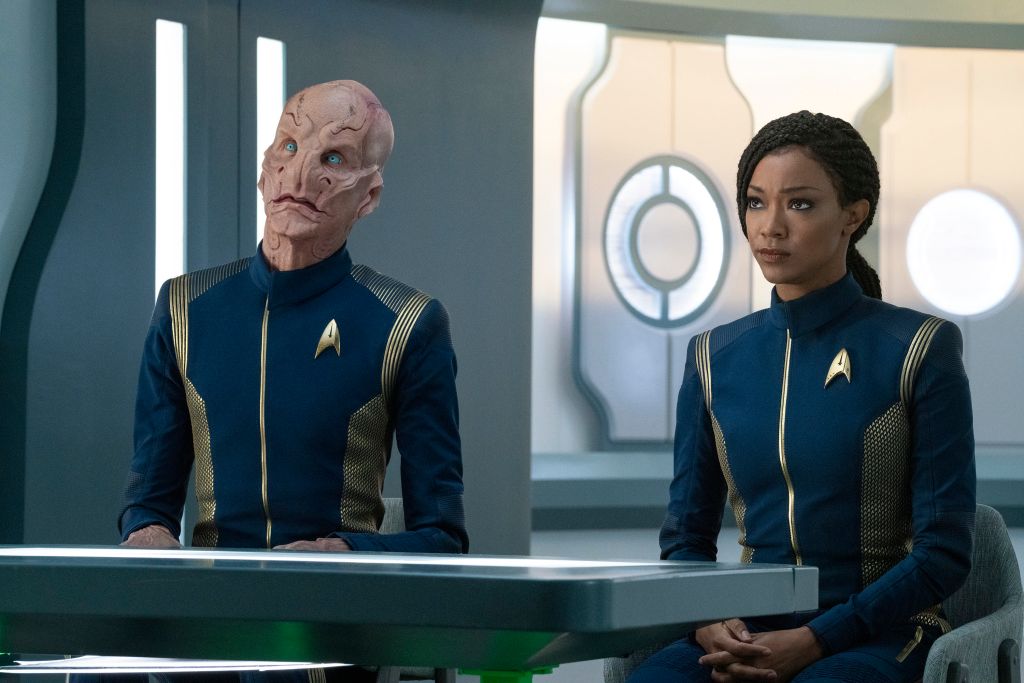
Discovery has also spent far too much of the time focusing on Michael Burnham, played by Sonequa Martin-Green with a wide-eyed enthusiasm that often tips over into straight-out overacting. Sure, Captain Kirk overacted too, but it’s not 1967 any more. The more measured acting style of a Patrick Stewart or an Avery Brooks is sorely missed. 

The biggest problem with Discovery it that it goes for an 11 every time when a 6 or 7 would do. It’s a show that demands emotional bombast but doesn’t actually earn it most of the time. An overpowering soundtrack telegraphs every weepy epiphany, and the show is constantly telling us how much the characters love each other without really showing it much. 

Take the most recent episode, where a security officer who’s been relegated to the background for so long now I forgot she was still on the show gets an emotional farewell arc. The worst example of this was in Season 2 when a character, Airiam, who’d barely been more than a glorified robot-headed extra, died in a blaze of glory and got what felt like an episode-long funeral. It was filled with the worst of Discovery’s mawkish sentimentality, all for a character we barely even knew but the show wanted us to mourn like she was Spock.  

Three seasons on, too much of Discovery’s cast are still ciphers, with Burnham’s character taking up most of the oxygen. I don’t hate Burnham, like a lot of online fans do. I’m pleased to see a Black woman lead a Star Trek show. But her character is written as an annoyingly inconsistent cross between an impulsive rebel and a Starfleet true believer, elbowing aside all other characters.

Doug Jones’ Saru is my favourite, a fascinating contrast to previous starship captains, and he’s fortunately become more and more prominent over time. The relationship between Lt. Stamets and Dr. Culber also feels far more genuine than most of the show’s telegraphed “big moments.” Tig Notaro’s snarky Jet Reno is also a welcome addition. But three seasons on, most of the bridge crew are still not much advanced beyond “blonde girl” and “Asian man” and “person with stuff on her face.”

One of the biggest pleasures of Star Trek over the years has been its ensemble casts, something Discovery keeps losing sight of. Discovery’s choice to focus so much on Burnham has left it lacking the diverse storytelling that Next Generation, Deep Space Nine and Voyager all had, where one week might focus on Worf and the next on Riker. It makes the show feel hobbled and far less widescreen than Star Trek should be. 

I’ll still boldly go where Discovery goes, because I’m a fan, and because there are plenty of good moments amid the wonky scripts and overwrought storytelling. But the voyage doesn’t have to be quite this bumpy. 

Review: William Shatner, Auckland, Oct. 13

William Shatner is 87 years old. 

I kept telling myself this over and over because watching him live in Auckland for his Shatner’s World one-man show, this seemed a man 20-30 years younger than that. He laughed, he danced, he even sang in his patented Shat-scat fashion a bit. Shatner still has a volcanic energy that is a force of nature. 

What a life Shatner has lived – over nearly two hours he took the audience on a meandering journey from his Canadian stage beginnings to his early TV days on through his ‘Star Trek’ success and later works like ‘Boston Legal.’ He could be hilarious one moment, but then touchingly human and self-aware the next, musing on his parents, family, beloved horses, and death, the final frontier itself. It was refreshingly intimate for a show by an actor known for his bombastic swagger, but a man who’s also engagingly self-aware. 

For a while, it was fashionable for snobbier Trek fans to bash Shatner – he was seen as too egotistical, dominating the room and overshadowing great talents like Nimoy, DeForest Kelley and the rest of the crew. But Shatner is the spice that made classic Trek soar. 

Would Star Trek truly have endured these past 50 years if you’d subtracted Shatner’s distinctive hammy charm as Kirk from the equation? Watch the original ‘The Cage’ pilot with the amiable but bland Jeffrey Hunter as Captain Pike to see what a Kirk-less Trek would be like. 

Is he larger than life? Sure. I wouldn’t have him any other way. I took Mr 14 – a huge Star Trek fan who was born years after all the original TV series ended – and he had a blast. 

Shatner is a showman – one of the great showmen of our time – and as he tours Australia and New Zealand and the rest of the world at an age when a lot of blokes would be happy to give it a rest, he’s kind of inspirational. Live long and prosper, indeed.