When I was an ’80s kid, I guzzled down all the sci-fi that was coming our way. Star Wars was king, of course, but I was also all about Flash Gordon, Battlestar Galactica, V, that scary adult Terminator and hell, even Manimal.
And then there was Star Trek – the original series reruns I saw struck my oh-so-worldly pre-teen self as a bit hokey and dated, so I didn’t really grow to appreciate them for years, but the Star Trek movies coming out were totally my bag. That golden run from 1982’s Star Trek II: Wrath of Khan to 1991’s Star Trek VI: The Undiscovered Country remains some of my favourite Trek as mass entertainment.
It did strike me at the time that these guys were, well, a little old. Ancient by the standards of a 12-year-old. It’s only now that I’m about the same age as Captain Kirk was through his years of box office stardom that I realise that well, that was kind of the point.
Viewed again in a recent marathon, I was struck by how well most of the ‘80s Trek movie run holds up – and the sudden resonance they have for all us aging fanboys. The movies have their ups and downs but are overall a remarkably consistent series, even with the much-maligned Star Trek V in the mix.
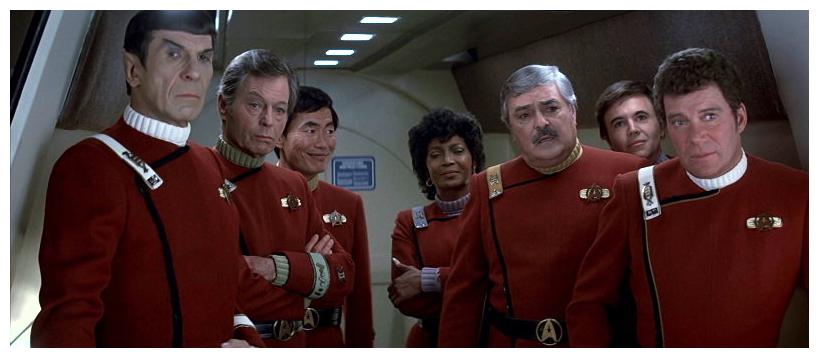
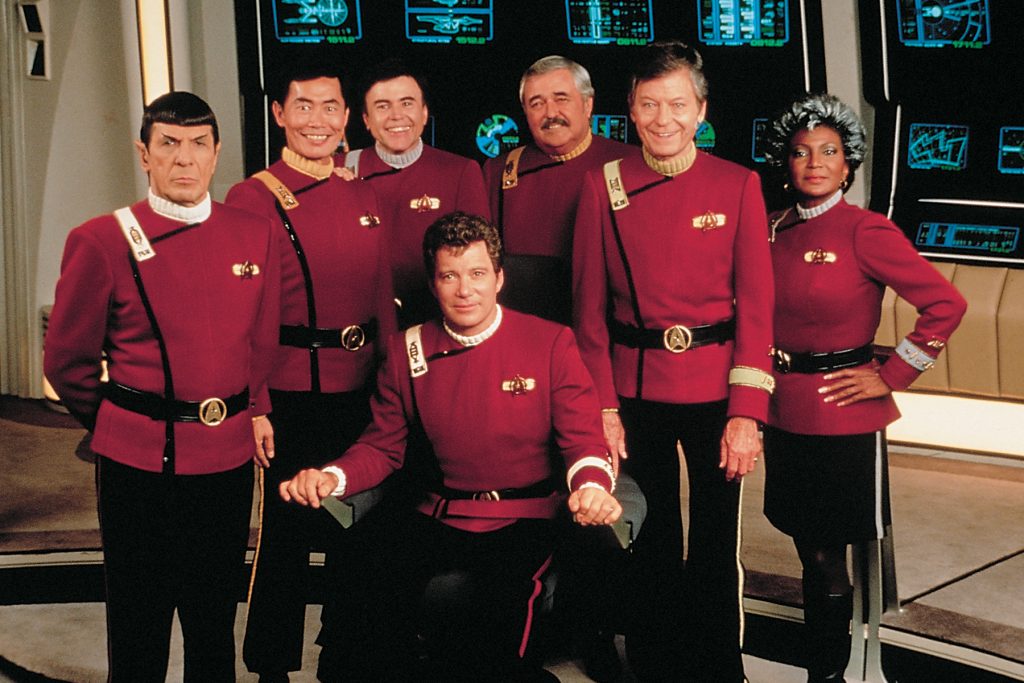
I see now how much Star Trek II through VI are a story of aging and coming to terms with your own mortality, which sets them quite apart from classic young hero’s journey tales like Star Wars, Back To The Future or The Last Starfighter. There are no plucky teenagers here. Kirk, Spock, Bones, Scotty, Chekhov, Sulu and Uhura brought a weight to the films, a sense of a long and shared universe, which was a bit of a novelty in a world without all the decades-on revivals and reboots we live in now.
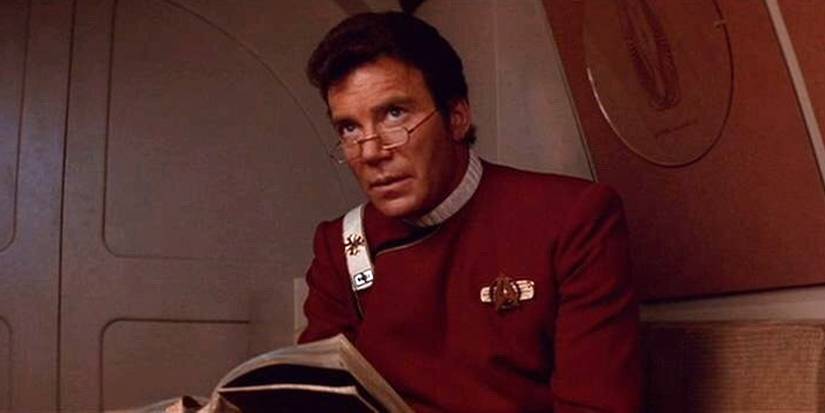
The original Trek cast were all at least in their 50s by then, and DeForest Kelley’s craggy face, Leonard Nimoy’s gravitas and even Jimmy Doohan’s Scotty with his greying, gradually rounding figure were all a counterpoint to the smoother visages of a Tom Cruise or Michael J. Fox. A minor plot thread throughout involves James Kirk needing glasses – not exactly Bill and Ted.
Leaving the odd and rather too reverential slog of 1979’s Star Trek: The Motion Picture behind, the Trek journey of the 1980s was all about the old Enterprise crew, who started sailing in the stars in 1966, gradually saying goodbye. Familiar icons kept being broken down – they killed Spock! (he got better) they blew up the Enterprise! (they built a few new ones), Klingons aren’t the bad guys! (more or less)
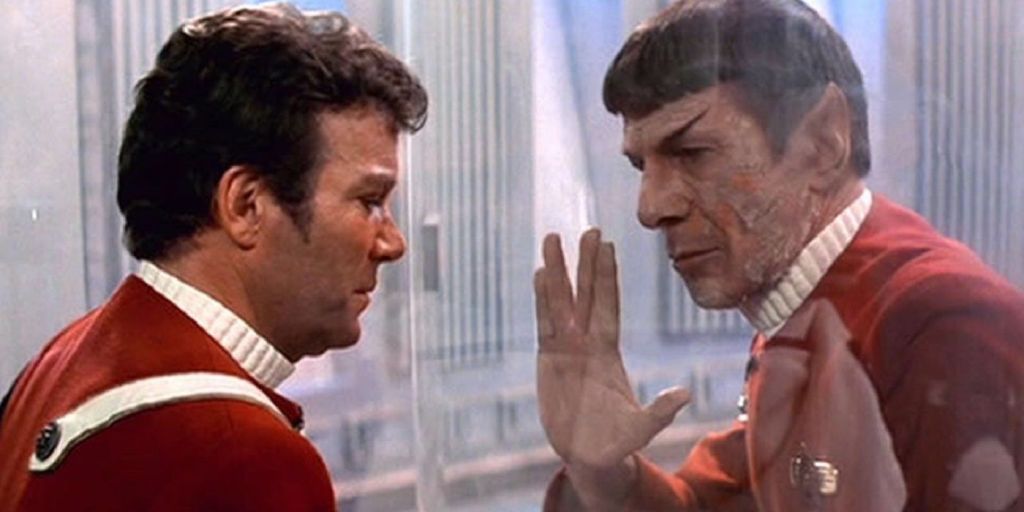
Star Trek II: The Wrath Of Khan is often held up as the peak of Trek movies, and it’s still a dynamic, tense ride, mainly because of all the rules it breaks. Having a movie feature as its villain a one-shot nemesis from almost 20 years earlier shouldn’t work. Having the two leads, Kirk and Khan, never actually meet in person, shouldn’t work. Yet it’s all surprisingly adult and the often-maligned William Shatner gives one of his best performances here. Killing Spock, even if the pre-internet fans of 1982 figured they’d probably find a way to reverse it, felt as hardcore as Luke and Vader’s brutal confrontation at the end of Empire Strikes Back. (You can tell how well-crafted Khan is in how JJ Abrams basically spent an entire movie directing a flaccid attempt to equal its dramatic heft in 2013’s Star Trek Into Darkness.)
Star Trek III: The Search For Spock is seen as a comedown from Khan – what wouldn’t be? – but it’s still a personal favourite of mine. I vividly remember looking forward to this one in theatres after being hooked by Khan, and even picking up the nifty Burger King glasses (they all broke, very quickly). Search is a rockier ride as it has to get through a lot of plot mechanics, but any movie featuring Christopher Lloyd hamming it up as a Klingon, the startling destruction of the original Enterprise and the sudden blunt cruelty of the death of a son Kirk hardly knew makes up for a lot of the rather dippy Genesis stuff.
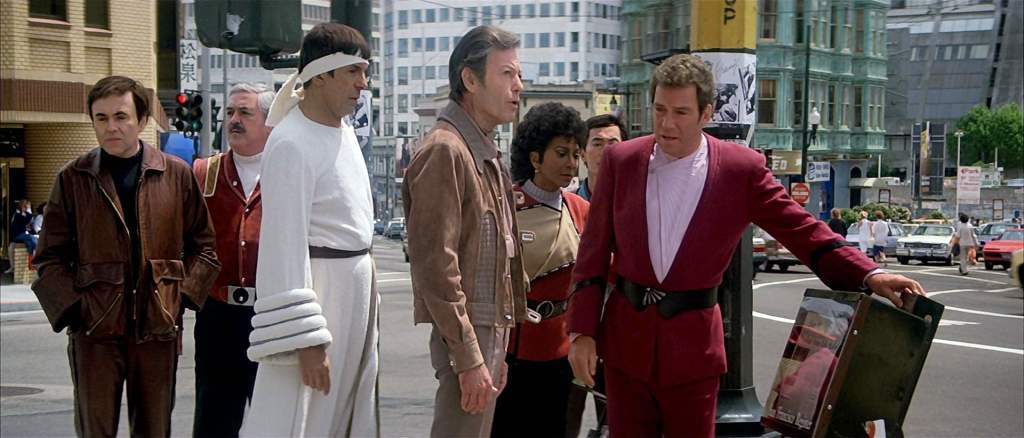
Star Trek IV: The Voyage Home is the breath of fresh air after all the grimdark of Khan and Search, and while it’s precision entertainment, on what probably was my 20th viewing the plot feels wobblier than ever (time travel is treated as casually as a ride to spacedock). Yet none of that matters when Kirk and crew start bopping around ‘80s San Francisco. While getting older is still a theme (it’s amusing how awkward and uncool they all seem in ‘modern’ SF) the bonds of long-lasting friendship also play a bit part in how amiable the movie is. If this were Star Trek I, it wouldn’t have the easy confidence it does, but we know these guys by now, and they’re a fun hang.
Star Trek V: The Final Frontier, unfortunately, fails to really get past impulse speed. It was a William Shatner vanity project – Shatner wanted to direct, after Nimoy directed the previous two big hits, but the movie feels like a cobbled together original series episode, and not one of the good ones. It’s not without merit – the easy camaraderie of the crew sings and the opening Yosemite shore leave sequence is delightful, even if being asked to believe 50-something Kirk could REALLY scale El Capitan pushes all belief. The story is yet another “what if we met God?” ham-handed religious allegory, and while it has potential, massive budget cuts derailed any chance for spectacle. You can feel the energy draining out of the movie as it goes. Trek movies would be worse – as mentioned, the cold calculating manipulativeness of Into Darkness offends me deeply – but this is still a big stumble.
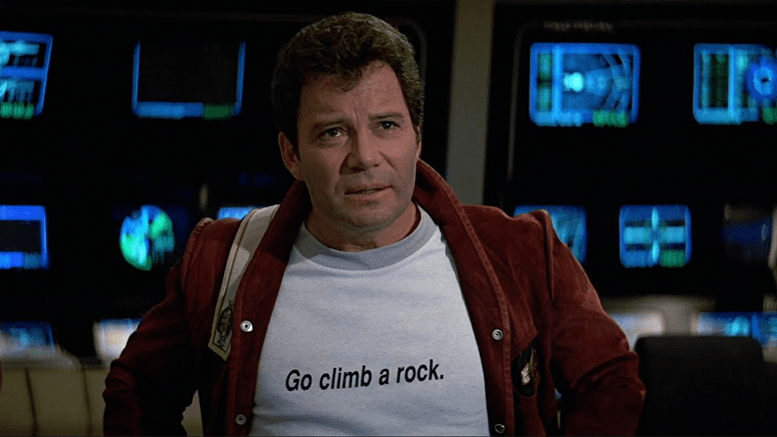
While I love Khan, Voyage and my underrated Search, these days I feel like Star Trek VI: The Undiscovered Country might actually be the gem of the whole lot. I love the Cold War paranoia of it all, the cosmic politics and the way Kirk’s simmering resentment towards the Klingons isn’t sugar-coated. It’s a romping ride that opens up the story to a wider universe than the rather closed-off feeling of the other movies, where Starfleet is rarely central to Kirk’s own dramas. There’s so many little joys in this one – Christopher Plummer’s hammy Shakespeare-quoting Klingon, Spock turning starship detective, Kirk looking all of his 60 years pushing through the pain of exile on a frozen prison planet and in the end, a charming farewell to this crew as the Enterprise crew finally steps aside for other bold voyagers.
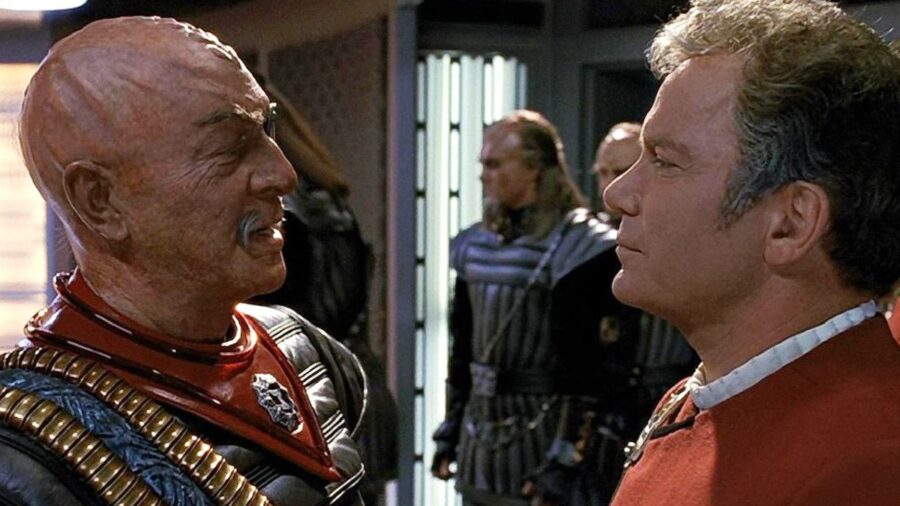
Watching the films all again from an age closer to where the Trek crew was then, that theme of time, regret and acceptance hits a lot harder than any laser beam, really. When even a James T. Kirk, who’s seen and done it all, has regrets and missed hopes about how it’s all turned out, who needs his glasses and misses his kid, it makes him realer to me, a more authentic kind of hero than the operatic scope of something like Anakin Skywalker’s overwrought rise and fall.
Sure, we got glimpses of the original crew after these movies – Nimoy’s powerful return as Spock a few times, Jimmy Doohan getting a terrific episode of Next Generation to send off Scotty, and Kirk hamming his way into a mixed farewell in the cluttered Star Trek: Generations. There’s only three of the original crew left now, Shatner, Koening as Chekhov and Takei as Sulu, and while 95-year-old Shatner probably would be happy to take the captain’s chair one last time, their era is truly over now.
Star Trek belonged on the big screen in the 1980s, really. Star Trek: The Next Generation did kick off in 1987, and while it took a little while for that show to find its way, by the third season in late 1989, it started becoming ultimately the best of the Star Trek TV series, although their movies never quite lived up to that standard. None of that would’ve happened without the veteran middle-aged heroes of Kirk and crew paving the way for Star Trek’s real-life Genesis rebirth moment. Not bad for a bunch of old guys.

 Nik Dirga
Hmm. I only saw movies I-V, after which I bailed. Someday, I should see VI
LikeLike