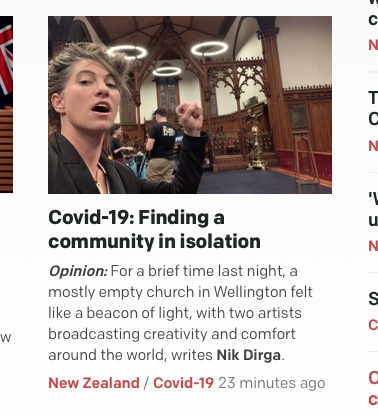
Hi all, just a quick linkpost today – let me turn your attention to a review/essay sort of thing I wrote over at Radio New Zealand during this crazy week: Finding a community in isolation.
As I wrote last post, Amanda Palmer has been touring New Zealand, but the ongoing coronavirus pandemic played havoc with the end of her tour. She wrapped it up in style, though, with a livestream “ninja concert” Monday in Wellington featuring special guest star Neil Gaiman, puppets and more. I wrote about watching it and how we can all maybe find new kinds of communities until this weirdness passes. Amanda herself had a very kind word or two to say about it on her various platforms as she and Neil prepare to bunk down in NZ for a while.
Go read it. And I’ll just note one last thing, it’s pretty darned cool to have one of my literary idols Neil Gaiman retweet a tweet from his wife praising an article that I wrote. If it’s all gonna crash down soon, it’s not a bad way to go out.
…So this week has been one hell of a year, hasn’t it? There’s a growing sense of madness and uncertainty and are-we-all-living-in-a-Mad-Max-prequel vibe. The perpetual hysteria of the internet doesn’t help, and honestly, often feels like it’s making it all worse. Who knows what’s going to happen next?
So after an endless cascade of bad news, yesterday seemed like a good night for a four-hour intensely emotional concert with hundreds of other people.
I went to the fourth-from-last show of Amanda Palmer’s epic “There Will Be No Intermission” world tour last night, despite the voices in my head saying that a sold-out show was kind of a scary place to be after a day full of headlines about mass contagion.
But in the end, I went, because over and over again in my life when things have gone to shit, art is what lifts me out of the ditch.
I know Amanda Palmer is an acquired taste for some folks. She’s intense, oversharing and excessive; she’s made some controversial statements. She’s also quite funny, captivating and honest to her core, I think. I like her because she’s brave, the reincarnation of every dazzling theatre girl I ever dug. You can call her “punk cabaret,” “folk-rant,” whatever you like.
For “There Will Be No Intermission,” she’s crafted a hardcore show – yes, four hours! – that combines lengthy “stand-up tragedy” monologues about love, “radical compassion”, life and death with piano-pounding selections from her career. She cites the touchstones of Nick Cave, Nanette Gadsby, and others, but Palmer makes the night uniquely her own style.
It’s intense stuff – Palmer talks candidly about her sexual life and in particular her three abortions in riveting detail. It’s the kind of frankness you rarely see in a public figure and while it’s sometimes unforgettably hard to listen to, Amanda also pulls out as much black humour as she can. I mean, this is a woman who wrote a song called “A Mother’s Confession” that features a chorus of “but at least the baby didn’t die.” An expert storyteller, she knows exactly how far to take the audience before dispelling tension with a bit of wit.
An artist’s job, she said, “is to go into the dark, and make light.”
It all wrapped up in an explosively cathartic, hilarious yet heartfelt rendition of “Let It Go” from Frozen, disco ball glittering light shadows through the audience, and we finished the night wrung-out and worn out, but you know, it felt good. Palmer got two standing ovations, and while the dramas and fears of the world outside never entirely left the room, for a few hours, they receded a bit.
One of the appeals of Palmer’s music and ethos is that intense sense of community, and right now when the very idea of community is kind of freaking everybody out, it’s good to know there are other people like you out there, even if you’re just seeing them from afar in your own form of self-isolation.
I don’t know what the hell is going to happen next. But I’ll try to make light, because it beats the alternative.
And it’s just a ride / It’s just a ride
And you’ve got the choice to get off anytime that you like
It’s just a ride
It’s just a ride
The alternative’s nothingness / Might as well give it a try
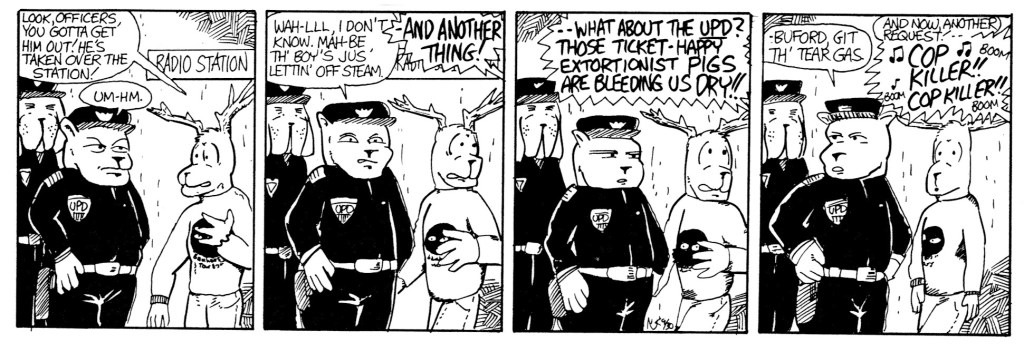
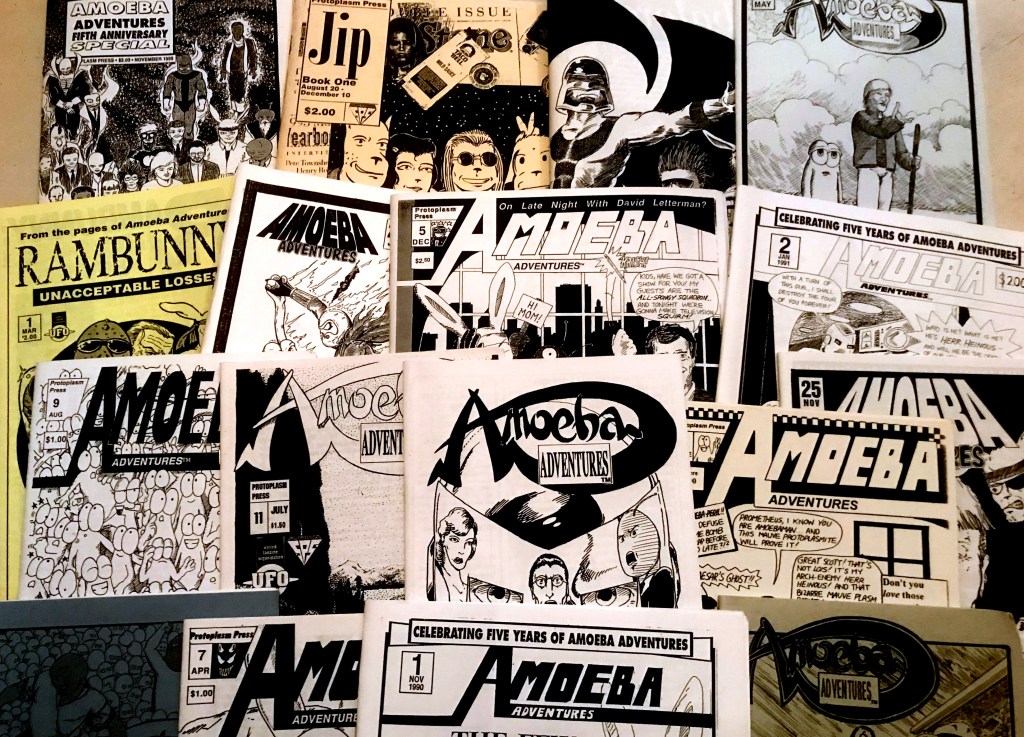
Today’s upload adds four more classic issues of Amoeba Adventures by myself, Max Ink and others – #3, 6, 15 and 21, with lots of extra features and behind-the-scenes stuff. Also back “in print” for the first time in more than 25 years is the first collection of my newspaper strip JIP.
Way back in the hazy hipster 1990s I somehow thought it would be a good idea to do a comic strip for The Daily Mississippian newspaper I worked at part-time. JIP was a combination of elements of Bloom County, Doonesbury and Martin Wagner’s Hepcats all thrown in a blender and mixed up to make a satire of college life. It was a terrific fun time for me, even if decades later I don’t know how I found the energy to do a daily strip, work part-time at the paper, work another part-time job, put out a regular small press comic, attempt to have a social life, and, oh yeah, finish my college degrees.
I still like JIP quite a lot and all its goofy charms. Go check out the downloads section and flashback to the 1990s!
I voted for Elizabeth Warren on Super Tuesday, absentee from California as I’ve done for most elections the past 14 years or so.
I don’t feel like I wasted my vote, really, although Warren finished fourth in the state and her campaign seems to be coming for a close. While I think she was the best of the Democratic candidates, the voters didn’t really agree, and she hasn’t won a state yet or finished particularly well in any of them. I’m annoyed that a candidate as good on paper as she is didn’t do better, but when it comes down to it, the voters make the call, and the endless parade of talking heads who’ve filled up mountains of space in the past year don’t always know what’s going to happen.
Who knows the heart of the American voter? I’ve lived abroad long enough that it’s harder and harder sometimes to figure what’s going on back home, but then again, I’m the guy that was dead sure Trump would never become President. I think it was a mix of sexism/Clinton hangover, an overcrowded field, and just some fundamental failure to connect on Warren’s part. It’s a bummer.
But I’m used to lost causes. The first Presidential campaign I was really engaged in was 1988, where Michael Dukakis was thoroughly stomped by George H.W. Bush. I liked Dukakis, but it didn’t matter. I’ve picked some winners, and some losers, in the past 30 years or so of voting in American elections. I’ve been really depressed by some of them, and pleasantly surprised by some. But I never stopped voting.
I think both Biden and Sanders have good points, and frankly, I would vote for anybody with a reliable pulse and a fairly sane agenda to get the current occupant as far out of the White House as possible. Everyone gets really heated up when it comes to primaries and caucuses, and sometimes people lose sight of the bigger goal than just “I WANT MY TEAM TO WIN” mentality.
One of the great curiosities of US politics for me the last few years is how easily one side of the political divide seems to have bent and compromised principles left and right just to back the winning team, accepting flaws and obvious corruption they never would’ve a few years back, while the other side is often consumed by the search for mythical perfection, for the glittering flawless candidate that doesn’t exist.
I’ll vote in November, and even if my guy (sadly, this year, it’s apparently gonna be a guy) isn’t perfect, I’m still gonna show up. I’m not going to throw a sulk and sit it out, and I’m gonna hope this year is one of those where I’ve backed a winner. The stakes are as high as they’ve ever been.
Nick Lowe isn’t quite a household name, but he should be. He’s a music geek’s musician, who’s written some fantastic earworms over a 50-year career. “Cruel To Be Kind,” “(What’s So Funny ‘Bout) Peace, Love and Understanding,” “I Love The Sound Of Breaking Glass” – all Lowe’s work. He also produced Elvis Costello’s first five albums, a streak of genius rarely matched in music history, and The Damned’s debut. He was even Johnny Cash’s son-in-law for a while.
Lowe’s songs are cutting yet warm, a gentler reflection of Elvis Costello perhaps. With Los Straitjackets (a Mexican wrestling mask-wearing surf guitar instrumental rock band, and yes, that’s as awesome as it sounds), it was one heck of a good show.
And there was that one song.
2. BAD THOUGHTS
Blue on blue / How has it come to this
It’s harder to control things lately. The 2010s sucked in a lot of ways, with death, professional turmoil, sickness and disillusionment, and the ever tick-tocking drumbeat of time passing. To cap it all off I had a life-threatening health crisis almost exactly two years ago, which left me taking pills for the rest of my life and feeling diminished.
I know by any normal metric, I’m an incredibly lucky guy. My problems are nowhere near as bad as a lot of other people. Intellectually, I know that. But the problem is that somewhere inside me it feels like a regulator broke down a while back, and it’s harder to take control of how I feel sometimes. That I’m at the mercy of chemicals or biology or some angry cloud. That’s when everything is blue. Or black.
3. POWER OF POP
I can’t sleep/ For all the promises you don’t keep/ I wanna run but I’m in too deep
Lowe’s set was terrific, engaging and fun, but there was one song that just hit me much harder than anything else. It’s a song in my head, and it keeps going around.
“Blue On Blue” is the name, from the EP Love Starvation. It’s a simple, elegant little ode to love lost, and yet for some reason, in the way a song does, it stopped time a little bit for me. Inches from the speakers, front of the club, I felt like Nick Lowe was singing it only to me. Just a guitar, a spotlight, a 70-year-old man with white hair and a song.
It’s not even a song about depression. It’s a romantic ballad, about not being able to leave her behind, and the pain that lingers. It’s a beautiful little song, and at one point as Lowe’s backing band dropped out and he sang a verse alone, the crowd silent, it felt like the power of pop sliding into my veins. Slightly sad songs have always made me feel things more than others. That’s why power pop is kind of beautiful, because the great bands like Big Star and Badfinger and Teenage Fanclub and Cheap Trick and Nick Lowe all master the art of pretty, glittering songs that are still kind of sweetly melancholy in their cores.
Everyone’s blue sometimes.
Sometimes a song doesn’t mean what it means. How a song gets to me doesn’t mean it’ll get to you.
Everyone has those tunes that stick in their mind, glued to a place, a time, a person. Peter Gabriel’s “Solisbury Hill” is about my graduating high school in California and moving to the other side of the country. Sebadoh’s “Ocean” is about the girl who got away. The Bangles’ “Different Light” will always be the soundtrack to my first kiss. Lou Reed’s “Magic And Loss” is about pushing through the darkness. Freedy Johnston’s “The Lucky One” is about taking a chance and changing your life.
And for some reason, that night at the club, Nick Lowe’s “Blue On Blue” felt like a reminder that a song can be the best medicine.
It’s the power of pop, of a song to get to you. Blue on blue is how I feel sometimes, pushing through.
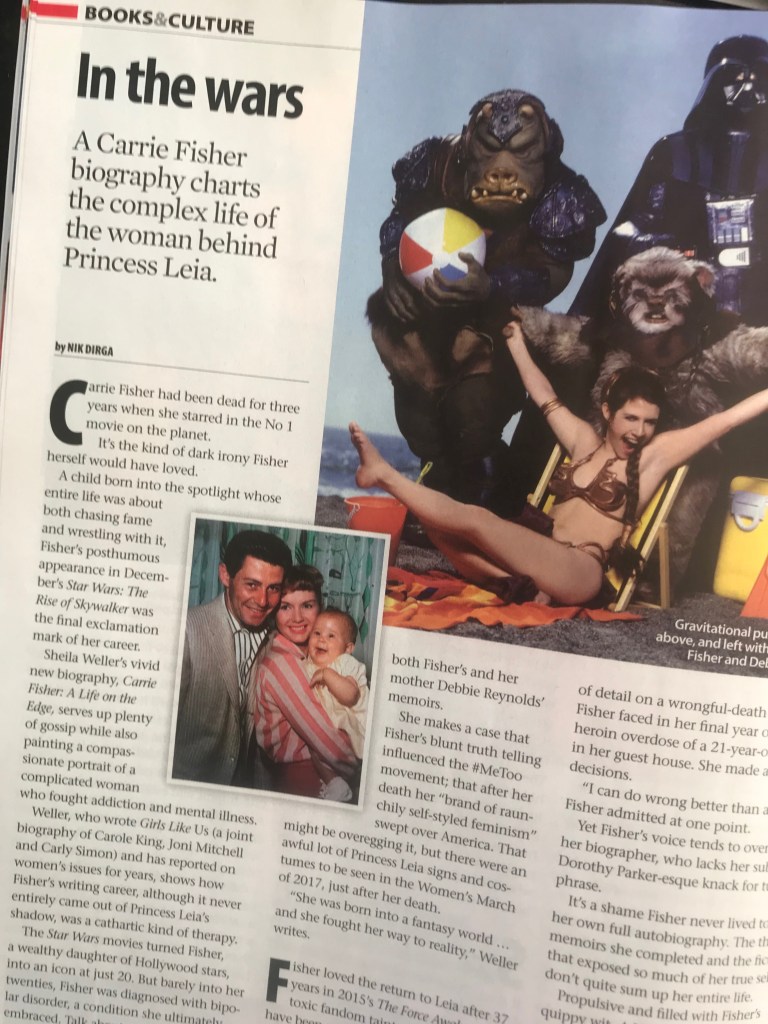
I’ve also been doing a fair amount of book reviewing. Neither of these are online just yet, but if you’re in New Zealand, pick up the latest issue of the New Zealand Listener for my review of the quite good new biography Carrie Fisher: A Life On The Edge.
Also reviewed in today’s Weekend HeraldCanvas magazine is New Zealand/Indian author Rajorshi Chakraborti‘s unique spin on superhero fiction, Shakti. Go hunt down a copy!
Amoeba Adventures issues #2, 13, 17, 20 and Prometheus: The Silent Stormare now up, showcasing some of the best comics from my 1990-1998 series.
Even if you’ve read these issues back in the day, these new free PDF downloads are packed with bonus features and rare artwork (more than 12 pages in a few cases), and guest art/letters from creators including the late Will Eisner, Dave Sim, Tony Isabella, Sergio Aragones and many more.
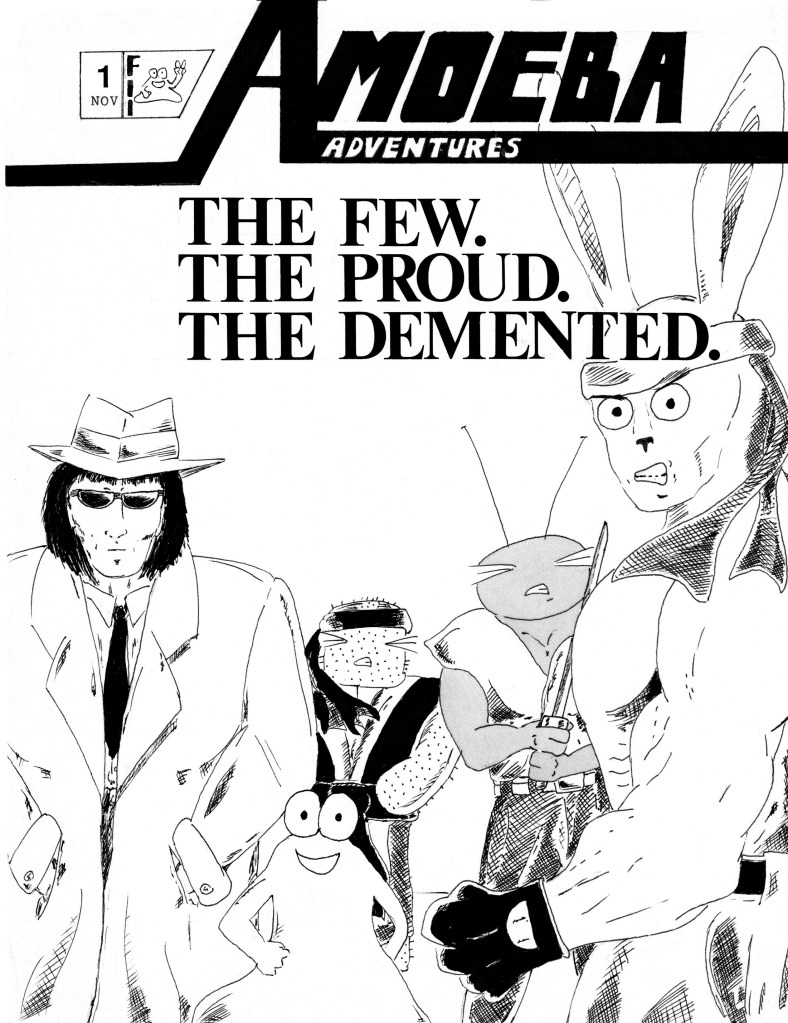
GROOVY ANNOUNCEMENT TIME: So, I used to do a small-press comic book zine back in the 1990s called Amoeba Adventures. Written and drawn by myself and later with the amazing art of Max Ink, it ran for 27 issues from 1990 to 1998.
Together with a bunch of spin-offs, specials and the like, as Protoplasm Press I published around 40 comics in that crazy pre-internet era of fanzine-dom, made a few fans, worked with a lot of terrific fellow creators, and generally had a real blast. But time moved on, I got more into my so-called journalism career and also things like getting married, having a kid, and moving clear across to the other side of the world, and before I knew it, years had passed.
Crazy as it is, 2020 marks the THIRTIETH anniversary of that first issue of Amoeba Adventures. I was an 18-year-old college freshman when I drew most of that first issue, a California kid who ended up in a dorm room, in Mississippi of all places, trying to reinvent himself. Generally I’m still darned proud of Amoeba Adventures, which grew a lot over 8 years – I compare the scribbles of #1 and the almost professional look of #27 and I’m pretty happy.
Small press comics were a pretty transient form, limited print runs and photocopied comics, and the stuff a lot of folks sweated to make back in the day can easily vanish without a trace. An awful lot of my Amoeba Adventures days were stored for years in my parents’ basement in California until I finally got around to shipping them to New Zealand.
Anyway, the point of all this lengthy preamble is that to celebrate 30 years, I’m bringing Amoeba Adventures into the digital era by scanning and making PDFs of all the old issues available for FREE download right here on this website. It’s a lengthy process (some of the issues and artwork are in better shape than others) but I’ve started off by picking five of my favourite issues from back in the day and putting them up right here at the Protoplasm Press link at the menu at the top of the page. I’ve even added ‘bonus material’ to some of the issues from my “Amoeba Archives.”
This middle-aged retired comic creator still gets a kick out of Amoeba Adventures. I hope those of you who were fans back in the day might too, and maybe even some new readers will enjoy ‘em. I plan on adding more issues every couple of weeks, so do check back, and hopefully will have the entire run online at some point.
If you have trouble downloading the PDFs or any comment on ways I can improve ‘em, just let me know!
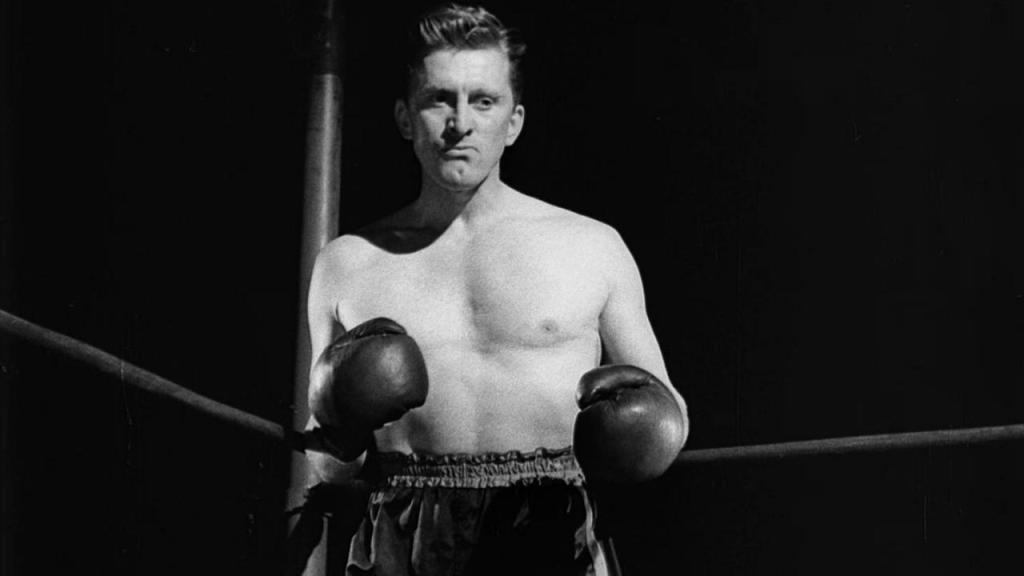
“They’re cheering more than a man tonight. … They’re cheering the story of a boy who rose from the depths of poverty to become Champion of the World!” – Champion, 1949, Kirk Douglas’ breakthrough film.
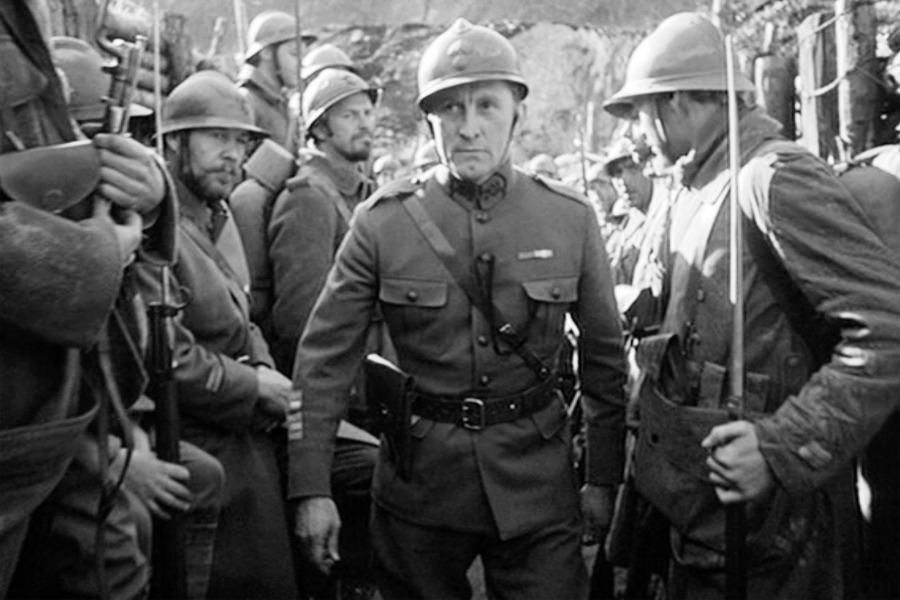
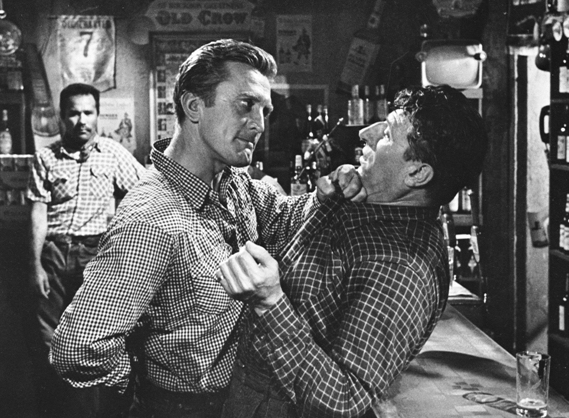
The death of Kirk Douglasisn’t a surprise, I suppose. The man who was born Issur Danielovitch Demsky 103 years ago lived a long, remarkable life, and was the last giant standing from Hollywood’s golden age. He was also always one of my favourites, a reliable jut-jawed, iron-eyed rock who stood tall in many of Hollywood’s greatest – and often quietly subversive – films.
It’s the end of the line for a pantheon of actors most people only ever saw in black and white, of the stars of the 1940s and ‘50s who dominated Hollywood years before I was even born. There’s a couple others still kicking, but I wouldn’t argue that Olivia de Havilland (also 103!) is quite the icon Douglas became. He was truly the last of the line. He starred with Lauren Bacall and Robert Mitchum and Lana Turner and Laurence Olivier, and they’re all gone now.
There’ll be a lot of people saying now that “they don’t make them like Kirk Douglas anymore,” but it’s a cliche because it’s true. He was an alpha male from a bygone age, and while times have thankfully changed and a lot of the more odious sexism and racism of that golden age is gone, Kirk Douglas always embraced his swaggering manhood with an edge to it. All impossibly-angled chin and fanatic’s eyes, Douglas chewed the scenery hard, a lot of time, but he never choked on it.
We’d call it irony, now, but when you look at the martyr Spartacus, the doomed soldier in Stanley Kubrick’s anti-war masterpiece Paths of Glory, the lost and confused Vincent Van Gogh of Lust For Life, the cowboy left behind by modern life in Lonely Are The Brave, a cruel film producer in The Bad And The Beautiful, you don’t quite see heroes. You see men with flaws, unafraid to break a little. (John Wayne, who thought irony was what you did to clean clothes, once supposedly told Kirk, “We got to play strong, tough characters, not these weak queers.”)
More than Bogart or Cary Grant or Brando, Douglas seemed most comfortable skirting the edge of villainy. I loved Kirk Douglas because his characters were always flawed rogues. No movie shows this better than my favourite of his films, Billy Wilder’s 1951 Ace In The Hole, a pitch-black satire of media madness that still stings 70 years on. Douglas is Chuck Tatum, a cynical reporter who rides a tragedy as his ticket back to fame, but loses his soul in the process. There is perhaps no better movie that sums up the Douglas mystique than this bitter pill, a movie that only seems more prescient in 2020. In real life, Douglas was often a supporter of liberal causes, including breaking the Hollywood blacklist of the ’50s.
Kirk Douglas lived his fair share of years, and it’s hard to feel gutted at the death of someone who made it to 103. But the fading black-and-white world he represented, the clatter of cowboys on horses and wisecracking cynics in shadowy rooms and a world that seems a million years ago rather than just 60 or 70 years … Yeah, I’ll miss that Hollywood. I can call it up on a screen anytime I want to, I know, but with the death of Kirk Douglas, I know it’s never coming back.
When it’s midsummer and it’s hot and the news is all politics and doom, I turn to old Superman comics, the balm for many an ache.
I love the ‘pre-Crisis’ era of Superman comics prior to 1986, when Superman could basically do anything and the stories were often batshit crazy. Often drawn by the terrific trusty Curt Swan, these stories juggled planets and killer robots and cosmic coincidences. The Superman stories of the 1970s and early ‘80s are overlooked (you can usually buy issues dirt-cheap), but they’re great fun comics.
Which brings me to Vartox. Vartox appeared in a dozen or two stories between 1975 and 1986, a superhero from another world who was often Superman’s frenemy. An older man, Vartox could be an interesting counterpoint to the younger Superman. But nobody remembers Vartox because of that.
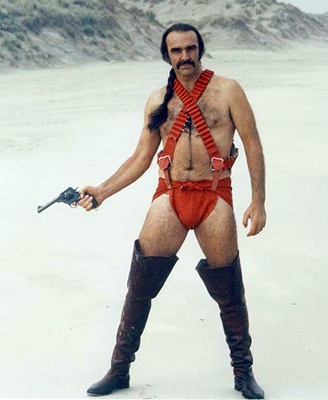
They remember what he wore. For some reason writer Cary Bates and Swan decided to make Vartox an EXACT ripoff of Sean Connery’s unflattering nearly nude space cowboy character in the oddball 1974 sci-fi movieZardoz. Clad in a bizarre orange space diaper, ammo belt, thigh-high boots and a man pony-tail, this was not Connery’s finest hour.
Why Vartox was designed to so clearly mimic Zardoz is weird and never more so than when this half-naked, excessively hairy character shares panel space with the more modest Superman.
I felt vaguely embarrassed for Superman, having to spend so much time staring at another man’s hairy legs and chest. And dude, you’re flying through space, why the heck wouldn’t you wear something a bit more practical than a vest and thigh-high boots?
All that said, the Vartox stories are often good fun – I like the idea of a balding, older, slightly more melancholy superhero being a mentor to Superman and his “hyper powers” are completely wonderful comic-book gibberish – he apparently can do just about anything, including hyper-future reading, hyper-teleportation, hyper-energy blasts, et cetera. It’s a good drinking game just seeing how many times the phrase “hyper” is used in Vartox tales.
Vartox has apparently occasionally appeared since his ‘70s-‘80s heyday, but never quite broke out of the C-list. I lift a glass to Vartox, a contender hobbled by perhaps the least flattering costume in comic-book history.















 Nik Dirga