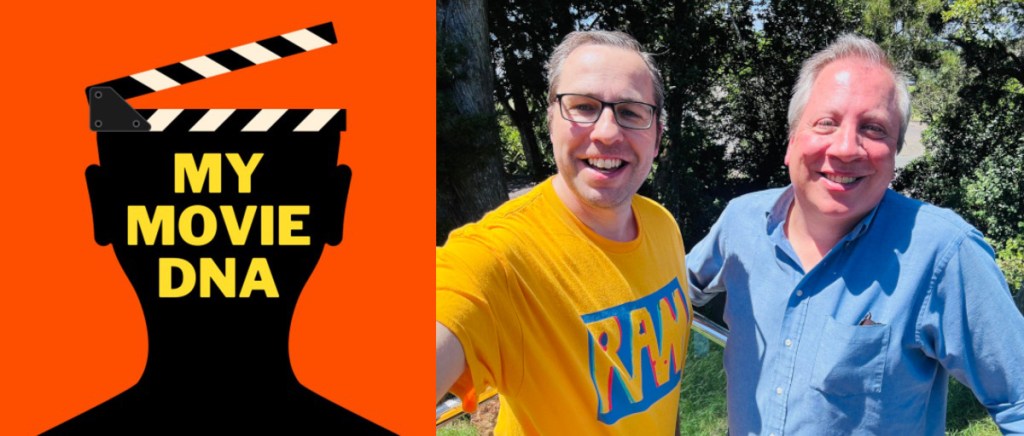
Hey, you dig reading me ramble on about movies on this here website? Well, now you can listen to me do the same thing, as I made a guest appearance on the new episode of Brit-turned-Kiwi Johnny Andrews’ highly entertaining My Movie DNA podcast!
24-Hour Movie Marathon veteran Johnny has been doing this for a few years now and had guests including Wellington Paranormal star Karen O’Leary, Lord of the Rings Oscar-winning production designer Grant Major and a whole heap of prominent NZ movie creatives and fans, so it was an honour to be asked to pontificate on my movie hot takes for 90 minutes or so.
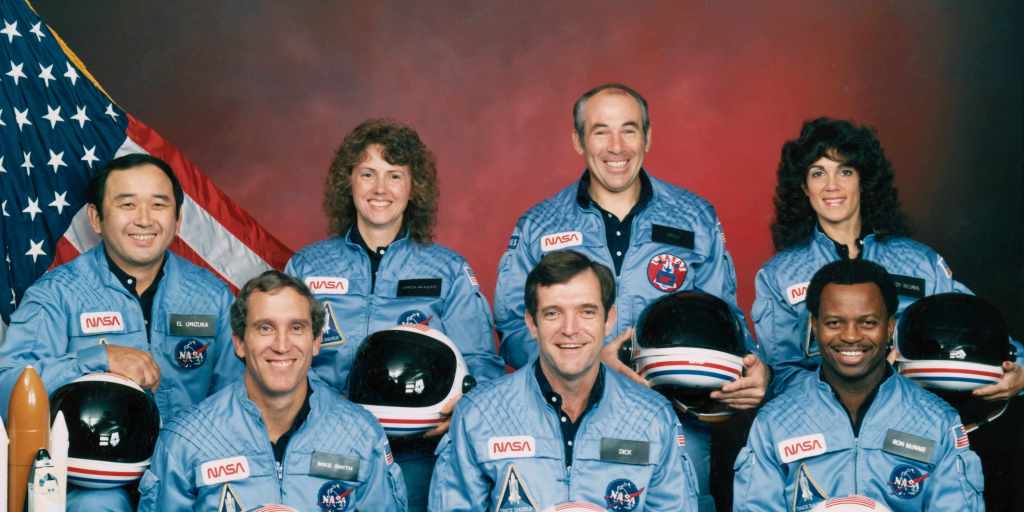
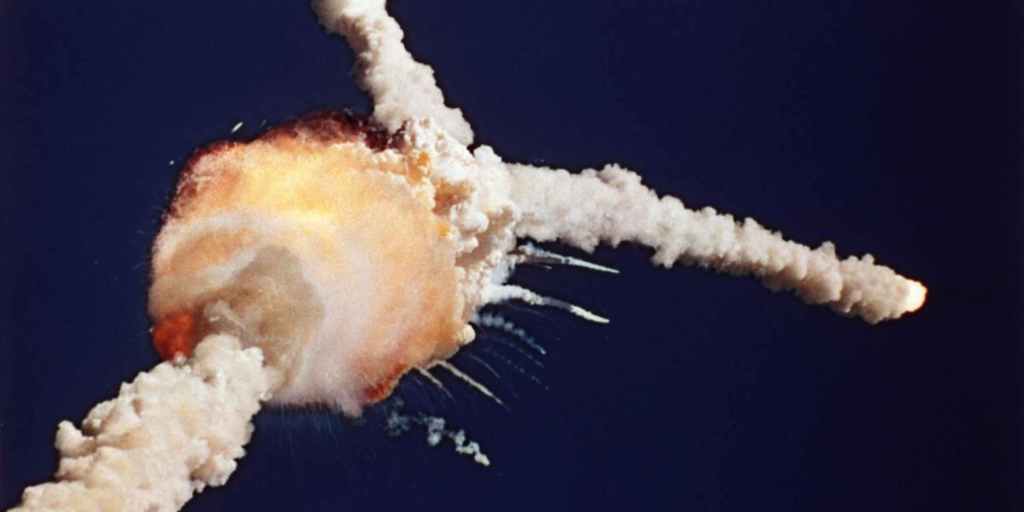
I remember the Challenger, coming apart in the infinite blue, 40 years ago today.
I was in eighth grade, on January 28, 1986, and our classroom came to a chattering halt that day when we heard that the space shuttle Challenger – with a civilian teacher on board, Christa McAuliffe – was gone.
“Gone” didn’t seem to make sense – while there had been NASA disasters long before I was born, this was something new and scary.
I fixated some on the fact that these astronauts were, and then suddenly weren’t, that they were vanished into the sky and the sea in that unforgettable image of the shuttle’s explosion and contrails melting into the sky. I don’t think our classroom was watching it on live TV, but I feel like someone in school was, because the news spread in a quick way that seems so foreign now when everyone carries the instant news in their pocket. The fact there was a teacher on board, a woman who could’ve been one of our teachers, and that her bold adventure ended so abruptly felt like a cruel joke.
For a good long while, all the students and teachers milled around, reacting. The normal school day stopped. I remember being pissed off that one of my friends took in the news with a laconic “well, they’re all dead” type remark. Didn’t he feel the existential horror of it all, or was I just a sensitive lad?
I’m not a huge fan of Ronald Reagan’s politics or the way a lot of his presidency laid the groundwork for 2026’s shitstorm, but I will give him this – his speech to the nation about the tragedy was one of the finest moments of presidential rhetoric I’ve ever seen, delivered impeccably. I still think of those lines: “We will never forget them, nor the last time we saw them, this morning, as they prepared for their journey and waved goodbye and slipped the surly bonds of earth to touch the face of God.” Even for an avowed agnostic like me, there’s poetic comfort in those words.
Of course, consolation is foreign to the current occupier of that office, isn’t it?
It was probably the first big, truly big news event that I paid a lot of attention to. I kept the newspaper front pages for years, and perhaps I have them somewhere still, buried in a box. Previous to that I was vaguely aware of things in the wider world – I have vague memories of the death of Elvis being reported on our tiny kitchen TV, or of Jimmy Carter’s loss to Ronald Reagan, but honestly, I was a kid and I didn’t pay a lot of attention to current events that didn’t involve comic books or Star Wars action figures.
Forty years on, I remember that fierce sense of wanting to know more, and I reckon that’s kind of stuck with me ever since in my quixotic journey along the margins of journalism.
There’s been a bucketful of tragedies in the 40 years since of course, both personal and global, and one of the knottiest questions of being alive is how we process all the inevitable loss. I never knew the crew of the Challenger of course, and yet it hit a sensitive 14-year-old deep in the chest that clear January day, the brave explorers launching themselves up into the sky and never, ever coming back.
We’ve got five years, my brain hurts a lot – David Bowie
Hey, remember January 6, 2021?
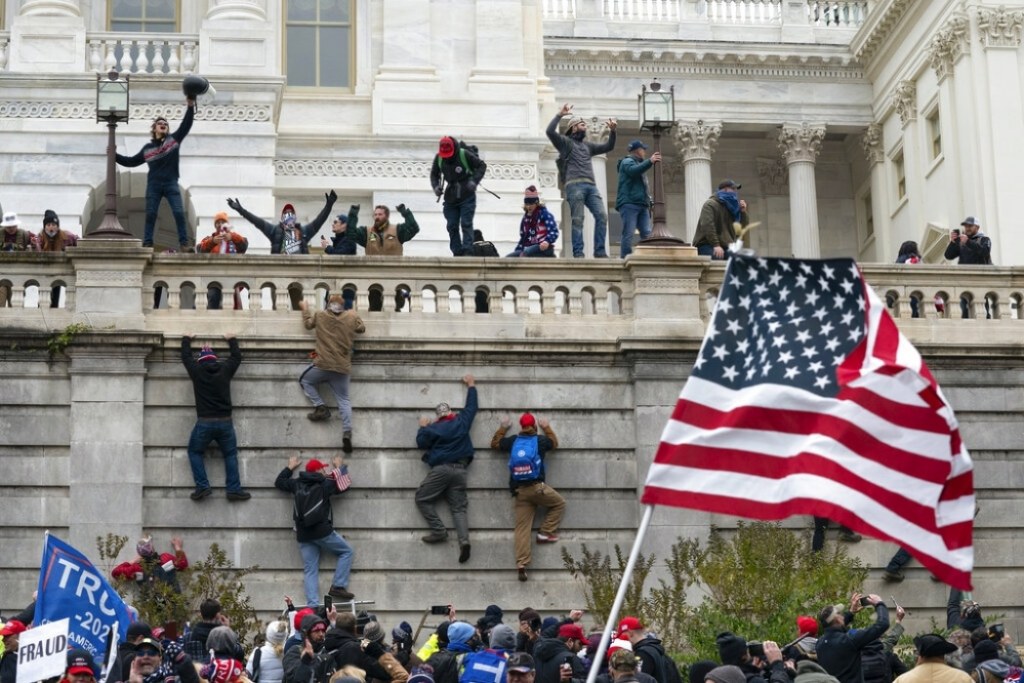
We saw all kinds of crazy shit go down in Washington, DC that day, before the use of the word “unprecedented” became, well, precedented. When a mob of MAGA-supporters smashed their way into the US Capitol threatening to hang Mike Pence, it felt for sure like everything was about to change.
It did, of course, and not at all in the way we imagined.
At the time, I wrote that the chaos at the Capitol was “the natural endgame” for Donald T***p’s political ambitions.
Boy, did I get that wrong. We all did. By “we” I mean myself, legions of media pundits and an awful lot of ordinary Americans who assumed a red line had been crossed that meant the end forever of Donald T***p’s career in public life.
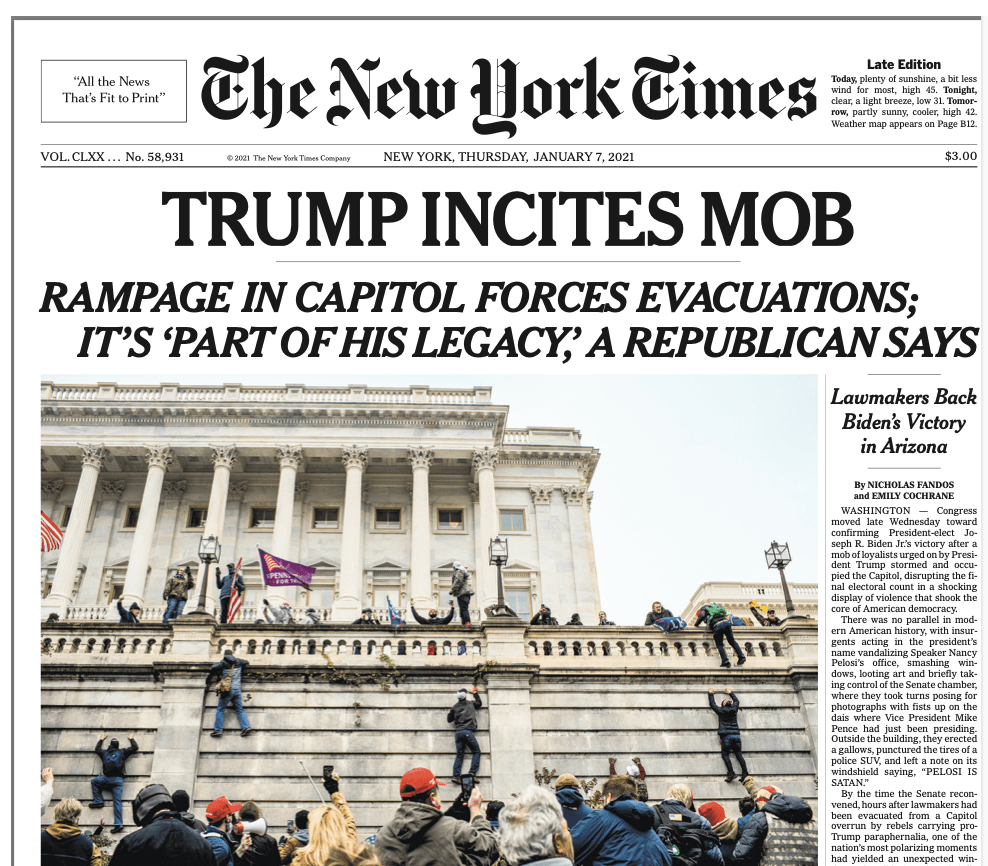
For a brief moment America seemed united in its disgust over that day – the New York Times front page shouted “TRUMP INCITES MOB” in all caps, The Washington Post called it “pathetic and horrifying,” and even the conservative Wall Street Journal called for the President to resign. “It is best for everyone, himself included, if he goes away quietly,” the Journal said.
Spoiler alert: That didn’t happen.
Instead, it was a catapult that launched T***p’s forever campaign, an endless array of grievances and shadowy claims that directly led to his re-election as president in 2024. Without the fuel of January 6, T***p Version 2.0 probably could never have happened.
He simply never stopped. He dug in, and an army of acolytes – some true believers, some out to cash in – carried on the “stop the steal” chant even in the face of evidence the 2020 election was decisive and fair.
Joe Biden’s four years in office now feel like a brief strange pause amid the grip of T***pism, an era that will likely extend for more than a decade of American life.
Like almost everyone, I am so very, very sick of writing about, of thinking about this man that I don’t even want to type out his name in full anymore. Post-November 2024 I just kind of gave up on politics in my home country, and in the time I’ve got left I’m determined to spend as little of it as I can doomscrolling. Which is tricky if you’re a journalist, but there’s always something else to cover.
We thought – I thought – that January 6 would be the end of him, that the natural order of shame, exile and moving on would all fall into place, but instead, it was the dark overture to everything that just kept coming next. Truth has eroded. Falsehoods and AI-churned misinformation grows by the day, and the fictions stack up so completely that it seems impossible to find a path out.
In the end, America kind of broke my heart that January day, five years ago now. And the worst part of it all is what happened after that day, about how what we all saw with our own eyes was excused, pardoned, retconned and obliterated instead of the forever stain it really should be.
We have learned in these past five years that repetition beats reason, that a narrative can be hammered so relentlessly that it reshapes our impression of history itself.
I’ve always been fascinated by the edge of the world.
Regrets, I’ve had a few, but one of them is that I’ve never travelled as much as I would like. In my free-wheeling 20s I was dead broke, and then marriage, parenthood, et cetera. Now, I’m teetering on the edge of old. But when I do travel, I’m always interested in those spaces that feel like the edge of the world.
New Zealand is all edge, really, a handful of wee islands bobbing away out there on the far reaches of the South Pacific, surrounded by wide wide seas on every side. I’m always vaguely aware that hunched on the horizon below us like a yeti is Antarctica, which is a mere 2500 or so kilometres (1500 or so miles) to the south.
We took a recent road trip around the very bottom of the South Island recently, a place I hadn’t been to in far too many years, all mountains and long empty roads and sheep, everywhere sheep. We stopped for a visit at Slope Point, a stark little bit of cliffside that happens to be the southernmost point in mainland New Zealand. You cross a sheep paddock and brave never-ending winds to stand there on the edge of all things, a lighthouse and scrubby plant growth for company. If you’re lucky like we were, you get to experience it by yourself, only the jaunty yellow directional sign pointing out you’re closer to the South Pole than the Equator.
You can’t see Antarctica, of course – it’s still very far away – but you can feel it, lurking like a Norse ice giant. That’s what I mean by edge of the world.
I’ve been to several places I would consider edges, even if they aren’t next to the ocean. Places that feel ancient and pre-civilisation, bigger than our squabbly little day-to-day human concerns and doomfears. Uluru, perched in the Red Centre of Australia, is definitely one of them, magical and awe-inspiring even with other tourists wandering about in the hot desert emptiness.
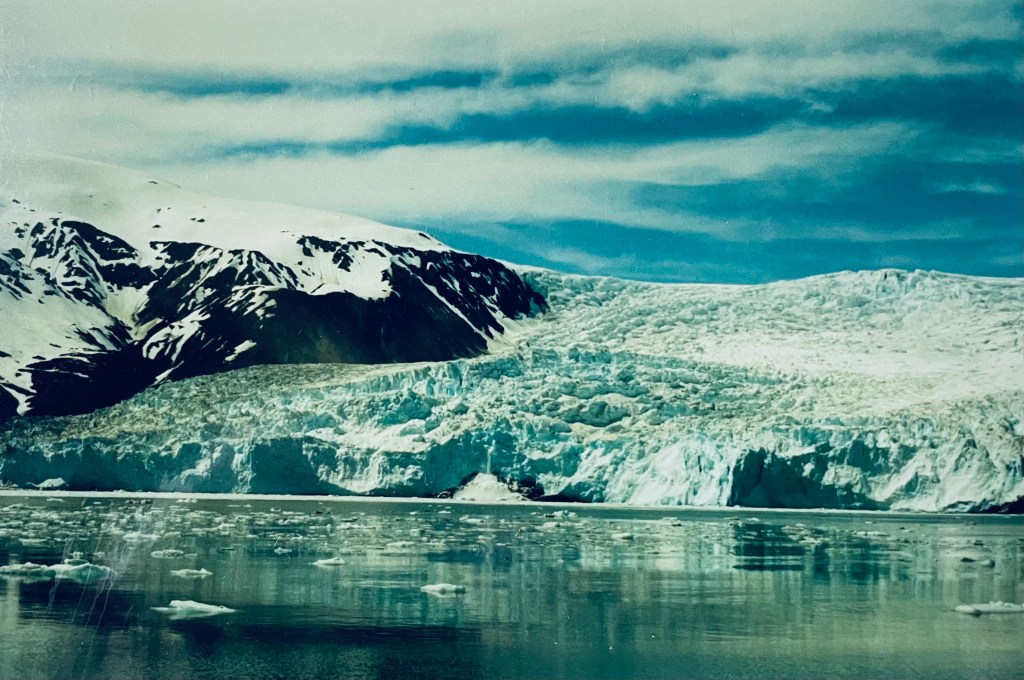
Another is Alaska, the place I was actually born half a century ago at an icebound Air Force Base. I’ve only been there once since I was a toddler, but it was enough to feel the edges that exist everywhere there in the last frontier, watching a glacier slowly rumbling into the sea, dropping chunks of ice the size of houses in the frozen ocean.
Or the Badlands in South Dakota, another spot that feels untroubled by the world of humans, rippling and strange.
Or New Zealand’s northernmost point, Cape Reinga, which is where it is said spirits of the Māori dead begin their journey to the afterlife by leaping off the edge of the shore. I like that image – on the edge, a new beginning.
The thing about an edge of the world is that it should make you feel proper small, a speck of dust floating around in a world far bigger than we can ever really comprehend.
Mucked up as life often seems these days, there’s still an awful lot of world edges out there. I hope to get to more of them and teeter happily on the abyss a few more times in this brief little life we get.
Of all the holidays of my wayward youth, I think I miss Halloween the most.
I have great memories of trick or treating on Race Street back in California as a kid, with my brother and neighbourhood pals, from when we were small enough to need a parental escort to when we were pushing teenager-hood and almost too old to pull it off.
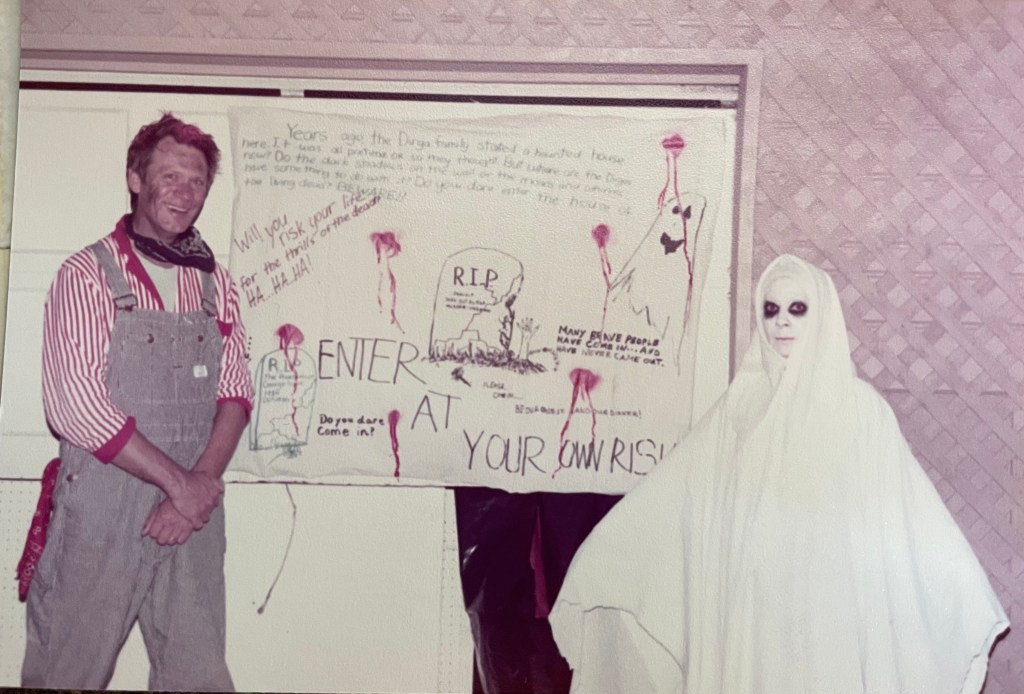
I remember the daft costumes – dressing up as a blackfaced “assassin,” a pirate, Spider-Man, one memorable year attempting to pull off a mummy costume by donning yellow pajamas and draping them in toilet paper … which unravelled after the first few blocks. One of my very first appearances in the mass media was a grainy black and white newspaper photo of me dressed up as Underdog. Another year my parents hosted a great haunted house for our church (!) turning our basement into a cobwebby labyrinth of silly scares.
I think it was the delightful otherness of Halloween that appealed to me the most, the chance to dress up as someone else entirely for one day out of the year. The people who go on about it being some kind of “Satanic” holiday never had the kind of childhood fun I did. There’s far bigger monsters out there in America these days than kids having a bit of dress-up.
You’d wander up and down the shadowy streets and most homes would have a light on and a bowl of candy from the good stuff (M&Ms! Bounty! Pop Rocks!) to the not so good (candy corn, go straight to hell!). It was the one day of the year you’d get to actually see the inside of all the houses in your neighbourhood, even if it was just a fleeting glimpse. I think I came of age at peak Halloween time, before scary threats like poisoned candy or psychos with razor blades kind of spoiled the vibe.
Halloween was innocent fun but as you aged, it could get wilder and weirder. On a drunken expedition during freshman year in college we decided to steal a lot of neighbourhood pumpkins, which worked out great until I got pelted by a dozen eggs at one house.
Halloween is kind of a thing in New Zealand, but not entirely. It’s definitely way more visible than it was when we moved here in 2006, but there is a certain amount of resistance to it. The stores all shove it down everyone’s throats starting in August or so because money, but I also still remember my late mother-in-law dismissing it as “begging for lollies.” It’s not embraced here.
Halloween kind of requires a cultural consent to pull off and it’s only partly there in New Zealand. Certain neighbourhoods are earmarked for trick or treating but most aren’t. And an awful lot of people here see it as another arrogant bloody Americanism being pushed on New Zealand, which, considering my homeland’s reputation these days, fair point.
It’s also not helped by it being Spring down here when Halloween falls, and the days last until 8pm or so. Halloween trick or treating should properly be done in the dark, with a faint autumnal chill in the air, rather than spring blooms and chirping birds.
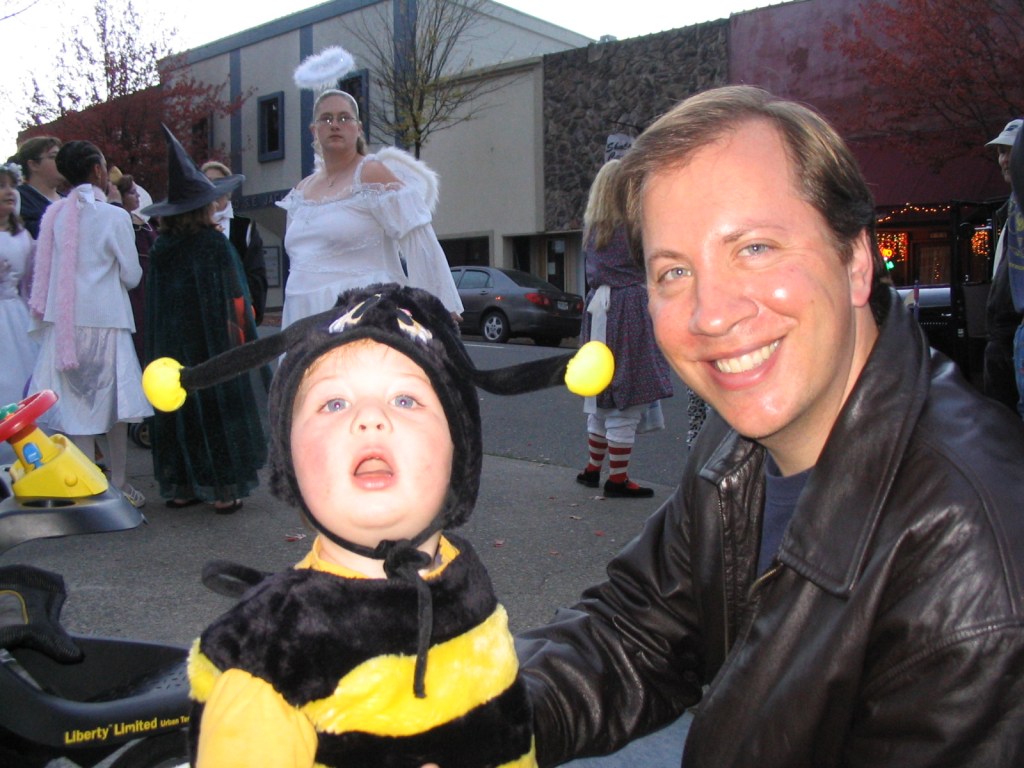
When P was younger, I got a bit sad that they weren’t experiencing the kind of Halloweens I had. We had one Halloween in the US before we moved here when P was still a toddler. Still, I got a few of them in with our child while they were young enough to get into it – there was at least one good year of neighbourhood trick-or-treating with a cousin and a fun visit to a couple of carnivals.
Another thing about Halloween is that it’s a holiday you largely age out of. There’s an ugly awkwardness to being a teenager too old to trick or treat shoving your way in among the little ones for a handful of Snickers. You can do Halloween as a bawdy older holiday of course, and I remember some fine drunken college Halloween parties that I think I enjoyed, but honestly, it’s mainly at its best a holiday for the kids and kids at heart, I think.
So I still get that bittersweet nostalgia every October 31 remembering the Halloweens of the past and how one day you take off all those masks and have to become a boring old grown-up. I compensate, of course – typically with a lot of Halloween themed horror movies and hey, we might also have some candy in a bowl. For us, of course, not those lolly-begging trick or treaters.
You may get wrinkled and bent and unable to pull off a sexy Superman costumer but you never, ever age out of candy, by gum.
…I really don’t write much about America these days, and the way the place I called home for 35 or so years no longer makes sense to me.
I don’t have the spleen to be filled with outrage 24 hours a day any more, only a deep kind of sadness and the quote from the R.E.M. song (via the Linklater classic Slacker, of course) perpetually pinballing around my brain: “to withdraw in disgust is not the same as apathy.” I find my peace in a bit of grim distance from following every dismal development, and appreciating all the other ways life is still pretty darned good away from the bad news machine.
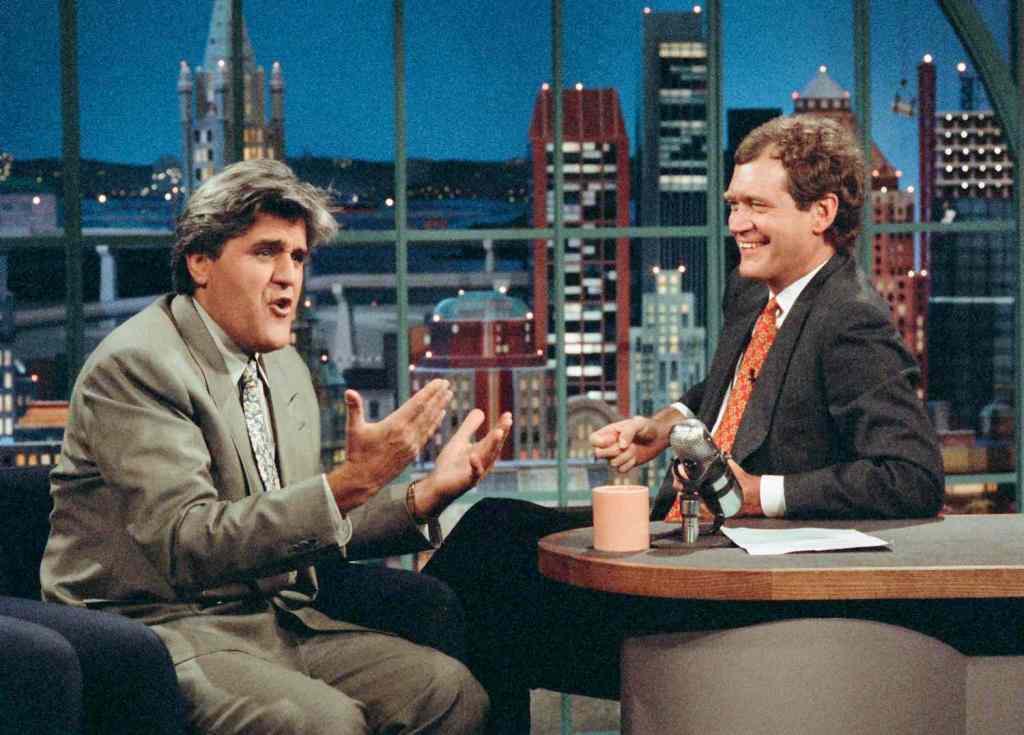
For decades, the late-night TV show hosts, the Carsons and Lettermans and Lenos and kindred spirit Saturday Night Live, they were the court jesters on the American political scene. They would mock mercilessly Ford, Reagan, Bushes and Clintons and the like, for their real failings and their merely human missteps. They were a central part of the culture, with entire books written about their doings and in-fighting, or one of my favourite TV shows being set entirely in the world of late night.
I caught the very tail end of Johnny Carson’s everyman years, and was a faithful watcher of David Letterman in his heyday, of SNL many years ago. I’ve watched a fair bit of Colbert and The Daily Show although I honestly don’t think I’ve watched more than a few minutes of Jimmy Kimmel, Seth Meyers or Jimmy Fallon, the current crop of hosts.
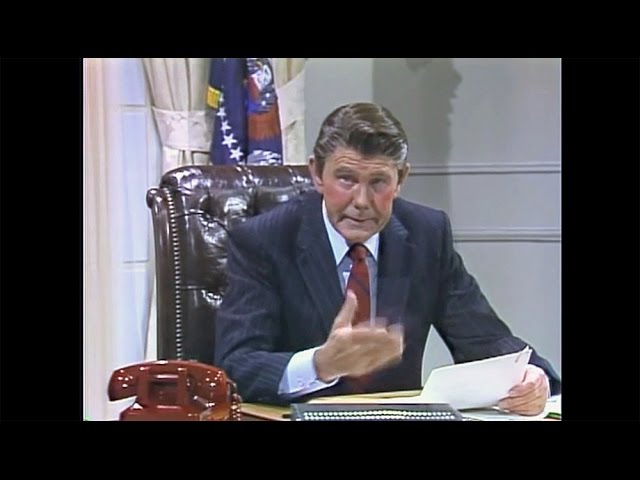
Dave could make fun of George H.W. Bush vomiting at a state dinner or Johnny could dress up as a fumbling Ronald Reagan. It was taken as a kind of point of pride that in America where the right to free speech is the very first amendment to the Constitution that you could mock the dear leader of the day, without fear of being forced off the airwaves by a carefully orchestrated tsunami of outrage.
Let’s be clear – they weren’t always actually that funny, to be honest. Political humour of the day has a perhaps 25 percent hit rate that fades quickly over time, and Jay Leno’s Lewinsky ‘jokes’ had a shelf life of about .005 nanoseconds.
Letterman and Conan and the like were always a lot funnier when they followed their own weird muses rather than the headlines, but that wasn’t the point – the point was that they could make lame jokes about the man in the White House and the American political scene without fears the President himself would start screeching for their cancellation or calling the very idea of criticism against him “illegal.”
The center did not hold, and the culture now revolves around a million very different siloed off entertainments and satirists than it once did when Johnny, Dave and Jay strode around on network television, the very height of celebrity in a world where nobody knew what an influencer was. Their time is fading, not entirely due to the current US administration, but they’re sure helping shove the stragglers out the door.
Instead of court jesters, we’re getting satire only tailored to existing beliefs or dizzyingly insular memes as the world drowns in a sea of doomscrolling and performative outage. In all the old sci-fi films, we imagined the end coming in a million ways, but few of them imagined a culture subsiding into the sea as we were all off inhaling TikToks and YouTube videos whilst sucking on cherry vapes with an Ozempic chaser.
I’ve got absolutely no good ideas, no hot takes about where all this goes from here.
But when you clear out the court jesters, it usually turns all you can hear is the king chortling to himself, self-satisfied, in a court where the only other sound is his laughter being echoed right back to him by a room full of sycophants.
Look, the world kind of lost its mind in 2020, didn’t it? And we’re all still dealing with that.
We’re all very much living in the aftermath of the pandemic, which seemed to break apart the bonds we imagined held the world together. Everyone’s got a relative or friend whose opinions seemed to go down weird rabbit-holes, or topics you just don’t discuss anymore. Covid, culture wars, digital disinformation – a dozen tangled threads all seemed to bloom and spread beginning in 2020.
But so far, there haven’t been a lot of major motion pictures looking at this age of weirdness. We need satire and storytelling to process the societal earthquakes that hit us. After Watergate in the 1970s we saw a surge in paranoid cinema, while it took America until the 1980s to really unpack its Vietnam traumas with films like Platoon, Full Metal Jacket,Born On The Fourth of July and the like. There were even a slew of (mostly kind of dire) 9/11 reenactment movies after those 2001 attacks or smarter ones like The Hurt Locker processing how terrorism spreads.
But on Covid, lockdowns and the fractured, polarised world that’s come out of it all, Hollywood’s been pretty silent. Ari Aster’s new film Eddington – a black comedy Western pandemic dystopian frenzy of a film – boasts two Oscar winners and a hot director and seems to be the first major Hollywood take on the year everything went, for lack of a better word, batshit.
Even now, I don’t like thinking back to the strangled tenseness of the pandemic years, to masks fogging up my glasses, to queues at the supermarket, social distancing and the lurking rise of protest movements galore and the latching on to conspiracies. No matter what your views are on how it’s all turned out, it ain’t a time anyone fondly remembers now.
The pandemic still feels raw, the culture war battles are still raging strong under Trump 2.0, so is it really time for satire? Yet Eddington feels like the movie America deserves in 2025. It’s shocking and slapstick in equal measures. “More distance will make it easier to laugh,” the LA Times’ Amy Nicholson wrote in her positive review of Eddington, and I can’t disagree.
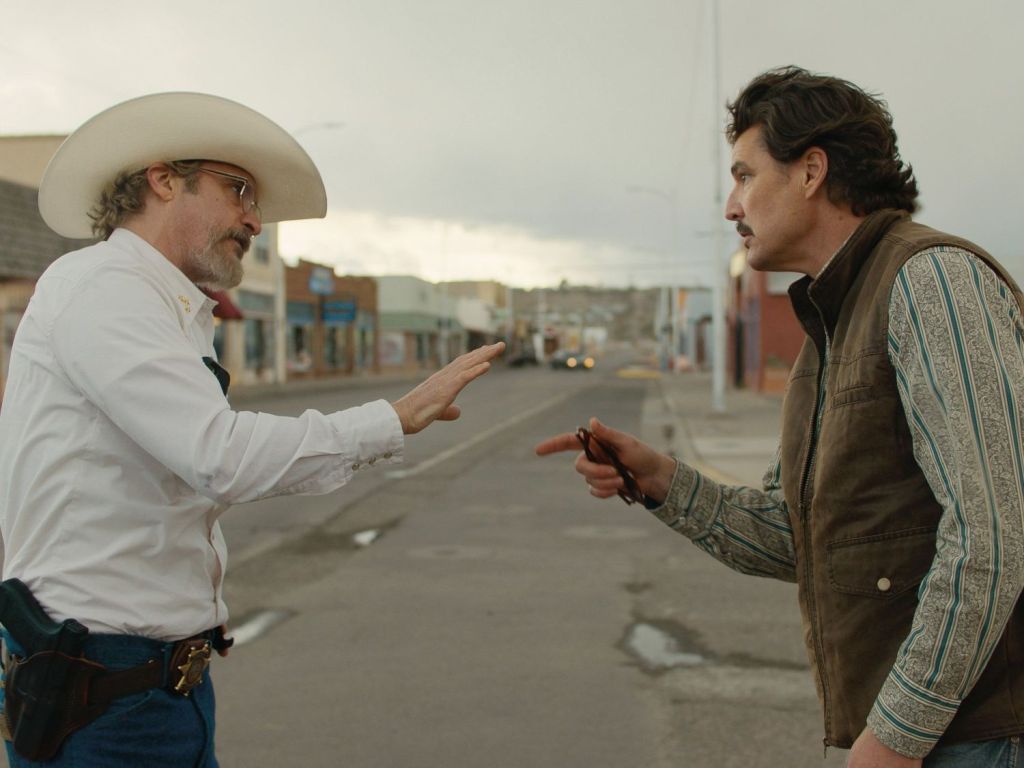
Joaquin Phoenix stars as New Mexico sheriff Joe Cross, a tense conservative who doesn’t care for masks and social distancing and who despises the town’s charming mayor (Pedro Pascal) and decides to run against him. His wife (Emma Stone) is going down online rabbit holes and Joe feels like everything in his world is changing. Black Lives Matter protests come to town, Covid is here, and big tech is making a play for a giant start-up facility in town. Because this is an Ari Aster movie, and Aster is the patron saint of dread in film right now, everything escalates very quickly into a violent, unpredictable mess.
Joe posts Facebook campaign videos saying “we need to free each others hearts” but soon starts ranting about sexual predators and driving around in a truck plastered with slogans like “Your (sic) being manipulated.” Pascal’s perky mayor slaps up pandering inclusive videos featuring smiling Black extras in a town with almost no Black population. A lovestruck white teenager who dives into BLM activism to win over a girl ends up bemoaning his white privilege to a crowd, yelling “My job is to sit down and listen! As soon as I finish this speech! Which I have no right to make!”
Eddington is an equal-opportunity satire that sees the absurd in all viewpoints. It hits all the bases – mask mandates, pedophiles, artificial intelligence, police racism, Bitcoin and Antifa – offending left and right with equal measures.
But ultimately, Eddington is really about how social media has rotted our brains, turning us all into circus animals hooked on dopamine and conflict. It’s bad here in New Zealand but exponentially feels far worse in the far bigger America, where politicians and celebs now spew conspiracies and hate speech that felt unthinkable 10 years back.
America doesn’t make much sense to me at the moment, and Eddington is an exhausted grim chuckle at how fractured it’s all gotten.
“I am a much better human being than you,” Joe sneers at one point to his opponent, and that arrogant phrase seems to capture so much of the vibe of America 2020 and Social Media 2025.
I wouldn’t argue that Eddington is a masterpiece – it’s too long, a bit scattered and overstuffed, the ending ramps up the violence to a kind of incoherent mess, and Aster’s “everyone’s an idiot” worldview will probably rub some the wrong way … but in its bleakly comic way, it captures the moment in a way that cinema kind of needs to help us process whatever the hell has happened to the world the last few years. And Phoenix, who never feels better on screen than when he’s falling apart, is terrific.
Eddington shows how community and dialogue vanishes as we all get sucked into our little tech bubble windows, how performative our lives have become and how lonely we’re all getting as a result. “All of these people are kind of living on the Internet and they are sort of all seeing the world through these strange, individualized windows,” Aster said in an interview.
Sometimes you just need to see it all splayed out before you under a hot desert sun, and marvel at the endless foibles of humans and how easy it is for the things that hold us together to prove as flimsy as a tumbleweed in the breeze.
Eddington is not here to make conclusions, other than that perhaps we’re all kind of ridiculous creatures. At the moment, still trying to process the world we all live in now, laughing a little about that feels like enough for me.
For a long time, Bruce Springsteen was seen as American as apple pie and waving flags – with all the good and bad that entails.
I considered myself too cool for Bruce for an awful long time, and it was really only after I moved to New Zealand nearly 20 years ago that I started to get what he was really all about.
The thing is, I came of age when Bruce was in peak “Born In The USA” stardom, a swaggering figure in tight blue jeans who felt, well, kind of cheesy during a time when I was more into the sexy pulses of Prince or the inescapable Michael Jackson (yes, I have regrets there). Springsteen, somehow, felt like dad rock to me.
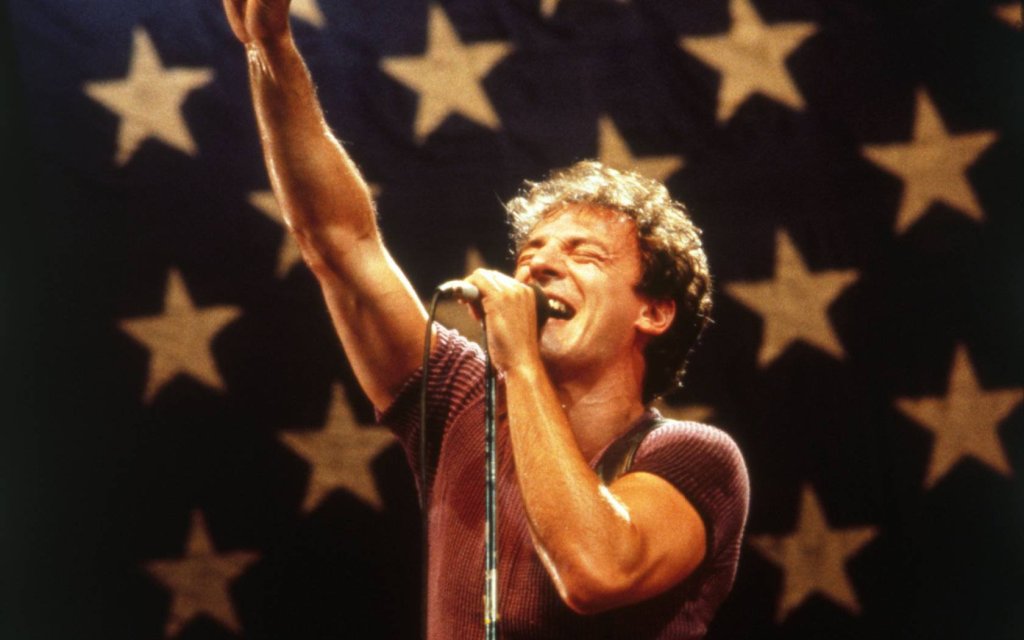
The problem was, Born In The USA the album and song did too well, and Springsteen’s image got solidified in that early MTV age as the all-American troubadour dancing in front of an American flag, no matter how much his lyrics indicated otherwise. Springsteen hit that rare peak stardom when what the entertainer is actually singing about matters less than their place as a cultural signifier, where who they are is less important than what they represent.
It’s amazing that 40+ years on, people still mishear “Born In The USA” as some swaggering anthem of Yankee superiority. Heck, I did too for way too long.
With “Born In The USA,” all many people heard is the chorus, without realising how much of a sad hopeful wail it was. It’s about American dreams and the darkness behind them. Heck, how could a song with lyrics like “Got in a little hometown jam / So they put a rifle in my hand / Sent me off to a foreign land / To go and kill the yellow man” ever be interpreted as some patriotic anthem?
But in America, image – and surface – is everything.
I wouldn’t say I disliked Bruce, but just felt he was a little uncool for a hip young fellow to be listening to as I delved into Depeche Mode and The Cure fandom. His work is very short on ironic detachment and long on sincerity – virtues I value more now than I once did. I did like the spooky atmospherics of “Tunnel of Love,” or the nifty twang he gave to the chorus on “Lucky Town,” and the very first time I finally heard “The River,” I realised Springsteen was a writer who could sum up an awful lot in a few short verses:
“Now all them things that seemed so important / Well, mister, they vanished right into the air / Now I just act like I don’t remember / And Mary acts like she don’t care”
Springsteen’s work has always been about speaking truth and he continues to do so to this day, blasting the current man in the White House relentlessly, no matter how the beer-swilling “Bruuuuuce” fans shout back. It might seem funny to call a millionaire rock star pretty courageous for doing that, but these days, courage is in short supply on the American scene.
It took me far too long to delve deeply into Springsteen’s impressive discography, and realise how much he’s always been about challenging the American dream instead of idealising it.
I cracked into Bruce Springsteen’s mammoth new box set on the weekend, Tracks II, which compiles a whopping seven unreleased albums from the Boss over his prolific career. (So far, the gem is the spooky, drum loop driven songs in The Streets of Philadelphia Sessions). The bounty of this set once again reminded me of how much broader Springsteen’s message has been than the pumping chorus of “Born In The USA.”
America is so into its own mythology and mythmaking. The perils of that can be seen in the news every single day now. Sometimes I’m amazed by how chill and self-effacing New Zealand generally is by comparison.
The thing is, no matter what you might think of the USA these days, “Born In The USA” is still a great song, maybe because it carries within it all the contradictions and hopes of a country that has never quite been as great as it likes to imagine it could be.
I haven’t lived in America for an awful long time now, but listening to Bruce Springsteen always seems to evoke the open-hearted good times I had there and the promise and potential that so often falls short. I don’t really mark the Fourth of July down here any more but if I do, it’ll be by listening to some Springsteen.
I’ve been on a Sergio Leone kick lately, watching Clint Eastwood and Henry Fonda stalk impassively through vast open landscapes and ramshackle settlements. Sure, the action is great, the iconic soundtracks slap and even in this highly dubious time in American history, the mythic weight of the western is still strong.
…But half the time I watch westerns, I keep looking at the houses and what it’d be like to live in those sun-bleached outposts, 150 or so years ago now. I study the clattery wooden sidewalks, the creaky balconies dotting the streets (the better for a guy to be shot and fall out of, of course), the home-spun yet vaguely desperate vibe of those infinite saloons poised for violence.
It’s an odd fixation to have, but as I’ve written before, I grew up in a once-upon-a-time western Gold Rush town, after all, and I think perhaps some part of me is tinged with vague nostalgia for the imagined west I never really saw.
I watch Clint Eastwood and Lee Van Cleef face off in a battle of flinty egos but I also think, gosh, I like the way the grain of the wood sticks out on that old blacksmith in the background, I wonder who’s living behind the faint lights in the windows, I admire the lonely architecture of all those balconies and horse railings, the forlorn ‘Hotel’ sign swinging in the western skies.
Heck, I know half these movies weren’t even made in America or were filmed on studio lots, but it’s the idea that counts.
Of course there’s all the cultural and colonial baggage of America’s settlement to reckon with, and I’d say at least 75 percent of movie westerns are just vaguely one-dimensional frothy cowboys ’n’ indians soap operas. But the ones that aren’t – the Leone, The Searchers or The Wild Bunch or Tombstone or Unforgiven or McCabe and Mrs Miller – they get at the contradictory and violent bloody heart of a nation. The best westerns tell us what America really is, not what it pretends to be. And those long lonesome dirt road main drags lined with hotels and bars and barbers and perhaps a jail or two always evoke a weird yearning in me.
During my years in America I have been to many famed western towns and they of course are never quite like you’d imagine – there’s no high noon showdowns except for tourists and the quaint shops are all filled with garbage keychains and fart-joke keepsakes now – but if you squint, you can still see a hint of the old dusty ways in places like Tombstone, Arizona, Deadwood, South Dakota or Virginia City, Nevada, I think. You can strain to feel the wind roaring over the plains and deserts and sometimes it feels like a memory.
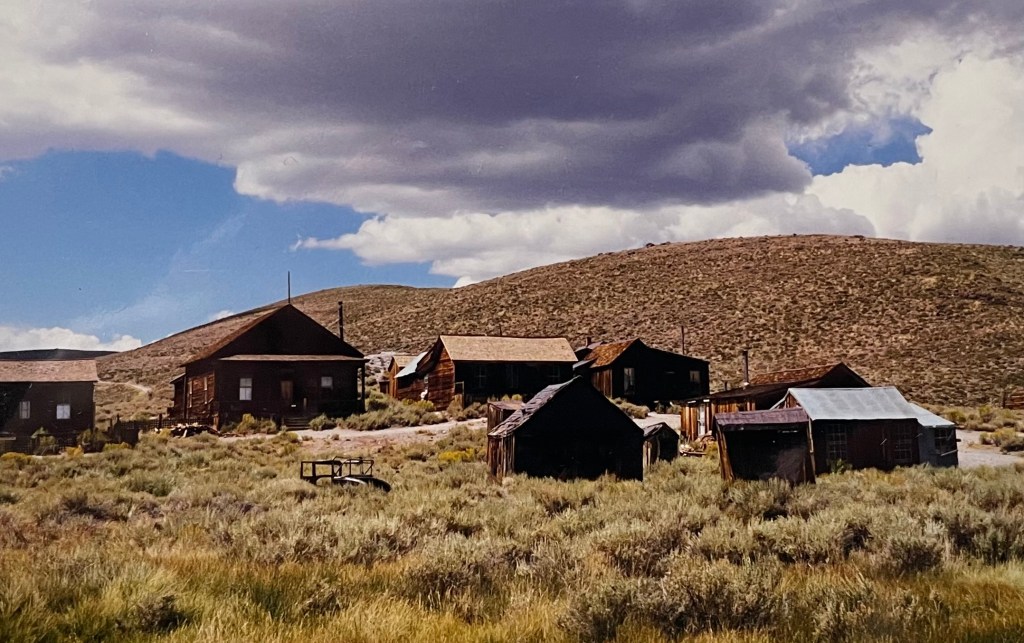
You visit an actual abandoned western ghost town like the crepuscular remains of Bodie, California, high up in the mountain plains, and it’s not quite like anything else.
Bodie, California, sometime in the early 2000s
It’s probably just me, but when I watch those westerns, there’s the story unfolding in front of us, and the second story of the silently evocative imagined past spread out all around the background on every scene.
Would I want to actually live there, 150 years before wi-fi and refrigerators and comfortable tennis shoes? Probably not, but I still fall a little in love with every knot and whorl in those claptrap movie towns, where it’s always high noon somewhere.
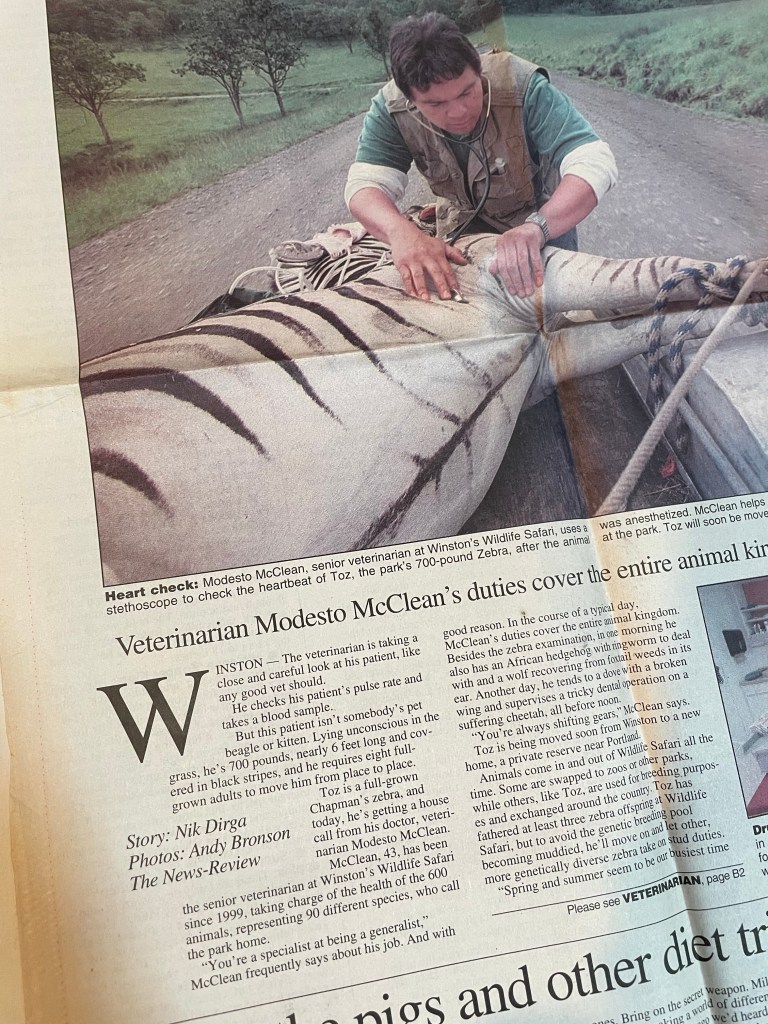
It was interesting combing through piles of yellowing clippings and old computer files and trying to figure out what to include in a survey of my so-called career. But this profile from when I worked in Oregon circa 2002-2006 was a definite. As a kid, I always wanted to be a zookeeper, until one day I realised that would involve a lot of blood and animal feces. But getting to shadow an actual wildlife park vet around for a day was pretty darned cool, and one of my favourite job assignments.
The zebra veterinarian
The Roseburg, Oregon News-Review, May 2002
WINSTON, Oregon — The veterinarian is taking a close and careful look at his patient, like any good vet should.
He checks his patient’s pulse rate and takes a blood sample.
But this patient isn’t somebody’s pet beagle or kitten. Lying unconscious in the grass, he’s 700 pounds, nearly 6 feet long and covered in black stripes, and he requires eight full-grown adults to move him from place to place.
Toz is a full-grown Chapman’s zebra, and today, he’s getting a house call from his doctor, veterinarian Modesto McClean.
McClean, 43, has been the senior veterinarian at Winston’s Wildlife Safari since 1999, taking charge of the health of 600 animals — representing 90 different species — who call the park home.
“You’re a specialist at being a generalist,” McClean frequently says about his job.
And with good reason.
In the course of a typical day, McClean’s duties cover the entire animal kingdom. Besides the zebra examination, on this morning he also has an African hedgehog with ringworm to deal with and a wolf recovering from foxtail weeds in its ear. Another day, he tends to a dove with a broken wing and supervises a tricky dental operation on a suffering cheetah, all before noon.
“You’re always shifting gears,” McClean says.
Toz is being moved soon from Winston to a new home, a private reserve near Portland.
Animals come in and out of Wildlife Safari all the time. Some are swapped to zoos or other parks, while others, like Toz, are used for breeding purposes and exchanged around the country. Toz has fathered at least three zebra offspring at Wildlife Safari, but to avoid the genetic breeding pool becoming muddied, he’ll move on and let other, more genetically diverse zebra take on stud duties.
“Spring and summer seem to be our busiest time (for moves),” said Deb Ryan, Wildlife Safari’s assistant curator. “Within the next month we’ll probably move 10 animals out, and probably move five to eight in.”
Toz has to be examined for his health and for a lingering lame leg prior to the move. Bringing the zebra in for an examination isn’t as simple as putting him into a pet carrier. Most wild animals must be sedated before they can be safely examined or treated.
“The toughest part of zoo medicine is the anesthesia,” McClean said.
“Zebras are very aggressive,” Ryan added. A variety of drugs are used as tranquilizers, some of which are highly dangerous if not handled carefully.
“A few drops more and I’m going to kill the animal,” McClean notes as he carefully mixes the solutions together into a dart. It takes a steady hand when dealing with the drugs. They can be administered with a dart pistol, a blowgun or an air gun, depending on the size of the animal and the thickness of their hide.
A zebra has tough skin — “I say zebras are like horses on steroids,” said McClean — so a rifle is used to administer the knockout punch today.
Every animal must be handled differently, McClean says. Originally from Southern California, his career has taken him to treat animals he might never have imagined he would. He’s worked with dolphins and chimpanzees, and even anesthetized a towering giraffe — “probably the hardest anesthesia in all of medicine,” he says.
McClean first came to Wildlife Safari in 1995, where he trained under the previous park veterinarian. He was educated at California Polytechnic State University in San Luis Obispo and Oklahoma State in veterinary medicine, and also served an internship in primate medicine and surgery at Yale University.
He has also consulted in private veterinary practice for several years. McClean came back to Wildlife Safari in 1999 when he became the park’s senior veterinarian.
Because the animals mostly roam free at Wildlife Safari, McClean and park keepers have become experts at what they call “binocular diagnosis,” where they carefully observe the animals to detect any sign of a possible medical problem.
“I don’t have time to go every day to check every animal, so I rely on the keepers too,” McClean says.
Toz the zebra has been moved out of the park’s general population into a small, half-acre enclosure to prepare him for his move. It also makes it easier for him to be drugged, because Wildlife Safari staff won’t have to chase him down.
“Some people think hoof stock aren’t all that smart, but they know what a gun is,” McClean says as he watches Toz nervously gallop away from him.
The doctor raises the rifle, takes careful aim at the retreating zebra, and fires the dart, which brings him to the ground in under five minutes.
Once McClean is sure he’s fully unconscious, the staff gets to work, popping in an intravenous tube dispensing solution, as well as injections of atropine to keep his heart rate up. A monitor is hooked up to his tongue to check his vital functions, and an oxygen tube is placed in his nostrils. McClean checks out the zebra’s leg, which has been treated previously for weak tendons, and finds that his hoof is suffering some obstructions which he removes.
While Toz is out, a pint of blood is also taken from him. The blood will be checked and then frozen, kept in store for possible transfusions.
“This blood someday will save another small zebra,” McClean said.
Any small checkups that can be done on the zebra are also taken care of. One park employee uses a tool belt set of pliers to scrape a buildup of tartar off the zebra’s large teeth, each the size of a man’s thumb.
It takes eight park employees to transport the drugged Toz onto an open trailer for his move across the park. He is lifted onto a rubber mat, as one employee holds his IV and McClean monitors his vital signs. Toz is taken to a holding stall where he will live and be watched closely for a few weeks before his trip to Portland.
The entire procedure, from the dart being fired to Toz waking up in his new quarters, has taken just under an hour.
“I’m going to rate it as for a zebra, an excellent anesthesia,” McClean says.














 Nik Dirga